Late Afternoon at Asakusa's Azumabashi Intersection — A Rickshaw Ride and Golden Flame
If someone asks me where I spend the most time in Asakusa, Tokyo, I say Azumabashi Intersection—not inside Senso-ji Temple. It's right where Exit 4 of Asakusa Station on the Ginza…
Tokyo · Asakusa Azumabashi Intersection
If someone asks me where I spend the most time in Asakusa, Tokyo, I say Azumabashi Intersection—not inside Senso-ji Temple. It's right where Exit 4 of Asakusa Station on the Ginza Line takes you. Just before crossing the Sumida River, it's the spot where Asahi Brewery headquarters' golden object and Tokyo Skytree frame perfectly in a single shot. It's less than three minutes' walk from Kaminarimon.
Three Landmarks Framed Across the River
Why this intersection is a photographer's dream is simple. Facing the river, you see Skytree on the left, the Asahi headquarters building in the center—shaped like a beer glass, locals call it the "Beer Tower"—and the golden flame sculpture perched atop the black building beside it, all lined up in one frame. That's the sculpture tourists lovingly call the "golden poop." Seeing it in person, it's far larger than photos suggest, and with its polished surface, when the sun sits low it gleams like real fire is blazing from it.
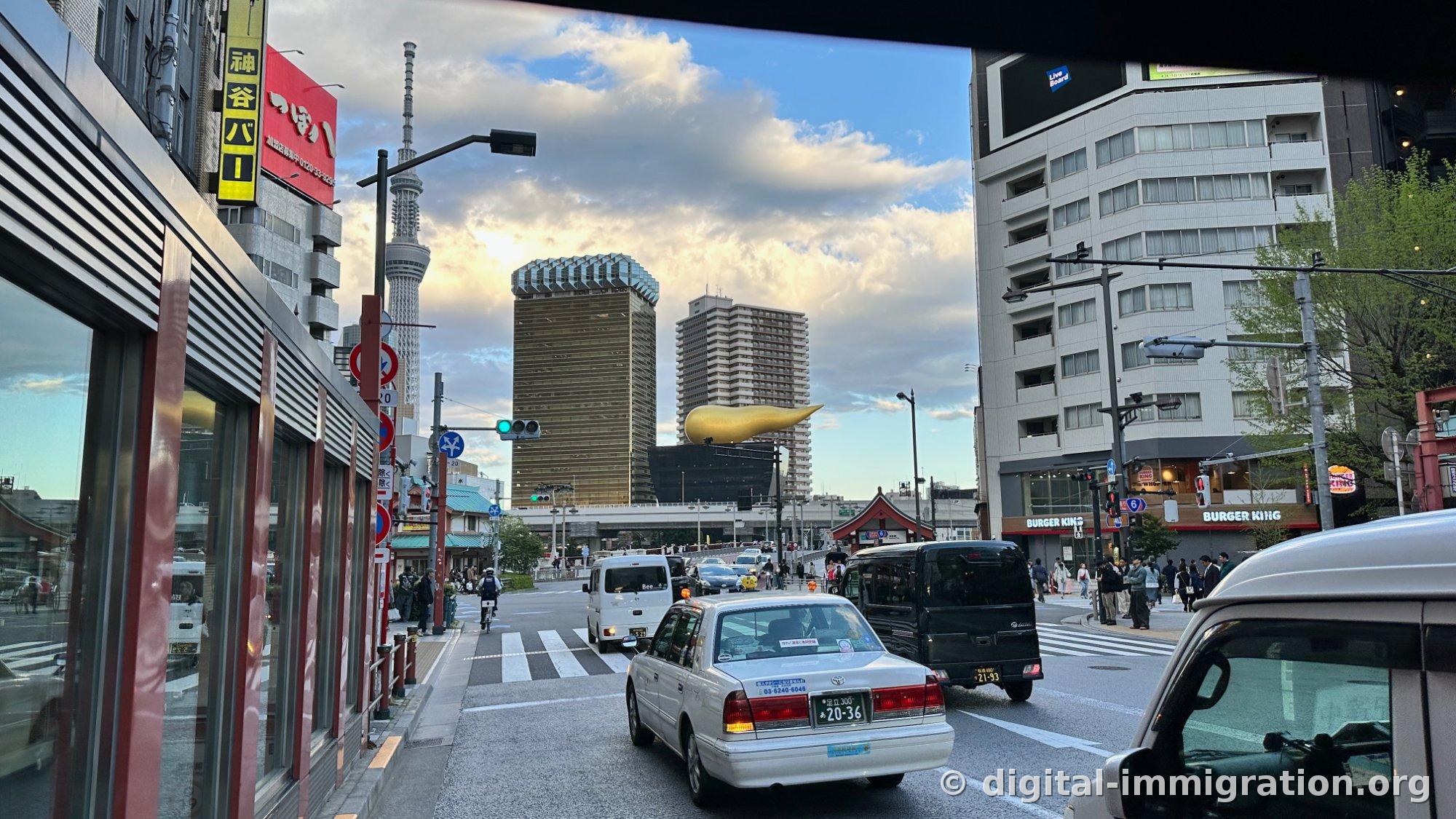
The red-signed "Kamiya Bar" (神谷バー) visible at the upper left of the photo is known as Japan's first bar, opened in 1880. Its signature drink is Denkikiran (電気ブラン), a potent brandy-based spirit. On the first floor, you buy a ticket first then find your seat—first-timers often feel a bit flustered. On my first visit, I stood in line and missed the staff's hand signals, asking twice to confirm. Prices change seasonally, so checking on-site is recommended.
The Burger King across the street is surprisingly useful for travelers. Good for when nature calls, or to wait out a 30-minute rain shower. It's always packed though, right in the heart of the tourist area.
You Must Ride a Rickshaw Once—It's Completely Different from Walking
I'd been to Asakusa many times but put off riding a rickshaw (人力車) for ages. It looked expensive, and honestly, I felt self-conscious doing it in front of others. Then one day I went with kids and rode one, and since then I always recommend it to first-time visitors.
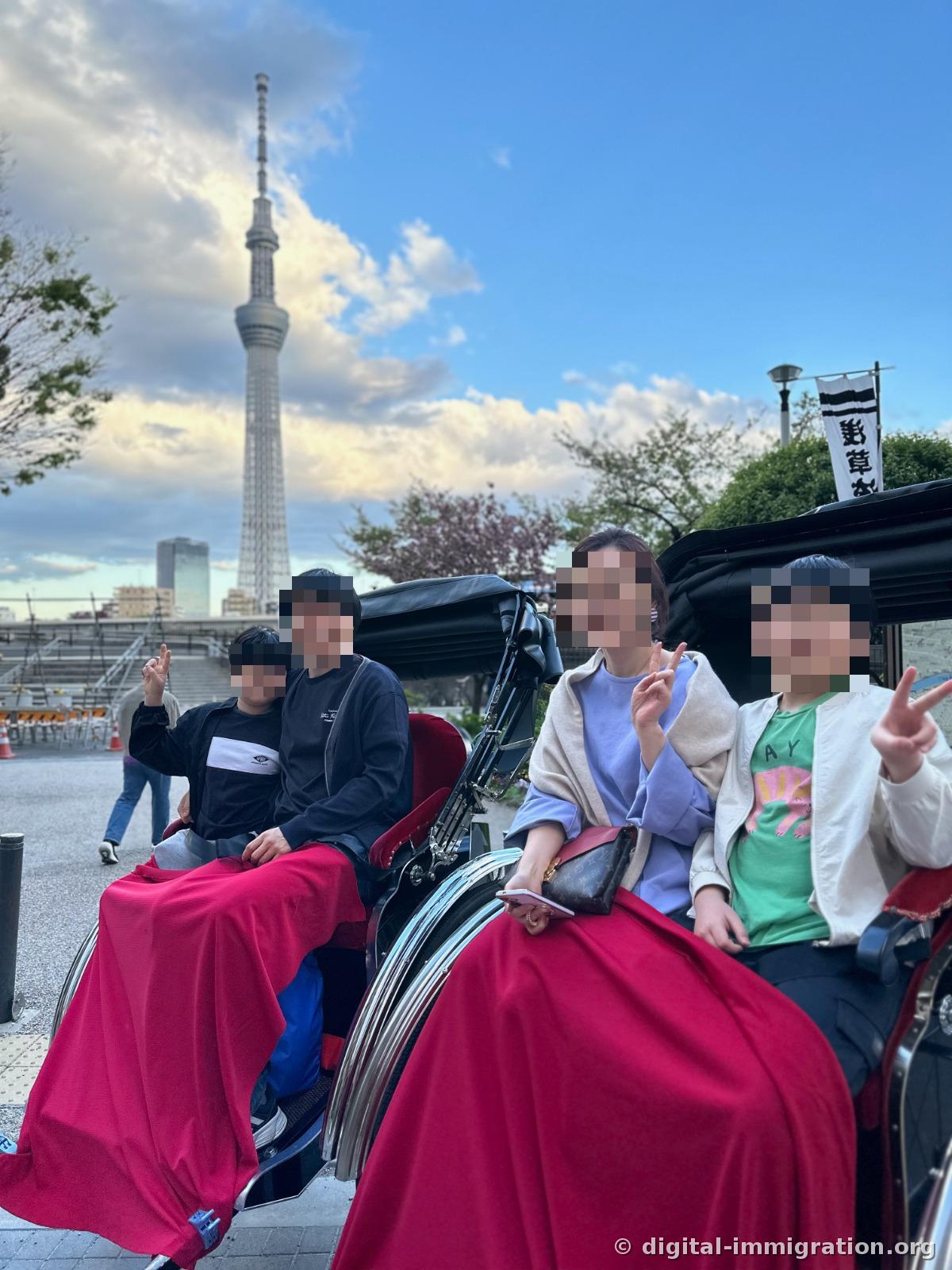
Rickshaws are typically two-seaters, so a group of four gets split between two. That red lap blanket they drape over your knees isn't just a photo prop—it's genuinely necessary. Even at a human-pulled pace, the river wind hits you head-on, and on an early April evening my legs got pretty chilled. Only with the blanket did it become tolerable.
The pullers (車夫) are usually young and keep up a running commentary while pulling. The one pulling us mixed English with basic Korean, asking if I knew why that building had that shape, and when I didn't know, he was delighted to explain. When a good angle appeared mid-route, he'd stop on his own, take the camera, and snap photos for us. His photography was pro-level—the shots came out far better than anything we'd taken ourselves.
Here's what stood out from actually riding one.
- The view is elevated. Your seat sits above eye level, so you see the whole street beyond the crowds. Alleyways that show only the back of heads when you walk look completely different.
- Confirm the route, time, and fare before boarding. There are options from short routes to hour-plus tours, with prices varying by group size. The waiting pullers carry fare sheets—definitely check before getting in.
- They solicit aggressively. They cluster in front of Kaminarimon and near Azumabashi Intersection, but if you're not interested, just avoid eye contact and walk past. They won't physically pull you in.
- Downsides: The seat is narrower than expected. With two adults, your shoulders keep brushing. And on stretches where you share the road with traffic, exhaust comes straight at you.
Location and Accessibility
Azumabashi Intersection sits right above Asakusa Station where the Ginza Line, Toei Asakusa Line, and Tobu Line all converge—easy to find. The Sumida River sightseeing boat pier is just below the bridge, so if you're heading to Odaiba or Hamarikyu, catching a boat here beats taking the subway. Arranging it as Senso-ji → Nakamise Street → Azumabashi → boat ride keeps your route efficient.
Where Taxis Line Up After Dark
The same intersection transforms at night. The daytime flow of tourists ebbs, and instead taxis line up in rows.
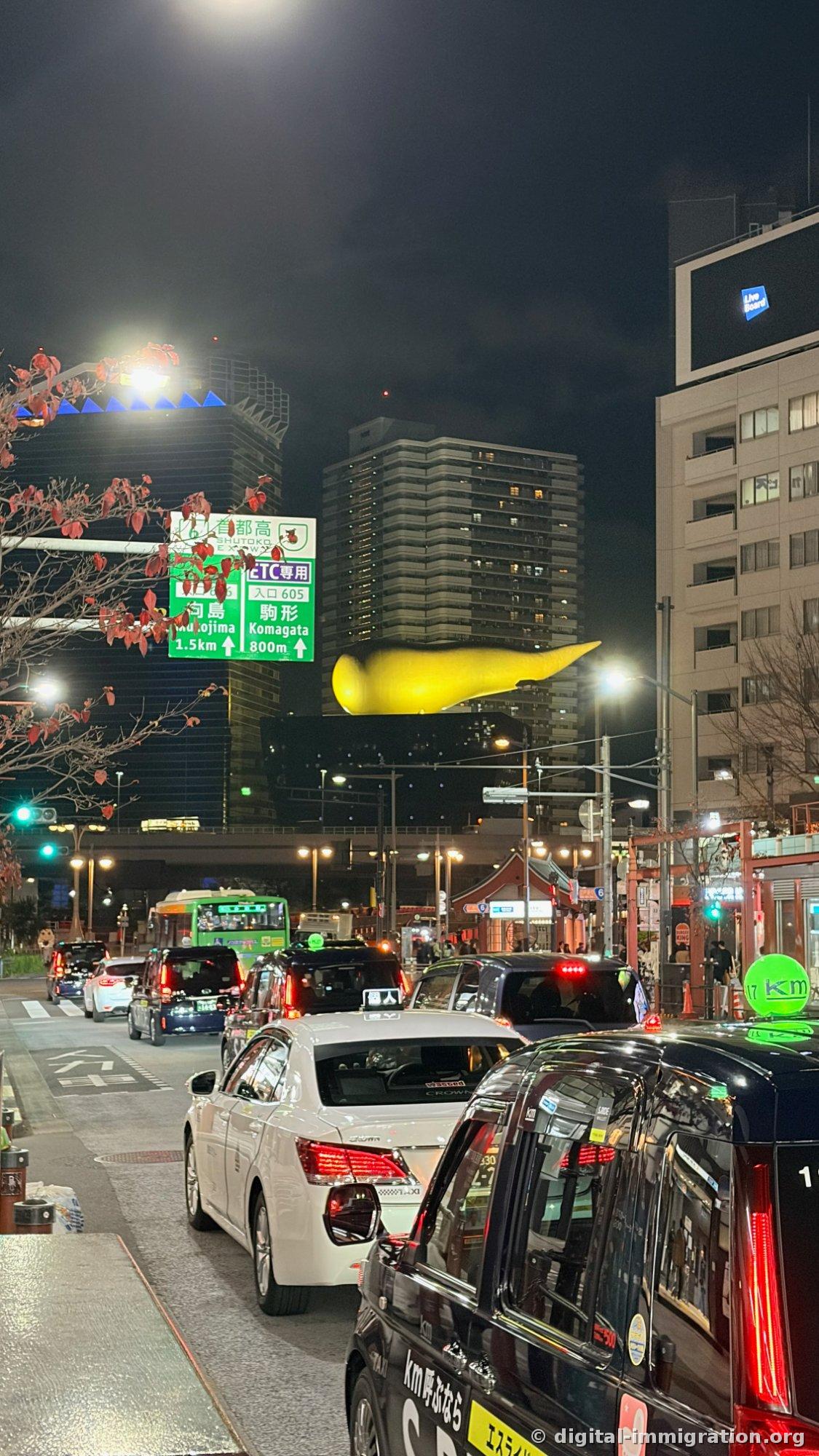
The lit green isosceles-triangle roof of Asahi headquarters and the golden flame sculpture lit from below stand out even more at night. Overhead, a green sign announces capital expressway access—Mukojima 1.5km, Kumagata 800m. This means the intersection is both a tourist spot and a main road leading to a highway entrance, so traffic noise continues all night. If you come expecting a quiet night scene, you'll be disappointed.
The green 'km' light on the taxi roof at the lower right is from a Kokusai Automobile vehicle. You can catch one from this line when returning to your lodging after late-night fun in Asakusa, but Tokyo taxi base fares are steep. I usually check the last train time from Asakusa Station and take the subway instead.
What First-Time Visitors Often Miss
- Shoot the flame sculpture from the start of the bridge on the Asakusa side, not from the walking path on the far bank (Asahi side), to capture Skytree in the frame. Crossing over actually ruins the angle.
- The 20–30 minutes around sunset is best. There's still color in the sky while building lights are just coming on.
- The bridge's sidewalk is narrow and crowded. Tripods become a nuisance.
- If you're riding a rickshaw, do it after visiting Senso-ji. Riding first leaves you with perfectly fine legs for the rest of the day.
I think Asakusa deserves two visits—once by day and once at night. Visiting the same intersection twice is when you truly feel in your bones that this is both a tourist destination and a street where real people commute.
Basahin din
- From Akihabara's Chuo-dori to the Kanda River: A Record of Tokyo's Electronics District Revisited Multiple Times
Tokyo's Akihabara is a neighborhood where it's hard to say you've seen everything in a single visit. I've come multiple times across different seasons, and each time the signs chan…
Tokyo · Akihabara - Buying a Single ¥300 Year-End Jumbo Lottery Ticket at Nishi-Ginza Chance Center in Tokyo
Exit from the Hibiya exit of Tokyo's Shimbashi Station, walk toward the elevated highway for about three minutes, and suddenly you'll see a line of people stretching along the side…
Tokyo · Nishi-Ginza Chance Center - Ueno Ameyoko, the real magic starts after sunset — an evening walk from the Okachimachi Gate to Ueno Station
Every time I come to Tokyo, my feet find their way to Ueno Ameyoko (アメ横) without fail. This time I entered from the Okachimachi side and worked my way toward Ueno Station. I've met…
Tokyo · Ameya Yokocho Market