Ueno Ameyoko, the real magic starts after sunset — an evening walk from the Okachimachi Gate to Ueno Station
Every time I come to Tokyo, my feet find their way to Ueno Ameyoko (アメ横) without fail. This time I entered from the Okachimachi side and worked my way toward Ueno Station. I've met…
Tokyo · Ameya Yokocho Market
Every time I come to Tokyo, my feet find their way to Ueno Ameyoko (アメ横) without fail. This time I entered from the Okachimachi side and worked my way toward Ueno Station. I've met plenty of people who stopped by during the day and thought, "That's it?" and left, but this neighborhood transforms once the signs light up after 5 PM. When the arches beneath the JR tracks and the side alleys all light up at once, it becomes less a market and more a narrow, bustling festival alley.
It's better to enter from the Okachimachi side gate
People usually start from Ueno Station, but I recommend doing the opposite and entering from Okachimachi. When you come up from the Oedo Line Ueno-Okachimachi Station, there's a rainbow-colored gate with '上野御徒町中央通り' written on it. Standing beneath it, you can see neon signs lined up in the distance, and this composition looks best when the evening sky still holds a trace of navy blue. Looking at the signage on the gate pillars, I found that pedestrian-only hours are 4 PM to 6 AM, with 12 PM to 6 AM on Sundays and holidays. In the evening, you can walk down the middle of the street without worrying about cars.
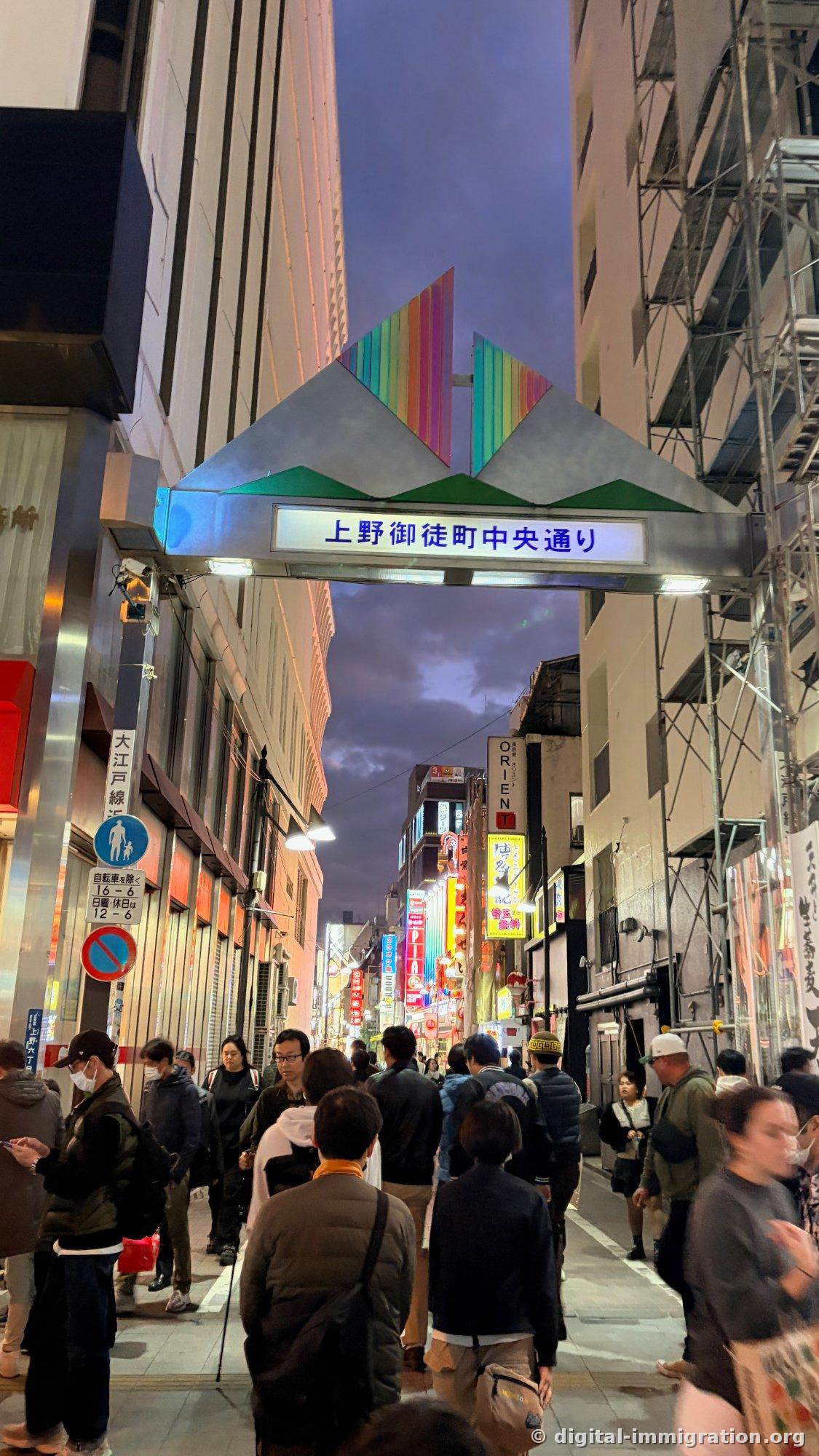
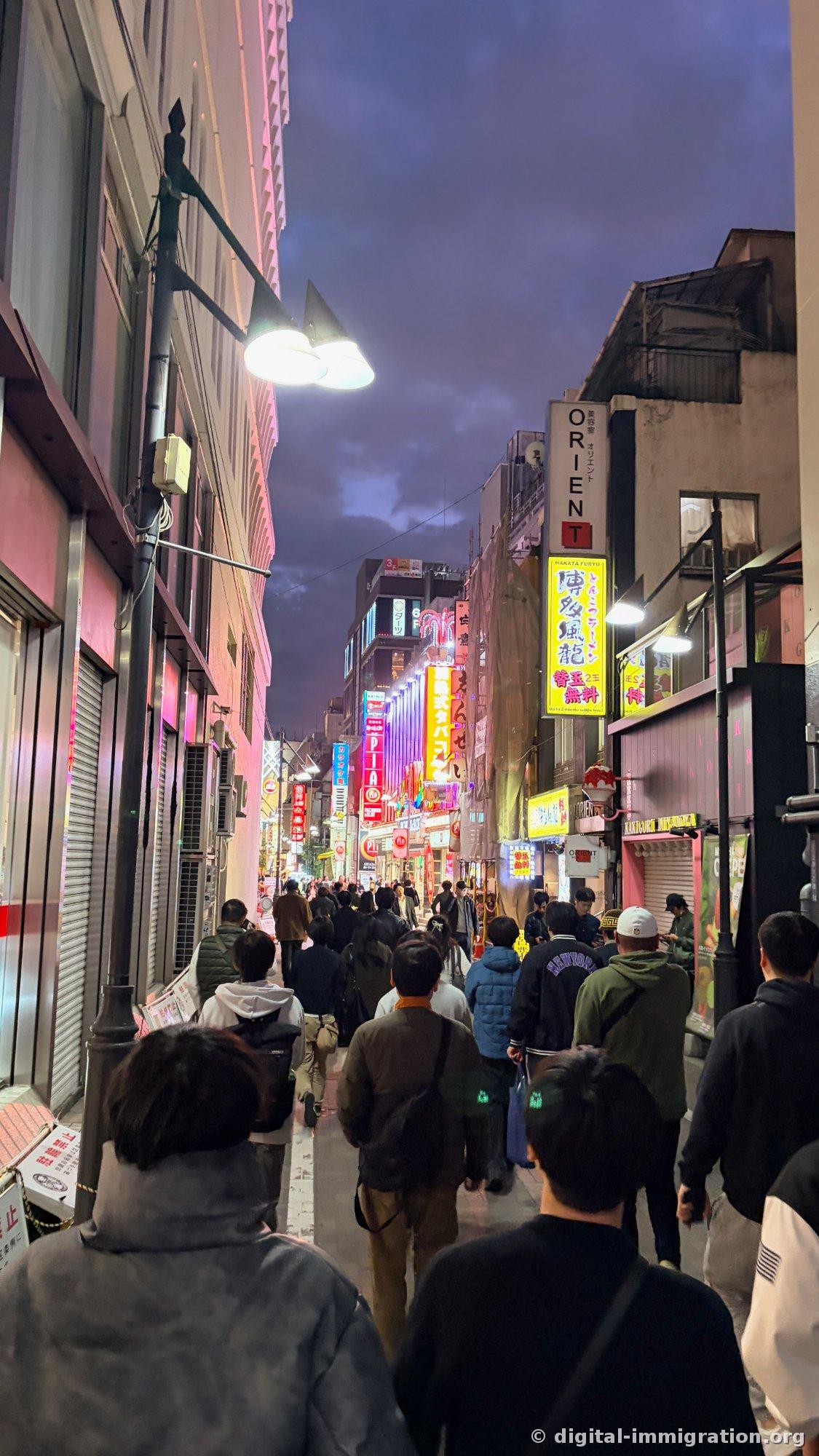
A short walk past the gate and the street suddenly narrows. Sky shows through as a thin strip between the buildings on both sides, with signs packed below it. The ramen shop sign on the right, boldly displayed on a yellow background in the Hakata tonkotsu style, reads '替玉無料 (free noodle refills).' This alley is packed with ramen, yakiniku, and izakaya shops layered on top of each other, so you can't judge by the first-floor signs alone. Most restaurants are up staircases.
What caught my eye before the food were the secondhand and buyback shops
Many people know Ameyoko only as a food alley, but walking through it, you'll be struck by how many watch, jewelry, and camera buyback signs there are. I stopped for a while in front of Mizutani Camera, with its blue awning and large letters reading '高価買取 (premium buyback).' It says they also run a professional studio and can take ID photos on the spot, and the display window has antique watches and accessories packed tightly into several glass cases. There's a 'TAX FREE' sign and credit card stickers on the side glass, suggesting they get quite a few foreign customers. Prices vary wildly from item to item, so I won't list them here. It's best to check the price tags directly inside the glass case, and if you're thinking of buying, ask about tax-free conditions right there.
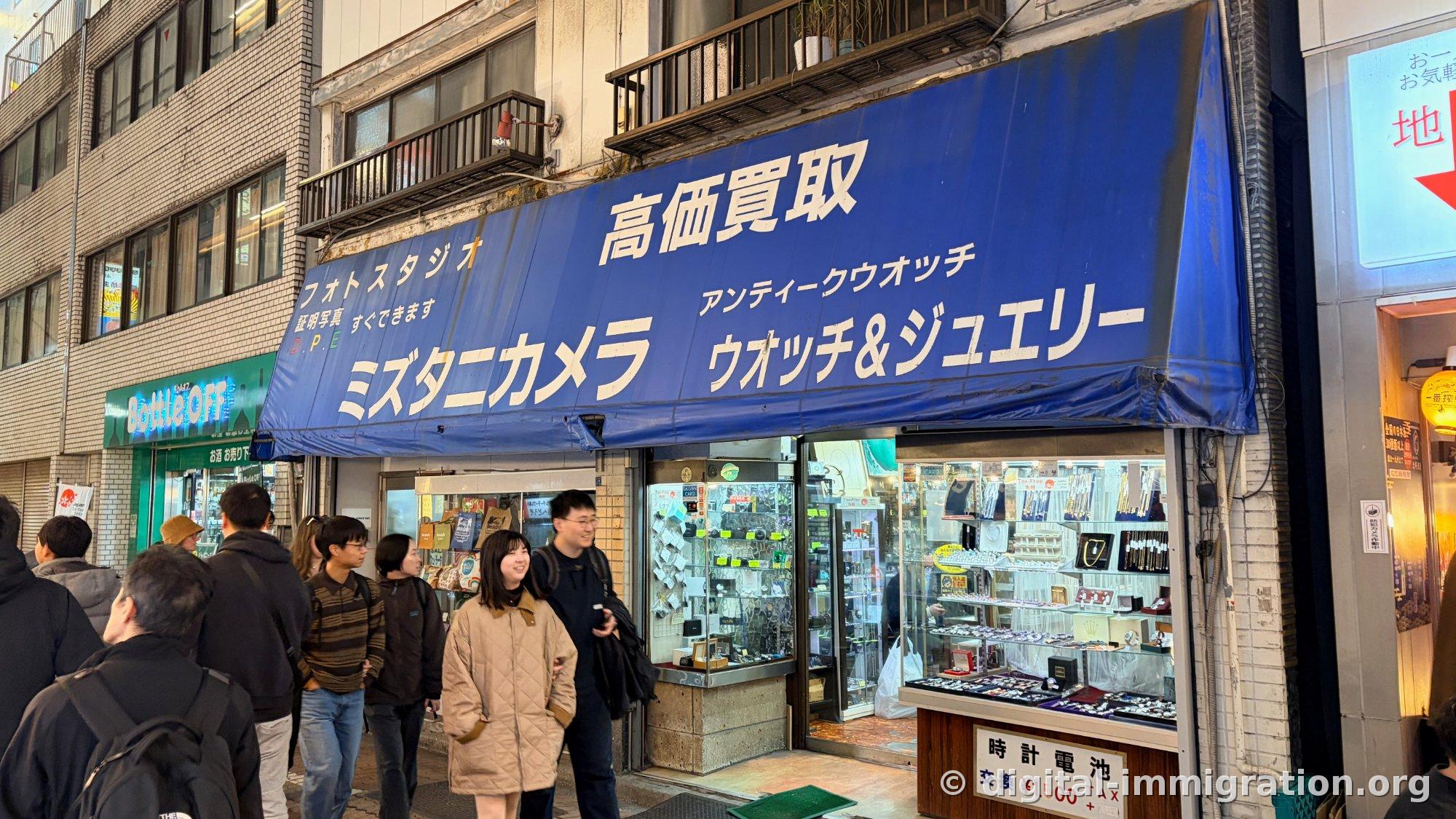
This section also has liquor shops packed tightly together. The Bottle OFF liquor store next door gets steady visitors checking whiskey prices. If you're planning to buy a bottle as a souvenir, I recommend checking out this alley before the duty-free shop at the airport. Just remember it has weight, so it's better to buy it at the end of your route.
Seafood signs and 'nomihodai' price tags
Walk a bit further and the atmosphere changes again. A large sign with a red wave pattern reading '浜焼 (hamayaki)' hits you, followed by the vertical '磯丸水産 浜焼' sign, and on the right, the yellow-bulb-framed '上野漁港' sign all at once. These are places where you grill clams and fish right at your table. The standing sign in front of the shop on the left had the phrase '放題が得!' (all-you-can-eat value!) with 800-yen-range prices, and next to it was marked '120 minutes.' It appears to be an unlimited menu option, but conditions are in fine print, so it's safer to take a photo of the standing sign before entering and confirm with staff. I've entered one of these places without reading the conditions and been shocked by the bill.
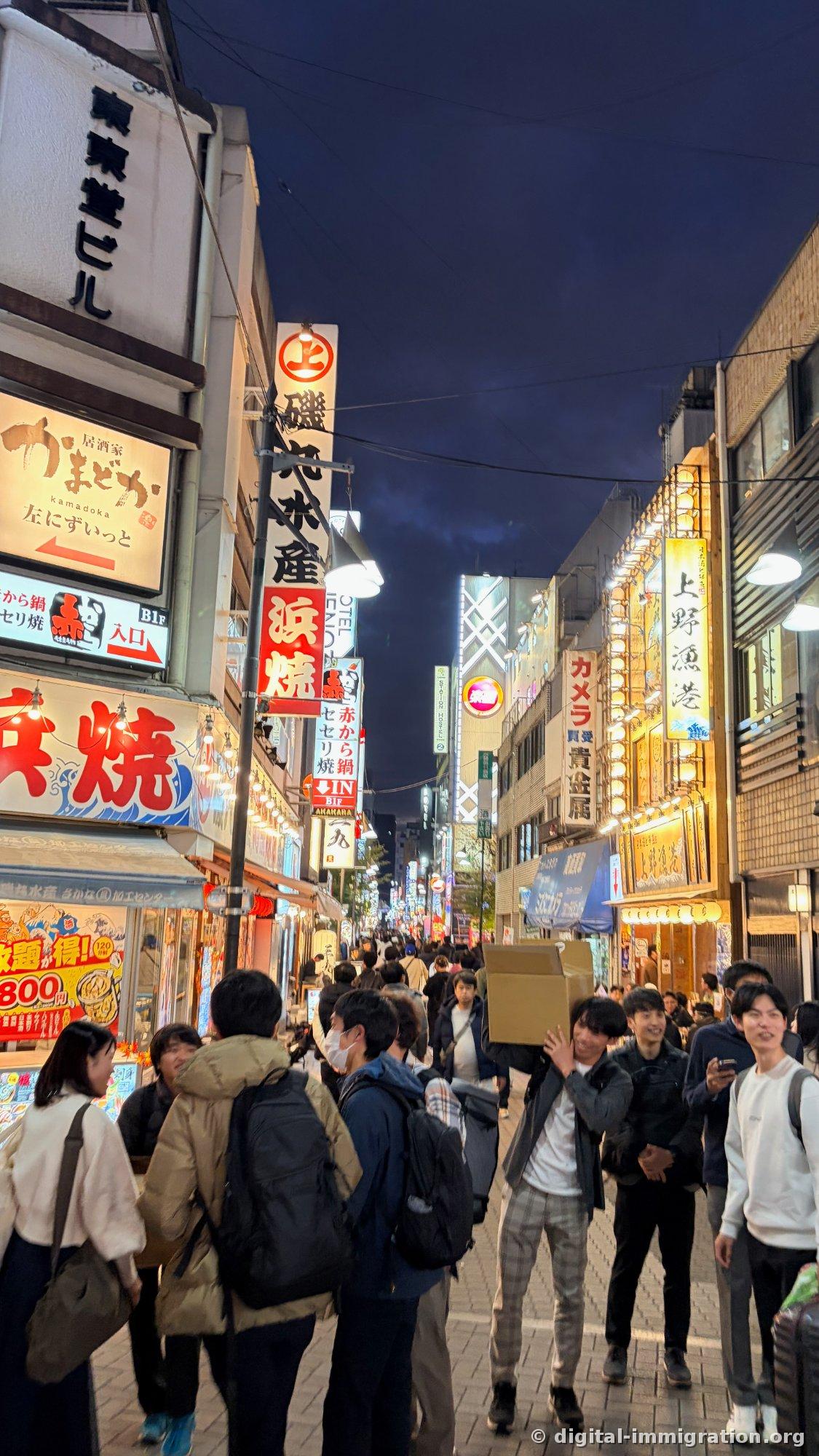
One scene that happens to be captured in this photo perfectly shows the nature of this alley. A young man with a large cardboard box on his shoulder smiles as he weaves through the crowd. This isn't just a street full of tourists — it's a working commercial alley where goods actually flow. That's why between 7 PM and 9 PM, you need to give up on walking speed. Budget 5 minutes to cover 100 meters and you'll feel better about it.
Location and accessibility — just 500 meters between two stations
Ameyoko is a section of about 500 meters along the JR tracks between Ueno Station and Okachimachi Station. Whether you start from either end, 20-30 minutes is enough to walk the entire length, but with multiple spots to duck into side alleys, you'll actually end up staying much longer. Tokyo Metro Ginza Line, Hibiya Line Ueno Station, and Oedo Line Ueno-Okachimachi Station are right at the alley entrance. If you have luggage, it's better to store it in a coin locker at Ueno Station before heading in. Dragging a suitcase through the market is tough on both you and everyone around you.
Exiting the alley opens onto Ueno Station Square
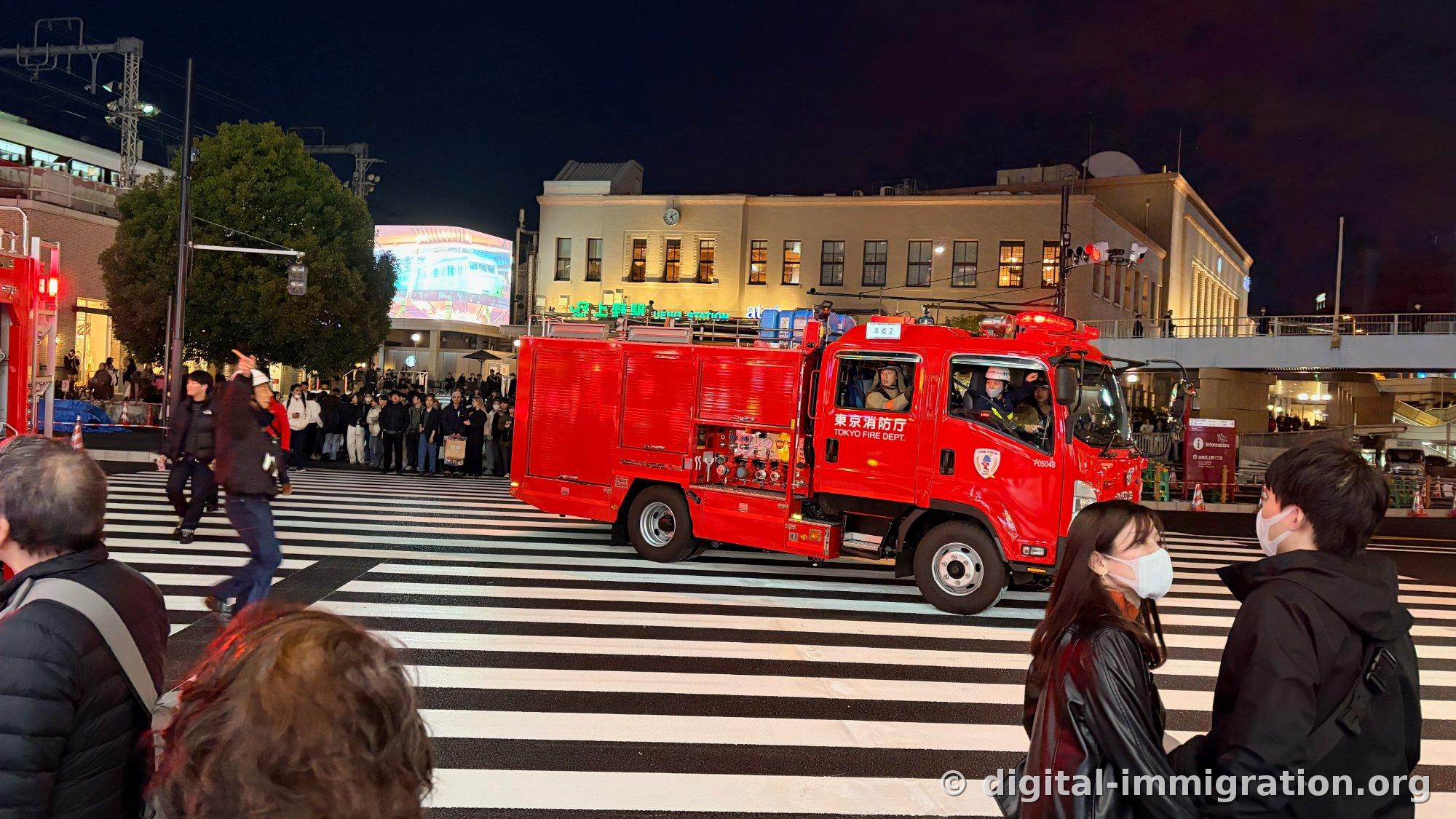
Coming out of the market onto the main street, you're right at the crosswalk in front of Ueno Station. I encountered an unexpected scene. As I waited for the light to change, a fire truck slowly passed. It was a red vehicle with '東京消防庁 / TOKYO FIRE DEPT.' written on the side, and it wasn't an urgent, sirens-wailing dispatch. On the opposite sidewalk, a line of people stood watching the truck pass. In Tokyo, when a fire truck goes by, the surroundings go quiet for a moment, and those frozen seconds stay with you.
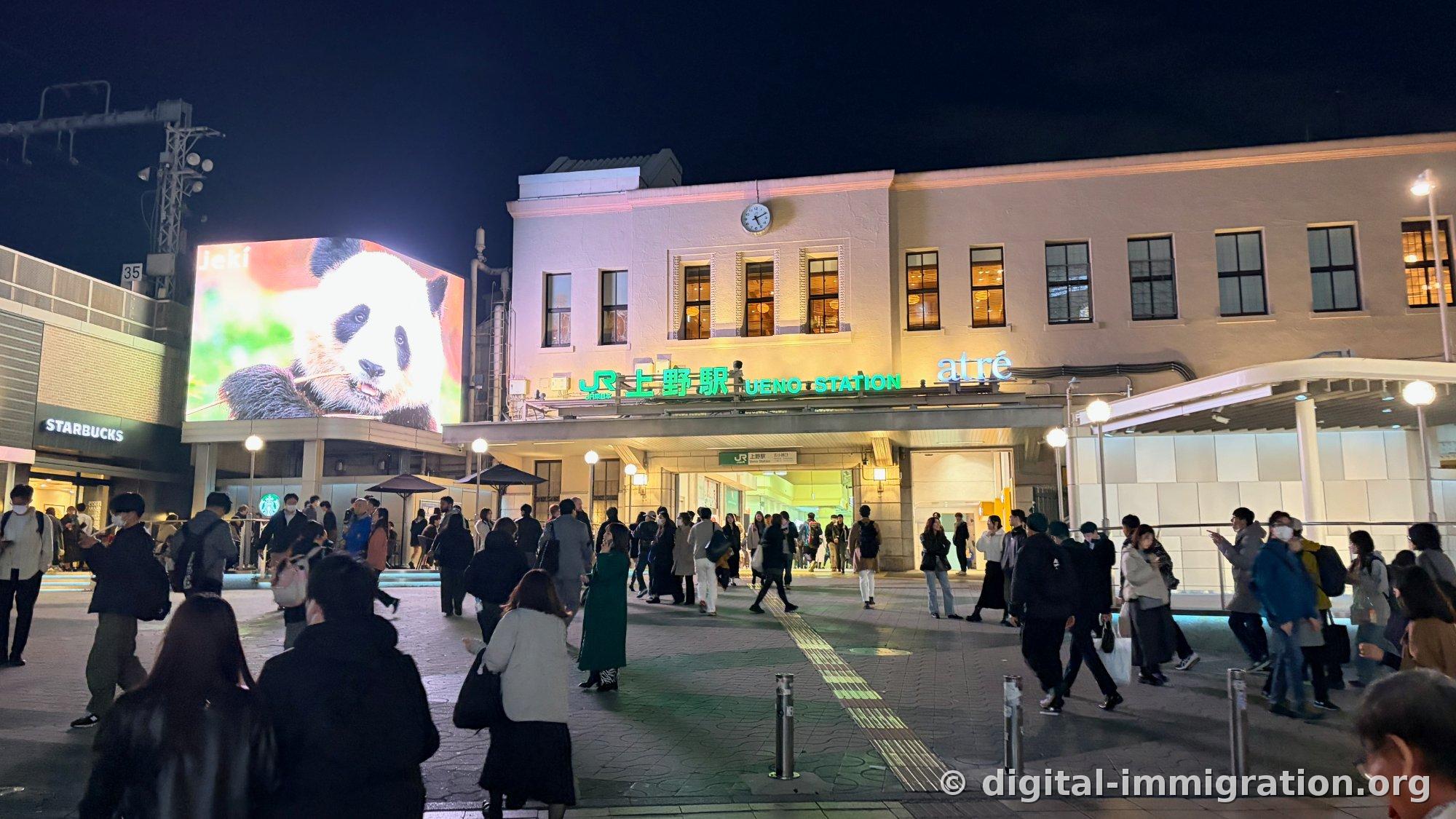
Cross the street and you reach the square by Ueno Station's Hirokoji exit. There's a cream-colored historic station building with a clock hanging on it, and the green 'JR 上野駅 UENO STATION' sign and 'atré' logo are lit up. On a large screen on the left wall, panda footage plays big and bold. The pandas from Ueno Zoo are this neighborhood's mascot — no matter where you look around the station, there's a panda or two stuck somewhere. There's a Starbucks in one corner of the plaza, perfect for sitting and resting your tired legs after walking through the market. Though finding a seat during evening hours isn't easy.
A note for those coming next time
- When to go: If you start from Okachimachi around 4:30-5 PM, you can catch both the blue sky and lit neon signs. If your goal is photography, this 30-minute window is worth it.
- Route: Okachimachi Gate → narrow neon alley → buyback/watch shop section → seafood grilling section → Ueno Station Square. If you go the opposite direction, you end up finishing in the narrow alley, which makes for an awkward conclusion.
- Cash: While more shops now accept cards and IC payments, food stalls still move faster with cash. Carrying a few thousand-yen bills keeps you from getting stuck in lines.
- Read the price signs yourself: All-you-can-eat and set menus have time limits and conditions in fine print. Checking the standing sign before entering saves you from problems. Since prices aren't listed in this article, checking on-site is recommended.
- Luggage: Leave your suitcase in a locker at Ueno Station. Alcohol and heavy souvenirs are better purchased at the end of your route.
If you come to Ameyoko expecting to find something amazing, you'll be disappointed. An evening of getting jostled in narrow streets, reading sign after sign, peering at watches in display cases, and finally resting your tired legs watching panda footage in front of the station. If you know how to enjoy that level of density, this is a street that never gets old no matter how many times you visit.
Basahin din
- From Akihabara's Chuo-dori to the Kanda River: A Record of Tokyo's Electronics District Revisited Multiple Times
Tokyo's Akihabara is a neighborhood where it's hard to say you've seen everything in a single visit. I've come multiple times across different seasons, and each time the signs chan…
Tokyo · Akihabara - Buying a Single ¥300 Year-End Jumbo Lottery Ticket at Nishi-Ginza Chance Center in Tokyo
Exit from the Hibiya exit of Tokyo's Shimbashi Station, walk toward the elevated highway for about three minutes, and suddenly you'll see a line of people stretching along the side…
Tokyo · Nishi-Ginza Chance Center - A Day at Kura Sushi in Asakusa, Tokyo: Three Tuna Plates and Ending with Castella Cake
Once you exit Nakamise-dori at Senso-ji in Asakusa, there's a stretch where tourist density drops noticeably. That's where I wandered into Kura Sushi Asakusa—purely because the wai…
Tokyo · Kura Sushi Asakusa