House of Tugu in Jakarta Menteng — The place becomes a museum after you finish eating
When you have dinner plans in Jakarta, you usually end up at a restaurant inside a mall. The air conditioning is strong, parking is convenient, and there's no risk of disappointmen…
Jakarta · House of Tugu
When you have dinner plans in Jakarta, you usually end up at a restaurant inside a mall. The air conditioning is strong, parking is convenient, and there's no risk of disappointment. That evening, I went to House of Tugu in Menteng. This is a place where you barely see half of it if you just eat and leave. I realized the real experience begins only after the plate empties, when I ordered coffee, stood up from the table, and walked into the inner corridor.
First courses — Duck in clay pot and sliced beef
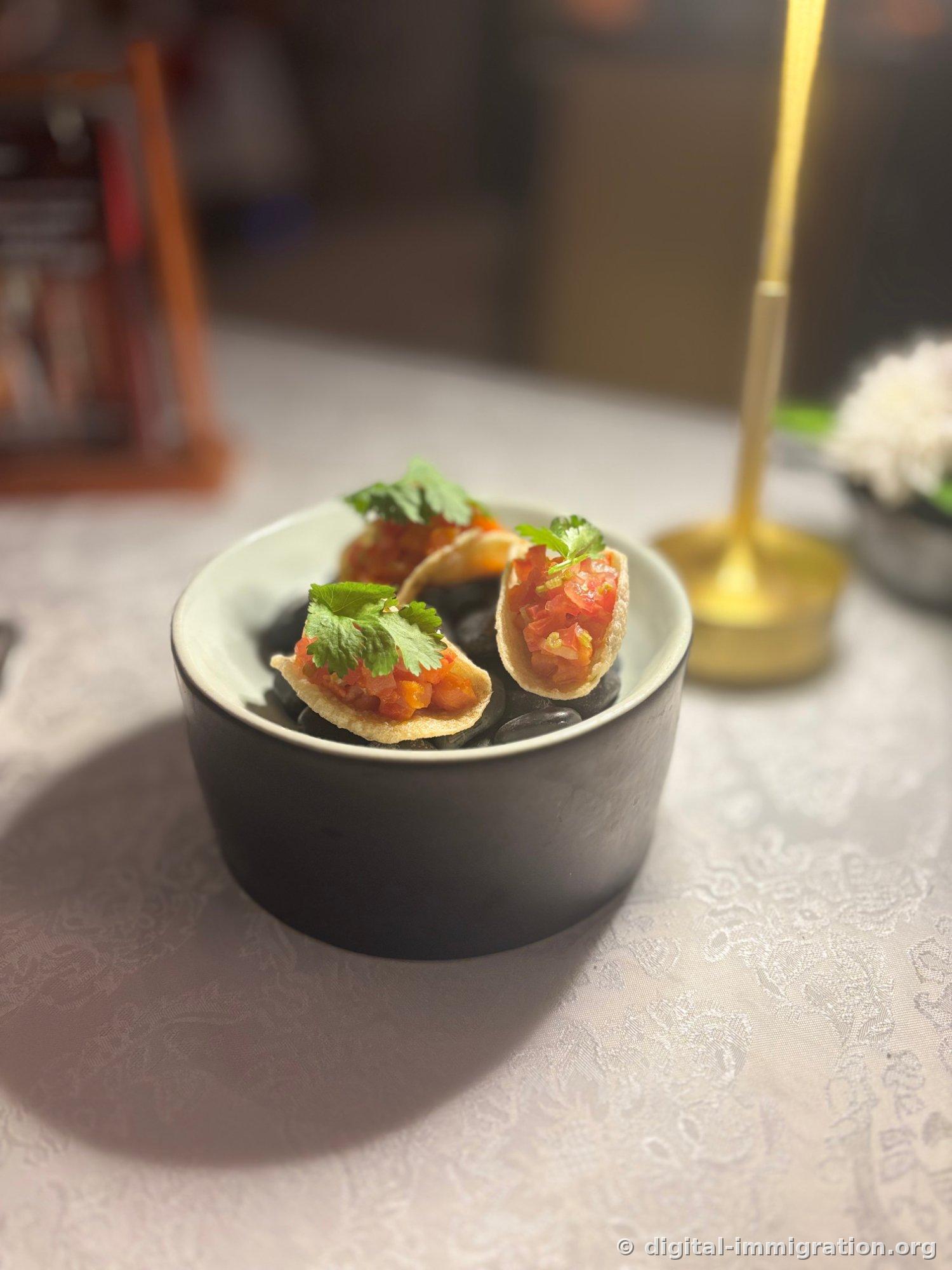
The first thing placed on the table was a single bite. Perched on a small bowl lined with black volcanic stones, a crispy shell topped with minced tomato and cilantro. I picked it up with my fingers and popped it in whole—crispy, tangy, and just a hint of heat at the finish. That signature Indonesian sambal ending. It's gone in two bites, but after you eat it, you want to order something other than water.
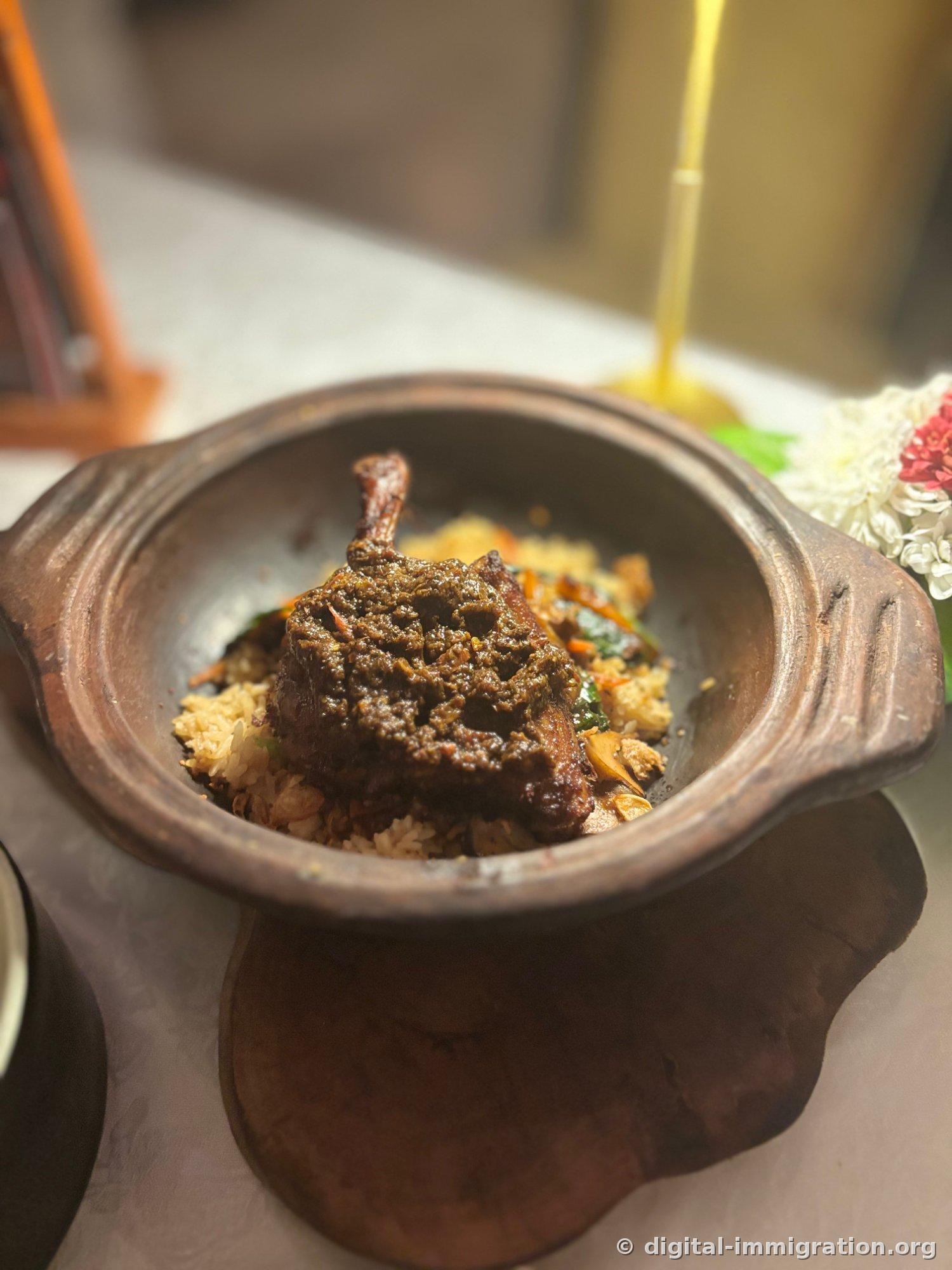
The main course came in a rustic clay pot. When you lift the lid, the aroma rises before the steam. A duck leg laid whole over rice, covered with a deep, dark green-tinged sauce. That thick, concentrated paste made from slowly-cooked Javanese spices. The meat slid right off the bone, and the rice underneath, saturated with oil and spices, kept disappearing without needing a side dish. But it's salty. If you don't keep water or something bland nearby, the second half becomes a challenge. I ate about half and left some rice.
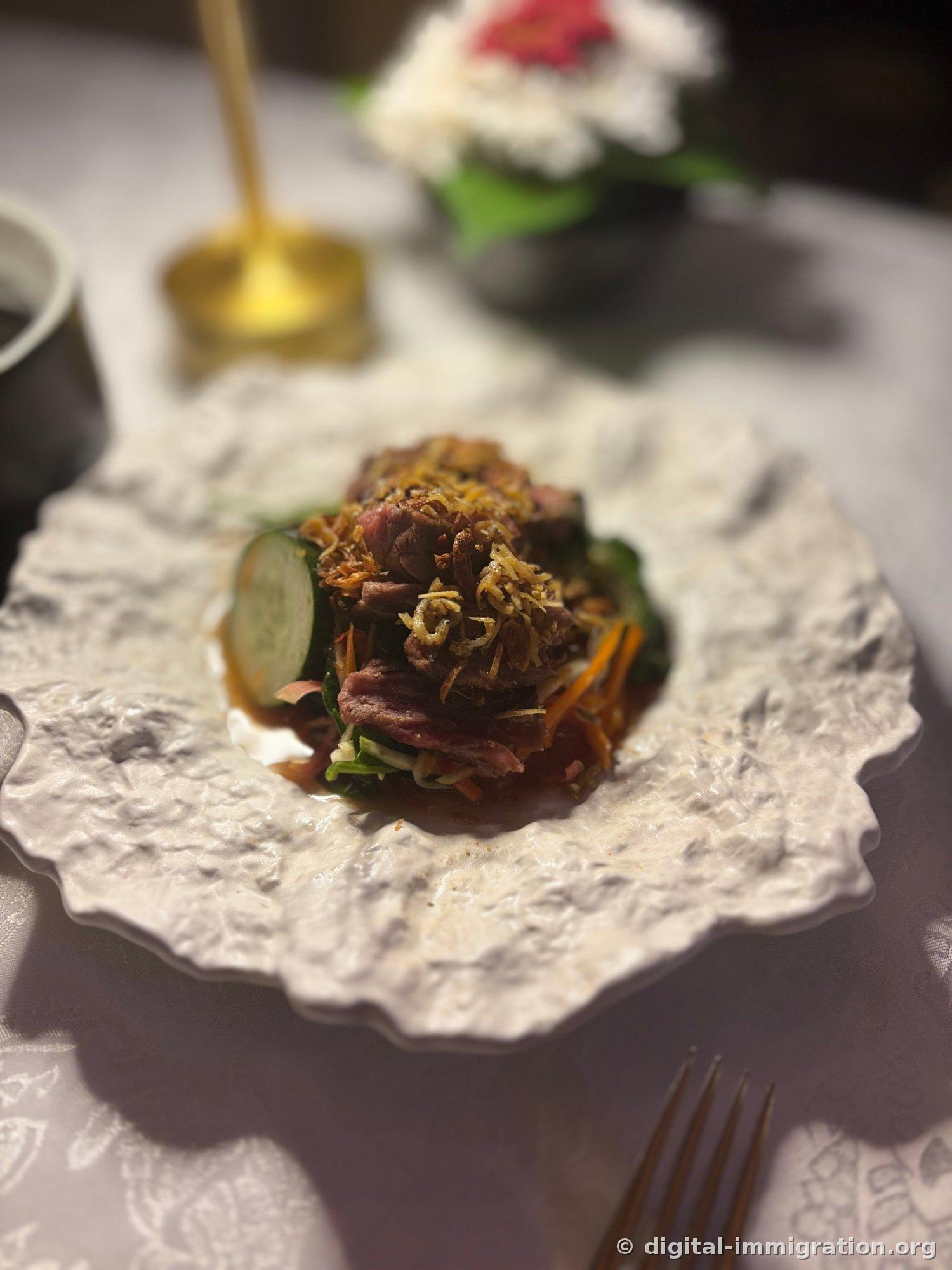
My companion's plate was completely different. On a roughly textured white ceramic, medium-cooked beef sliced thin and stacked, with crispy shallots heaped on top. Cucumber slices and julienned carrots, with blanched greens underneath. I tried a bite—the sauce was sweet. Where the clay pot dish presses down with heavy flavors, this one lifts with lightness. When two people go, it's better to order one of each and split something this different.
The dining room itself is an exhibition
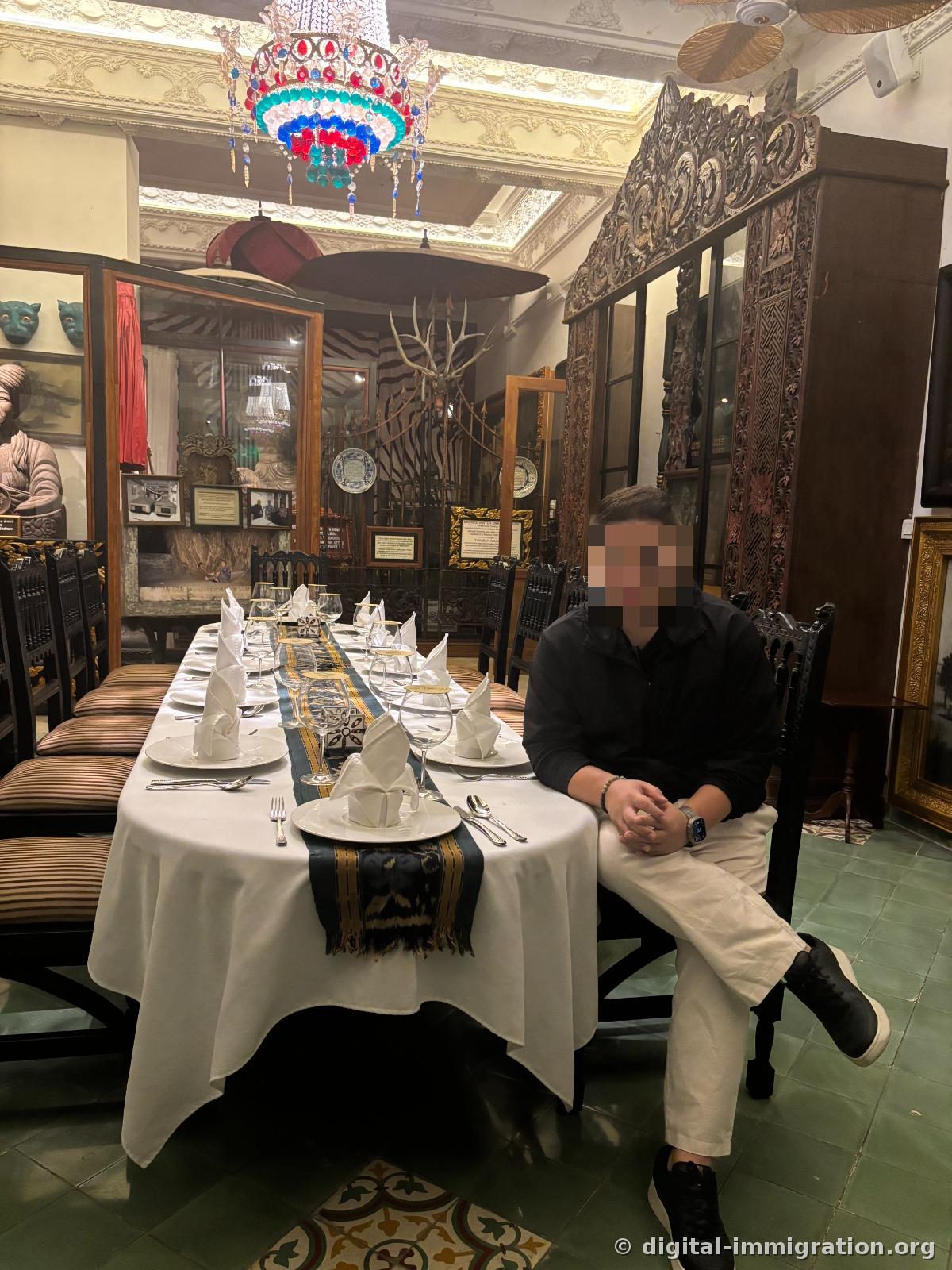
Throughout the meal, I was aware of my back. Sitting at a long table, just turning your head reveals glass display cases. A turquoise mask, red cloth, old black and white photos with description cards framed and standing, and from the ceiling hangs a chandelier strung with red, blue, and turquoise glass beads like a crown. The floor is laid with green tiles mixed with flowered cement tiles. It feels less like a restaurant interior and more like dining in the middle of a storage vault.
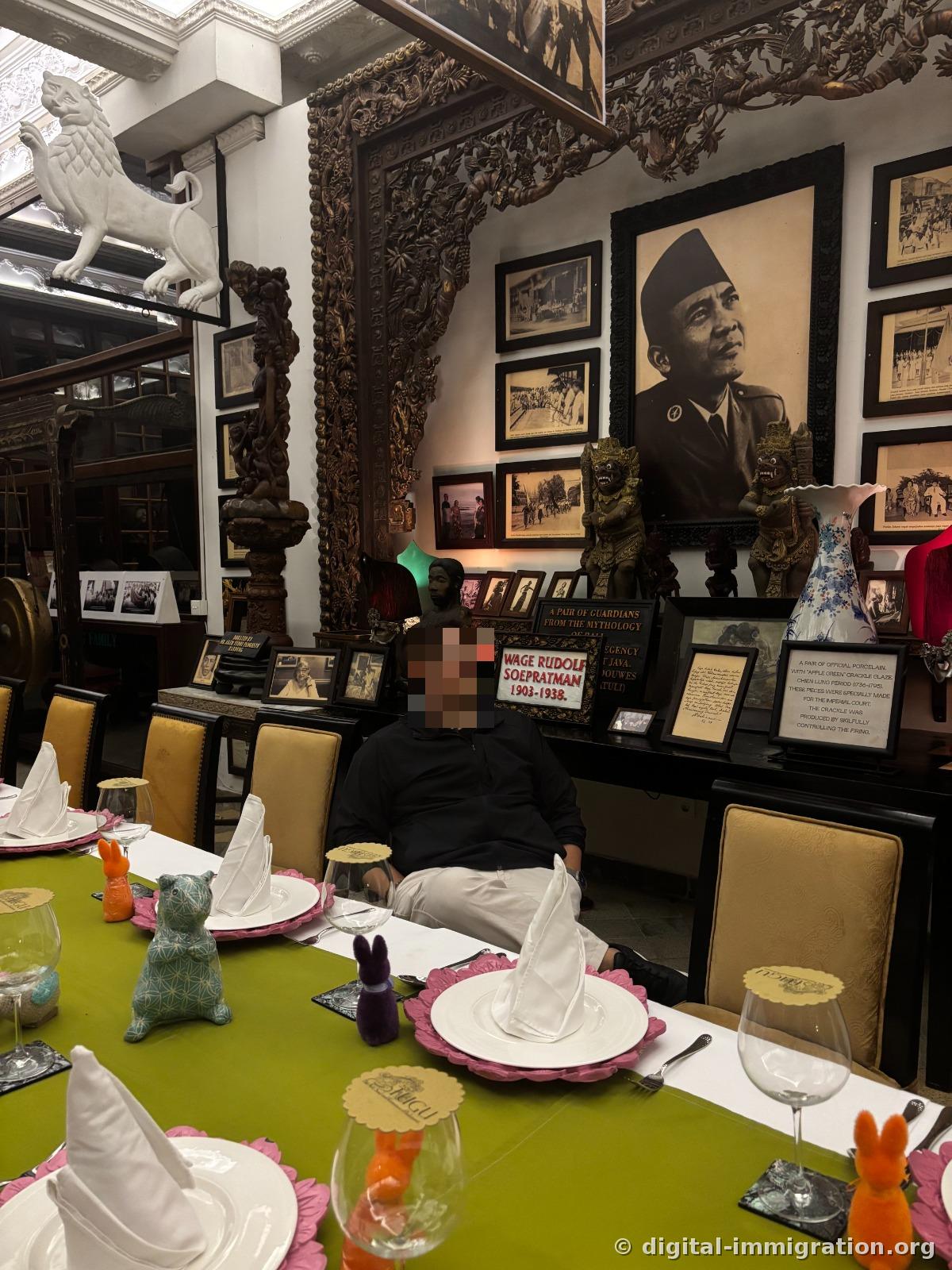
Another dining room had a different atmosphere. The table was set with a green tablecloth and pink plates with a rabbit figurine on top, but behind it hung a large portrait photo of Sukarno on the wall. Next to it, a framed plaque reading 'WAGE RUDOLF SOEPRATMAN 1903–1938', a pair of Balinese guardian statues, blue and white porcelain, even an old handwritten letter. The coaster next to the place setting had the TUGU logo printed on it. Below each photo was an English description card, making it entertaining to read them one by one while waiting for food.
The inner rooms after finishing the meal
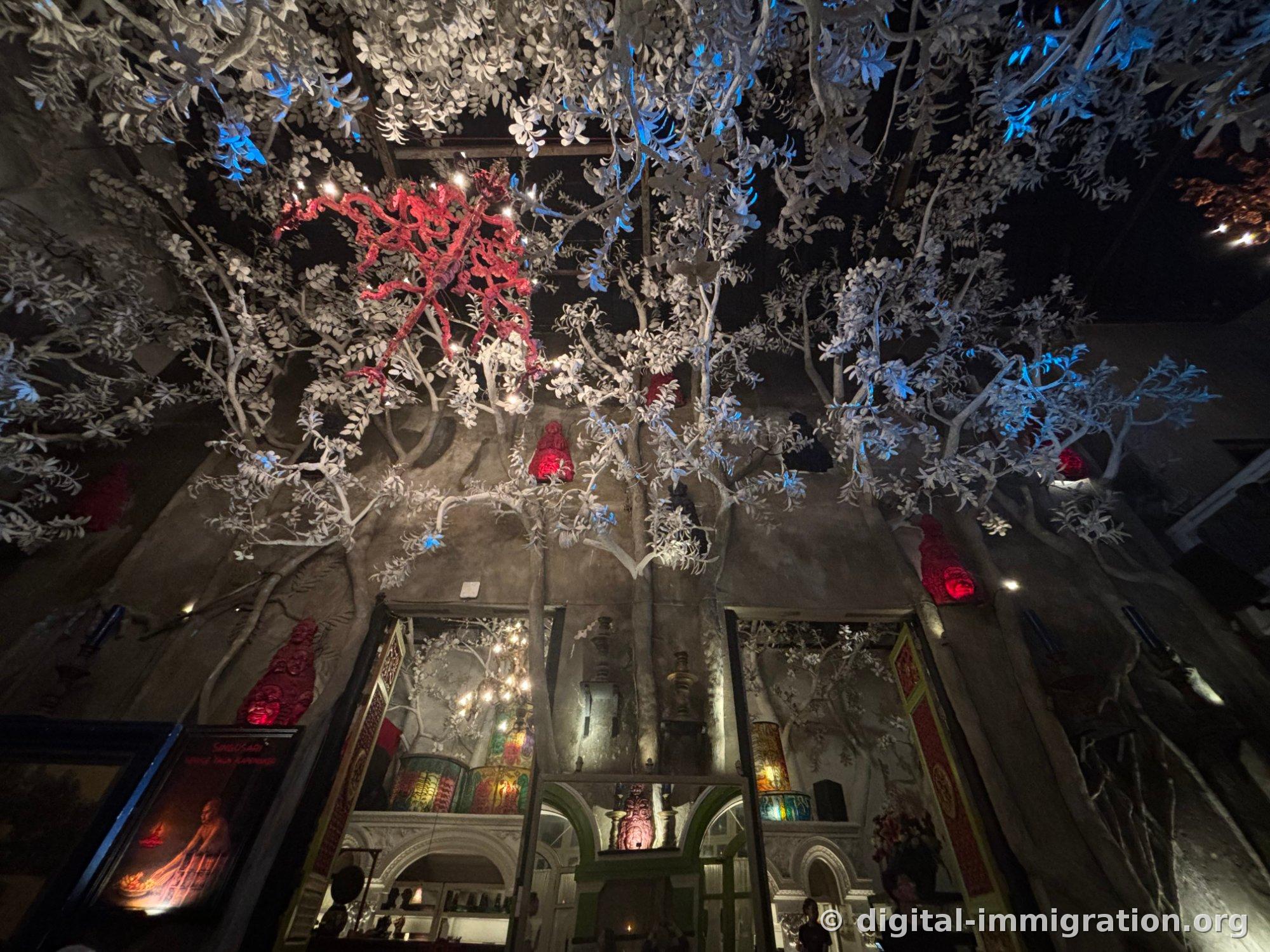
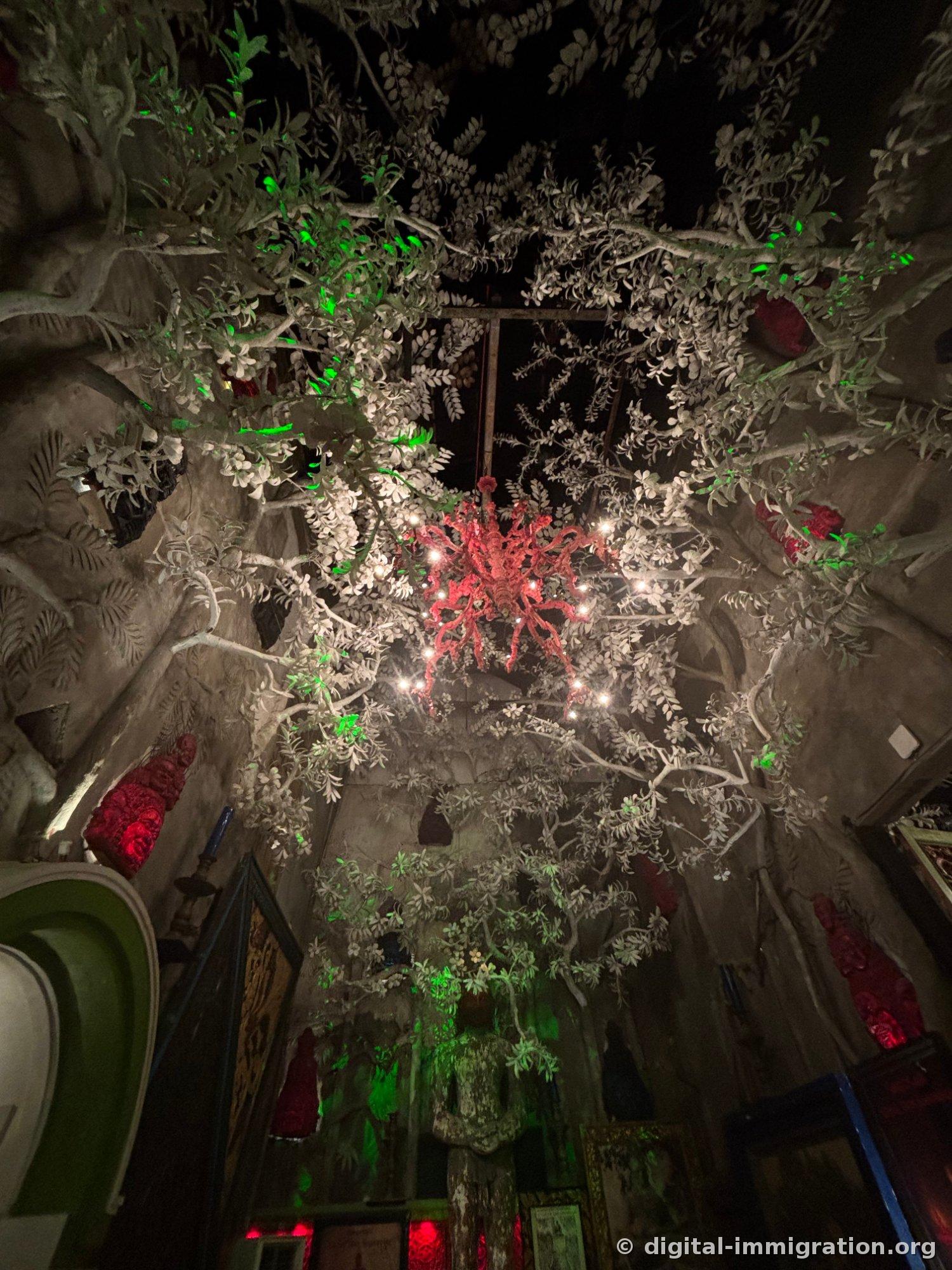
I postponed settling the bill and walked further in. The ceiling suddenly opens up several stories high, and the entire walls and ceiling are covered with a tree sculpted in gray concrete. Each individual leaf was applied by hand. When blue lighting shines through, the leaves turn blue; when green light comes through, they turn green. In the center hangs a chandelier that looks like red coral, and small tables tinged red are set into the hollows between tree branches.
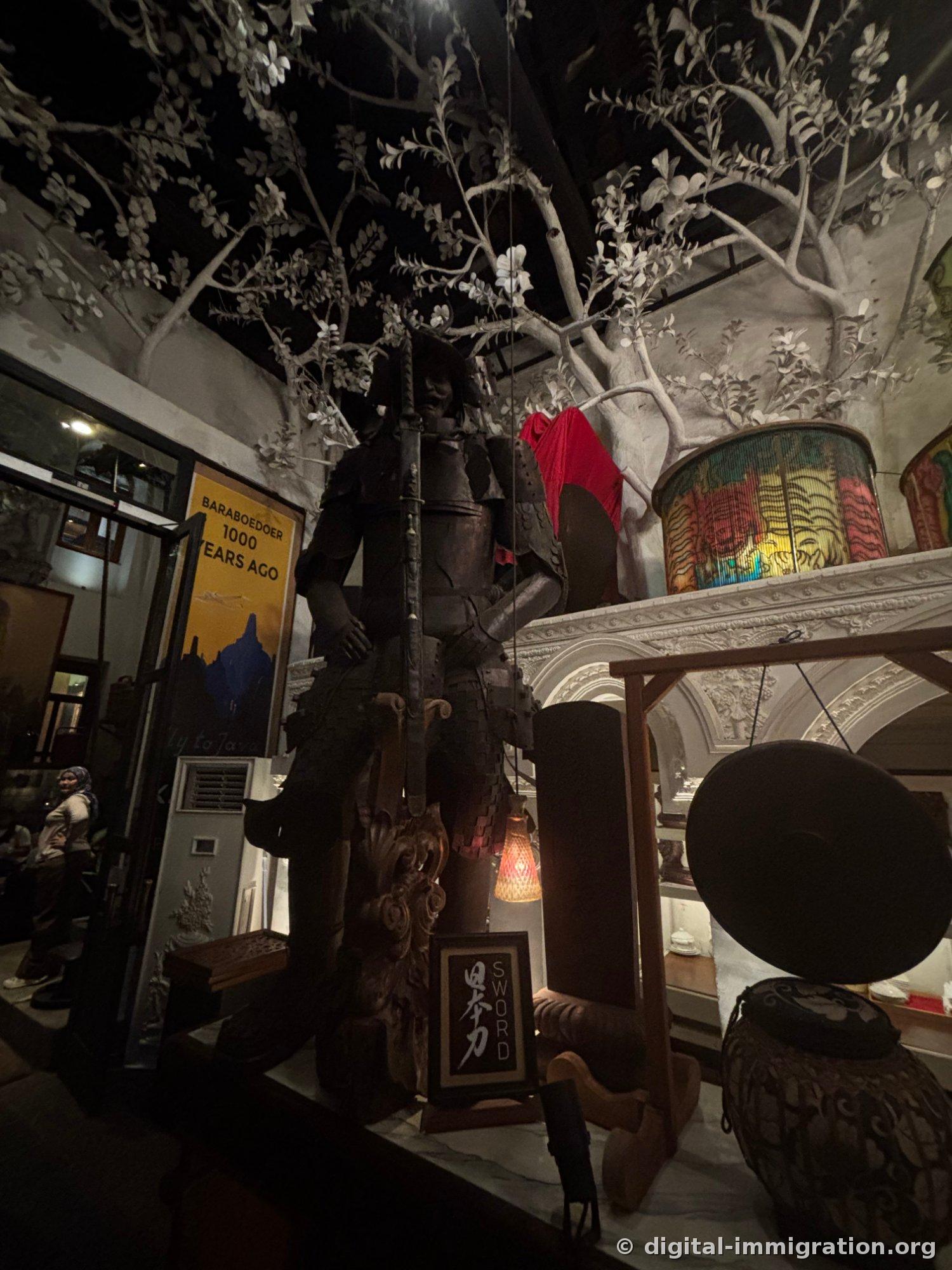
Beneath that tree stands an armored samurai statue taller than a person, a sword planted in his grip. A small framed plaque at his feet reading '刀 SWORD', beside it a gong and colorful lanterns, along with an old travel poster reading 'BARABOEDOER — 1000 YEARS AGO' from the Dutch colonial era. It's a printed artifact from when Borobudur was being sold as a tourist commodity. Another guest passed behind the samurai, reflected in the glass door.
Things you see longer because it's dark
The inner rooms are generally dim. The lighting strategy uses single spotlights on individual artifacts, so to take photos you have to brace yourself against a wall or railing. I lost about half my shots to motion blur that evening. It's better not to use flash. The flash flattens the living sculptures in an instant, destroying the shadows.
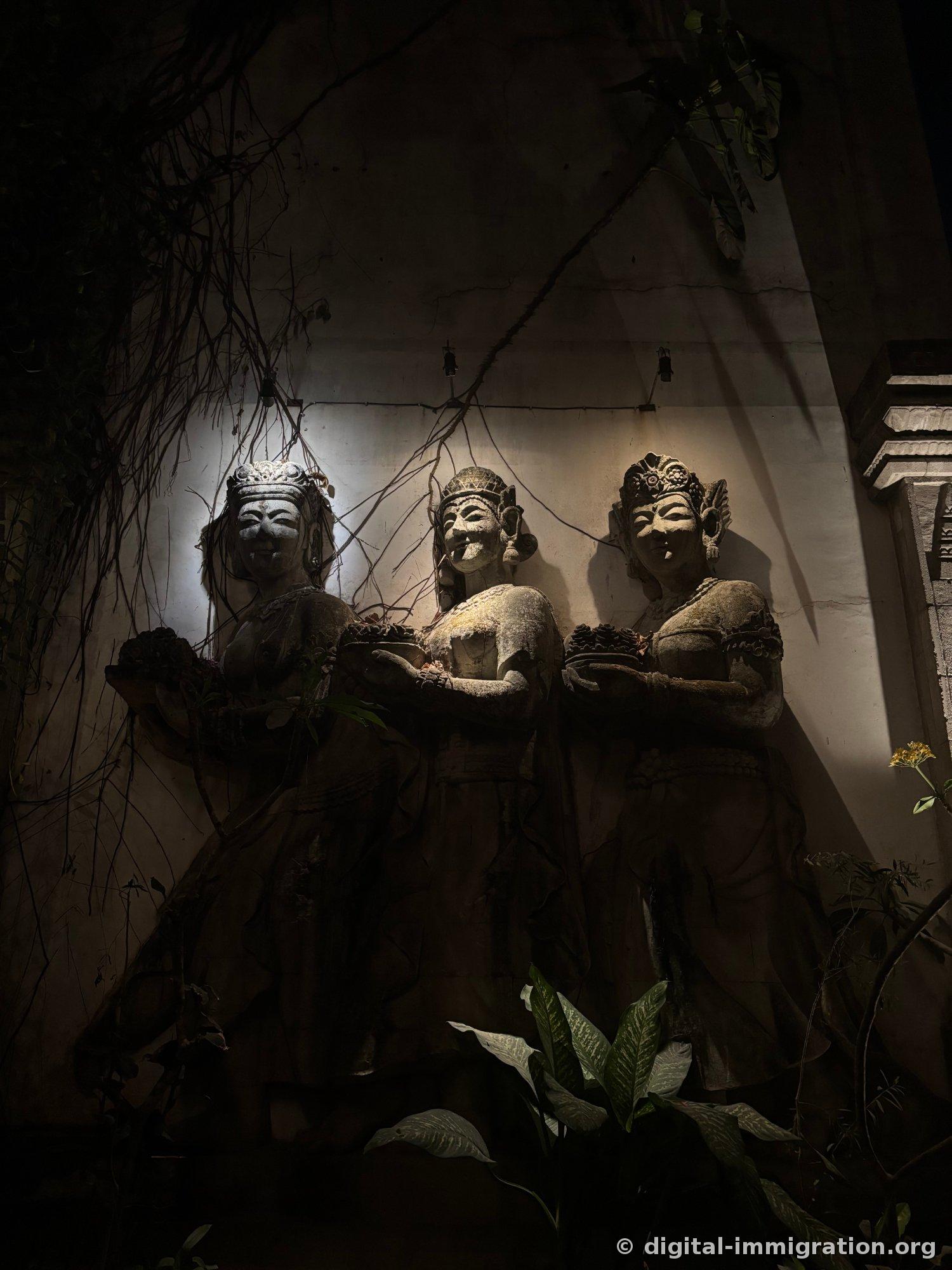
On the courtyard wall are three stone statues of women standing side by side, supporting offering vessels. Dry vines hang from above, obscuring their faces halfway, and real potted plants grow at their bases. A single light shines on the left statue's face, making all three expressions appear different.
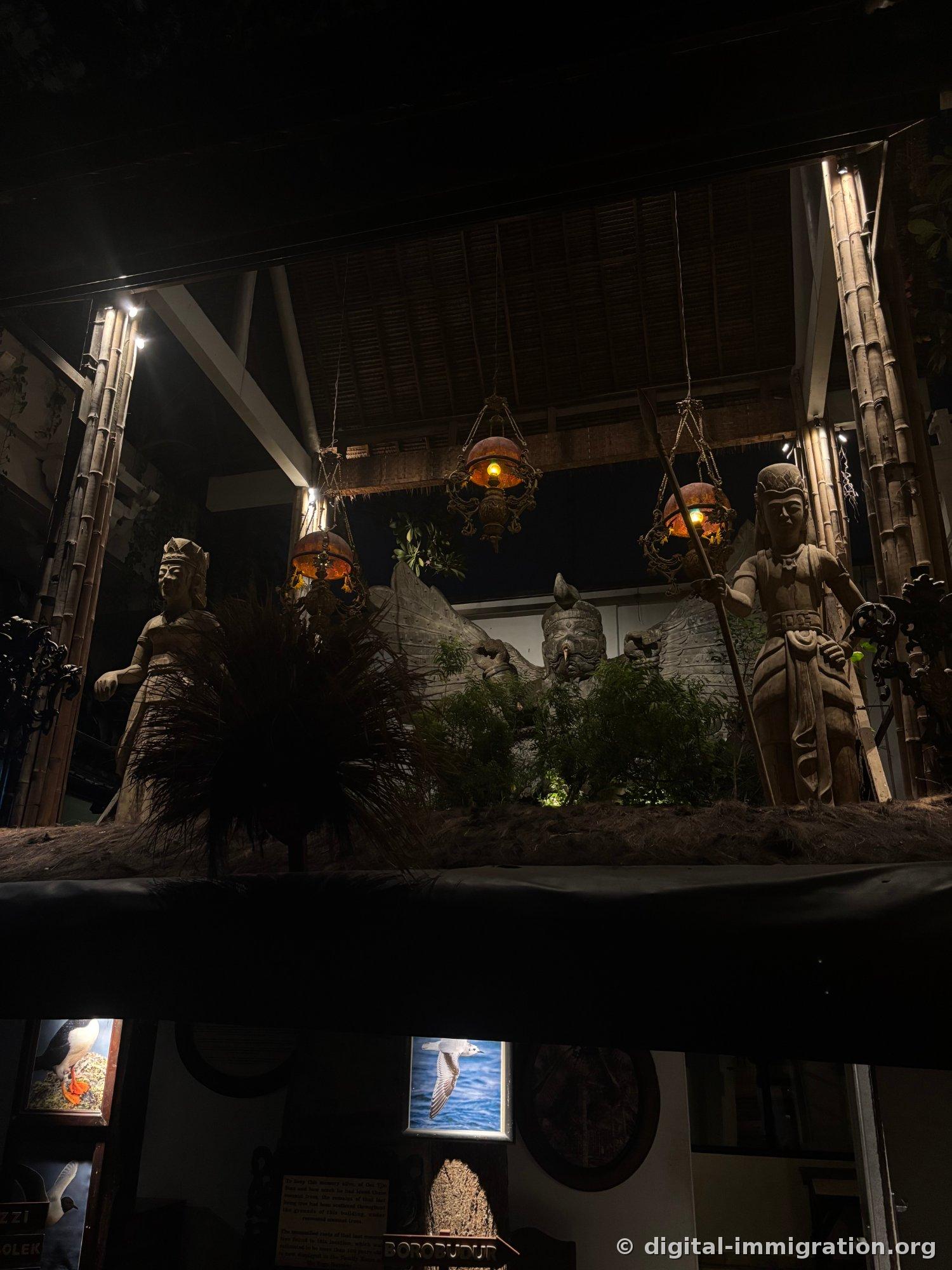
There's also a section with bamboo posts and a thatched roof. Three old brass lanterns hang from chains casting orange light, and two stone statues holding windows stand facing each other below. On the back wall, an enormous winged relief is half-obscured by vegetation. On the lower explanatory panel, I could make out the characters 'BOROBUDUR'. The lighting is so dim that it takes a while for your eyes to adjust.
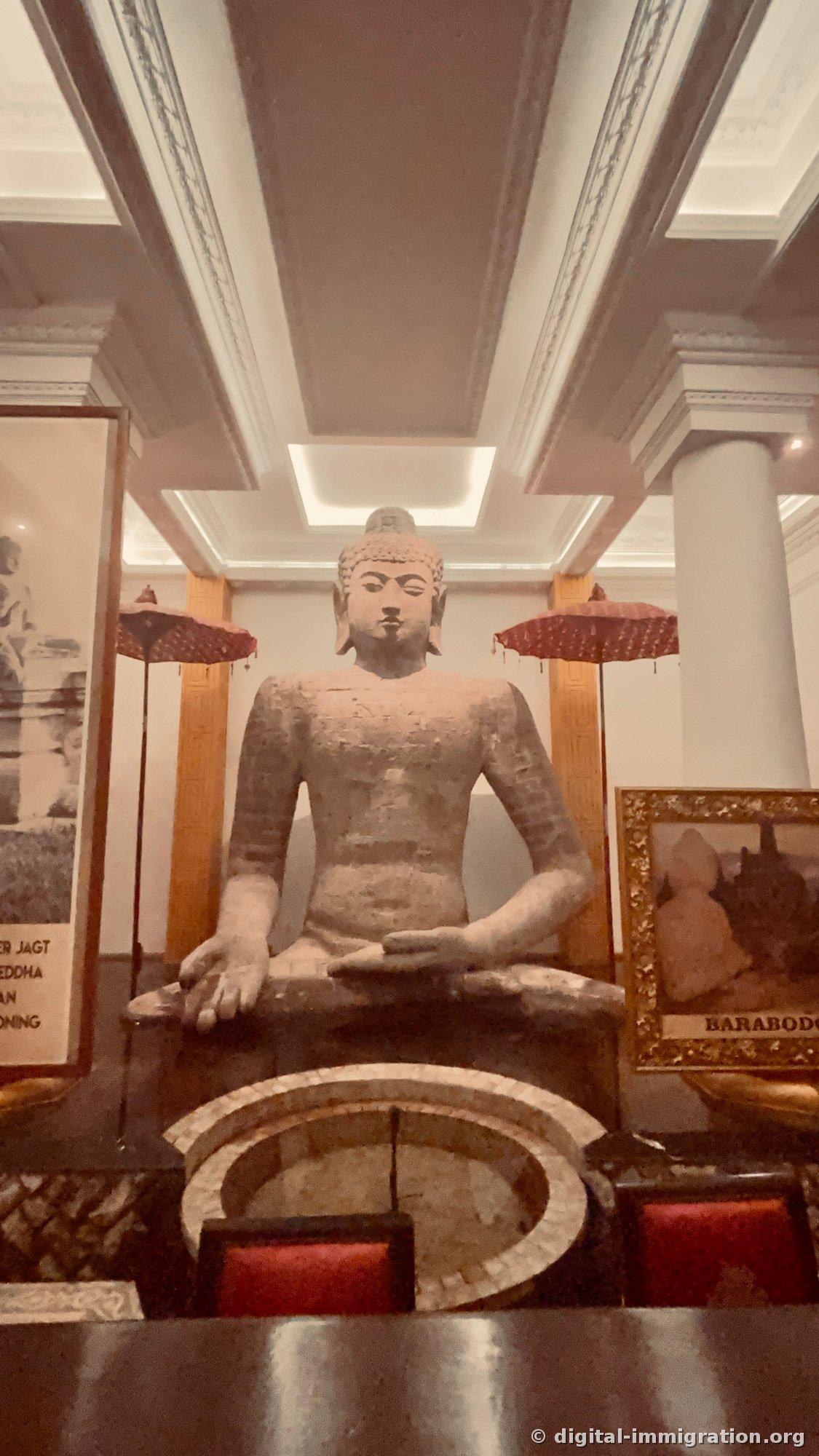
Going up the stairs reverses the atmosphere again. In a bright hall with white molding and columns, a large Borobudur-style stone Buddha sits in lotus position. Red Balinese parasols stand on both sides, and on the right hangs an old photo in a gold frame labeled 'BARABODO…'. Including the rounded stone border in front, it's arranged like a single altar. After passing through the dark rooms, the light is almost blinding.
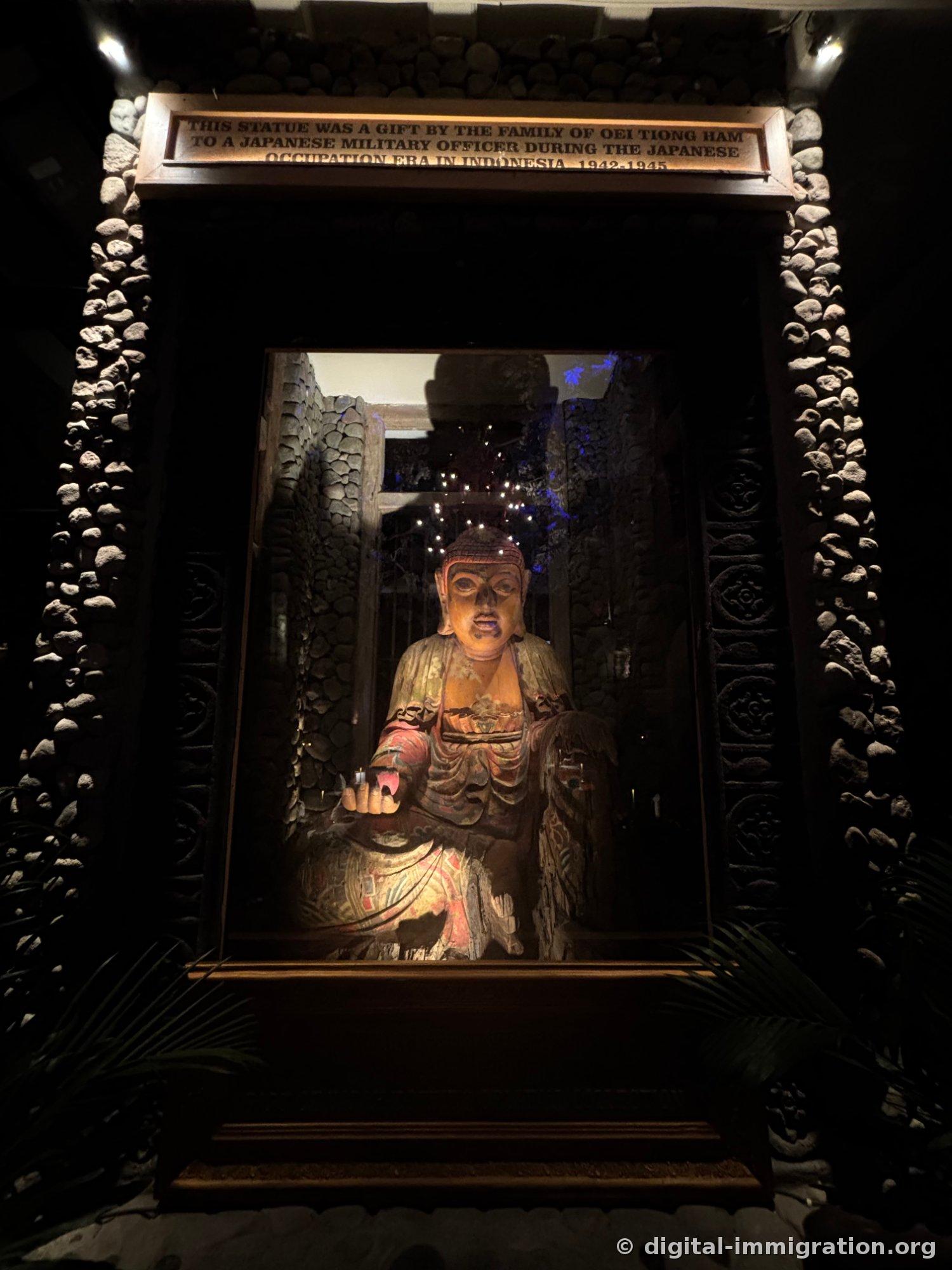
I stood longest in front of the painted wooden statue in the glass case. On the brass plate above the frame it reads: "THIS STATUE WAS A GIFT BY THE FAMILY OF OEI TIONG HAM TO A JAPANESE MILITARY OFFICER DURING THE JAPANESE OCCUPATION ERA IN INDONESIA 1942–1945." A statue given to a Japanese military officer by the Oei Tiong Ham family during the 1942-1945 Japanese occupation. The chipped paint on the robes and the half-raised hand were dimly visible through the glass. Why this place calls itself a museum is largely answered by this single plaque.
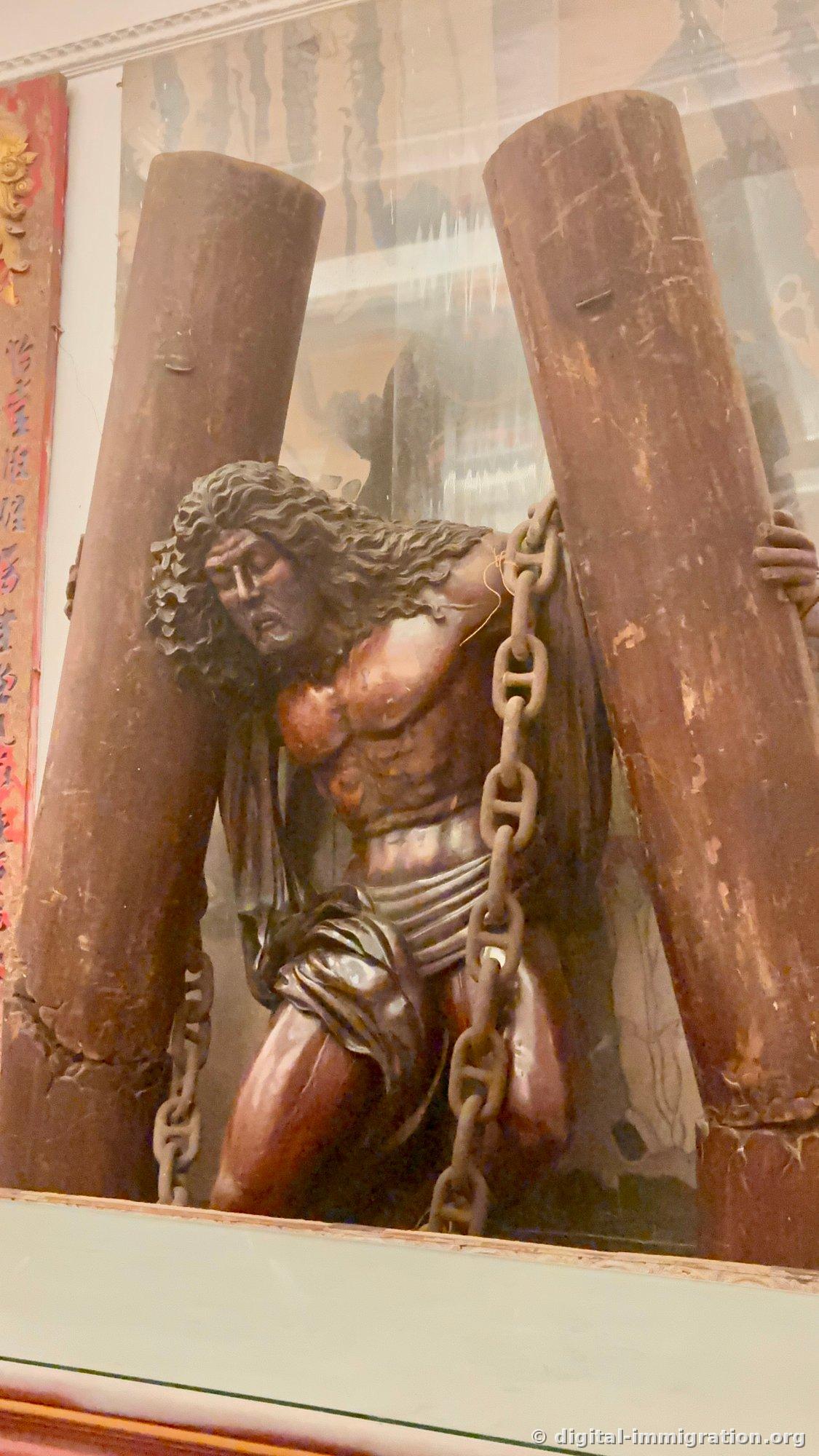
In a nearby glass case is a wooden sculpture of completely different character. A male figure kneeling between two thick pillars, bound with chains. Musculature, flowing hair, even a silvery waist cloth—it's in the European sculptural tradition. A red wooden post with Chinese characters is attached beside it, making two traditions stand side by side in the same case.
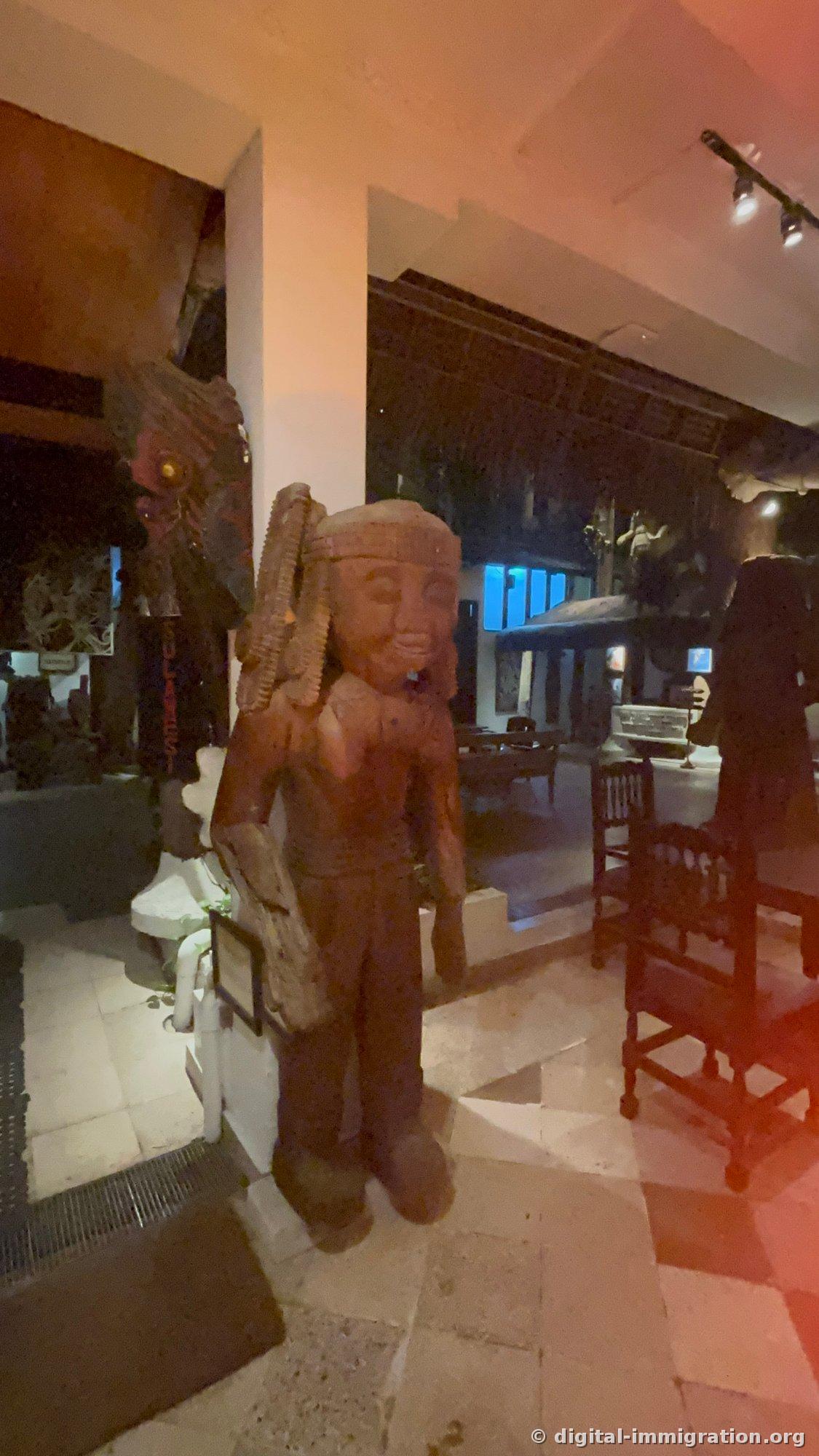
In a corridor with red lighting stands a wooden figure of a person in the pose of walking with a load on their back. The expression is ambiguous—smiling or weeping. A small description plaque lay at the base, but the lighting was too dim to read it. Beyond it, another room with blue latticed windows connects.
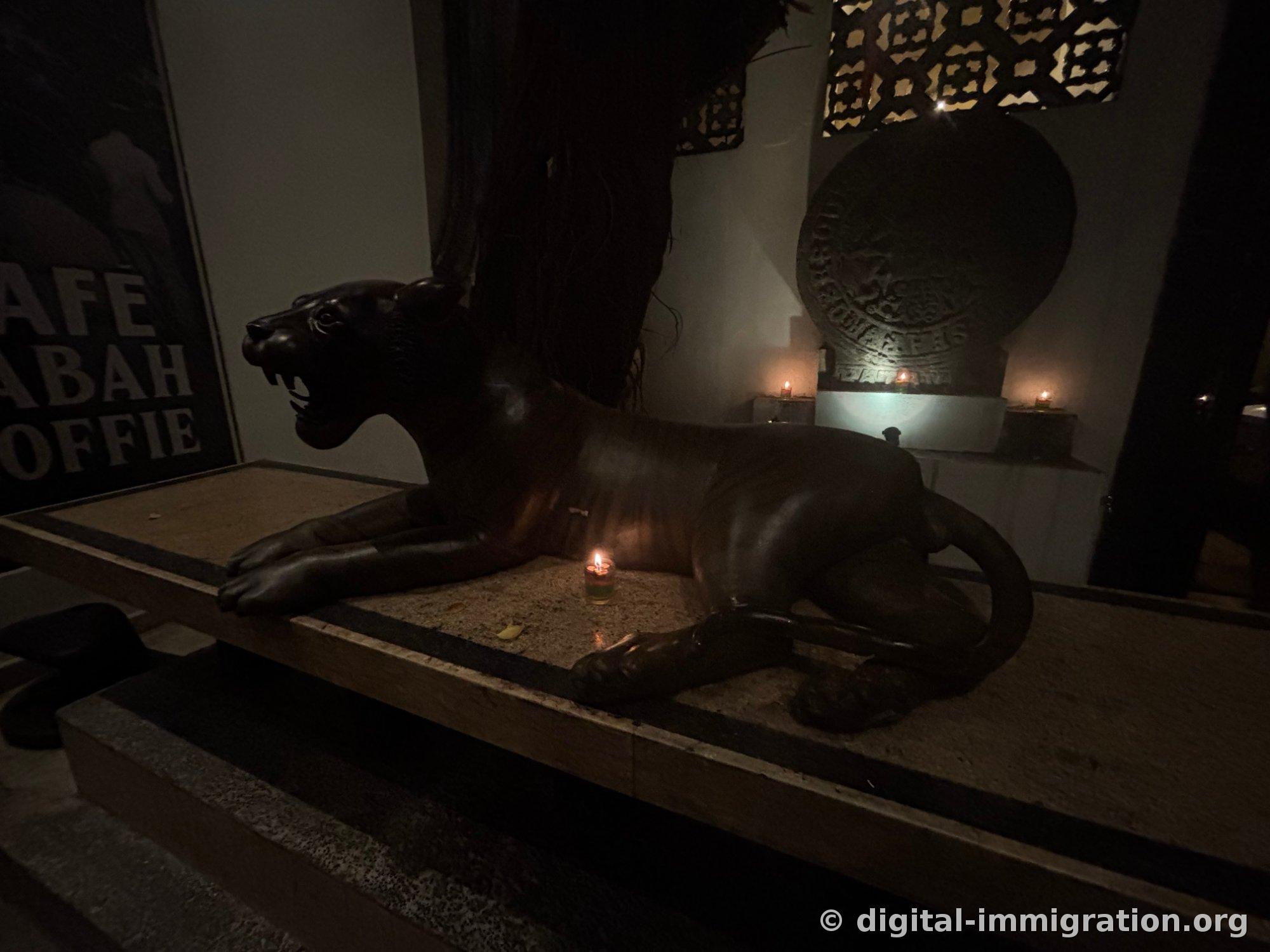
The last thing I saw was a black leopard sculpture. On a low platform, front legs stretched out in a prone position, mouth open showing its fangs. A single lit candle stood before its belly, with candles placed on either side of an altar behind. A black panel with large coffee-related text hangs on the left wall. With only three candles for light, this area feels several degrees cooler.
Location and practical tips
The location is in the Menteng area of central Jakarta. Coordinates: 6.1347°S, 106.8107°E. This neighborhood clusters embassies and old mansions, so the side streets are quiet, but major roads get completely gridlocked during rush hour. I called a Grab early to avoid being late for dinner, but it still took nearly double the usual time. If you're traveling between 5–7 p.m., either allow extra time or take an Ojek (motorcycle taxi) closer to the area.
Things I organized after experiencing them firsthand.
- Don't just eat and leave. A walk around the inner halls and upper floor before paying will take at least another 20–30 minutes. It's better to build that time into your schedule from the start.
- The interior is genuinely very dark. If you have a phone with weak low-light performance, bracing yourself against walls or railings is your only option. Flash destroys all the shadows in the sculptures.
- The clay pot dishes tend to be salty. For two or more people, I'd recommend ordering one heavy dish and one light dish to share.
- The hall with the ceiling tree changes its lighting color periodically. The blue and green versions look completely different, so don't shoot one photo and leave—stand there a moment.
- Hours, prices, and reservation requirements vary by period. I'd recommend confirming at the venue before visiting.
Flipping through my photos in the car on the way back, I found three food pictures followed by more than ten photos of sculptures and plaques. Which one is the main event depends on the person, but I decided to think of it as admission charged with the meal price.
Das könnte Sie auch interessieren
- Gold Dragon Coffee's Meat Buns Made with Pumpkin Dough in Jakarta's Glodok Chinatown
Glodok is an old Chinese commercial district in West Jakarta. Walking through alleys tangled with jewelry shops, herbal medicine stores, and mobile phone parts shops toward Pasar G…
Jakarta · Glodok Chinatown Market - Gold Dragon Coffee - From under the Glodok Pancoran arch to Petak Enam, three hours of evening in Jakarta's Chinatown
Walking south from Jakarta's Kota Tua, you encounter a gray stone archway that stretches across the middle of the road. "SELAMAT DATANG — KAWASAN GLODOK PANCORAN — CHINATOWN JAKART…
Jakarta · Glodok Chinatown Market - Jakarta National Museum (Museum Nasional Indonesia), Half a Day at the Elephant Museum
On the west side of Merdeka Square, along Jl. Medan Merdeka Barat, sits a low neoclassical white building. It's Indonesia's National Museum, though locals still call it Museum Gaja…
Jakarta · Museum Nasional Indonesia