Up the Tünel to Istanbul's İstiklal Avenue — the Nostalgic Tram, Nazar Beads Set into the Pavement, and a Cup of Warm Mulled Wine
I was standing at the bottom of the hill near Karaköy, looking up, and in the end I just took the Tünel. There are a few ways to reach İstiklal Avenue in Istanbul's Beyoğlu distric…
伊斯坦布爾
I was standing at the bottom of the hill near Karaköy, looking up, and in the end I just took the Tünel. There are a few ways to reach İstiklal Avenue in Istanbul's Beyoğlu district — walking leaves you out of breath, and taxis can barely squeeze into these back streets anyway. The fastest option is this short underground funicular, known locally simply as the Tünel. Standing on the platform, I noticed the red car's side panel emblazoned with "İETT 155 YAŞINDA / 155 YEARS." The walls were lined with green tile, and black-and-white panoramas and framed photos of old Istanbul hung close together under the lights — it felt less like a station and more like a small exhibition room. I watched the countdown on the display tick down from 03:45, and once you're actually on board, it really is over in the blink of an eye. There are only two stations, nothing in between.
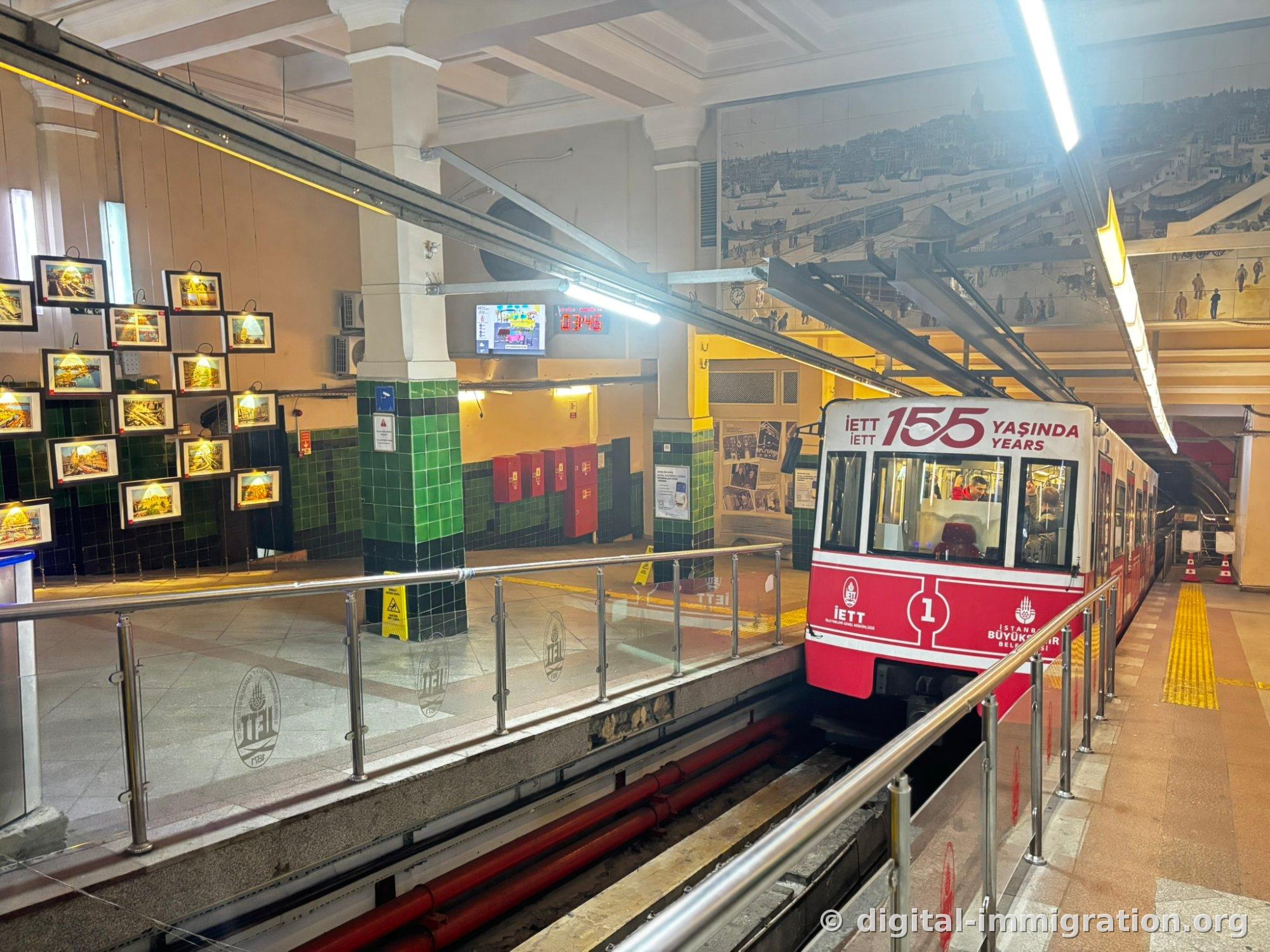
You tap in with your İstanbulkart. Fares change from time to time, so rather than memorizing a number, it's better to just keep your card topped up with a comfortable balance (check the signage at the turnstile for the current fare). One common mistake first-timers make is trying to tap a single card through the gate for multiple people in a row and getting stuck. I did the same thing myself, trying to tap for my companions too, and got held up for a moment at the gate.
The Star of İstiklal: the Red Nostalgic Tram
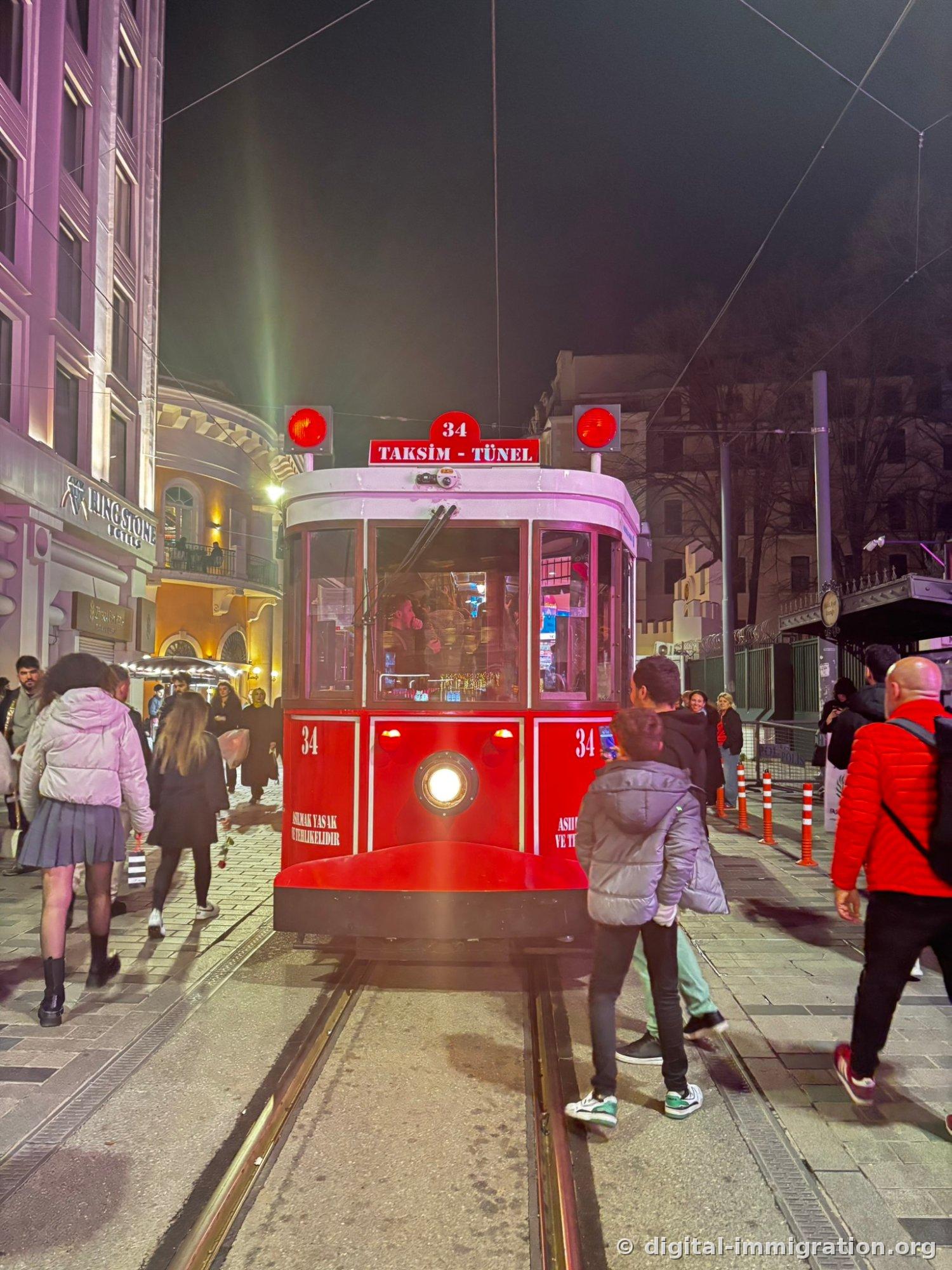
Coming up out of the Tünel exit, you're right at the start of İstiklal Avenue. The one shot I really wanted here was the No. 34 nostalgic tram — the red car with TAKSİM - TÜNEL on its front destination board. Honestly, it's more of a moving souvenir than actual transportation. It moves barely faster than walking pace, and people keep cutting in front of and behind it, so getting a clean shot of just the tram is nearly impossible. I took a dozen-odd photos and this was the one that came out. My tip: wait until the tram comes to a complete stop, then crouch down slightly and shoot it head-on. Shoot standing up and you'll always get the back of someone's head in frame.
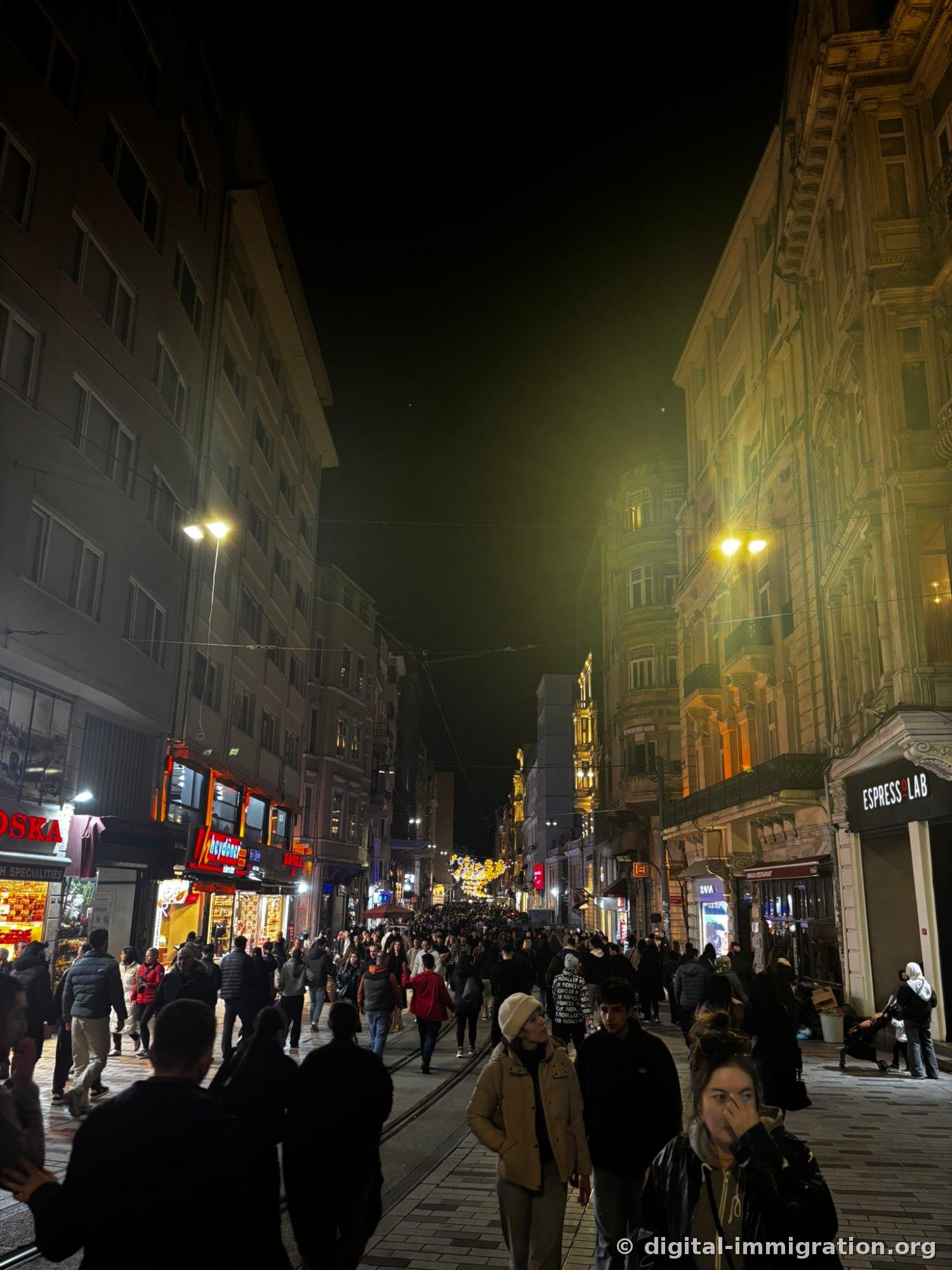
İstiklal at night is packed with people. Walk a little further in the direction of the photo above and you can see the whole street filled shoulder to shoulder with crowds. Signs for MADO, ESPRESSOLAB, and döner shops alternate down both sides, and far down the street, gold lights are strung across the alley. The sound adds to it too — busking guitar, Turkish pop pouring out of speakers, and the smell of roasted chestnuts from street stalls all hit you at once. With the crowd this dense, it's more comfortable to wear your bag in front.
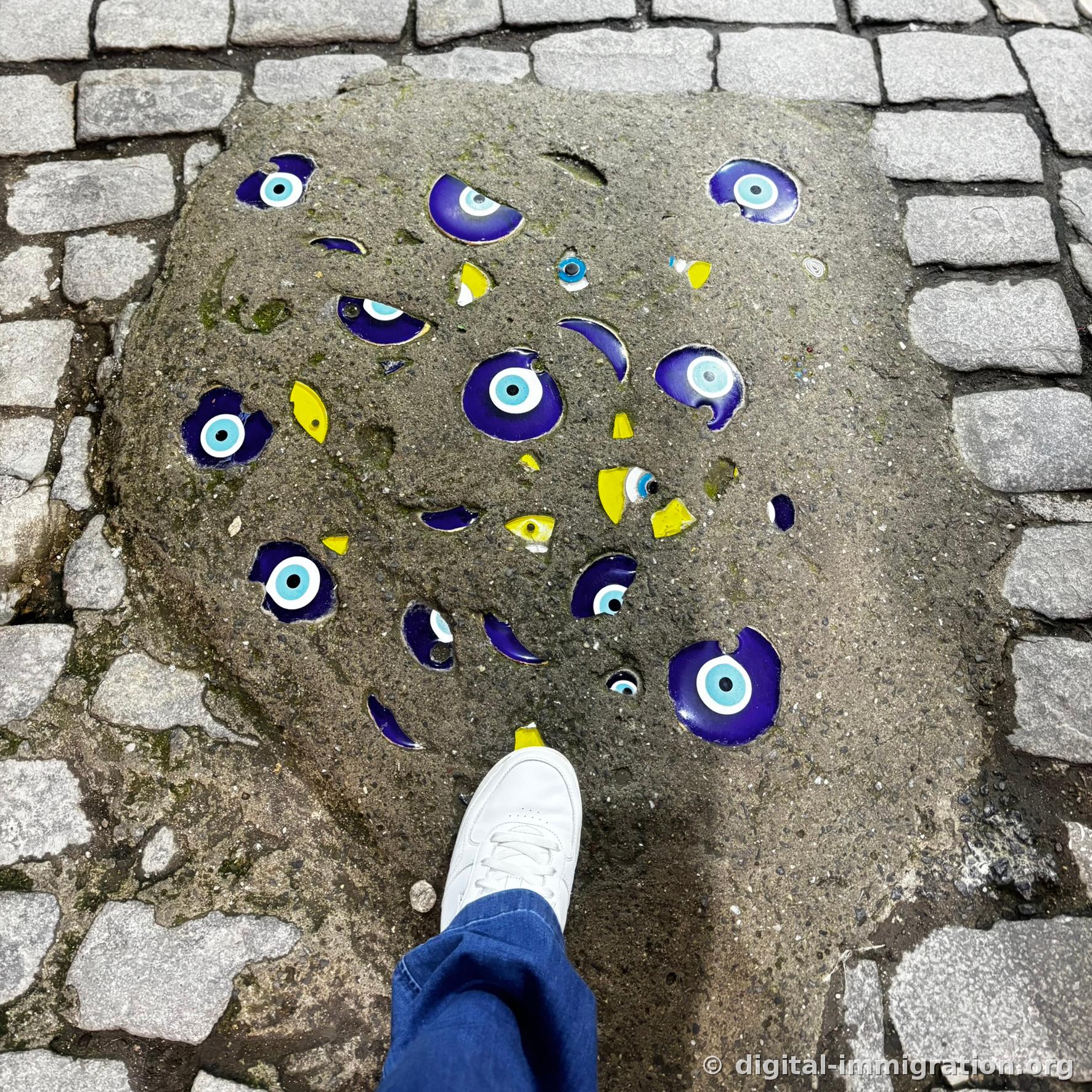
Nazar Beads Set into the Ground — Something You Only Notice If You Look Down
Walking down one of the side streets that branches off İstiklal toward Galata, I spotted something underfoot. A large stone had dozens of nazar boncuğu (nazar bead) fragments embedded in it — that blue evil-eye charm. Turks believe it absorbs other people's envious glances, and the bad luck that comes with them, on their behalf. Broken pieces were mixed in with intact ones, along with shards of yellow glass, so the whole thing looked like a mosaic. Somehow it struck me far more than any shiny new one hanging in a shop display — this version, worn down underfoot on the street. That single stone told me that in Istanbul, the nazar bead is an everyday object before it's ever a tourist souvenir. Everyone else was walking along looking up at the sky and the shop signs, so this is something only the people who look down ever come across.
The coordinates for this shot are near the map below. It's the area between the southern end of İstiklal (toward the Tünel) and Galata — step off the main street here and it splits straight into hills and alleyways. Walking from the Tünel along İstiklal toward Taksim comes out to roughly 1.4km, about 20–25 minutes if you don't get sidetracked. The problem is, there's no way not to get sidetracked.
Step just one block off the main street and the noise cuts out completely. Alleys like this, where shuttered electronics shops are covered in graffiti and signs like "GALATA" and "Next&NextStar" still hang on the walls. These are commercial back streets that do business by day and go quiet by night, and honestly, I felt like this side was closer to the real face of Istanbul. That said, I wouldn't recommend heading deep into an unfamiliar alley alone late at night. I once took a wrong turn downhill myself and ended up much further down than I meant to, and my calves never really forgave me for the climb back up.
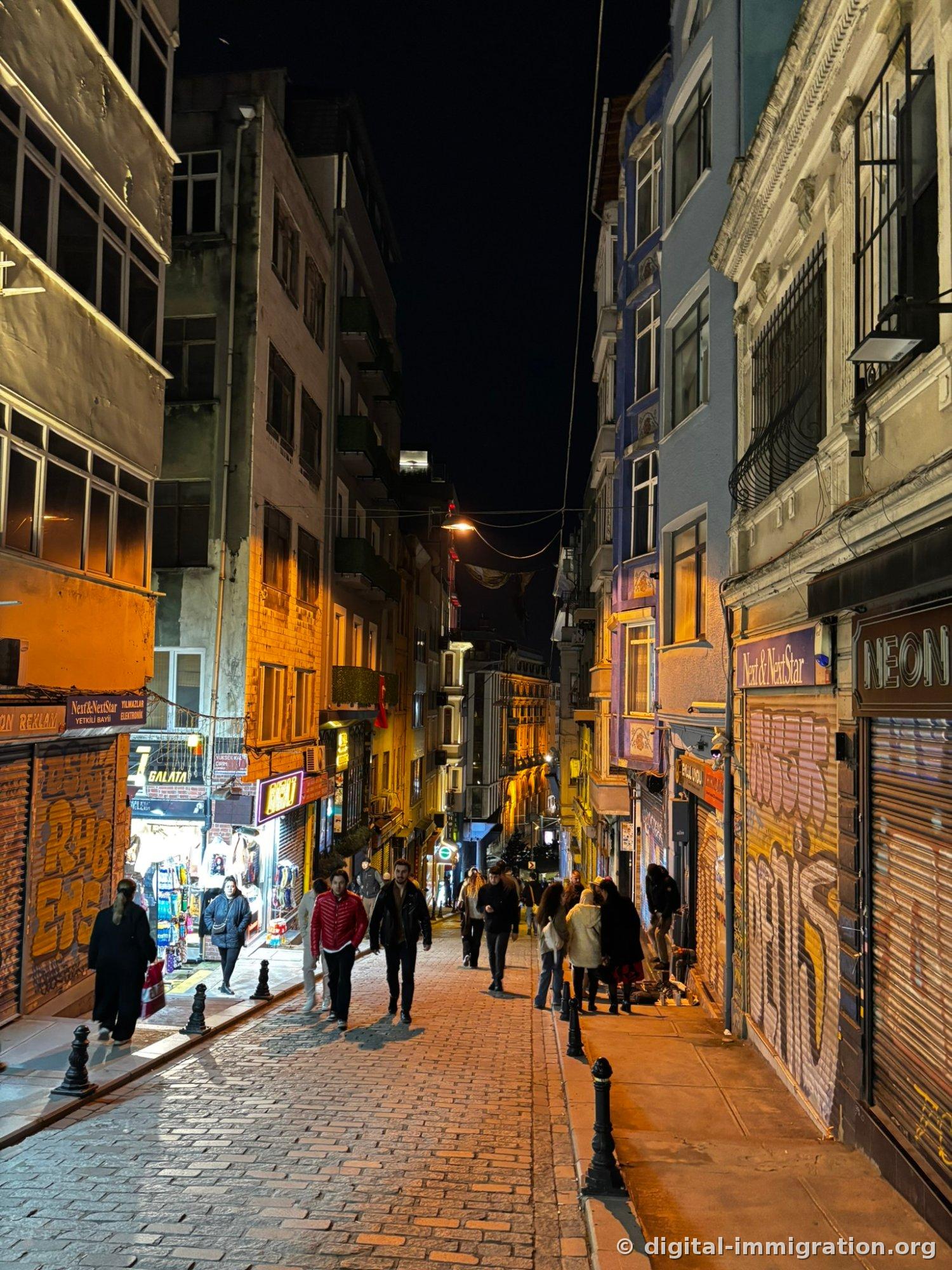
A Terraced Backstreet and an Arched Shop
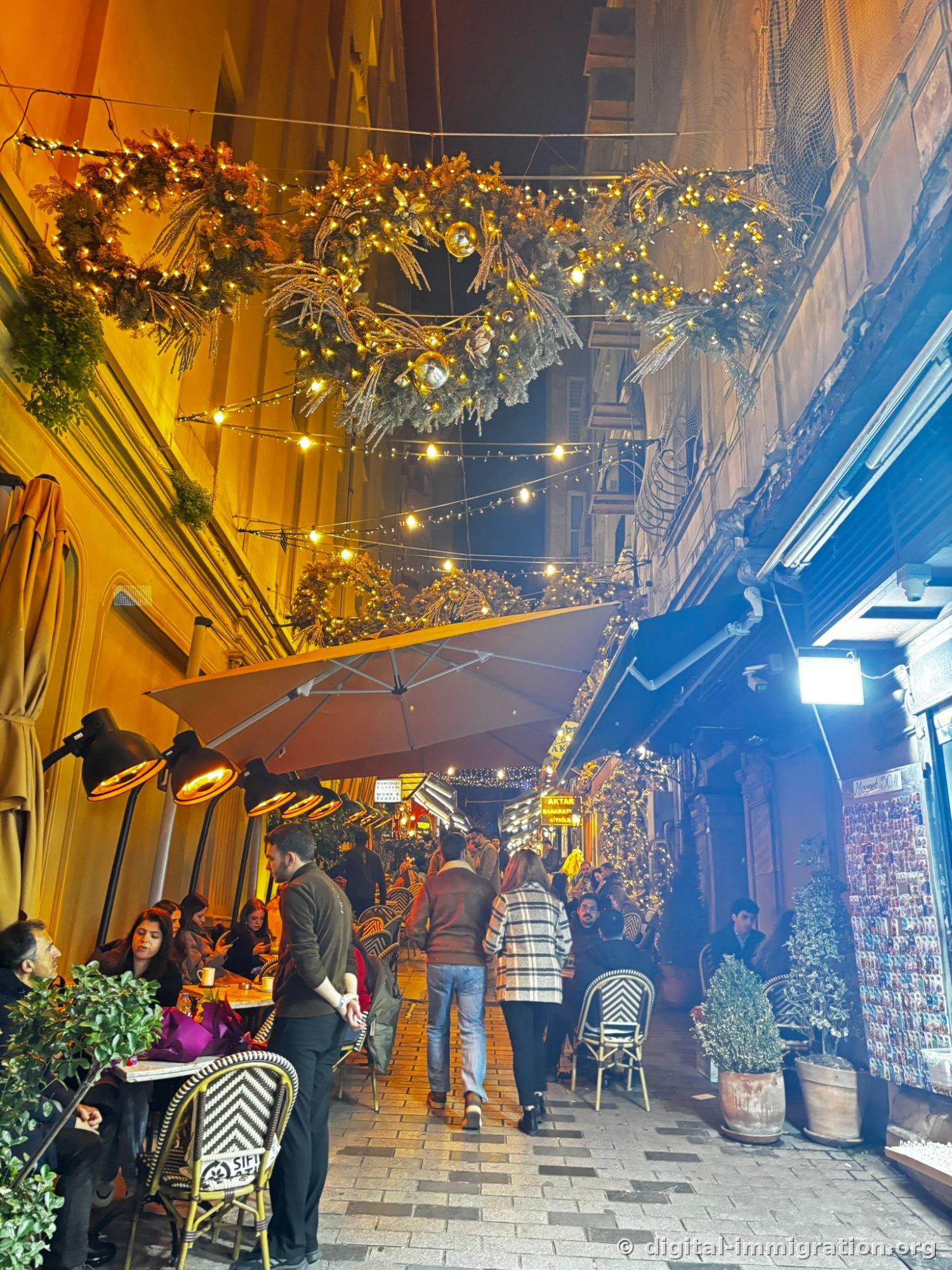
Then again, some side streets are busier than the main avenue itself. One had layers of gold wreaths and string lights hanging overhead, with cafés on either side pushing their outdoor tables right into the middle of the alley. The reason it felt warm just standing there wasn't the atmosphere — it was the gas heaters. Black-shaded heaters were mounted at every table, so even on a winter night people sat outside in just their coats. One thing I learned here: the moment you sit down in an alley like this, the touting starts, so it's better to ask to see the menu and check prices before taking a seat. Prices can vary quite a bit from one place to the next, even along the same alley.
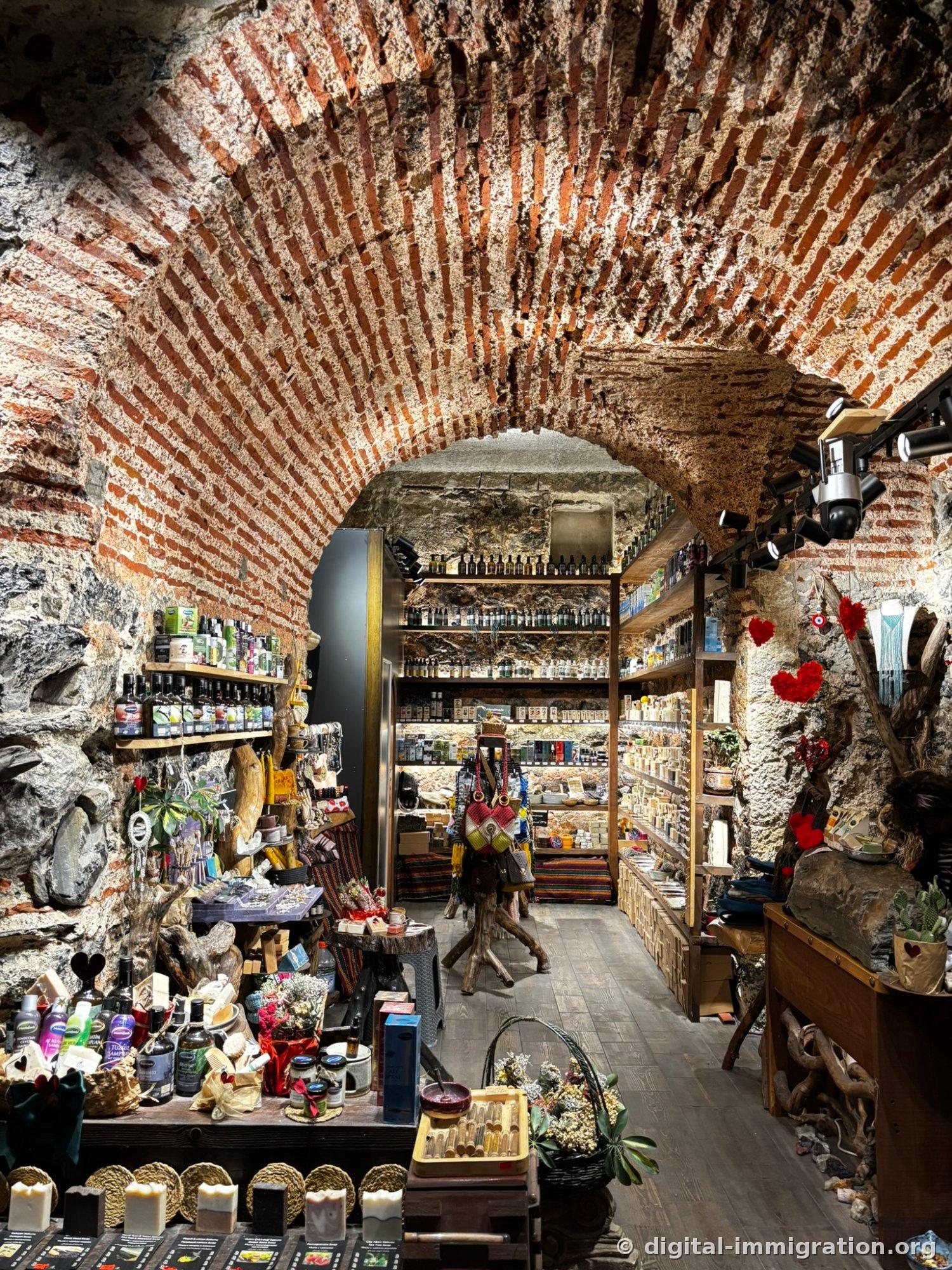
One shop I stepped into in the same area. A long, narrow space with exposed brick archways overhead, packed floor to ceiling with olive oil, soap, and bottled oils. The ceiling looked like it once belonged to a storeroom or a cellar, and nazar beads and red heart-shaped ornaments hung between the stone walls. It smelled wonderful — a mix of lavender soap and dried herbs. Hand-cut bars of soap were lined up at the counter, each with its own info card, so whatever you picked up, you could actually read the ingredients before buying.
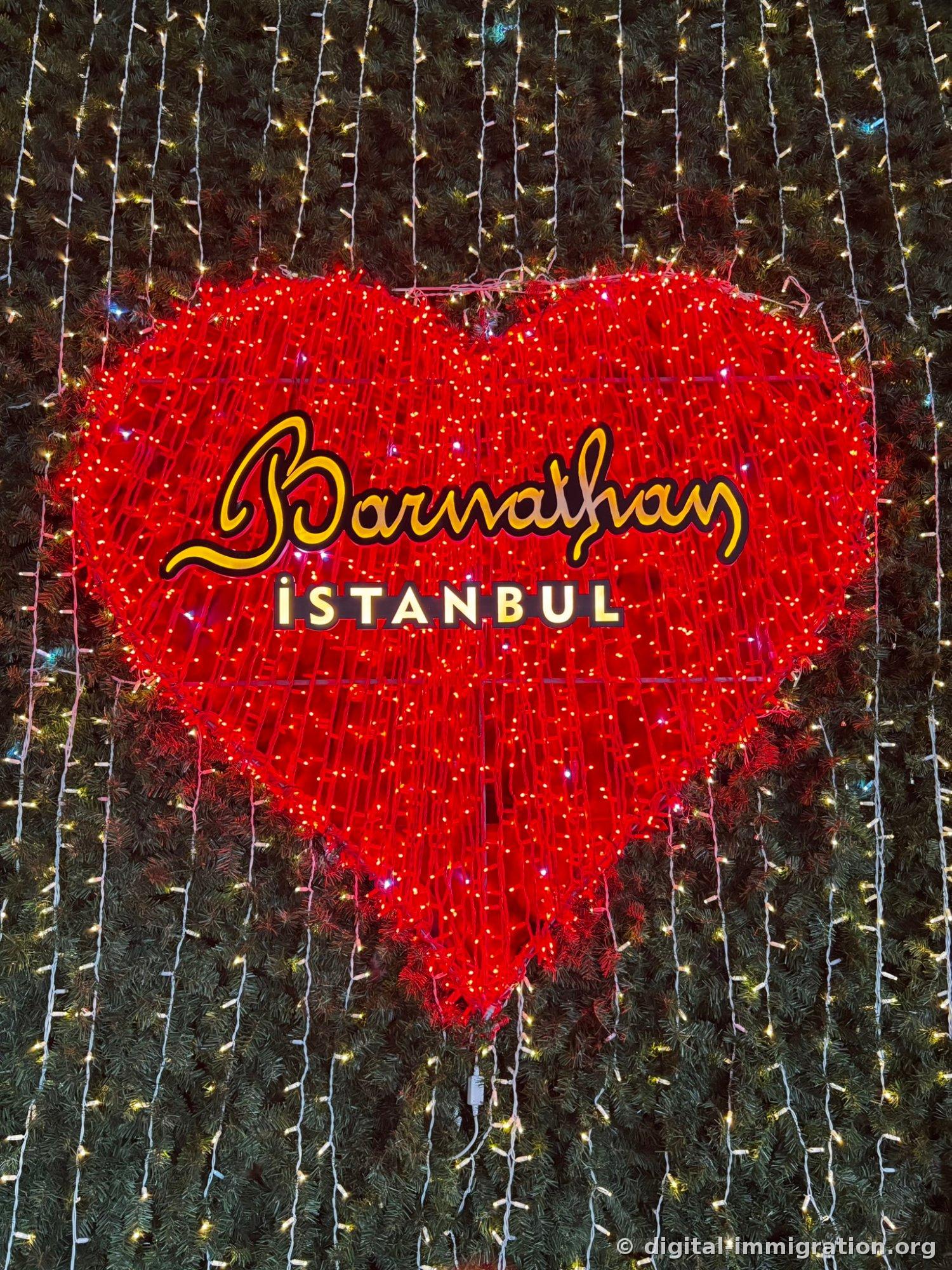
Light displays scattered around the streets are also a hallmark of this season. In front of a wall of evergreen branches strung with lights, a red heart-shaped installation glowed, with "Barnathan İSTANBUL" lit up in yellow inside it. People were lining up to take photos, so I waited my turn and got one too. Spots like this are just clumps of branches by day — nobody gives them a second look. It's only worth coming once the lights switch on in the evening.
In the End, the Highlight of the Day Was a Cup of Mulled Wine
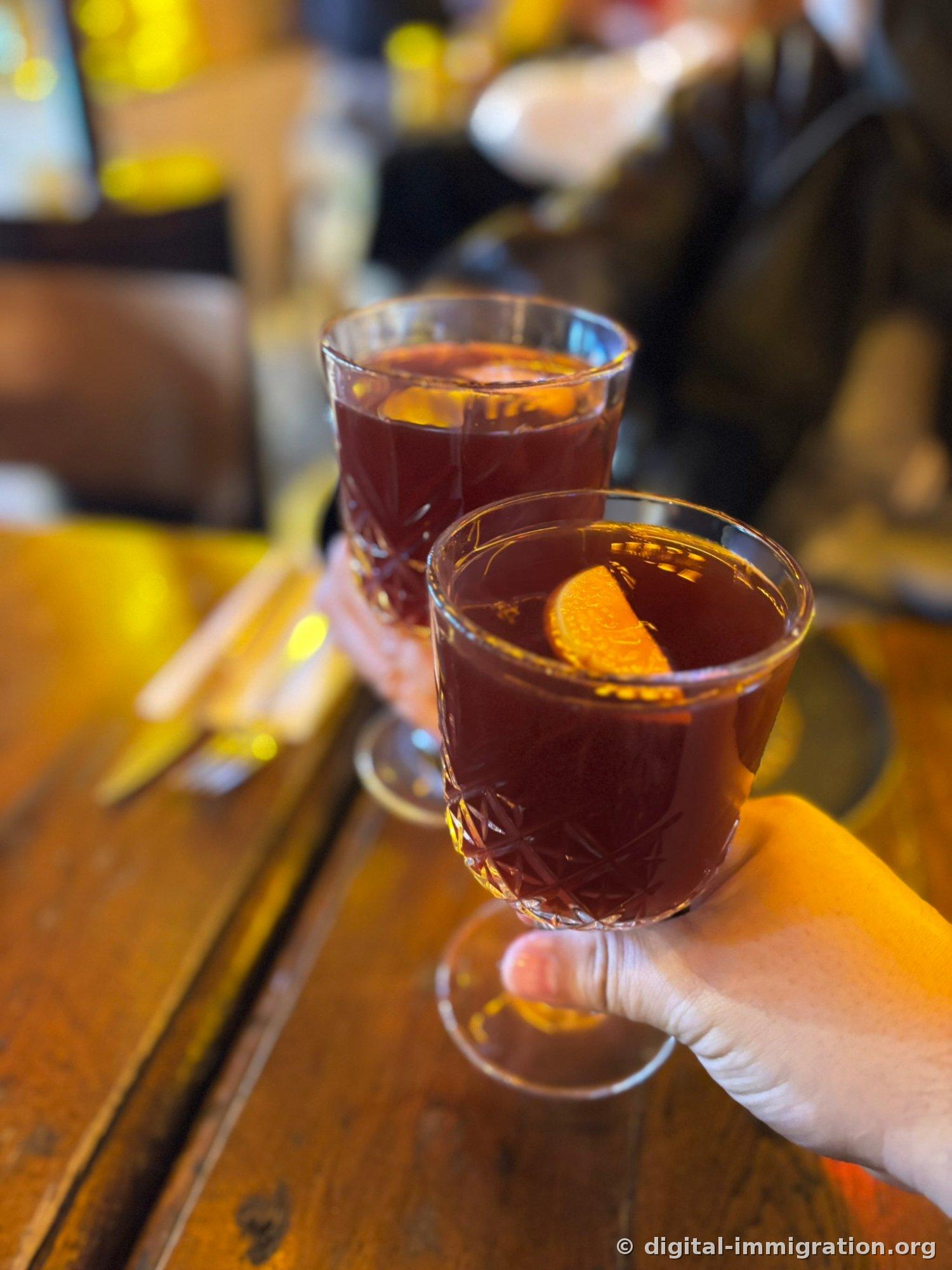
After wandering the alleys for a good while, I ducked into a pub. The moment I sat down at the wooden table, I ordered a warm, freshly heated mulled wine (sıcak şarap). It arrived in a thick cut-glass, topped with a slice of orange. Wrapping my hands around the glass, the warmth against my palms was just right — not so hot I couldn't hold it, but enough to thaw out frozen fingers. Cinnamon and clove hit first, and a sweetness from the orange lingers after each sip. Most of the alcohol cooks off during heating, so it was milder than I expected. After a few hours of walking outside, that one cup honestly stuck with me more than any landmark I saw that day.
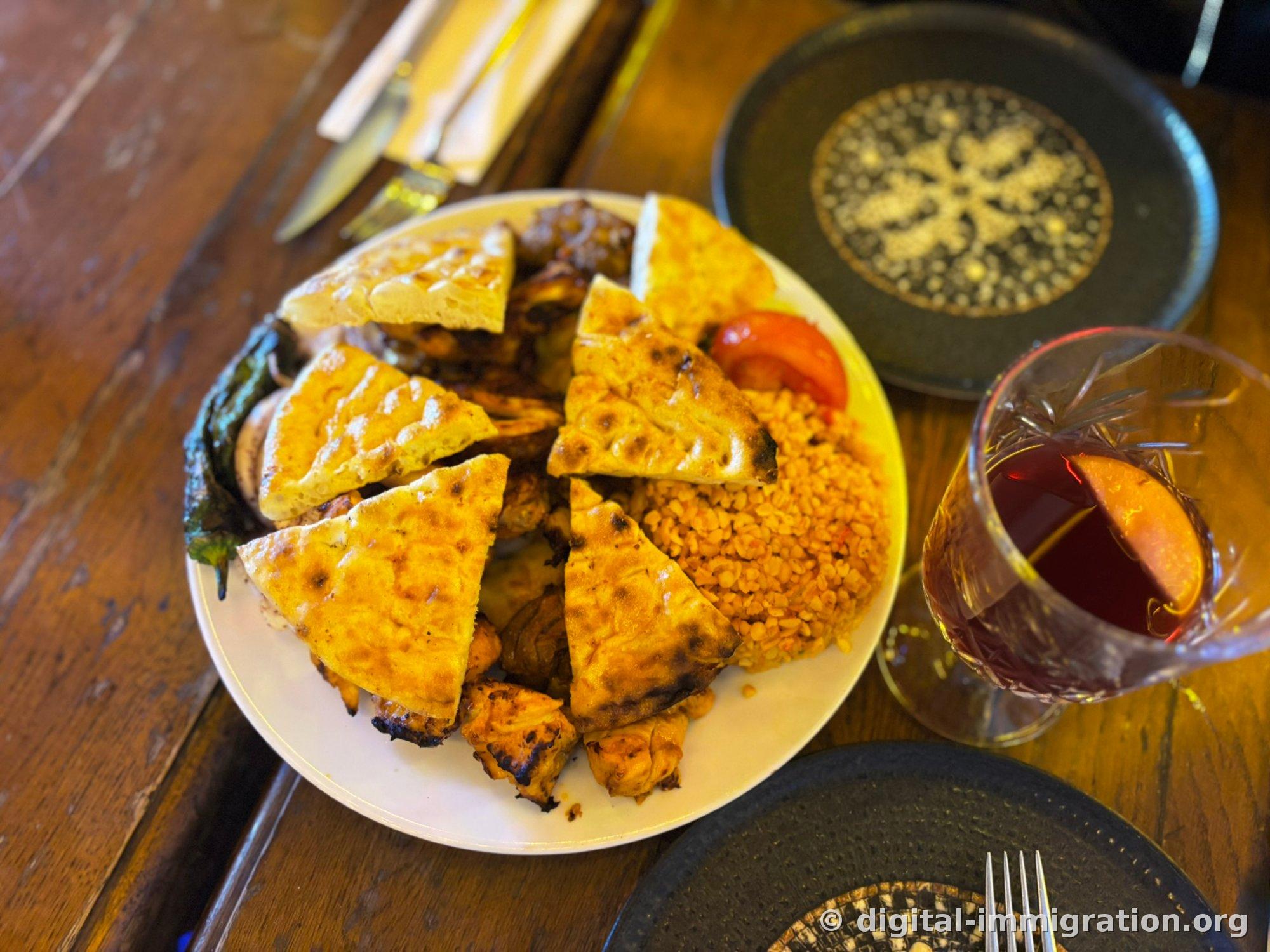
To go with it, I ordered a chicken şiş kebab plate. Fan-cut pieces of grilled lavash were laid across a white plate, with charcoal-grilled chicken pieces tucked underneath. Alongside it was a reddish sautéed bulgur pilaf, roasted tomato, and a whole grilled green pepper. The lavash had soaked up the meat's juices, so it was tasty even eaten on its own. My one disappointment was that the chicken breast was a bit dry — if I ordered again, I'd probably go for lamb instead. The green pepper was less spicy than it looked and had a nice aroma, and alternating between it and the mulled wine kept things nicely balanced.
Notes for the Next Person Who Visits
- It's worth taking the Tünel from Tünel up to İstiklal (the uphill direction). The other way is downhill anyway, so you may as well walk.
- Don't expect the nostalgic tram to be a practical way to get around. It moves about as fast as walking, and when it's crowded, you're better off photographing it than riding it.
- Like the nazar beads on the ground, this street has things you can only find by looking down for once.
- Prices change often with the season and exchange rate, which is why I've left numbers out of this piece — check the menu or the turnstile signage on site.
- The hill winds bite hard in this neighborhood on winter nights. The rhythm that worked best for me was walking, then ducking into a heated alley café for a mulled wine, then walking again.
繼續閱讀
- 二月格雷梅,在策米飯店(Zemi Hotel Cappadocia)前的山丘上煮新拉麵黑的故事
土耳其卡帕多奇亞的格雷梅(Göreme)以夏季為旅遊旺季。我在二月去了那裡。晨間氣溫降至零下,山谷的稜線上鋪著一層薄薄的白粉,分不清是霜還是雪。坦白說,選擇淡季是這次旅行中做得最好的決定。遊客少,我獨佔了整個山丘觀景台,飯店的露台上除了我以外空無一人。住的是位於格雷梅村邊緣山丘上的策米飯店(Zemi Hotel Cappadocia)。
格雷梅 - 在安塔利亞Kaleiçi懸崖上,在Yuvam Shisha Nargile Kafe俯瞰港灣的午後
土耳其安塔利亞的古城Kaleiçi,城牆內側的巷弄纏繞如迷宮,初訪時根本分不清大海藏在何處。直到爬上懸崖邊的步道,視野才豁然開朗。Yuvam Shisha Nargile Kafe正坐落在這條懸崖線上,俯視著遊艇碼頭(Kaleiçi Yat Limanı)。我在2月灰陰不定的午後進去,坐了三個小時。那些只去過夏日旺季安塔利亞的人,永遠想像不到這個季節的城市有…
安塔利亞 · Yuvam Shisha Nargile Kafe - 安塔利亞卡勒伊奇遊艇港 — 從城牆下港口的三個角度俯瞰的一天
土耳其安塔利亞的舊城卡勒伊奇(Kaleiçi)城牆保存在懸崖上,懸崖下完全是遊艇港。從地圖上看像是「一個港口」,但實際去了就會發現被分成 上層(城牆漫步道)/ 中間層(坡道)/ 下層(碼頭) 三個層次。那天我走過了這三層,照片也分層記錄下來。三月初的安塔利亞白天陽光刺眼,但海風還帶著冬日的尾聲,我穿著短袖出門,卻在港口防波堤上抱著雙臂。
安塔利亞 · 卡萊奇遊艇港