Kimuraya Anpan from Ginza 4-chome Intersection: My Hands Got Sticky Before I Finished Eating It
Every time I come to Tokyo's Ginza, I can't help but stop at the 4-chome intersection. If you turn your back to the Wako clock tower and walk about ten paces toward Matsuya, there'…
東京 · 銀座木村屋
Every time I come to Tokyo's Ginza, I can't help but stop at the 4-chome intersection. If you turn your back to the Wako clock tower and walk about ten paces toward Matsuya, there's the building that is Kimuraya (木村家). The storefront isn't flashy, so first-time visitors often walk right past it. All there is is a cursive wooden signboard hanging inside the glass window—three characters, that's it. This time I stopped by twice, once in summer and once in winter.
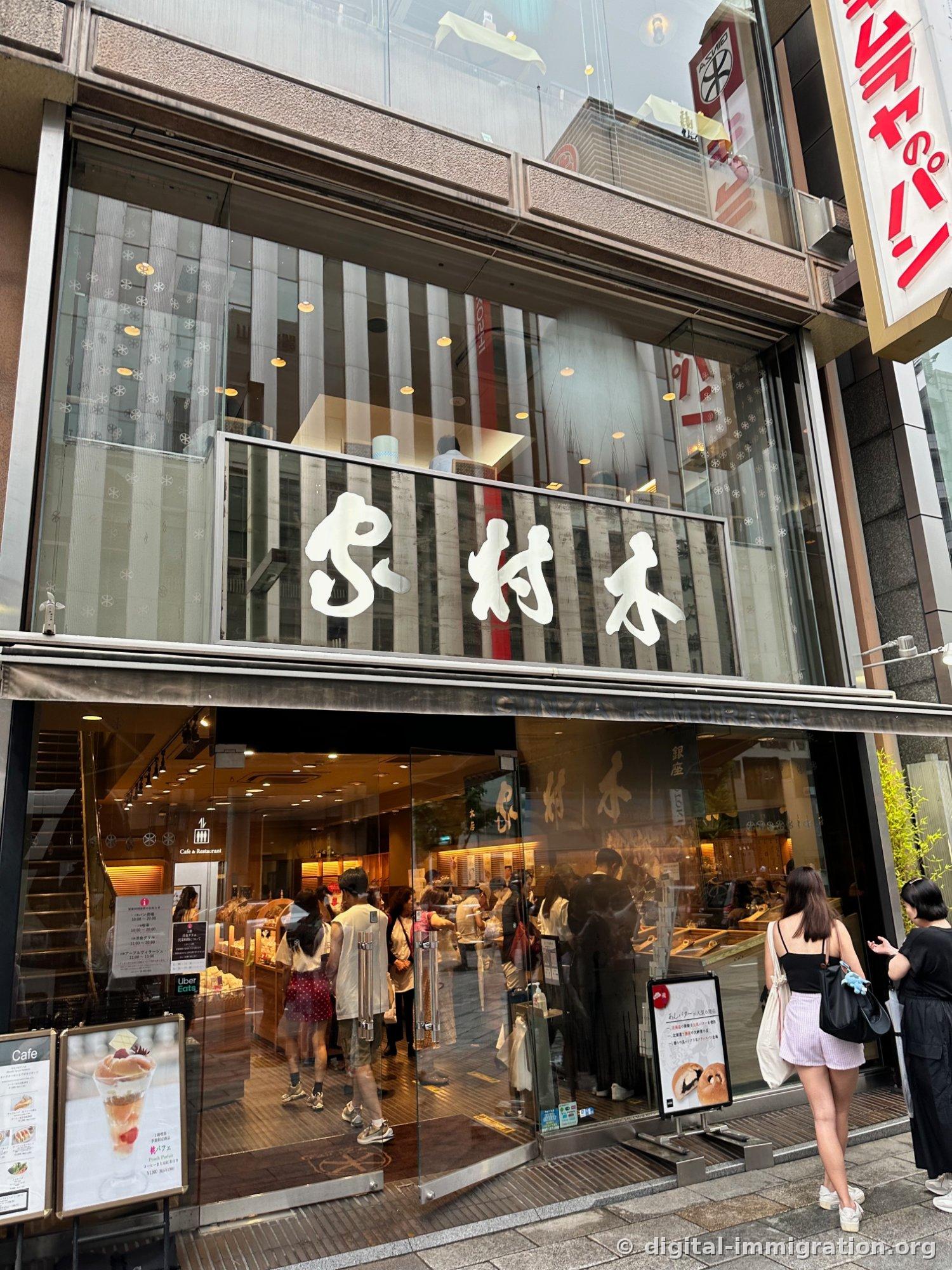
When I went in summer, the parfait sign was displayed in front of the shop. It's a second-floor café menu with a price in the 1,600 yen range. Since it's seasonal, there's no guarantee it's still available, so it's best to check in person. That day I didn't have time to go upstairs, so I just grabbed a bun from the first floor and left.
I Stood Deliberating at the Display Case and Got Bumped Back Three Times
The first-floor shop layout is a bit unusual. Rather than having bread on trays as in typical bakeries, wooden boxes with glass covers are lined up on the counter with a staff member in a happi apron standing behind. When a customer orders, the staff picks it up with tongs and wraps it in paper. In other words, you need to decide what you want before getting in line. I couldn't make up my mind and ended up letting the person behind me go ahead a couple of times.

Reading the wooden plaques on the wall vertically, there are quite a few varieties: Sakura (桜), Ogura (小倉), Shiro (白), Uguisu (うぐいす), Keshi (けし), Cream, Cheese Cream, Coffee, Kuri (栗), Shio Lemon (塩レモン), Konatsu Mikan (小夏みかん), and Jam. The prices are written in kanji numerals on each plaque, mostly in the 200 yen range. Since prices vary by type and change, it's best to check the exact prices in person.
There was a separate pink sign in front of the sakura anpan. It features salted cherry blossom petals pressed into the center, and the sign notes its history of being presented to the Emperor during the Meiji period. Tourists tend to pick the sakura and ogura varieties most.
The Bread Itself Is More Subdued Than Expected
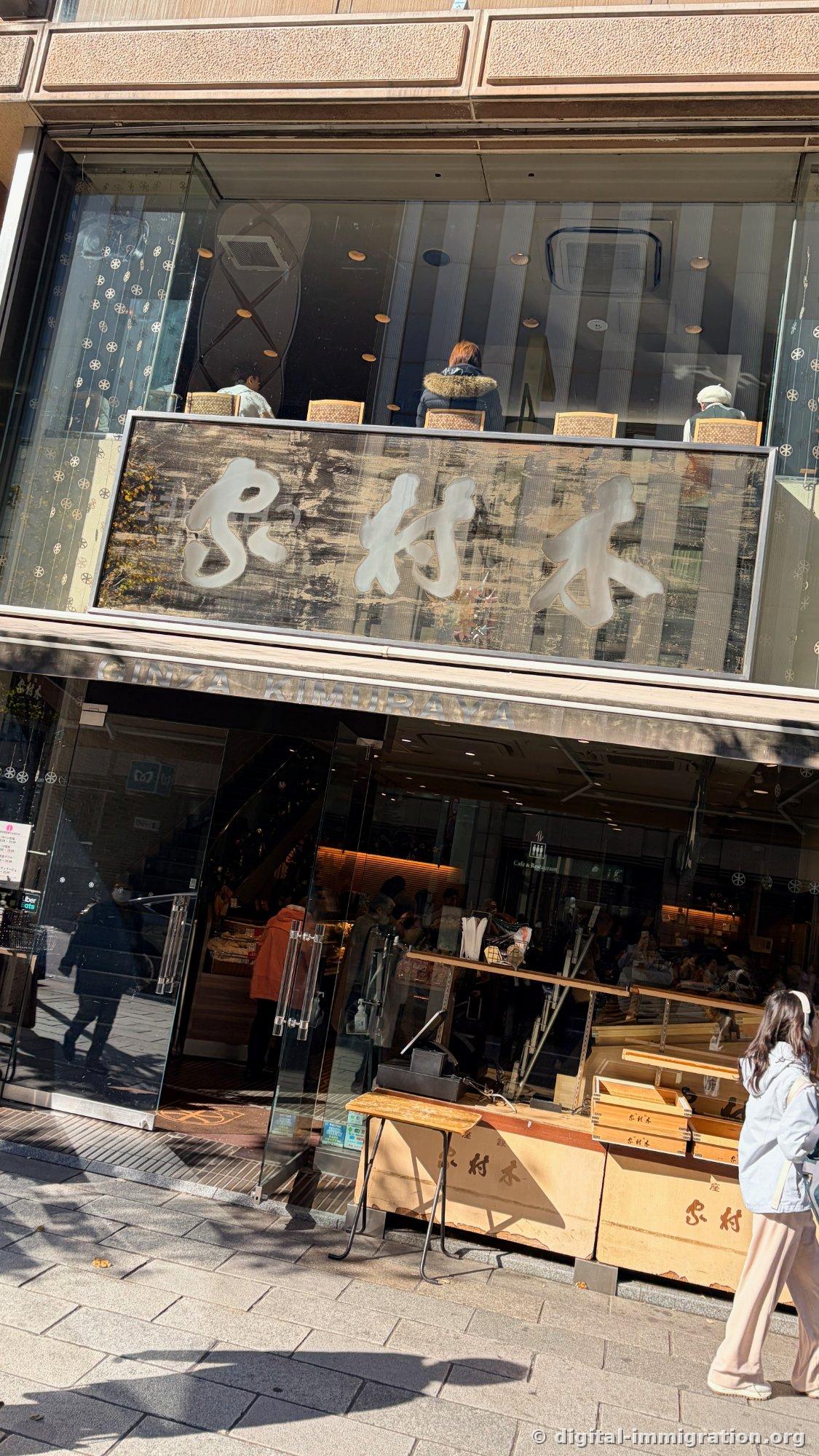
I went back in winter. It was the same place but with a very different impression. Winter afternoon sunlight streamed directly onto the wooden signboard, making the characters stand out in white, and a temporary stand made of stacked wooden boxes had been set up in front of the shop. The backs of customers sitting by the second-floor windows were clearly visible from outside.
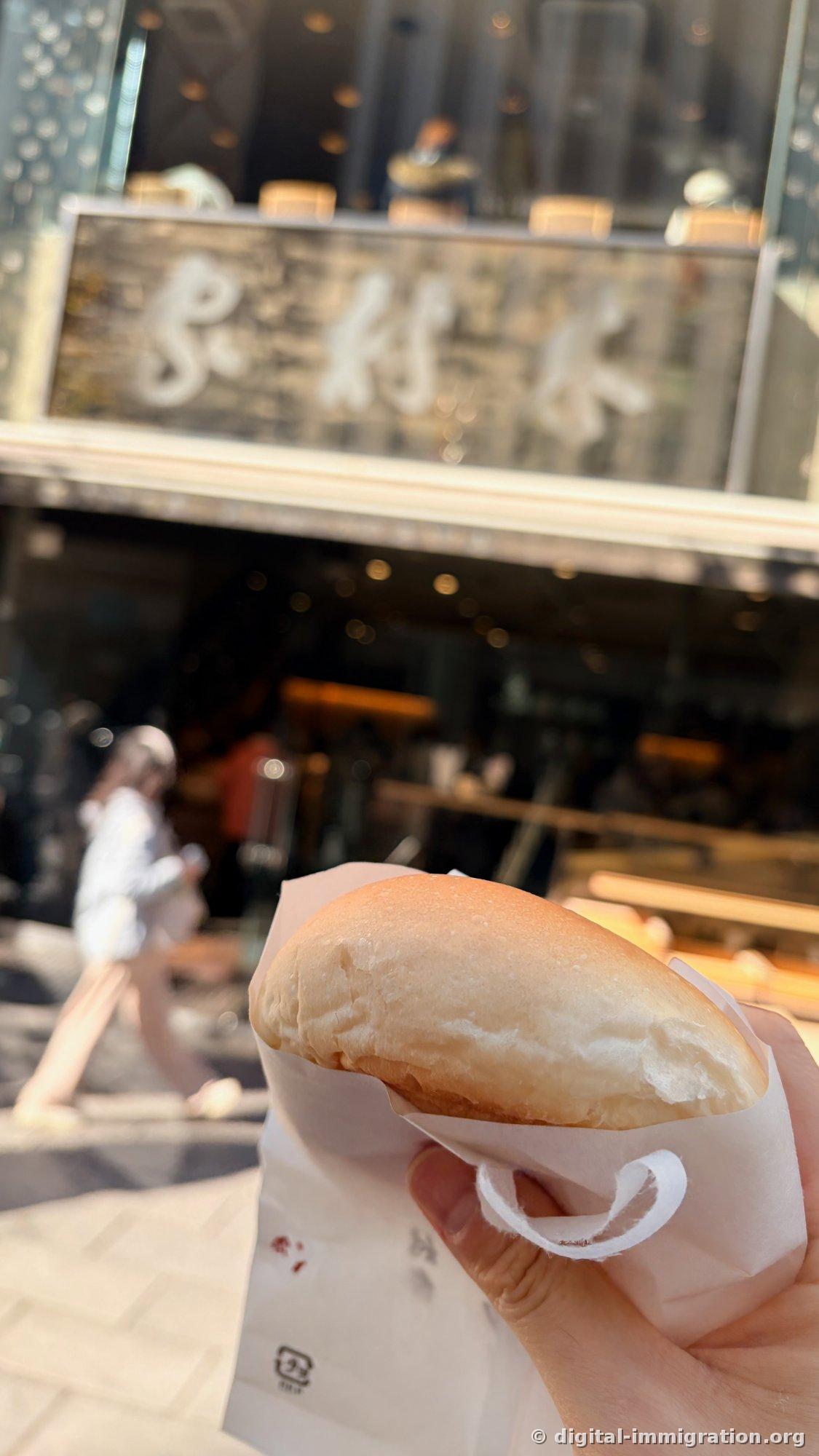
The bread in my hand was smaller than expected. It fit perfectly in my palm, with a smooth dough that had a slight dusting of white powder on the surface. Unlike typical Japanese red bean buns with their glossy brown baked finish, this was a lighter color. Though it comes wrapped in paper, the thin wrapper lets the heat escape quickly.
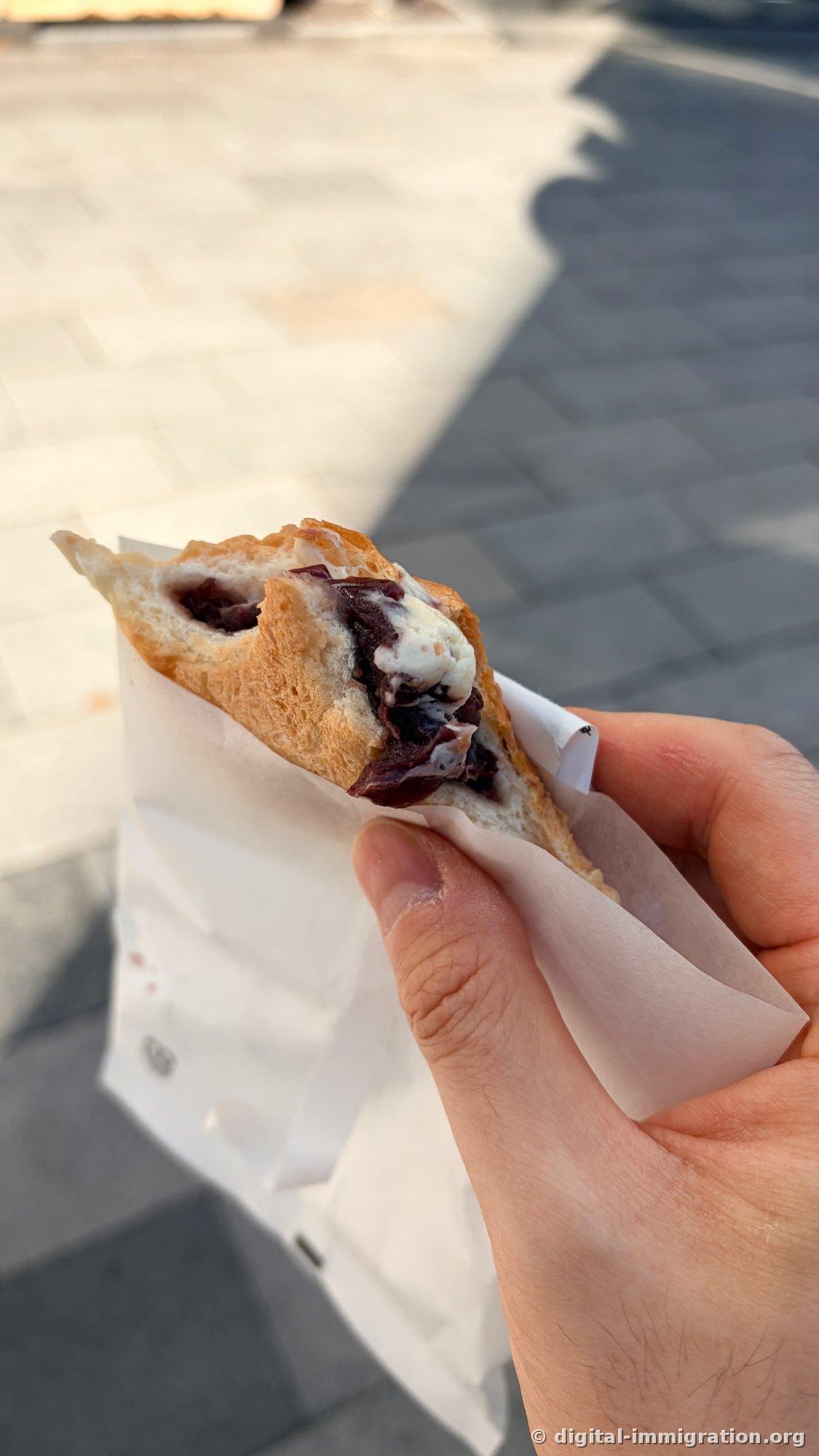
As soon as I bit into it, red bean paste and white cream came out together. The beans were still whole and barely sweet. The cream softened at room temperature, and from the second bite it started oozing out the sides of the dough. While eating standing up, my fingers got sticky, and without tissues it was a bit awkward. If you buy in summer, this is almost guaranteed to happen. Folding the bakery paper bag to use as a holder was the best workaround.
The flavor isn't bold. If you come expecting something flashy, some might find it bland. There's a very faint sake-like aroma from the dough, because it uses 'sakedzane' (酒種) dough fermented with rice koji instead of yeast. The wall plaques also note '酒種' for each variety. If that aroma appeals to you, it stays with you, but if not, it's just a mild red bean bun.
You Can't Miss the Location
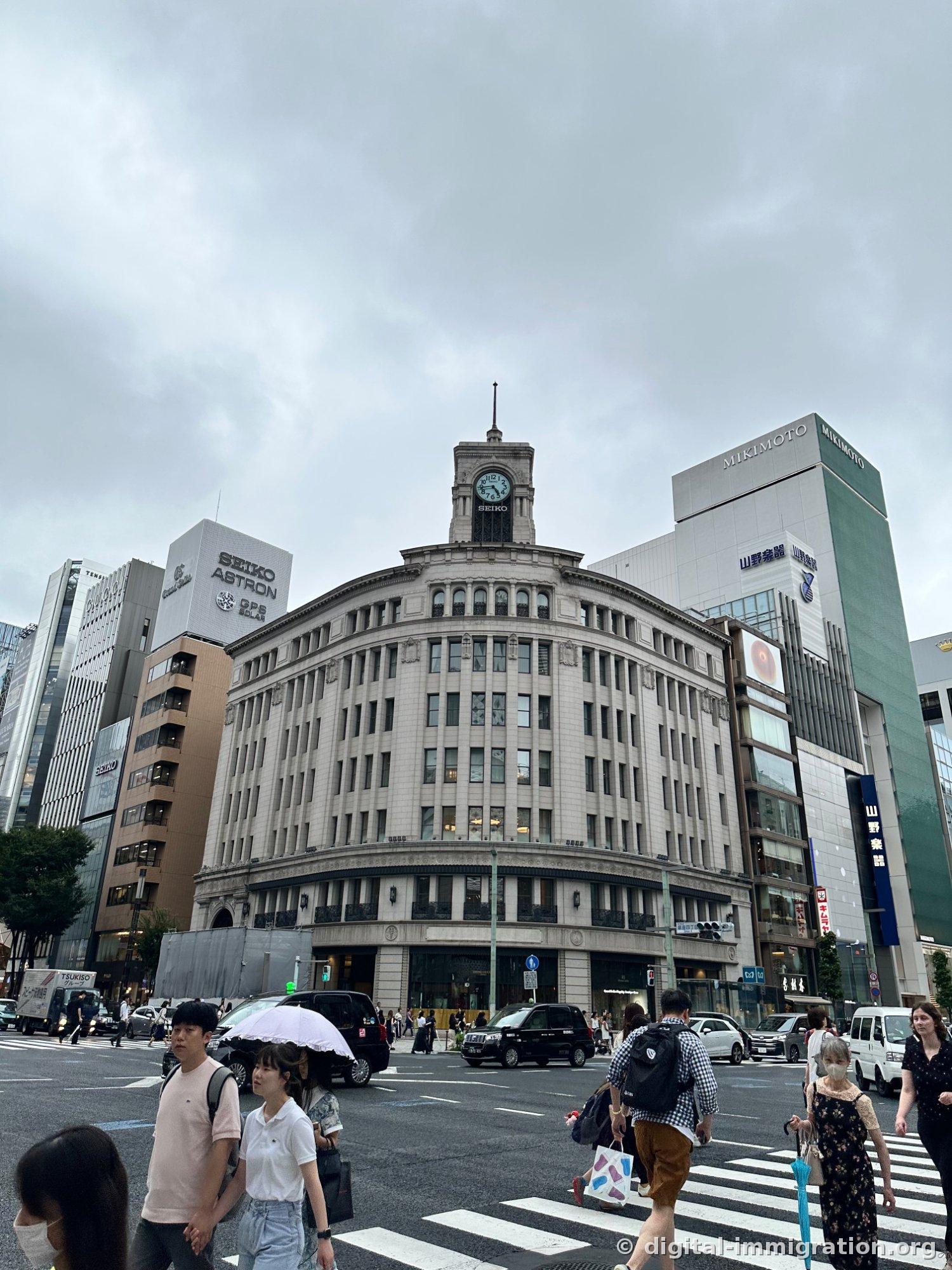
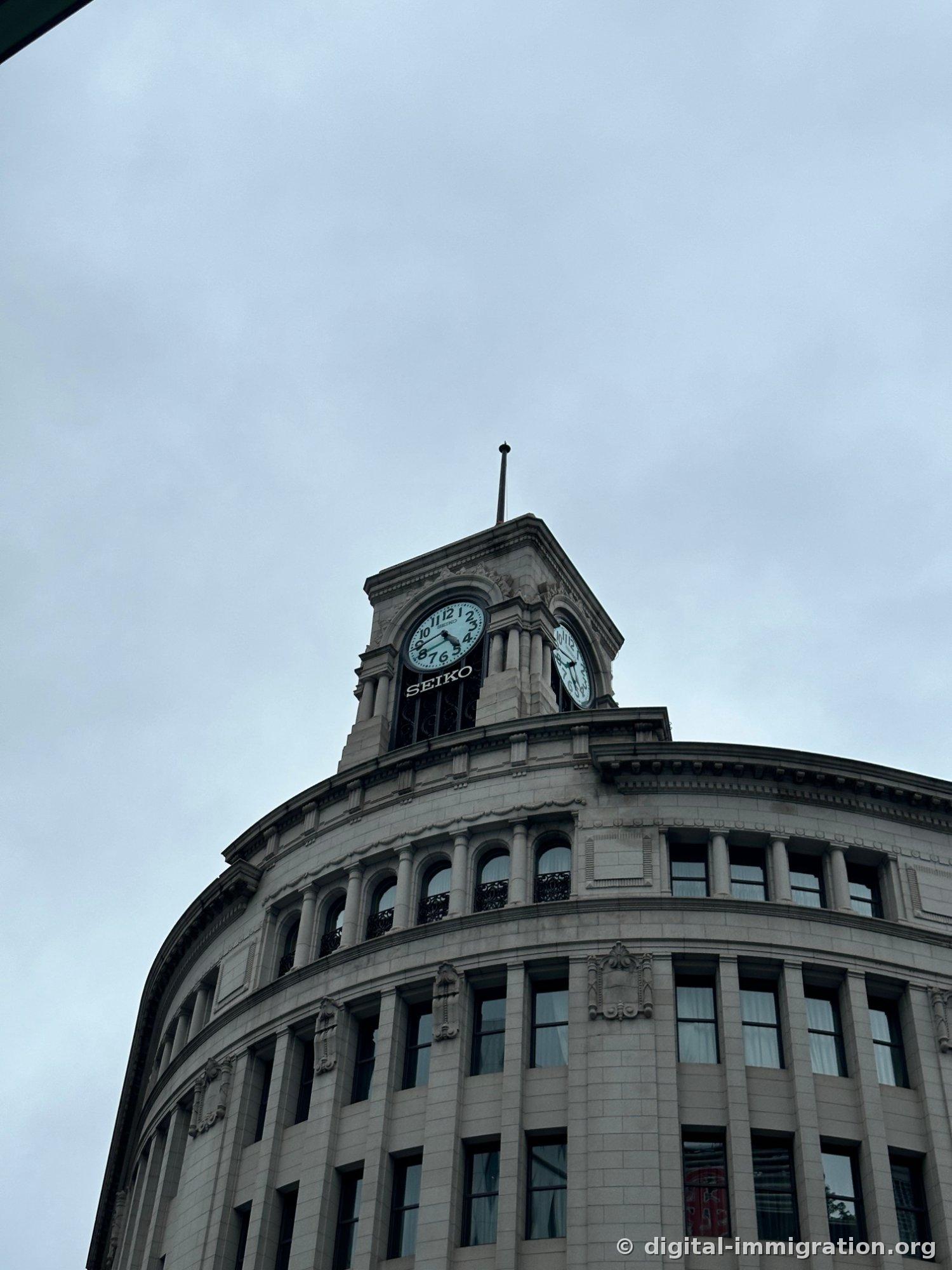
If you can't find Kimuraya, start by finding the Wako clock tower. It's the stone building that curves along the corner of the Ginza 4-chome intersection, with a Seiko clock at the top. When you emerge at street level from Tokyo Metro Ginza Station, it's right in front of you, and if you stand with your back to the clock tower, the Kimuraya sign is within a one-minute walk.
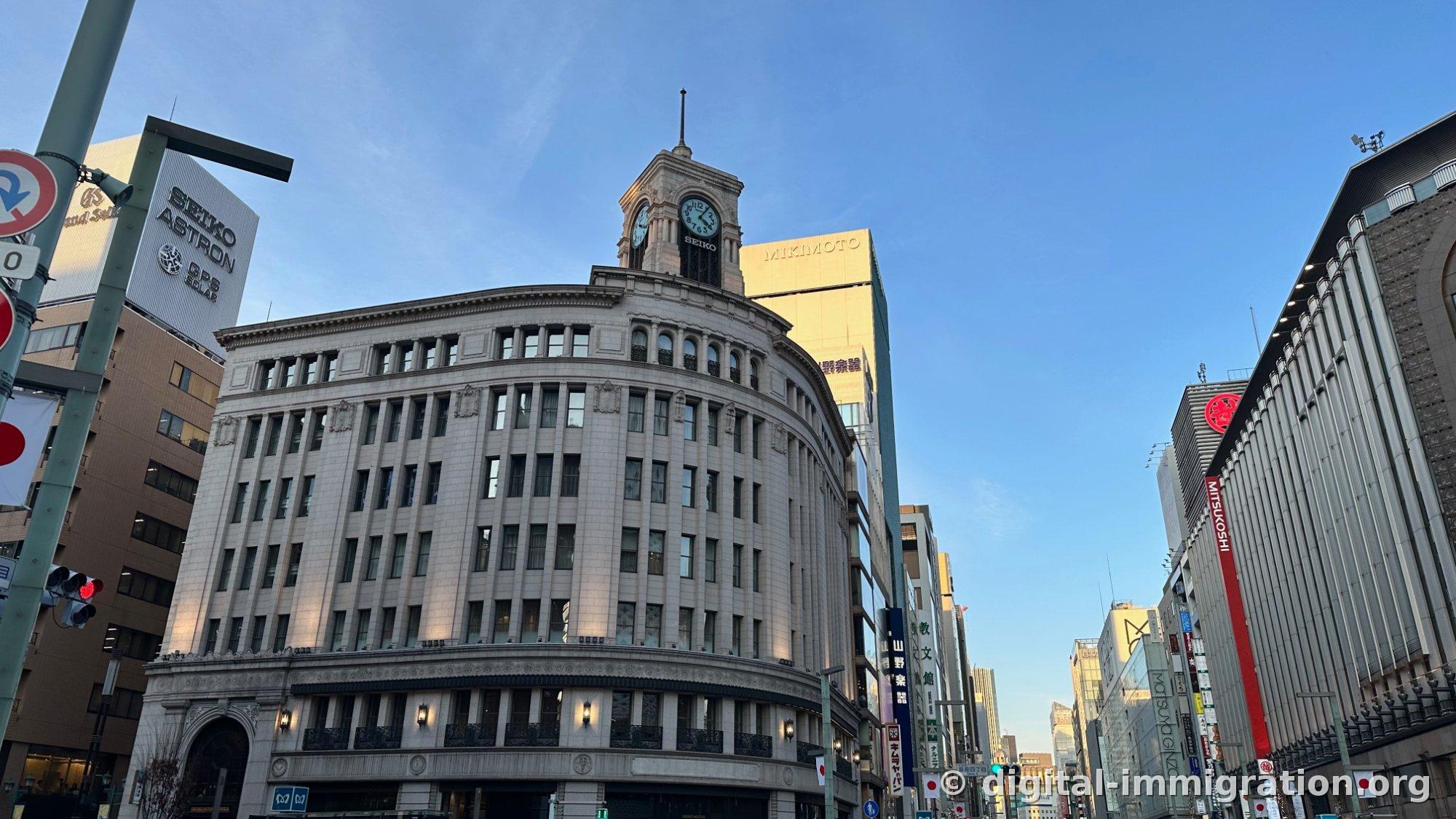
Come on a Sunday afternoon and Chuo-dori becomes a pedestrian paradise. A '歩行者天国実施中' (Pedestrian Paradise in Effect) sign is placed in the middle of the road, and people stand right in the street taking photos. This is the best time to photograph the clock tower head-on. But it's also the most crowded.
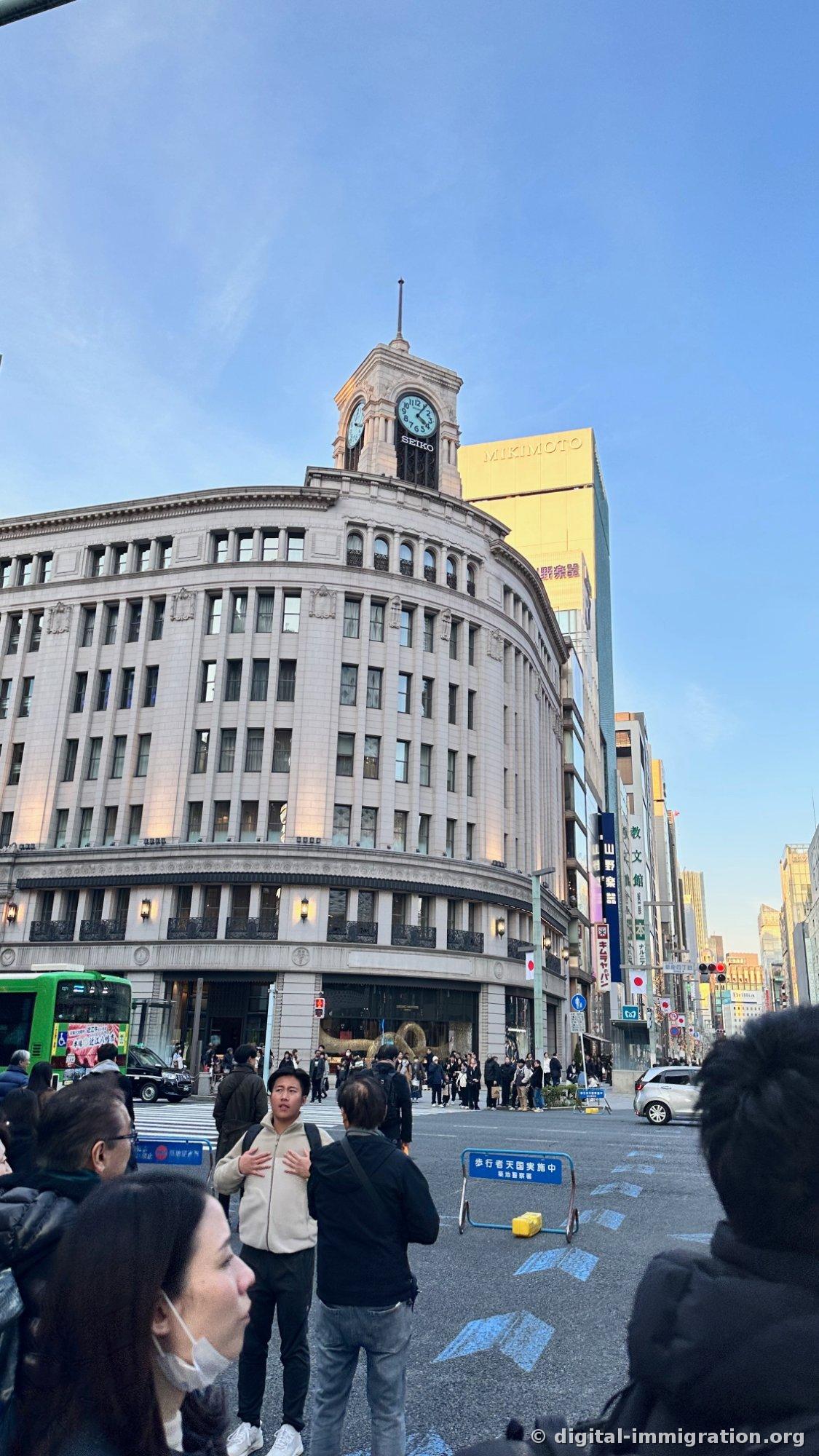
Standing in the same spot on a rainy day felt completely different. When the sky is gray, the stone building's texture becomes more distinct. People with umbrellas crossing the crosswalk actually felt more in character for this neighborhood.
Good to Know Before You Go
- The first floor is the bakery; upstairs is a café and restaurant. If you're just buying bread, you'll be done on the first floor.
- It's better to read the wall plaques and decide what you want before getting in line. If you start choosing at the counter, you'll hold up the line.
- Varieties with cream are inconvenient to eat while carrying. This is especially true on warm days.
- If you buy several and plan to eat them at your accommodation, consume them the same day. The dough is quite moist, so by the next day they'll definitely deteriorate.
- Hours, seasonal menus, and prices can change. Café menus like the parfait especially warrant checking in person.
I stood at the intersection for about ten minutes, ate one bun, and moved on. Considering how little you can buy for this price in Ginza, that one 200-yen-range bun might have been the most honest purchase in this neighborhood.
繼續閱讀
- From Akihabara's Chuo-dori to the Kanda River: A Record of Tokyo's Electronics District Revisited Multiple Times
Tokyo's Akihabara is a neighborhood where it's hard to say you've seen everything in a single visit. I've come multiple times across different seasons, and each time the signs chan…
東京 · 秋葉原 - Buying a Single ¥300 Year-End Jumbo Lottery Ticket at Nishi-Ginza Chance Center in Tokyo
Exit from the Hibiya exit of Tokyo's Shimbashi Station, walk toward the elevated highway for about three minutes, and suddenly you'll see a line of people stretching along the side…
東京 · 西銀座幸運中心 - Ueno Ameyoko, the real magic starts after sunset — an evening walk from the Okachimachi Gate to Ueno Station
Every time I come to Tokyo, my feet find their way to Ueno Ameyoko (アメ横) without fail. This time I entered from the Okachimachi side and worked my way toward Ueno Station. I've met…
東京 · 阿美橫丁市場