From under the Glodok Pancoran arch to Petak Enam, three hours of evening in Jakarta's Chinatown
Walking south from Jakarta's Kota Tua, you encounter a gray stone archway that stretches across the middle of the road. "SELAMAT DATANG — KAWASAN GLODOK PANCORAN — CHINATOWN JAKART…
雅加達 · 格羅多克中華街市場
Walking south from Jakarta's Kota Tua, you encounter a gray stone archway that stretches across the middle of the road. "SELAMAT DATANG — KAWASAN GLODOK PANCORAN — CHINATOWN JAKARTA." Arriving at sunset, the sky was transitioning from orange to mauve, and beneath the arch, on the sidewalk, Nasi Uduk carts had set up shop to serve customers. There's a picture-perfect mix: a helmeted construction worker, a salaried employee heading home from work, and a tourist taking photos, all waiting at the same cart. This is the kind of neighborhood Glodok is—where layers of society blend.
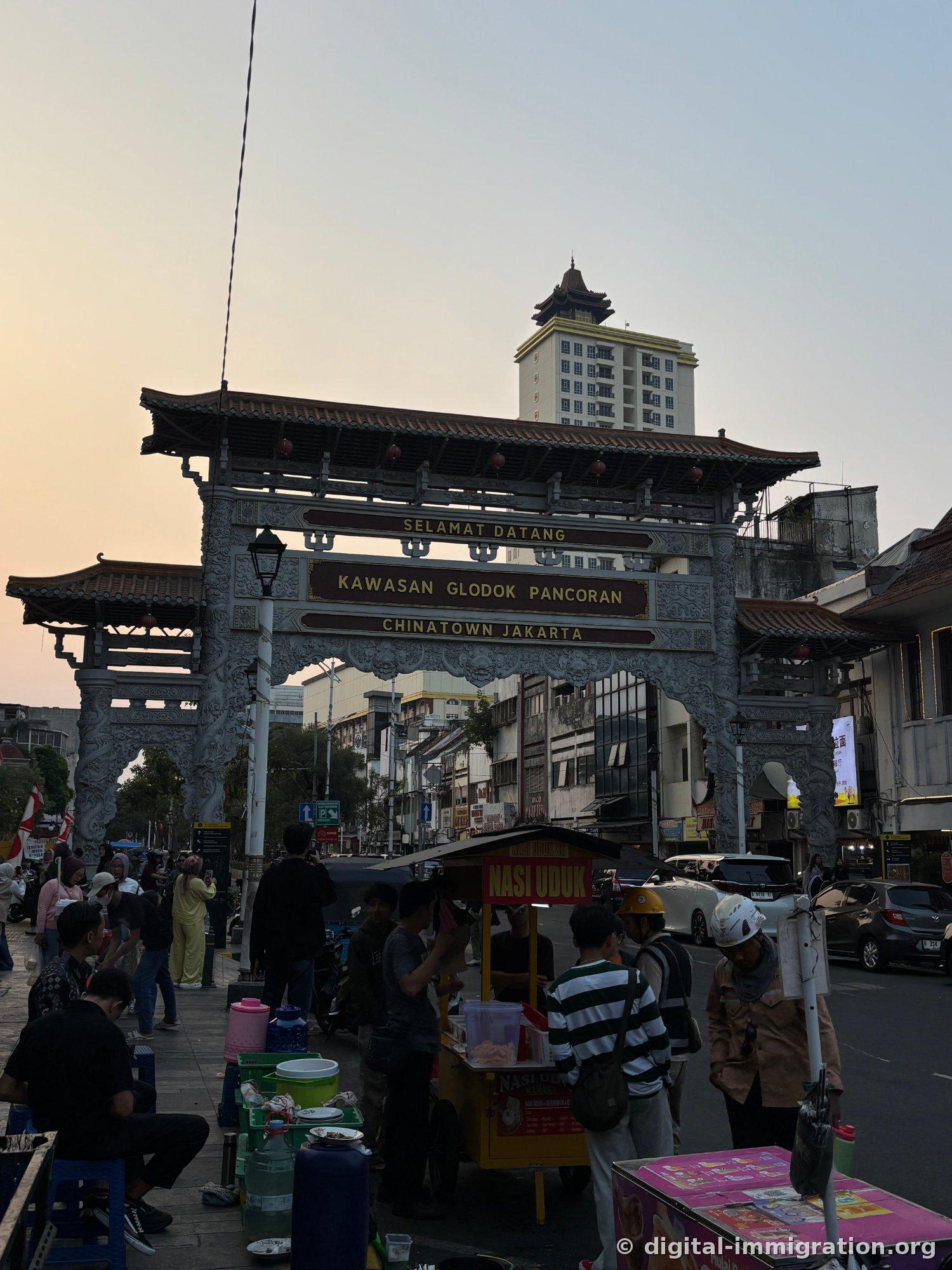
A common mistake for first-time visitors is arriving during the day. Jakarta's midday heat is oppressive—after walking through roofless alleys for thirty minutes, your day is done. It's more comfortable to arrive around 4:30 PM, explore the alleys until sunset, then head to an indoor food court when it gets dark.
Pasar Glodok Alley — Fruit Catches Your Eye First
Just one block in from the main street, the traditional market alleys begin, with corrugated metal roofs and blue tarps woven together haphazardly. Stalls strung with single light bulbs stretch along the way, and the ground is slippery from moisture. Shoes with solid soles are recommended over flip-flops.
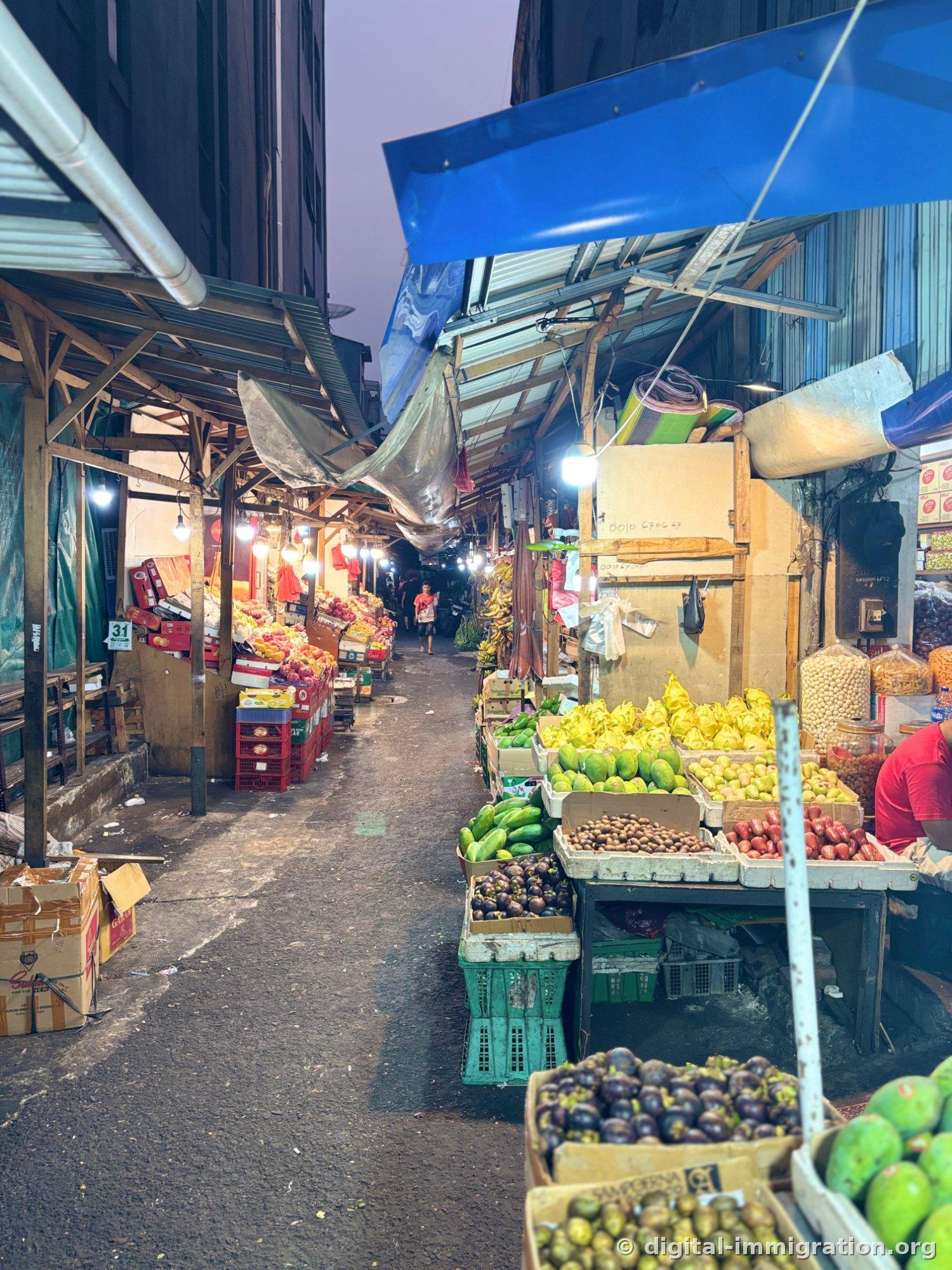
The yellow-skinned dragon fruit is much sweeter than the common red variety. The pile of purple mangosteens placed in front of the box should be selected by pressing with your finger—you want the ones that yield slightly rather than having a hard, dried-out shell, or the inside will be spoiled. Market vendors typically quote prices by the kilogram, but many don't have price tags. Before buying, ask "berapa satu kilo?", check the prices at a couple nearby stalls, then decide. Cash is preferable. If you hand over a large bill, they'll say they don't have change, which takes time—it's better to break down 20,000 and 50,000 rupiah notes in advance.
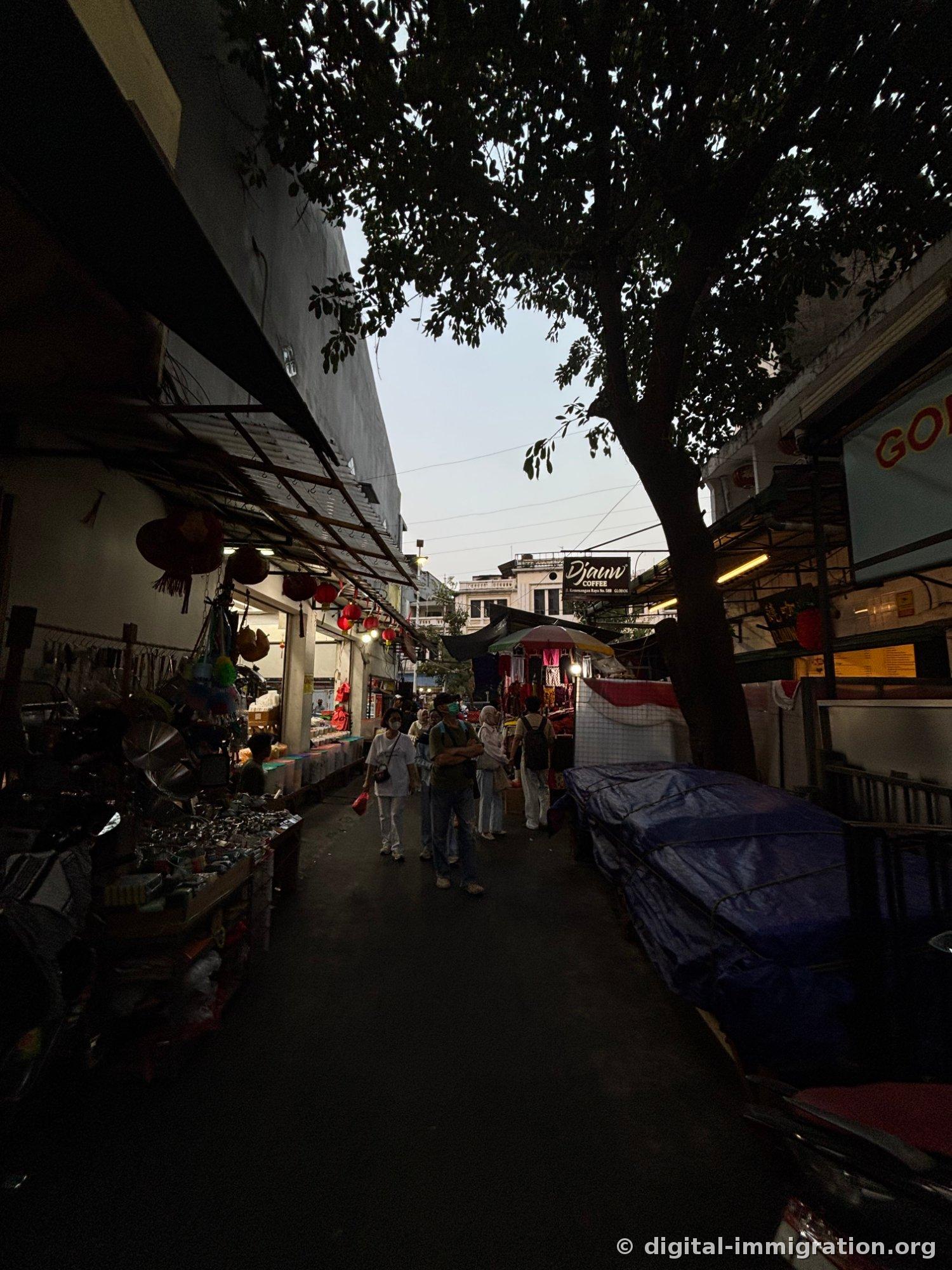
This alley doesn't just sell fruit. There's a section with stainless steel pots, ladles, and strainers covering the walls, and red lanterns hang so low that tall people have to duck. Once the sun sets, the only light comes from the stall bulbs, and photos come out dark. I concluded that even with increased exposure, pictures at this time of day don't come out well—it's better to just observe with your own eyes.
Coffee and Choi Pan — Flavors Brought by Singkawang People
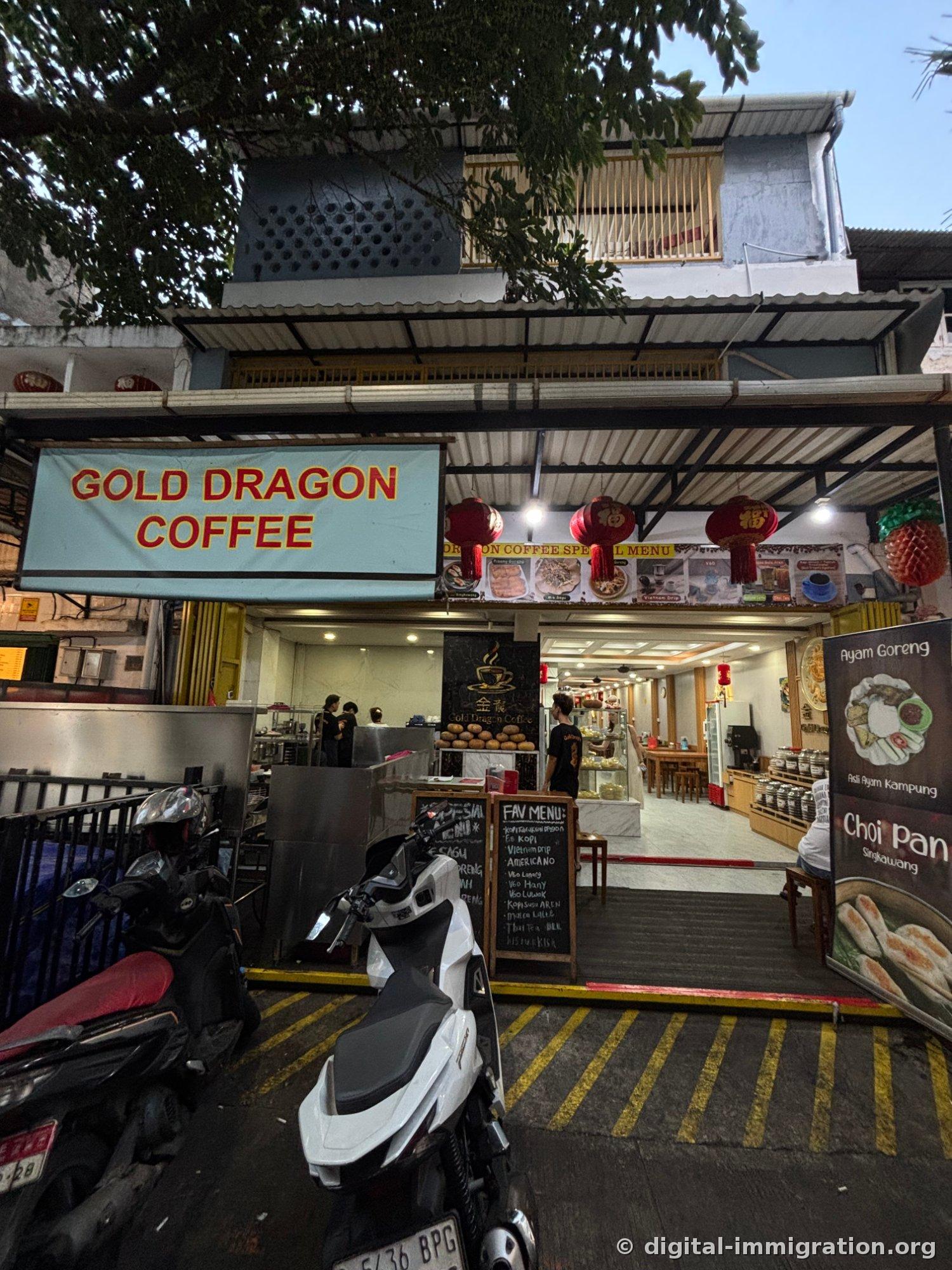
At the entrance to the alley, there's a sign with "GOLD DRAGON COFFEE" written in red letters on a light blue background. On the inner counter is a 金龍 logo, and on a chalkboard at the entrance, "FAV MENU" is handwritten. Es Kopi, Vietnam Drip, Americano, V60 Long, V60 Honey, V60 Luwak, Kopi Susu Aren. Coffee prices in Jakarta are definitely cheaper in this neighborhood. On a banner set to the side are illustrations of Ayam Goreng and Choi Pan Singkawang.
Choi Pan is a food from Singkawang Chinese in West Kalimantan, and it's common in Glodok. The red food cart labeled "SUHU" that appears on the street in the evening is the prime example. The menu photo board has prices clearly posted, so there's no need to ask. Choi Pan Goreng (fried) with 3 flavors 35K, Choi Pan Kukus (steamed) with 3 flavors 33K, Che Hun Tiau 26K, Kolak Pontianak 22K. K in rupiah is thousands, so 35K is 35,000 rupiah—roughly three thousand won.
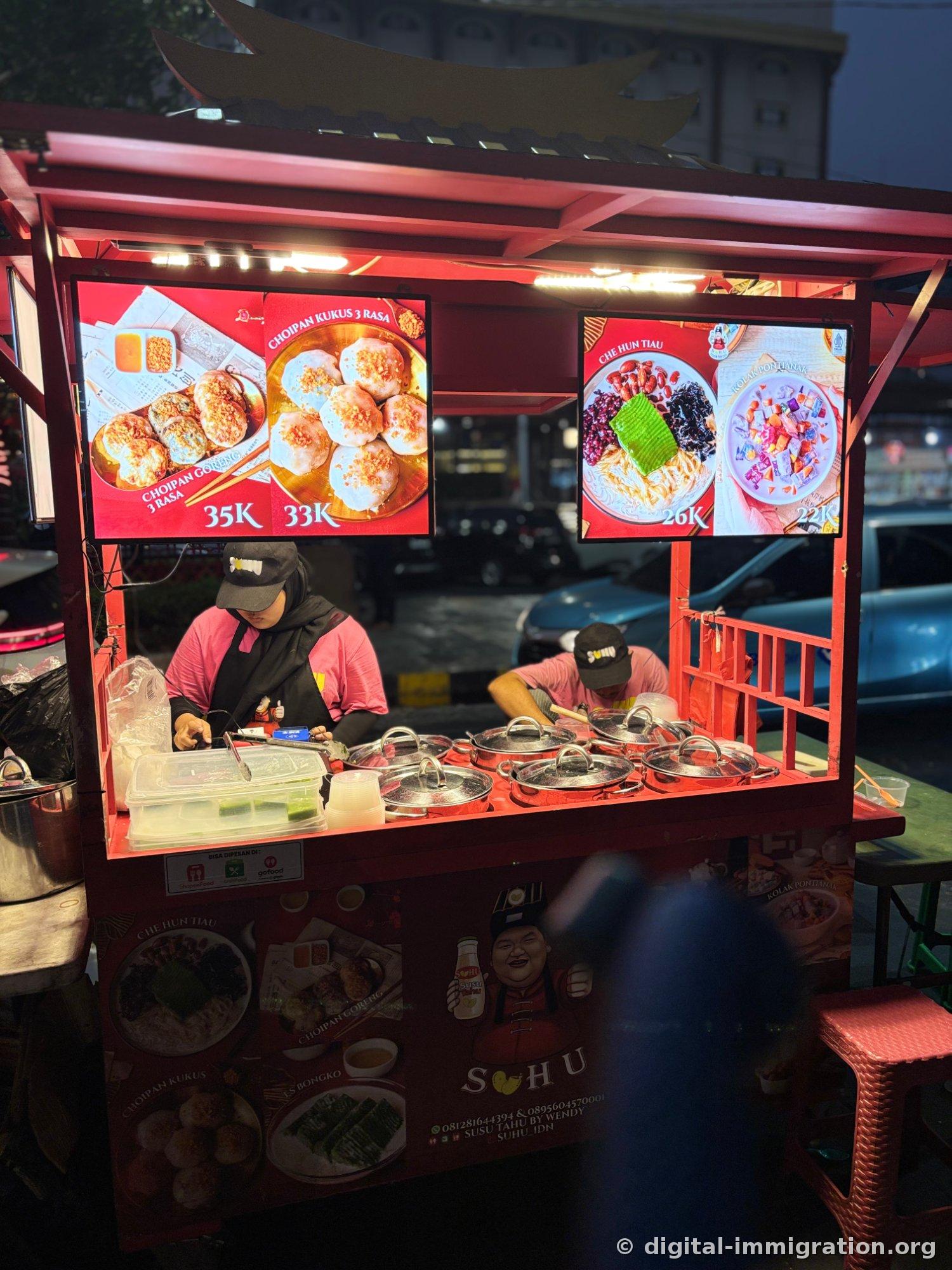
The steamed choi pan has shredded turnip and shrimp bits inside a translucent skin, topped generously with fried garlic. The garlic aroma comes first, and when you chew, you get the mild sweetness of the turnip. The fried version is only fried on the bottom, so the crisped side is savory—eating two leaves you satisfied. I laughed when I saw stickers for ShopeeFood, GrabFood, and GoFood on the counter below. Even food carts do delivery.
In Front of the Martabak Telor Cart
This neighborhood isn't only Chinese food. A line had formed in front of a hand-cart labeled "MARTABAK TELOR," so I joined it. The vendor spreads thin dough on an iron plate, adds egg and chopped scallions, folds it, then fries it—holding two spatulas in both hands, never stopping. The smell of frying eggs and oil drifts to the end of the alley.
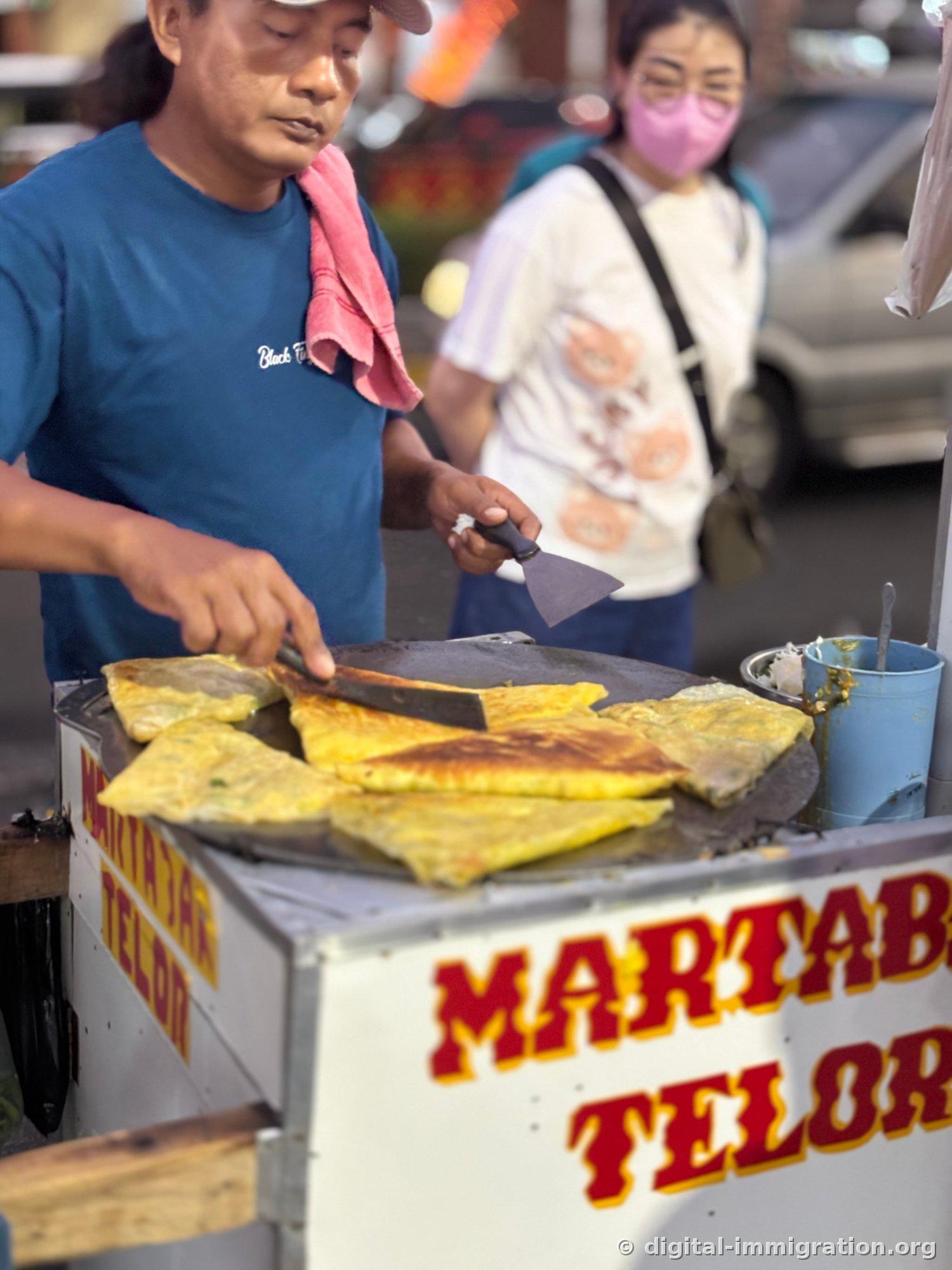
The pickled cucumber juice that comes with it is key. After a greasy bite, chewing the pickle refreshes your mouth. On my first visit, I didn't take it and just ate, only to hit a wall halfway through. It's meant to be taken. It's best to eat it on the spot while it's hot—if it cools down, the taste drops significantly, so don't buy it and walk away eating it.
Petak Enam — A Food Court Layered Over the Market
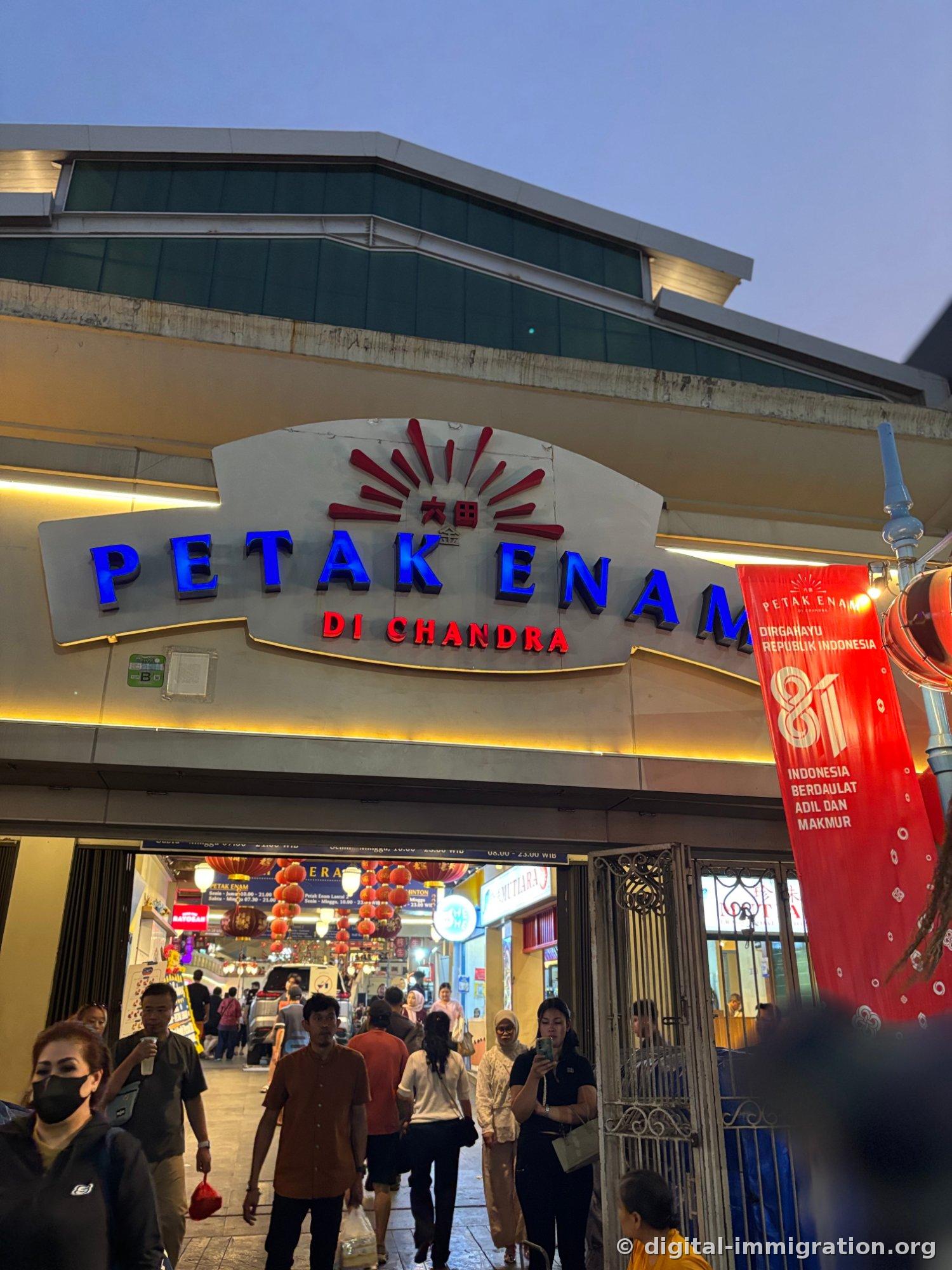
The temperature difference between Glodok's weathered market alleys and Petak Enam is the most interesting part of this neighborhood. This food court, located inside the Chandra Building next to Panto Glodok, has a blue neon sign, and from the entrance, you can see a hallway inside with hundreds of lanterns hanging. On the day I visited, a red banner read "DIRGAHAYU REPUBLIK INDONESIA 81." It was around Indonesia's Independence Day (August 17).
Inside, the ceiling is high. Steel trusses support large ceiling fans, and strings of bulbs are hung diagonally. There's no air conditioning, but the fans are large enough that sitting down is bearable. On the second-floor railing, a 純生 beer banner hangs vertically, and below, an artificial plum tree with red berries stands. Even on a weekday evening, most tables are full. Families dominate, and scattered throughout are tables of men lingering over bottled beer for two or three hours.
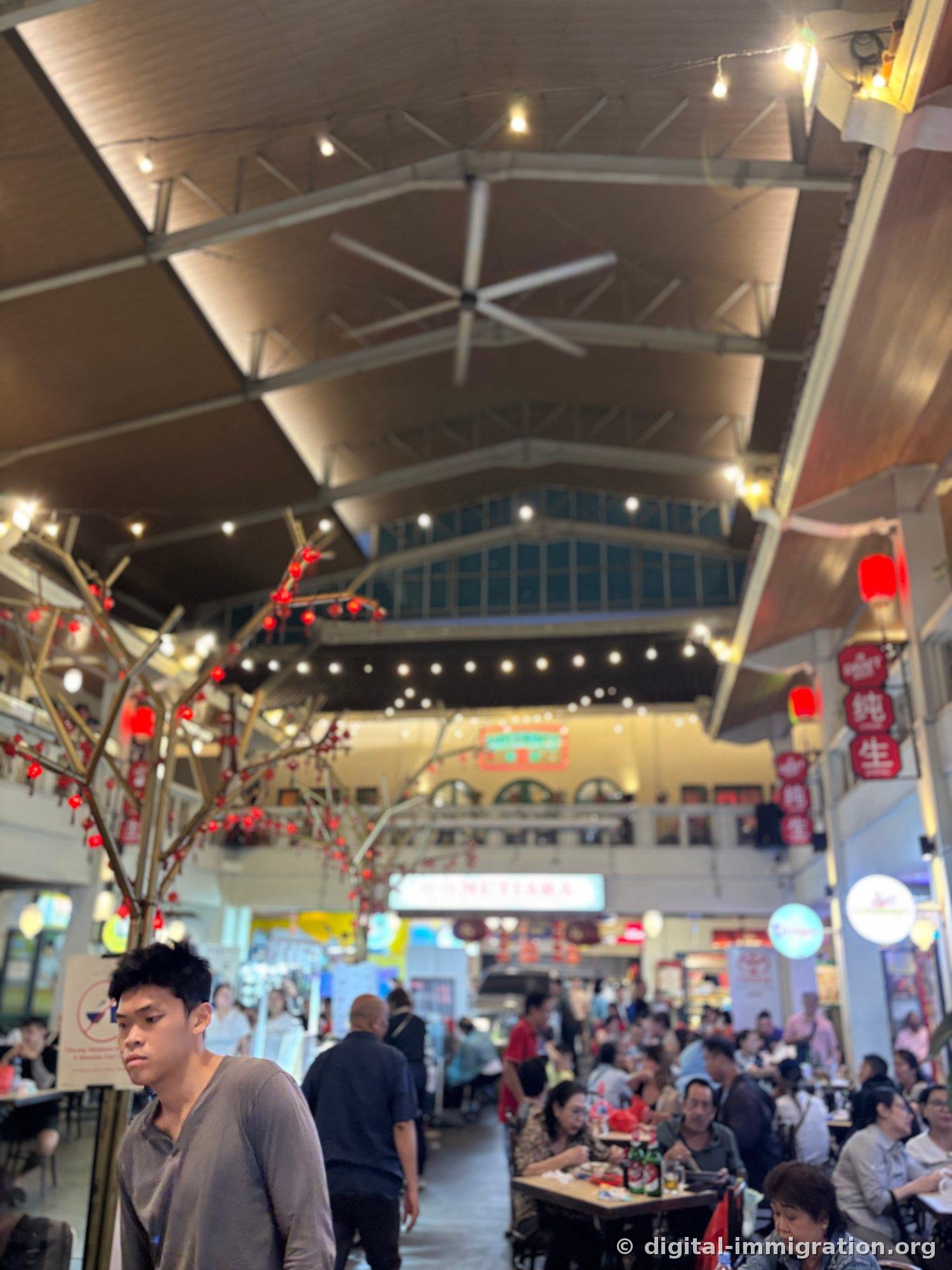
There's a trick to finding a seat. Here, you get your food first, then look for a table, so it's easy to wander around holding a plate during busy times. If you're with others, it's better for one person to grab a table while the rest scatter to order. If you're alone, aiming for a bar seat at the edge is faster.
Getting there is not difficult. From the TransJakarta Glodok station, it's just a few minutes' walk to the arch, and you can also walk from the Kota direction on the MRT. However, motorcycles in this area drive up onto the sidewalk, so you need to check behind you occasionally while walking. If you try to enter by car during evening rush hour, you'll get stuck on the road. I once called a Grab car and it took 20 minutes to go 300 meters, so since then, I get off on the main street and walk in.
Once the Sun Sets, the Stage Opens
There's a performance in Petak Enam's central plaza in the evening. People sit on stepped bleachers, and as a band plays on the stage below, a few audience members come down and dance. They're not professional dancers but neighborhood elders. Women in orange tops, white skirts, and red shoes step in line to the beat, while spectators on the bleachers hold up their phones to film or just watch.
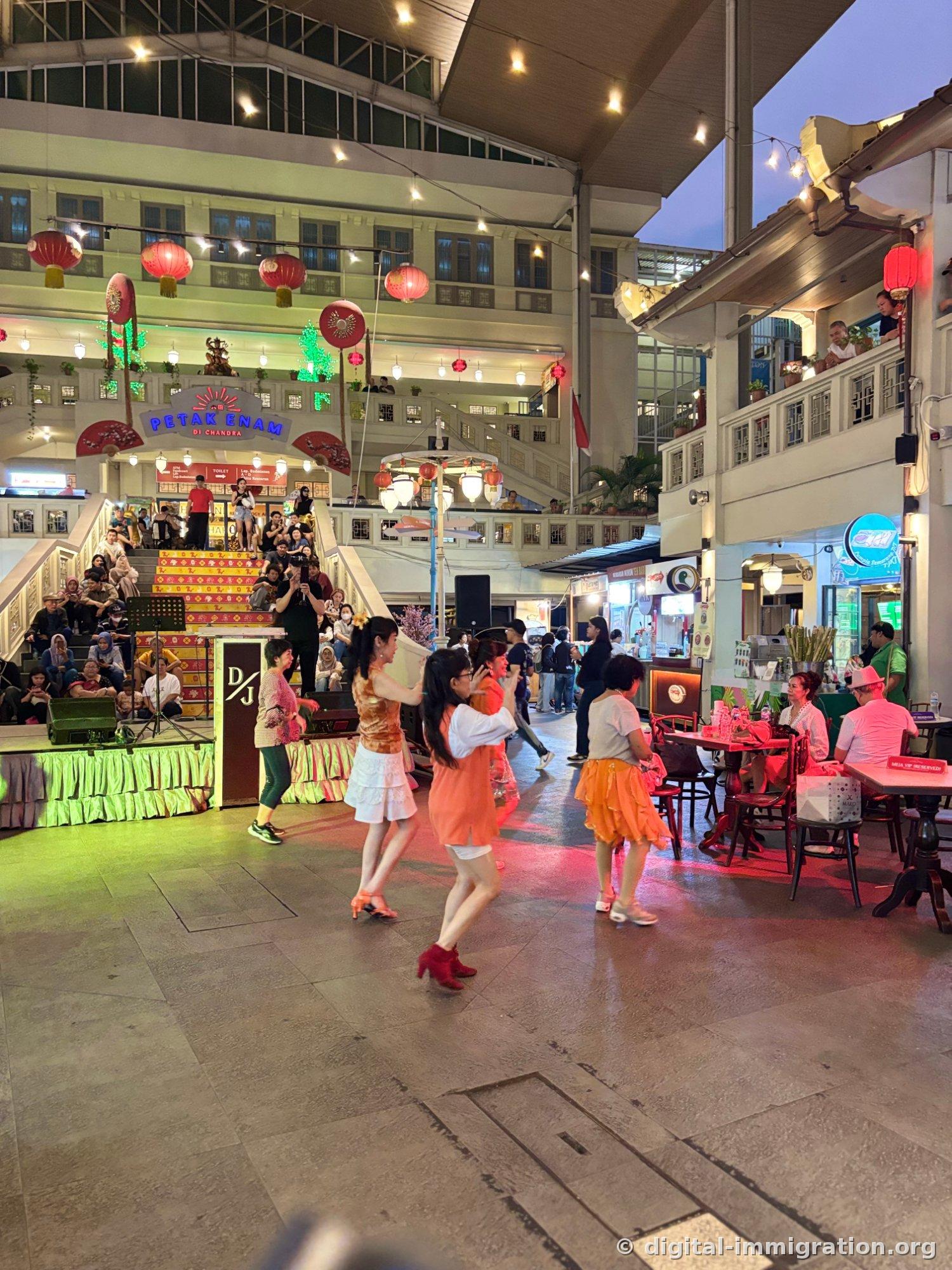
If you want to sit and watch the performance, you should aim for the table area on the right, though there are "MEJA VIP RESERVED" signs on some red tables. If you just sit down, staff will come ask you to move. Sitting on the bleachers is free.
The last photo is of the alley entrance. Walking through this neighborhood, you eventually find yourself returning to this narrow passage again.
Organized After the Visit
- 4:00-4:30 PM arrival → market alleys → Petak Enam when dark. This order uses the least energy.
- Cash is essential. Many market stalls still don't accept QRIS.
- The ground is wet. Wear shoes with proper soles.
- Motorcycles drive onto the sidewalk. Check behind you when taking photos.
- Operating hours vary by floor and shop. It's better to read the entrance information board before going in.
Glodok is not a polished tourist destination. The dampness of the market alleys and the lanterns of the food court are squeezed within a hundred meters of each other, with Nasi Uduk carts and Martabak griddles filling the space between. In three hours of evening, you can experience the full contrast.
繼續閱讀
- Gold Dragon Coffee's Meat Buns Made with Pumpkin Dough in Jakarta's Glodok Chinatown
Glodok is an old Chinese commercial district in West Jakarta. Walking through alleys tangled with jewelry shops, herbal medicine stores, and mobile phone parts shops toward Pasar G…
雅加達 · 格洛多克唐人街市場 - 金龍咖啡 - Jakarta National Museum (Museum Nasional Indonesia), Half a Day at the Elephant Museum
On the west side of Merdeka Square, along Jl. Medan Merdeka Barat, sits a low neoclassical white building. It's Indonesia's National Museum, though locals still call it Museum Gaja…
雅加達 · 印度尼西亞國家博物館 - Four dishes at Ta Wan on the 2nd floor of Harmonie Exchange in Jakarta for 19,000 won
I went to the Harmoni area in central Jakarta on business and grabbed lunch inside the Harmonie Exchange building. Indonesian buildings use different floor numbering than Korea's.…
雅加達 · Harmonie Exchange - Ta Wan