The Noodle Shop Behind Vientiane's Traveler Street—Known as 'Dogani Noodles' Among Korean Travelers
Spend a few days in Vientiane, Laos, and you'll find yourself returning to the same alley each evening. Just a short walk from the Mekong night market and Traveler Street (around P…
Vientiane Capital
Spend a few days in Vientiane, Laos, and you'll find yourself returning to the same alley each evening. Just a short walk from the Mekong night market and Traveler Street (around Phaanhoum and Setathirat) lies a noodle shop that Korean travelers simply call 'Dogani Noodles.' Hardly anyone bothers pronouncing its official Lao name. Among Koreans, the conversation ends with "Let's go eat dogani." This piece is based on notes I jotted down that evening after eating there three times.
A Bowl of Noodles with Whole Cartilage
The signature dish here is rice noodles with beef knee cartilage (dogani) and brisket. The broth is less like rich bone stock and more like a light, clear Lao-style beef broth with a thin layer of fat floating on top. The first spoonful is subtle. This is where newcomers often think, "It's more bland than I expected," but that's only because they haven't added the table seasonings yet. Once you squeeze in lime and mix in fish sauce and chili, the character of the broth completely transforms.
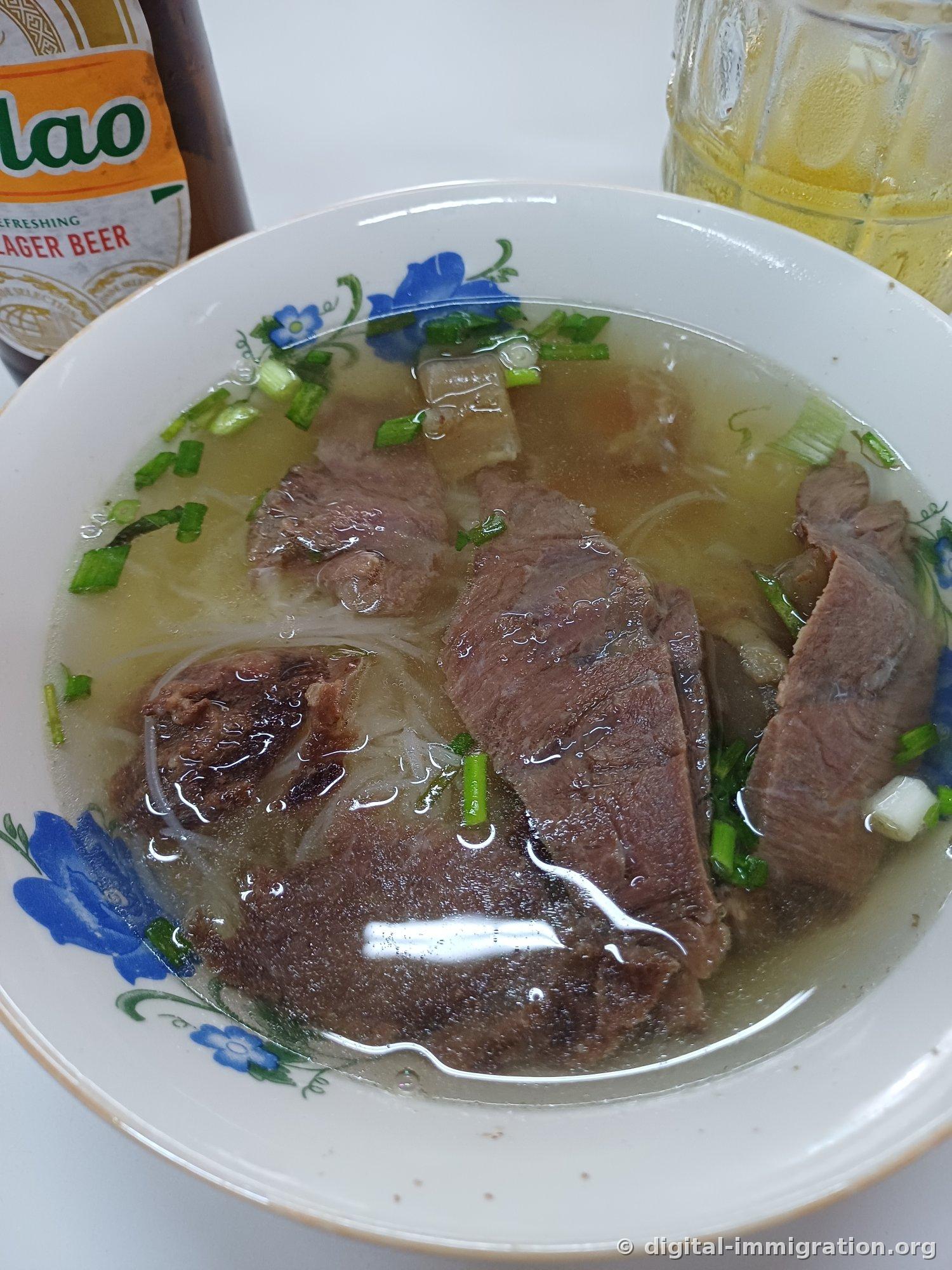
As you can see in the photo, the meat portions are generous. Rather than thin slices, you get chunks about the size of two finger joints—four or five pieces per bowl. When you pick them up with chopsticks, they tear apart naturally along the grain, and the cartilage portion softly melts at the broth's temperature, sticking slightly to the roof of your mouth. If you enjoy that texture, you're guaranteed to love it; if you can't eat soft, gelatinous textures, you'll end up picking out just the meat. In fact, one person in our group left all the cartilage behind. It's an acquired taste, so I'm being honest about it.
It's Better to Order the Meat Plate Separately
Noodles alone leave you wanting more beef. So from the second visit onward, I ordered a separate plate of boiled beef. A white plate comes piled high with sliced cooked beef, generously topped with scallions. Since it's not submerged in broth, the meat's own aroma and texture are more pronounced. There's a distinctive beef smell, but when you dip it in lime and hot chili sauce, it comes through cleanly.
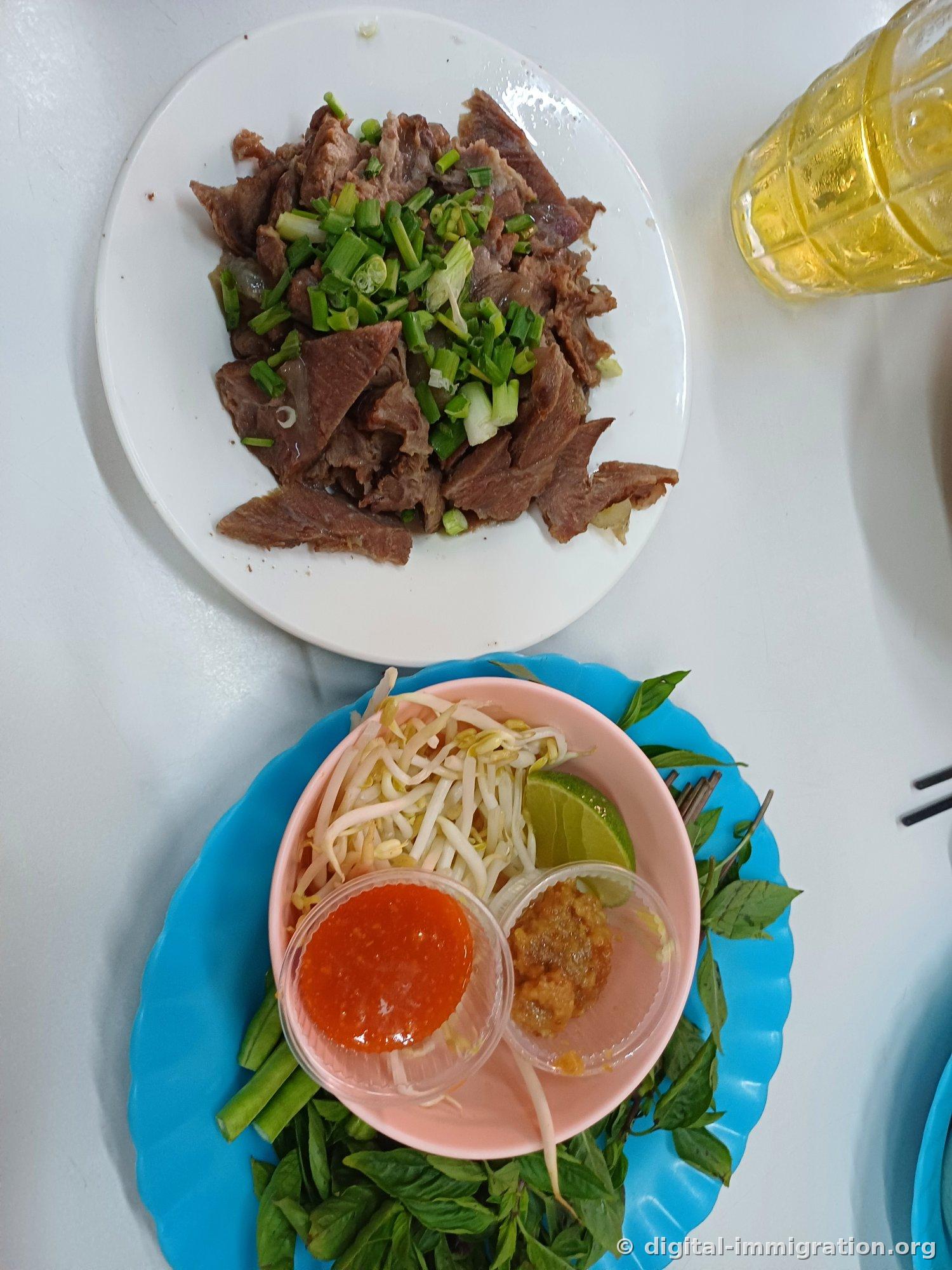
The key is the blue plate of vegetables that comes alongside. The bean sprouts go into the broth to cook just slightly, and you tear basil leaves by hand and float them on top of the broth. The red chili sauce is sweet and tangy, while the minced garlic and chili paste next to it is much spicier. I often see first-timers pour both sauces directly into the broth, which completely ruins the flavor in one go. The trick is to use the sauces for dipping meat, and adjust the broth only with lime and fish sauce. That's how to properly enjoy this shop's broth.
Apply for the Digital Immigration Form (LDIF)
Beerlao Comes in Ice Glasses, Not Bottles
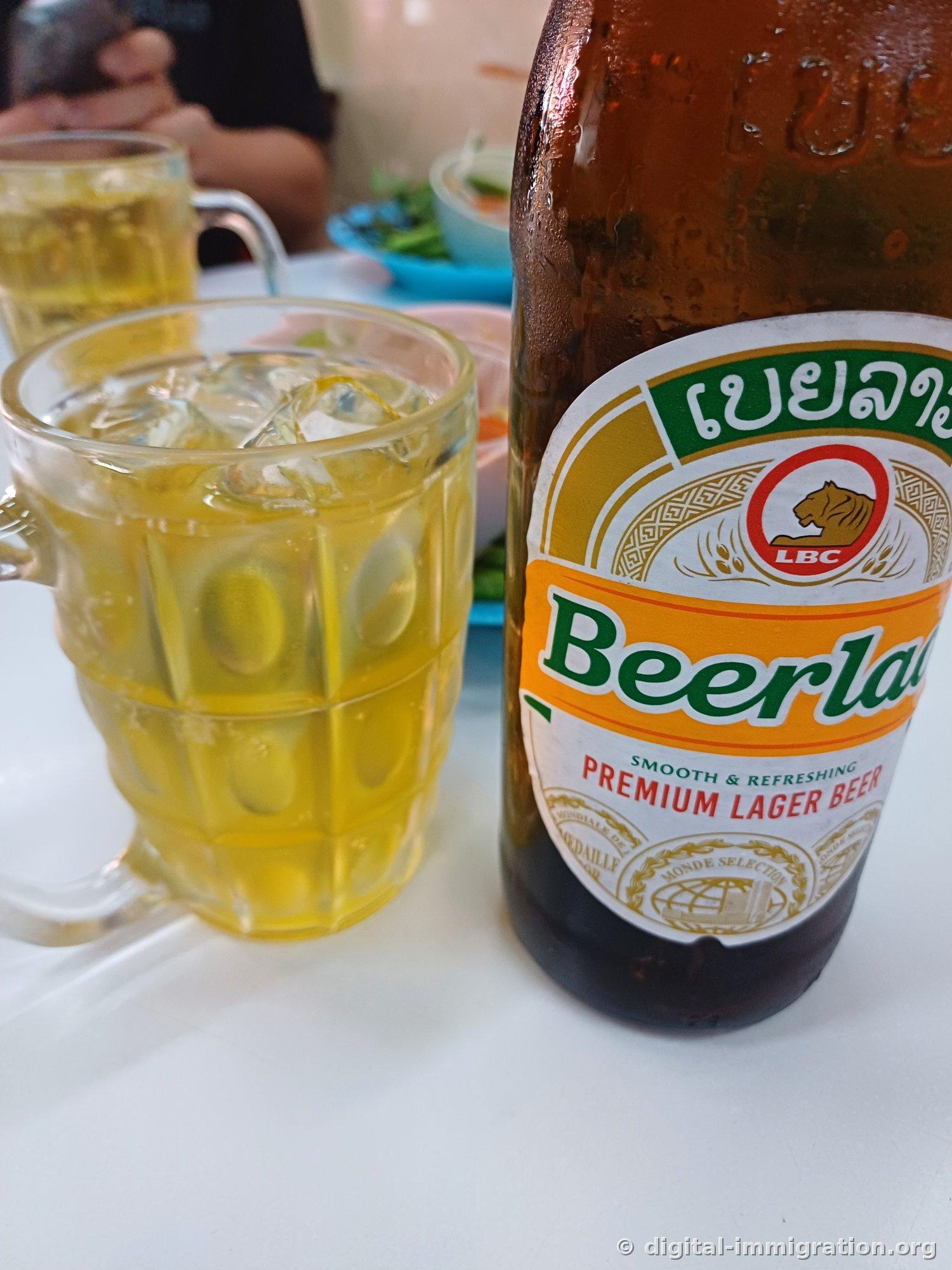
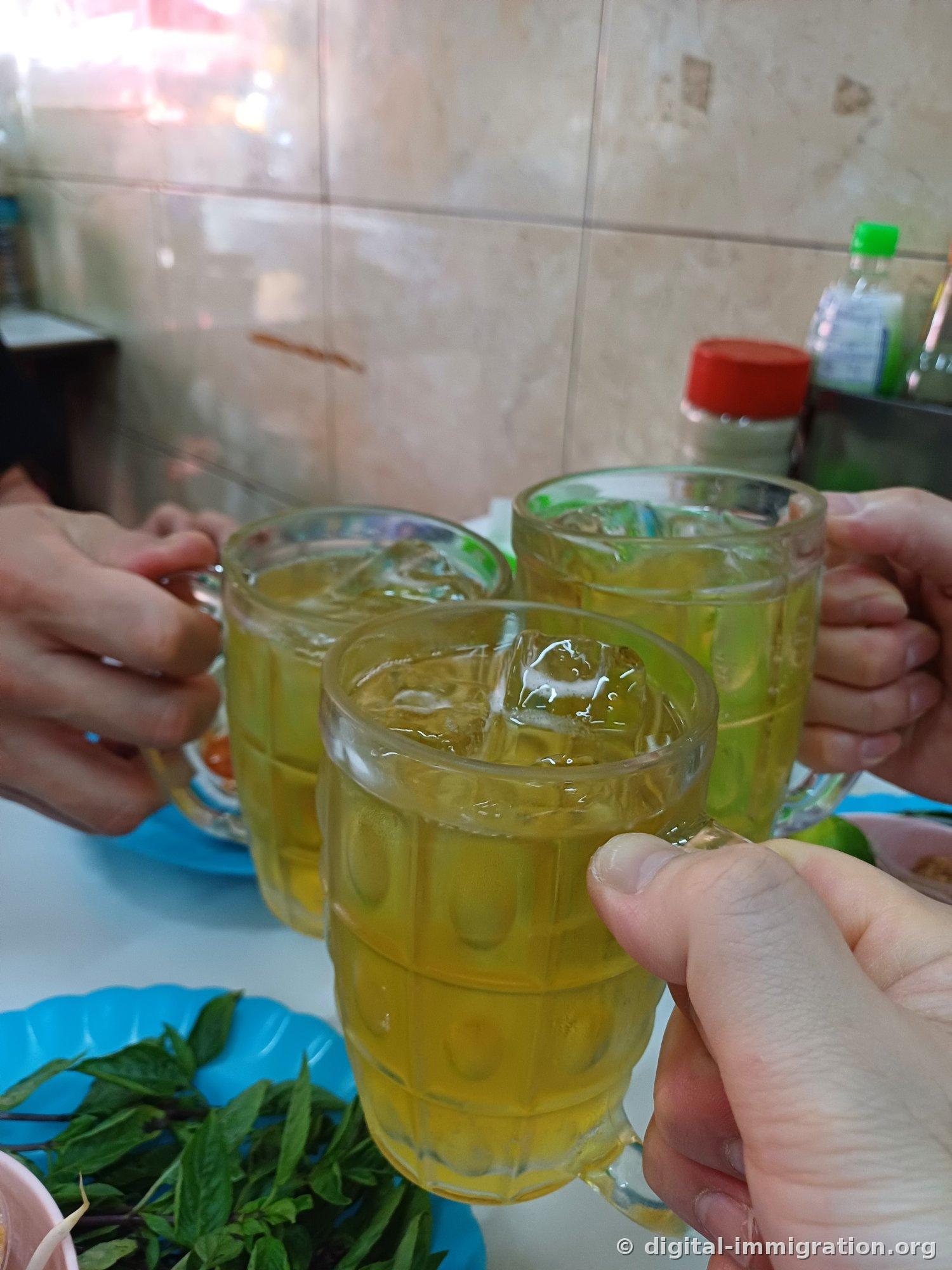
In Laos, beer isn't meant to be drunk straight from the bottle. You order a large bottle and it comes with a thick glass mug with a handle and a bucket of ice. You fill the glass with ice, pour the beer, and share it around. By Korean standards it might seem odd—"beer with ice?"—but when daytime temperatures reach 33 to 35 degrees in this city, it's the only way to go. There's no time for it to get lukewarm.
The shop interior has tile walls, fluorescent lights, and plastic chairs. Don't expect air conditioning—it's better to grab a seat in front of a fan. Around 7 p.m., the sound of noodle bowls clinking together mixes with Lao and Korean, getting quite loud. If you want a quiet meal, I'd recommend going before 6 p.m.
Why Korean Soju Appears on the Table
On my third visit, there were green soju bottles on both the table next to us and ours. At first, it seemed funny that a Lao noodle shop sold Chamisul, but after trying it, I understood why this pairing had become standard. Dogani beef with soju is exactly the same feeling as eating sliced boiled beef with soju back in Korea. With so many Korean customers, the shop decided to stock it themselves.
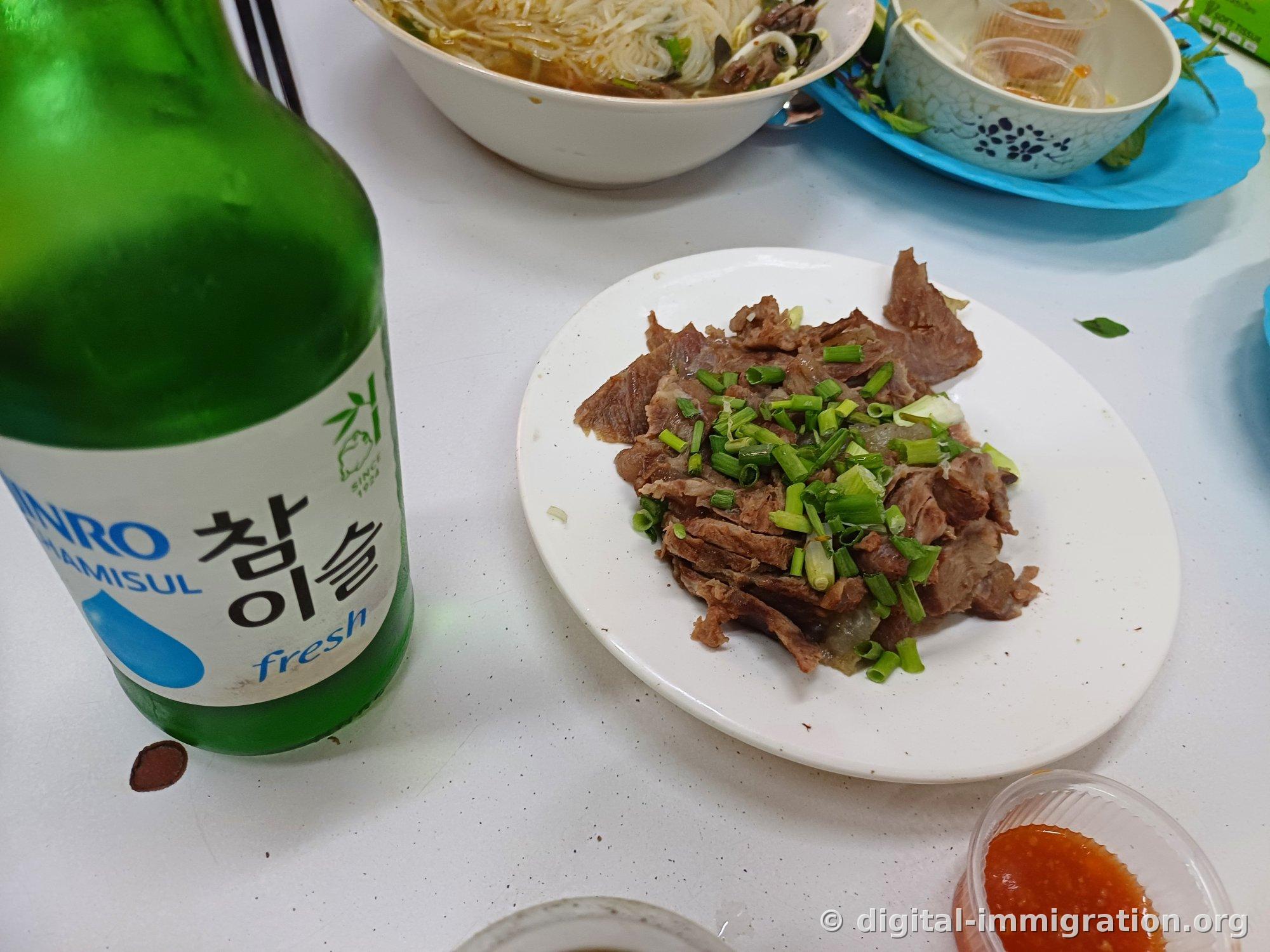
That said, soju is definitely pricey by Lao standards. Compared to a bottle of Beerlao, it hits your wallet. Since prices vary by time and location, I recommend checking the menu before ordering. On my first visit, I didn't ask the price before ordering, and I hesitated for a moment when the bill came.
Location and Practical Tips
It's close enough to the center of Traveler Street that you won't need to take a tuk-tuk. However, since it's tucked down an alley, you'll get lost if you just look for a sign. Using Google Maps coordinates is the quickest way. Below is the approximate location of where we ate.
- Ordering — One bowl of noodles per person; one meat plate for two to three people is usually enough. Three of us with three noodle bowls plus one meat plate and a large bottle of Beerlao leaves you full.
- Payment — Kip (LAK) cash is most reliable. Check on-site whether card or QR payment is accepted.
- Hours — Since I only went in the evening, I couldn't confirm daytime hours. Google Maps info may differ from reality, so check in person.
- Note — The ice is factory-made (cylindrical with a hole in the center), so stomach issues are unlikely, but if you have a sensitive stomach, try it without ice on your first visit to be safe.
You can see all the main temples, Pha That Luang, and the Victory Gate in Vientiane in three to four days. After that, the remaining question each evening is where and what to eat, and this place fills that void quite well. It's not a famous tourist attraction—just a noodle shop with well-developed broth.
On my last evening, I came back here again. I lifted a piece of cartilage with chopsticks and the broth dripped, and water beads had already formed on the Beerlao glass with ice. If I had to pick one memory from Vientiane, this table comes to mind before any temple roof.
Read next
- Pha That Luang in Vientiane: Walking the Golden Stupa on a Cloudy Afternoon at Five O'Clock
Take a tuk-tuk fifteen minutes northeast from downtown Vientiane and the road suddenly widens, with a golden mass rising abruptly beyond a wall. Pha That Luang. The very stupa that…
Vientiane Capital · That Luang - Kyoto-Style Water Drop Mochi Found in the Heart of Vientiane — KYO Cafe & Meal Record
Vientiane is fiercest at two in the afternoon. Shade does nothing to help, and you can feel your shirt clinging to your back. That day, while walking through downtown, it became un…
Vientiane Capital · KYO Cafe & Meal - A French Evening at Le Vendôme in Vientiane, Laos—Record of Three Plates: Pizza, Carbonara, and Salad
On an evening when the breeze from the Mekong River drifted across the street, I stepped into Le Vendôme Restaurant tucked into an alley near Wat Inpeng. Whenever French cuisine co…
Vientiane Capital · Le Vendôme Restaurant