You Need to See the Statue of Liberty in Odaiba from Behind — Two Hours on the Deck on a Winter Afternoon
The Statue of Liberty standing on the waterfront deck in front of Aqua City in Odaiba, Minato Ward, Tokyo. It's a replica about one-quarter the size of the one in New York. Origina…
Tokyo · Odaiba Statue of Liberty
The Statue of Liberty standing on the waterfront deck in front of Aqua City in Odaiba, Minato Ward, Tokyo. It's a replica about one-quarter the size of the one in New York. Originally brought in briefly in 1998 to commemorate Franco-Japanese relations, it was reassembled in 2000 after a positive reception. I'd passed by it many times before, but this was the first time I spent proper time looking at it. To jump to the conclusion: this statue looks much better from behind with the Rainbow Bridge in the frame than from the front. The front is just a green bronze sculpture, but from the back, all of Tokyo Bay becomes the backdrop.
From the Front — Bigger Than Expected, Yet More Underwhelming Than Expected
January in Tokyo has an unreasonably blue sky. The humidity is gone, and the air is crystal clear like glass. When you look down at the statue from the top of the deck stairs, you get roughly this view.
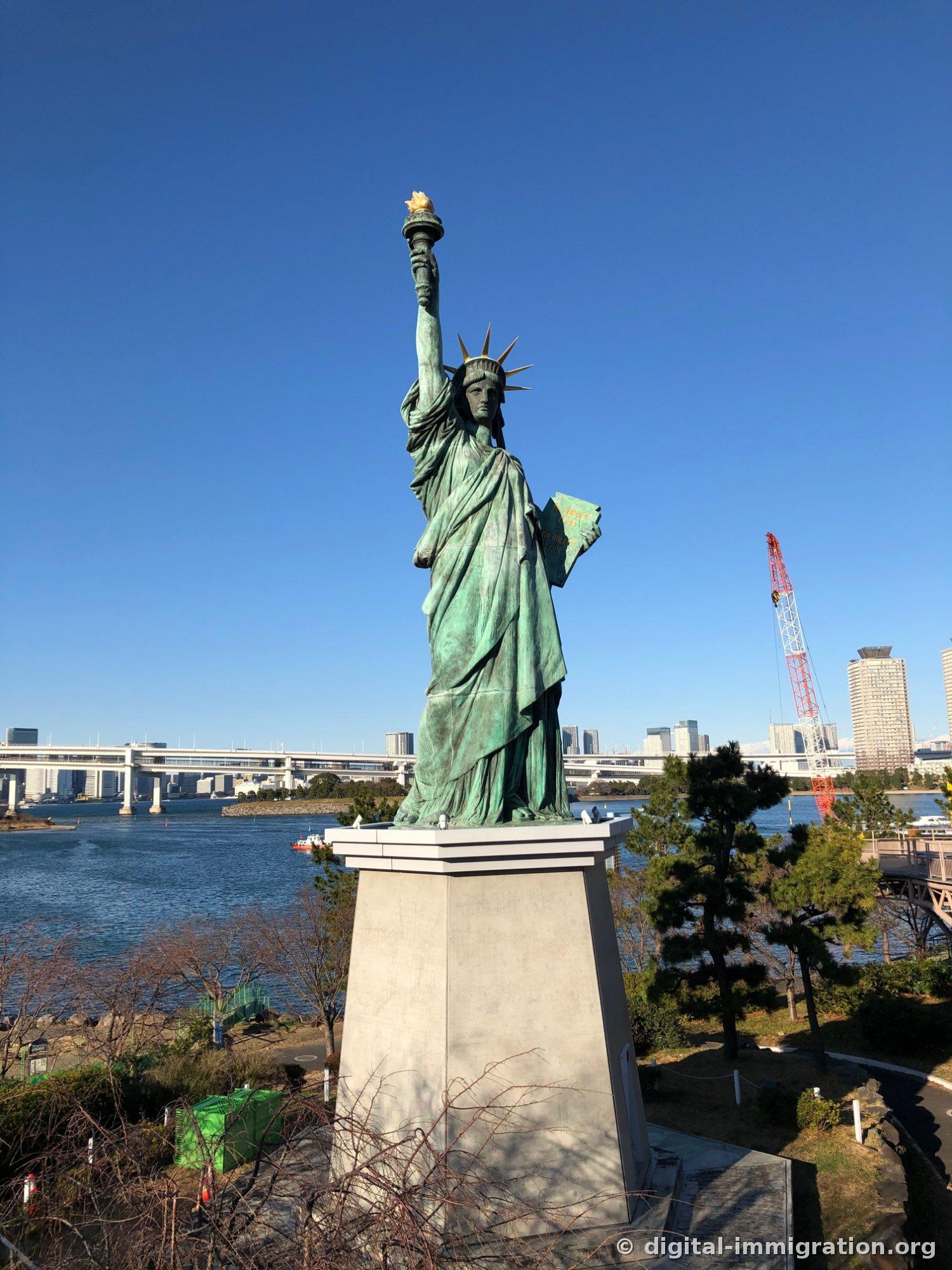
Up close, the surface is quite rough. There are rivulets of oxidation running down each fold of fabric, and the base is just plain gray concrete. The inscribed plaque in its left hand is nearly illegible to the naked eye. If you come expecting something grand, there's nothing left to see in five minutes. However, the treatment of keeping only the torch tip and crown tips in gold does stand out nicely against the blue sky. When taking photos, you need to position yourself so the sun is behind you—facing west in the afternoon—to avoid shadows on the face. Shoot head-on around midday, and the face turns entirely black.
The Real Shot Is from Behind, at the LOVE Sculpture
Behind the statue, on the Aqua City deck, stands a rainbow-colored LOVE sculpture. This is the spot where crowds congregate most heavily in this area, and the reason is clear. A single frame captures the LOVE letters, the Statue of Liberty, the Rainbow Bridge, and the high-rise skyline toward Shibaura beyond.
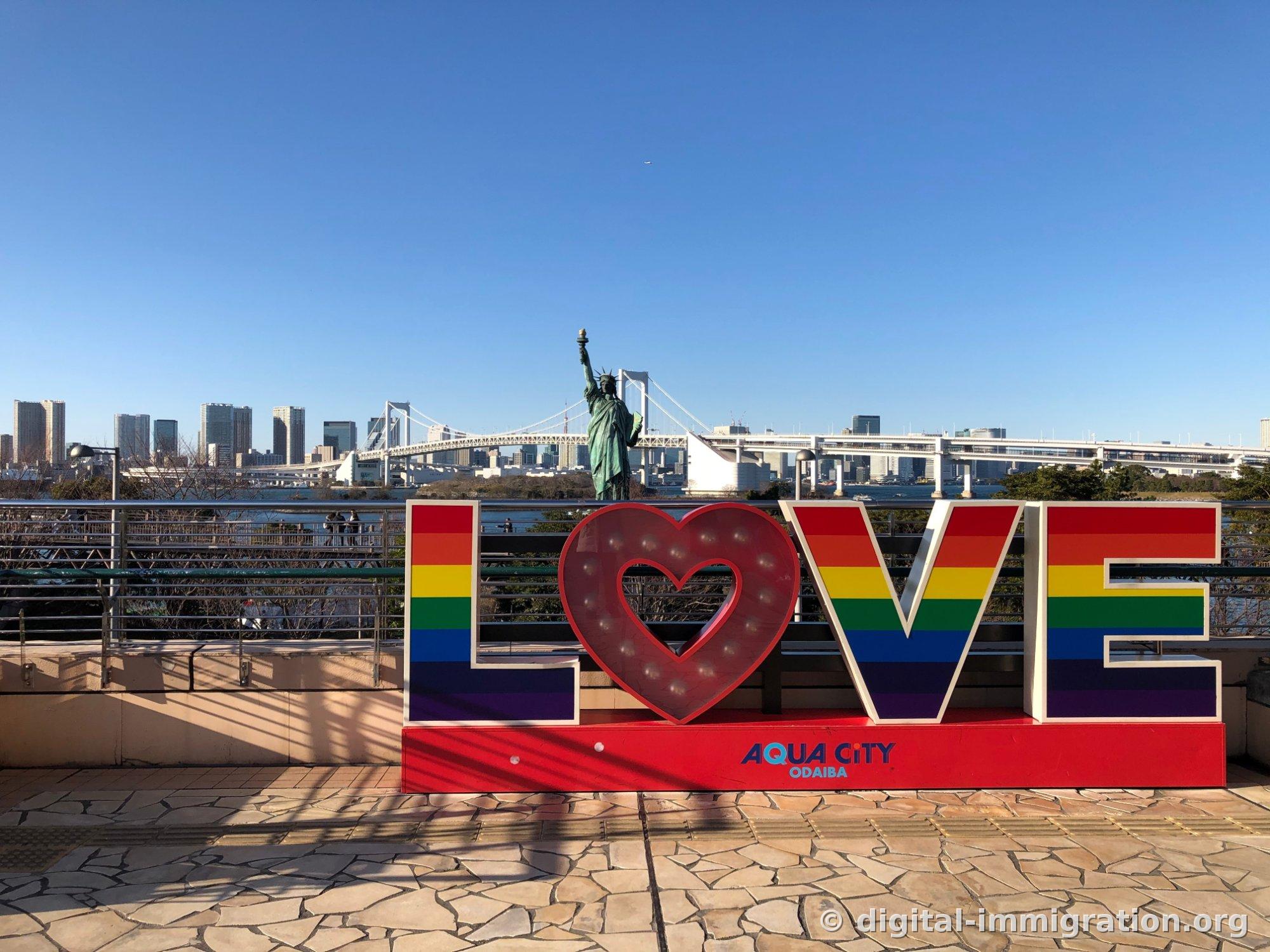
To get this shot, you need to step back a few paces from the sculpture and crouch down. If you stand and shoot, the statue gets blocked by the letters. And at this spot, while there's no line, you still have to wait for the person ahead to move aside. When I went, I waited for about two groups and it took around five minutes. You should expect it to take longer on weekend afternoons.
The Sparrows Captivated Me More Than the Statue
Five sparrows were sitting on the concrete railing of the promenade beside the statue. Japanese sparrows (suzume) have a black mark on their cheeks and a white band around their neck, so they have slightly different markings than Korean sparrows. They had found the exact spot to catch the winter sun, puffed up their feathers, and settled in. Even when I approached to within a meter, they wouldn't fly away.
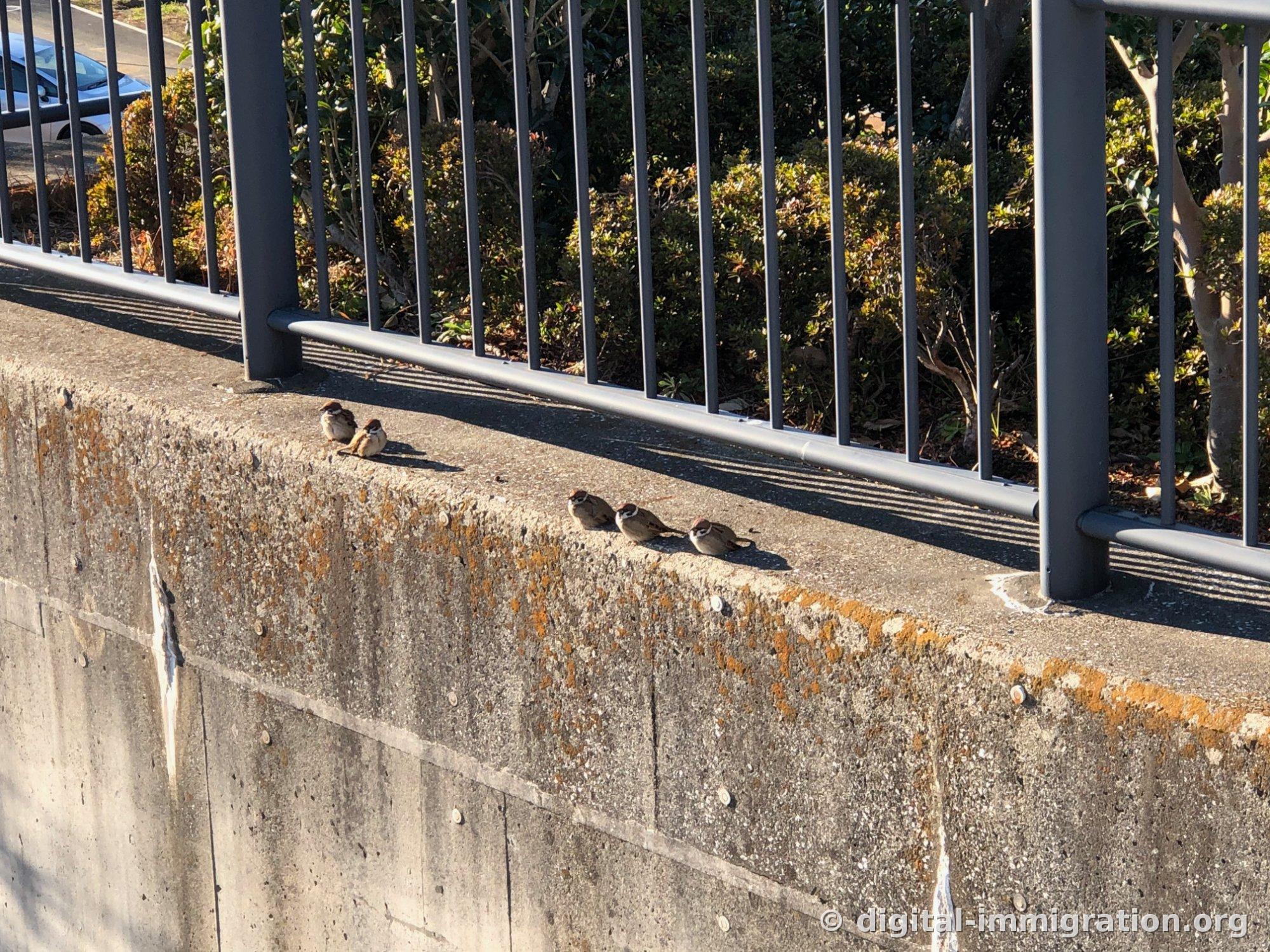
As I stepped closer to get a better shot, two of them finally moved away. The remaining three just kept their eyes closed.
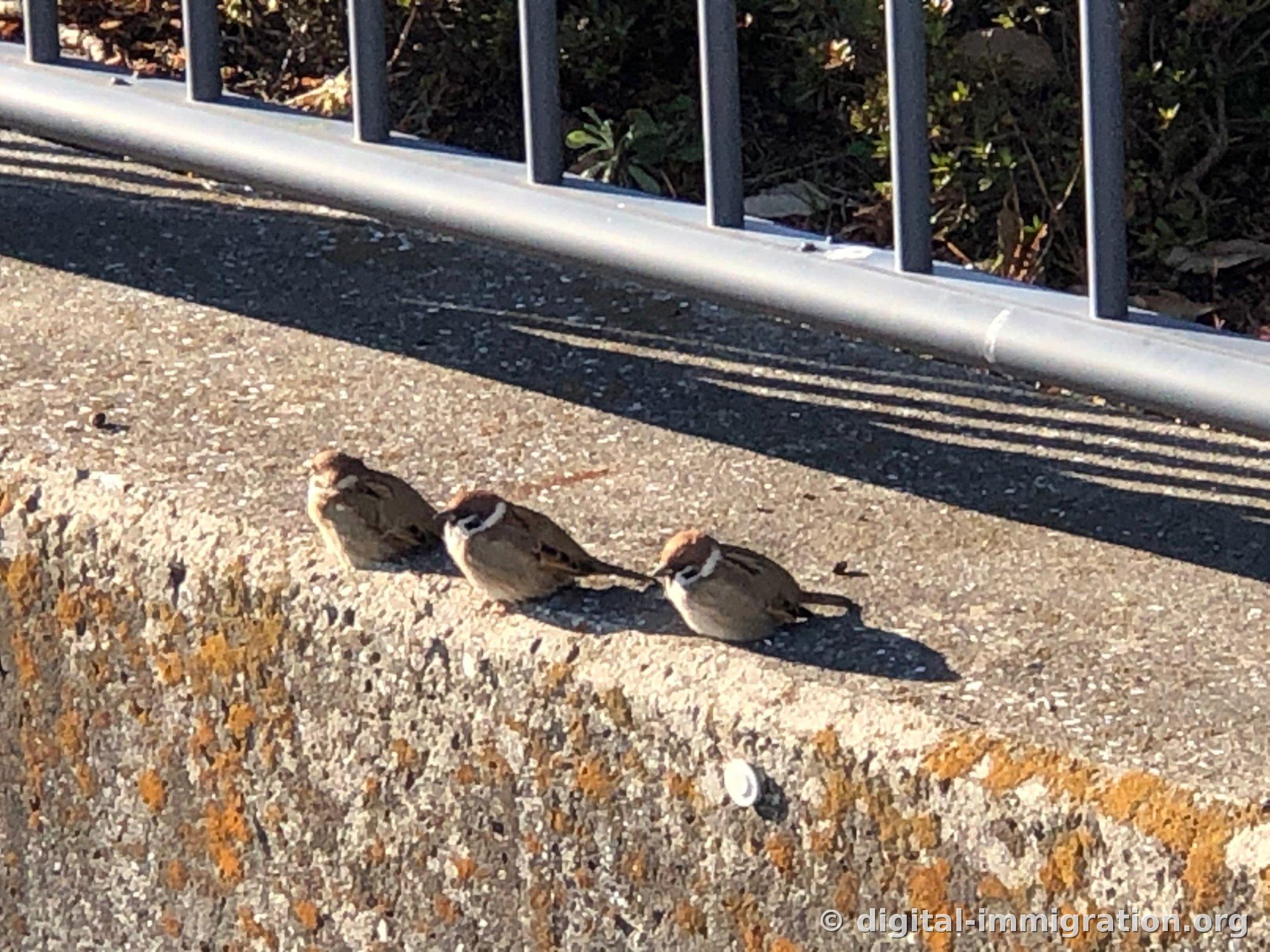
Whatever people drop here, the sparrows in this area aren't afraid of humans at all. I wouldn't recommend feeding them. But it's worth noting that you can get this level of detail with just a phone, no telephoto lens needed.
Views Toward the Water — Yakatabune and the Rainbow Bridge
Leaning against the deck railing and looking out toward the water, you can see the entire Rainbow Bridge. The top of Tokyo Tower pokes out behind the bridge to the left, and the cluster of high-rise apartments in front of that is toward Harumi and Kachidoki. The red vessel passing over the water is a yakatabune—a sightseeing boat that serves drinks and food in the evening. During the day, it just moves around empty like this.
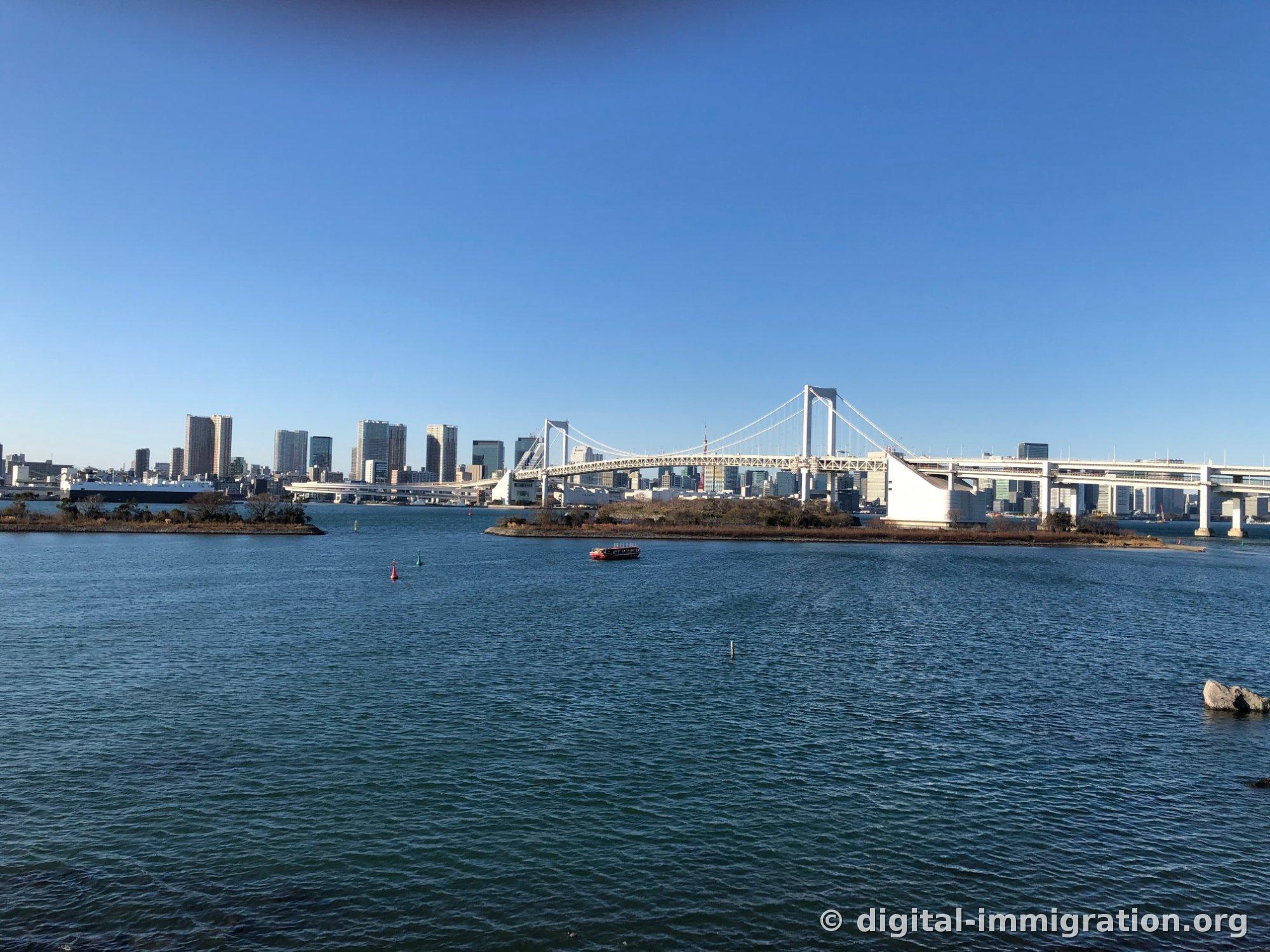
In a winter afternoon, the wind hits you head-on at this spot. Since it's coming straight up from the water, the wind chill drops dramatically. If you go in January, bring a scarf. I went lightly dressed and fled indoors within thirty minutes.
How to Get There and Route Planning
The statue is closest to Yurikamome's Daiba Station. Exit the turnstile and follow the deck toward Aqua City, and you'll get there in under five minutes. Coming from Rinkai Line's Tokyo Teleport Station means about ten more minutes of walking. If you take the Yurikamome from Shimbashi, the front seat of the driverless train is the prime spot, but kids always claim it first.
Here's an itinerary that wastes no time:
- Daiba Station → Aqua City deck (LOVE sculpture, back angle of the statue)
- Down the stairs to the front of the statue → beachfront promenade (sparrow section, water views)
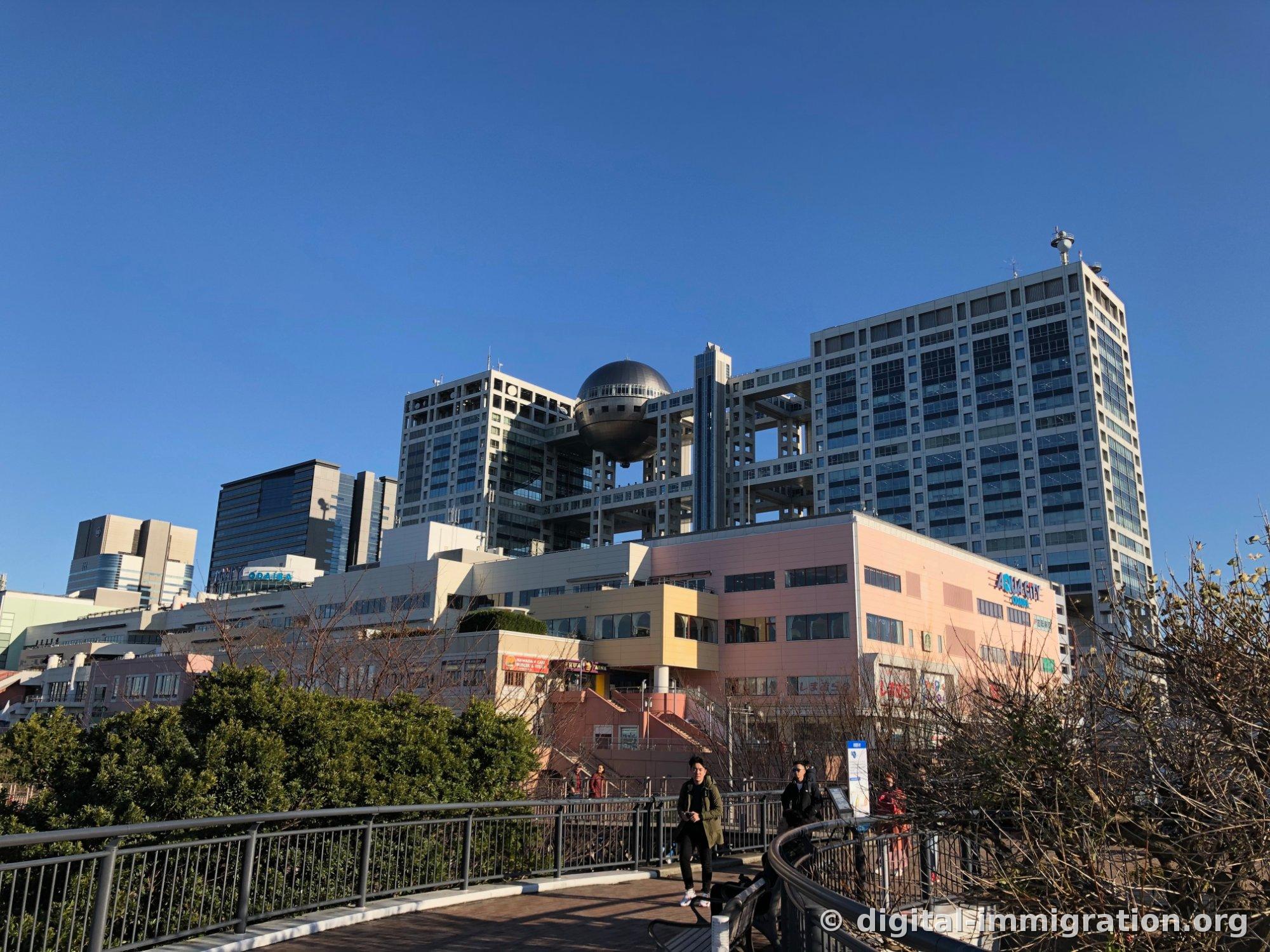
- Return via pedestrian bridge toward Fuji TV → warm up inside Aqua City
The statue itself just stands on an outdoor deck, so there's no admission fee or set hours. However, the lighting times and Aqua City's business hours change by season, so I recommend checking on-site. About half an hour after sunset, when the Rainbow Bridge lights come on, the scene is completely different from daytime—and you should be prepared for much fiercer winds.
Coming all the way to Odaiba just to see the statue is honestly a waste of your time. This isn't a destination in itself—it's a waypoint. It's worthwhile when you bundle it with the Fuji TV sphere observation deck, Aqua City's dining area, and Daiba Beach Park a little further down—making a half-day itinerary.
Read next
- From Akihabara's Chuo-dori to the Kanda River: A Record of Tokyo's Electronics District Revisited Multiple Times
Tokyo's Akihabara is a neighborhood where it's hard to say you've seen everything in a single visit. I've come multiple times across different seasons, and each time the signs chan…
Tokyo · Akihabara - Buying a Single ¥300 Year-End Jumbo Lottery Ticket at Nishi-Ginza Chance Center in Tokyo
Exit from the Hibiya exit of Tokyo's Shimbashi Station, walk toward the elevated highway for about three minutes, and suddenly you'll see a line of people stretching along the side…
Tokyo · Nishi-Ginza Chance Center - Ueno Ameyoko, the real magic starts after sunset — an evening walk from the Okachimachi Gate to Ueno Station
Every time I come to Tokyo, my feet find their way to Ueno Ameyoko (アメ横) without fail. This time I entered from the Okachimachi side and worked my way toward Ueno Station. I've met…
Tokyo · Ameya Yokocho Market