Tokyo Shinjuku Tonkatsu Wako, With a Plate of Loin Cutlet Set Before Me
Walking south from Tokyo Shinjuku toward Yoyogi, I missed lunch. By two o'clock, I ended up at Tonkatsu Wako (とんかつ和幸). It's a chain with locations throughout Japan, so you might th…
Tokyo · Tonkatsu Wako
Walking south from Tokyo Shinjuku toward Yoyogi, I missed lunch. By two o'clock, I ended up at Tonkatsu Wako (とんかつ和幸). It's a chain with locations throughout Japan, so you might think "why here of all places?" But as I've traveled between Southeast Asia and Japan, I've come to trust these places quite a bit. Lowering the failure rate while traveling turns out to be more important than expected. Especially when you're hungry and your judgment is compromised.
The interior had a bright wood tone, and with the lunch rush over, only one neighboring table was occupied. The first impression was that the smell of frying oil wasn't overwhelming. Restaurants with good ventilation generally manage their oil well too.
What Came on the Plate — Loin Cutlet and Cabbage Mountain
I ordered the loin cutlet set. The moment it was placed in front of me, my eye went not to the cutlet but to the shredded cabbage. It was stacked neatly to fill half the plate's height, with a few strands of red cabbage on top. This isn't just garnish. Wako is a place where you can get cabbage refills, so you can ask for more even after finishing this.
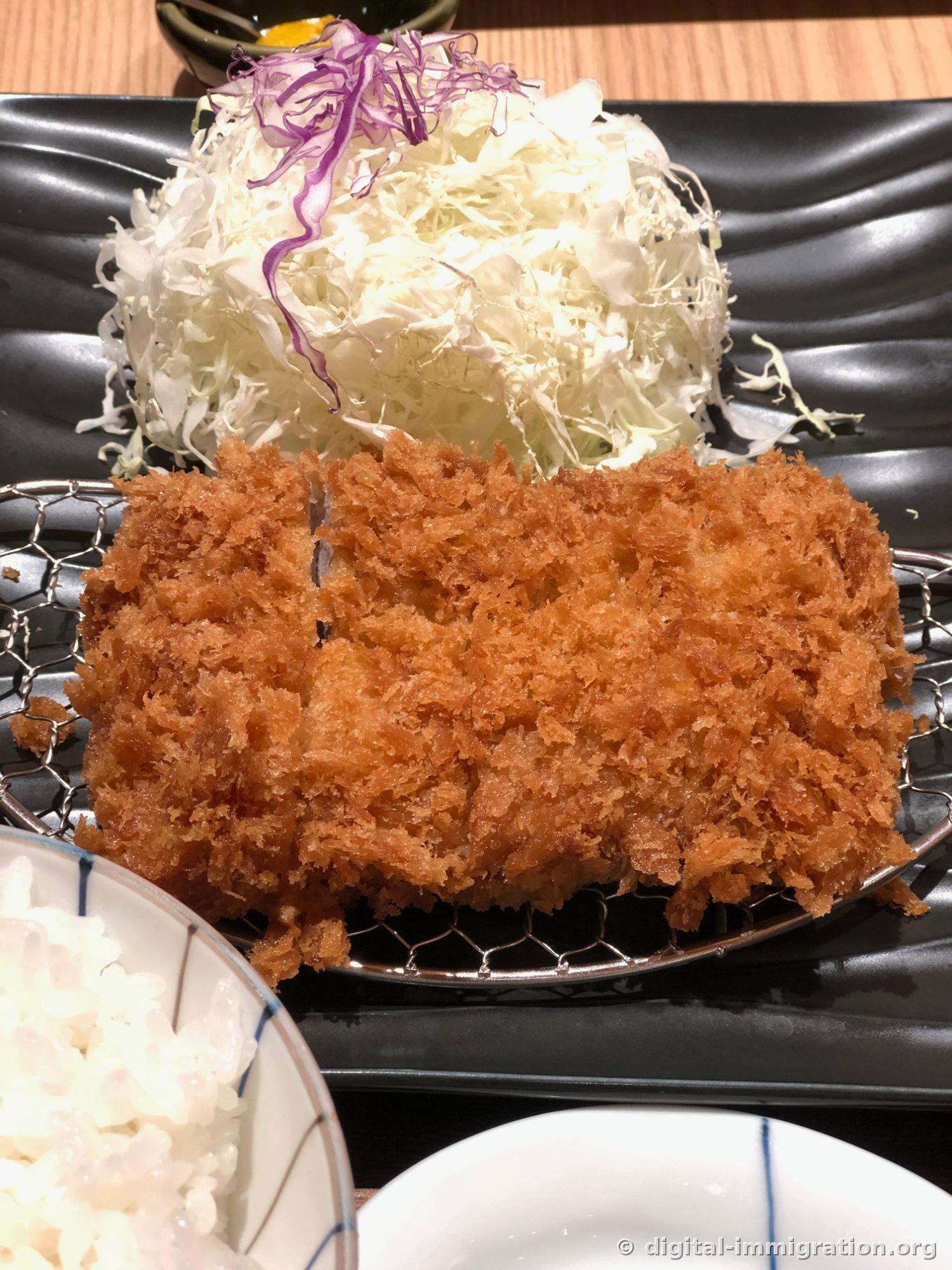
The cutlet came on a stainless steel mesh rack atop a black square plate. This mesh seems like nothing special, but it makes a difference. If placed directly on the plate, the bottom becomes soggy from the plate's heat and moisture, but elevated like this, it stays crispy throughout. The breading color wasn't dark brown but more of a bright golden tone, and the breadcrumbs stood individually without clumping. A sign the oil is clean.
The Full Set Composition — Rice, Miso Soup, Pickles
Since it's a set meal, quite a lot comes with it. A bowl of white rice, miso soup (actually ton-jiru with pork) in a red bowl with a lid, pickled side dishes in a small dish, a small white plate for dipping sauce, and a dish of mustard. The paper mat laying under the tray at the front has the TONKATSU WAKO logo printed on it.
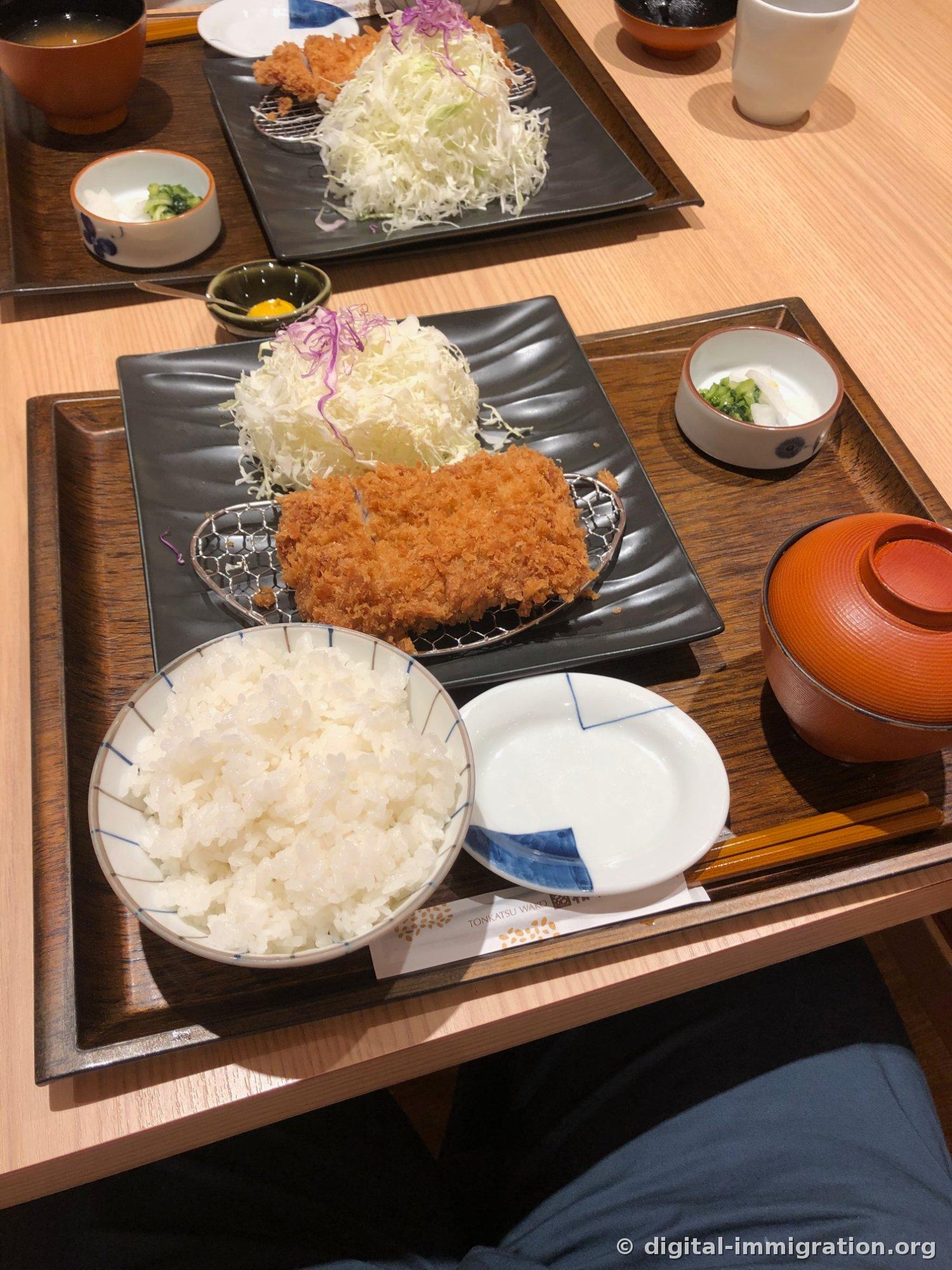
You can see each grain of rice standing individually even in the photo. In Japan, rice at this level is practically the standard, yet it never fails to impress. Both rice and miso soup get refills. Though the policy does vary slightly by location, so it's worth confirming with staff. I got a second helping of rice with just "okawarikudasai" (おかわりお願いします).
The mustard dish is an easy place for beginners to make a mistake. There's a small amount sitting there, so if you thoughtlessly dip heavily, it'll clear your sinuses. Karashi is much spicier than Korean mustard. Just the tiniest dab on your chopstick tip is the right amount.
When Cut Open — What the Cross-Section Reveals
The highlight of the meal was when I picked up a piece. The cross-section wasn't completely white but had a light pinkish tint remaining. This isn't undercooked pork—it's meat that was slowly cooked through at low temperature and then finished on the outside only. The color that comes from removing it from the heat just as the juices were about to dry out.
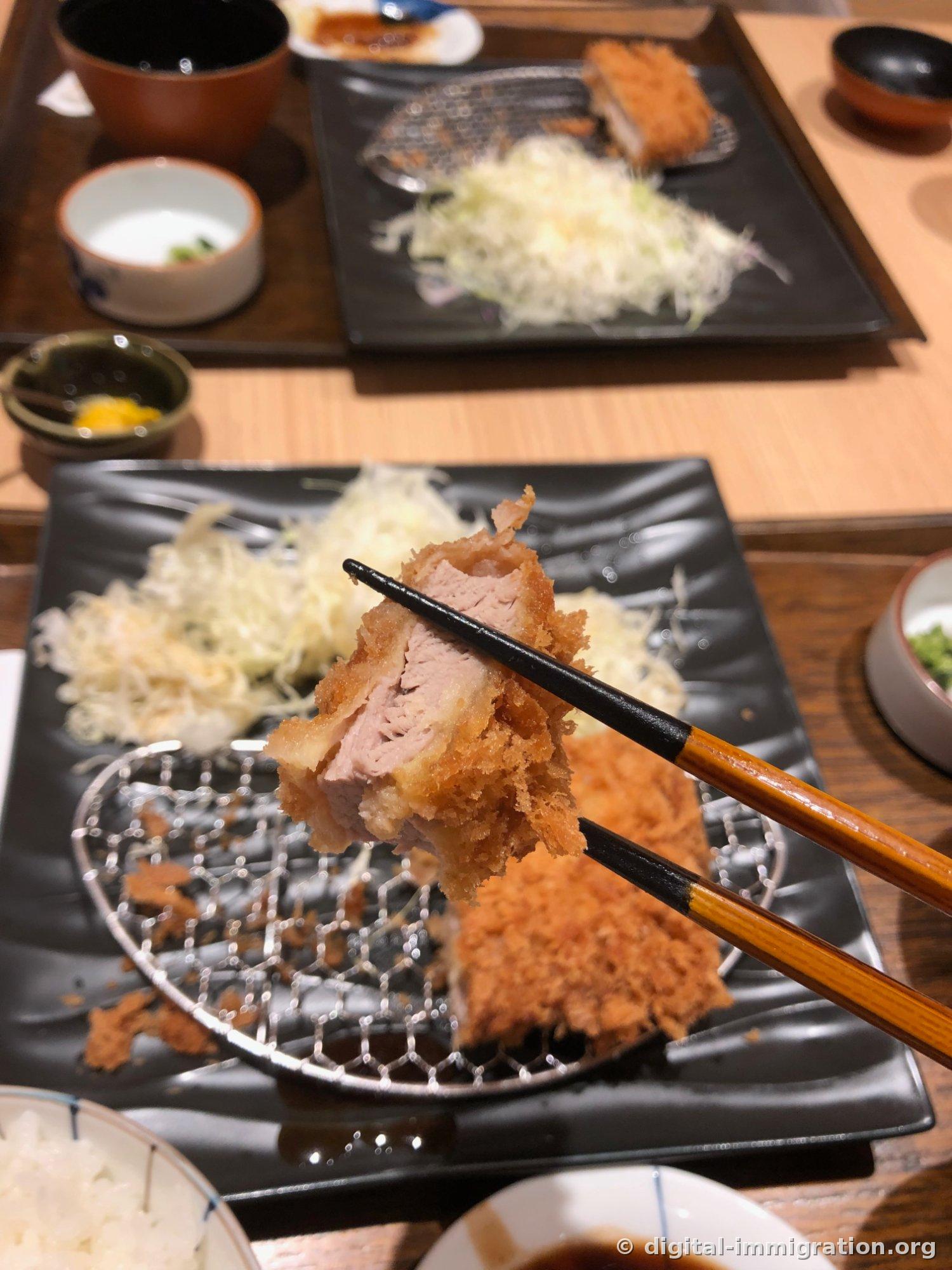
When you bite, the coating crumbles first, then the meat fibers separate. Loin has a fat layer running along the top edge (since it's from the sirloin), and that part is the most savory. If the fat seems heavy, you can go with hire (tenderloin), but I choose loin for that single line of fat.
The sauce is served on a white plate for dipping. I'd recommend eating the first two or three pieces with just a light sprinkle of salt to taste the meat itself before adding sauce. In the photo's lower right, you can see brown sauce pooled on the white plate—that amount was plenty for two people to share.
The Disappointing Points
To be honest, the coating was a bit thicker than my preference. By the last couple of pieces, you could feel the breadcrumbs holding the oil, so I had to pace myself with rice and cabbage in between. It's different from specialist tonkatsu shops' thin, glass-like shattering coating. Choosing a chain's reliability means giving up the peak experience.
Also, this place has a quiet dining atmosphere. The hall was so still you could hear the neighboring table's conversation. If you're expecting lively, chatty dining, you'll be disappointed.
Location and Practical Information
The location I visited was in south Shinjuku, between Yoyogi Station and Shinjuku Station. It's less than ten minutes' walk from the south exit of JR Shinjuku Station, and about the same distance from the Yoyogi Station side. Wako is often located in station buildings or department store basement and upper floor restaurant zones, making it easy to get lost searching the map for a first-floor street-level shop. It's faster to check the building name and look at the floor directory before heading up.
Here are some practical notes for the visit.
- Avoid the lunch rush (12:00-1:30pm) and you can sit without waiting. I went around 2pm and got a table right away.
- For cabbage, rice, or miso soup refills, just ask a staff member. Operations do vary by location though, so confirming on-site is recommended.
- The menu has large photos, so even without Japanese you can just point with your finger.
- Prices vary by location and timing, so I won't list them here. Let's just say by set meal standards, it's typical Tokyo lunch price range.
- Some locations sell takeout cutlets. Not a bad option for dinner to eat back at your hotel.
On your first trip to Tokyo, waiting in line at a famous specialist tonkatsu restaurant is an experience worth having. But if your schedule is packed or you've already had a disappointing meal that day, a place like Wako will help maintain your travel rhythm. The peace of mind it gives you far outweighs the price.
Read next
- From Akihabara's Chuo-dori to the Kanda River: A Record of Tokyo's Electronics District Revisited Multiple Times
Tokyo's Akihabara is a neighborhood where it's hard to say you've seen everything in a single visit. I've come multiple times across different seasons, and each time the signs chan…
Tokyo · Akihabara - Buying a Single ¥300 Year-End Jumbo Lottery Ticket at Nishi-Ginza Chance Center in Tokyo
Exit from the Hibiya exit of Tokyo's Shimbashi Station, walk toward the elevated highway for about three minutes, and suddenly you'll see a line of people stretching along the side…
Tokyo · Nishi-Ginza Chance Center - Ueno Ameyoko, the real magic starts after sunset — an evening walk from the Okachimachi Gate to Ueno Station
Every time I come to Tokyo, my feet find their way to Ueno Ameyoko (アメ横) without fail. This time I entered from the Okachimachi side and worked my way toward Ueno Station. I've met…
Tokyo · Ameya Yokocho Market