Shinjuku NOWA Building Yakiniku Tokori (土古里), An Evening Revisited for One Plate of Tongue
I'm writing this after having dinner at Yakiniku Tokori, located inside the NOWA building in the Nishi-Shinjuku area of Tokyo, and returning to my accommodation. Yakiniku is common…
Tokyo · Tokori Shinjuku Nowa Yakiniku
I'm writing this after having dinner at Yakiniku Tokori, located inside the NOWA building in the Nishi-Shinjuku area of Tokyo, and returning to my accommodation. Yakiniku is common in Tokyo. There's a smoking restaurant in nearly every alley, and prices vary wildly. But this place changed the entire impression of the evening with just one dish: tongue (gyu-tan). To put it plainly, this is the kind of place where you order all the other cuts and then end up adding one more plate of tongue.
Side Dishes Arrive As Soon As You Sit Down
When you sit at the table, there's a charcoal grill sunk into the center, and beside it comes a plate with lettuce, thin-sliced green onions, and kimchi. The composition of side dishes is almost the same as at Korean barbecue restaurants. The yellow on top of the lettuce was a garlic-based seasoning, and the green onion strips came plain with just the moisture removed. Each person gets one sauce dish divided into three sections: soy-based sauce, a lemon wedge, and wasabi. When a yakiniku restaurant serves sauce in three divided sections, it means you should dip each cut differently.
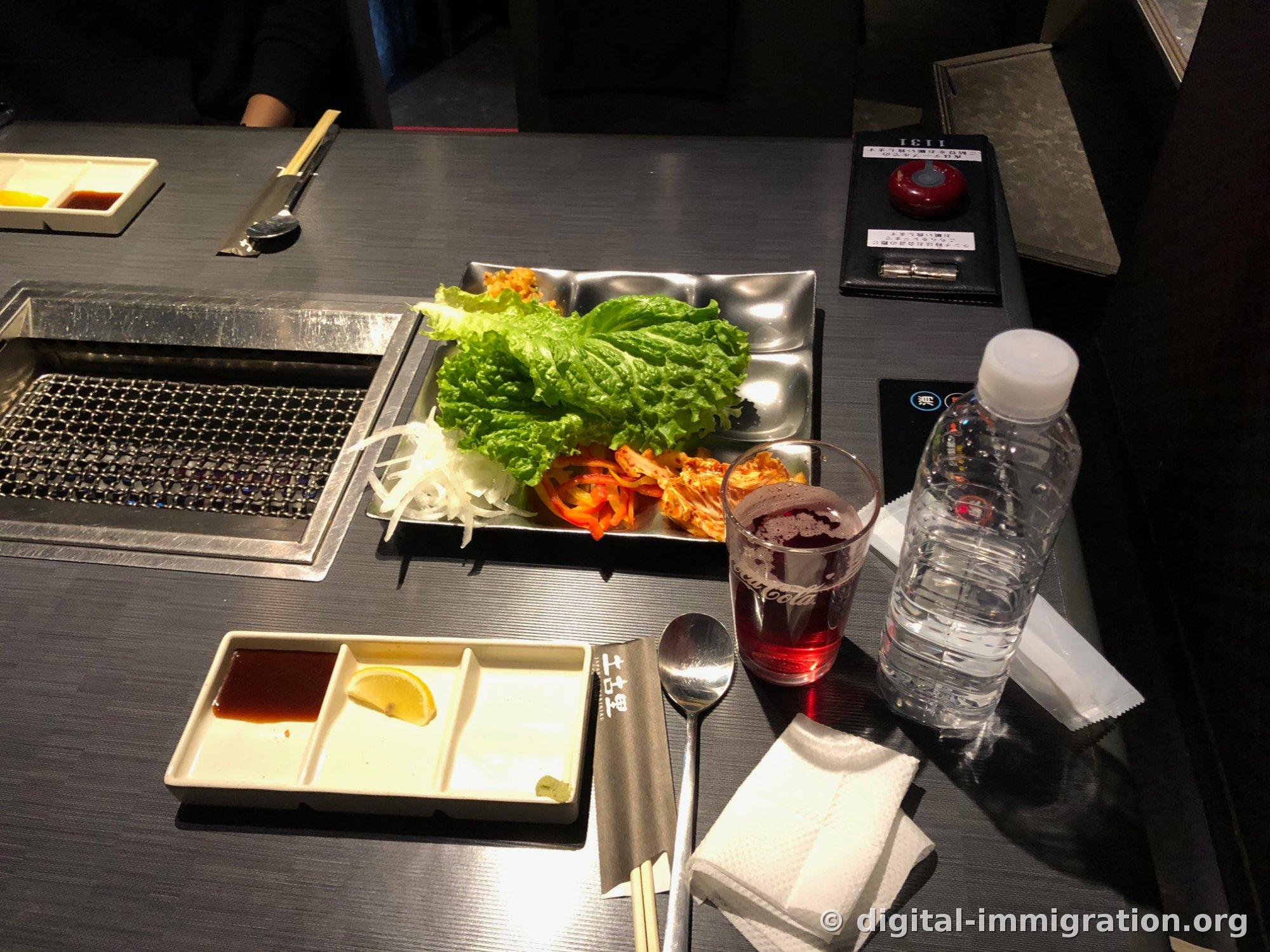
There's a red call bell in the corner of the table. If you don't speak Japanese, this is the most convenient. Press it and staff will come, then point your finger at a picture on the menu—that's all you need to do to order. Our table number was 1131, and you just tell them that number when paying.
Tongue (Gyu-tan) — People Come Here Just for This
The first thing to arrive was tongue. It came on a plate lined with bamboo leaves, with five thick slices of tongue on top. It was lightly salted, and the color was a pale pink. It was thicker than the thin-sliced tongue I'd eaten in Korea. Not quite as thick as a finger joint, but thick enough that when you pick it up with tongs, it doesn't go limp and maintains its shape.
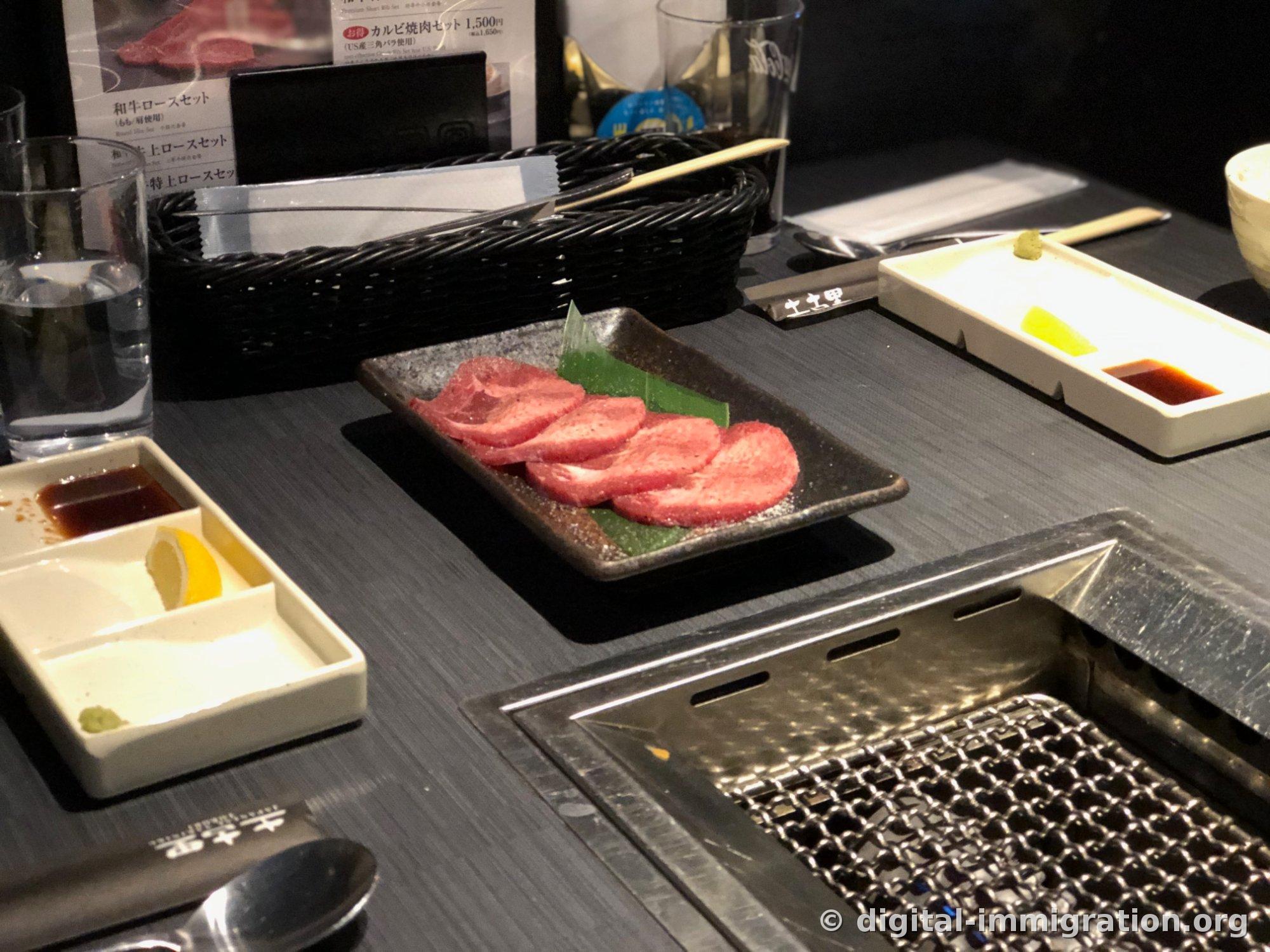
I put it on the charcoal grill and flipped it when one side had slightly curled and turned brown. Thick tongue can easily get tough if you grill it in a hurry, so it's better to use high heat for a short time and only color one side at a time. The perfect state is when you pick it up and the surface has a glossy sheen of oil, with the edges slightly curled upward.
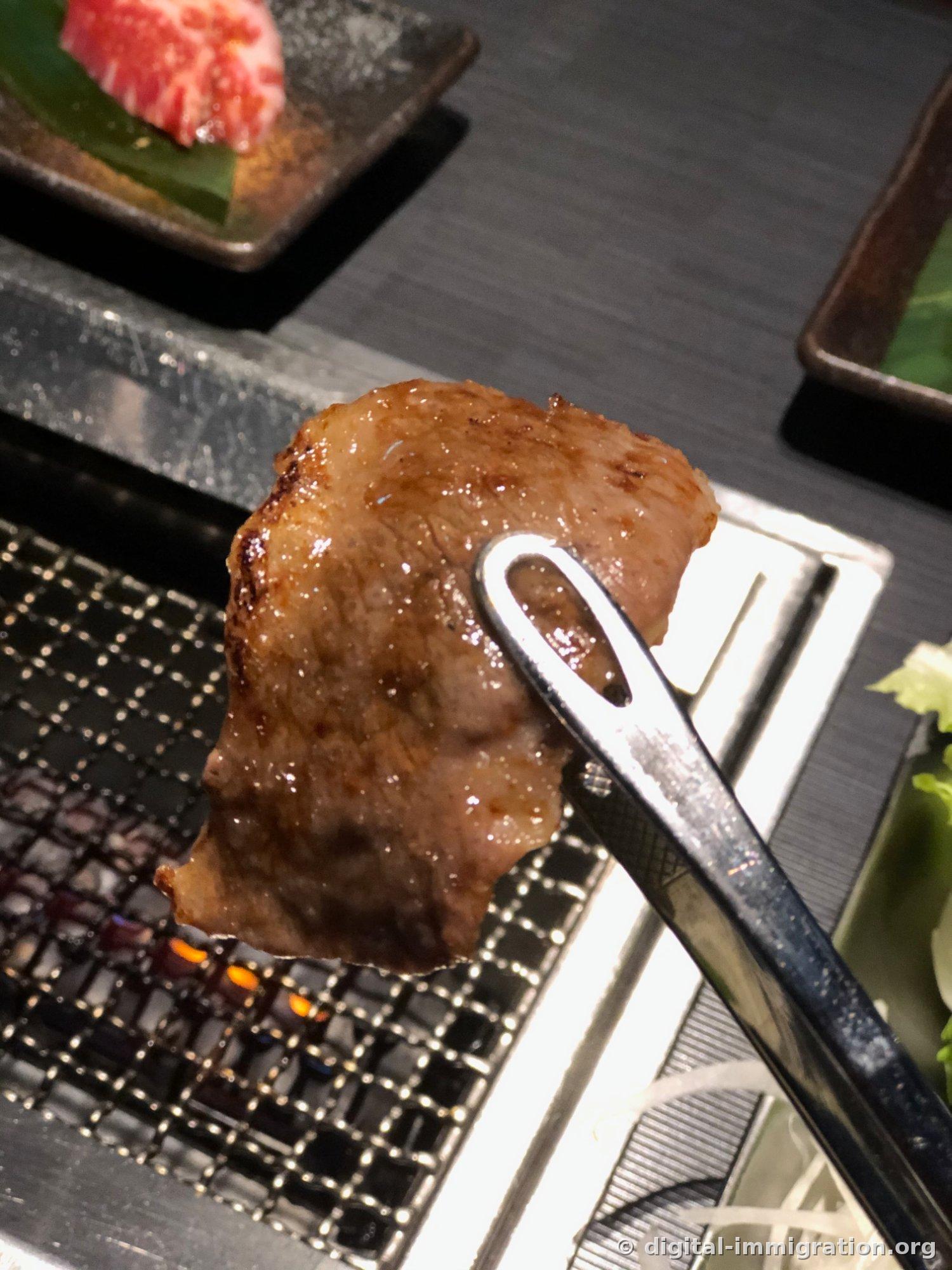
The moment you bite it, it gives way with a pleasant snap. Not tough, but rather bouncy. Then comes the distinctive nutty, oily flavor of tongue, which is perfectly balanced when combined with the salt and lemon. Don't use the soy-based sauce on tongue. The salt-plus-lemon combination is far superior. The Japanese customers at the next table also reached for the lemon sauce whenever they had tongue.
Wagyu Rosu and Kalbi: Plates Where the Marbling Shines
After the tongue came the wagyu rosu. Three slices on the plate, with white marbling spread like a net across the red meat, and seasoning oil pooling slightly at the bottom. With this much marbling, the grilling time is really short. As soon as you put it on the grill, the fat sizzles and the flames flare up.
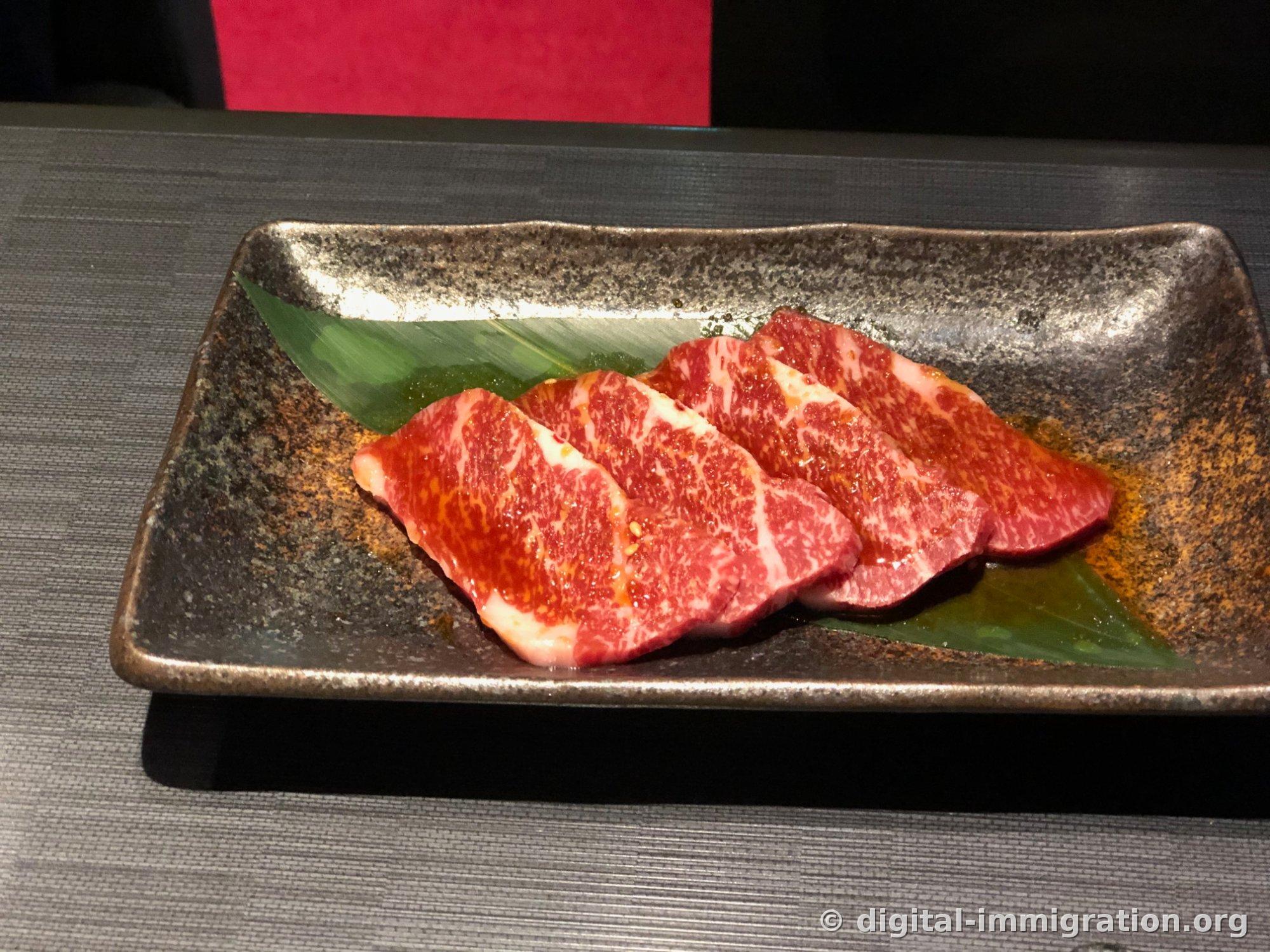
The additional plate I ordered was from a fattier cut with coarser marbling. Four slices came fanned out, and you could clearly see how the lean meat and fat layers were separated in distinct strata. This cut paired better with soy sauce than salt. Because it had so much fat, lemon alone couldn't cut through the richness.
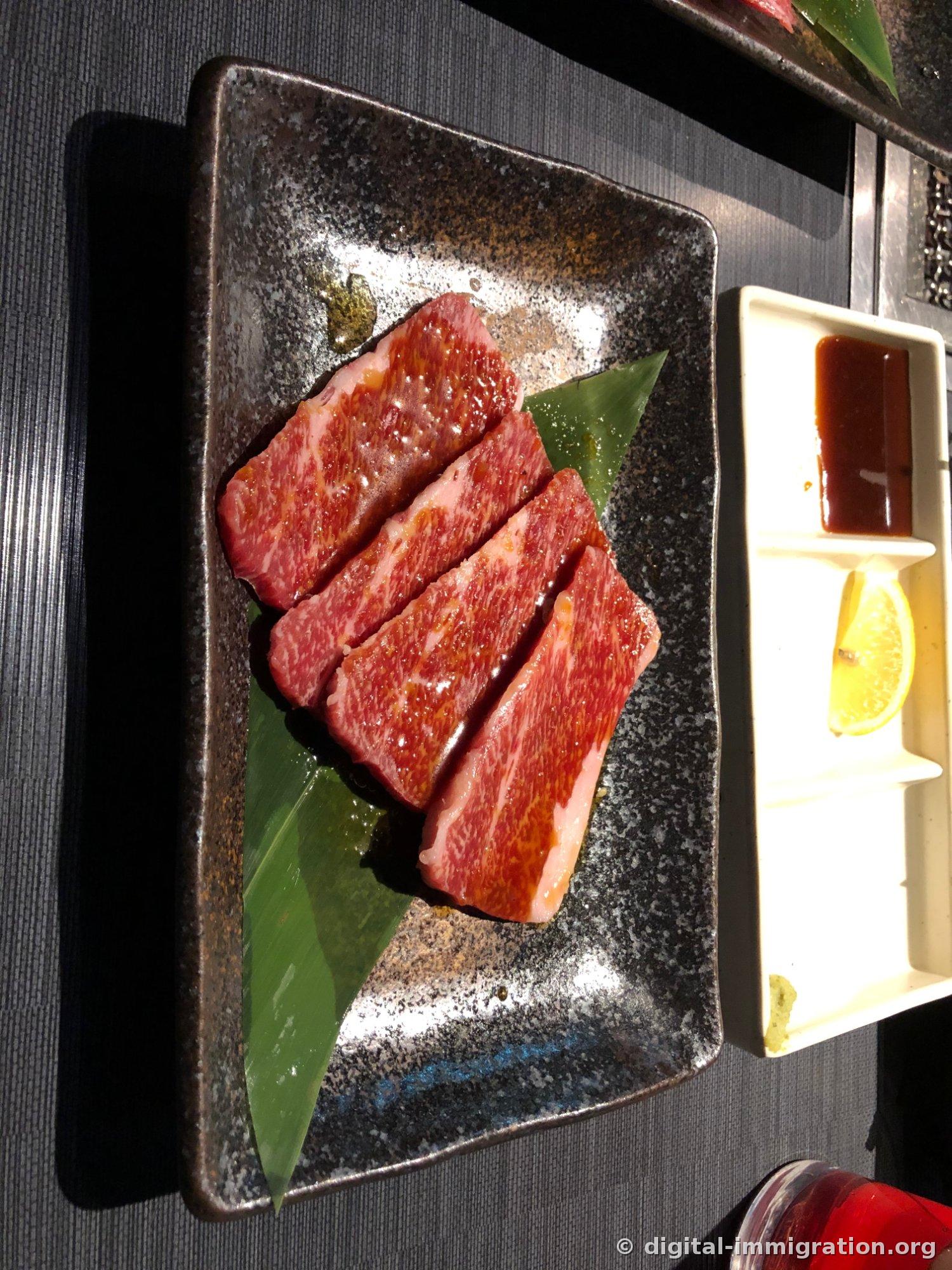
Check the Butcher Chart on the Wall Before Ordering
On the wall of the sofa seating area at the back of the shop is a large chart labeled 'Kuroge Wagyu Yakiniku: Whole Beef Purchase (黒毛和牛焼肉 一頭買い).' It shows diagrams of two cattle with every cut labeled and described. On the left are the organ meats (tail, tetsuchan, kobutagi, senmai, mino, harami, heart, tan), and on the right are the regular cuts (rib rosu, sirloin, hire, kainomi, ranichi, tomobara, etc.).
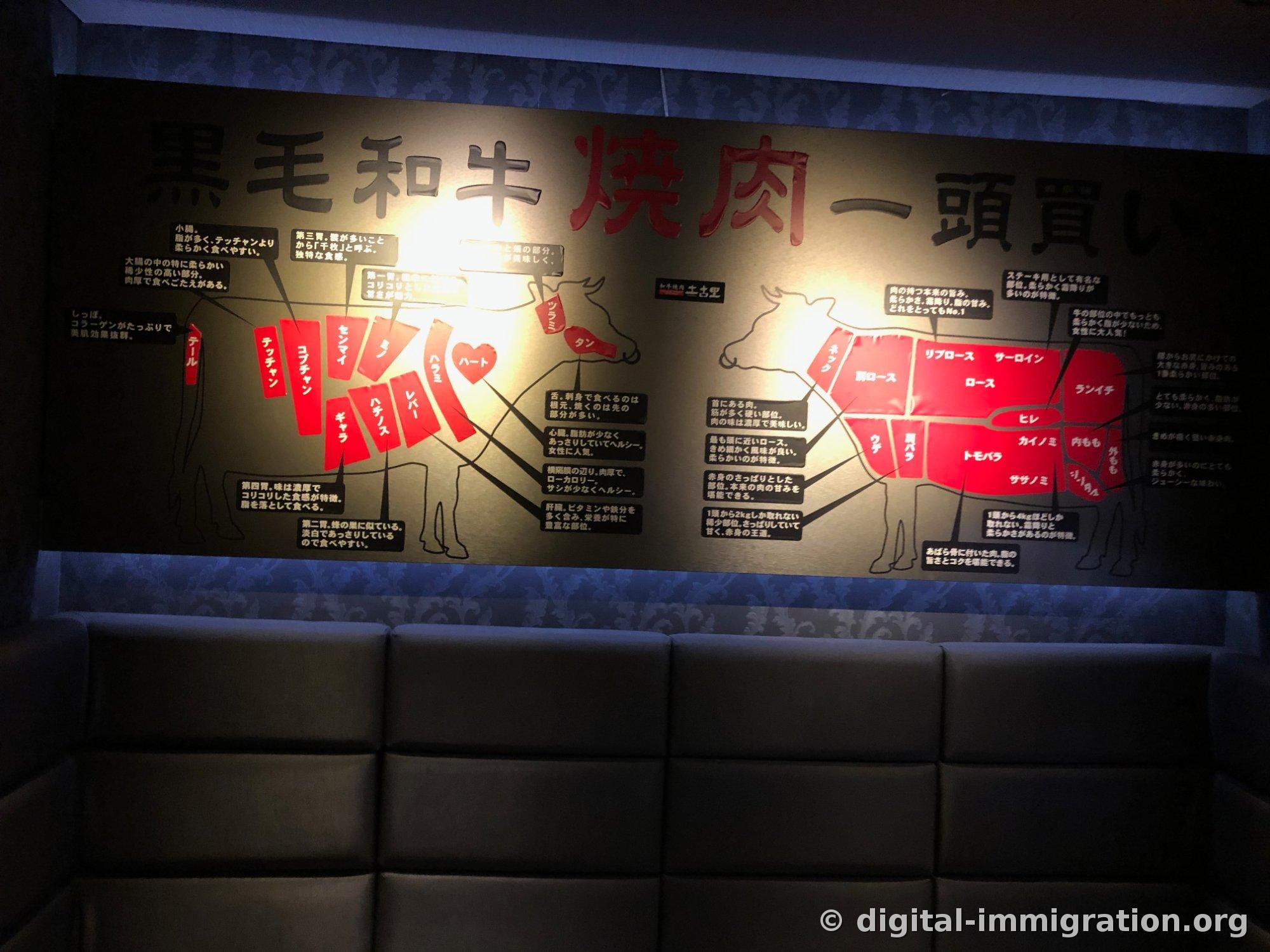
The chart also has an explanation for tongue (タン): the root end of the tongue is typically eaten as sashimi, while the tip is usually grilled. If you know even one cut name before you arrive, the katakana on the menu suddenly becomes readable. First-timers can easily just glance at the menu and settle for a safe set, but looking at this wall before ordering opens up your options considerably.
Rice, Soup, and Finishing Cold Noodles
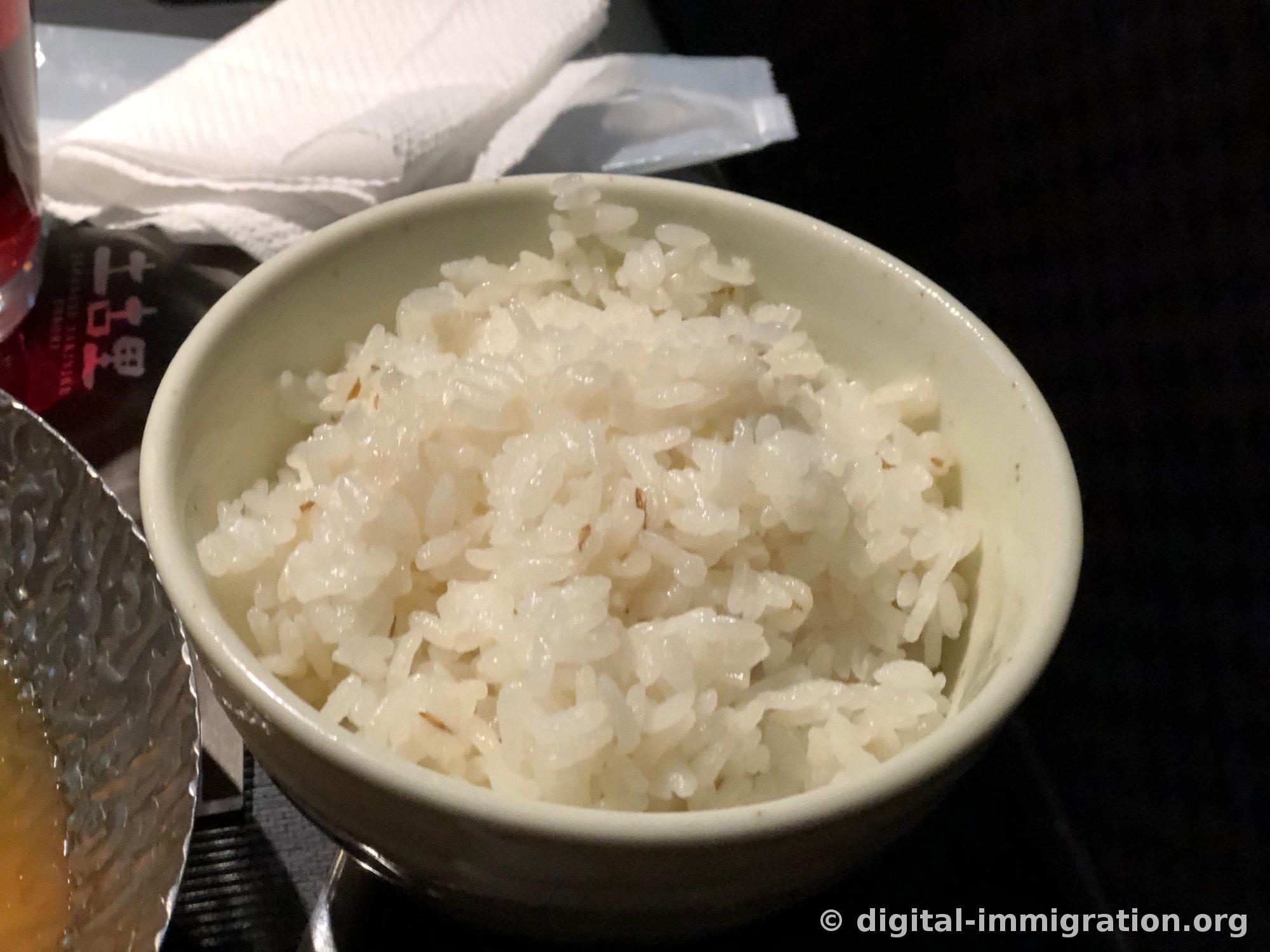
After eating meat for a while, you need rice in between. The rice came fluffy, with just a hint of mixed grains in the white rice—less moist than what you'd get at a Korean barbecue place. The soup that came with it was a clear miso-based broth with green onion.
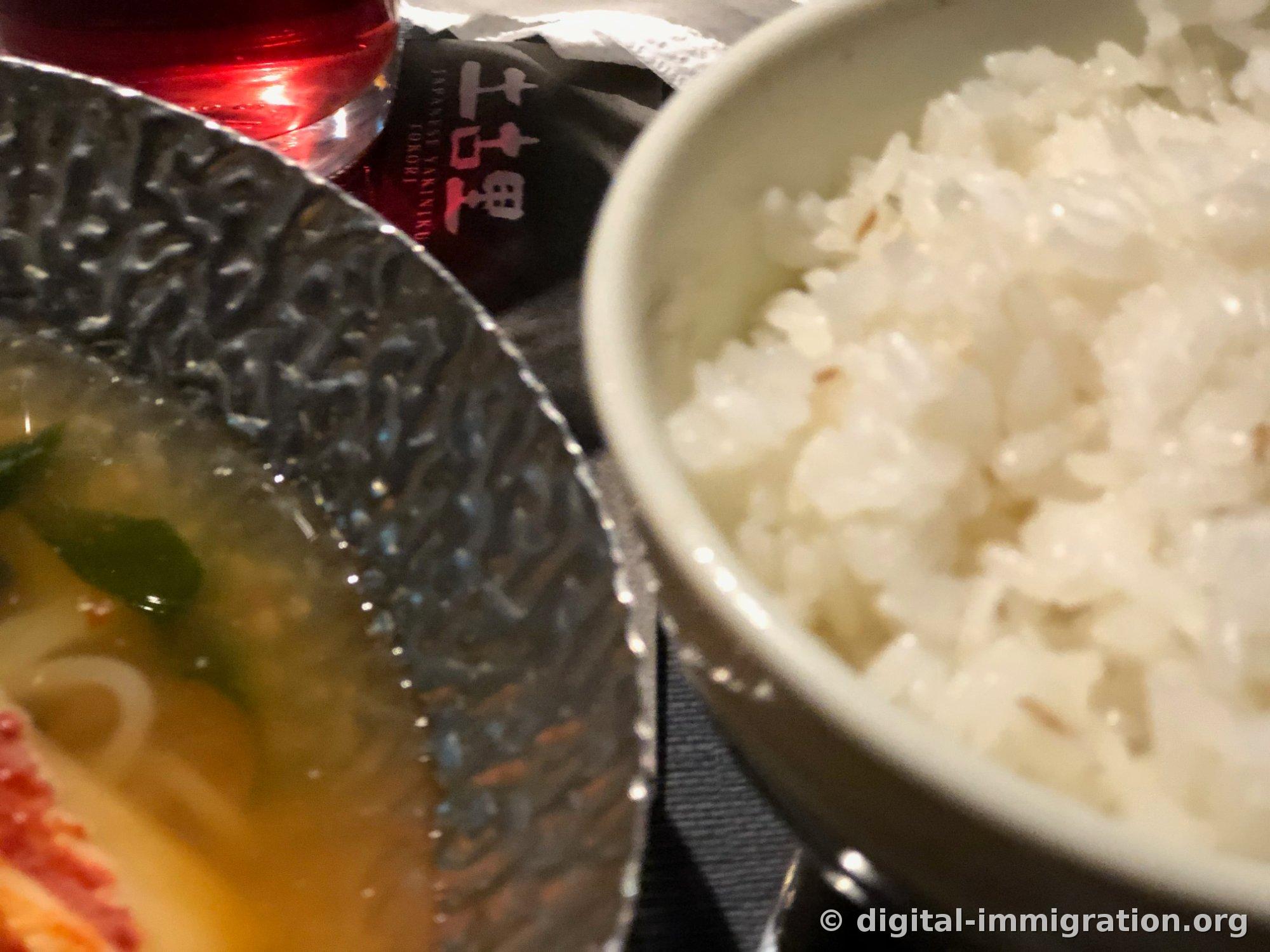
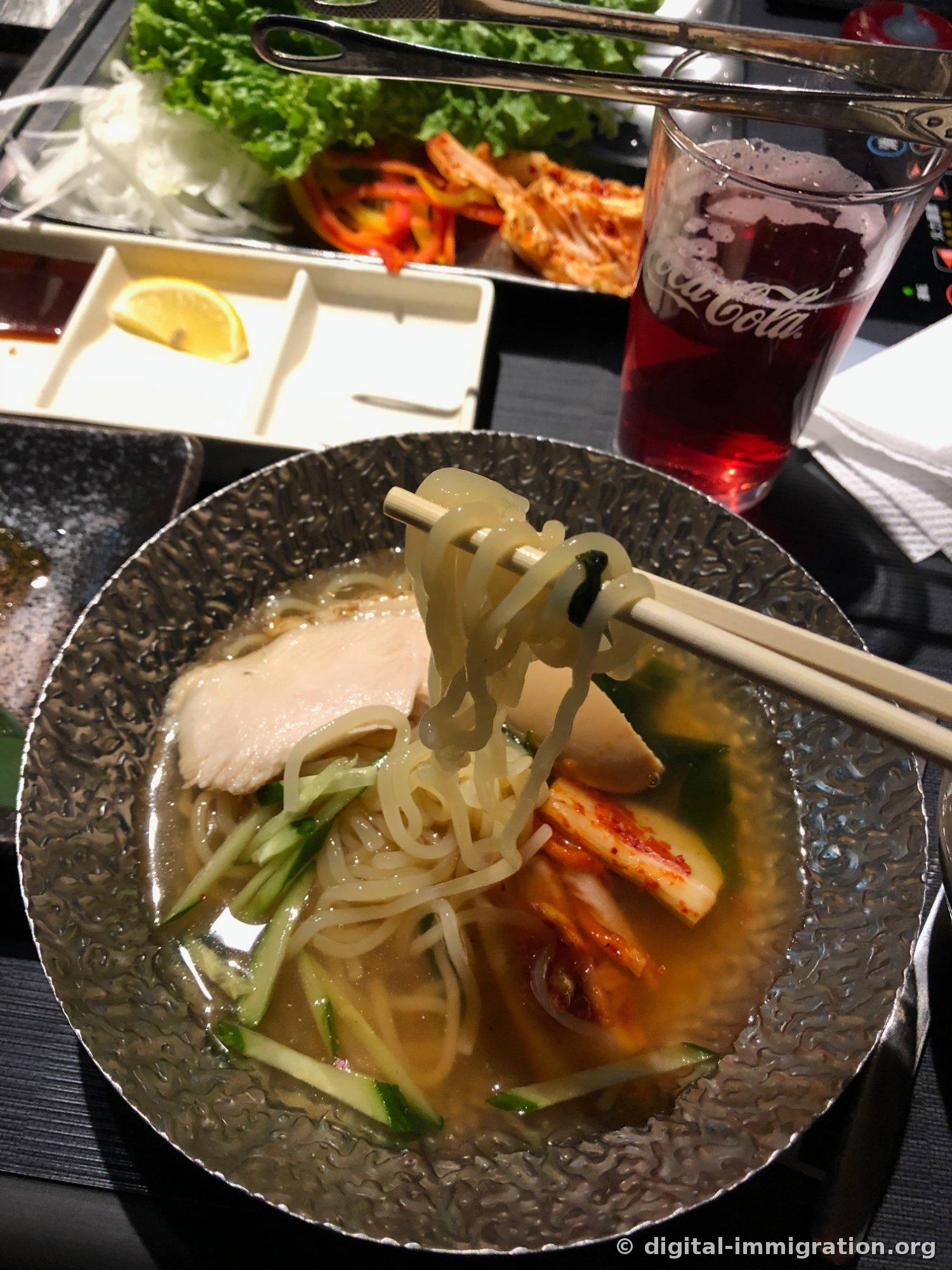
The finish was cold noodles served in a metal bowl. The noodles were thin and had a translucent quality. The broth wasn't rich or flavorful, but it was perfect for rinsing away the meat oils. On top were a couple of slices of chashu, shredded cucumber, and kimchi. When you lift it with chopsticks, the noodles come up cleanly without snapping. If you're expecting Korean Pyongyang-style cold noodles, it's something different, but as a finishing course after yakiniku, it was perfectly suited.
Location and Practical Tips
The restaurant is within walking distance of Shinjuku Station, inside the NOWA building in the Nishi-Shinjuku direction. The location on the map is below. Since Shinjuku Station has so many exits, it's best to head above ground first and then check the map to avoid getting lost.
- The price I saw on the menu was the Kalbi Yakiniku Set at 1,500 yen (1,650 yen including tax). For other à la carte prices, it's recommended to check the menu board on-site.
- I recommend ordering just one plate of tongue first, tasting it, and then adding more. That's what we did.
- If you divide the sauces—salt and lemon for tongue and lighter cuts, soy sauce for fattier cuts—you won't get tired of the flavors by the end.
- There's a call bell at your table, so don't worry if Japanese is intimidating. Pointing at pictures on the menu is enough.
- The interior lighting is quite dim. If you're planning to take photos, it's better to pull the plate toward the grill light. About half of my photos came out blurry.
I should also note the drawbacks. The ventilation above the grill isn't particularly strong, so clothes tend to pick up a bit of smoke smell. Don't wear clothes you plan to wear the next day. Also, because the tongue was so good, the other cuts felt relatively ordinary by comparison. If this is your first time here, I'd recommend ordering the tongue first to set a baseline, then ordering the rest after—rather than saving it for last.
Read next
- From Akihabara's Chuo-dori to the Kanda River: A Record of Tokyo's Electronics District Revisited Multiple Times
Tokyo's Akihabara is a neighborhood where it's hard to say you've seen everything in a single visit. I've come multiple times across different seasons, and each time the signs chan…
Tokyo · Akihabara - Buying a Single ¥300 Year-End Jumbo Lottery Ticket at Nishi-Ginza Chance Center in Tokyo
Exit from the Hibiya exit of Tokyo's Shimbashi Station, walk toward the elevated highway for about three minutes, and suddenly you'll see a line of people stretching along the side…
Tokyo · Nishi-Ginza Chance Center - Ueno Ameyoko, the real magic starts after sunset — an evening walk from the Okachimachi Gate to Ueno Station
Every time I come to Tokyo, my feet find their way to Ueno Ameyoko (アメ横) without fail. This time I entered from the Okachimachi side and worked my way toward Ueno Station. I've met…
Tokyo · Ameya Yokocho Market