Ryukyu Mura with a Stroller in Okinawa — Red Tile Roofs, Eisa Drum Sounds, and Two Hours Without an Umbrella
On the western coast of Okinawa's main island, if you head up Route 58 toward the Onna district, you'll spot a cluster of red-tiled roofs nestled at the base of a mountain. That's…
Okinawa · Ryukyu Mura
On the western coast of Okinawa's main island, if you head up Route 58 toward the Onna district, you'll spot a cluster of red-tiled roofs nestled at the base of a mountain. That's Ryukyu Mura (琉球村). The name alone might make you think of a simple folk village, but once you step inside, you discover it has two distinct characters: an open-air museum preserving traditional Okinawan houses moved here in their entirety, and a theme park hosting traditional performances in the courtyard several times daily. This is a record from May 18, 2015—the day I visited with my one-year-old child in a stroller.
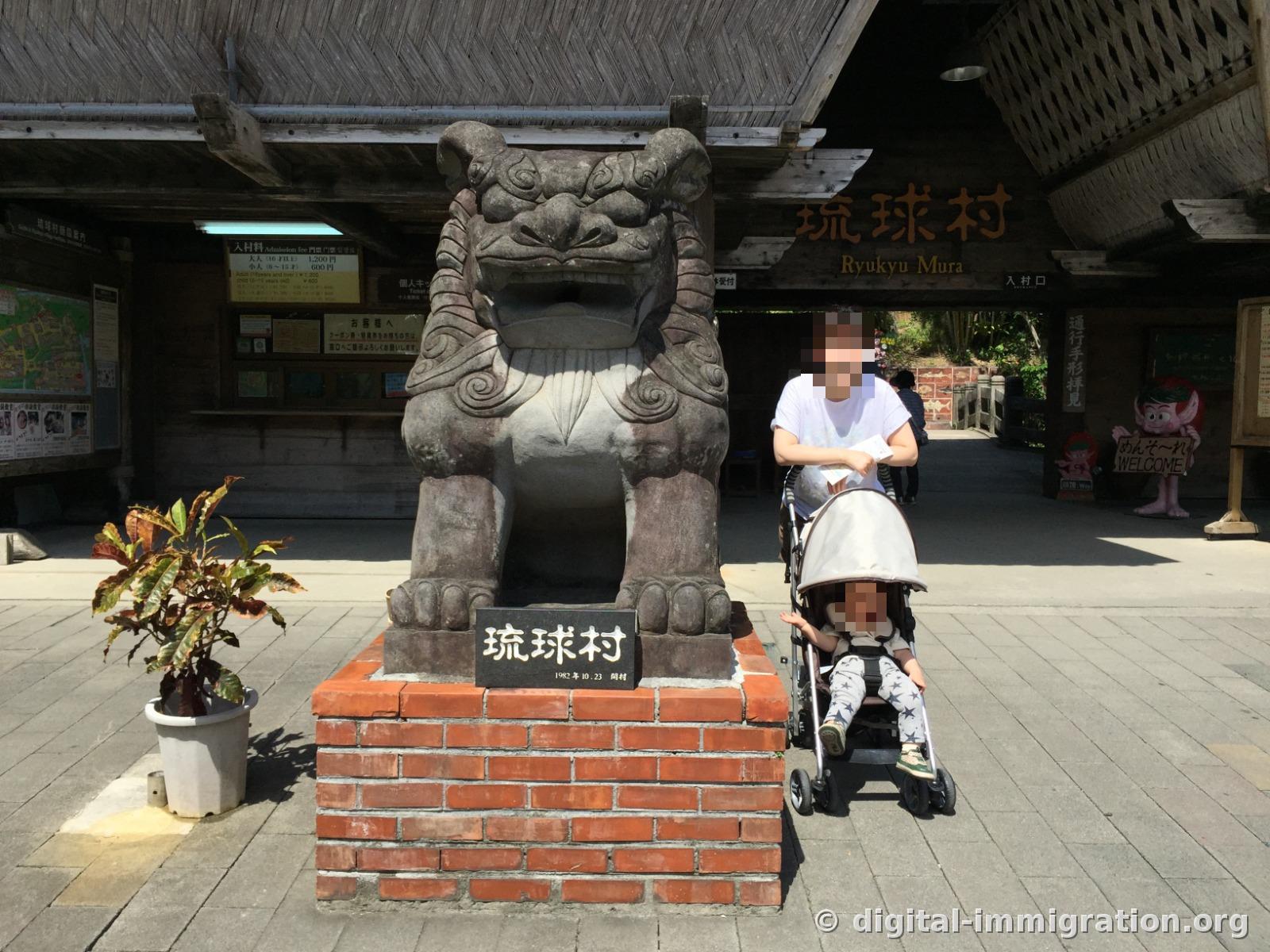
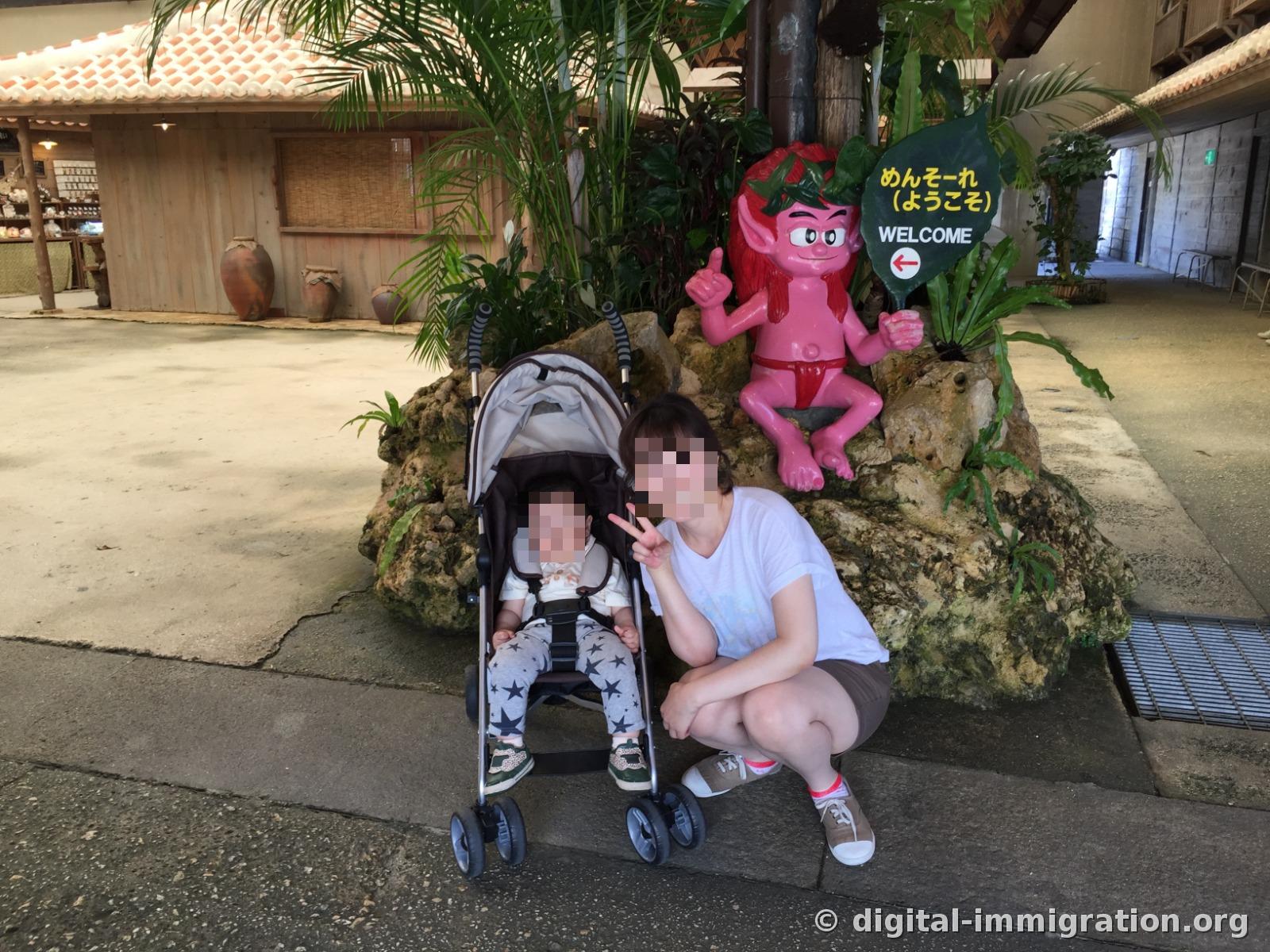
The price list posted beside the ticket window showed ¥1,200 for adults (age 16 and above) and ¥600 for children (ages 6–15). My child was admitted free. That said, since these were the prices at the time of our visit, they may have changed, so I recommend checking on-site. After buying your ticket and passing under a wooden post, you'll immediately see a pink Kijimuna doll sitting with one finger raised, and beside it a 'めんそーれ(ようこそ) WELCOME' sign with a left-pointing arrow. The moment my child spotted the doll, they leaned forward in the stroller.
What to Know First — There's Hardly Any Shade
I want to emphasize this point: an umbrella isn't optional—it's essential. Ryukyu Mura is built around open courtyards, so both the performance plaza and the paths connecting the traditional houses are mostly bare white sand. The May midday sun of Okinawa reflects off that sand and comes back at you from below. We brought only hats and regretted it within thirty minutes. Fortunately, my wife had a collapsible umbrella, which let us at least shade the child's face. Looking back at photos of audiences waiting for performances in the courtyard, most seated people are holding umbrellas or wearing wide-brimmed hats. The locals clearly knew what they were doing.
Location and How to Get There
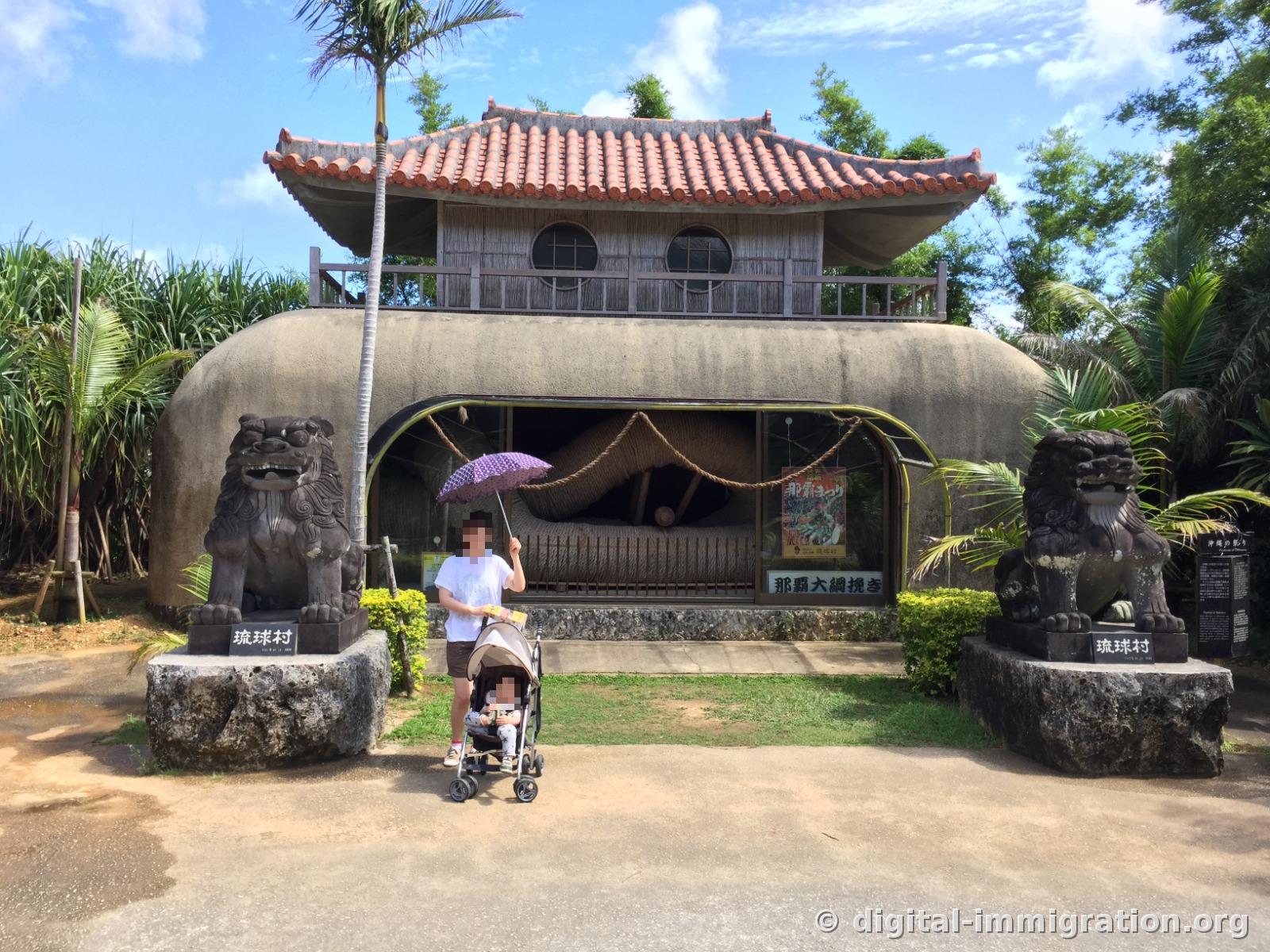
From Naha Airport, it's roughly an hour's drive by rental car, whether you take the Okinawa Expressway or Route 58. We departed from our accommodation in the Onna district and stuck to the national road, driving with the sea on our left before turning toward the mountain—as long as you don't miss the signage, it's hard to get lost. The parking lot is spacious, and it's just a few minutes' walk from the lot to the entrance on flat ground. Pushing the stroller inside wasn't a problem, but the stroller wheels got stuck frequently on the sandy sections and uphill paths deeper inside. Bringing a baby carrier as well would have been much better.
The Highlight: The Procession Performance in the Courtyard
If I had to pick just one reason to visit Ryukyu Mura, it would be this performance. At a set time, an announcement sounds, and the audience gathers around the edges of the central courtyard. Red and purple flags come in first, followed by a palanquin with a red-tiled roof. The attendants beside the palanquin wear black clothing and red head scarves.
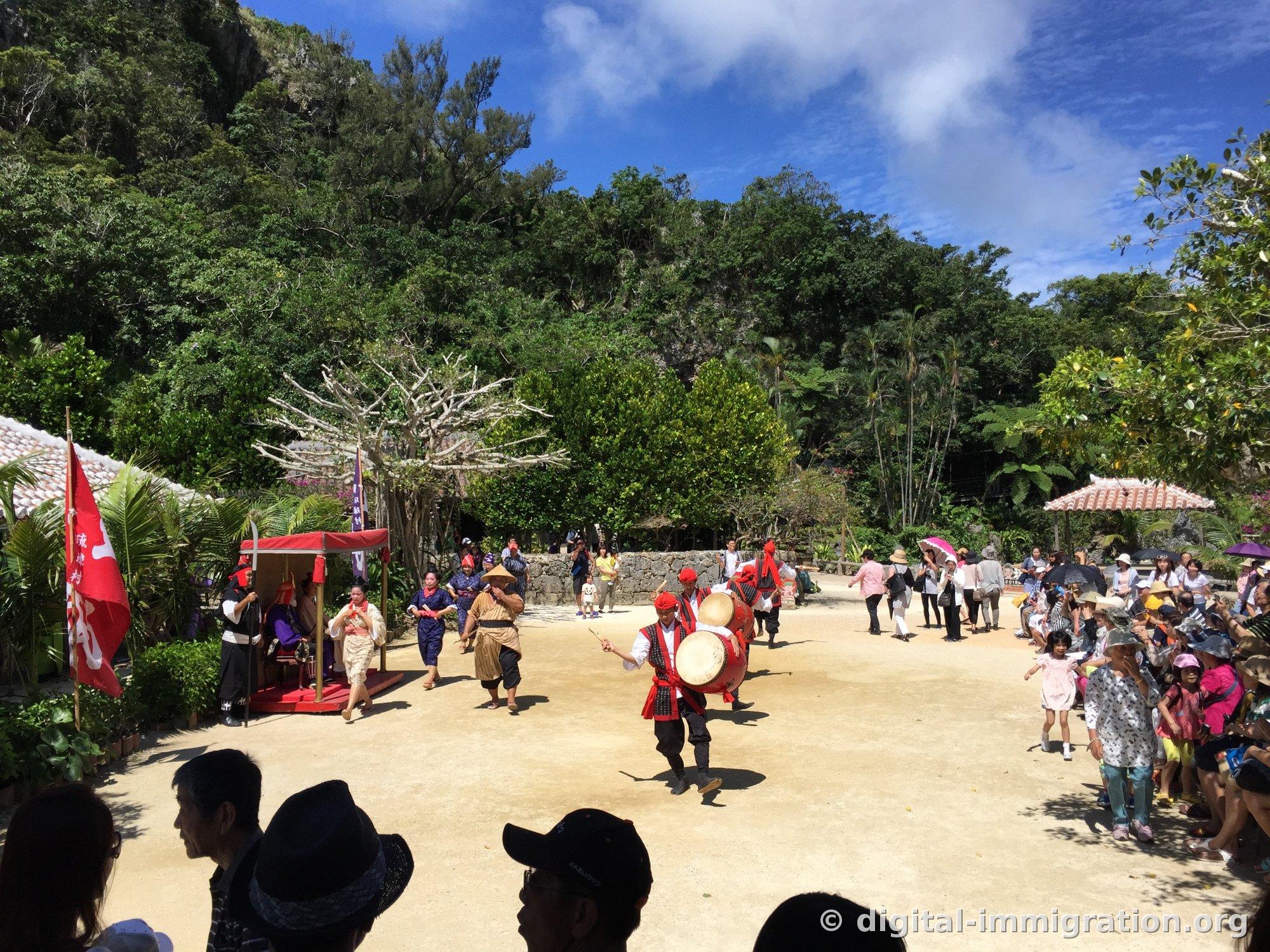
Once the palanquin procession takes its place, Eisa drummers enter from the right. There's a mix of performers carrying large barrel drums (odaiko) on their shoulders and hand-drum players, their red head scarves and black vests standing out sharply against the white sand. The drum sounds ripple through the courtyard without any speakers. When you're up close, it resonates in your chest.
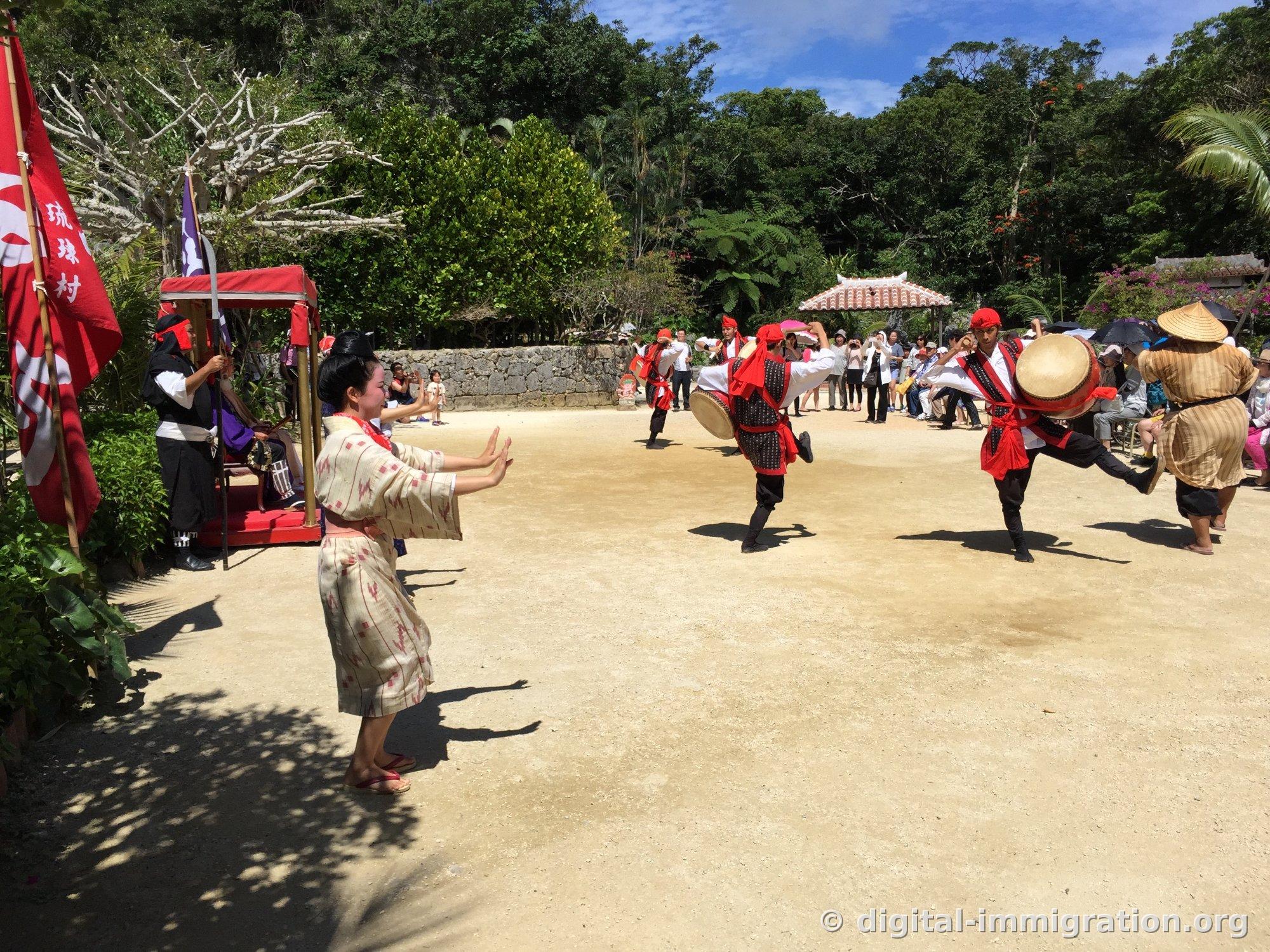
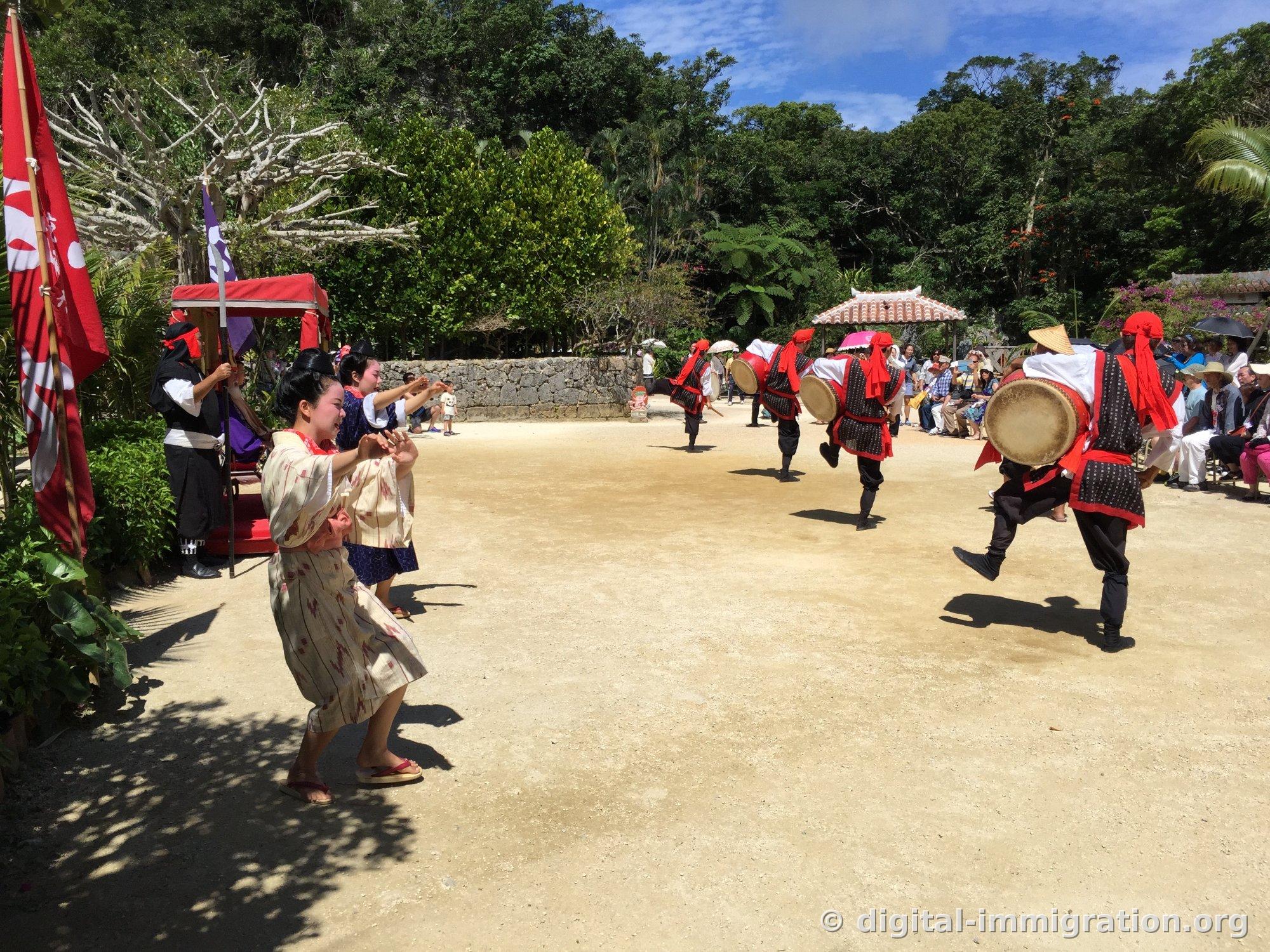
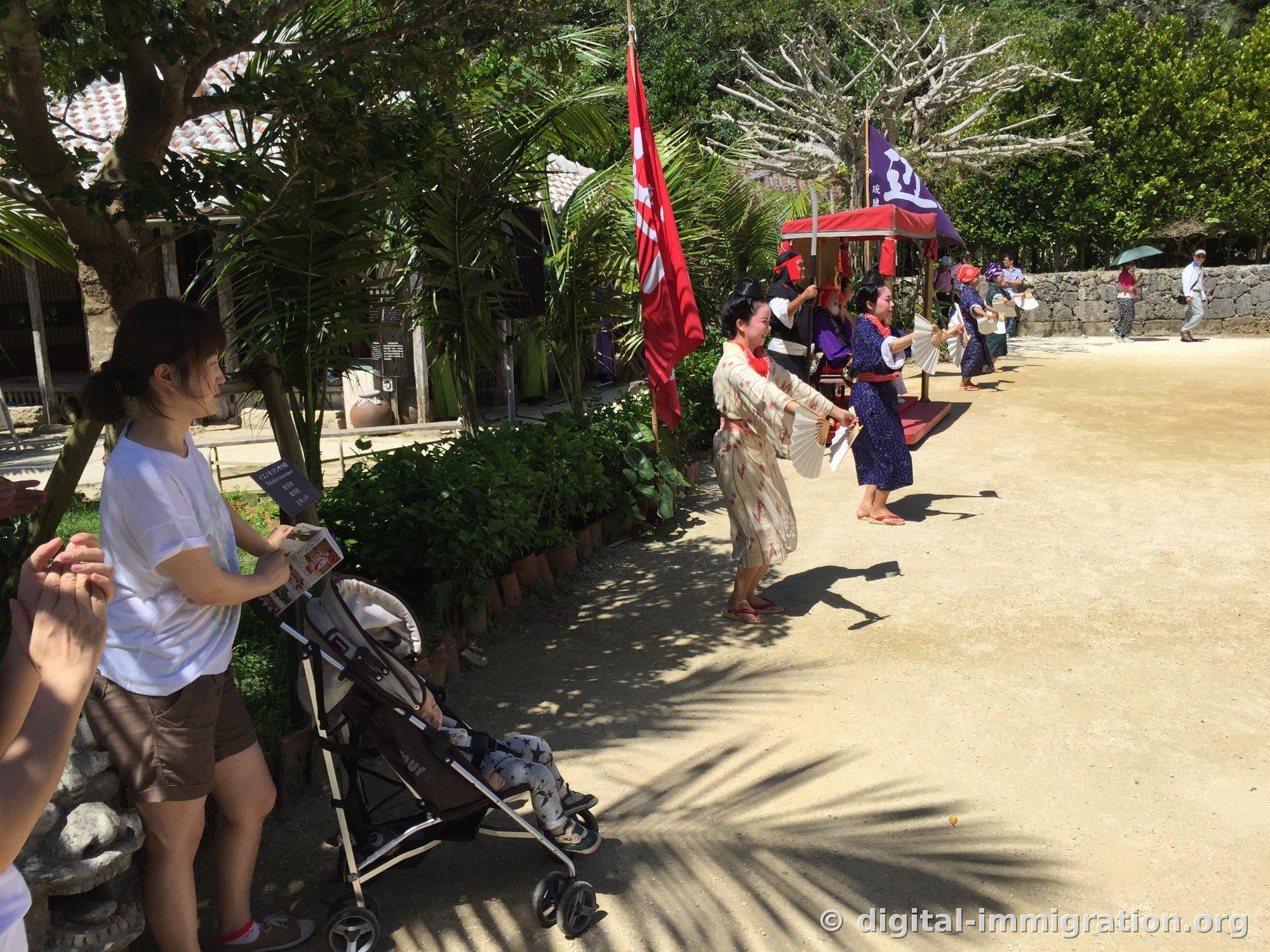
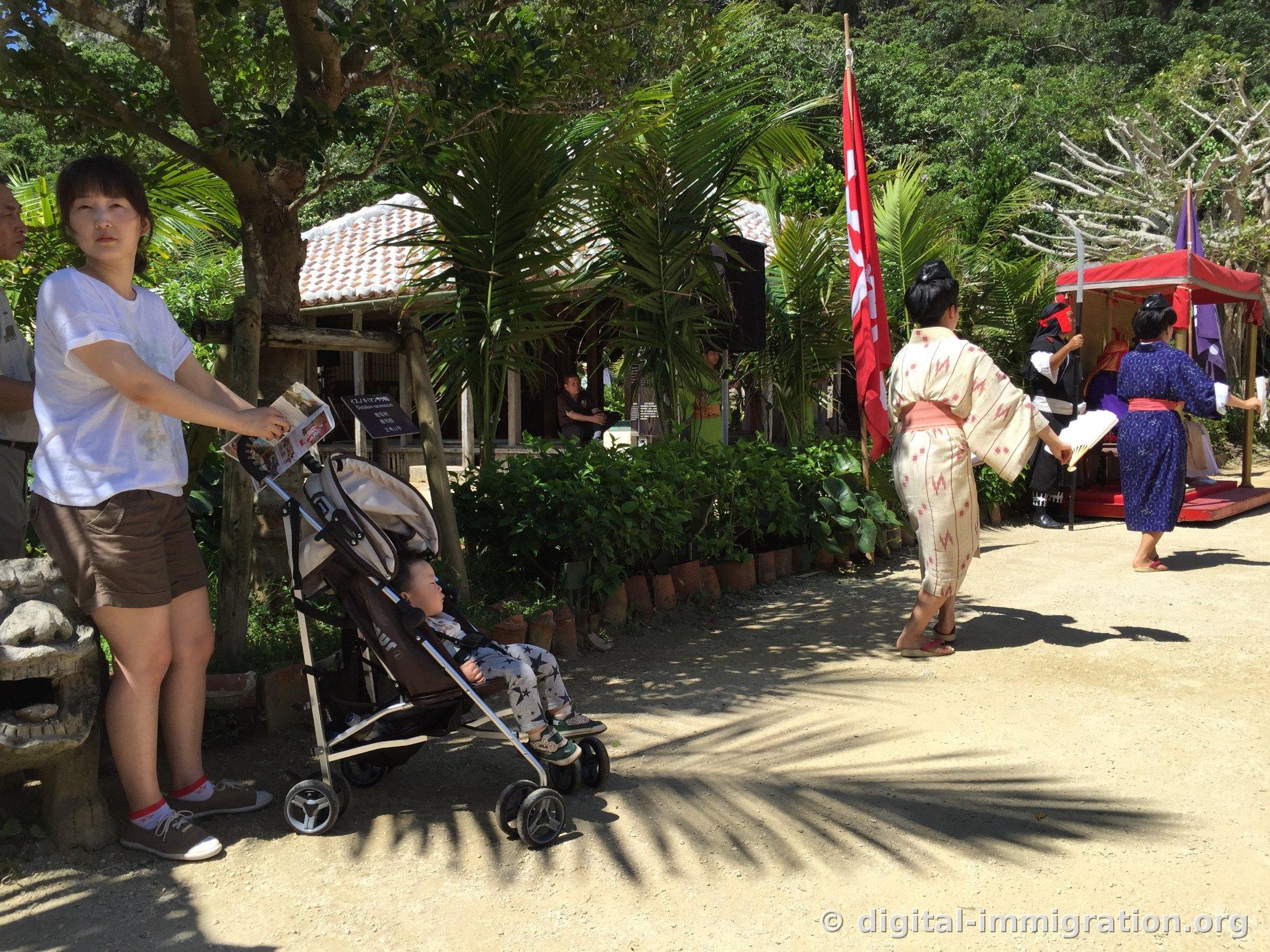
It's not just the drummers—female dancers with fans slowly emerge from the opposite side and form their own procession. Navy blue and light beige kimonos alternate, and the opening and closing of white fans creates an interplay with the drum rhythm that's both off-beat and harmonious. To see everything at once, it's best to position yourself near the shade of trees at one end of the courtyard.
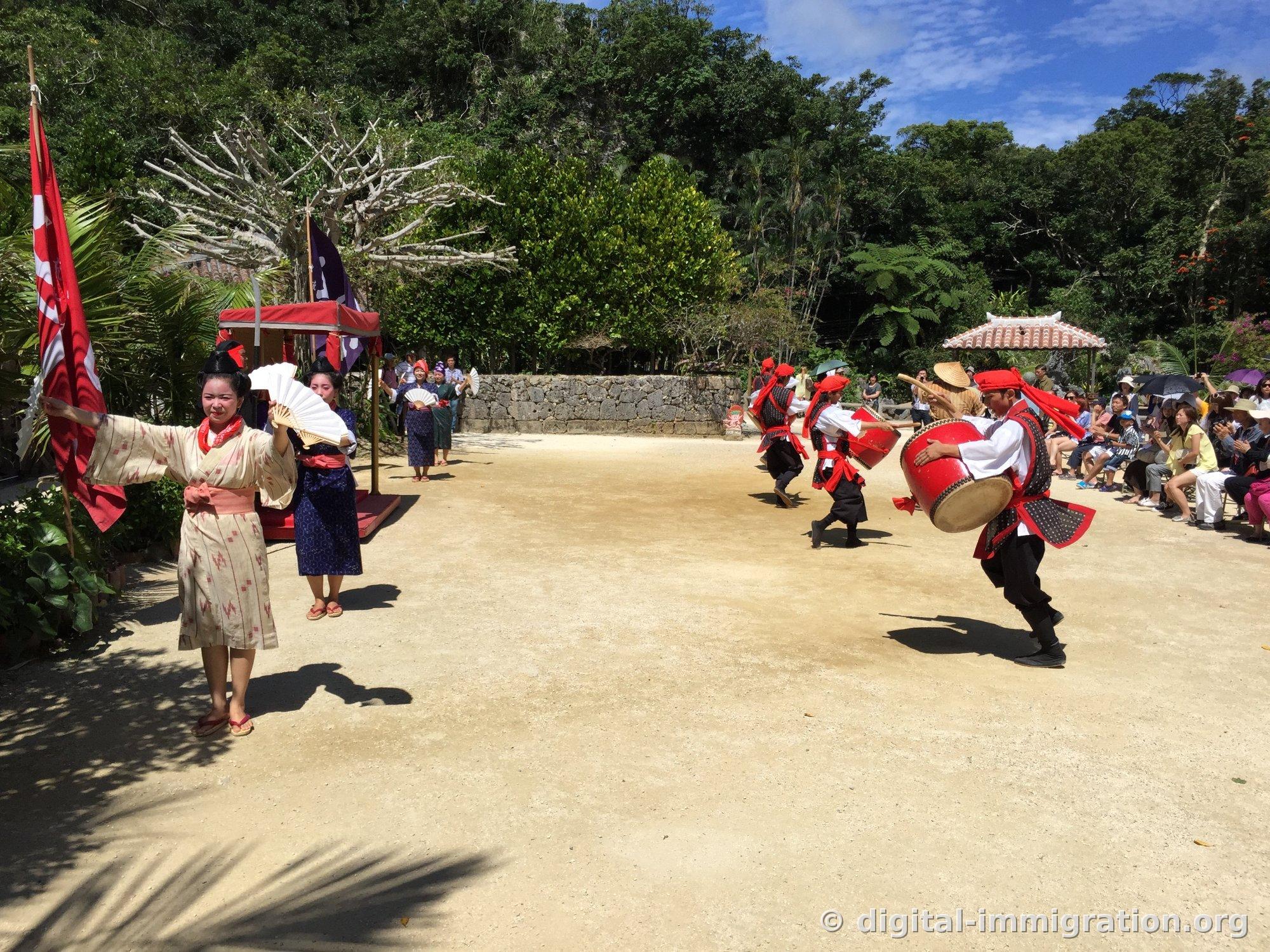
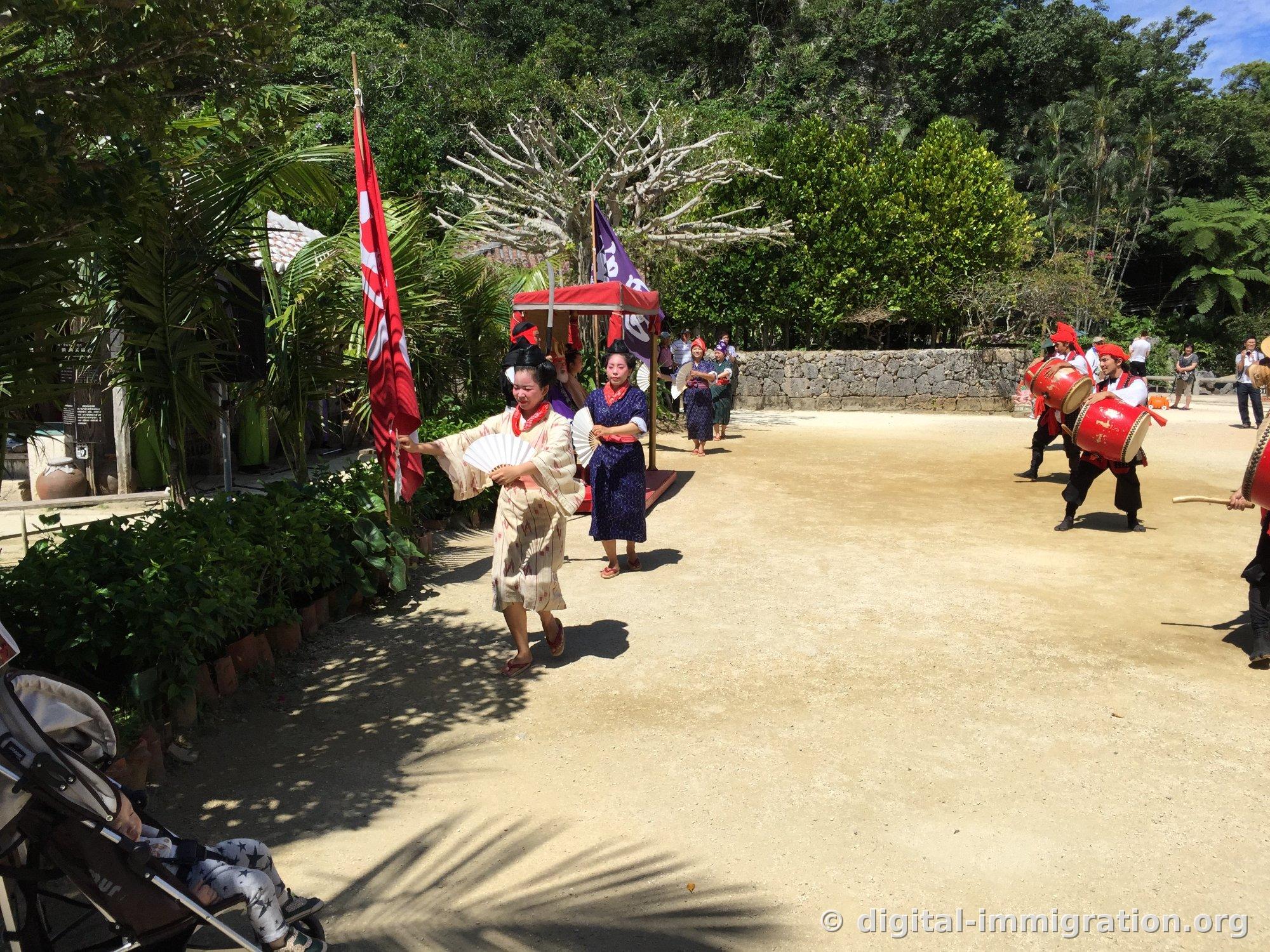
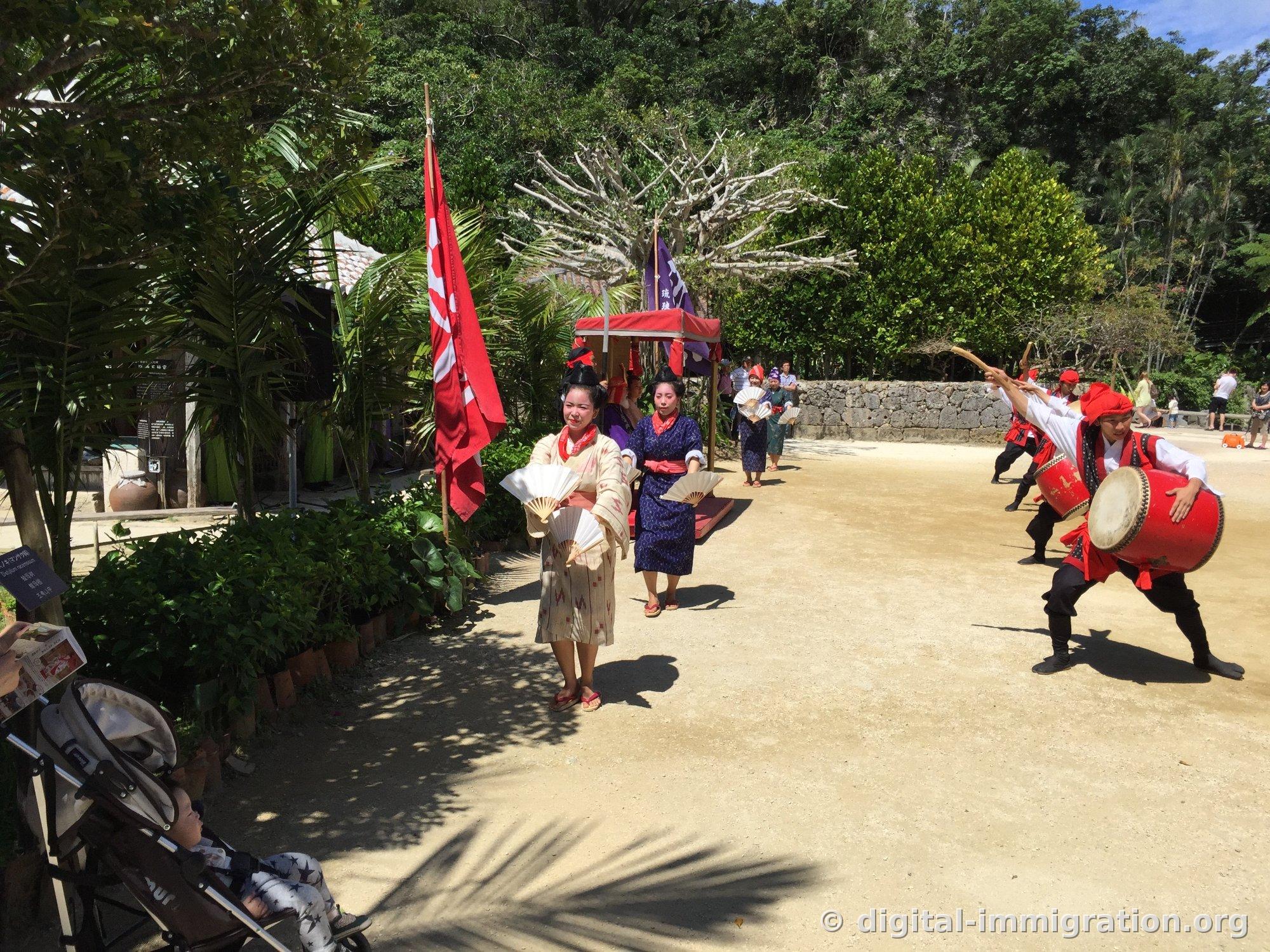
With the stroller, securing a good spot was crucial. The audience chairs were positioned where the sun hits directly, so we set up on the opposite side under the tree shade and watched standing. Even though the view was a bit angled, it was far better for keeping the child in the shade. In fact, my child fell asleep right in the middle of all the drumming.
After the Performance — Exploring the Folk Village
Once the performance ends and the crowd disperses, that's when museum time begins. The traditional houses are scattered across the hillside, with wooden signs at each intersection. 'Kyū Oshiro House (旧大城家)', 'Pottery Workshop (陶芸工房)', 'Sugar Mill (製糖工場)', and 'Exit (出口)'. Just follow the directional signs and you'll make a complete loop.
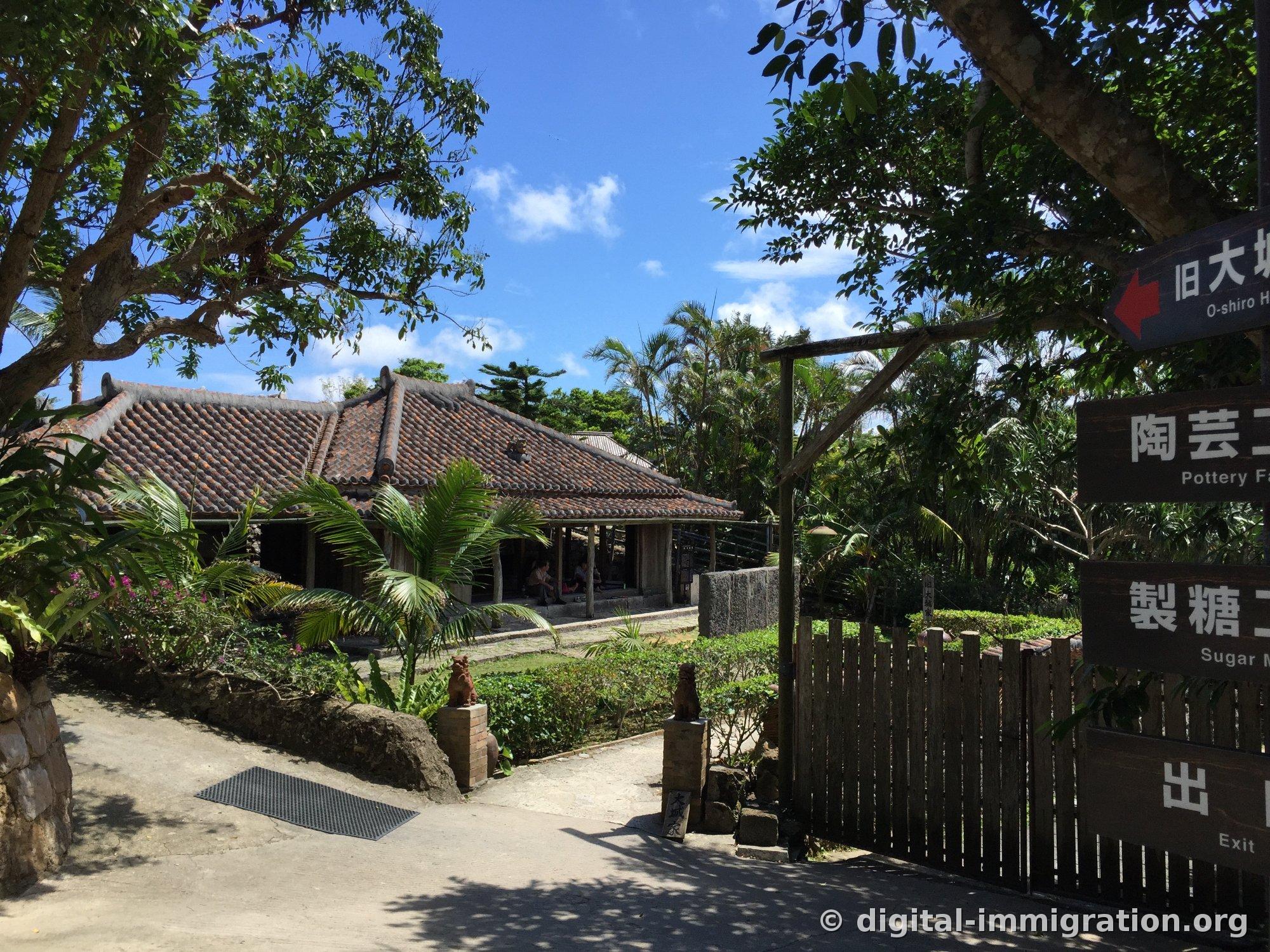
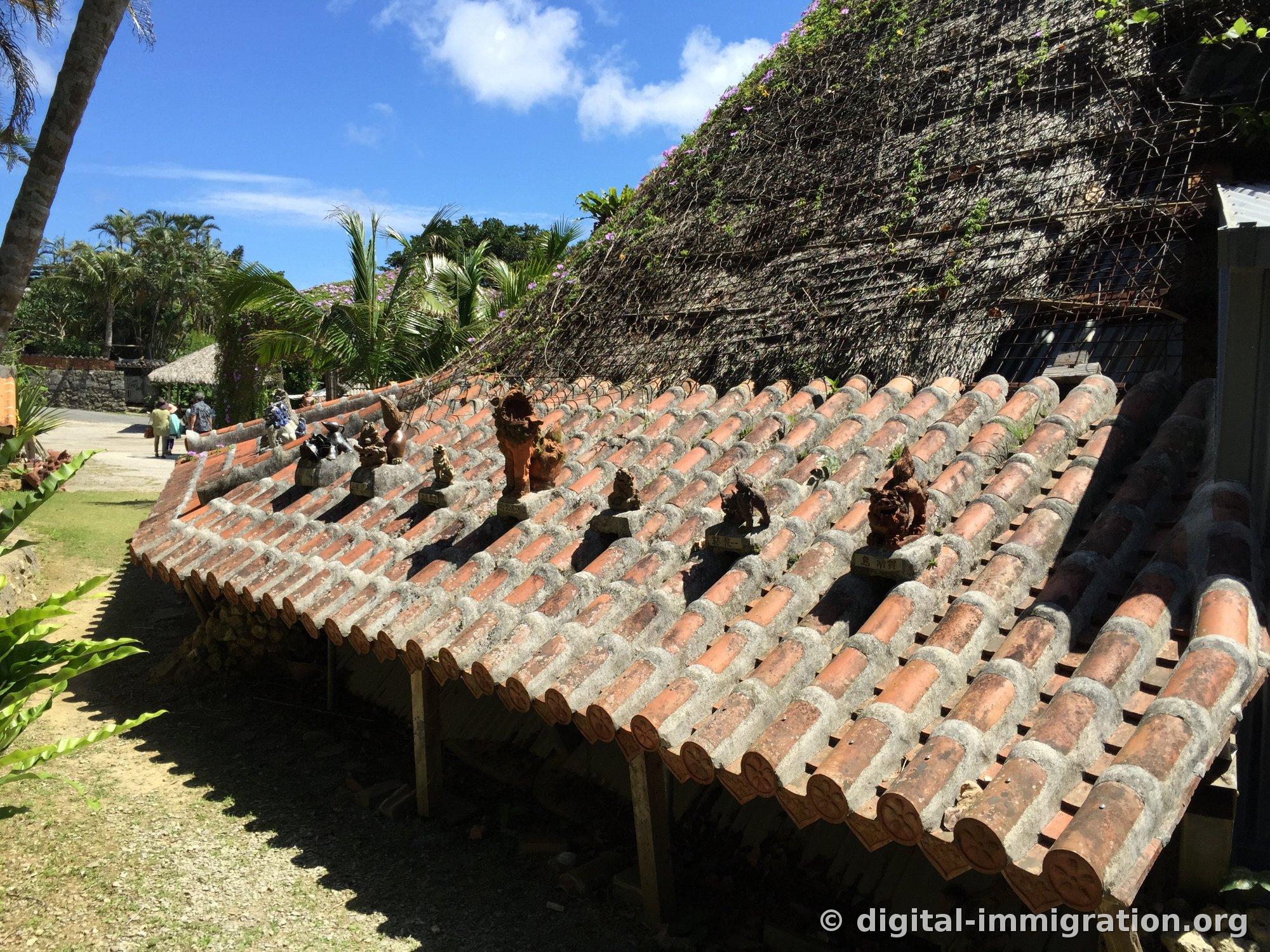
The roofs are particularly interesting to study. Some houses have red tile roofs, while others have thatched roofs woven from reeds. Along the ridge lines of the tile roofs sit shisa (guardian lion figures) in a row. They're all different colors and shapes, and some have small inscriptions carved into their bases. These aren't factory-produced sets—each one was individually crafted. The mix of moss-covered plaster and freshly fired red tiles makes it clear these are roofs that have been maintained over time.
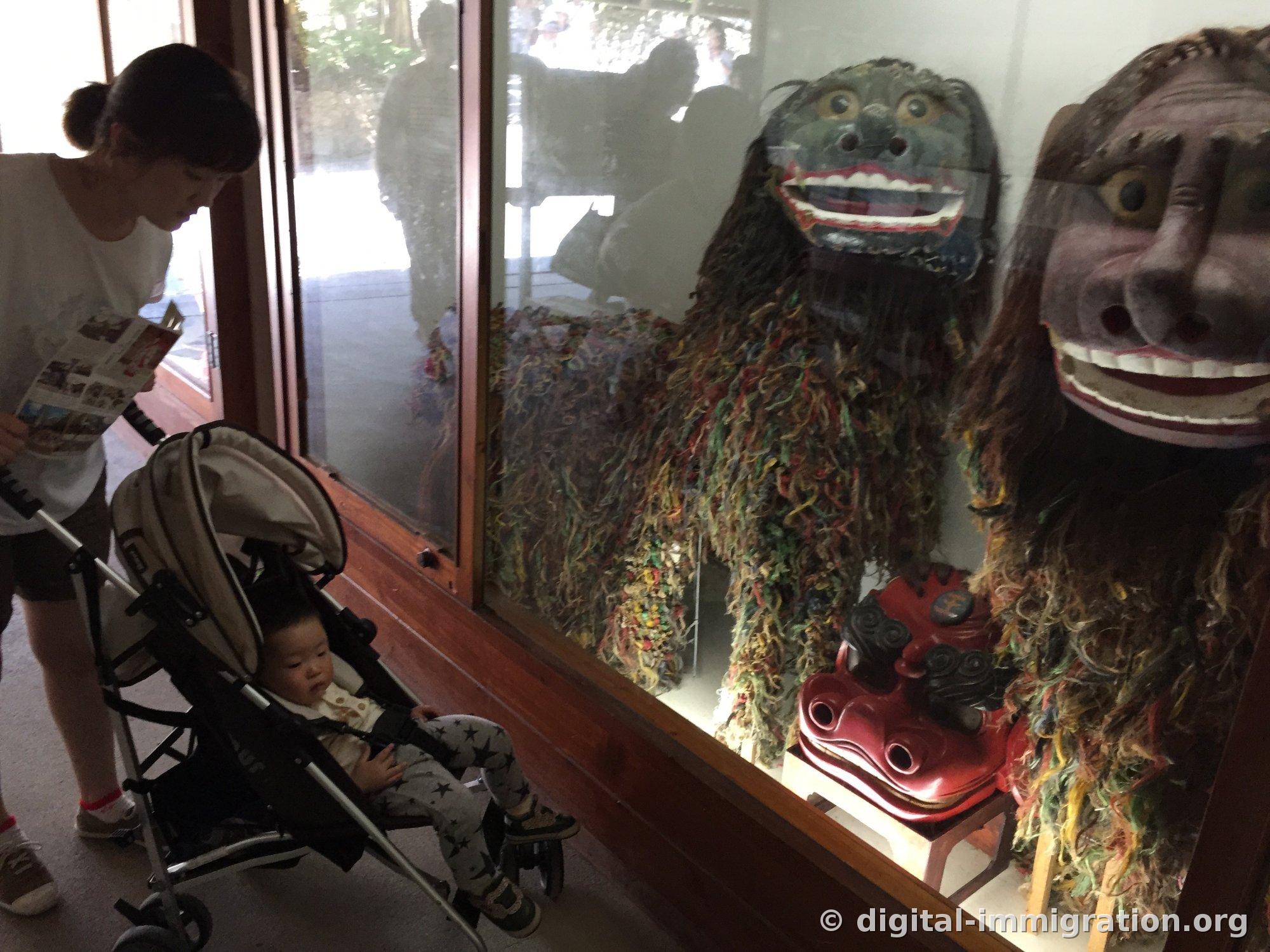
Inside some of the houses are display cases with masks. The masks in the glass cases were quite striking: a lion mask with a green face and red open mouth, a large mask beside it with a peachy face and bared teeth, and below that, two red lion heads. The bodies were constructed from layers of colorful thread woven together. My child didn't cry or laugh—just stared at them intently for a long time.
The Pottery Workshop — Best Place to Buy Souvenirs
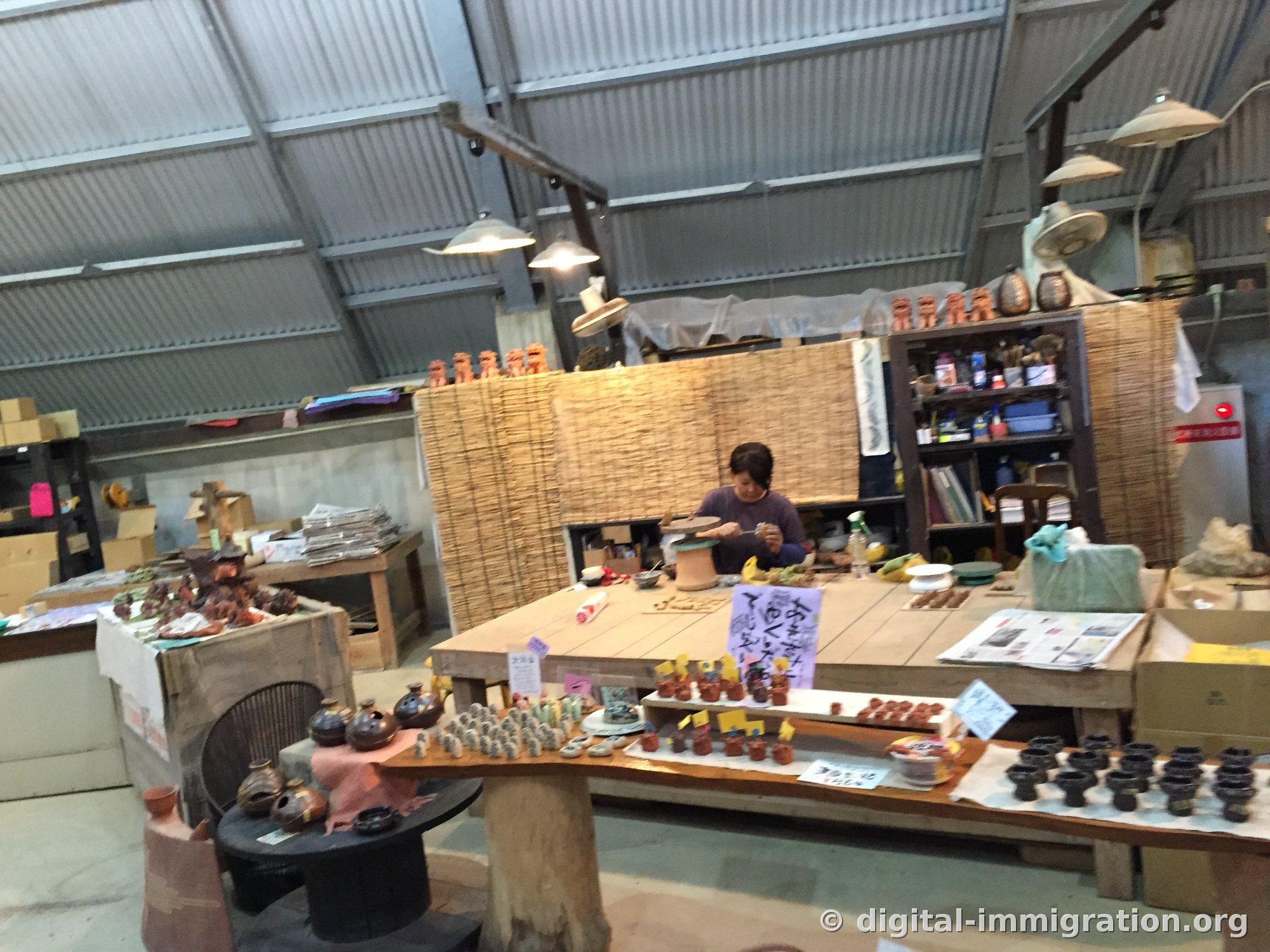
Following the signs to the pottery workshop, you can watch artisans at work. Under a corrugated metal roof, a potter sits at a wheel, carefully finishing a small piece in their hands. Rows of finished red shisa are lined up on shelves, and completed pieces are displayed on tables below with price tags. It feels less like a tourist shop and more like a working studio that's opened one section to the public.
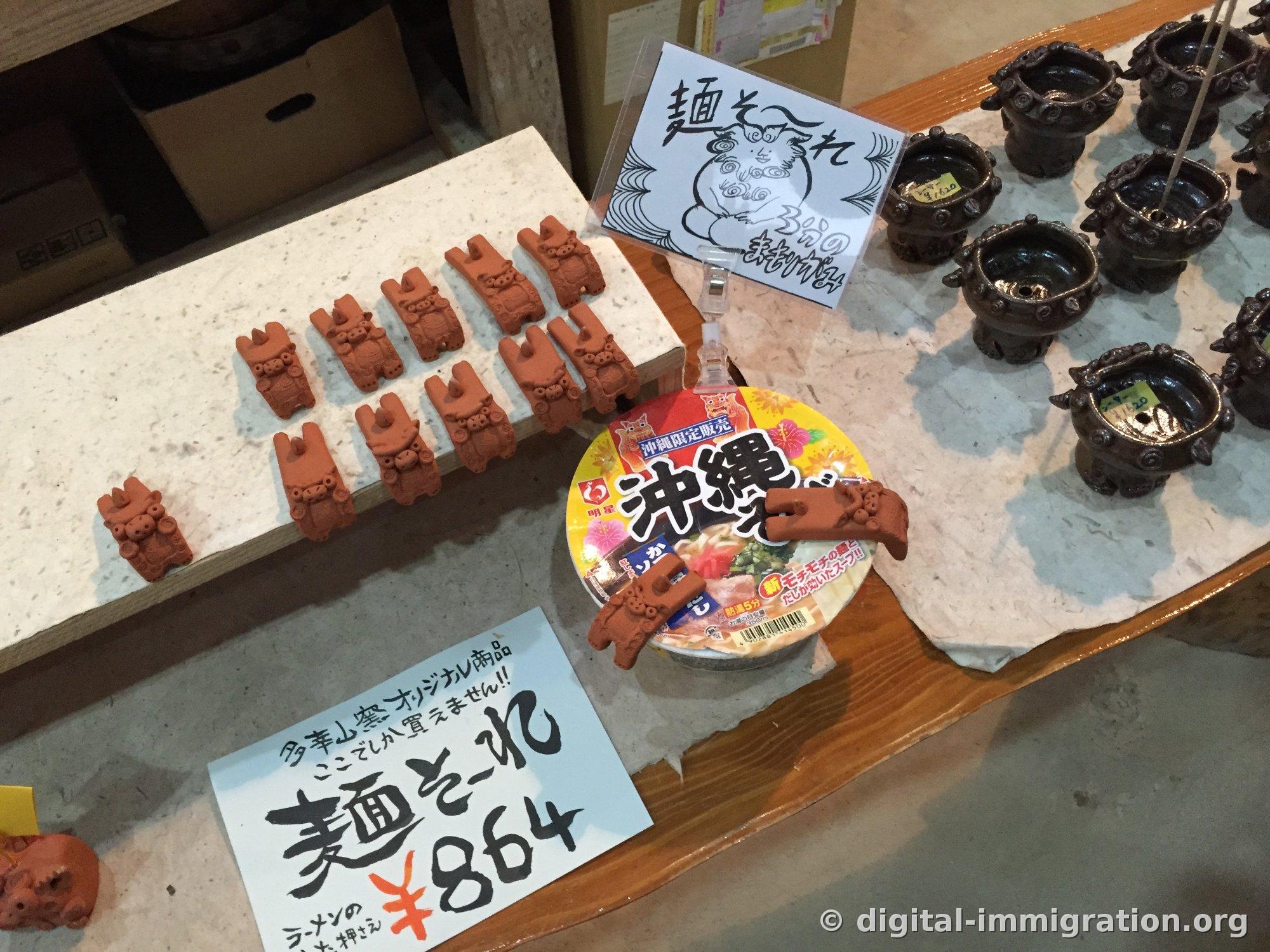
The item that caught my eye most was a ramen pot lid weight shaped like a shisa. It's a small ceramic with a shisa positioned on its front paws, and a handwritten tag read '麺そ〜れ ¥864 / Takō-yama Kiln Original Product—Only Available Here'. Beside it sat an actual Okinawa soba instant ramen cup as a display. The name itself is a pun combining 'mensōre' (めんそーれ, 'welcome') with 'men' (麵, noodles). As a souvenir, the price and size seemed just right.
The Water Buffalo and Sugarcane Mill
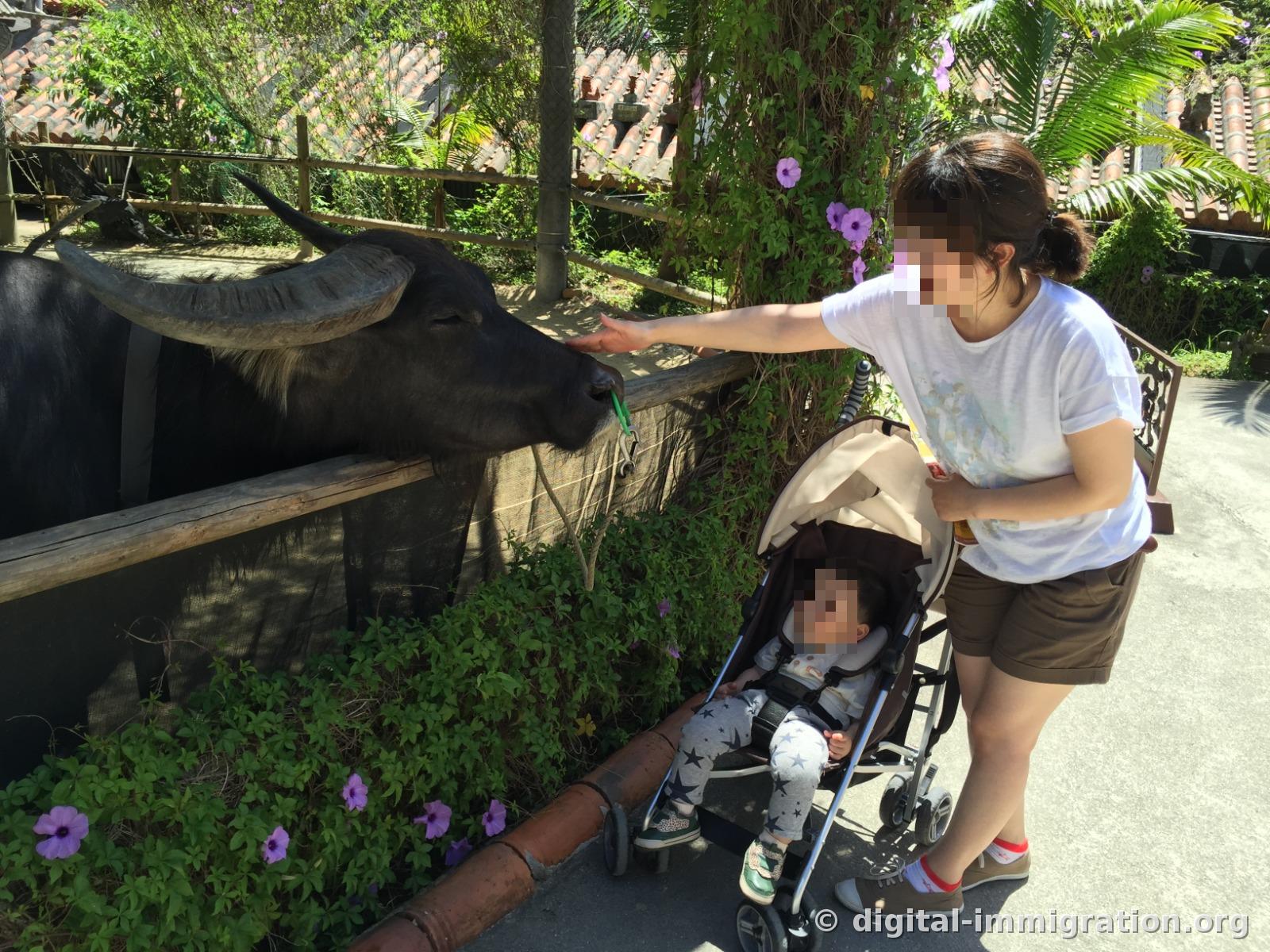
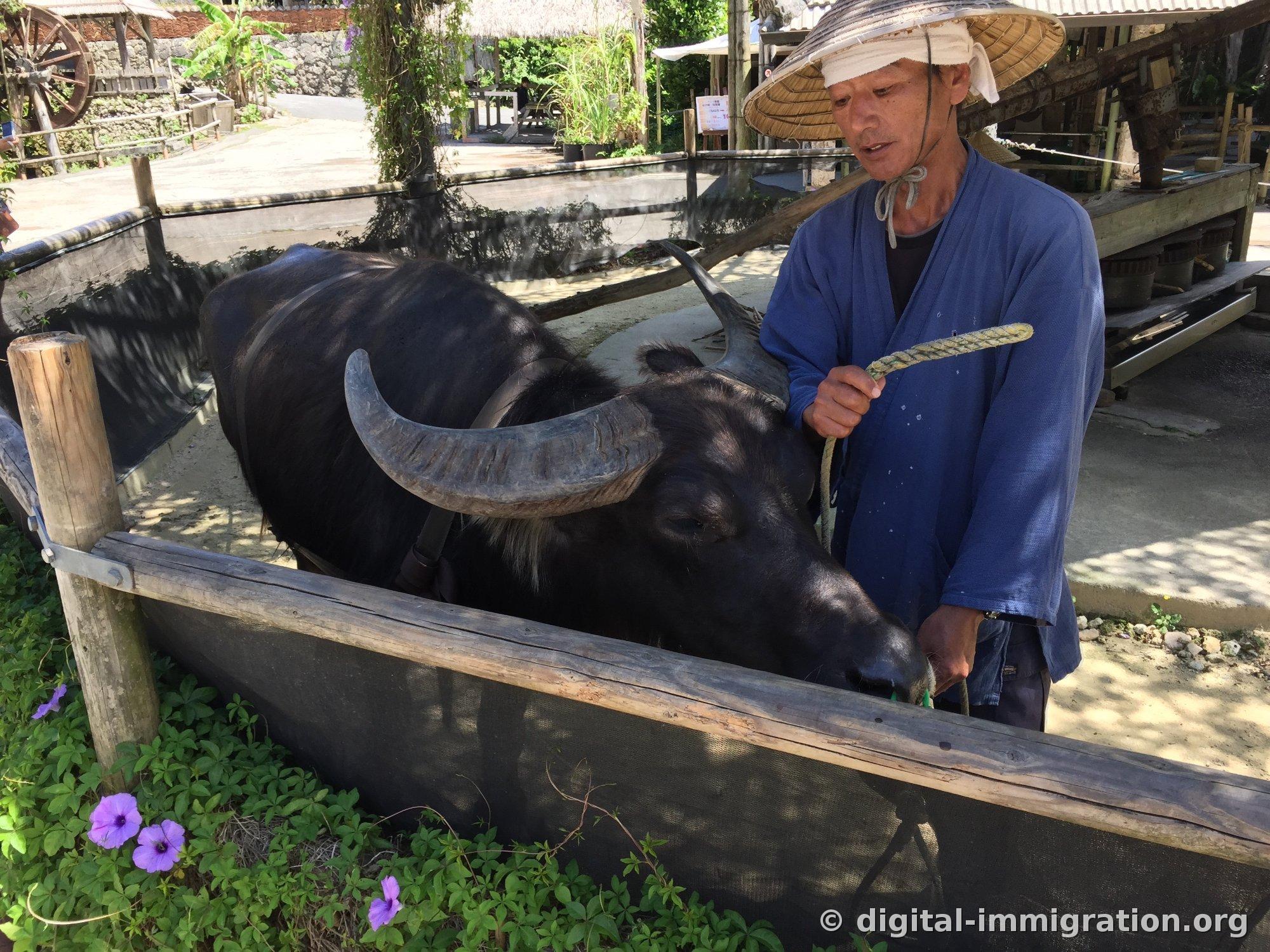
Venturing deeper, you'll find a water buffalo. Its head sticks out over a fence, and with thick horns curving broadly to the sides, it's much larger in person than in photos. A green ring hangs from its nose, and a caretaker stands beside holding the lead. I reached out and touched the skin above its nose—the fur was short, stiff, and warmer than expected. My child, still in the stroller, looked up at the water buffalo.
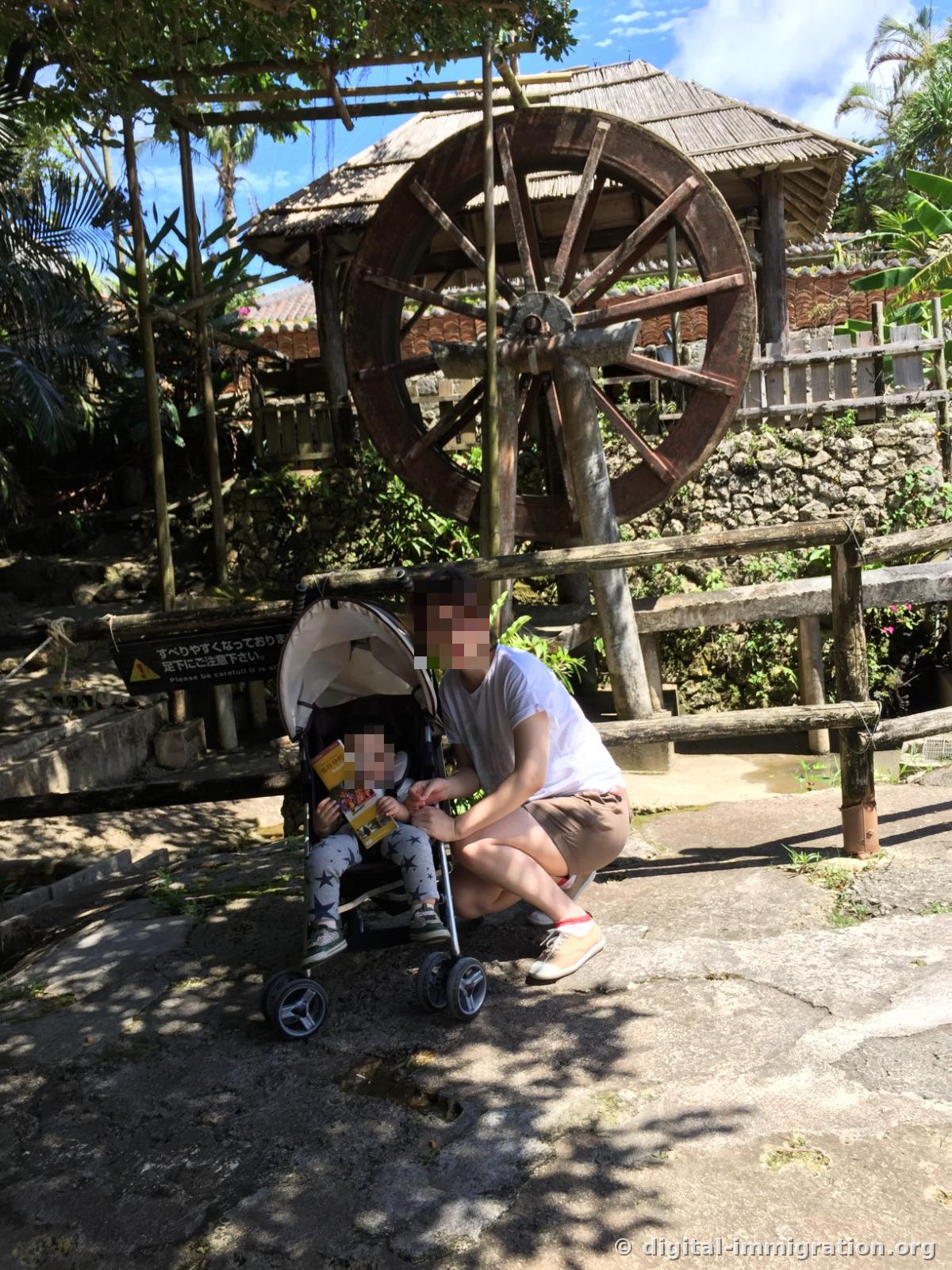
The water buffalo is here because of the sugar mill right next to it. There's a large wooden mill wheel with a roof, and historically, oxen were used to turn it to press sugarcane. The ground in front of the wheel is paved with old stones, and a bilingual sign in Japanese and English warns, 'Be careful—slippery underfoot.' And indeed, moisture remained, making it slippery. It was a tense moment when the stroller wheel nearly slipped.
Two Must-See Spots Before Leaving
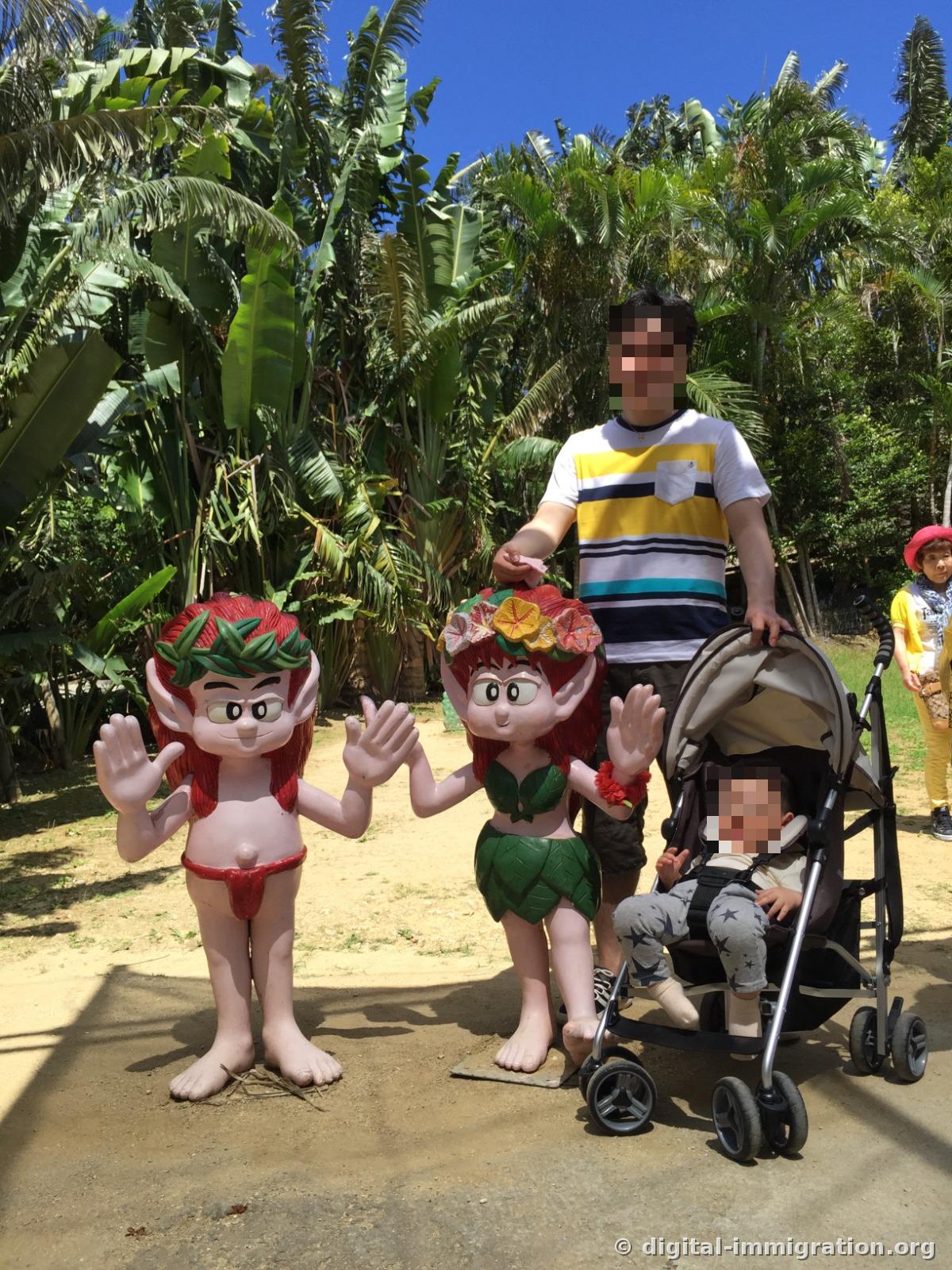
As you head toward the exit, you'll find a pair of Kijimuna dolls standing among banana leaves. One is a male figure with a red head wearing a leaf crown, the other a female with floral ornaments and clothes woven from leaves. They're tree spirits from Okinawan folklore, displayed here in a welcoming pose with raised hands. They're smaller than human-sized, perfectly at eye level for children.
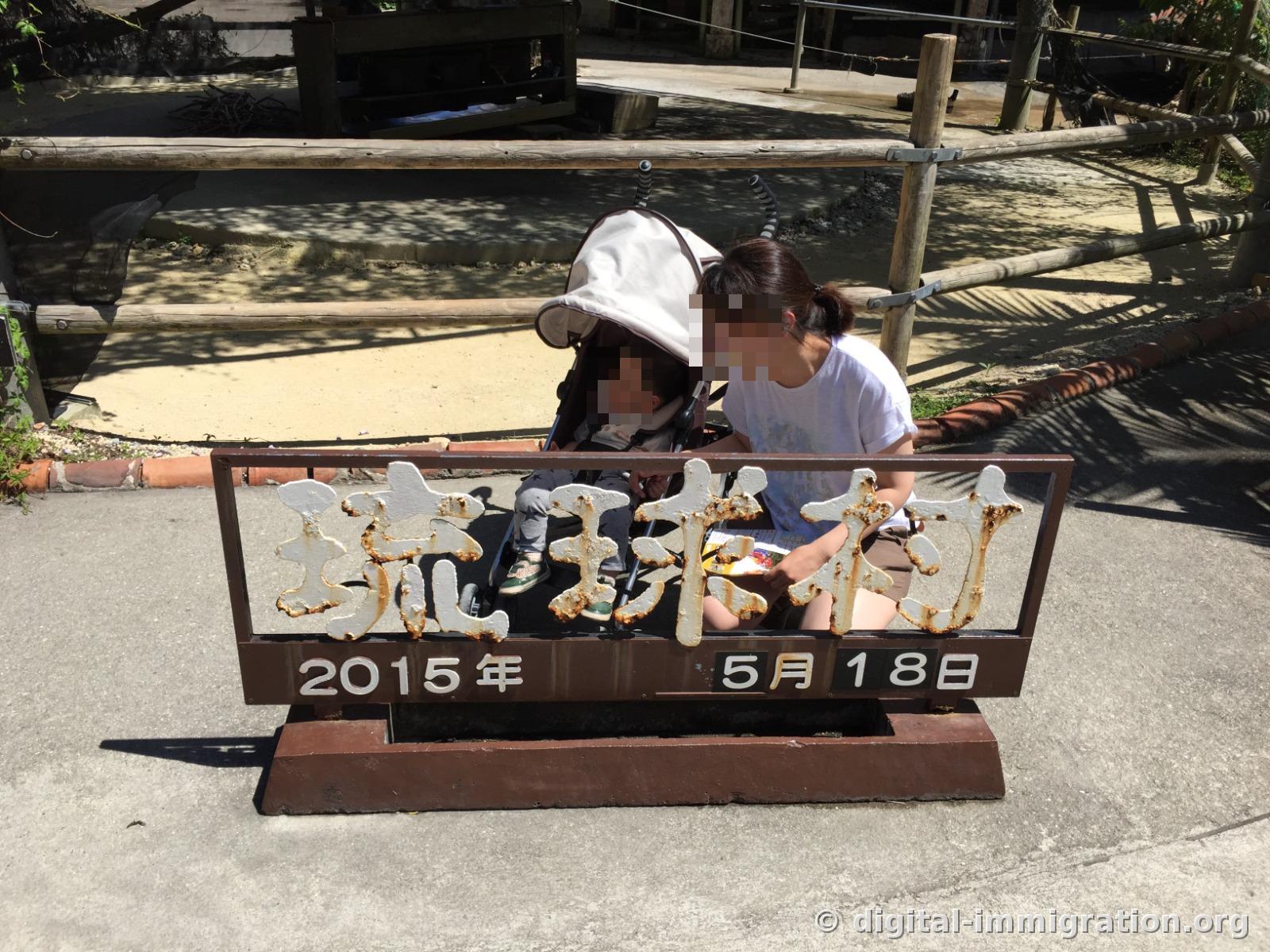
Finally, there's the date board. 'Ryukyu Mura' is applied in white paint, with a date panel below that can be changed—the day we visited read '2015年 5月 18日'. Paint has chipped away in places and rust shows through, which somehow feels like proof that this marker has stood here for a long time. Later, when flipping through our photos, this single image is what lets me remember the exact date.
If We Go Again, We'll Do It This Way
- Bring an umbrella or wide-brimmed hat—it's essential. There's little shade in the courtyard or along the paths.
- Check the pamphlet for performance times as soon as you arrive, then plan your route accordingly. Missing the performance means missing half the experience.
- The performance is better viewed standing in the shade under the trees on the opposite side rather than from the audience chairs—especially when traveling with a child.
- The stroller works, but it struggles on sandy terrain and uphill sections. I'd recommend bringing a baby carrier as backup.
- Souvenirs are more interesting at the pottery workshop than at the gift shop near the entrance.
As we left, I realized this place is less a beautifully constructed movie set and more like a living village that's carefully maintained and used. The moss on the roofs, the slippery stone floors, the tools laid out on work tables, the green ring on the water buffalo's nose—these are the details you don't usually see in neatly manicured tourist attractions, yet here they remain in full view. I'm already thinking of going back when my child is a bit older and can walk around on their own. Next time, I'll bring two umbrellas.
Read next
- From Akihabara's Chuo-dori to the Kanda River: A Record of Tokyo's Electronics District Revisited Multiple Times
Tokyo's Akihabara is a neighborhood where it's hard to say you've seen everything in a single visit. I've come multiple times across different seasons, and each time the signs chan…
Tokyo · Akihabara - Buying a Single ¥300 Year-End Jumbo Lottery Ticket at Nishi-Ginza Chance Center in Tokyo
Exit from the Hibiya exit of Tokyo's Shimbashi Station, walk toward the elevated highway for about three minutes, and suddenly you'll see a line of people stretching along the side…
Tokyo · Nishi-Ginza Chance Center - Ueno Ameyoko, the real magic starts after sunset — an evening walk from the Okachimachi Gate to Ueno Station
Every time I come to Tokyo, my feet find their way to Ueno Ameyoko (アメ横) without fail. This time I entered from the Okachimachi side and worked my way toward Ueno Station. I've met…
Tokyo · Ameya Yokocho Market