Roppongi TV Asahi Headquarters Atrium 1F — The Day I Saw Doraemon's Time Capsule, Shin-chan, and the Music Station Staircase for Free
The TV Asahi headquarters attached to the side of Roppongi Hills in Minato Ward, Tokyo, wasn't actually where I went to tour the broadcasting station. I was coming down from the Mo…
Tokyo · TV Asahi Headquarters
The TV Asahi headquarters attached to the side of Roppongi Hills in Minato Ward, Tokyo, wasn't actually where I went to tour the broadcasting station. I was coming down from the Mori Tower area along the gardens when I saw a panda doll sitting in front of a glass building, so I just went inside. The first-floor atrium requires no reservations or admission fees. That's the key to this building. If you're looking for a free place to kill an hour in Tokyo, this ranks pretty high.
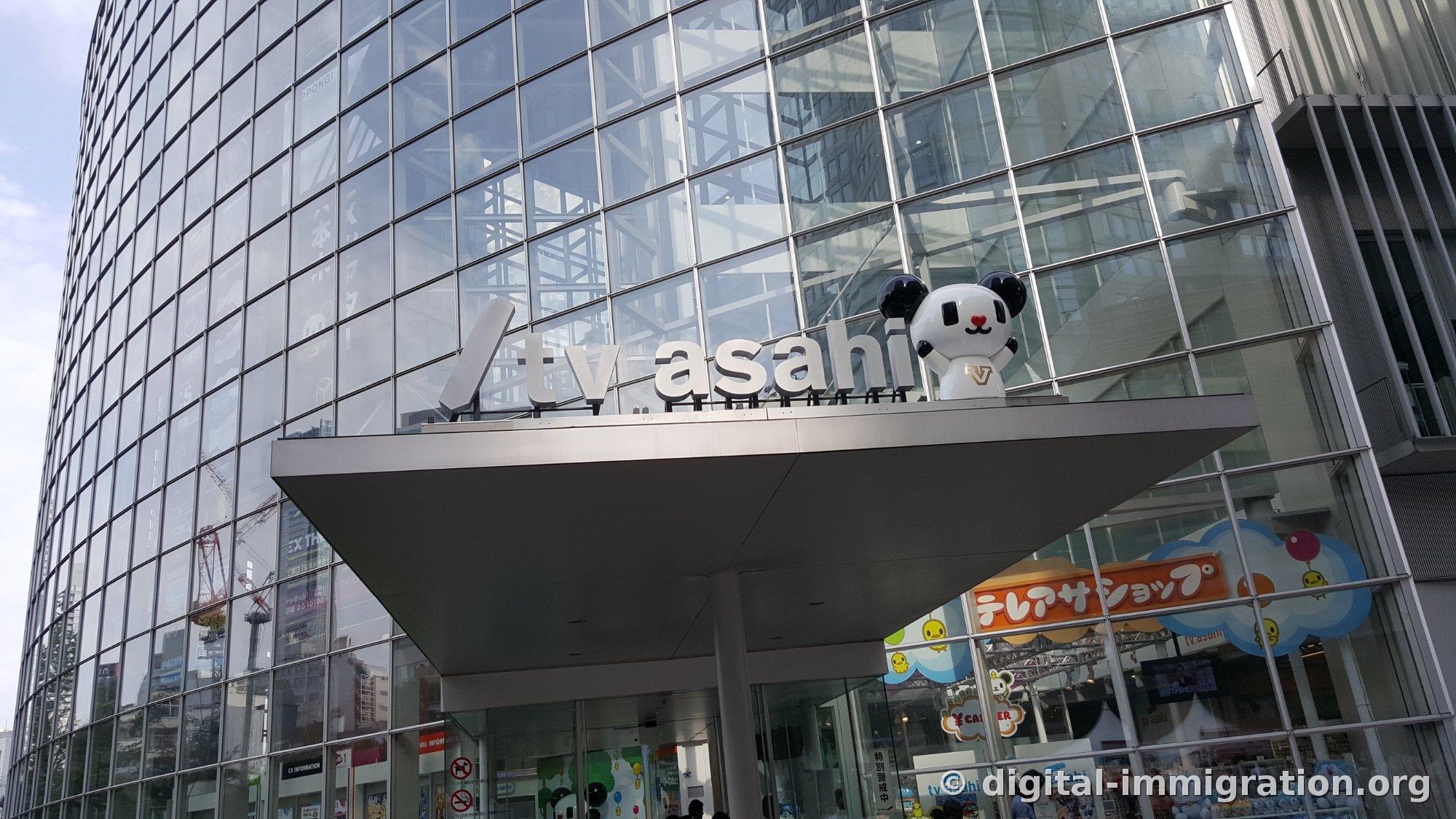
The entrance sign is smaller than expected. From Roppongi street, it just looks like an office building, but you can tell it's the place because there's a white panda sitting on the canopy. The Roppongi construction cranes are reflected right in the glass, making the photos look messy, but there's no helping that. If you shoot from slightly to the left instead of straight on, there's less reflection.
As Soon as You Enter, a Panda Five Meters Tall
Beyond the automatic doors is an atrium open to the ceiling, and facing you is a large inflatable panda. Compared to a child's height, it's roughly four to five meters tall. The air conditioning was running strong, so wind kept rustling across the panda's surface, and that sound filled the lobby at a low level. From the ceiling hung layers of banners for dramas and variety shows airing that season.
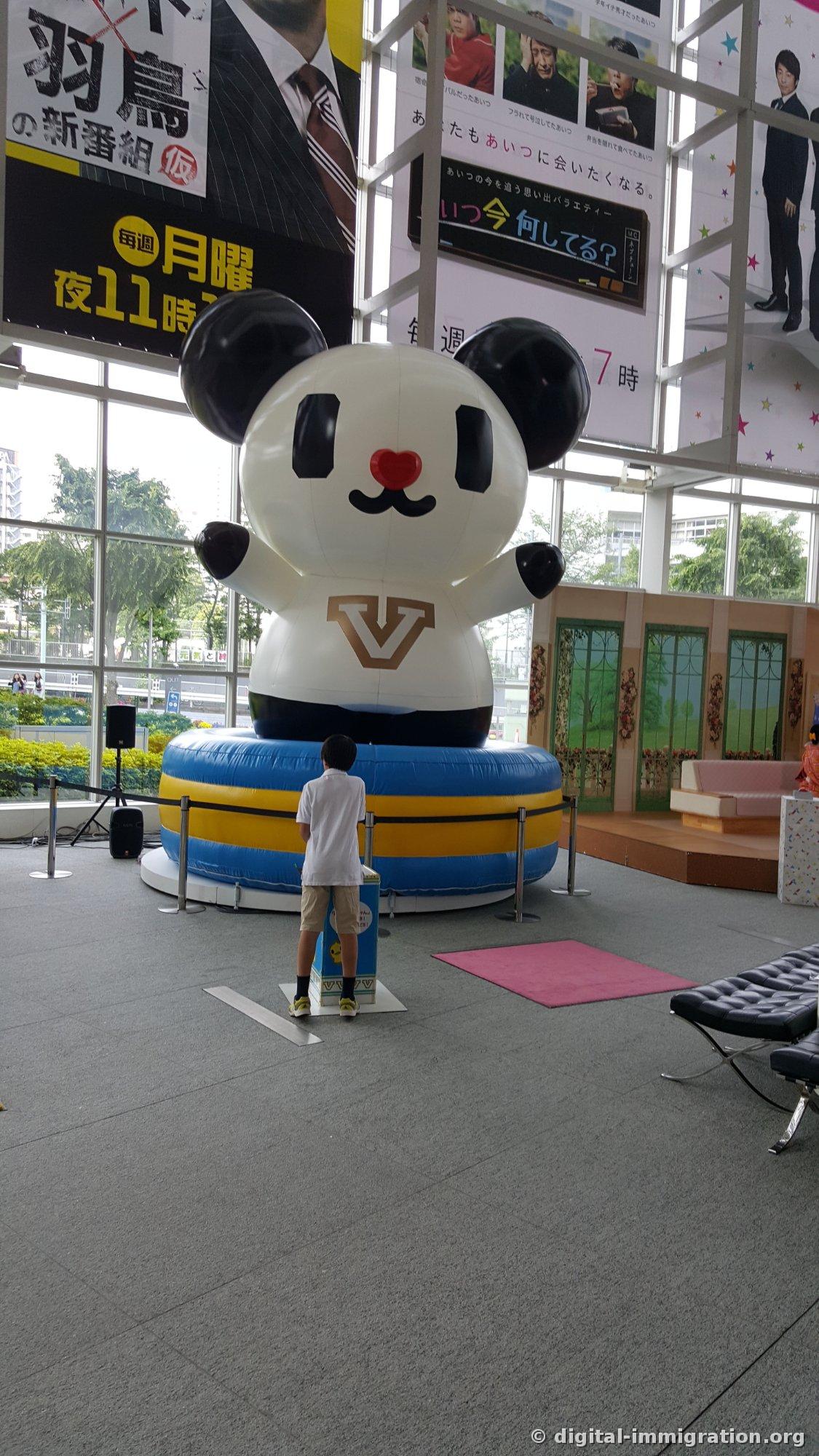
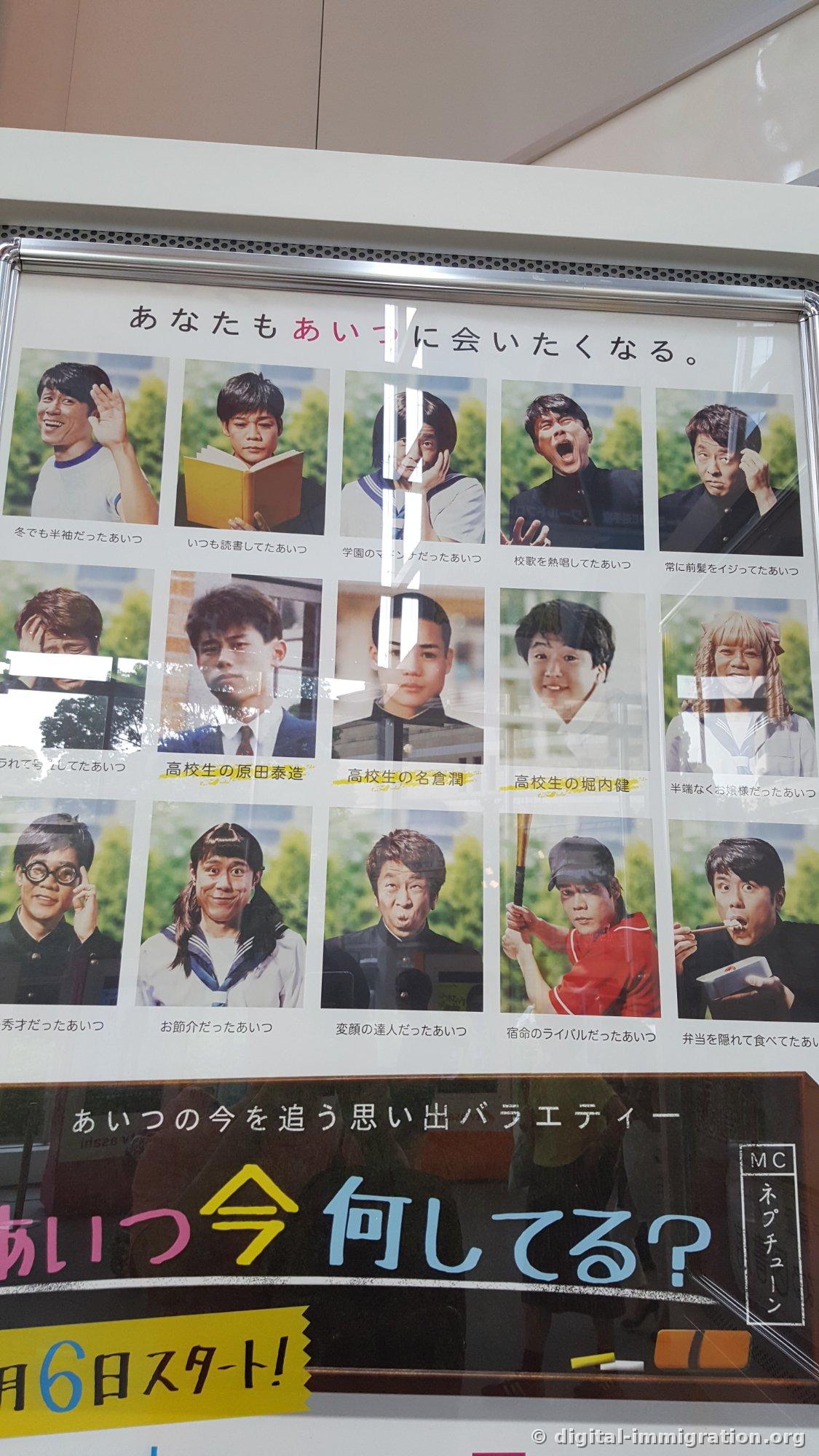
Among the ceiling banners, あいつ今何してる? particularly stood out, and there was also a large poster for the same program on the lobby wall. It arranges celebrity photos from their high school days in a grid, with captions like "the one who wore short sleeves even in winter" or "the one who was always reading." Even if you can't read Japanese, you'll laugh just looking at the photos.
The Doraemon Corner — This Is the Real Destination
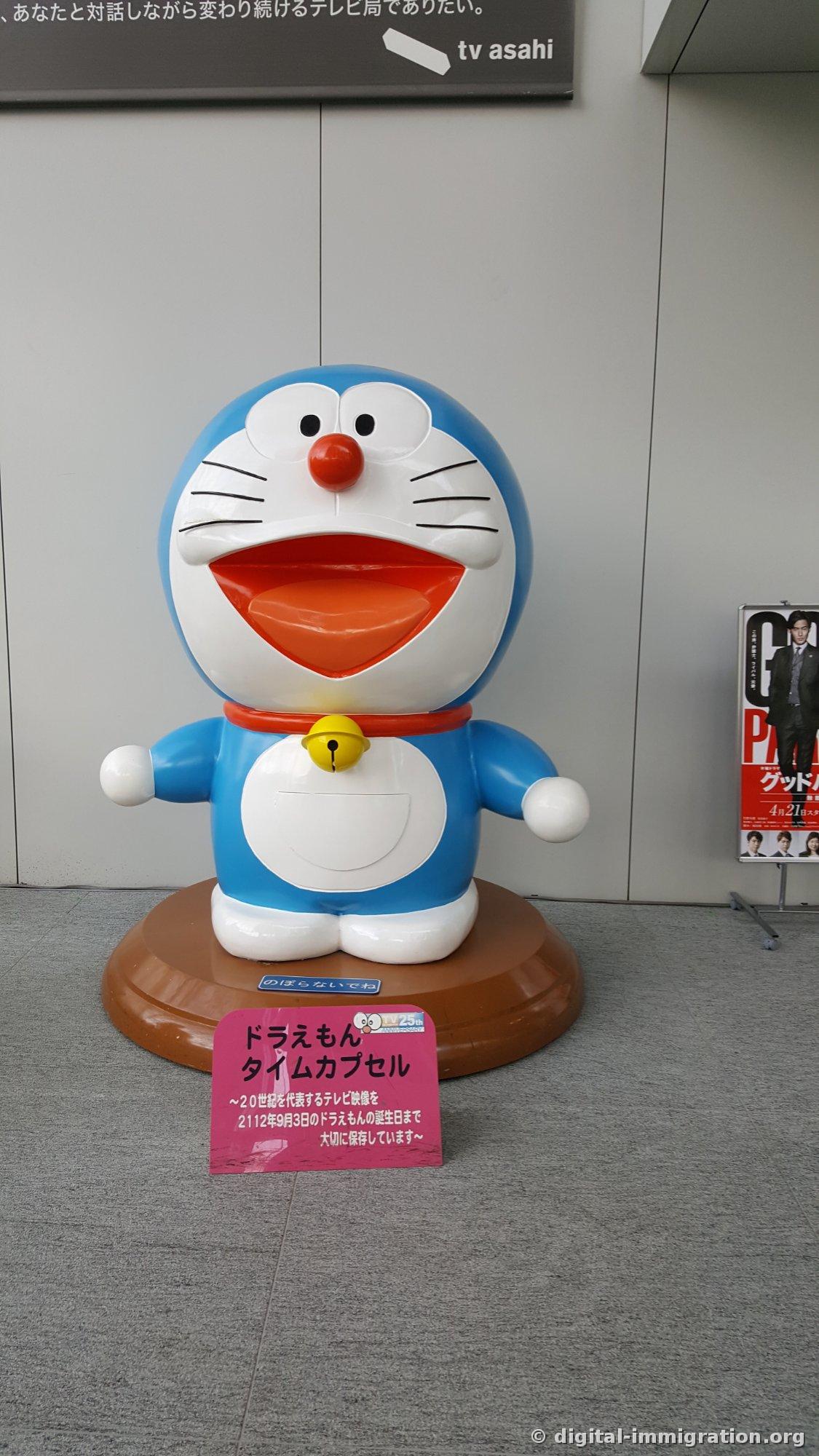
Going deeper into the atrium, you come to the Doraemon zone. Since TV Asahi is where the Doraemon anime airs, they keep this display permanently. The first thing you encounter is a Doraemon figure with an open belly. There's a pink information board at its base explaining that it's a time capsule storing 20th century TV footage, to be kept until Doraemon's birthday on September 3, 2112. There's something funny yet wonderful about the broadcasting station seriously creating and displaying something like this.
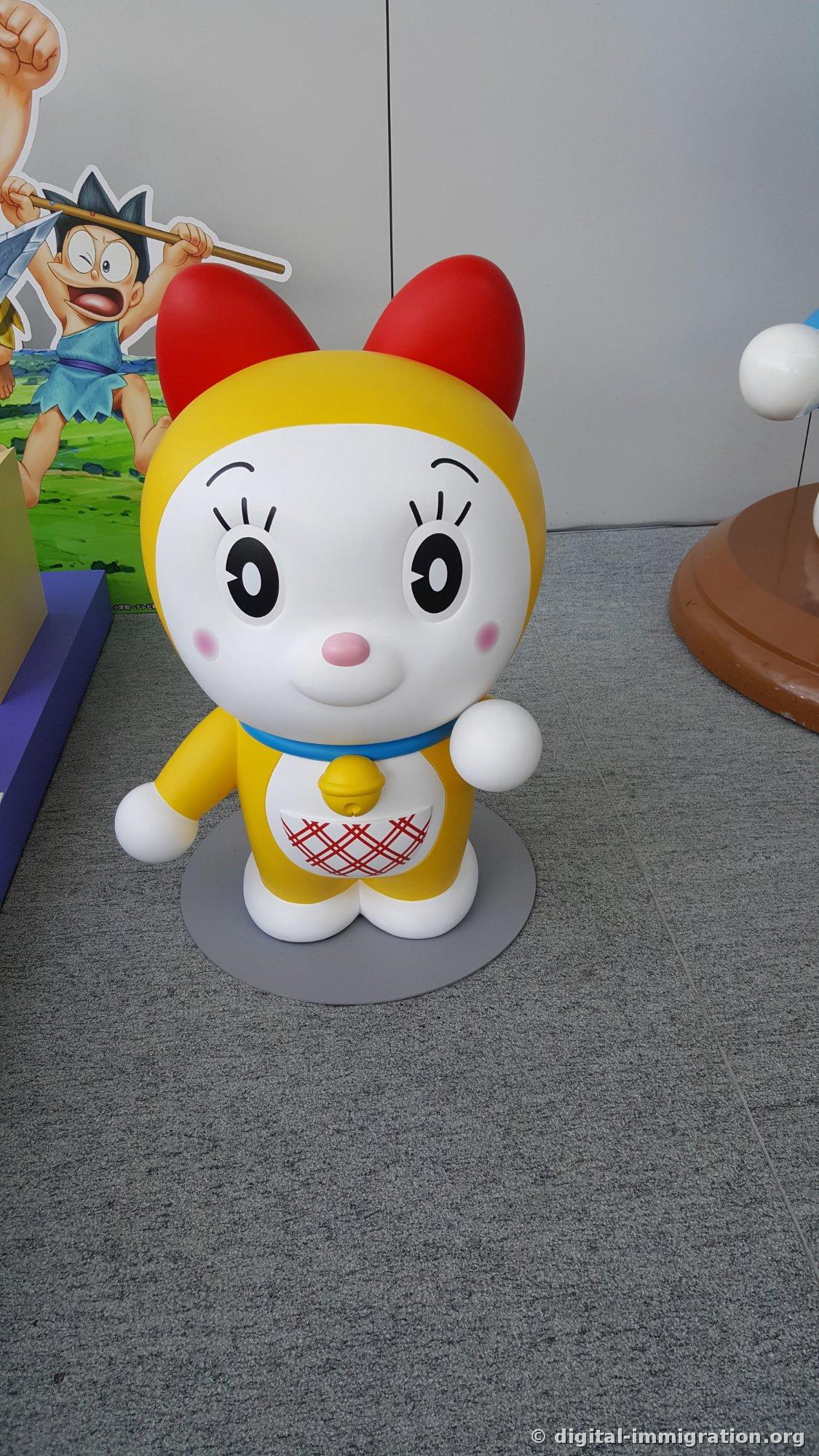
Right beside it stands a yellow Dorami. Many people just walk past after seeing Doraemon, but the Dorami figure actually has a much better expression. Behind it, there are also standees of theatrical release characters.
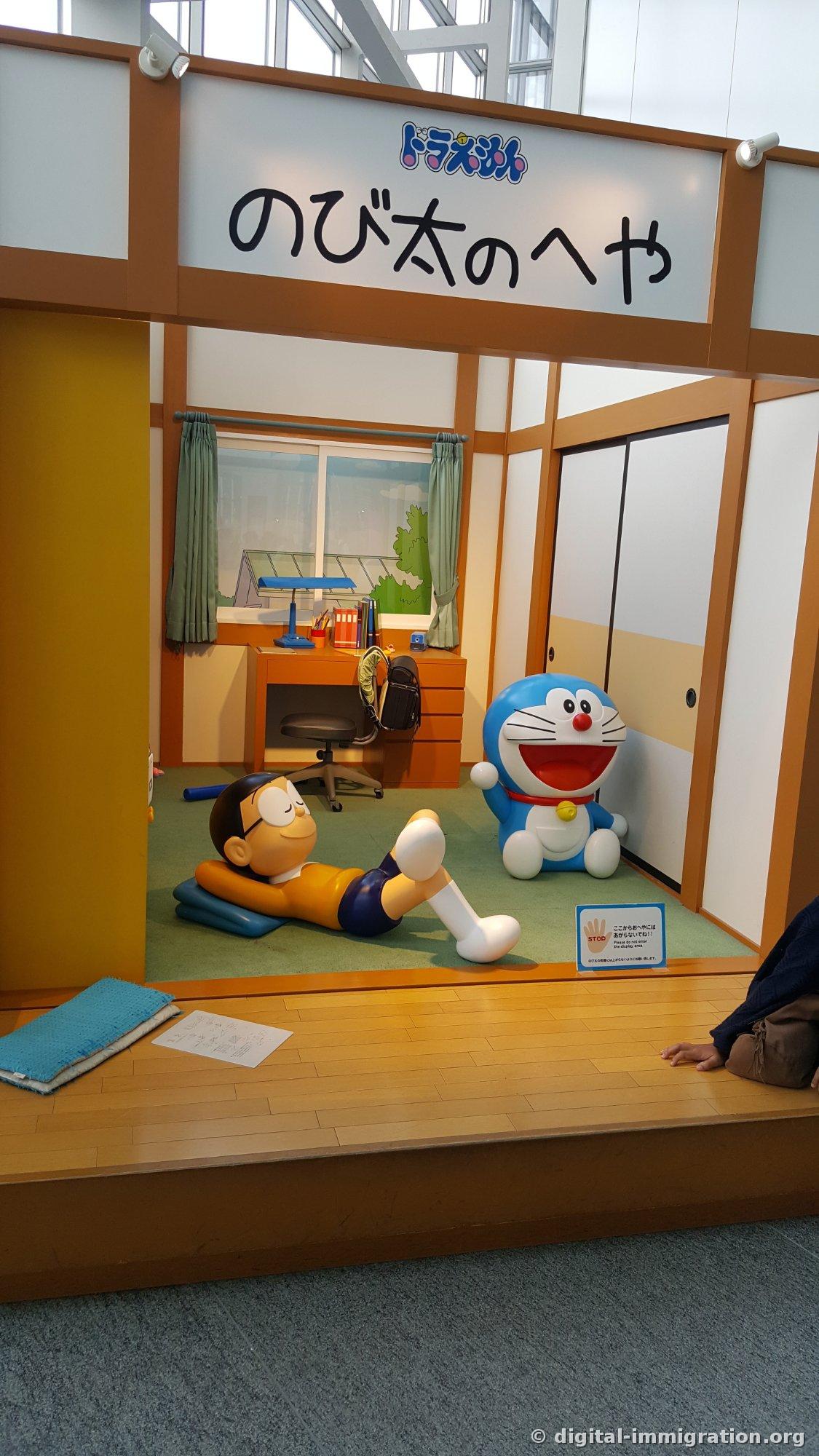
The place where I lingered longest was the life-size recreation of "Nobita's Room." In the tatami room is a desk, a randoseru schoolbag, and a desk lamp all just like in the manga, and there's Gian napping and Doraemon sitting beside him. You can't enter the room—there's a STOP sign at the edge of the floor—instead you sit on the edge and take photos. I sat there for a while watching children take off their shoes and wait in line for their turn. Families living in Tokyo come here on weekends just for this one room.
Shin-chan Figures and Seasonal Limited Café
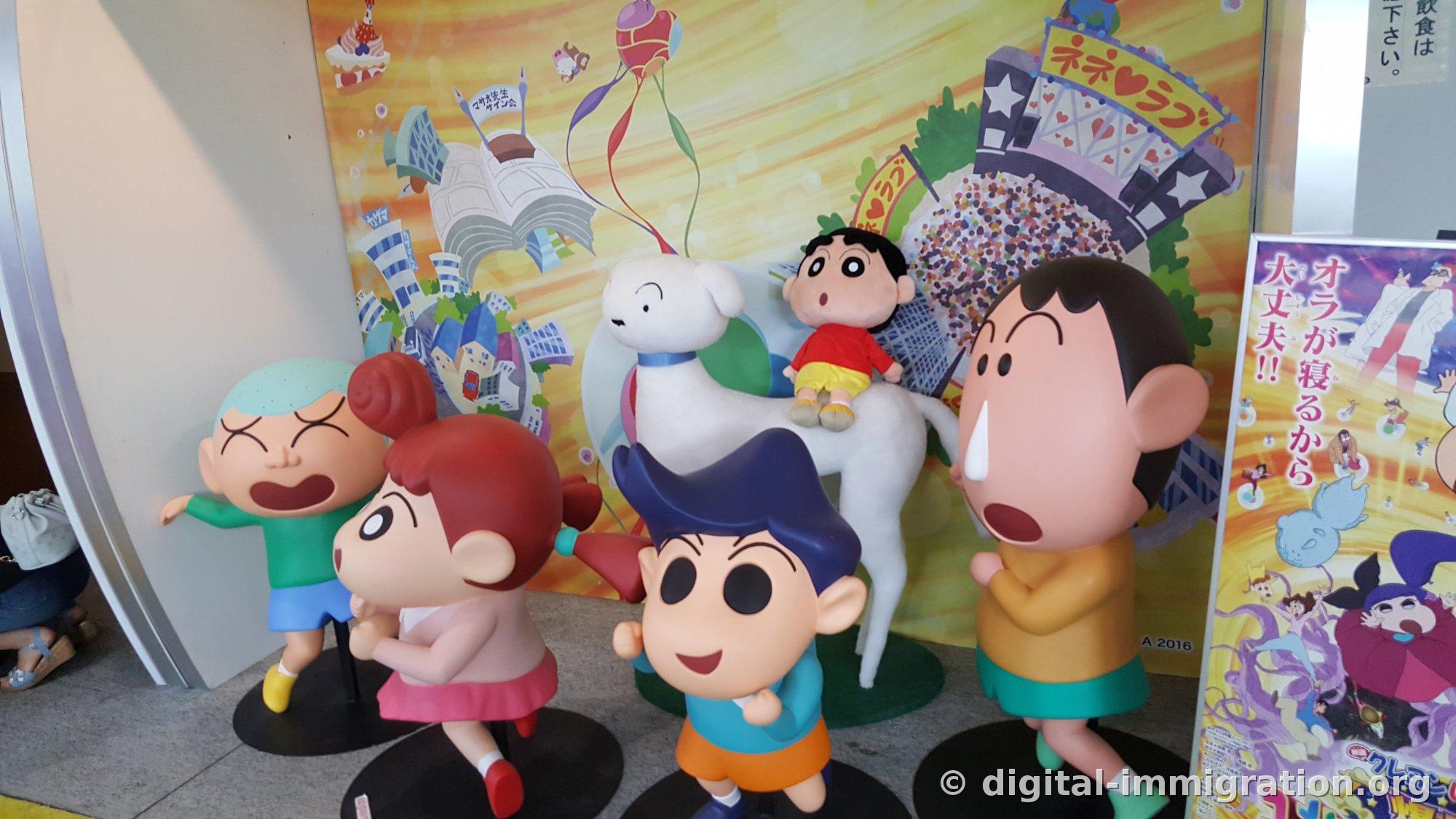
On the opposite side are Crayon Shin-chan characters gathered together. Himawari, Nene, Masao, and Boubou—each has a different expression, so you find yourself examining each one. The background artwork has "A 2016" stamped on it, which tells you this setup was created for the theatrical release that year.
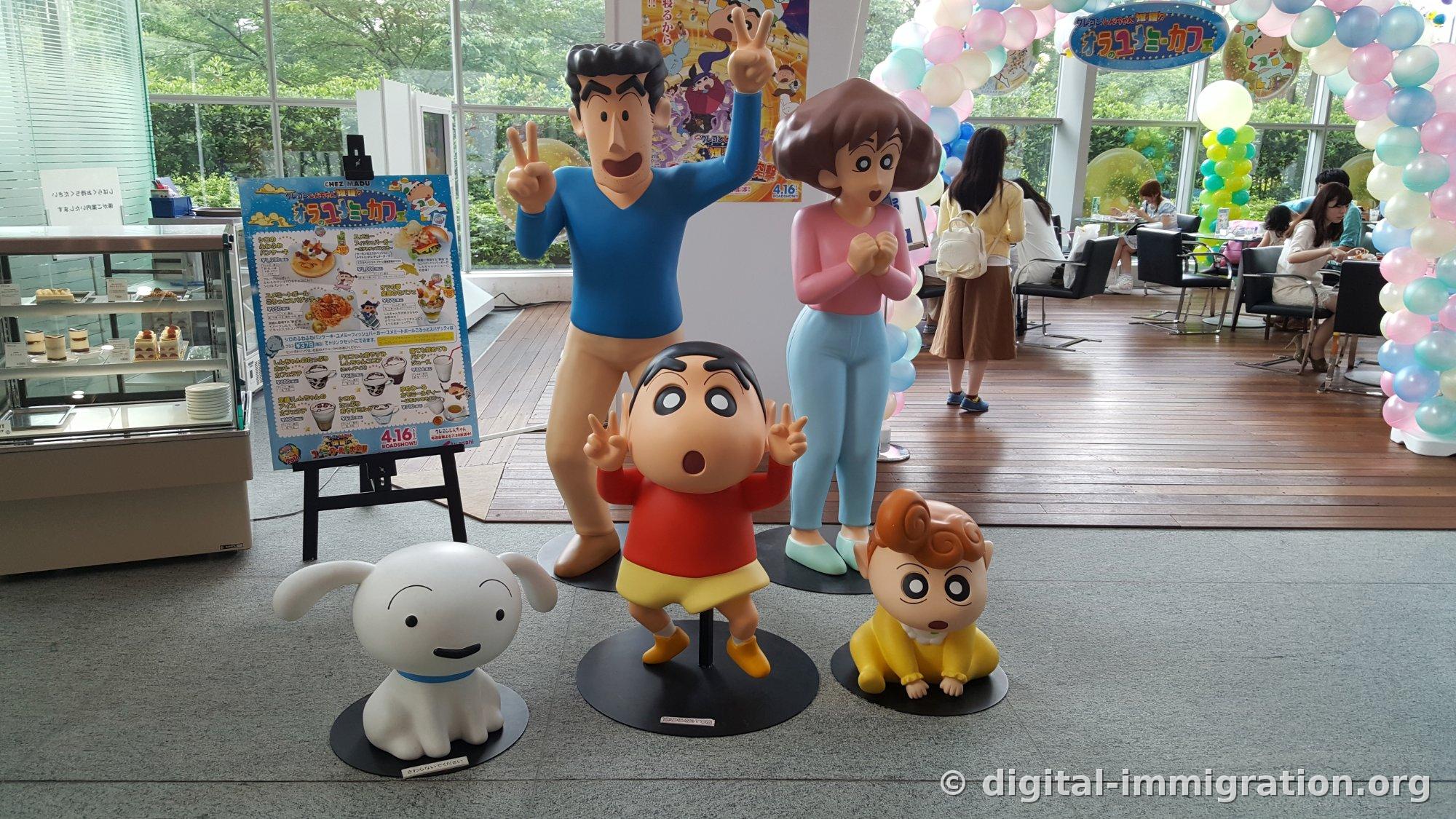
In front of the interior café is a separate Shin-chan family set—Shinnosuke, Misae, Shinnosuke, Himawari, and Shiro, five in total. The easel menu board placed beside it indicates this café is a seasonal limited collaboration timed with the theatrical release (April 16). The menu had items like pancakes, burgers, pasta, and parfaits with prices in the high hundreds to low thousands of yen. However, since the collaboration café changes completely each season, don't expect the menu I saw to still be there now. I recommend checking in person before your visit.
The Music Station Staircase Set
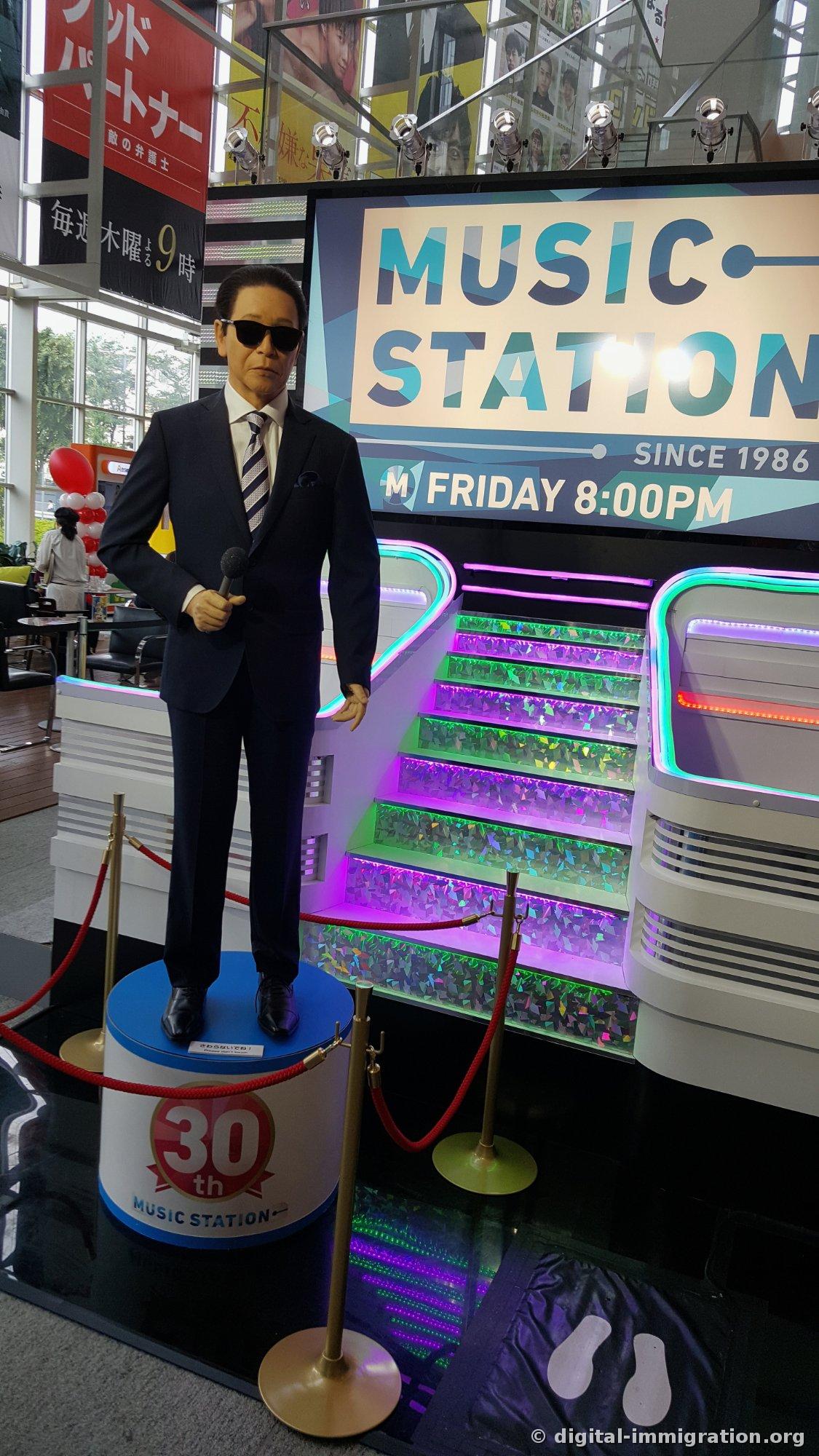
In one corner of the lobby sits an entire MUSIC STATION 30th anniversary set. The hologram-material staircase has LEDs lit inside, so the colors actually change. In front of it stands a life-size figure of a host holding a microphone, with a small "Please don't touch" sign on the pedestal. The screen reads SINCE 1986 / FRIDAY 8:00PM, which is this program's broadcast time. Footprints are marked on the floor, so if you stand there and take a photo, the staircase becomes the background. Since the indoor area is dark, when shooting with a phone, the LEDs are easy to blow out—lowering the exposure by one stop makes the staircase colors pop.
Outside the Building — Mori Garden and Arena Events
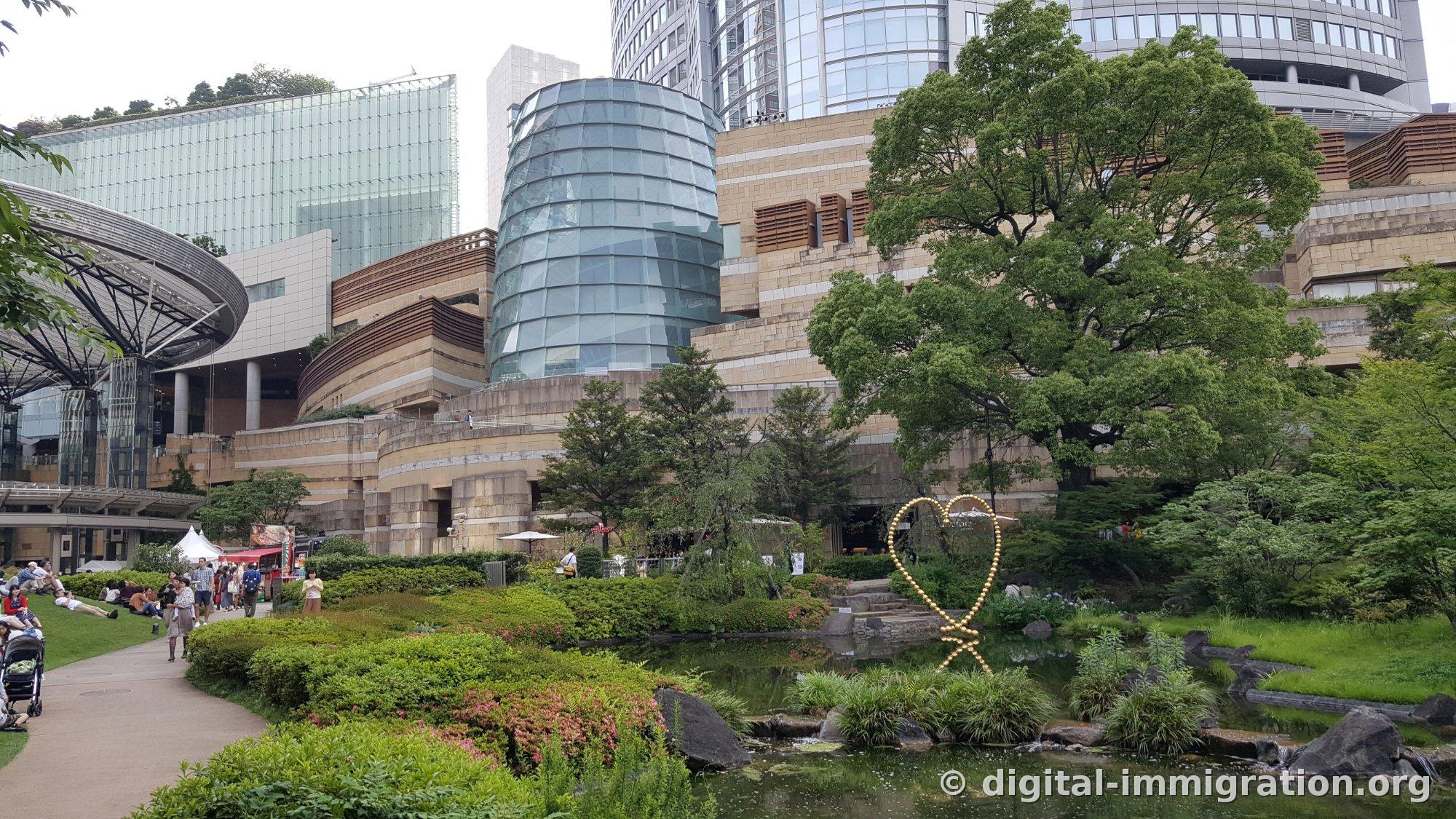
The headquarters building connects directly to the Roppongi Hills grounds. Exiting the broadcasting station and turning left brings you to Mori Garden, which has a pond, koi fish, and a lawn where people just lie around. Above it, a glass cylindrical building and tower overlap in view. I've always found it odd yet charming that such a traditional Japanese garden sits right in the middle of Tokyo's most expensive land. There's a gold heart-shaped sculpture by the pond, and lots of people buy something from the food truck and sit eating by the lawn.
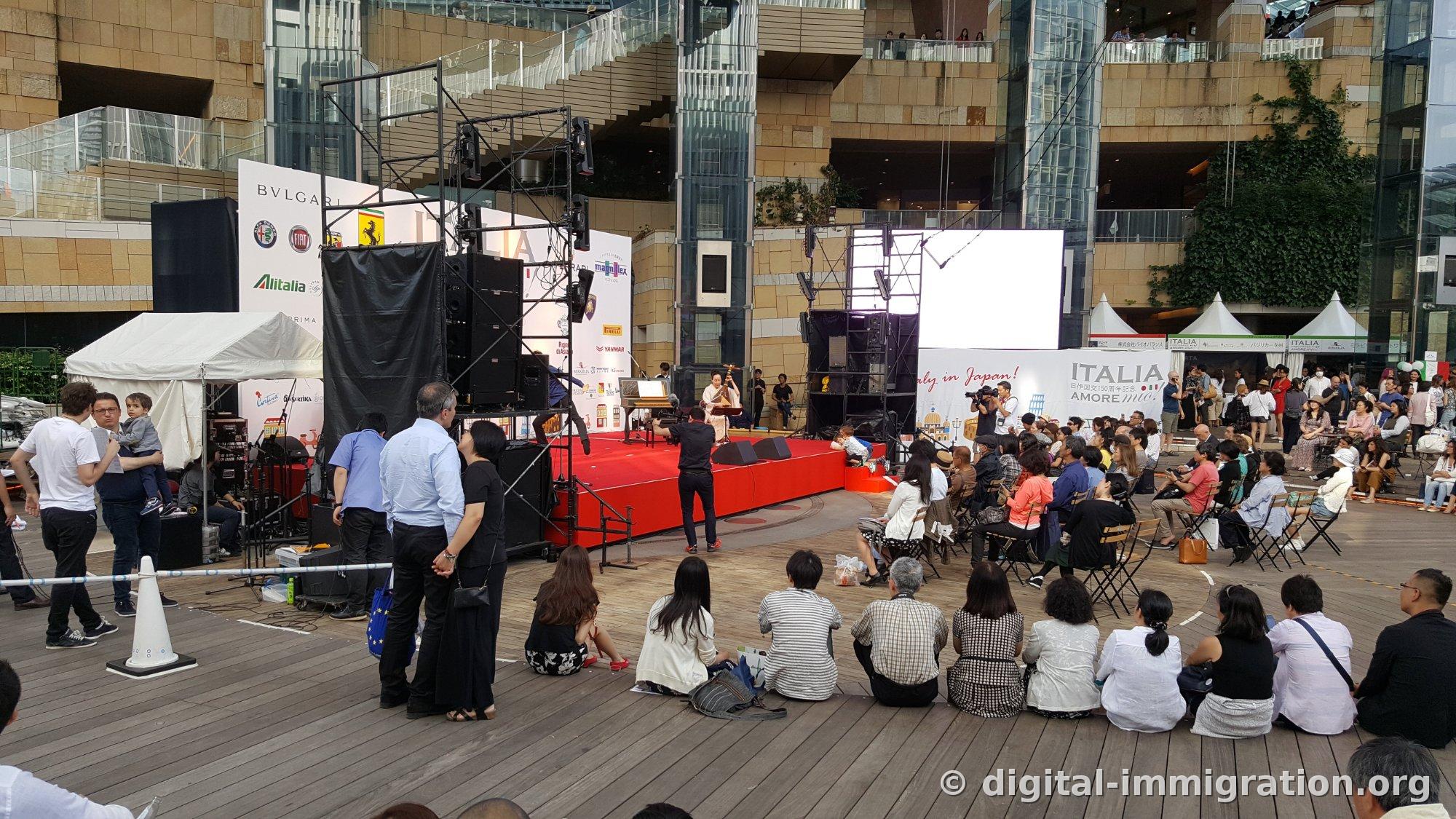
On the same day, the Roppongi Hills Arena was hosting an outdoor stage event. It was an Italy-related cultural event, with ITALIA AMORE mio! and a marking for the 150th anniversary of Japan-Italy relations on the backdrop, and logos for Alfa Romeo, Fiat, Ferrari, and Alitalia hung in a row. Yet on the stage itself was a musician in a kimono playing traditional Japanese string instruments. A cameraman was positioned on the red carpet stage, and the audience sat in chairs or just sprawled on the wooden deck. Arena events are mostly free, and the programming changes every weekend. Rather than planning around a specific schedule, you can just drop in if you see something happening and watch.
Location and How to Get There
Exit 1C of Hibiya Line Roppongi Station and walk through Roppongi Hills—it takes 5 to 7 minutes. You can also walk from Oedo Line Roppongi Station or Namboku/Oedo Line Azabu-Juban Station, but the Azabu-Juban side is uphill, which I don't recommend in summer. Just follow the signs within Roppongi Hills, though the complex interior structure means first-timers will definitely get lost once. I myself went up one floor too many in the Mori Tower basement and wasted five minutes. It's much more intuitive to exit at the outdoor deck level (toward Mori Garden) and walk outside.
Good to Know Before You Visit
- Only the first-floor atrium is free to enter—the inside of the studios and upper floors are off-limits to the public. If you go expecting to see a broadcasting production facility, you'll be disappointed.
- Exhibits change by season. The Doraemon Time Capsule is a permanent fixture, but the collaboration café and theatrical release figures are completely replaced.
- The souvenir shop (TV Asahi Shop) is inside the glass on the right side of the entrance. Doraemon and Shin-chan merchandise are the focus, but there's some broadcast program merchandise that's hard to find elsewhere in Tokyo.
- Operating hours and closures vary by season, so check at the location or official information before visiting. I went without checking and arrived late in the afternoon, missing the café's last order.
- Since the interior has a glass ceiling, backlighting is harsh during the day. For photos of the figures, late morning through midday was most consistent.
If it's just two adults, budget 30 minutes; if you're bringing children, plan on an hour. Kids don't want to leave Nobita's Room. If you stop here before spending money on the Roppongi Hills observation deck, you'll have a little extra in your daily budget.
Read next
- From Akihabara's Chuo-dori to the Kanda River: A Record of Tokyo's Electronics District Revisited Multiple Times
Tokyo's Akihabara is a neighborhood where it's hard to say you've seen everything in a single visit. I've come multiple times across different seasons, and each time the signs chan…
Tokyo · Akihabara - Buying a Single ¥300 Year-End Jumbo Lottery Ticket at Nishi-Ginza Chance Center in Tokyo
Exit from the Hibiya exit of Tokyo's Shimbashi Station, walk toward the elevated highway for about three minutes, and suddenly you'll see a line of people stretching along the side…
Tokyo · Nishi-Ginza Chance Center - Ueno Ameyoko, the real magic starts after sunset — an evening walk from the Okachimachi Gate to Ueno Station
Every time I come to Tokyo, my feet find their way to Ueno Ameyoko (アメ横) without fail. This time I entered from the Okachimachi side and worked my way toward Ueno Station. I've met…
Tokyo · Ameya Yokocho Market