Osaka Tenma Back Alley: Grilling Large Intestines Over a Bottle of Sake at Showa Taisha Horumon
After six in the evening, the alleyways of Tenma in Osaka's Kita Ward transform—starting with the scent. Charcoal smoke and sizzling fat blanket the entire alley. Today's destinati…
Osaka · Showa Taishu Horomon
After six in the evening, the alleyways of Tenma in Osaka's Kita Ward transform—starting with the scent. Charcoal smoke and sizzling fat blanket the entire alley. Today's destination: Showa Taisha Horumon. True to its name, it's a yakiniku restaurant that recreates the atmosphere of the Showa era (1926–1989), specializing in grilled intestinal meats. This isn't the refined, Tokyo-style yakiniku experience—it's the type where you tie on an apron, stand in front of the charcoal grill, and sweat through the meal as you cook.
Vintage Movie Posters Cover Every Wall Up to the Ceiling
The moment you step through the door, your eyes land on the wall above the counter. Vintage film posters—hand-drawn reproductions—hang there in abundance. Phrases like "Money Circulates Throughout the Land" are written vertically, flanked by exaggerated caricatures of actors. I didn't ask whether these are genuine vintage theater posters or contemporary recreations, but judging by the layers of grease, they've been hanging there for quite some time.
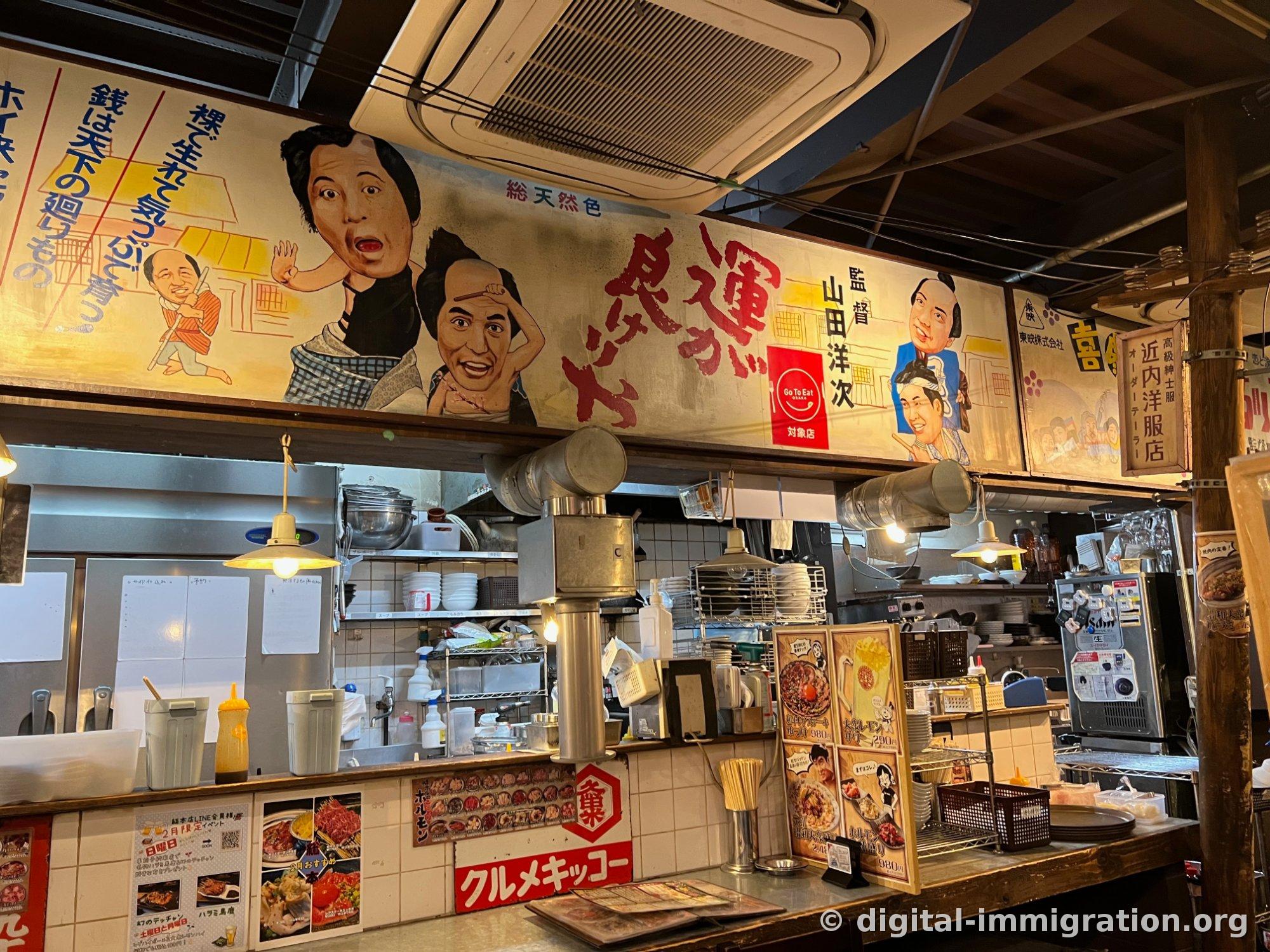
The kitchen is fully exposed. Plates are stacked in layers, and yellow sauce bottles and water jugs sit openly on the counter. Menu photos, laminated and weathered, cover one wall—I could make out two ¥980 sets and items like lemon soda at ¥290. Prices change seasonally, so it's best to confirm on location. Based on the LINE member promotions posted on one wall, they rotate daily specials as well.
Starting with Sake—Matsutake Takezake Gōkai
Beer is the default for yakiniku, I know, but intestinal meats pair better with sake. When beef fat coats your palate, beer feels like it's pushing through with carbonation, whereas sake gently dissolves and washes away the richness. What arrived today was Matsutake Takezake "Gōkai"—a popular junmai grade, not the premium ginjo that sake enthusiasts rave about. White ceramic flask, blue lettering, two cups. Moisture beading on the bottle's surface indicated it was served chilled.
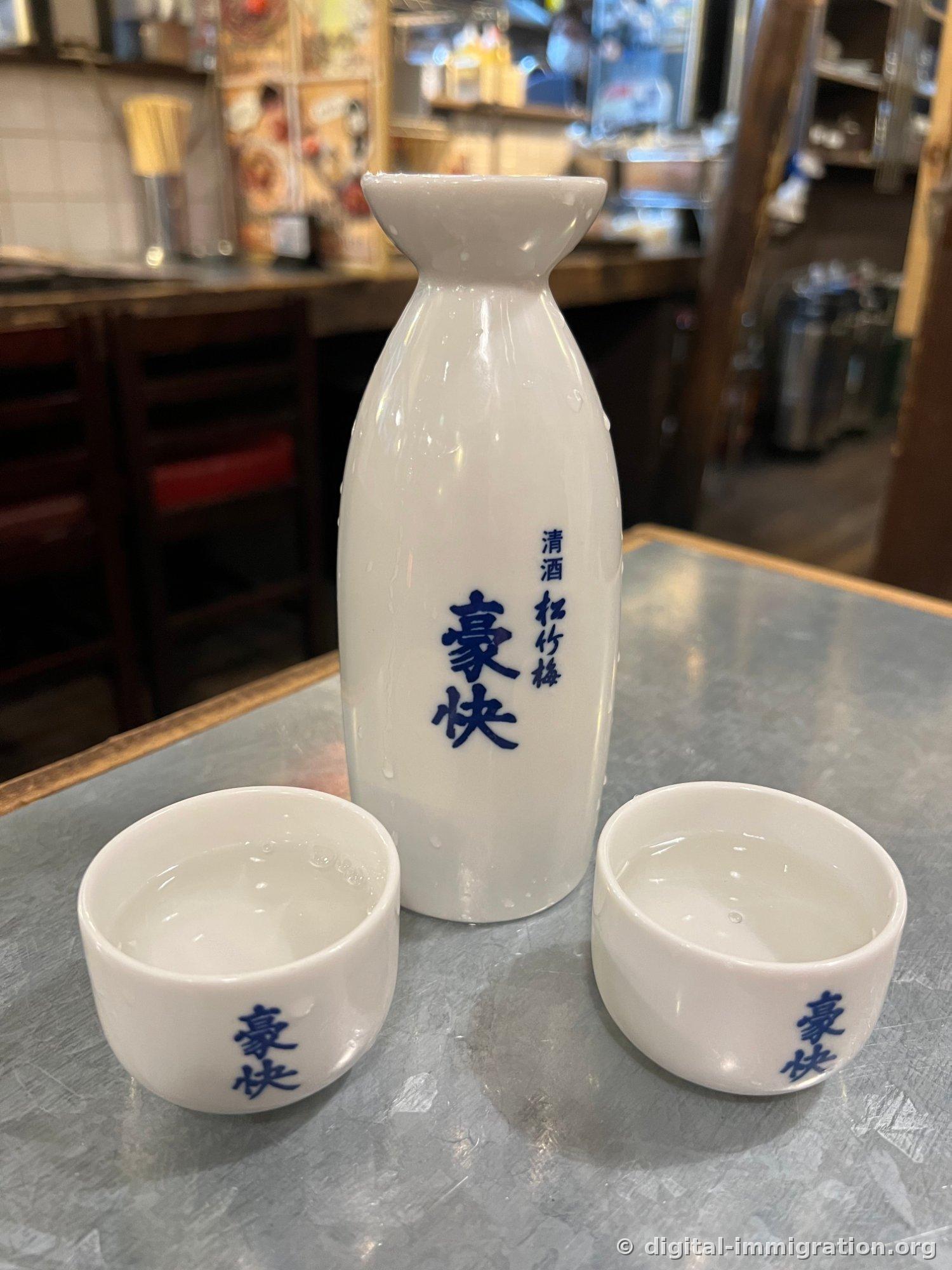
The flavor profile is unpretentious. Almost no sweetness, just a clean, sharp finish. On its own, it might feel austere, but paired with rich intestinal meats, that simplicity becomes its strength. The cups are small, so the bottle empties faster than you might expect—pace yourself accordingly.
Meat First Over Charcoal, Topped with Garlic Chips and Scallions
In the center of the table sits a circular charcoal grill. The grate is fine metal mesh, with charcoal glowing bright red below. The heat rises straight up, and thin meat sears in seconds.
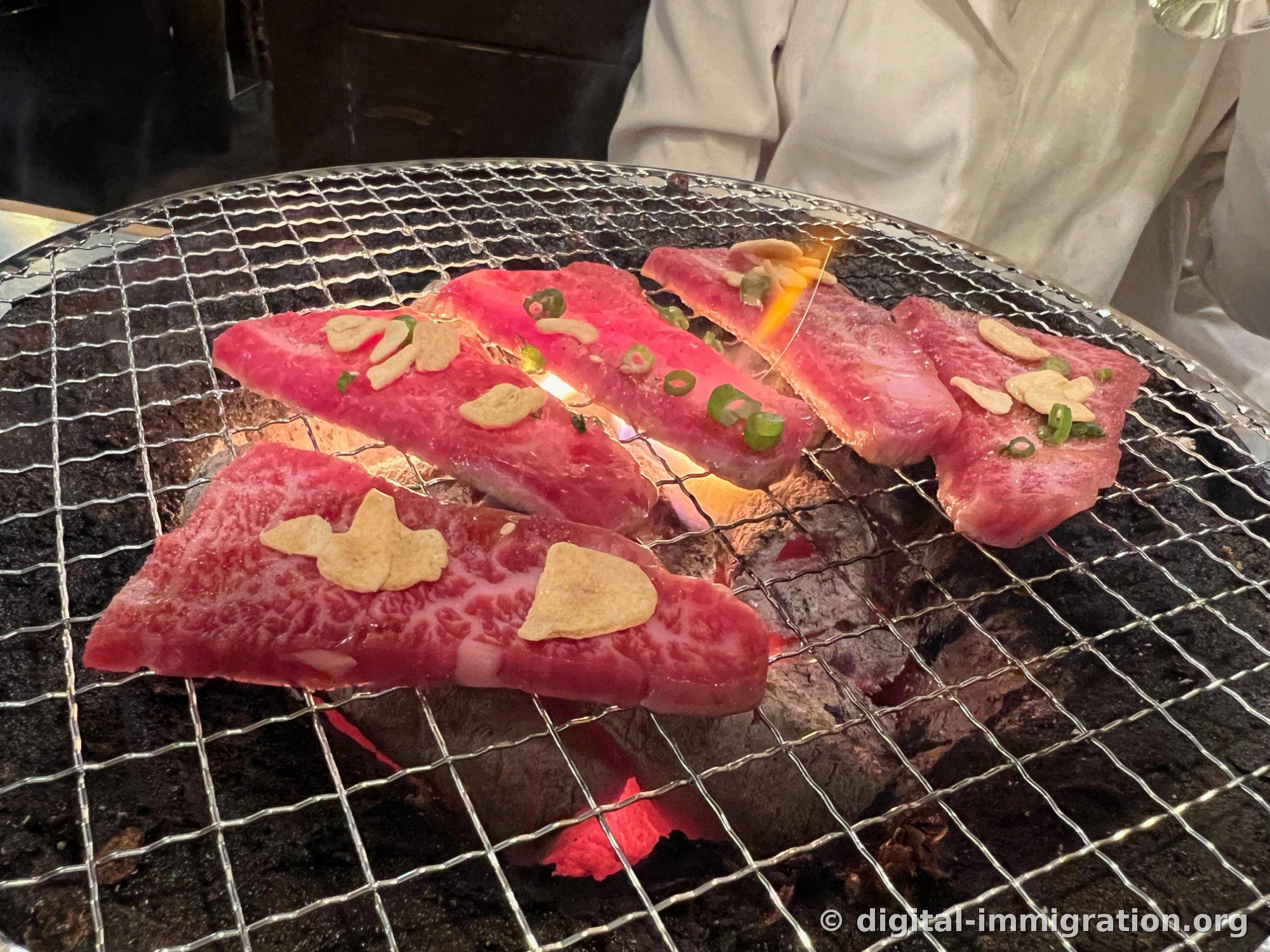
The meat arrives on the plate already dressed with garlic chips and thinly sliced scallions. As soon as you transfer it to the grate, the garlic hits the fat and its aroma floods out. This cut has generous marbling, so the fat renders quickly—and when it does, a column of flame shoots up from below. You can see the orange flames licking through the meat. If you don't flip immediately, the surface chars in an instant.
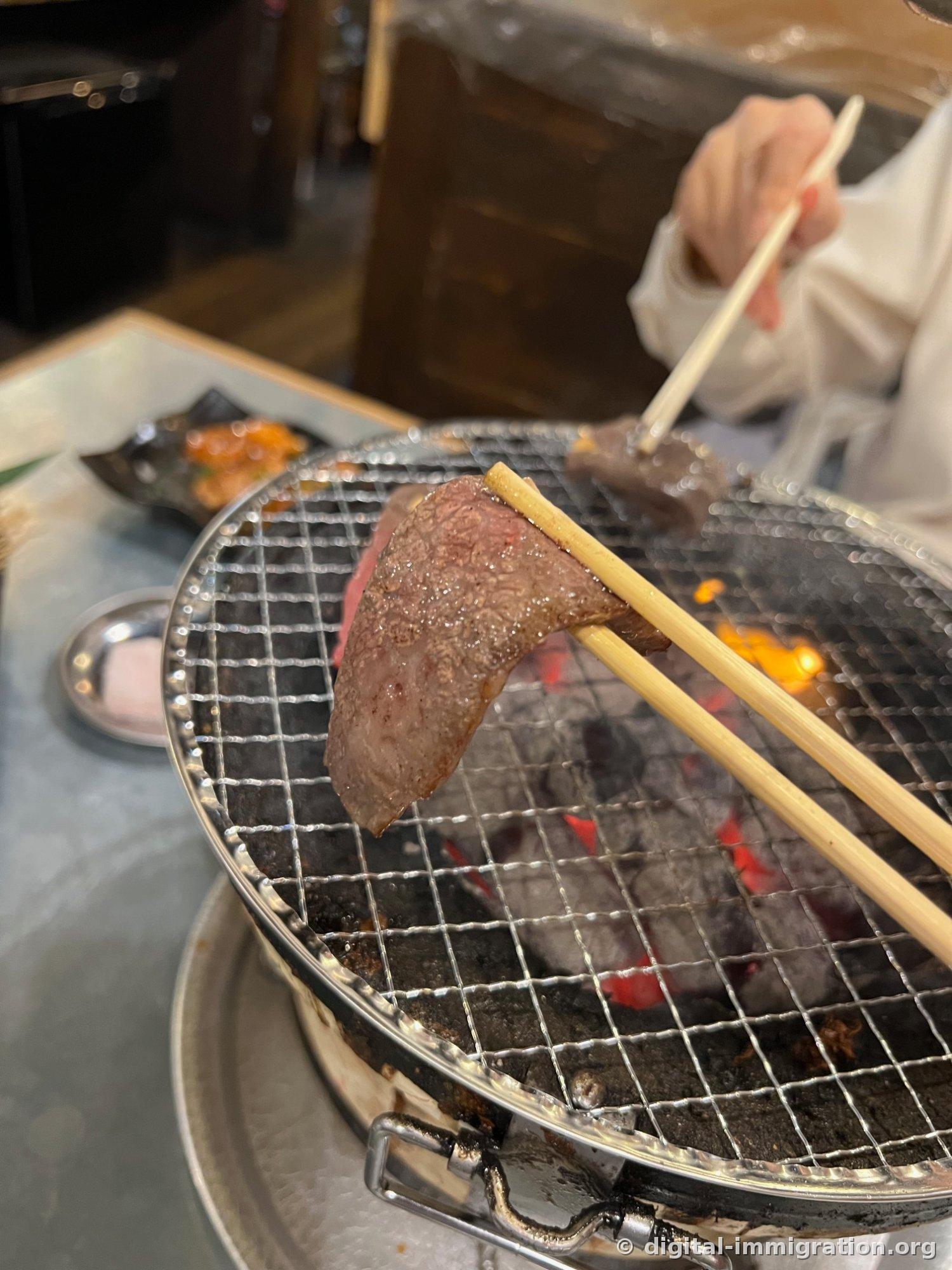
The first batch, I pulled too late—the edges were dry. From the second round onward, I flipped as soon as one side browned and pulled after just ten seconds on the reverse. Meat that comes off still rare inside is far superior. Using wooden tongs, you lift it—the surface gleams with rendered fat. Follow with a cup of sake. This rhythm is the heartbeat of the restaurant.
The Main Event: Large Intestines
If the meat is the warm-up, then horumon—specifically large intestines—is the main course. These arrive marinated in a dark soy-based sauce scattered with scallions. The cooking method is entirely different. With meat, you're in a race to pull it off quickly; with intestines, you're in a test of patience.
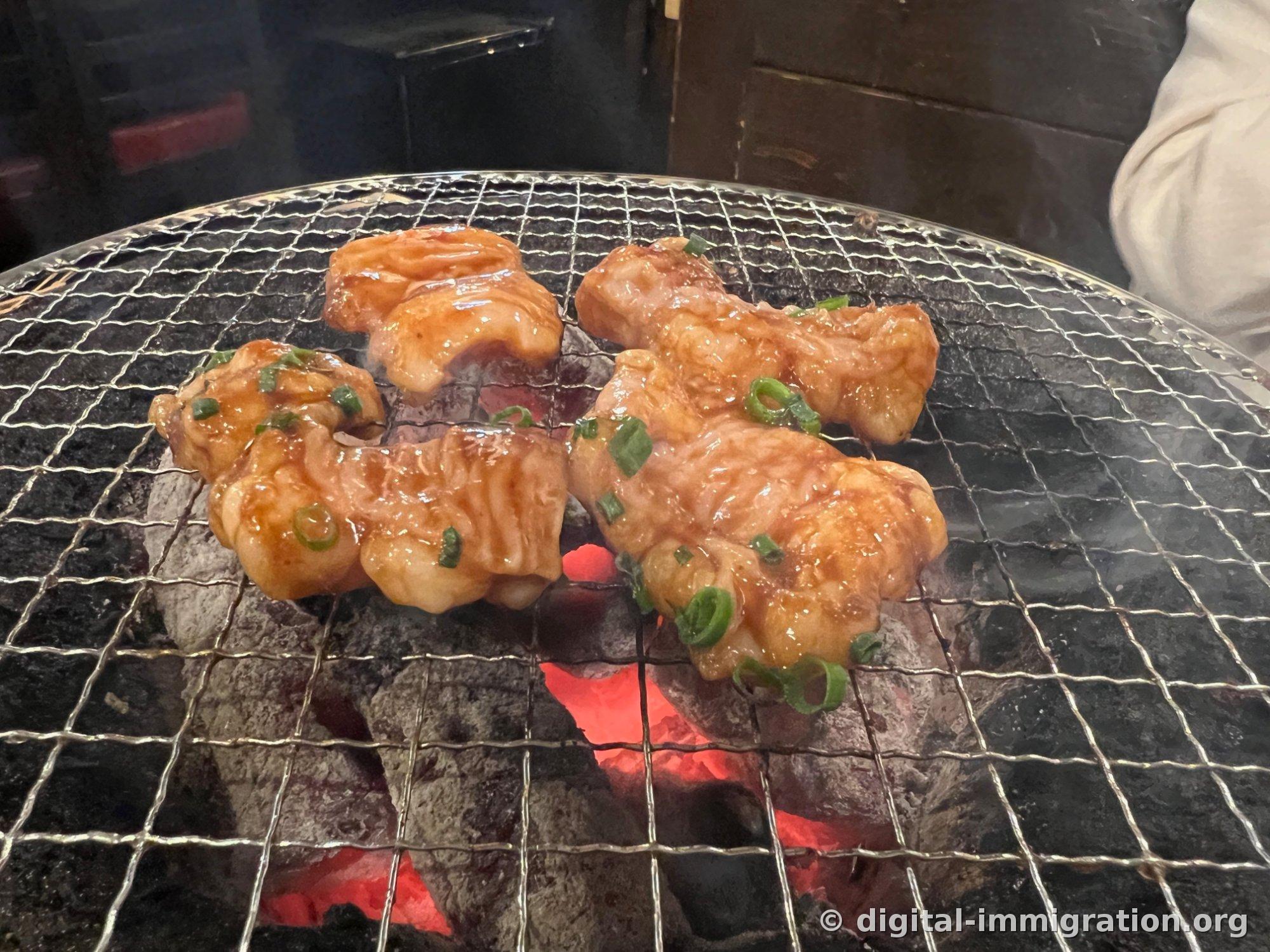
Large intestines are fatty by nature, starting out pale and plump. As they cook, they shrivel and their surface develops a lustrous sheen. As this happens, fat continuously drips onto the charcoal below, generating heavy smoke. Prepare your clothes accordingly. The key is cooking until the exterior becomes slightly crisp. Pull them off too early and the interior fat won't render properly—leaving them soft and greasy. Cook them too long and you'll have nothing but a hard shell. The signal is when the surface turns brown and the edges curl slightly.
Bite into one and the exterior crackles while hot fat bursts from within. Your mouth instantly coats with fat—the perfect moment to take a sip of cold Gōkai. The cold sake cuts through, washing away the fat's film. Intestines, sake, intestines. This combination is why we came, and it delivered exactly what we expected.
Location and Practical Tips
This place is in the Tenma area of Osaka's Kita Ward. It's within walking distance of Tenma Station on the JR Osaka Loop Line or Ogimachi Station on the Midosuji Subway Line. Because the neighborhood is packed with look-alike izakayas and yakiniku joints crowded into narrow alleys, it's faster to navigate by coordinates than by hunting for signage.
- Wear clothes you don't mind damaging. The charcoal grill sits exposed on the table, so smoke comes straight at you—especially when cooking intestines.
- The shop is cramped and tables are tight together. This isn't a place for a quiet meal. You'll hear everything from the next table over—and that's half the charm of eating here.
- Order sake from the start. If you wait until the end, you'll already be too full from all the meat.
- The photos on the wall menu look almost identical to what you'll receive. Even without reading Japanese, you can point and order.
- Prices, hours, and daily specials change, so check directly before visiting.
Stepping back out into the alley after paying, I caught the smell of charcoal clinging to my clothes. Tenma's night was just getting started—people spilled out from neighboring shops as if on cue. If you're hunting for a refined meal in Osaka, this isn't it. Save this place for nights when you want to breathe smoke, dodge splattering fat, and eat.
Read next
- From Akihabara's Chuo-dori to the Kanda River: A Record of Tokyo's Electronics District Revisited Multiple Times
Tokyo's Akihabara is a neighborhood where it's hard to say you've seen everything in a single visit. I've come multiple times across different seasons, and each time the signs chan…
Tokyo · Akihabara - Buying a Single ¥300 Year-End Jumbo Lottery Ticket at Nishi-Ginza Chance Center in Tokyo
Exit from the Hibiya exit of Tokyo's Shimbashi Station, walk toward the elevated highway for about three minutes, and suddenly you'll see a line of people stretching along the side…
Tokyo · Nishi-Ginza Chance Center - Ueno Ameyoko, the real magic starts after sunset — an evening walk from the Okachimachi Gate to Ueno Station
Every time I come to Tokyo, my feet find their way to Ueno Ameyoko (アメ横) without fail. This time I entered from the Okachimachi side and worked my way toward Ueno Station. I've met…
Tokyo · Ameya Yokocho Market