Osaka's Dotonbori, Glico Sign from the River — A Day of Cruising, Eating, and Walking
Exit Namba Station and walk for about five minutes, then the city suddenly gets loud. That's Osaka's Dotonbori. The noise of people, sizzling oil, and barking microphones all hit y…
Osaka · Dotonbori
Exit Namba Station and walk for about five minutes, then the city suddenly gets loud. That's Osaka's Dotonbori. The noise of people, sizzling oil, and barking microphones all hit you at once. I walked this riverbank twice in one day—once in daylight, once by boat at night. Same place, but once the sun sets, it becomes a completely different neighborhood.
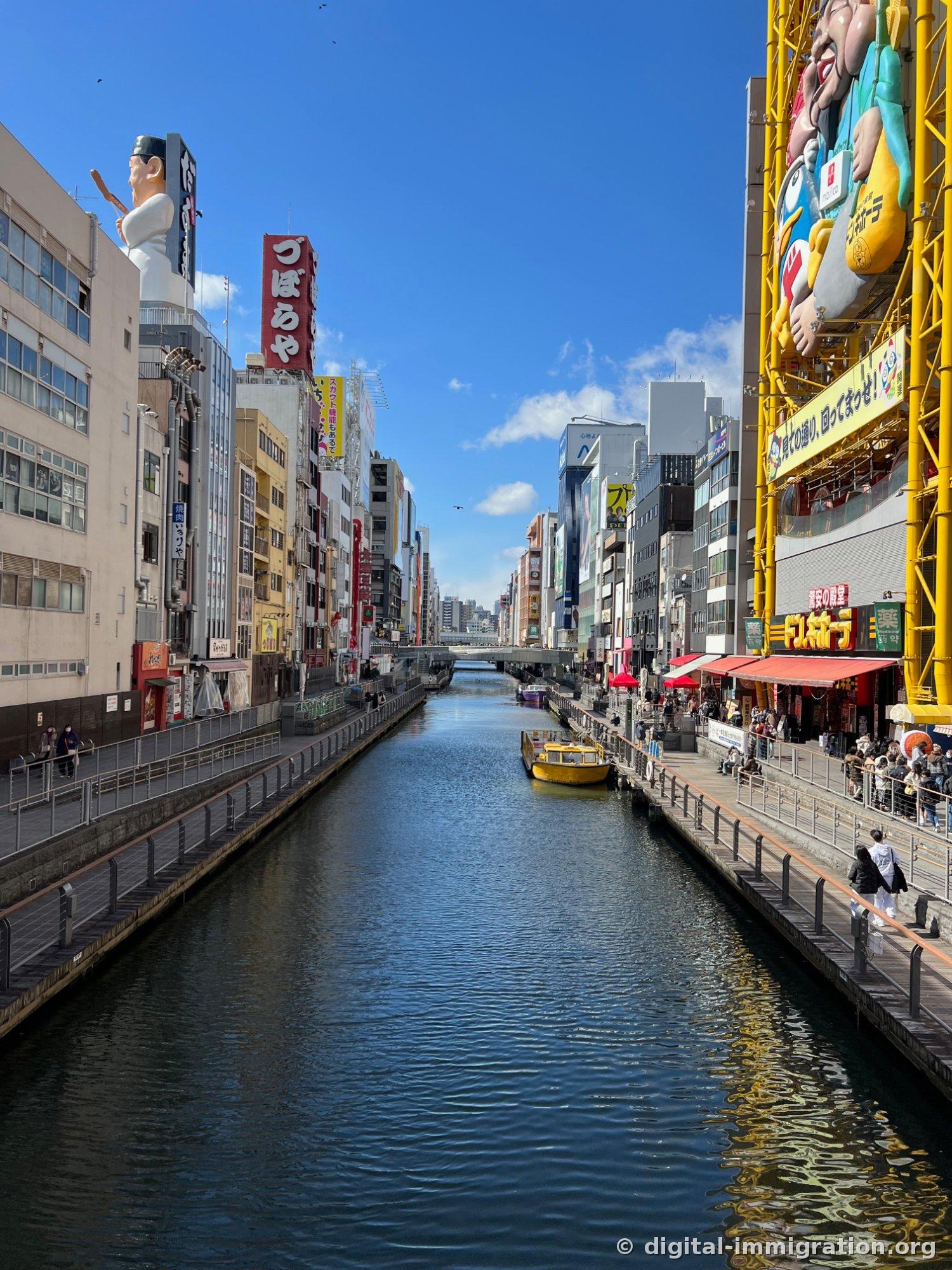
The river is narrower than you'd think. In photos it looks like the Grand Canal, but it's really just 20 meters across—both riverside paths combined takes only about 10 minutes to walk. Yet in that short stretch, signs are plastered everywhere like crazy. Zuboraya's blowfish sign on the left, Donki's yellow steel frame and ferris wheel on the right. First-time visitors end up with sore necks from staring up.
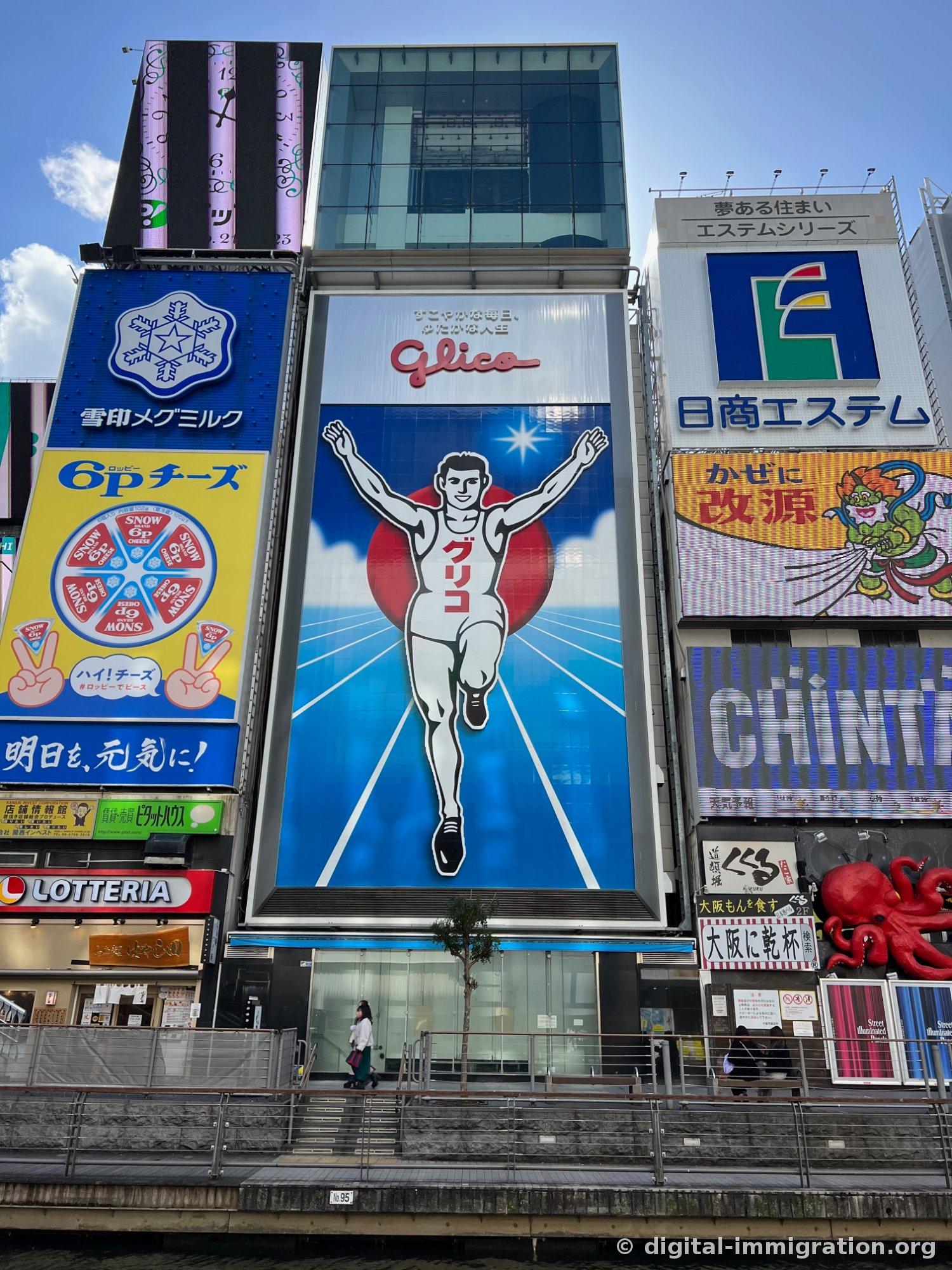
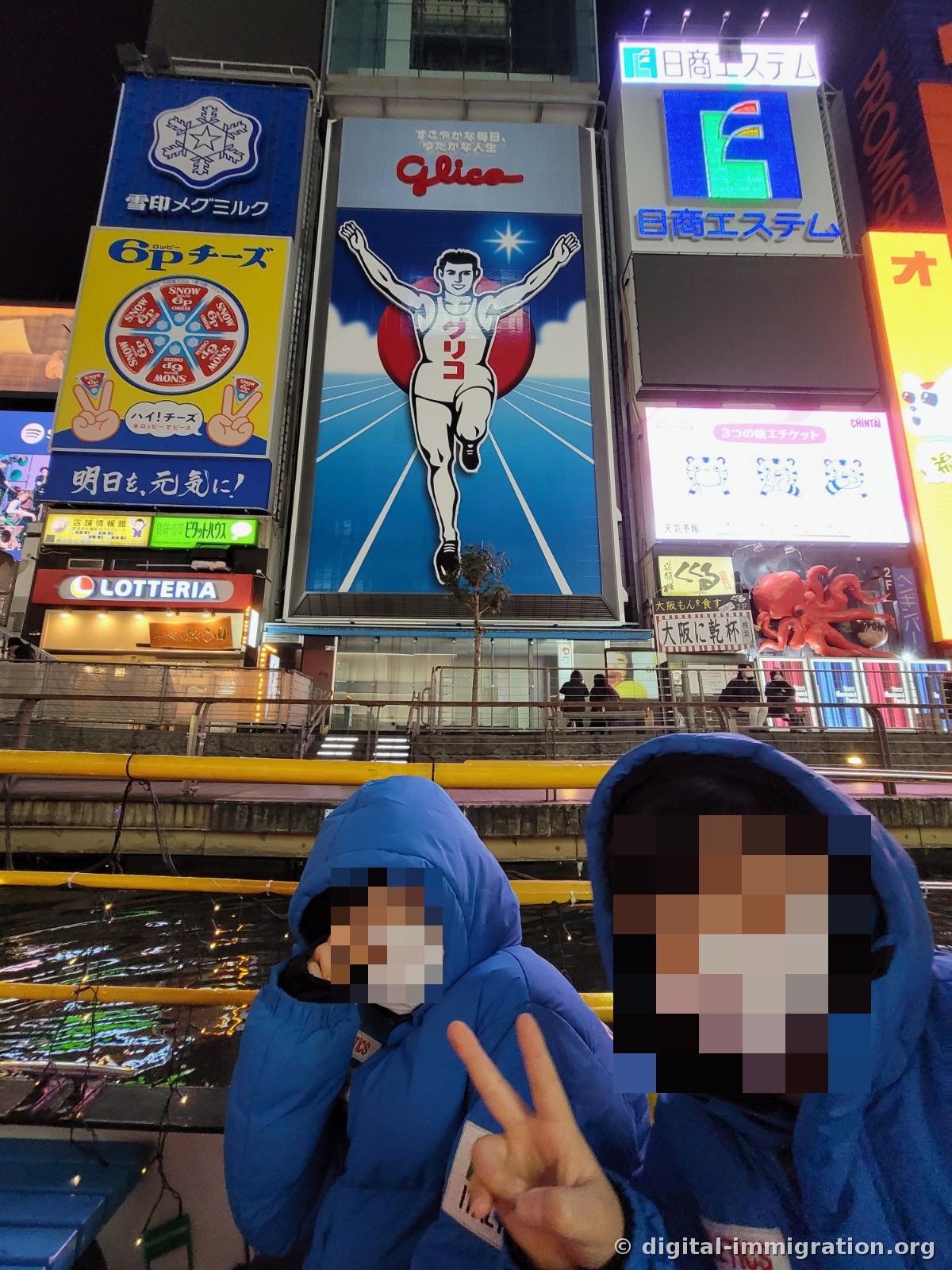
The Glico sign looks kind of dull in daytime. There's a reason everyone only posts night photos. Still, you need to come during the day to see the 6P Cheese sign and Lotteria next to it. The stairs beneath the signs are always packed, but there's at least some space during daytime.
Within 100 Meters of the River, You Get All of Osaka's Famous Foods
Dotonbori's food isn't so much diverse as densely packed. Takoyaki, okonomiyaki, kushikatsu, ramen, horumon. All five fit within a 100-meter radius.
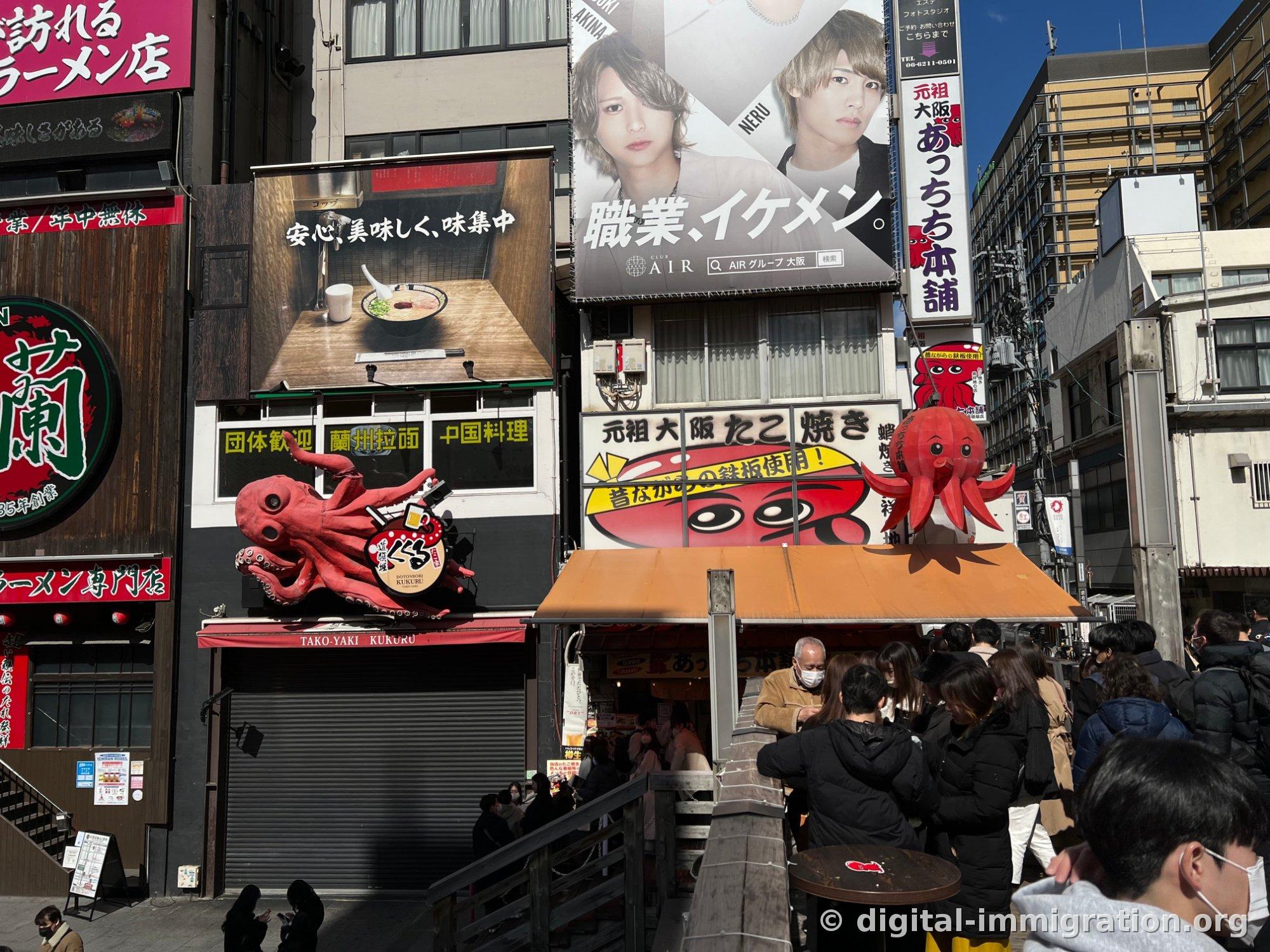
There's a takoyaki shop every ten paces, but honestly the taste difference isn't huge. The difference comes from who's cooking and how long you wait. Standing in front of the street stall griddle watching the batter puff up is fun in itself.
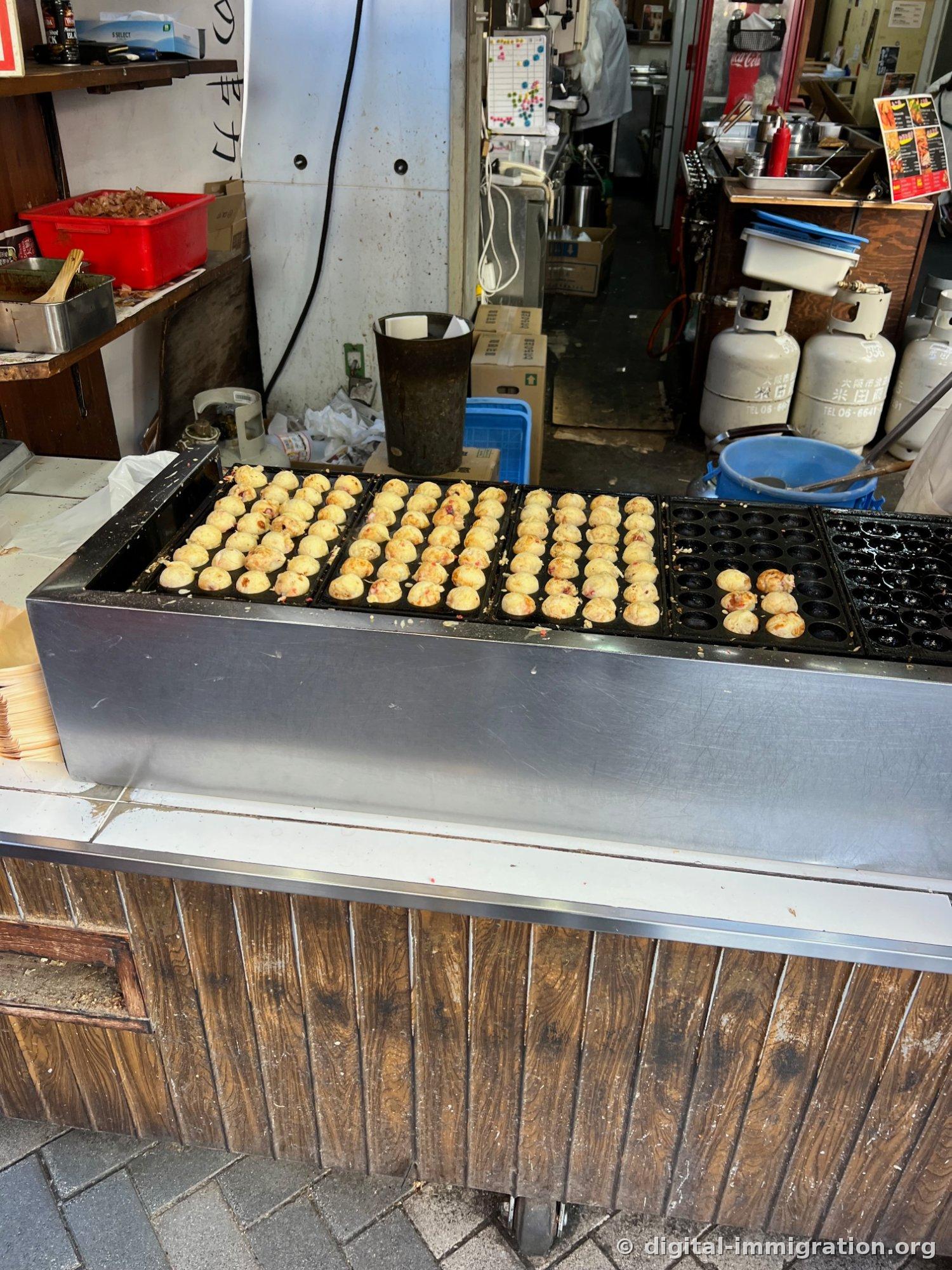
Fresh takoyaki is genuinely scorching. I thought only the outside was cool, popped a whole one in my mouth, and burned my palate. The shop name is literally "Atchichi" (scalding hot) for a reason. I'd recommend letting half of them cool down first.
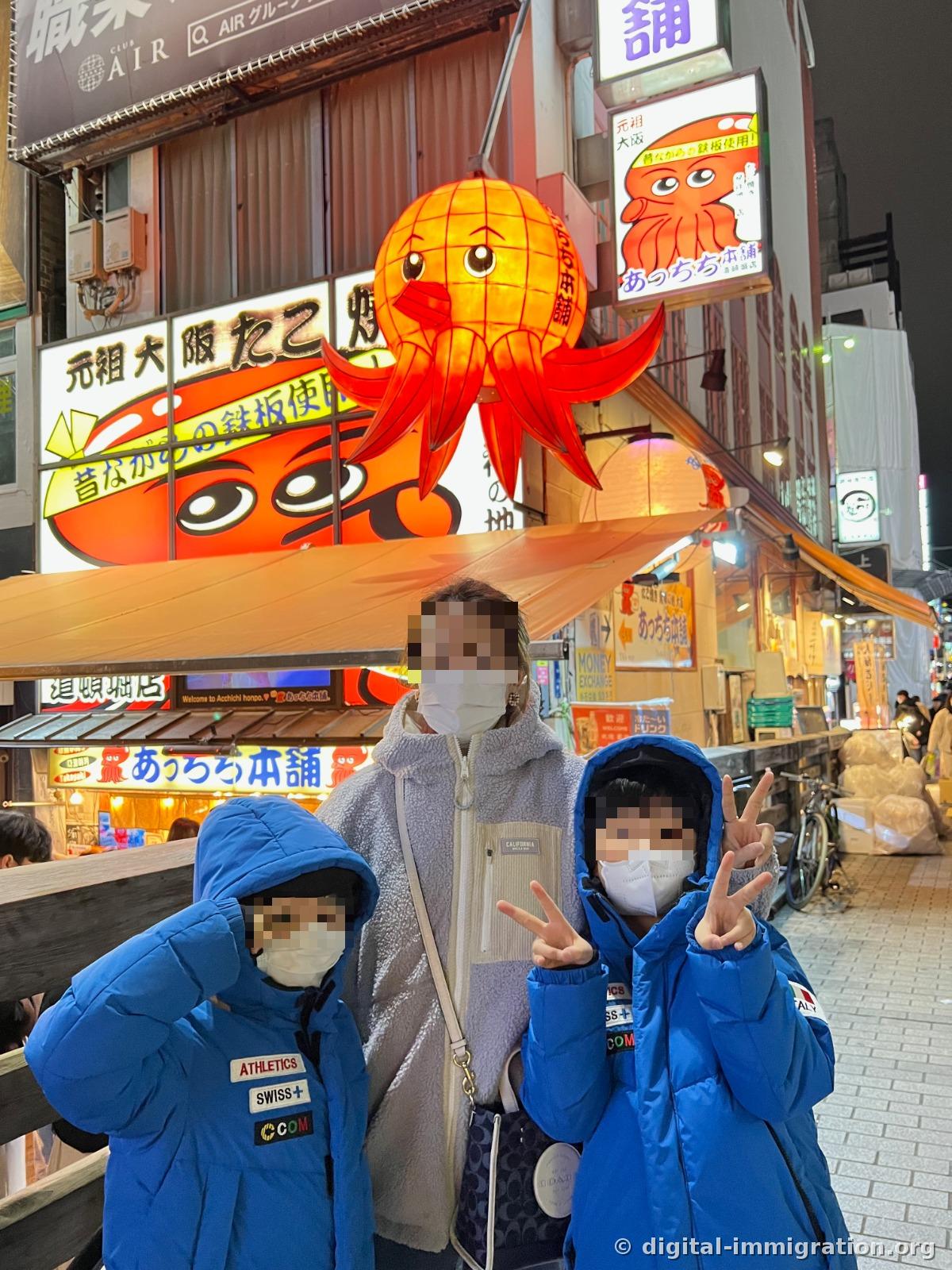
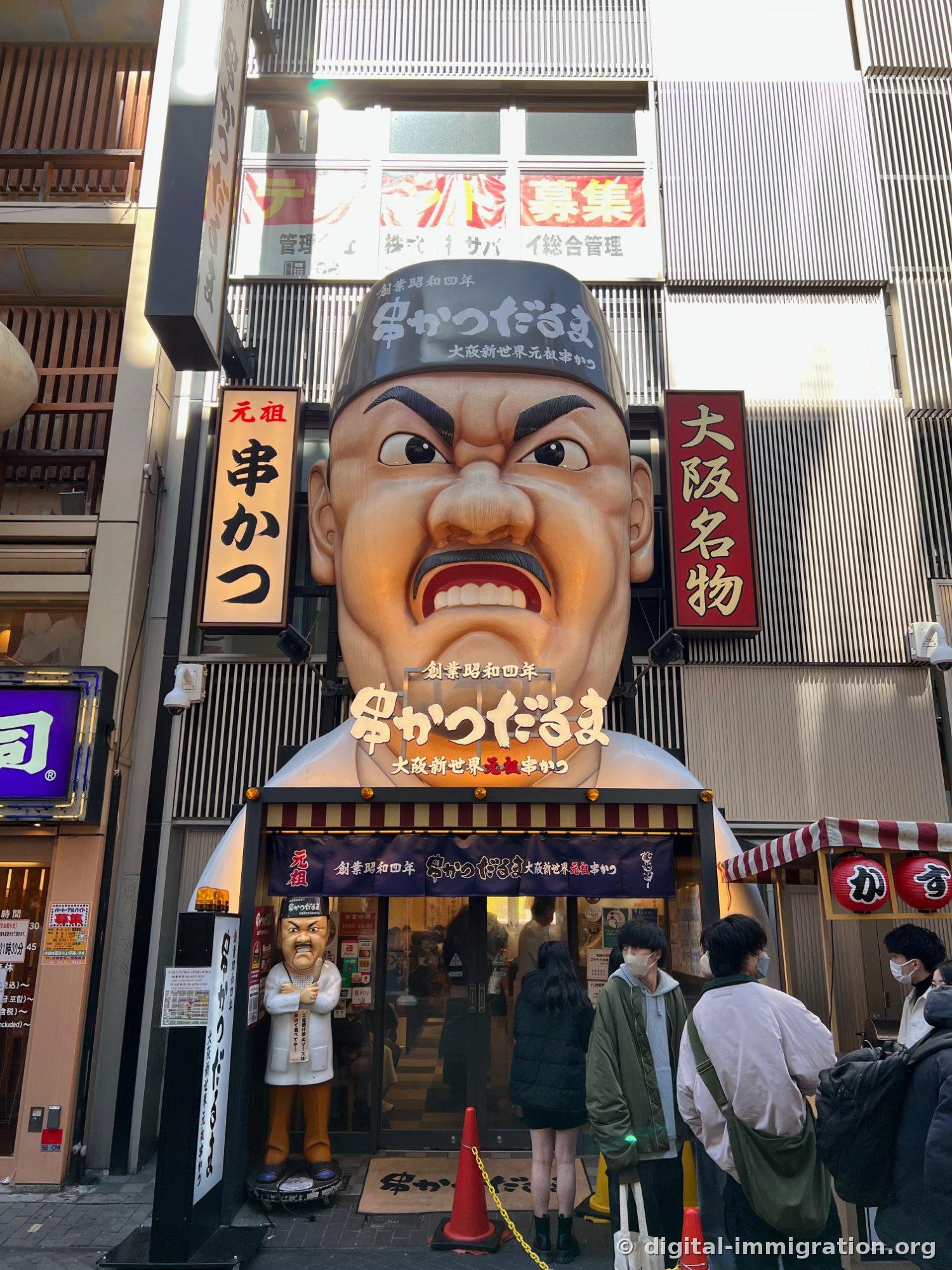
Kushikatsu's most eye-catching spot is Daruma's main branch. The entire building is covered with angry old man faces—you can't miss it. One thing to remember: no double-dipping in the sauce. It's because they use communal sauce bowls for hygiene, and if you unknowingly double-dip, the guy at the next table smiles and waves you off. Cabbage is free, so dip that and eat it with sauce instead.
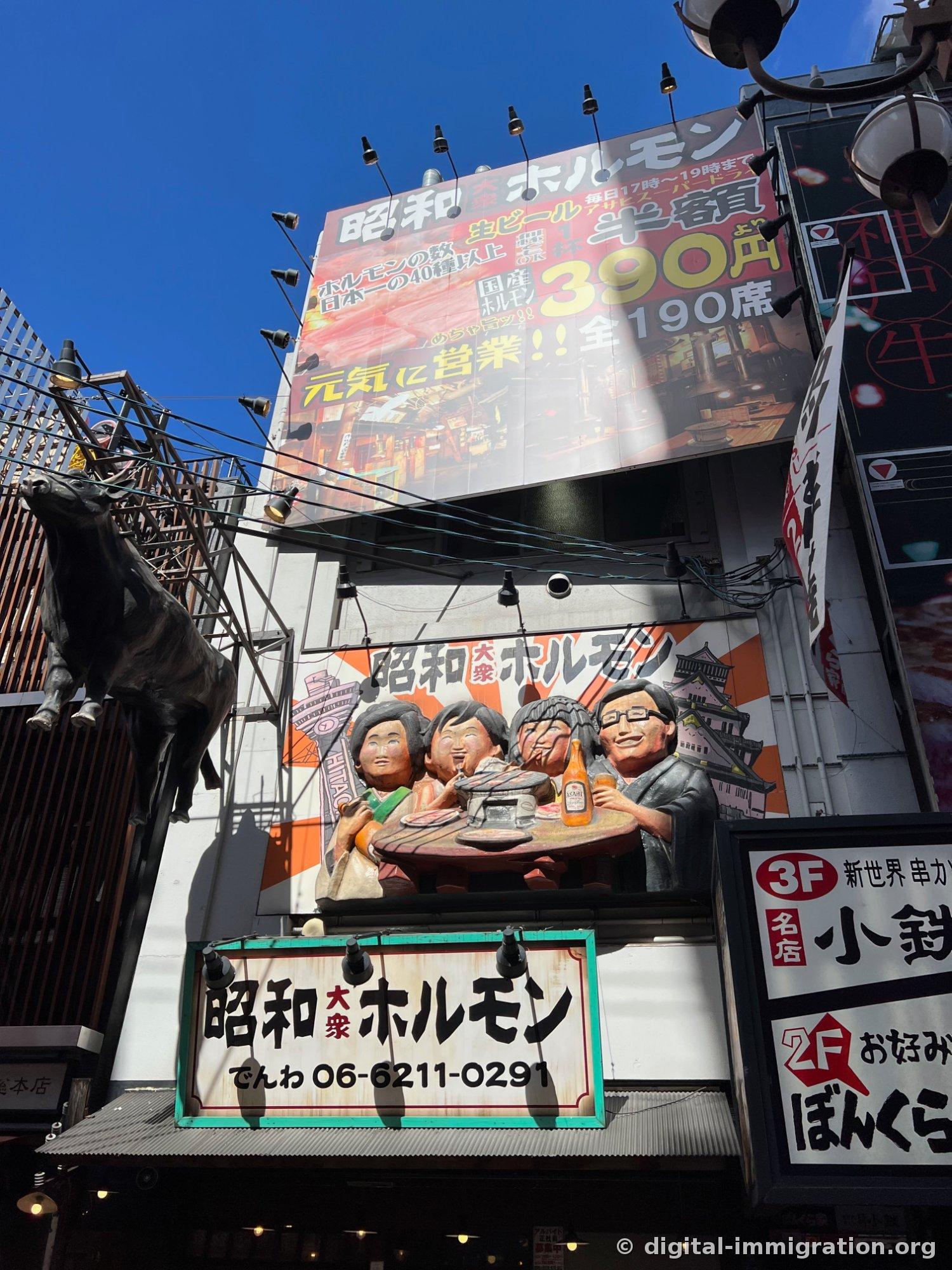
This horumon shop sign felt the most Osaka to me. They plaster prices in giant letters and hang a cow sculpture off the building. The sign even advertises "draft beer half price 5-7 PM." Since menus and prices change, it's safer to check the board at the entrance before going in.
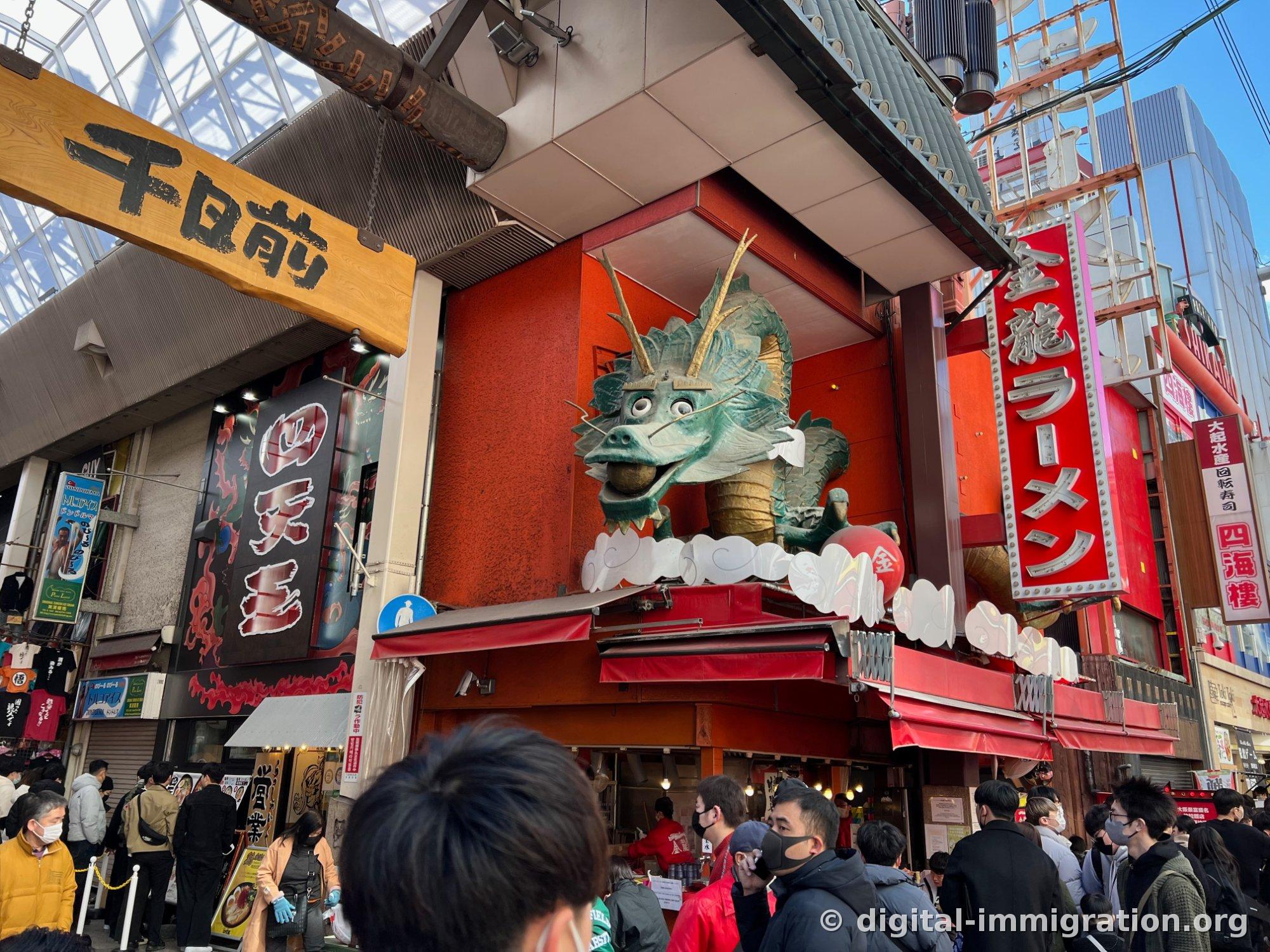
At Kinryu Ramen, seating is on tatami platforms. You remove your shoes, climb up, slurp your noodles, and leave. Kimchi and Chinese chives come in bowls placed unlimited—convenient for Korean palates. But if you have lots of luggage, the tight space is problematic.
An Evening Sitting at the Griddle
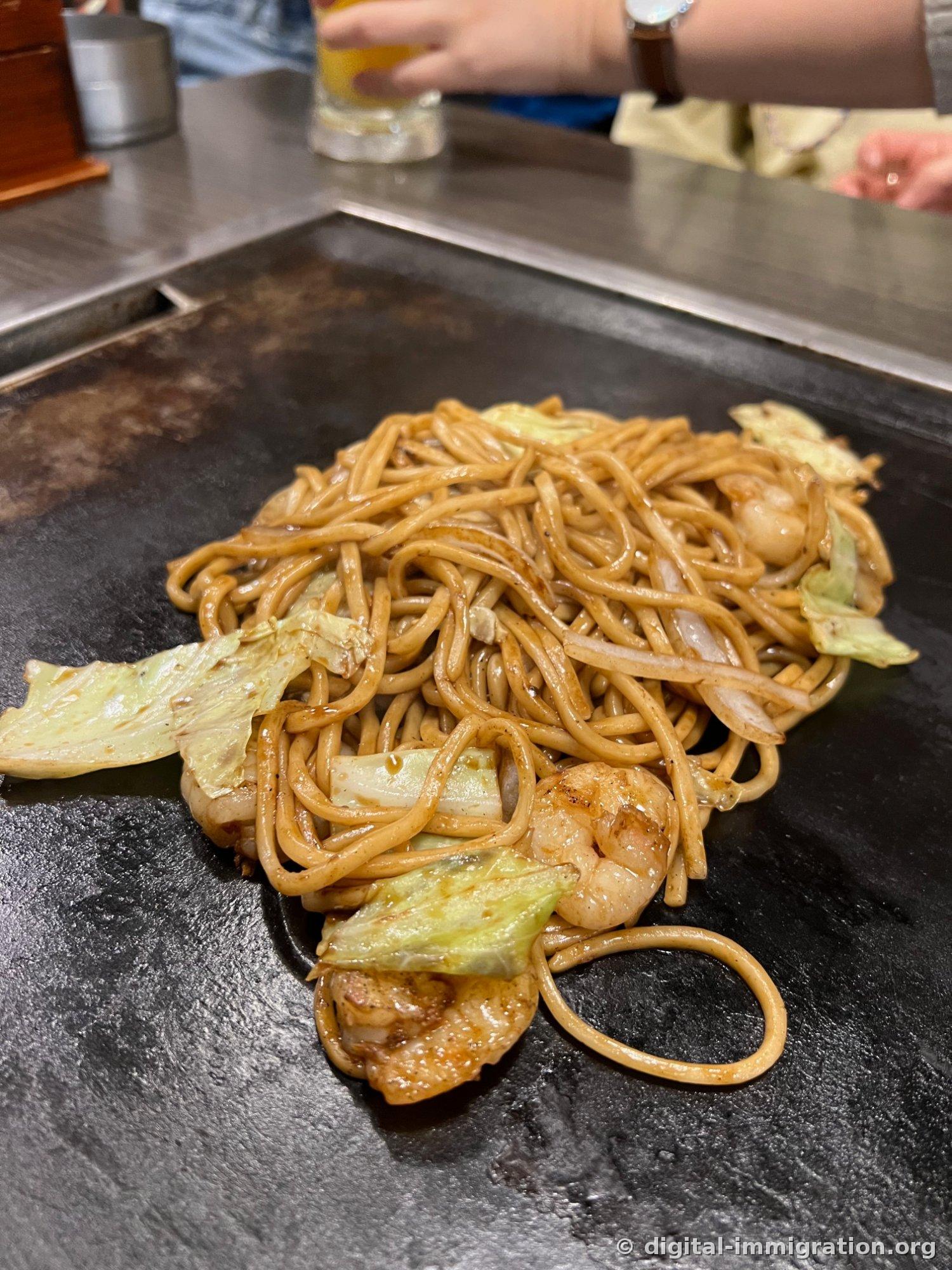
Sitting right in front of the griddle gets hot. You'll remove your jacket even in winter. Instead, you're right in front of the sizzling sounds and the smell of sauce charring—that's half of dining at a Dotonbori restaurant. The yakisoba noodles were thicker and chewier than Korean jjajangmyeon noodles.
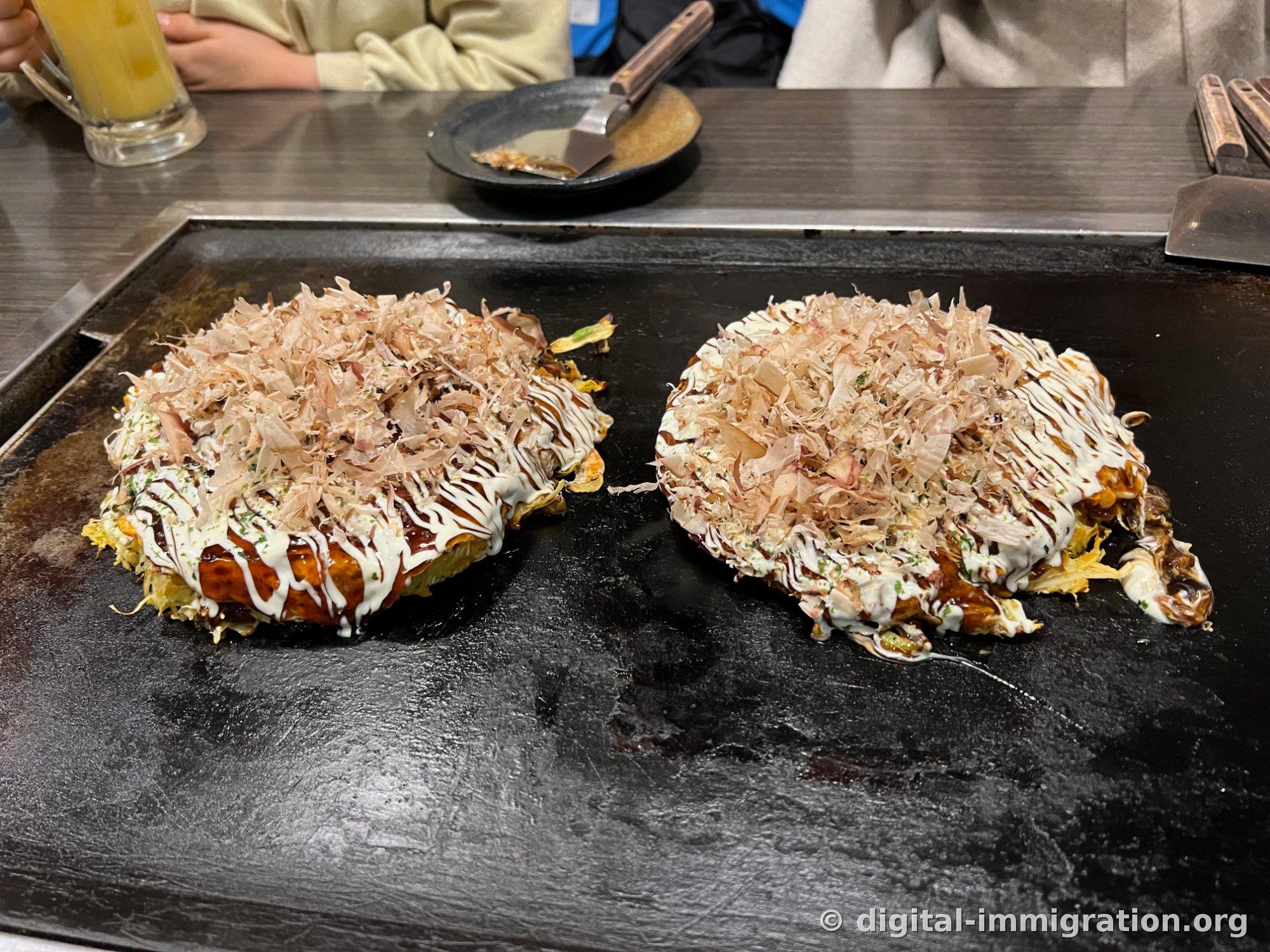
Two okonomiyaki are enough for two adults and two kids to get full. We got greedy and ordered yakisoba too, but ended up leaving some. If you plan to hop between places in Dotonbori, it's better to order one or two items per restaurant rather than try everything at one place. This is a principle I learned through failure on day one and followed on day two.
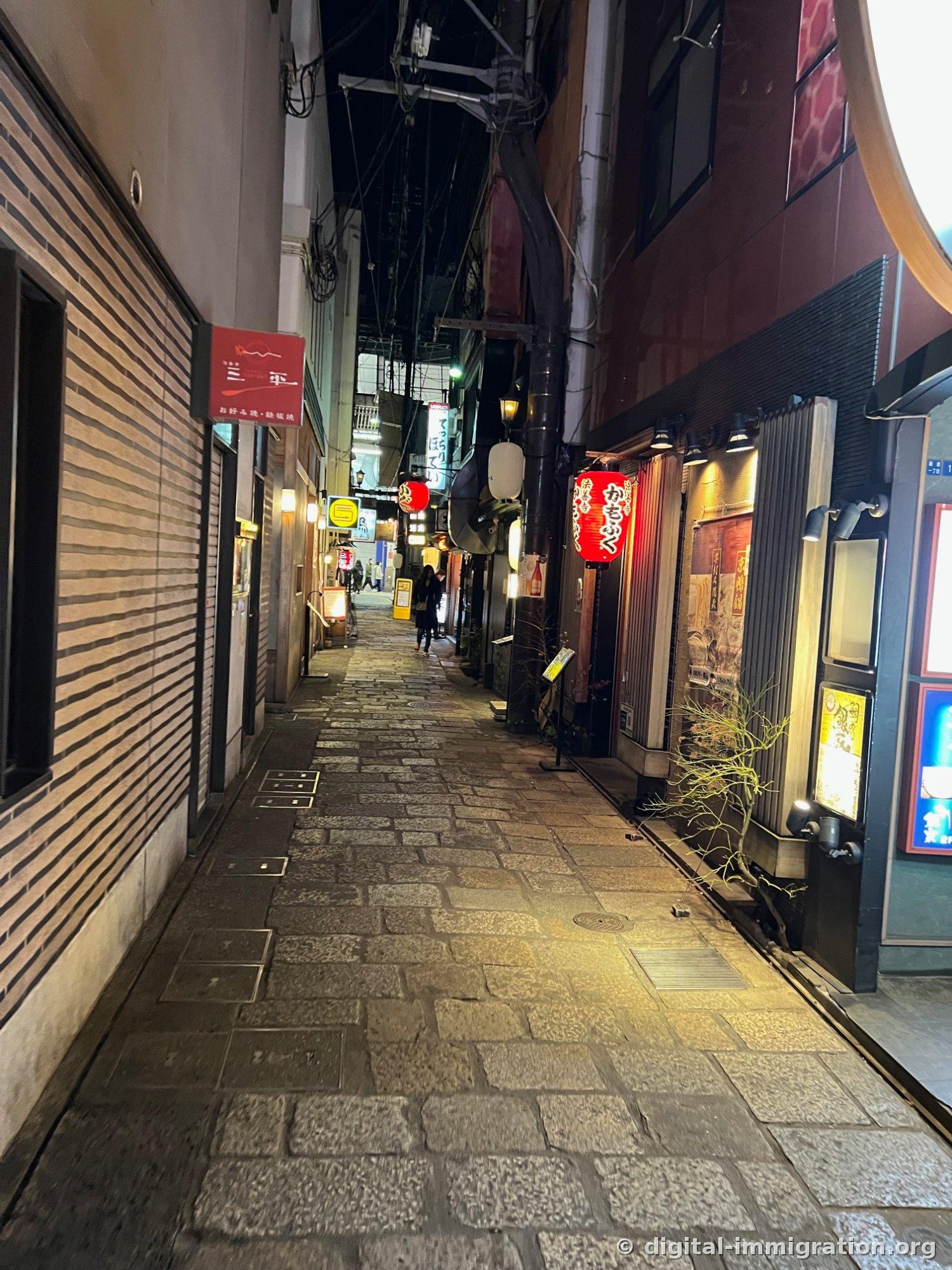
When the main street gets tiring, just go one block south. A narrow stone-paved alley appears, and from here the people noise suddenly cuts off. It's barely 2 meters wide, but okonomiyaki and blowfish restaurants line both sides. There's even a moss-covered water-sprinkling Jizo statue at the alley's end. For people who find the main street's glitz overwhelming, this is much more comfortable.
Location and How to Get There
Five minutes walk from Namba Station on the Midosuji Line, or similar from Nipponbashi Station on the Osaka Metro. You can also take less than 10 minutes walking south through the Shinsaibashi arcade. If you have luggage, it's better to store it in coin lockers at Namba Station. During busy hours (7-9 PM), it's actually difficult navigating bridges with a rolling suitcase.
Dotonbori Cruise — 20 Minutes to Get This Neighborhood All Figured Out
If you come to Dotonbori, you should definitely take the cruise. The view from the water is at a completely different eye level than walking, so all the signs feel like they're crashing down on your head at once. You board at the dock in front of Donki. The ticket booth is right out on the riverbank.
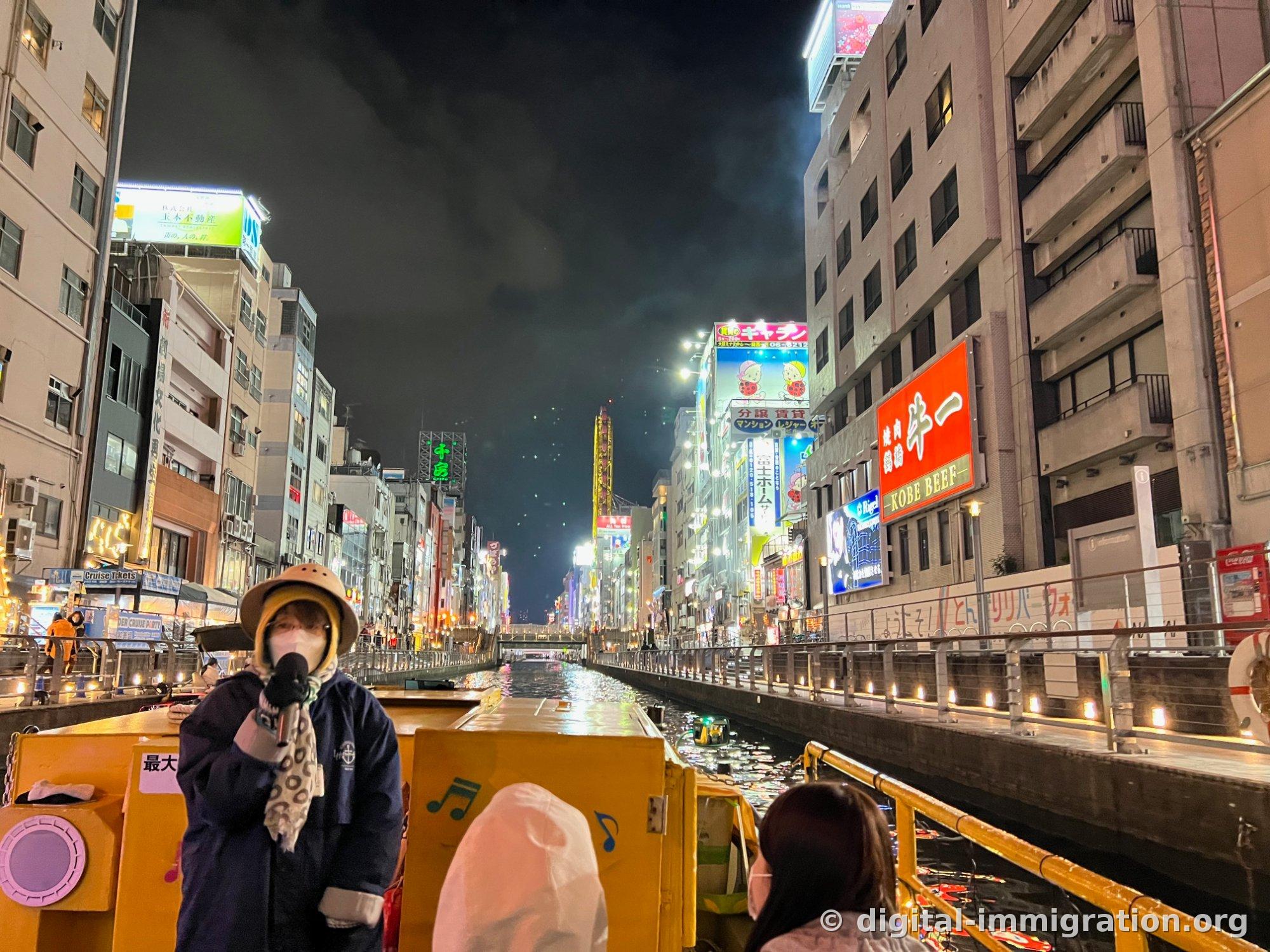
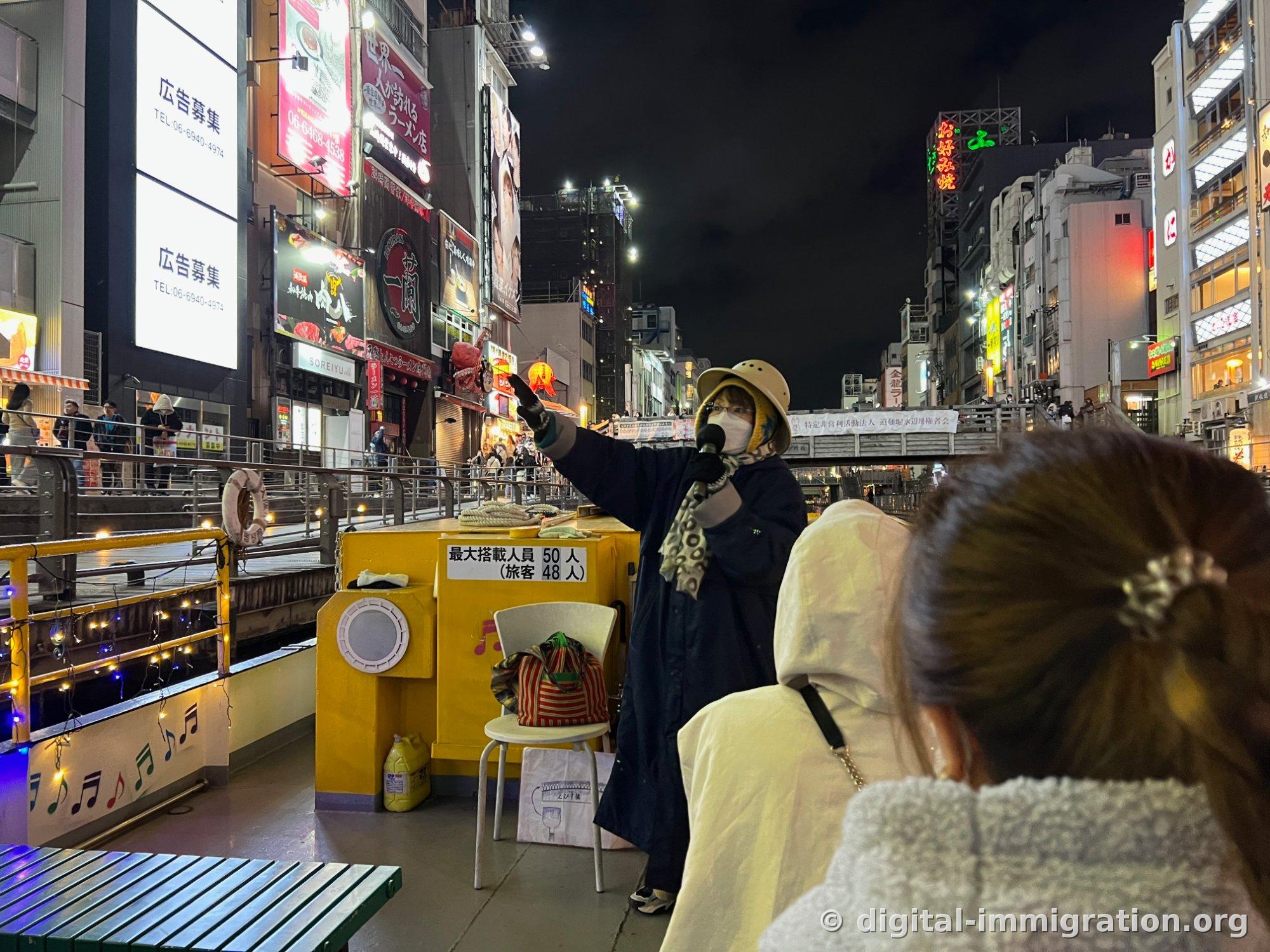
The guide talks nonstop in Japanese. It doesn't matter if you understand. Just follow where they're pointing, and when they're trying to get audience reactions, everyone laughs, so you laugh along. The boat has an open roof, so it gets really cold in winter. When we went it was midwinter and we kept the kids' padded hats on the whole time. There were no blankets provided. Operations may vary by season, so it's best to check fares and schedules at the dock.
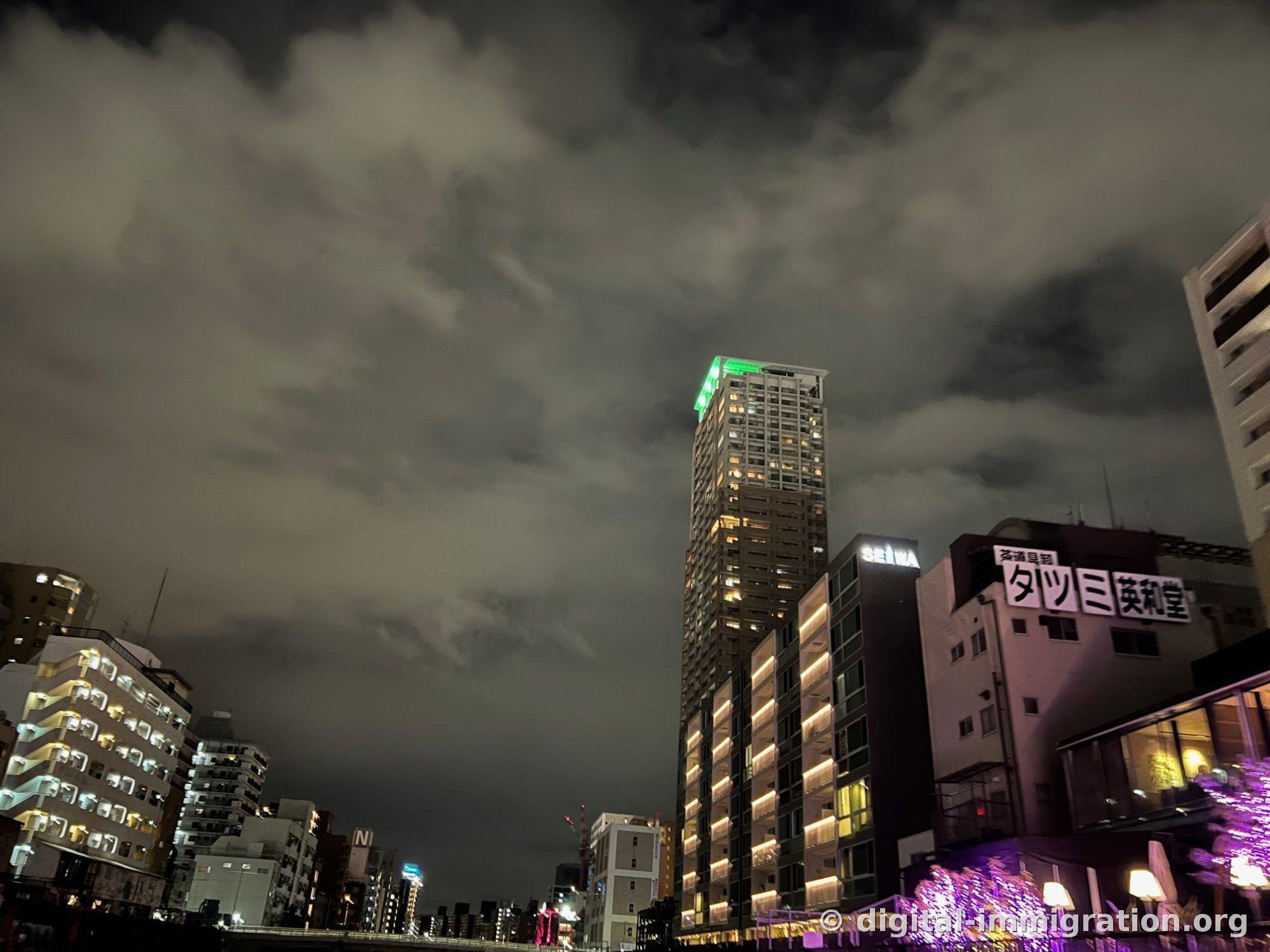
Passing under the bridges is the most fun part. The ceiling comes down right in front of you, and people standing on the bridge above wave at you. When the kids wave back, most people return the wave. You pass under about seven bridges in this section alone.
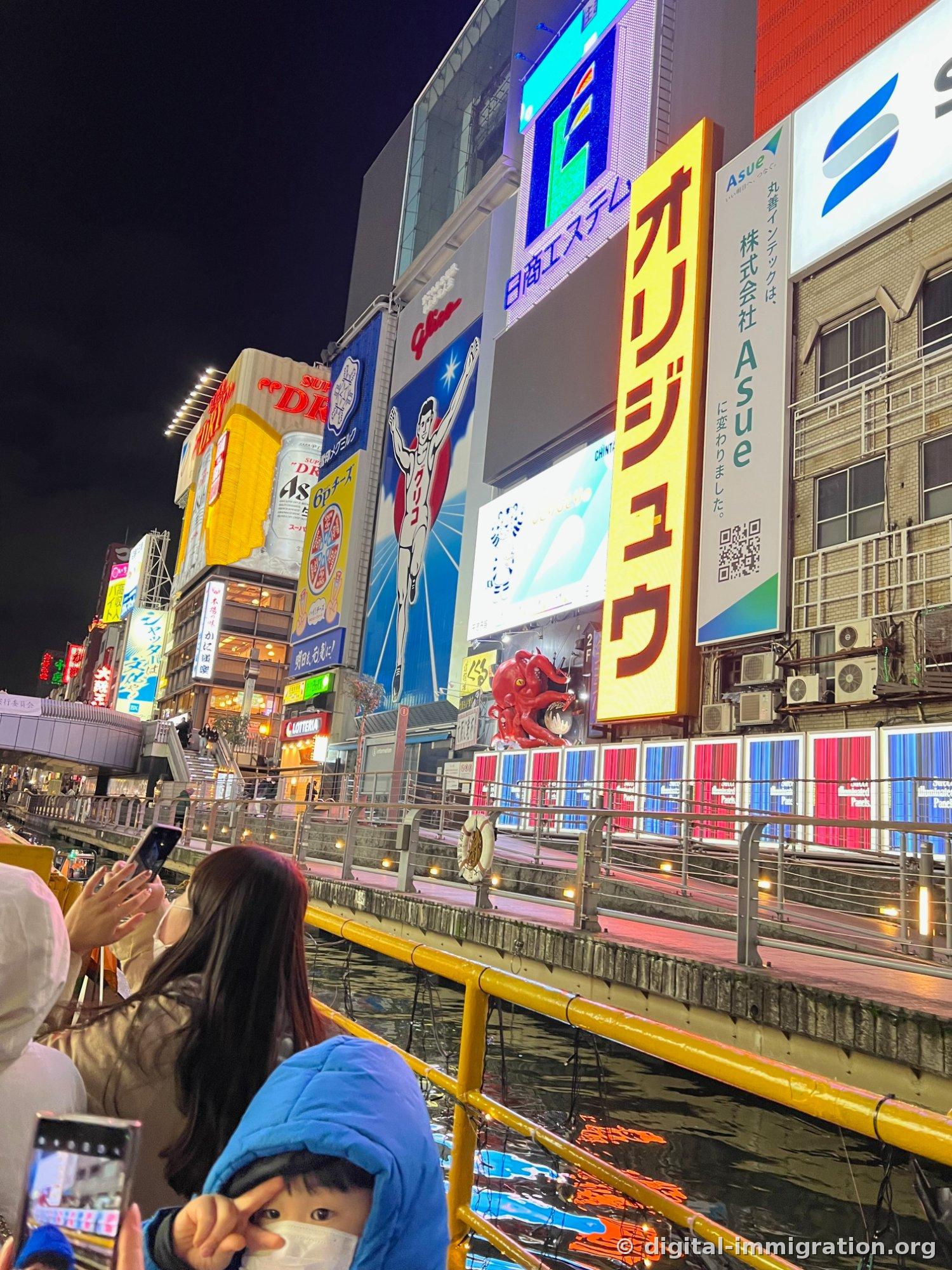
When you reach the Glico sign, the boat definitely slows down. The angle is completely different from photos taken on the bridge above, so the sign looks like it's leaning. The neon reflecting off the water can only be captured from the boat.
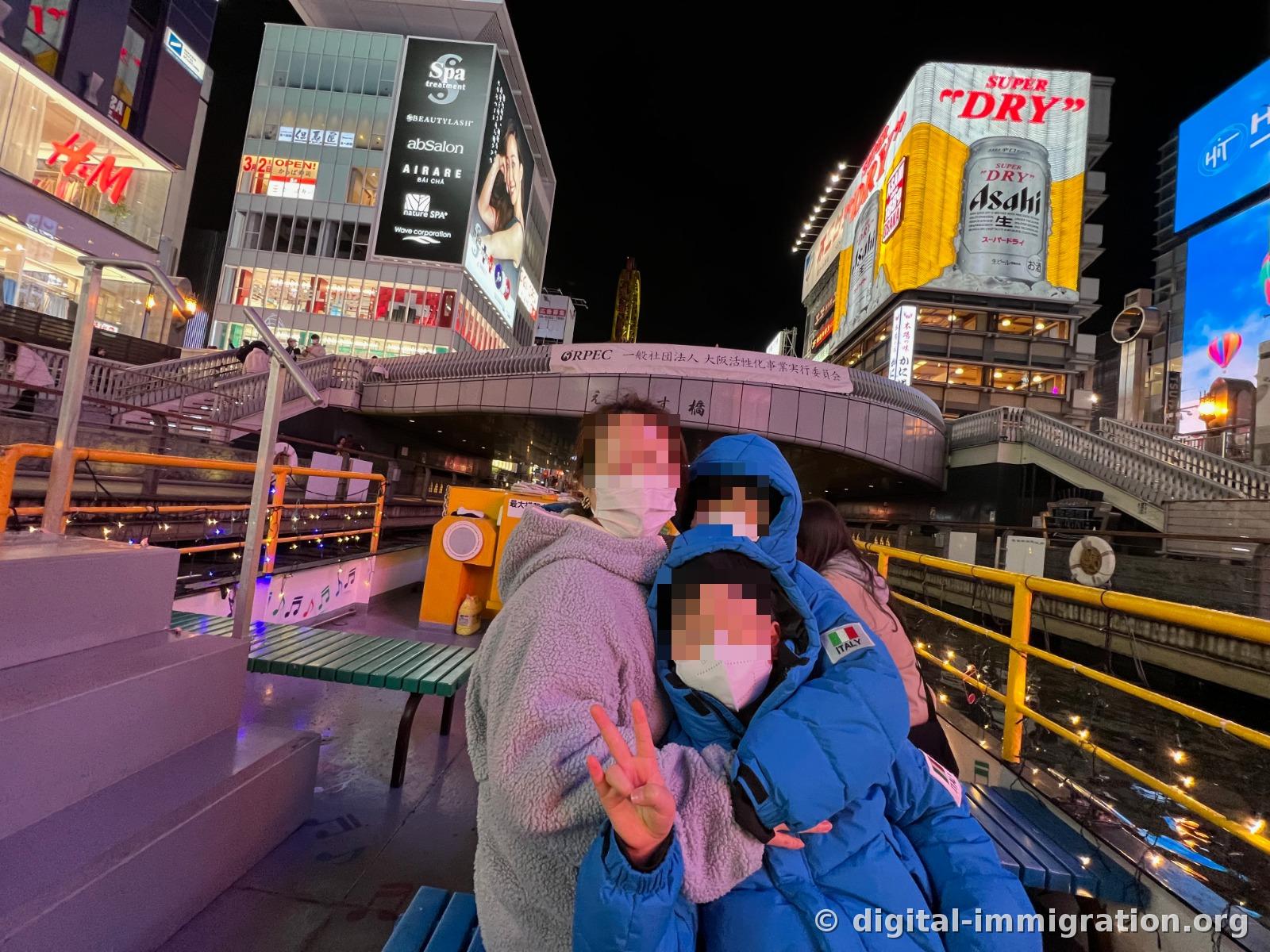
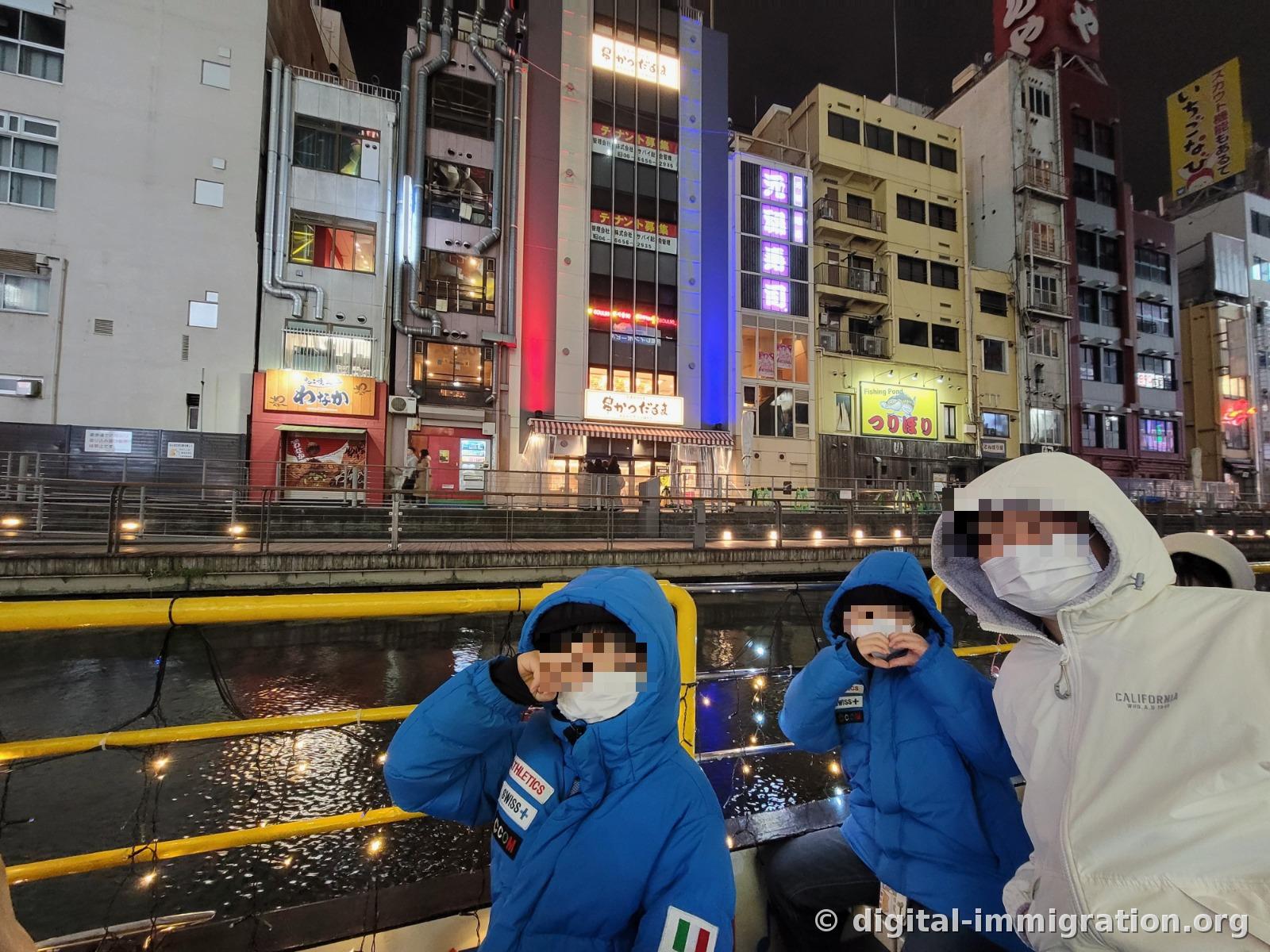
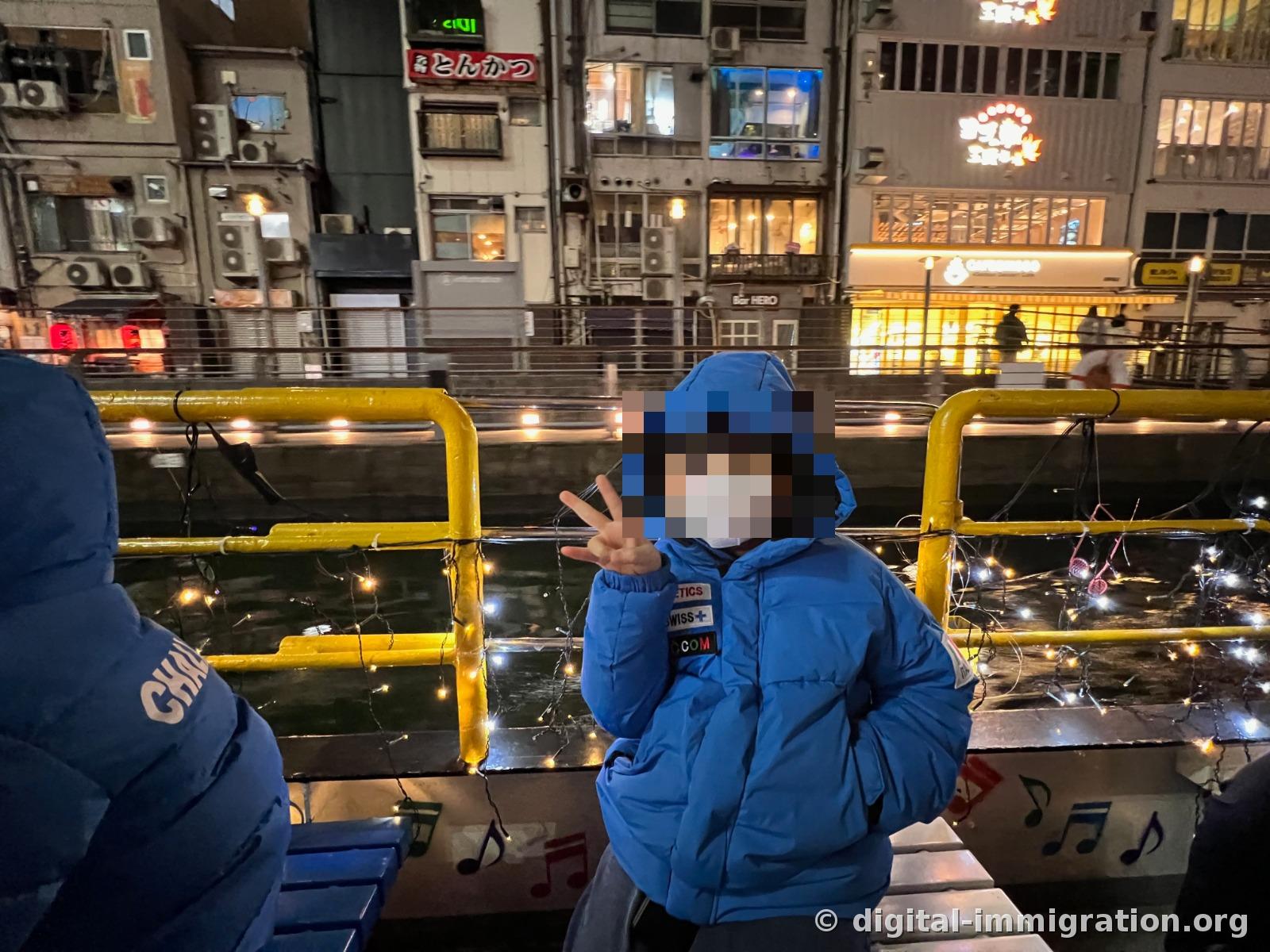

The Western End—A Section Tourists Usually Don't Know About
The boat goes further west past the Glico sign. From here it's actually quieter. The signs thin out and decorative lighting increases.
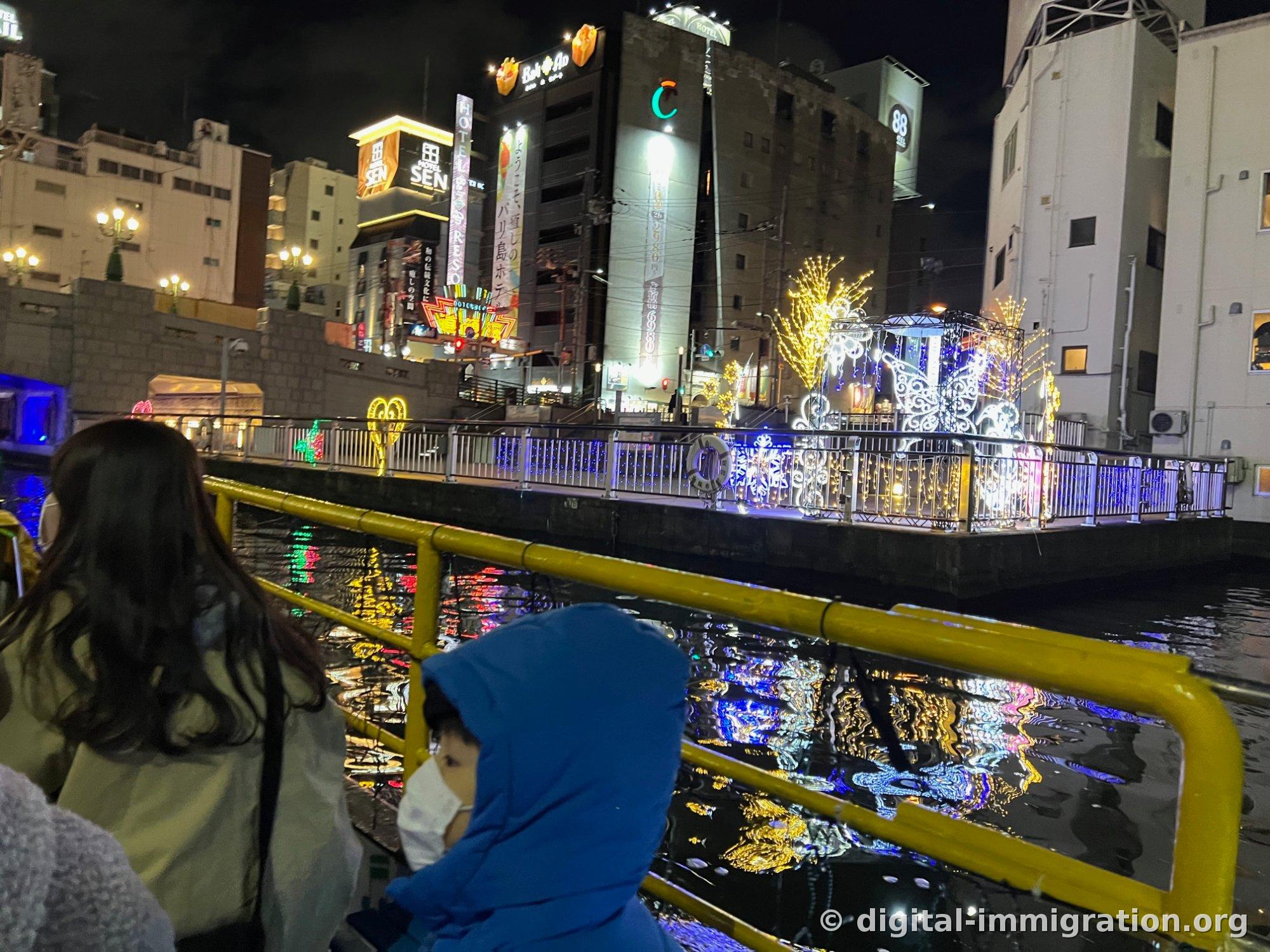
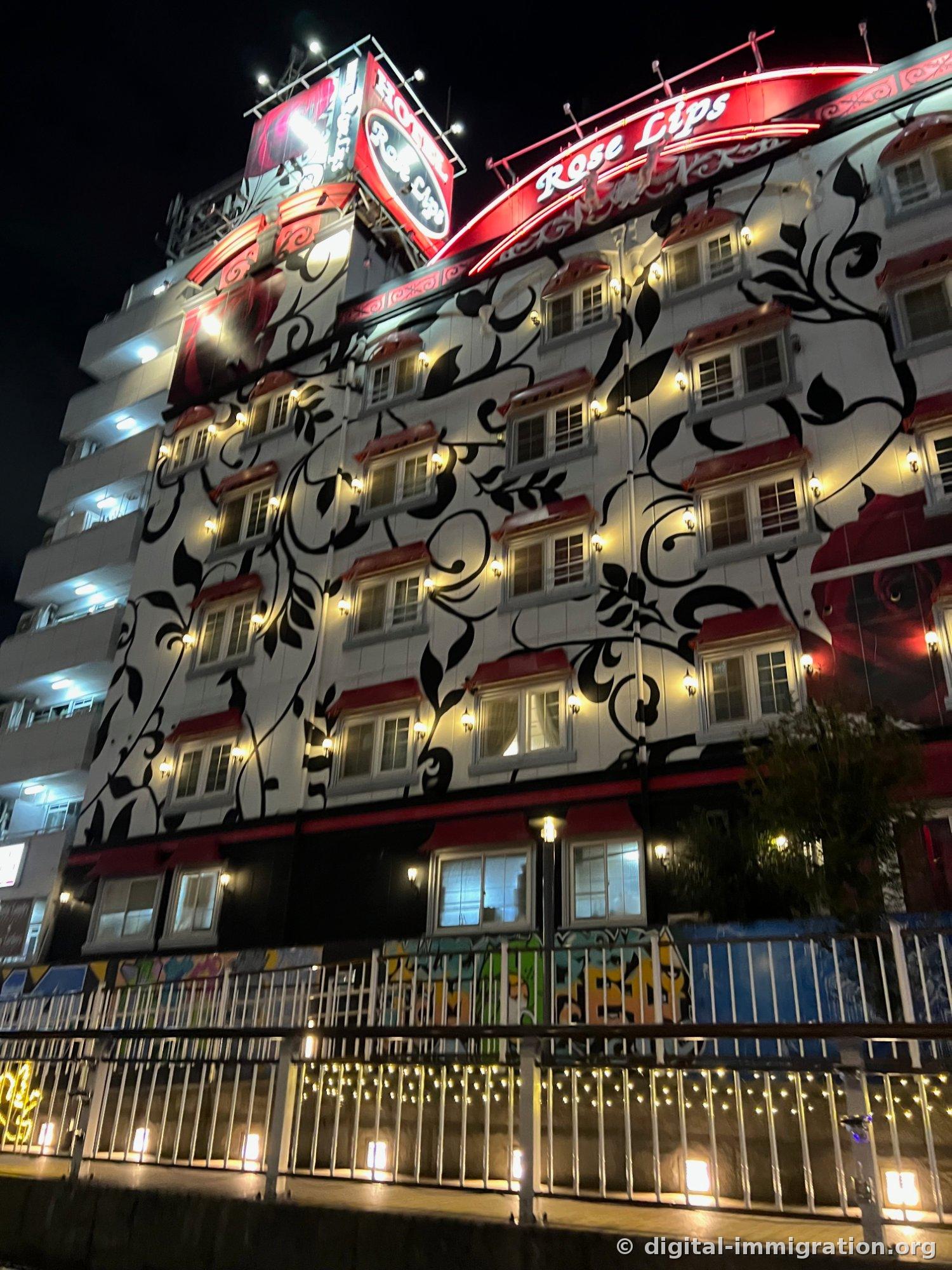
Love hotels cluster in this section. If you're with kids, you don't really need to explain, but the buildings are so gaudy the kids ask first, "What's that?" We just said "hotel."
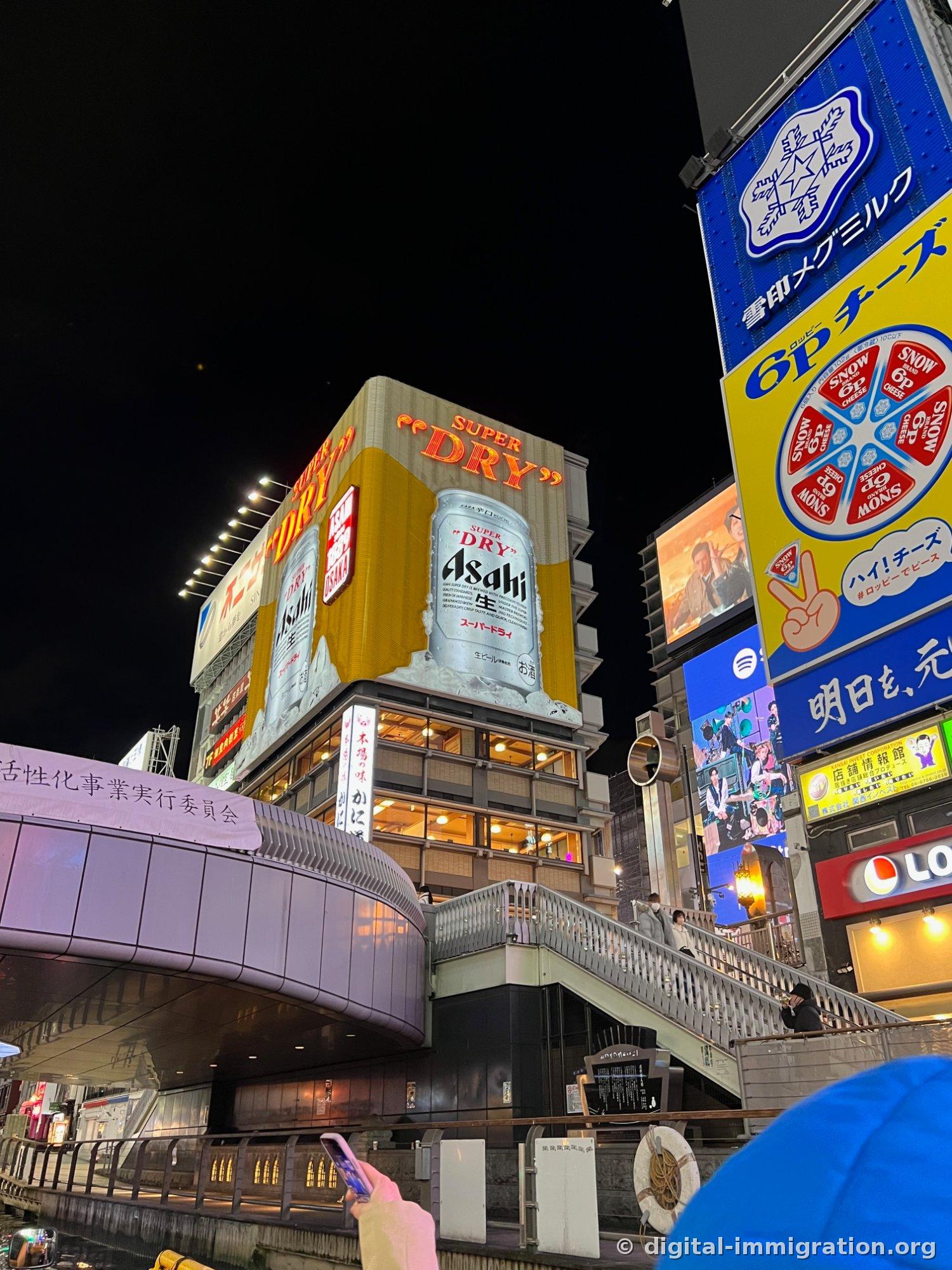
Around where the boat turns back, the neon completely cuts off and you see normal high-rise apartments. This is when I realized that once you step outside Dotonbori's 300-meter radius, this is just an ordinary neighborhood where people live. Personally, this section left the strongest impression on me from the entire 20-minute cruise.
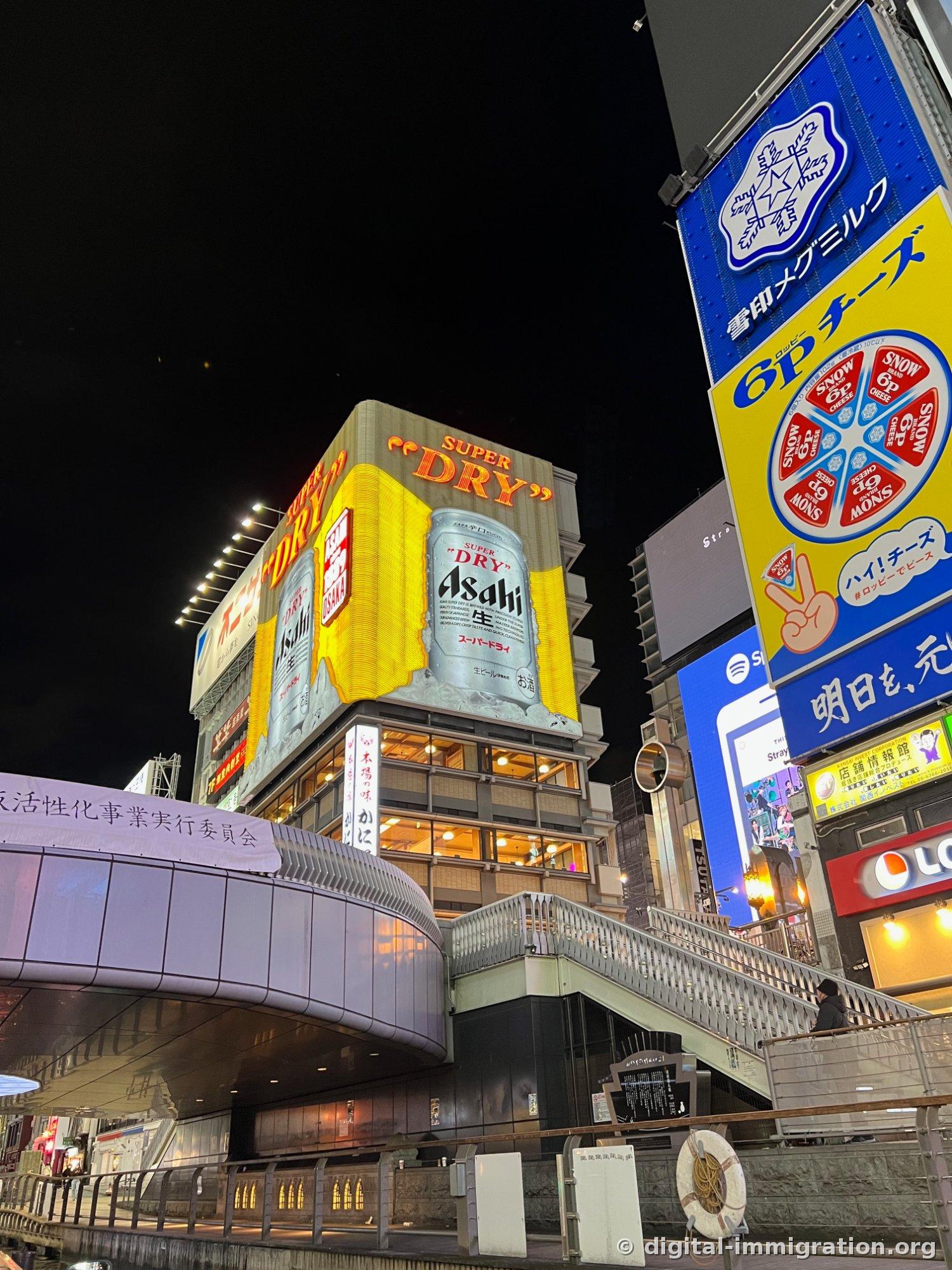
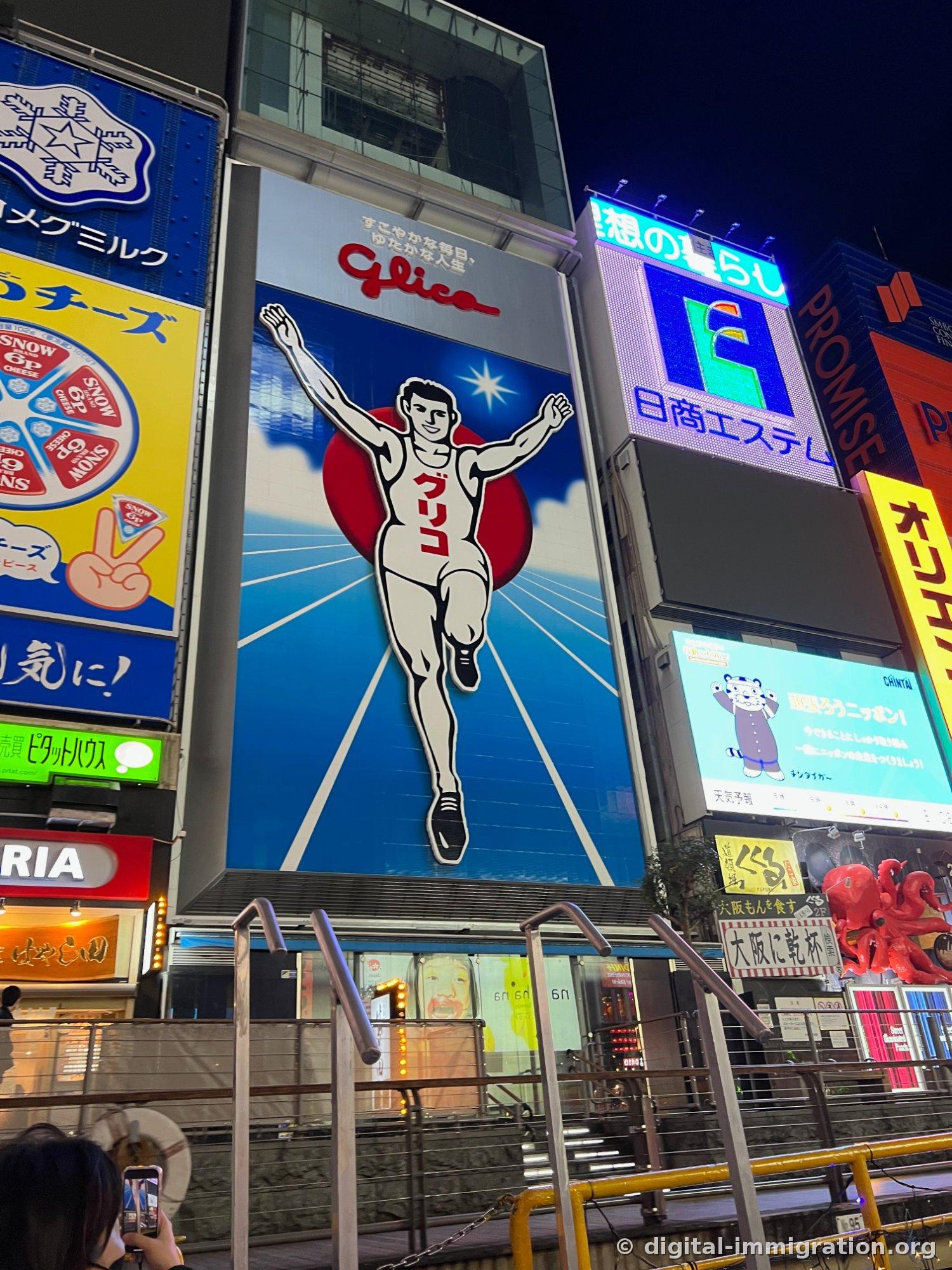
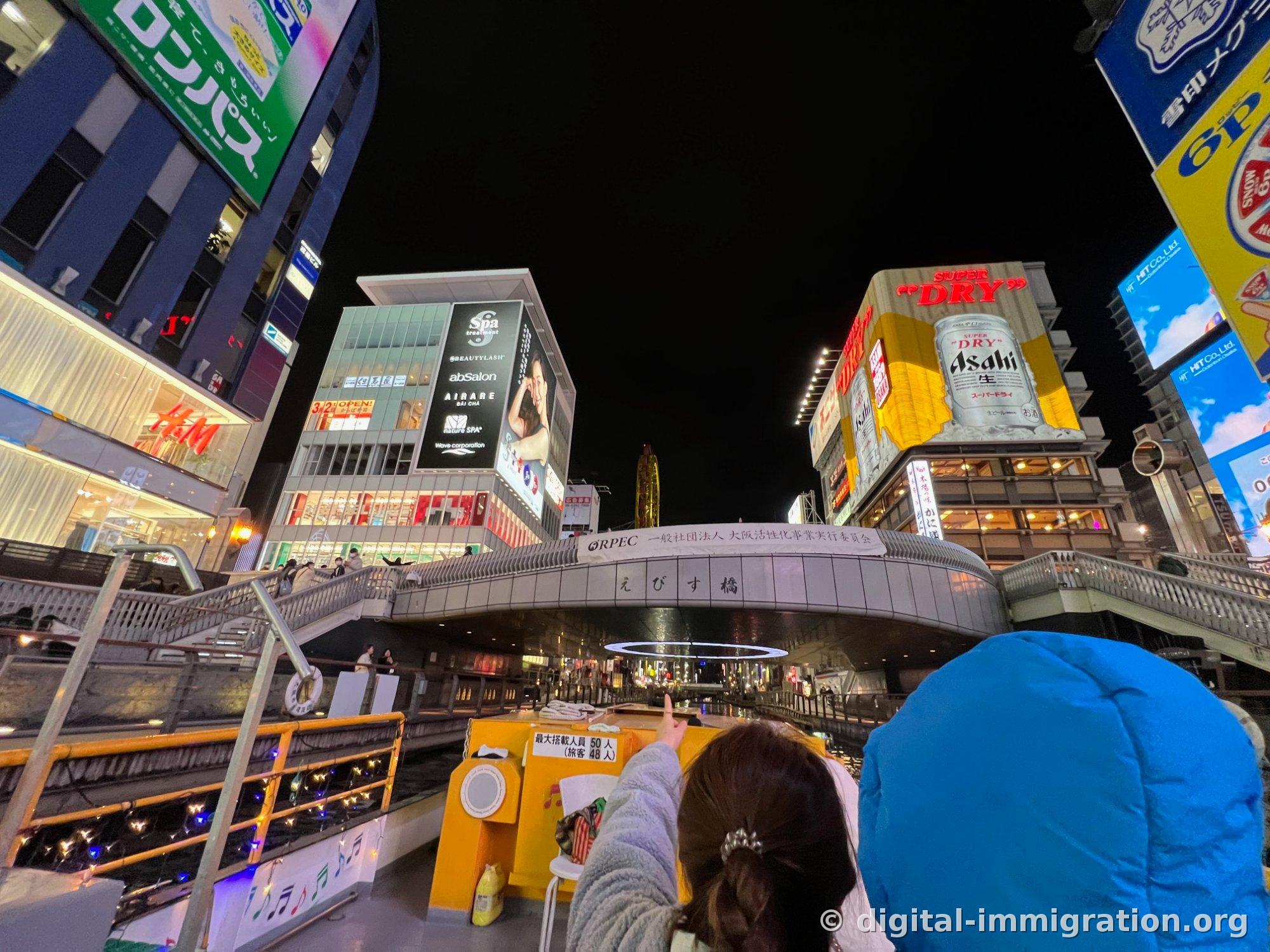
When you get off the boat, you go back up onto the bridge, and now you see the signs you just watched from the water from above. It seems like you're seeing the same thing twice, but it doesn't get boring. One 20-minute cruise puts the geography of this neighborhood in your head, and walking around afterward becomes much easier.
Things I Sorted Out After Visiting
- It's good to come once in the daytime and once at night. Daytime shows sign details, night shows the lighting. It's the same river but completely different.
- The cruise has no roof. If it's winter, bring a hat and gloves—if it's summer, be prepared for heat.
- Don't fill yourself up at one restaurant. Sharing 6 takoyaki, one okonomiyaki, a few kushikatsu pieces per place goes much further.
- Dip the kushikatsu sauce only once.
- If the main street gets tiring, go one block south to Hozenji Yokocho. The noise disappears.
- Fares and hours change per shop, so checking on-site is recommended. Numbers on signs aren't always up to date.
Dotonbori isn't a place you come to find "this is a real authentic restaurant." The experience itself—walking a street where signs are bigger than people, taking a lap from a boat tilting your neck back—that's the destination. If your Osaka schedule is tight, it's better to dedicate a couple of evening hours entirely to this place.
Read next
- From Akihabara's Chuo-dori to the Kanda River: A Record of Tokyo's Electronics District Revisited Multiple Times
Tokyo's Akihabara is a neighborhood where it's hard to say you've seen everything in a single visit. I've come multiple times across different seasons, and each time the signs chan…
Tokyo · Akihabara - Buying a Single ¥300 Year-End Jumbo Lottery Ticket at Nishi-Ginza Chance Center in Tokyo
Exit from the Hibiya exit of Tokyo's Shimbashi Station, walk toward the elevated highway for about three minutes, and suddenly you'll see a line of people stretching along the side…
Tokyo · Nishi-Ginza Chance Center - Ueno Ameyoko, the real magic starts after sunset — an evening walk from the Okachimachi Gate to Ueno Station
Every time I come to Tokyo, my feet find their way to Ueno Ameyoko (アメ横) without fail. This time I entered from the Okachimachi side and worked my way toward Ueno Station. I've met…
Tokyo · Ameya Yokocho Market