Osaka Castle Tenshu Tower and Moat Boat Tour: A Day-Long Adventure at Osaka Castle Park
In late February, Osaka was still cold enough to warrant a padded jacket. As soon as I entered Osaka Castle Park from Moriomiya Station, I stopped at a signboard lined with bicycle…
Osaka · Osaka Castle
In late February, Osaka was still cold enough to warrant a padded jacket. As soon as I entered Osaka Castle Park from Moriomiya Station, I stopped at a signboard lined with bicycles. Illumination festival posters, no-drone signs, and boat tour advertisements stood side by side. These three signs were essentially a preview of the day to come. Osaka Castle isn't a place you just pop in to see the tenshu tower and leave.
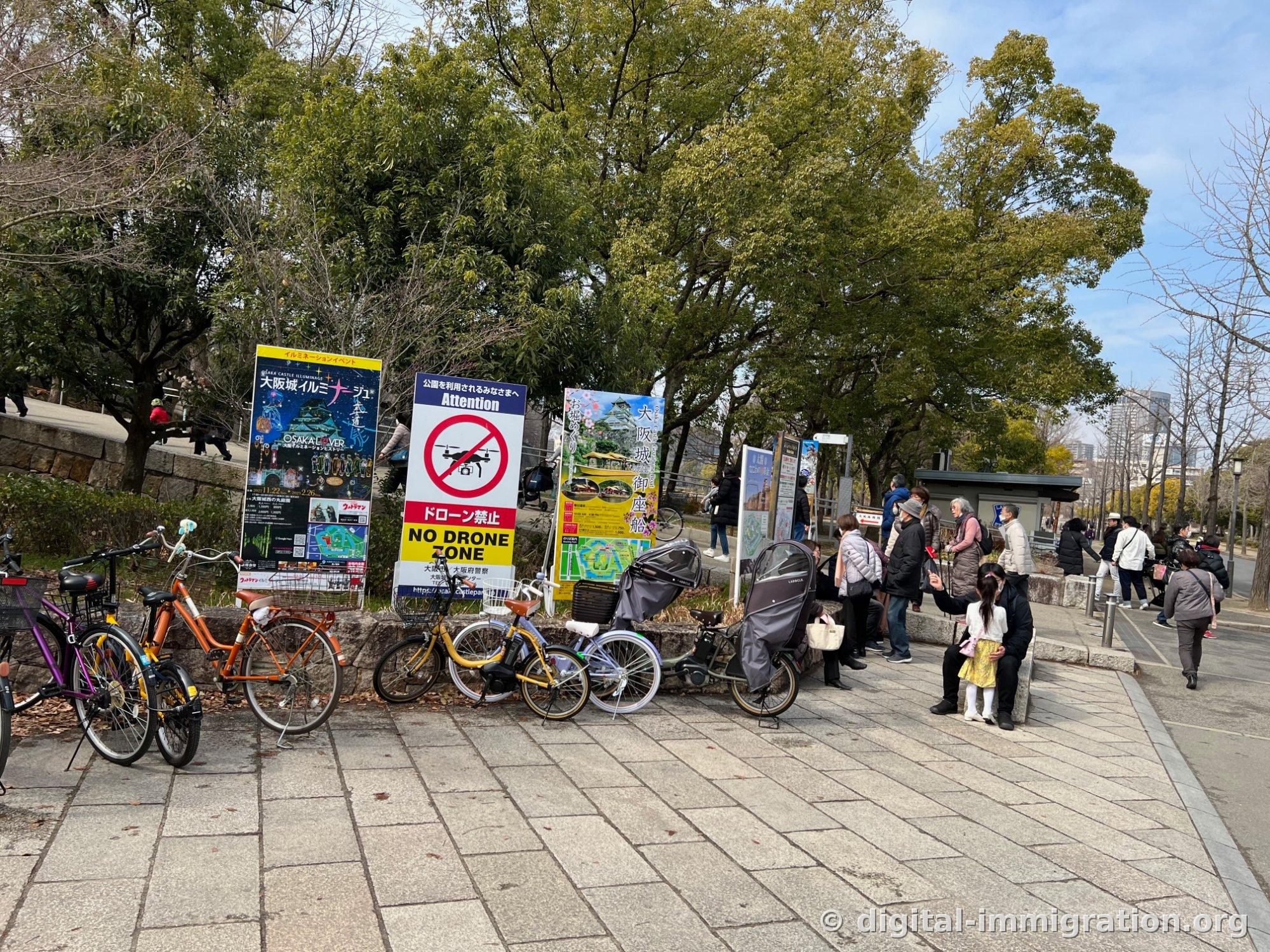
You'll Miss Half If You Only Walk Inside the Castle
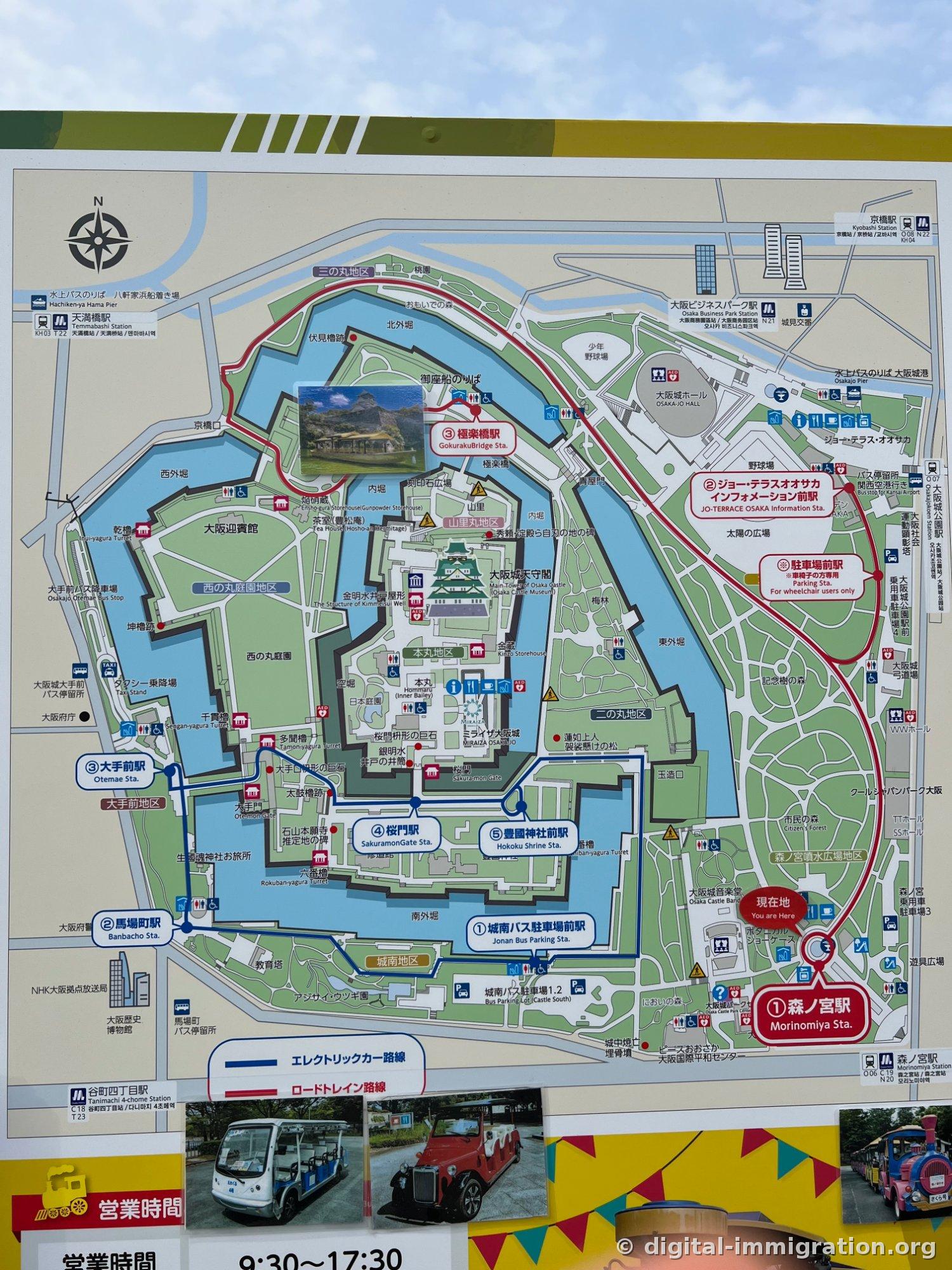
I recommend checking the park map first. The blue lines mark the electric car routes, and the red lines mark the road train. It runs from Moriomiya Station through Joterasu Osaka to Gokurakubashi Station, with operating hours of 9:30~17:30 posted below the map. Since the castle grounds are so expansive, remembering these routes makes a big difference if you're visiting with children or elderly family members.
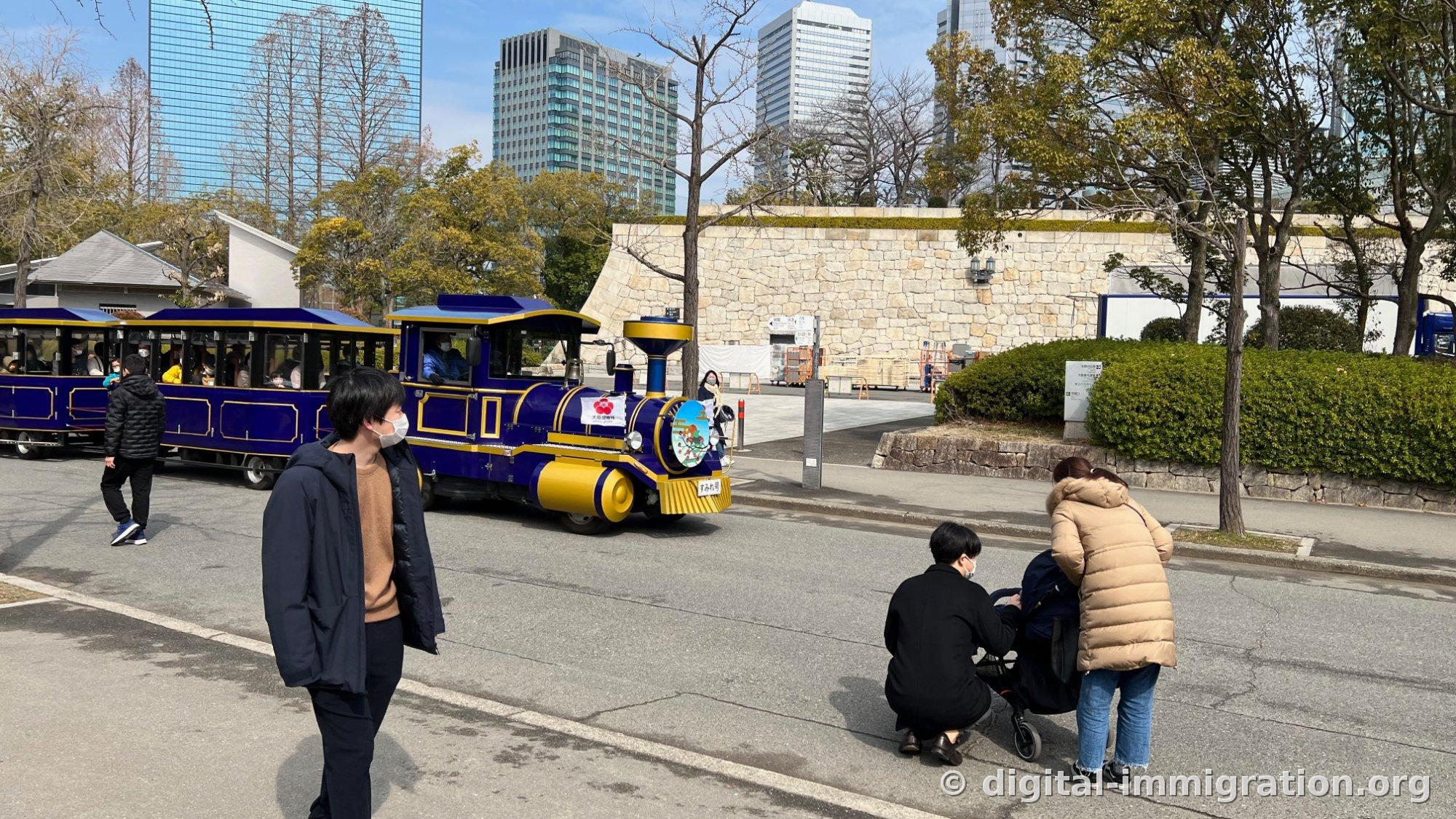
As I walked, a road train painted in purple-blue and gold passed by. The locomotive had a nameplate reading 'Sumire,' with three passenger cars trailing behind and children waving out the windows. A couple with a stroller crouched by the roadside to point out the train to their child—it was the most quintessentially Osaka Castle moment I witnessed that day. It felt less like sightseeing and more like a leisurely neighborhood stroll.
The Moat Walkway: This Stroll Alone Is Worth the Visit
The walkway along the eastern outer moat is wide and paved with flat stone, so strollers have no trouble. Though it was February and the cherry trees were bare, this meant the glass buildings of Osaka Business Park were clearly visible through the branches. A child in a red sweater walked ahead, having removed their outer jacket and carrying it in hand—the daytime sun was warm enough for that.
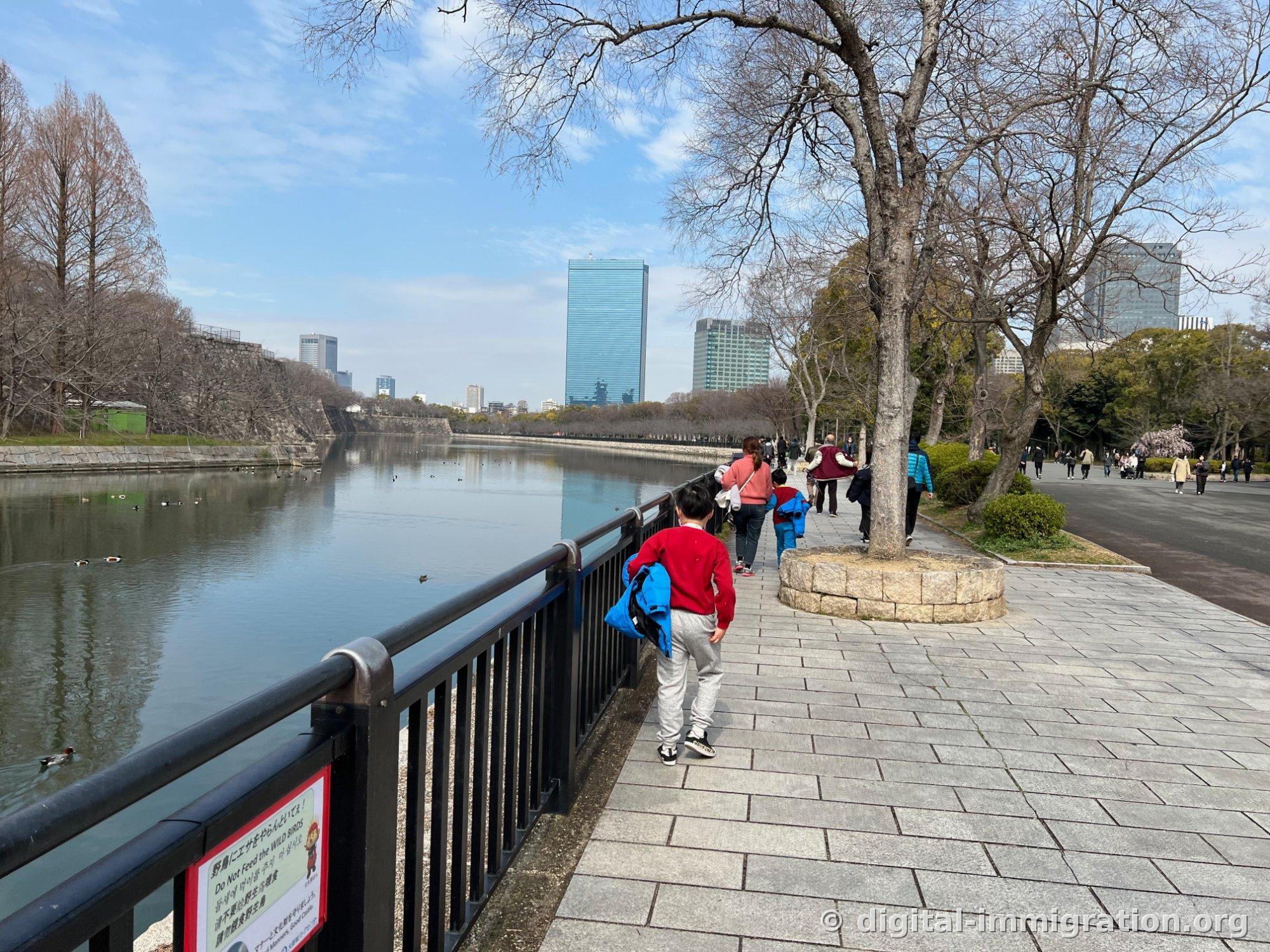
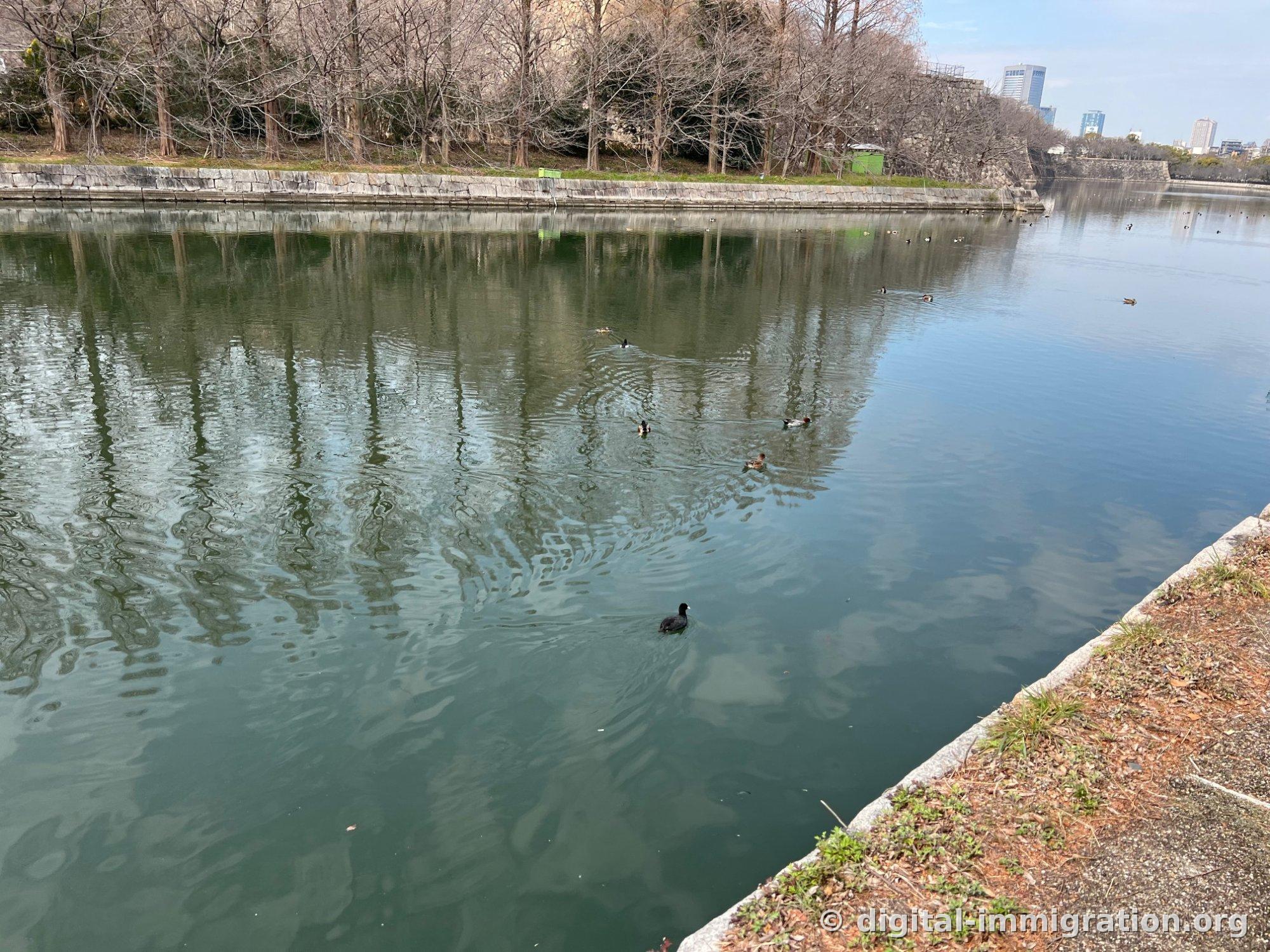
True to the warning on the railing, there were plenty of ducks on the water. When mallards and coots cut through the water, the ripples reflected the stone walls and bare trees on the opposite shore. This was where the child spent a long time watching. Feeding is forbidden, so we could only observe with our eyes.
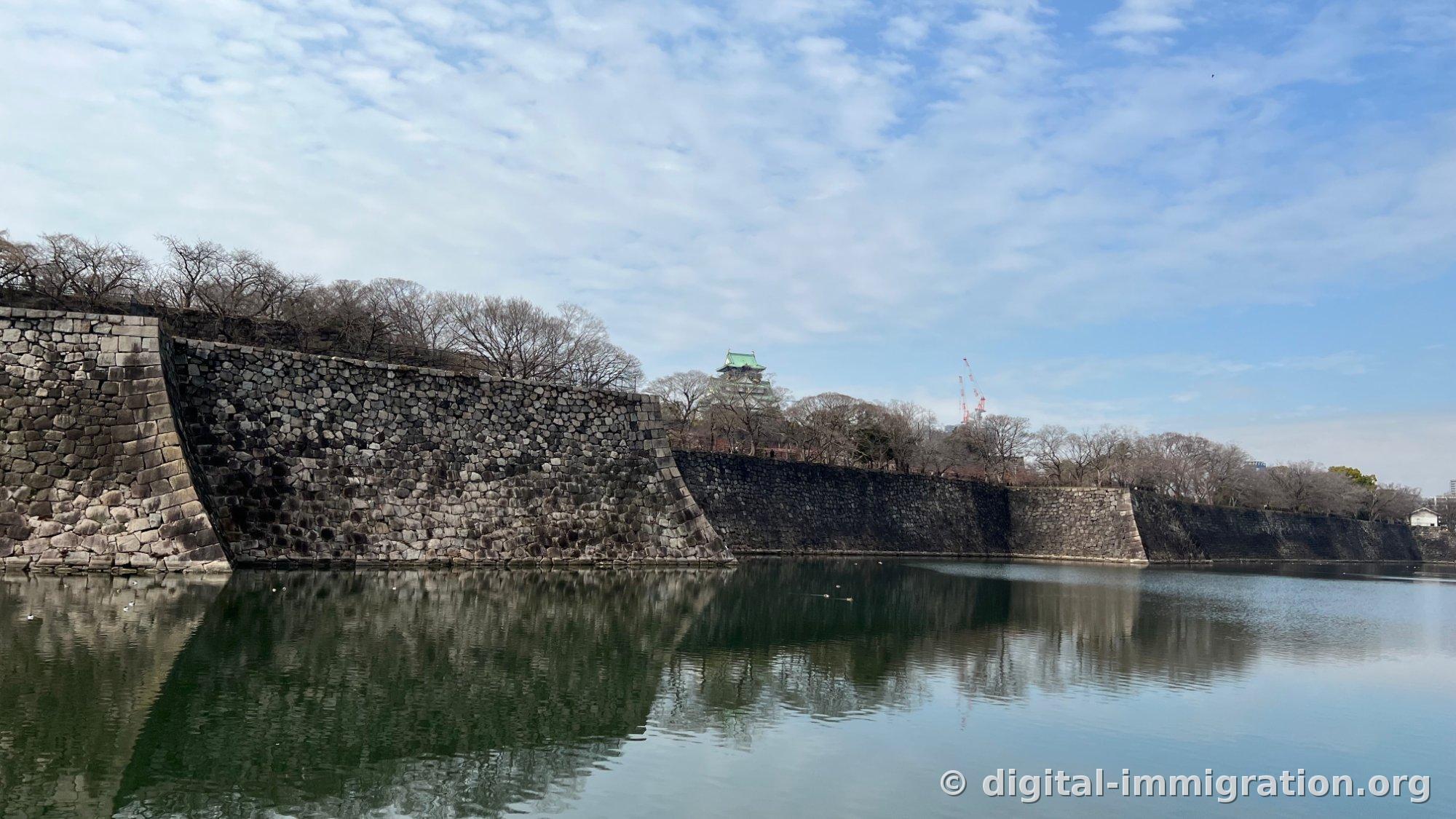
As you circle around to the west, you reach a section where the curve of the stone wall is clearly visible. Above the black stones stacked diagonally along the edge, just a corner of the tenshu's green-copper roof peeks through the trees. Construction cranes stand in the distance to the right, making the scene less than perfect, but this angle was best for grasping the full scale of the castle.
Getting there is straightforward. Whether you exit at Tanimachi 4-chome Station, Moriomiya Station, or JR Osakajokoen Station, they all lead directly into the park. However, since each station is at opposite ends of the castle, if you plan to head straight to the tenshu, it's best to decide which entrance to use before getting off. Confirming the locations on the map below is helpful.
A 20-Minute Golden Boat Ride Around the Moat
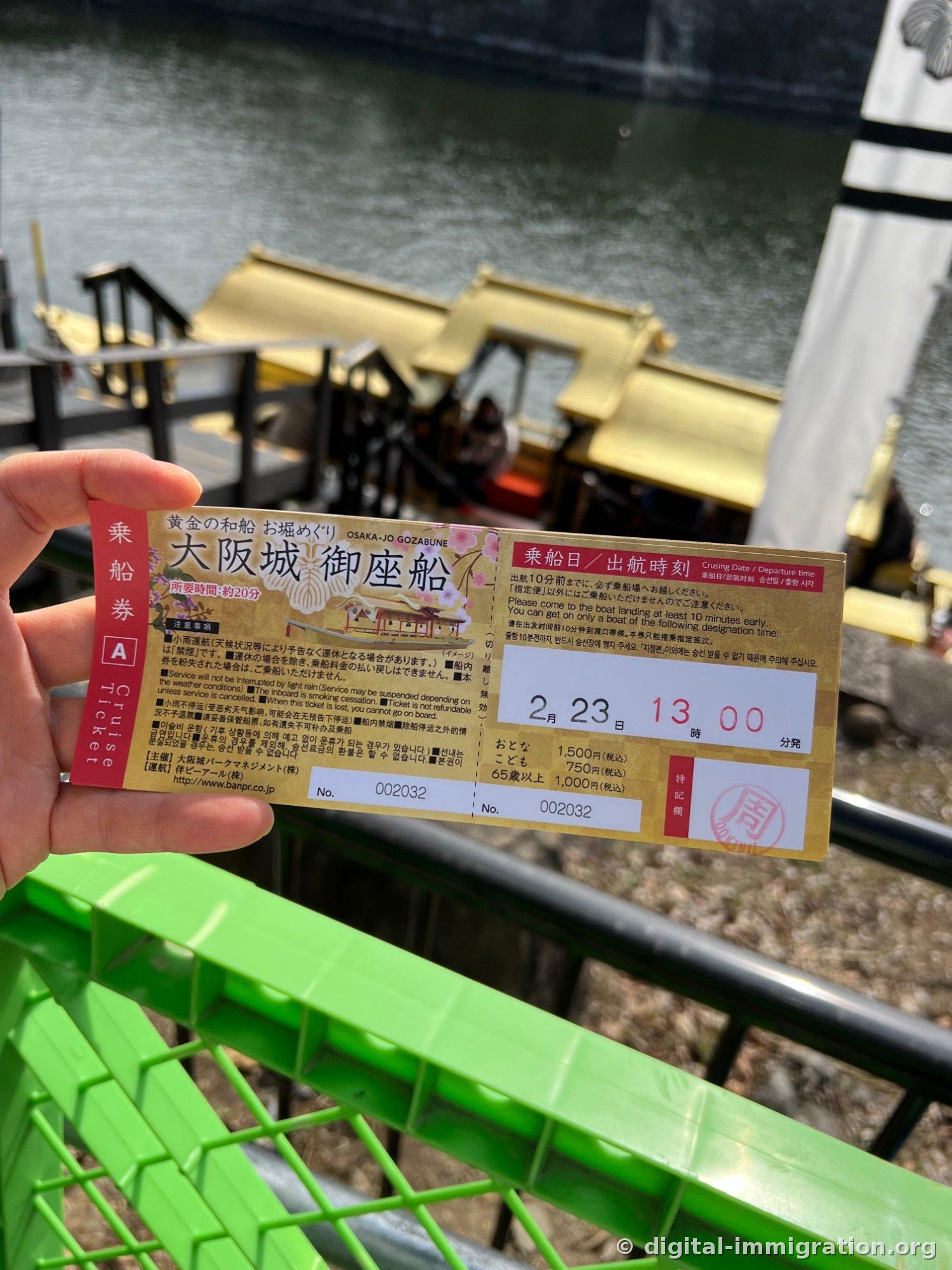
It was the boat I'd seen advertised at the entrance—the Osaka-jo Gozabune. The ticket I received at the booth showed a departure on February 23 at 13:00, with prices of 1,500 yen for adults, 750 yen for children, and 1,000 yen for ages 65 and over. The journey takes about 20 minutes. The ticket boldly stated 'Board by 10 minutes before departure,' and they won't take passengers who miss their assigned time, so it's best to arrive early. Below the boarding area, I could see the gold-trimmed boat.
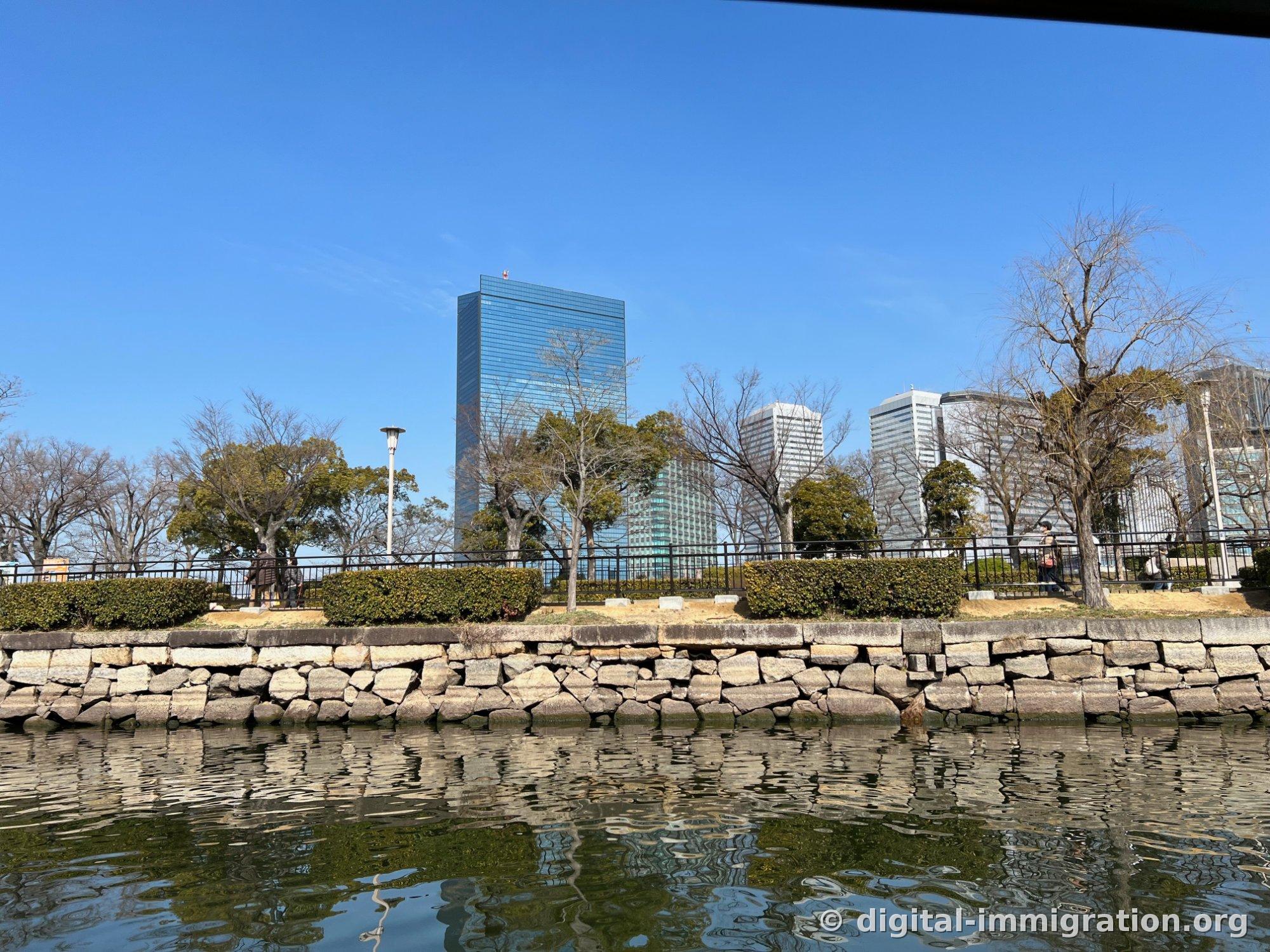
Once aboard, your eye level drops to just above the water. What appeared to be merely a stone wall from above becomes a towering barrier right before you. Only then did I grasp the true size of each moss-covered stone. Looking up, crystal-like glass buildings stand beyond the walls, and 400 years of history overlaps with modern Osaka in a single frame. Twenty minutes felt too short.
You Have to Climb the Tenshu in the End
As I disembarked and walked toward the castle interior, the tenshu grew larger. At first, it was just a silhouette above the stone wall against the cloudy sky,
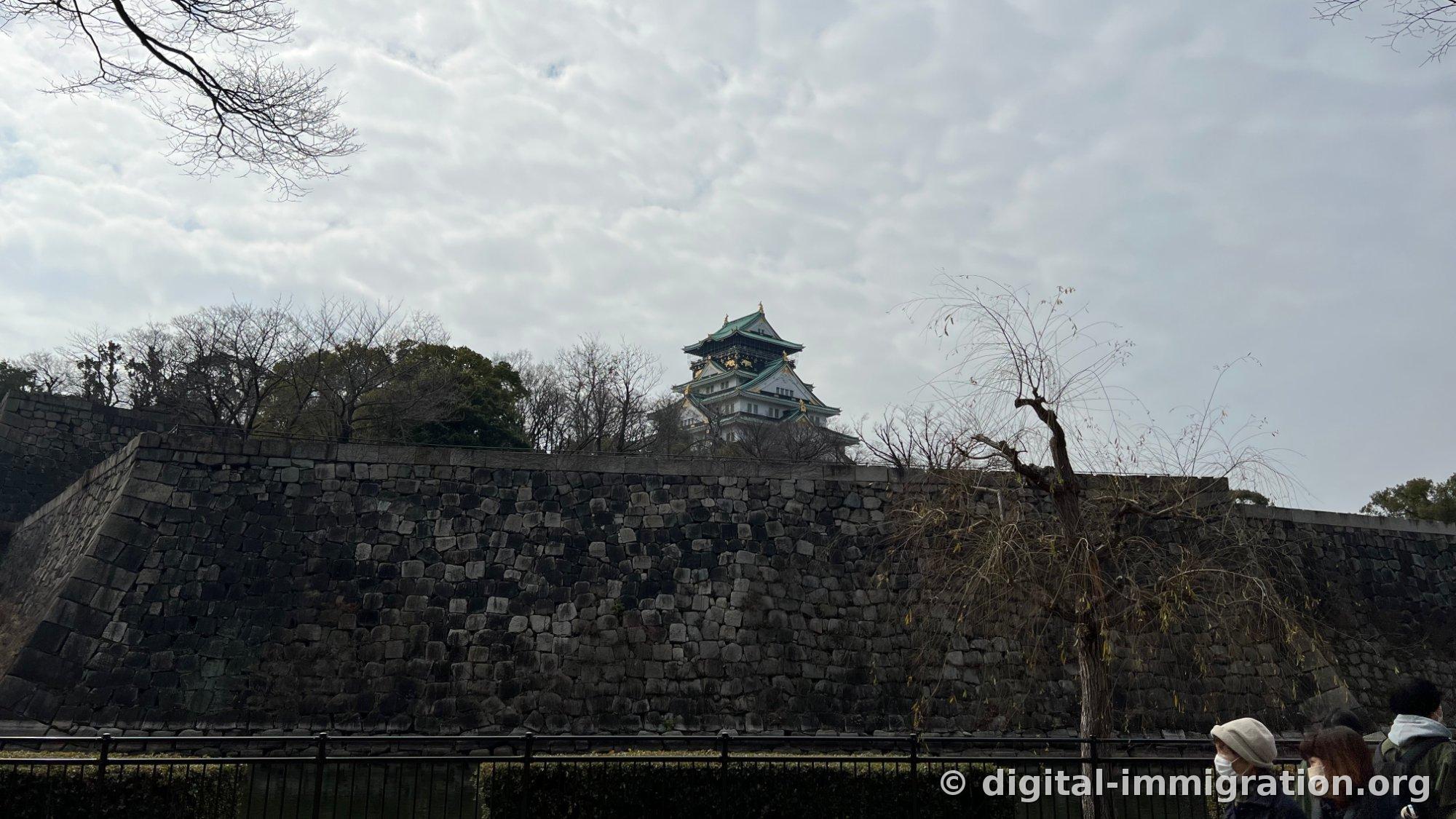
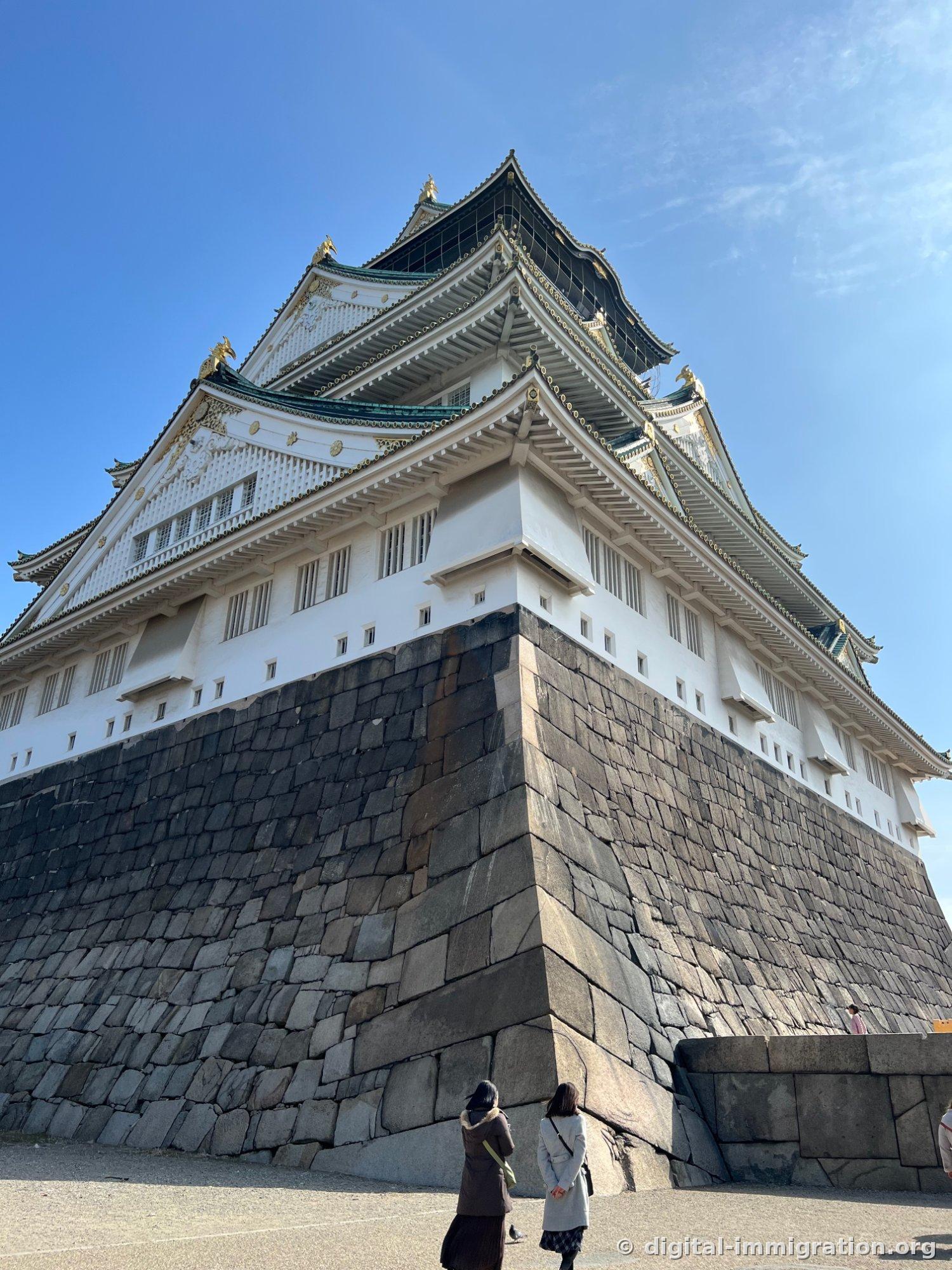
Getting right up close, you have to crane your neck uncomfortably. The building rises sharply from where the black stone foundations meet the white walls, and compared to the two people standing in front, the foundations alone are several times human height.
As afternoon arrived, the sky cleared. Against the blue background, the contrast of white walls, verdigris-colored tiles, and gold decorations finally came alive. It's the same building, but morning photos look like a different place than afternoon ones. If you have time, it's worth waiting for the afternoon light.
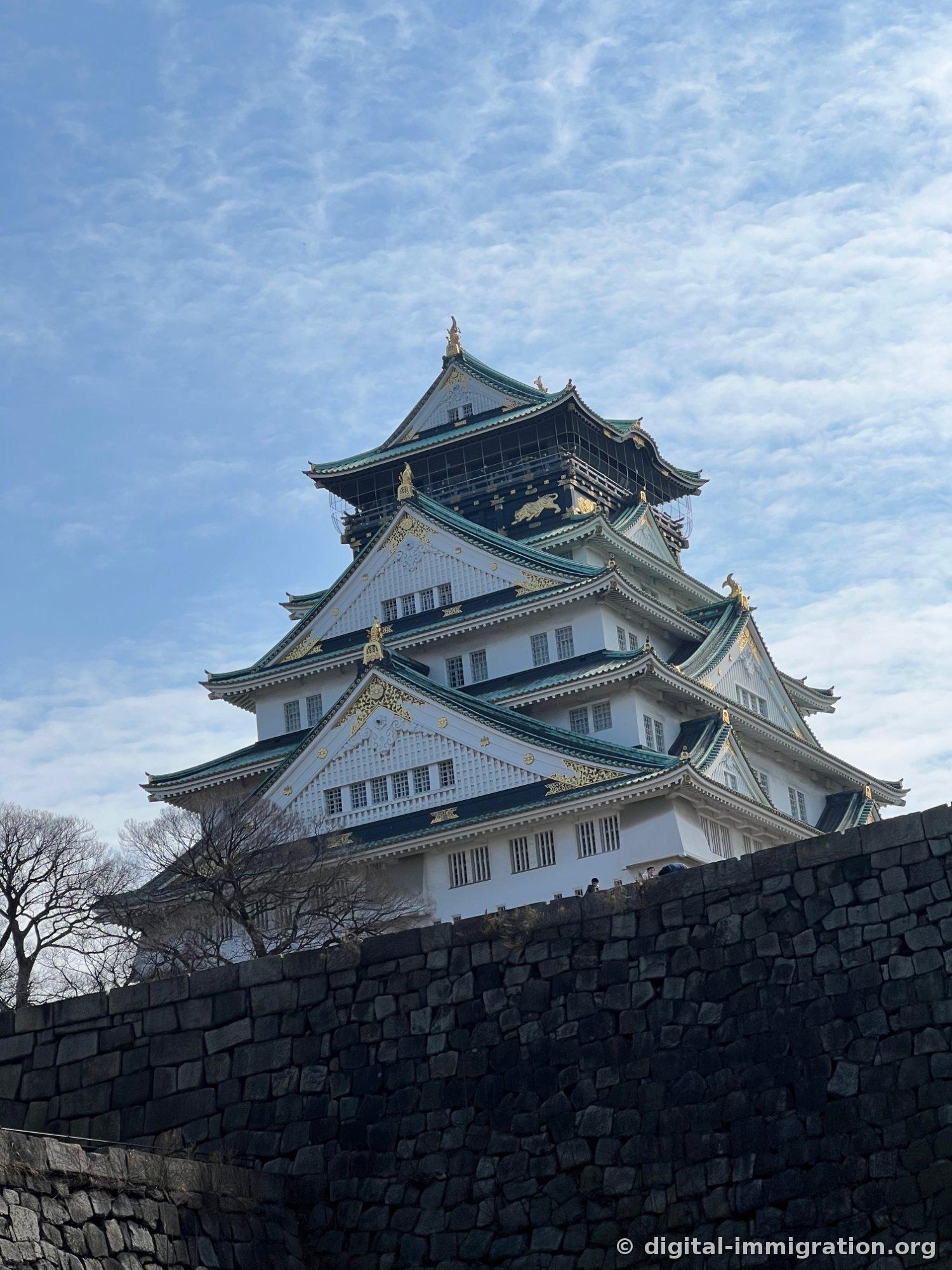
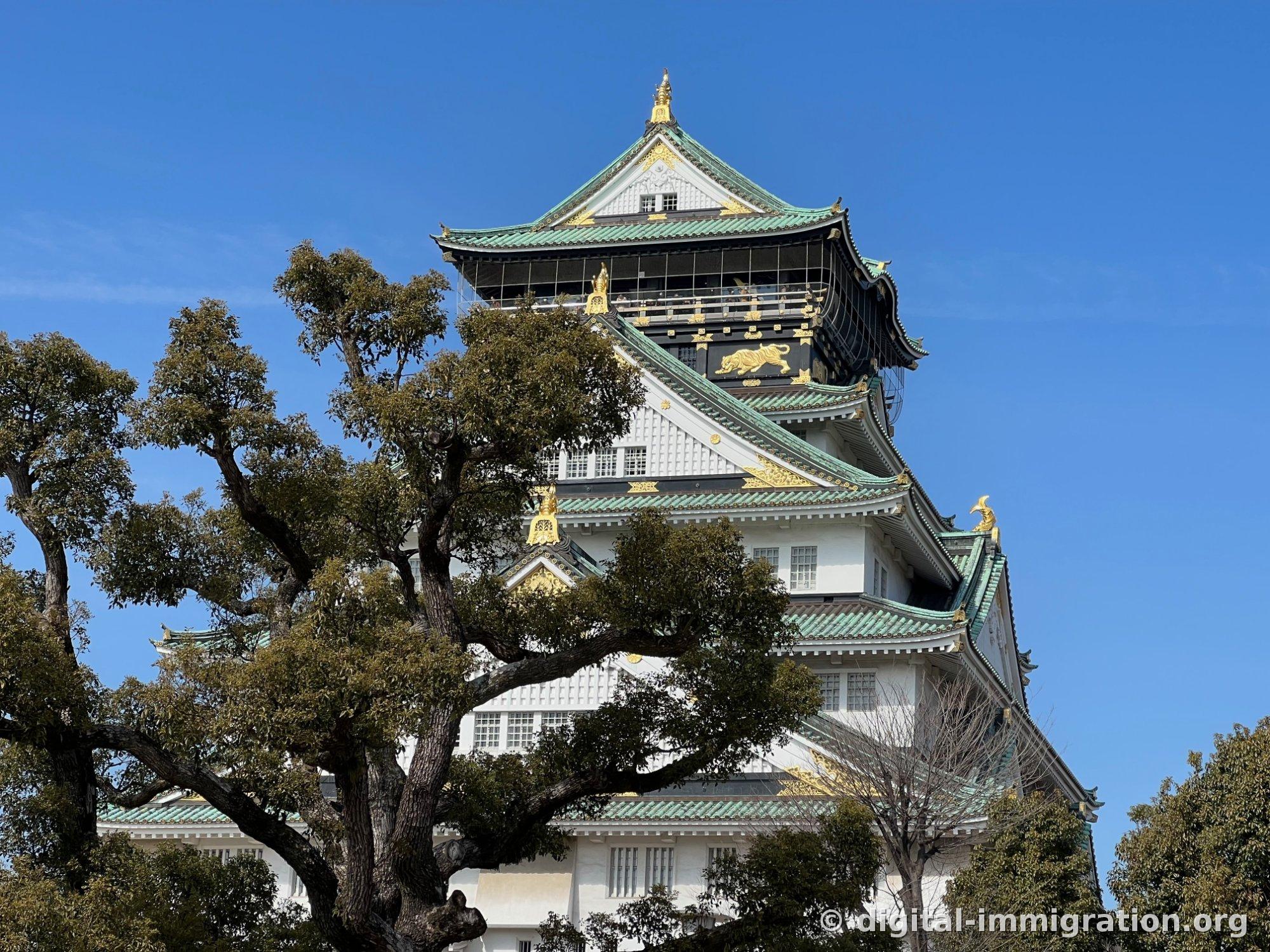
Up close, there are gold-leafed tigers beneath the eaves of the top floor. They're hidden enough by trees that they're easy to miss, but once you spot one, you start noticing the same decorations on other sides.
Interior Exhibits and Observation Deck
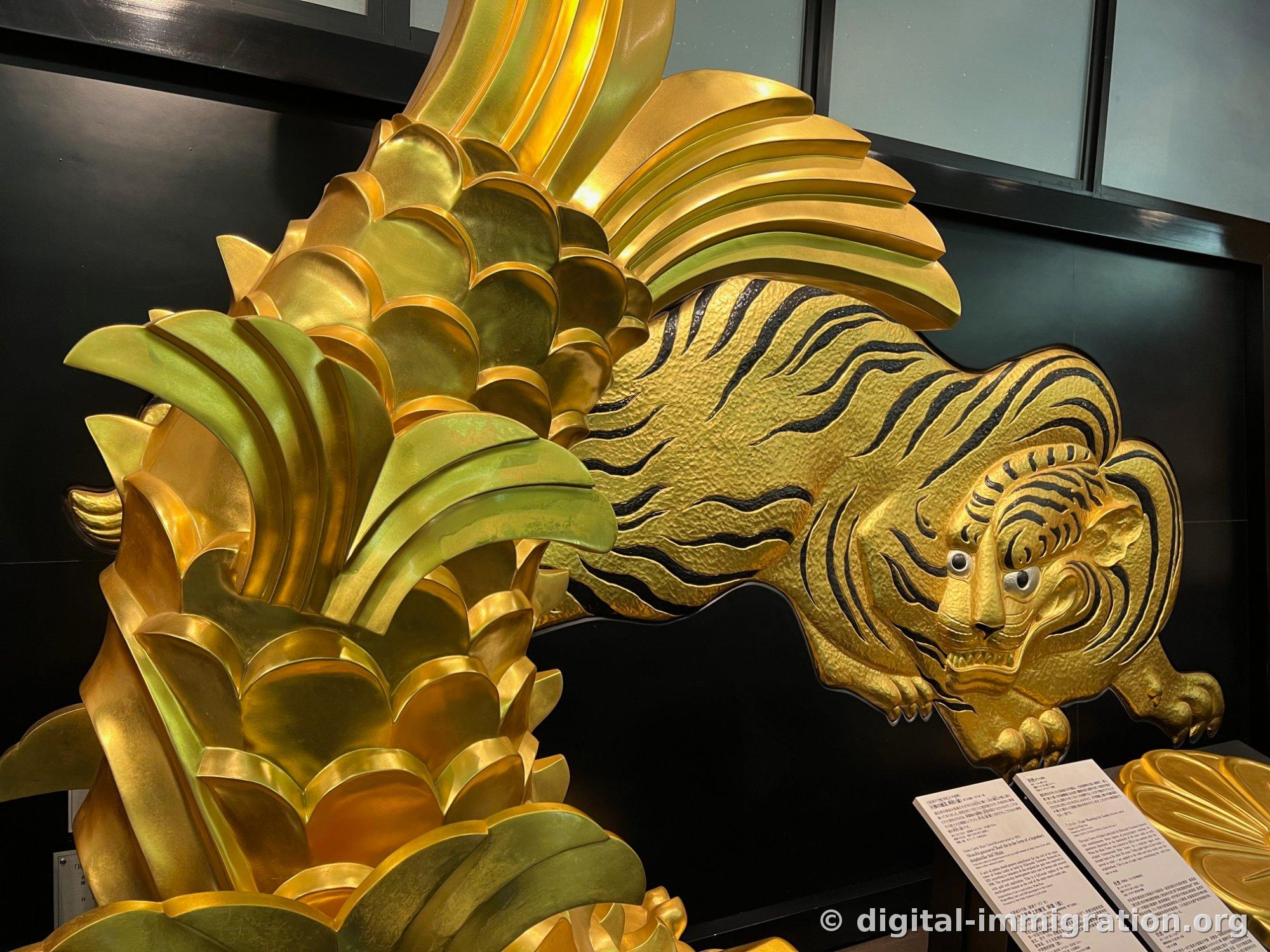
Inside, there are exhibits on every floor, with the life-size reproductions of the gold shachi-hoko and tiger guards being particularly impressive. Without any glass barriers, you can see them up close—every curve of their scales and even the black stripe patterns on the tiger's body. Their white inlaid eyes give them an oddly cartoonish expression.
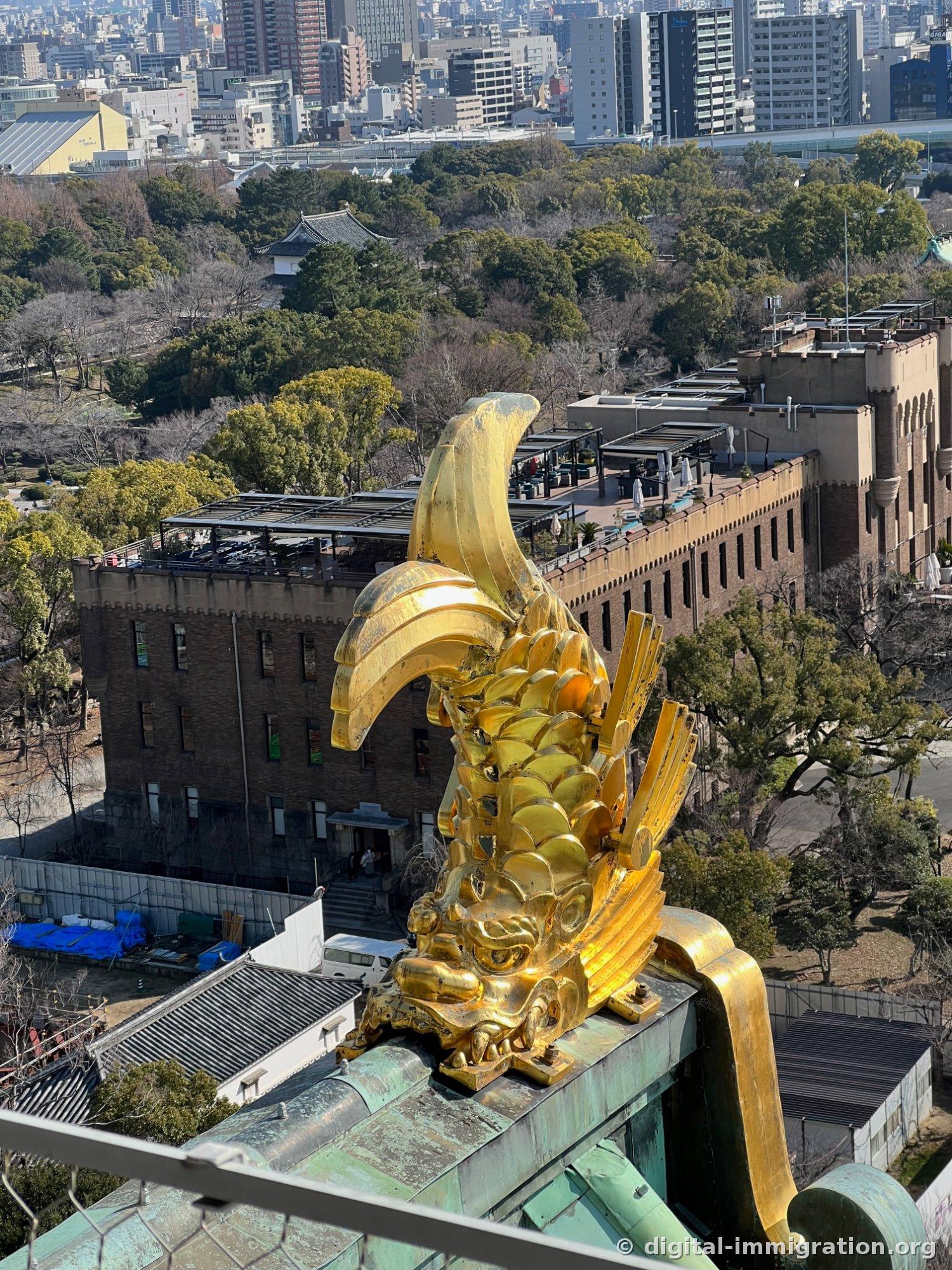
From the observation deck, you can see where the real shachi-hoko sits right below. The gold fish perched on the roof edge is close enough to almost touch, and beyond it stretches the old 4th Army Division headquarters building and the park forest.
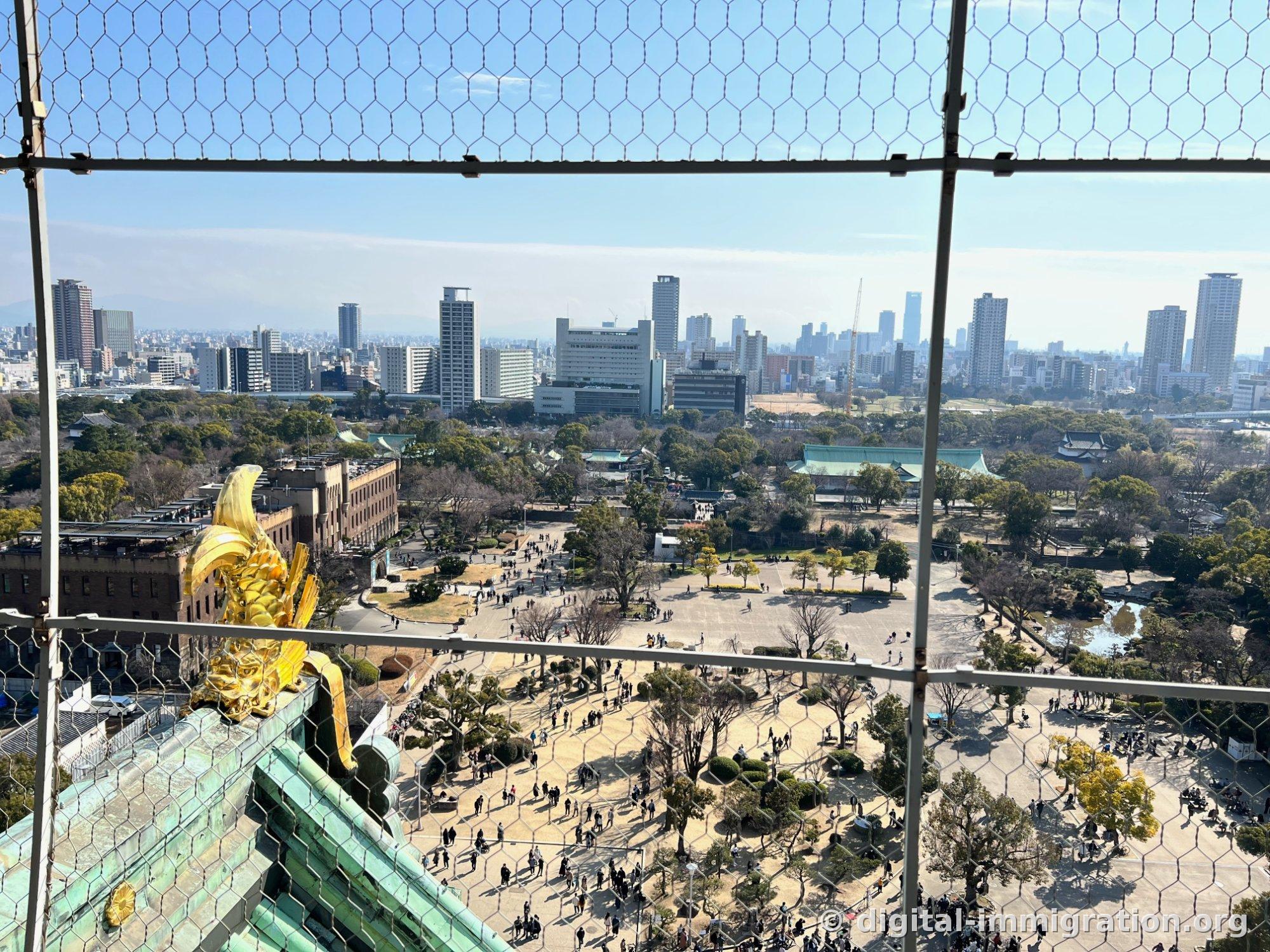
Turning to the opposite side, the plaza before the castle spreads out entirely below. Though dense safety netting makes for messy photos, the sight of people scattered like ants walking around and the Osaka skyline stretching beyond is something you need to see with your own eyes. That moment when the path I'd walked, the moat where I'd taken the boat, all come into view at once—that's why climbing these stairs was worthwhile. This view is precisely why I'd tell anyone they absolutely must climb the tenshu.
Finding the Human-Faced Stone
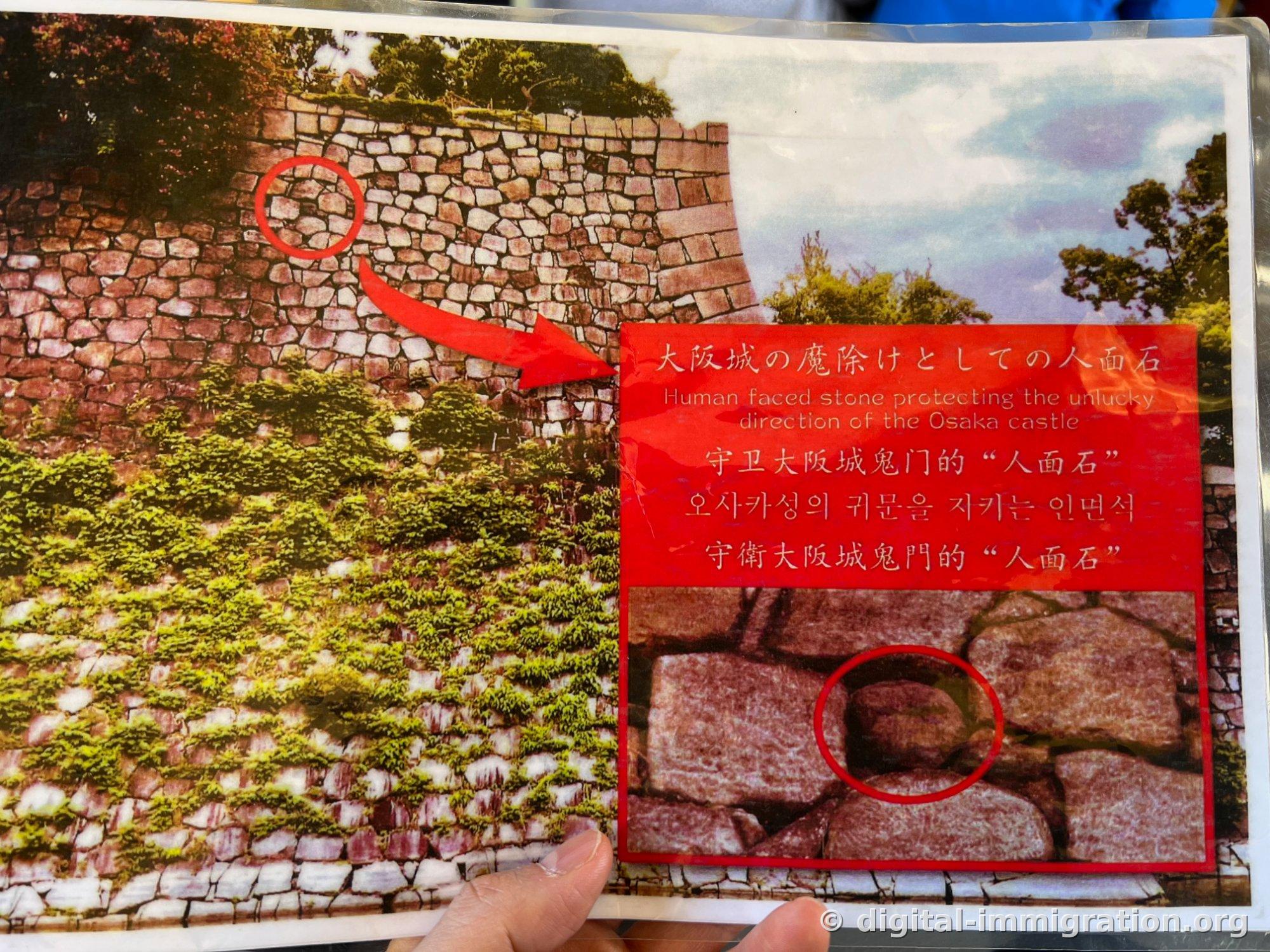
A volunteer guide was explaining, holding a laminated photo. The topic was the 'human-faced stone' that guards Osaka Castle's kimon—the unlucky direction. A red circle marked a point on the stone wall, and the guide pointed out a stone in the close-up photo that resembles a human face. You'd never find it without information. If you encounter a guide with these materials, it's worth stopping to ask.
People Brought Their Birds
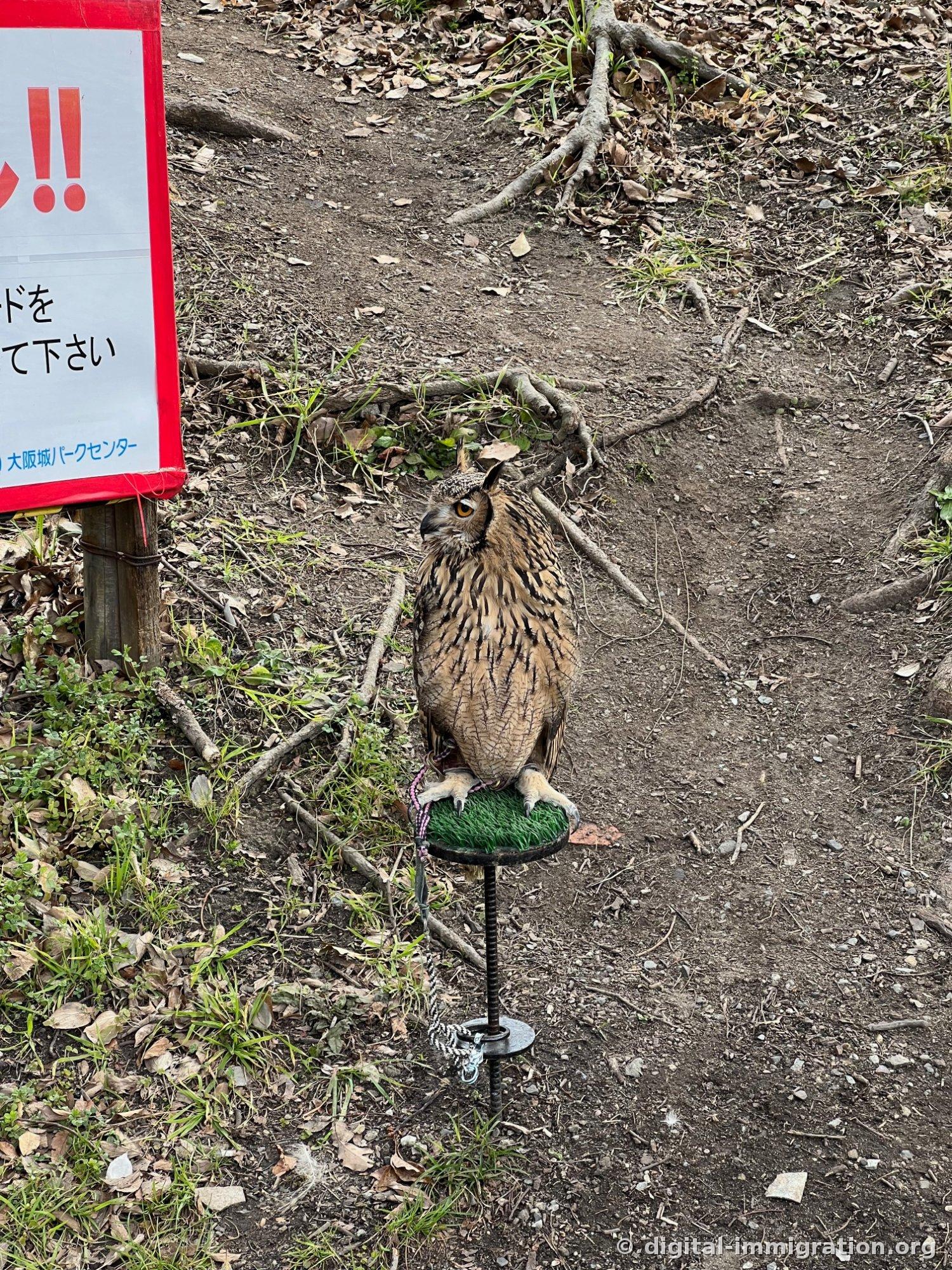
Coming down from the tenshu and turning onto a dirt path, I encountered an unexpected sight. A bird perch was planted beneath a tree on the park slope, with an eagle owl perched on it. The contrast with the red warning sign from Osaka Castle Park Center right next to it was comical. Even as people approached, the bird barely moved, only shifting its orange eyes.
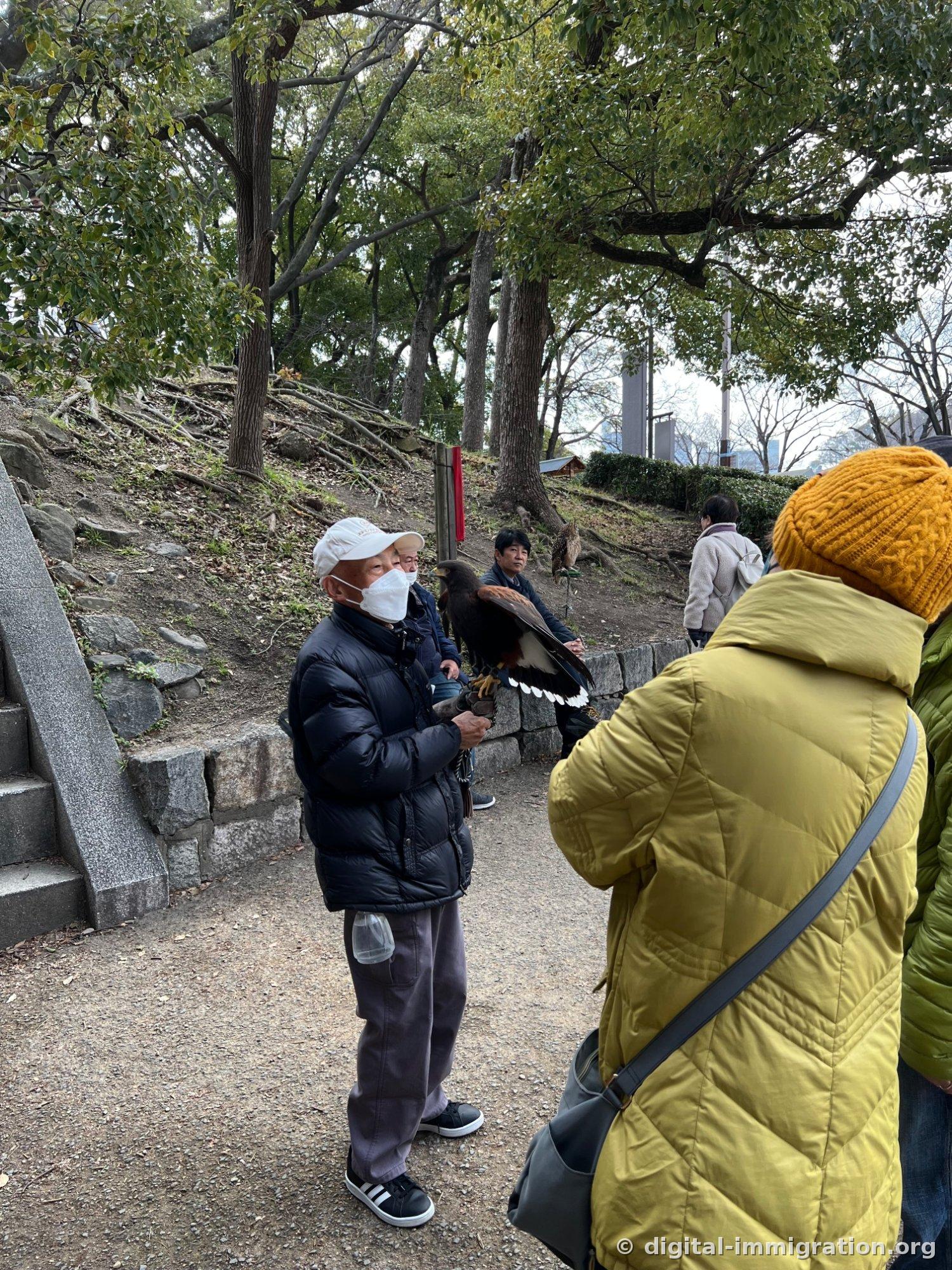
A bit higher up, an elderly person wearing a white hat stood with a Harris's hawk perched on a thickly gloved arm. When the hawk spread its wings wide, everyone nearby immediately pulled out their phones. It wasn't an official performance—just falconers out with their birds—but it doesn't happen every day, so meeting them was lucky.
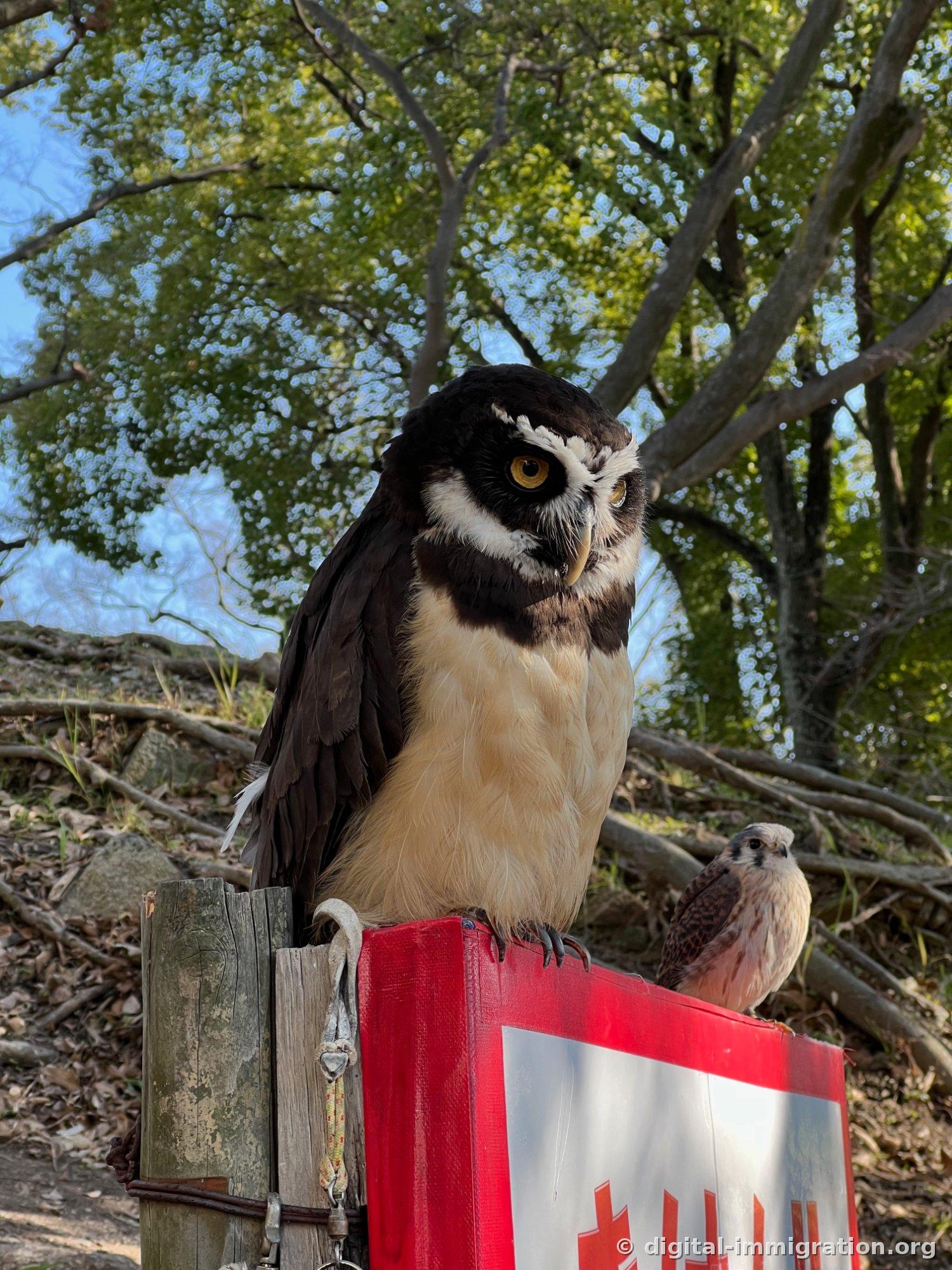
Under another tree, a spectacled owl and a small merlin sat together. The spectacled owl, with its distinctive black face and white eyebrow markings, was noticeably larger than the other birds, while the merlin beside it fit in a palm. The sight of the two perched side by side with spring sunlight filtering through the leaves was so appealing I stood watching for a while.
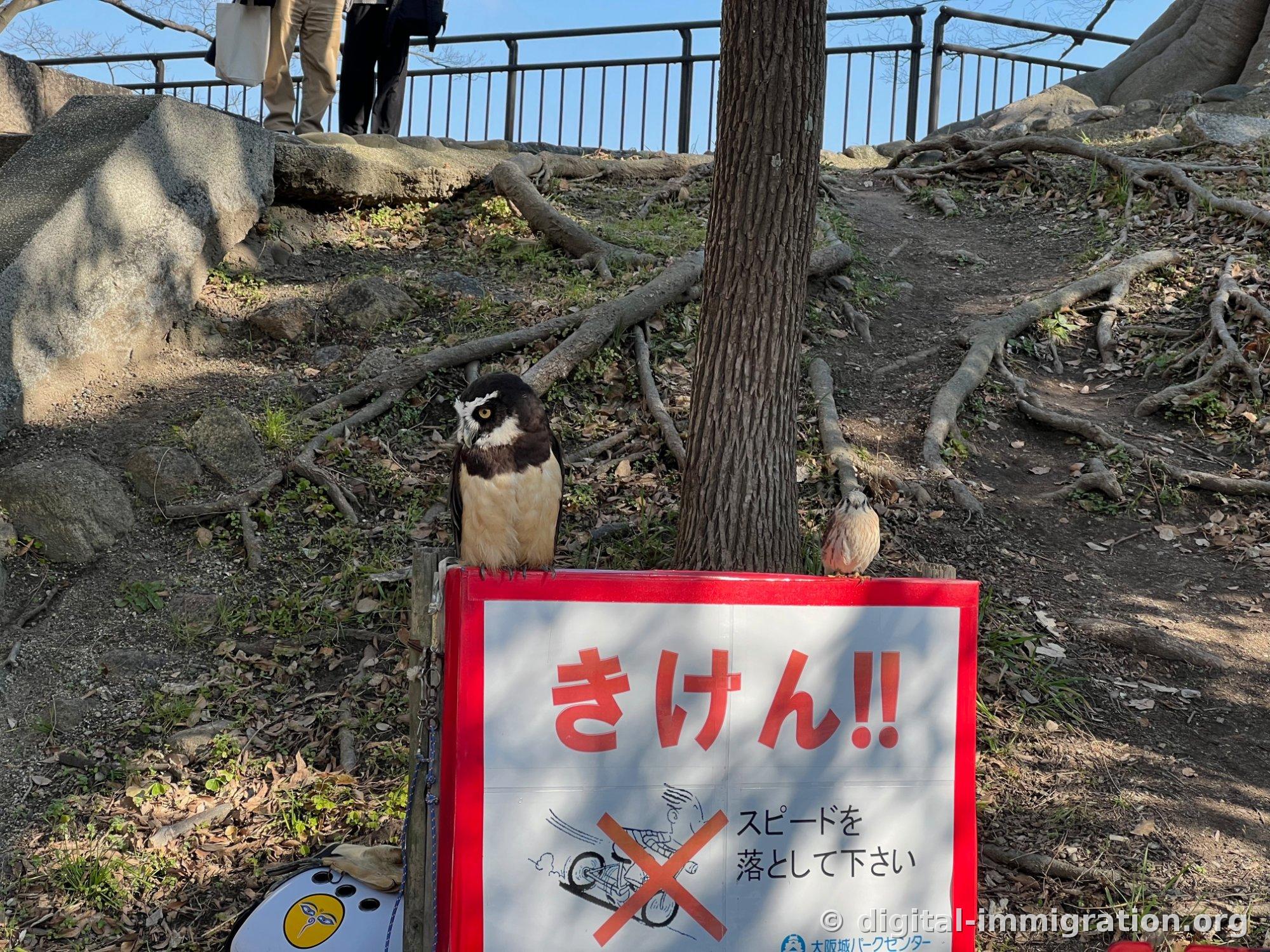
Stepping back, I realized the birds had been perched on a bicycle warning sign reading 'きけん!!(Danger!!) Please Reduce Speed.' The birds sat unbothered on the sign while visitors passed on the hill behind. This single scene perfectly captures the atmosphere of Osaka Castle Park.
Street Vendor Frank Sausage: 300 Yen Each
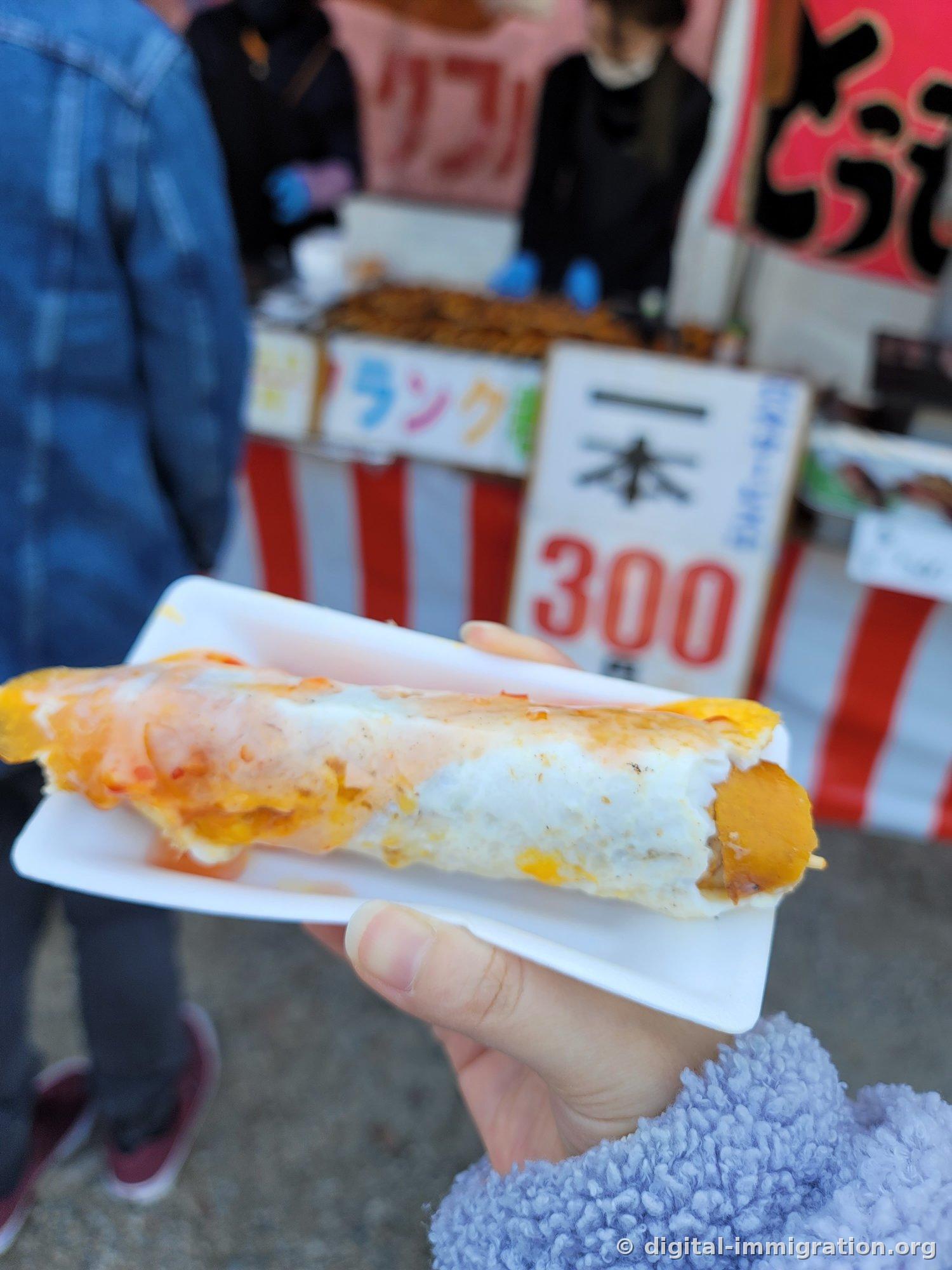
As the sun set, I filled my stomach at a street vendor stall below the castle. At a stand with a red-and-white striped tent prominently displaying '300 yen each,' I bought a frank sausage wrapped in a thin egg coating. Served on a paper plate, the egg wrapped completely around the sausage with ketchup dripping down. When eaten while hot, the egg is soft and the sausage inside bursts with savory flavor. It's not haute cuisine, but after a full day of walking, boating, and climbing stairs, that single 300-yen frank sausage standing in the cool evening air was the most delicious thing I had all day.
If I Return, I'd Do It This Way
- Morning moat walk → Gozabune ride around lunchtime → Tenshu in the afternoon light. This order was best for both photos and stamina.
- Gozabune boarding closes 10 minutes before departure, so check your ticket time carefully. Fares and service availability can vary by weather, so it's best to confirm on-site.
- The park's electric cars and road trains operate 9:30~17:30 according to the map. If you're with children or elderly visitors, it's worth taking even one segment.
- The stairs to the tenshu observation deck narrow as you go higher. It's easier to leave strollers below and climb up.
I came to see one castle but ended up taking a boat ride, watching a train pass by, having a staring contest with an owl, and eating sausage from a street vendor. A half-day wasn't nearly enough.
Read next
- From Akihabara's Chuo-dori to the Kanda River: A Record of Tokyo's Electronics District Revisited Multiple Times
Tokyo's Akihabara is a neighborhood where it's hard to say you've seen everything in a single visit. I've come multiple times across different seasons, and each time the signs chan…
Tokyo · Akihabara - Buying a Single ¥300 Year-End Jumbo Lottery Ticket at Nishi-Ginza Chance Center in Tokyo
Exit from the Hibiya exit of Tokyo's Shimbashi Station, walk toward the elevated highway for about three minutes, and suddenly you'll see a line of people stretching along the side…
Tokyo · Nishi-Ginza Chance Center - Ueno Ameyoko, the real magic starts after sunset — an evening walk from the Okachimachi Gate to Ueno Station
Every time I come to Tokyo, my feet find their way to Ueno Ameyoko (アメ横) without fail. This time I entered from the Okachimachi side and worked my way toward Ueno Station. I've met…
Tokyo · Ameya Yokocho Market