Kawaguchiko Kachikachiyama Ropeway, the day I bought a one-way ticket and spent two hours struggling on the mountain trail
This is a ropeway that climbs Tenjozan, located at the eastern end of Lake Kawaguchiko in Kawaguchiko, Yamanashi Prefecture. The official name was "Kachikachiyama Ropeway," but the…
Yamanashi · Kachikachi Yama Ropeway
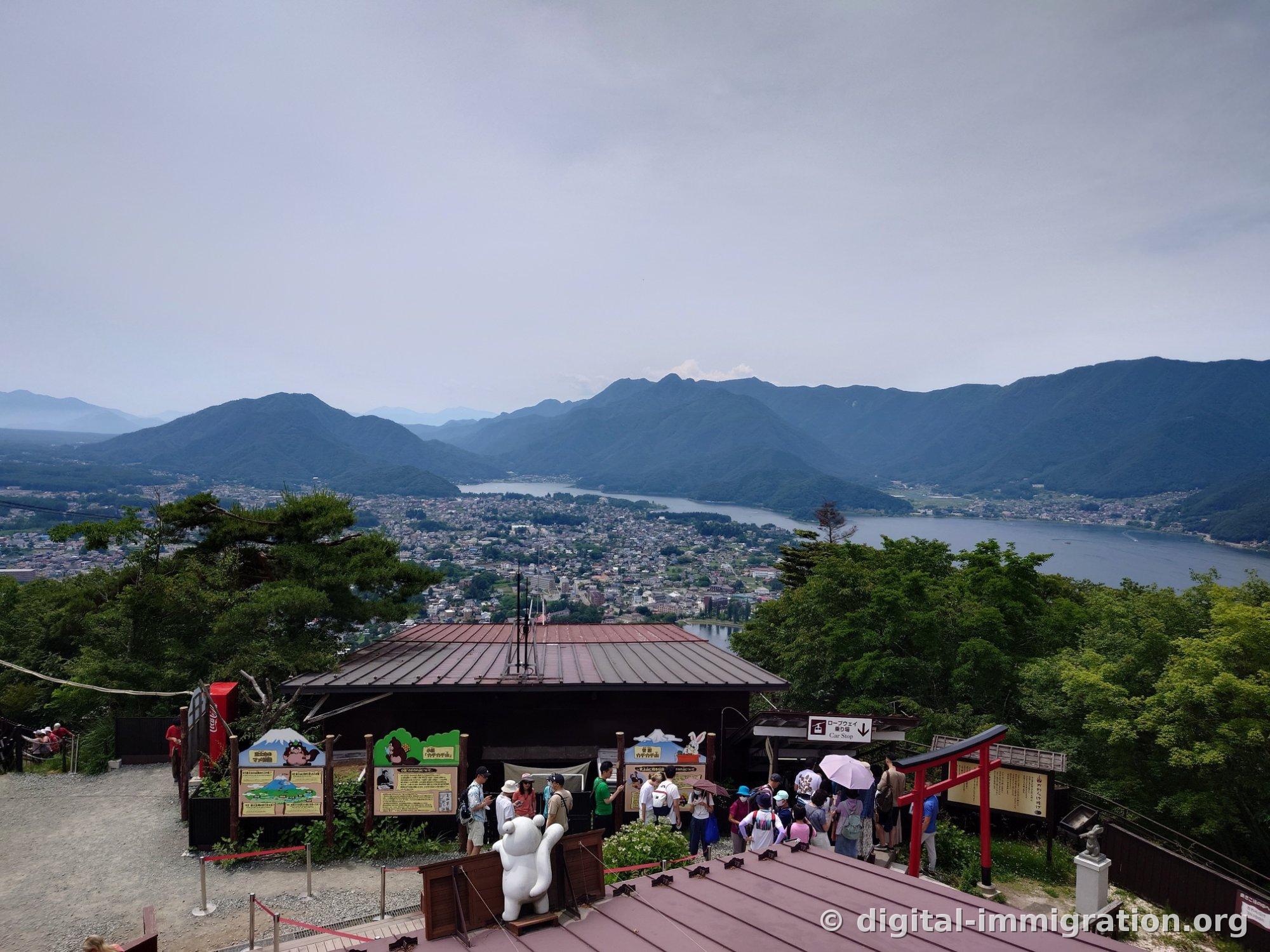
This is a ropeway that climbs Tenjozan, located at the eastern end of Lake Kawaguchiko in Kawaguchiko, Yamanashi Prefecture. The official name was "Kachikachiyama Ropeway," but the sign now clearly displays 富士山パノラマロープウェイ (Fujishan Panorama Ropeway) in large letters. Since many people are familiar with the old name, both names appear mixed together in map apps. I arrived in time for the first departure at 9:30 AM, but the line at the ticket counter already stretched all the way to the parking lot.
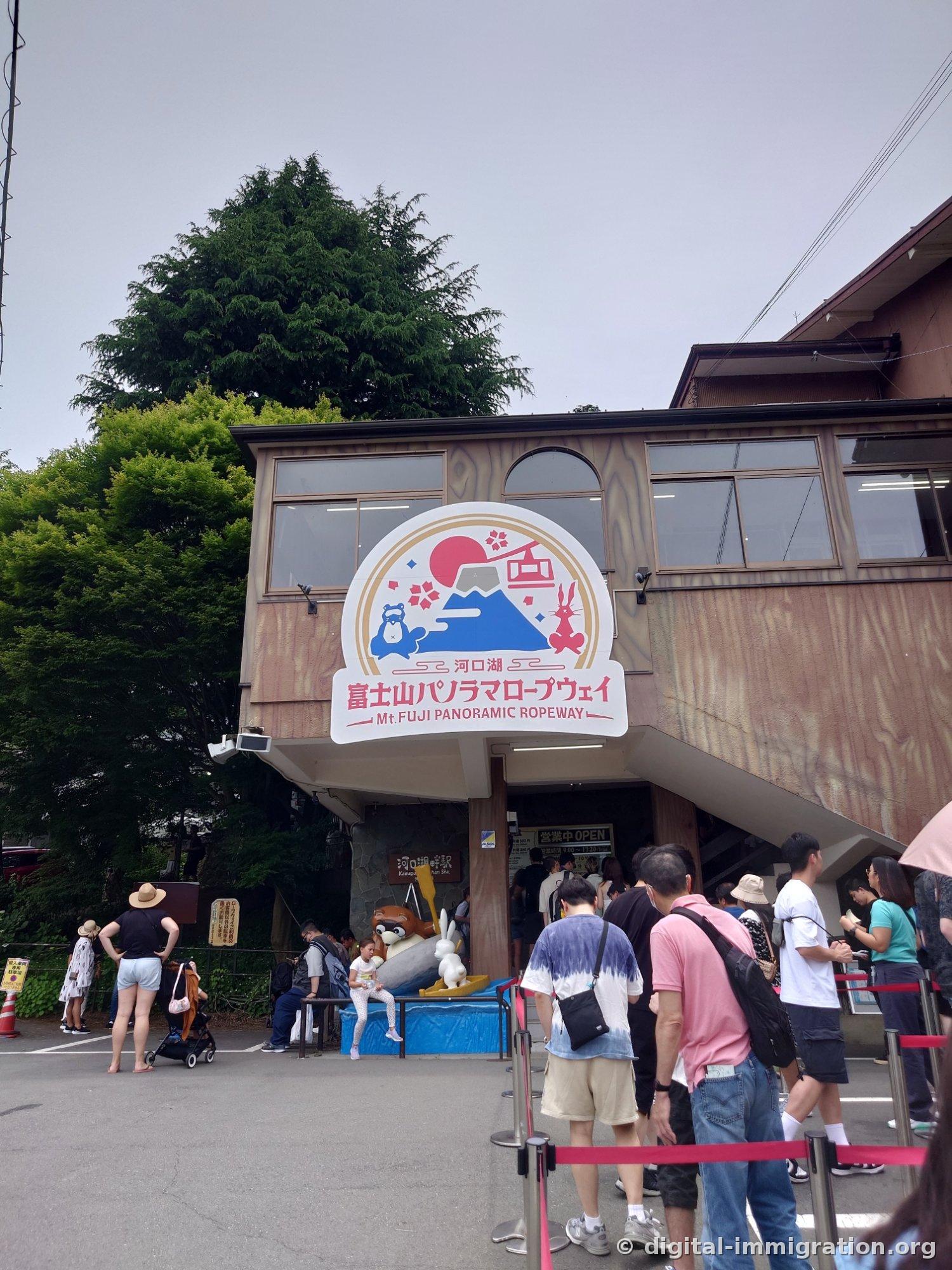
The blue tanuki and red rabbit inside the sign are the origin of this mountain's name. That tanuki and rabbit from the Japanese folktale "Kachikachiyama." These two characters follow you from the sculptures in front of the ticket office all the way to the summit observation deck. Families who brought their children seemed to be coming mainly for these characters.
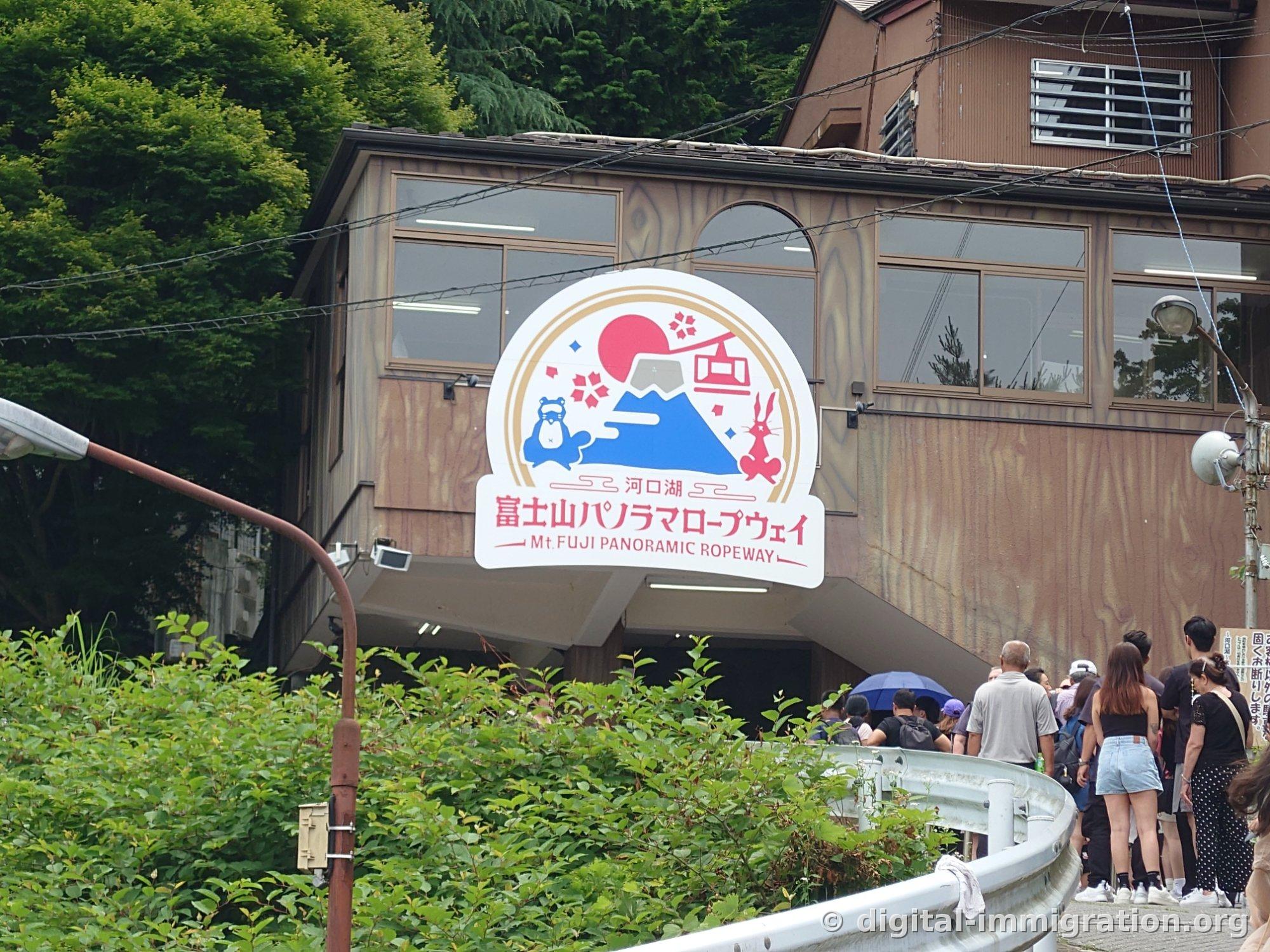
One thing to remember when buying a ticket—get a round trip, no matter what
Let me start with the most important advice. At the ticket counter, you can choose between a one-way and a round-trip ticket. Always get a round trip. I thought "I can just walk back down," bought a one-way ticket, and that single decision cost me an entire afternoon.
The information sign says the descent on foot takes 30 minutes. In reality, it took two hours. Thirty minutes and two hours are not a difference you can write off as a mistake. It's not a well-maintained hiking trail—it's a mountain path with exposed soil and tree roots, and on steep sections you have to descend sideways like a crab. My shoes kept slipping. There was a stretch of over twenty minutes with no one ahead or behind me.
On top of that, this area is bear country. Warning signs about wildlife are posted on the fencing near Sanbasaki Station. When you hear even a rustling sound while descending alone, your walking becomes strange. This is not something you want to experience just to save the round-trip fare. Whether you're confident in your knees or have plenty of time, buy a round-trip ticket.
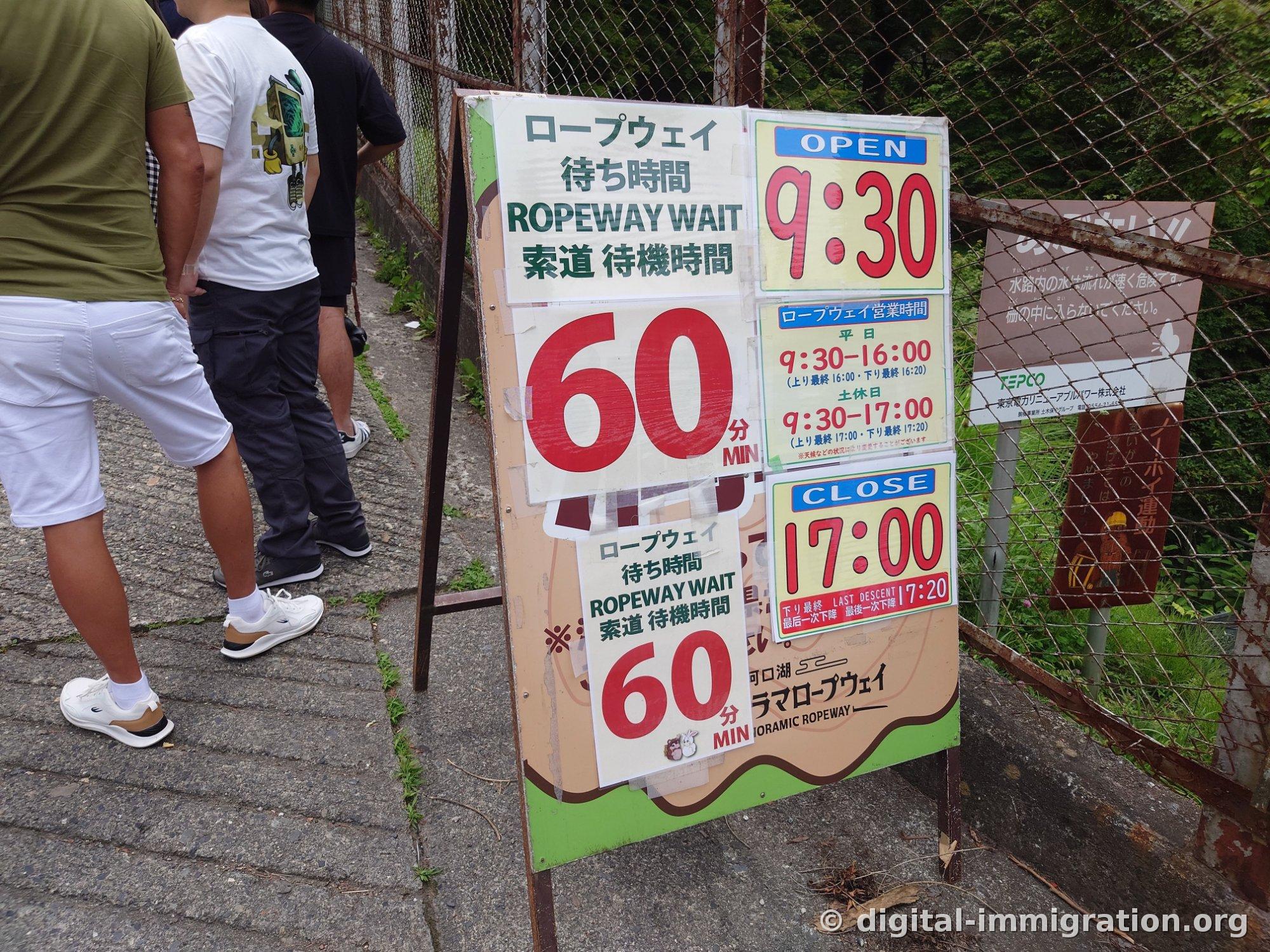
The 60-minute wait sign was honest. I actually stood in line for nearly an hour. The queue winds up the stairs with almost no shade. If you're going in summer, bring a bottle of water before you line up. Since there's a set time for the last descent, if you arrive late in the afternoon, you need to calculate how much time you'll have to relax at the top.
Just over 3 minutes, a short but refreshing gondola ride
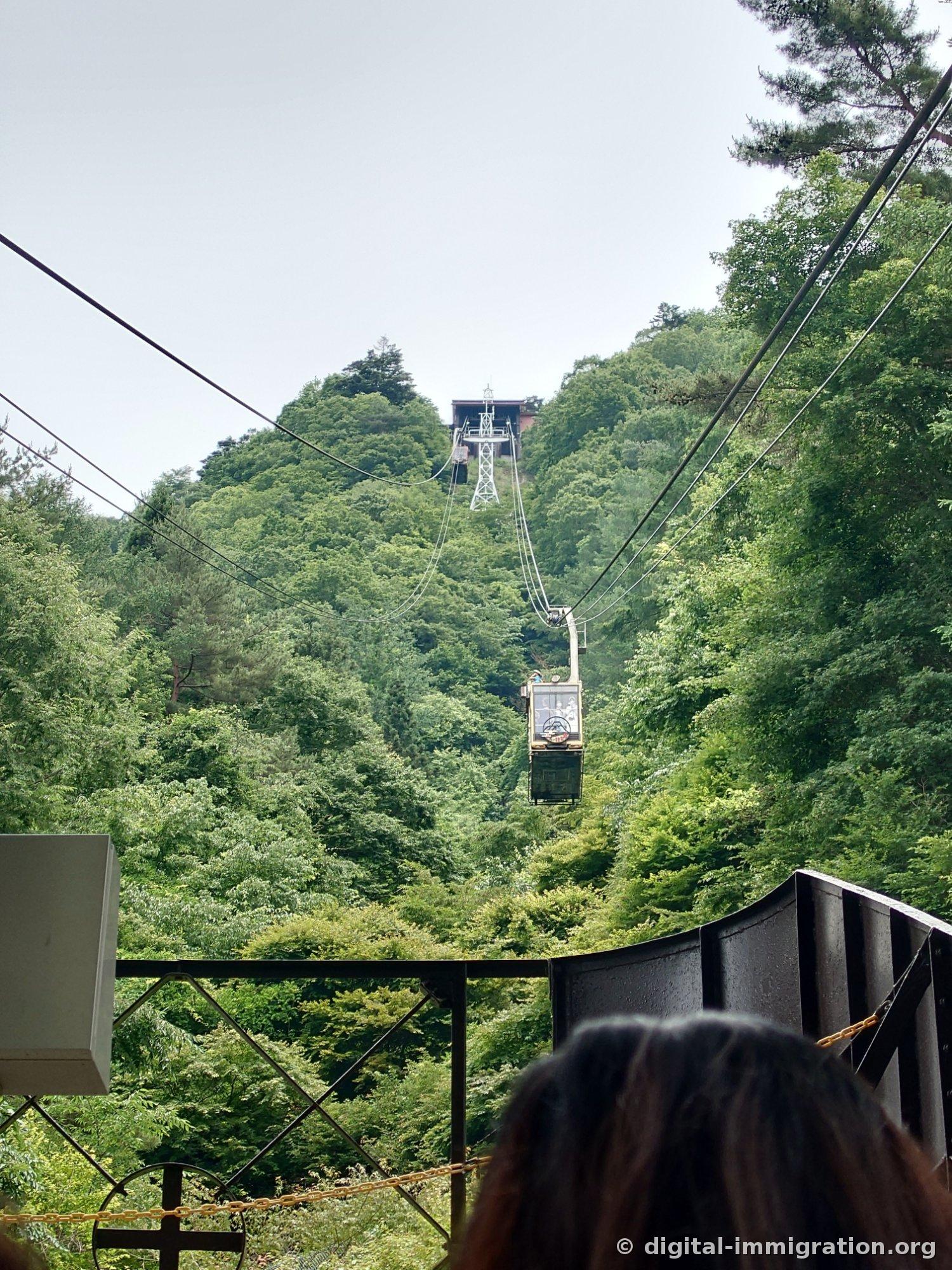
The gondola itself is quick. About 3 minutes from Sanbasaki Station to Fujimidai Station. Two small cream-colored cabins pass each other going up and down. Since everything outside is green, even if you look down while ascending, you only see trees.
What I saw from the summit—the lake side and the Mount Fuji side
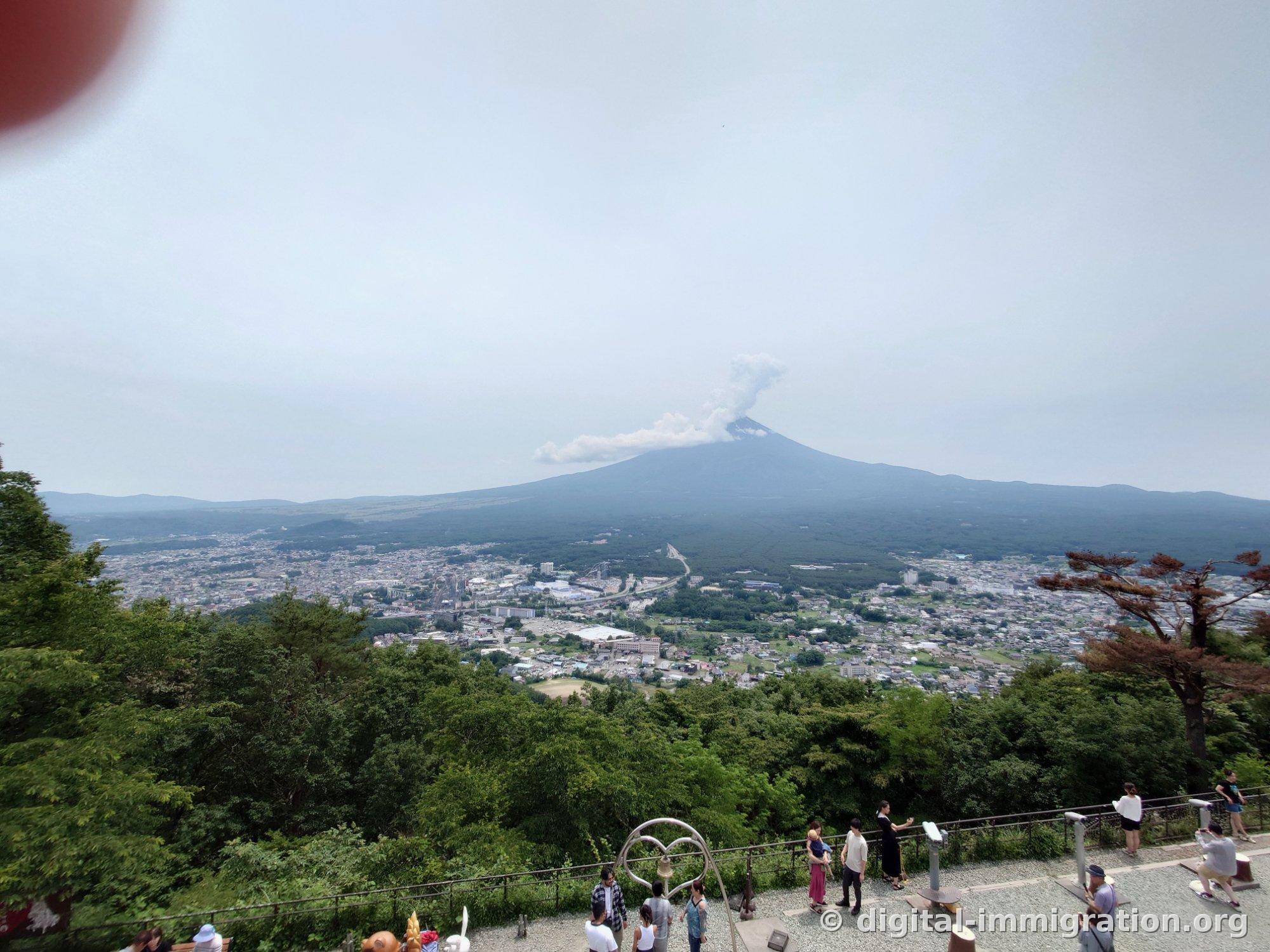
When you exit at Fujimidai Station, the observation deck splits into two directions. If you head around behind the station building, you can see the entire Lake Kawaguchiko spread out below. Mountain ridges wrap around the lake in layers, and the town is densely packed below. Many people who came just to see Mount Fuji ended up spending more time looking at this view.
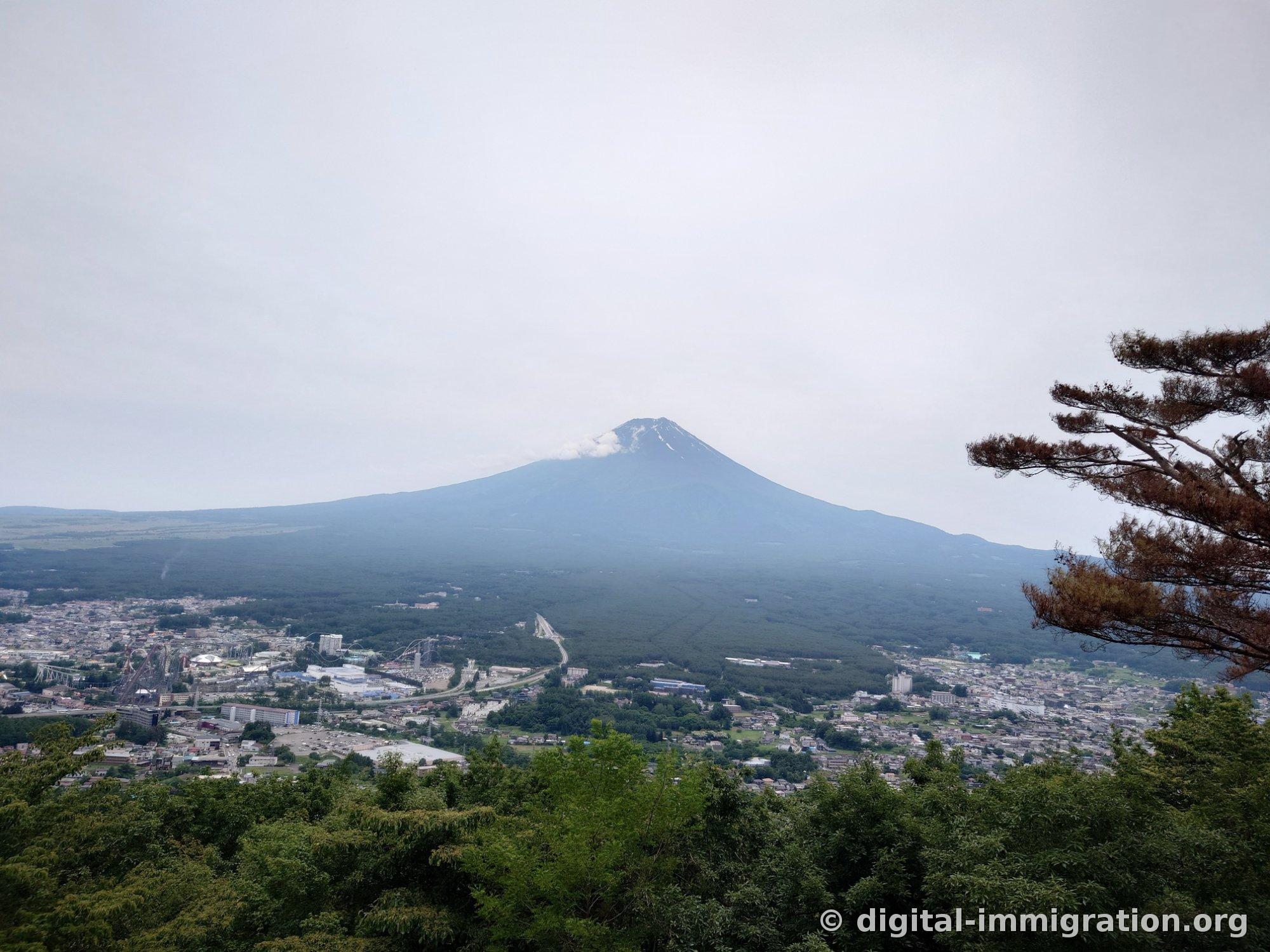
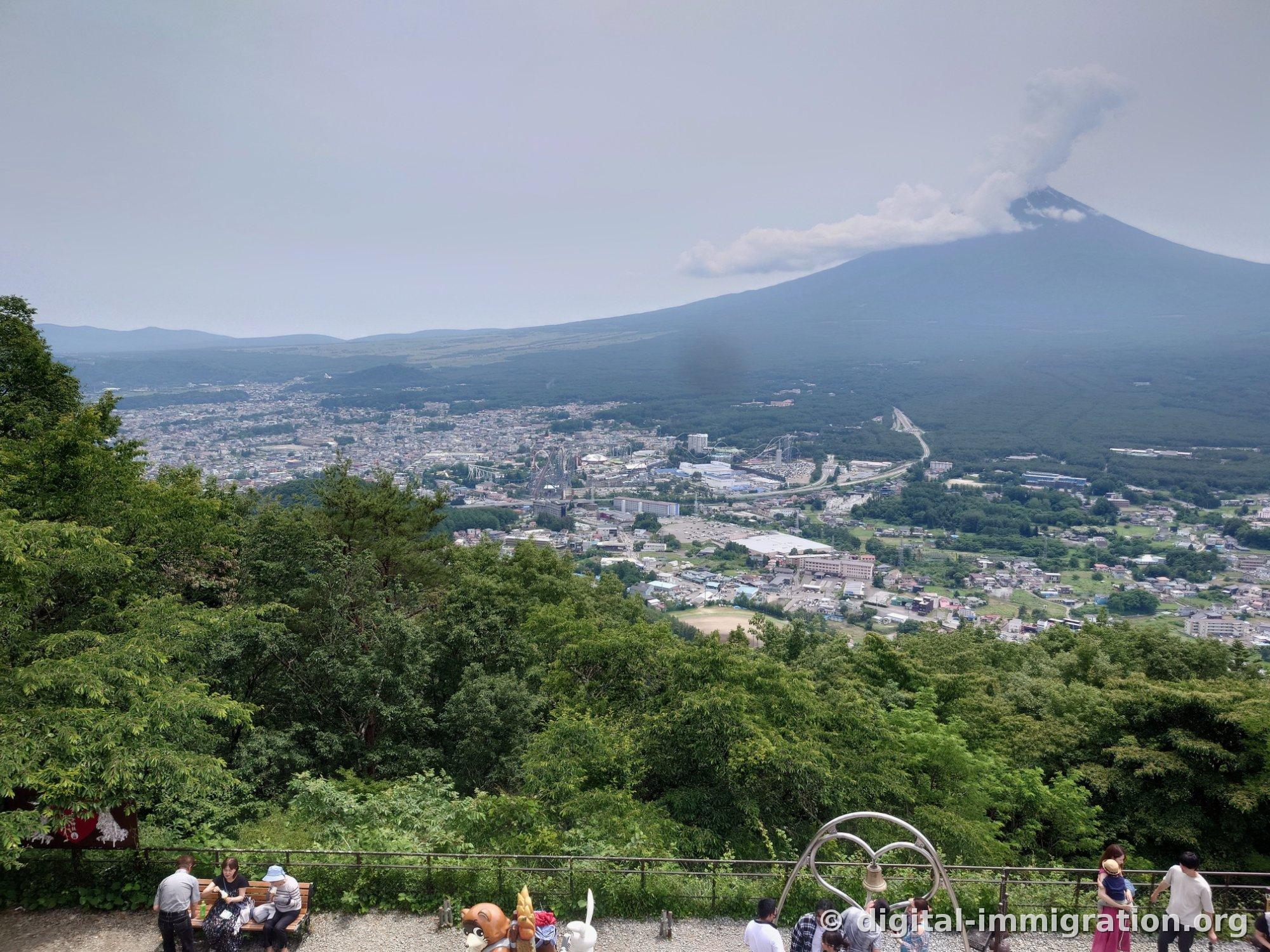
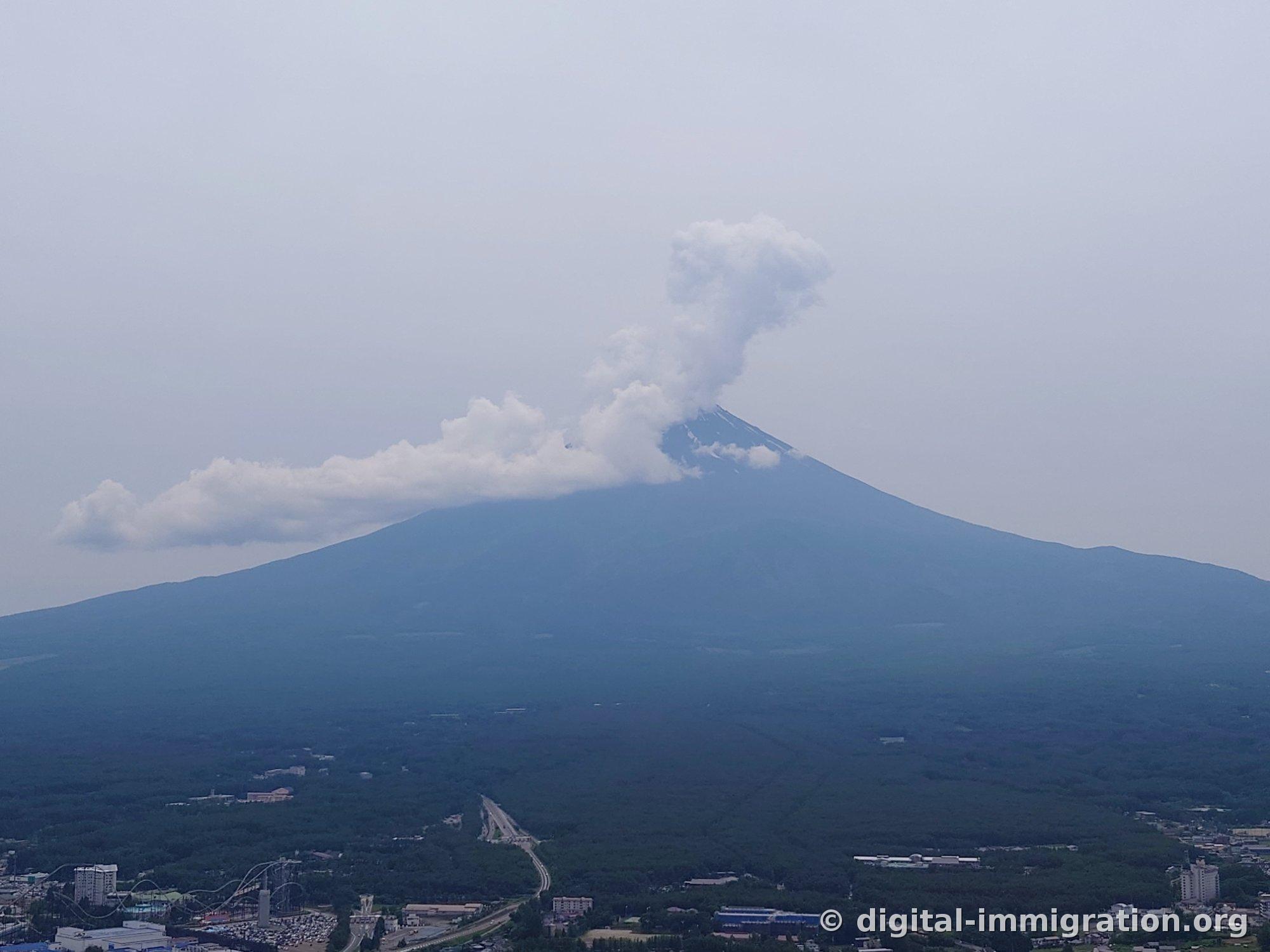
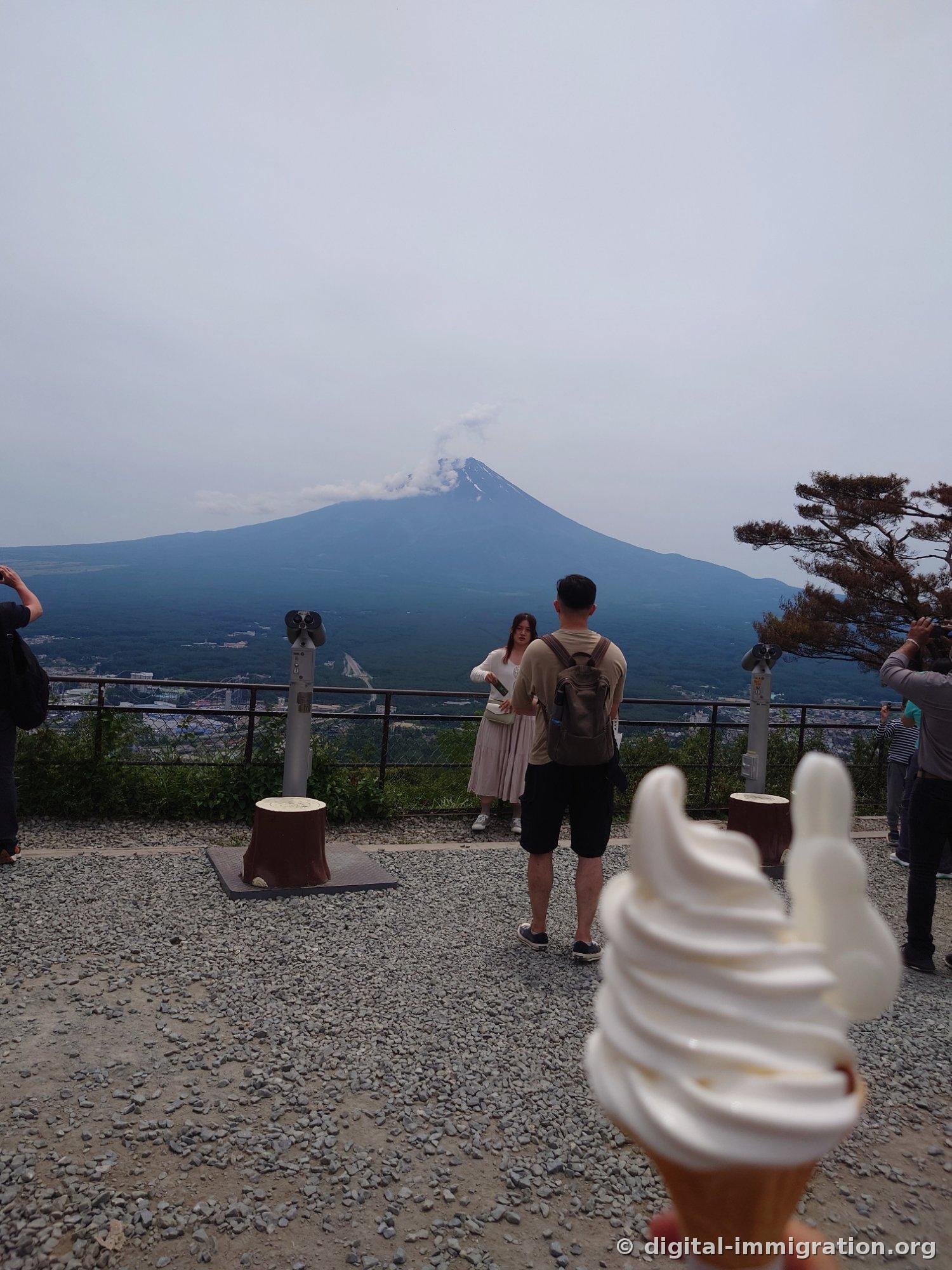
On the opposite side is Mount Fuji. On the day I went, the morning showed only a faint silhouette through the haze, but about thirty minutes later, clouds streaming from the summit began to stretch out like a flag to the side. Below the mountain, the white rails of the Fuji-Q Highland roller coaster are visible, and beyond that, Aokigahara Forest spreads out in a deep blue-green.
Just buy the soft serve
The observation deck snack shop sells soft-serve ice cream. Don't dismiss it as just tourist-spot ice cream—buy one, stand in the gravel area in front of the railing, look toward Mount Fuji, and eat it. This was the best thing I did on this course that day. The summit breeze is cool, and the ice cream melts quickly and drips down your hands. The milk flavor is rich, and the sweetness isn't overwhelming.
Next to the railing are a couple of coin-operated telescopes, and people take turns taking photos in front of them. There's also a heart-shaped bell, which keeps the line short. If you really want a photo, you need to wait for people to clear out.
How to get there and time management
From Kawaguchiko Station, it's about a 15-minute walk downhill toward the lake. If you take the retro bus (red line) departing from in front of the station, you can get off right at the "Yuran-sen/Ropeway Entrance" stop. It's a walkable distance, so if the weather is nice, it's better to walk along the lakeside. If you're driving, you'll need to use a paid parking lot nearby, but after 10 AM parking spaces become hard to find.
Here's how to allocate your time without rushing:
- Ticket purchase and waiting: 40–60 minutes based on busy weekend standards. The first departure time slot is relatively shorter.
- Boarding: Just over 3 minutes one way.
- Time at summit: 40 minutes to 1 hour. This is about right if you see both sides of the observation deck, eat ice cream, and take photos.
- Descent: 3 minutes by ropeway, two hours on foot.
Don't give up if it's a cloudy day. When I arrived, Mount Fuji looked like just a gray mass and I was disappointed, but within an hour the clouds cleared and moved again, and it became a completely different mountain. When you reach the summit, don't just take a photo and leave—try to stay for at least 30 minutes. There's a pretty good chance Mount Fuji will show you its face during that time.
Prices vary slightly each time, so it's best to check the exact fare at the ticket counter. However, the difference between round-trip and one-way fares is nothing compared to the cost of wandering for two hours on a mountain trail worrying about bears.
Read next
- From Akihabara's Chuo-dori to the Kanda River: A Record of Tokyo's Electronics District Revisited Multiple Times
Tokyo's Akihabara is a neighborhood where it's hard to say you've seen everything in a single visit. I've come multiple times across different seasons, and each time the signs chan…
Tokyo · Akihabara - Buying a Single ¥300 Year-End Jumbo Lottery Ticket at Nishi-Ginza Chance Center in Tokyo
Exit from the Hibiya exit of Tokyo's Shimbashi Station, walk toward the elevated highway for about three minutes, and suddenly you'll see a line of people stretching along the side…
Tokyo · Nishi-Ginza Chance Center - Ueno Ameyoko, the real magic starts after sunset — an evening walk from the Okachimachi Gate to Ueno Station
Every time I come to Tokyo, my feet find their way to Ueno Ameyoko (アメ横) without fail. This time I entered from the Okachimachi side and worked my way toward Ueno Station. I've met…
Tokyo · Ameya Yokocho Market