Kamakura Kokumae Crossing, An Afternoon Standing Among School-Uniformed Visitors in Front of the Enoden
In Kamakura City, Kanagawa Prefecture, there's a railway crossing where the Enoshima Electric Railway (Enoden) intersects with National Route 134. On the map it's labeled as "Kamak…
Kanagawa · Slam Dunk Railway
In Kamakura City, Kanagawa Prefecture, there's a railway crossing where the Enoshima Electric Railway (Enoden) intersects with National Route 134. On the map it's labeled as "Kamakura Kokumae Station Crossing," but among Korean visitors it's known as the "Slam Dunk railroad crossing"—the exact spot where Hanamichi Sakuragi stands in the opening credits. I took the Enoden from Fujisawa, and even before the train pulled into Kokumae Station, I could see crowds of heads outside the window and thought, "Ah, this must be it."
Aim for the Frontmost Seat in the Front Car of the Enoden
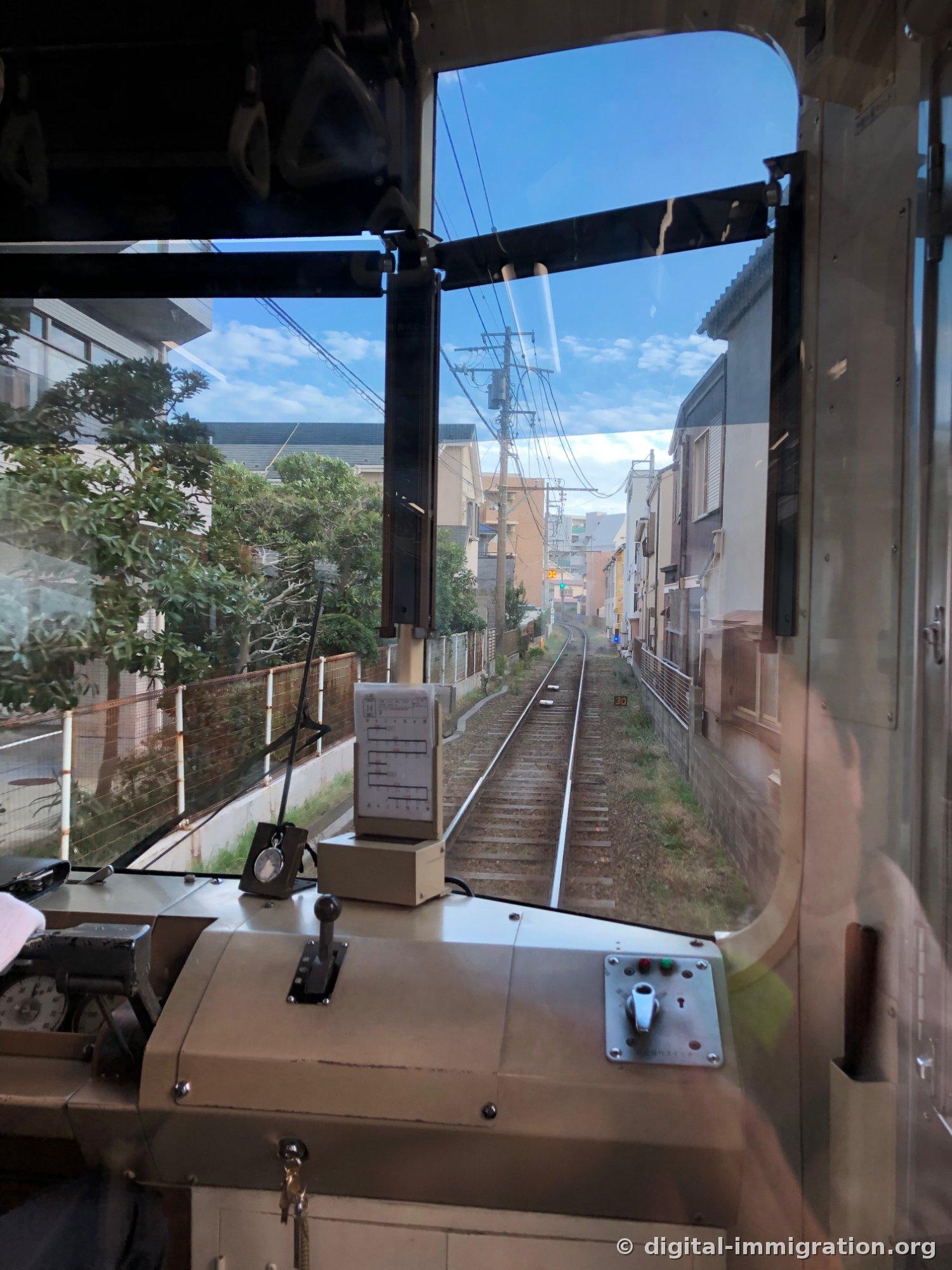
Once you're here, you should actually ride the Enoden itself, not just photograph the crossing. If you stand in front of the glass window right behind the operator when departing from Fujisawa Station, you can see the track stretching straight ahead. It's narrow. The walls of neighboring houses and laundry-lined balconies pass by close enough to touch. There's a speed-limit sign marking 30 km/h in some sections, and the train actually crawls along at that pace.
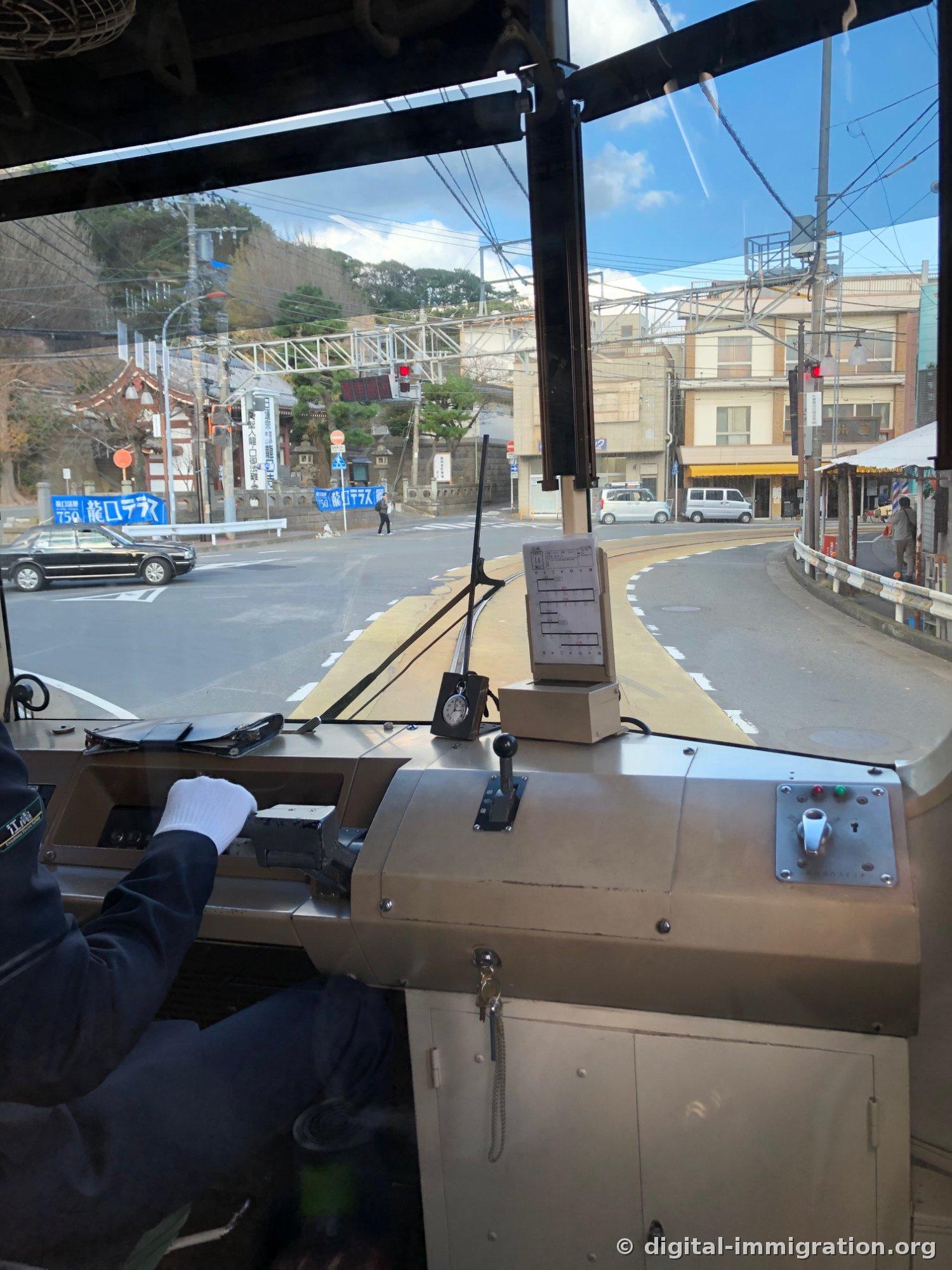
After passing Enoshima Station and nearing Koshigoe, the track suddenly rises onto the road surface. This is where the train and cars share the same asphalt. A red "Train Approaching" display lights up next to the traffic signal, and the operator in white gloves slowly eases the control handle while navigating the curve. Out the left window, the entrance to Ryukoji Temple and a blue "龍口 Terrace" signboard flash past. This section is only about 200-300 meters long, but it feels like riding a street tram—this was my favorite part.
The Crossing is Absolute Chaos
Exiting the ticket gate at Kamakura Kokumae Station and there's the crossing, just 30 seconds away—basically right in front of you. Even while the barrier is down, people line up in front of the track, and beyond them stretch National Route 134 and Sagami Bay in their entirety. The moment I saw this angle for the first time, I understood instantly why this place is so famous. The sea is pressed right against the back of the road, and the sound of waves cuts through the noise of traffic.
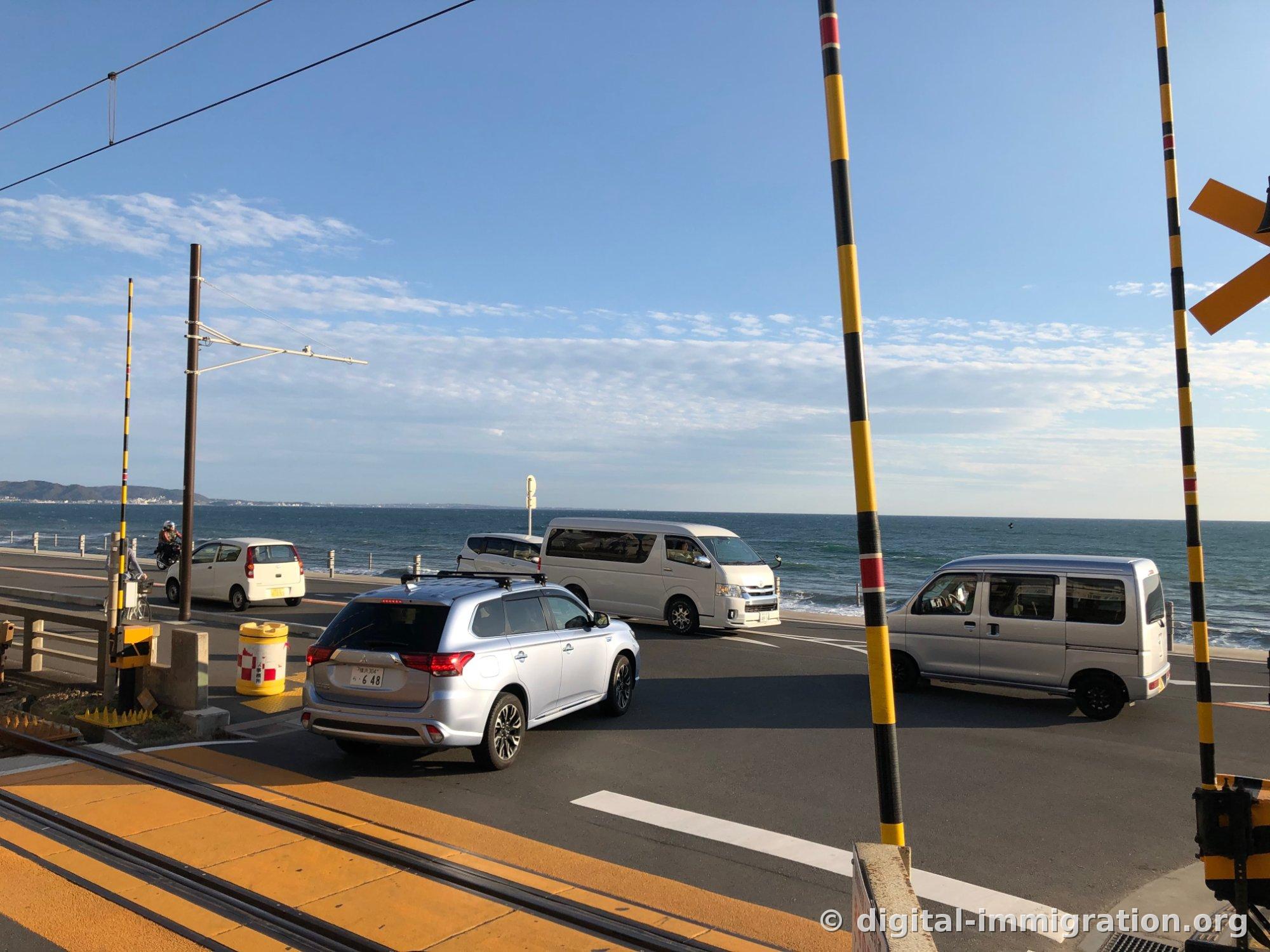
The reason this crossing became famous worldwide is simple: the Slam Dunk opening scene. So quite a few people who come here are just trying to get one photo. That included me. But what really surprised me was people who showed up in actual school uniforms. Sailor uniforms, red ribbons, white socks, and loafers—the complete set—standing next to the barrier. Not just one person, but several. Whether they're rented uniforms or their own, I'm not sure, but they all strike poses like Hanamichi or Chishu, while their companions squat on the opposite side holding up smartphones and timing the shot.
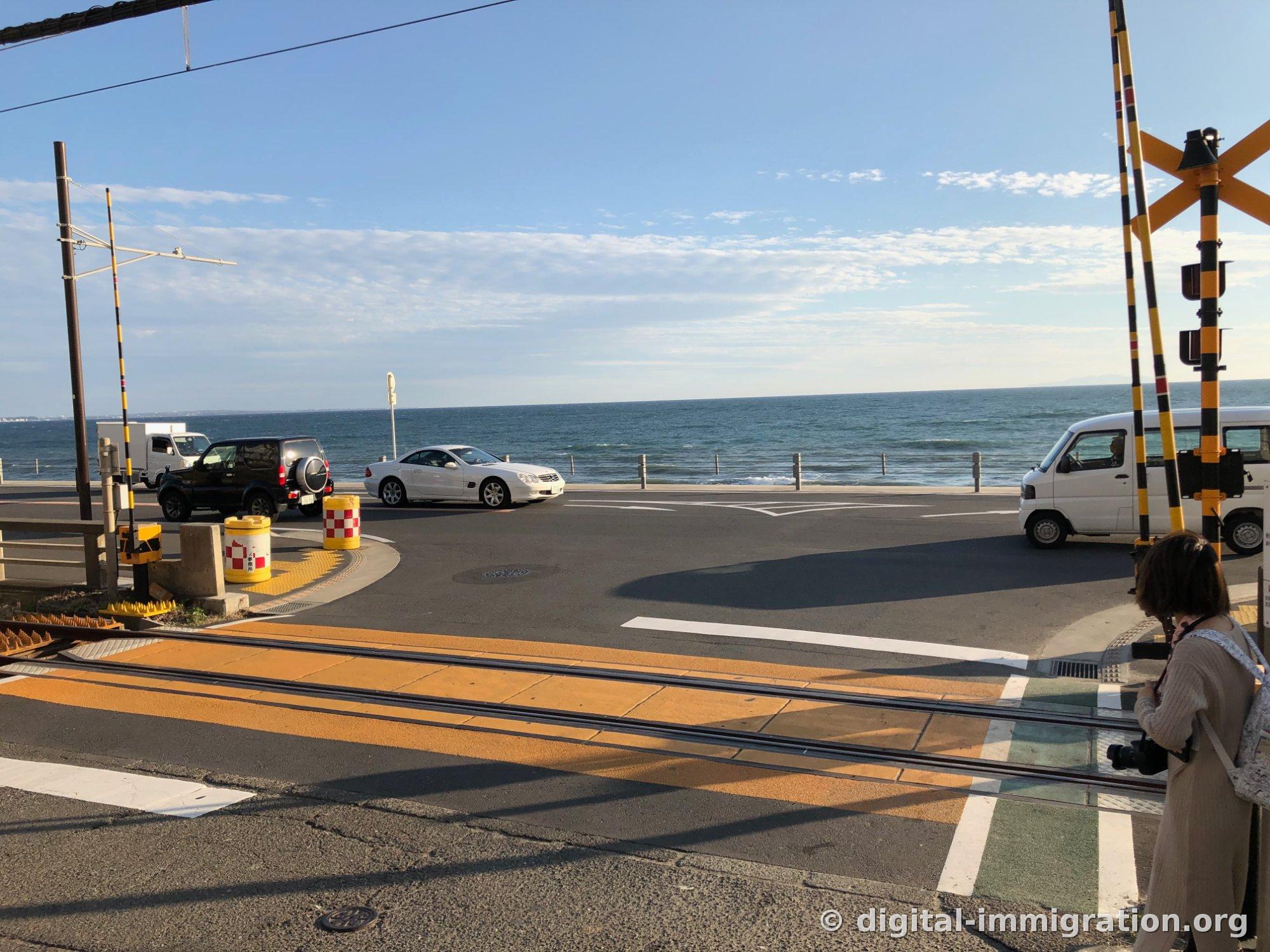
The interesting part is that no one looks at each other strangely. Everyone's here for the same reason. When the barrier bell starts going ding-ding-ding, cameras go up simultaneously from all directions. There's something pretty funny about the tension in that moment. Everyone holds their breath.
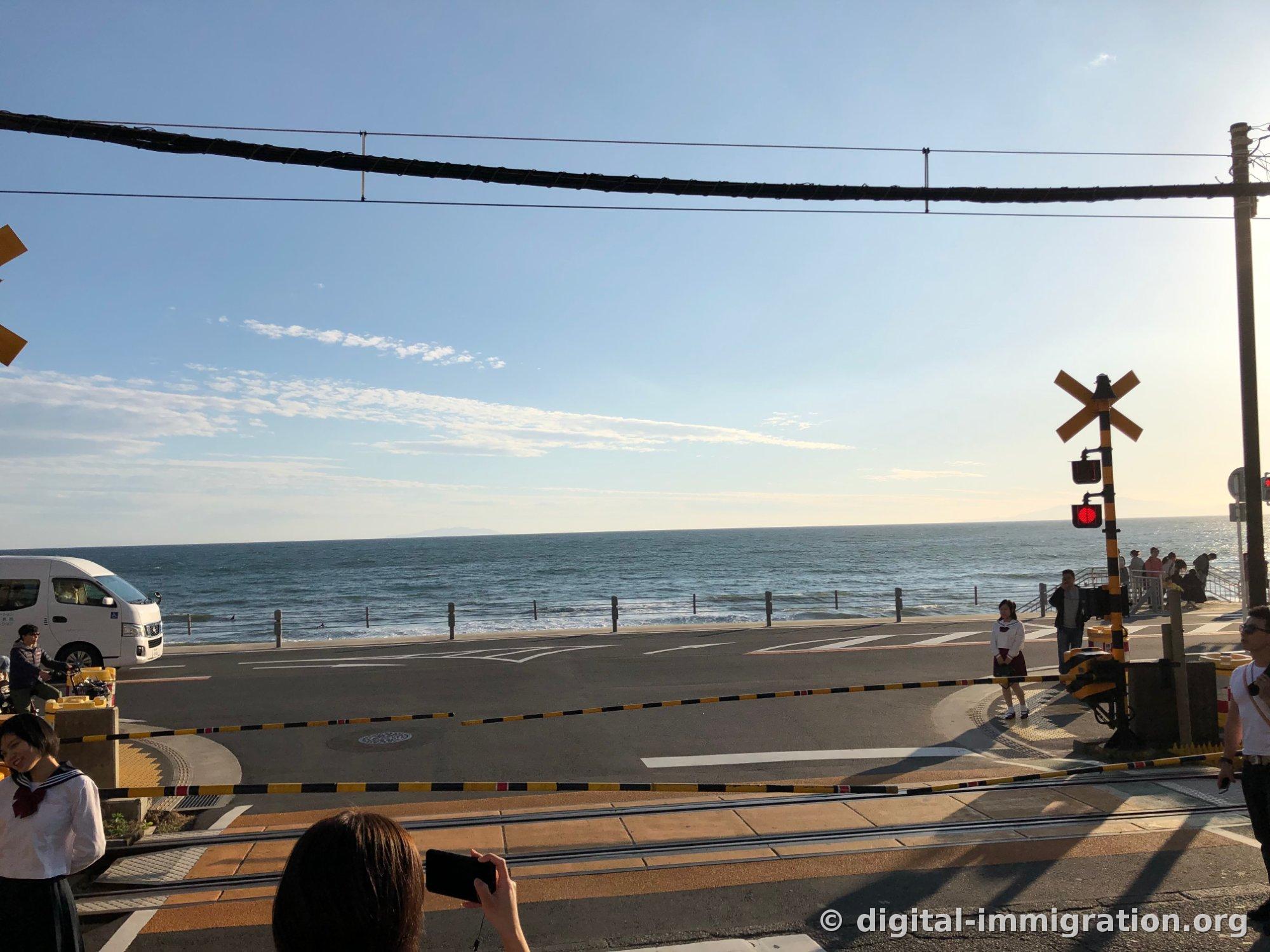
Then the Enoden, painted green and cream, comes in from the right. It's louder than expected. The clack of rail joints and the scrape of the pantograph against the overhead line both arrive together.
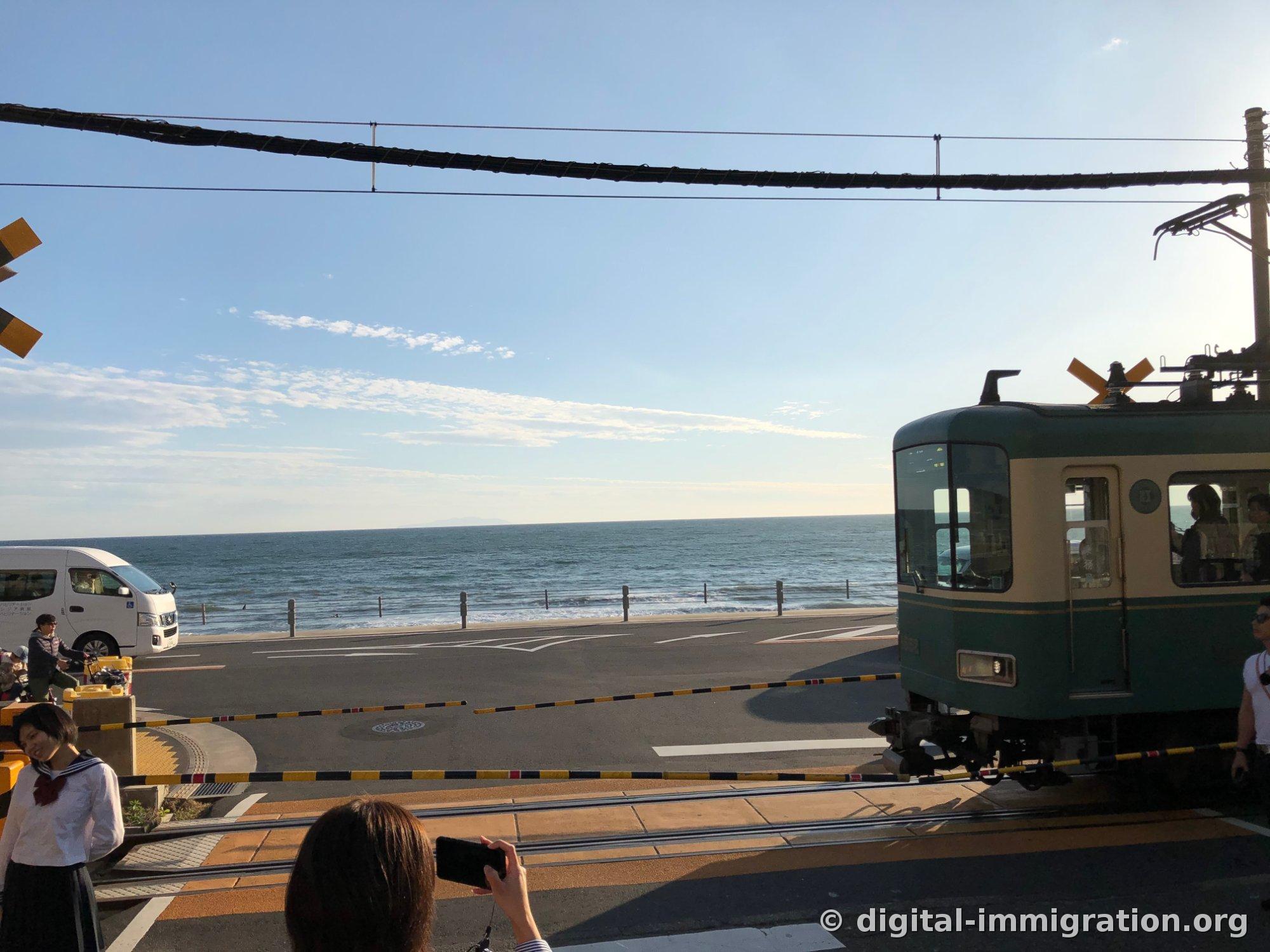
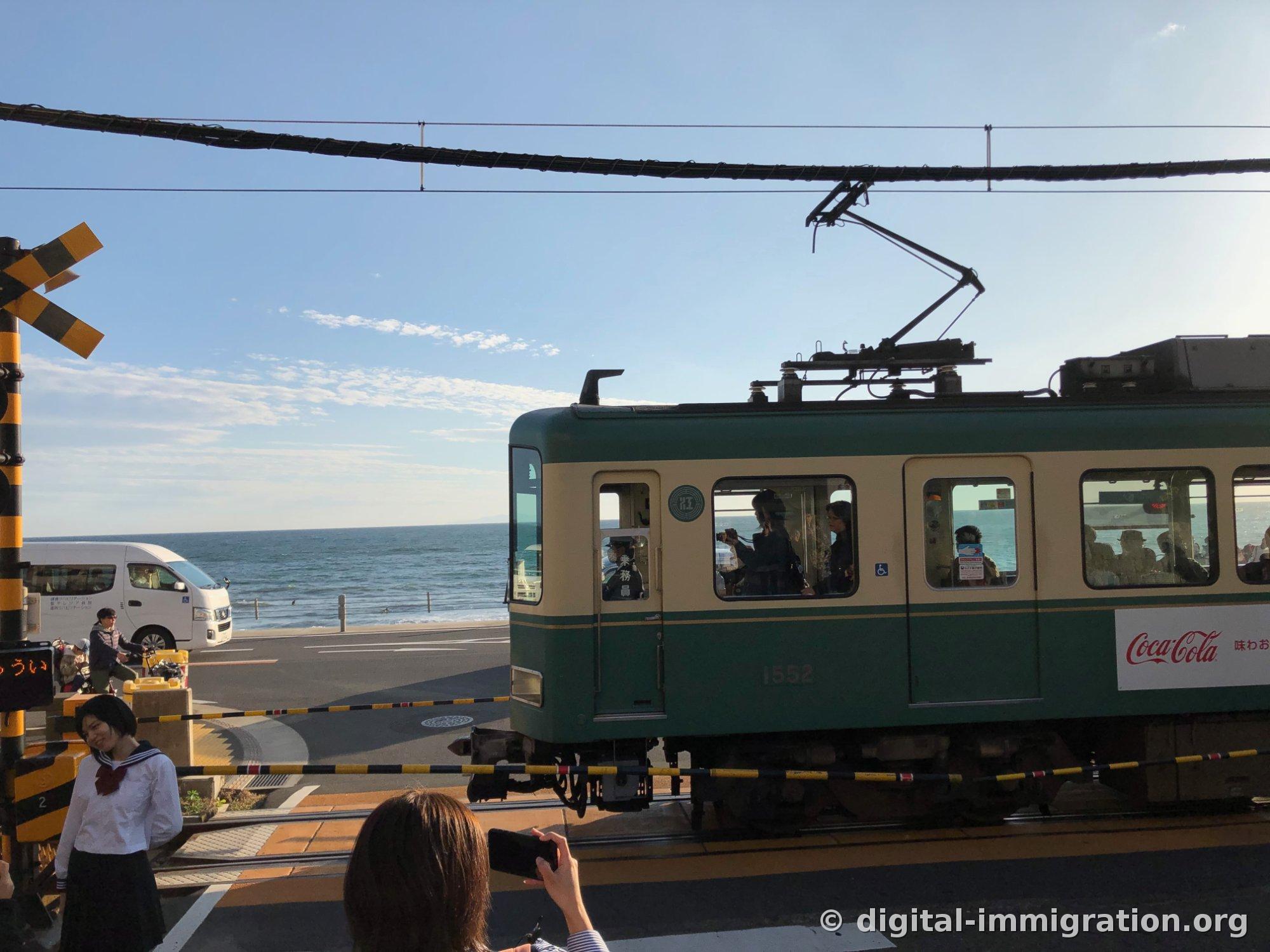
Here are a few things first-time visitors commonly miss:
- This is not a tourist attraction but an active railway crossing and two-way national road. You sometimes see people posing inside the track, but you should never enter inside the barrier. There are signs warning residents and providing instructions nearby.
- To frame the train with the sea in the background, you need to stand on the opposite side of the station, on the sidewalk facing the sea. Right in front of the ticket gate, it's crowded and you won't get the right angle.
- Trains come about every 12 minutes. If you miss one, the next will be along shortly. No need to rush.
- Going late in the afternoon creates backlighting. As the sun sets toward the sea, the train becomes a silhouette. For portrait shots, go in the morning or around noon; for silhouette aesthetics, go after 4 PM.
The Hill Behind the Crossing and the Sea at Sunset
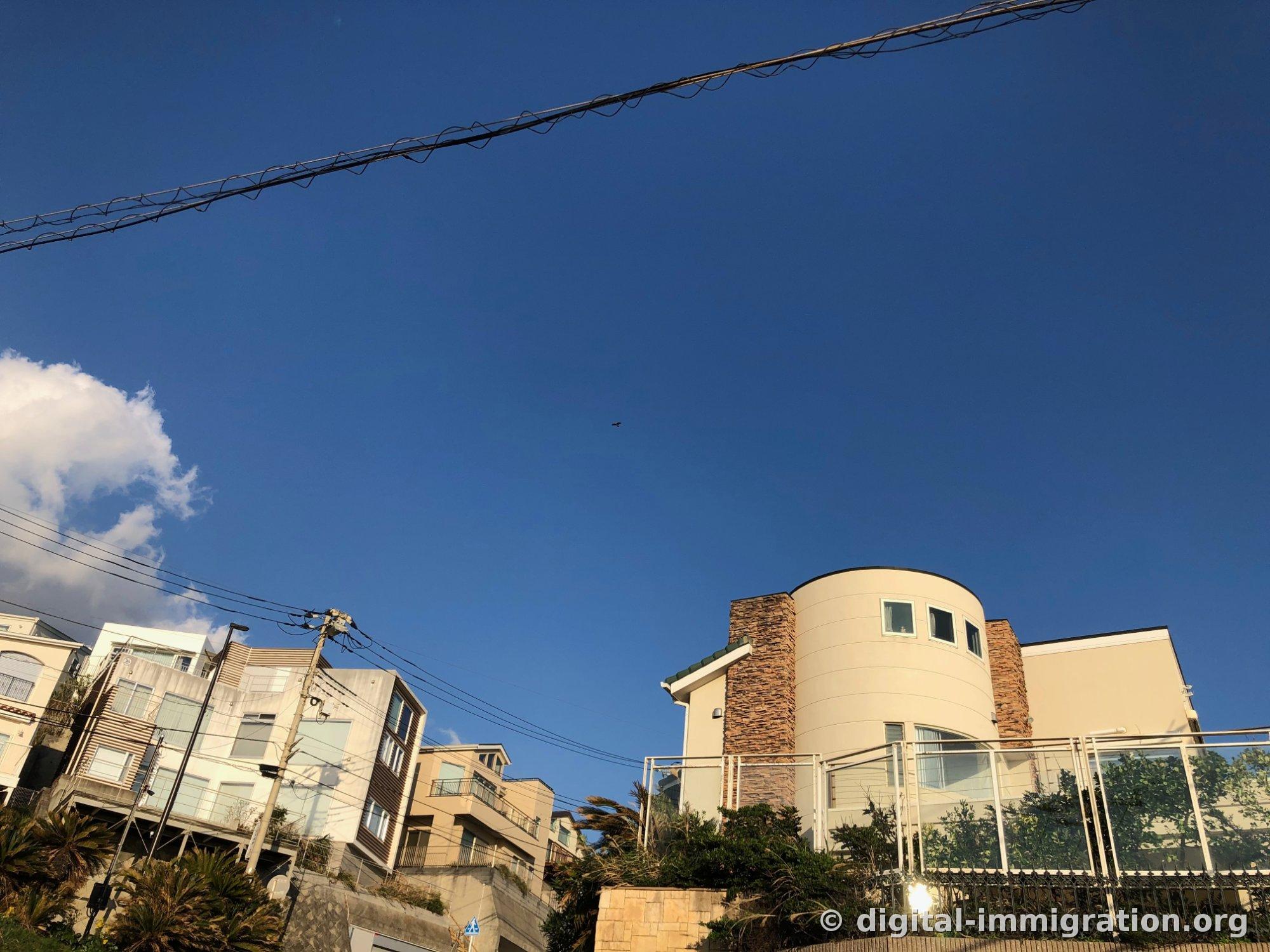
After being jostled by the crowd, I turned away from the crossing and looked up at the hillside. Power lines crossed a blue sky, and below them, houses with sea views were stacked in layers. Cylindrical protrusions on three-story buildings, terraces with glass railings. I realized this neighborhood's value is determined entirely by its ocean view.
As the sun lowered, the seascape transformed completely. The silhouette of Enoshima Island and its observation tower appeared in the distance to the right, and a long pillar of light spread across the water's surface. I stood on the sidewalk watching this for a while. Before crossing the road, I noticed shadows stretching long across the tactile paving blocks and asphalt.
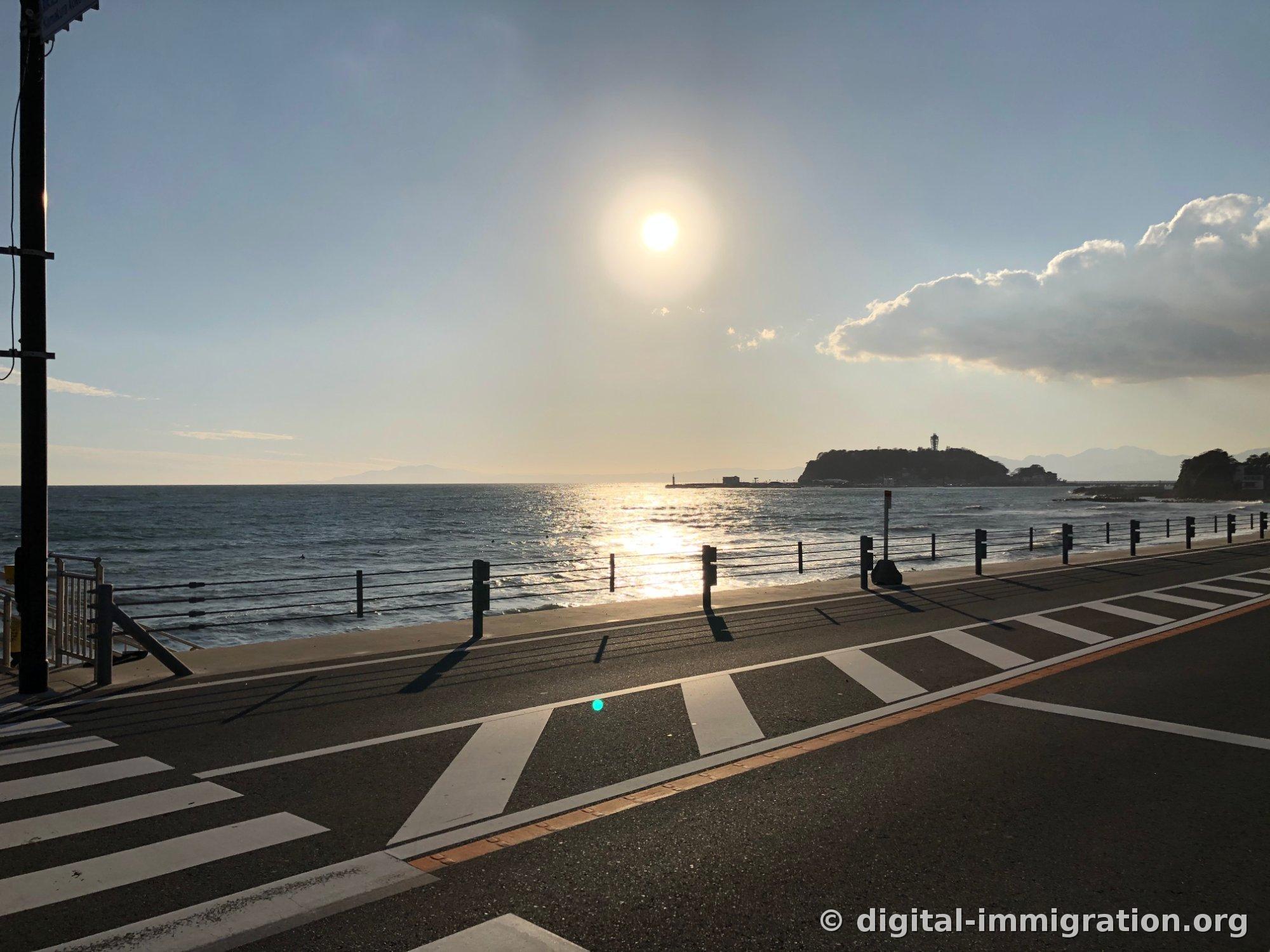
Cross the Road and You're Right at the Beach
Most people who come here just photograph the crossing and get back on the train. I crossed the national road and descended the stairs to the sand, and this turned out to be the real find of the day. The beach seen from above was quiet on this winter afternoon—just five or so people scattered about. Shadows stretched long across the sand.
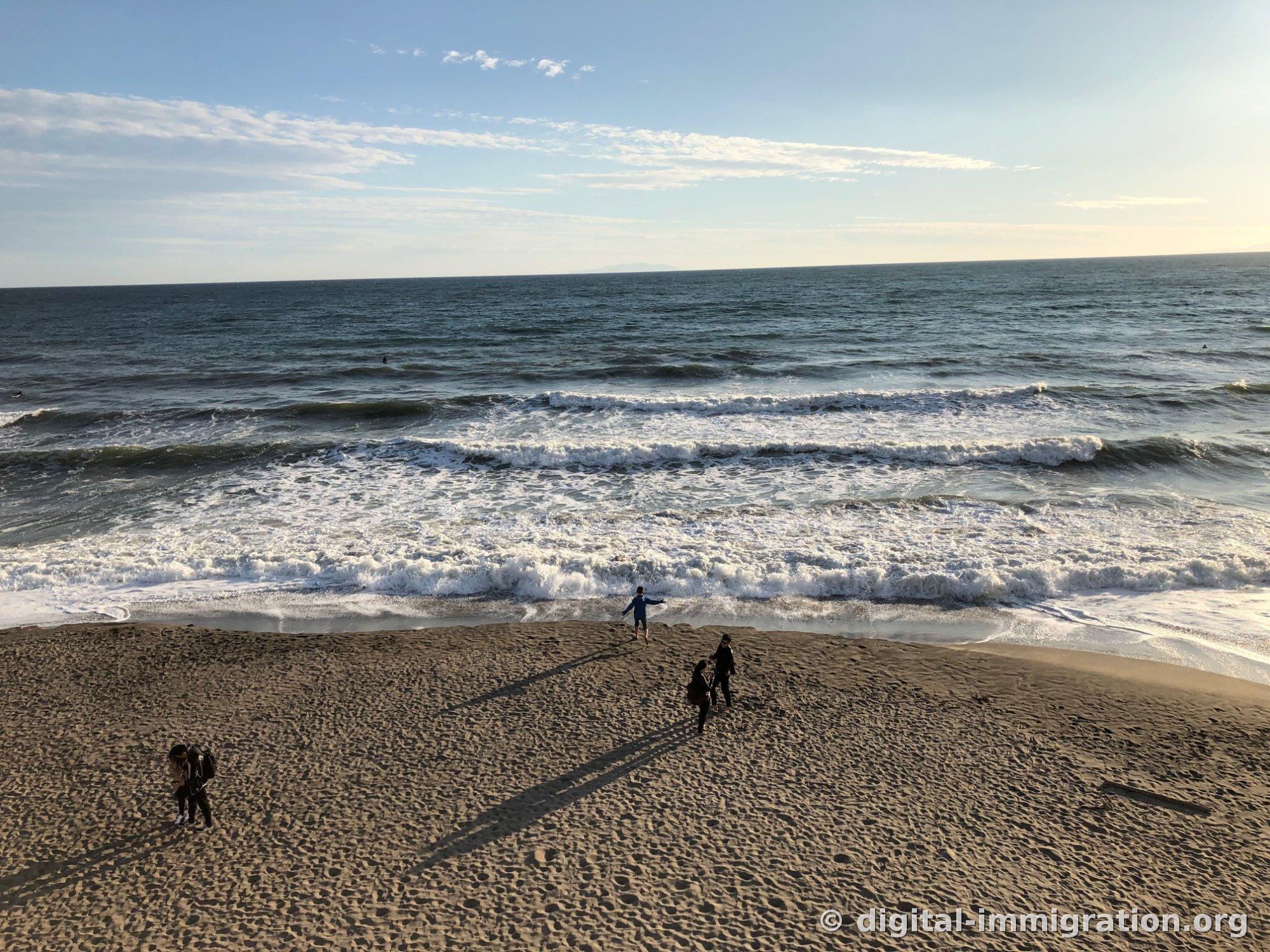
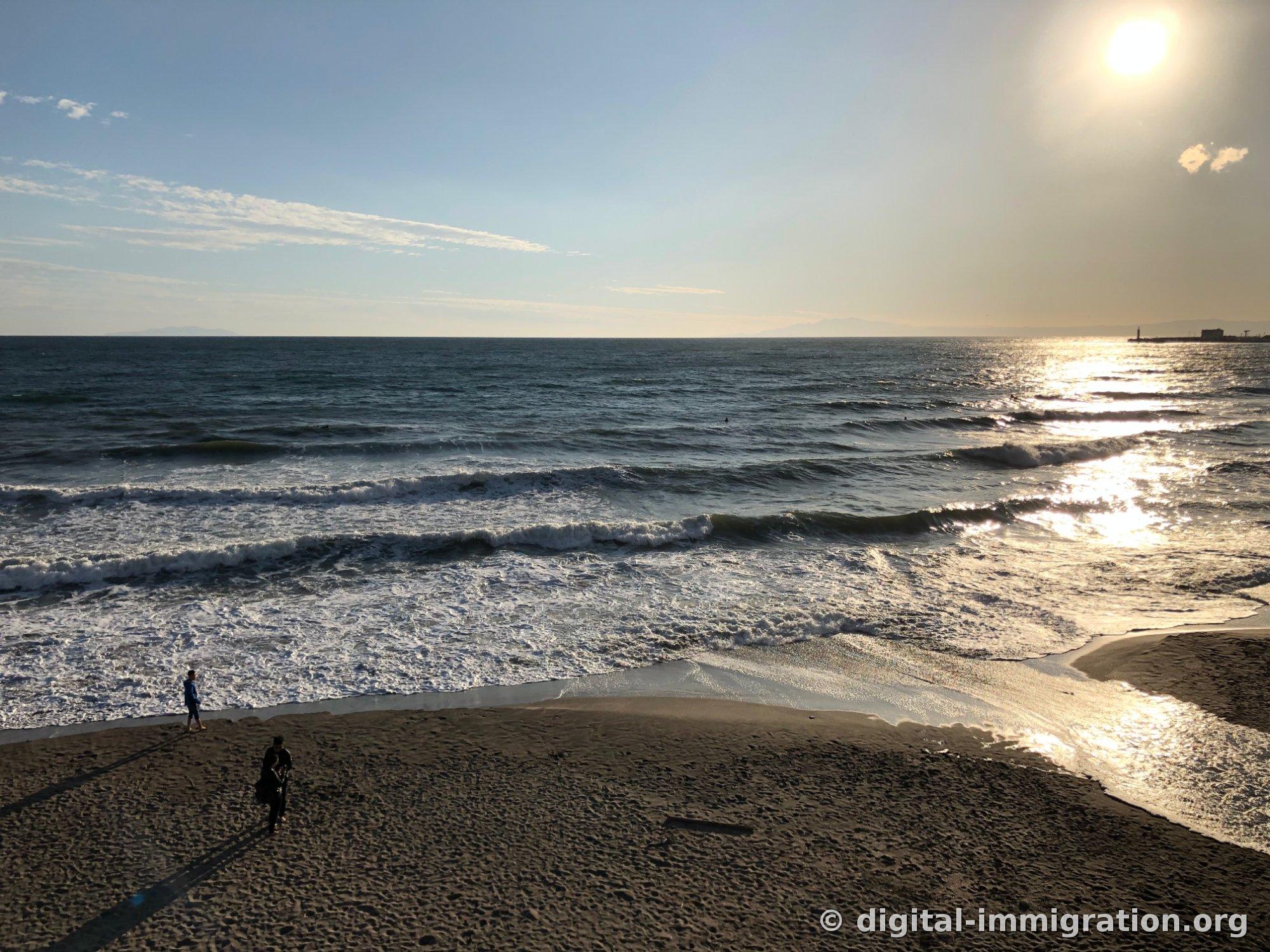
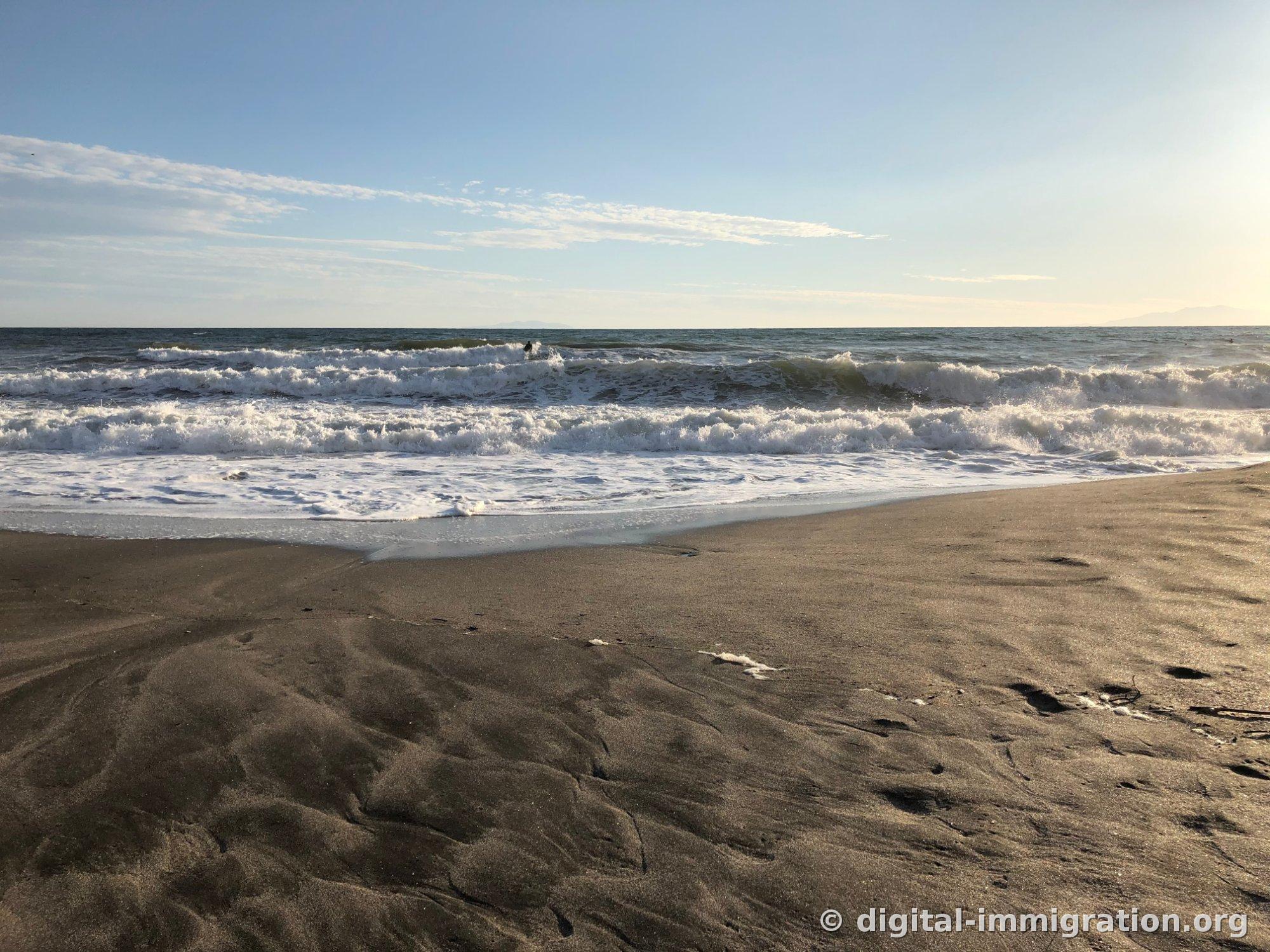
Once on the sand, the sound of waves becomes much louder. Sagami Bay is not a calm sea. Waves come in layers—three, four deep—and a surfer floats somewhere in there. Seeing someone out there at this time of year seemed impressive.
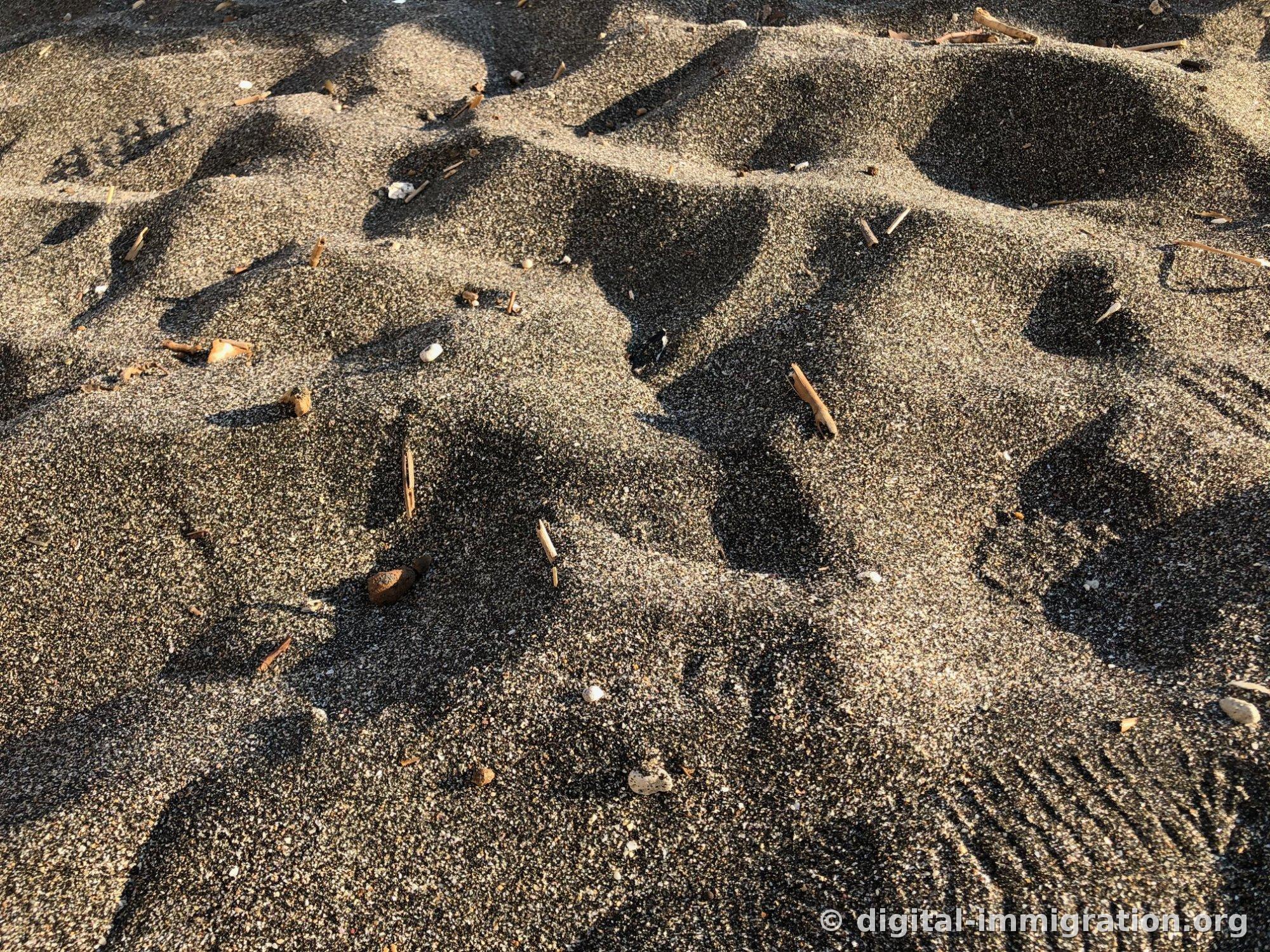
The sand on this beach is unusual. Dark sand and light sand are mixed together, so when you step on it, the dark interior is exposed. When you touch it, the grains are coarse and rough. I've heard it's due to volcanic geology, though I didn't verify that fact precisely. In any case, it's visibly different.
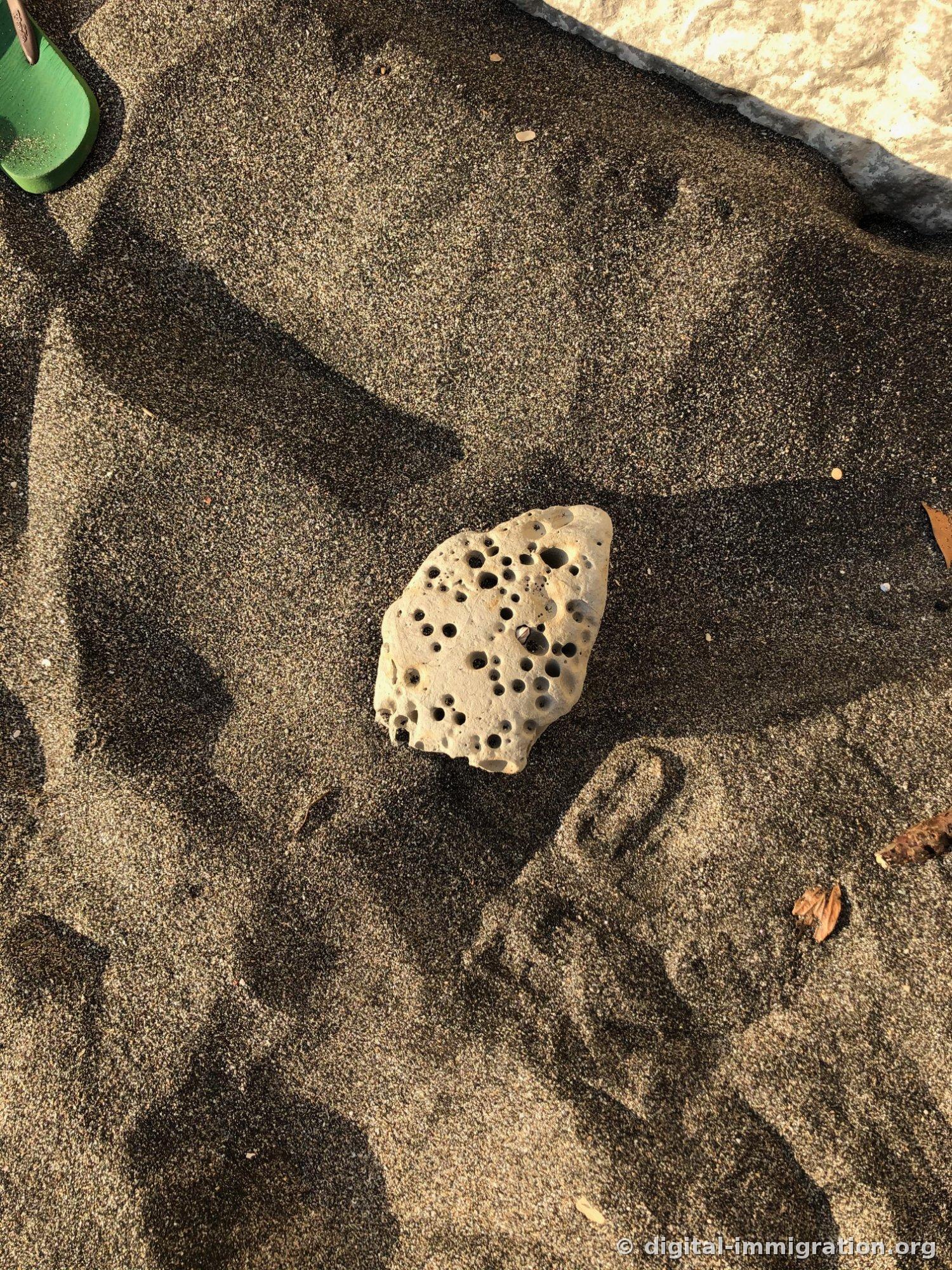
There was a rock on the sand riddled with holes, like a sponge. I stared at it for a while. Beside it, someone had left a green shovel handle sticking up. Watching things like this made the chaos at the crossing feel distant.
Back Up and the Final Scene
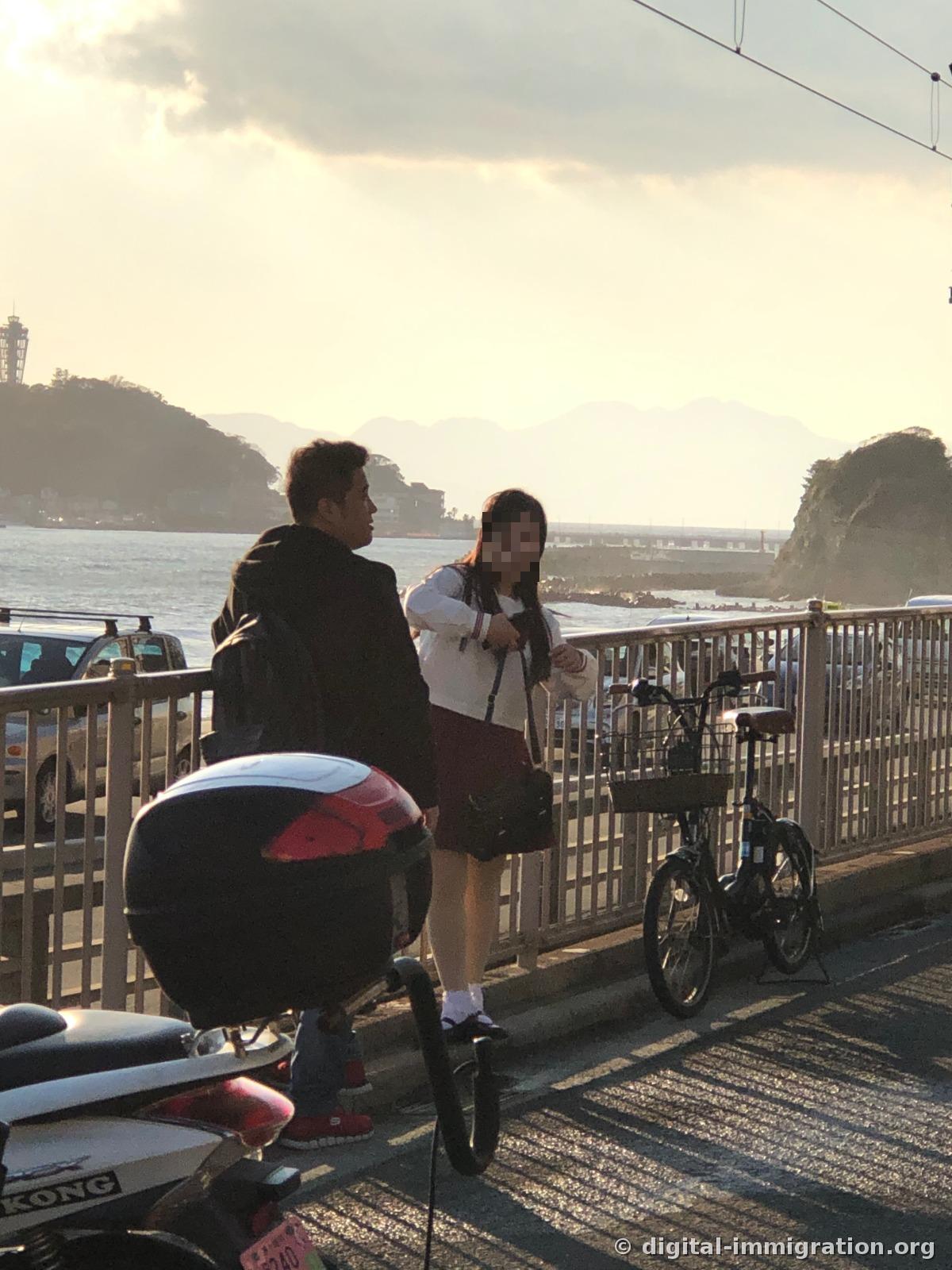
Climbing back up the stairs and standing on the sidewalk, the sun was nearly gone. People leaning against the railing, bicycles and scooters parked there, and beyond them Enoshima Island and the ridge of mountains toward Hakone layered in the view. A person in school uniform and their companions stood before the railing talking. After finishing their photos, they were just spending time looking at the sea—and that was the most fitting image for this place.
Getting There: Summary
- Station: Kamakura Kokumae Station on the Enoshima Electric Railway. Exit the ticket gate and the crossing is right ahead.
- Route: About 20 minutes from Fujisawa Station on the Enoden, or about 20 minutes from Kamakura Station. It's similar from either direction.
- Recommended: Take it from Fujisawa toward Kamakura so the right window faces the sea. Stand behind the operator's cabin in the front car to see the entire street-level section.
- Note: It's a small, almost unmanned station with limited facilities. Grab water and snacks in Fujisawa or Kamakura beforehand. Check fares and schedules on-site.
I went to photograph the crossing and spent half the day there. Some people might hesitate because of the crowds, but once a train passes and everyone disperses, if you cross the road and head down to the beach, it feels like you've entered a completely different place.
Read next
- From Akihabara's Chuo-dori to the Kanda River: A Record of Tokyo's Electronics District Revisited Multiple Times
Tokyo's Akihabara is a neighborhood where it's hard to say you've seen everything in a single visit. I've come multiple times across different seasons, and each time the signs chan…
Tokyo · Akihabara - Buying a Single ¥300 Year-End Jumbo Lottery Ticket at Nishi-Ginza Chance Center in Tokyo
Exit from the Hibiya exit of Tokyo's Shimbashi Station, walk toward the elevated highway for about three minutes, and suddenly you'll see a line of people stretching along the side…
Tokyo · Nishi-Ginza Chance Center - Ueno Ameyoko, the real magic starts after sunset — an evening walk from the Okachimachi Gate to Ueno Station
Every time I come to Tokyo, my feet find their way to Ueno Ameyoko (アメ横) without fail. This time I entered from the Okachimachi side and worked my way toward Ueno Station. I've met…
Tokyo · Ameya Yokocho Market