Ichiran Ramen in Dotonbori, Osaka — An Evening Writing Your Ramen Preferences at Individual Booth Seats
Walking from Osaka's Namba toward Dotonbori, you'll spot a red circular sign with a green border from inside an arcade alley first—Ichiran Dotonbori Annex. Even past 9 p.m., there…
Osaka · Ichiran Ramen
Walking from Osaka's Namba toward Dotonbori, you'll spot a red circular sign with a green border from inside an arcade alley first—Ichiran Dotonbori Annex. Even past 9 p.m., there were about twenty people standing before the stairs. I've stopped by this place a couple of times during brief Japan stopovers between trips to Thailand or Vietnam, and there was always a line, yet it always moved faster than expected. The seating arrangement has high turnover.
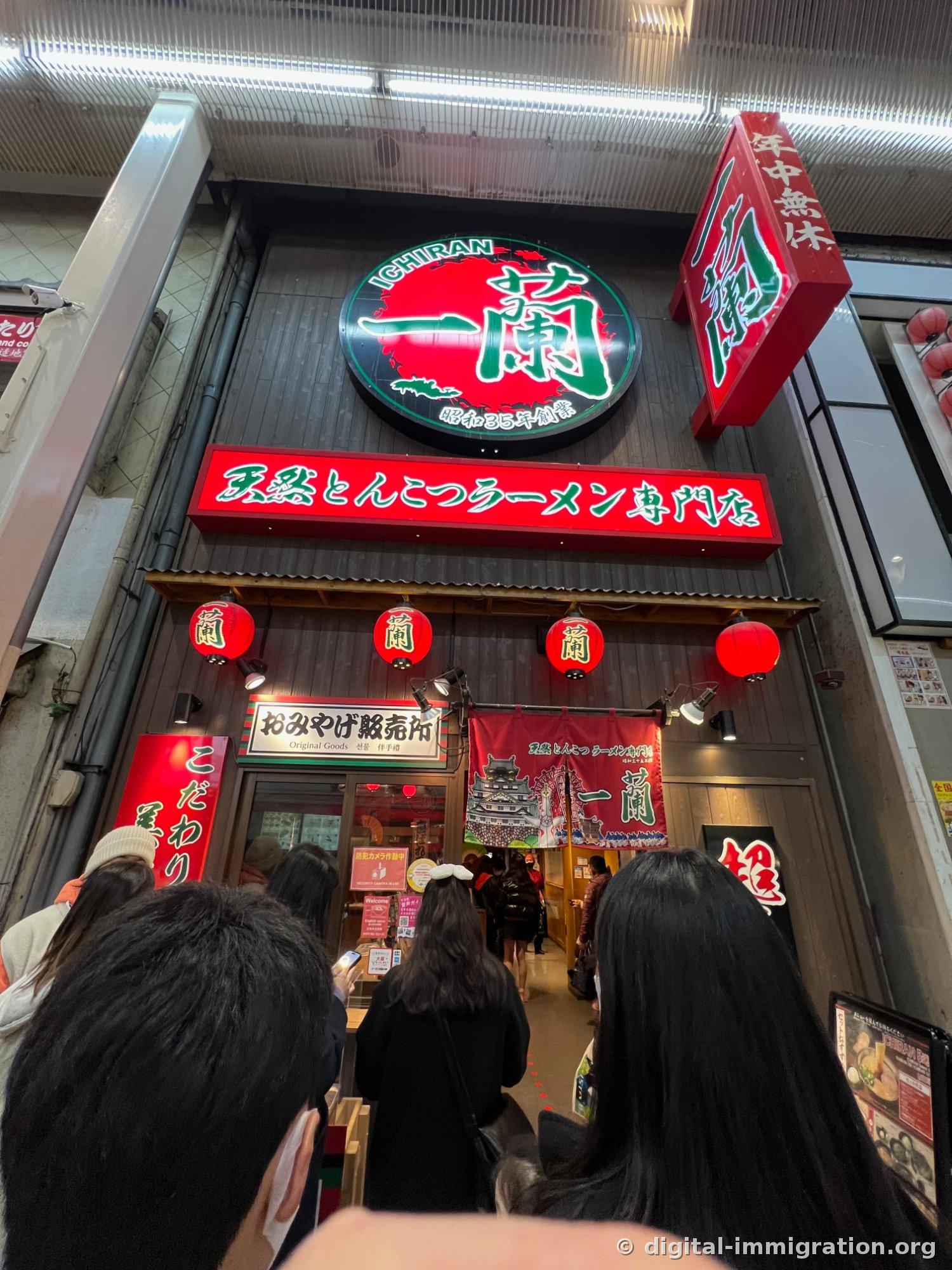
You'll Be Less Confused If You Know the Queuing System First
After waiting your turn at the bottom of the stairs, you enter and stand in front of the ticket machine first. You pay for ramen here and take your receipt to your seat. This is where first-time visitors get most confused. I've actually seen people wait for a staff member to take their order, only to get pushed from behind. There's Korean on the machine, so you can press buttons at your own pace.
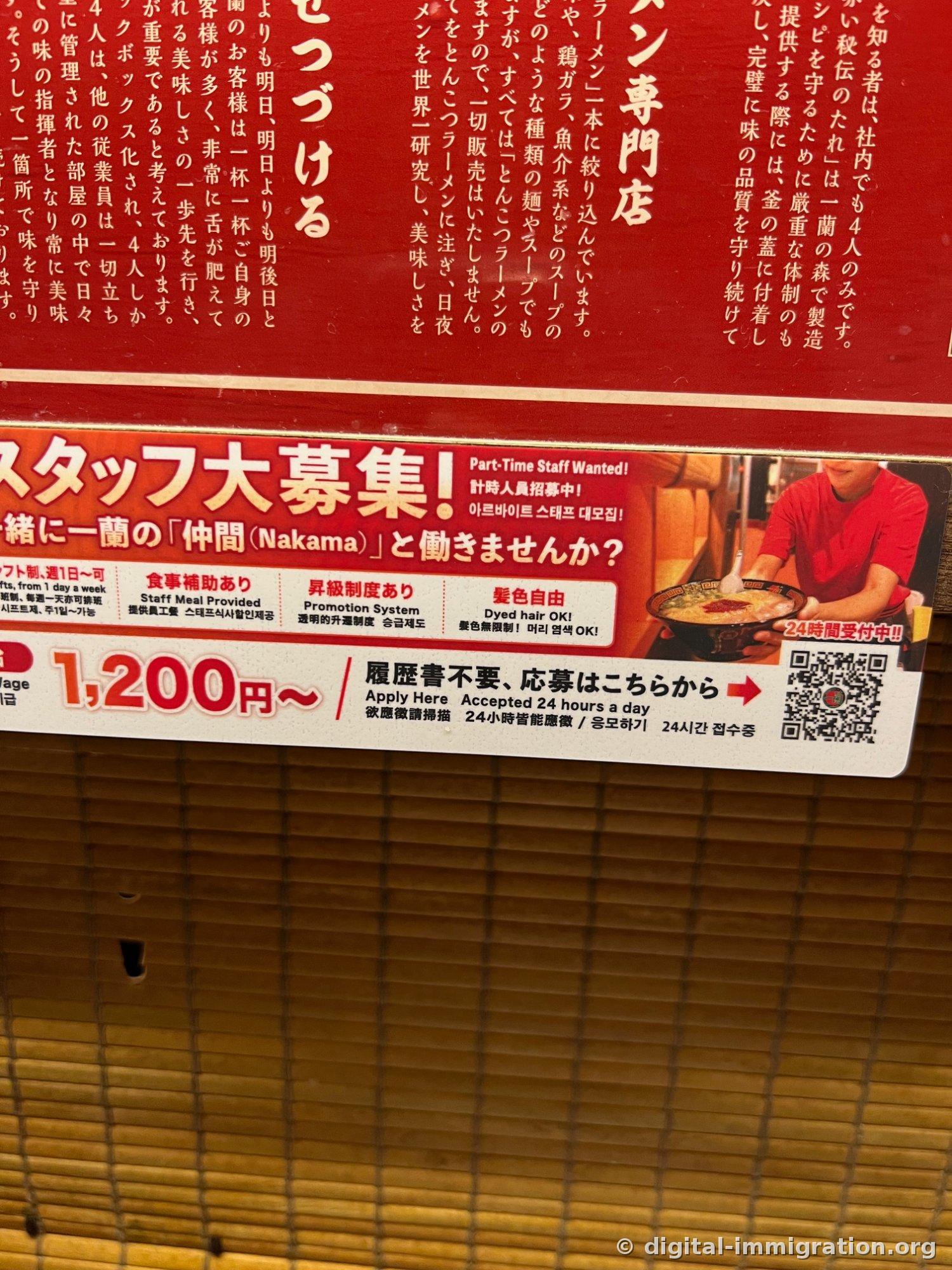
While waiting in line, it's fun to read the signs on the wall. On a red board, densely packed with explanations about why this shop only serves one type of tonkotsu ramen, how only four people know the secret tare sauce, and how those four work in a separately managed room to avoid crossing paths with other staff. There's no way to verify if it's true, but it's rare to find a shop that attaches this much narrative to a single bowl. Below that was a part-time hiring sticker stating the base hourly wage starts at 1,200 yen. Comparing it to a bowl of ramen gives you a sense of the neighborhood's cost of living.
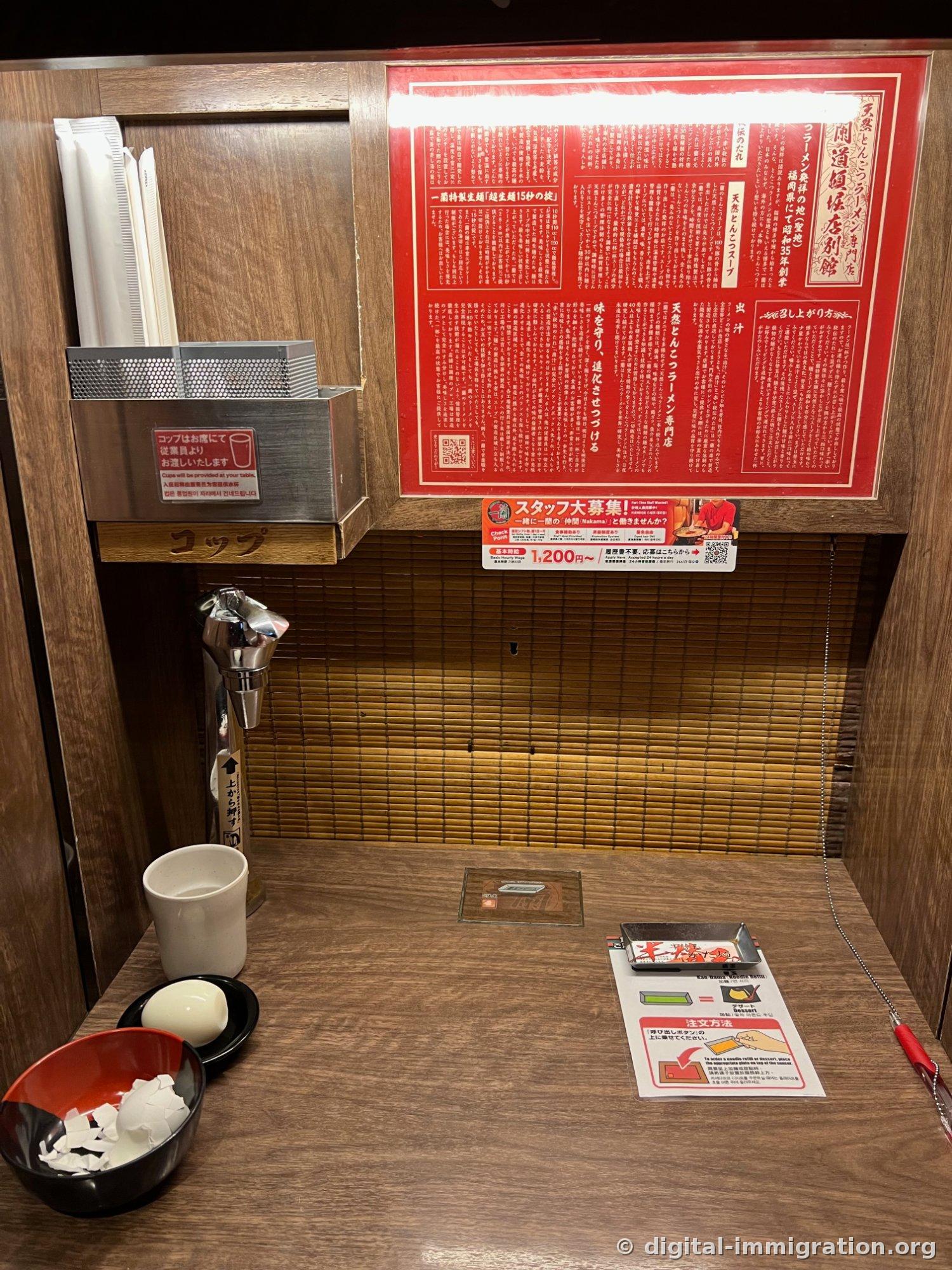
Study Booth Seating, and the Time to Write Your Preferences on the Order Slip
The real reason this shop is famous is the seating. A single-person seat with wooden partitions on both sides and a lowered footrest in front. People commonly call it "study room ramen." When the footrest lifts, just your hands come in to place the bowl, then it goes back down. You never face another person. For people uncomfortable eating alone, there's no better setup, but for those who want to eat while chatting with friends, it's a bit lonely. I lean toward the latter, but here I actually found myself focusing on the broth—not bad at all.
When you sit, you're given a paper order form. This is the core of this shop. You choose everything yourself—broth concentration, amount of oil, garlic, scallions (white or green), char siu (yes/no), spiciness level of the secret red sauce, and noodle firmness. Just ask for a Korean-language order form and they'll give you one.
- Broth Concentration — Light / Regular / Rich
- Oil Level — None to Very Rich
- Garlic — None / A Little / Regular / Lots
- Scallions — Choose White or Green
- Char Siu — Yes / No
- Secret Sauce — None to Adjustable in Multiples
- Noodle Firmness — Very Firm to Soft
For first-timers, I recommend checking all boxes as "regular" and keeping the red sauce at default. On my first visit, I marked garlic as "lots" and doubled the sauce, which completely covered the broth's natural flavor—I regretted it. This time I went with rich broth, regular oil, a little garlic, and firm noodles. Keeping noodle firmness firm is nice because the noodles don't get soggy by the time you finish.
The Bowl Arrives — Take a Sip of Broth First
The bowl arrived in less than five minutes. Creamy tonkotsu broth with thin noodles underneath, the secret red sauce placed in the center, and a generous pile of green scallions on the left. Before you mix it, I recommend taking a spoonful of broth first. Once you dissolve the sauce, you lose the chance to taste the original broth. The broth has almost no distinctive pork bone smell, and the richness comes before the saltiness. Then gradually dissolve the red sauce while adjusting the spiciness to your preference.
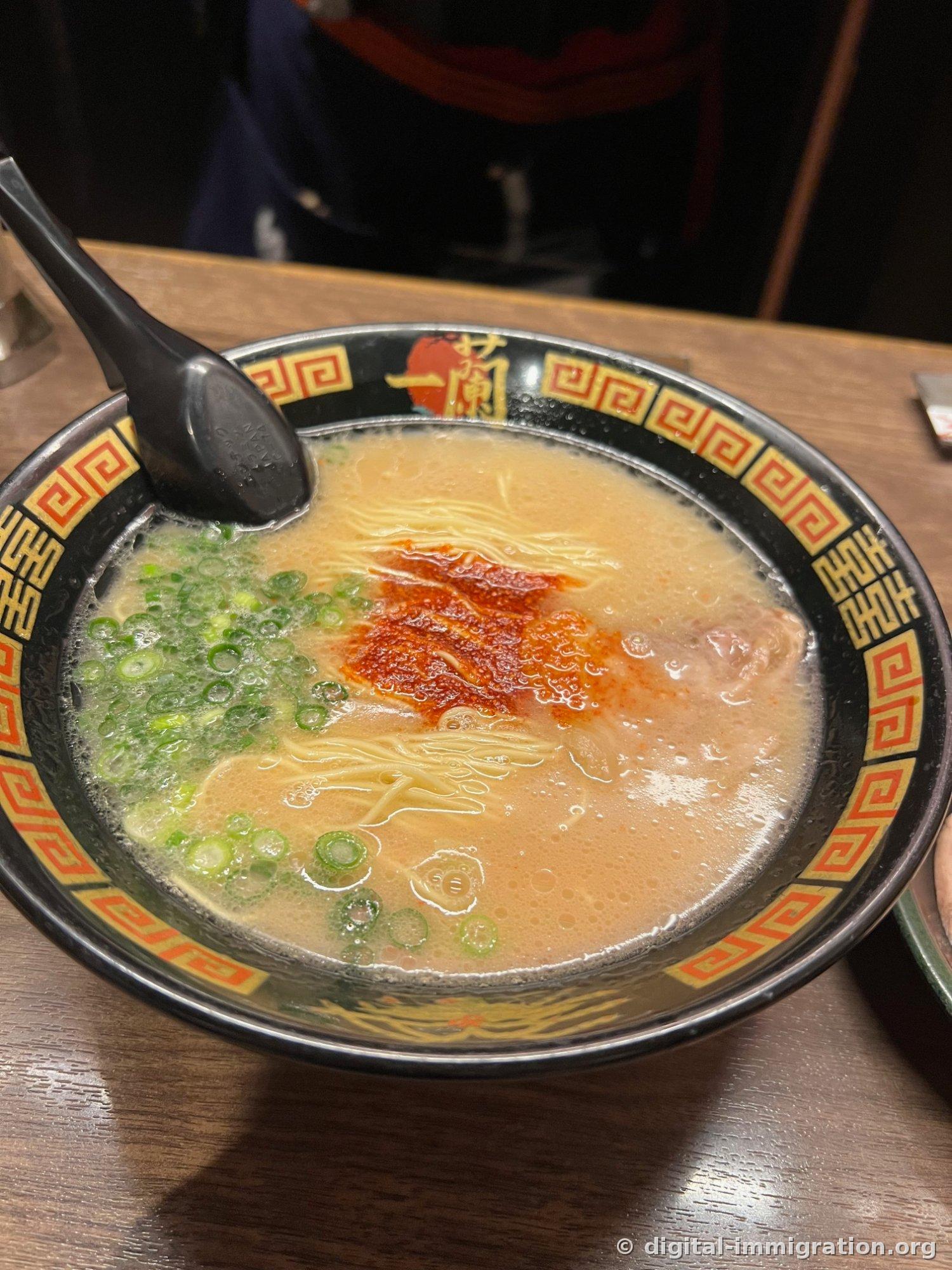
The noodles are Hakata-style—very thin. If the portion seems small, you can order kaedama (extra noodles) from your seat. It's explained in pictures on the instruction sheet—just place the green token on the plate above the call button and the staff will know to bring it. You don't say a word and another portion of noodles arrives.
Ramen, Draft Beer, and a Plate of Char Siu
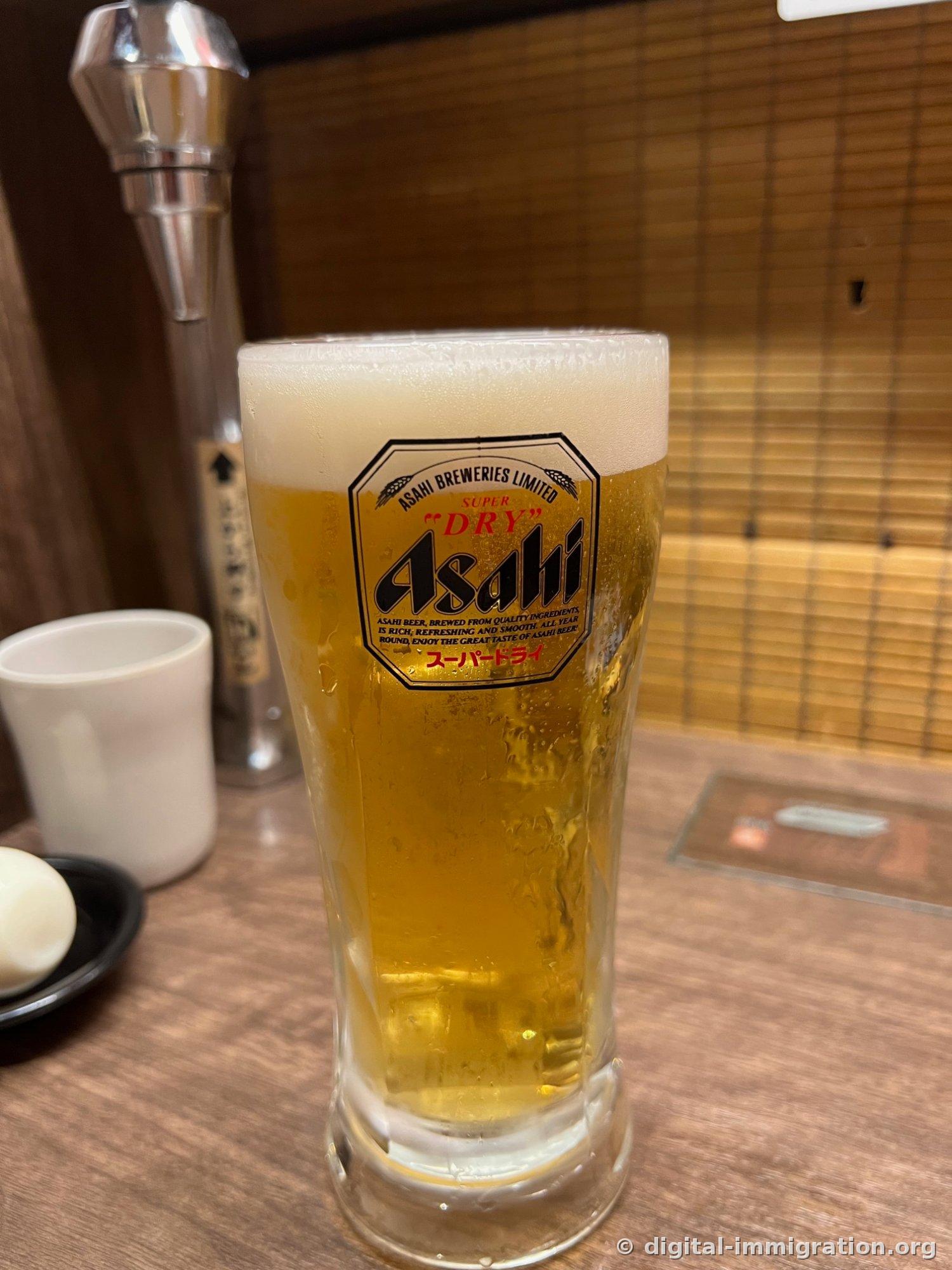
There's one more thing I really want to mention. If you just eat ramen and leave, you've only experienced half of this place. I ordered a draft beer before the ramen arrived—Asahi Super Dry. It comes so cold the glass frosts over, and when a sip of this cold beer goes in between spoonfuls of hot, oily tonkotsu broth, your mouth resets. Cycling through broth → beer → noodles → beer empties the bowl quickly. At first, sitting alone in a booth holding a beer glass felt a bit odd, but by the second visit, I realized this is the proper way to enjoy this place.
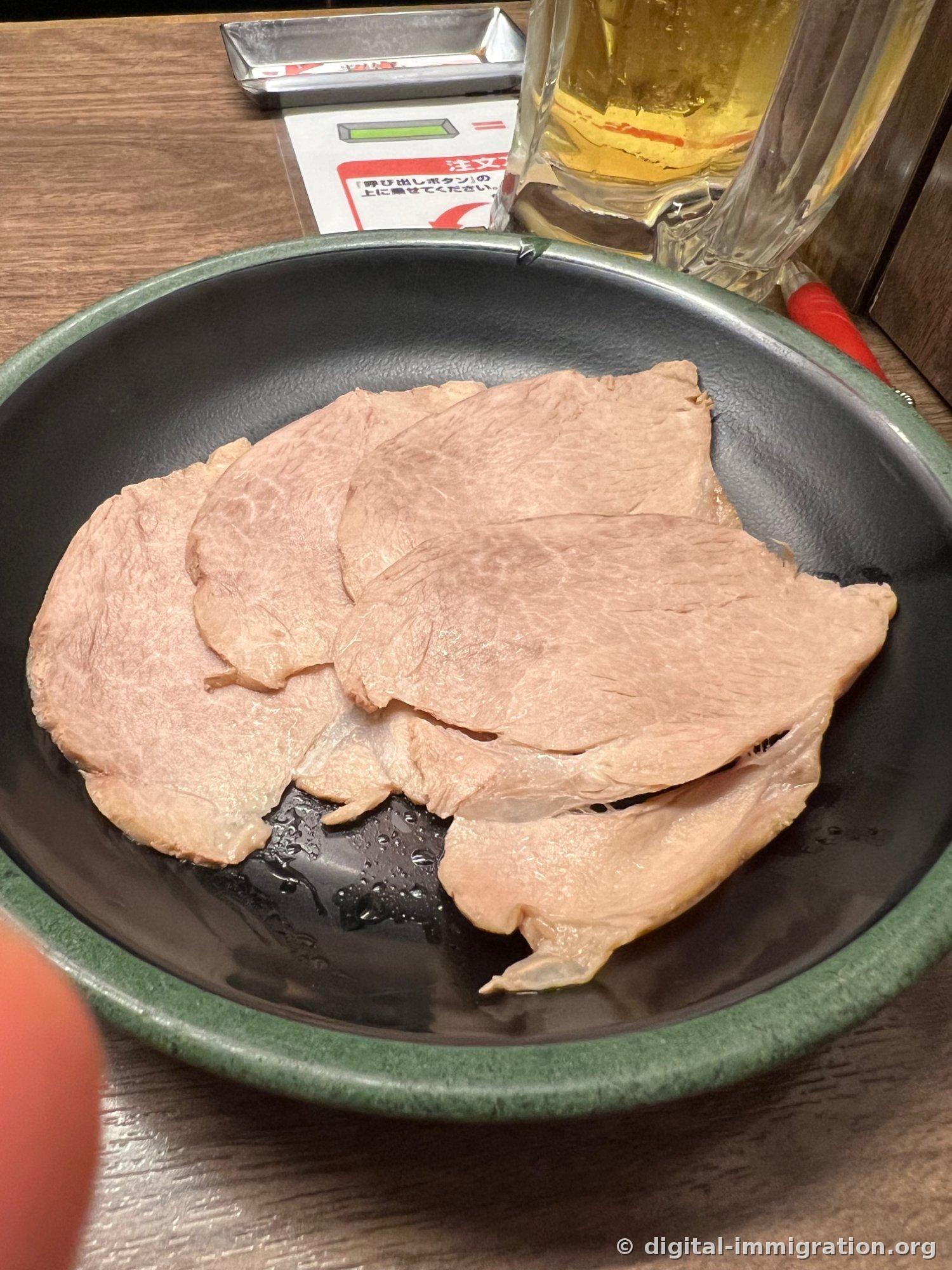
If you order beer, adding an extra plate of char siu is another option. The ramen comes with only one or two slices of char siu, which is unsatisfying, but ordering a plate gives you about six thinly sliced pieces. The grain is very fine and the fat content low, so you taste the meat's own flavor better than the pieces on top of the ramen. However, the plate on its own isn't well-seasoned, so it's better to dip it once in the ramen broth or lightly dip it in the leftover red sauce. Eaten plain, it's a bit bland.
Location and How to Get There
It's inside an arcade south of the Dotonbori River, so it's convenient from either Namba Station or Nipponbashi Station via subway. From the Glico sign, follow the crowd of people heading east a bit, then turn into the arcade. Since there's more than one Ichiran location in the Dotonbori area, it's good to check on your map app that it's the "Annex" when setting it as your destination. The structure involves climbing stairs, so it's inconvenient if you bring a stroller or large luggage. It's better to put your luggage in a coin locker at Namba Station.
Good Things to Know Before You Go
- It's open year-round until late night. If you go after 11 p.m., the line gets much shorter. 7–9 p.m. is the most crowded time.
- Get water directly from the dispenser at your seat. The staff brings you cups, so don't take one arbitrarily from the cup holder.
- Complete your order form before the ramen arrives and slide it under the footrest in front. If you deliberate too long, that's how much longer it takes to arrive.
- For extra noodles and dessert, place the corresponding token on the plate above the call button as shown in the instruction diagram. No words needed.
- Order beer before the ramen arrives so you can take a sip before the broth comes—the timing works out perfectly.
- Price varies by time and location, so it's accurate to check on the ticket machine screen.
As I headed out and looked down from the top of the stairs, another line had formed in the spot where I'd been standing earlier. If you're passing through this alley late at night and smell broth, just go up. This place works well whether you're alone or looking for a drink on a night you need it.
Read next
- From Akihabara's Chuo-dori to the Kanda River: A Record of Tokyo's Electronics District Revisited Multiple Times
Tokyo's Akihabara is a neighborhood where it's hard to say you've seen everything in a single visit. I've come multiple times across different seasons, and each time the signs chan…
Tokyo · Akihabara - Buying a Single ¥300 Year-End Jumbo Lottery Ticket at Nishi-Ginza Chance Center in Tokyo
Exit from the Hibiya exit of Tokyo's Shimbashi Station, walk toward the elevated highway for about three minutes, and suddenly you'll see a line of people stretching along the side…
Tokyo · Nishi-Ginza Chance Center - Ueno Ameyoko, the real magic starts after sunset — an evening walk from the Okachimachi Gate to Ueno Station
Every time I come to Tokyo, my feet find their way to Ueno Ameyoko (アメ横) without fail. This time I entered from the Okachimachi side and worked my way toward Ueno Station. I've met…
Tokyo · Ameya Yokocho Market