I had dinner for 640 yen at Stameshi Dondon, a meat rice bowl restaurant in Shinjuku's basement
I couldn't decide where to eat for dinner in Shinjuku, Tokyo, so I walked back and forth on the main street twice. I was hungry, but I didn't have the nerve to line up at the ramen…
Tokyo · Stameshi Dondon Shinjuku
I couldn't decide where to eat for dinner in Shinjuku, Tokyo, so I walked back and forth on the main street twice. I was hungry, but I didn't have the nerve to line up at the ramen shop, and then my eye caught this sign attached vertically to the side of a building. On a red background, 情熱の すためし どんどん. On top of a meat bowl photo is a whole yolk, and below that is another photo of chashu and a soft-boiled egg. Since the sign is studded with light bulbs, it's more visible when it gets dark.
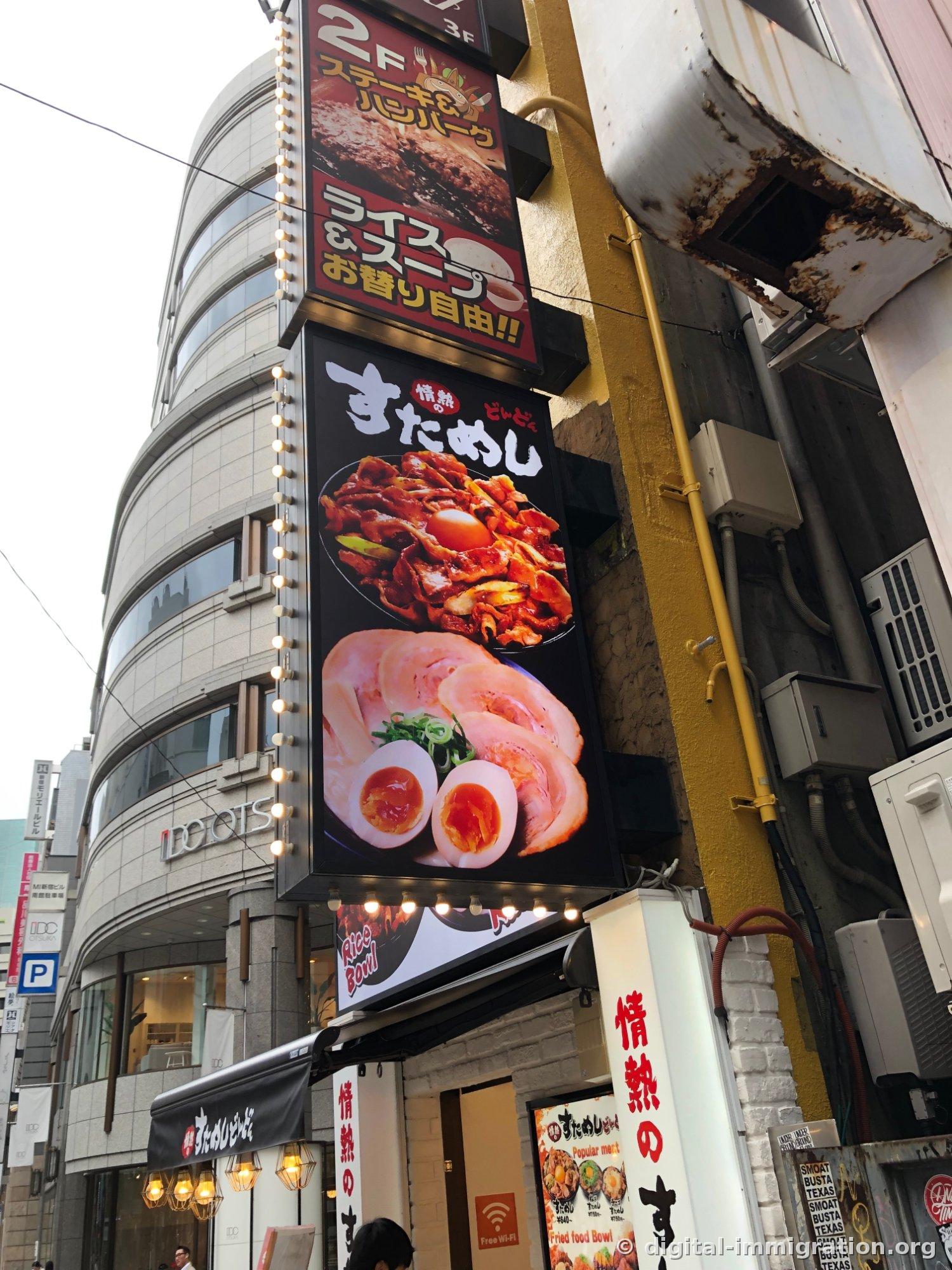
The sign is upstairs, but the restaurant is in the basement
First-time visitors often get confused here. The top section of the sign is an advertisement for a different restaurant with 2F ステーキ&ハンバーグ / ライス&スープ お替り自由!! written on it. Stameshi Dondon is not on the 2nd floor but in the basement. The entrance pillar has B1·B2 printed prominently on a red background, so just look at that and head downstairs. The light box menu board next to the entrance is essentially this restaurant's entire price list, so I stood here for a while deciding what to eat.
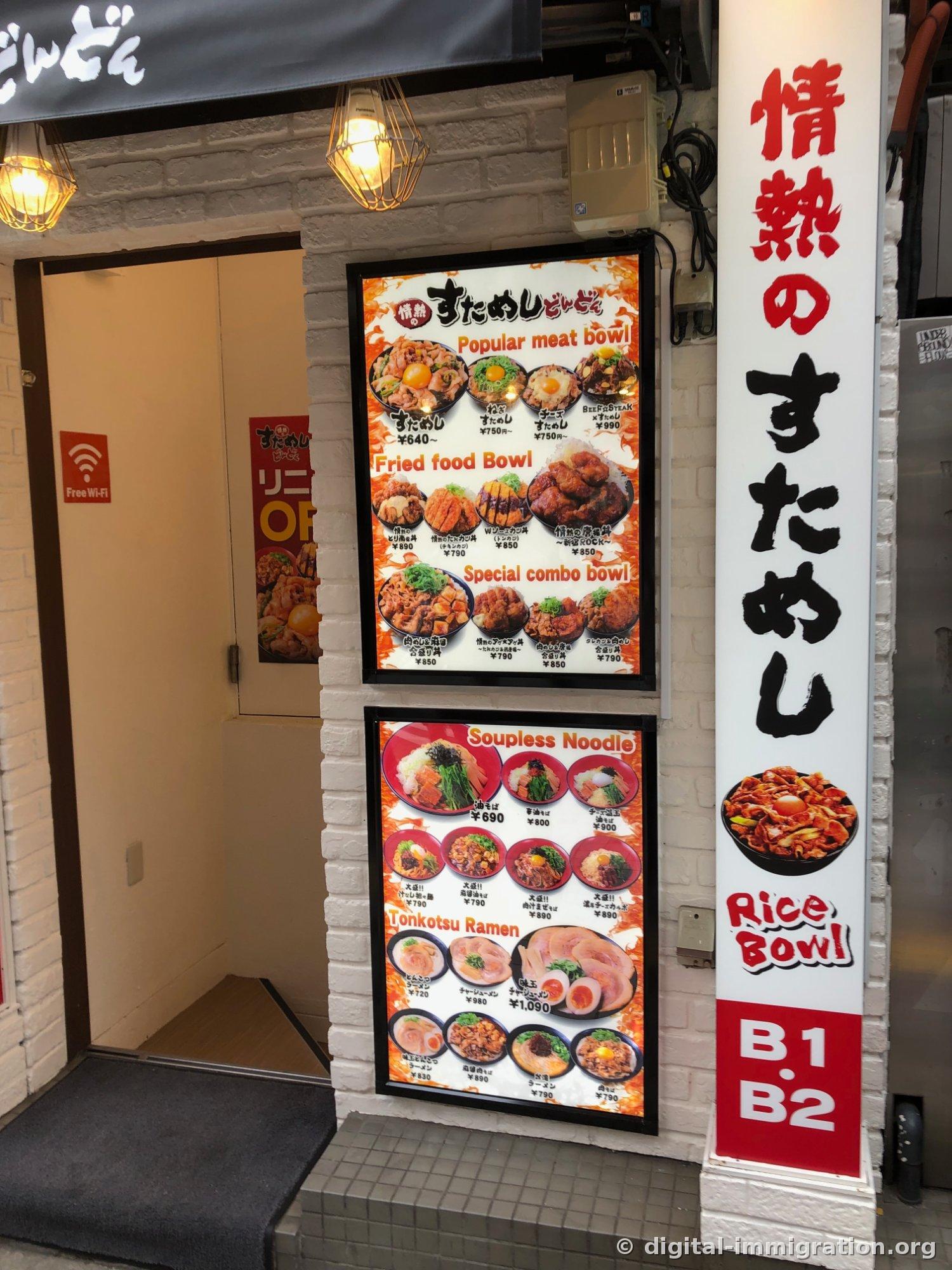
The prices listed on the menu board are as follows. The signature menu item, Stameshi, starts at 640 yen, with Negi Stameshi and Cheese Stameshi at 750 yen, and Beef Steak × Stameshi at 990 yen. For fried rice bowls, there's 情熱のとり南蛮丼 at 890 yen, Tare Katsudon (chicken cutlet) at 790 yen, W Sauce Katsudon (pork cutlet) at 850 yen, and 情熱の唐揚丼~新宿ROCK~ at 850 yen. For noodle dishes, there's Abura Soba at 690 yen, Tonkotsu Ramen at 720 yen, and Ajitama Chashu Noodles at 1,090 yen. Considering Tokyo's prices in the heart of the city, it's a bargain that a 700-yen rice bowl comes with soup.
The location I photographed is east of Shinjuku Station, where the curved glass IDC OTSUKA showroom building is visible directly across the street. Since it's tucked in an alley, it's easy to miss the entrance if you just follow the map, so it's faster to look for the red B1·B2 pillar near the coordinates below.
The basement hall atmosphere and tablet ordering
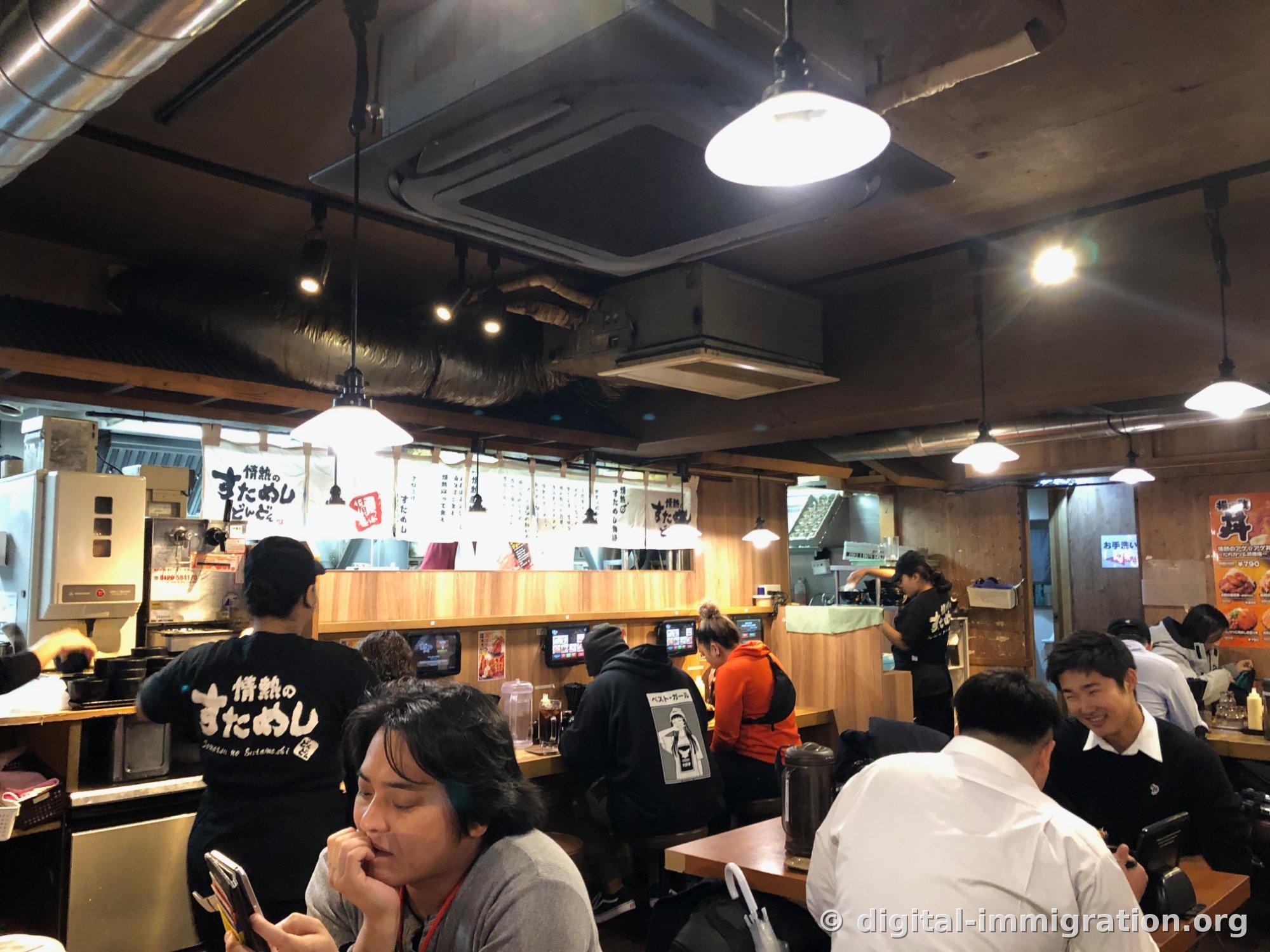
Going down the stairs, you enter a low hall with exposed ceiling pipes. In front of the kitchen is a U-shaped counter, and along the walls are 4-person tables. Staff members wearing black t-shirts with "Stameshi" printed in white calligraphy on the back constantly pass through the narrow corridor. When I sat down, there was a mix of students in hoodies, office workers in shirts, and backpacking travelers. The smell of oil and the sound of frying reach all the way to the end of the hall, and it's so loud you can hear conversations at the next table clearly. It's the kind of noise that's actually convenient for eating alone.
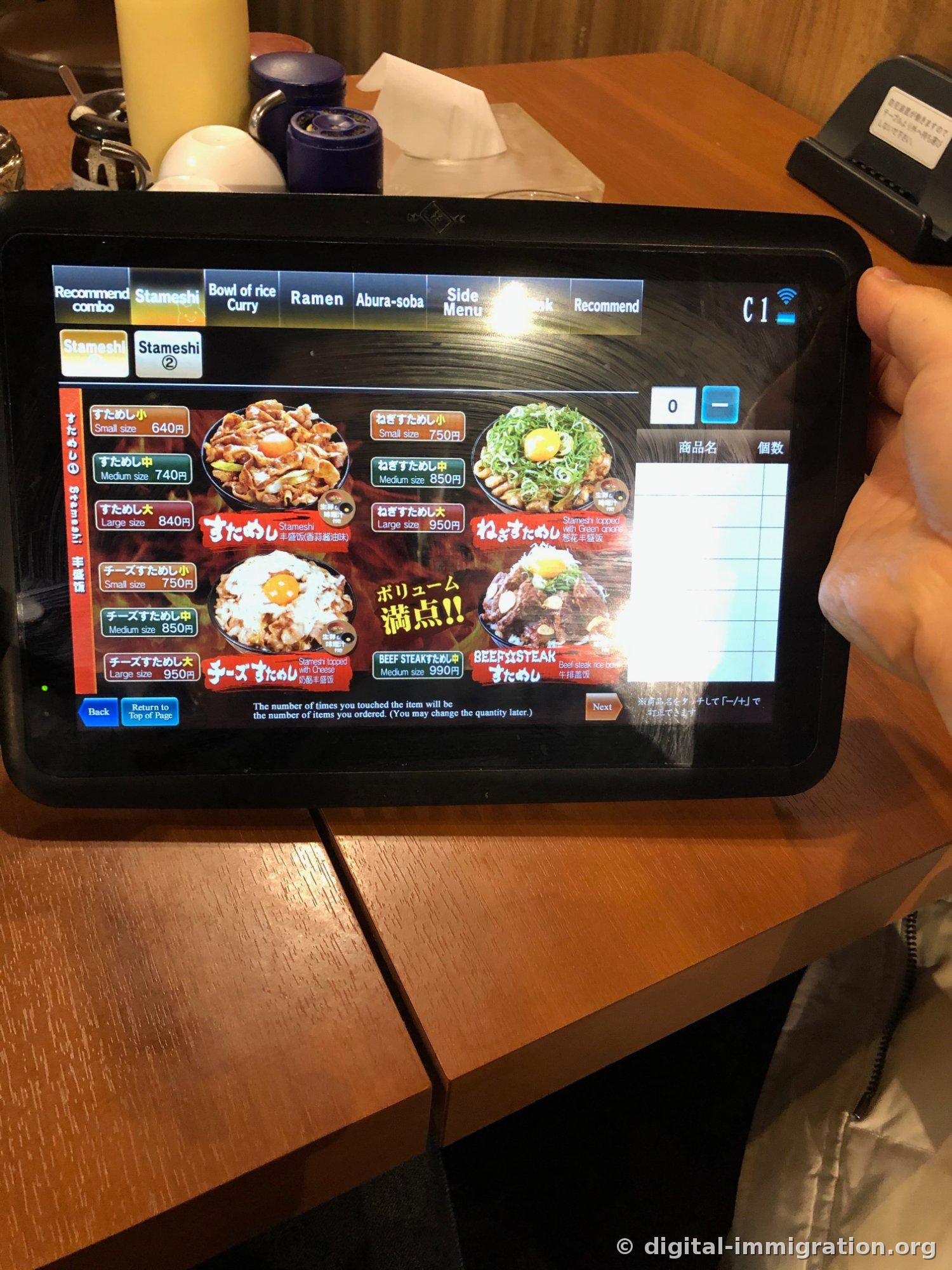
You order using a tablet placed at your table. The tabs at the top have English alongside them in the order Recommend combo / Stameshi / Bowl of rice·Curry / Ramen / Abura-soba / Side Menu, so there's no problem even if you don't know Japanese. When you tap the Stameshi tab, options are divided by size. Small 640 yen, Medium 740 yen, Large 840 yen. Negi Stameshi is Small 750 / Medium 850 / Large 950 yen, Cheese Stameshi is in the same price range, and Beef Steak Stameshi is Medium 990 yen. The instructions at the bottom of the screen are amusing. It says "the number of times you tap is the quantity ordered," so if you accidentally tap twice, two bowls will arrive.
The egg arrives first
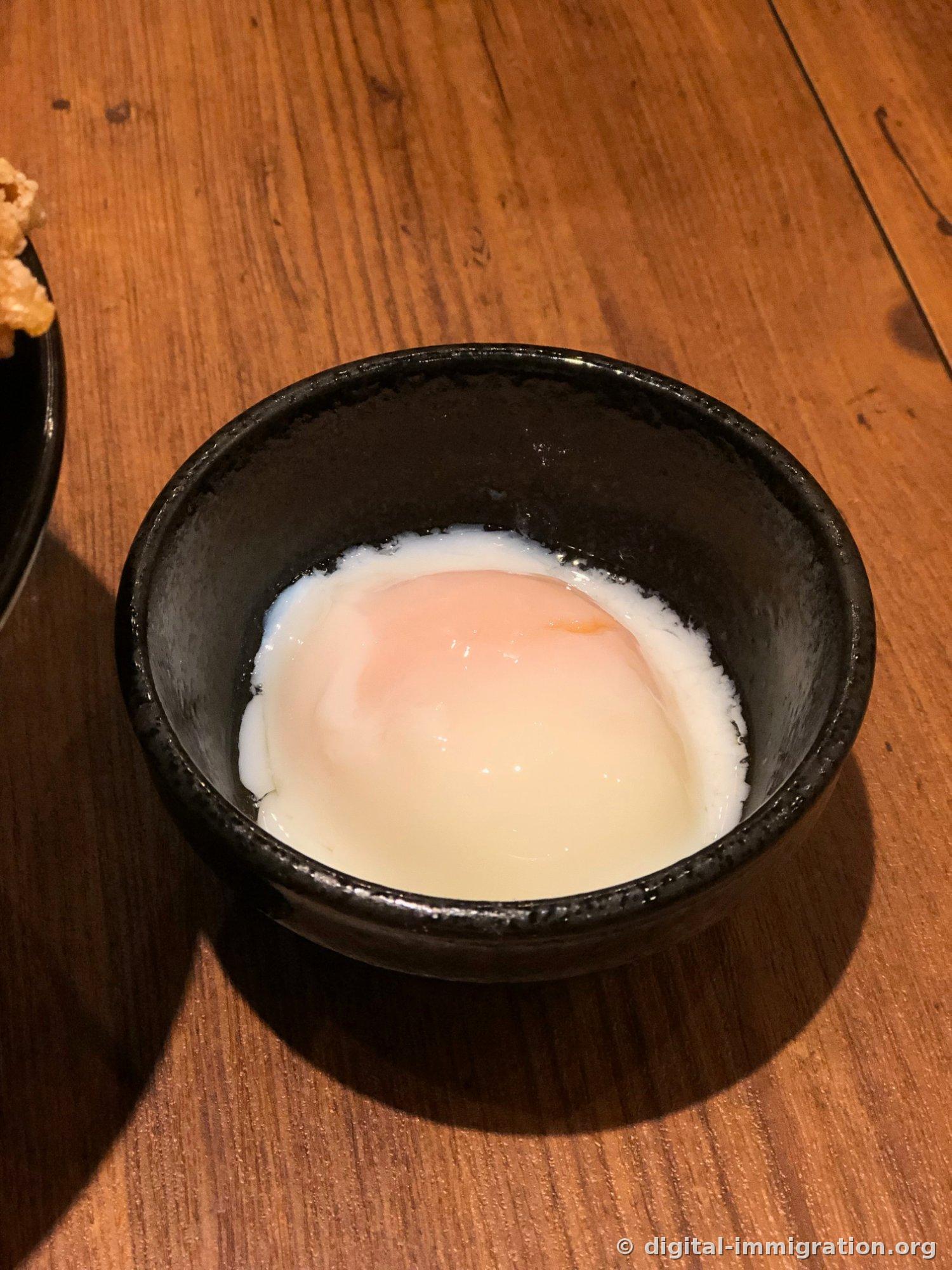
Before the rice bowl arrived, a small black bowl came with a single egg inside. Not quite a raw egg—the whites were set but the yolk was still runny, close to a hot spring egg. Touching it with a spoon, it jiggles whole. I briefly wondered when to break it open, but the conclusion is it's better to wait until you've eaten about half the rice, then pour it over the remaining rice. If you add it from the beginning, the fried coating gets too wet.
Comparing Tori Nanban and Tare Katsu
The two of us ordered different things. One was a fried chicken rice bowl with brown sauce and mayonnaise drizzled in a crisscross pattern. It was 情熱のとり南蛮丼 (890 yen) from the menu. Shredded cabbage was laid over the rice, topped with fried chicken, then sauce and mayo were squeezed in a zigzag pattern over it. Miso soup came with it. In photos it looks modest, but in reality it fills the entire bowl.
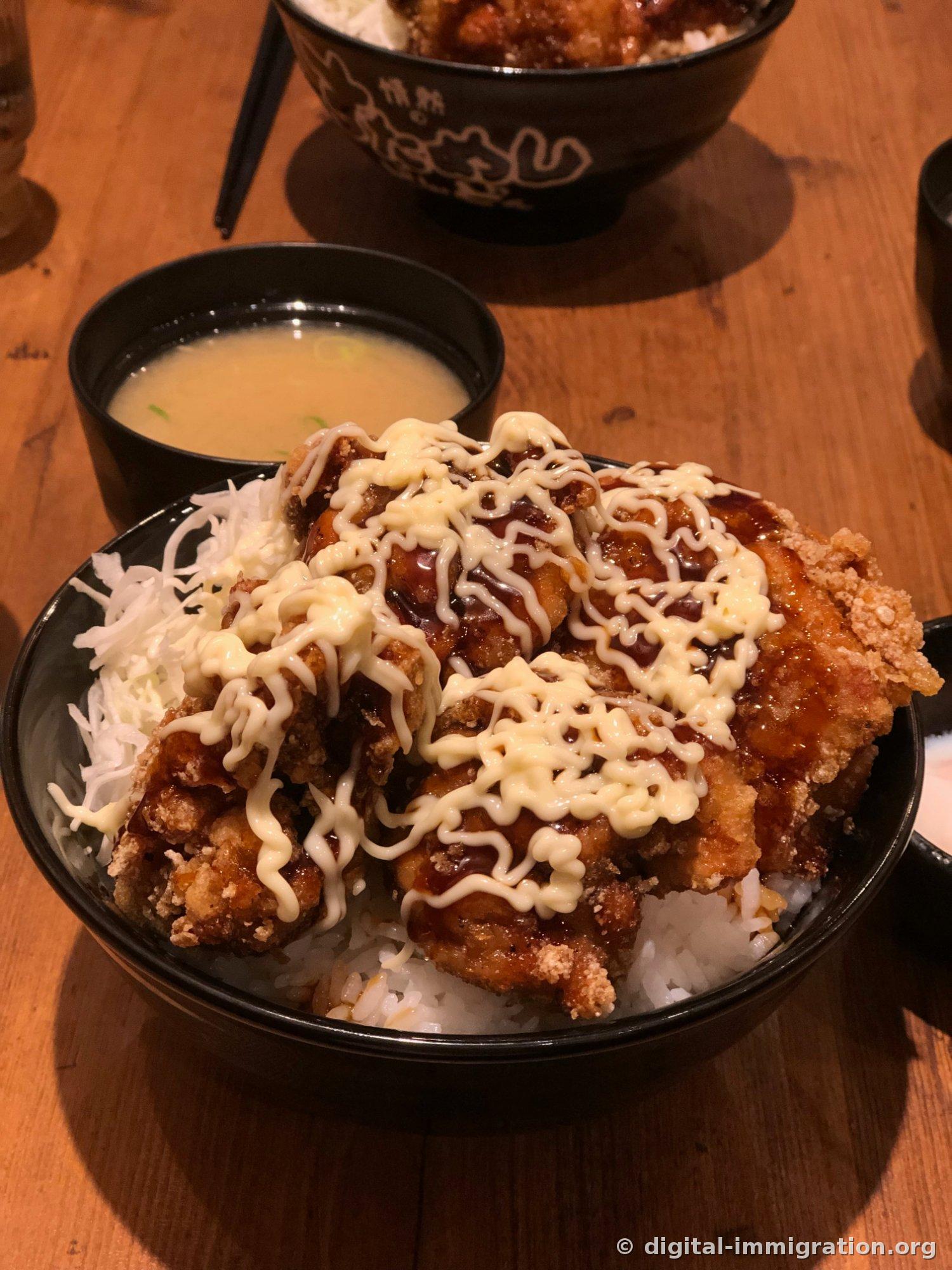
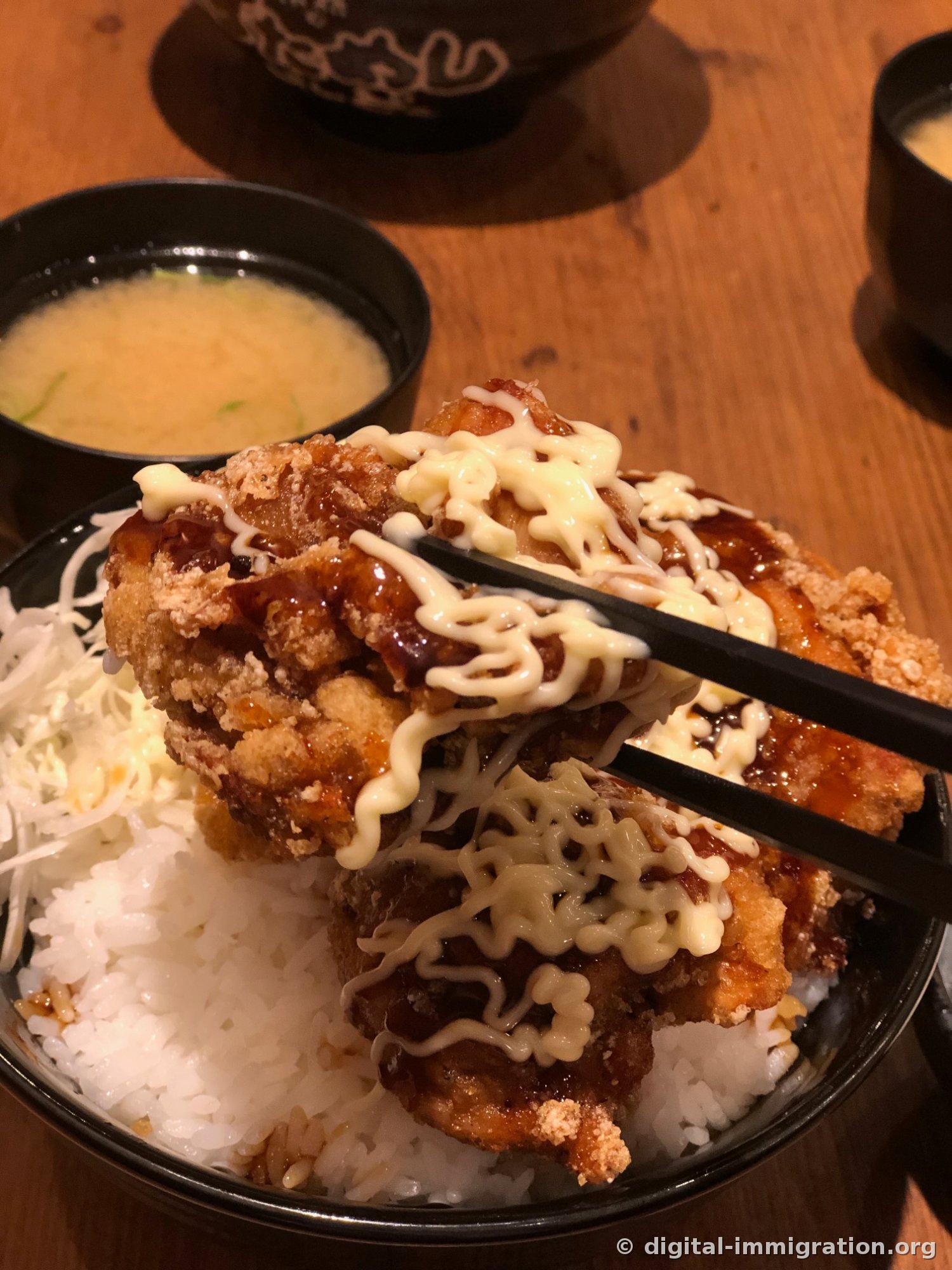
The taste is accurate to expectations. The sauce is sweet and salty, the mayo is rich. The fried coating sticks on thick, so the first bite is crispy, but parts where the sauce has soaked in quickly become soggy. So when you pick it up with chopsticks, it's better to eat the pieces that are still crispy first. This restaurant's frying isn't delicate—it's more on the rough and ready side.
The other was a sauce katsudon. Without mayo, it came with just deep sauce brushed directly on the fried coating, topped generously with Japanese green onions. This one is much lighter. Though the dark color makes it look salty, the sauce is actually only on the surface, so unlike the mayo-covered bowl before it, it stayed crispy throughout. If I had to choose between the two, I'd pick this one.
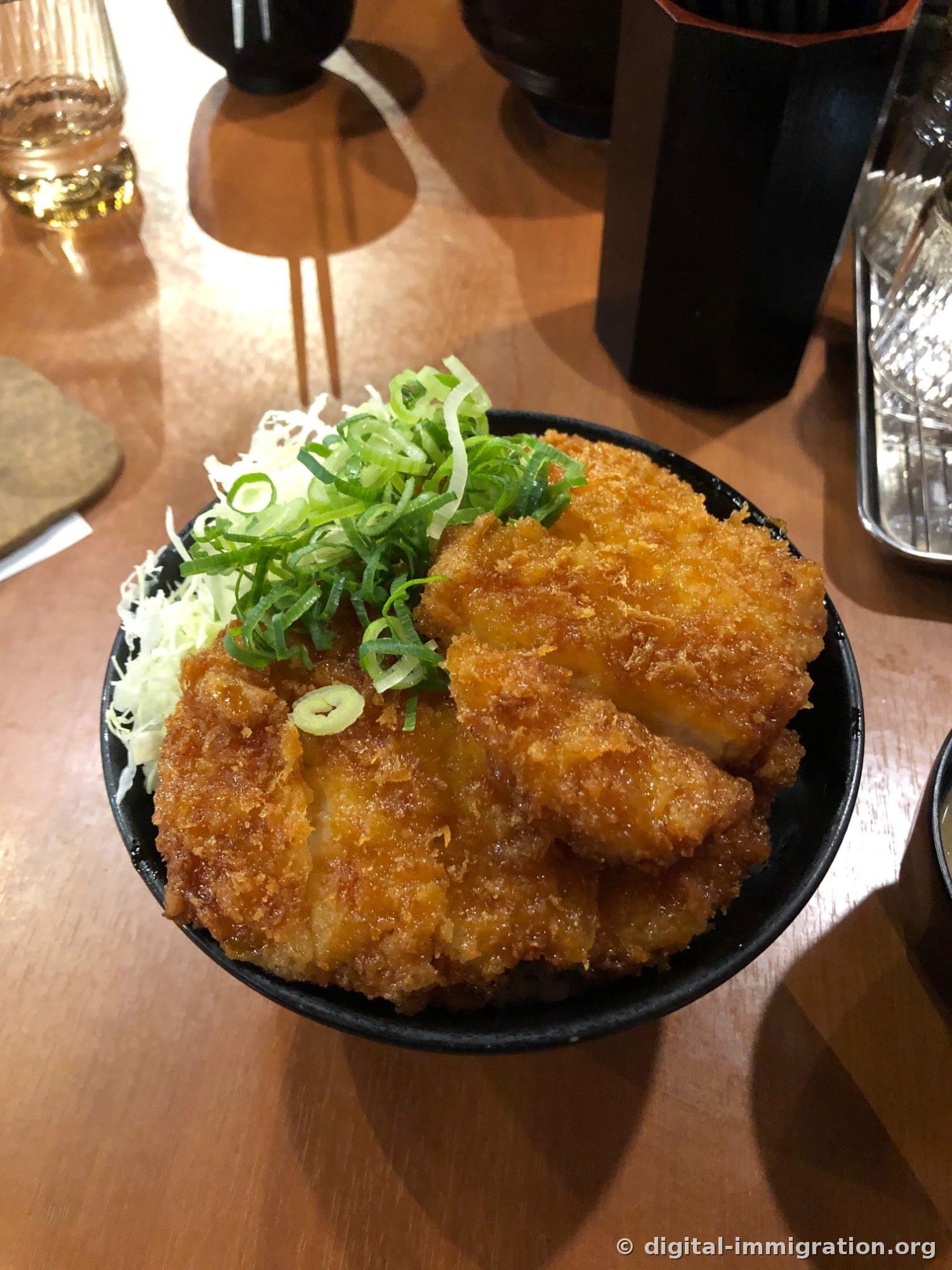
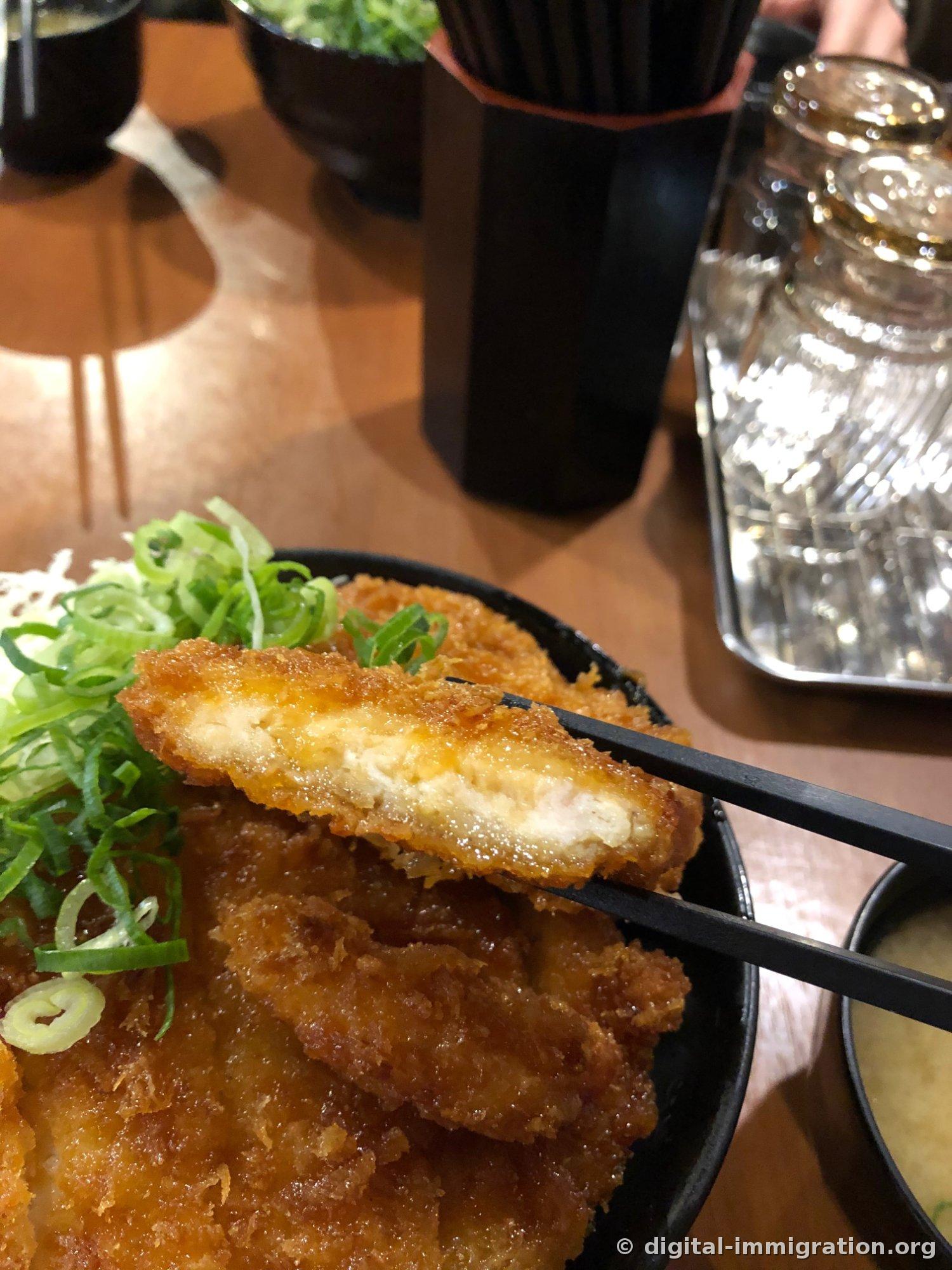
Cutting a piece and lifting it, the meat inside is white. The texture was closer to chicken breast than pork, and the thickness was about one finger joint. The fried coating adheres tightly to the meat with no gap, so when chewing, the phrase "crispy outside, juicy inside" didn't feel like an exaggeration. However, that's only when it's hot. After lingering 2-3 minutes to take photos, it definitely lost its crispness.
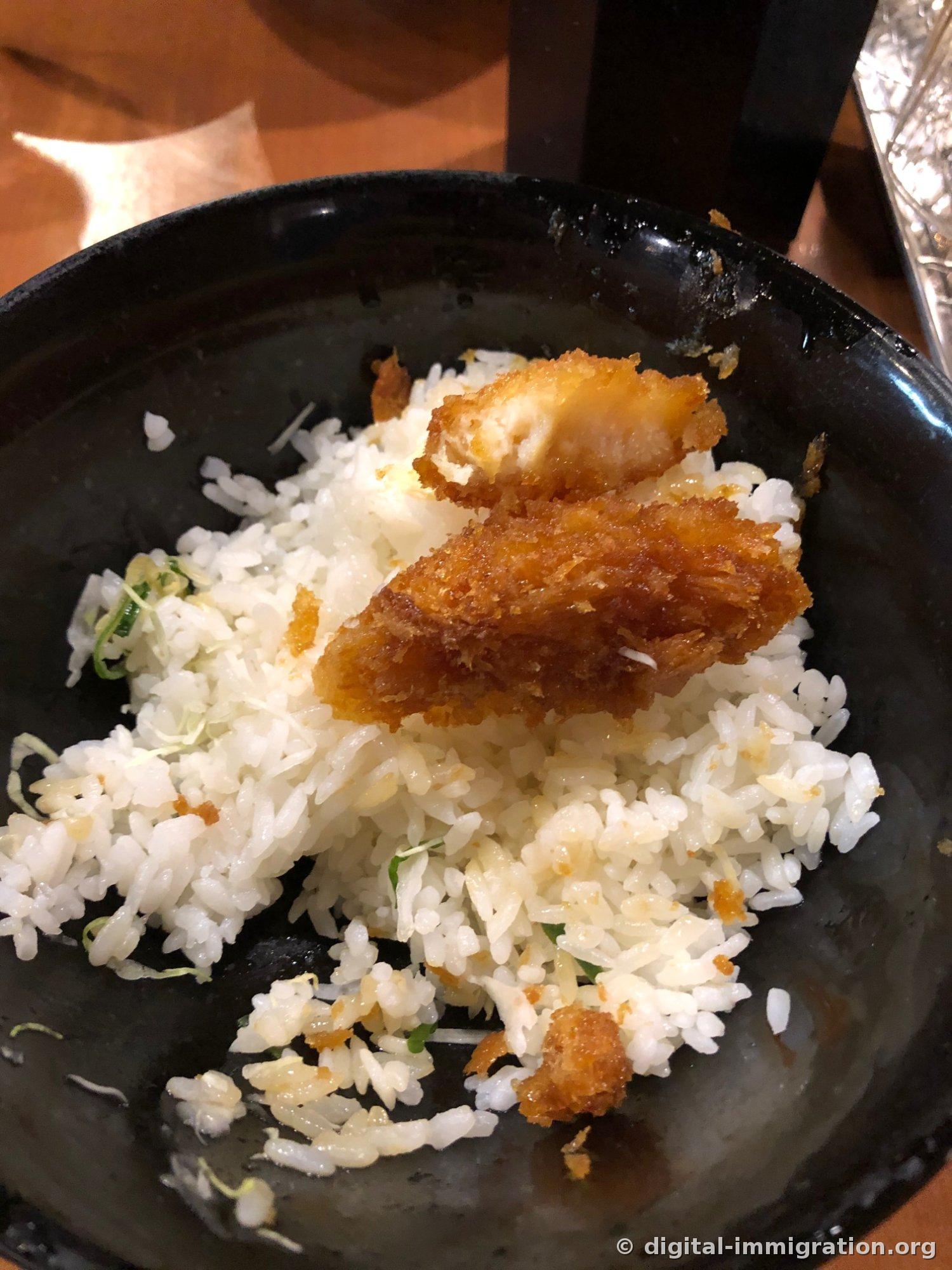
The rice portion is substantial. Even after finishing all the fried chicken, I had rice left over, and in the end I scraped sauce onto the remaining grains and mixed them. This is a photo I took because I regretted leaving some. For first-timers, you'd be full even going down one size. For Stameshi, the difference between Small (640 yen) and Medium (740 yen) is just 100 yen, but the difference in portion feels larger.
Abura Soba and set combinations
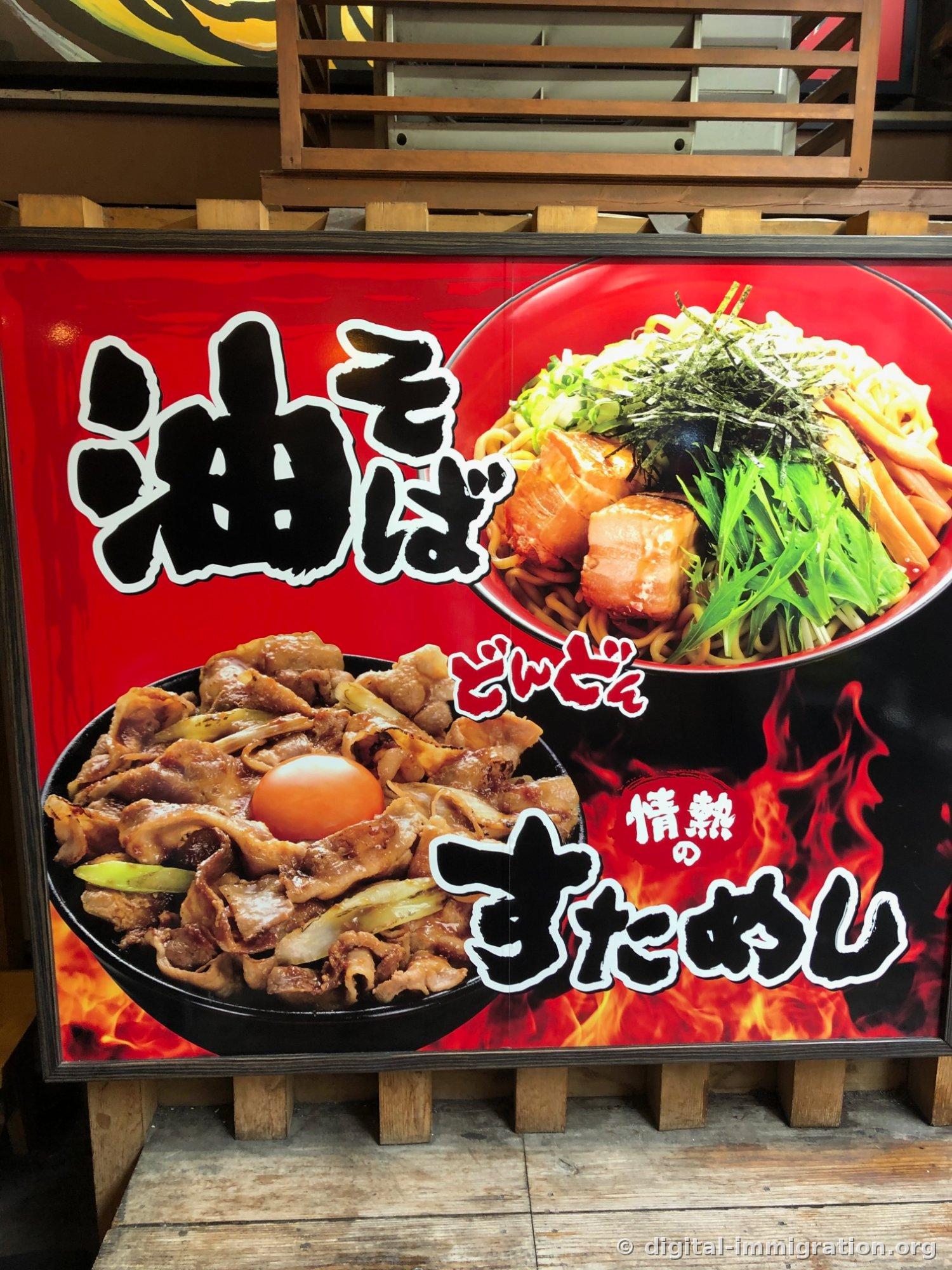
On the wooden frame sign board in front of the shop, 油そば (Abura Soba) is displayed alongside the meat rice bowls. It's a photo of noodles without broth, topped with chashu, mizuna, nori strips, and menma. If you think of this place only as a meat rice bowl restaurant, you'll miss the noodle menu entirely, but according to the entrance menu board, Abura Soba at 690 yen is cheaper than the rice bowls.
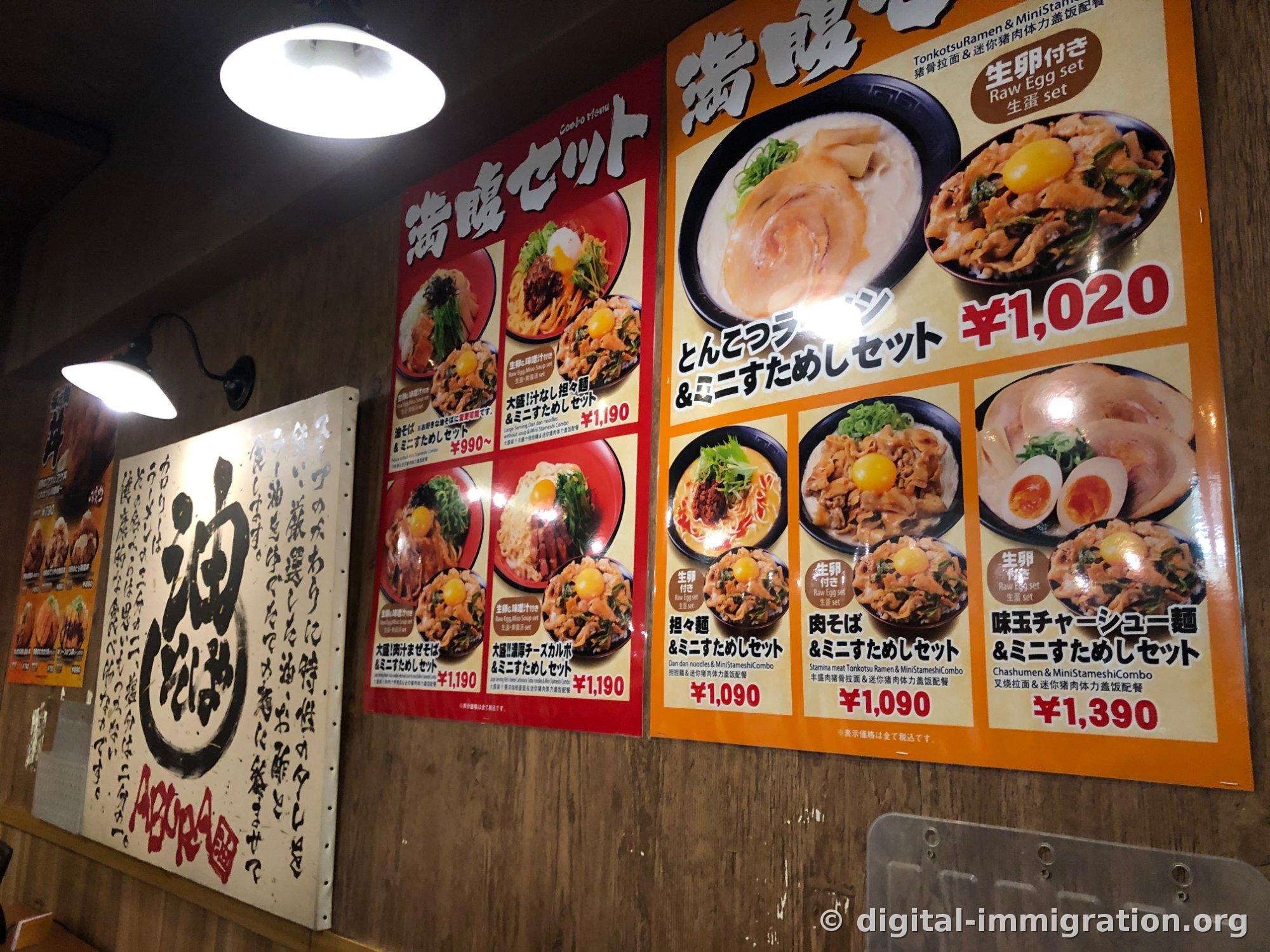
Two set menu posters are hung on the hall wall. Called 満腹セット (Manpuku Set), it's a combination of noodles and mini Stameshi sold together. Abura Soba + Mini Stameshi starts at 990 yen, Tonkotsu Ramen + Mini Stameshi is 1,020 yen, Tantanmen or Niku Soba combinations are 1,090 yen, and Ajitama Chashu Noodles combinations are 1,390 yen. Large-size Mazesoba-style sets are around 1,190 yen. If you want to eat both noodles and rice, this is better than ordering two dishes separately.
For the next visitor
- The sign is hung large on the upper part of the building, but the restaurant is in the basement (B1·B2). Don't confuse it with the 2nd floor steak restaurant.
- Ordering is done via tablet and there are English tabs. The number of times you tap an item is the quantity ordered, so don't tap twice by mistake.
- Don't add the egg from the beginning; it's better to add it when about half the rice remains.
- The sauce-only katsu stays crispy longer than the sauce and mayo combination.
- The rice portion is generous. Even Medium (740 yen) Stameshi would have been enough.
- The prices listed here are what was displayed on the menu board and tablet when I visited. Please confirm current hours and prices on-site.
It's not a place that sticks with you for its taste. I missed mealtime and didn't want to wait in line, but when you've missed dinner and want to fill your stomach for under 1,000 yen in Shinjuku, this kind of option isn't common. Next time I visit, I'm thinking of trying the Abura Soba set.
Read next
- From Akihabara's Chuo-dori to the Kanda River: A Record of Tokyo's Electronics District Revisited Multiple Times
Tokyo's Akihabara is a neighborhood where it's hard to say you've seen everything in a single visit. I've come multiple times across different seasons, and each time the signs chan…
Tokyo · Akihabara - Buying a Single ¥300 Year-End Jumbo Lottery Ticket at Nishi-Ginza Chance Center in Tokyo
Exit from the Hibiya exit of Tokyo's Shimbashi Station, walk toward the elevated highway for about three minutes, and suddenly you'll see a line of people stretching along the side…
Tokyo · Nishi-Ginza Chance Center - Ueno Ameyoko, the real magic starts after sunset — an evening walk from the Okachimachi Gate to Ueno Station
Every time I come to Tokyo, my feet find their way to Ueno Ameyoko (アメ横) without fail. This time I entered from the Okachimachi side and worked my way toward Ueno Station. I've met…
Tokyo · Ameya Yokocho Market