Fukuoka Tenjin Hormon: The Day I Waited 30 Minutes in Line—One Bite of Daechang Made It All Worth It
I was wandering around the underground shopping arcade in Fukuoka's Tenjin district, trying to decide where to have dinner, when I stopped in front of a shop with a long line of pe…
Fukuoka · Tenjin Hormone
I was wandering around the underground shopping arcade in Fukuoka's Tenjin district, trying to decide where to have dinner, when I stopped in front of a shop with a long line of people. The black sign bore the words 鉄板焼 天神ホルモン in red letters—Tenjin Hormon. In Japan, 'hormon' refers to offal cuts like tripe and daechang. I went thinking of Korean-style grilled daechang, but here they grilled it on an iron plate and served it set-meal style with rice and soup. There were far more salarymen clocking out for the day and nearby office workers than tourists.
Let's Start With the Line—Waiting Really Is Tedious
When I arrived at the shop, more than ten people were already lined up. There were no chairs to sit on, and since it was an underground arcade corridor, there wasn't much to look at either. The setup was simple—write your name on the waiting list and just stand—so you end up staring at your phone. Though the shop mainly had counter seating and turned tables quickly, it still took about 30 minutes before my turn came. People standing ahead kept peering at the teppan through the glass window, so I followed suit. It was the only way to kill time.
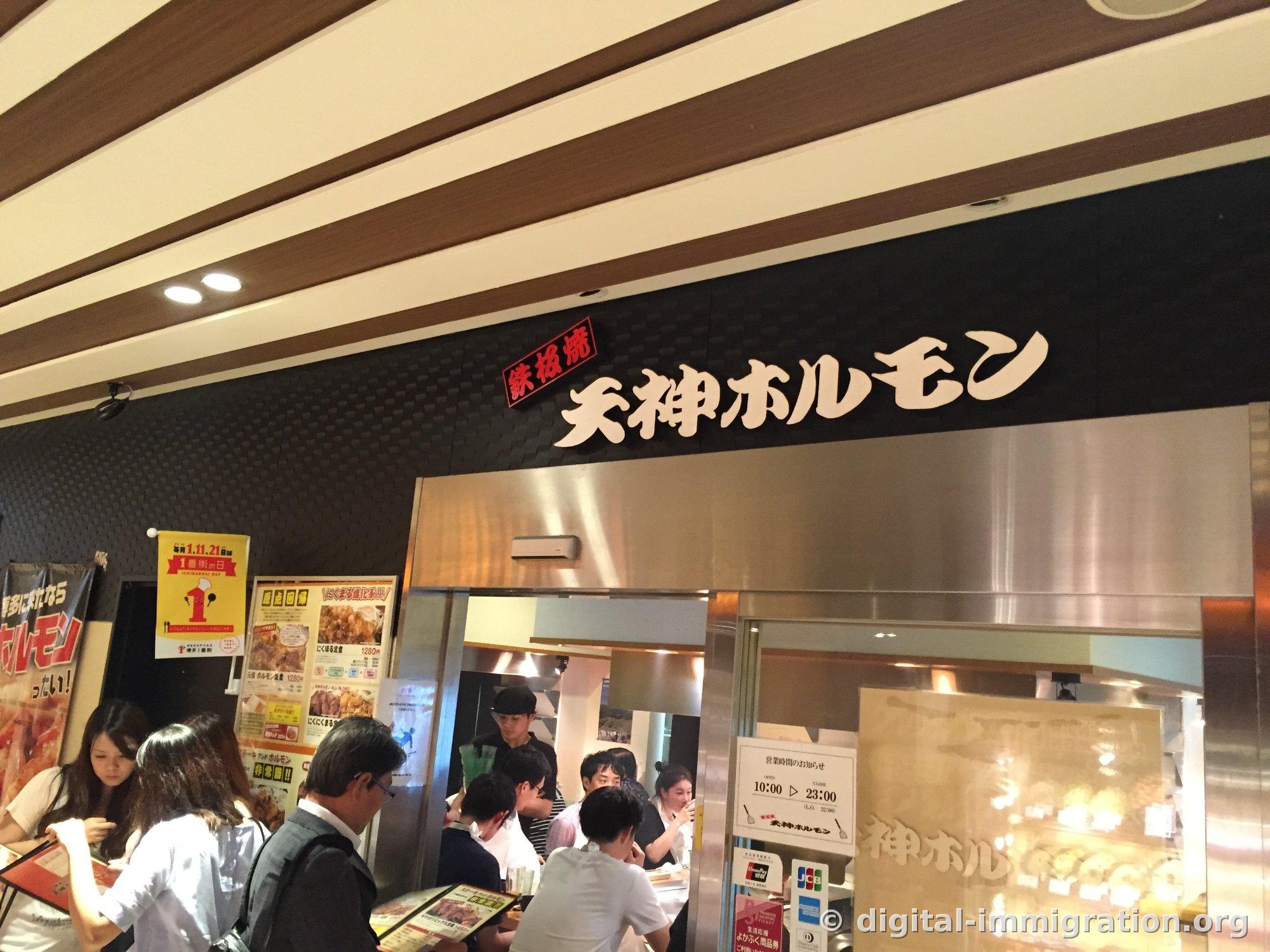
Since menu photos are posted on the left wall of the entrance, it's good to decide what to order while waiting. When I went, the posted menu showed hormon teishoku and nikumaru teishoku at 1280 yen each. The price isn't far from the average for set-meal restaurants around Fukuoka, but once you see what you get, you understand why it's praised for its value. Prices change seasonally, so I recommend checking on the spot. Payment stickers showed UnionPay, JCB, and Diners.
Seated Right Before the Teppan, Watching It Cook Up Close
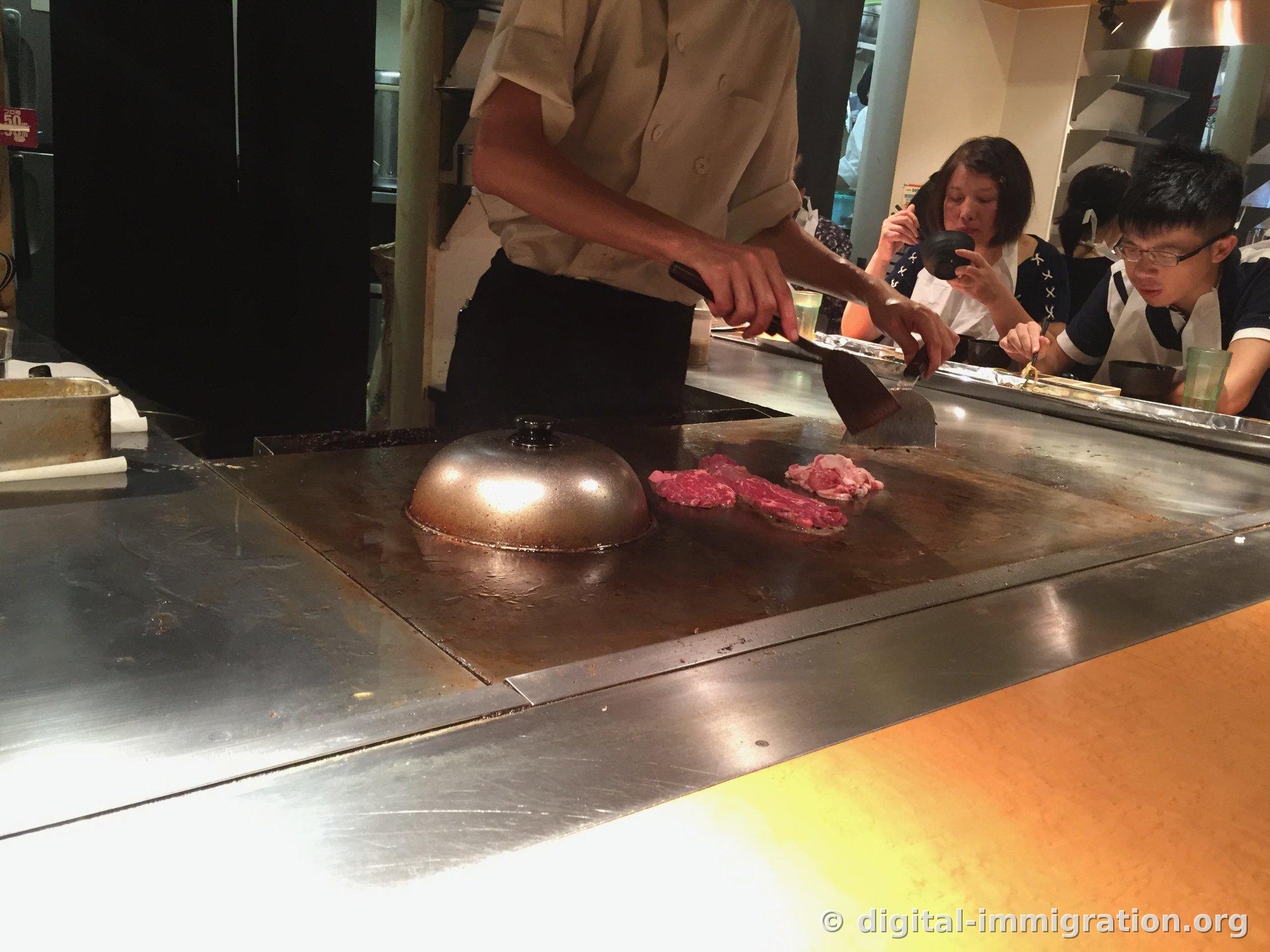
Once seated, you sit at a counter arranged in a U-shape around a large teppan. The moment you sit down, a wave of heat and the smell of oil hits your face. The smell lingers on your clothes. This isn't a place to wear your nice clothes.
The staff member places raw meat on the teppan in front of me and begins grilling. Red beef slices and daechang topped with thick white fat go on side by side. After pressing them flat a few times with the spatula, they cover it with an iron lid beside it, steaming it briefly. This lid-covering process seemed to be the key. As the fat in the daechang melts on the inside, the oil spreads across the teppan and stir-fries the bean sprouts and Chinese chives.
One Bite of Daechang—That's When It All Made Sense
Once cooked, they push it toward me on aluminum foil laid out on the teppan. Not on a plate—on aluminum foil. Since heat continues to rise from below, nothing cools down, not even the last bite. It's bigger than expected. When I eat daechang in Korea, there's that moment later when it hardens and turns tacky, but that didn't happen here.
The beef is on the left, daechang on the right, and in the middle are bean sprouts, Chinese chives, and carrot. I grabbed the daechang first. The outside was caramelized soy-sauce-glazed, a deep brown, but when you bite down, the oil bursts from inside. There's no gamey smell. That was the most surprising part. Many shops use heavy seasoning to mask the distinctive offal odor, but here the seasoning was actually restrained, and the daechang itself was clean. A spoonful of rice, a piece of daechang—and suddenly the 30 minutes I'd spent standing meant nothing. I almost ordered extra rice when I saw the man at the next seat do it.
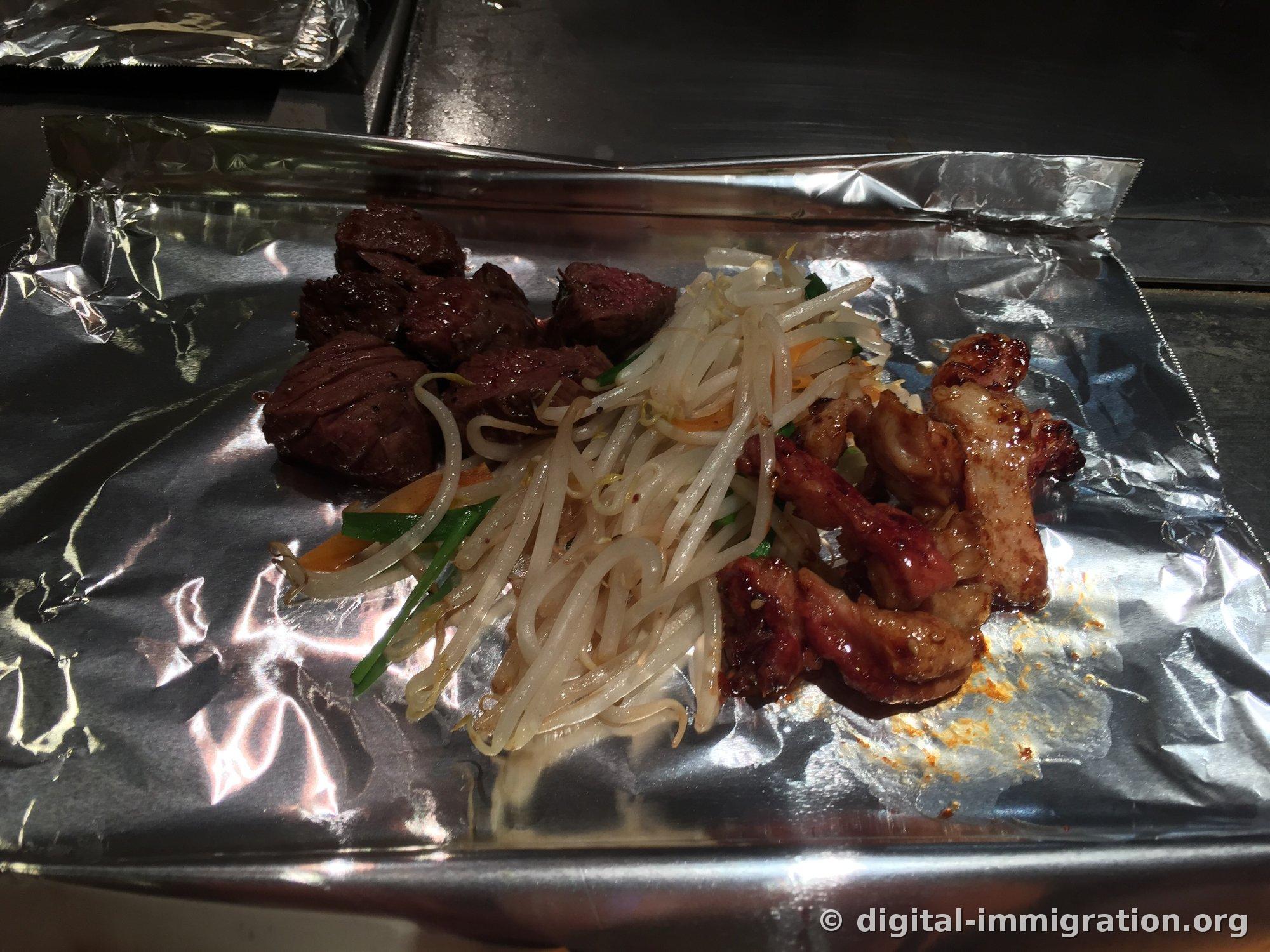
There are some downsides. The portion isn't large. What you see in the photo is almost everything, so if you're thinking of lingering over drinks, it won't be enough. The beef is fairly ordinary compared to the daechang. It's tender, but it's not the kind of flavor that stays with you. The real star here is the daechang. Next time, I'd choose a menu with less beef and more emphasis on hormon.
Location and Practical Tips
Since the shop is located in an underground arcade and commercial complex in the Tenjin area, it's easy to get lost on the surface. I passed the sign twice. If you follow the underground passageways and find where people are clustered, that's the entrance. It's faster to bookmark the coordinates on your map ahead of time.
- Open from 10 AM to 11 PM, with last order at 10 PM (according to the entrance sign; subject to change).
- Lunch around noon–1 PM and early evening around 7 PM see the longest lines. Mid-afternoon around 3–4 PM is the quietest.
- Since most seating is at the counter, tables turn over quickly for groups of two or fewer. Parties of four or more face much longer waits.
- The smell definitely lingers on your clothes. It's better to schedule this toward the end of your itinerary rather than before shopping.
- Solo dining is totally fine. About half the people at the adjacent seats were office workers dining alone.
I'm not usually a fan of places where you have to line up, but I'd wait again for this. On my next trip to Fukuoka, I'm planning to make this my dinner reservation for the evening I arrive.
Read next
- From Akihabara's Chuo-dori to the Kanda River: A Record of Tokyo's Electronics District Revisited Multiple Times
Tokyo's Akihabara is a neighborhood where it's hard to say you've seen everything in a single visit. I've come multiple times across different seasons, and each time the signs chan…
Tokyo · Akihabara - Buying a Single ¥300 Year-End Jumbo Lottery Ticket at Nishi-Ginza Chance Center in Tokyo
Exit from the Hibiya exit of Tokyo's Shimbashi Station, walk toward the elevated highway for about three minutes, and suddenly you'll see a line of people stretching along the side…
Tokyo · Nishi-Ginza Chance Center - Ueno Ameyoko, the real magic starts after sunset — an evening walk from the Okachimachi Gate to Ueno Station
Every time I come to Tokyo, my feet find their way to Ueno Ameyoko (アメ横) without fail. This time I entered from the Okachimachi side and worked my way toward Ueno Station. I've met…
Tokyo · Ameya Yokocho Market