Beppu Kamado Jigoku (かまど地獄) Half Day — From the 1st to 6th Chome, Ending with Hot Spring Eggs and Ramune
I arrived at the Kannawa (鉄輪) district of Beppu in Oita Prefecture on an afternoon when the rain came and went. As soon as I got off the bus, the whole neighborhood was billowing w…
Beppu · Gamasot Hell
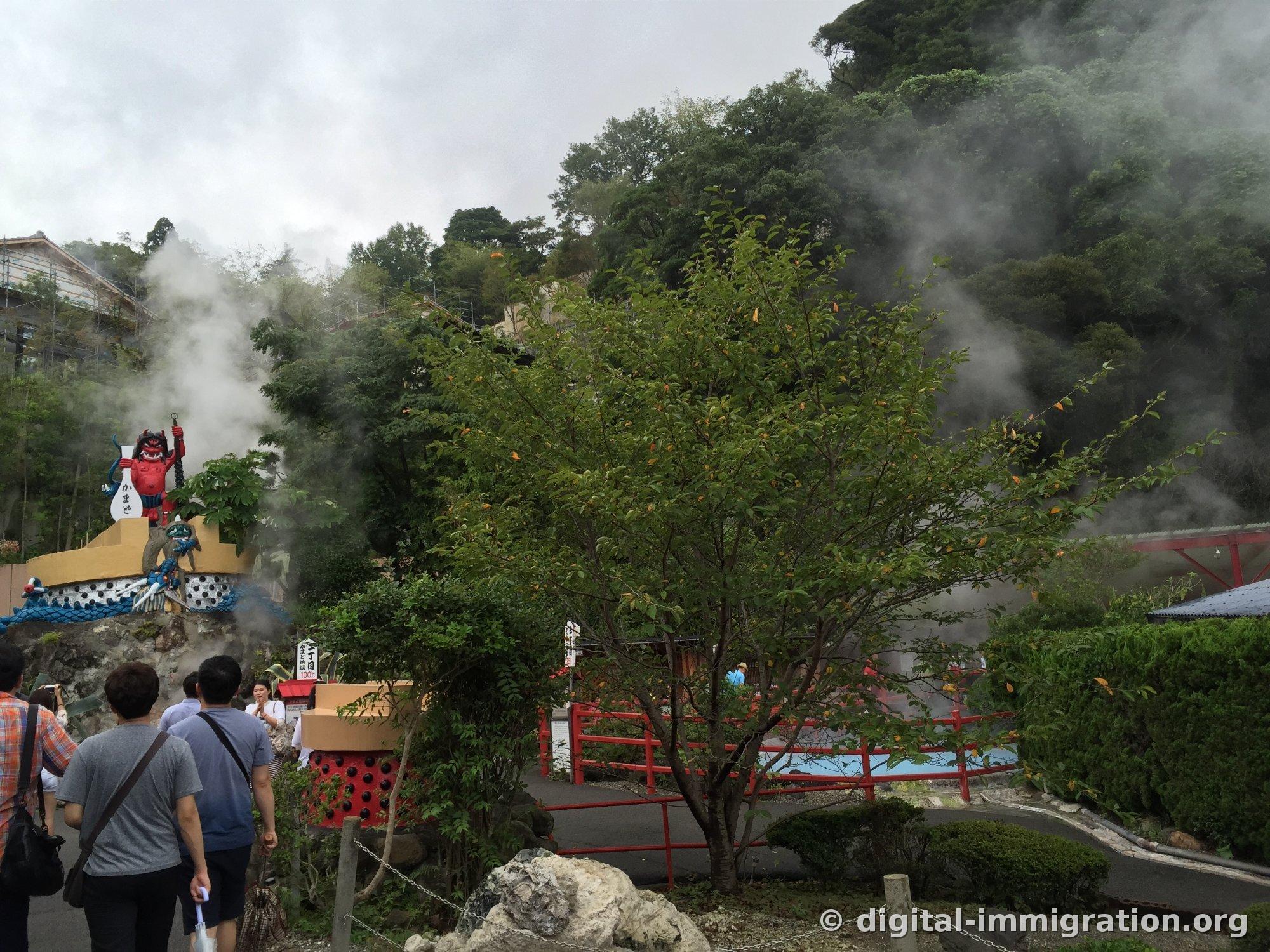
I arrived at the Kannawa (鉄輪) district of Beppu in Oita Prefecture on an afternoon when the rain came and went. As soon as I got off the bus, the whole neighborhood was billowing with steam. Water vapor rose from between roofs, between gutters, and even from the cracks of manhole covers. Among all these, the place where the most people gathered was Kamado Jigoku. True to its name, a large cauldron is its symbol, and in front of the ticket office there's actually a massive iron cauldron set up with a sacred rope around it. Pine trees grow above it, so at first I thought it was the entrance to some shrine.
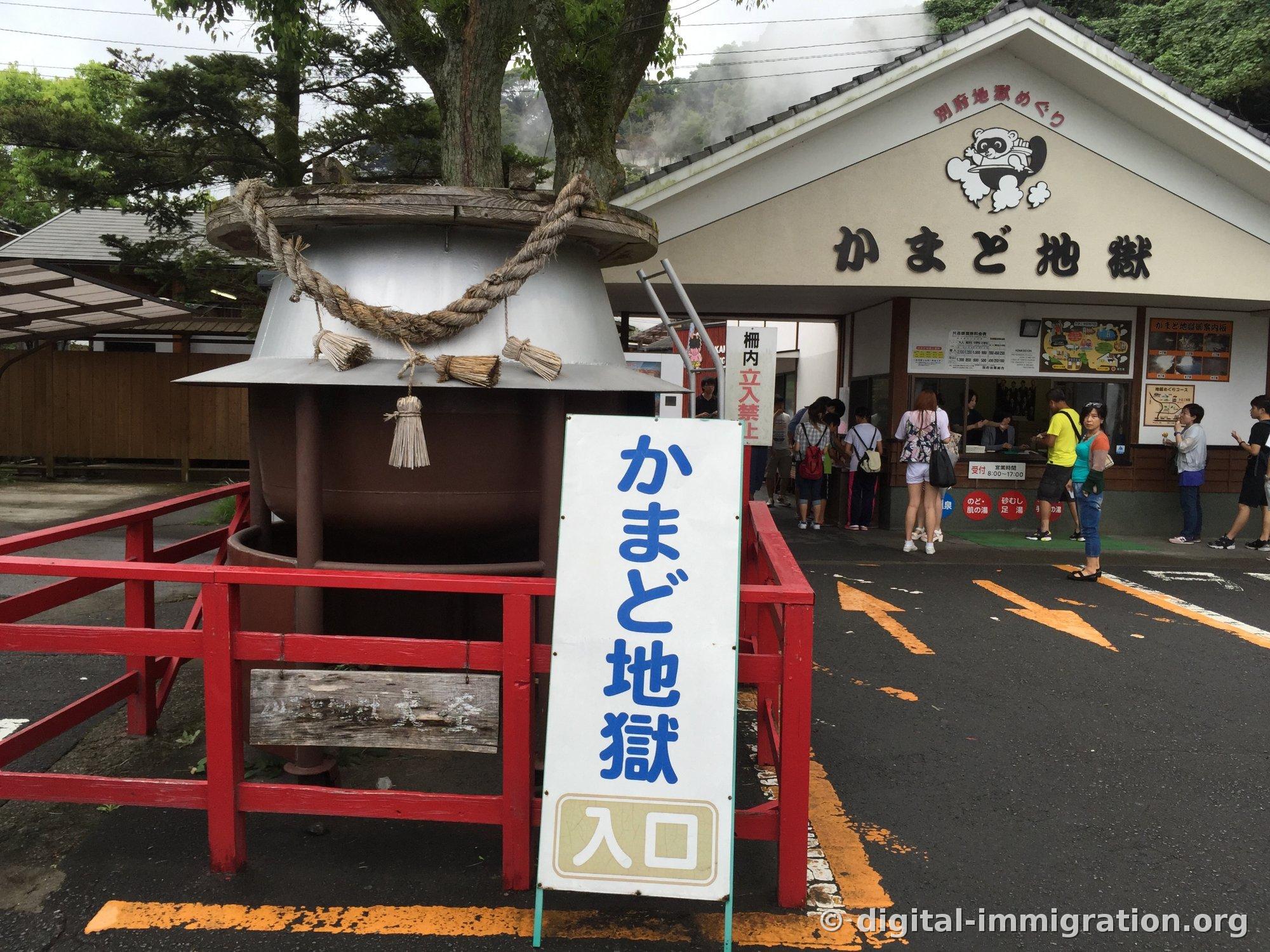
A price list is posted on the ticket office window, with separate rates for groups, individuals, and combo passes for the Hell Tour Circuit. I bought a combo ticket to visit multiple hells, but since the rates change by season, I recommend checking on-site. After buying the ticket and entering, a red oni demon is sitting on top of the cauldron. The photo line was so long that I gave up on getting a shot without people.
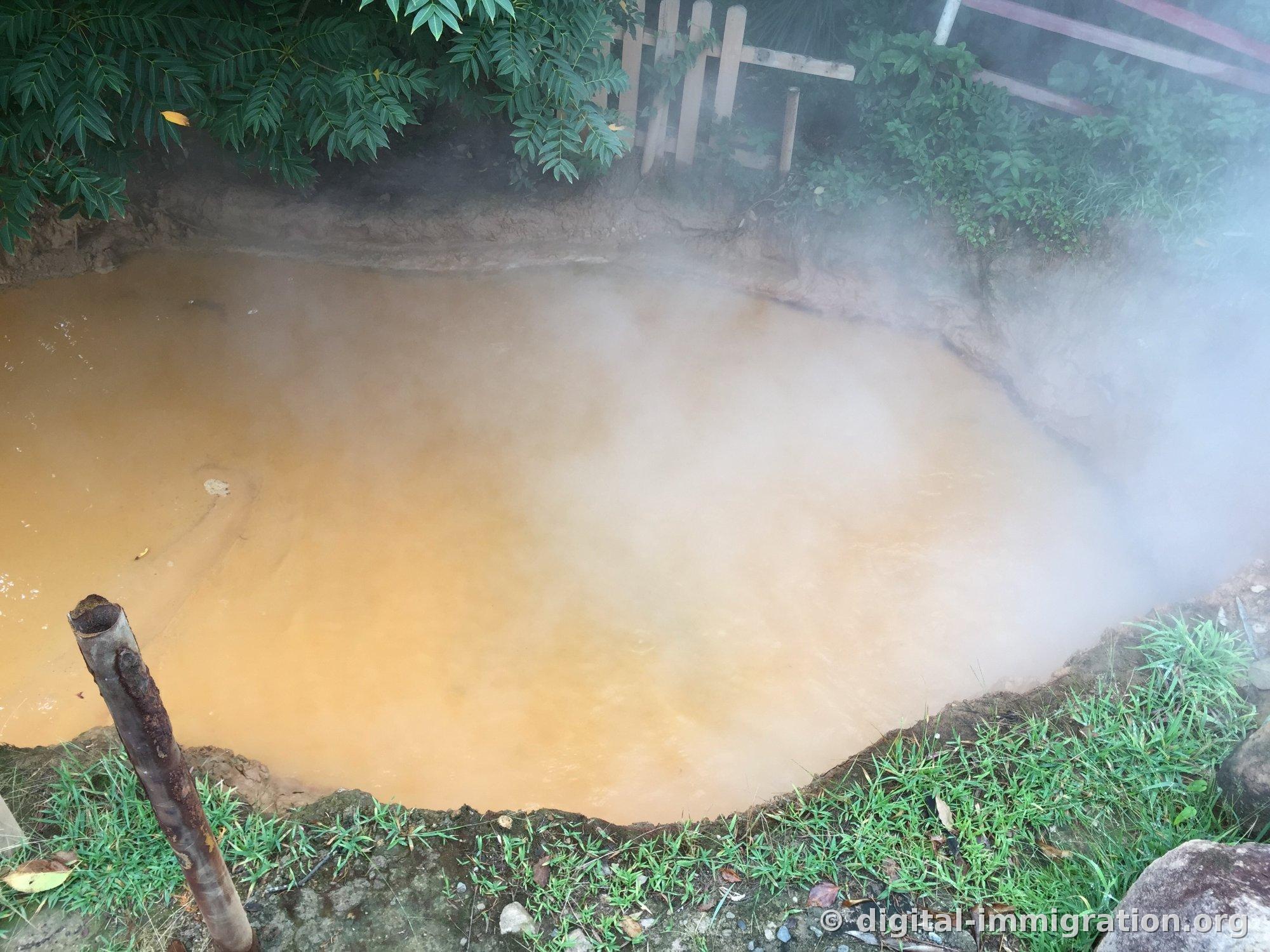
From 1st to 6th Chome, Each Pond Has a Different Color
What sets this hell apart from others is that you don't just view one large pond and leave. Within this small area, hot spring ponds of different characteristics are lined up in sequence with numbers. Signs labeled 一丁目, 二丁目, and so on, so you just follow in order. In reality, it takes about 20-30 minutes to go around, but every time the color changed, my feet stopped in their tracks, and I ended up spending nearly an hour there.
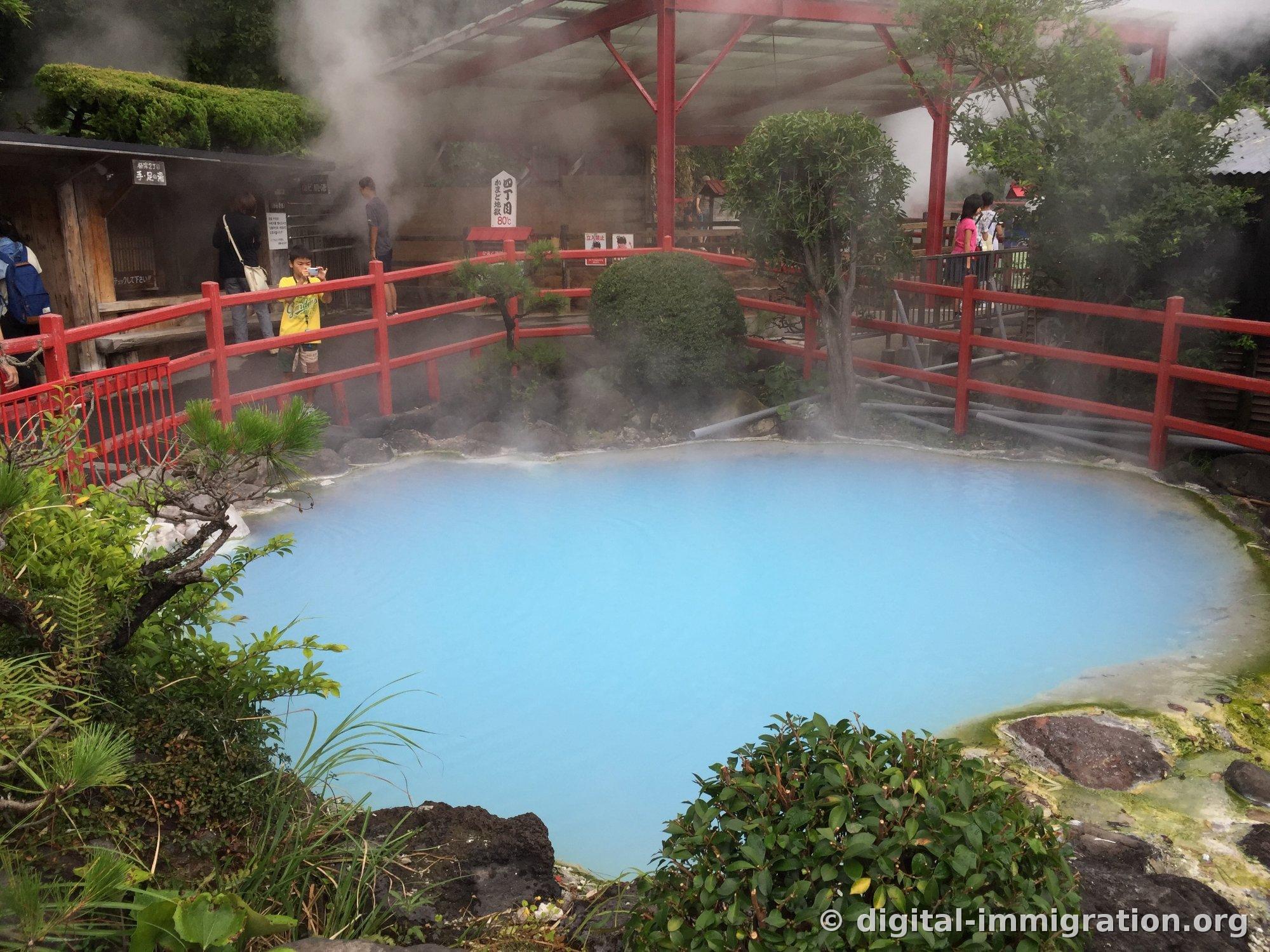
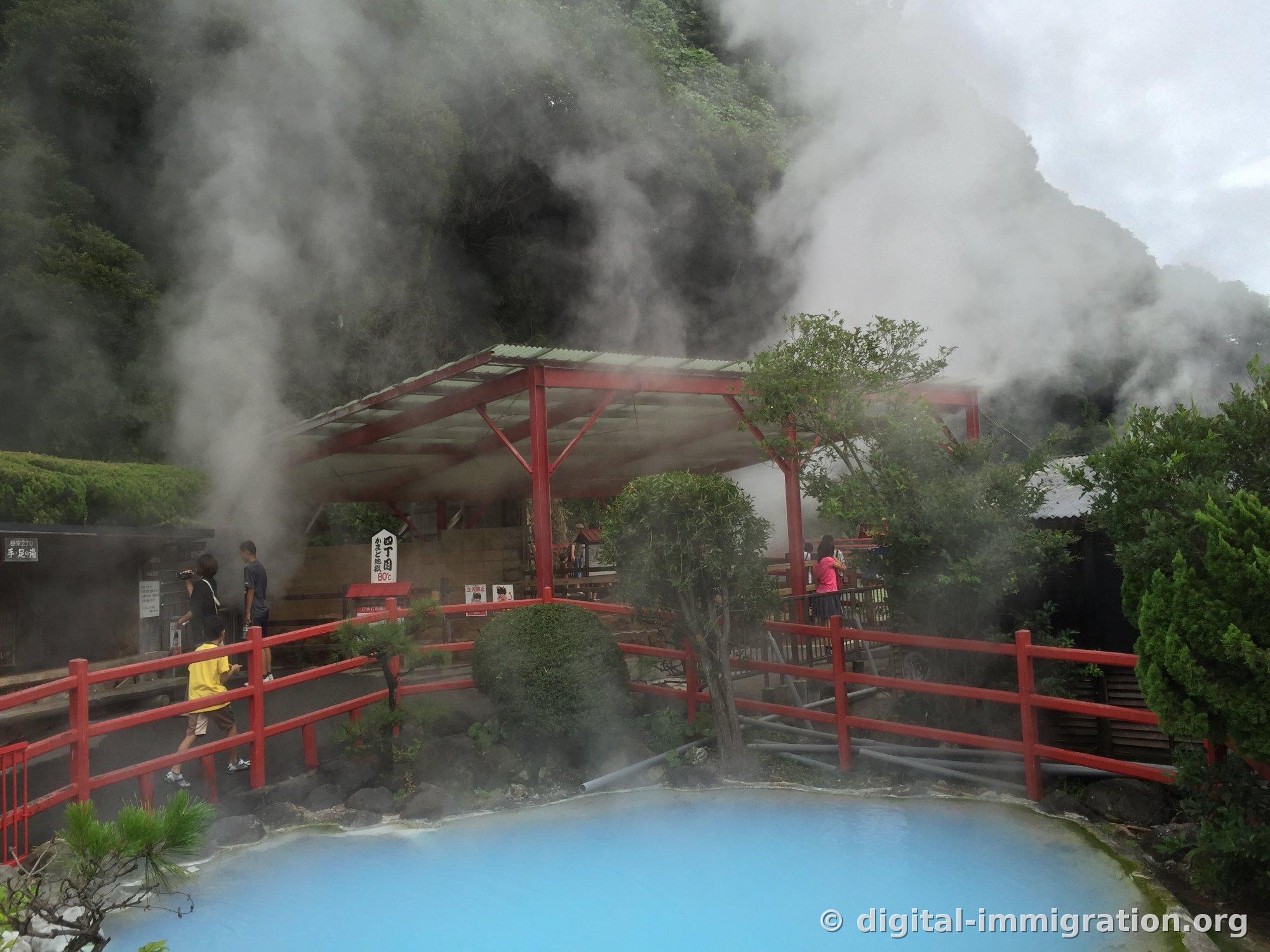
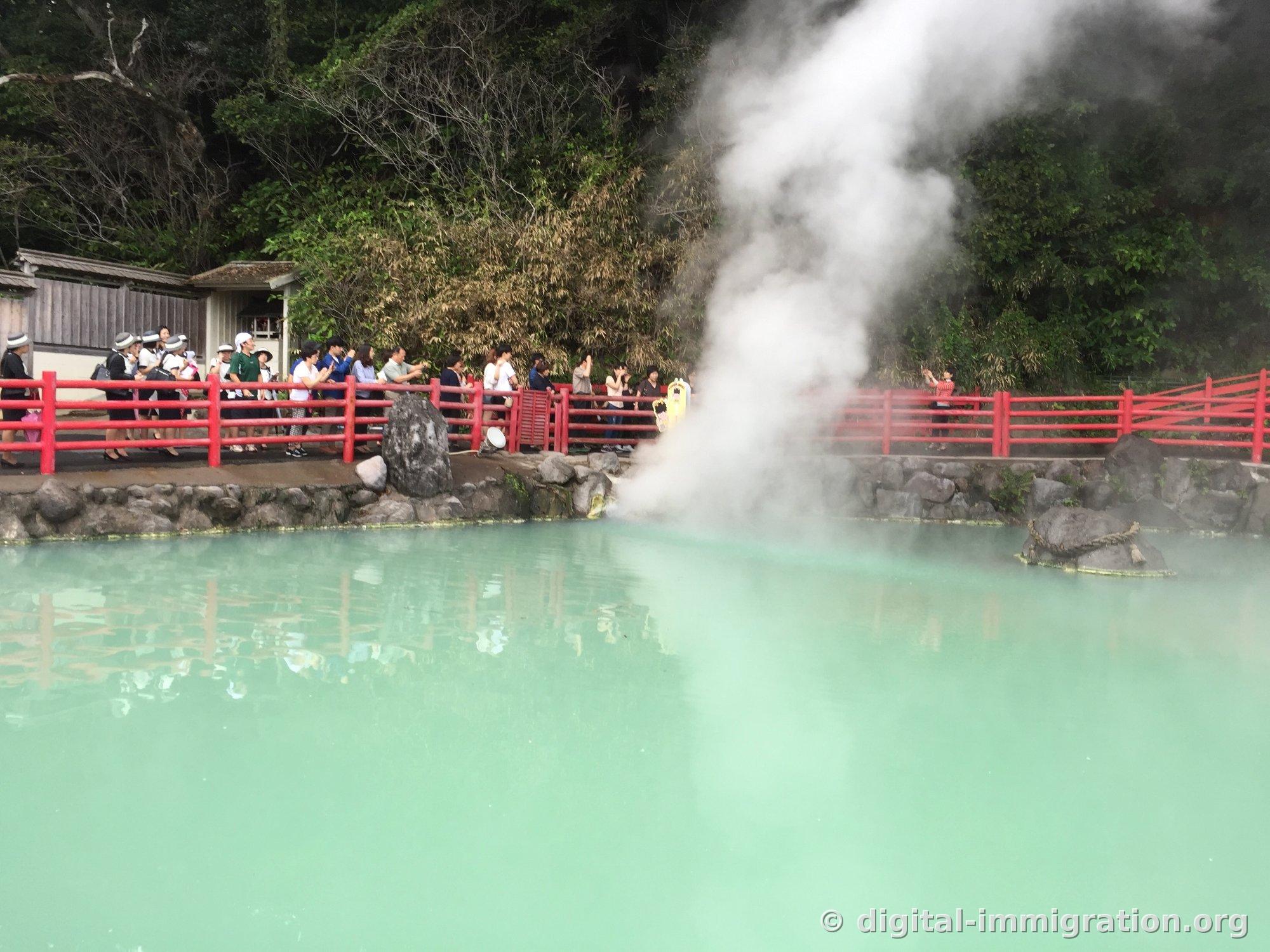
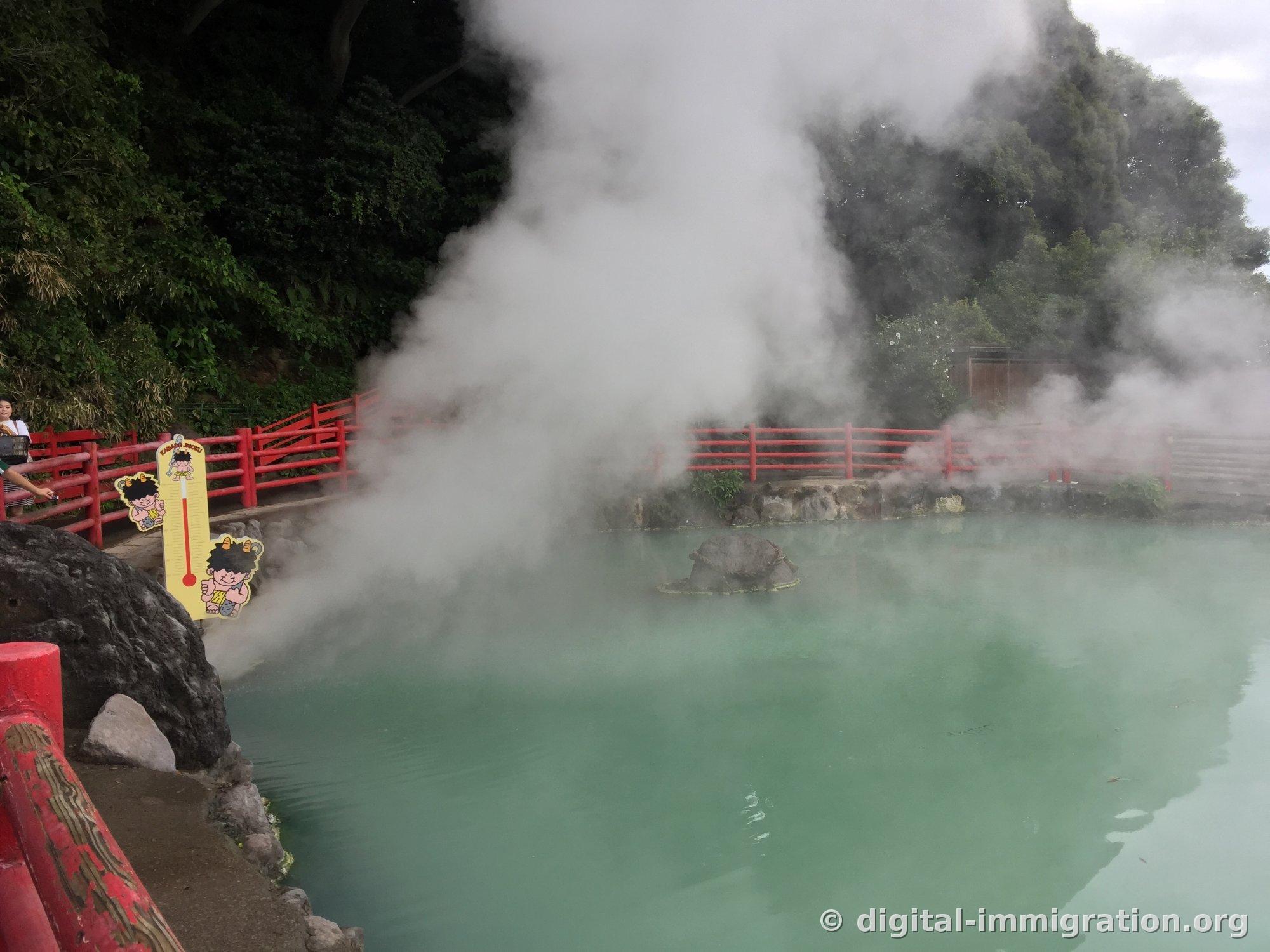
This 4th Chome sky-blue pond is the most popular. What's interesting is that depending on the wind direction, completely different photos come out. While I was standing there, suddenly steam gushed out and the pond disappeared entirely. A staff member did a demonstration where he blew cigarette smoke and the steam billowed up noticeably—it happened right after that. A few seconds later, the water color was visible again.
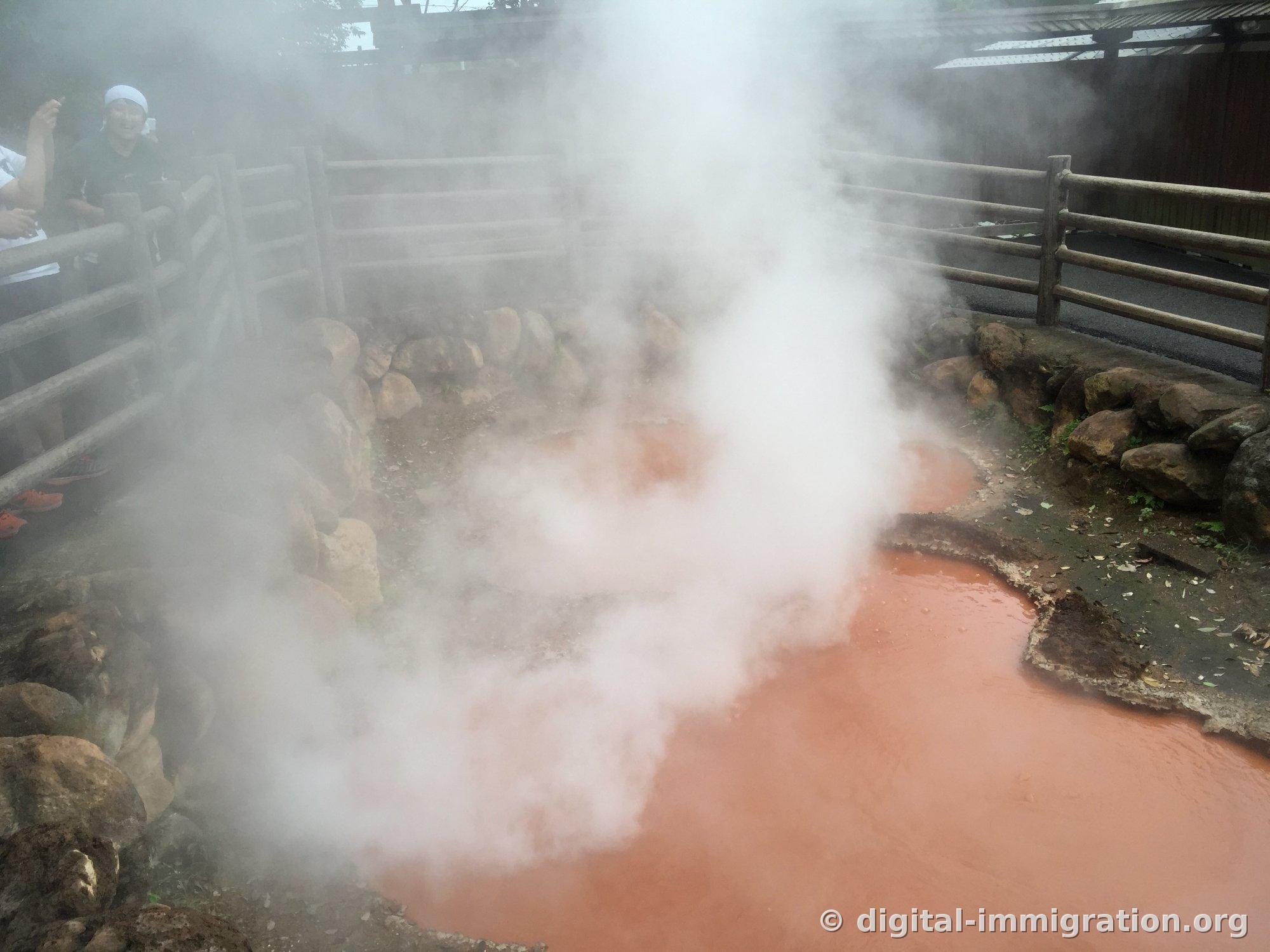
Walking a bit further, a muddy orange-colored pond appears. A pipe sticks out, and the surface trembles slightly. The smell becomes noticeably stronger here. It's less of a sulfur smell and more like heated, wet soil.
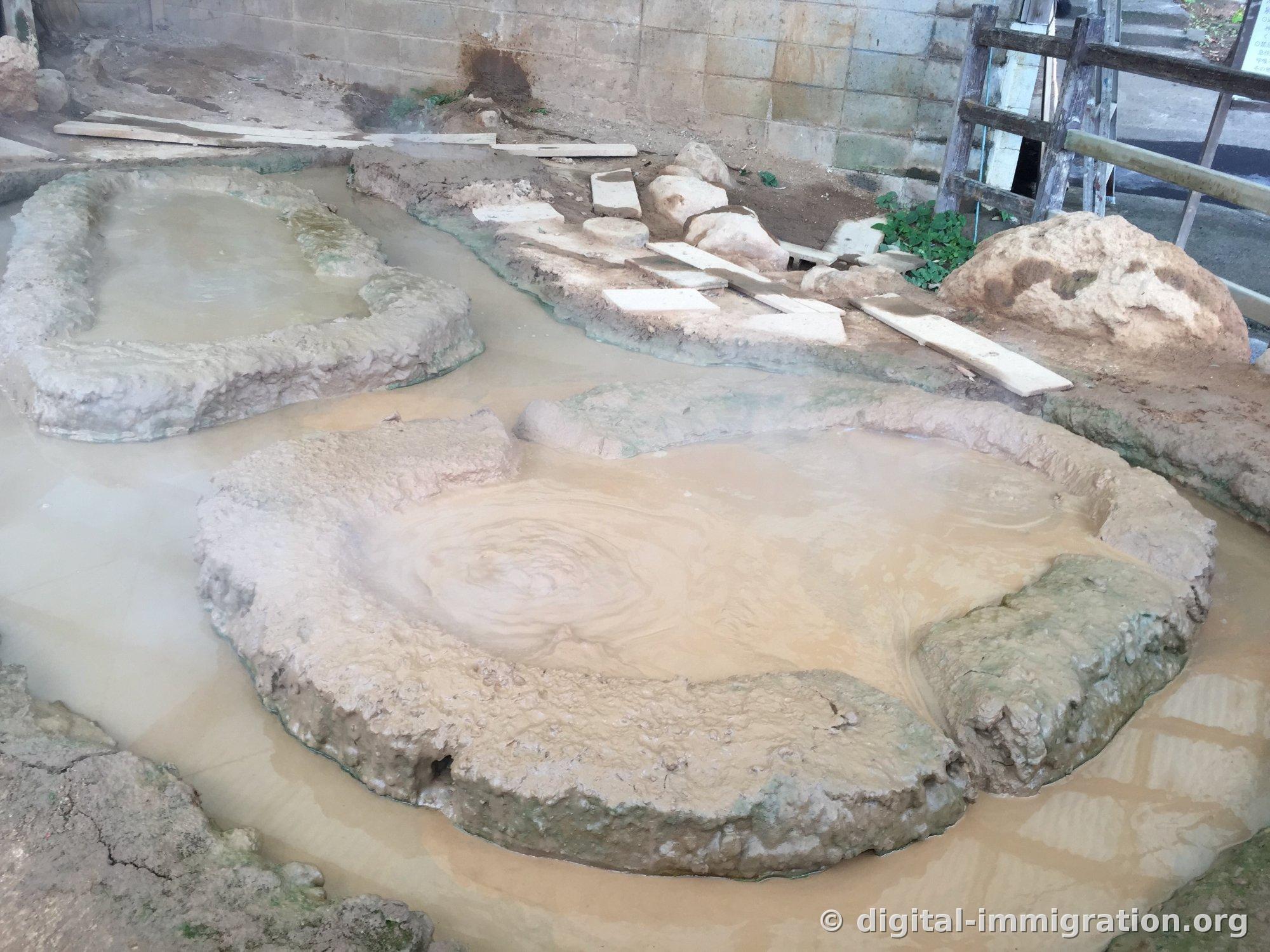
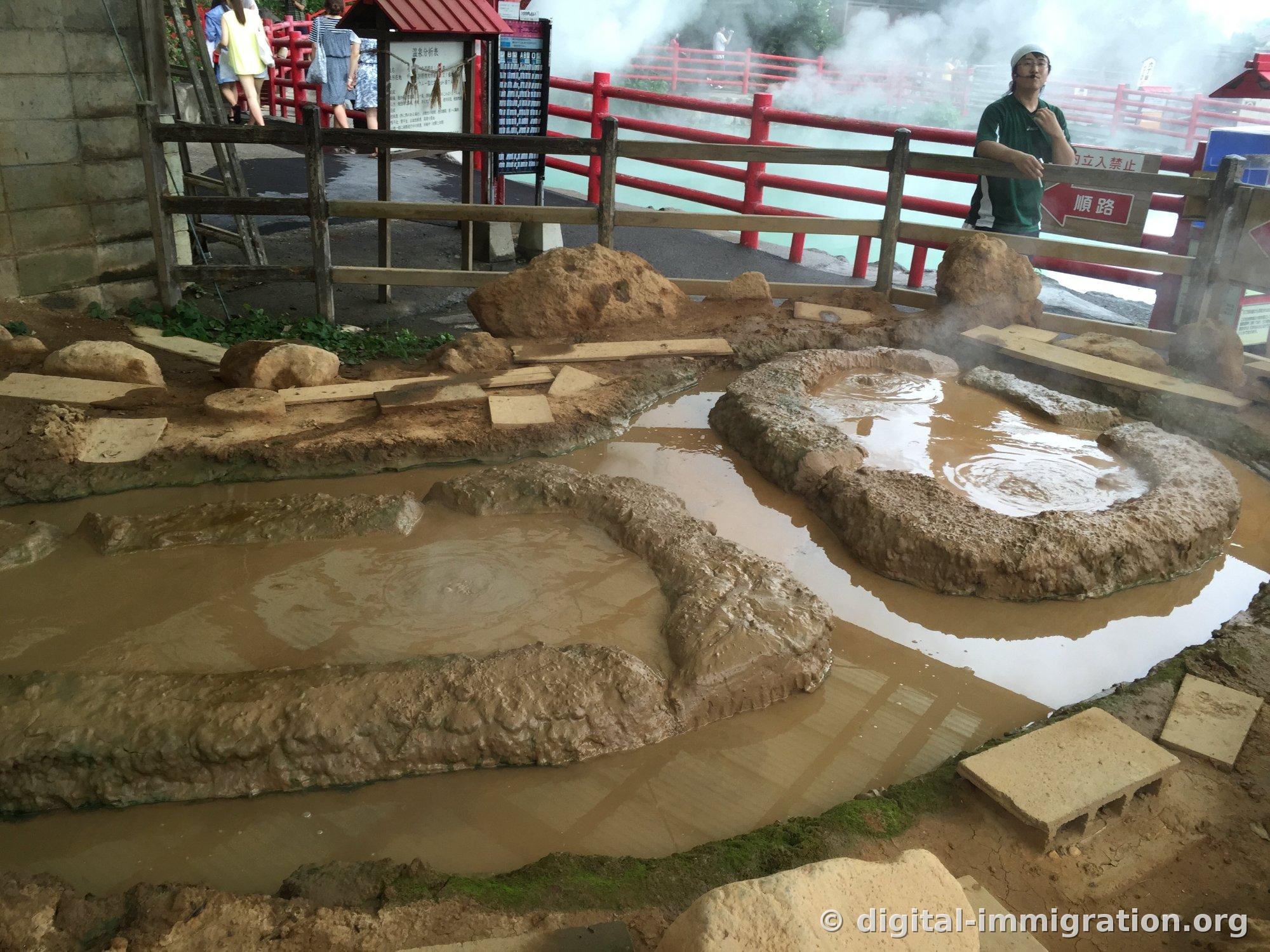
The mud area has a different character altogether. Instead of water, thick, porridge-like mud swells in a circle and then subsides. The edges have hardened and risen like the rim of a dish, and the pattern apparently changes slightly each year. The gurgling sound was lower and more muffled than expected.
The large pond in the final section had a greenish hue with a milky tint. This is the place where the most people gather, so you'll need to wait a bit to get a spot at the railing. When a tour group leaves, it suddenly becomes quiet, so you can seize that opportunity.
Location and How to Get There
Kamado Jigoku is just a few minutes' walk from the Kannawa bus stop. Take a direct bus heading to Kannawa from the bus terminal at the west exit of JR Beppu Station. Other hells like Umi Jigoku (Sea Hell) and Chinoike Jigoku (Blood Pond Hell) are within walking distance. I walked here from the direction of Umi Jigoku, and the path is fairly flat with just a slight uphill section. There's a parking lot in front of the site, though it gets temporarily blocked when tour buses arrive.
Hot Spring Eggs and Ramune—You'll Miss Out if You Skip These
Many people who come here just view the ponds and leave, but the real show is the bench in front of the shop. They sell eggs steamed in hot spring vapor, and next to them is a refrigerator with ice-cold ramune bottles with marbles inside. When you peel the egg shell, the egg white has a slight brownish tint, there's almost no sulfur smell, and the salty flavor soaks right in. The yolk isn't dry—it's moist. One bite of the hot egg, one sip of the ice-cold ramune. After being surrounded by steam and sweating, this combination was genuinely the best part of the day.
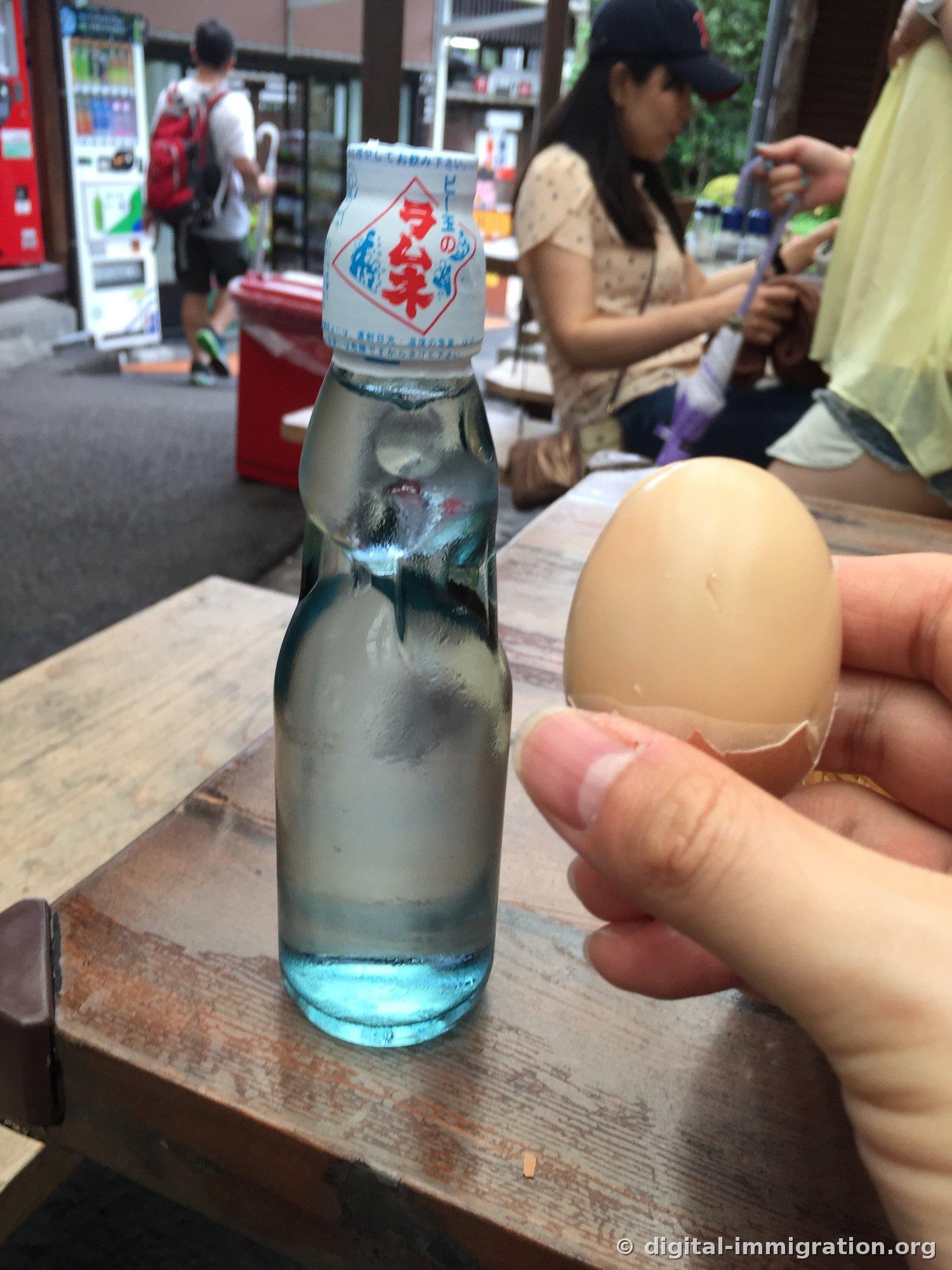
The ramune bottle cap can be opened by staff, but usually you have to press it yourself. The marble gets caught in the bottle neck, so it's easy to choke on your first sip. I spilled some on my clothes on the first sip. There's a separate return box for bottles, so don't take one with you.
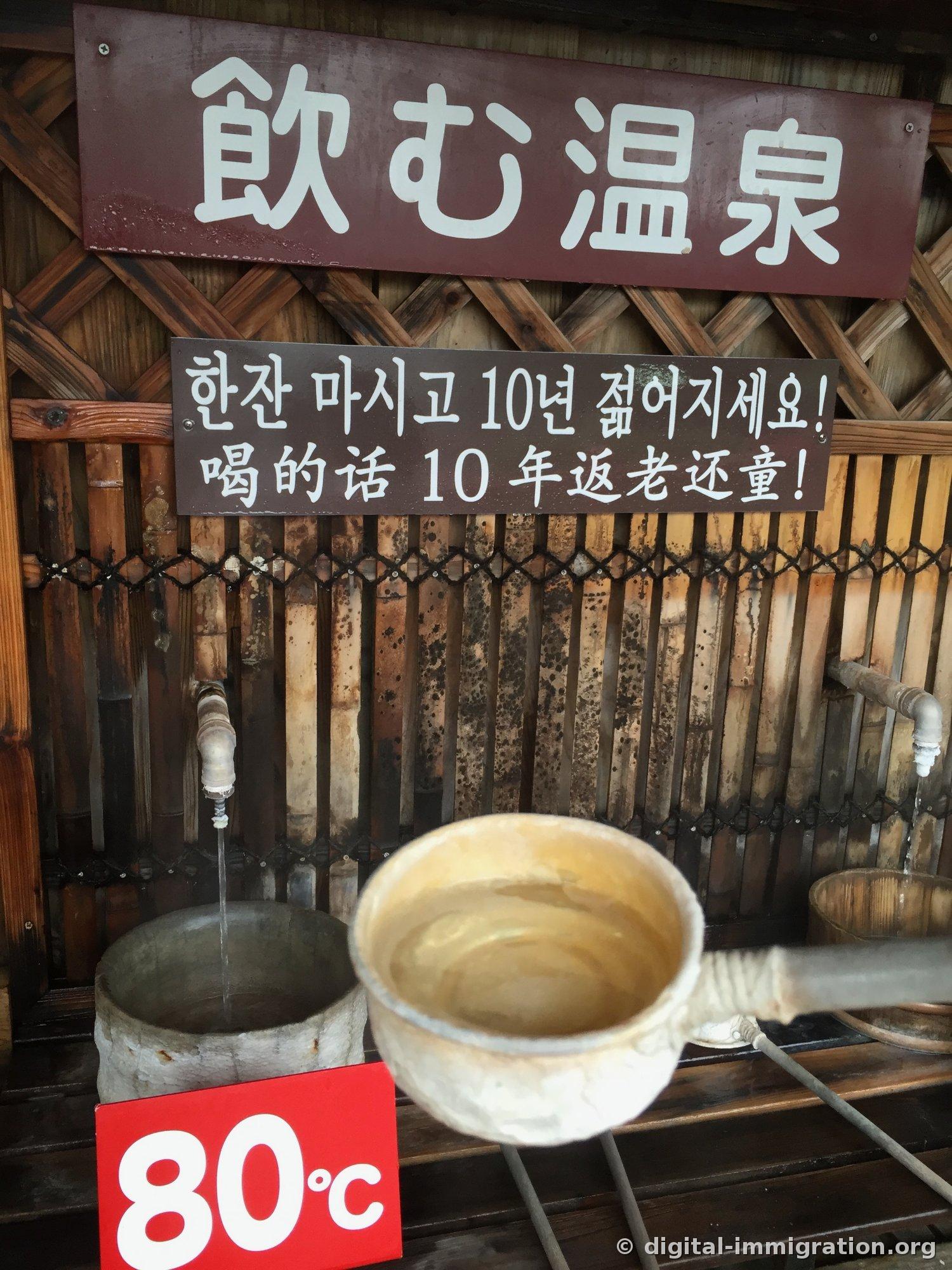
Next to the shop is a 'drinking hot spring'. There are two faucets attached to a bamboo fence with a ladle placed nearby, and in large Korean letters it says 'Drink a cup and grow ten years younger!' The sign indicates 80℃, so I let the ladle-ful cool a bit before drinking. The taste is like lukewarm mineral water with a slight metallic tang. It's not delicious drinking water, but it's definitely worth trying once for the experience.
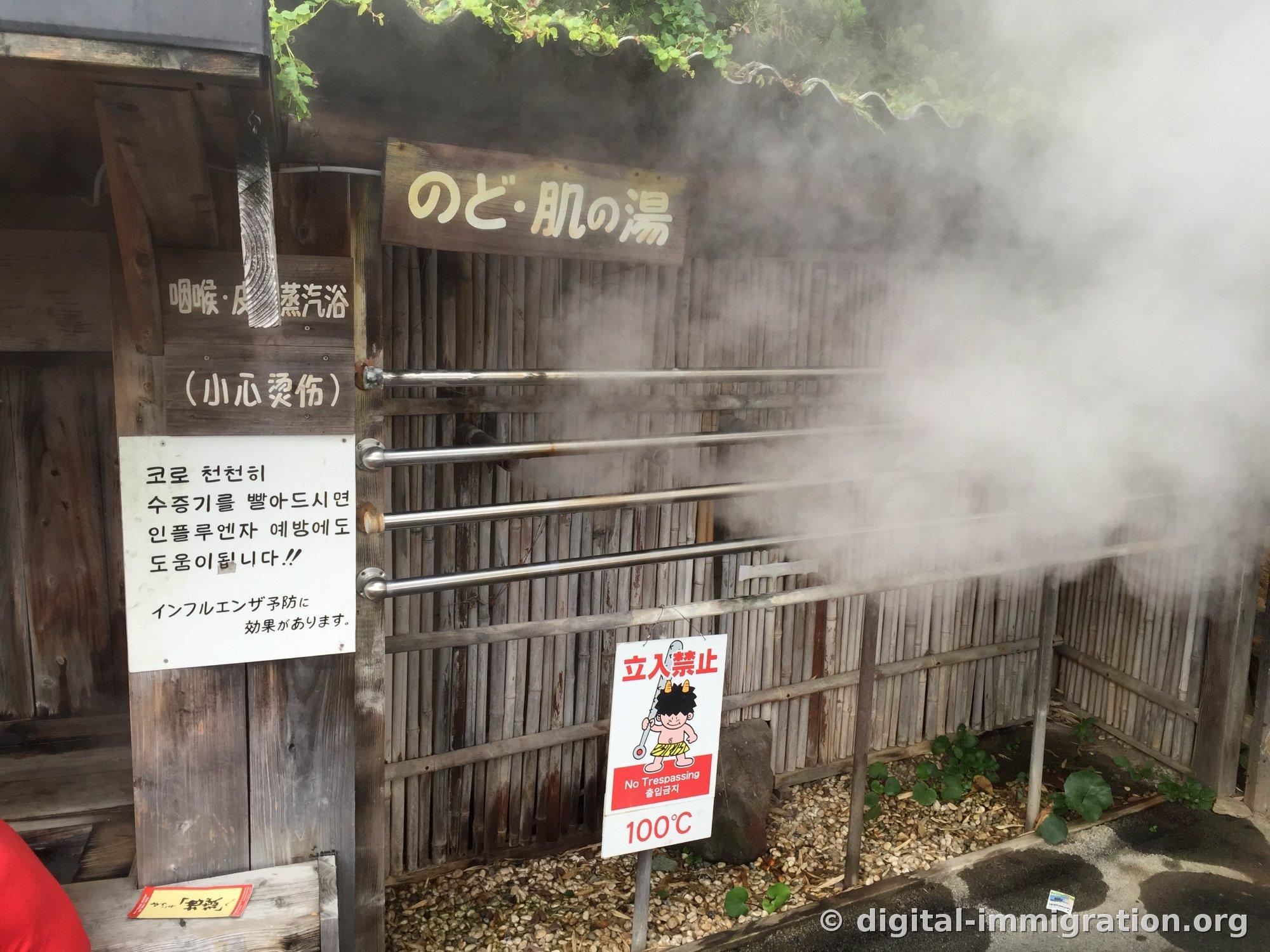
Don't miss the 'Throat and Skin Bath (のど·肌の湯)' right next to it. Four metal pipes are stuck in a bamboo wall, and 100℃ steam shoots out from them. The sign tells you in Korean to inhale slowly through your nose. Don't hold your face too close—it's too hot—you should stand about a hand's length away. If you're wearing glasses, you won't be able to see anything for that moment.
Places Visited on the Same Day
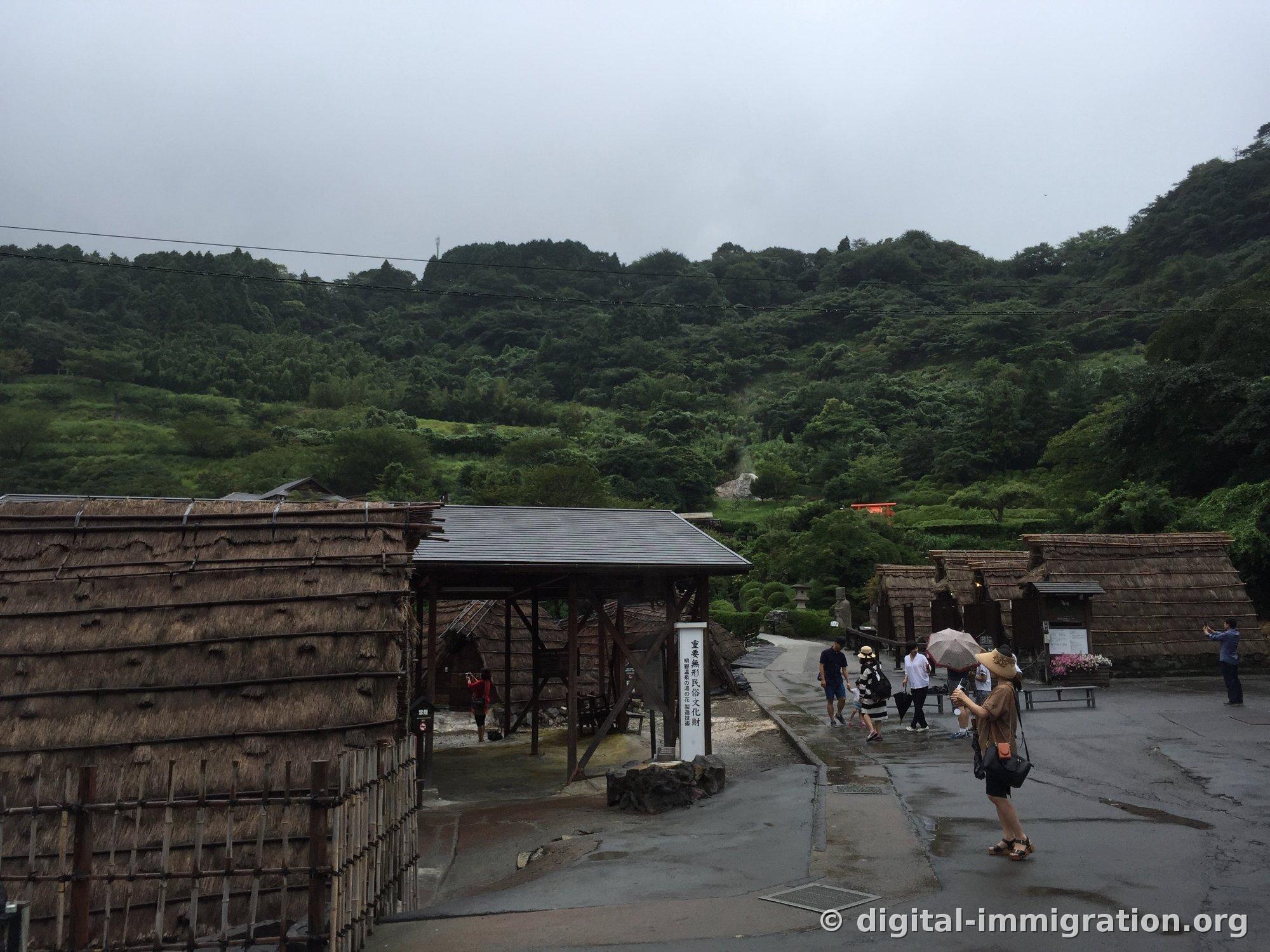
There's usually time left over if you just see Kamado Jigoku and head back. I rode the bus up a bit and stopped by Myouban Onsen. Low huts with thatched roofs line a hillside, and here they create hot spring crystals called 'yunohana'. An information marker notes it as an Important Intangible Folk Cultural Asset. It was rainy, so the ground was muddy, and when you enter the huts, the ground beneath your feet is covered with white hardened crystals.
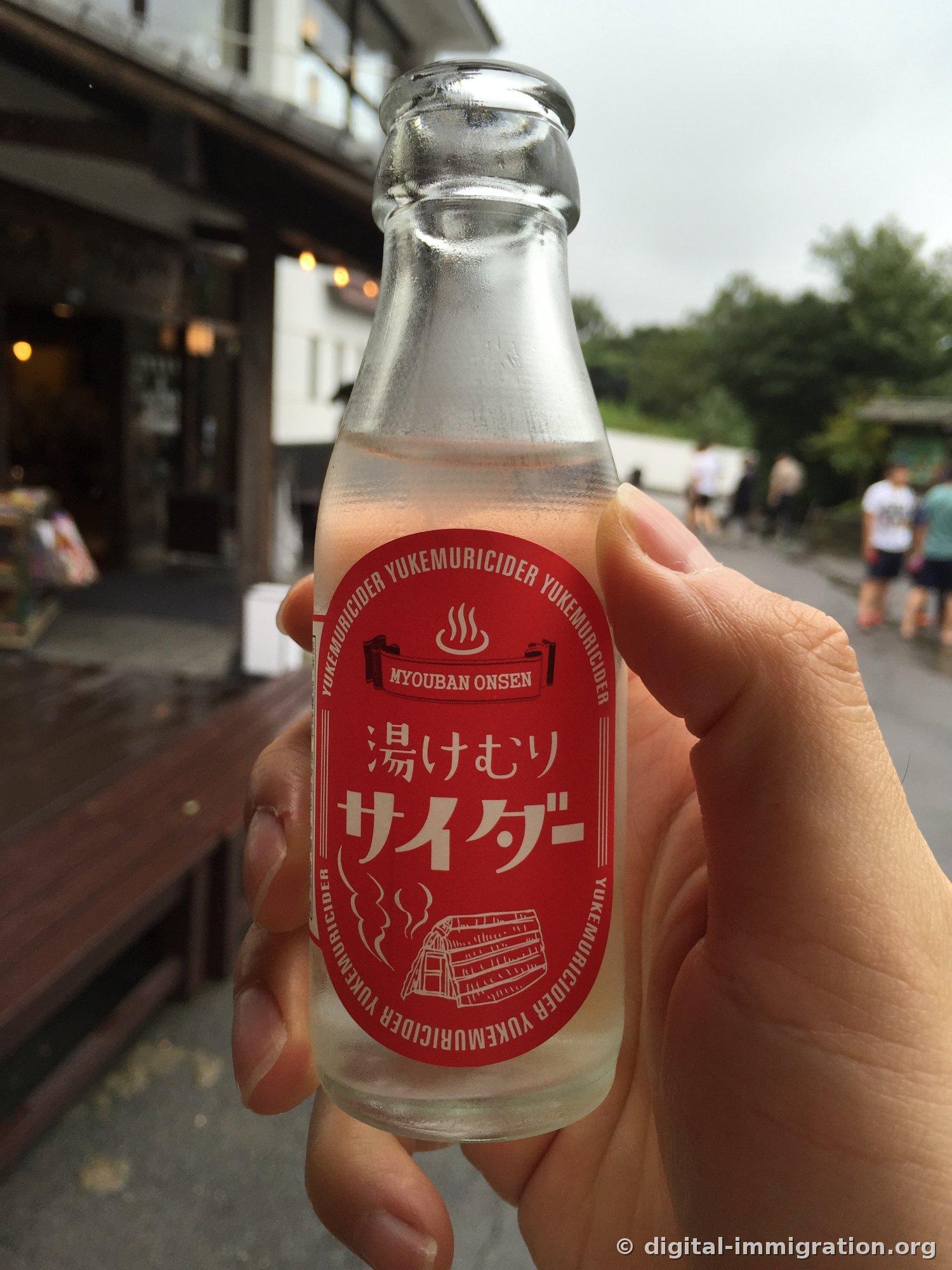
The 'Yukemuri Cider (湯けむりサイダー)' sold at the Myouban shop has those thatched huts drawn on the label. The bottle is small, so two gulps and it's gone, but the carbonation is strong and the aftertaste is clean. It tastes different from the ramune I had at Kamado Jigoku, so you won't get tired of drinking both.
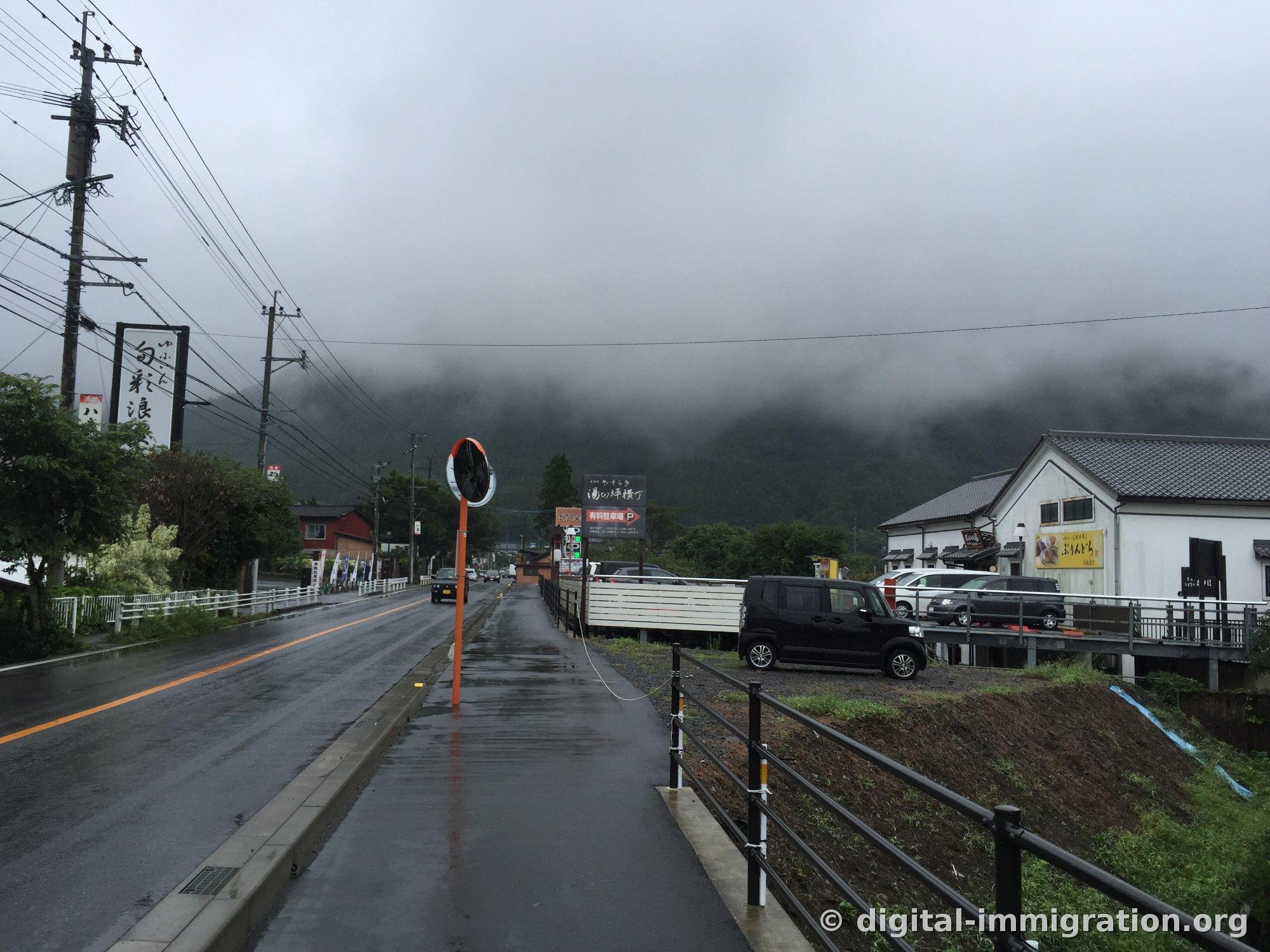
The next day I headed to Yufuin. It rained from morning, and clouds descended to the middle of the mountain. The road at the entrance to Yunotsubo Street was wet and shiny. Paid parking signs stood in various spots—on busy holiday weekends, I'd spend a lot of time here confused. The air was completely different from Beppu's steam-filled landscape.
Good Things to Know Before You Go
- The steam constantly fogs up camera lenses. Bringing a dry cloth to wipe your glasses and camera definitely makes things less frustrating.
- Many sections of the ground are wet. Shoes with good traction are better than slippers.
- The area in front of 4th Chome gets packed with people during peak tour bus times. Right after opening in the morning was the least crowded.
- Hot spring eggs and ramune are eaten right on the shop bench, so there's competition for seats. It's convenient to scout out a spot before finishing your pond viewing.
- Since admission prices and operating hours can change, it's safer to check directly with the ticket office notice board.
As I was heading out, I looked back at the entrance cauldron one more time. In the morning it just looked like a sculpture, but after seeing the mud boiling and steam shooting out at 100℃ inside, I finally understood why that cauldron is the symbol. Eggshell fragments still clung to my fingertips.
Read next
- From Akihabara's Chuo-dori to the Kanda River: A Record of Tokyo's Electronics District Revisited Multiple Times
Tokyo's Akihabara is a neighborhood where it's hard to say you've seen everything in a single visit. I've come multiple times across different seasons, and each time the signs chan…
Tokyo · Akihabara - Buying a Single ¥300 Year-End Jumbo Lottery Ticket at Nishi-Ginza Chance Center in Tokyo
Exit from the Hibiya exit of Tokyo's Shimbashi Station, walk toward the elevated highway for about three minutes, and suddenly you'll see a line of people stretching along the side…
Tokyo · Nishi-Ginza Chance Center - Ueno Ameyoko, the real magic starts after sunset — an evening walk from the Okachimachi Gate to Ueno Station
Every time I come to Tokyo, my feet find their way to Ueno Ameyoko (アメ横) without fail. This time I entered from the Okachimachi side and worked my way toward Ueno Station. I've met…
Tokyo · Ameya Yokocho Market