Above Suruga Bay 34.74N 138.42E, the day I saw Mount Fuji head-on from a plane to Tokyo
I kept looking out the window on the plane heading into Tokyo. As we passed over Suruga Bay, off the coast of Shizuoka, a long coastline curved in from the lower left, and beyond i…
Tokyo
I kept looking out the window on the plane heading into Tokyo. As we passed over Suruga Bay, off the coast of Shizuoka, a long coastline curved in from the lower left, and beyond it, inland, stood Mount Fuji. When I checked the GPS coordinates of the photo later, it read 34.74N, 138.42E. About 70 kilometers in a straight line from the peak of Mount Fuji. At that distance, the mountain might appear small on the screen, but since there's nothing else around it comparable to 3,776 meters, it instead looks like it's jutting out alone.
The cap cloud that drifted beneath the wing
When I first spotted it, a white cloud sat on the peak like a hat. In Japan it's called a kasagumi (笠雲), or what we'd call a cap cloud. The cloud clinging to the mountain peak doesn't drift away in the wind but stays in place, and locals have long read it as a sign of weather turning foul. In fact, from the evening we landed in Tokyo that day, it grew cloudy.
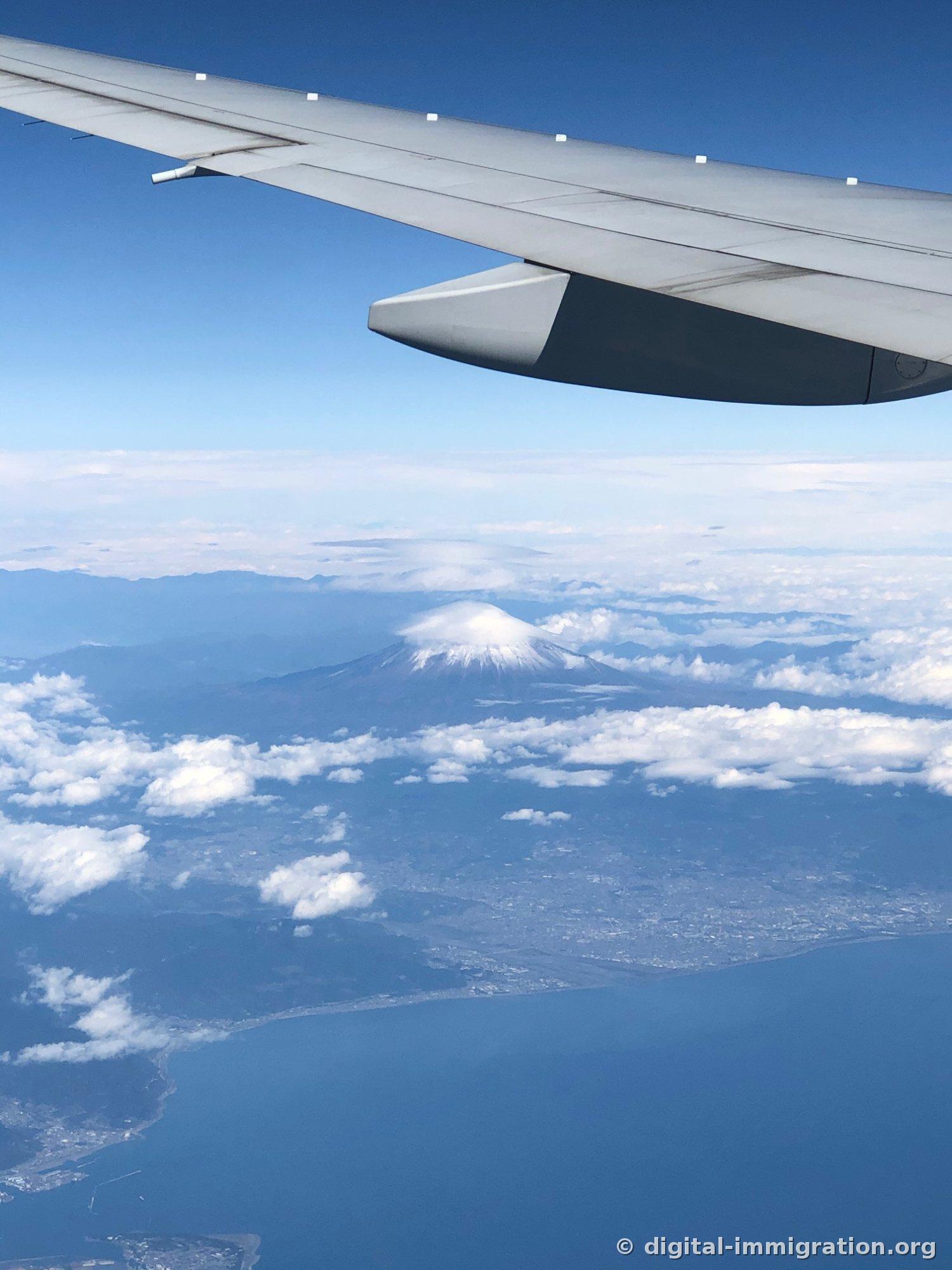
I realized this after taking the photo. If my seat had been behind the wing, that scene would have been completely blocked. I thought all I needed was a window seat, but which row made all the difference.
So which side of the window should you sit on?
The question of which seat to aim for Mount Fuji comes down to one thing: direction. Mount Fuji sits at 35.36N, 138.73E. The point where I took the photo was to the southwest of that, over the ocean, and the plane was heading northeast toward Haneda and Narita. Relative to the direction of travel, the mountain was ahead on the left.
- When entering Tokyo (landing flight): left window seat. On the flight path that circles around the Pacific side, passes over Suruga Bay, and approaches Haneda and Narita, Mount Fuji hangs on the left side. In seat letters, that's row A.
- When leaving Tokyo (departure flight): right window seat. When heading out to the west and southwest, the mountain remains on the right. If you miss it on the way in, you can catch the opposite side on the way out.
- Seat ahead of the wing. Window seats over the wing have metal blocking half the view. The photos below show how large the wing gets in the frame.
However, flight paths change depending on that day's winds and runway operations. On days when you approach from the north, left and right flip or the mountain isn't visible at all. It's a choice that improves your odds, not a guarantee. Season matters greatly too. From November through February when the air is dry, conditions are overwhelmingly favorable, and during humid summer, it's common for only the peak to poke through above the clouds.
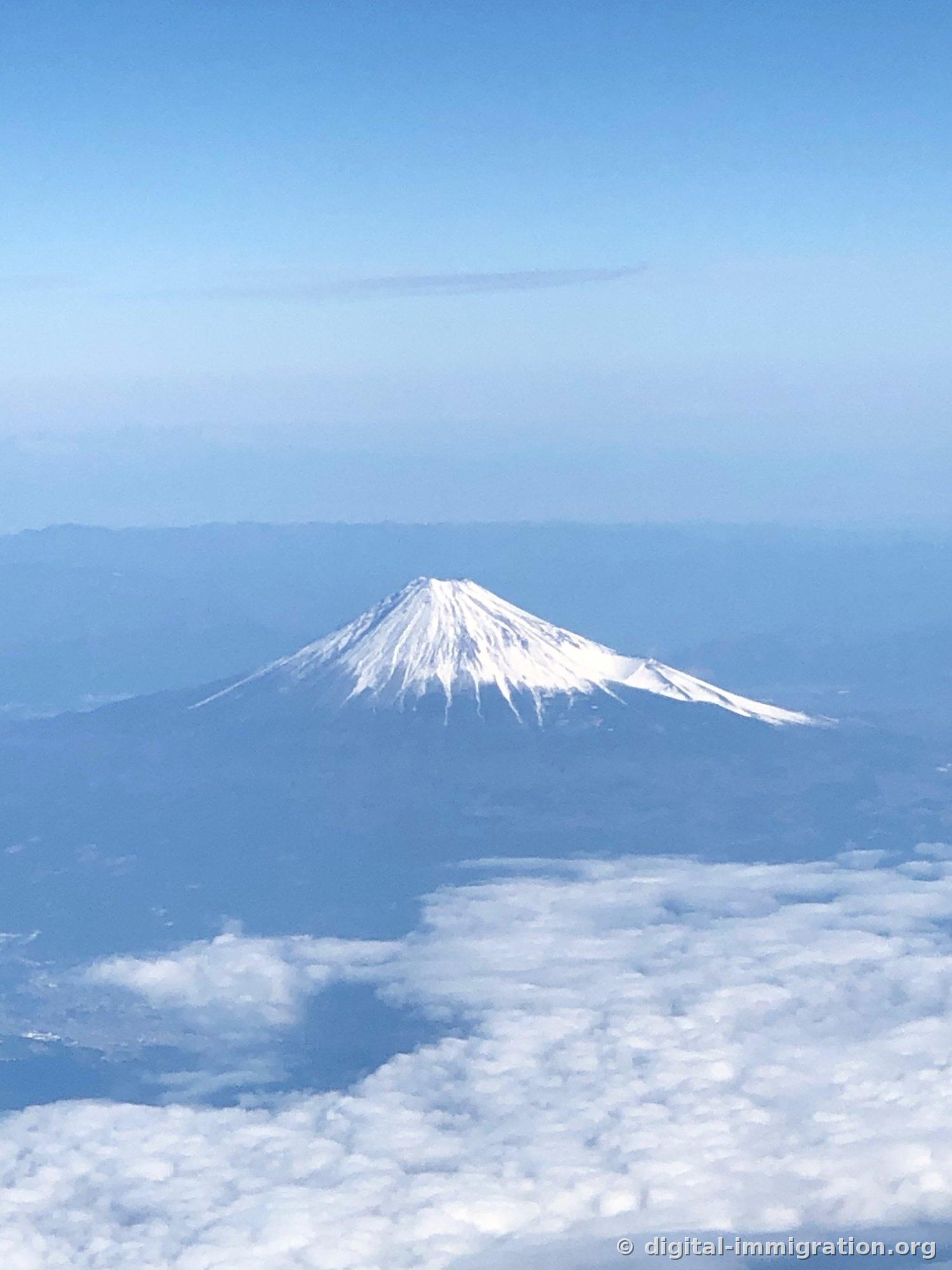
This photo shows a markedly different snow-covered area than the one before. There are days when only the summit area is white, and days like this when snow flows down along the mountain's contours. Taking the same route several times while seasons changed the mountain taught me through one window how different the same peak can look.
The coastline comes first, then the mountain
If you only watch Mount Fuji, you'll miss something. Minutes before the mountain appears, the Suruga Bay coastline fills your window first. The ocean shows a clear distinction between shallow and deep areas, and the line where rivers run from the mountains down to the sea divides the cities visibly. Even the harbor breakwaters were distinct.
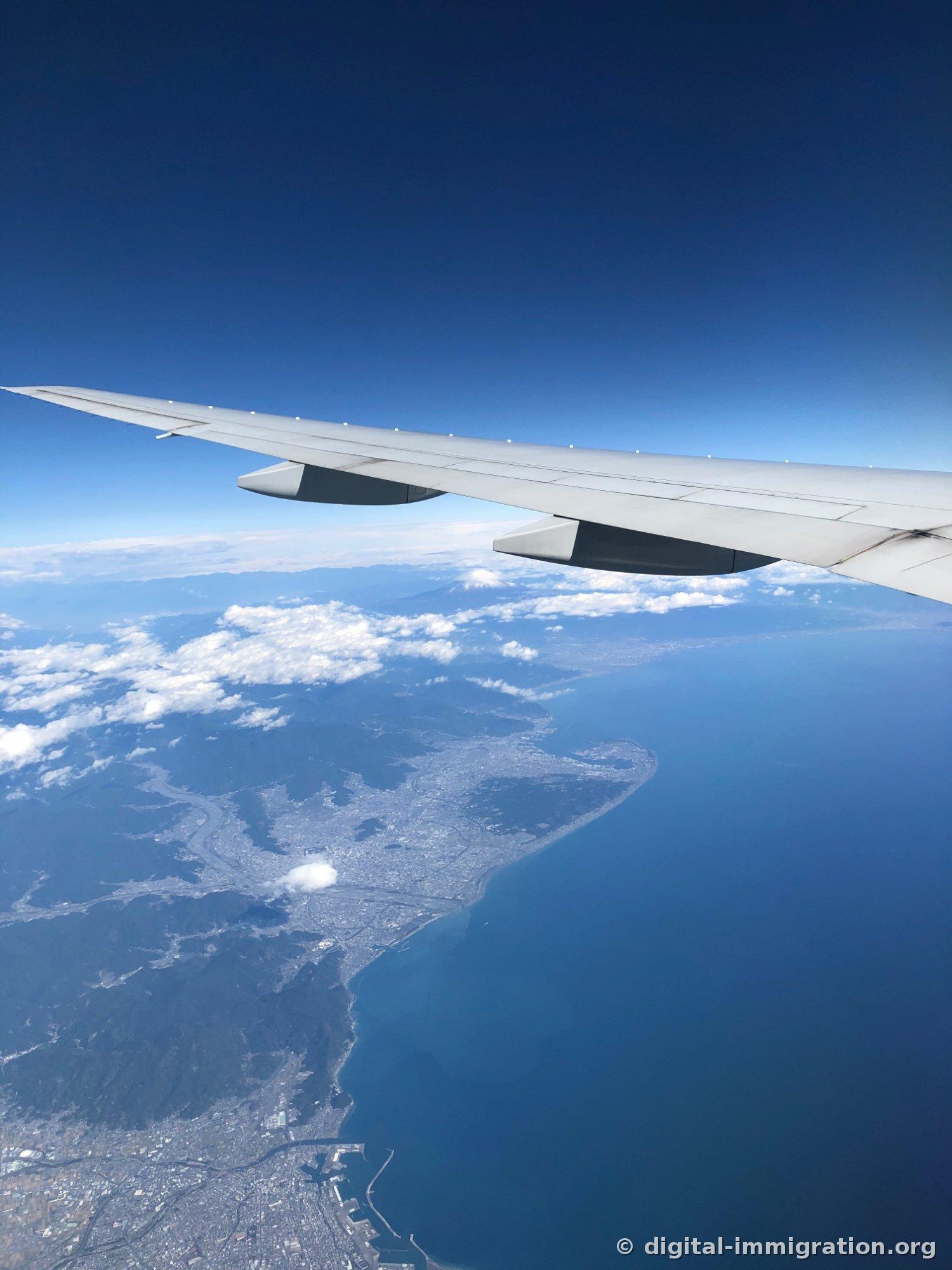
This is when to take out your camera. You need to press your face against the window and hold the lens as close as possible to the glass to avoid interior reflections in the shot. If you're wearing bright clothing, it reflects directly in the glass and my shoulders end up overlapping the mountain. I only learned this the hard way after messing it up several times.
To not miss it, prepare ahead
On daytime flights with bright cabin lights, it's all about fighting the window reflection. And the time window is really short. Because you're cruising at speed, the section where the mountain is clearly visible lasts only 2-3 minutes at most. It's over by the time you return from the restroom. Checking ahead on the seat map's flight tracking when you'll pass over Suruga Bay reduces the chance of missing it.
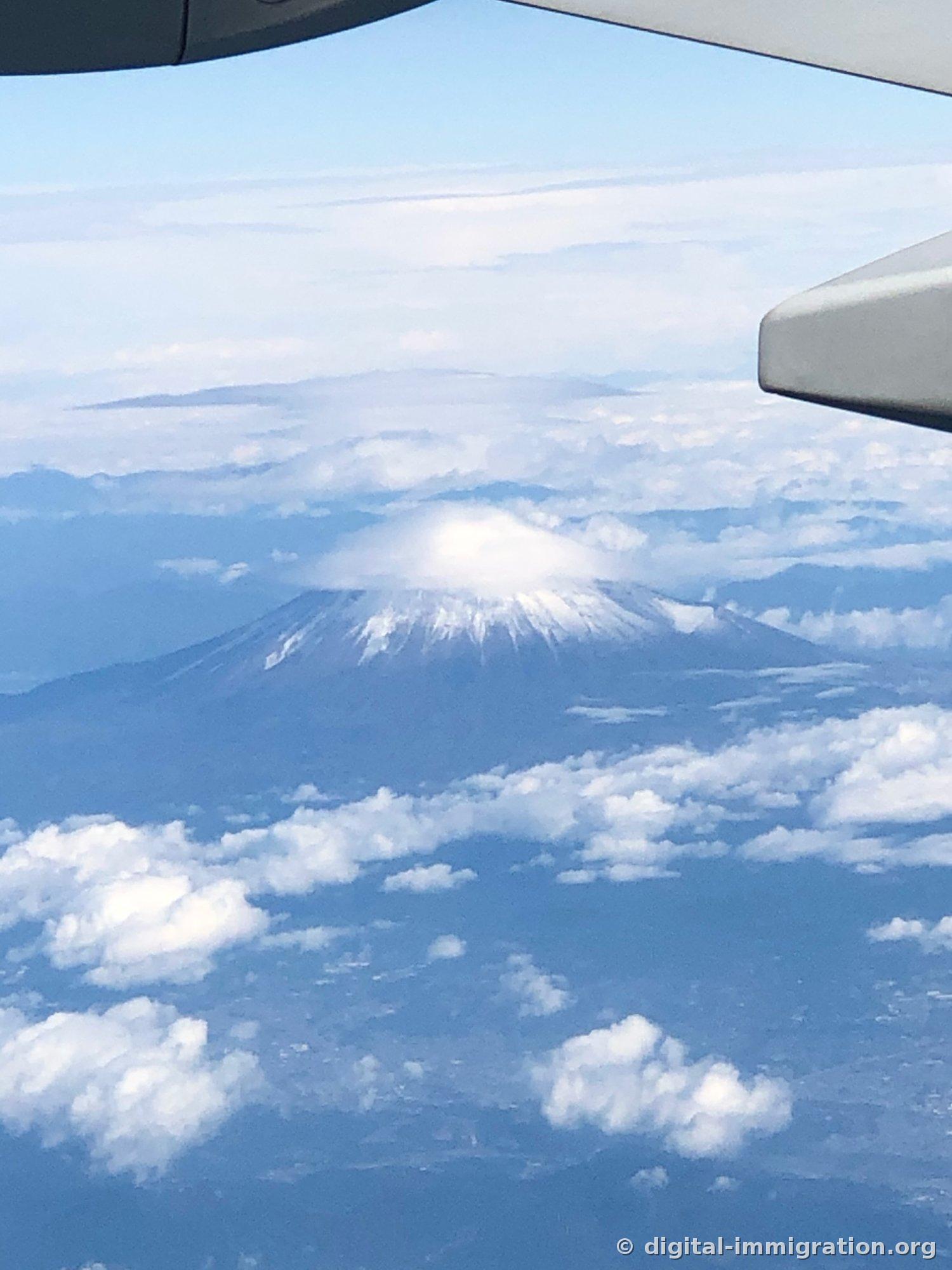
I took the same mountain twice with a few minutes between shots and it looked different. The cloud had eaten further into the peak in the meantime. This is why people say getting a Mount Fuji photo is sometimes about luck. You can choose your seat and the season; the other half is determined by that day's clouds. Left window, ahead of the wing, winter. There were only these three things I could control, and that day, that was enough.
Read next
- From Akihabara's Chuo-dori to the Kanda River: A Record of Tokyo's Electronics District Revisited Multiple Times
Tokyo's Akihabara is a neighborhood where it's hard to say you've seen everything in a single visit. I've come multiple times across different seasons, and each time the signs chan…
Tokyo · Akihabara - Buying a Single ¥300 Year-End Jumbo Lottery Ticket at Nishi-Ginza Chance Center in Tokyo
Exit from the Hibiya exit of Tokyo's Shimbashi Station, walk toward the elevated highway for about three minutes, and suddenly you'll see a line of people stretching along the side…
Tokyo · Nishi-Ginza Chance Center - Ueno Ameyoko, the real magic starts after sunset — an evening walk from the Okachimachi Gate to Ueno Station
Every time I come to Tokyo, my feet find their way to Ueno Ameyoko (アメ横) without fail. This time I entered from the Okachimachi side and worked my way toward Ueno Station. I've met…
Tokyo · Ameya Yokocho Market