A Rainy Day in Yufuin: Walking Through 庄屋の館's Open-Air Bath to Kinrinko
Cross one mountain range by car from Beppu in Oita Prefecture and you reach Yufuin (由布院). The day I arrived, it rained from morning. The mountain visible through the car window had…
Beppu · Yufuin
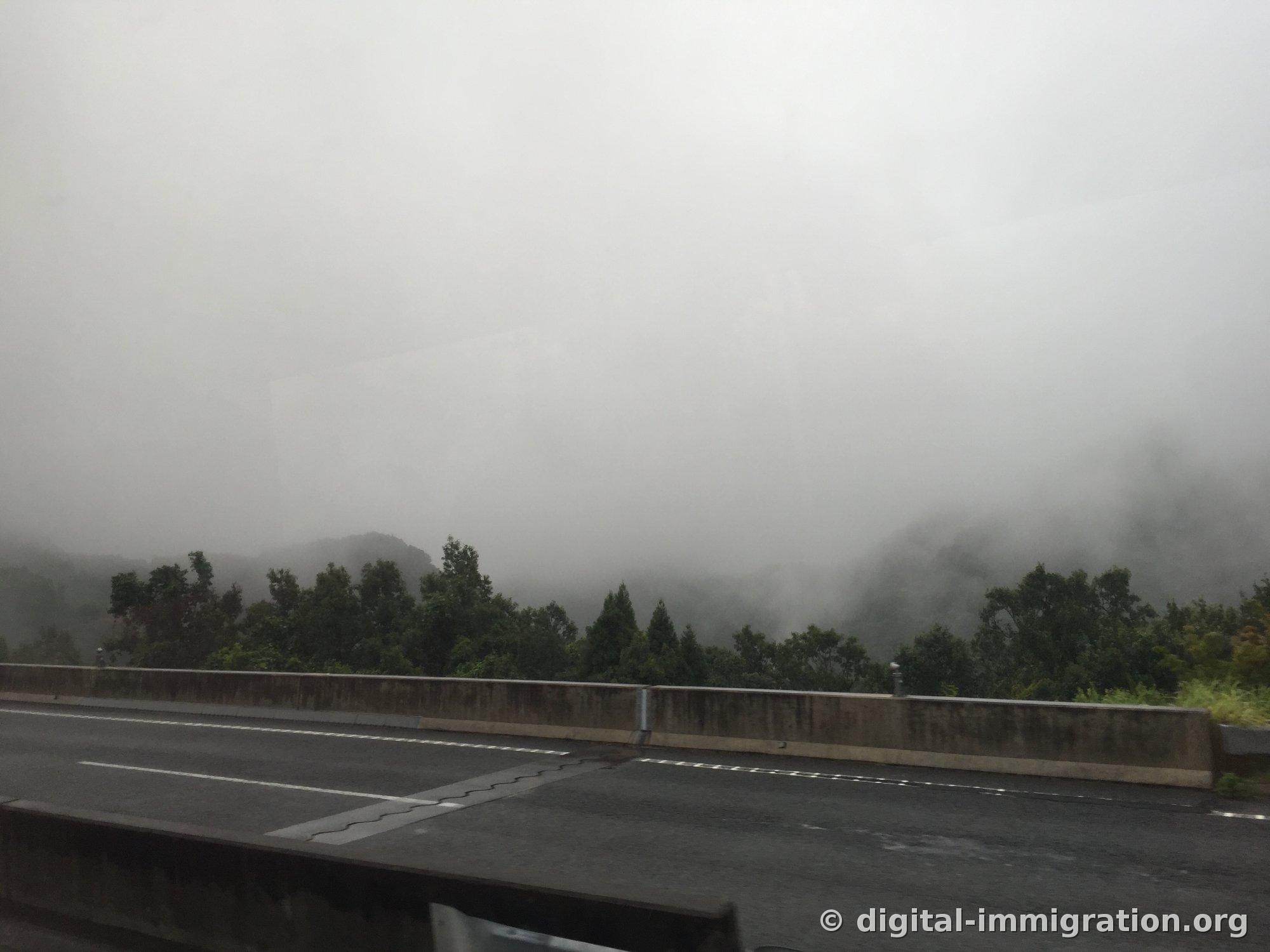
Cross one mountain range by car from Beppu in Oita Prefecture and you reach Yufuin (由布院). The day I arrived, it rained from morning. The mountain visible through the car window had its entire ridge line swallowed by clouds, and the cedar forest beyond the soundproof barrier was soaked dark. I had come to see Yufudake (由布岳), but the mountain itself was nowhere to be seen. That's why most of the photos from that day are gray.
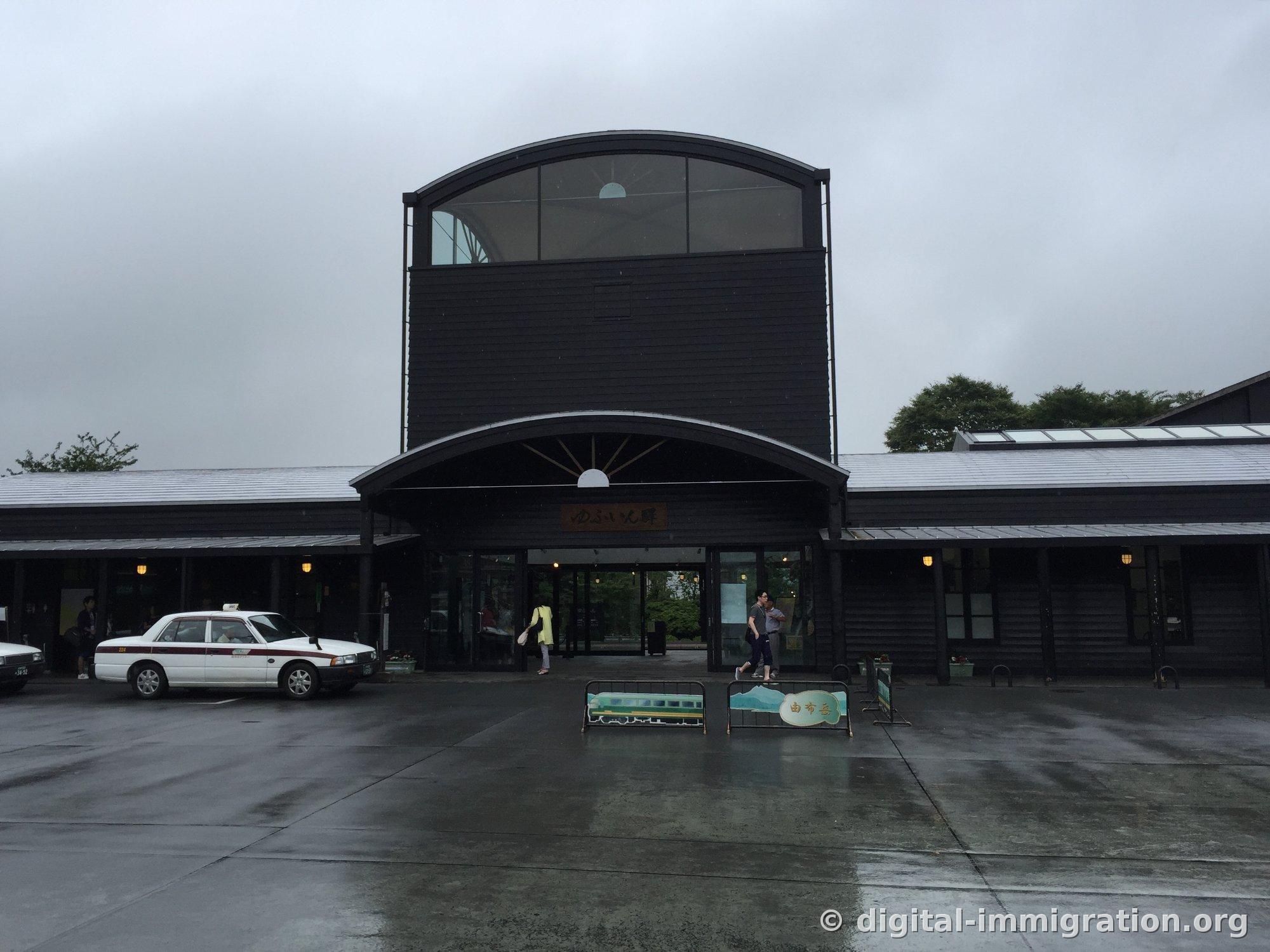
First Impressions at Yufuin Station on a Rainy Day
Yufuin Station (ゆふいん駅) looks less like a train station and more like a small art museum, with its black timber frame and arched roof. Yellow lamps hang in a row under the eaves, and the front courtyard displays a low billboard painted with the Express Yufuinnomori train and Yufudake. A couple of taxis were idling at the roundabout. Being a weekday morning with rain, there were hardly any people, but on clear weekends this station front is packed with rental cars and tour buses. If you have luggage, it's best to catch a taxi straight from the station. Walking into the Yuno-tsubo street area with a suitcase, the wheels will keep catching on the stone-paved ground.
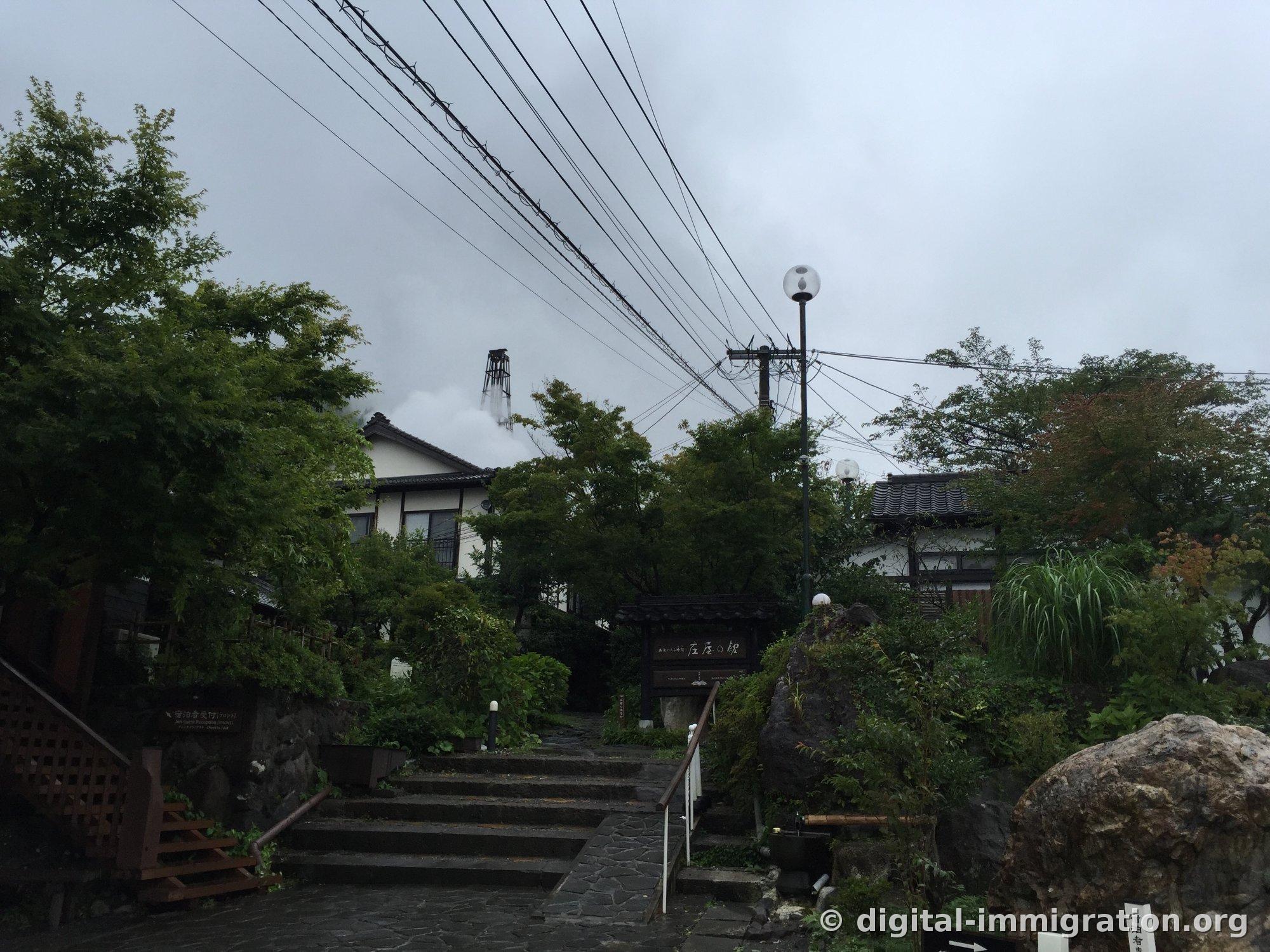
庄屋の館 — A Lodging on the Hillside
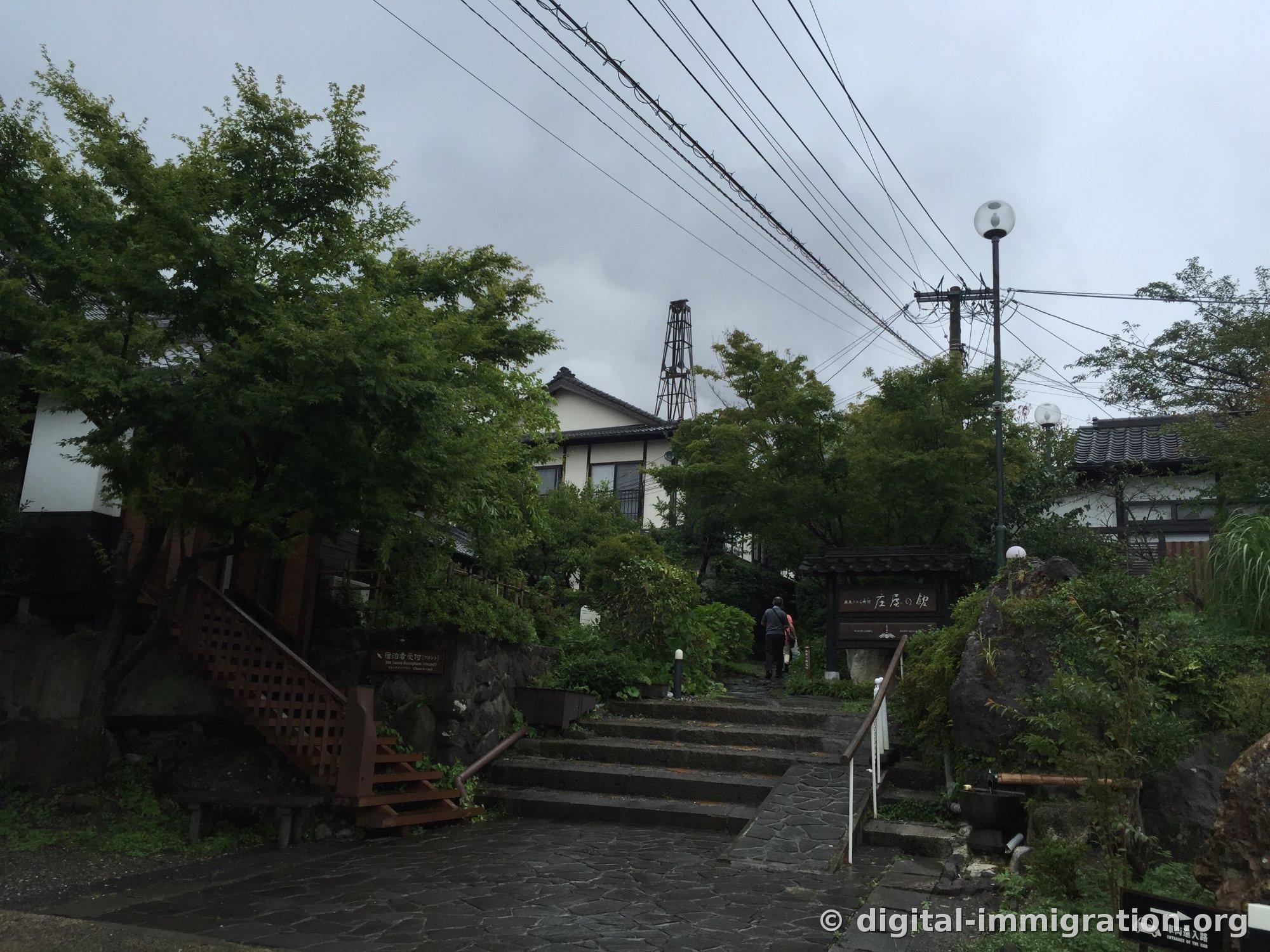
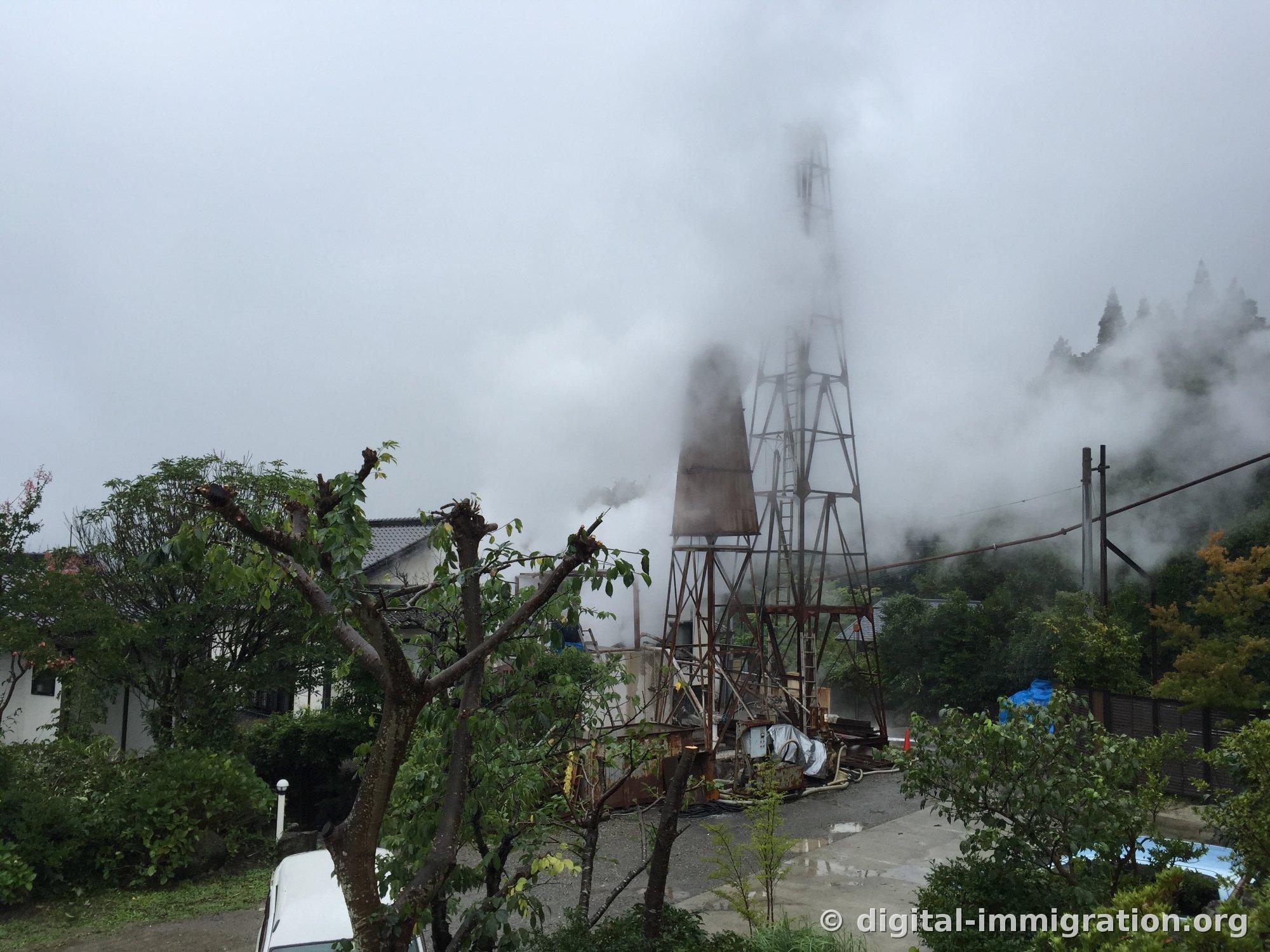
Where I stayed that night was 庄屋の館, a Yufuin hot spring inn. From the main road, you have to climb some fifteen stone steps before reaching the entrance. On the left wall of the stairs is a wooden sign reading '宿泊者受付 (Guest reception),' and at the top right sits a small gate with a tiled roof. As I climbed the stairs, I suddenly looked up and saw white steam rising like a pillar behind the building. It's vapor from the hot spring drilling tower. On a rainy day, it blends with the clouds so completely you can't tell where the steam ends and the mist begins.
The stairs are quite slippery when wet. Since there's only a handrail on one side, it's safer to carry a suitcase up in two trips. An elderly person ahead of me had one hand on the railing and the other holding luggage.
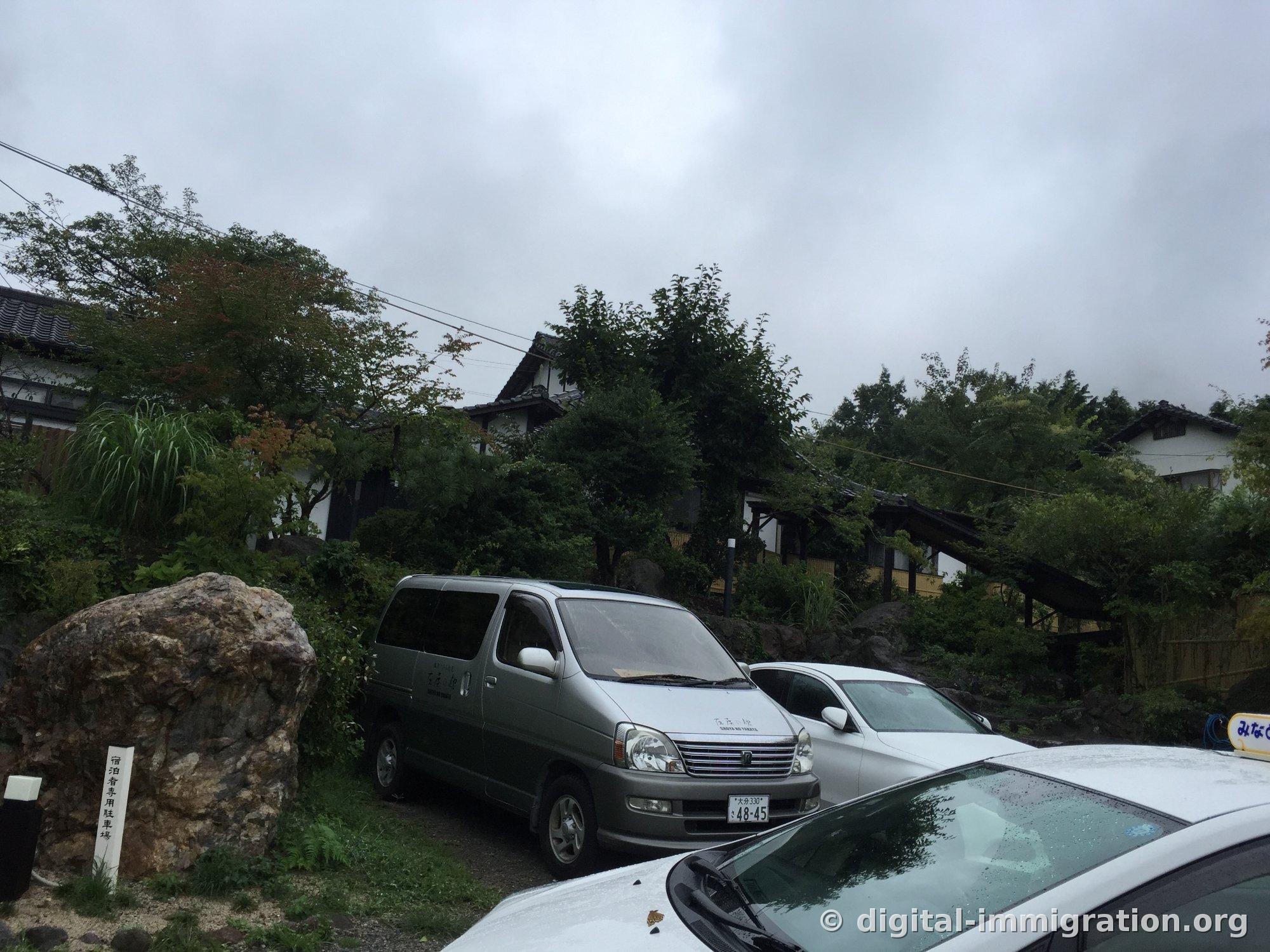
The parking lot is in a separate space below the stairs. A stone marker carved with '宿泊者専用駐車場 (Guest Parking Only)' vertically prevents any confusion. A gray minibus with the lodging's name on its side was parked there, apparently used for shuttles to the station. It's best to confirm operation schedules and times when making your reservation.
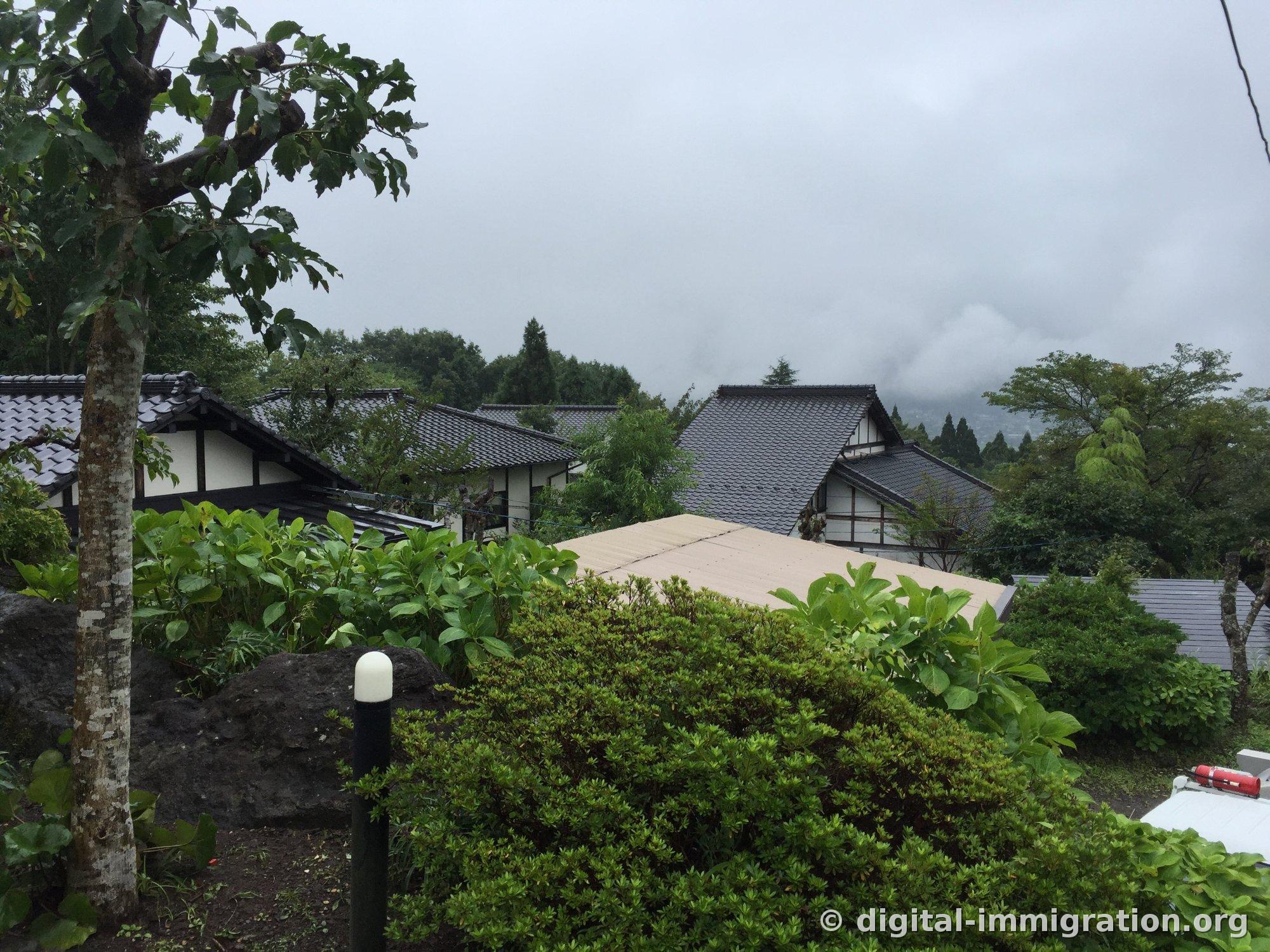
The view from the corridor near the rooms was unexpectedly lovely. Black tile roofs cascade down in tiers, beyond which the village of the Yufuin basin spreads out hazily. Right after the rain stopped, water beaded on the hydrangea leaves, and the scent of wet earth mingled with sulfur wafted up. The sulfur smell here isn't as pungent as in Beppu. Rather than hitting your nose, it's a subtle presence you notice when near hot water.
Location-wise, it's right in the heart of the Yufuin hot spring district. The coordinates on the map below mark where the photos from that day were taken, and both Kinrinko and the Yuno-tsubo street shopping area are within walking distance.
An Open-Air Bath is Best on a Rainy Day
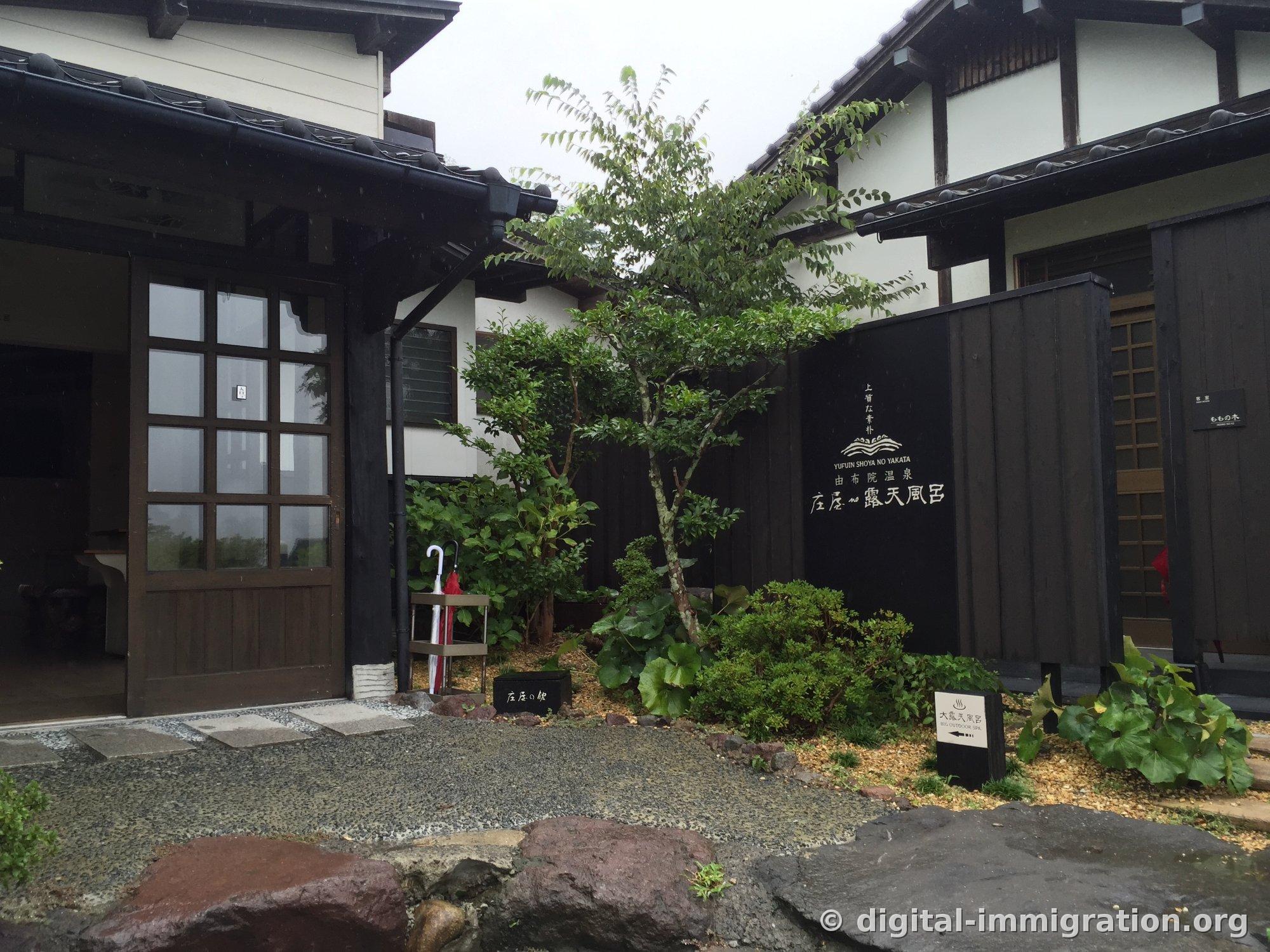
A black wooden fence bears white letters reading 由布院温泉 庄屋の露天風呂, and below it sits a separate sign for 'BIG OUTDOOR SPA 大露天風呂' with an arrow. The door on the right side of the fence has a nameplate reading '桃の木' and similar private bath names. I spotted a red umbrella in the umbrella stand next to the entrance, so I left mine there too.
If I had to pick one thing to do in Yufuin, I'd choose the open-air bath. Even more so on a rainy day. The water is piping hot while cold raindrops fall on your head, and the temperature contrast helps your body relax faster. Soaking up to your shoulders, steam continuously rises in front of your face obscuring the view, and you hear nothing but the sound of water dripping from the eaves. I'd soak for ten minutes, then climb out to sit on a rock and cool down, then repeat this cycle about three times. Staying in too long makes you dizzy. That evening I actually saw someone in the bath whose face had turned red, leaning against the wall.
- Always wash your body before entering the bath. Don't soak your towel in the water.
- If you have tattoos, some public baths restrict access. It's more relaxing to book a private family bath instead.
- Glasses get completely obscured by steam and become useless. Better to leave them behind.
- Day-use availability, fees, and hours vary by lodging, so check on-site.
Japanese Home-Style Set Meal—This is the Real Deal
You don't need to seek out only elaborate kaiseki in Yufuin. I actually find such simple set meals more memorable. Finely diced chicken arrives on an iron griddle that sits whole on a red-rimmed lacquer tray, still sizzling as hot oil fries it. Above are stir-fried bean sprouts, cabbage and carrots, and boiled potatoes on the side. The edge of the griddle is so hot you have to be careful not to brush your arm against it.
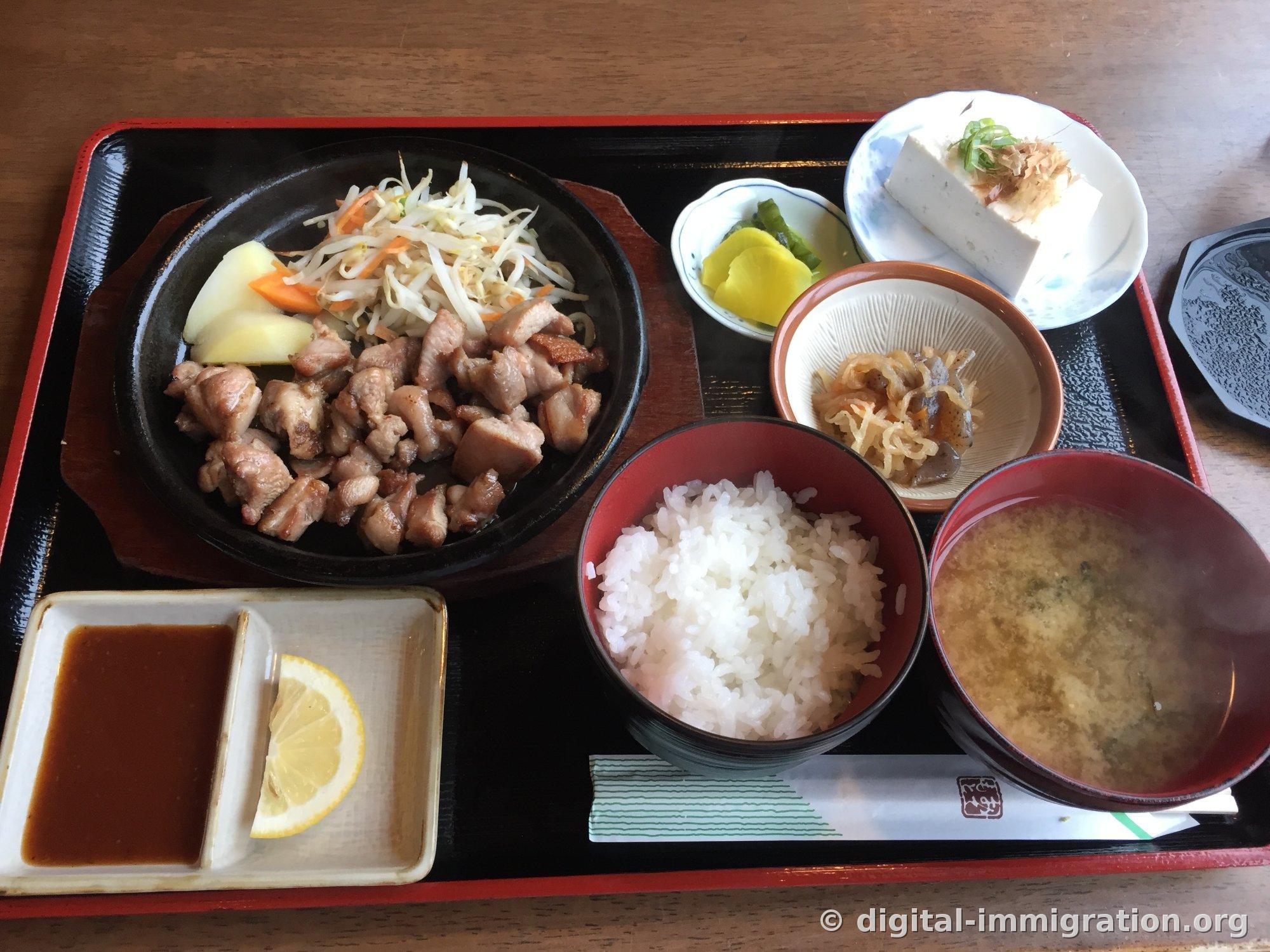
In the lower left compartment, a brown sauce and a lemon wedge arrive separately. Squeeze the lemon into the sauce and dip the meat—the oily flavor suddenly clears. The white plate on the upper right is hiyayakko, chilled tofu, with bonito flakes and chopped scallions on top. This tofu was surprisingly rich. The soy flavor was so pronounced you could eat it plain without soy sauce. A brown dish held pickled radish and tofu; the next dish had yellow pickled radish and cucumber pickle. The white rice came heaped high, and the miso soup contained seaweed.
To be honest, the chicken got a bit salty toward the end. If you eat only the meat without rice, you'll quickly get tired of it. You need to alternate with the side dishes to keep the whole meal delicious to the end. Such set meal restaurants get crowded at lunch, and some close early if ingredients run out. If you go after 2 PM, you might make a wasted trip.
Kinrinko—Rain Actually Makes It More Beautiful
I walked down from the lodging to Kinrinko (金鱗湖). It's like the symbol of Yufuin, but when you actually visit, it's smaller than you'd expect. Even walking slowly around it takes barely fifteen minutes. Hot spring water wells up from the bottom, raising the water temperature, so when morning and evening temperatures drop, steam rises from the surface. To see that sight, you need to come early in the morning.
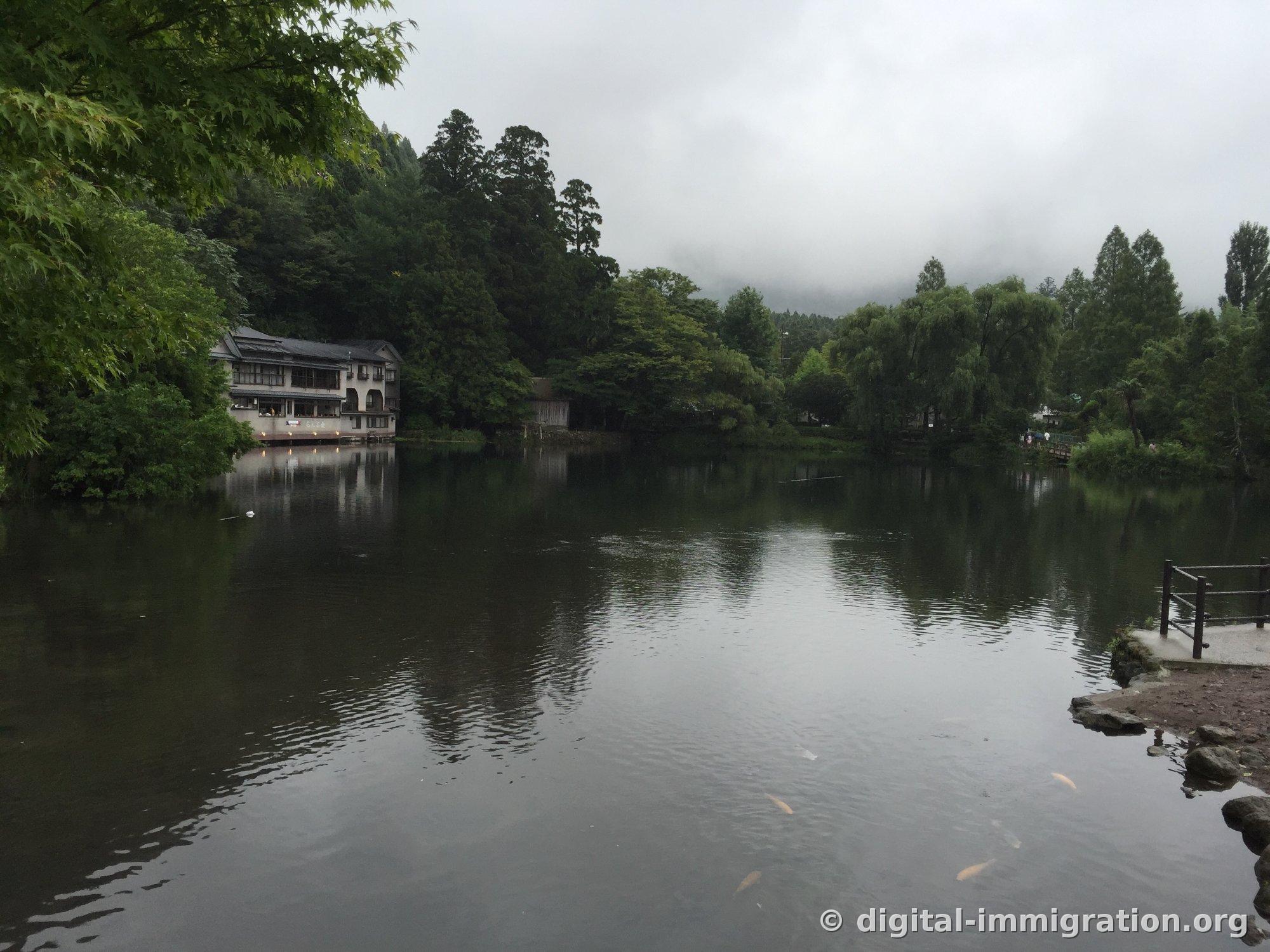
With rain, the tourists had thinned out considerably, which was actually nice. On clear days, this lakeshore is chaotic with selfie sticks and umbrella collisions. That day the water lay mirror-still, reflecting the cedar forest and drooping willows on the opposite ridge perfectly. Nothing moved except the concentric ripples made by raindrops falling on the water.
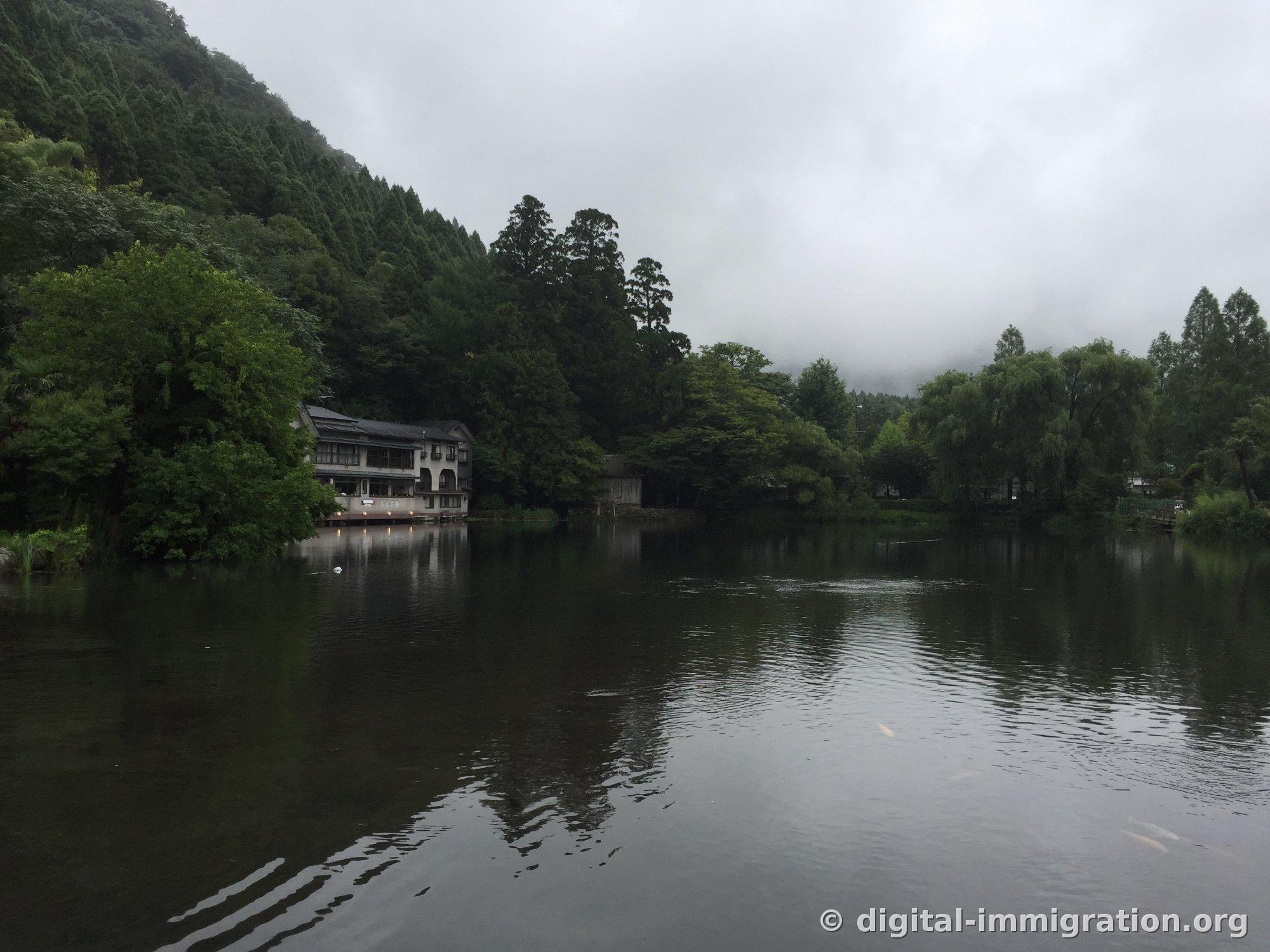
Someone stood holding an umbrella on a deck by the lake for a long while. It was a blue umbrella with heart patterns, and that blue stood out distinctly in a landscape otherwise all green and gray. I stood there too, watching clouds caught on the mountainside drift sideways for a few minutes.
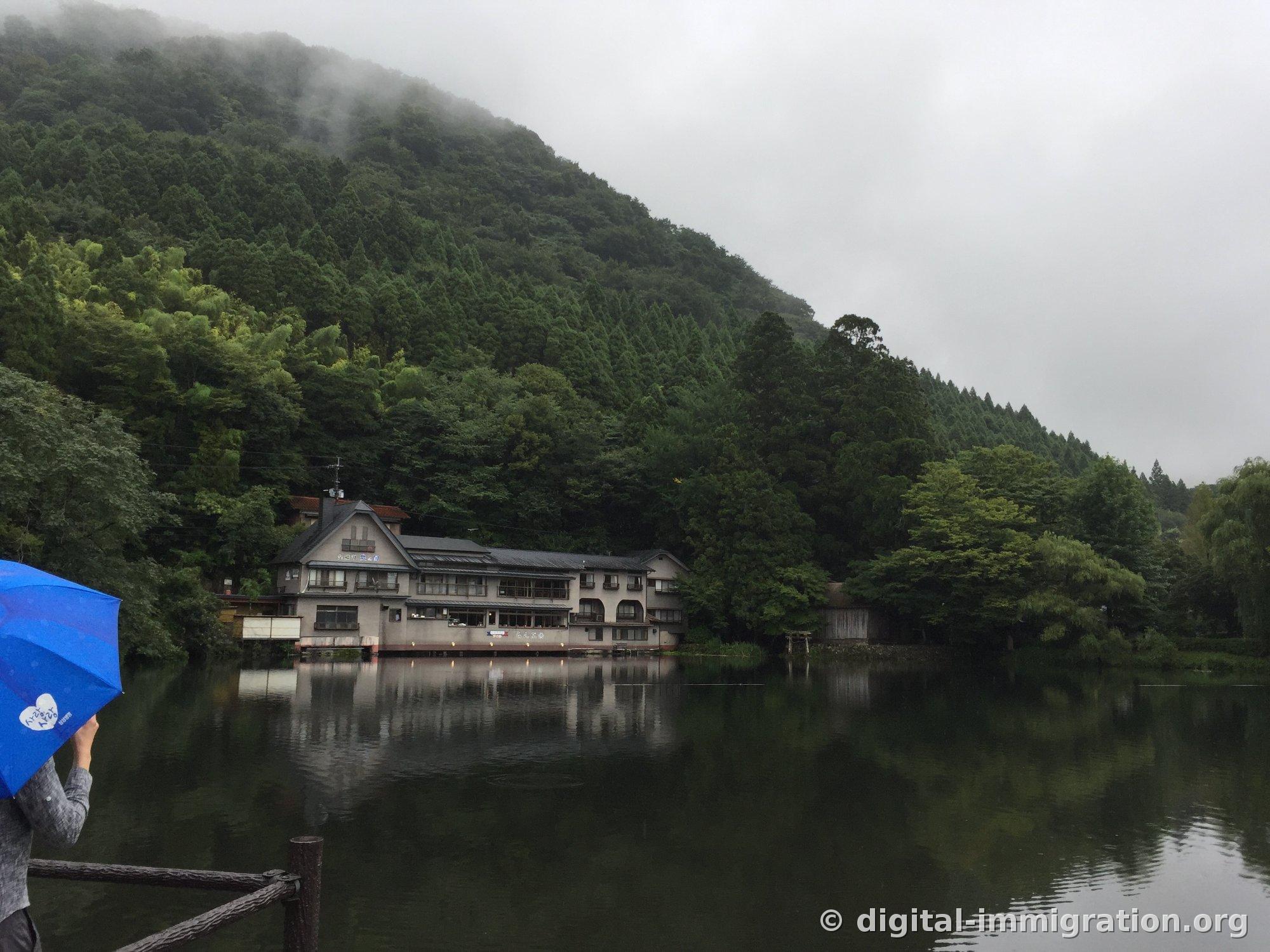
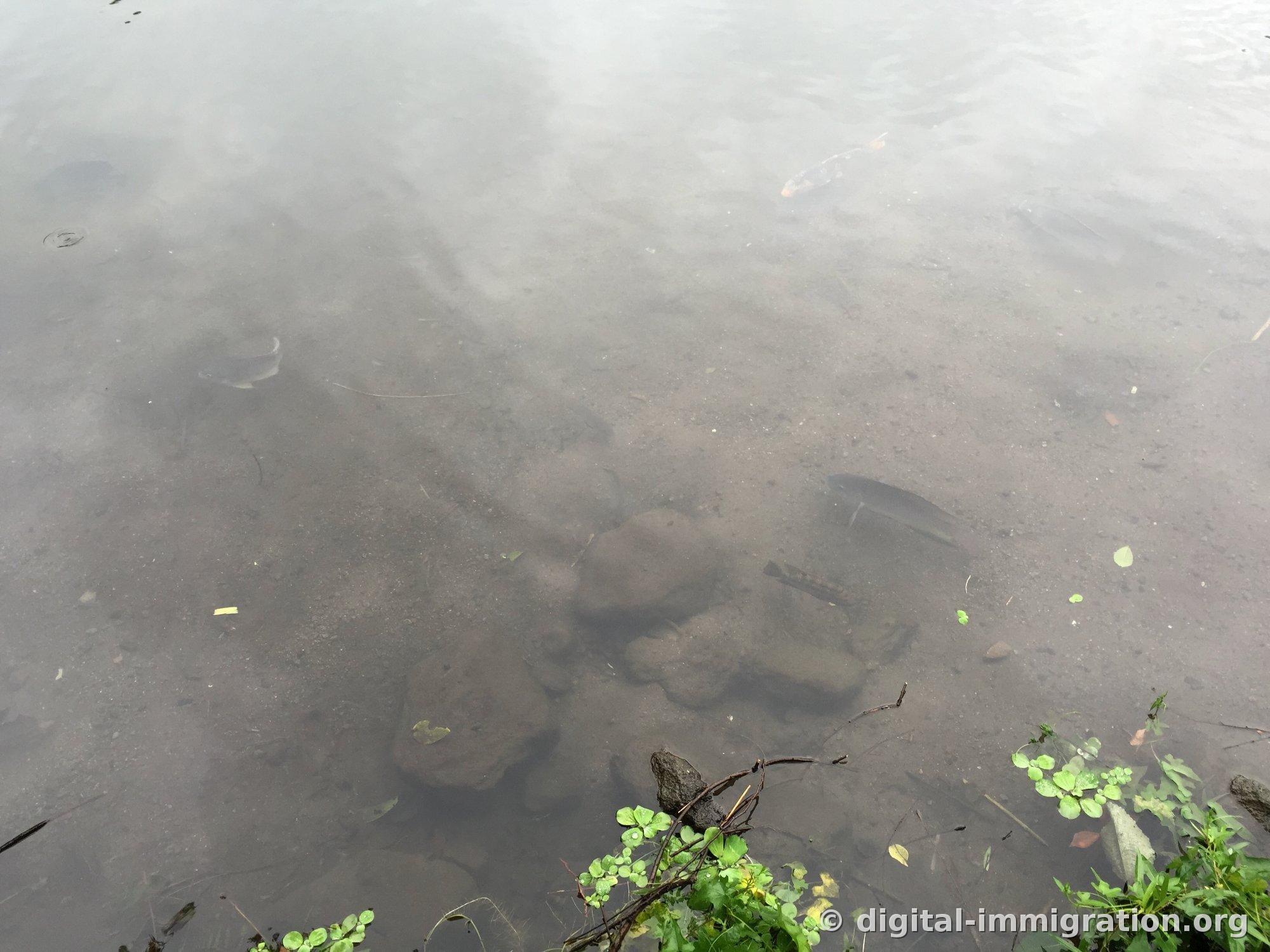
Look close to the water's edge and you can see straight to the bottom. In areas where the water is knee-deep, submerged stones and fallen branches, water plants like pennywort, all clearly visible. Carp move slowly through them. Their bodies are forearm-thick, mixed in gray and orange. Signs say not to feed them, so you can only look.
どんぐりの森—Get Your Totoro Souvenirs Here
At the entrance to Yuno-tsubo street is どんぐりの森, which sells Studio Ghibli merchandise. A large sign carved from wood hangs under a tiled roof, and on top of the eaves perches a palm-sized white Totoro figurine. Many people miss this. When you stand in front of the store to photograph the sign, look up at the eaves once.
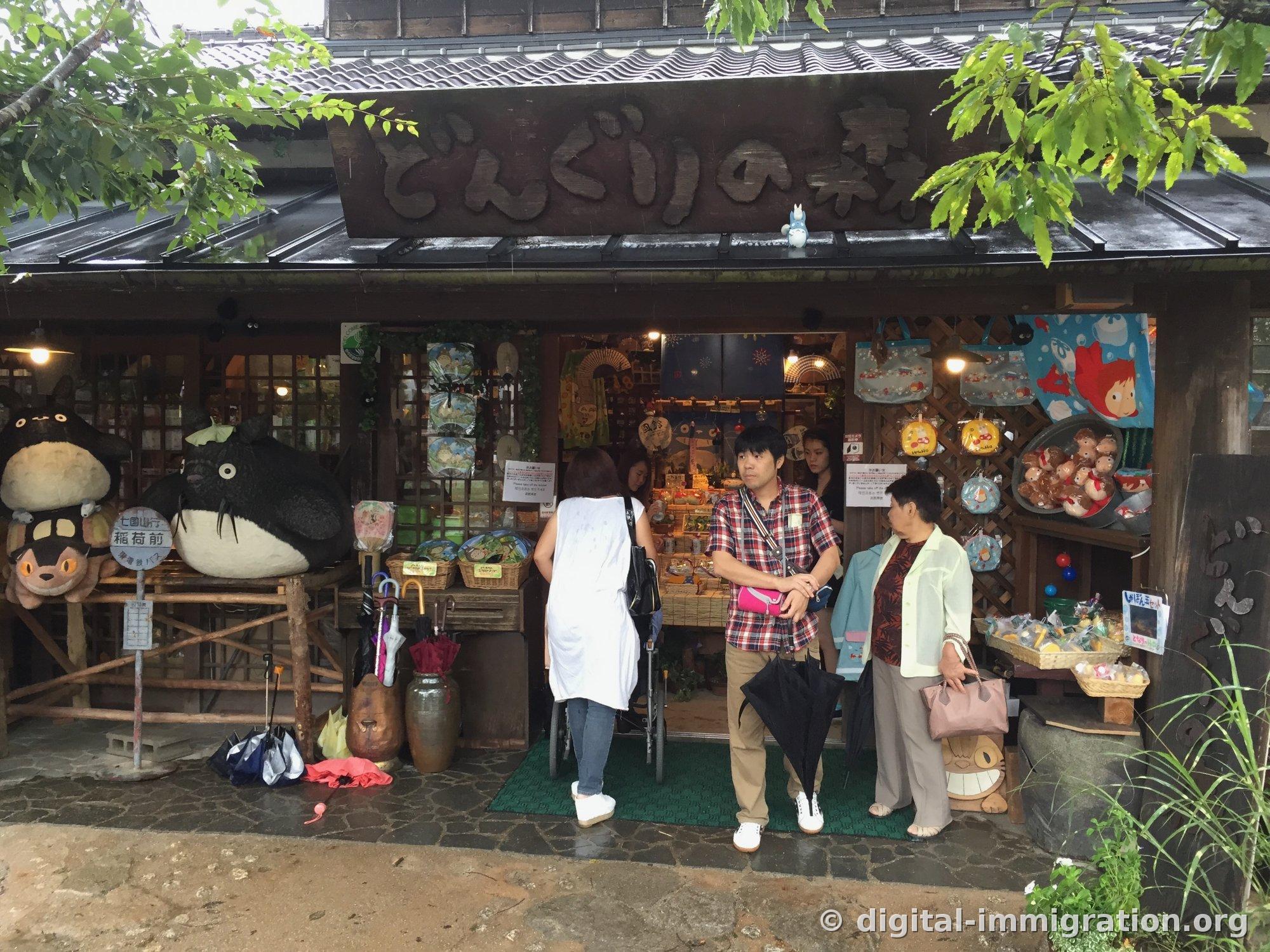
On the left pedestal at the entrance sit black Totoro and gray Totoro side by side, with a Cat Bus face alongside them. There's a fun touch in the old bus stop sign reading '七里山行 稲荷前' displayed as a prop. On the right latticed wall hang Totoro bags and Ponyo bags, with brown figurines piled high in a basin below. The display counter on the right holds soaps and small gift sets in large baskets.
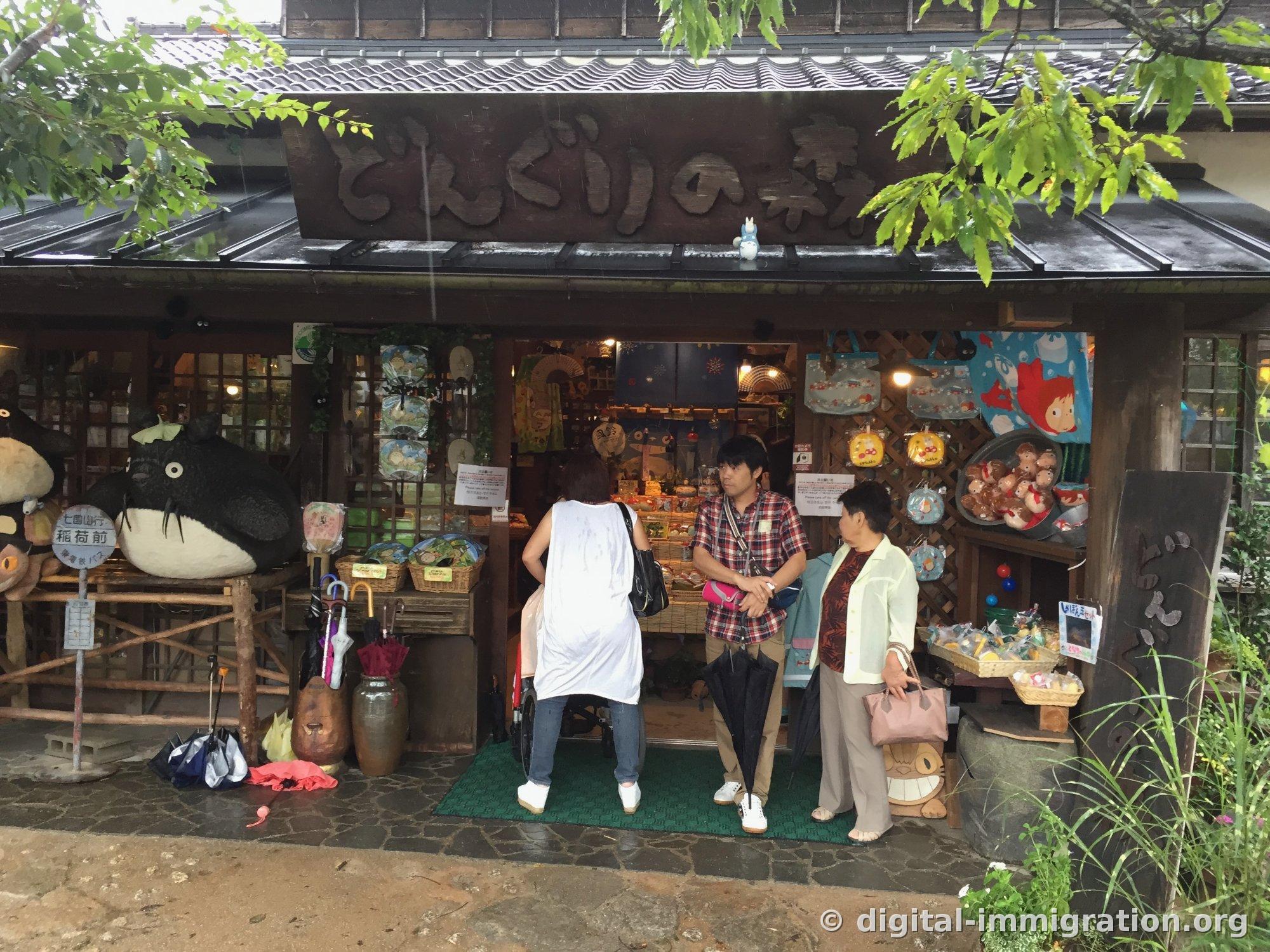
Inside, notices in Japanese and English on both sides of the door ask patrons to refrain from photography. I actually saw staff quietly gesture to a customer holding a camera. Photograph outside, browse inside with your eyes. Choose small souvenirs. Keychains, handkerchiefs, small figurines—these don't take up space in your suitcase. Large figurines look cute, but you'll regret carrying them around. I learned that from experience.
Since it was raining, the pottery umbrella stand in front of the shop was overflowing with umbrellas. The wooden floor was wet and slippery, so it's good to wipe your shoes on the mat at the entrance.
Next Time I'll Do This
Yufuin is a place to walk around. From Yufuin Station to Kinrinko along Yuno-tsubo street, a leisurely stroll takes twenty to thirty minutes—over an hour if you stop for snacks. Most shops shutter by 5 PM, so arriving in the evening leaves little to see. Conversely, Kinrinko before 8 AM is nearly empty.
There's no need to skip Yufuin because of a rain forecast. I didn't see Yufudake, but an empty lake and an open-air bath in the rain are views you'd be hard-pressed to get on a clear day. But do bring waterproof shoes. The stone pavement and stairs stay wet constantly, and with canvas sneakers your socks will be soaked by afternoon. I spent that evening drying my shoes in front of the room heater.
Read next
- From Akihabara's Chuo-dori to the Kanda River: A Record of Tokyo's Electronics District Revisited Multiple Times
Tokyo's Akihabara is a neighborhood where it's hard to say you've seen everything in a single visit. I've come multiple times across different seasons, and each time the signs chan…
Tokyo · Akihabara - Buying a Single ¥300 Year-End Jumbo Lottery Ticket at Nishi-Ginza Chance Center in Tokyo
Exit from the Hibiya exit of Tokyo's Shimbashi Station, walk toward the elevated highway for about three minutes, and suddenly you'll see a line of people stretching along the side…
Tokyo · Nishi-Ginza Chance Center - Ueno Ameyoko, the real magic starts after sunset — an evening walk from the Okachimachi Gate to Ueno Station
Every time I come to Tokyo, my feet find their way to Ueno Ameyoko (アメ横) without fail. This time I entered from the Okachimachi side and worked my way toward Ueno Station. I've met…
Tokyo · Ameya Yokocho Market