A Night of Grilled Pork Belly at Yopu's Ō-Buta Shio-Yaki (王豚塩焼) in Shin-Okubo — Korean Meat Restaurant at Tokyo Prices
Whenever I come to Tokyo, I always set aside a day for Shin-Okubo. Exit JR Shin-Okubo Station, follow Okubo-dori, then turn into an alley and you'll find an area where Korean and J…
Tokyo · Yop's King Pork Salt Grilled Shin-Okubo Branch
Whenever I come to Tokyo, I always set aside a day for Shin-Okubo. Exit JR Shin-Okubo Station, follow Okubo-dori, then turn into an alley and you'll find an area where Korean and Japanese signage are evenly mixed. Today I entered Yopu's Ō-Buta Shio-Yaki (ヨプの王豚塩焼) Shin-Okubo branch. If someone asks why I'm going to eat pork belly—a restaurant as common in Seoul as anywhere—here in Tokyo, the answer is simple: the meat here is genuinely delicious, but your wallet will feel the pain.
Side Dishes Served as Soon as You're Seated
The side dishes came out before the order itself. On a black square plate were garlic stem pickles, cucumber kimchi, and marinated cherry tomatoes lined up neatly, with a single pink radish slice in a small dish, and beside it, some cabbage—whether white kimchi or water kimchi—torn along the grain. Lettuce and sesame leaves were piled high on a separate large plate. The seasoned radish greens came tossed with scallion threads and only lightly dusted with red pepper powder—not spicy at all.
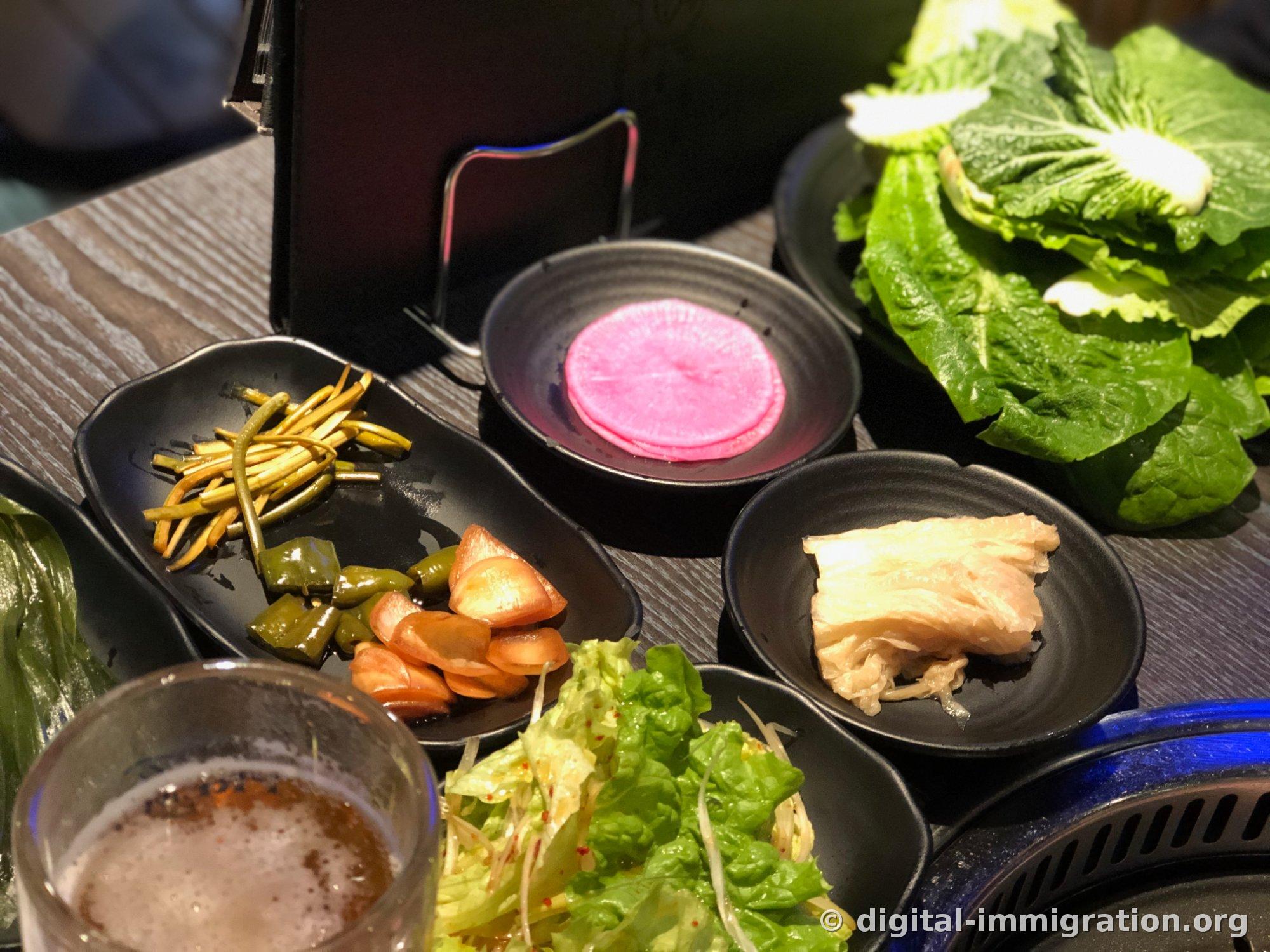
Here's one thing that confuses first-timers: unlike in Korea, side dish refills here are often not unlimited and self-serve. This time, when I asked the staff, they refilled my lettuce, but given Japanese meat restaurant culture, there are places where refills carry a charge. It's better to ask before requesting a refill than to be surprised when you get the bill.
The Crown-Wearing Pig Drawn on the Draft Beer Glass
When I ordered beer, the glass itself was a statement. On the glass was printed an orange pig character wearing a crown, along with flames, and below that the text '王豚塩焼' (Ō-Buta Shio-Yaki). Above, stamped in red like a seal, were the characters '熟成肉専門店' (aged meat specialty). The glass has an hourglass shape that actually feels surprisingly comfortable to grip when held.
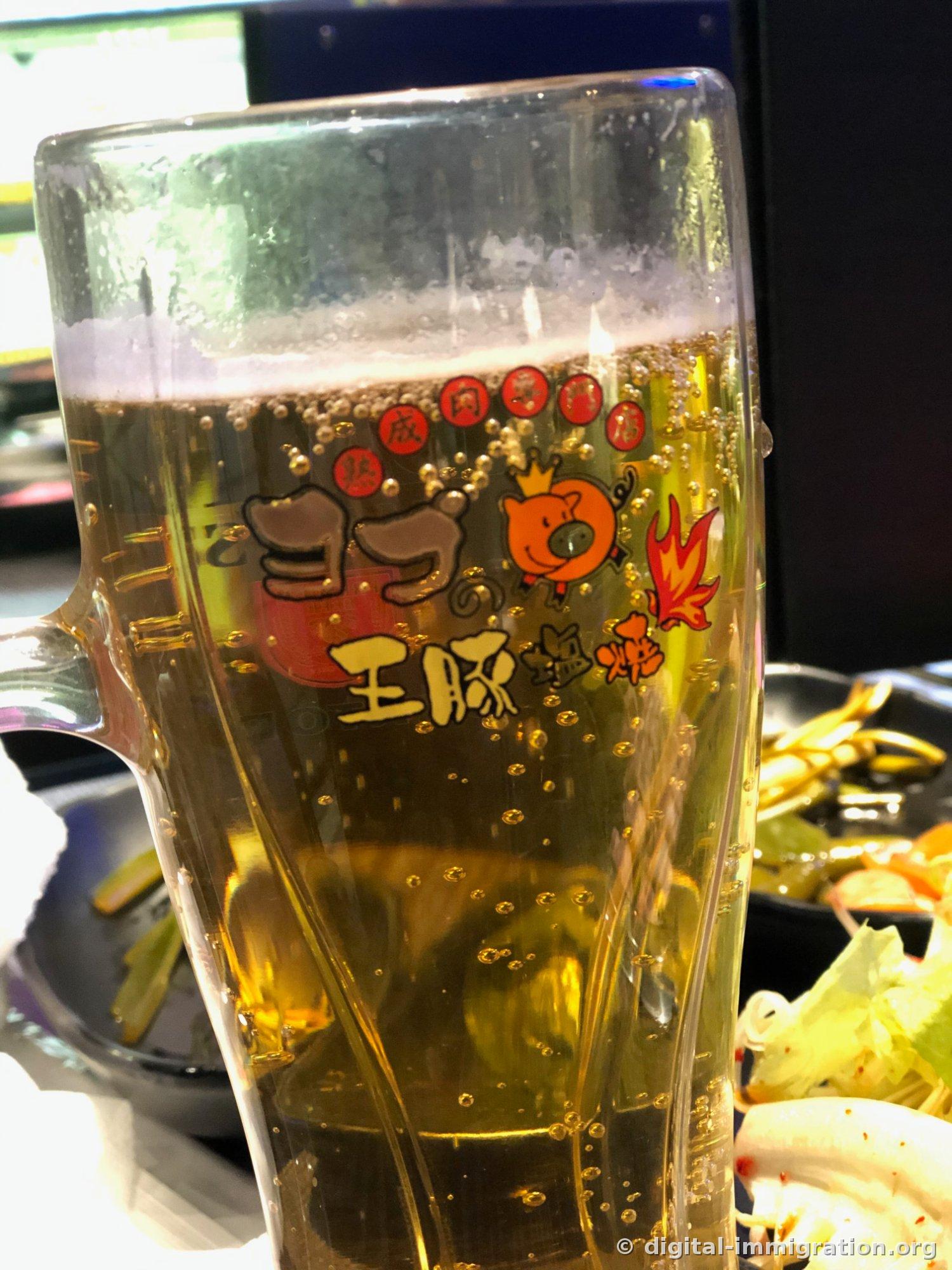
It arrived with carbonation still rising, and the temperature was definitely cold. Under the air conditioning on a humid August Tokyo evening, that first sip is honestly half the experience. Check the menu for pricing—Japanese izakaya and meat restaurant draft beers typically run 500 to 700 yen per glass.
Location and Getting There
It's just a few minutes' walk from JR Yamanote Line's Shin-Okubo Station, and you can also approach it easily from Seibu-Shinjuku Line's Seibu-Shinjuku Station or the back alleys of Shin-Okubo. You could walk from Shinjuku Station, but I wouldn't recommend it in summer—by the time you arrive, the humidity has already soaked your shirt. Taking just one more stop is better.
Korean restaurants in the Shin-Okubo area get long lines during evening hours, especially after 6 p.m. on Fridays and weekends. If you want to avoid waiting, either arrive in the 5 o'clock hour or aim for after 8 p.m. when the rush has subsided. I'd recommend checking directly with the restaurant about reservation availability.
The Main Event — Korean-Style Pork Belly in Japan
In the center of the table sits a round grill rimmed with a blue ring, and thick-cut pork belly slices are laid across it. As you can see in the photo, these are no thin slices. They're chunky pieces cut to about the thickness of a finger joint, with the cross-section showing distinct layers of fat and lean meat. The grill is tilted toward the center so the grease drains down through the grooves.
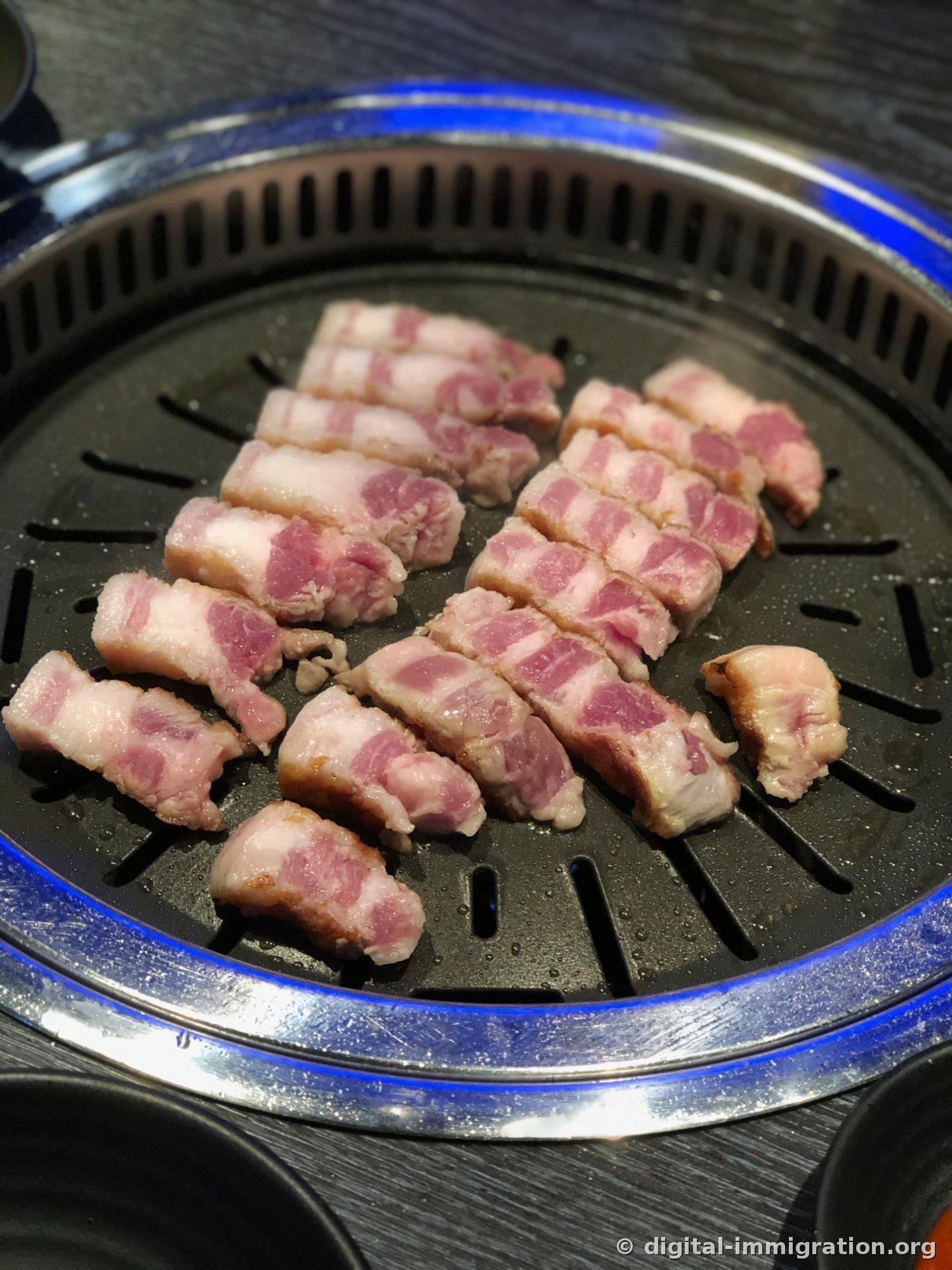
A staff member comes by early on to flip and cut the meat with scissors. Don't rush it with your chopsticks here—you'd be losing out. Because of the thickness, the outside cooks while the inside stays red for quite a while. Wait until the fat portions turn translucent like glass and the edges curl brown, then the bite is completely different. Given that this is an aged meat specialty, the meat itself had almost no smell, and even just dipped in salt, a subtle sweetness comes through.
To be honest, the price is steep. If you come thinking of a neighborhood pork belly place in Seoul, your expression will harden when you see the bill. The per-portion price feels nearly double what you'd pay in Korea, and when you add draft beer and rice and stew, the tab for two gets substantial. Yet walking out, I didn't feel any regret. There aren't many places in Tokyo where you can get this thickness, grilled this way, wrapping it in lettuce with garlic stems. It feels like you're getting back exactly what you paid for in meat quality.
For First-Time Visitors
- Because the meat is thick, wait until the staff flips it. If you rush, you'll miss out on what makes this place special.
- Don't assume side dish refills are free—ask first.
- The smell definitely clings to your clothes. It's not charcoal smoke, but oil smoke rises up. If you have plans afterward, it's better to leave your outer layer at home.
- Most places take cards, but some small Japanese establishments are cash-only. Bringing a bit of cash gives you peace of mind.
- Exact prices and hours change seasonally. Checking in advance is recommended.
Eating Korean food in Shin-Okubo used to be about 'going when you miss Korea,' but at this place, the meat is genuinely good even without that nostalgia factor. Next time I'm in Tokyo, I plan to order rice and miso soup properly and have a full spread.
Read next
- From Akihabara's Chuo-dori to the Kanda River: A Record of Tokyo's Electronics District Revisited Multiple Times
Tokyo's Akihabara is a neighborhood where it's hard to say you've seen everything in a single visit. I've come multiple times across different seasons, and each time the signs chan…
Tokyo · Akihabara - Buying a Single ¥300 Year-End Jumbo Lottery Ticket at Nishi-Ginza Chance Center in Tokyo
Exit from the Hibiya exit of Tokyo's Shimbashi Station, walk toward the elevated highway for about three minutes, and suddenly you'll see a line of people stretching along the side…
Tokyo · Nishi-Ginza Chance Center - Ueno Ameyoko, the real magic starts after sunset — an evening walk from the Okachimachi Gate to Ueno Station
Every time I come to Tokyo, my feet find their way to Ueno Ameyoko (アメ横) without fail. This time I entered from the Okachimachi side and worked my way toward Ueno Station. I've met…
Tokyo · Ameya Yokocho Market