A 890-Yen Tonkotsu Bowl at Ichiran in Shinjuku 3-chome: Record of Two Visits, Day and Night
In Shinjuku 3-chome, Tokyo, an Ichiran sign hangs at the entrance of an alley where Aoto-ya and FamilyMart stand side by side. It's a natural tonkotsu ramen restaurant that origina…
Tokyo · Ichiran
In Shinjuku 3-chome, Tokyo, an Ichiran sign hangs at the entrance of an alley where Aoto-ya and FamilyMart stand side by side. It's a natural tonkotsu ramen restaurant that originated in Hakata, Fukuoka, and this location in Shinjuku serves as a gateway accommodating both tourists and commuters heading home. I visited once during the day and once at night. I witnessed the same shop showing a completely different face depending on the time of day.
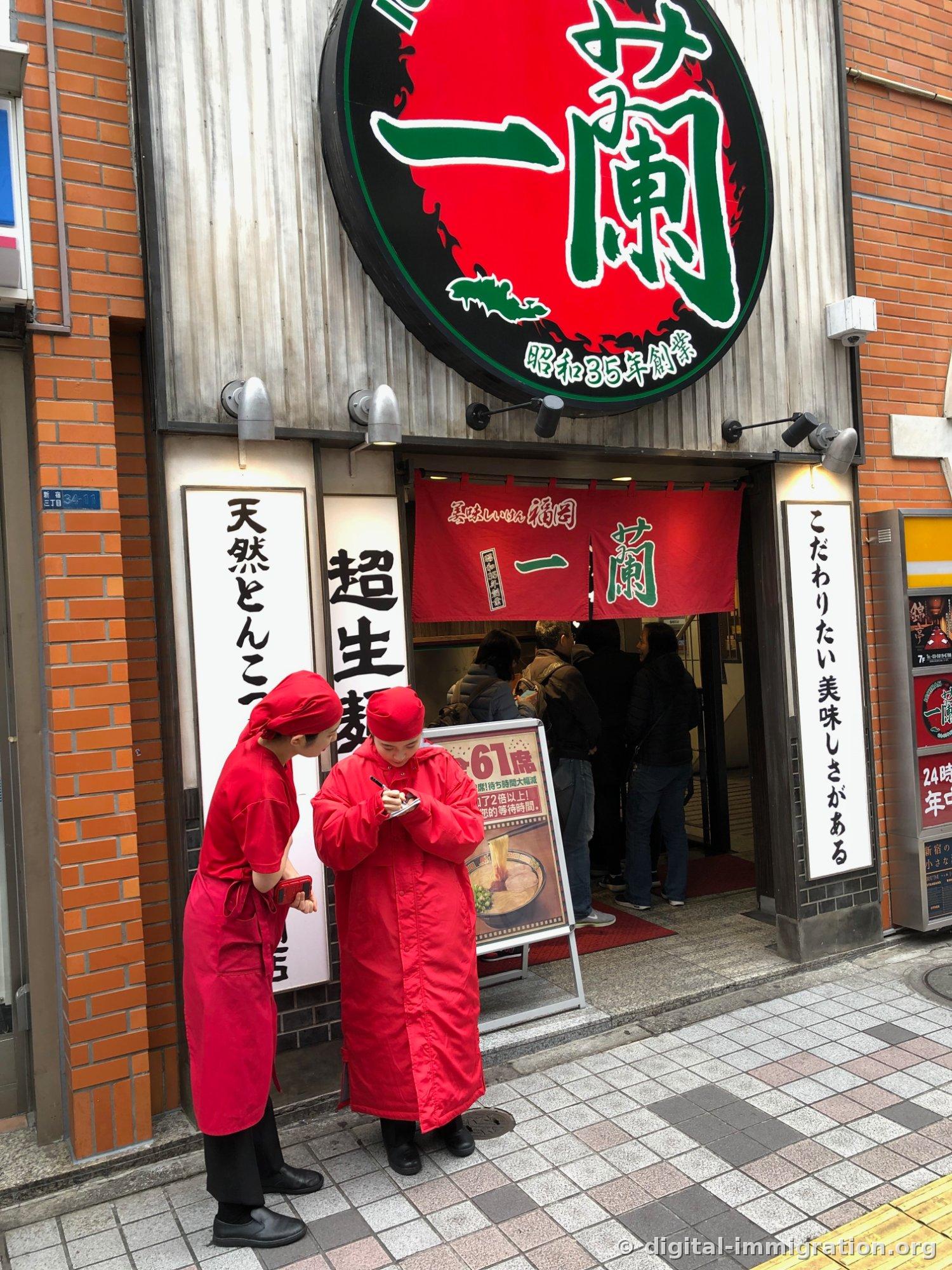
A placard at the entrance displayed the number '61' in large letters, indicating they had expanded seating to reduce wait times. In reality, during the day I waited about 5 minutes before being seated. The issue is at night.
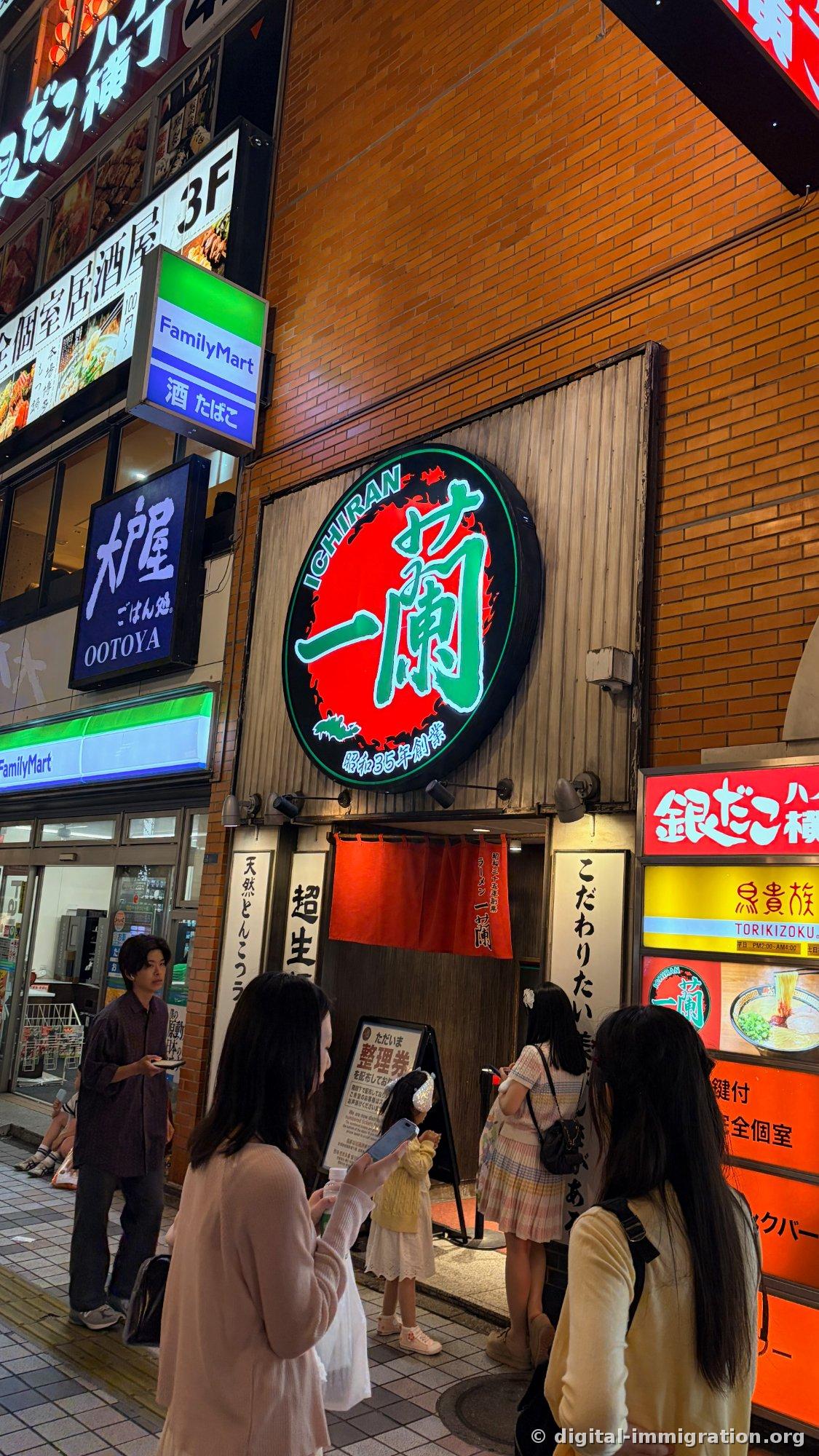
At night, instead of a line, they distribute numbered tickets. Once you get a ticket, you can walk around the area while waiting, but staff only give verbal instructions on when to return, so it's best to confirm the time clearly on the spot. I half-listened and walked around a nearby convenience store for about 15 minutes, only to find my number had already been called.
Location and Access — East Exit of Shinjuku Station, Just One Turn Down an Alley
It's a 5 to 7-minute walk from the East Exit of JR Shinjuku Station, and even closer from Shinjuku-sanchome Station. The ground floor entrance is narrow, so first-time visitors often walk past it. Look for two white signs hanging vertically on the wall: "天然とんこつ" (Natural Tonkotsu) and "超生麺" (Super Fresh Noodles). The shop is up a set of stairs.
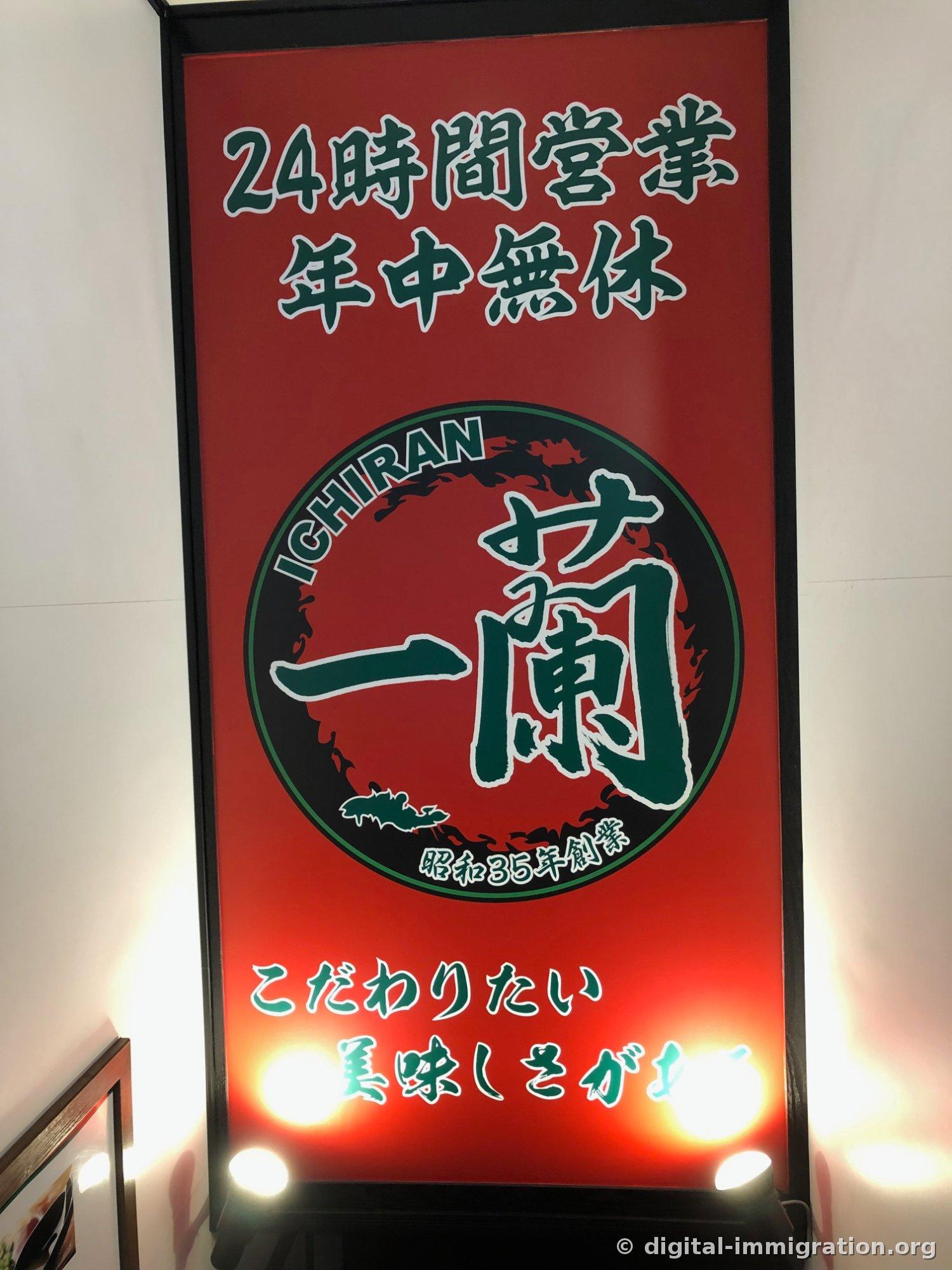
The "24-hour operation" sign is what keeps this location in mind. Even at 2 AM when you've been drinking late in Shinjuku and missed the last train, this place is still open. Surprisingly, that time slot had the shortest wait.
Three Minutes at the Ticket Machine — Price Determines Everything Here
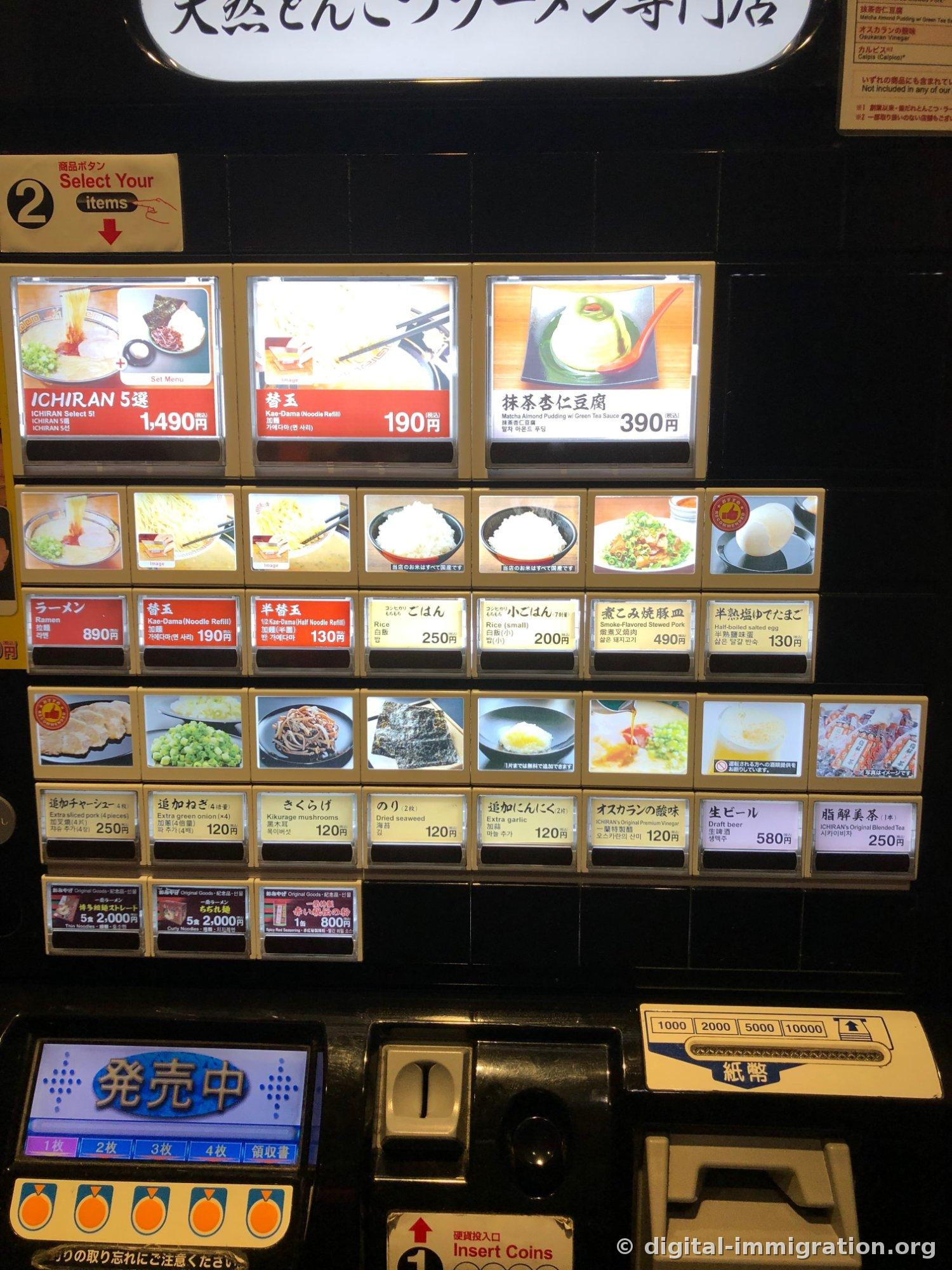
Here are the prices from the buttons, as photographed. Japanese ramen prices are steadily rising, so it's recommended to verify current prices before your visit.
- Ramen 890 yen
- Kaedama (extra noodles) 190 yen / Half kaedama 130 yen
- Soft-boiled salted egg 130 yen
- Extra chashu (pork) 4 slices 250 yen
- Kikurage (wood ear mushroom) 120 yen · Nori 2 sheets 120 yen · Extra green onion 120 yen · Extra garlic 120 yen
- Rice 250 yen / Rice (small) 200 yen
- Nikomi yaki pork plate 490 yen, Draft beer 580 yen, Matcha almond tofu 390 yen
- ICHIRAN 5-Line Set 1,490 yen
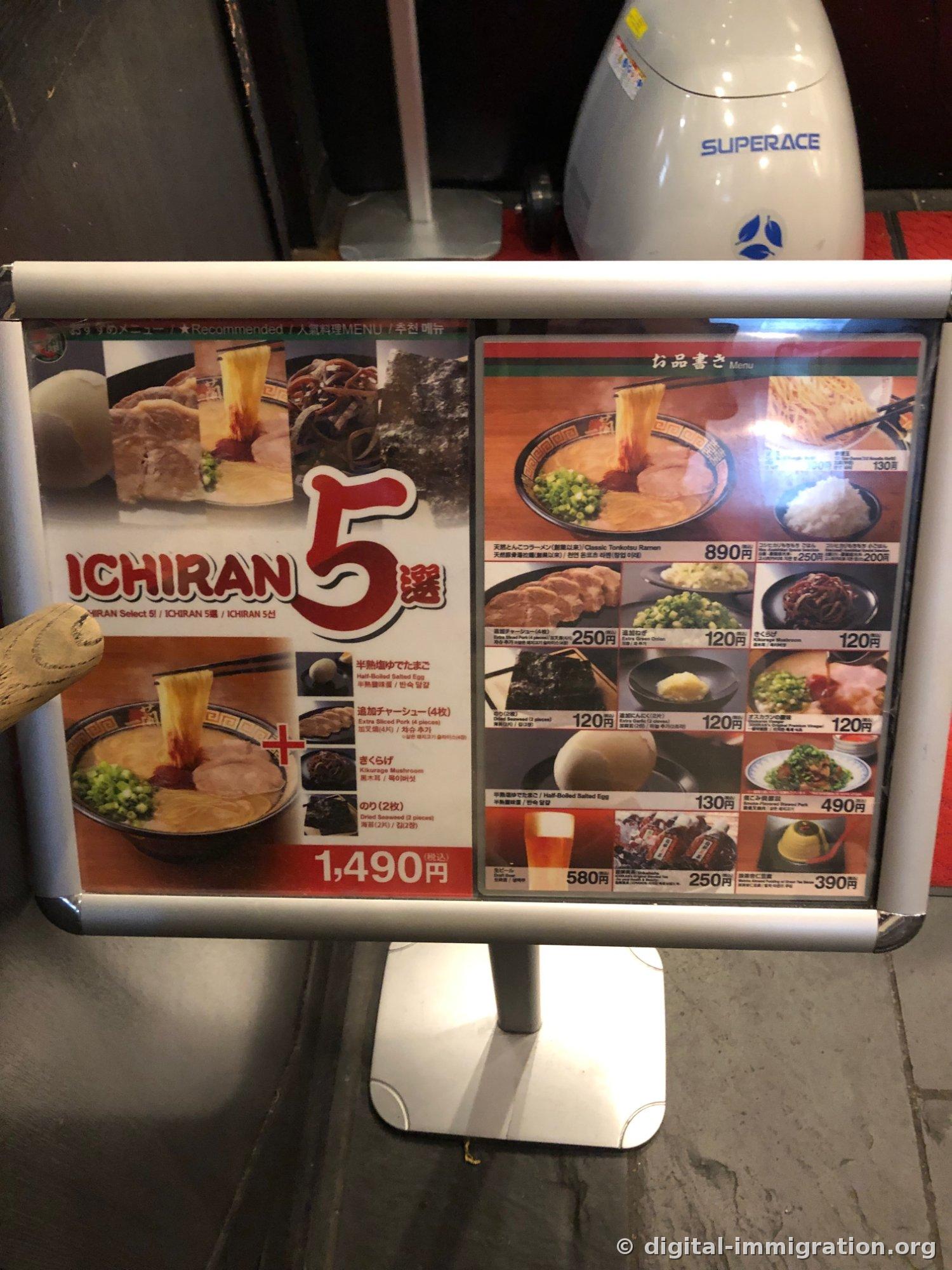
Pull out a calculator and the math works out. Ramen at 890 yen plus egg, chashu, kikurage, and nori separately: 890+130+250+120+120 = 1,510 yen. The 5-line set is 1,490 yen, so it's 20 yen cheaper if you want all four toppings. Conversely, if you're only adding a few, individual items are better. On my first visit, I pressed the set button; on the second day, I only added kikurage and chashu.
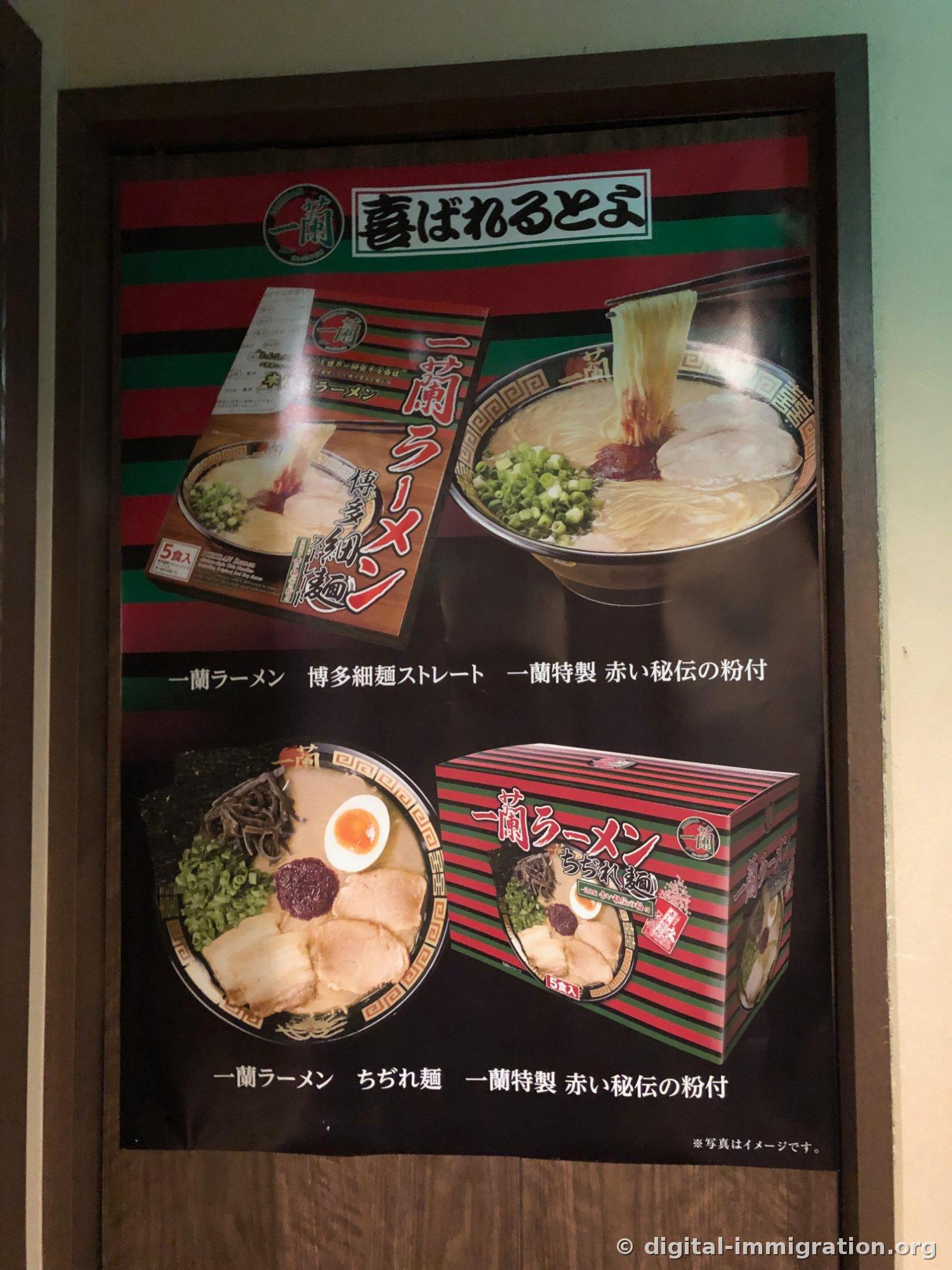
Counter Dining — Not Seeing Your Neighbor's Face While You Eat
The seating is divided by partitions. The front has an open footrest and the sides are blocked by wooden panels, so when you sit down, all you see is your own bowl and a wooden wall. You mark your order on a form indicating broth intensity, oil level, garlic, green onion, chashu, bison sauce, and noodle firmness, then pass it down through the slot, and only a hand reaches out to take it.
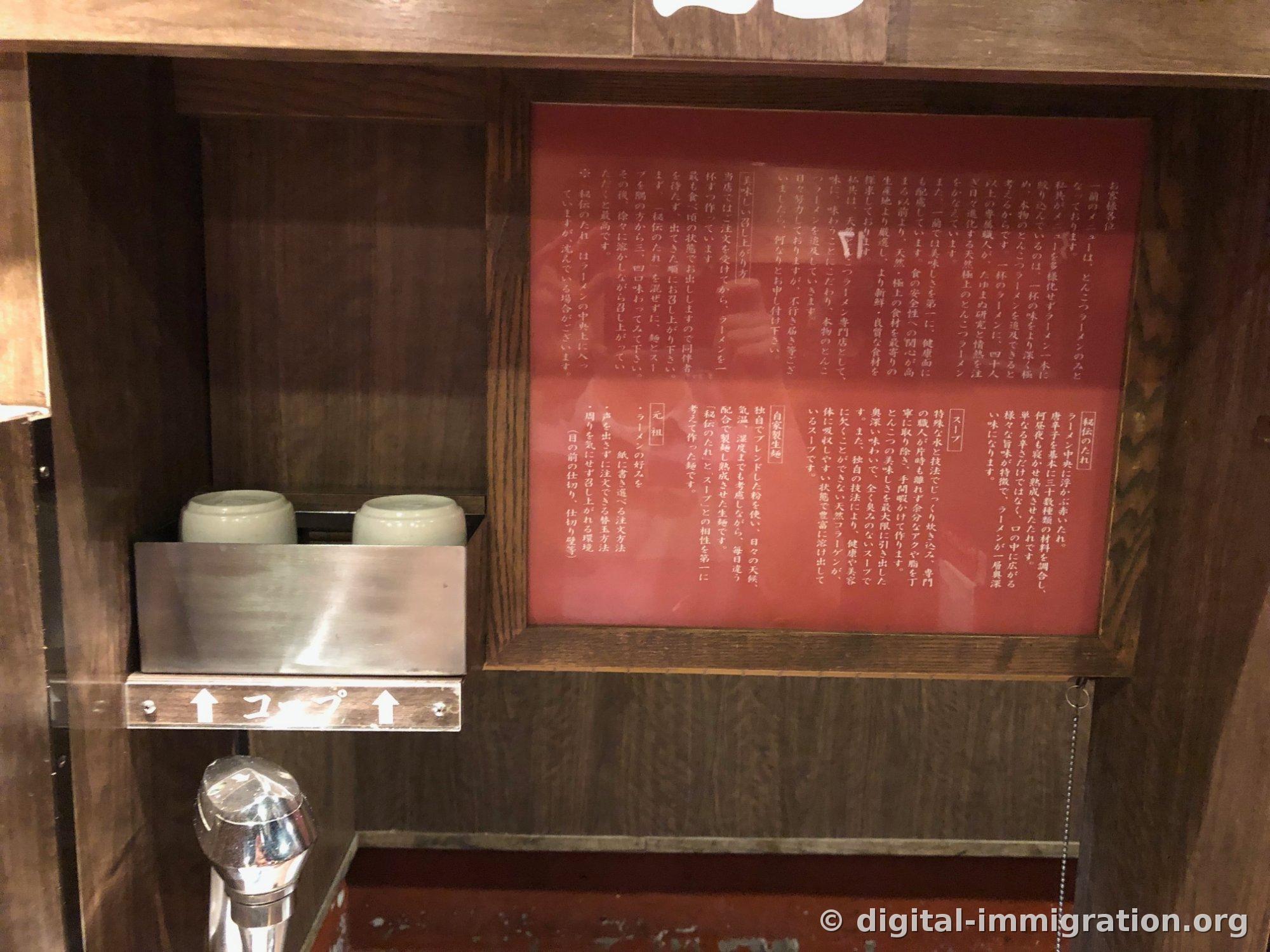
The red frame on the right is packed with explanations about bison tare, soup, and homemade noodles. Bison sauce is made by mixing about 30 types of ingredients based on chili powder and letting it sit overnight. It advises eating a few bites plain first, without mixing. When I actually did this, the broth's flavor changed twice. At first, it's mild and creamy tonkotsu; once you crush the red clump with your chopsticks, a spicy sensation sits on the back of your tongue.
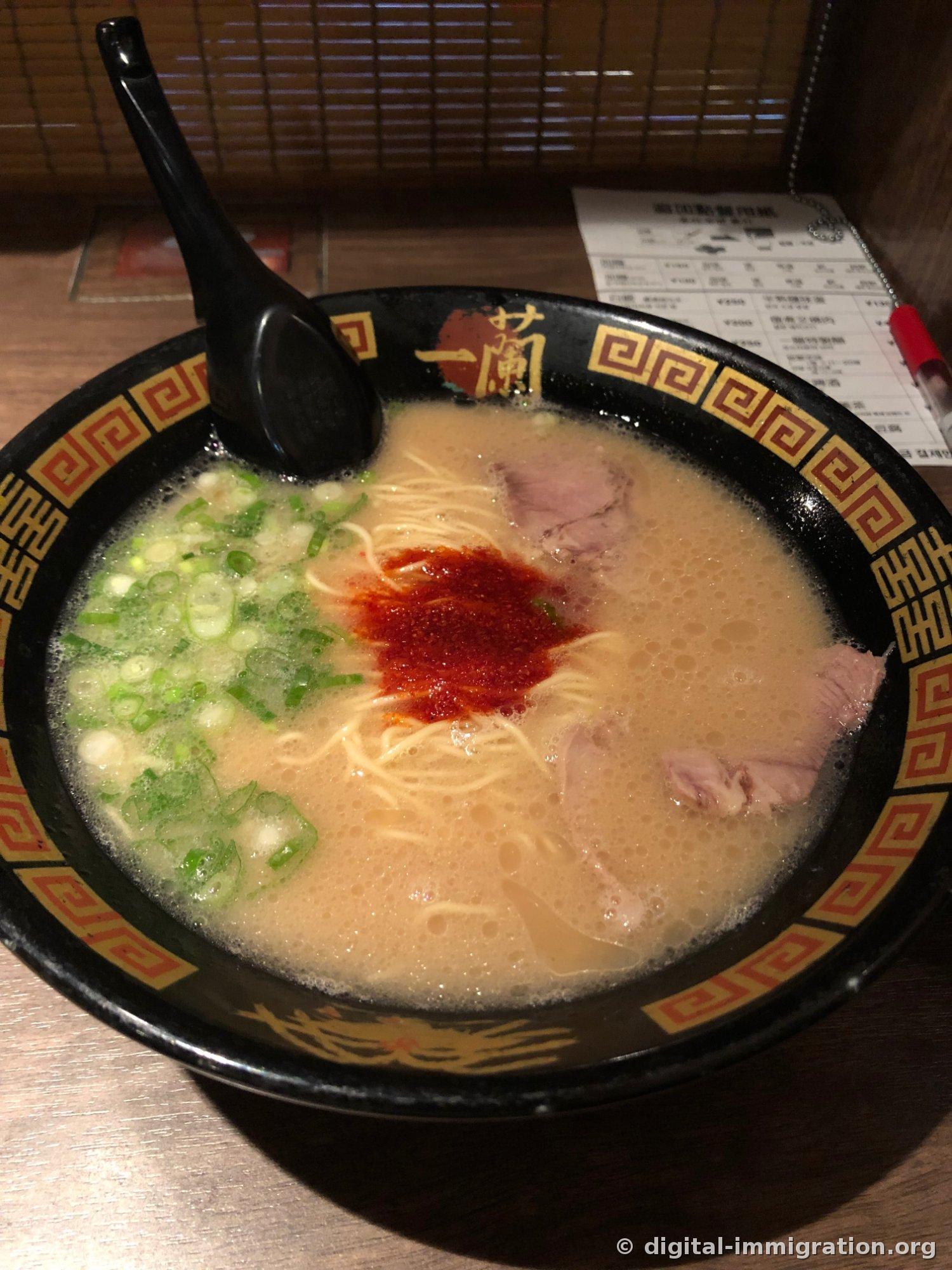
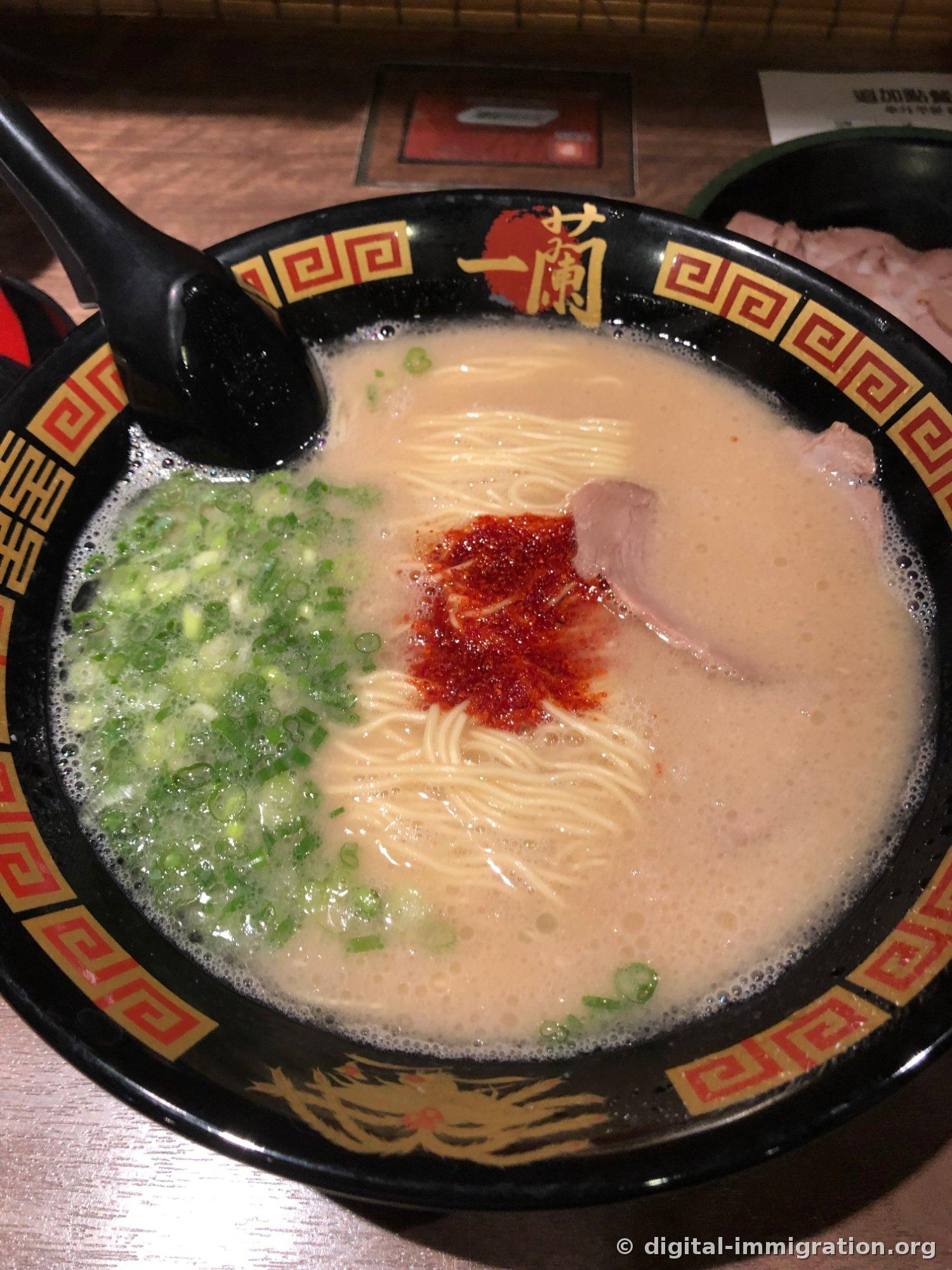
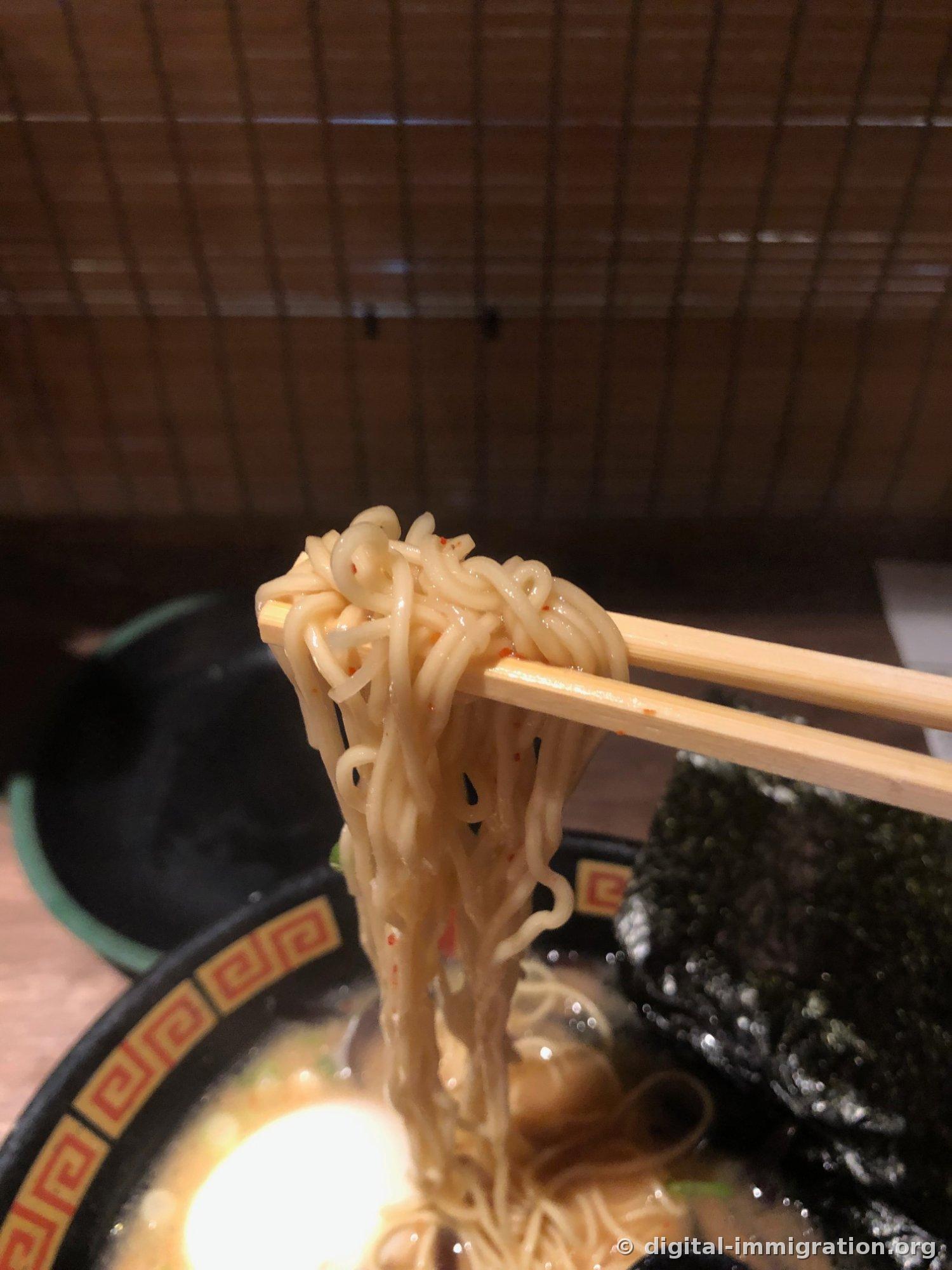
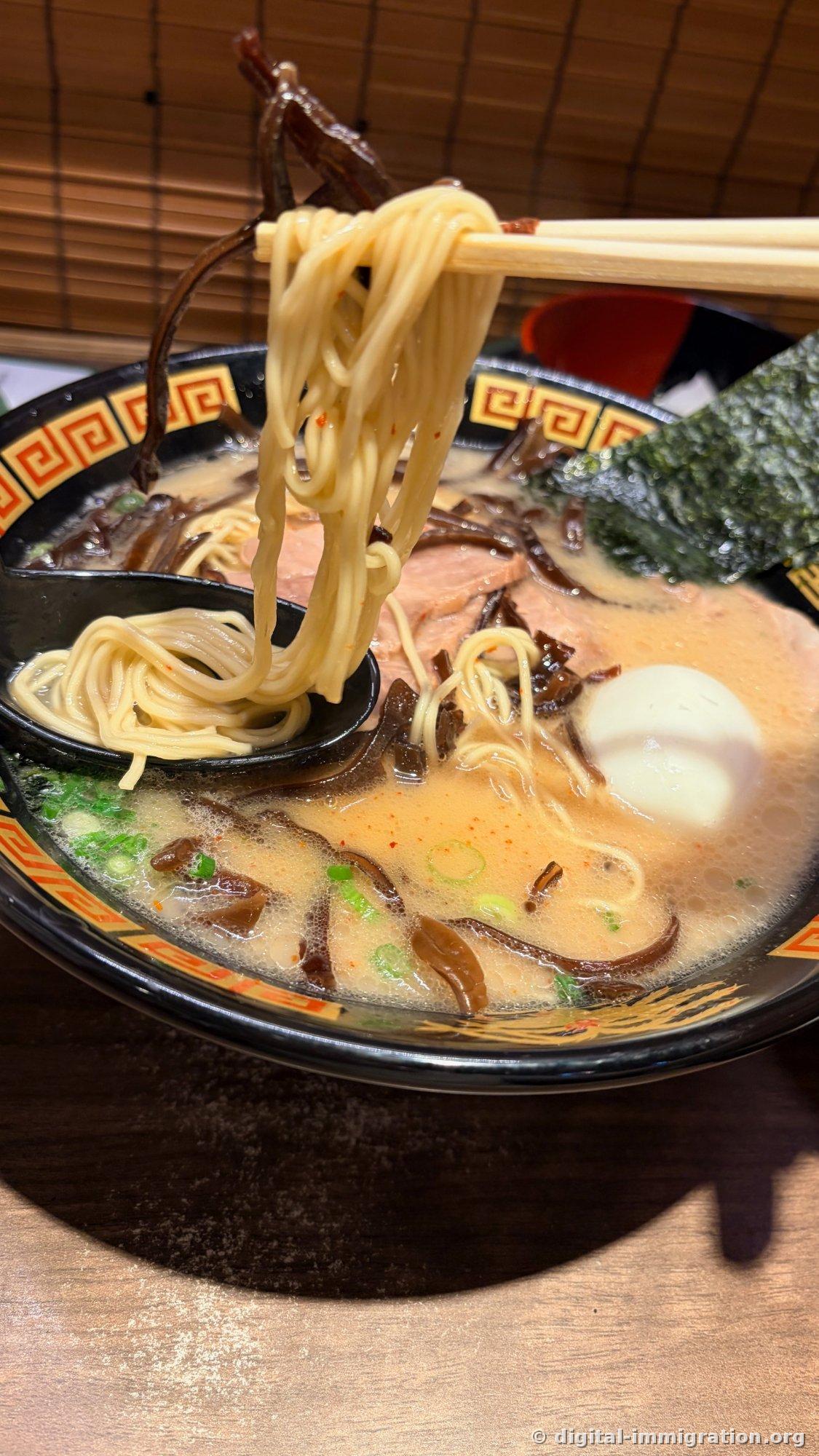
You don't need to go all the way to "bari-kata" (very firm) for noodle firmness. On my first visit, I ordered bari-kata but the noodles stayed stiff even as I finished the broth. On the second day, I lowered it to "kata-men" and it was just right. Since Hakata noodles are thin and soften quickly, if you're taking photos and dragging out time, order firm; if you're eating right away, regular is better.
Extra Toppings — A 130-Yen Egg and 250-Yen Chashu
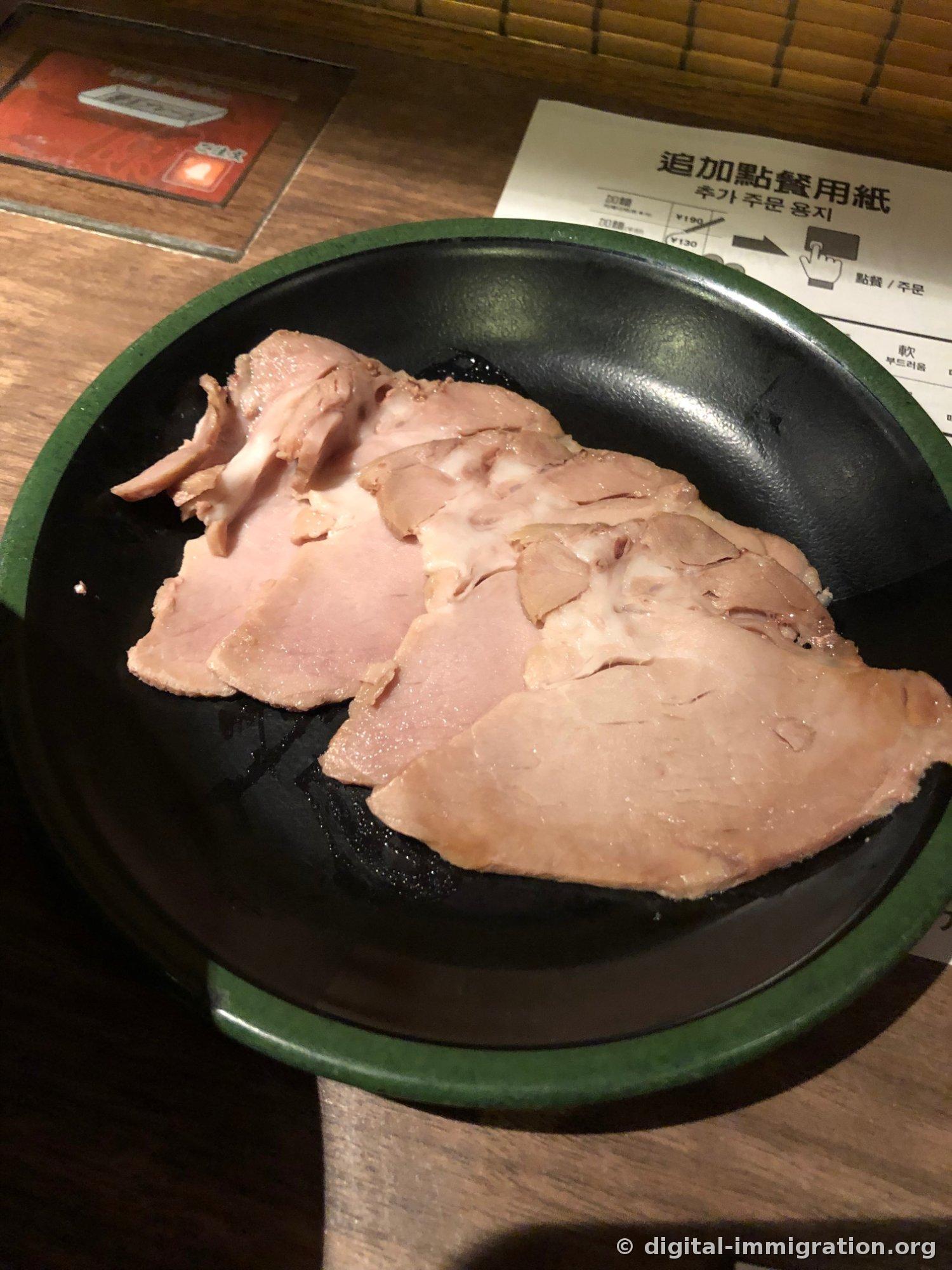
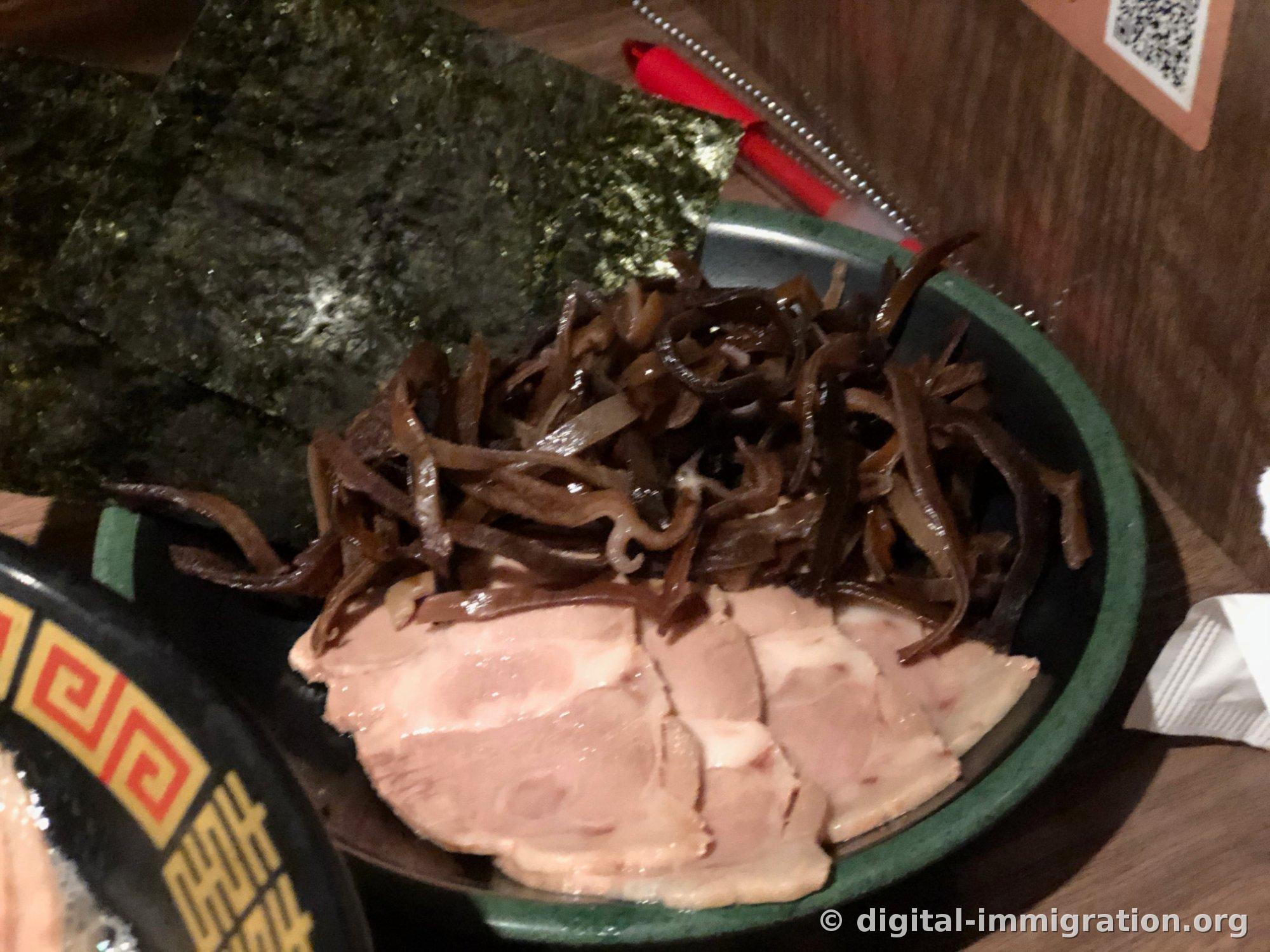
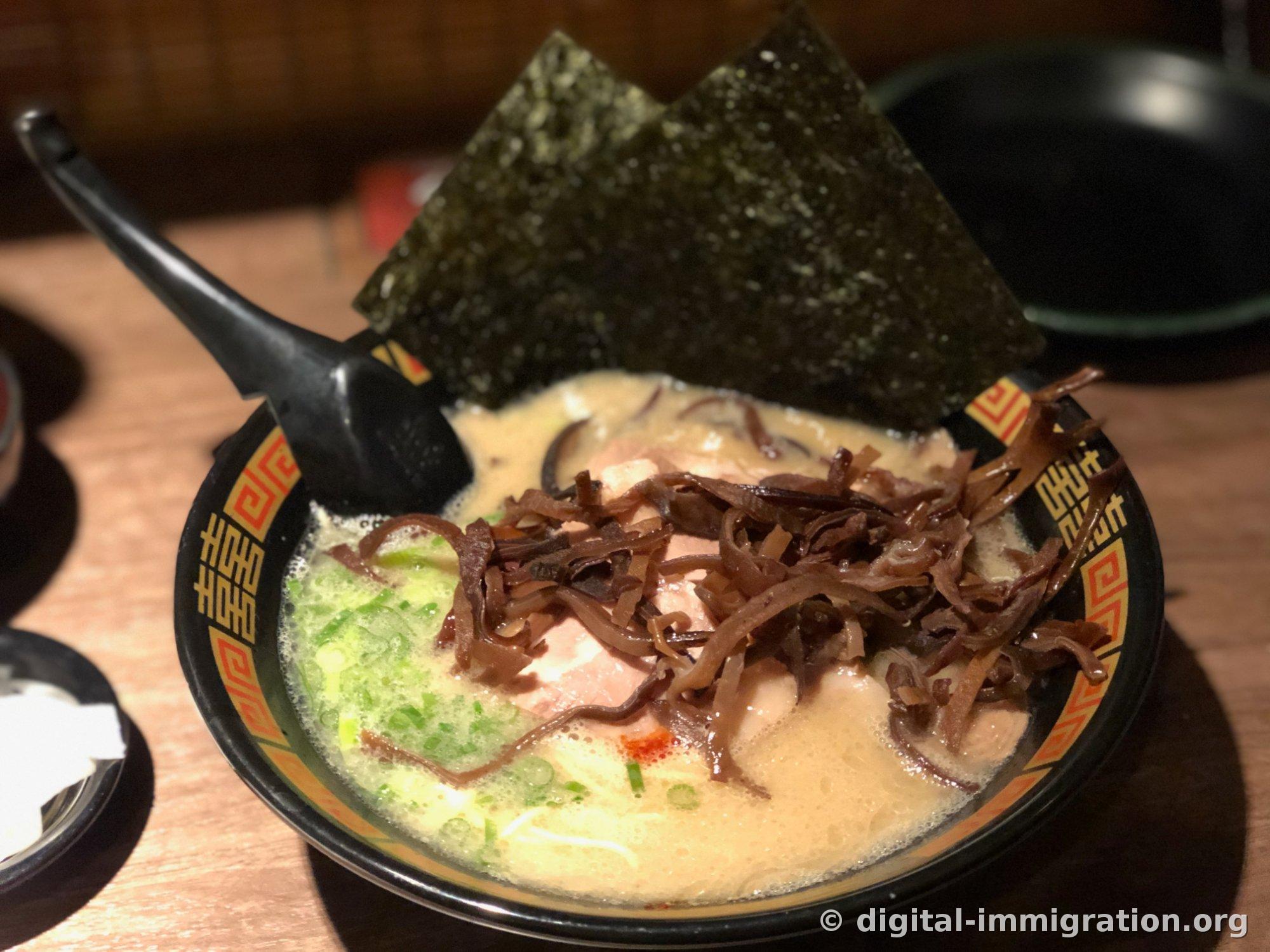
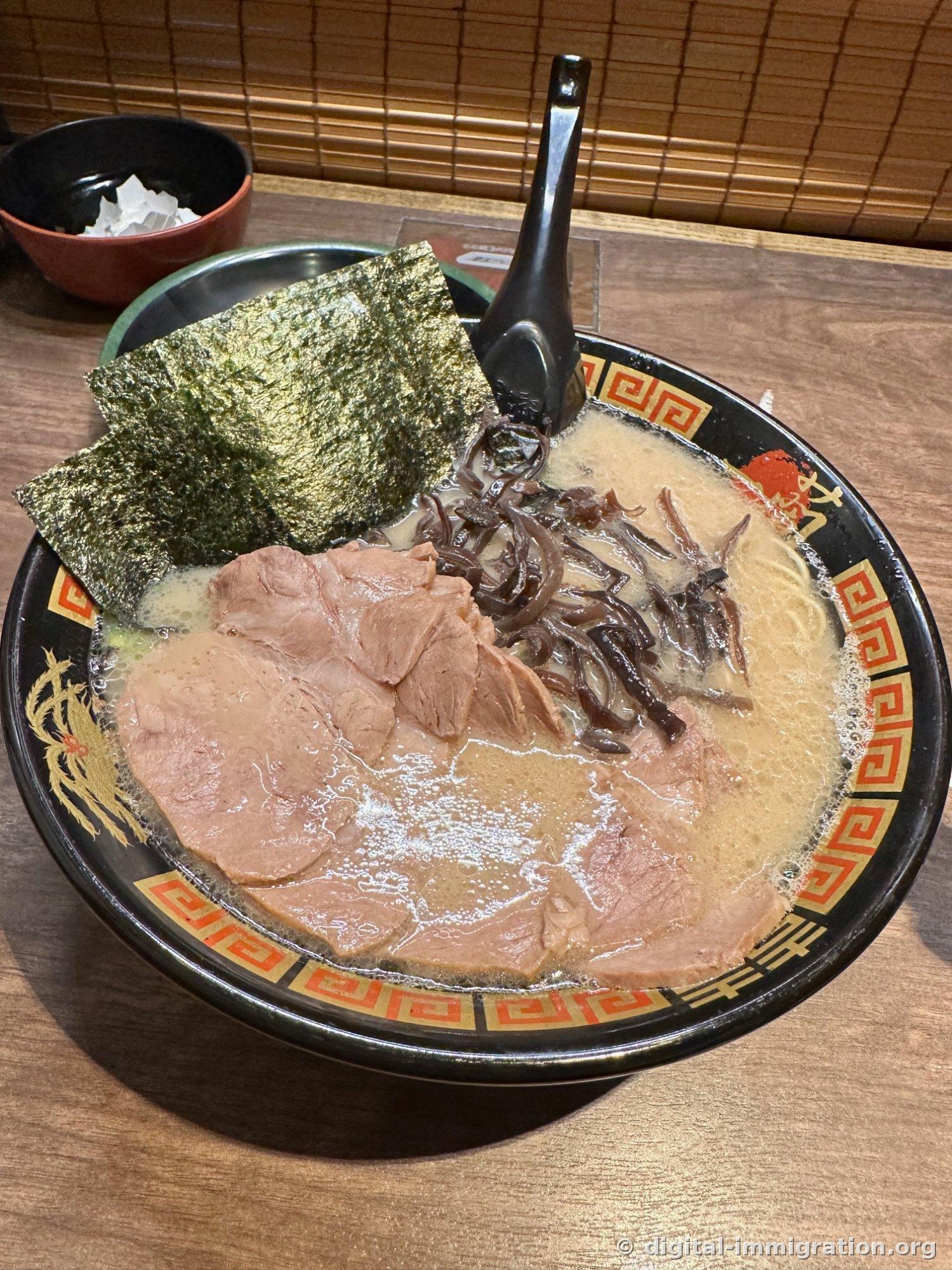
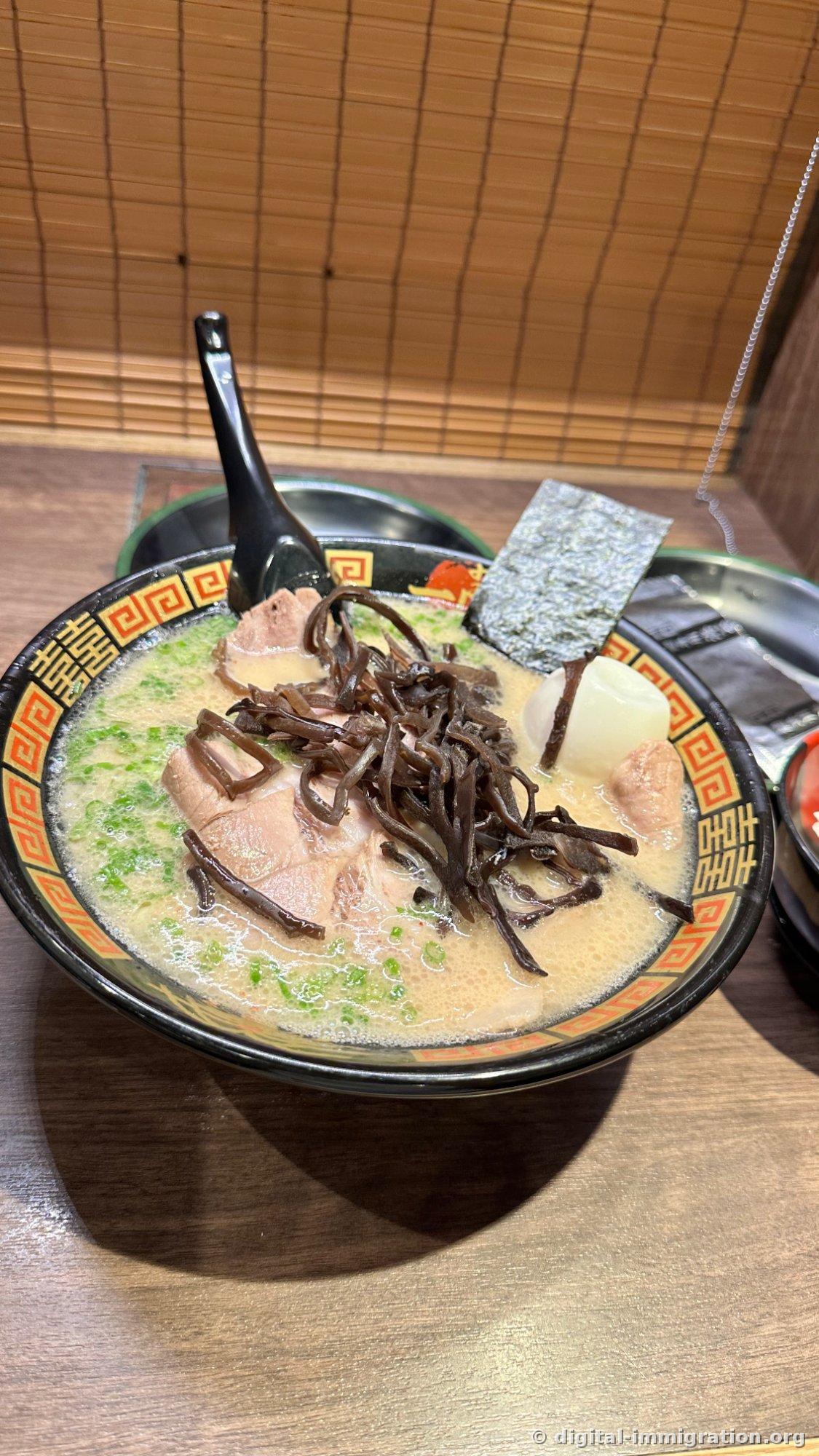
Extra toppings come separately on a plate with a green rim. I thought they'd place them in the bowl, but I was caught off guard when they arrived on a separate plate. The idea is for you to add as much as you want yourself.
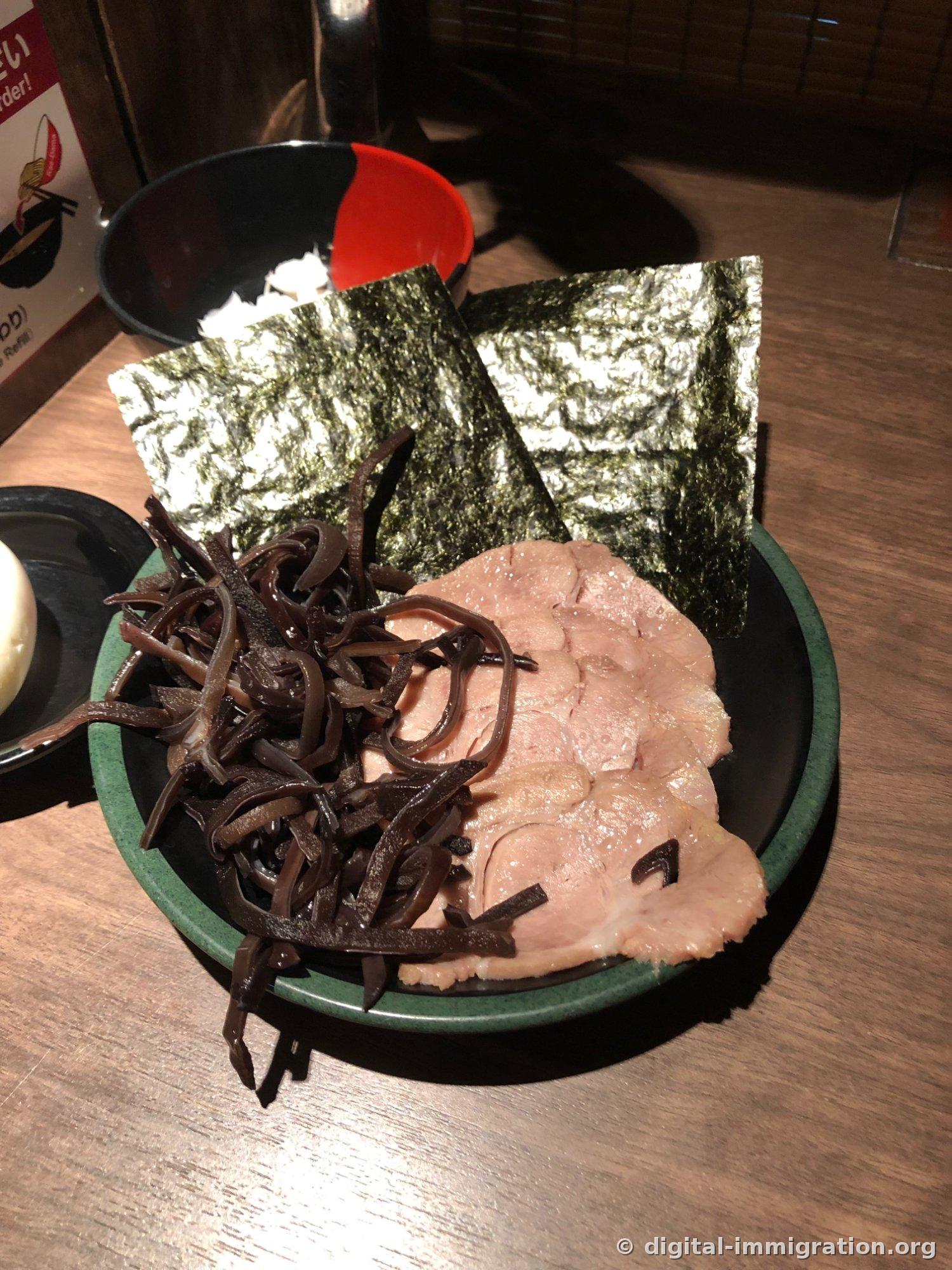
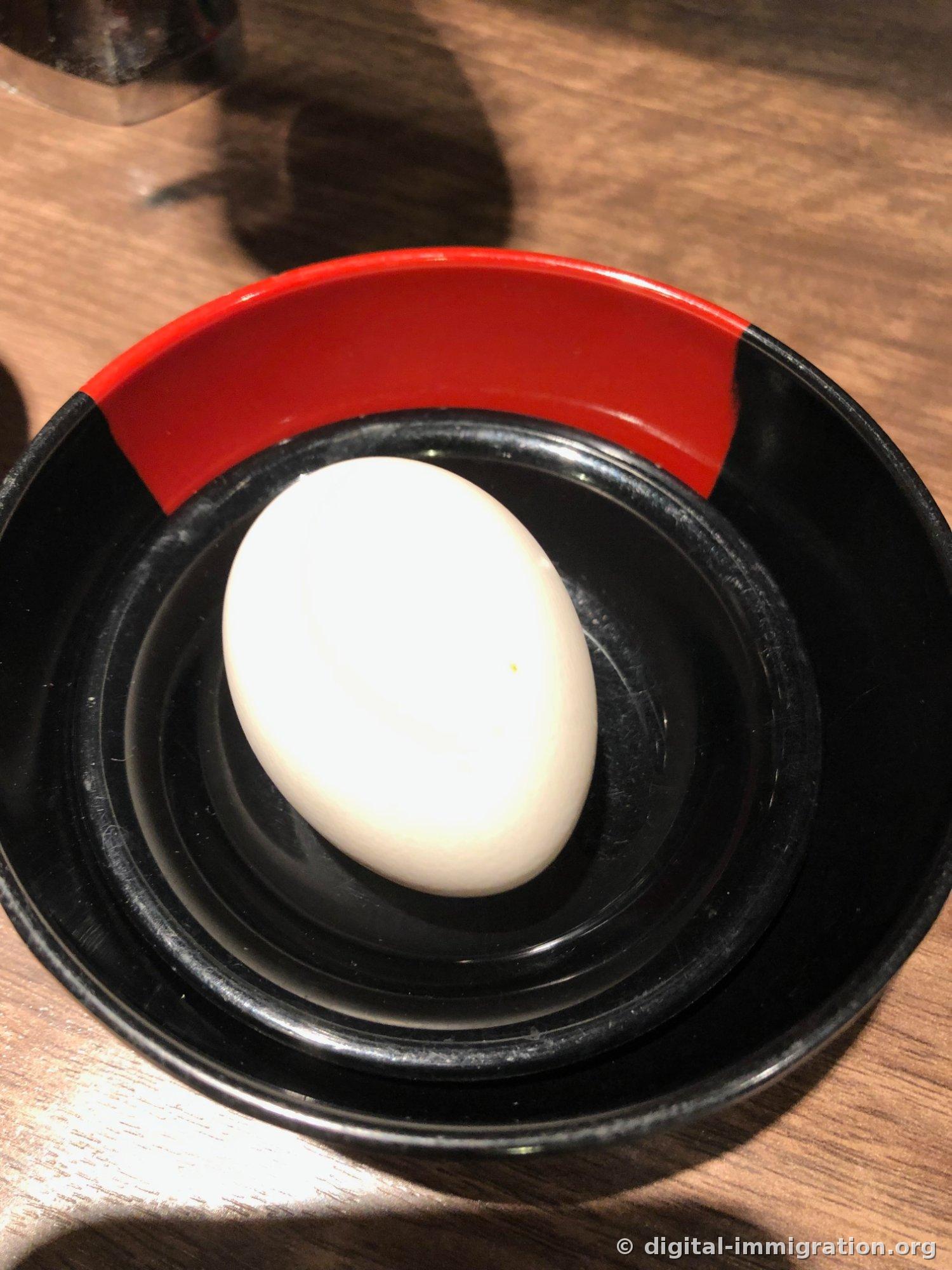
The egg comes whole in a small dish, already peeled. Based on the machine photo alone, if you were expecting a halved soft-boiled egg, you'd be confused here. When you press it with chopsticks and split it in half, that's when the yolk is revealed.
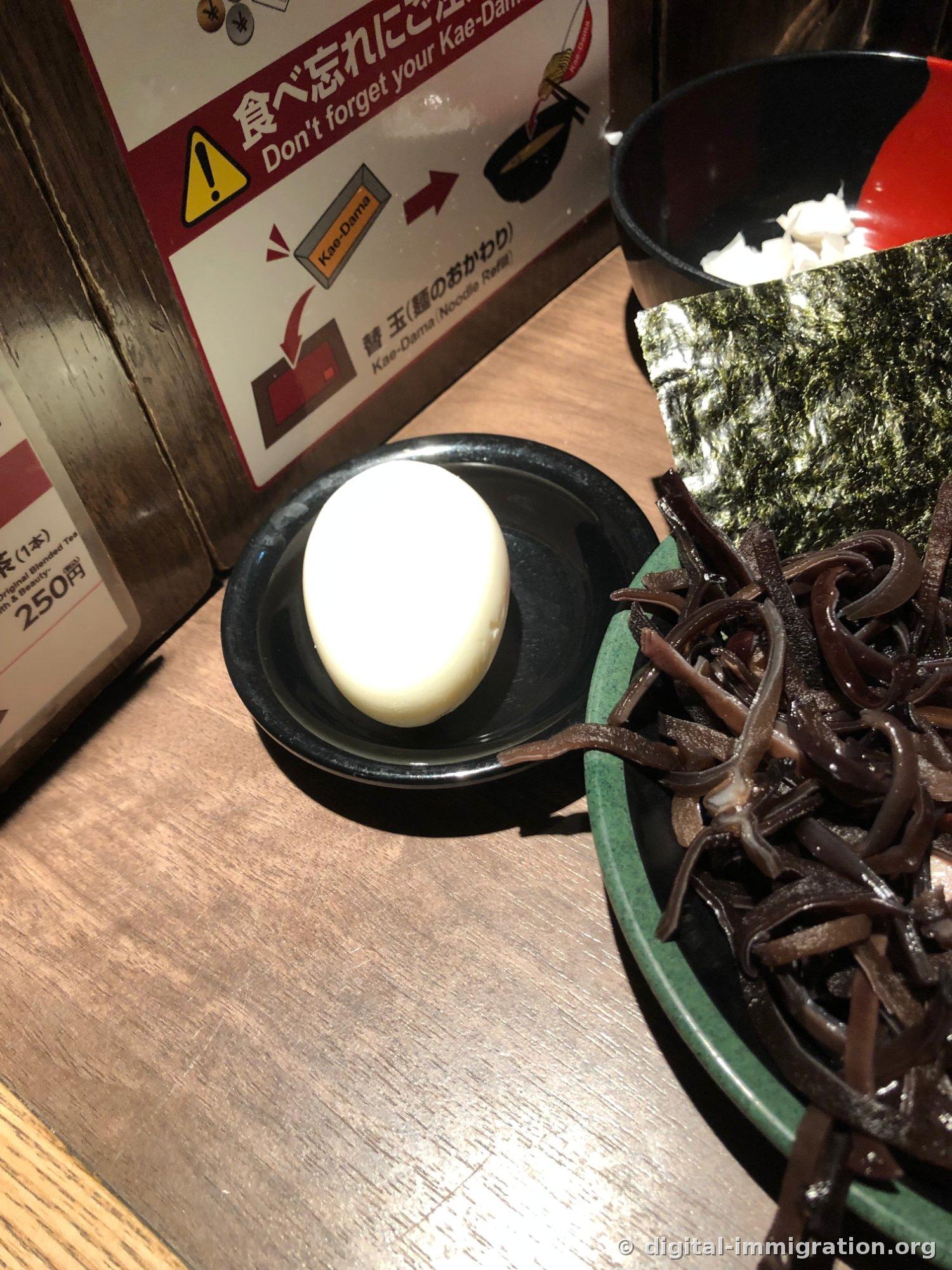
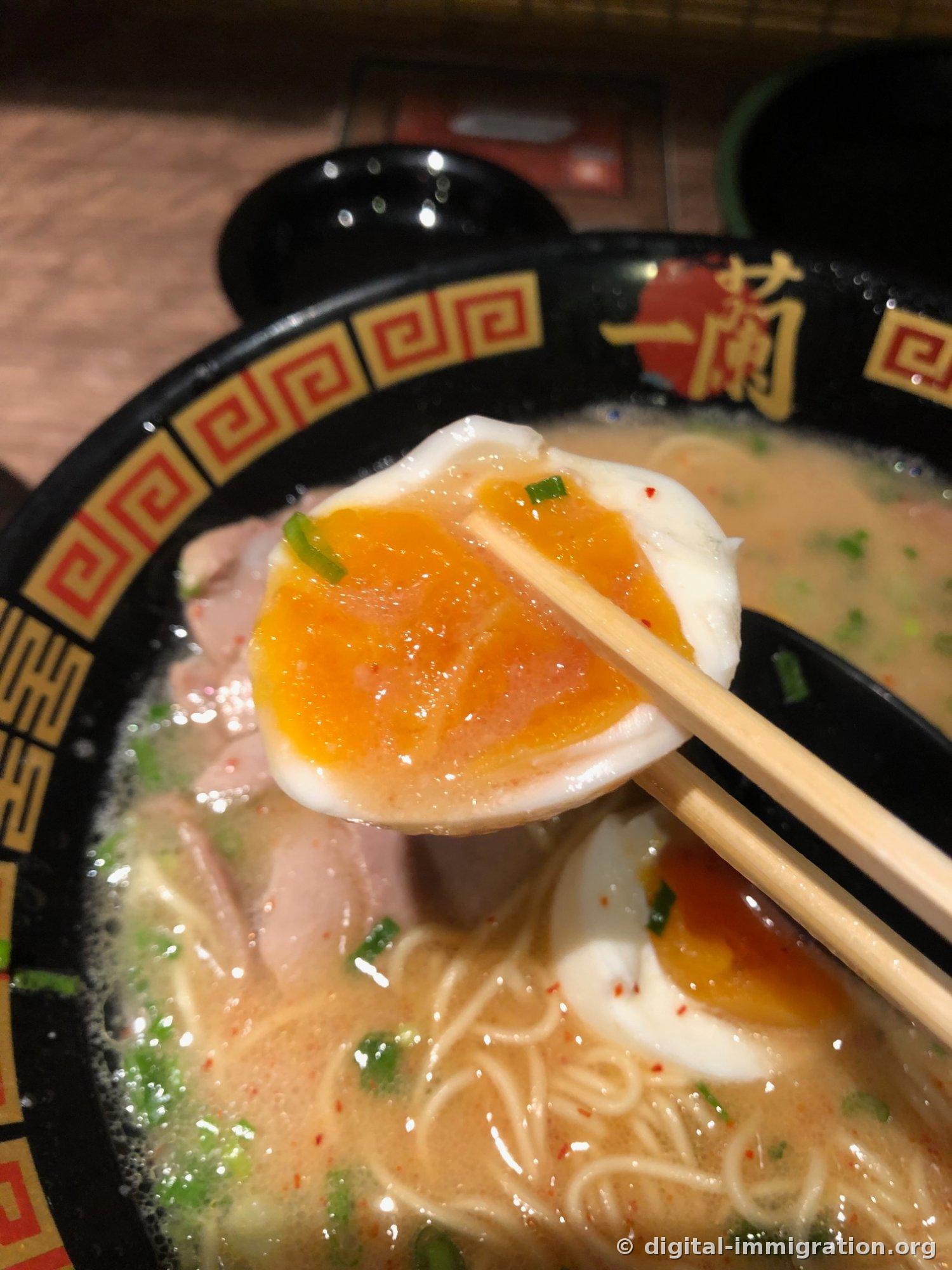
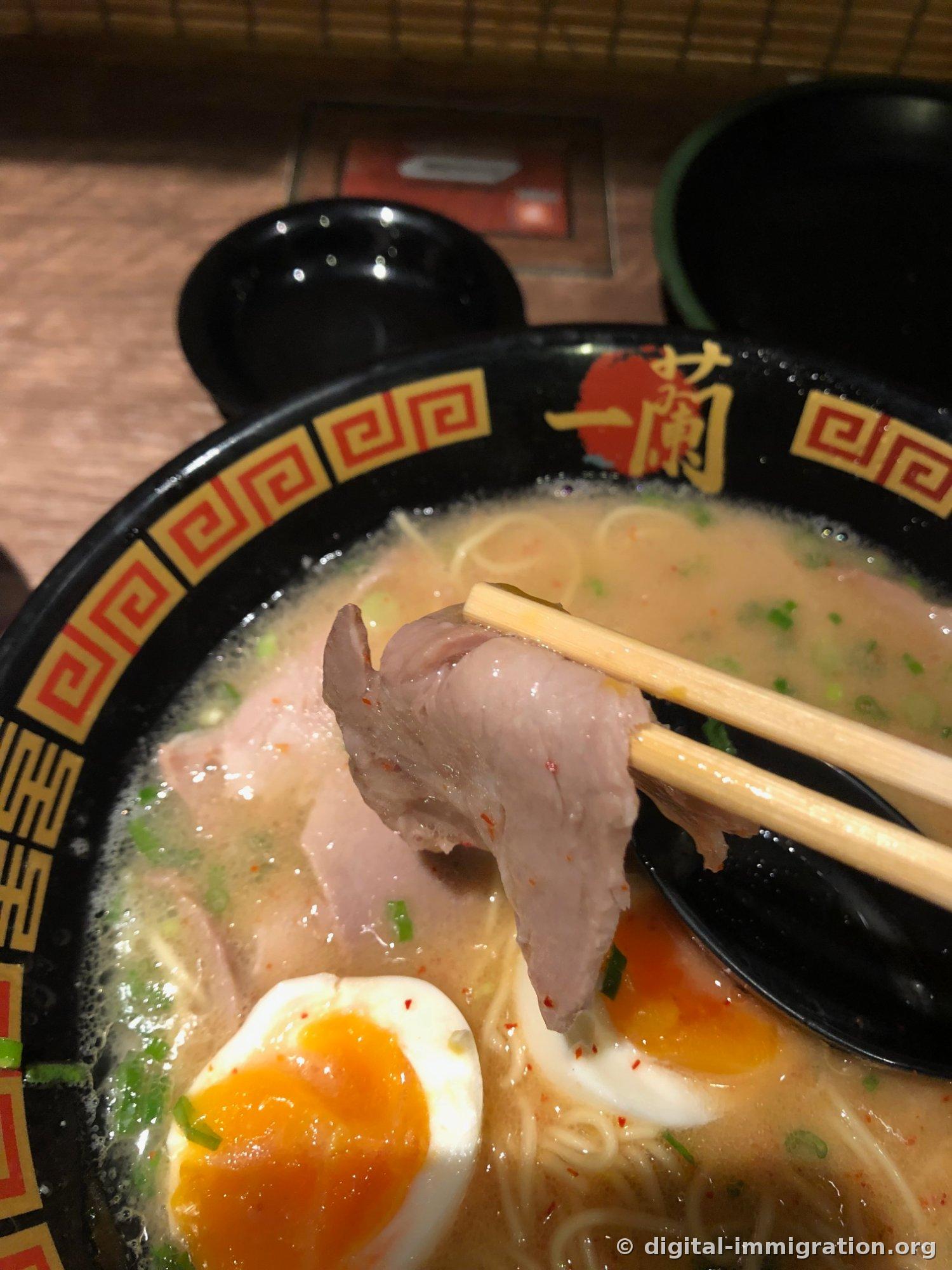
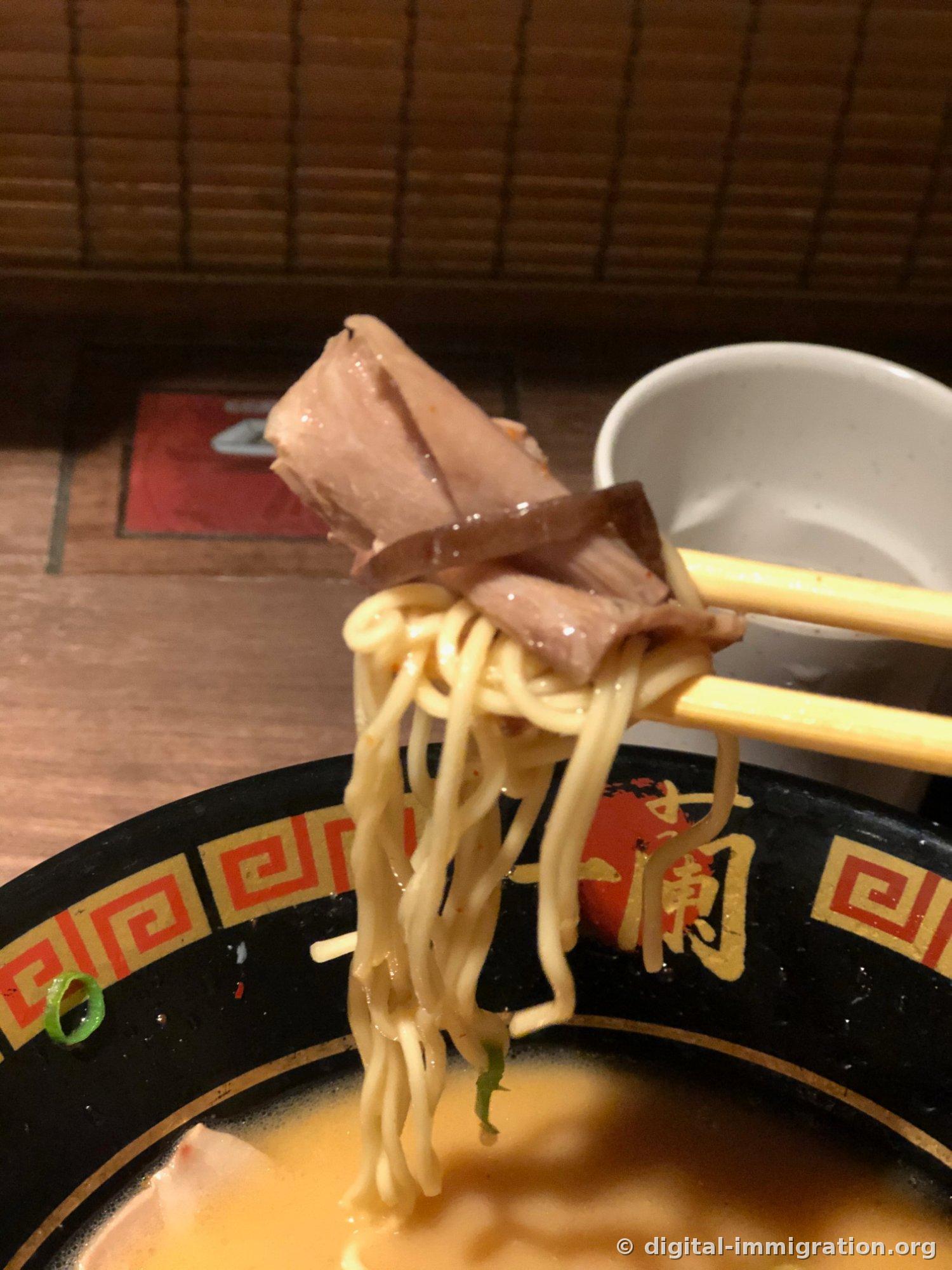
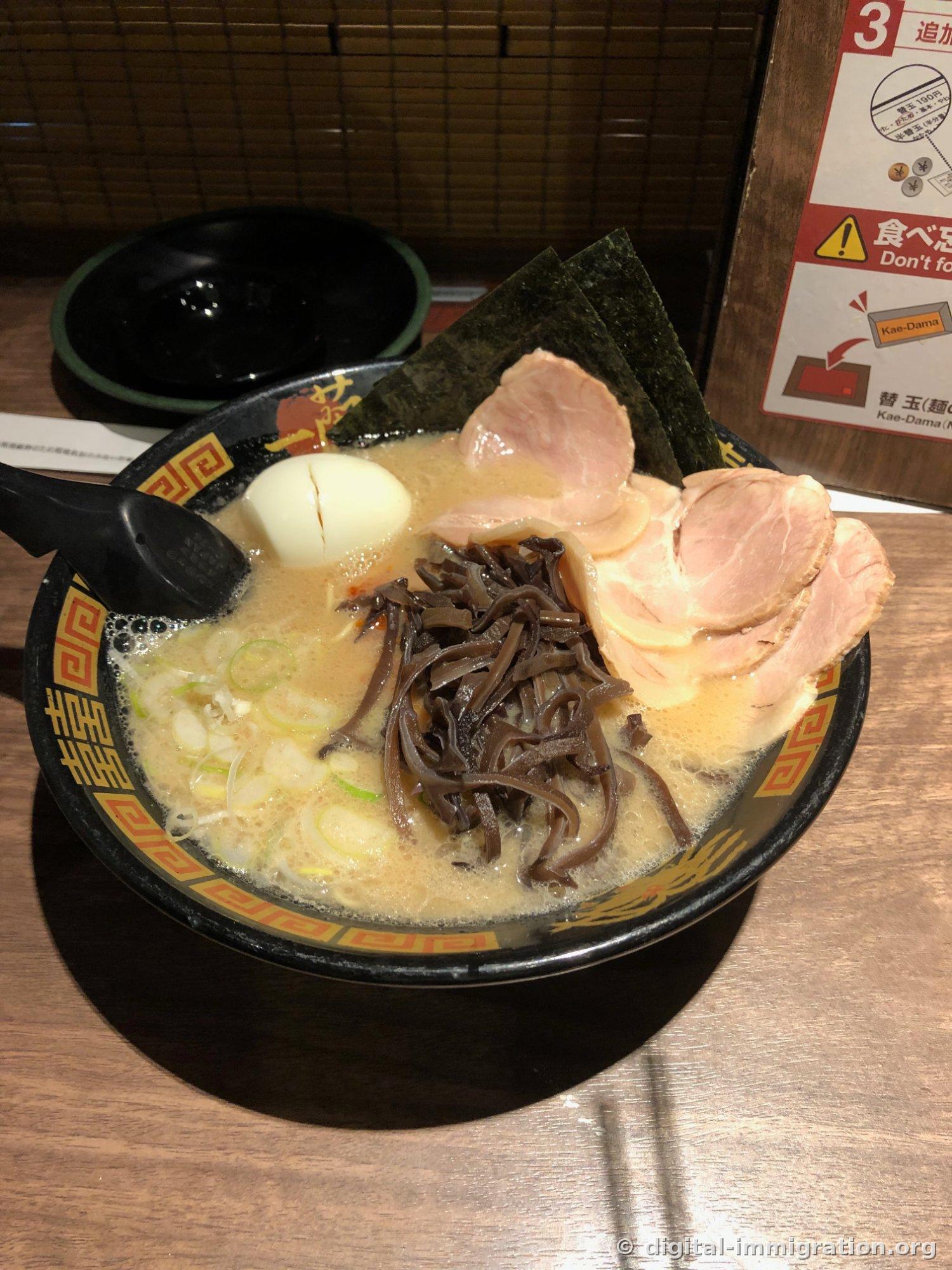
The chashu is more about melting than chewing. Dip it in the broth for about 30 seconds and the fat loosens, shredding the grain. Kikurage is the only ingredient that makes a "crunch" sound when you chew it amidst the broth. 120 yen was worth it.
Kaedama and Place Settings — And What I Found Disappointing
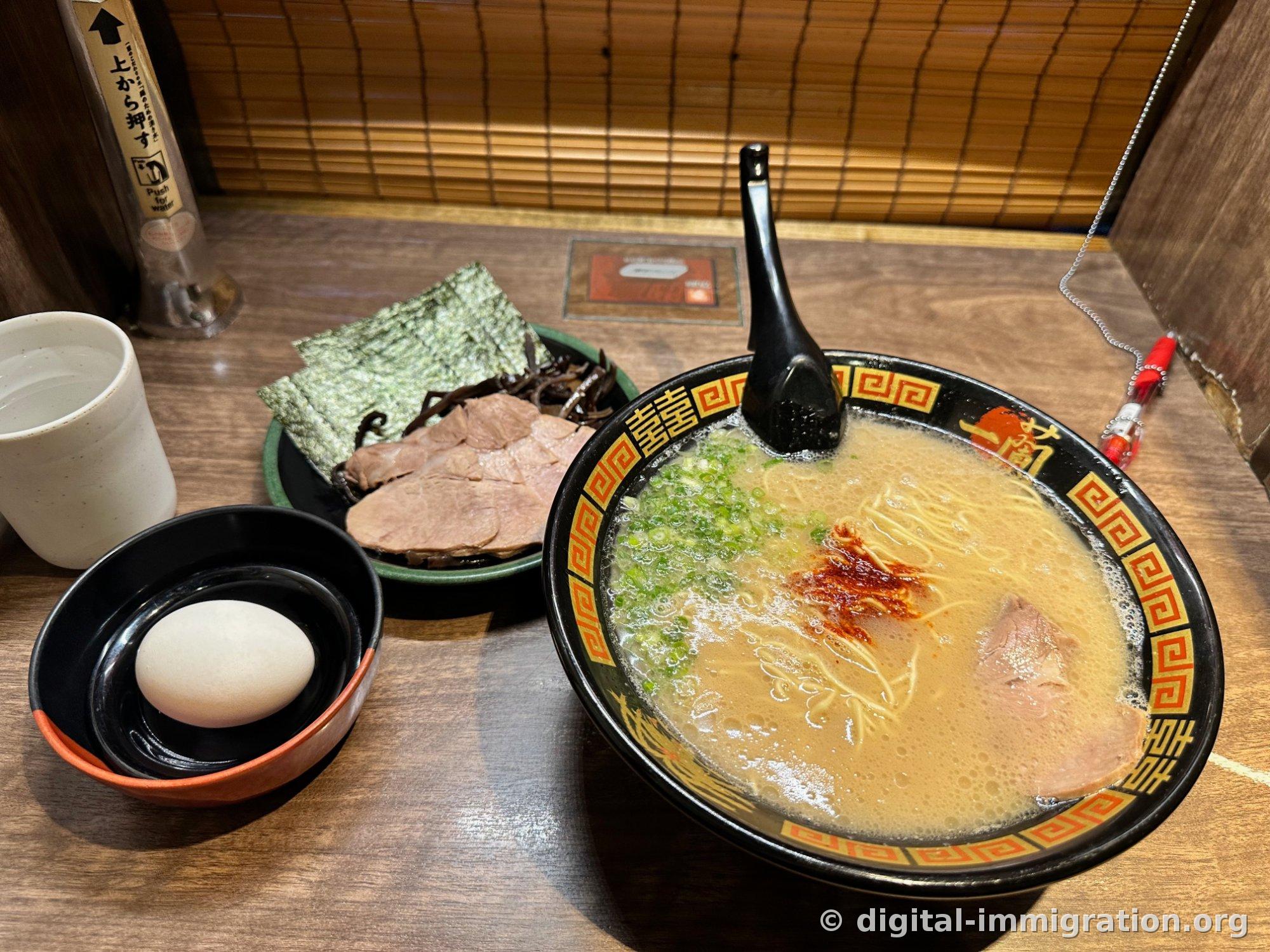
Kaedama must be pre-purchased at the ticket machine. You can mark it on the extra order form after sitting and press the button, but getting up from your seat to go back to the machine for a 190-yen item is a hassle. It's fine to buy one from the start and not use it if you don't need it. Since only noodles come, you need to leave more than half the broth, which you should plan ahead for. On my first visit, I enthusiastically drank the broth, and when kaedama arrived, I ended up mixing the noodles with what was left—basically like broth-less soup.
Let me note the disappointing points. The broth is salty. By Korean standards, after finishing a bowl of ramen, you'll be reaching for water the rest of the evening. It's better to mark the broth intensity one notch below "normal" on the order form. Also, it's good to avoid noon to 1 PM and around 7 PM. Taking advantage of the 24-hour operation and coming around 3-4 PM or late at night means you can sit down without a ticket.
Price-wise, honestly, it's above the Tokyo ramen average. If you just eat the 890-yen basic ramen, it's reasonable, but the moment you add toppings, it exceeds 1,500 yen. It's also true that there are other shops in Shinjuku alleys serving more distinctive ramen in the 800-yen range. Yet when you want to eat something hot alone and quietly on a night when you don't want to talk to anyone, the partitioned counter seat here is the most comfortable. That's why I came back a second time.
Read next
- From Akihabara's Chuo-dori to the Kanda River: A Record of Tokyo's Electronics District Revisited Multiple Times
Tokyo's Akihabara is a neighborhood where it's hard to say you've seen everything in a single visit. I've come multiple times across different seasons, and each time the signs chan…
Tokyo · Akihabara - Buying a Single ¥300 Year-End Jumbo Lottery Ticket at Nishi-Ginza Chance Center in Tokyo
Exit from the Hibiya exit of Tokyo's Shimbashi Station, walk toward the elevated highway for about three minutes, and suddenly you'll see a line of people stretching along the side…
Tokyo · Nishi-Ginza Chance Center - Ueno Ameyoko, the real magic starts after sunset — an evening walk from the Okachimachi Gate to Ueno Station
Every time I come to Tokyo, my feet find their way to Ueno Ameyoko (アメ横) without fail. This time I entered from the Okachimachi side and worked my way toward Ueno Station. I've met…
Tokyo · Ameya Yokocho Market