Four dishes at Ta Wan on the 2nd floor of Harmonie Exchange in Jakarta for 19,000 won
I went to the Harmoni area in central Jakarta on business and grabbed lunch inside the Harmonie Exchange building. Indonesian buildings use different floor numbering than Korea's.…
Jakarta · Harmonie Exchange - Ta Wan
I went to the Harmoni area in central Jakarta on business and grabbed lunch inside the Harmonie Exchange building. Indonesian buildings use different floor numbering than Korea's. The floor marked "G" on the elevator is what we'd call the 1st floor, and the "1st floor (1st floor)" above it is the 2nd floor by Korean standards. Ta Wan is located on that 1st floor—that is, one level up by staircase or escalator from the ground floor. First-time visitors often just circle around the G floor, think "there's no place like that here," and leave. Even on my first visit, I made two round trips through the G-floor cafe alley.
An empty dining hall just before lunch rush
I arrived around 11:40. Since this is an office building food court, once it hits noon, salarymen with ID badges around their necks flood in all at once, but at this time the hall was completely empty. Wooden tables, gold lattice partitions, copper-colored pendant lights. Most seating consists of 4-person square tables, with a few large round tables with lazy susans in the back. Those are for group gatherings. Outside the entrance hang red lanterns, so from a distance you can tell it's a Chinese restaurant.
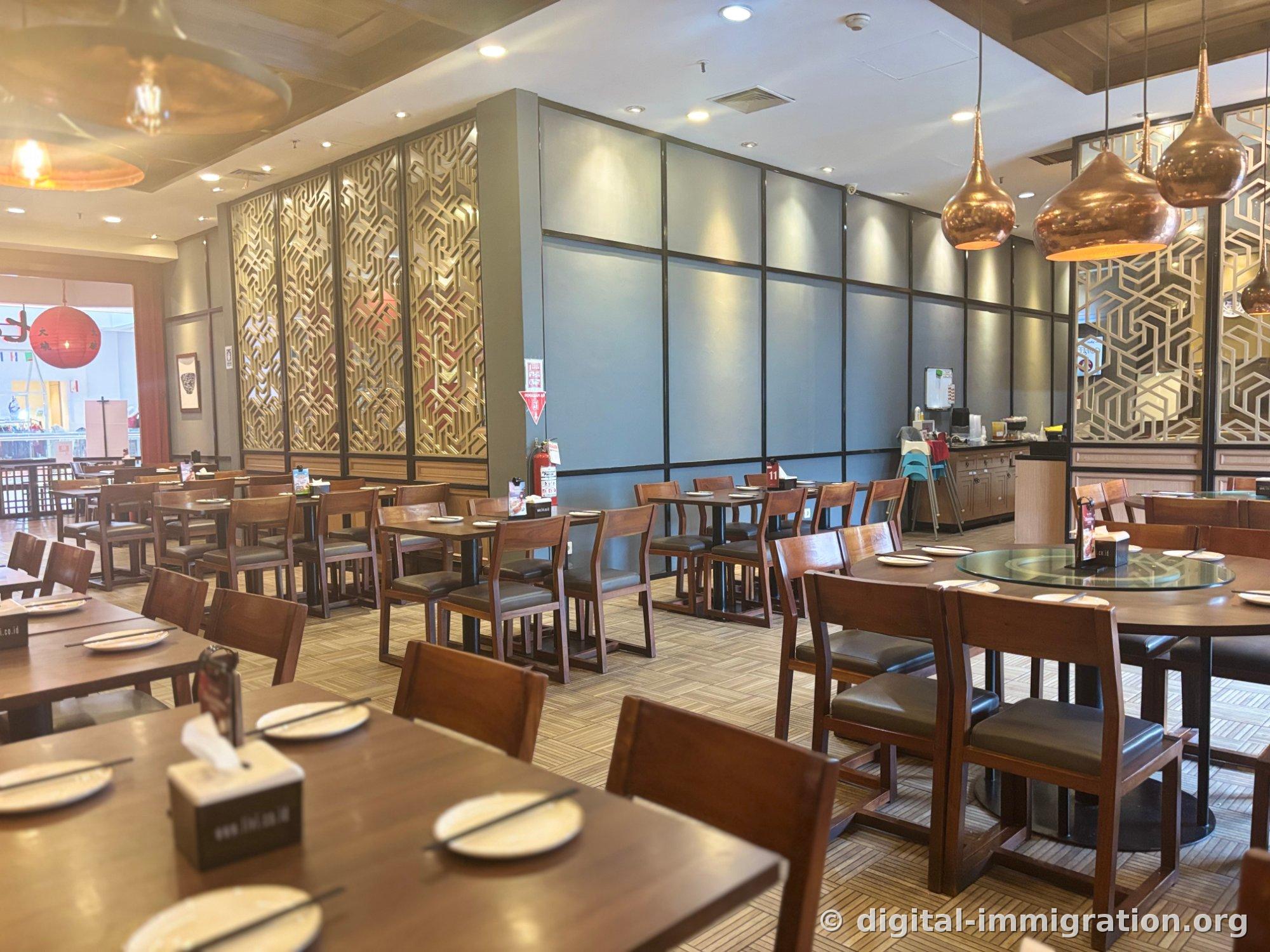
The air conditioning is quite strong. When you come in drenched in sweat from Jakarta's midday streets, the first five minutes feel refreshingly cool, but after that, a short-sleeve shirt feels a bit chilly. There was barely any noise—just the occasional sound of wok-tossing from the kitchen.
Four dishes—lumpia, morning glory, smoked duck, and fried soft tofu
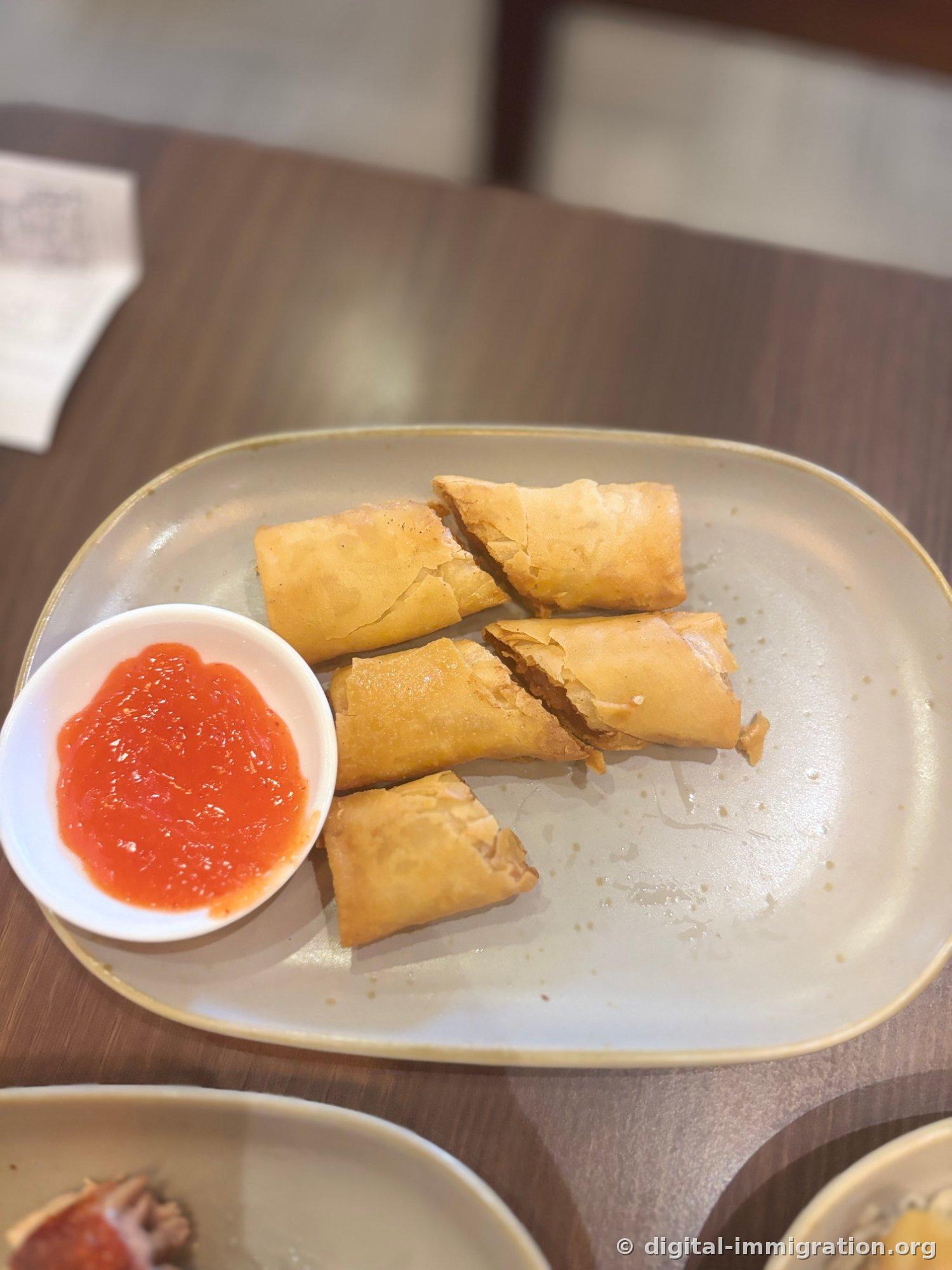
I thought four dishes would be too much for one person, but I went ahead and ordered everything I was curious about. First came the lumpia. It's Indonesia's version of a spring roll—thin wrapper folded twice over and deep-fried until the outside shatters like glass. When split in half, you can see the minced filling. The red sauce that comes with it leads with sweetness rather than heat—it's a chili sauce that just tastes sweet to Korean palates. The fried wrapper itself is under-seasoned, so this sauce is essential or it's quite bland.
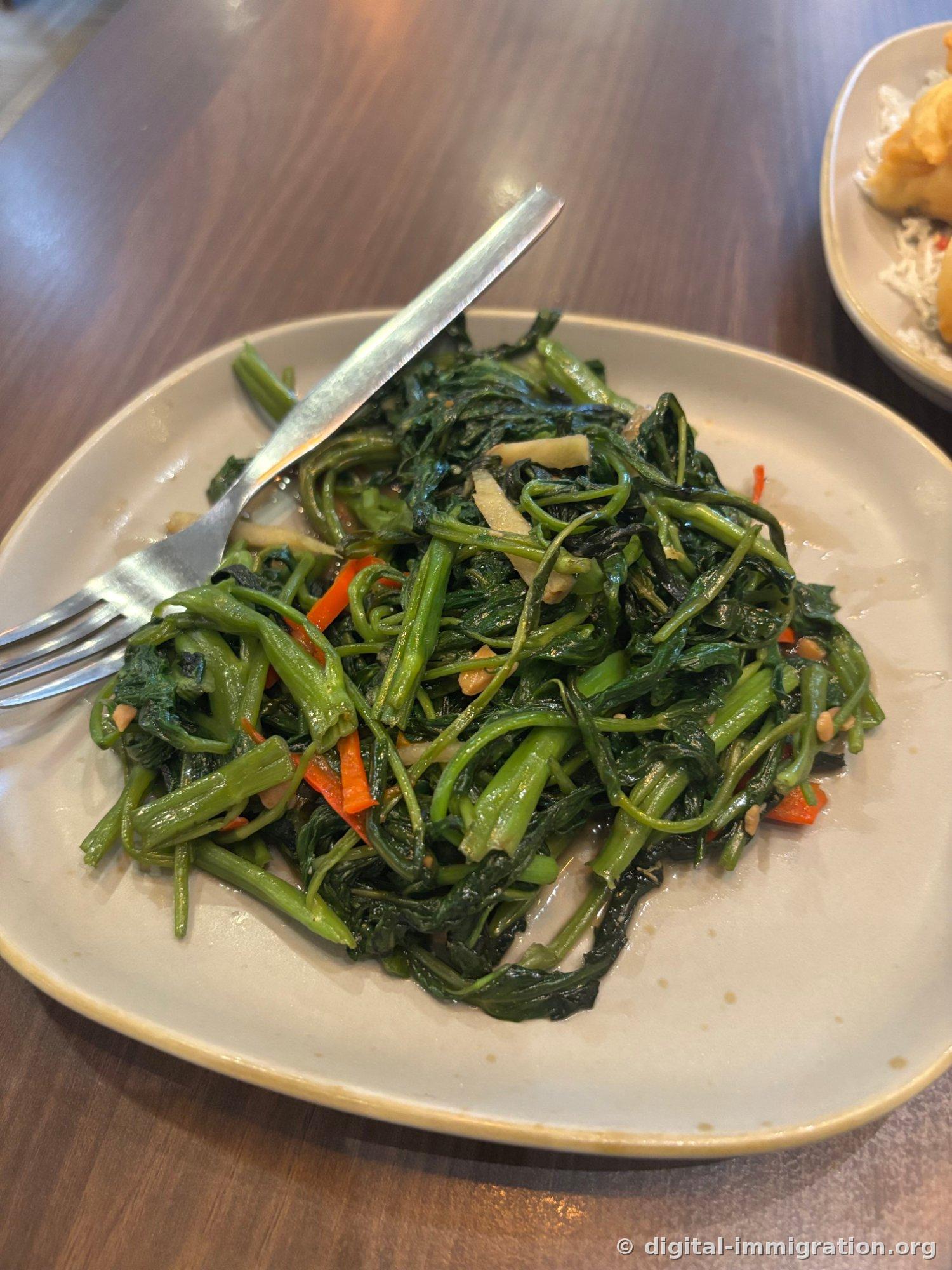
The stir-fried morning glory (kangkung) is what I order most often in Southeast Asia. This one is stir-fried over high heat with sliced garlic, julienned ginger, and red chili. The stems still have a satisfying crunch—when you bite in, juice bursts out. Oil is used generously, pooling liquid at the bottom of the plate, which you can pour over rice to need nothing else. But the seasoning is on the salty side, so eating this alone without rice gets tiring quickly.
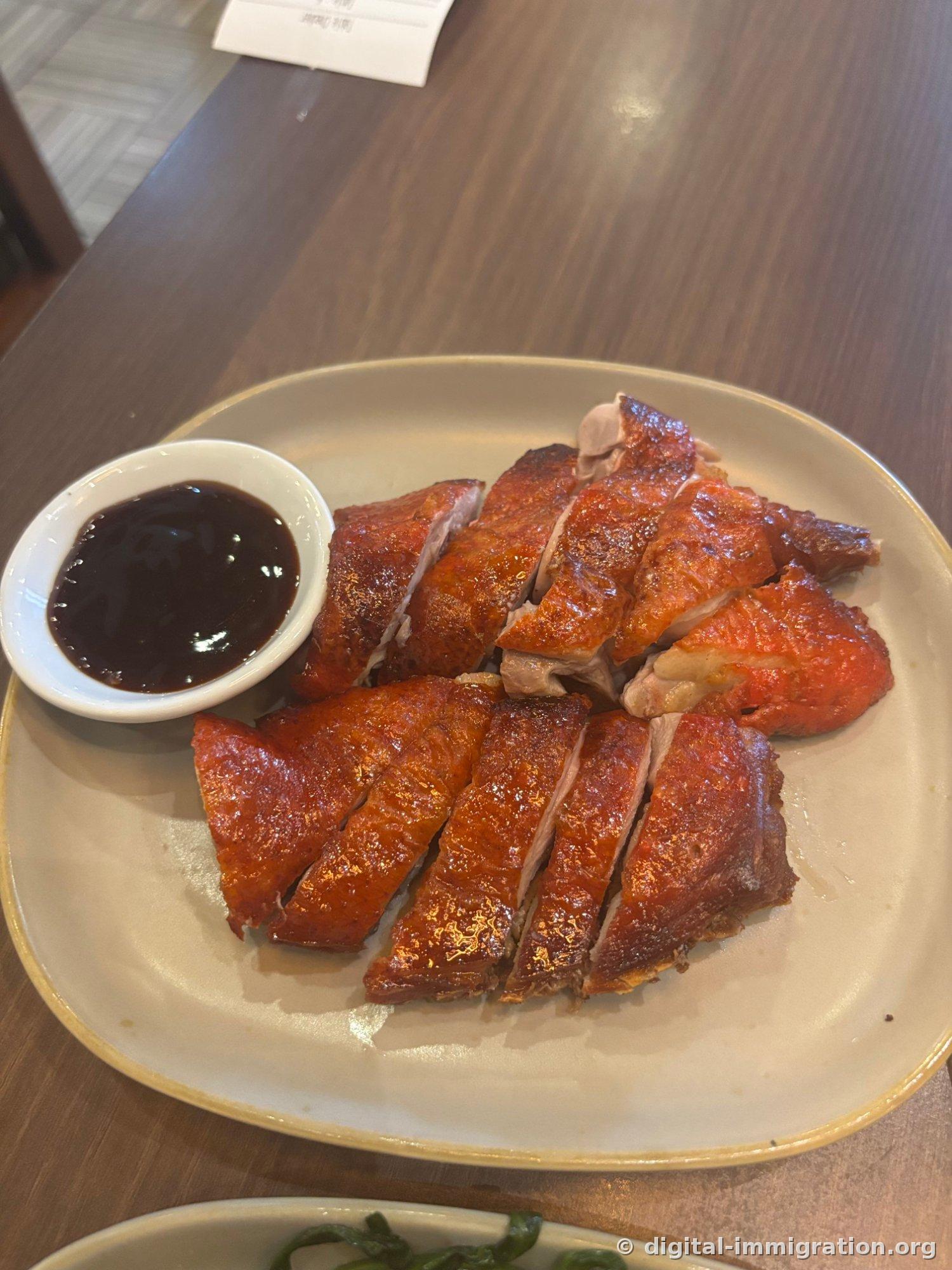
The star of the day was the smoked duck. The skin gleams a deep red, with oil seeping out along the score marks. About a dozen pieces are fanned out on the plate, and while the skin isn't exactly crispy, it clings to the meat in a chewy way. The meat itself retains a pink tint, so it's not dry at all. The smoke flavor is subtle, not overpowering. The dark sauce that comes alongside is thick and sweet-and-salty, cutting through the richness of the duck. After one piece, I seriously considered ordering another plate of just this.
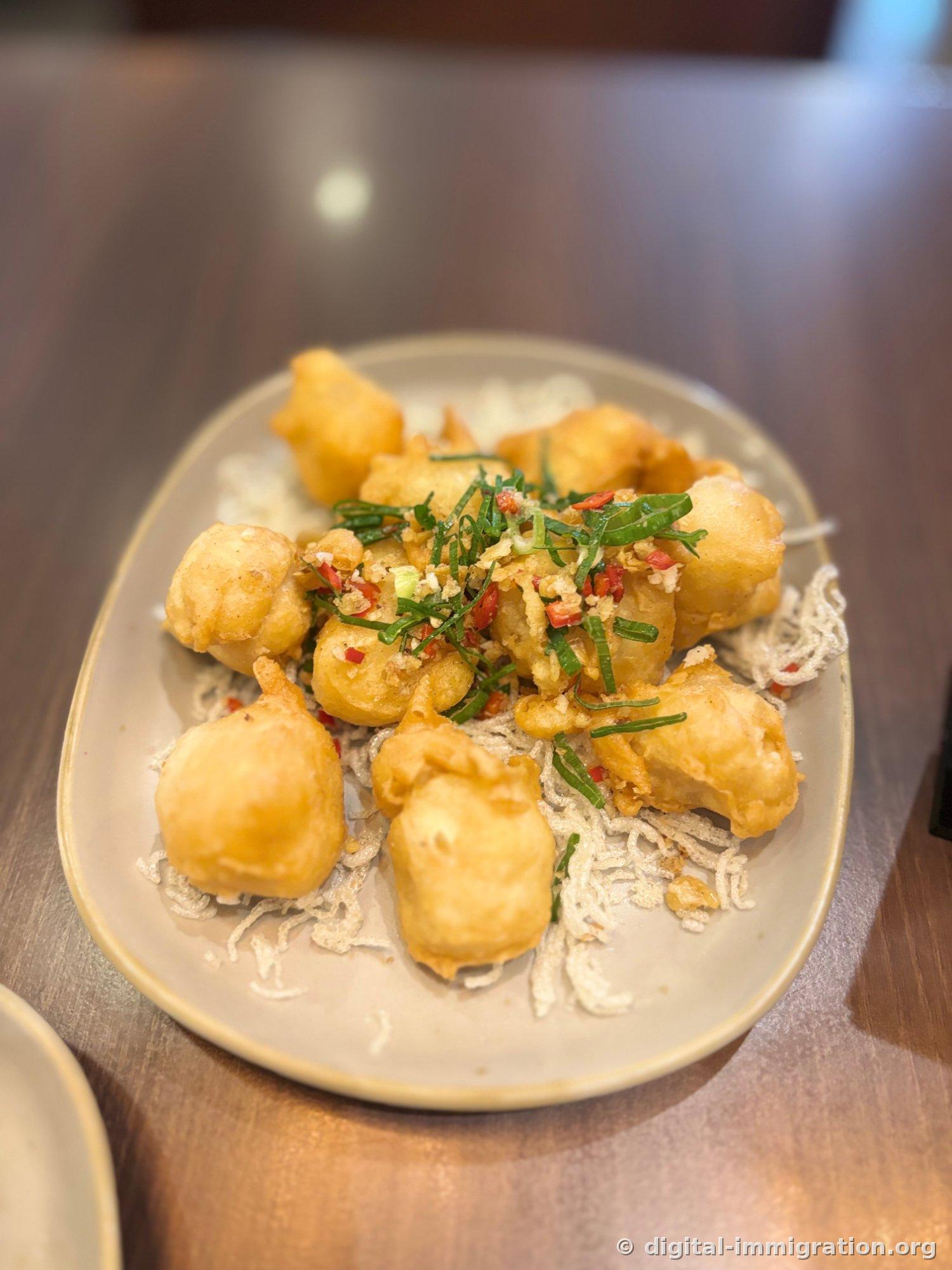
The fried soft tofu turned out much better than expected. Thin fried noodles are laid down like a nest, with a chunk of tofu about two finger-widths on top, sprinkled with minced garlic, red chili, and sliced scallions. When you pick it up with chopsticks, the thin coating cracks and silky soft tofu flows out from inside. It's hot, so don't pop the whole thing in your mouth at once. I ate too quickly and burned my palate.
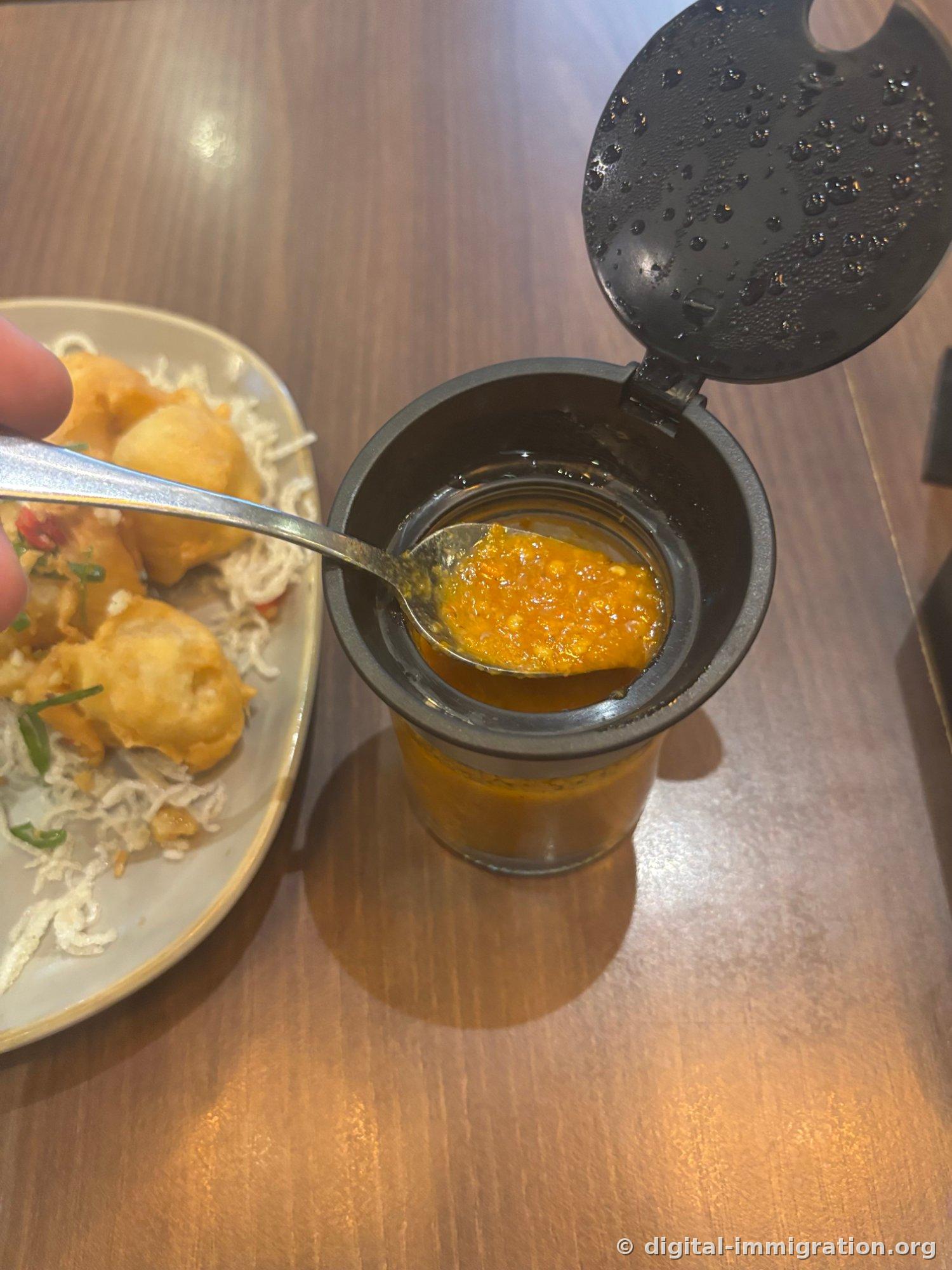
Three glass bottles with black caps sit on the table—sambal in a grainy, orange type, with an oil layer floating on top. When I spooned a bit onto the fried soft tofu, the bland dish suddenly came alive. The heat isn't as sharp as Korean green chili peppers—it builds slowly from the back. For first-timers, starting with half a spoonful is safer.
The bill—four dishes for 19,000 won
Lumpia, morning glory stir-fry, smoked duck, fried soft tofu. Including rice for all of it, the total came to 19,000 won in Korean money. Considering a duck dish alone costs about that much in Seoul, one receipt tells you everything about Jakarta's price level. Indonesian restaurants typically add tax and service charge on top of menu prices, so if you just calculate the menu numbers, you'll be off. Even with all that added in, it was this price.
Getting there
Harmonie Exchange is a complex building near the Harmoni intersection, so you can just type the building name into Grab or Gojek and it'll drop you right there. You can also walk from the TransJakarta Harmoni transfer station, but Jakarta's sidewalks have many broken and potted sections, and the midday humidity is murderous, so if you have luggage it's better to call a car. Once inside the building, just remember the floor numbering quirk I mentioned. It's not the G floor—it's one level up.
Two things disappointed me slightly. The lumpia, for something just fried, was under-seasoned and relied entirely on the sauce. And once it goes past noon, the dining hall fills up instantly, so if you want the quiet atmosphere you see in photos, you need to arrive between 11:30 and 11:45. Operating hours and individual menu prices vary by location, so it's best to check on the spot.
I ordered four dishes thinking I couldn't finish them alone, but the duck plate was picked clean. Next time I'm in Harmoni, I'll just get the duck, the fried soft tofu, and rice. Those three would be more than enough.
Read next
- Gold Dragon Coffee's Meat Buns Made with Pumpkin Dough in Jakarta's Glodok Chinatown
Glodok is an old Chinese commercial district in West Jakarta. Walking through alleys tangled with jewelry shops, herbal medicine stores, and mobile phone parts shops toward Pasar G…
Jakarta · Glodok Chinatown Market - Gold Dragon Coffee - From under the Glodok Pancoran arch to Petak Enam, three hours of evening in Jakarta's Chinatown
Walking south from Jakarta's Kota Tua, you encounter a gray stone archway that stretches across the middle of the road. "SELAMAT DATANG — KAWASAN GLODOK PANCORAN — CHINATOWN JAKART…
Jakarta · Glodok Chinatown Market - Jakarta National Museum (Museum Nasional Indonesia), Half a Day at the Elephant Museum
On the west side of Merdeka Square, along Jl. Medan Merdeka Barat, sits a low neoclassical white building. It's Indonesia's National Museum, though locals still call it Museum Gaja…
Jakarta · Museum Nasional Indonesia