Redwood in Vientiane — Singapore and Malaysia Fine Dining Served on a Rotating Turntable, Laksa as the Benchmark
If you're looking for authentic Singapore and Malaysia cuisine in Vientiane, Laos, the search eventually narrows down to one name: Redwood. More precisely, it's a structure where F…
เวียงจันทน์ · AV Hotel
If you're looking for authentic Singapore and Malaysia cuisine in Vientiane, Laos, the search eventually narrows down to one name: Redwood. More precisely, it's a structure where Four Seasons Restaurant and Uncle Chris Kopitiam share space within a building marked by REDWOOD in rose gold letters on a white brick wall. Our party of eight reserved a private room for dinner, and in Vientiane, there are very few restaurants that manage to deliver both this level of formality and this caliber of cuisine.
The Wall Sign Sets the Tone — Entrance and Parking
You can spot it the moment you step out of the taxi. A large REDWOOD sign on the white roadside wall, with the Four Seasons Restaurant logo and Uncle Chris Kopitiam nameplate displayed side by side below it. The grounds serve as the parking lot. On the day we visited, a Range Rover and a Mercedes-Benz CLA45 AMG were partially blocking the entrance. They bore Laos license plates. When you see luxury vehicles clustered outside a restaurant in Vientiane, it typically means the place is a hangout for local business owners and expats—and in this case, that assessment held true.
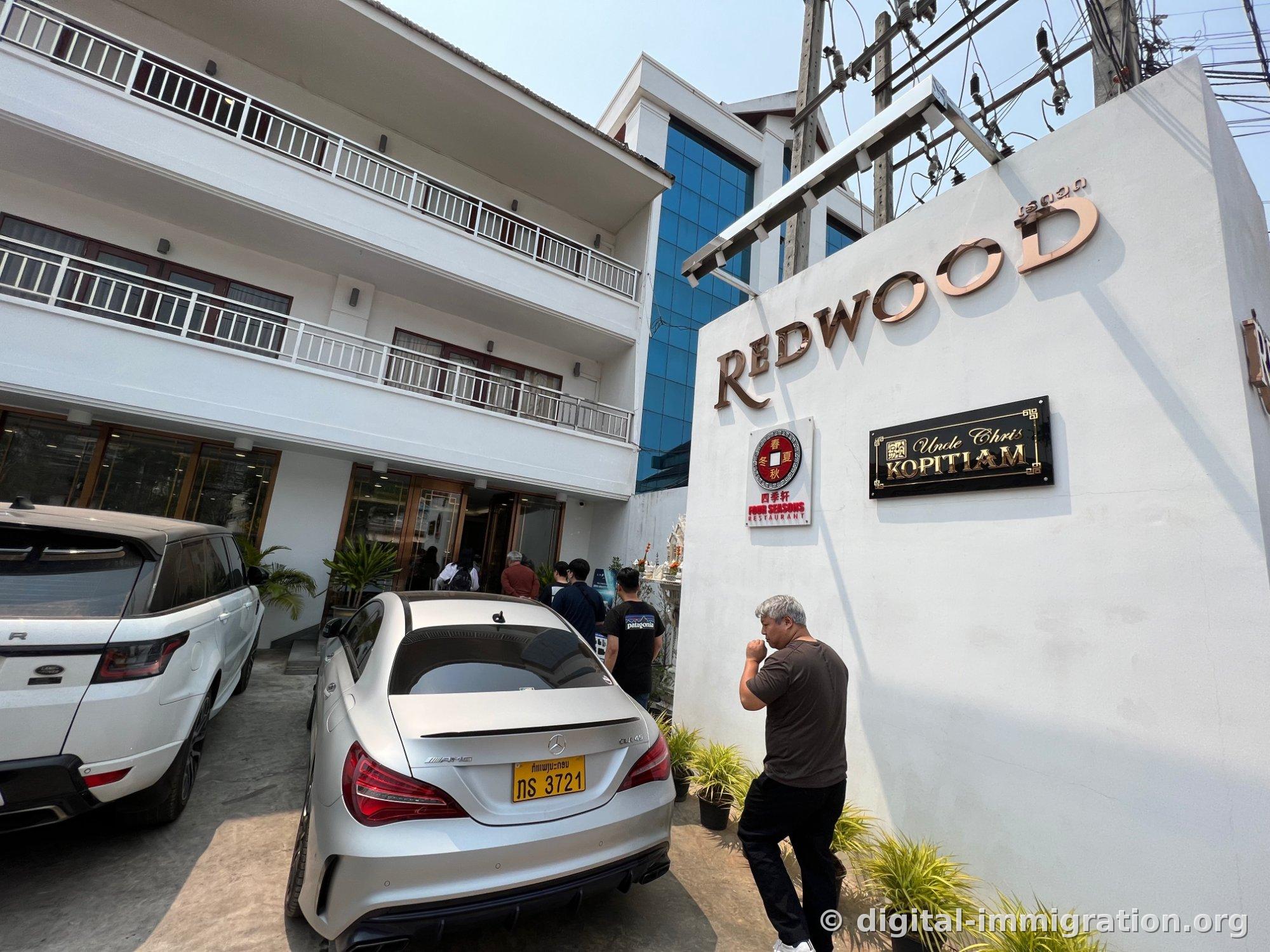
One caveat: the parking space in the courtyard isn't large, so it's common for cars arriving later to block those parked in front. If you arrive by tuk-tuk or a LOCA app vehicle, you avoid this stress altogether. The building is a three-story white structure with balconies on each level, and the restaurant entrance is through the lobby on the ground floor.
The God of Fortune Greets You at the Door — Lobby Atmosphere
As you pass through the entrance, a large porcelain statue of Caishen, the God of Fortune, sits on a round table directly ahead. It clutches a jar overflowing with gold-leaf-covered coins and holds a red plaque inscribed with "財神到" in its other hand. Rendered in shades of turquoise, crimson, and gold, it's an ornate piece whose glaze gleams under the lights—the actual statue feels far more imposing than any photograph suggests. The lobby features marble-toned flooring, upholstered seating sets, and large ink-wash style paintings on the walls. A QR payment information sign stands in one corner of the lobby.
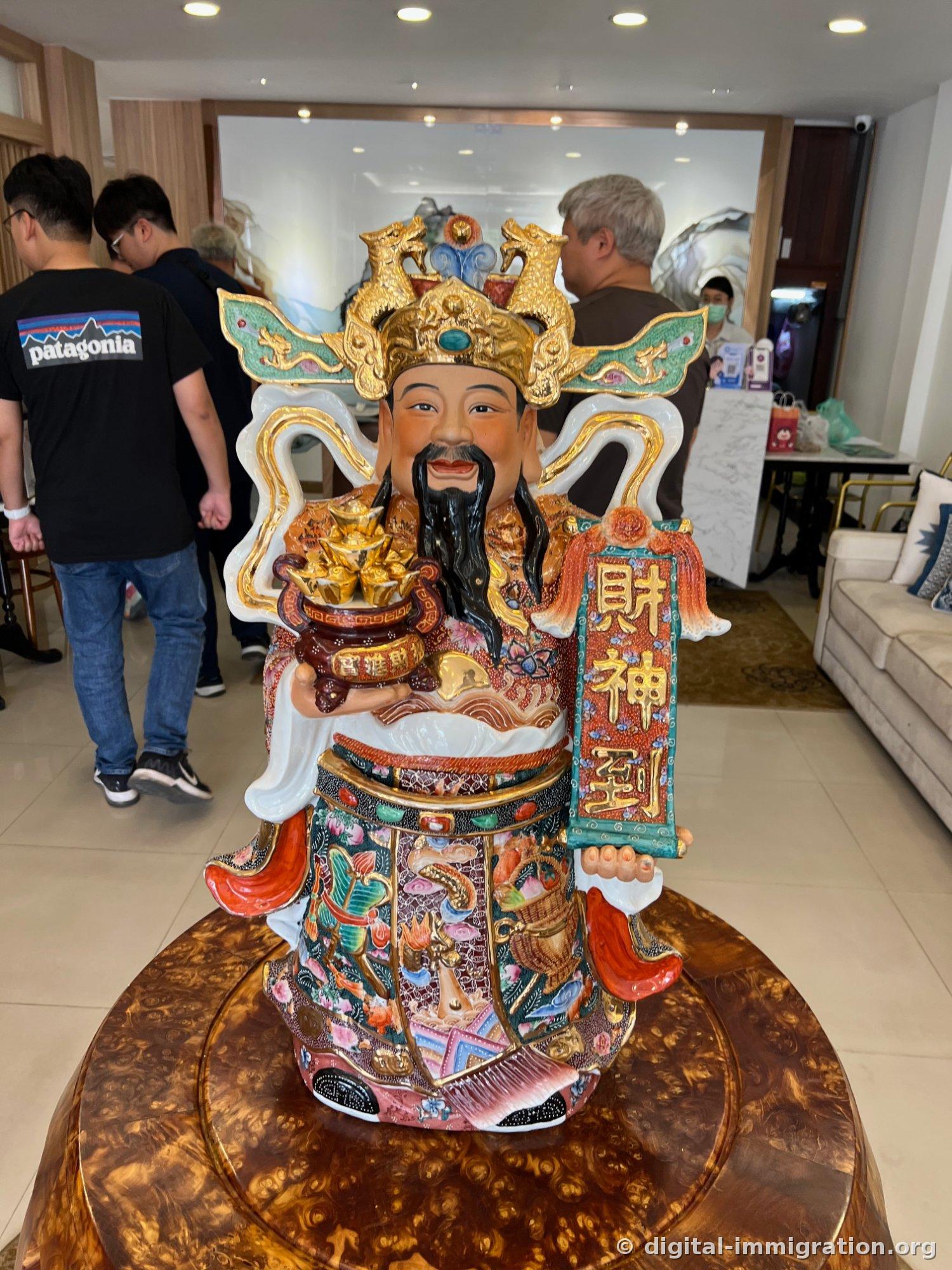
This single statue tells you everything about the restaurant's identity. It's not the casual comfort of a local Laotian eatery, but rather an authentic transplant of Singapore and Malaysia's Chinese fine dining culture. You won't feel out of place in casual wear, but shorts and flip-flops might draw a few glances. For men, a collared shirt will do; for women, a comfortable dress is sufficient.
Private Rooms with Round Tables — Perfect for Families and Gatherings
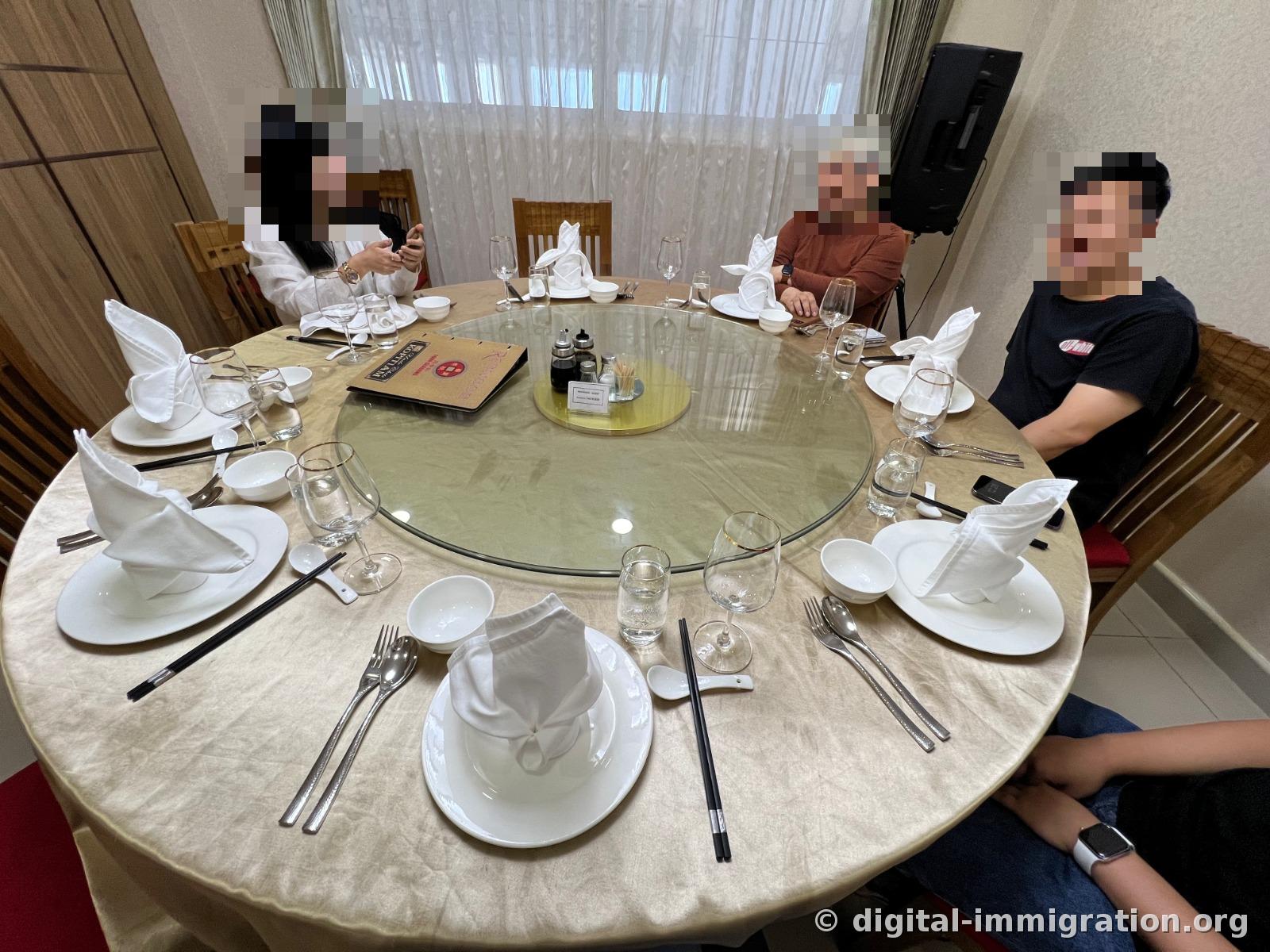
When we made our reservation, we requested a private room and were seated in a round table room that comfortably fits ten. With the door closed, almost no noise from the main dining area reaches inside. The room has its own sound system, suggesting that many customers use it for celebrations like birthdays or milestone anniversaries. This is why families with children prefer the private rooms to the main hall—the children can be themselves without anyone minding.
The table setting was meticulous. Each place had a white ceramic plate with napkins folded into rabbit shapes, chopstick and spoon rests, forks and knives, wine and water glasses—everything laid out in advance. At the center of the table sat a glass lazy Susan. A wooden platform at its center held bottles of soy sauce and vinegar, toothpick holders, and an information card. This rotating platform is the cornerstone of how the restaurant's meals are structured.
ยื่นแบบฟอร์มตรวจคนเข้าเมืองดิจิทัล (LDIF)
The Sharing Style — Rotating the Center Platform
All ordered dishes arrive on the lazy Susan. From that point on, everyone takes turns rotating it and portioning out their share. Individual plates are continuously refreshed, so there's no worry about sauces mixing. Our party of eight ordered eight dishes, and if we'd eaten one per person, we would have tasted only two or three. Thanks to the lazy Susan, we sampled everything.
Here's what made it onto the platform that evening.
- Iron plate tofu — Arrives on a brown clay hotplate and stays hot throughout. Eggs and tofu meld into a sauce that begs for rice.
- Satay — Meat grilled on bamboo skewers, accompanied by sliced onion and cucumber. The peanut sauce comes in a separate small dish.
- Large prawn dish — Sizeable shrimp stir-fried with red chilies and laid out long on the plate. Your hands will be busy peeling.
- Stir-fried water spinach — Cooked over high heat with garlic and chilies. The oil is not heavy.
- Fried mantou (steamed buns) — Several golden pieces on a plate, with a side dish of sweetened condensed milk. The suggestion is to dip them in crab sauce or curry, but dipping them in condensed milk alone is delicious.
- Spicy sauce dish — Thick red sauce ladled into a dark clay pot. This was among the spiciest dishes at the restaurant.
- Several plates of meat and vegetable stir-fries.
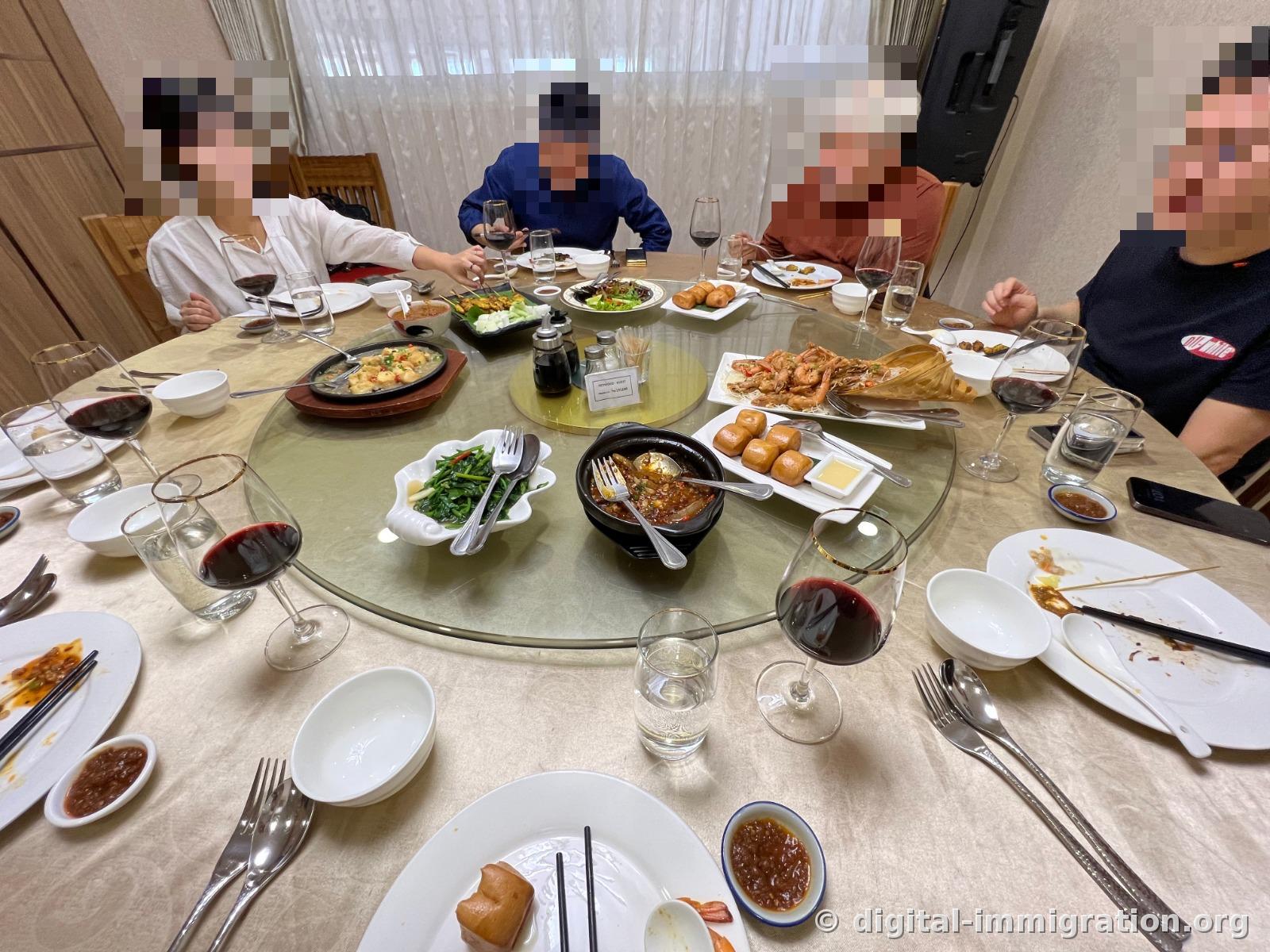
It's worth noting that they have a wine list. Our table ordered red wine to accompany the meal. Choosing wine over Beerlao while dining in Laos is not a common occurrence, and the fact that the glasses are proper wine glasses tells you something about the restaurant's character.
The Restaurant's Benchmark Dish — A Bowl of Laksa
If I had to choose one dish above all others, it would be the laksa. The broth—a blend of coconut milk and prawn oil—arrives in a deep orange, topped with a halved boiled egg, pieces of fish cake, shrimp, bean sprouts, and a generous scatter of minced laksa leaves (daun kesum). The presence or absence of these laksa leaves is what separates the authentic from the counterfeit. Their pungent, slightly peppery aroma cuts through the heaviness of the broth.
Taking a spoonful of the broth, you taste the richness before any heat. A small dish of sambal is served on the side, so if you enjoy spice, you can adjust to your liking as you go. I was halfway through when I added half a teaspoon of sambal, and that's when beads of sweat appeared on my forehead. Adding it all at the start would mask the broth's natural flavors.
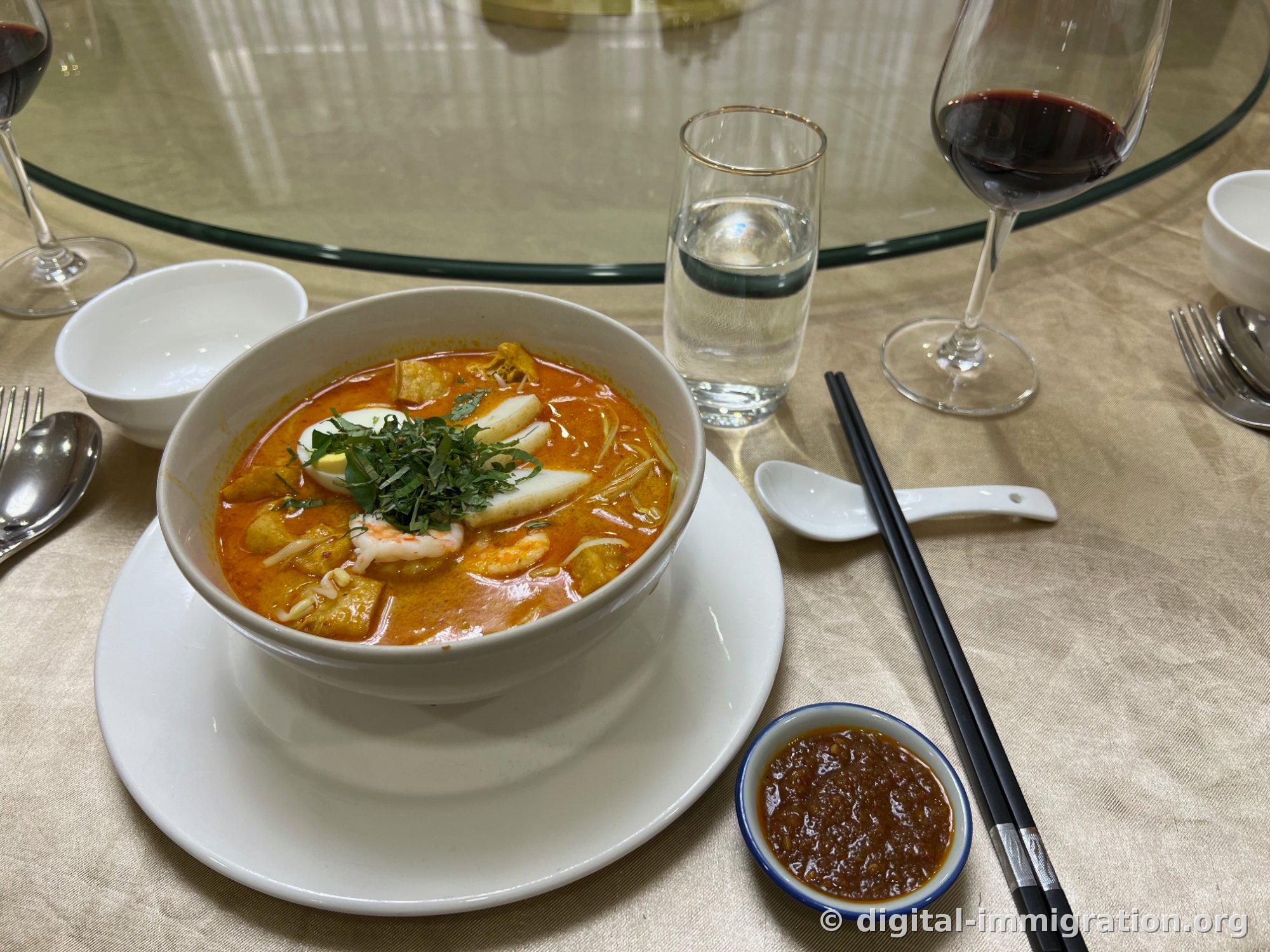
There was one shortcoming. The noodles were somewhat soft. If you're accustomed to the firm, chewy texture of thick rice noodles from the Katong stalls in Singapore, this is noticeably different. The broth temperature is warm enough to enjoy comfortably but not piping hot—someone who prefers the broth to be at a rolling boil might find it lukewarm.
The Final Two Pieces Remaining
As we reached the point of fullness, two pieces that looked like fried tofu pockets remained on a plate. Thin wrappers filled with minced stuffing and fried, then drizzled with a clear starch sauce. A single red chili sat atop each, surrounded by fried garlic, green onion, and carrot—a skewer stick protruding from one piece was a remnant from the satay skewers having been rearranged on this plate.
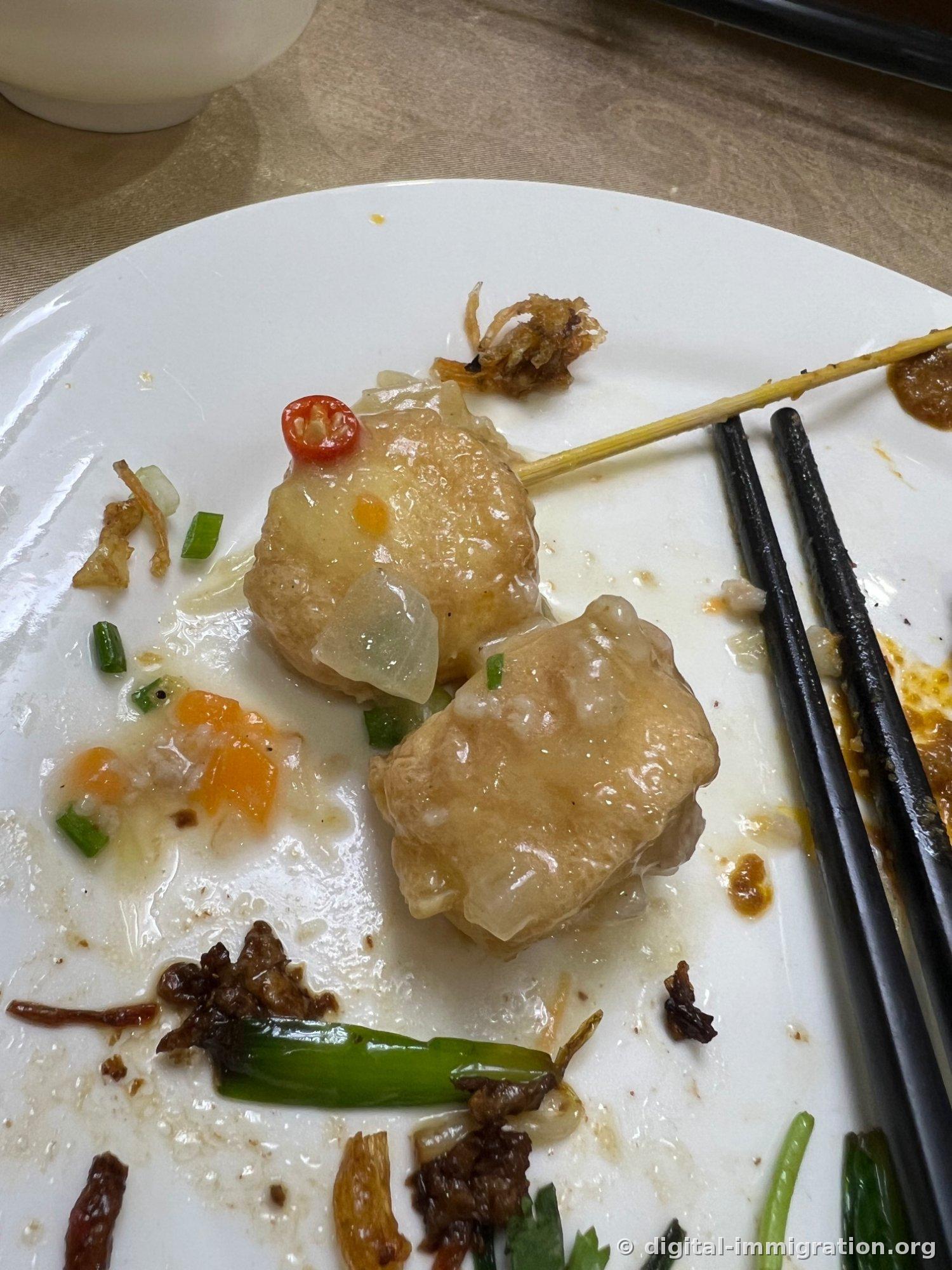
This is how a shared lazy Susan meal typically concludes. Because everyone portions from a center plate rather than stacking food on individual plates, almost nothing goes to waste.
Location and Getting There
The location sits slightly outside central Vientiane. It's set back from the main road, so using Google Maps coordinates is the most reliable approach. There's a blue-glass office building nearby that you can use as a landmark. Telling a tuk-tuk driver "Redwood" or "Four Seasons Restaurant" usually works, but showing them the coordinates is faster.
Things Worth Knowing Before You Go
- Reserve a private room in advance. If there are four or more of you, it's worth requesting a room. The main hall is fine, but the quietness of the private room is a major advantage of this restaurant.
- The lazy Susan sharing style truly shines with four or more people. If you go as a couple, two or three dishes is the limit, so you're better off sticking with individual items like laksa.
- By Vientiane local restaurant standards, it's definitely on the pricier side. Given Laos's cost of living, you might be surprised, so it's best to check the menu prices when you arrive. That said, the level of service, dishware, and room care justify the cost.
- If you want to control the spice level, don't add all the sambal from the start.
- The fried mantou is meant to be dipped in leftover sauces from other dishes, so don't finish the bread before the rest of the meal arrives. On my first visit, I didn't know this and emptied the bread basket first.
- For precise opening hours and reservation methods, I recommend confirming directly with the restaurant.
If you stay in Vientiane long enough, the repetition of Laotian food and Thai fried rice eventually wears on you. At that point, a spoonful of laksa broth becomes something to treasure. When I need to host guests or arrange a family meal, this is the first place that comes to mind.
อ่านต่อไป
- เวียงจันทน์ พระธาตุหลวง เดินเยี่ยมชมเจดีย์ทองคำตอนห้าโมงเย็นในวันที่มีเมฆ
ออกจากใจกลางเวียงจันทน์ไปทางตะวันออกเฉียงเหนือด้วยตุกตุกประมาณ 15 นาที ถนนจะกว้างขึ้นอย่างไม่คาดคิด แล้วเจอกองทองคำขนาดใหญ่โผล่ขึ้นมาเหนือกำแพง นั่นคือพระธาตุหลวง เจดีย์ที่ปรากฏอยู…
เวียงจันทน์ · That Luang - เวียนจันในใจกลางเมืองที่พบกับ Mochi หยดน้ำแบบเกียวโต — บันทึก KYO Cafe & Meal
เวียนจันในเวลาบ่ายสองคือช่วงเวลาที่รุ่มร้าวที่สุด เงาก็ช่วยไม่ได้ เสื้อยึดติดไปที่หลังของคุณ วันนั้นฉันเดินเล่นในเมืองจนสุดที่สมควร หลบเข้าไปในตัวอาคารที่มีแอร์บ้าง แล้วก็เห็นป้าย…
เวียงจันทน์ · KYO Cafe & Meal - มื้อค่ำสไตล์ฝรั่งเศสที่ Le Vendôme เวียงจันทน์ ลาว — บันทึกสามจาน: พิซ่า คาร์โบนาร่า และสลัด
เย็นวันนั้น ลมจากแม่น้ำโขงพัดผ่านมาถึงถนน ฉันเข้าไปที่ร้าน Le Vendôme Restaurant ซึ่งตั้งอยู่ในซอยด้านในของวัด Inpeng เมื่อพูดถึงอาหารฝรั่งเศสที่เวียงจันทน์ ชื่อร้านนี้มักถูกกล่าวถ…
เวียงจันทน์ · Le Vendôme Restaurant