Tokyo Spa LaQua: Sunset and Moonrise at the Open-Air Bath Facing the Observation Wheel
I entered Spa LaQua, located in the heart of Tokyo Dome City in Korakuen, Bunkyo-ku, around 3 p.m. and didn't leave until after 9 p.m. Six hours. I'd thought two hours would be eno…
โตเกียว · Spa LaQua
I entered Spa LaQua, located in the heart of Tokyo Dome City in Korakuen, Bunkyo-ku, around 3 p.m. and didn't leave until after 9 p.m. Six hours. I'd thought two hours would be enough, but once you're in the cycle—soak in the hot spring → come out for a cold drink → lounge while watching the view → back to the bath—there's no reason to break it. I only understood what people mean when they say you could spend all day here without getting bored after experiencing it myself.
Real Hot Spring Water in the Heart of the City
The spa area spans the 6th through 9th floors of the Tokyo Dome City building. According to the guide, they pump natural hot spring water from 1,700 meters underground, and once you get in, you can feel it—the water is silky. When you rub the back of your hand, there's a subtle oily sensation. The water has a pale brownish tint. It's surreal that water like this comes from a building right next to a baseball stadium in the middle of Tokyo.
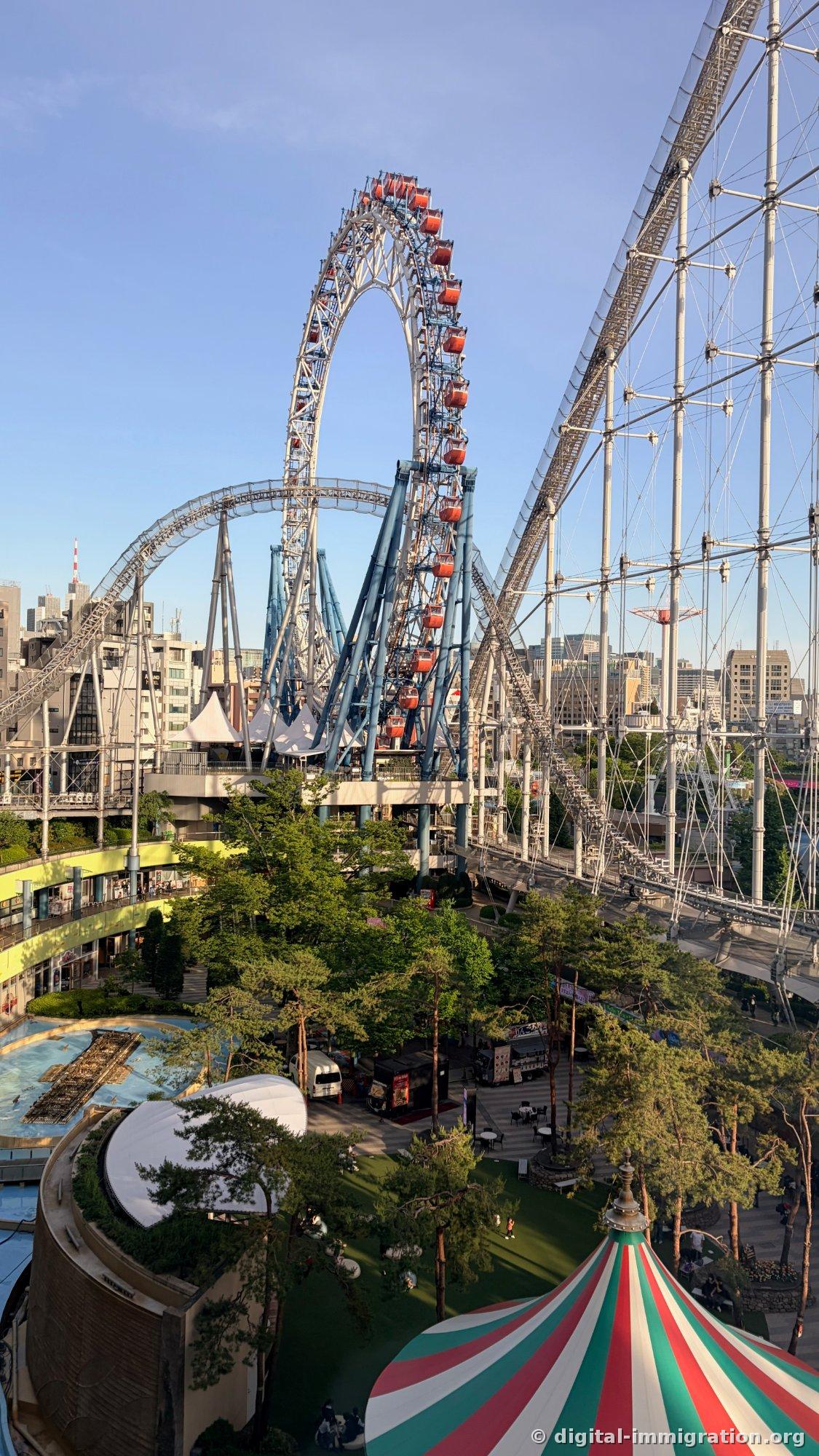
When you're soaking and look up, roller coaster tracks pass right in front of you. Beyond the glass railing, the red gondolas of the Ferris wheel rotate slowly, and to the right stands the Tokyo Dome Hotel Tower. I never expected to see this from a hot spring.
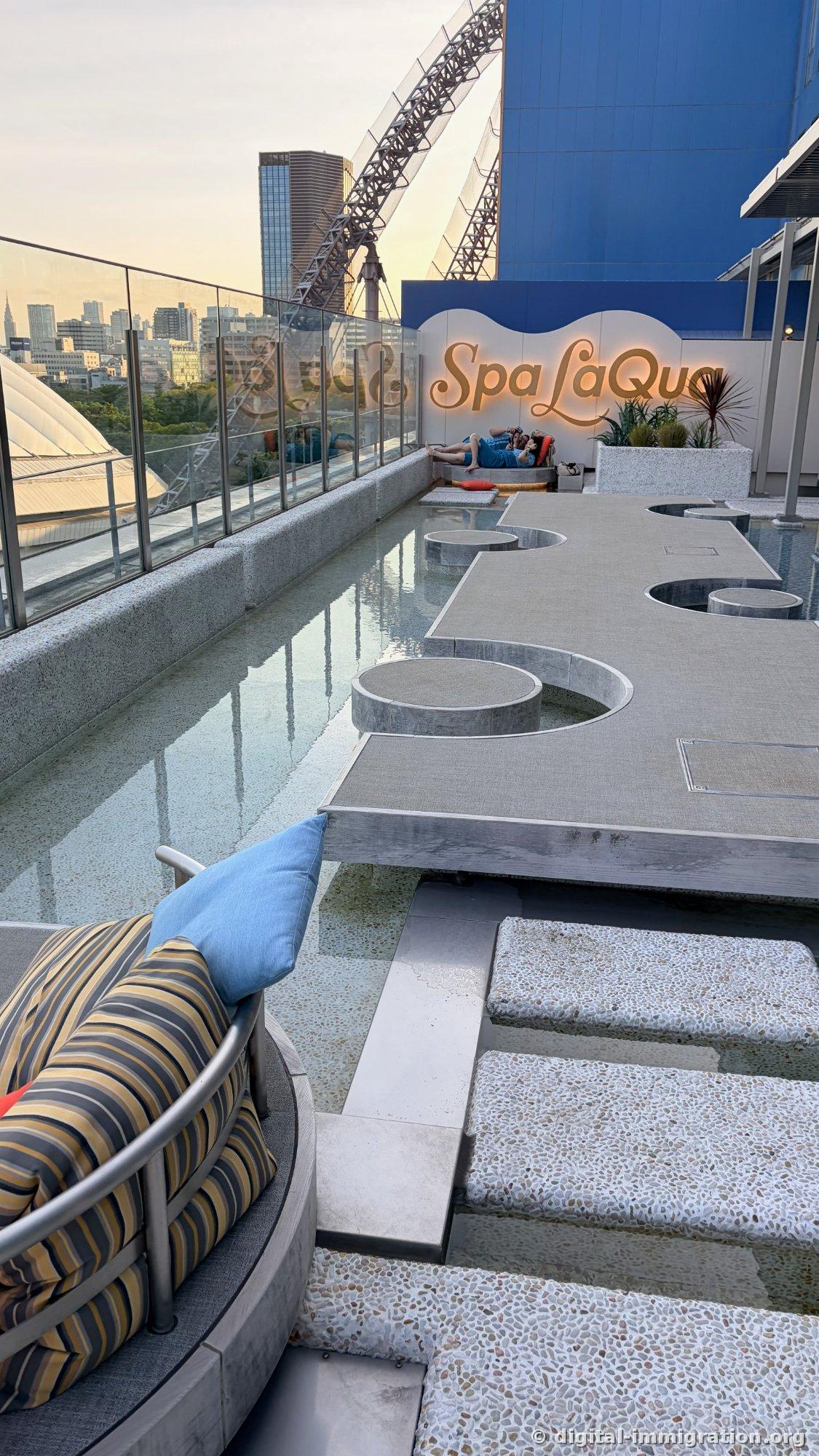
The shallow water shown in the photo above—the area where water reaches only your ankles—was personally my favorite spot. When you perch on a circular stool, immersing just your feet in the water, the rising heat from below and the evening breeze from above reach your body in equal measure. You can sit there for hours without getting dizzy.
Hot Spring → Drink → Views → Back to the Bath: An Infinite Cycle
What sets this facility apart from other hot springs is how well they've designed time spent outside the baths. At most hot springs, once you get out, there's nothing to do but leave. Here, there's always somewhere else to go.
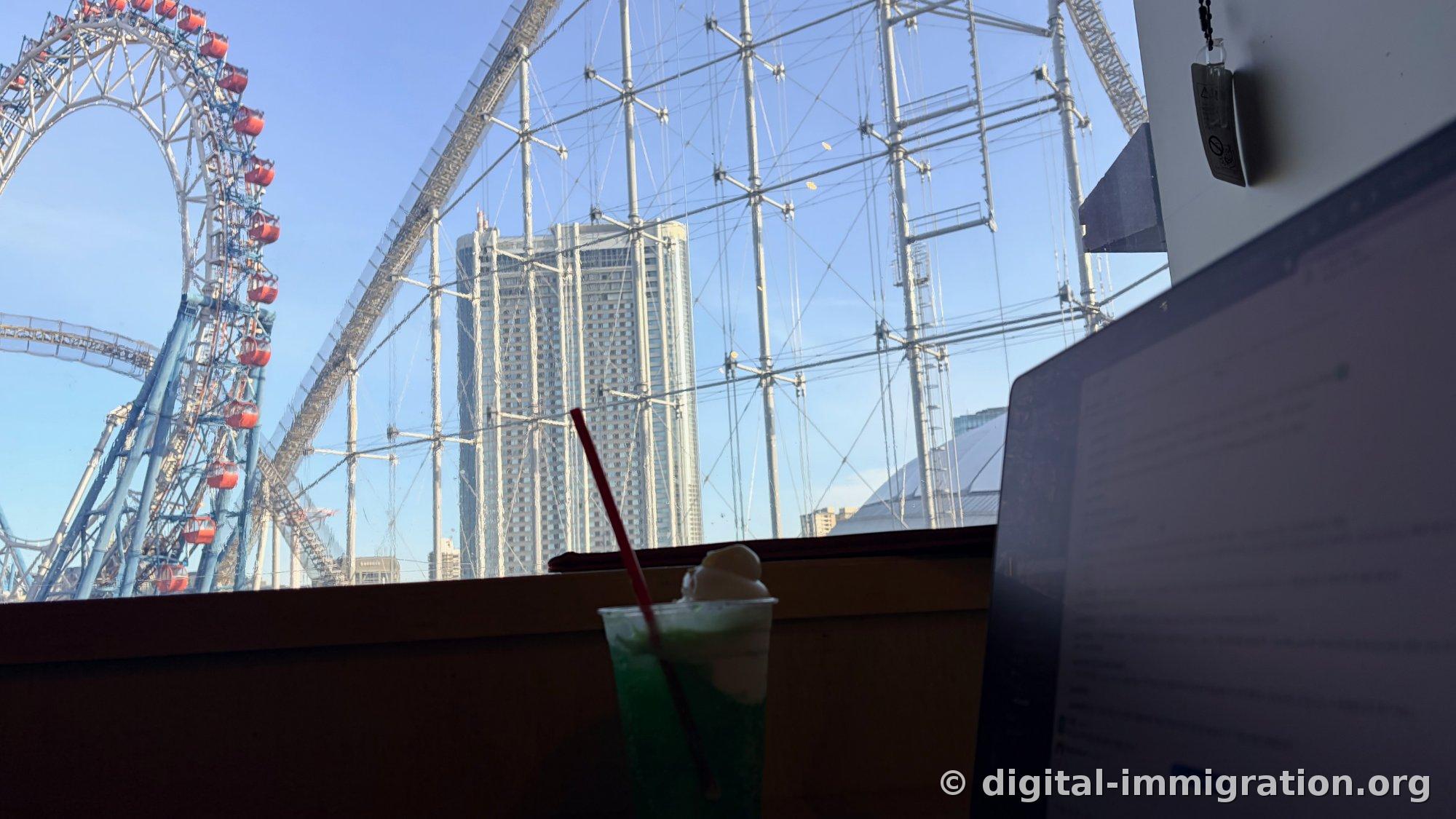
When you change into your facility robe, head to the lounge by the window, and sit down, you get this view. A cream soda—green melon soda topped with a dollop of vanilla ice cream. After getting out of a hot spring, that ice-cold sweet drink sliding down your throat is something you really feel. I actually went back into the bath one more time just for this sensation.
Looking around, I saw people with laptops open working on something, people reading paperbacks, and people just passed out in reclining chairs. Nobody paid attention to anyone else, and the staff never gave the vibe that you should leave. Keeping a seat for hours isn't considered odd here. So the cycle continues: hot spring → drink → watching the view → back to the hot spring. I completed this loop four times.
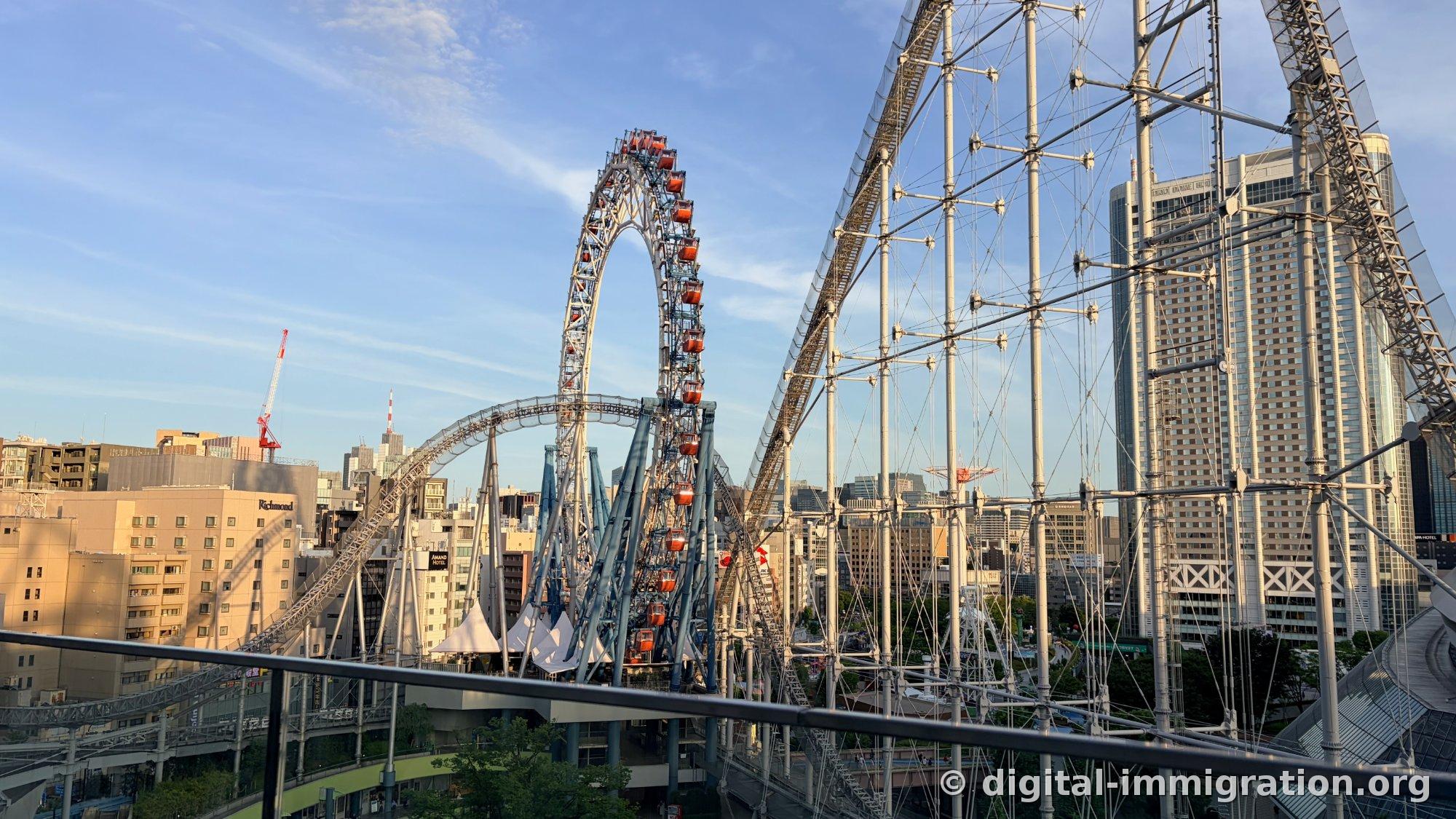
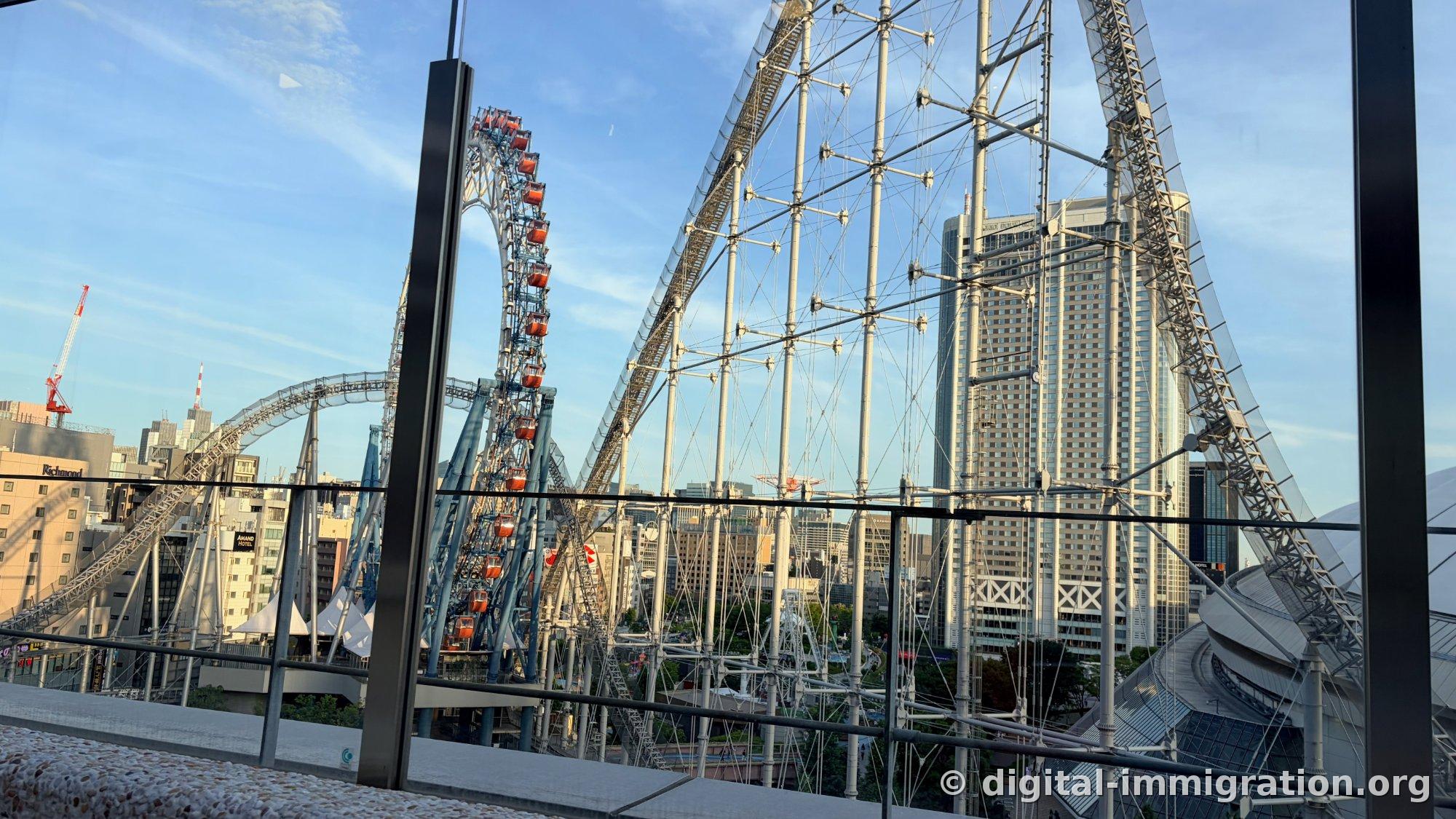
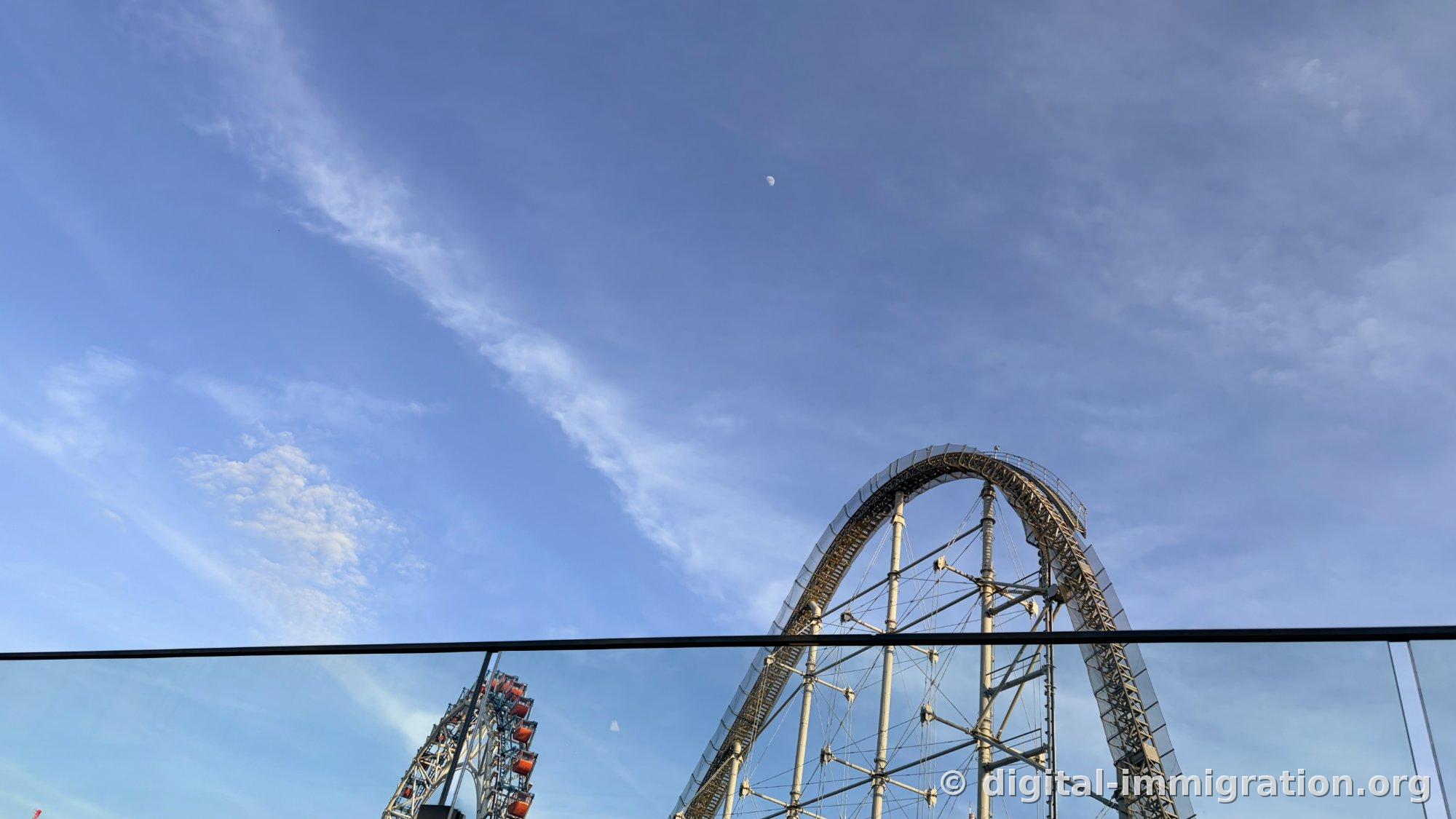
The Ferris wheel is called the Big O—it's an observation wheel with no center axis, and the hollow middle is where the roller coaster passes through. That coaster is the Thunder Dolphin. When you're in the bath, every time the coaster passes, screams travel from above to below. Mixed with the sound of water, it's oddly amusing. If you're expecting a quiet hot spring, this isn't it.
Healing Baden—From Here, You'll Need a Swimsuit
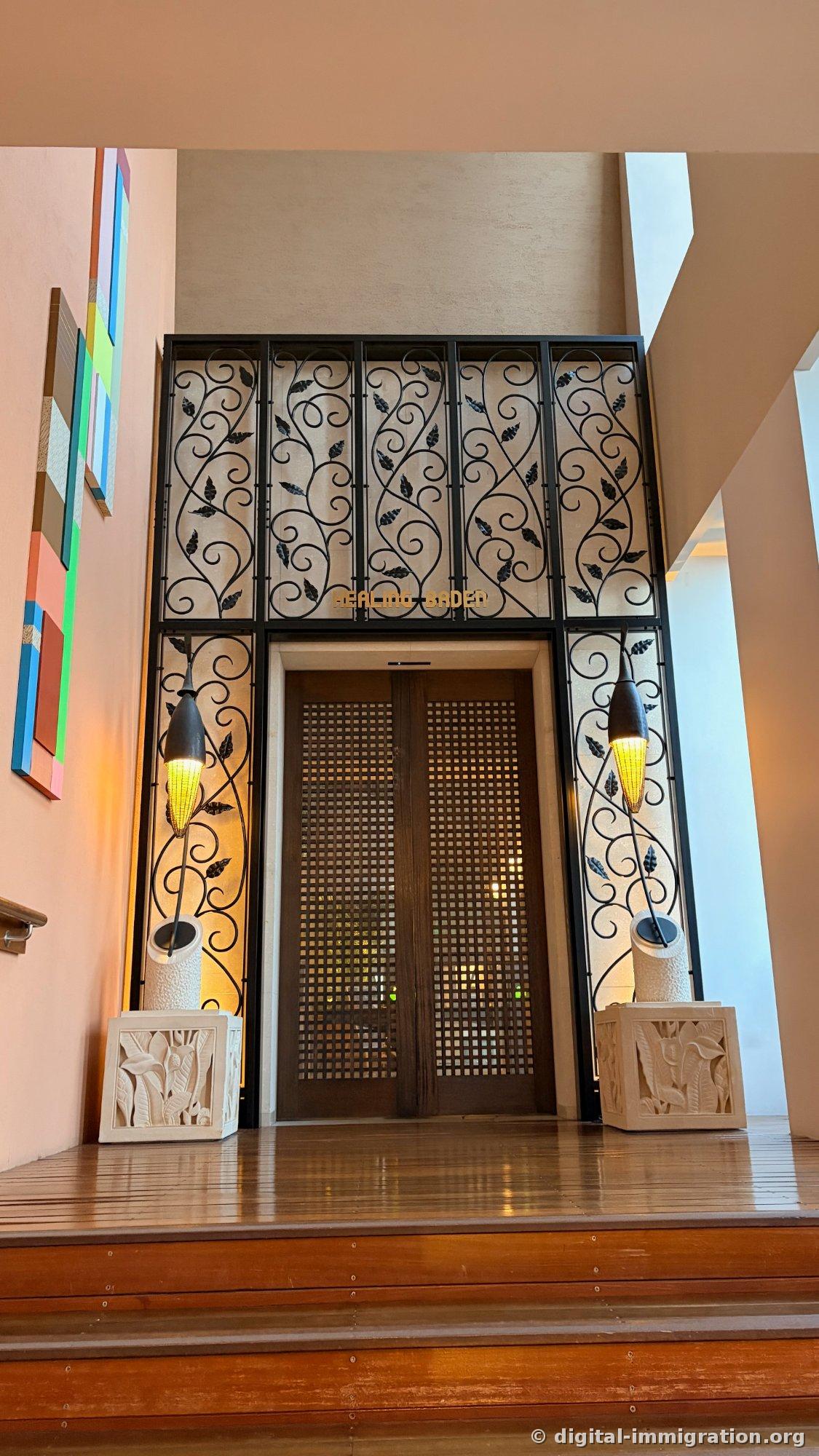
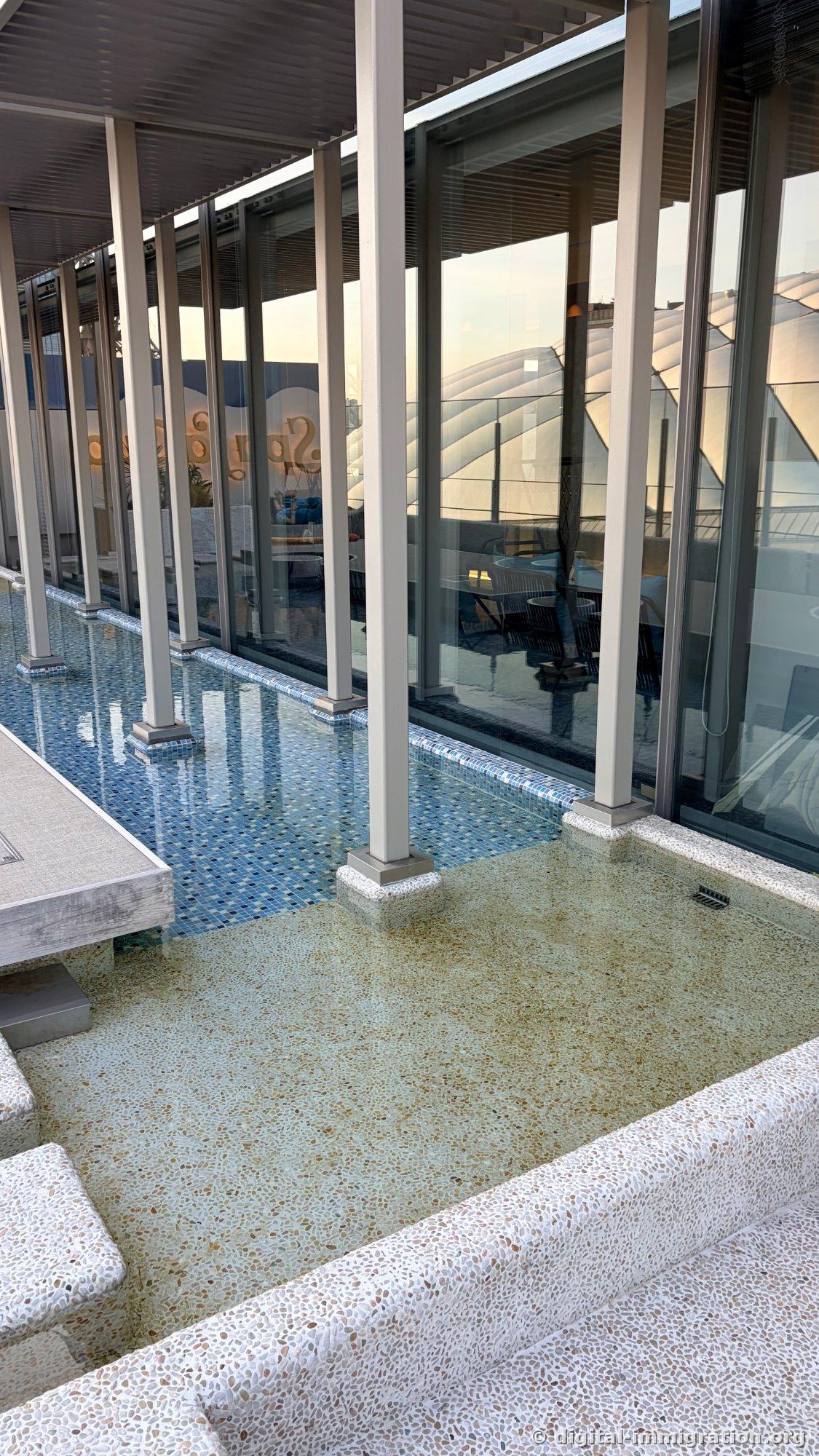
Behind this door is a low-temperature sauna area accessible for an additional fee, separate from the main spa. Since it's co-ed, you wear designated swimwear instead of the facility robe. Multiple low-temperature sauna rooms let you slowly cool down your body after soaking in the hot baths. Hours and fees change by season, so check the current rate board on-site. I skipped this section initially but went back to the counter to pay extra later—it's more convenient to buy everything together from the start.
Location and How to Get There
It's directly connected via underground passage to Korakuen Station on the Tokyo Metro Marunouchi and Namboku lines, and Kasuga Station on the Oedo and Mita lines. If you're coming by JR, it's a few minutes' walk from Suidobashi Station. Either way, find the Tokyo Dome City LaQua building, and the spa entrance is on the 6th floor—take the dedicated elevator from the 1st floor. Taking the shopping mall escalators will get you lost on the wrong floor.
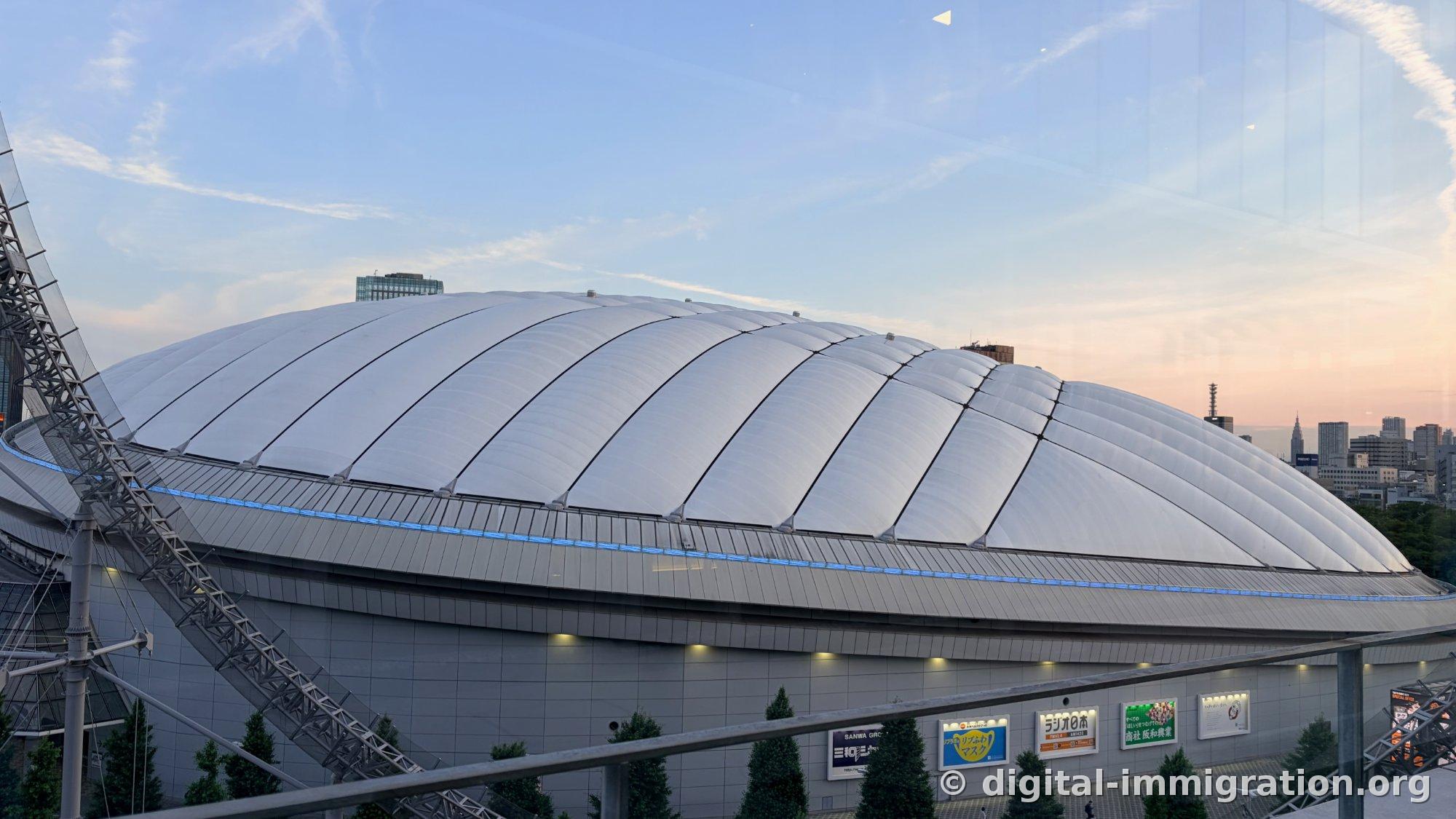
On days when there's a baseball game or concert at Tokyo Dome, the spa gets crowded too. Lines form waiting for locker assignments, and the good seats in the lounge are already taken. If you can plan ahead, aim for a weekday afternoon when there's no event. I went in at 3 p.m. on a weekday when it was quiet, but after 6 p.m., the after-work crowd started pouring in.
Night Is When It's Really Worth It
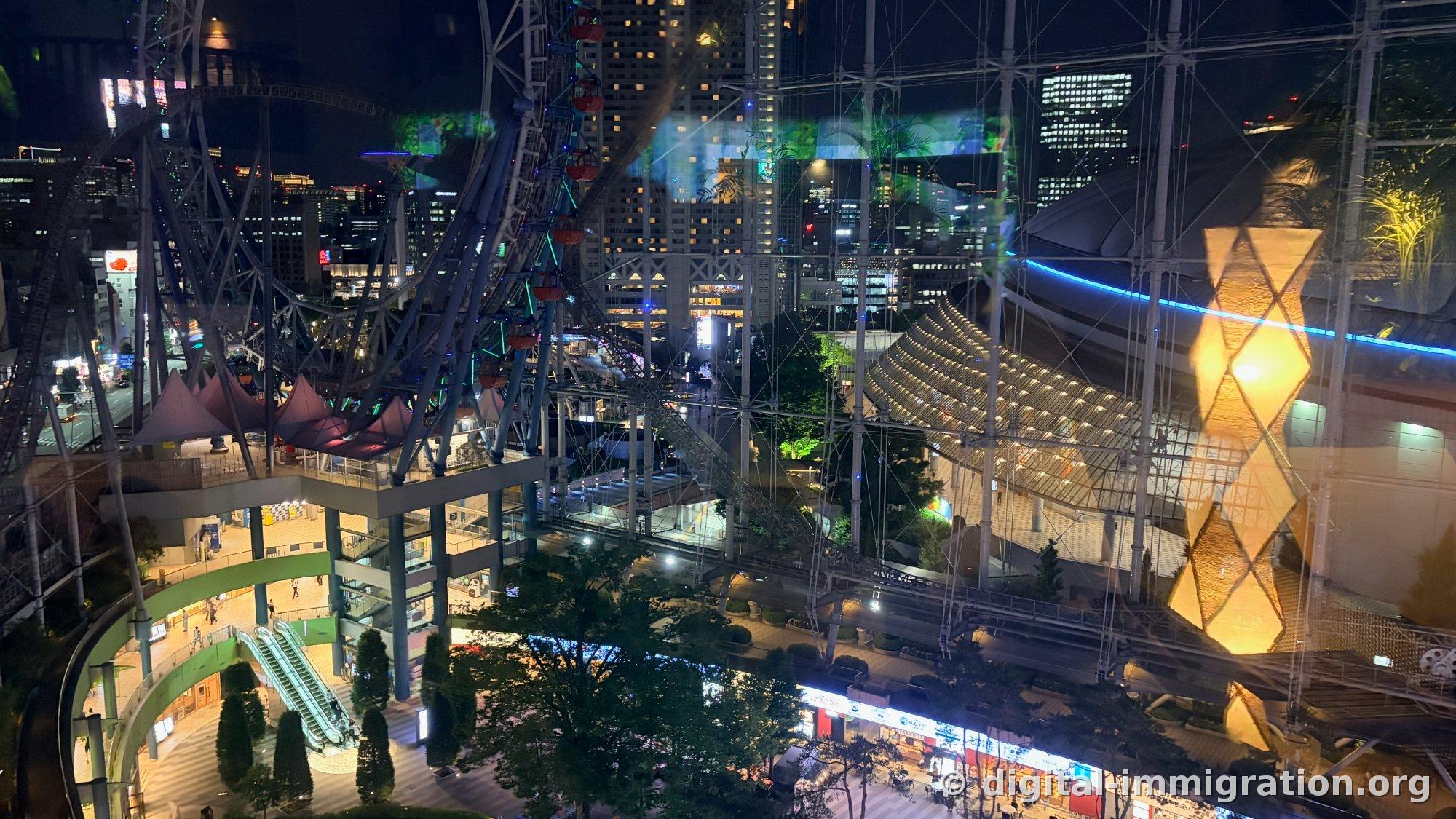
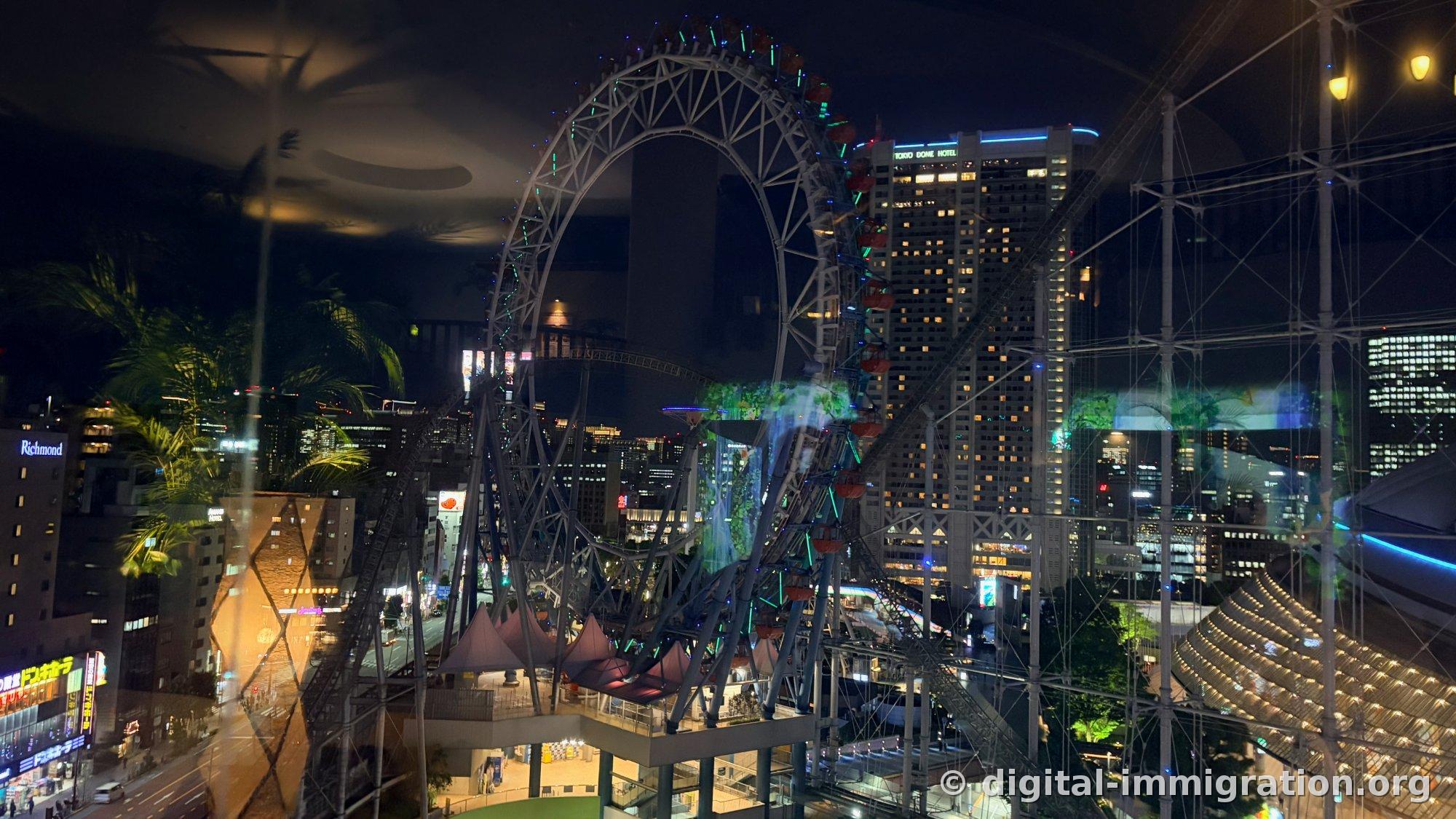
Once the sun completely sets, the observation wheel lights up. The colors shift slowly from blue to green to purple, and when you're soaking with water up to your neck watching that, your sense of time disappears. The structure you saw in daylight becomes something completely different at night. Once the yellow Don Quijote sign lights up below on the left, you really feel like you're in Tokyo.
Good to Know Before You Go
- Towels and facility robes are included in the admission fee, so you can go in with nothing. However, swimwear for Healing Baden is separate.
- You pay for everything in-facility using a wristband and settle up once when you leave. It's convenient, but your spending awareness gets oddly numb, so be careful.
- If you stay past late-night hours, an additional charge applies. It's good to check the cutoff time in advance.
- Tattoos may restrict your entry. Since regulations can change, it's recommended to check before visiting.
- After six hours, my legs had no strength when I left. You need to drink more water than you'd expect. It helps to note the location of the water fountain early on.
When people think of Tokyo hot springs, Odaiba or nearby hot spring towns usually come to mind, but factoring in travel time, this place is far more efficient. You can reach it in 30 minutes from Shinjuku or Tokyo Station, and you can walk straight to restaurants in Tokyo Dome City after leaving. Next time I'm in Tokyo, I'm clearing an entire day in my schedule to spend here.
อ่านต่อไป
- From Akihabara's Chuo-dori to the Kanda River: A Record of Tokyo's Electronics District Revisited Multiple Times
Tokyo's Akihabara is a neighborhood where it's hard to say you've seen everything in a single visit. I've come multiple times across different seasons, and each time the signs chan…
โตเกียว · Akihabara - Buying a Single ¥300 Year-End Jumbo Lottery Ticket at Nishi-Ginza Chance Center in Tokyo
Exit from the Hibiya exit of Tokyo's Shimbashi Station, walk toward the elevated highway for about three minutes, and suddenly you'll see a line of people stretching along the side…
โตเกียว · Nishi-Ginza Chance Center - Ueno Ameyoko, the real magic starts after sunset — an evening walk from the Okachimachi Gate to Ueno Station
Every time I come to Tokyo, my feet find their way to Ueno Ameyoko (アメ横) without fail. This time I entered from the Okachimachi side and worked my way toward Ueno Station. I've met…
โตเกียว · ตลาดอเมะโยโกะ