When the Giraffe Sticks Out Its Tongue — Half a Day at Phu Quoc Vinpearl Safari
In the northwest of Vietnam's Phu Quoc island, now part of An Phu province, Vinpearl Safari requires a good drive from the airport. If you're staying in the southern commercial are…
седло · Винпёрл Сафари Фу Куок
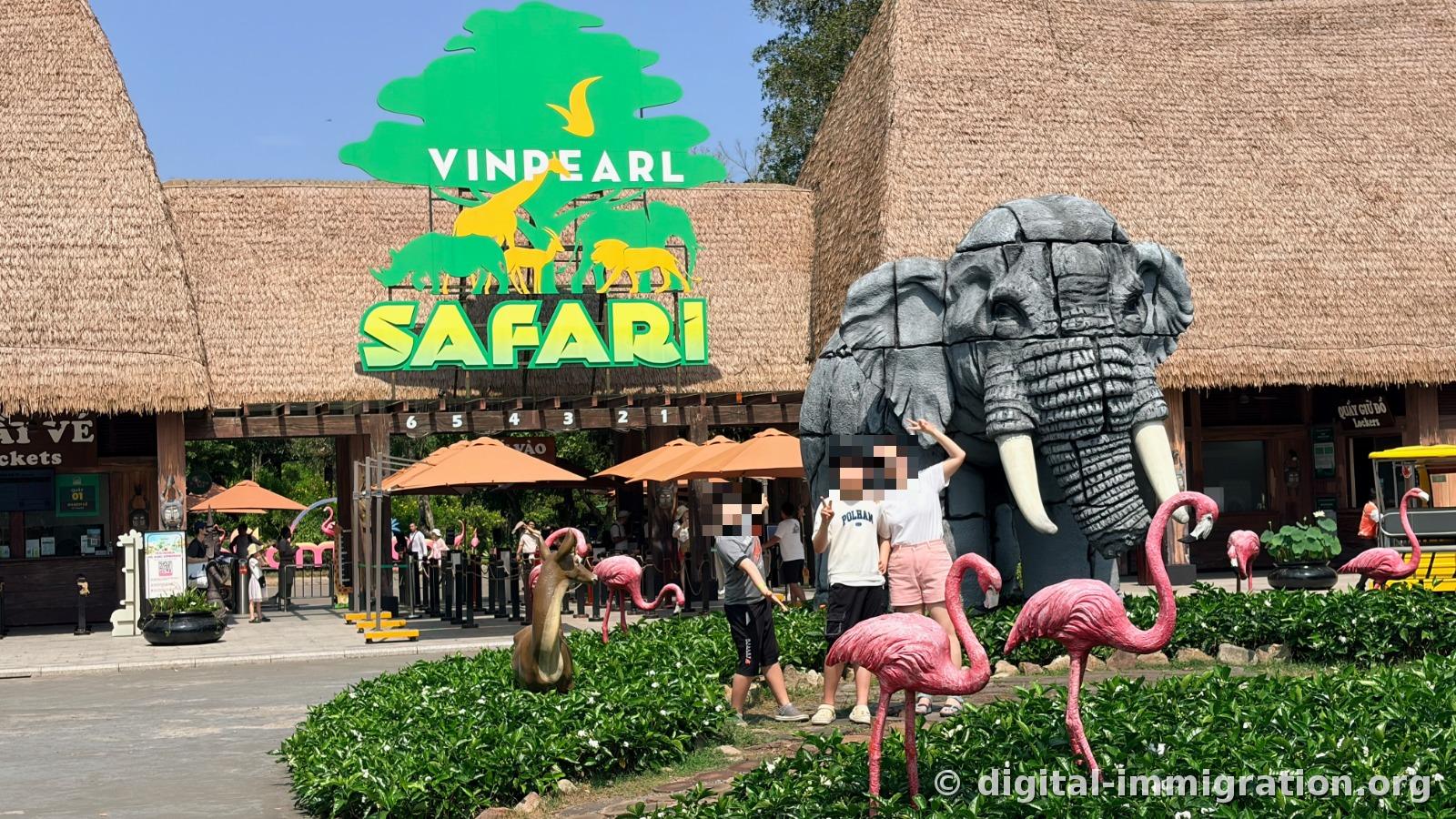
In the northwest of Vietnam's Phu Quoc island, now part of An Phu province, Vinpearl Safari requires a good drive from the airport. If you're staying in the southern commercial areas like Grand World or Sunset Town, it's best to allow plenty of travel time. We arrived just after 9 AM, and the shade areas in front of the ticket office were already packed. A straw-roofed gate displays a green 'VINPEARL SAFARI' sign, with gray elephant sculptures and pink flamingo sculptures lined up beside it. The kids bolted straight to the elephants for photos.
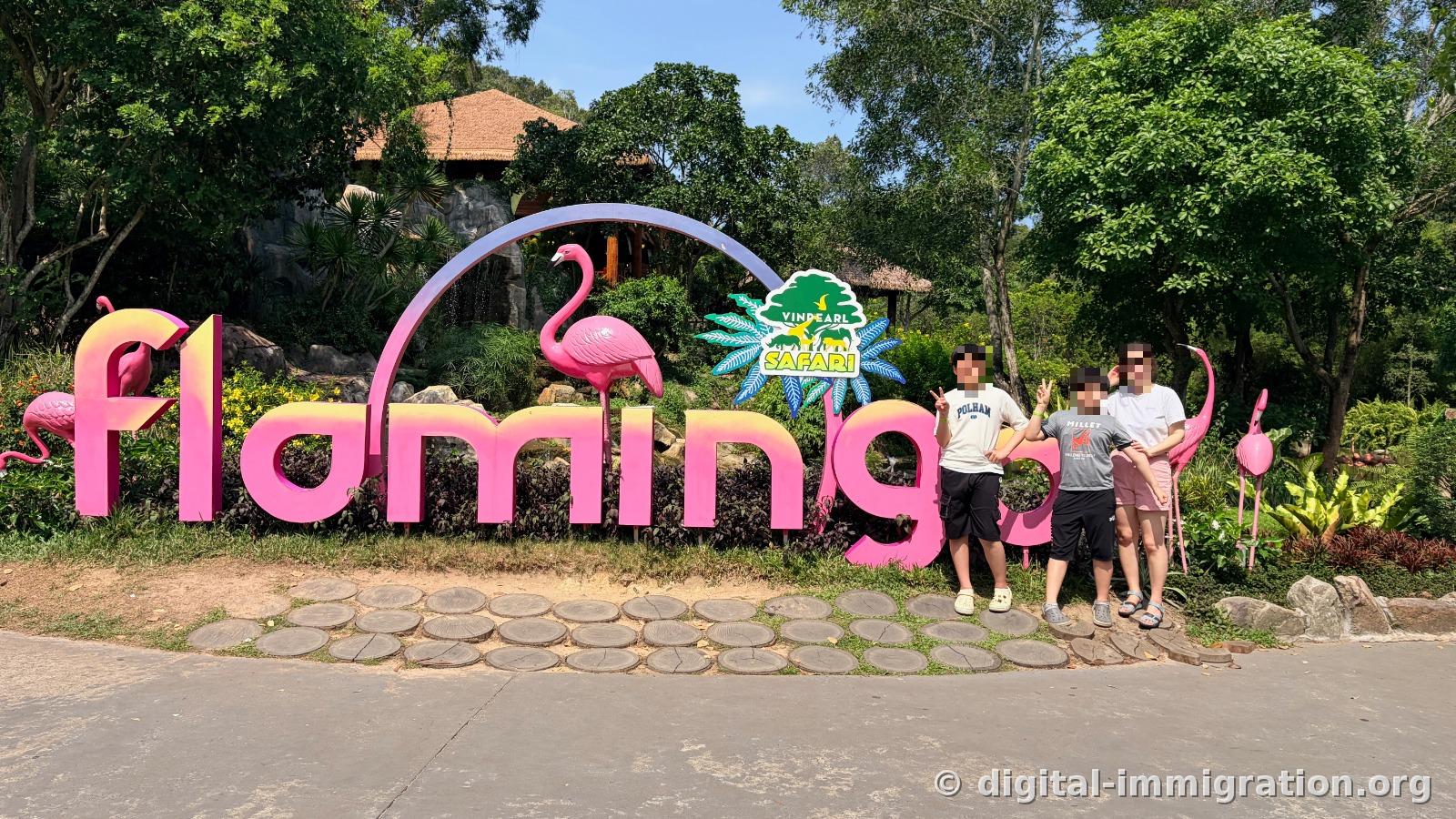
Just past the gate, we came to a pink 'flamingo' letter sculpture. Behind it were an artificial waterfall and a thatched gazebo, with wooden stump-shaped stepping stones covering the ground. This spot is famous as a photo point, so we had to wait our turn, but thankfully the turnover was quick. After taking photos, the animal sections begin immediately to the left.
Open Safari — What We Saw Through the Bus Windows
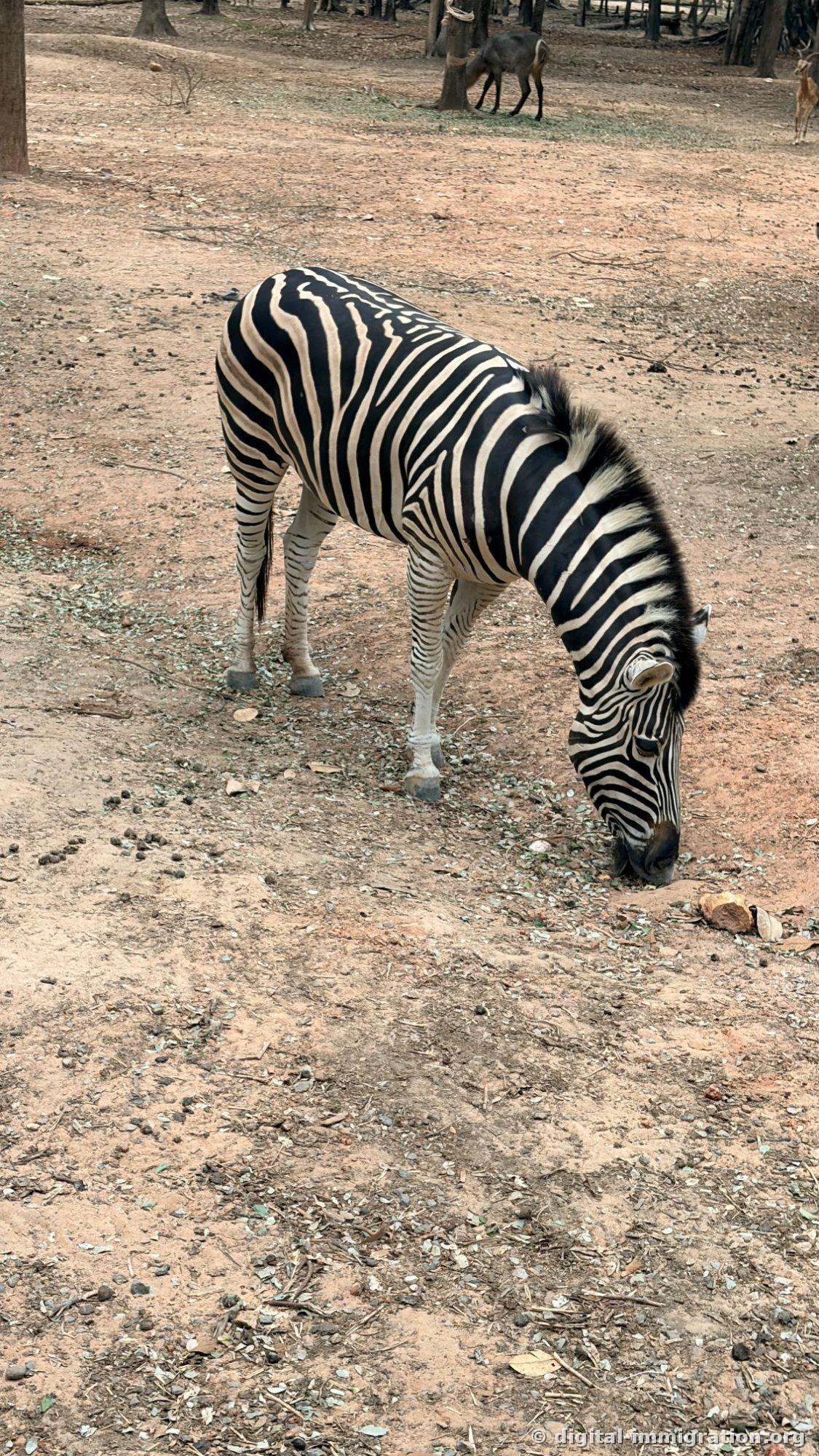
The key here isn't seeing animals behind barriers, but driving through open pasture areas. We boarded a safari bus with only a roof and no sides, traveling along a red dirt road for roughly 20 minutes. The first animal we encountered was a zebra. It had its head down on the dry red earth, tearing at vegetation, and with its mane standing straight up just like in picture books, the kids spotted it first. In the tree shade behind it, a few deer were ambling about.
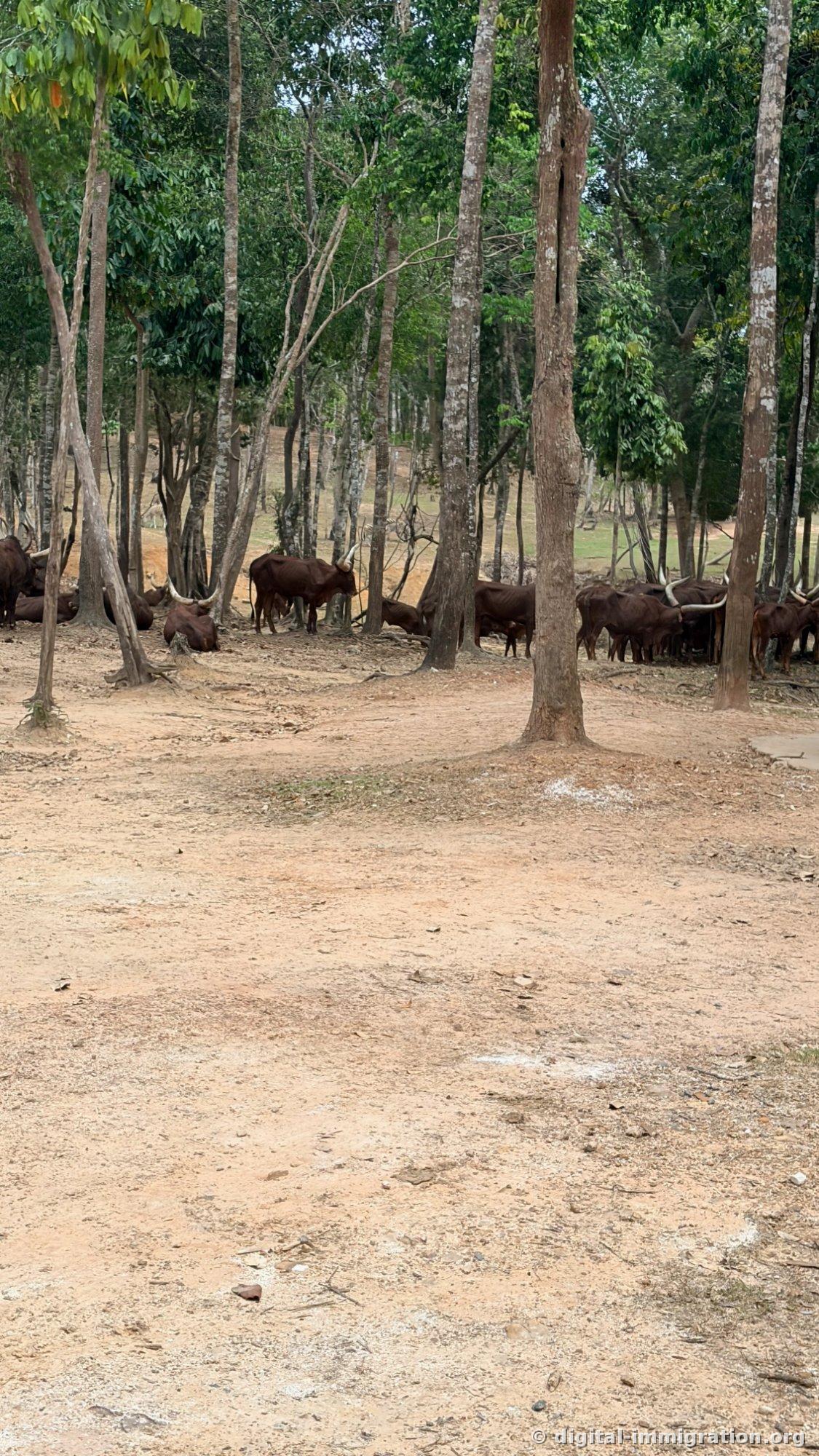
Going a bit deeper, we found a herd of cattle with extraordinarily long horns gathered in tree shade. Watussi cattle. Their horns easily exceed the length of a human arm, and about twenty of them sat clustered together, escaping the heat. They didn't even glance when the bus stopped.
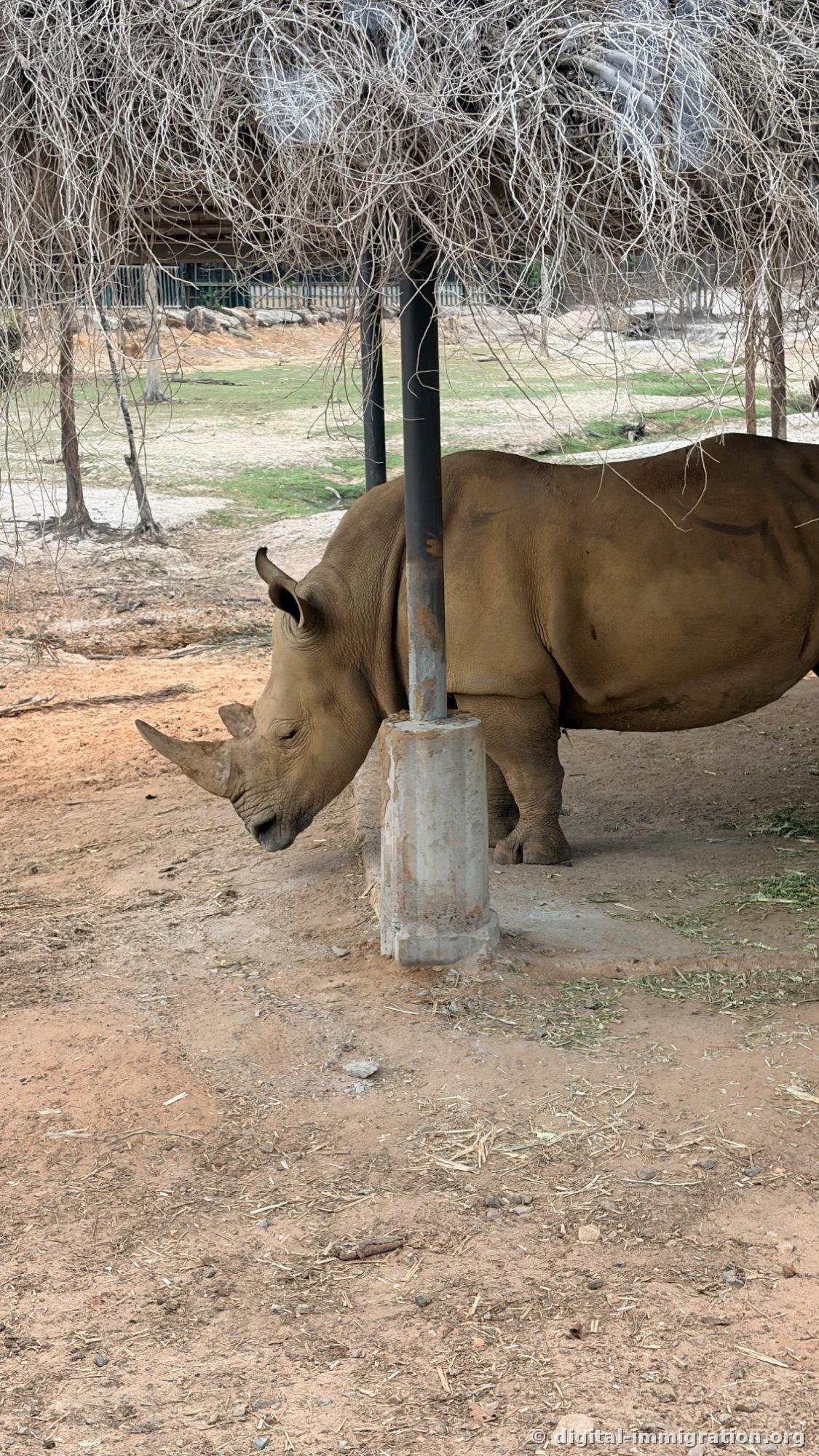
The rhino was scraping at the ground near a shaded shelter post with dry branches overhead. Its wrinkled skin sat like armor, and its front horn was blunt. Green feed crumbs scattered around its feet suggested feeding time had just passed.
The Predator Area — Lower Your Expectations
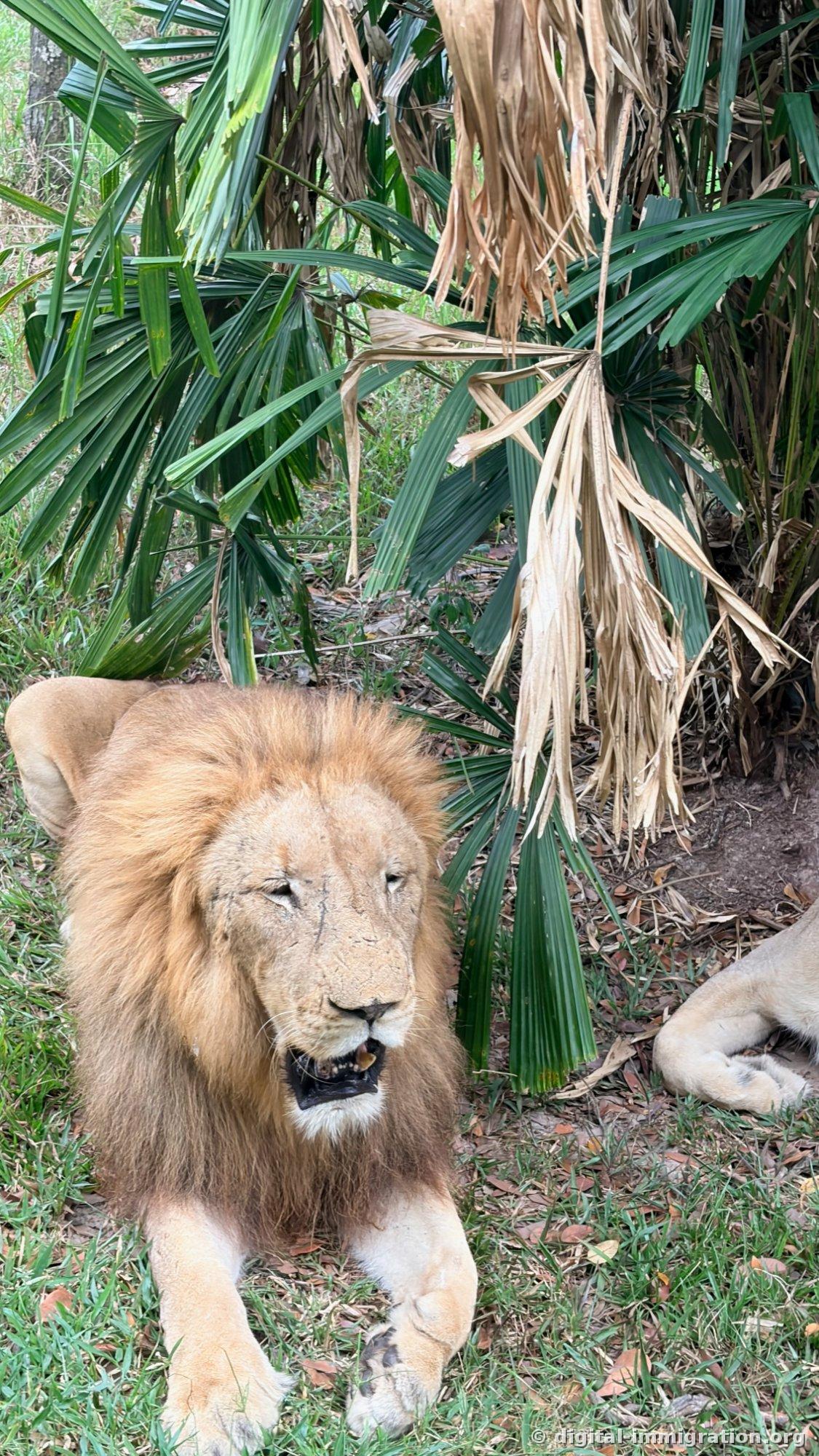
To be honest, the lion and tiger area was disappointing. The time of day was mostly to blame. When we passed around 11 AM, the male lion was lying beneath palm trees with his eyes half-closed and yawning. His mane was much sparser than in photos, and his face bore several old scars. Beside him, the female lion's front paw was sticking out.
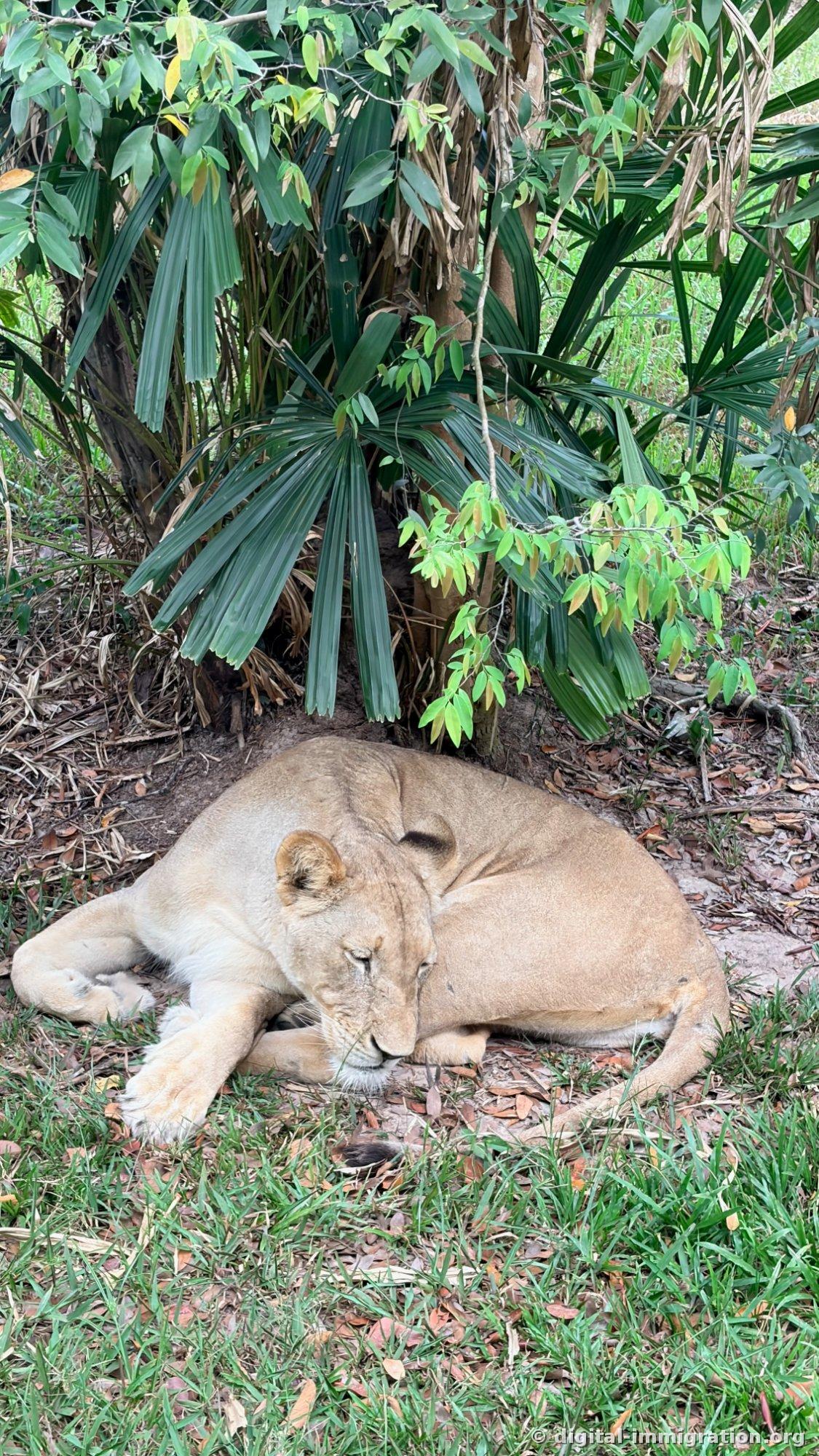
Right next to him, the female lion was completely asleep, her face buried in her front paws. Curled up like that, she looked no different from a big cat. She didn't flick an ear once as the bus passed.
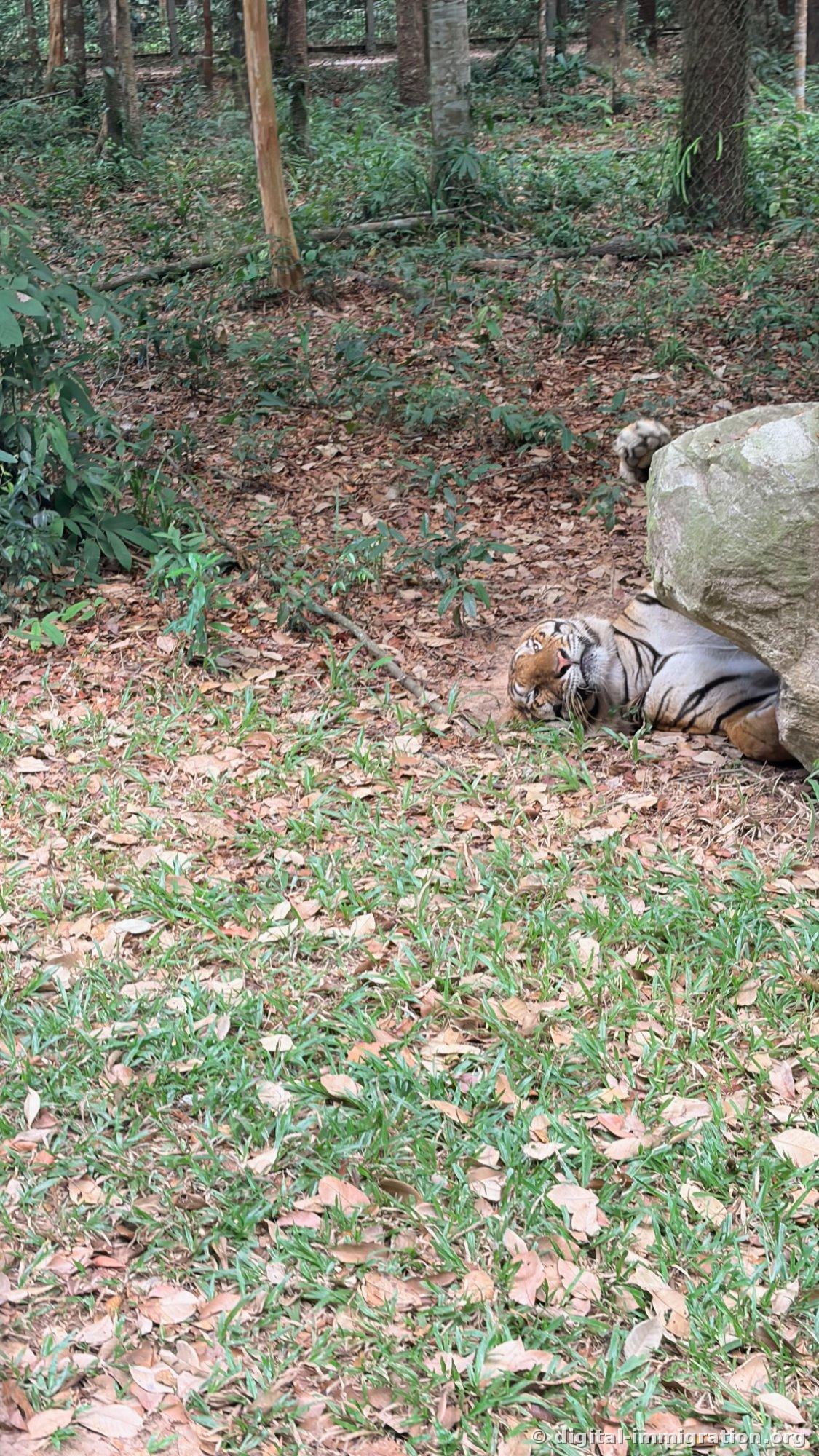
The tiger was the same. Half its body was hidden behind a large rock, stretched out with its belly toward the sky. At first we couldn't locate it until we spotted one ear sticking up. With its orange stripes half-covered by fallen leaves on the ground, I finally understood why this pattern serves as camouflage in the wild.
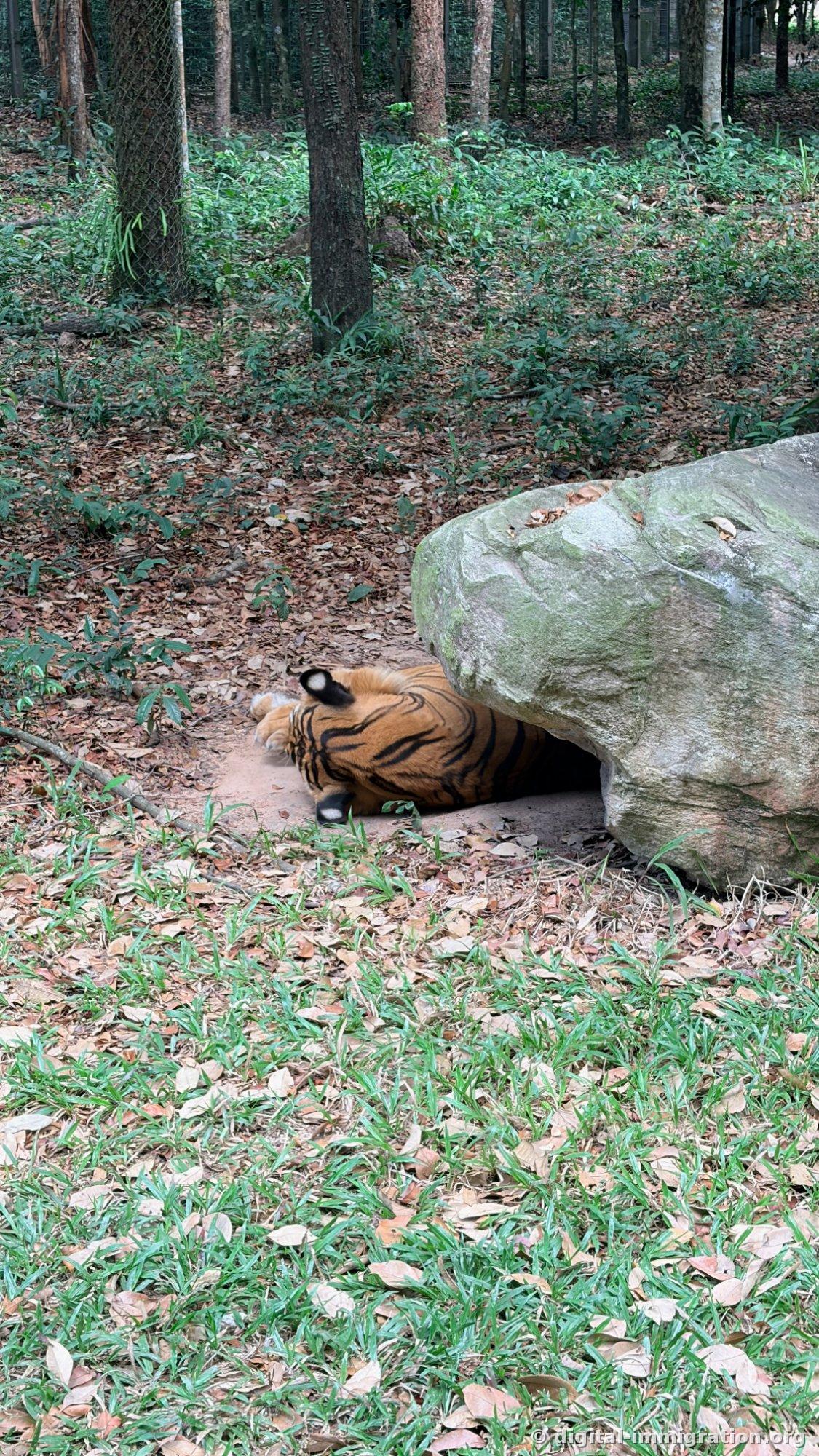
A bit further, the same tiger had rolled over and was lying on its side. We could see its face, but it was still sleeping. If you want to see the big cats active, it's better to come right after opening or late in the afternoon. Few animals remain awake in the midday heat of Phu Quoc.
The Sun Bears and Elephants, By Contrast, Were Active
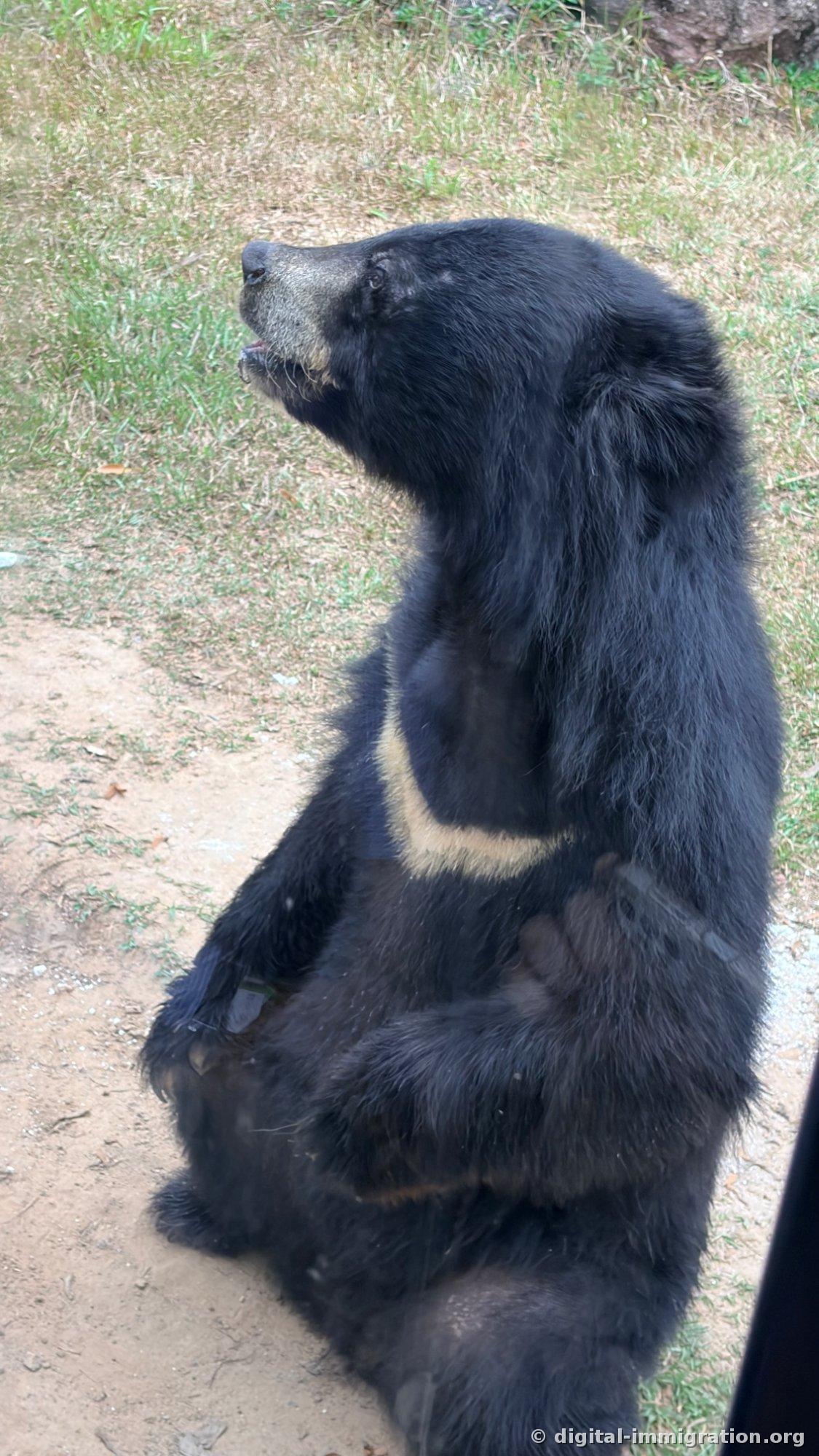
Unlike the sprawled-out predators, the sun bear was sitting facing our direction. With a distinctive cream-colored V marking on its chest, it sat on its hind legs with front paws together—the picture of waiting for something. This area has glass barriers, so you can get very close.
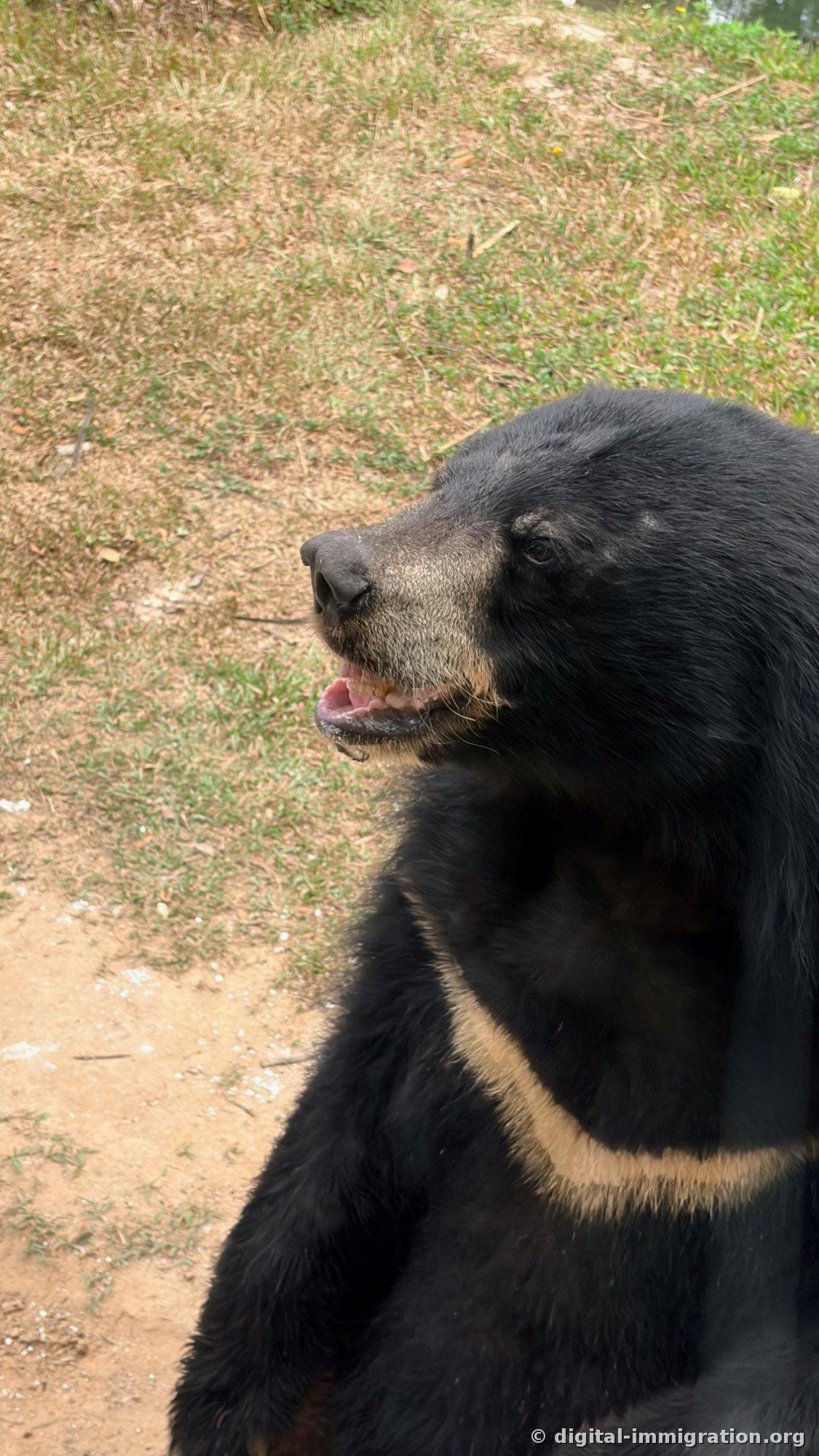
Zooming in, the fur around its snout was graying, and when it opened its mouth, pink gums showed. It appeared to be quite an old individual. When the child put his hand on the glass, it briefly looked our way before turning its head again.
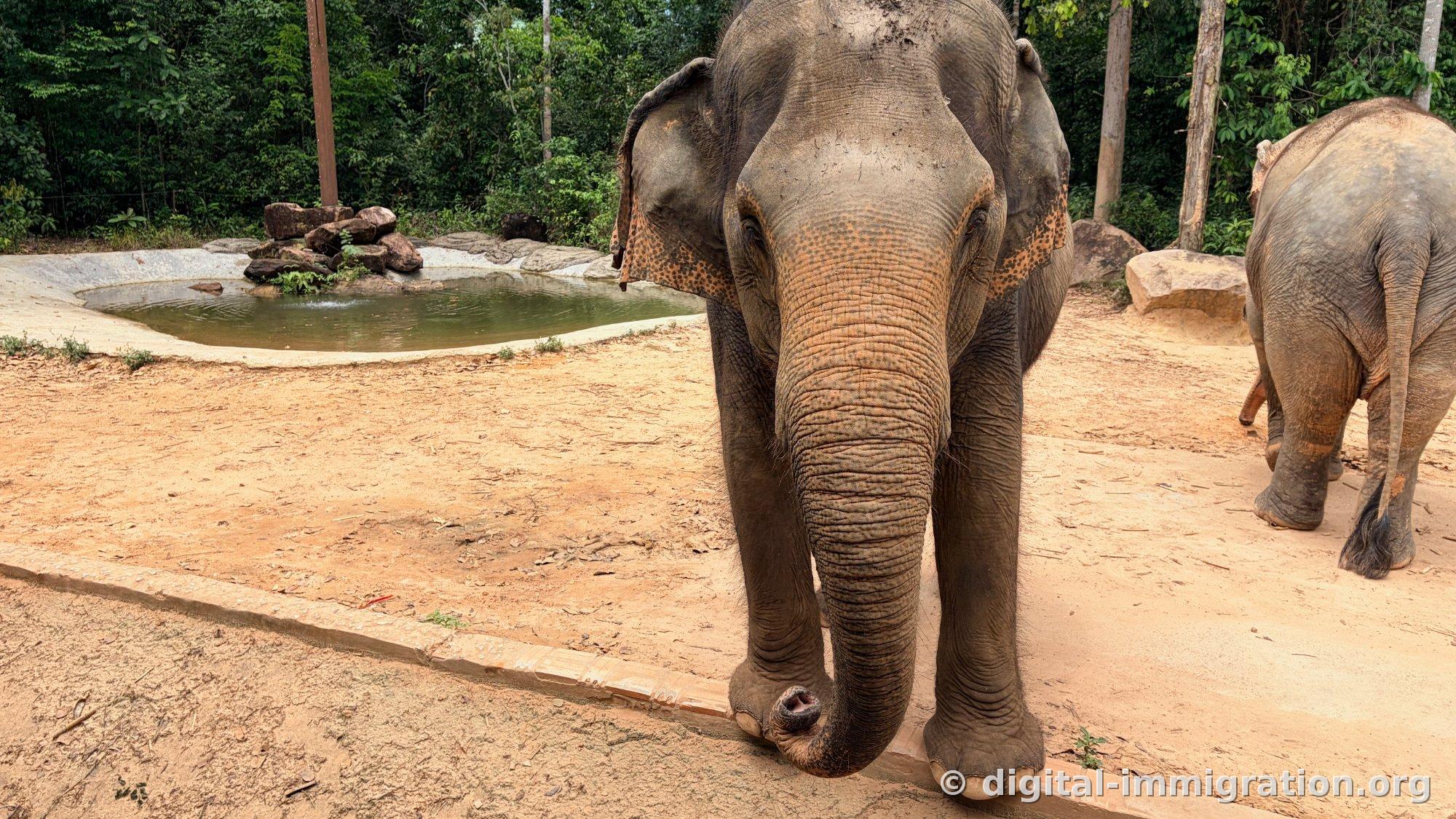
The elephant enclosure had a red dirt floor with a small water puddle. One elephant stretched its trunk long and extended it toward the viewing path. Its trunk tip came within a meter of us, and we could see every wrinkle. Behind its ear, the pinkish age spots characteristic of older elephants were scattered.
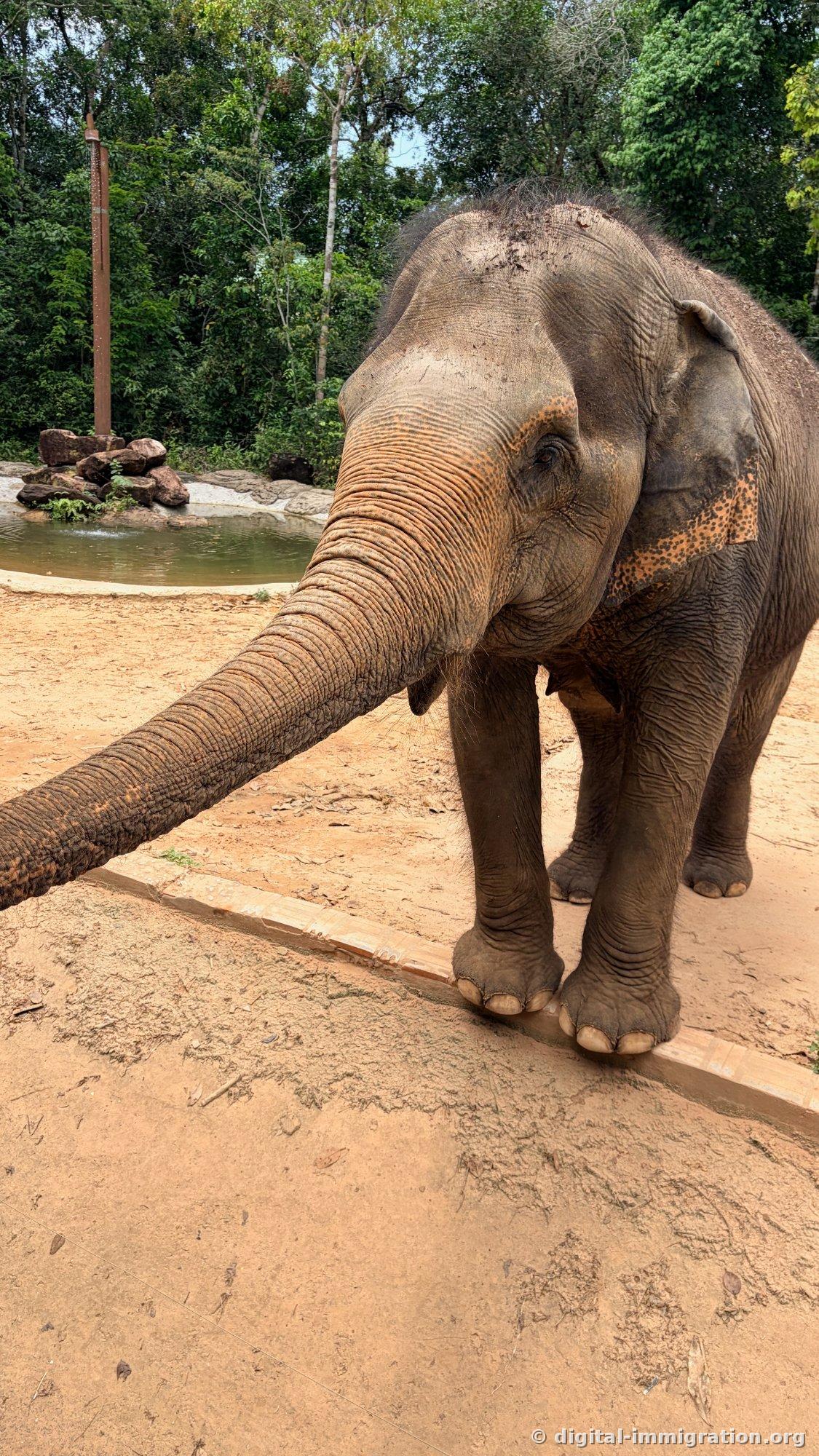
We also captured it walking toward us head-on. Behind it, another elephant was heading toward the water puddle. What surprised us was how quietly they moved. Despite their massive bodies stepping on dry earth, there was barely a sound—just one dull thud.
Giraffe Feeding — This Is the Real Deal
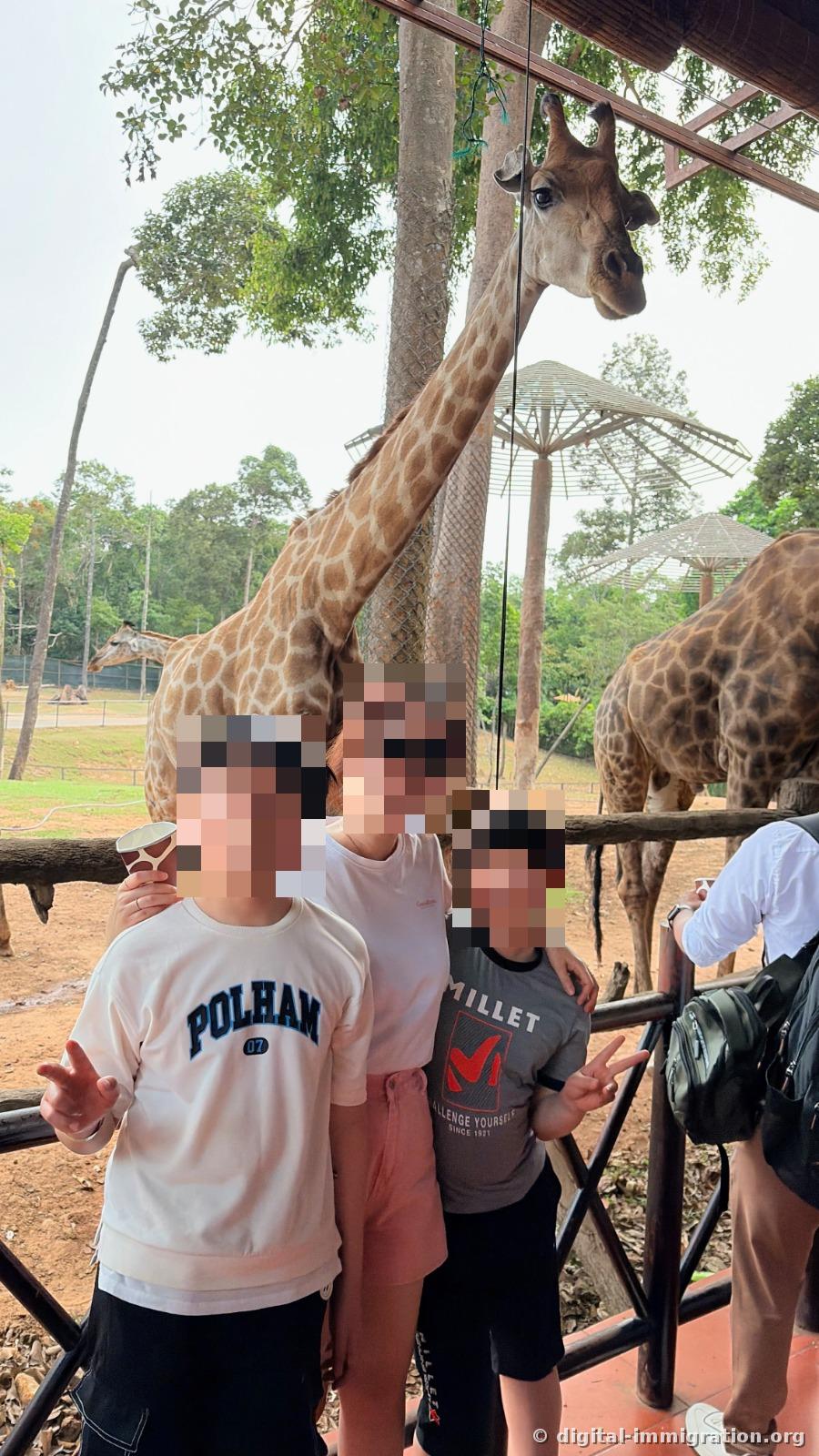
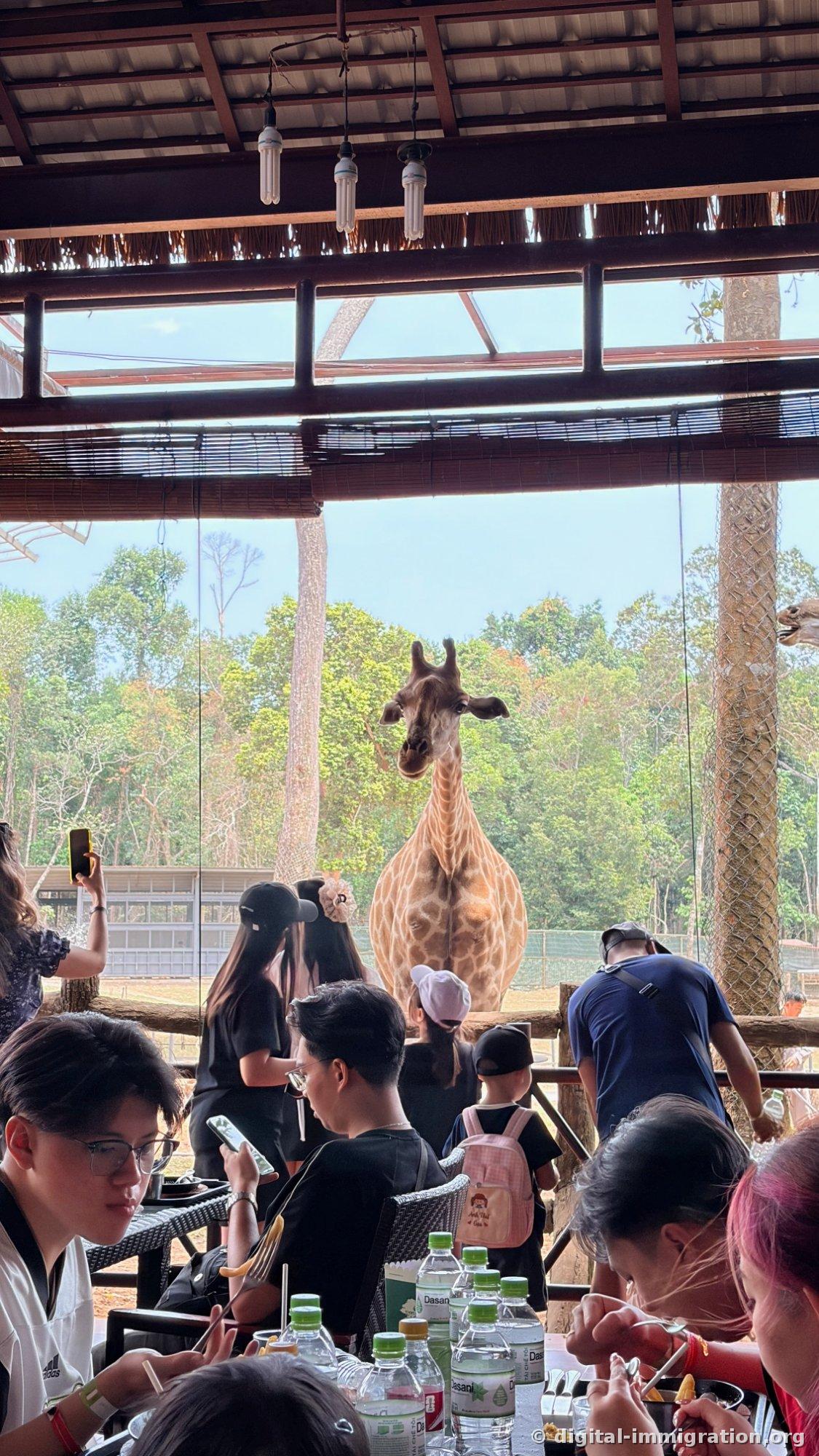
The most memorable part of the day was the giraffe feeding deck. Giraffes lower their necks over a wooden fence, positioning their faces exactly at human eye level. When we arrived, there were already crowds two-deep.
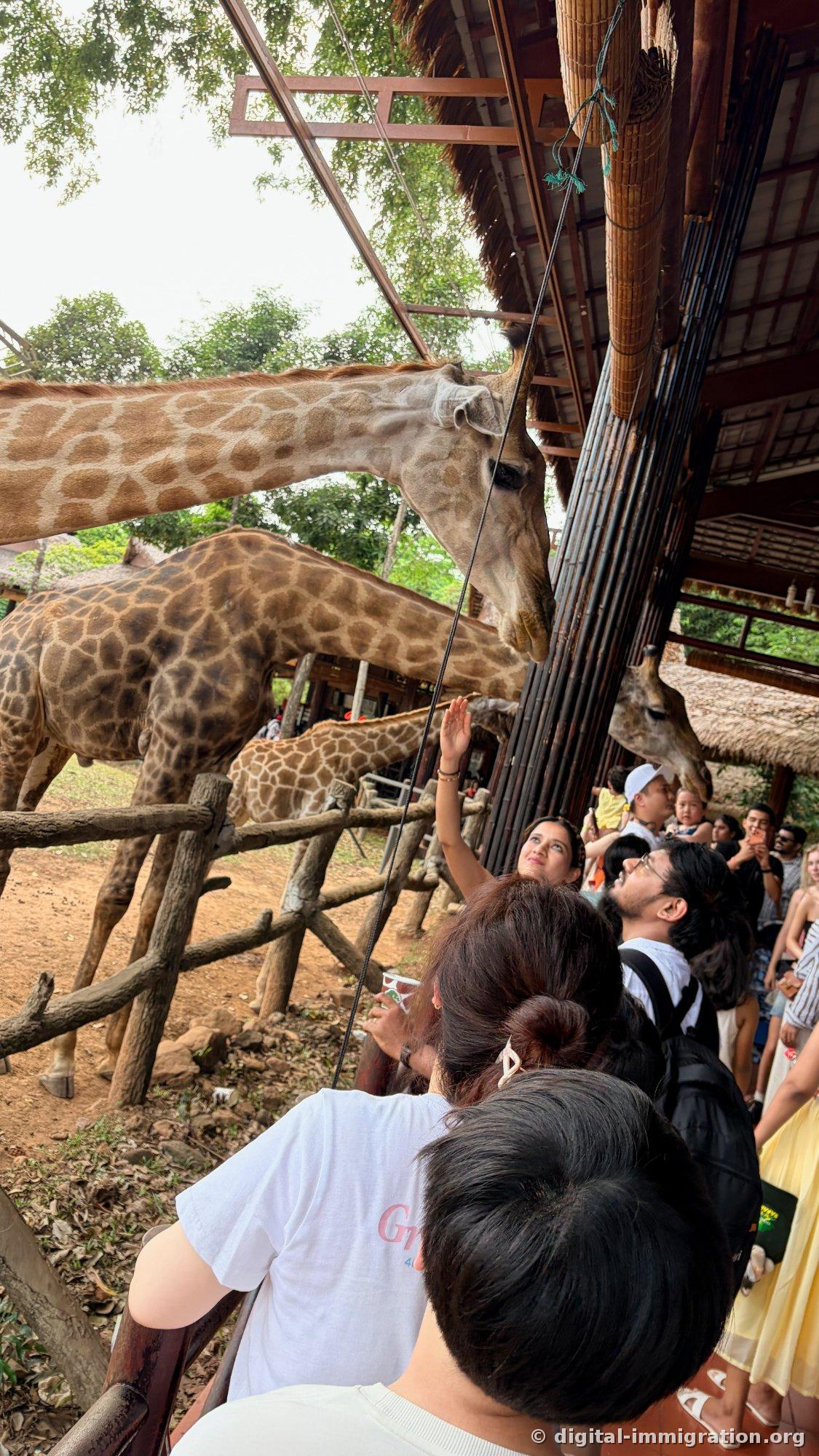
The feed is vegetable pieces in a paper cup, sold separately. The price seems to vary by season, so we recommend checking on-site. When you hold up the cup, the giraffe lowers its neck and comes closer.

The tongue is the thing. Giraffe tongues are a dark purplish color and nearly 40 cm long, and they extend it first before taking the food. The kids were startled when they first saw it and pulled their hands back.
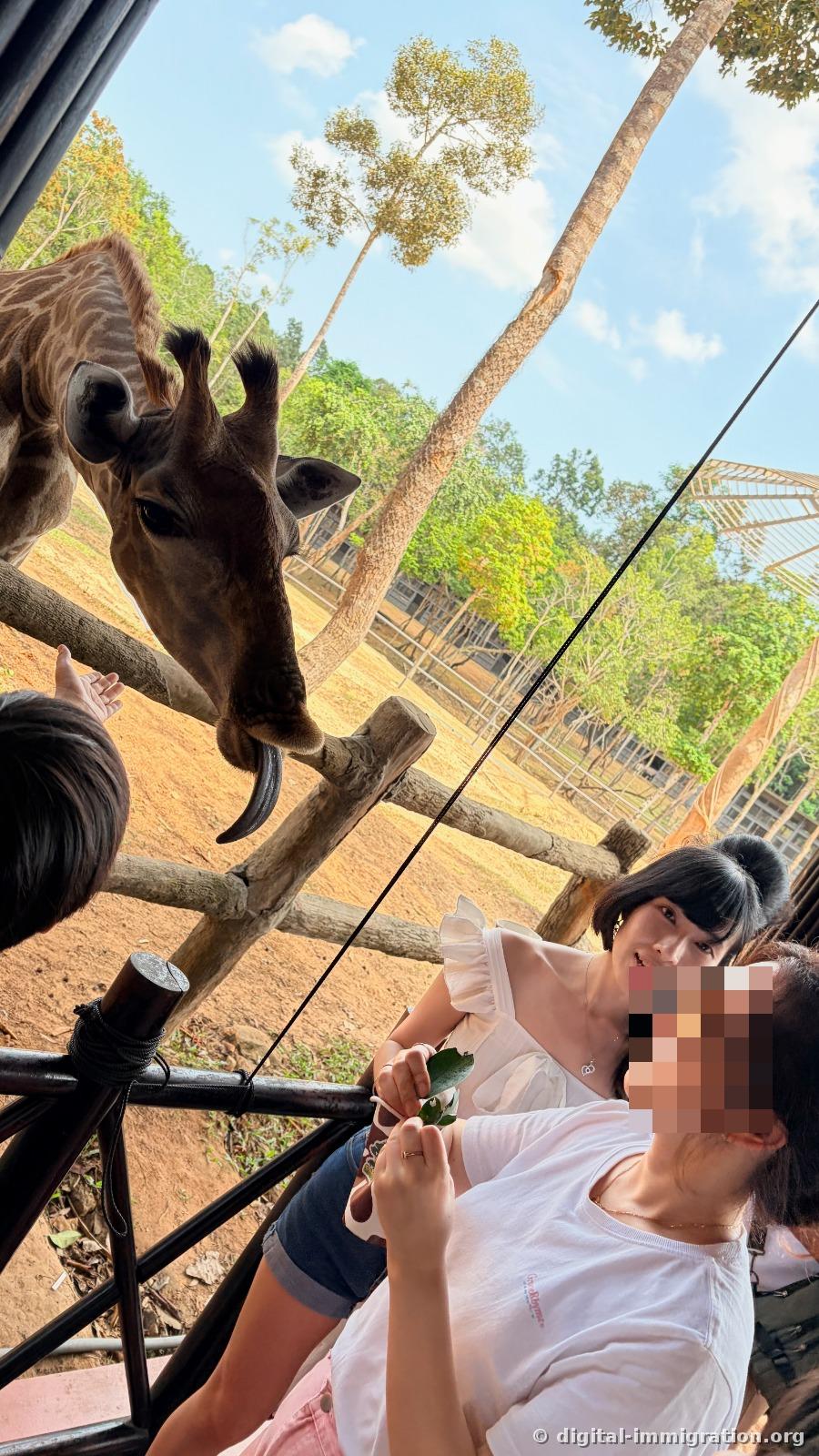
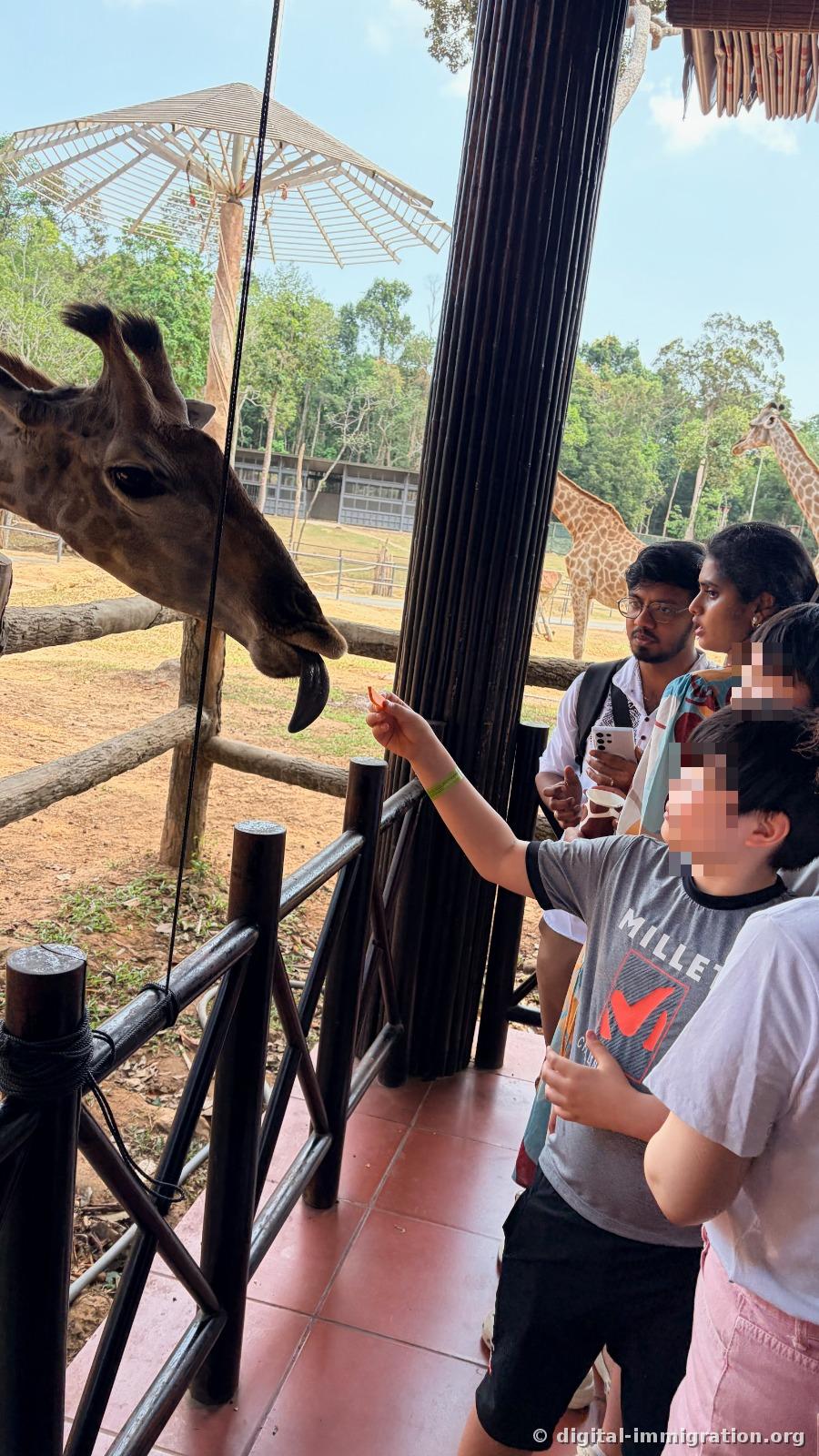
Once they succeeded once, the fear vanished. While the kids took turns holding up their hands, the giraffe didn't tire and kept lowering its neck. The kids said the tongue felt slick and warm when it brushed their palms.
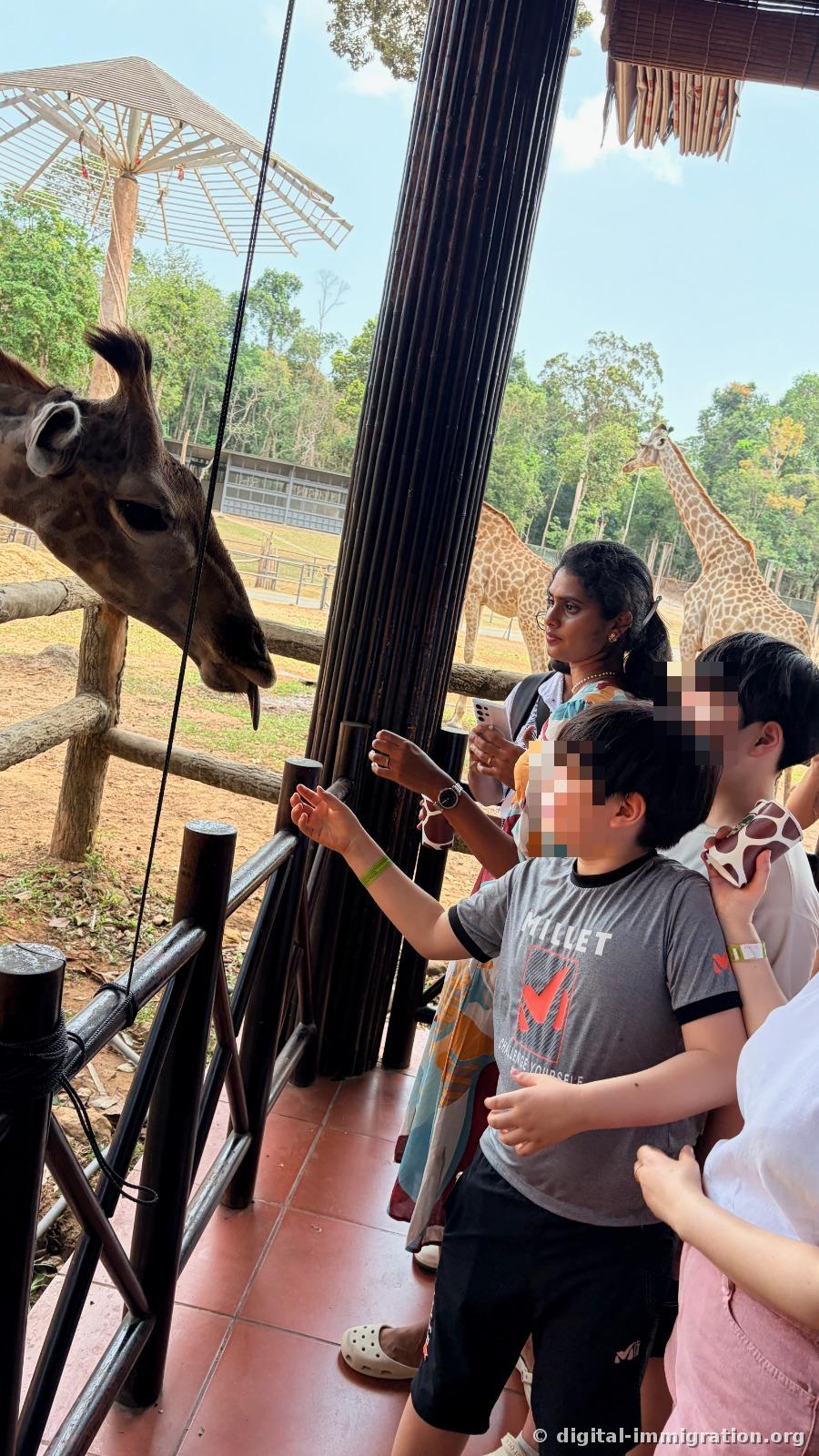
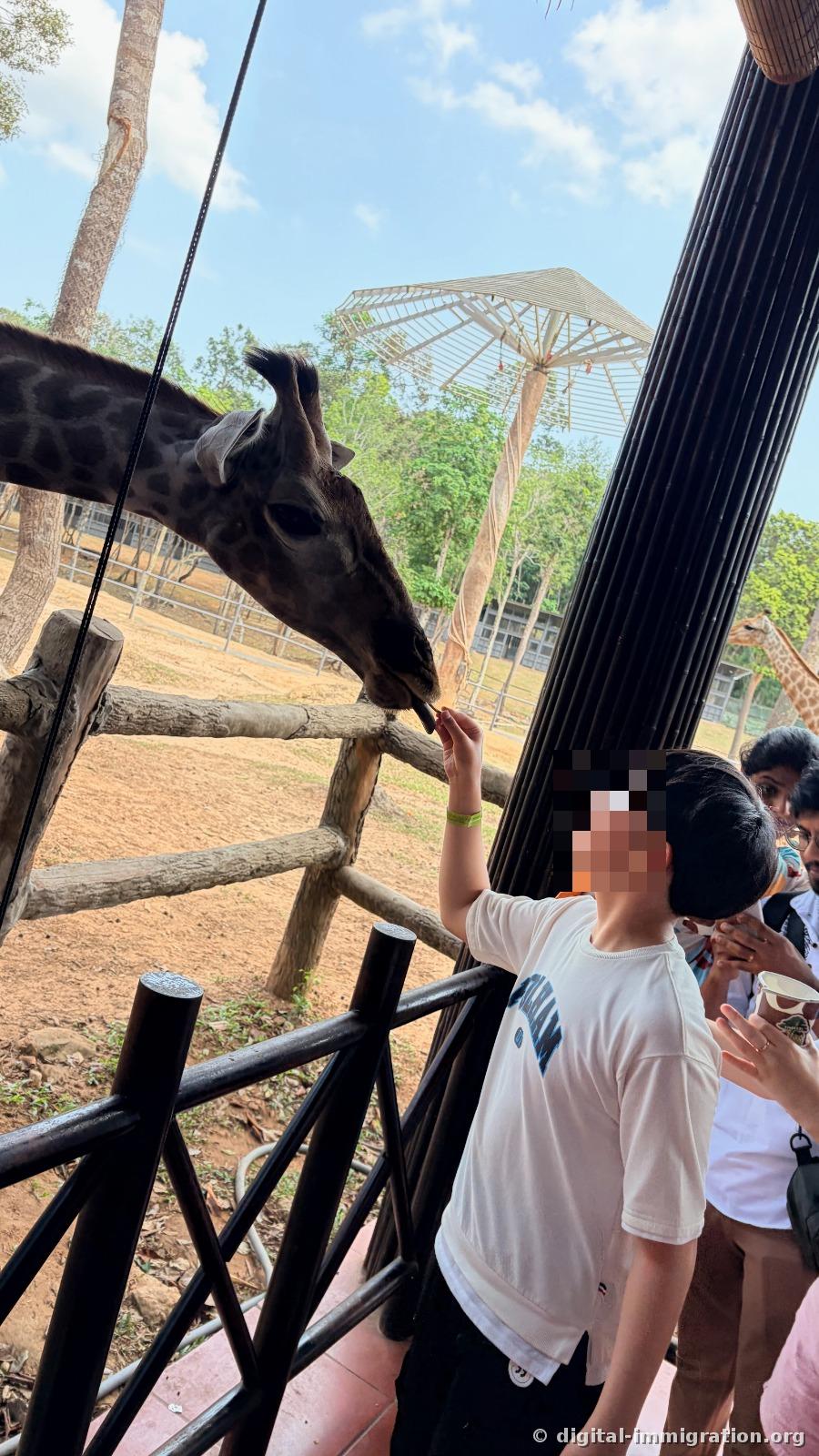
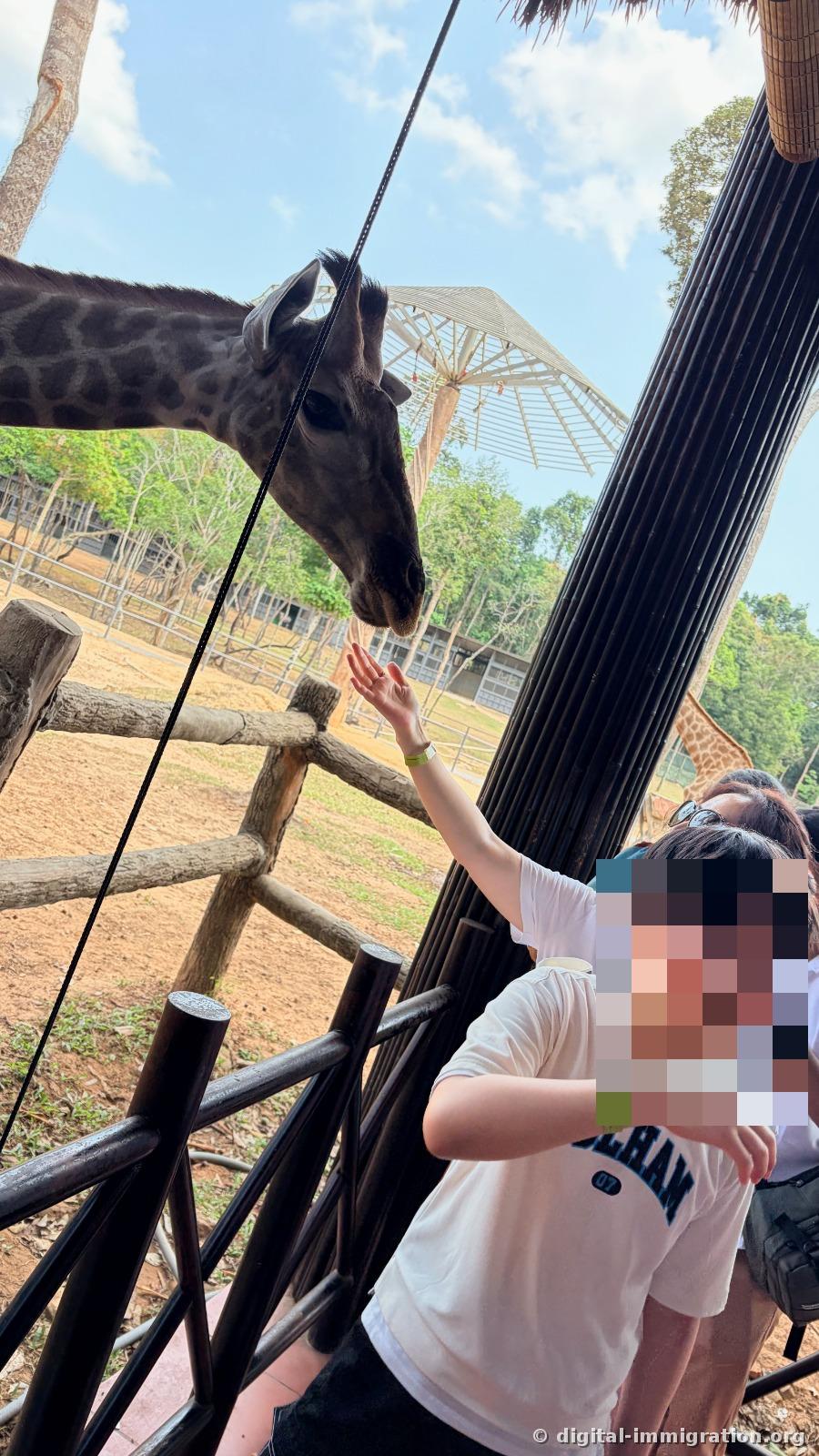
Even after the food ran out, the giraffe came down to smell their hands. When the child held up an empty hand, it brought its nose close and sniffed for a long time. Everyone agreed this moment was the highlight of the day.
Lunch With a View of the Giraffes
Near the feeding deck is a restaurant facing the giraffe enclosure. It's an open-air pavilion with a thatched roof and bamboo railings, and giraffes stand visible through the windows while you eat. There's no air conditioning—just ceiling fans and the breeze—so lunch service is quite hot. There's a reason why each table comes with several bottles of Dasani water. The window seats are in high demand, so it helps to eat slightly earlier or later.
Where the Kids Lingered Longest
Surprisingly, the kids spent the most time not with the big animals, but in the small animal enclosure. A young deer was sitting on the dirt, and when you reached out to it, it didn't run away—it just stayed still. In the shaded pen behind it, adult animals were resting.
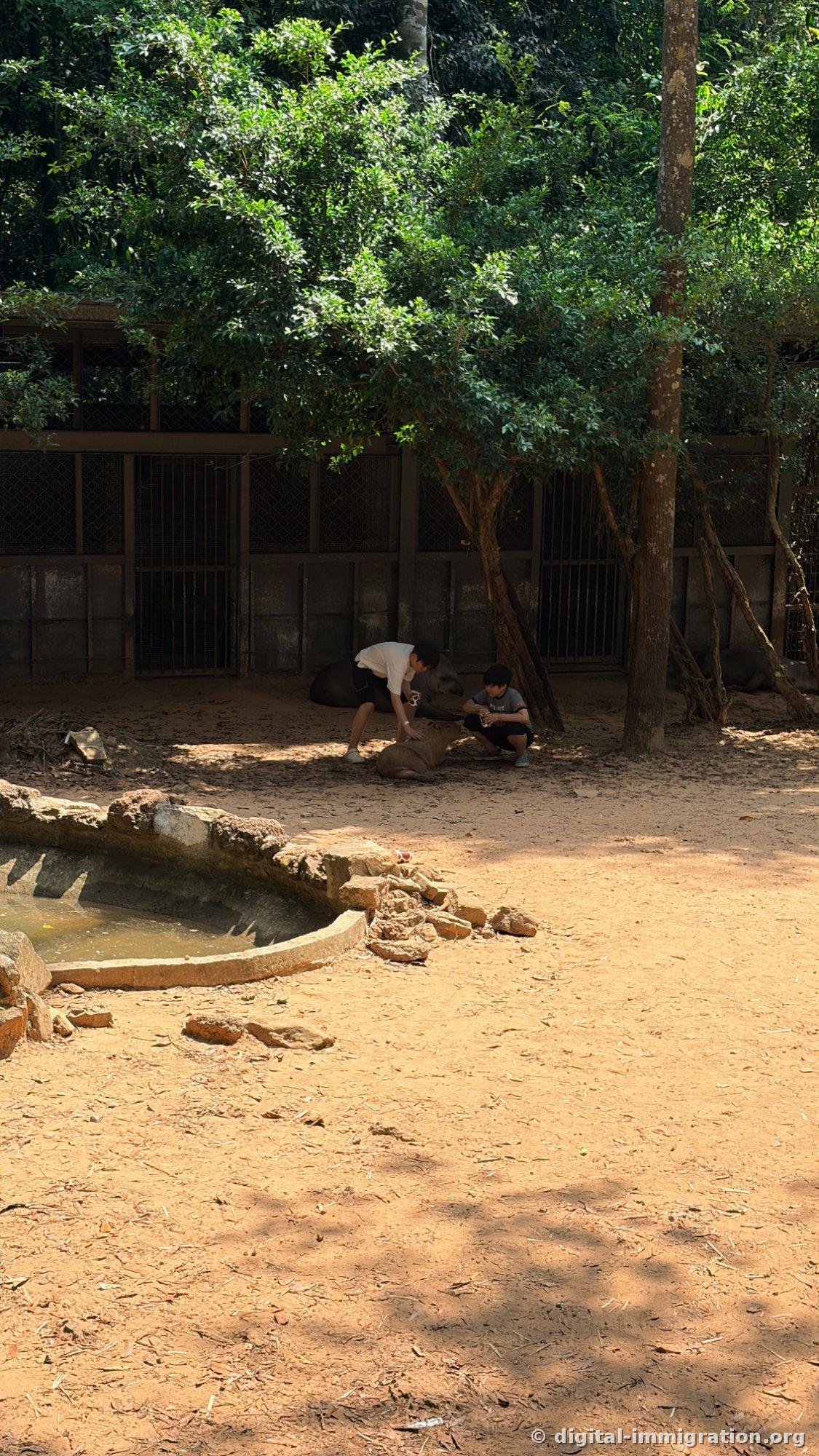
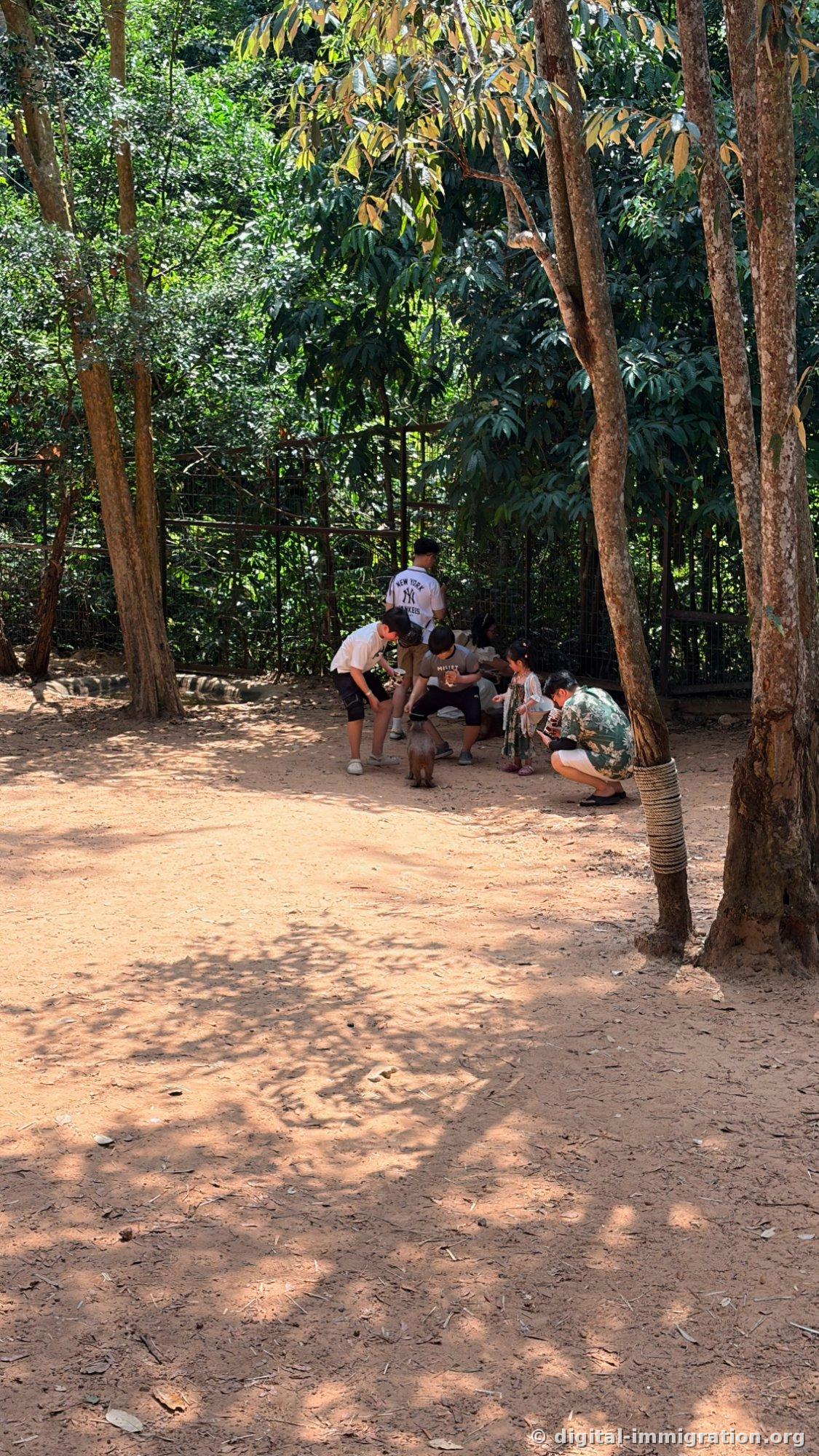
Elsewhere, five or six kids were gathered in a circle holding feed cups. As people crowded around, a young animal came into the middle and wandered around for a while. The adults were equally absorbed, crouching down to take photos.
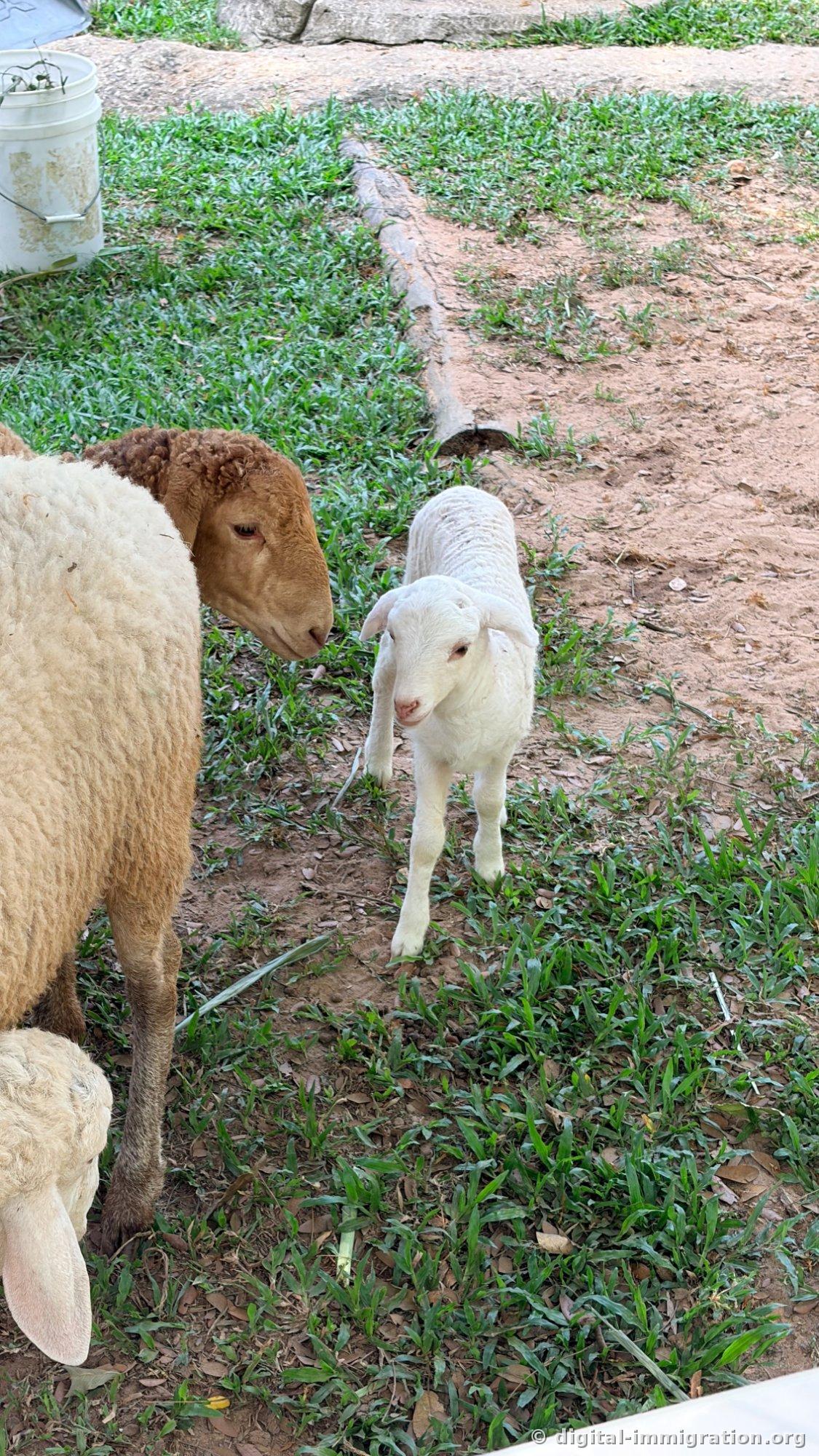
In the sheep enclosure was a lamb that looked only days old. Its coat was still short and pure white, clearly different from the mother beside it. While the mother sniffed, checking on it, the lamb toddled our way.
The Indoor Reptile House and Flamingo Pond
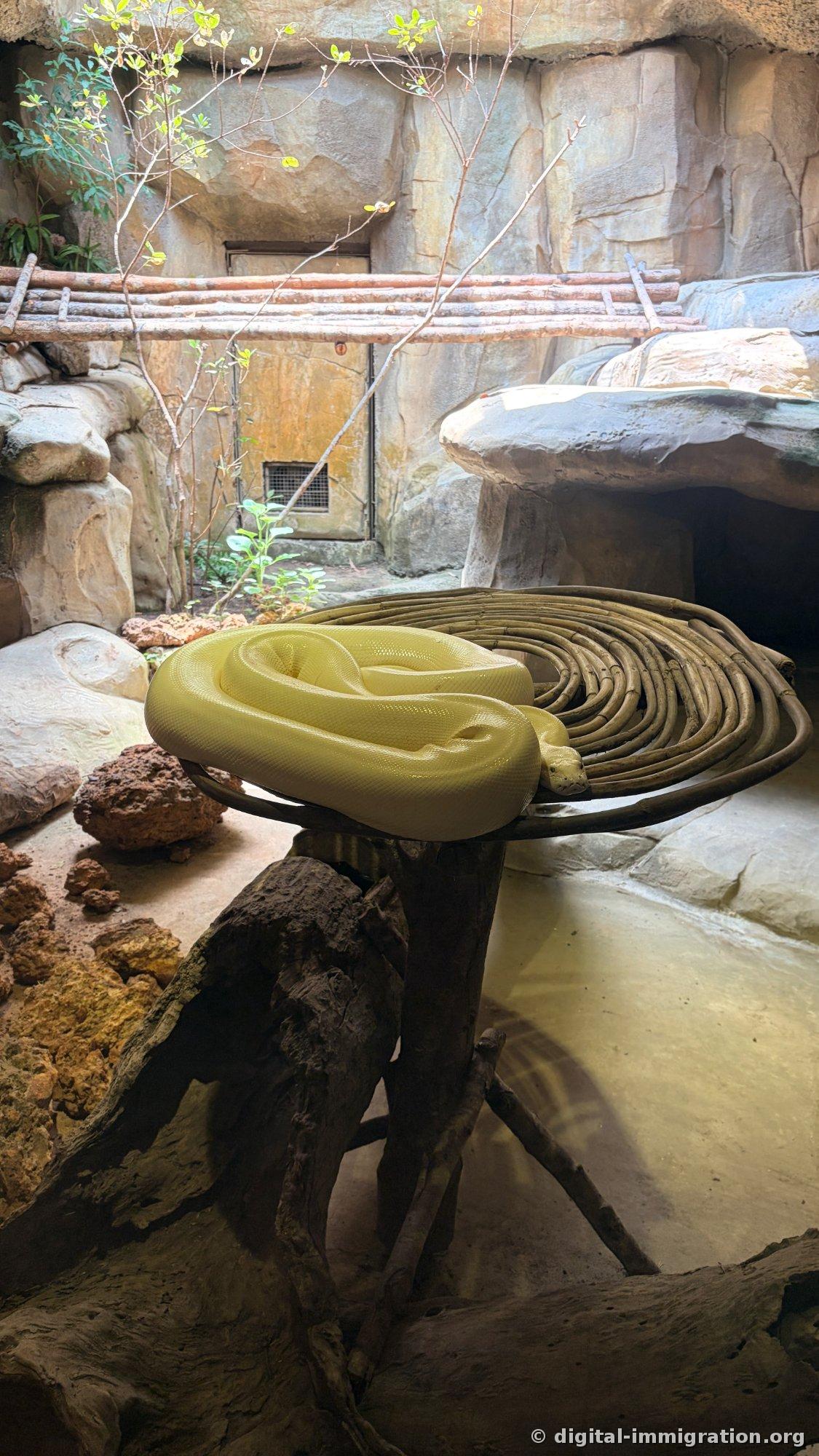
The indoor reptile house is a good refuge when you're tired of the sun. In a room decorated with artificial rock walls, a pale yellow python was coiled on a wooden perch. Its body was as thick as an adult's forearm, and its scales had a sheen. The lighting is dim, so photos don't come out well—it's better to shoot without flash, resting your arm on the railing.
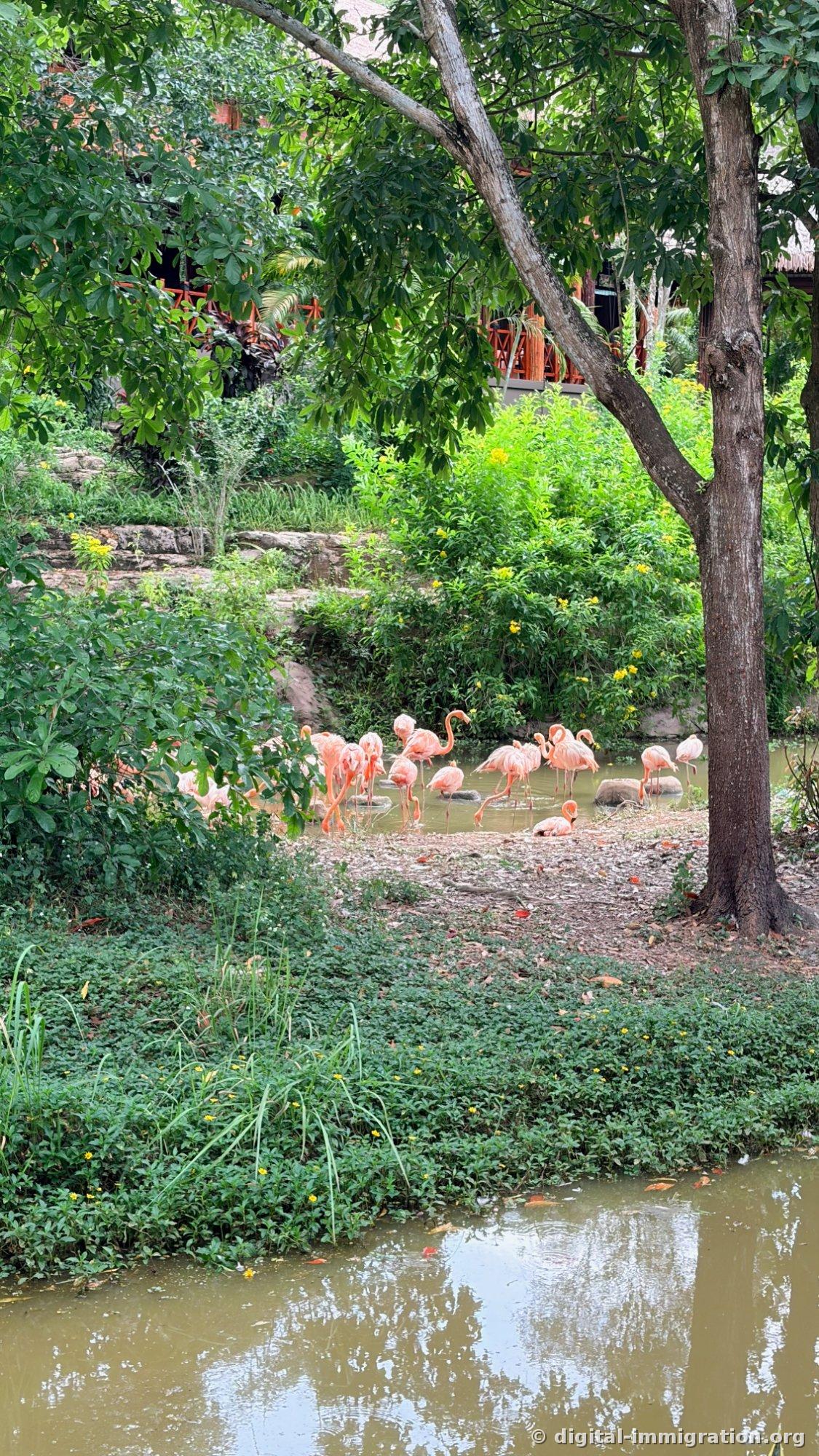
Following the path down from the exit, we came to the flamingo pond. It mirrors the pink sculpture at the entrance, but the real flamingos are much paler pink than the sculpture. About a dozen stood in the shallow water, dipping their beaks. The trees block a full view, but walking a few steps to the left end of the pond opens up the vista.
Location and Route — If We Go Again
The safari is located in the Cam Dau area in the northwest of Phu Quoc. If you start from the southern areas like Duong Dong or An Thoi, travel time alone takes a while each way, so it's more efficient to leave early, see the safari, and then head to nearby Vinwonders. Taxis are scarce in the northern part of the island, so it's best to arrange your return ride in advance. There are times when Grab isn't available.
If we go again, here's what we'd do:
- Enter right after opening and take the open safari bus first. That's when the predators are at least moving.
- The giraffe feeding gets crowded around lunchtime, so go right after the bus tour.
- A hat and water are essential. There's less shade than you'd expect, and the red dirt paths absorb all the heat.
- Wear closed-toe shoes instead of sandals. There's a lot of dust.
- Feed prices and admission fees vary by season, so check on-site or through official channels.
The zoo experience itself isn't particularly dense for its size. But those 3 seconds when the giraffe extends its neck and lays its tongue on a child's palm is a scene hard to find anywhere else. If you're bringing kids, I'd recommend spending most of your time on that deck.
Читайте дальше
- Phú Quốc VinWonders: A Full Day's Walk from the Turtle Aquarium to the Lake in Front of the Castle
We took our two children to VinWonders Phú Quốc at the north end of Vietnam's Phú Quốc island. I hadn't expected much from Southeast Asian theme parks after experiencing several, b…
седло · Винпёрл Фу Куок - Phu Quoc Grand World, Once by Day, Once by Night — Why You Should Visit Twice in One Day
Grand World is located within a Vingroup resort complex concentrated in the northern part of Phu Quoc Island in Vietnam (not An Thới, but toward Gành Dầu in the northern part of th…
седло · Гранд Ворлд Фукуок