Tokyo's Roppongi 'Udon Kurosawa (饂飩くろさわ)' — The Day I Had Black Pork Curry Nanban Udon and 350 Yen Menchikatsu
In a small alley just off the Roppongi intersection, nestled between glass and concrete buildings stands a two-story wooden structure. It's Kurosawa (くろさわ), an udon restaurant in M…
Токио · Куросава Роппонги
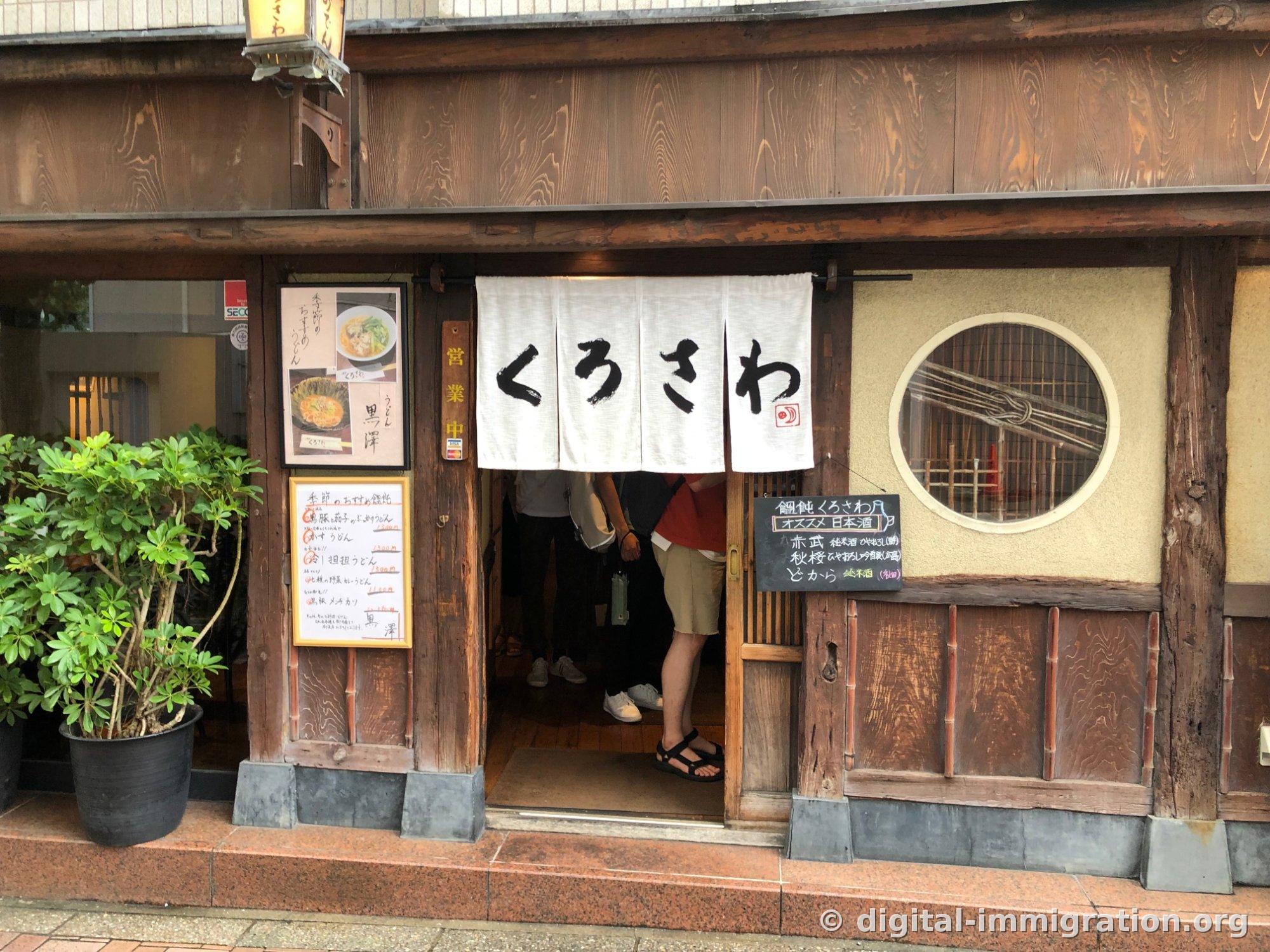
In a small alley just off the Roppongi intersection, nestled between glass and concrete buildings stands a two-story wooden structure. It's Kurosawa (くろさわ), an udon restaurant in Minato Ward, Tokyo. The white noren curtain bears only four brushstroke characters: 'くろさわ', with a wooden sign reading 営業中 (Open) beside it. At first glance, you might mistake it for an izakaya and walk right past. But when you spot the hand-written menu on the door listing udon names one after another, you realize: ah, it's an udon place.
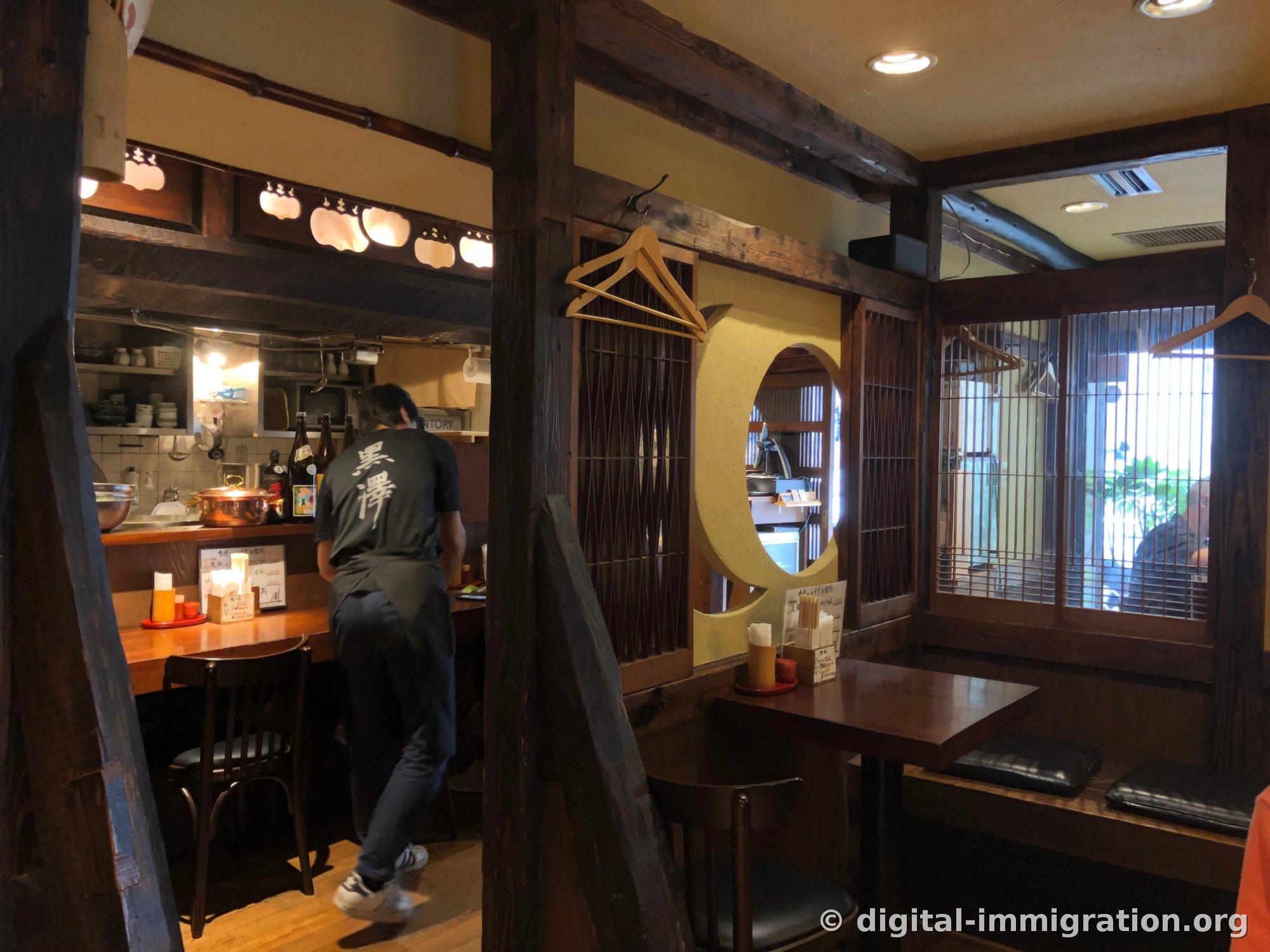
Even arriving mid-afternoon, someone was already standing at the entrance removing their shoes. Beyond the narrow entryway opens a hall with thick exposed ceiling beams. Behind the counter, a copper pot sits over a flame, tended by a staff member in a t-shirt emblazoned with '黒澤' on the back, quickly weaving between tables. One wall has a round window, with coats hung on nails beside it. Despite being in the heart of Roppongi, the noise level is surprisingly subdued—just the clatter of dishes and the sound of broth being poured.
The Menu — Just Remember: Prices Are Before Tax
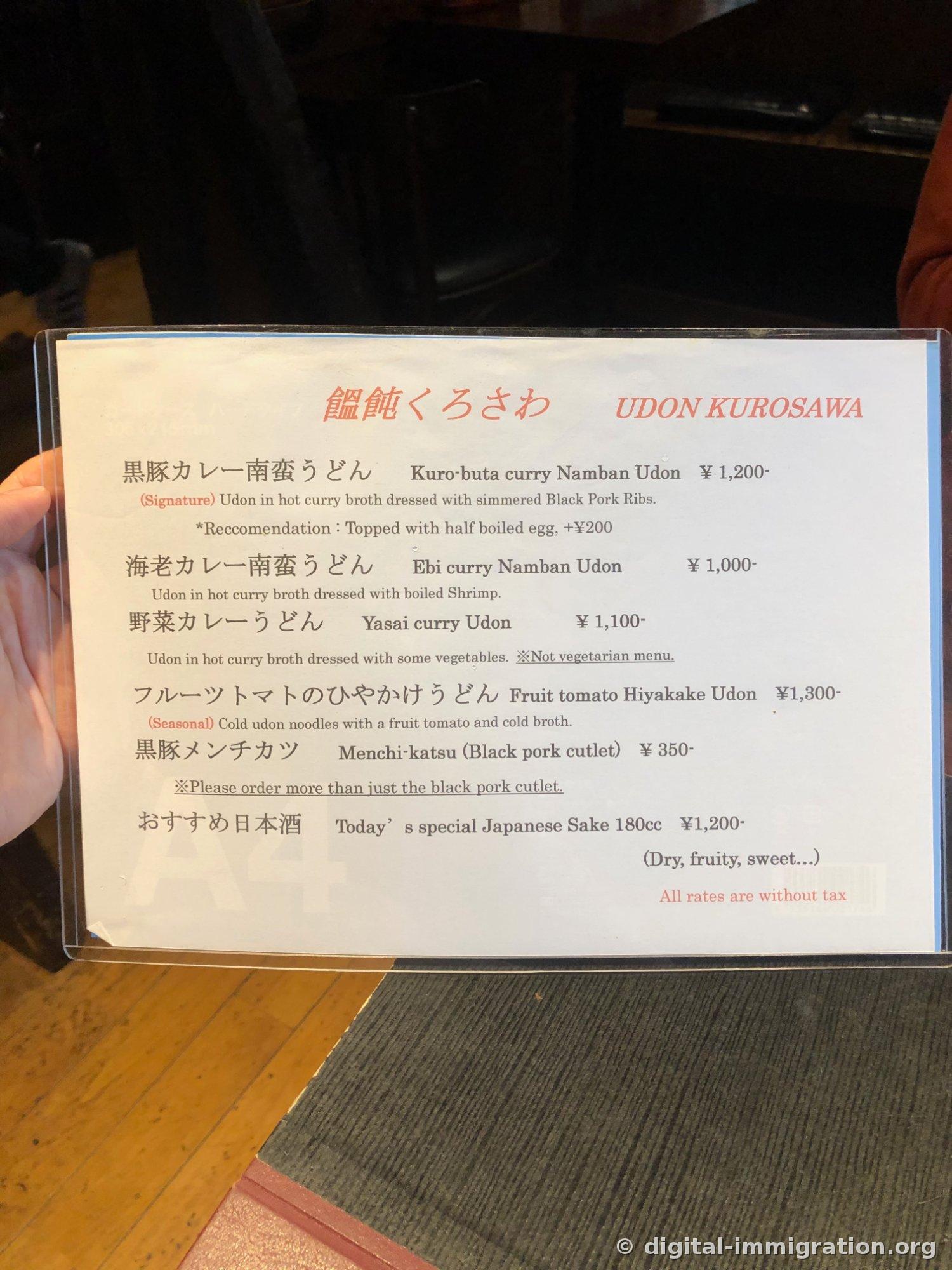
Once seated, you're given an A4-sized acrylic menu with Japanese and English side by side—easy to read. The signature dish is Black Pork Curry Nanban Udon (黒豚カレー南蛮うどん) at 1,200 yen—spicy curry broth with stewed black pork ribs. The menu explicitly recommends adding a soft-boiled egg (+200 yen). Shrimp curry nanban udon costs 1,000 yen, and vegetable curry udon is 1,100 yen, but the vegetable option has a note firmly stating it's "not a vegetarian dish." The seasonal offering is Fruit Tomato Chilled Dipping Udon at 1,300 yen. Today's recommended sake is 1,200 yen for 180cc.
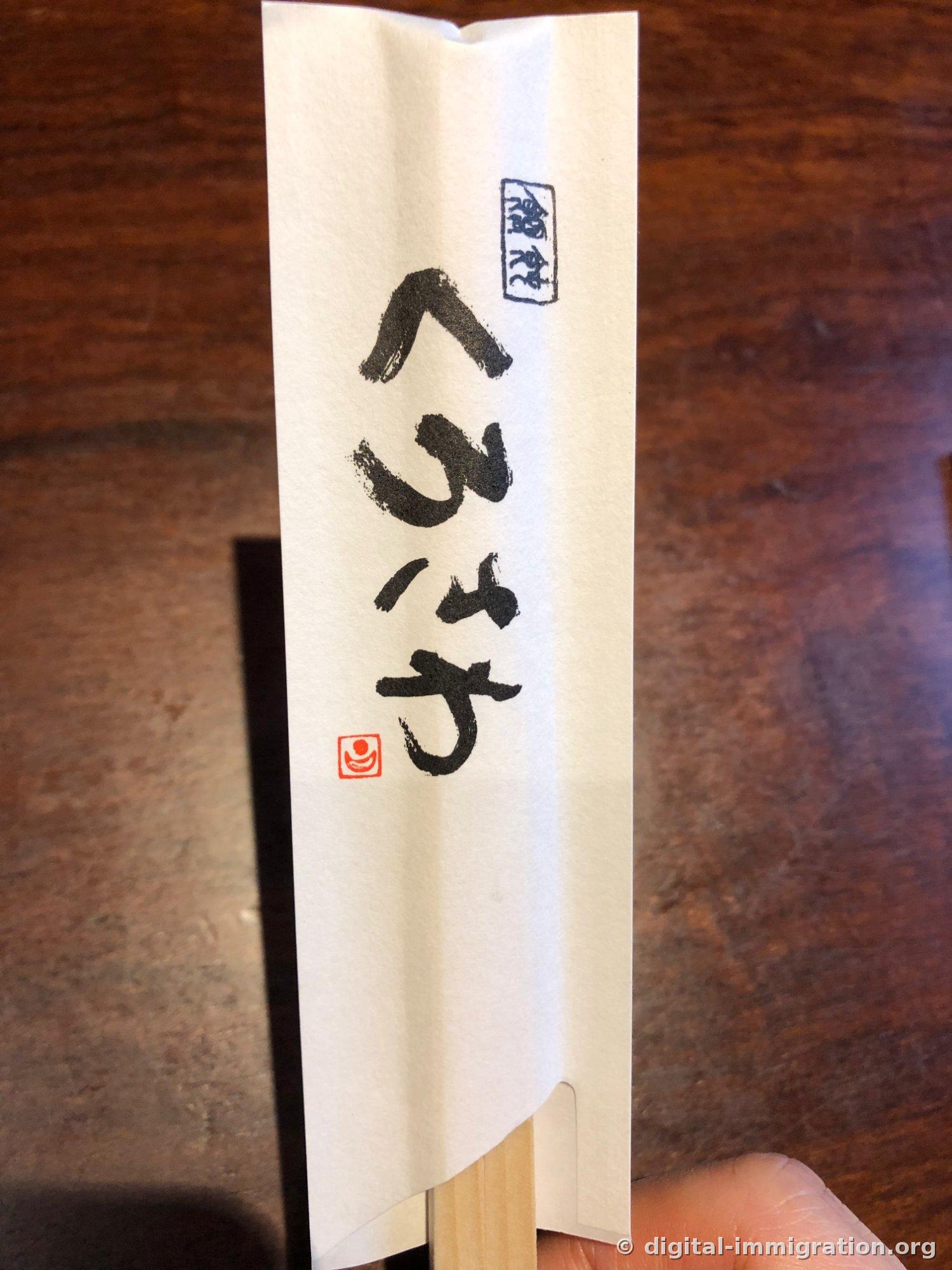
Even the chopstick sleeves have the shop's name in brushstroke calligraphy. The paper is thin, with ink bleed marks still visible—a sign of how much care the restaurant puts into every detail.
350 Yen Black Pork Menchikatsu — You Can't Order It Alone
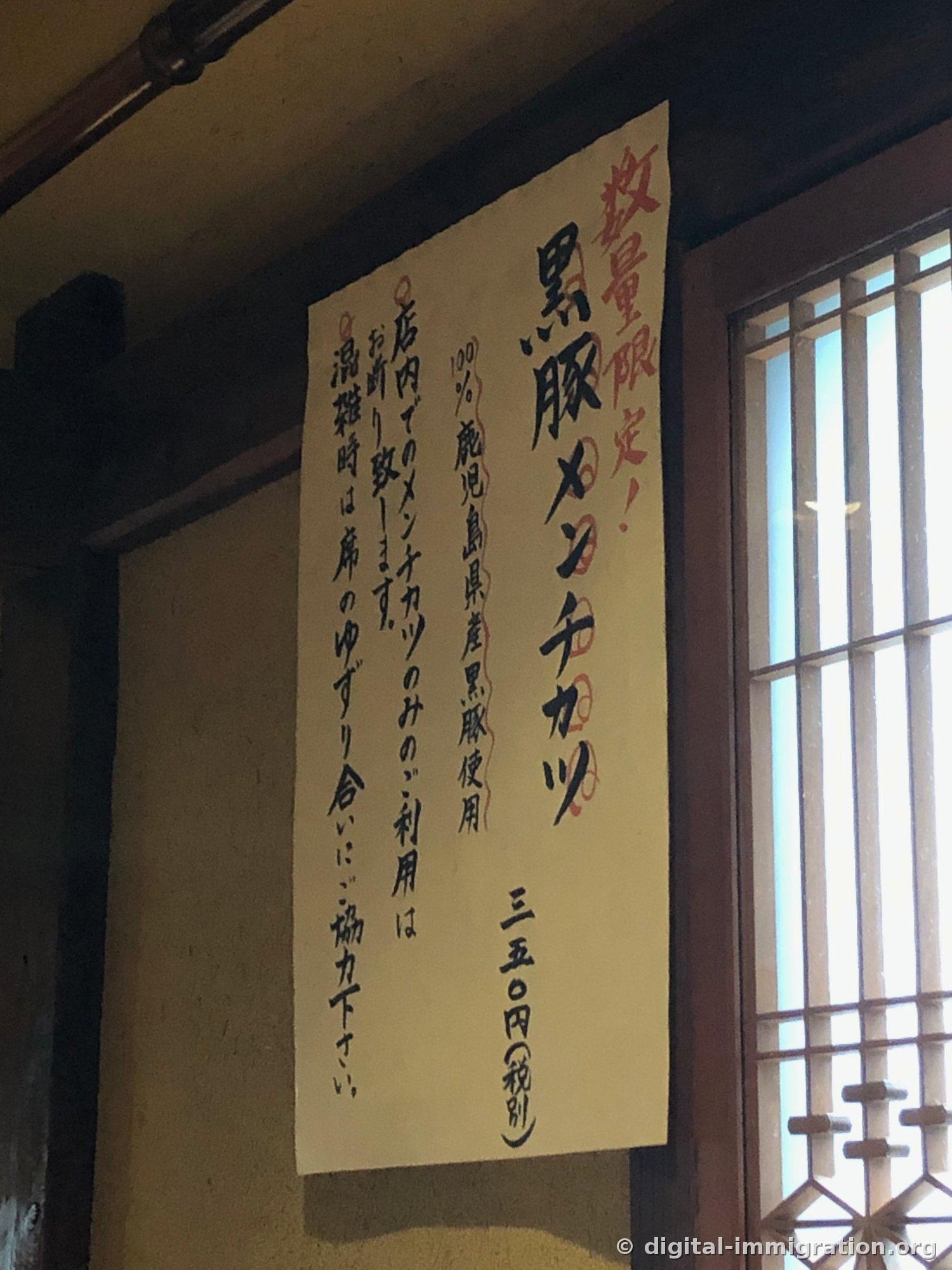
I almost missed the handwritten notice on the wall. Below the red letters 数量限定 (Limited Quantity) it states Black Pork Menchikatsu (黒豚メンチカツ) 350 yen (tax not included), using 100% Kagoshima black pork. Below that are two important lines: the restaurant declines to serve menchikatsu as a standalone order, and requests cooperation with table-sharing during busy hours. The same stipulation appears on the menu with underlining for emphasis. In other words, you must order udon with it.
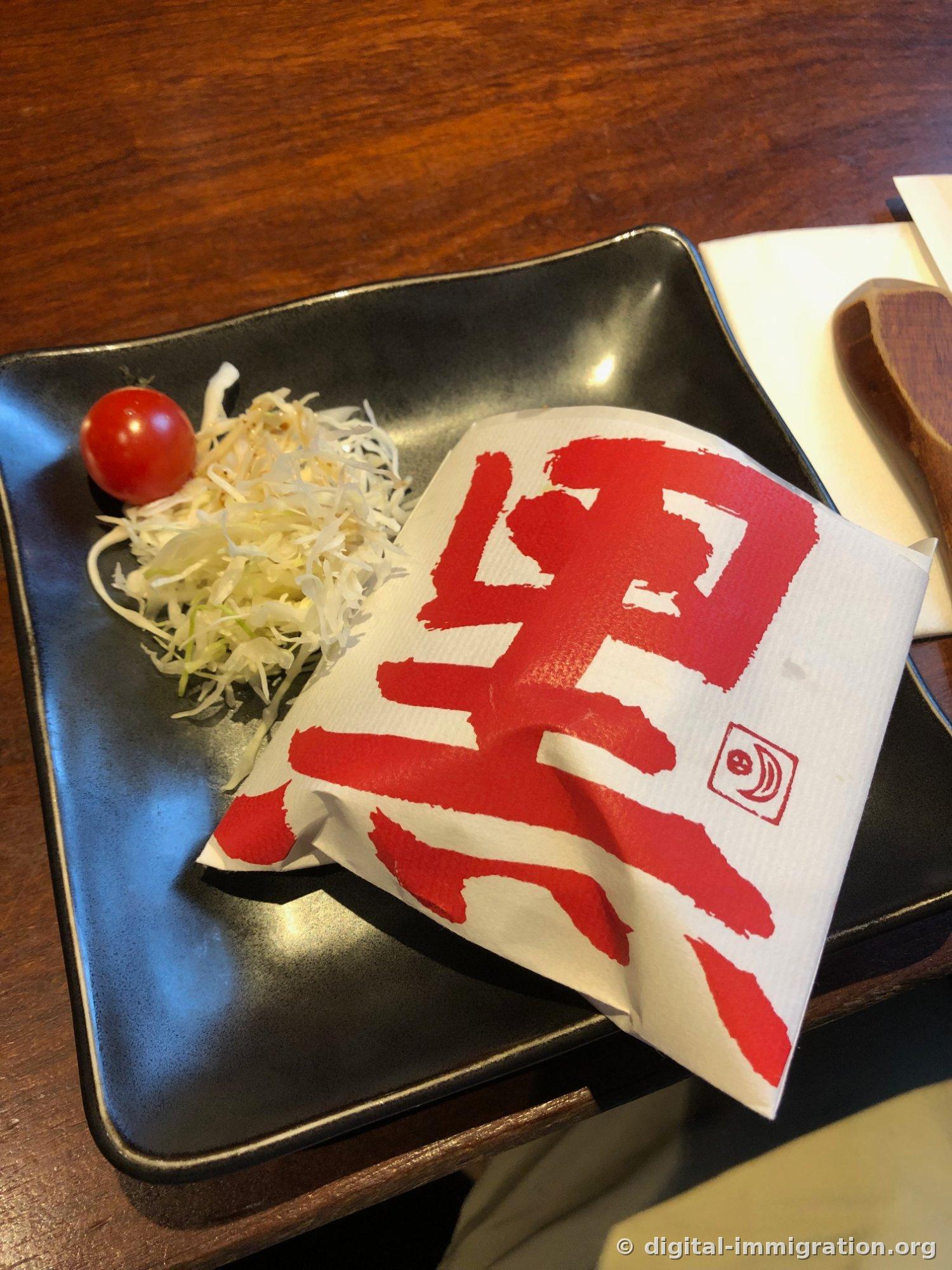
When ordered, it arrives first on a black rectangular plate: shredded cabbage, cherry tomatoes, and a sheet of white paper stamped with a bold red '黒' character as the base. The fried cutlet sits atop the paper. For a moment I wondered if that was it, but then the freshly fried menchikatsu was brought out.
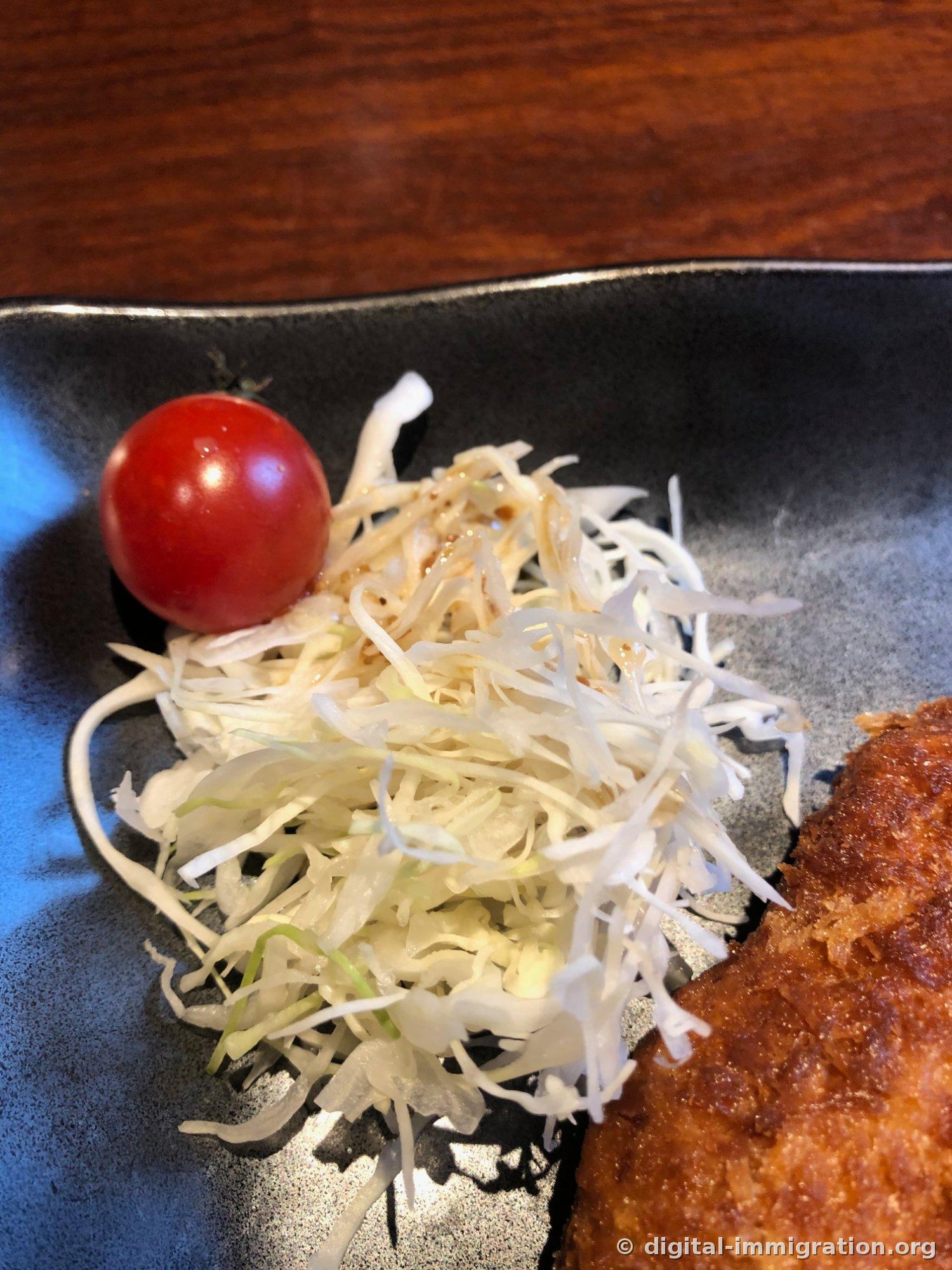
The accompanying cabbage is lightly dressed with sesame vinaigrette. When your mouth gets hot from the curry broth, a bite of this cabbage resets your palate—very effective. The cherry tomatoes were refreshingly cold.
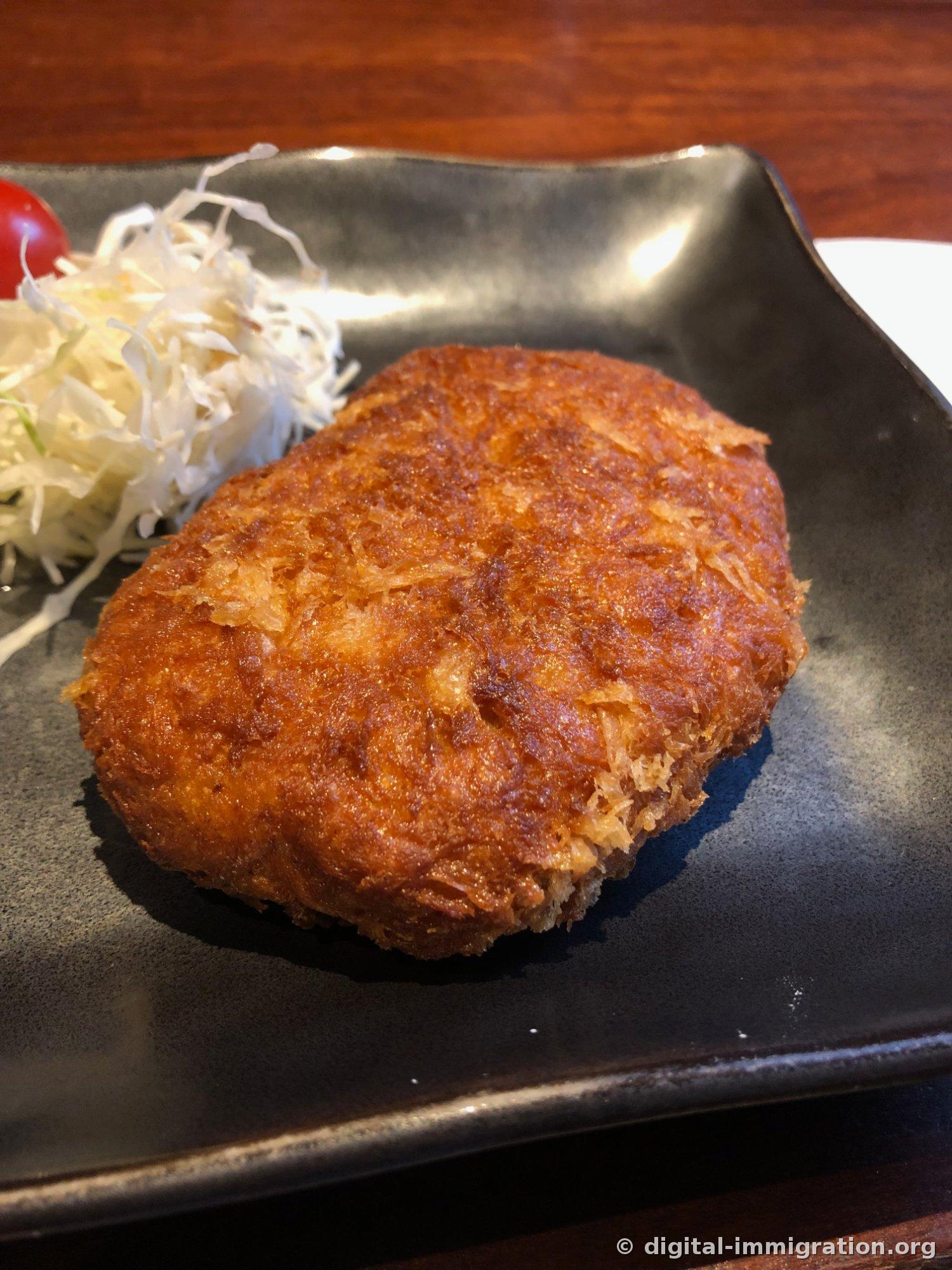
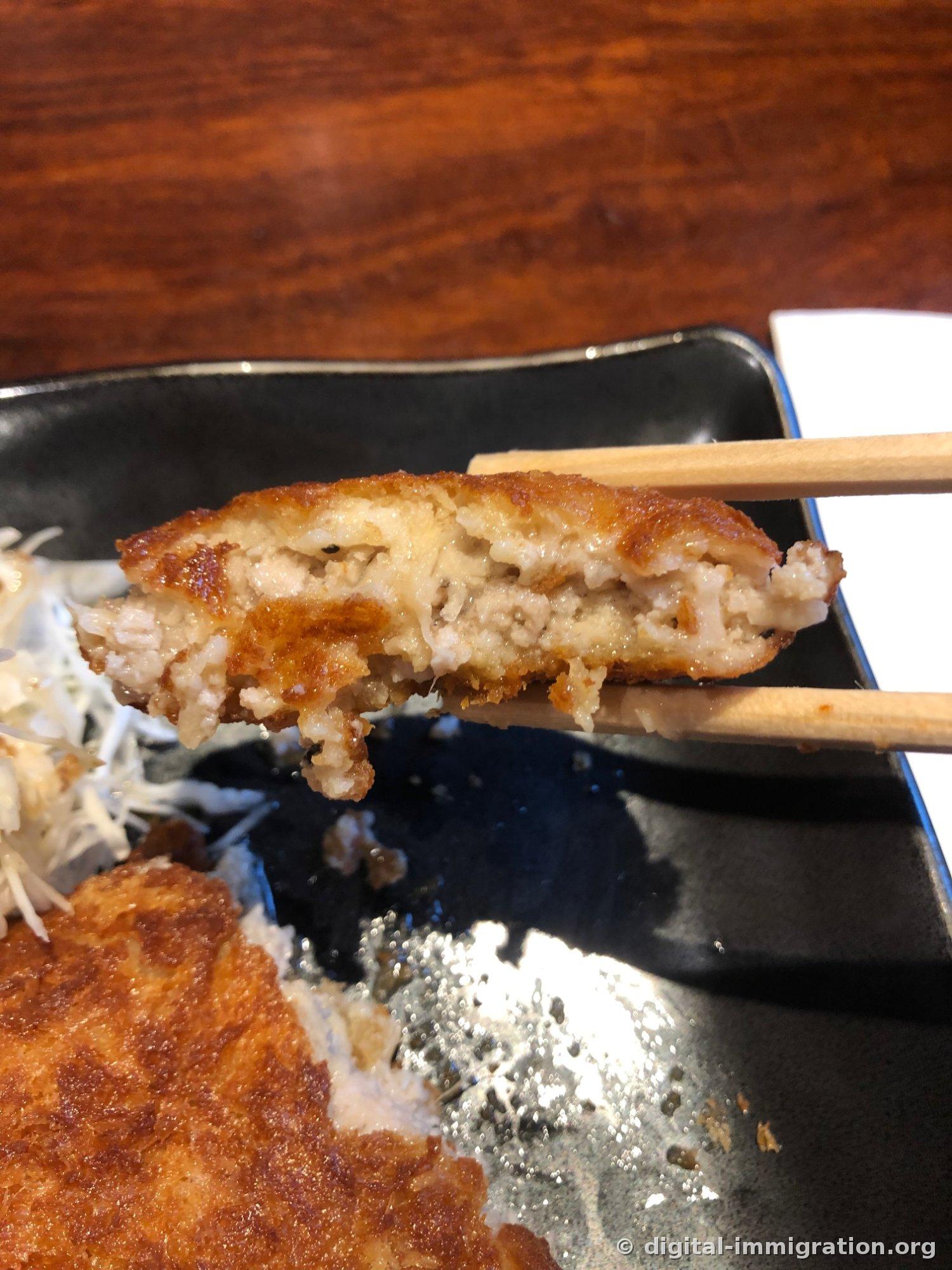
Cut in half, the interior is pale. Since it's pure pork without beef, the cross-section has this color. The ground meat maintains visible, chunky texture—satisfying to bite through—without being the juice-dripping type. Instead, the oil feels light. Even without sauce, the seasoning is spot-on. At 350 yen, you don't feel shortchanged for Tokyo prices. Though one cutlet is a bit small to share between two people—if I return, I'd order two from the start.
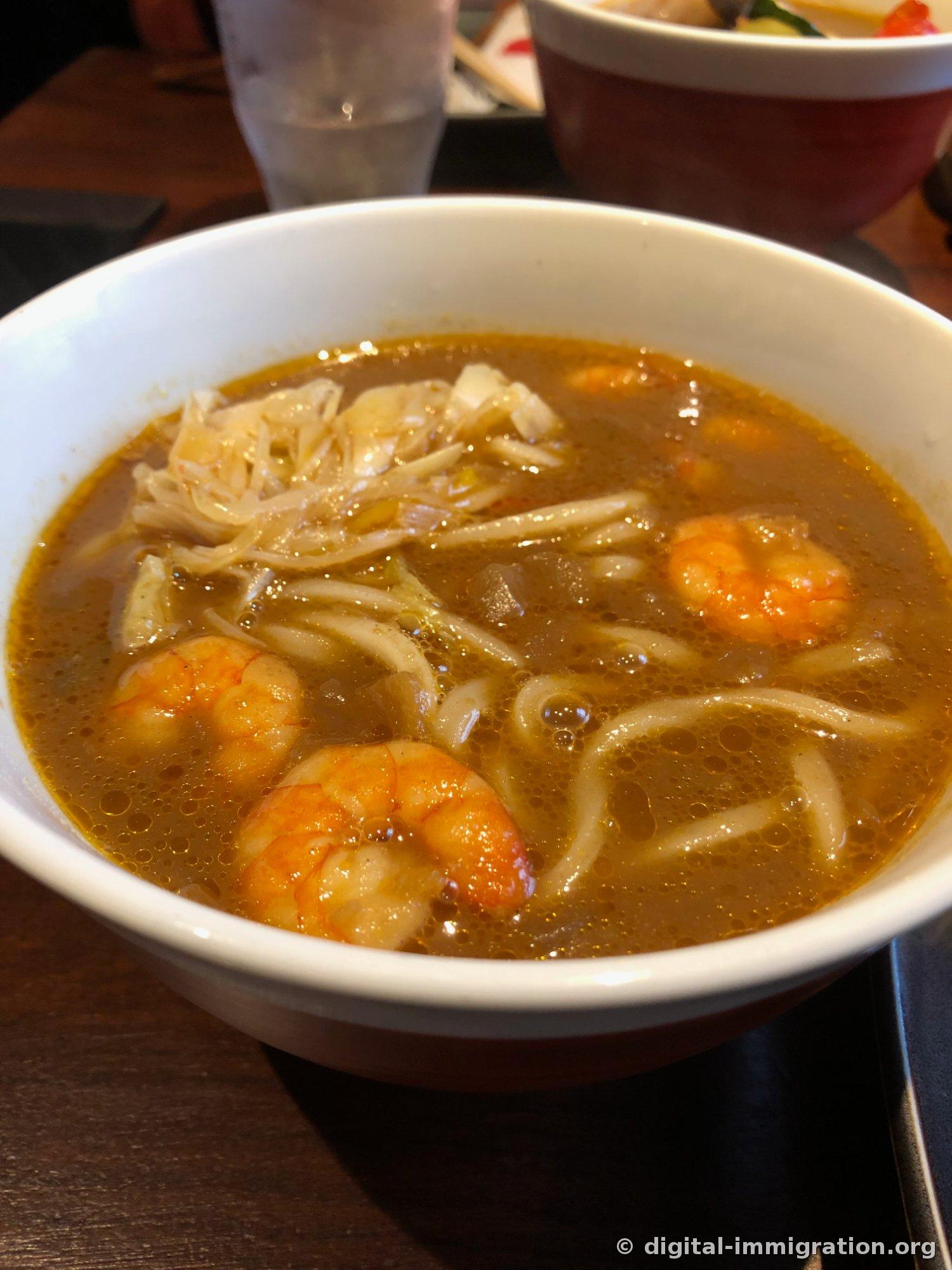
Shrimp Curry Nanban Udon — 1,000 Yen
Though black pork is the signature, I went with shrimp this time. A white bowl arrives filled to the brim with rich brown broth, its surface dotted with fine foam. The curry is dissolved into the dashi broth rather than added as powder, so there's no dusty aftertaste—the bonito aroma comes first. About four whole shrimp are included. Onions are sliced lengthwise, infusing the broth with sweetness.
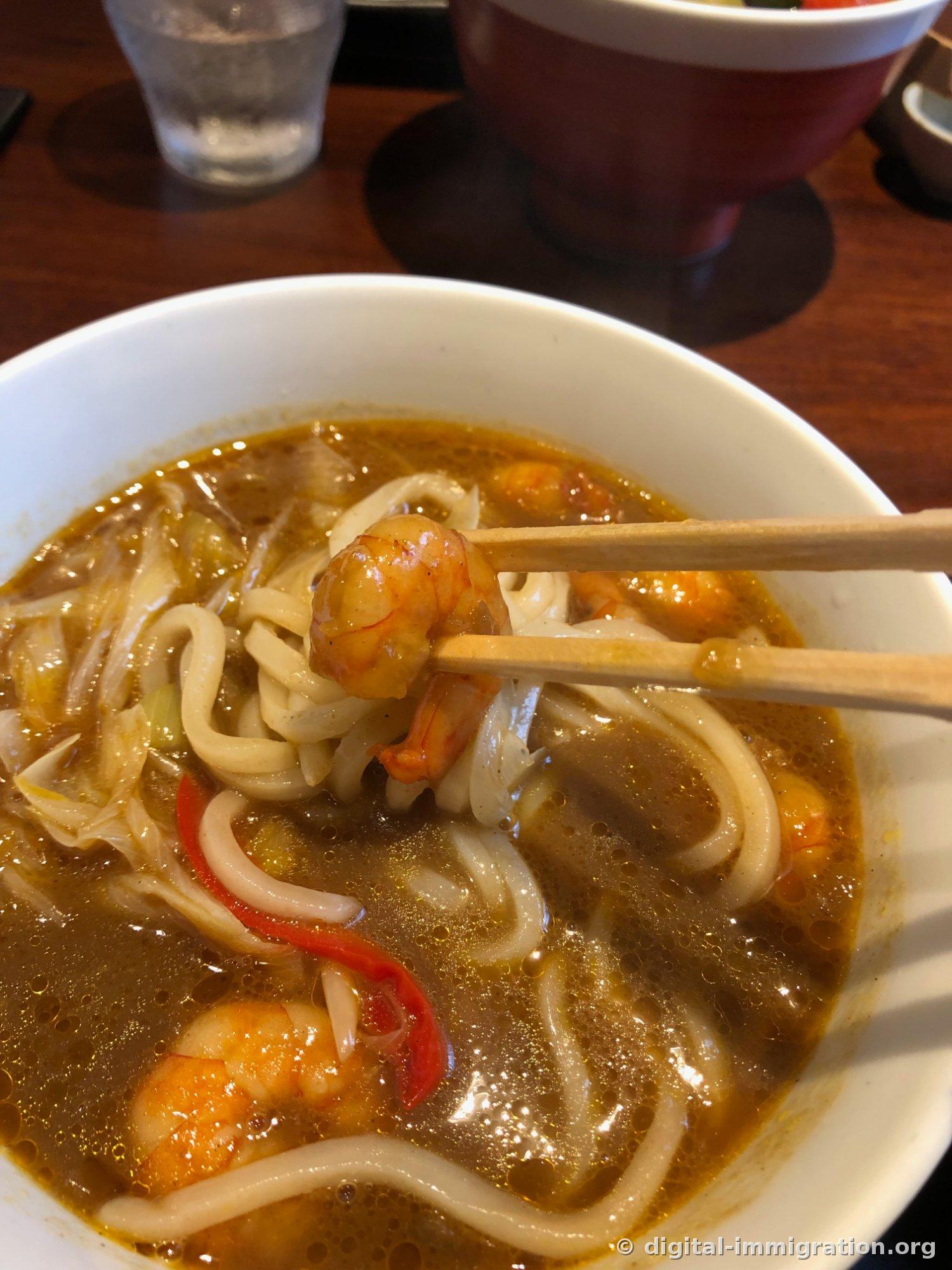
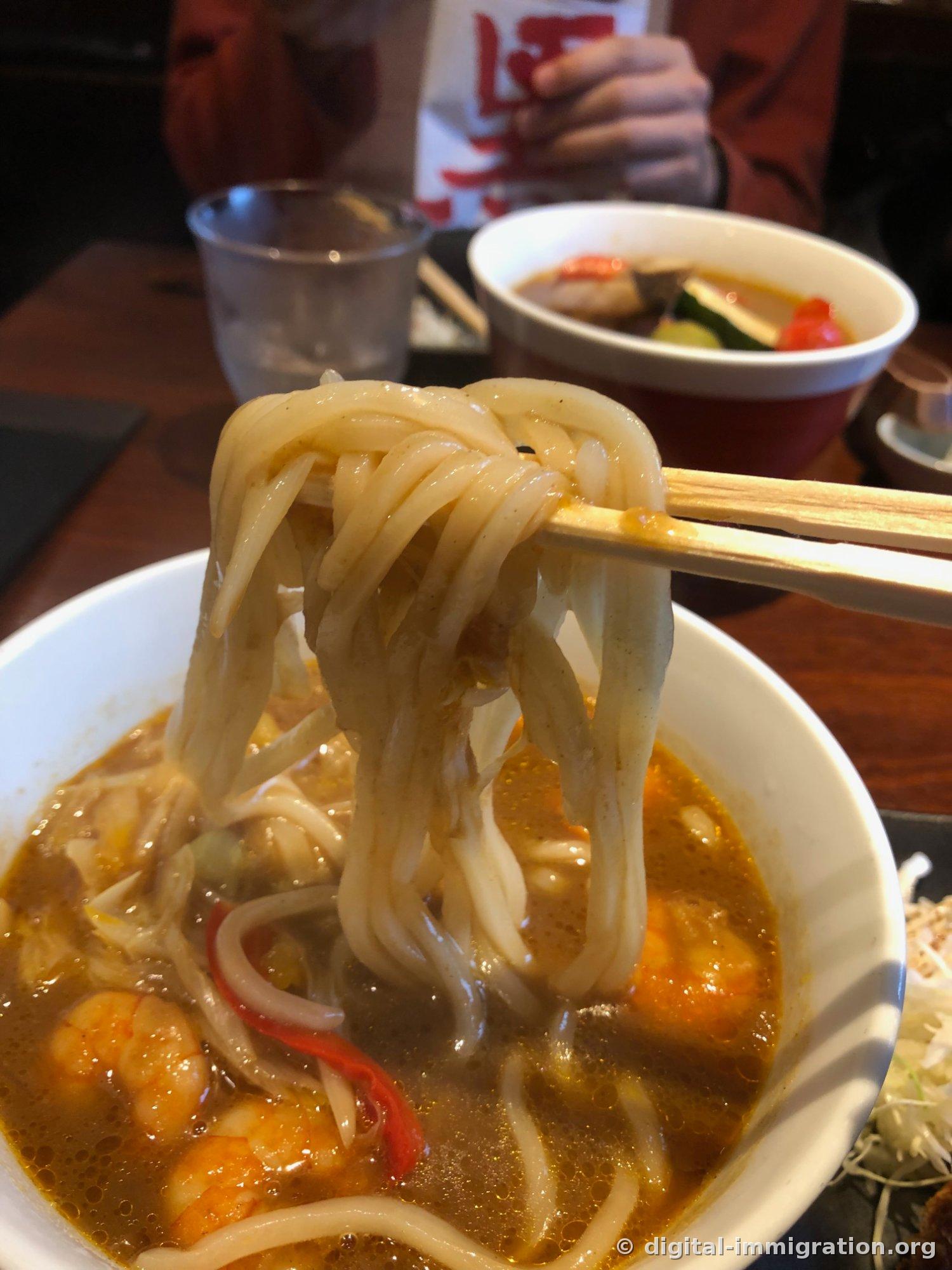
The noodles are thick with defined edges. The viscous curry clings to them as they're lifted, and they're soft outside but firm inside when bitten. Not rigidly al dente like Sanuki style, but more on the side of absorbing the broth. The broth splatters easily, so avoid wearing white. They don't provide an apron.
How to Find It and What Actually Helped
It's walkable from Roppongi Station. Located not on the main street but in a side alley one block over, so once you're near the spot on your map, it's faster to look for the white noren than a sign. The low, wooden structure stands out distinctly against the surrounding buildings.
- The menchikatsu is limited quantity. If you arrive late, it may be sold out, so best to ask as soon as you're seated.
- Menchikatsu cannot be ordered alone—udon must be purchased with it.
- All menu prices are before tax. A 1,200 yen udon will be roughly 1,300 yen with tax included.
- There's a notice on the wall about requesting table-sharing during busy times. If you go alone, the counter is the most convenient.
- Hours and closures may vary seasonally, so it's recommended to confirm on-site before visiting.
A curry udon, one menchikatsu, and tax all came to less than 1,500 yen. In Roppongi, it's rare to find this much care put into a meal at this price. Next time I come, I'm ordering the black pork version with the 200 yen soft-boiled egg add-on. I'm curious how a runny yolk will transform such a rich broth.
Читайте дальше
- From Akihabara's Chuo-dori to the Kanda River: A Record of Tokyo's Electronics District Revisited Multiple Times
Tokyo's Akihabara is a neighborhood where it's hard to say you've seen everything in a single visit. I've come multiple times across different seasons, and each time the signs chan…
Токио · Акихабара - Buying a Single ¥300 Year-End Jumbo Lottery Ticket at Nishi-Ginza Chance Center in Tokyo
Exit from the Hibiya exit of Tokyo's Shimbashi Station, walk toward the elevated highway for about three minutes, and suddenly you'll see a line of people stretching along the side…
Токио · Нишигинза Центр Шансов - Ueno Ameyoko, the real magic starts after sunset — an evening walk from the Okachimachi Gate to Ueno Station
Every time I come to Tokyo, my feet find their way to Ueno Ameyoko (アメ横) without fail. This time I entered from the Okachimachi side and worked my way toward Ueno Station. I've met…
Токио · Амэёко рынок