Late November at Tokyo University's Hongo Campus, when ginkgo trees turned the entire street golden
Tokyo University's Hongo Campus in Tokyo's Bunkyo Ward isn't a tourist destination. But come late November and it becomes one of Tokyo's most celebrated autumn foliage spots. There…
Токио · Токийский университет
Tokyo University's Hongo Campus in Tokyo's Bunkyo Ward isn't a tourist destination. But come late November and it becomes one of Tokyo's most celebrated autumn foliage spots. There's one reason: ginkgo trees. The straight row of ginkgos from the main gate to Yasuda Auditorium turns golden all at once, and though you can see it in photos beforehand, standing beneath them in person feels entirely different. I entered from Hongosancho Station around 9 a.m., and already people had set up tripods along the street.
The main gate sets the tone
Standing before the main gate, you see a golden tunnel stretching beyond the granite columns and iron decorative gate. The gate frame acts as a picture frame, so many people just photograph it here and leave. On the left brick column there's a sign listing opening and closing times—apparently different gates have different hours, and some close on weekends and holidays. It's best to check the specific times in person when you visit.
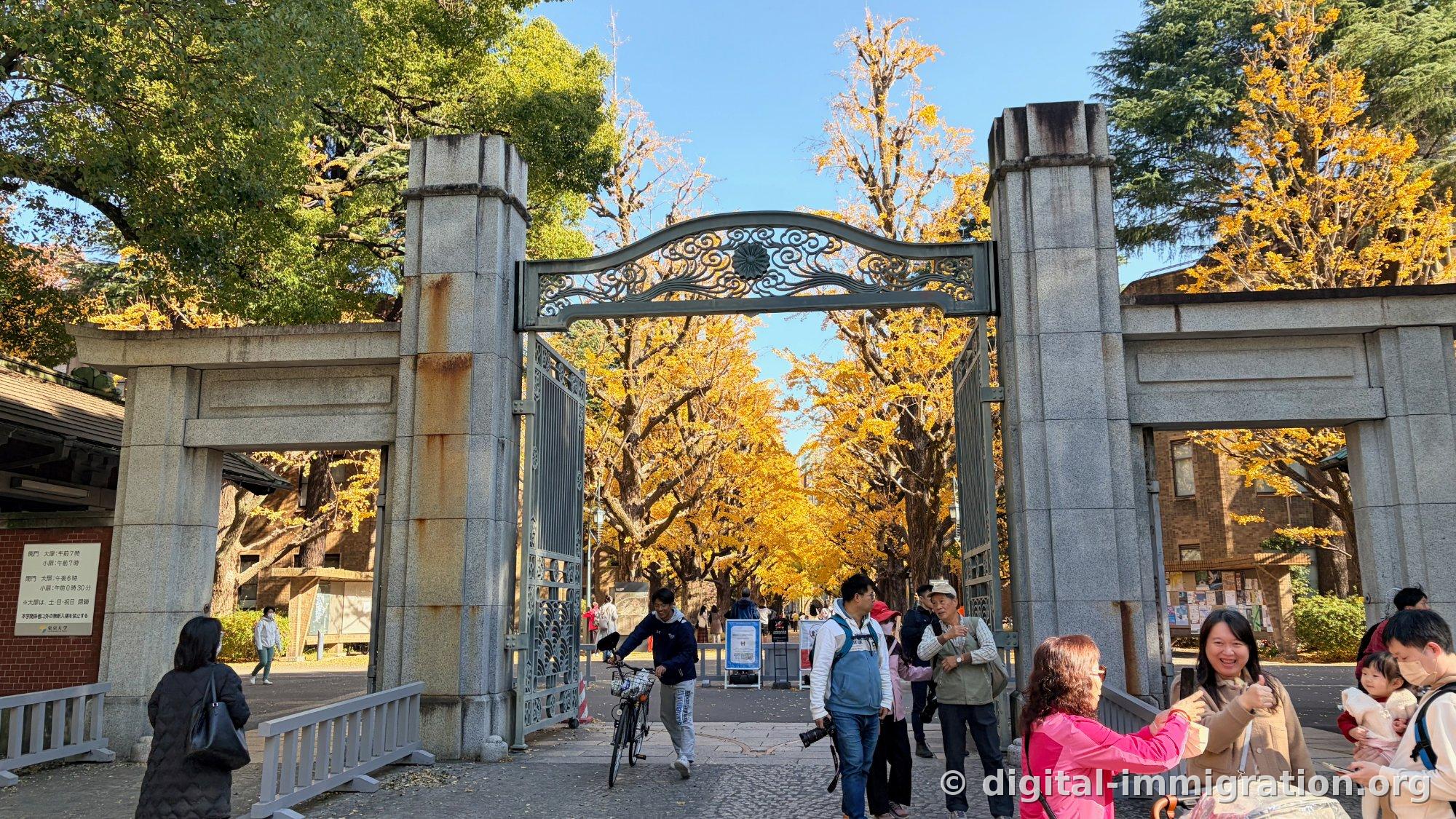
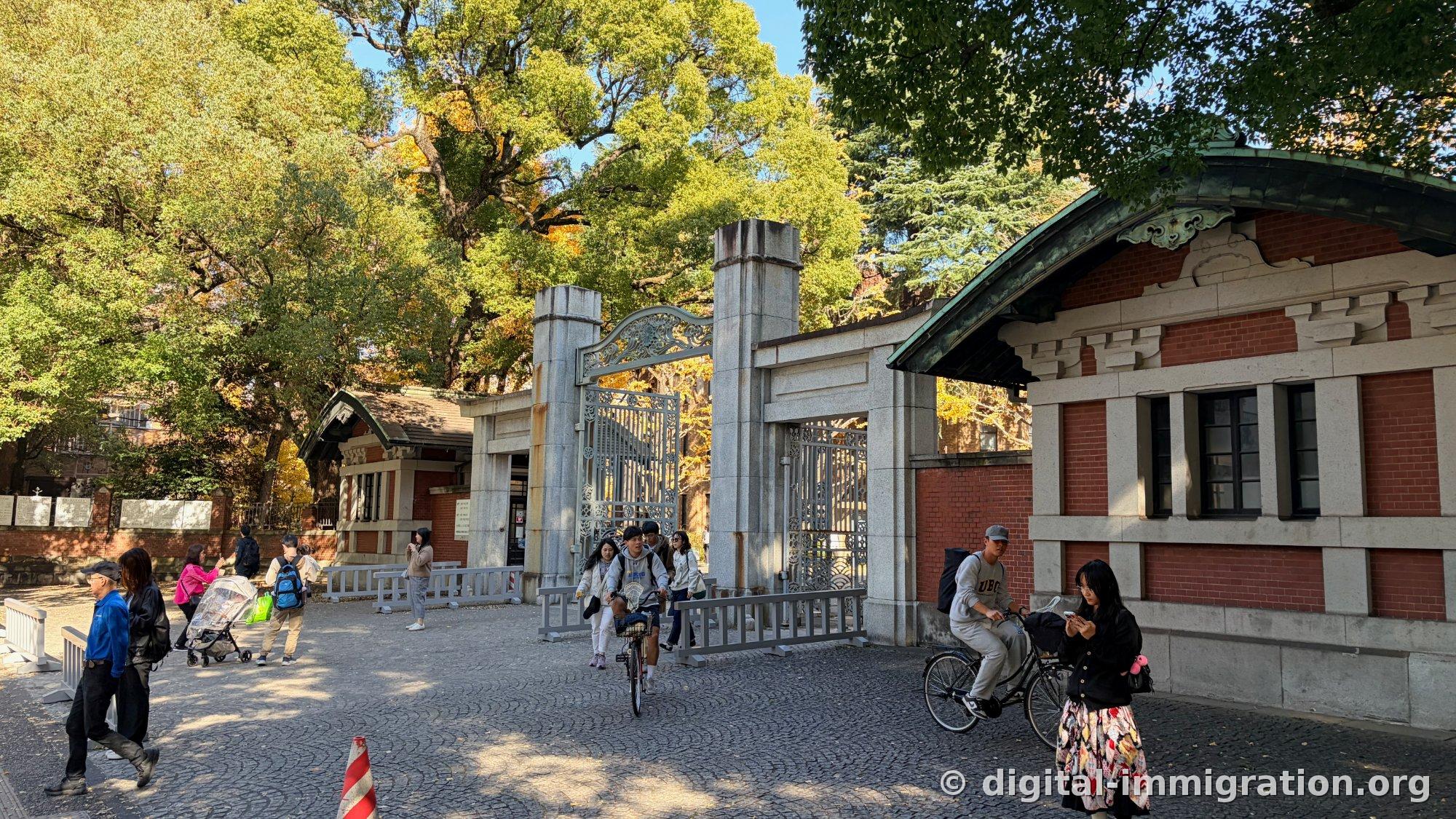
Next to the gate stands a red brick gatehouse with a green copper roof. The stone floor is laid in a fan pattern that's worth looking at. Students simply cycle past it without stopping. Tourists pause and look up at the sky; students pedal on. That contrast is the basic rhythm of this campus.
The ginkgos are absolutely stunning in autumn
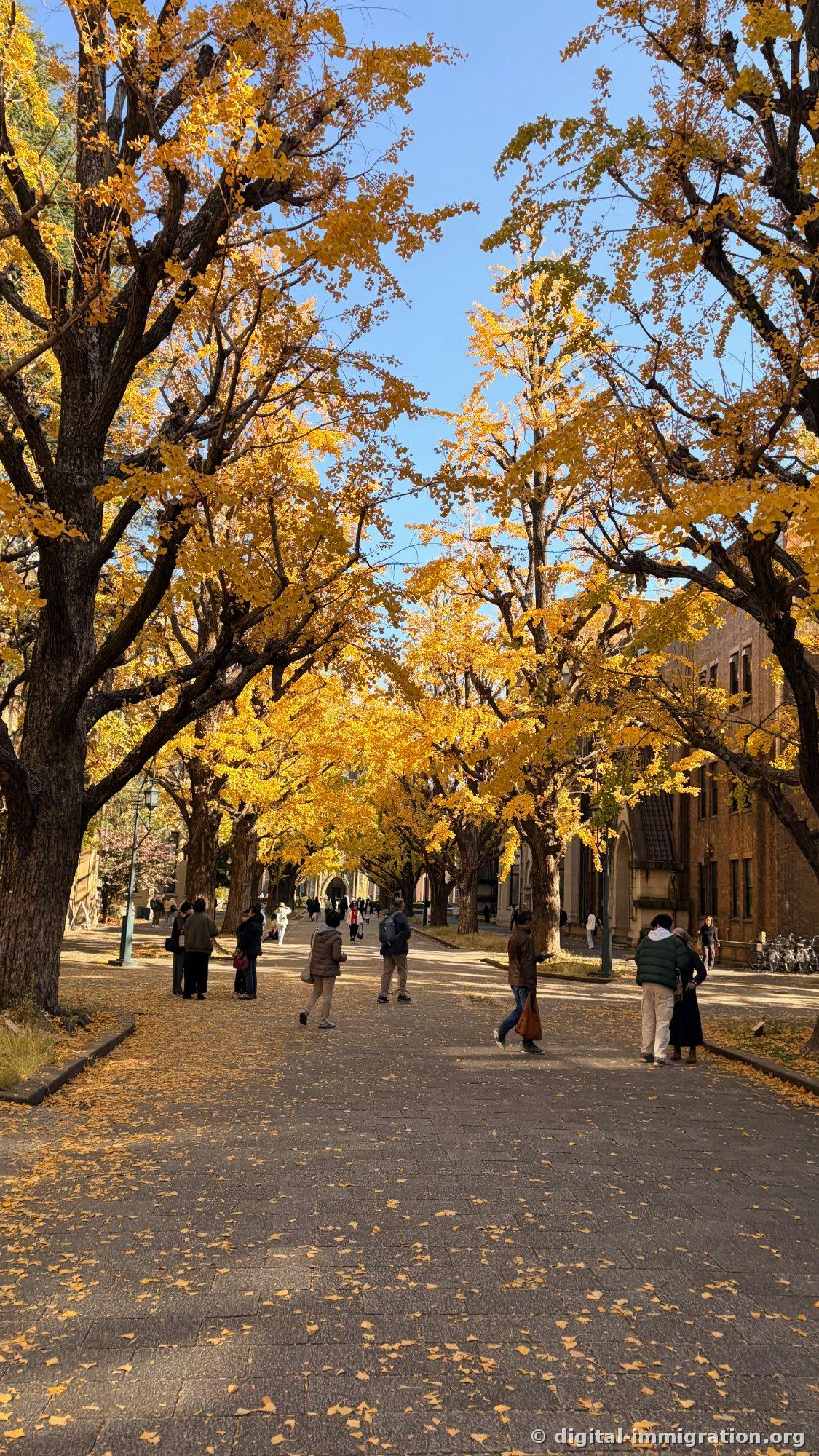
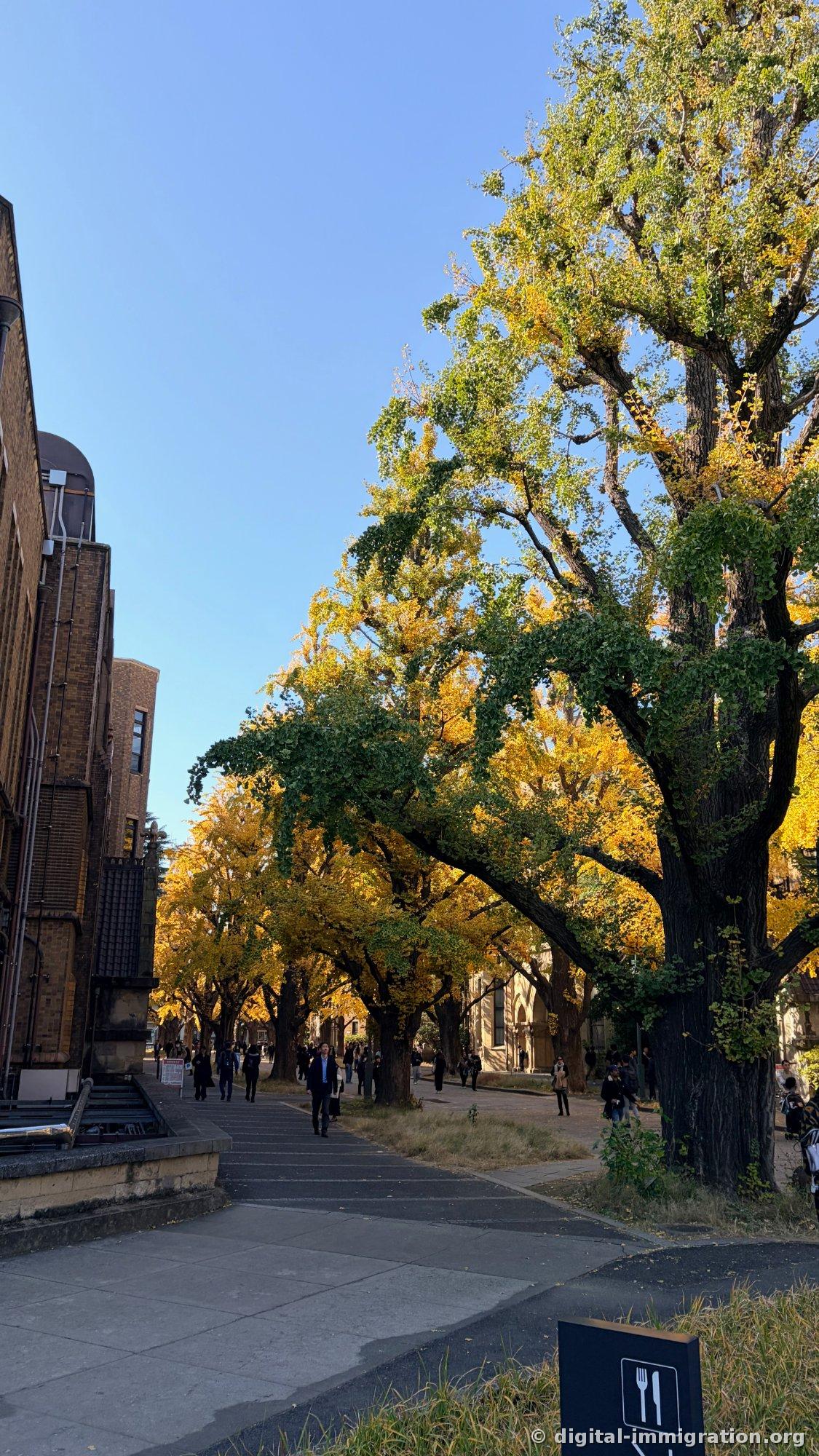
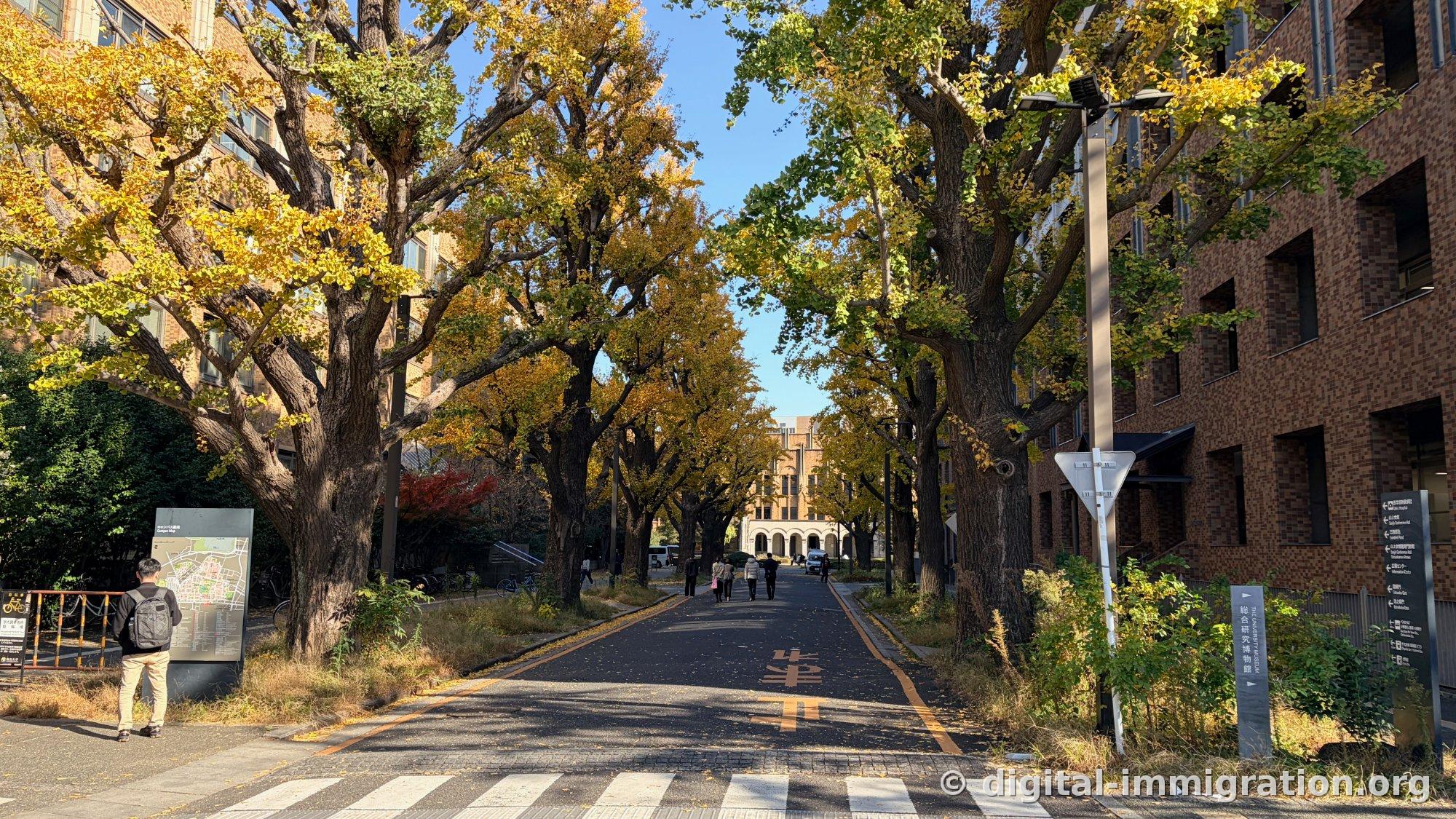
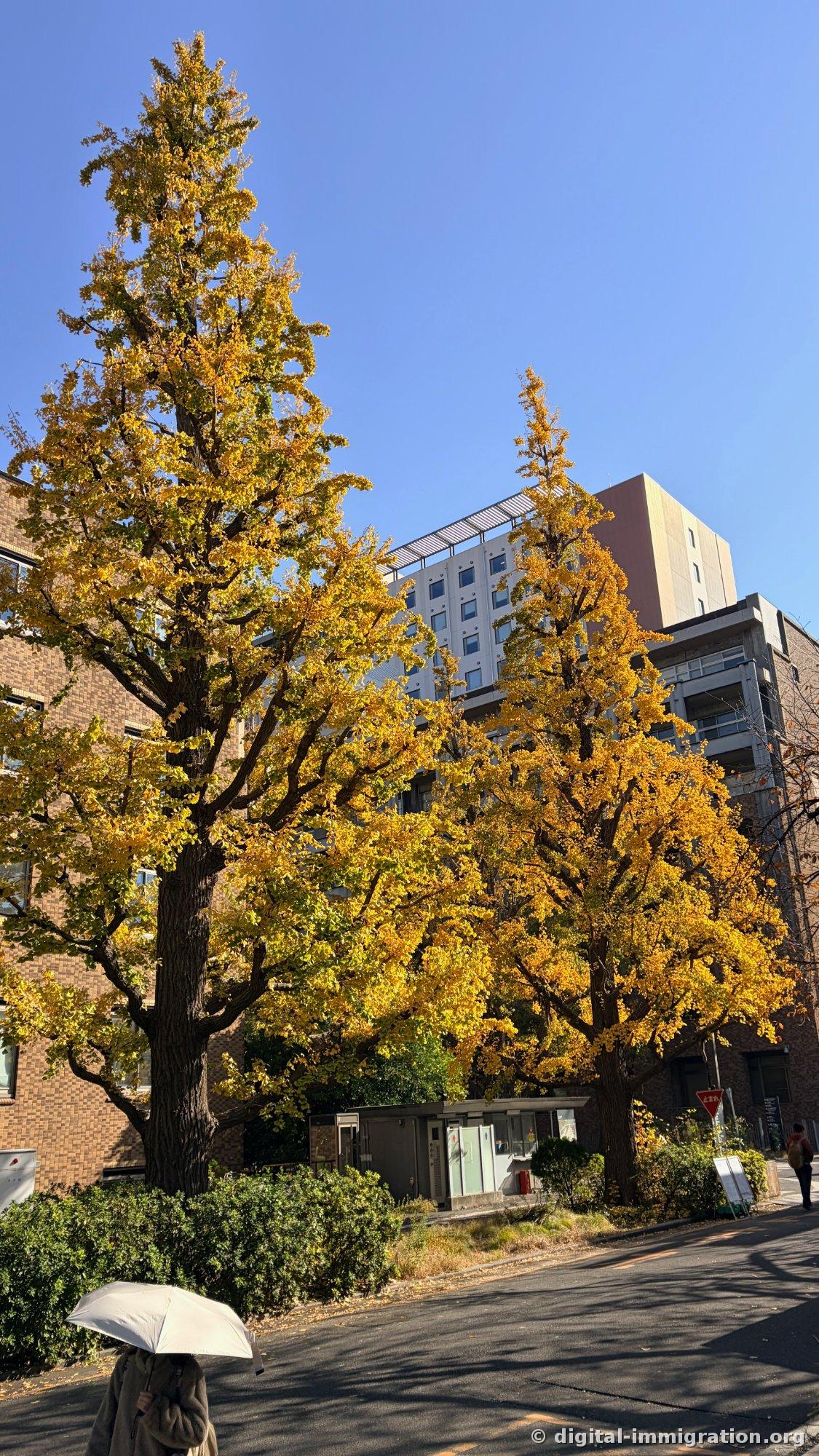
I transcribe that quote for a reason. I've been here in other seasons and it was just a quiet university with brick buildings. Late November is a completely different place. The ginkgos lining both sides of the street grow so tall their branches meet overhead, with blue sky just barely visible between them. As sunlight filters through the golden leaves, it bathes the street and faces in yellow.
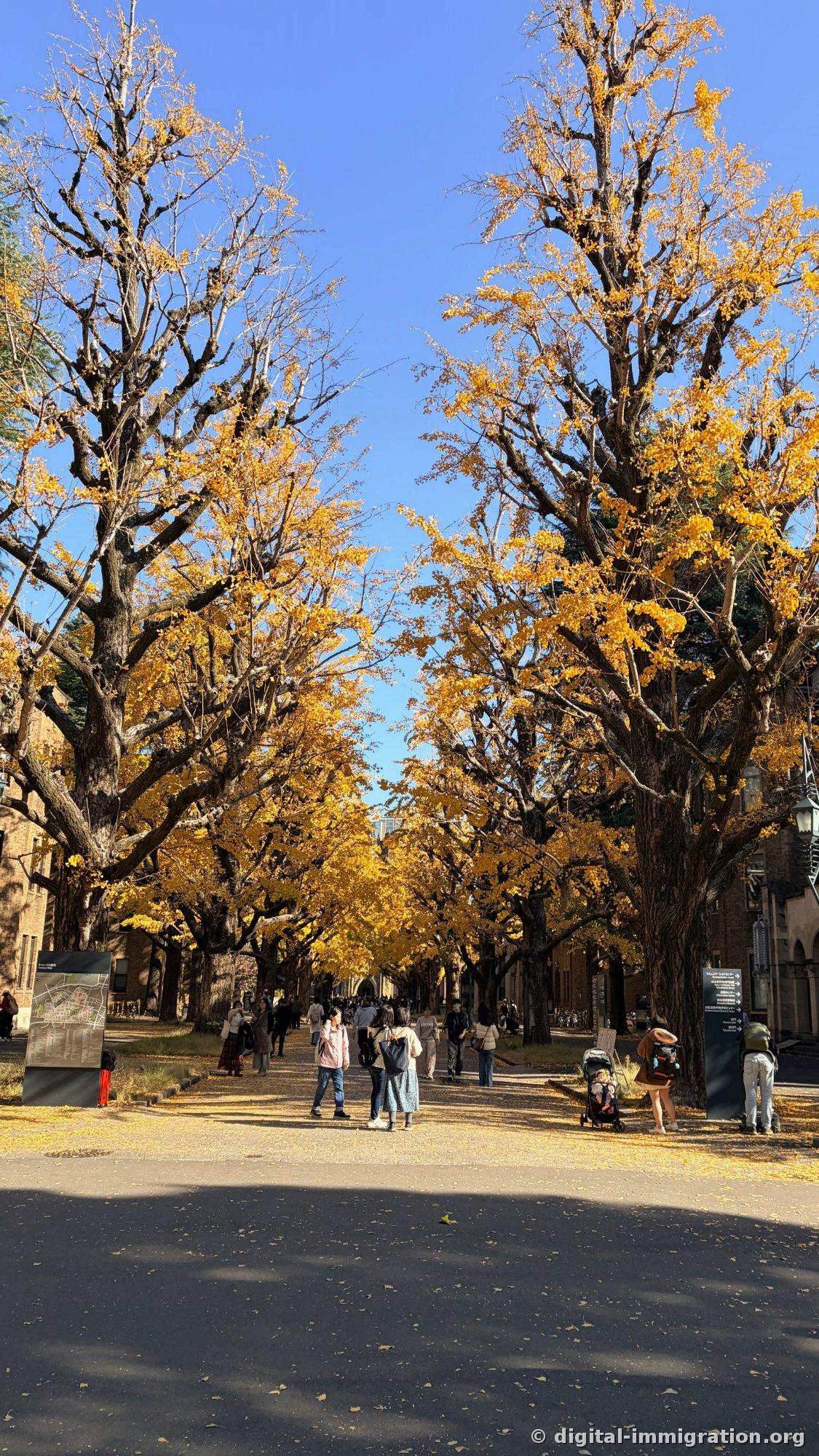
Peak timing varies by tree. On the same street, some still have half their green leaves while others have dropped most, showing bare branches. The ground carpeted with fallen leaves is actually more intensely golden. Rather than aiming for a single peak day, it's easier to just pick any day between mid-November and early December.
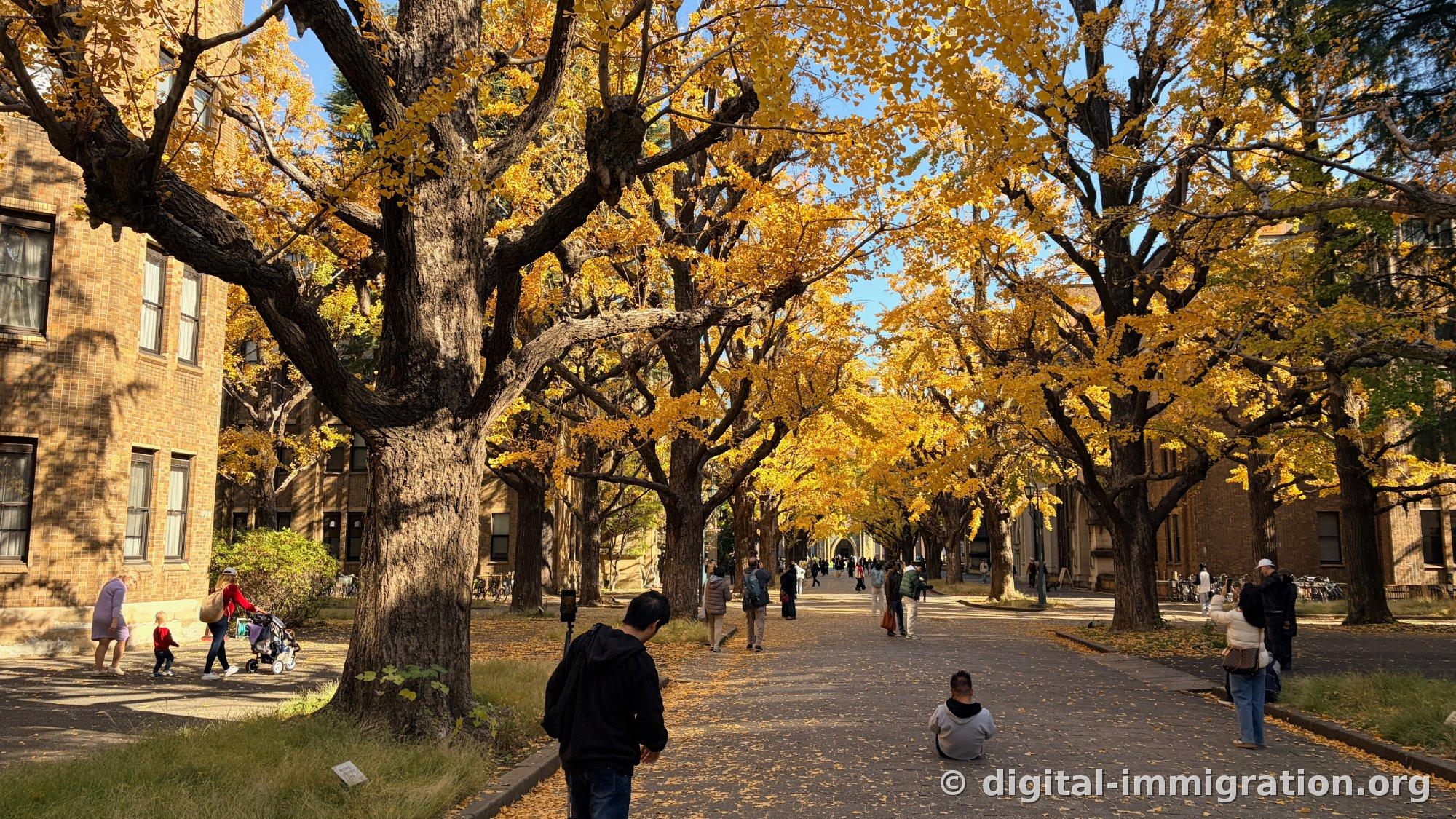
For better photos, early morning is ideal. The sun sits lower, backlighting the leaves, and there are far fewer people. Past noon, photographers line the middle of the street elbow-to-elbow, and you might as well forget about shots without people in them.
Yasuda Auditorium — when the clock pointed to 11 o'clock
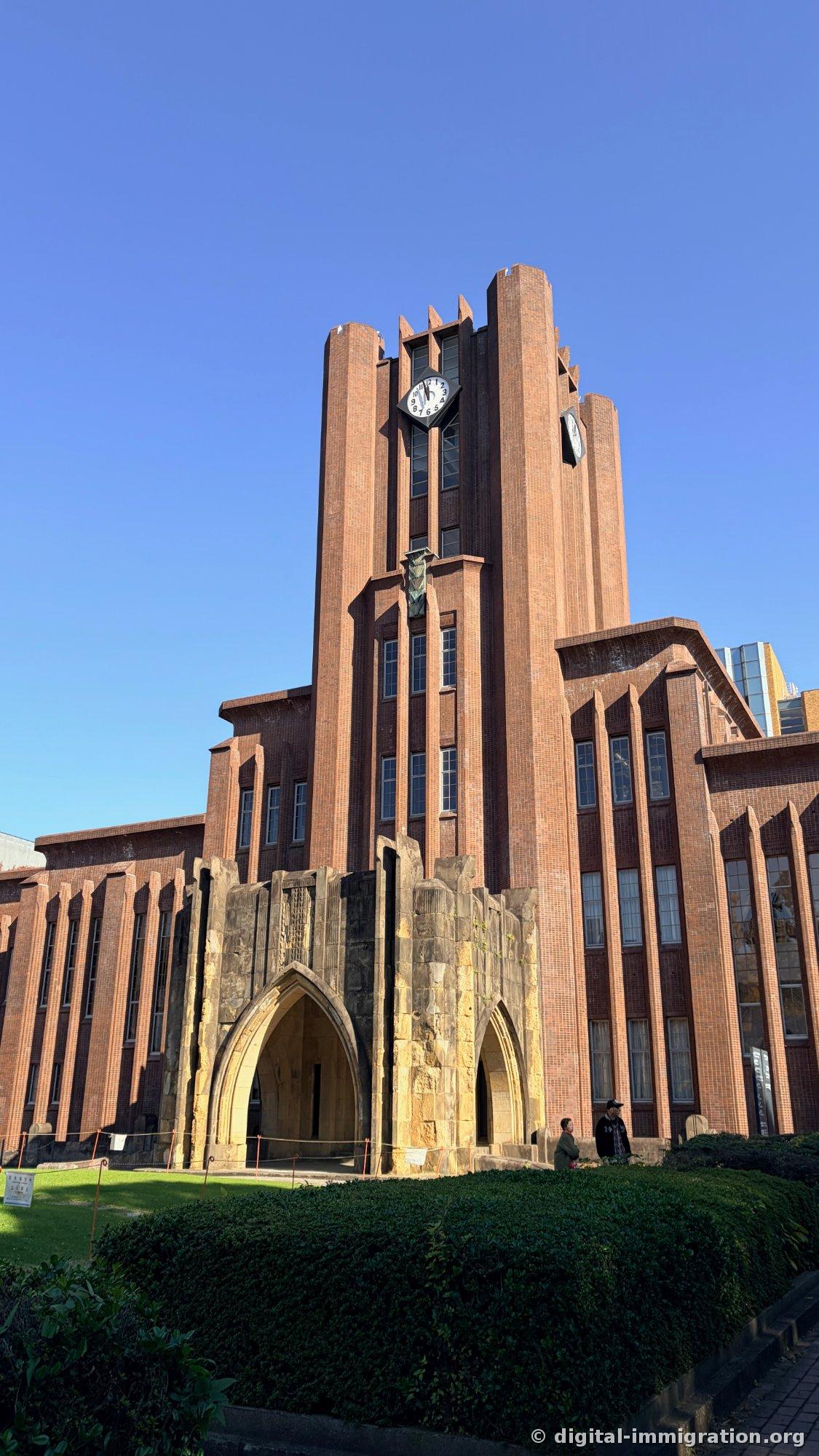
At the end of the ginkgo street stands a red brick building with a clock tower. This is Yasuda Auditorium. There's a circular lawn in front, cordoned off with orange rope so you can't walk on it. From the front, vertical brick columns converge upward toward the tower, and when you stand before it in person, it feels far grander than any photo suggests.
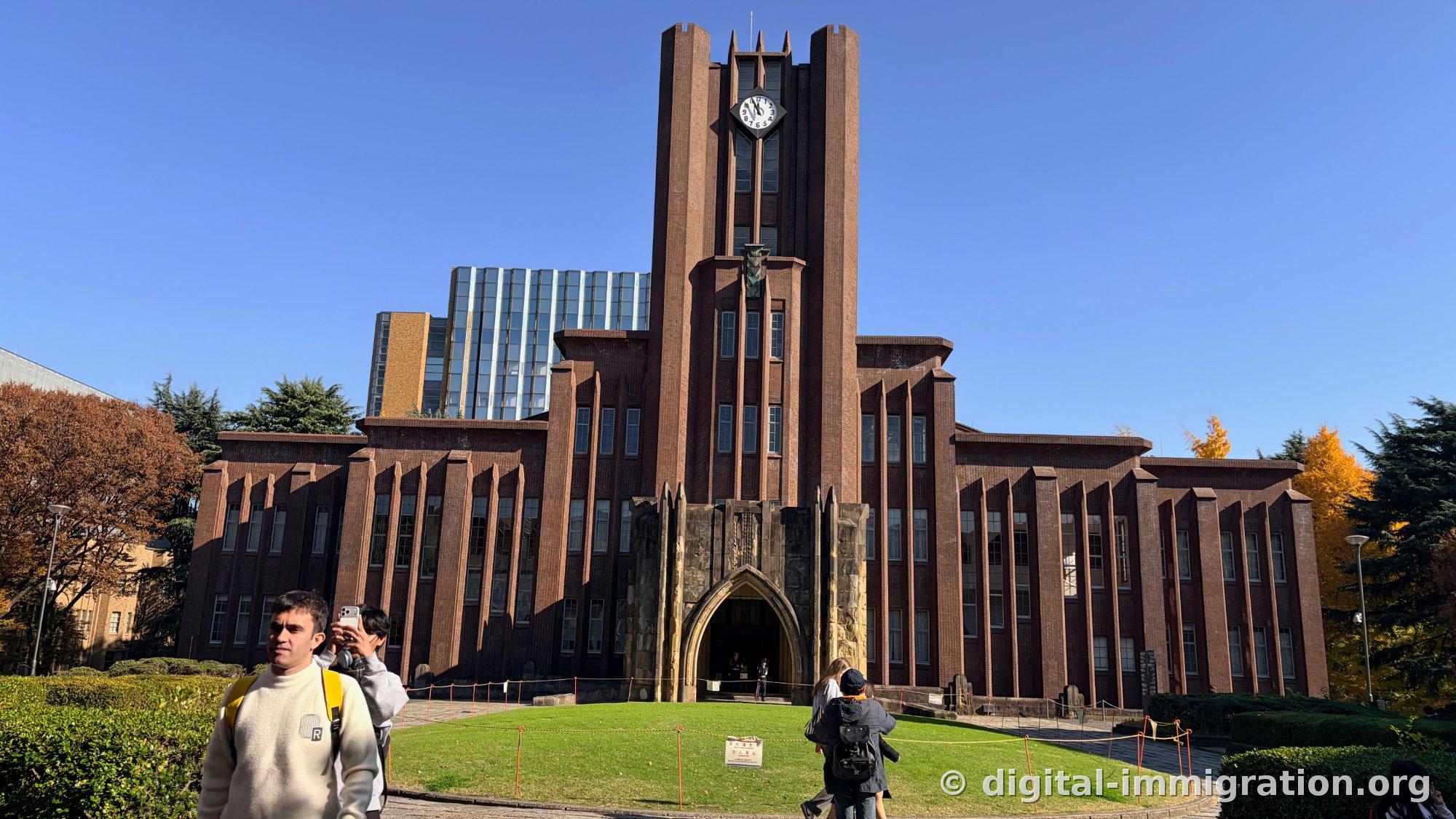
Modern glass buildings layering behind the auditorium's left side actually reveal this campus's true character perfectly. 1920s-30s brick buildings and recently constructed glass structures sit side by side without tension.
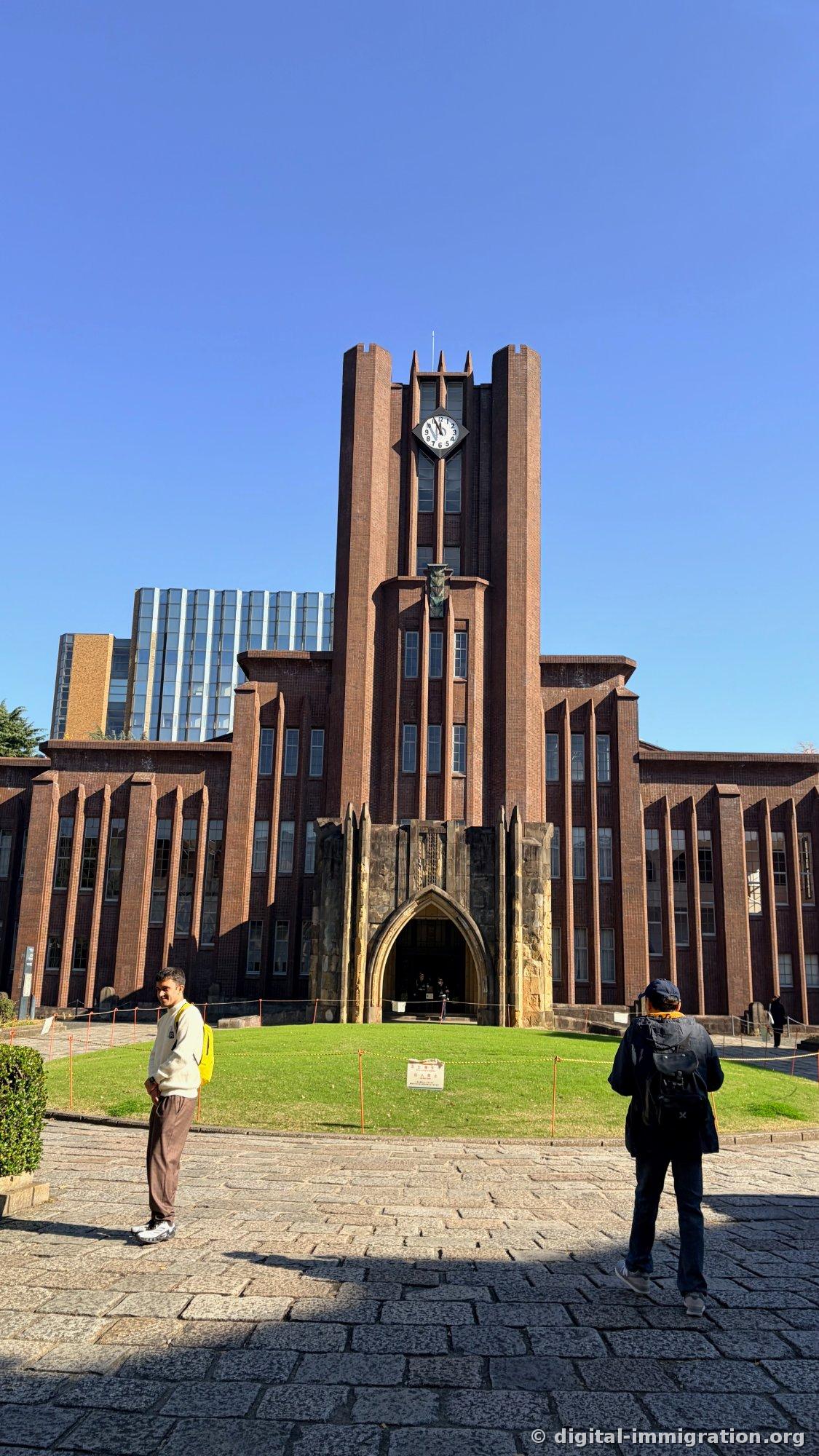
Viewed close up from below, the impression shifts again. Only the entrance uses rough stone; everything else is brick, so the texture changes sharply at the arch. Two octagonal clocks face different sides of the tower. It was just past 11 a.m.
The inner paths few visitors explore
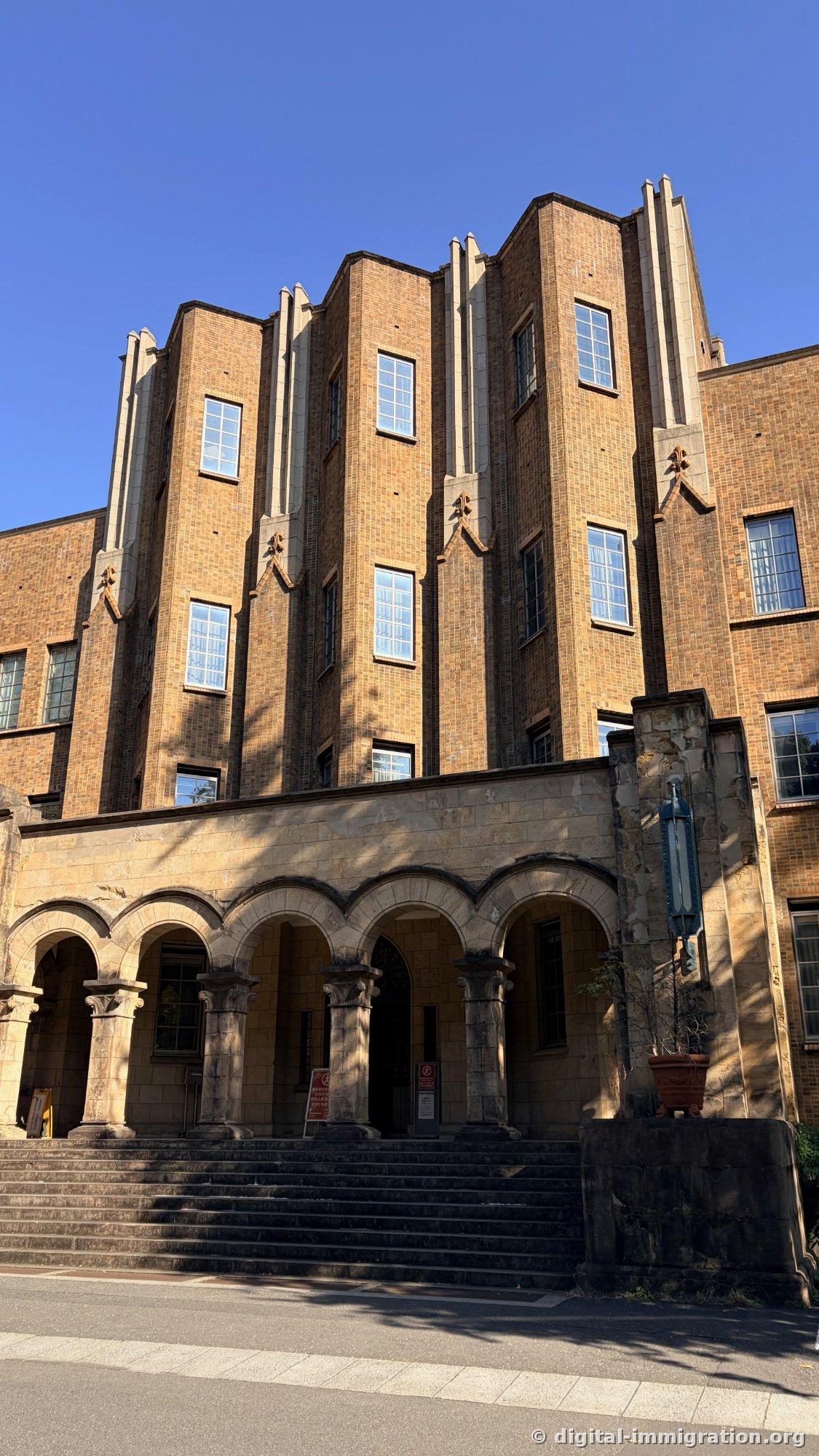
Most visitors just see the main gate, the ginkgo street, and Yasuda Auditorium, then leave. If you have time, venture deeper into the campus. There are several brick buildings with arcade colonnades, their capital ornaments still intact—the buildings alone take a while to properly observe. Since these are university facilities, I only viewed them from outside.
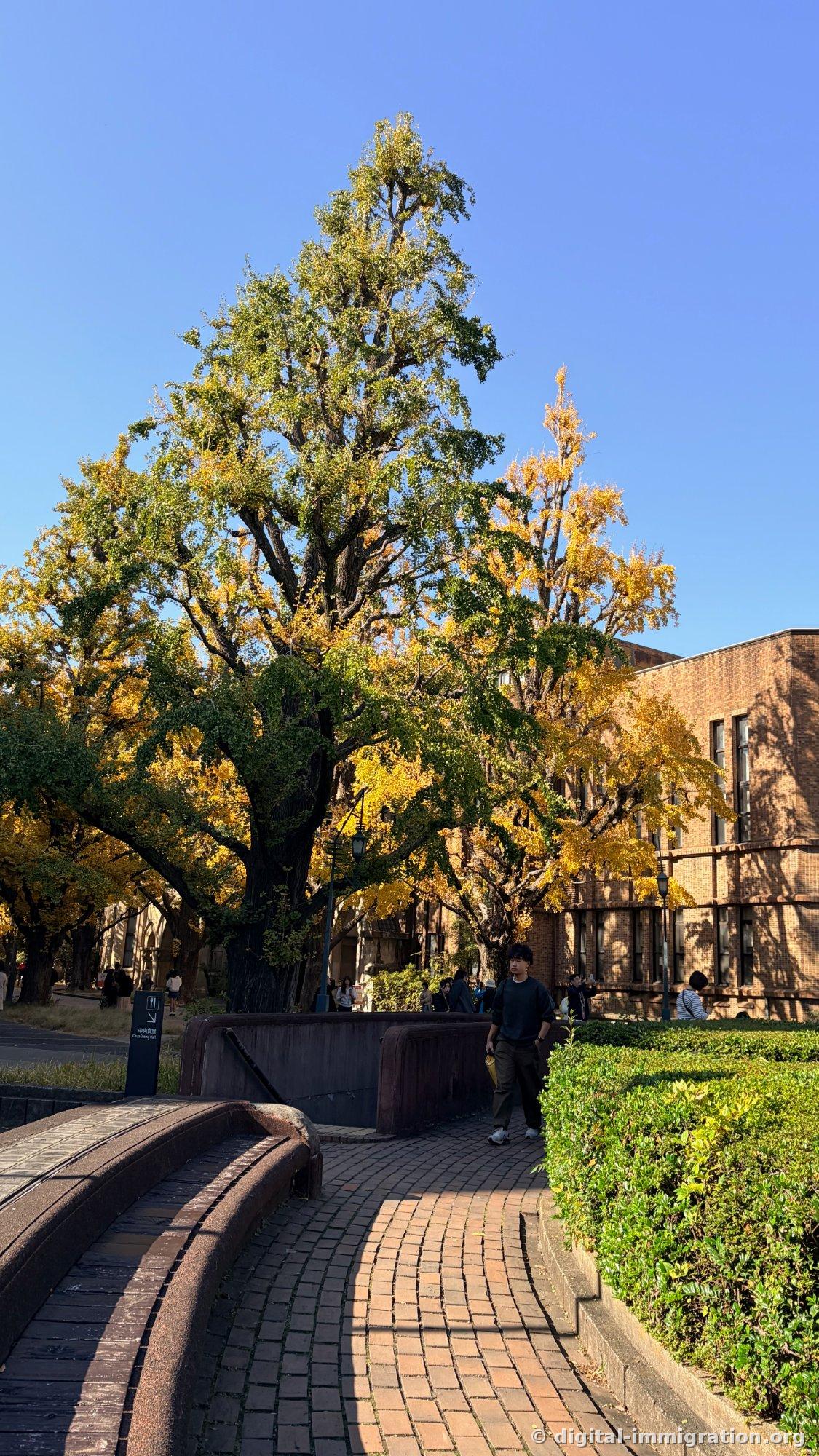
Along the way you'll find a sign pointing to the Central Dining Hall. It's the student cafeteria, and one massive ginkgo in front of it stands out. Its branches spread in all directions, with a single tree shading a small plaza. Since dining availability and prices vary by semester, check the information posted near the sign.
Turn down another path and you'll find a campus map and a sign for the Comprehensive Research Museum. The presence of a road gives it a different feel, but an arcade building perfectly frames the end of the vista, making this view worthwhile too.
How to get there and tips from experience
The easiest way to Hongo Campus is by subway. Hongosancho Station on Tokyo Metro's Marunouchi and Toei Oedo lines, Todaimae Station on the Namboku Line, and Nezu and Yushima stations on the Chiyoda Line all border the campus. It's about a 5–10 minute walk from any station. The campus itself is large, so to see the ginkgo street and Yasuda Auditorium most efficiently, enter via the main gate.
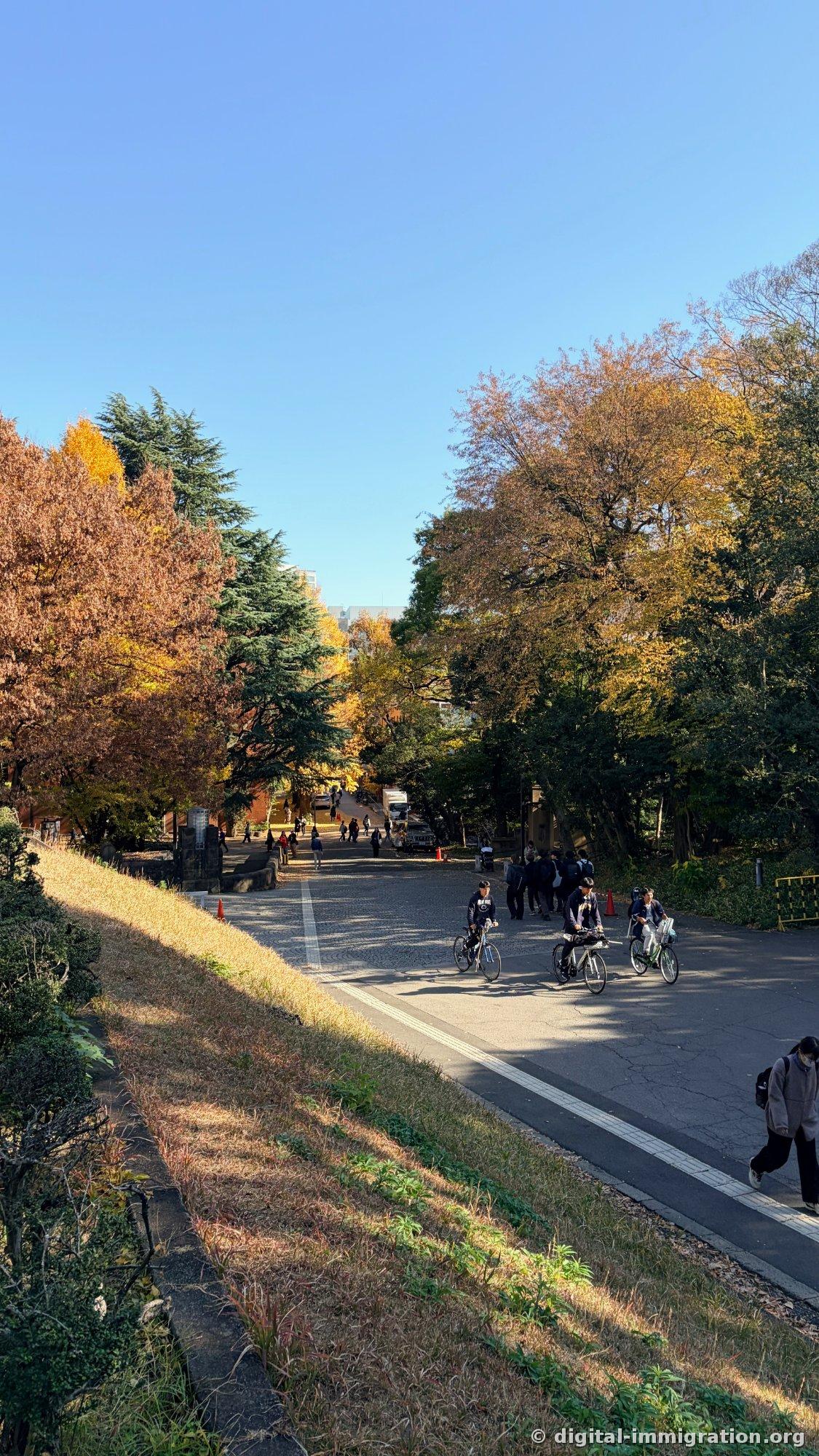
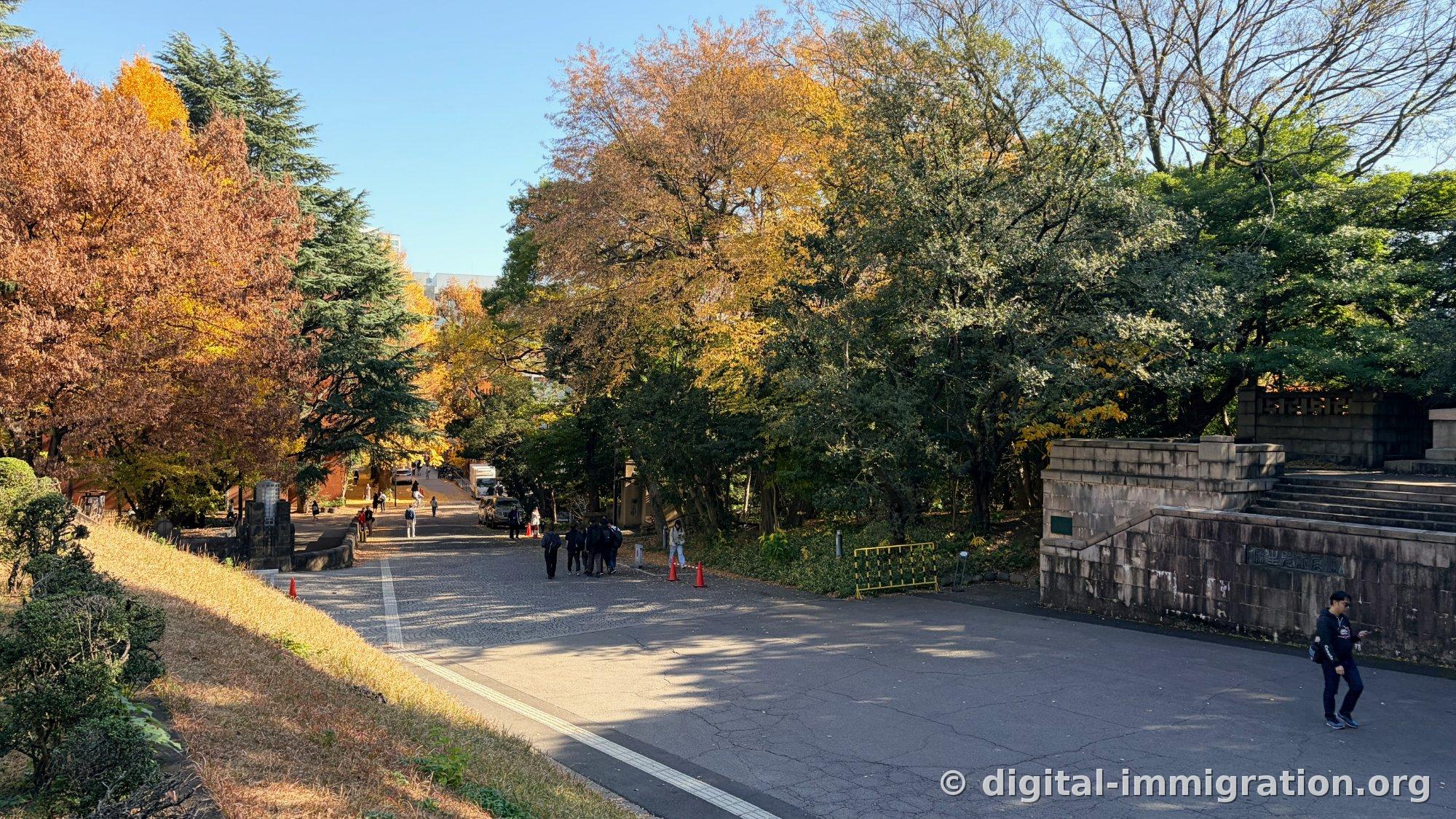
The campus isn't flat. On one side, sloped paths wind upward, and from the hilltop you can see trees on the far side of campus tinged brown and orange at a glance. It would be a shame to leave without exploring this section.
Here are a few things I actually encountered:
- This isn't a tourist site—it's an operating university. Avoid entering lecture halls or photographing students' faces head-on.
- Bicycles pass quickly. I had to step aside twice while absorbed in my camera in the middle of the street.
- When fallen leaves are wet, the brick paving becomes quite slippery. Some sections have uneven ground, so I wouldn't recommend heeled shoes.
- Be prepared for the smell of ginkgo fruit. It's definitely noticeable in certain spots beneath the trees. It's less pungent on windy days.
- There are convenience stores and cafes on campus, but their hours vary by semester and day of the week. It's convenient to buy water before entering.
If you're planning to travel far from central Tokyo to see autumn leaves, it's worth factoring in that there's a ginkgo street of this scale right in the middle of the city. Ten minutes' walk from the subway, one gate to pass through, and you're there. And it's free.
Читайте дальше
- From Akihabara's Chuo-dori to the Kanda River: A Record of Tokyo's Electronics District Revisited Multiple Times
Tokyo's Akihabara is a neighborhood where it's hard to say you've seen everything in a single visit. I've come multiple times across different seasons, and each time the signs chan…
Токио · Акихабара - Buying a Single ¥300 Year-End Jumbo Lottery Ticket at Nishi-Ginza Chance Center in Tokyo
Exit from the Hibiya exit of Tokyo's Shimbashi Station, walk toward the elevated highway for about three minutes, and suddenly you'll see a line of people stretching along the side…
Токио · Нишигинза Центр Шансов - Ueno Ameyoko, the real magic starts after sunset — an evening walk from the Okachimachi Gate to Ueno Station
Every time I come to Tokyo, my feet find their way to Ueno Ameyoko (アメ横) without fail. This time I entered from the Okachimachi side and worked my way toward Ueno Station. I've met…
Токио · Амэёко рынок