A Night in Yoyogi's Hidden Hamayaki Alley — A Record of Tokyo's Eetoko Yoyogi
One stop from Shinjuku, get off at Yoyogi Station, turn your back to the main road, and twist through the alley twice—suddenly the light temperature changes. From the white fluores…
Токио · Ээтоко Йойоги
One stop from Shinjuku, get off at Yoyogi Station, turn your back to the main road, and twist through the alley twice—suddenly the light temperature changes. From the white fluorescent glow of office buildings to orange incandescence. I've only come to this neighborhood after eight in the evening, and Yoyogi at that hour wears a face that would be hard for anyone passing through here in daylight to imagine. This block where Eetoko Yoyogi stands is especially like that. A few shops crowd into one alley, each hanging out their sign and making their own noise, and somehow it doesn't clash.
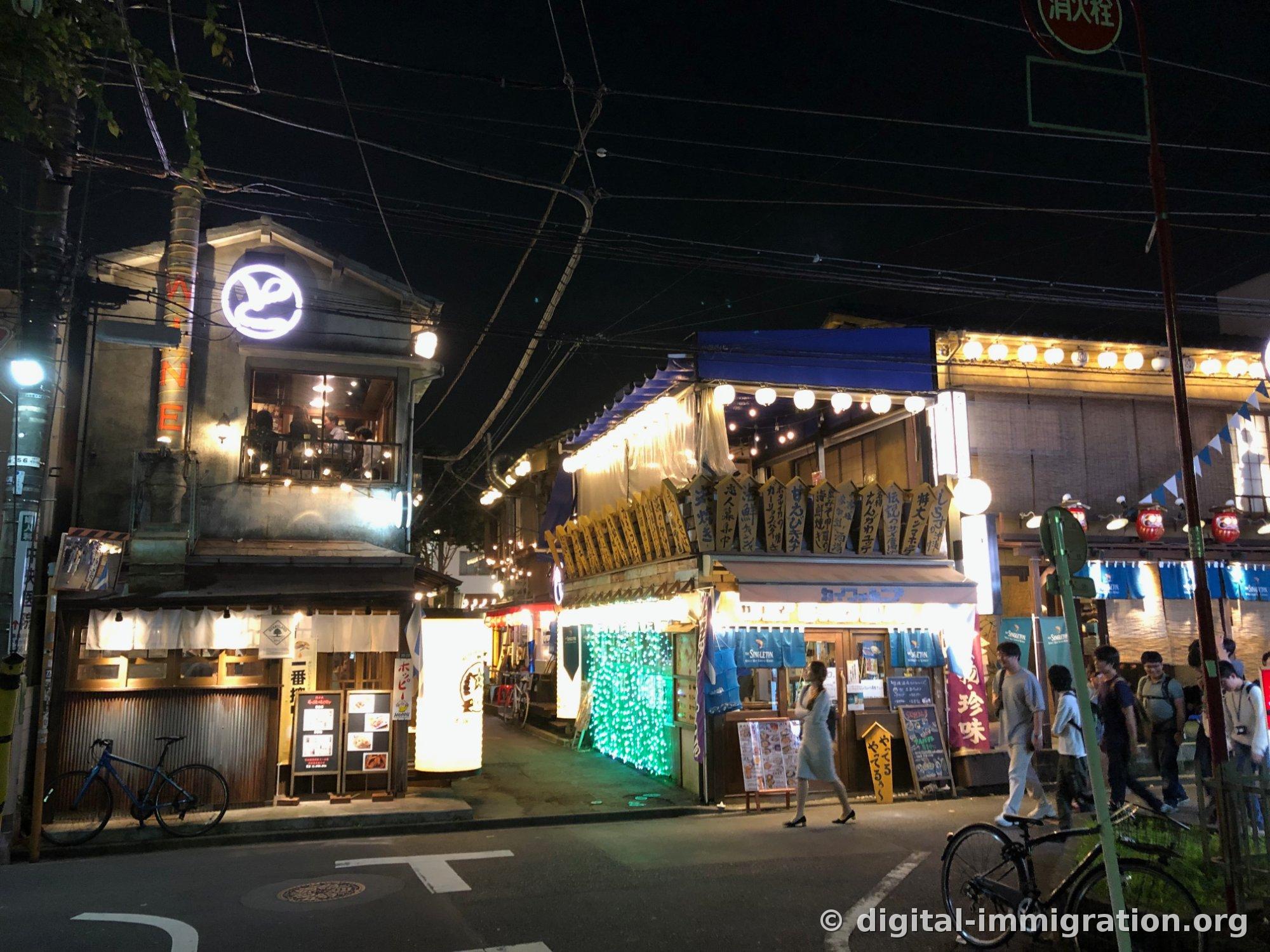
Standing at this intersection, your choices come into view at a glance. The two-story wooden building to the left has all its windows open, so you can see the silhouettes of people sitting inside, and across the street is a seafood place with a blue tarp. First-timers usually linger here for about five minutes. I did too.
Reading the Signs is Half the Battle
The distinctive feature of these alley shops is that they write their menus not on paper but in brush strokes on wooden boards, which they stick under the eaves. And about twenty of them. If you read through the wooden boards stuck in the railing of the blue tarp shop's second floor one by one, you can tell what the place sells.
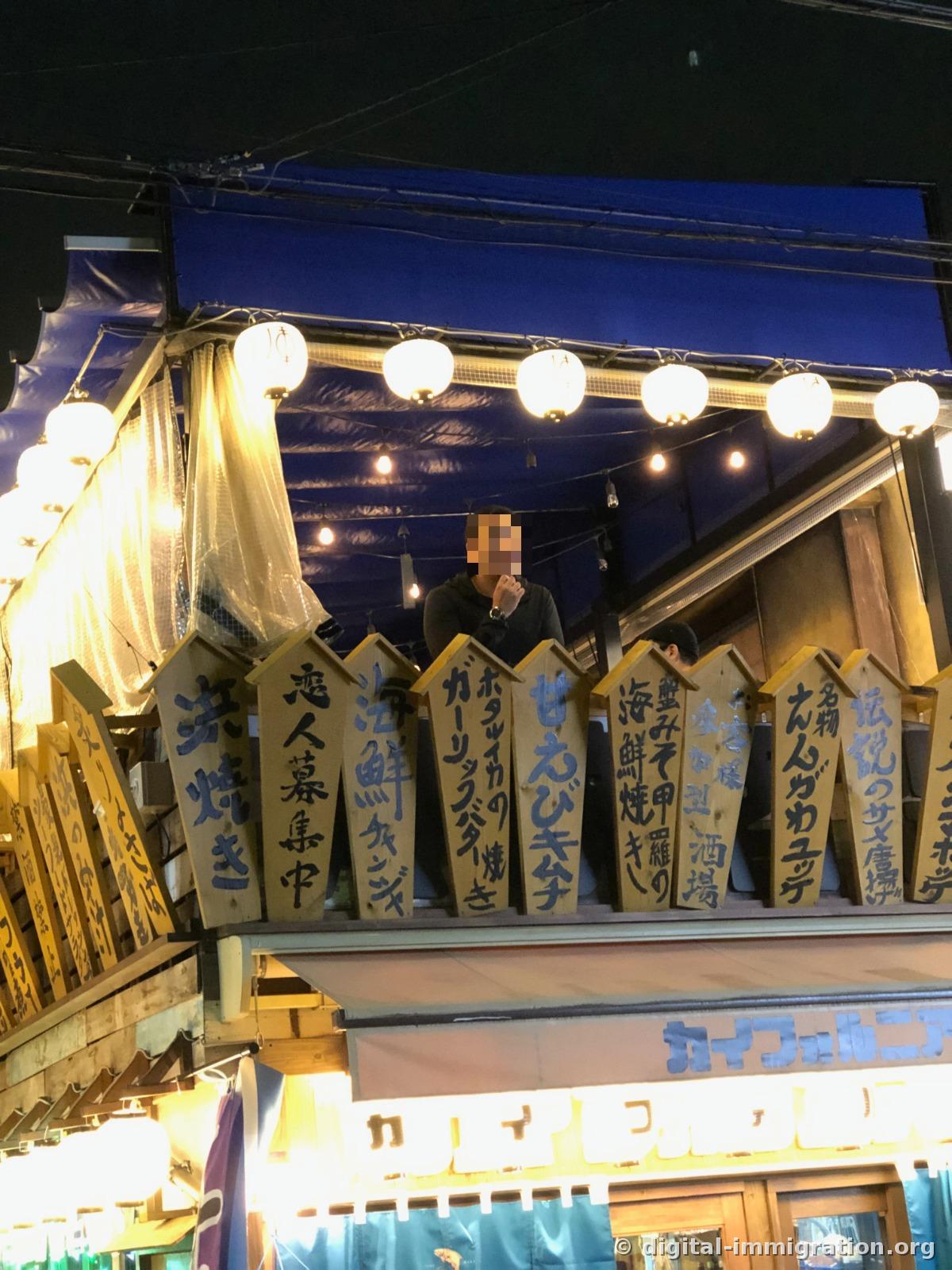
The board marked 'Hamayaki' hangs largest. It refers to the method of grilling shellfish right in their shells, beach-style. Next to it are listings like firefly squid garlic butter, crab miso shell seafood grill, and then inexplicably, a board stuck in that says 'looking for a lover.' Shops that mix in this kind of humor tend to have a relaxed vibe.
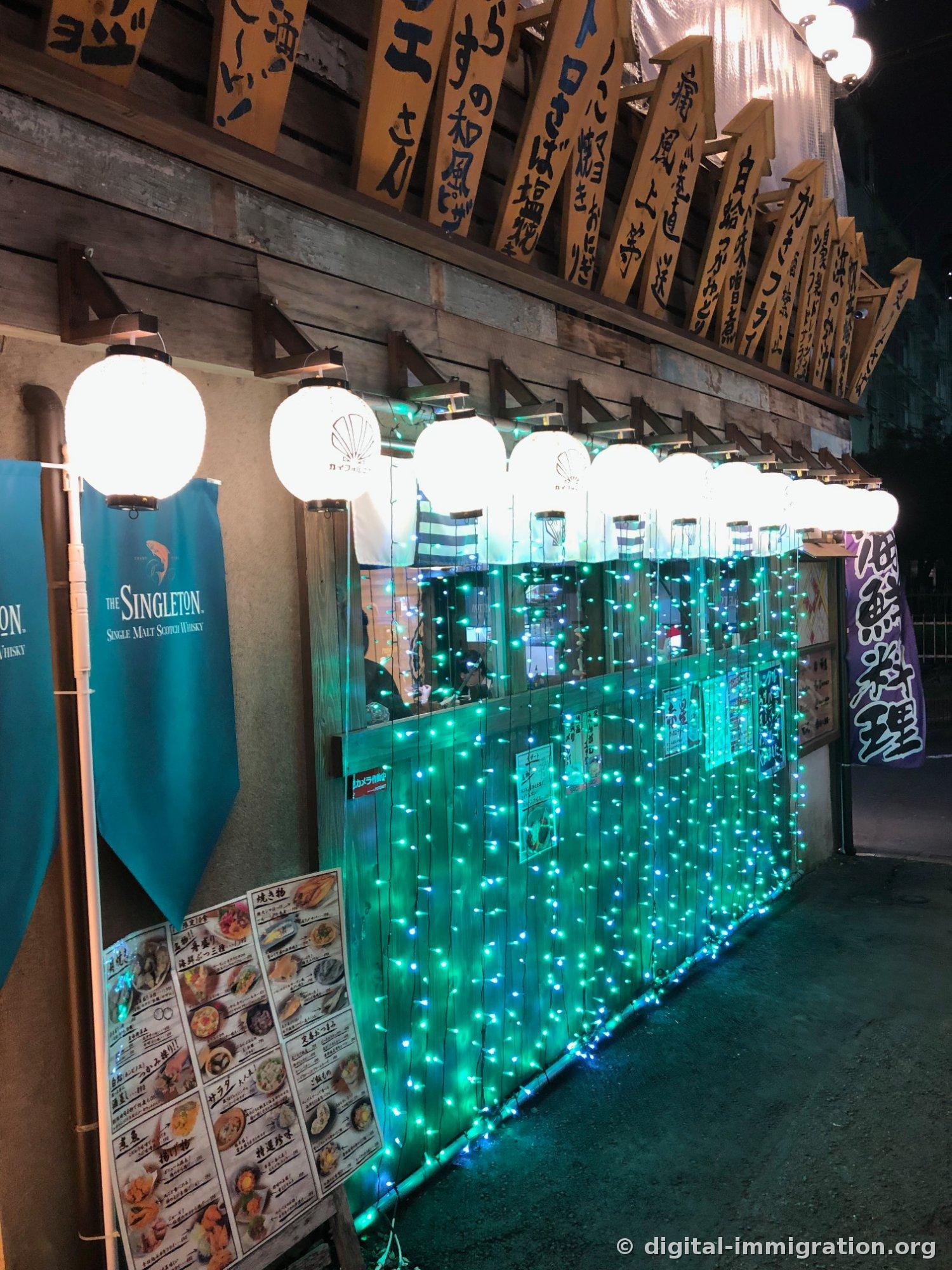
You don't need to worry even if you can't read Japanese. Every shop has a laminated photo menu board displayed prominently by the entrance, so pointing at what you want solves most of the problem. I could only read about half the brush-written wooden boards, and chose the rest from the photo menu.
Location and Access — Use Yoyogi Station as Your Reference Point
It's a few minutes' walk from JR Yoyogi Station. You could walk from Shinjuku, but if it's your first time coming at night, it's much better to use Yoyogi Station as your reference point. This alley isn't visible from the main road. When your map app says you've arrived and you look up, there's nothing there—you have to go one block in before the lights appear. The first time I came, I circled the same intersection twice.
At the alley entrance stands a Piago supermarket sign. A red background with large characters that say Sake. It's surprisingly useful as a landmark. There's a supermarket selling alcohol right at the start of this bar alley, which is handy if you want to grab a canned beer on your way back to your lodging late at night.
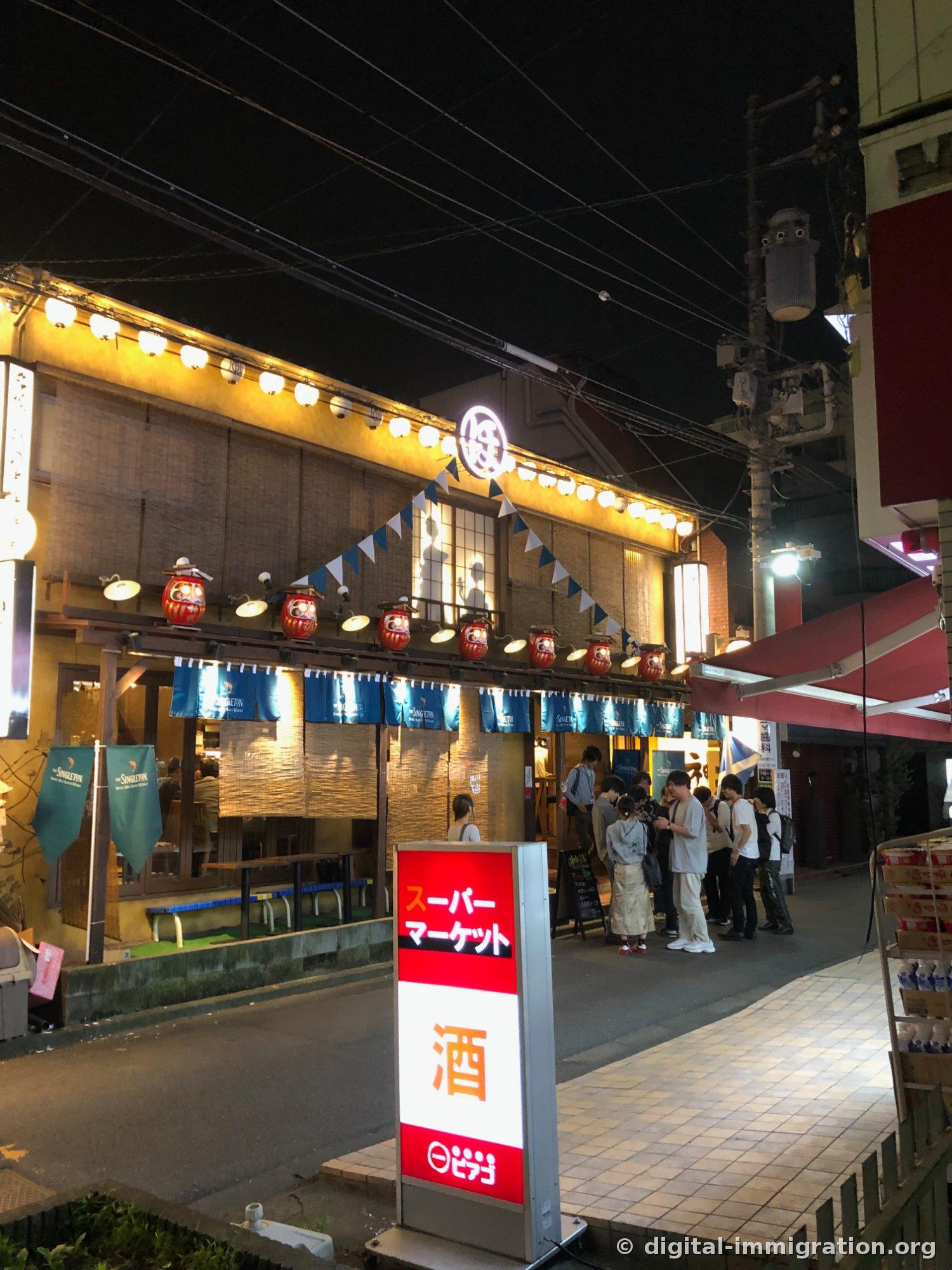
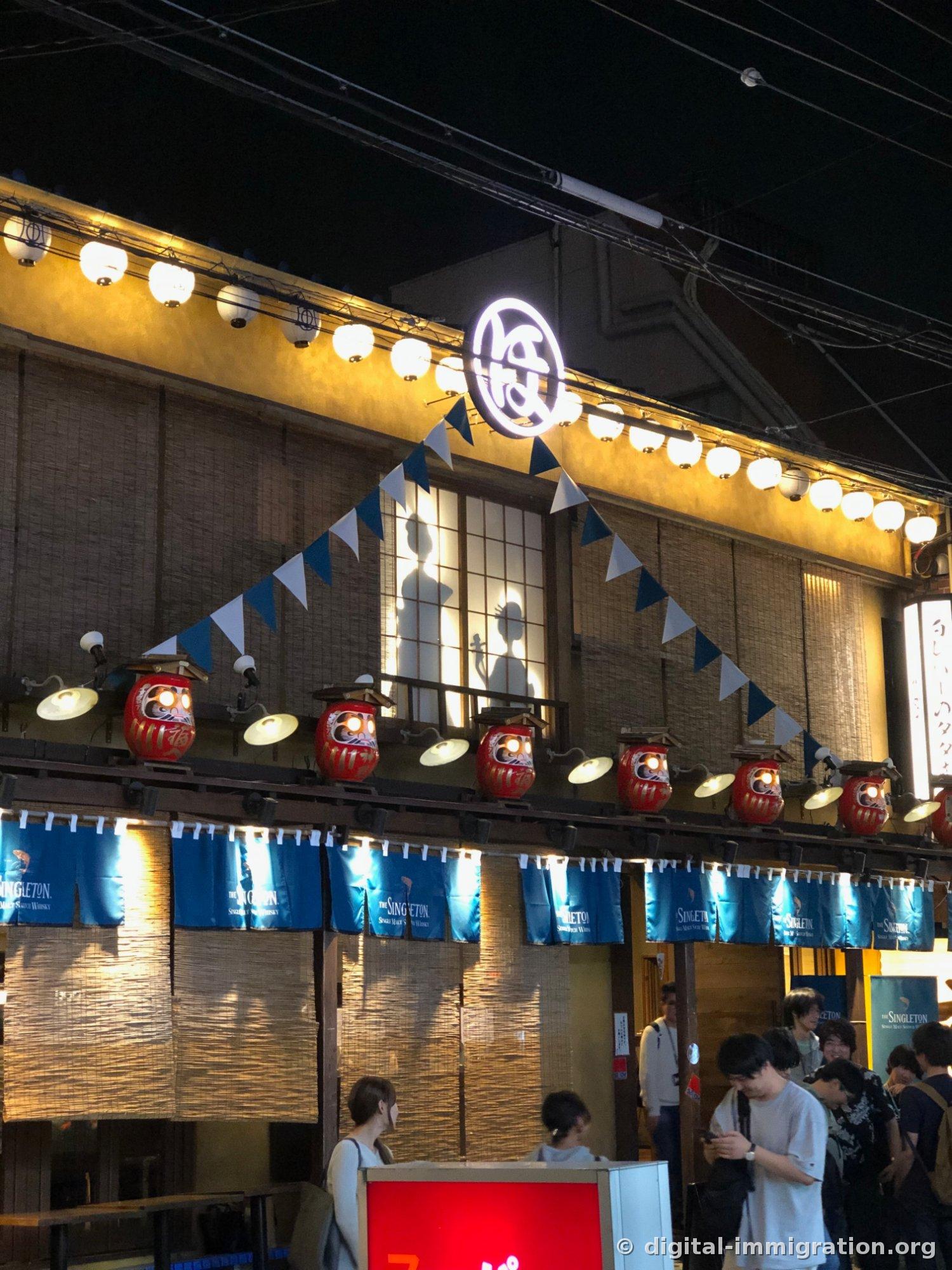
I stared up at this shop's second-floor shoji screen for a while because there was a human shadow cast on it, but no matter how long I looked, it didn't move. It's a decoration they've pasted on. There are quite a few shops in this alley that layer in these kinds of details.
The Lights — Now I Understand Why People Come Just to Take Pictures
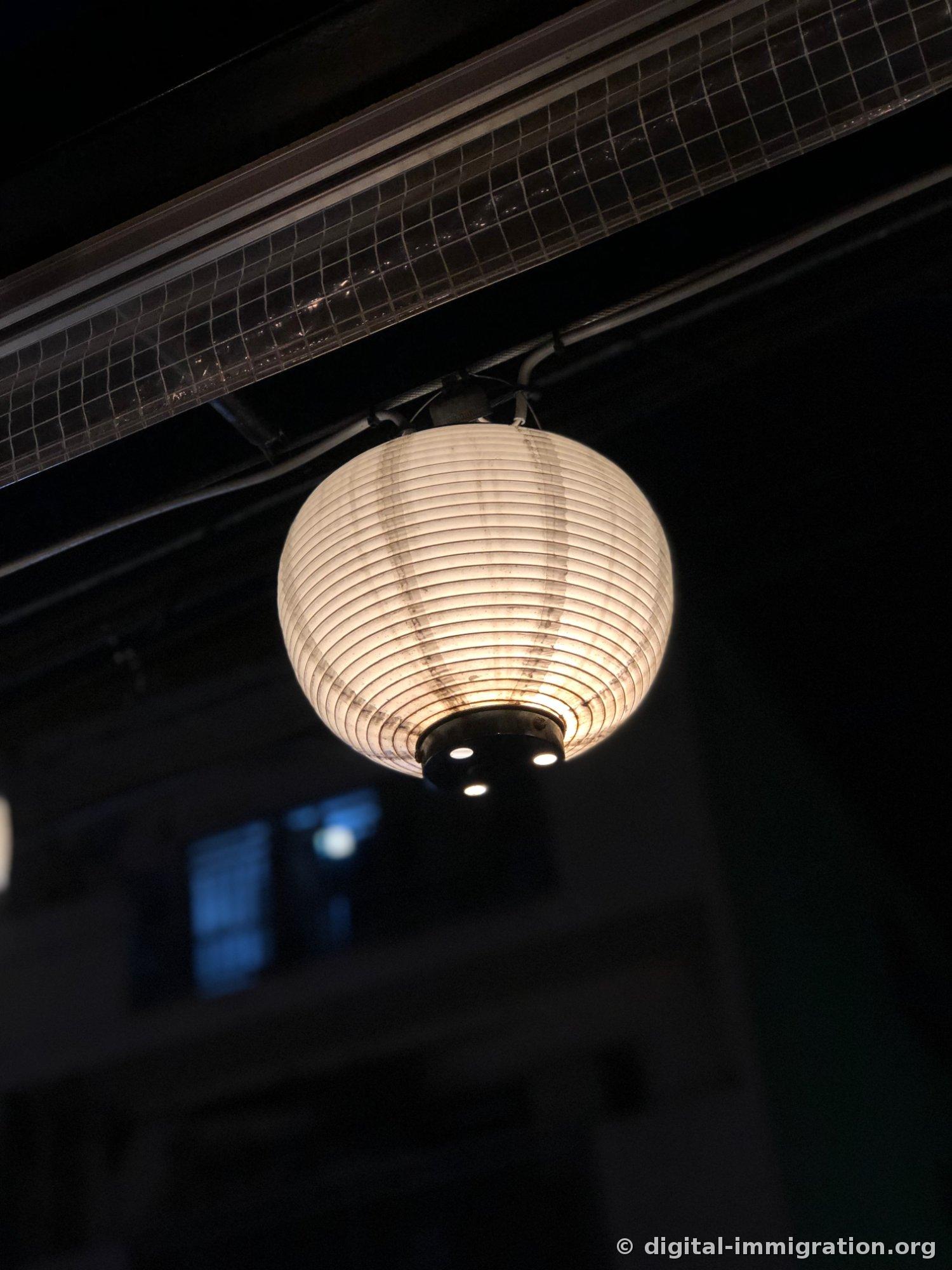
They're not new lanterns. The paper has stains soaked into it, and rust sits on the metal trim at the bottom. Most of the lanterns in this alley are like this. They're not freshly hung décor but objects that have been in place for years, so when the light comes on, it's uneven and mottled.
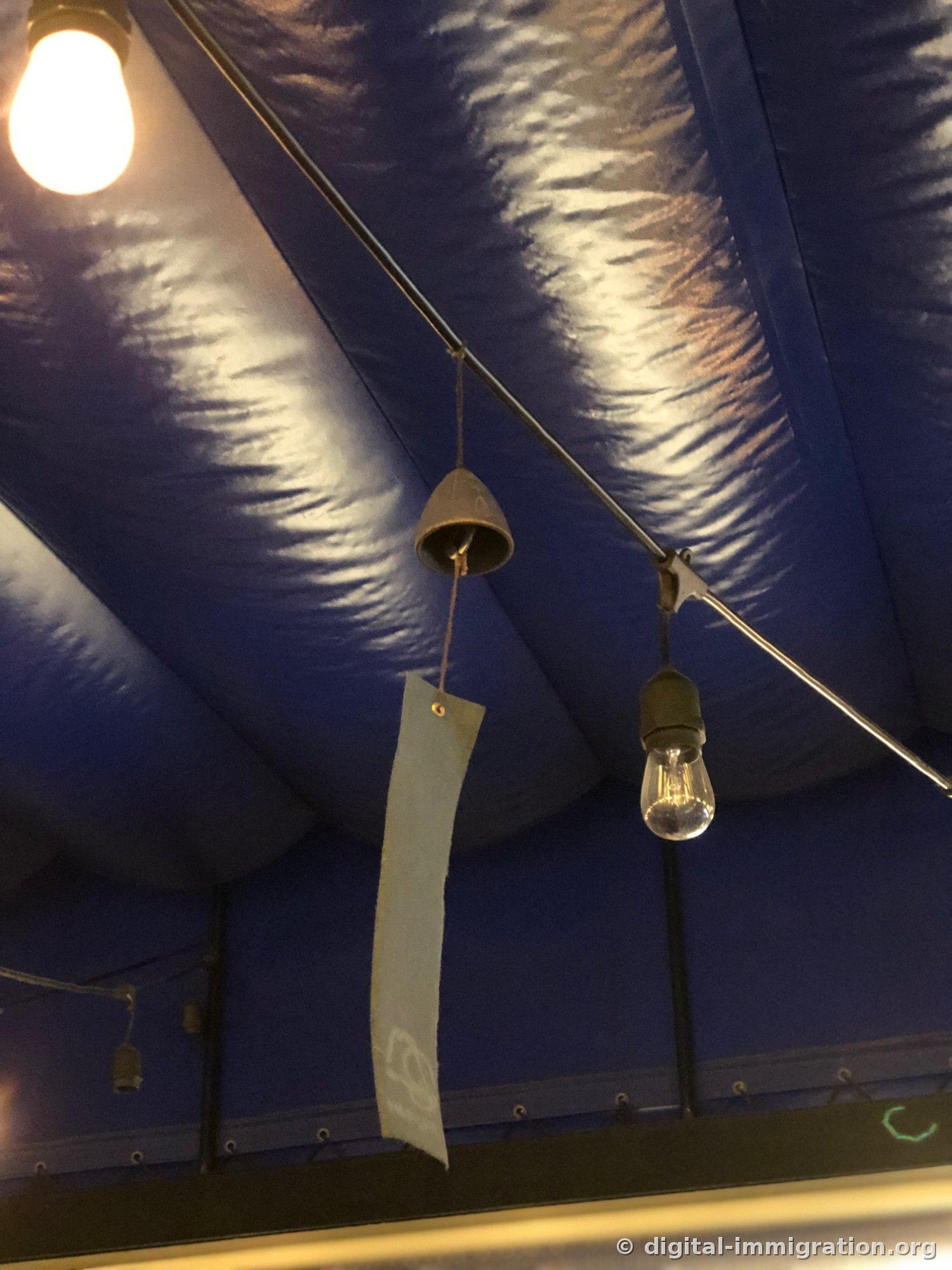
If you sit at a terrace seat and look up, the blue waterproof tarp IS the ceiling. They've roughly strung up wires and hung bulbs from them, and in between hangs a small metal bell the size of your palm. There's a slip of paper attached to it that would likely make a sound if there were wind, but that evening had none, so it never chimed. Being a summer night, it was a bit warm under the tarp. If you want a cooler spot, better to ask for a seat inside.
What We Ate
Since it's a seafood place, we started with shellfish. It's hamayaki—scallops grilled in their shells—and the shell serves as a bowl so the broth pools inside.
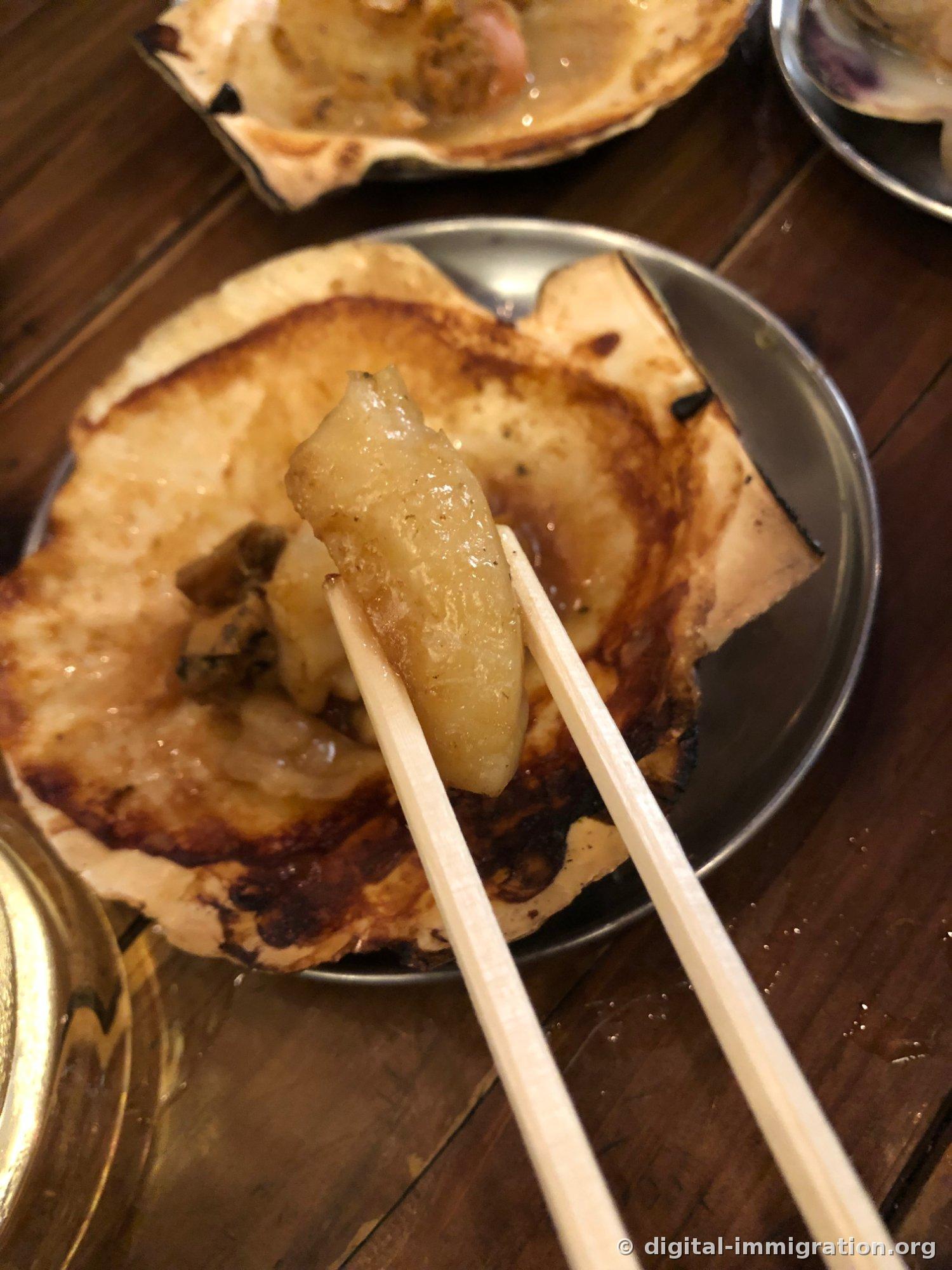
When you pick up the adductor muscle, soy sauce clings to its surface, gleaming brown, while the inside is still translucent. The trick seems to be leaving it until the shell's edge chars black, which makes the pooled broth inside reduce and become salty. After finishing, I scraped the remaining broth from the shell with my chopsticks and ate it.
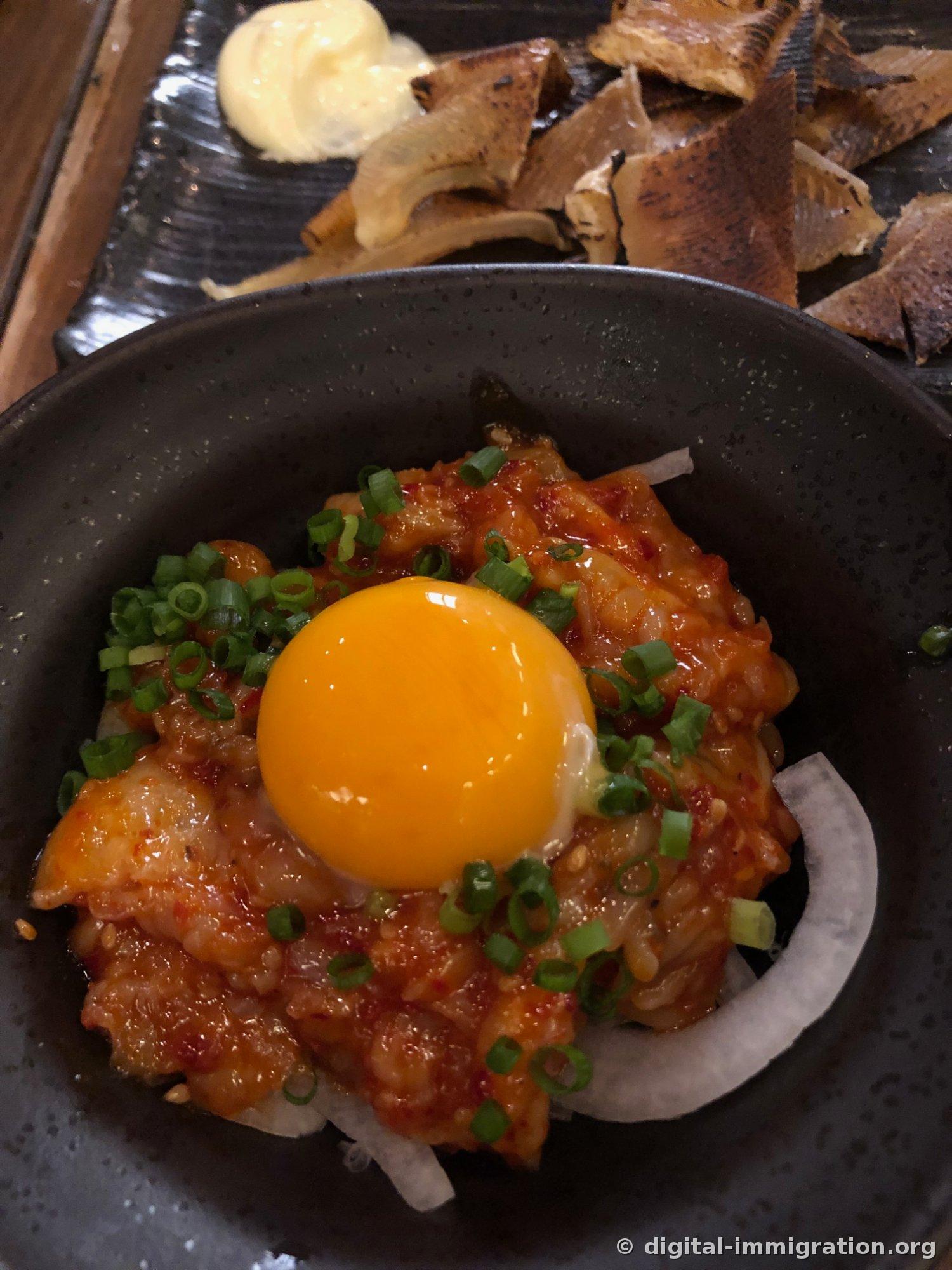
This was the best thing that night. It seems to be in the same category as what was labeled 'sweet shrimp kimchi' on the wooden boards—sweet shrimp tossed in chili powder and topped with a whole egg yolk. When you burst the yolk and mix it in, the spice mellows and the shrimp's sweetness emerges. With shredded onion layered underneath, you get that crunch all the way through. It's a familiar flavor to Korean palates, and precisely because of that, using it as a drinking snack makes the alcohol disappear fast.
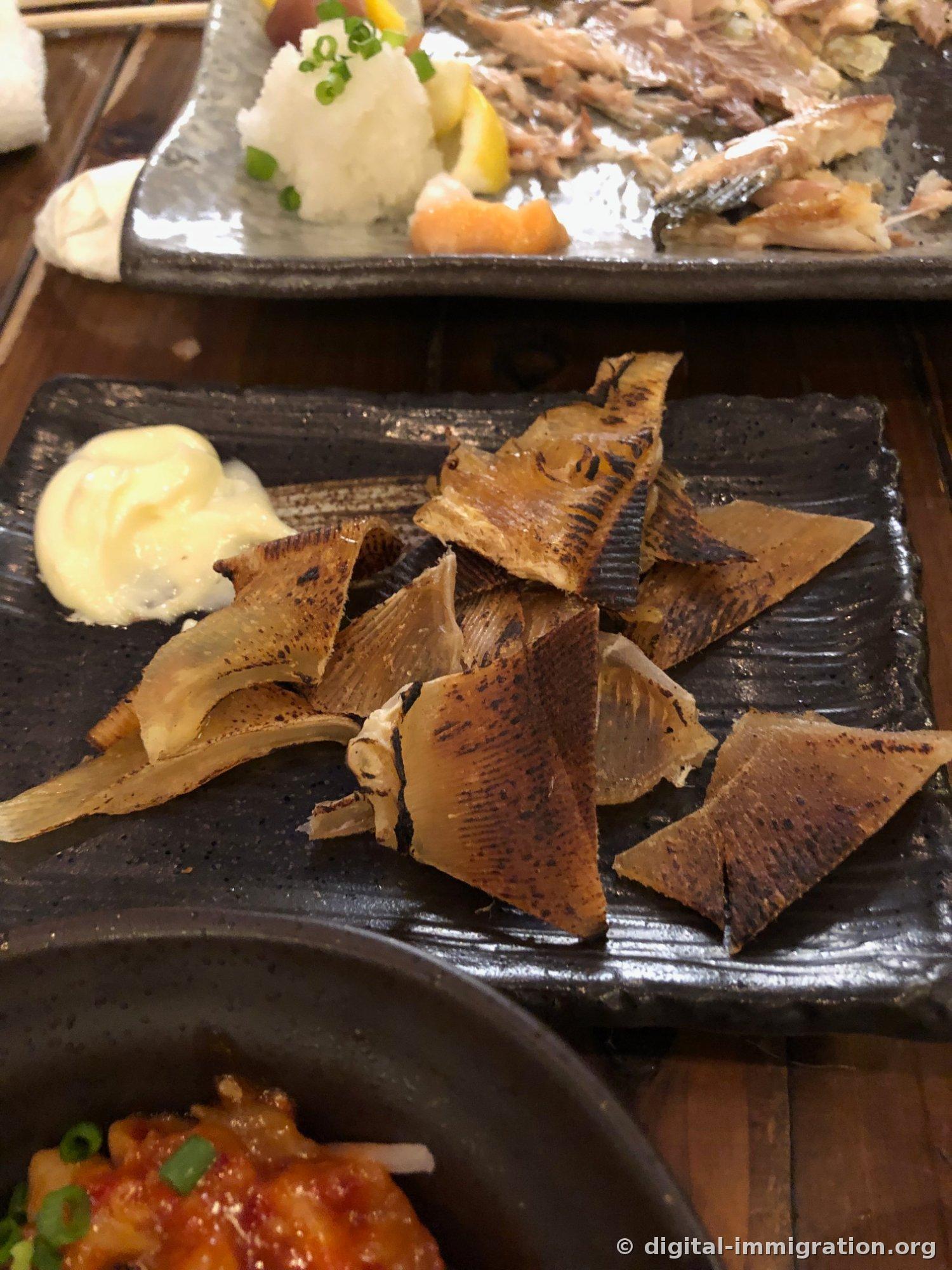
It's a snack made by lightly grilling dried fins and shredding them along the grain. The surface is charred in places, and when you chew it, at first it's tough, but the more your jaw works, the more sweetness seeps out. The proper way is to dip it in mayonnaise sprinkled with shichimi, but we only got plain mayonnaise. People's tastes diverge on this. If someone dislikes dried squid, their chopsticks won't reach for it much. In fact, it was the last thing to disappear from our table. The plate in back is grilled fish, served with grated daikon and lemon, already more than half picked apart.
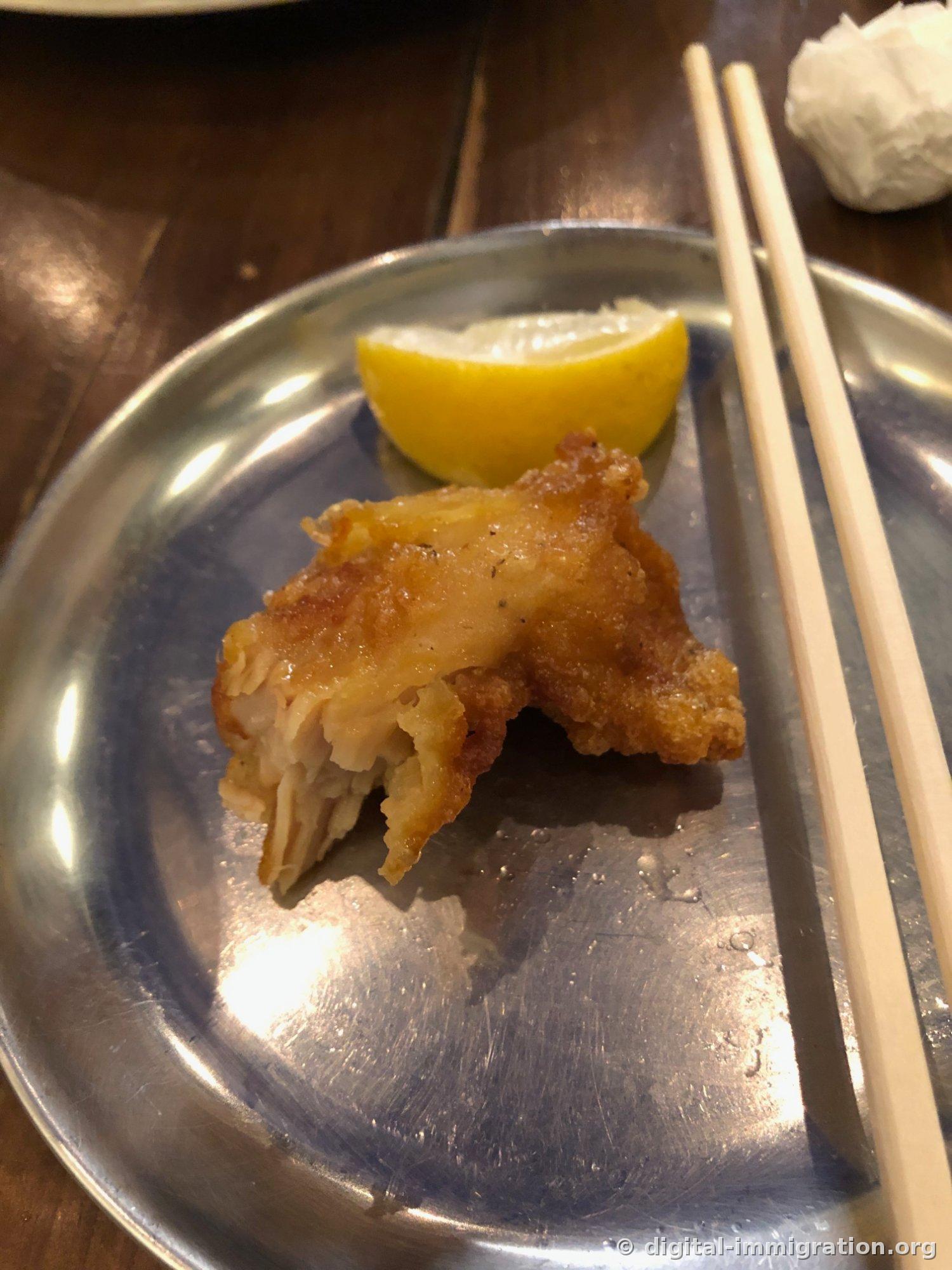
The karaage plate had only one piece left before we could even photograph it. The batter is thin and the meat shreds like chicken along chunky grain lines. I kept thinking about how the sign had said 'legendary shark karaage.' Squeezing lemon over it helps cut through the grease. Their fried dishes are on the salty side, so without beer they're a bit much.
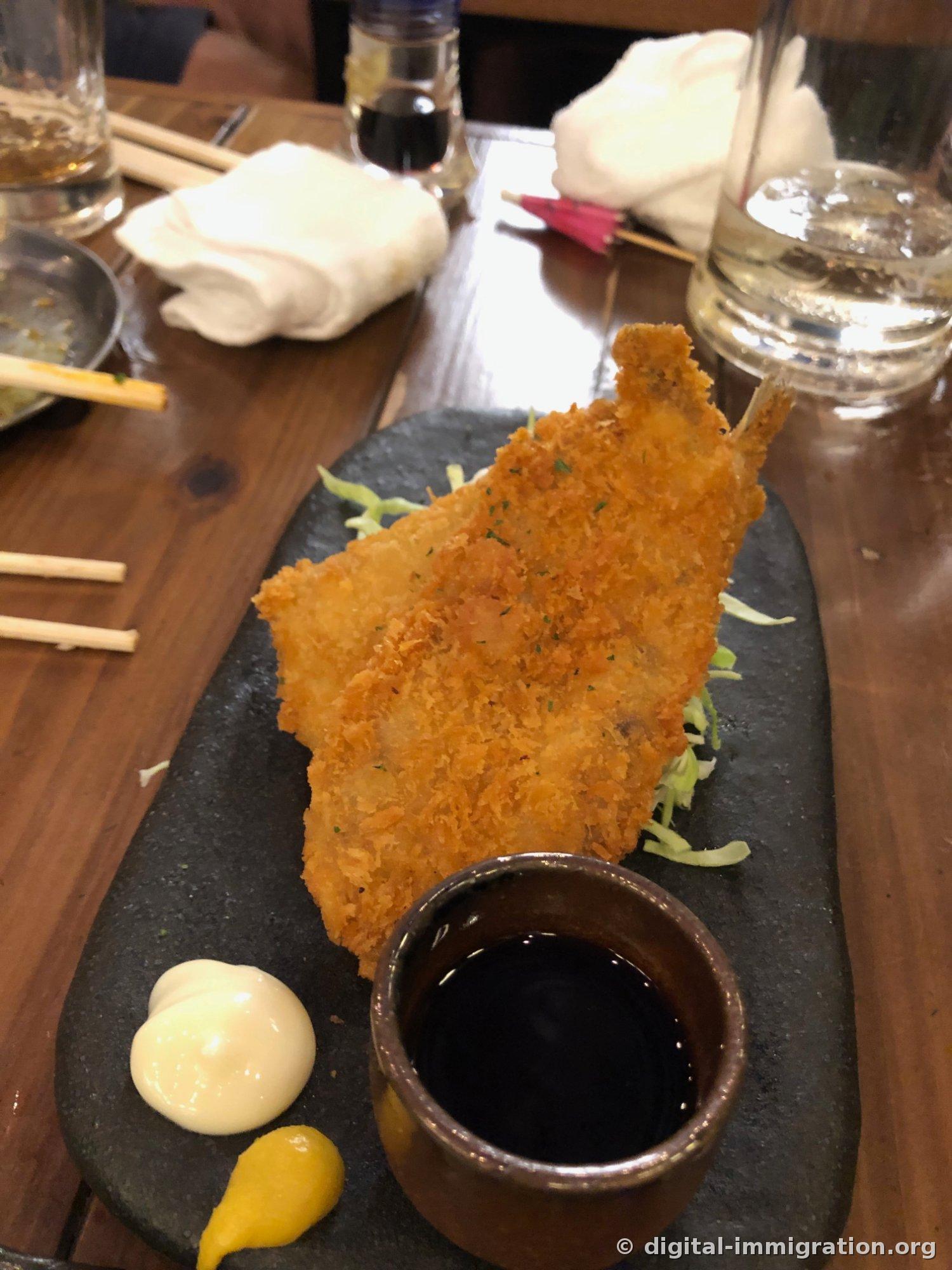
First thing that surprises you is the size. They butterfly-split a whole fish and deep-fry it whole, so the tail sticks out past the plate's edge. The breadcrumbs are coarse, so there's a real crunch, while the inside is moist. It comes with mayonnaise, mustard, and soy sauce—if you mix a little mustard into the soy sauce, the fried fish becomes much lighter. Just one of these between the two of us fills you up pretty well. If you were planning to sample various things in small portions, it's better to order this last. We ordered it midway through and couldn't finish everything we ordered after.
Next Time I Come
Prices are hard to state precisely since each table orders differently. Shellfish is charged per piece, so if you keep ordering, the bill climbs faster than you'd expect. Since prices are listed on the photo menu board at the entrance, I'd recommend skimming it before you go in. For hours and reservation policy, best to check on-site.
If there's one thing I learned from this alley, it's that instead of sitting long at one place, bar-hopping through two or three shops fits the vibe of this neighborhood better. Each shop has distinctly different strengths, and the alley is so short that moving between them takes less than a minute. Shellfish from the tarp shop, fried things from the place next door, the last drink at the one with second-floor window seating. Next time I come, I'm planning to sit at that second-floor window. Looking up at it from outside, that seemed like the best spot.
Читайте дальше
- From Akihabara's Chuo-dori to the Kanda River: A Record of Tokyo's Electronics District Revisited Multiple Times
Tokyo's Akihabara is a neighborhood where it's hard to say you've seen everything in a single visit. I've come multiple times across different seasons, and each time the signs chan…
Токио · Акихабара - Buying a Single ¥300 Year-End Jumbo Lottery Ticket at Nishi-Ginza Chance Center in Tokyo
Exit from the Hibiya exit of Tokyo's Shimbashi Station, walk toward the elevated highway for about three minutes, and suddenly you'll see a line of people stretching along the side…
Токио · Нишигинза Центр Шансов - Ueno Ameyoko, the real magic starts after sunset — an evening walk from the Okachimachi Gate to Ueno Station
Every time I come to Tokyo, my feet find their way to Ueno Ameyoko (アメ横) without fail. This time I entered from the Okachimachi side and worked my way toward Ueno Station. I've met…
Токио · Амэёко рынок