Kawah Putih volcanic lake south of Bandung, and a plate of beef eaten after descending — a day's record
Driving south from Bandung city, endless tea plantations stretch out before you until suddenly the air outside the window turns noticeably cool. The destination that day was a volc…
Бандунг
Driving south from Bandung city, endless tea plantations stretch out before you until suddenly the air outside the window turns noticeably cool. The destination that day was a volcanic crater lake in the mountains toward Ciwidey—Kawah Putih. It's water pooled inside Mount Patuha in western Java, and that milky cyan-blue that looked "photoshopped" in pictures turned out to be even more surreal in person. Standing there, I finally understood what people meant when they spoke of the mysterious beauty of Bandung's volcanoes.
The first glimpse from the ridge
I took a shuttle up from the parking lot and stood first at the viewpoint near the ridge. Clouds were swallowing the left slope entirely, and between them the mint-colored water peeked through sharply. The temperature felt like late autumn in Seoul—I'd left Bandung city wearing a sleeveless shirt and found myself getting goosebumps. Do bring at least one thin wind jacket.
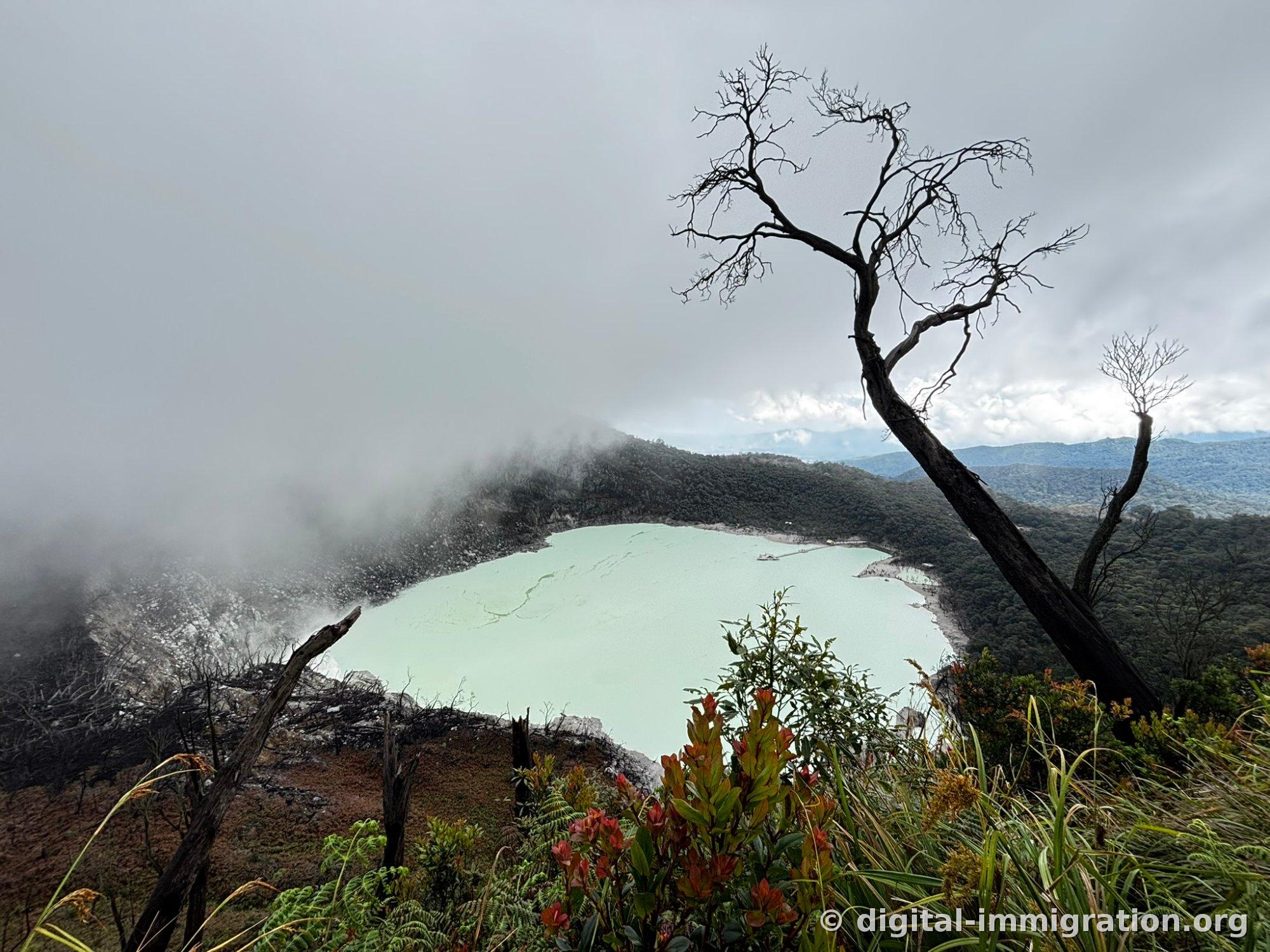
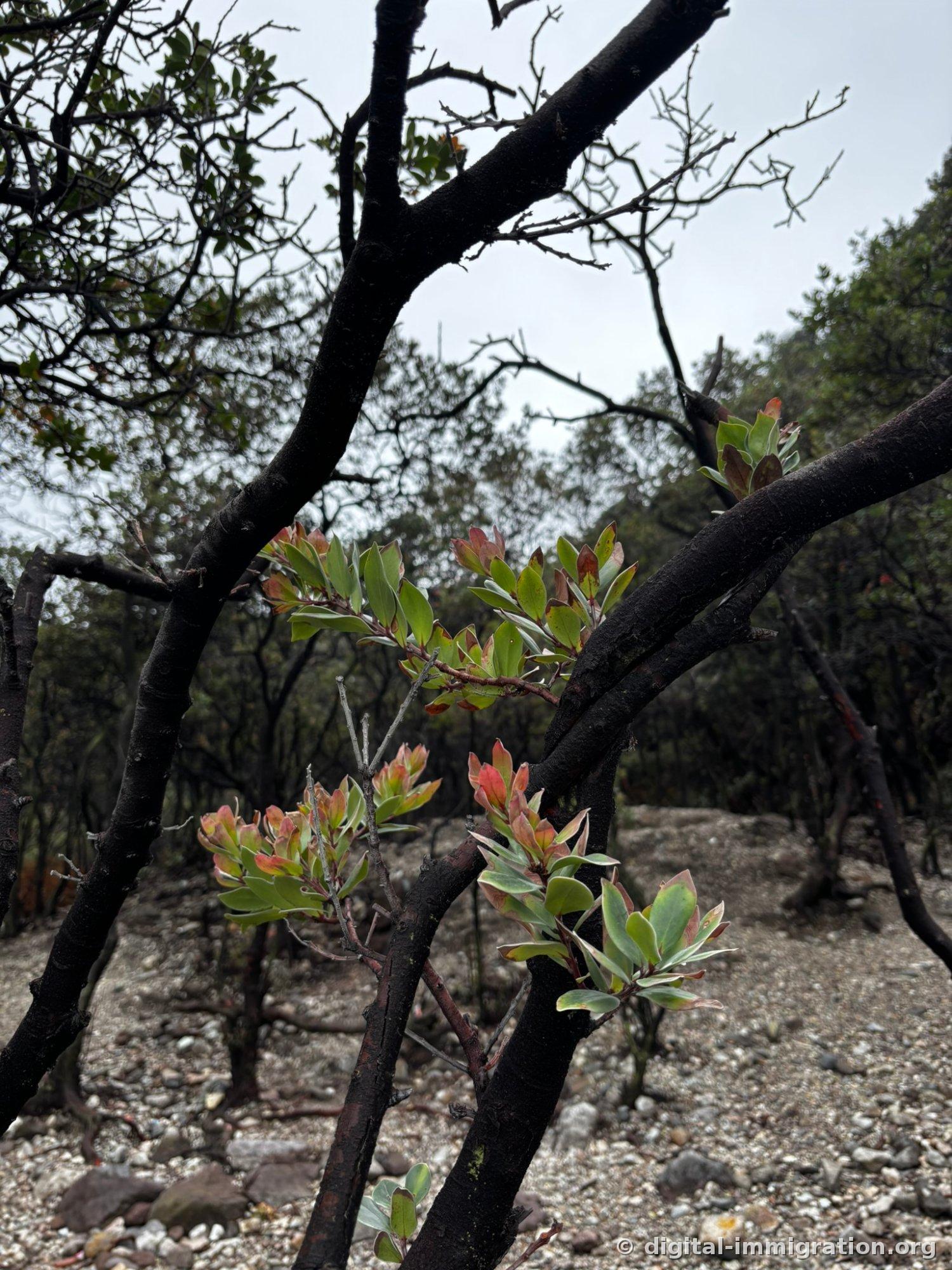
The skeletal black trees in the photos aren't dead and abandoned—they're simply the condition of the land itself. The water and soil have high sulfur content, making it hard for large trees to survive. But I noticed red new shoots sprouting from the tips of those charred branches. In a landscape of only gray and black, this patch caught my eye so much I crouched down to examine it for a while.
The smell hits you first as you descend to the lakeshore
I followed the stairs down to the water's edge. Even on the way down, a strong smell of rotten boiled eggs—sulfur—hits you hard. On bad days it can be harsh enough to make your throat burn, which is why masks are sold near the entrance. I lasted about five minutes before coughing and stepping back, then returned. If you have a sensitive respiratory system or are bringing children, it's worth buying a mask at the entrance.
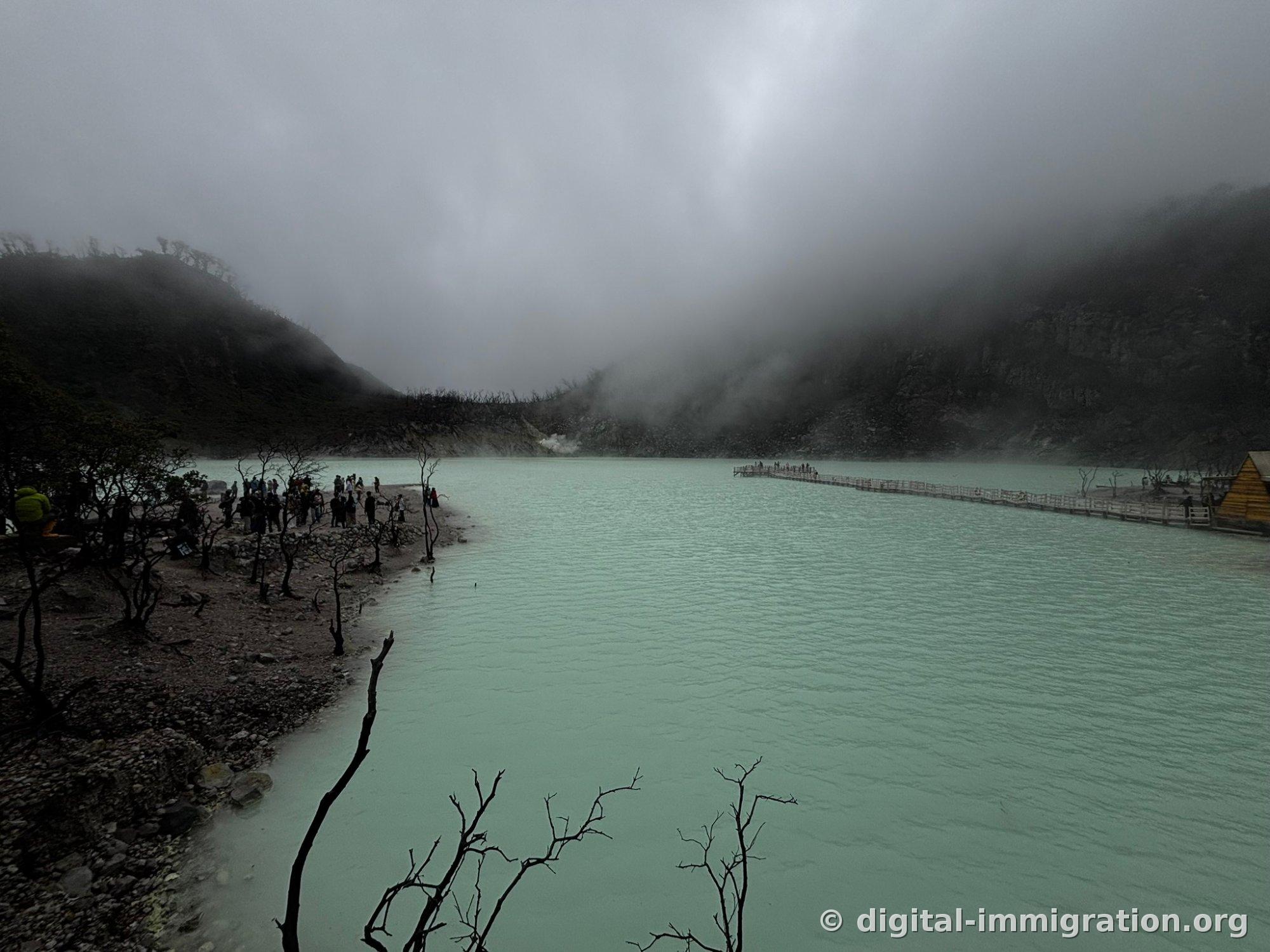
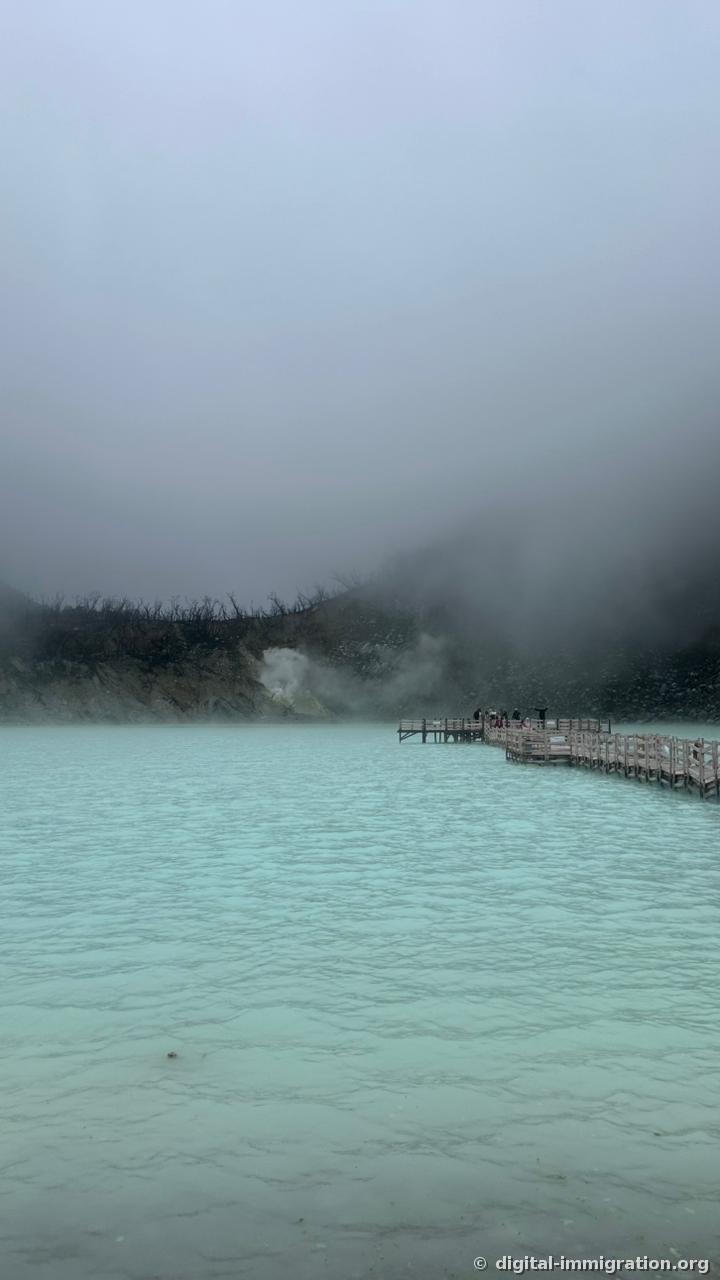
The water color keeps changing with time and weather. That late morning it was jade tinged with gray due to the overcast sky, but when the clouds briefly parted it shifted to an almost fluorescent mint. You can walk the wooden deck all the way to its end, and white steam continuously seeps from the rock crevices near the deck's end. This is a sign not to put your hand in—it's actually hot.
Location and how to get there—it's possible as a day trip from Bandung
The distance from Bandung city to Kawah Putih isn't far in itself, but the mountain road toward Ciwidey is narrow and gets badly congested on weekends, so travel time stretches longer than expected. Even leaving in the morning, my one-way trip took over two hours. If you go in the afternoon, clouds often roll in and obscure everything, so it's best to leave early and aim to be at the crater during the morning. The map below shows the coordinates of the viewpoint where I took photos that day.
Admission and shuttle fees differ for domestic and foreign visitors, and between weekdays and weekends, changing frequently. If I write the numbers here they'll just become outdated—check the ticket booth display board on site. But do bring plenty of cash in rupiah. Card payments don't work at many places higher up on the mountain.
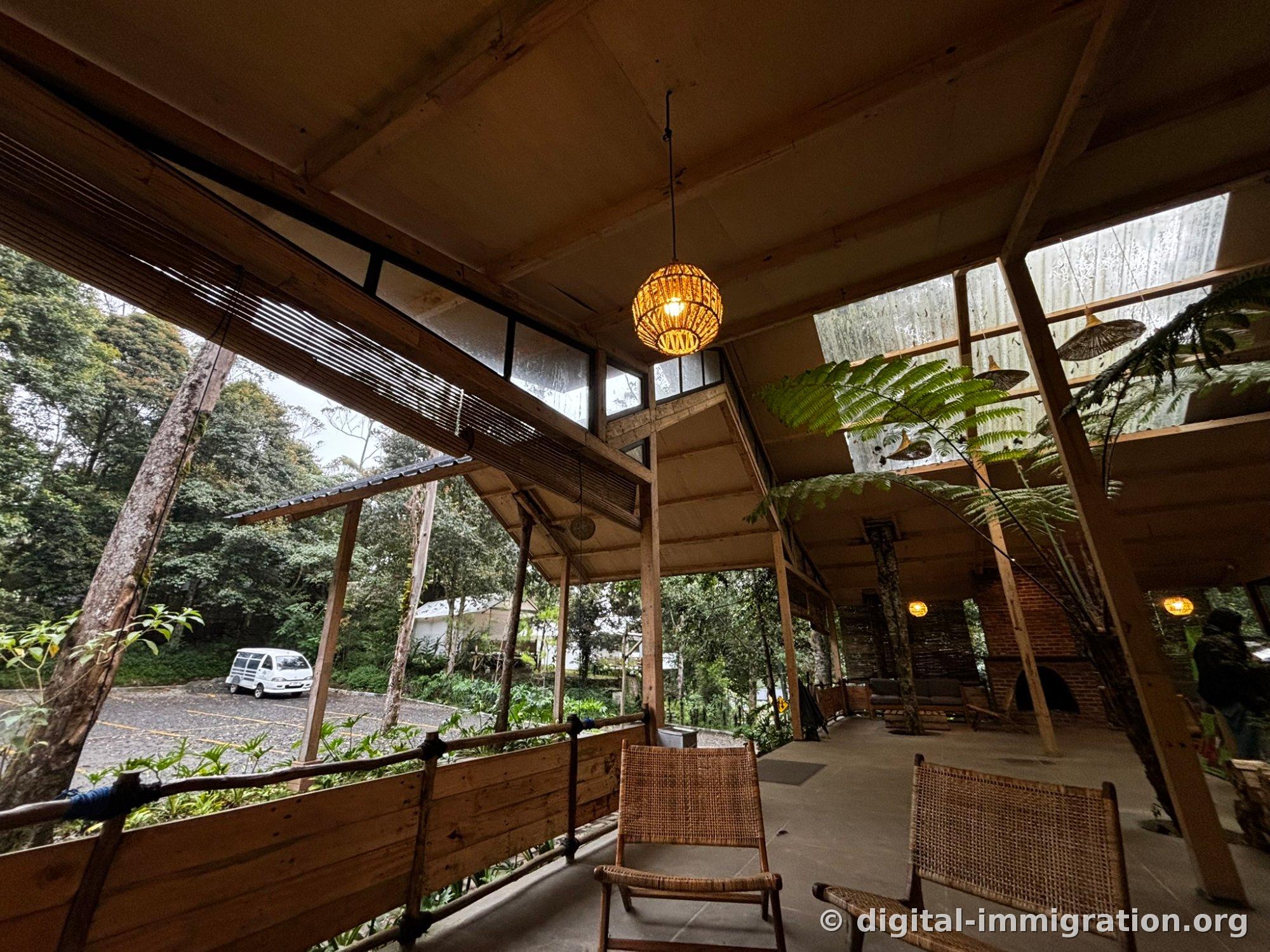
On the way back down, I stopped at a wooden café inside the forest. The structure has wooden pillars and slate roofing but barely any walls, so if you sit inside, ferns from outside come right in. The mountain air was cold enough that holding something hot in your hands felt perfect. The parking lot is right out front, making it convenient to wait for the driver.
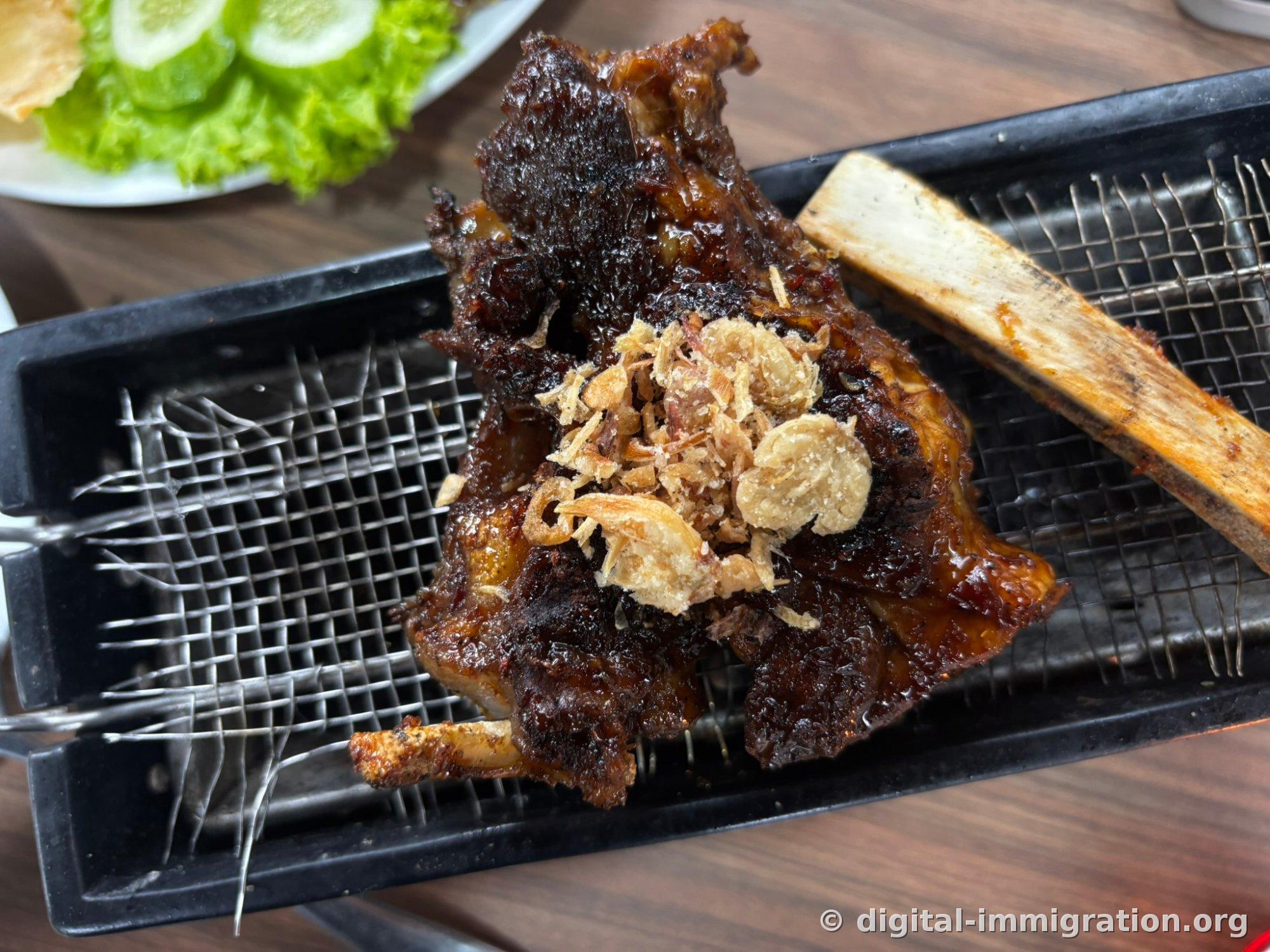
A plate of Sundanese beef eaten after coming down from the mountain
West Java is Sunda cultural territory, so the food character differs from Bali or eastern Java. Fresh vegetable salads (lalab) come on the side, sambal is served separately, and fried shallots are scattered generously. Coming to the table with my body still chilled from the volcano, this meal was the best I ate all trip.
First came beef short ribs grilled on the bone. They arrived still sizzling, placed whole on a grill, with the soy glaze on the surface hardened like caramel and gleaming. The fried shallots on top do eighty percent of the work flavor-wise. The sweetness is quite strong, so you need to alternate with the lettuce and cucumber on the side plate to keep from tiring of it.
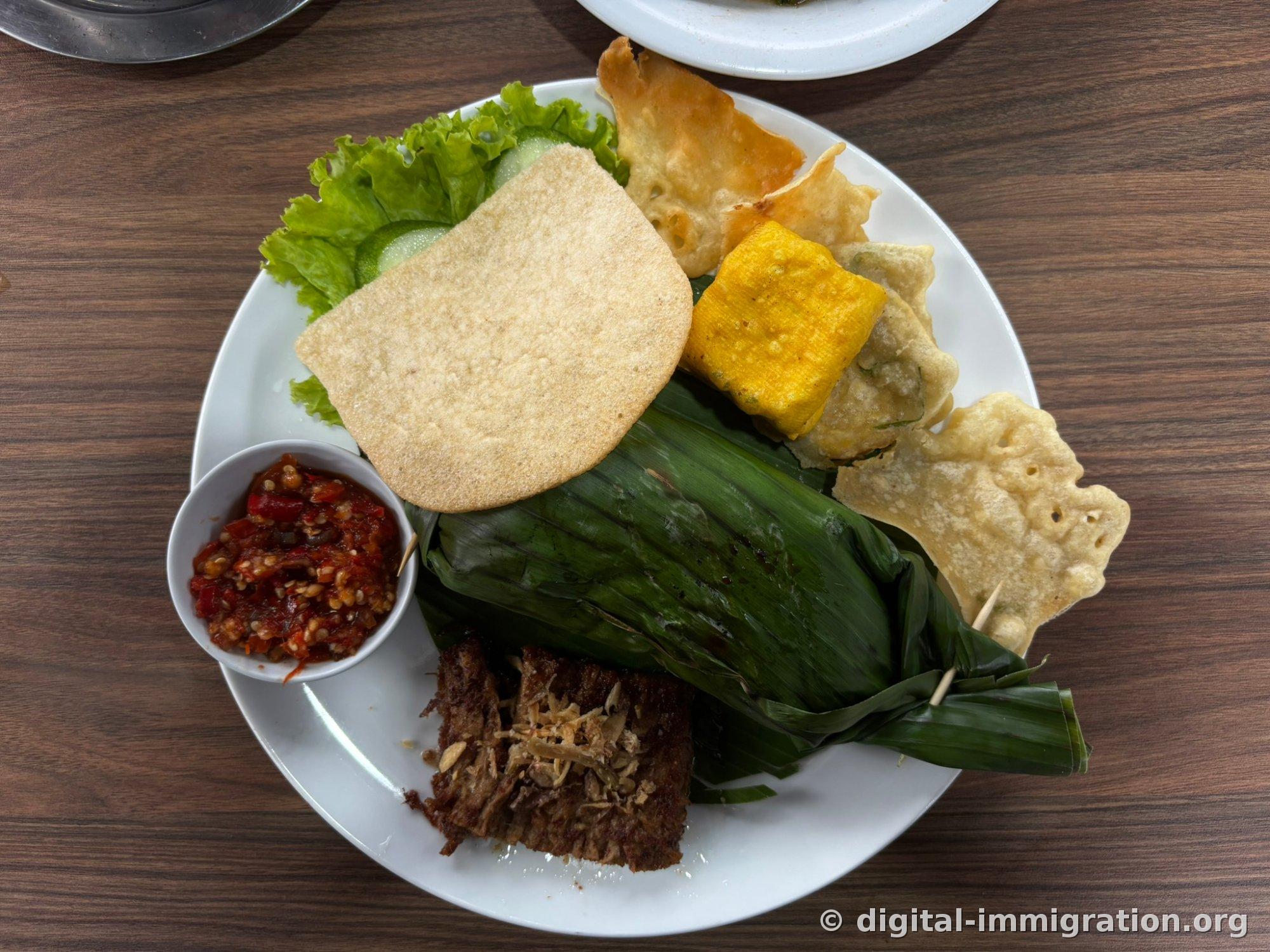
Next came the hero of the day. A one-person set of rice wrapped in banana leaves (nasi bakar), with krupeuk, fried tofu, braised beef, and a small bowl of sambal all together. When you open the banana leaves, a smoky aroma rises up—the rice grains have absorbed the leaf smell. The sambal is spicier than it looks—at first, just touch it with the tip of your chopstick to check. I underestimated it, put in a full spoon, and drank two glasses of water.
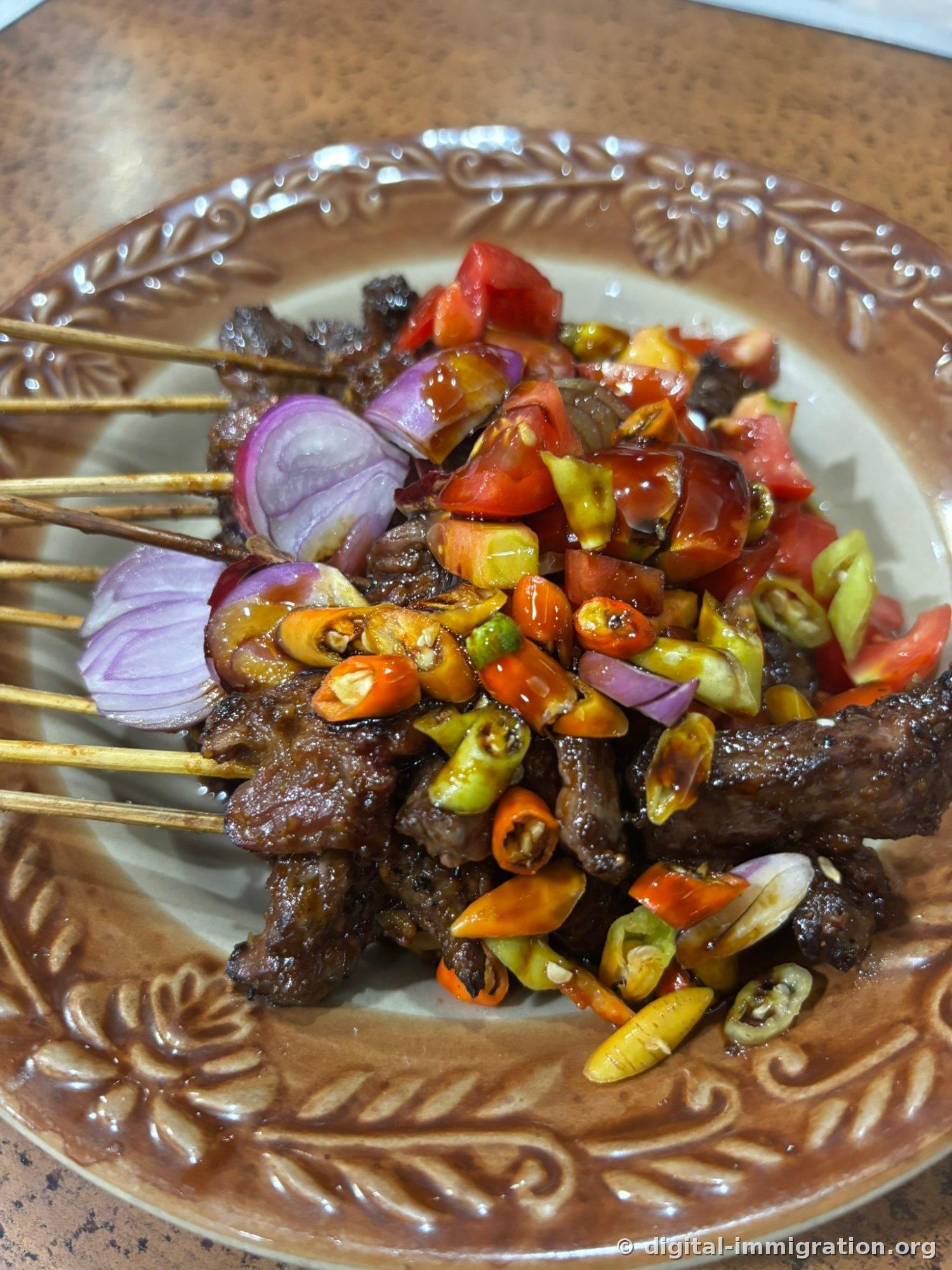
I also ordered skewered beef satay. What surprised me immediately was the amount of chili piled on top. Fresh bird's eye chilies are sliced and heaped mountain-high along with tomato and onion. The meat itself has a strong charcoal flavor and is sweet-savory, but putting the chili on it wipes that sweetness away entirely. After three skewers I pushed the chilies to the side—you shouldn't underestimate Indonesian spice levels.
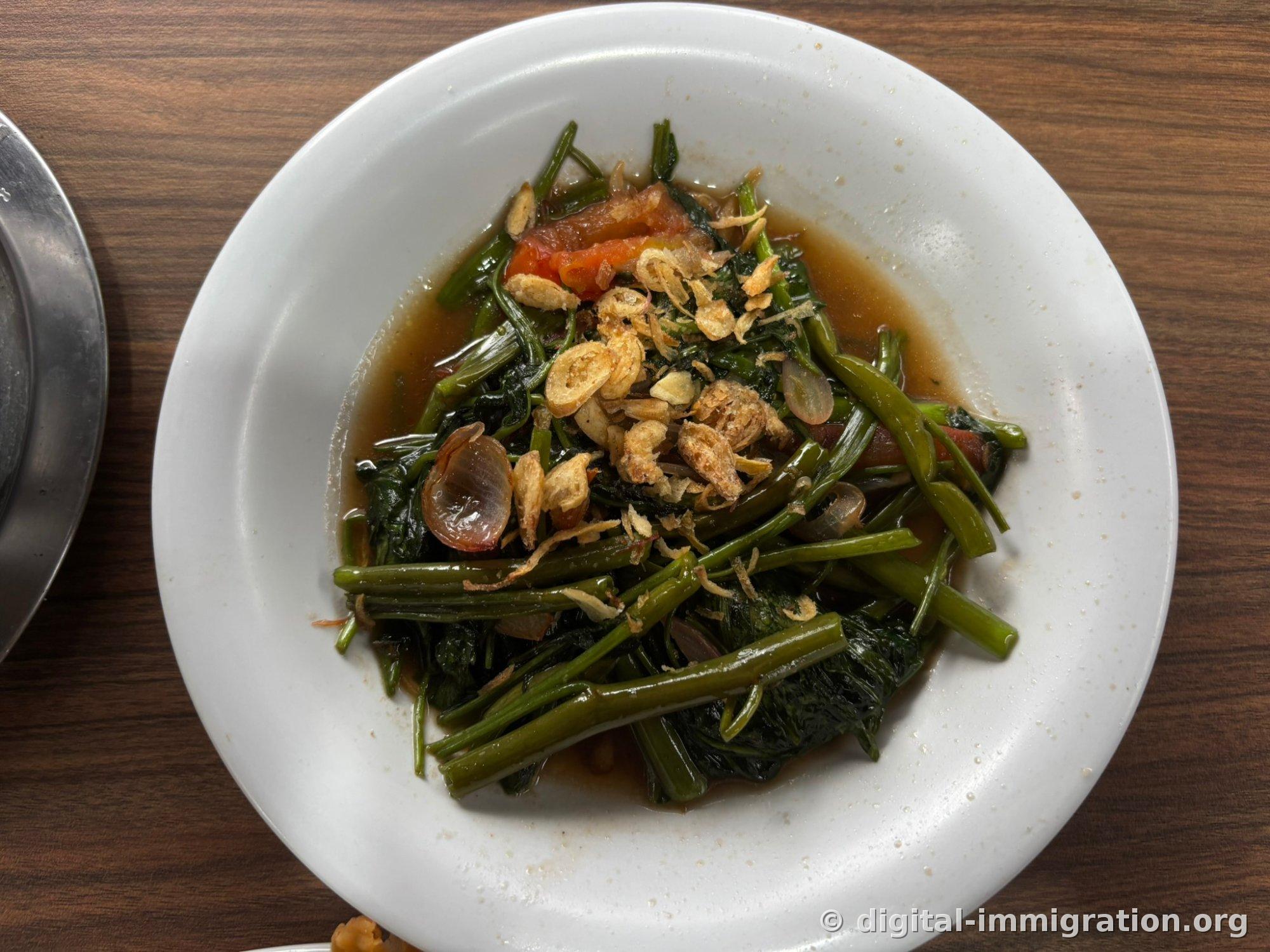
When you've been eating rich food continuously, you start to need water spinach stir-fry (kangkung). A bit of soy-based broth pools at the bottom of the plate, cooked with tomato and shallot. The crisp texture of the stems is exactly right after satay. It's affordable at any restaurant, so if there are two of you, I'd recommend adding an extra plate—it helps the whole meal.
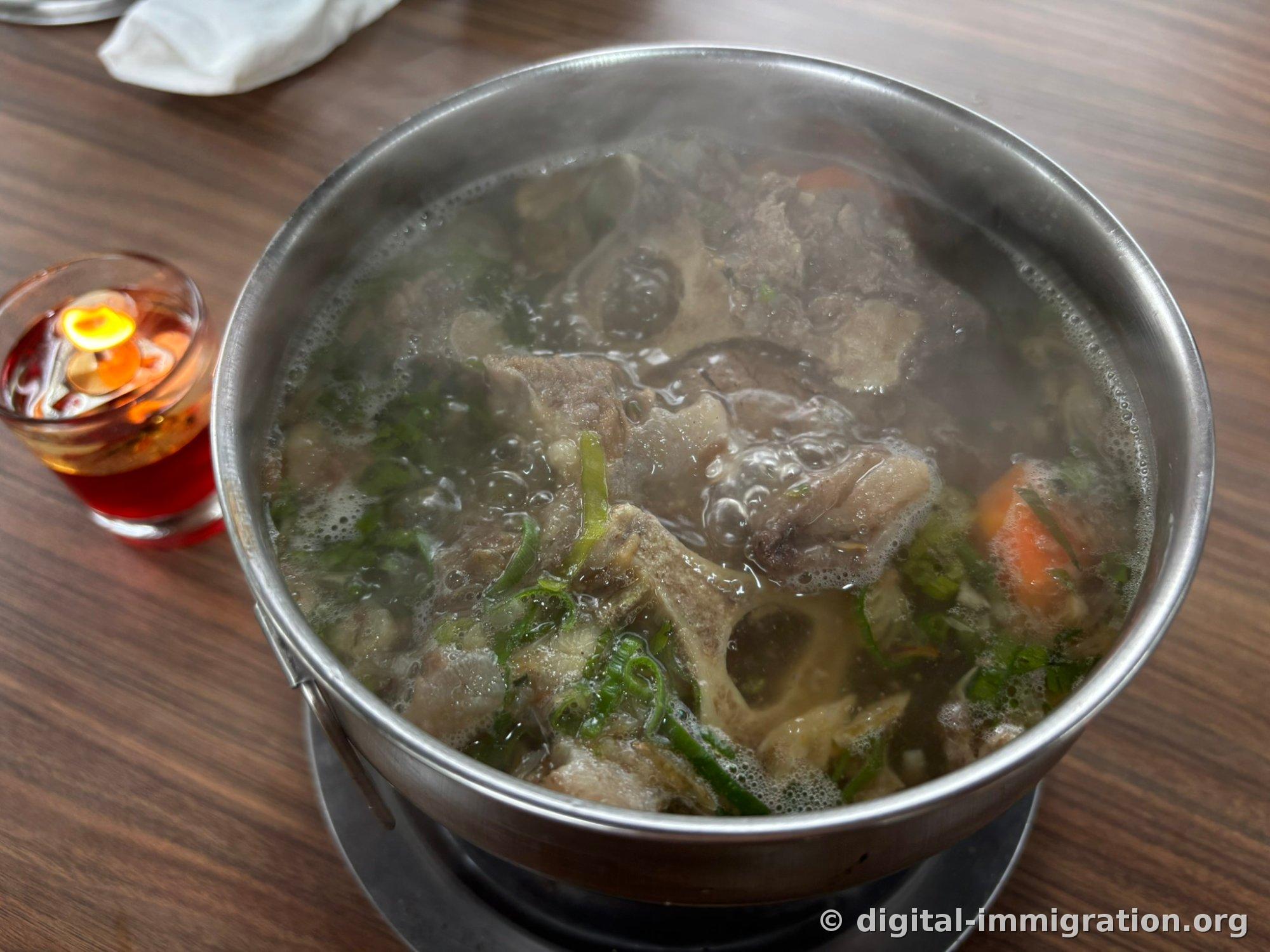
Finally came oxtail soup (sup buntut). It arrives in a stainless steel pot set over solid fuel, simmering the whole time you eat. The broth is clear with a strong pepper flavor, surprisingly not greasy. The meat falls right off the bone, and with carrots and scallion it has a texture similar to Korean galbi-tang. After spending the afternoon breathing sulfur and being chilled on the volcano, a ladle of this into me and the day finally felt complete.
Notes from the visit
- Go in the morning. In the afternoon clouds cover the crater and the water color disappears. That cyan I saw in the morning turned gray an hour later.
- A jacket. The temperature difference between Bandung city and the mountain top is significant. I went in just a sleeveless shirt and was shivering.
- A mask. The sulfur smell is stronger than expected. If you plan to take photos by the water for a while, it's practically essential.
- Cash. Mountain-top shops, parking, and shuttles are cash-based. Fees change frequently, so check at the ticket booth.
- One regret: on cloudy days you can't see the whole lake from the ridge viewpoint. That day the left half remained hidden by clouds the whole time. If your schedule allows, it's safer to plan two possible days.
A full day that amounted to seeing one volcano and eating one meal, but when I got back to my accommodation that evening and scrolled through the photos, something about it stuck with me. The fact that the image of red new shoots rising between blackened dead trees and the memory of oxtail broth warming my body belonged to the same day struck me as oddly funny.
Читайте дальше
- Gold Dragon Coffee's Meat Buns Made with Pumpkin Dough in Jakarta's Glodok Chinatown
Glodok is an old Chinese commercial district in West Jakarta. Walking through alleys tangled with jewelry shops, herbal medicine stores, and mobile phone parts shops toward Pasar G…
Джакарта · Глодок Чайнатаун маркет - Золотой дракон кофе - From under the Glodok Pancoran arch to Petak Enam, three hours of evening in Jakarta's Chinatown
Walking south from Jakarta's Kota Tua, you encounter a gray stone archway that stretches across the middle of the road. "SELAMAT DATANG — KAWASAN GLODOK PANCORAN — CHINATOWN JAKART…
Джакарта · Рынок Чайнатаун Глодока - Jakarta National Museum (Museum Nasional Indonesia), Half a Day at the Elephant Museum
On the west side of Merdeka Square, along Jl. Medan Merdeka Barat, sits a low neoclassical white building. It's Indonesia's National Museum, though locals still call it Museum Gaja…
Джакарта · Национальный музей Индонезии