Yakkiniku Happi (焼肉はっぴぃ) in Ningyocho Alley, Tokyo: A Solo Evening of Grilling at the Counter
Tokyo's Nihonbashi Ningyocho district quiets dramatically after 8 PM as office lights go out. On that quiet alley, one yellow sign glowed distinctly. A yakkiniku restaurant 'Happi…
Tokyo · အူရှီယို ဒိုင်စုကီ ယကီနိကု ဟ၀ပီ နင်ကျို ချို
Tokyo's Nihonbashi Ningyocho district quiets dramatically after 8 PM as office lights go out. On that quiet alley, one yellow sign glowed distinctly. A yakkiniku restaurant 'Happi (はっぴぃ)' serving beef tongue and wagyu. The sign reads 焼肉はっぴぃ in calligraphy, and an adjacent standing sign reads '日本橋人形町発祥'. At first I wasn't sure if it was the right place since the building next door had an Aphrodite Ginza sign, but seeing the four characters '和牛焼肉' on the red lantern confirmed it.
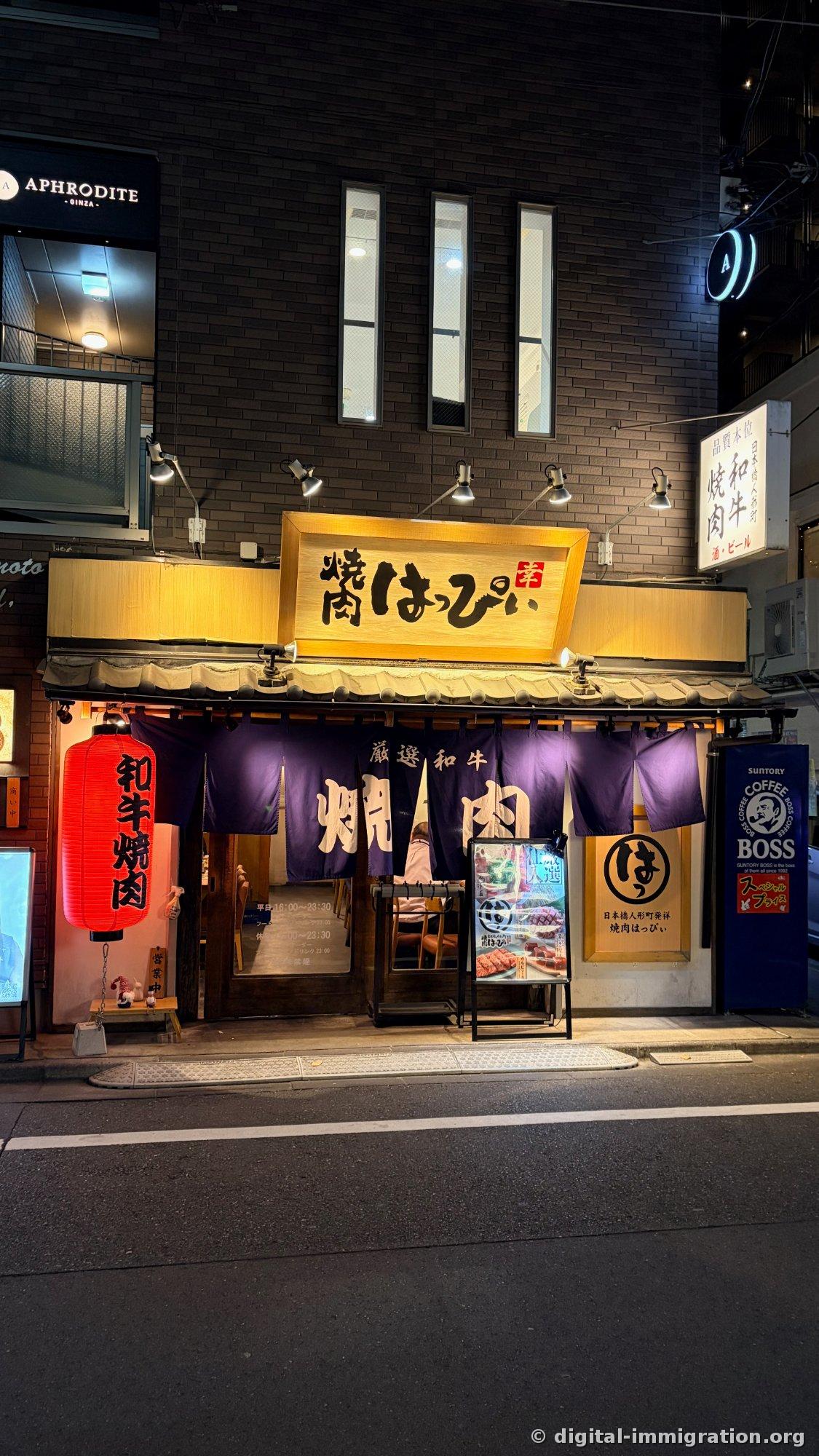
Past the noren is the counter. Each seat has its own smokeless roaster, and a refrigerator in the back lines up with green bottles. When I mentioned I was dining alone, they guided me to the end of the counter without much reaction. The vibe made it clear that eating yakkiniku solo was nothing unusual here.
First, a Draft Beer — Nama-biru First is the Order
I ordered an Asahi Super Dry draft immediately after sitting down. It was in that glass with SUPER "DRY" KARAKUCHI boldly emblazoned on it. The foam rose about two finger-widths above the rim, and when I picked it up, my palm got wet instantly. On the small plate in front were a lemon wedge and a soy-based sauce already set out.
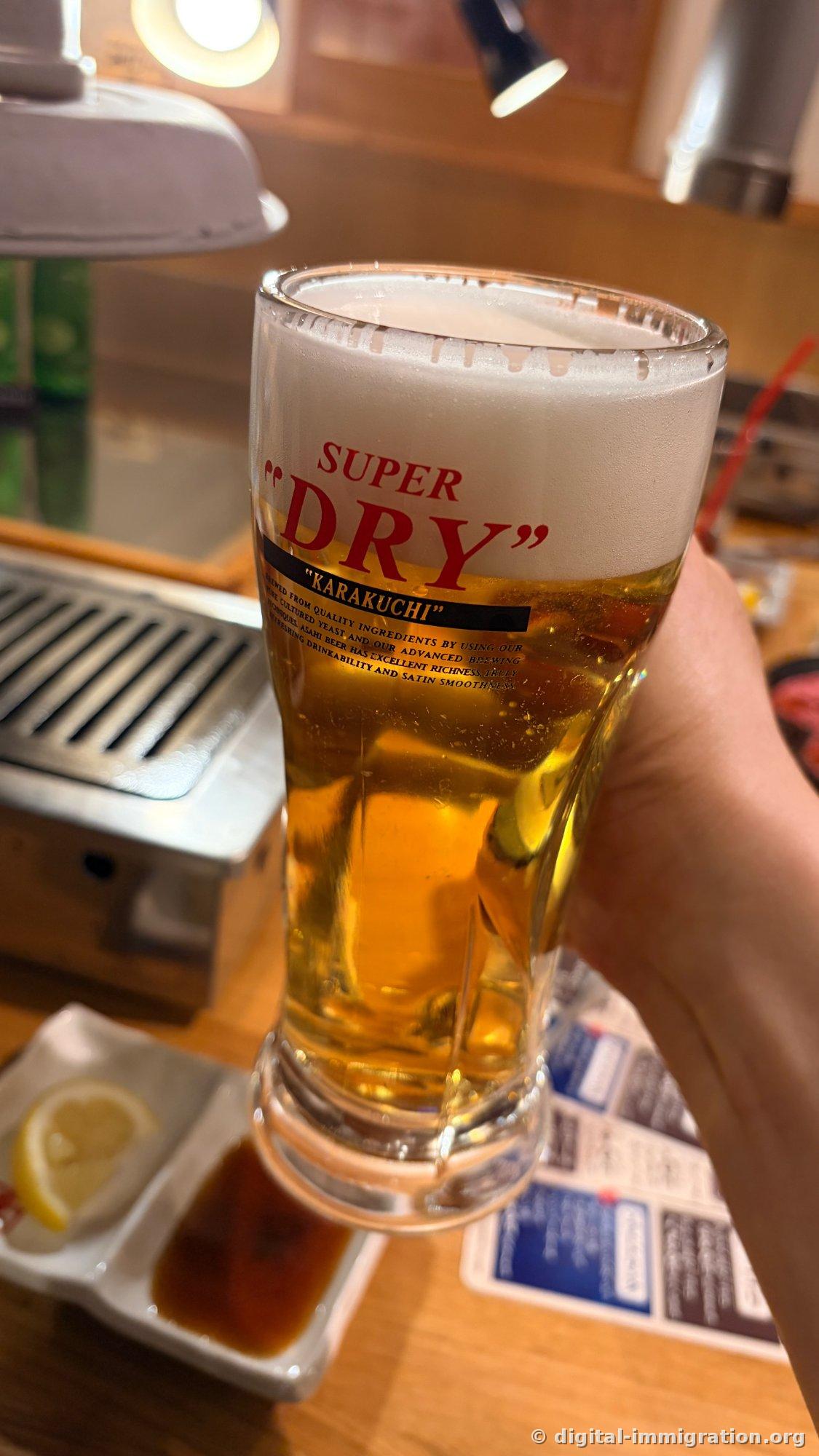
Ordering beer first at a yakkiniku restaurant isn't just about quenching your thirst. While the first glass is being poured, the roaster preheats. By the time the beer is half-finished, the temperature is just right to add the meat. If you order meat first without knowing this, it'll stick to a cold grill.
Beef Tongue (牛タン) and Striploin — The Aroma Changed the Moment They Hit the Grill
I ordered the beef tongue that gives the restaurant its name. It came sprinkled with salt, coarsely cracked pepper, and sesame seeds, with a thickness that was neither thin nor thick. The striploin alongside it wasn't heavily marbled—instead, it had a distinct red color. The moment they touched the grill, there was a sizzle and the rich, toasted aroma of sesame oil and seeds wafted up.
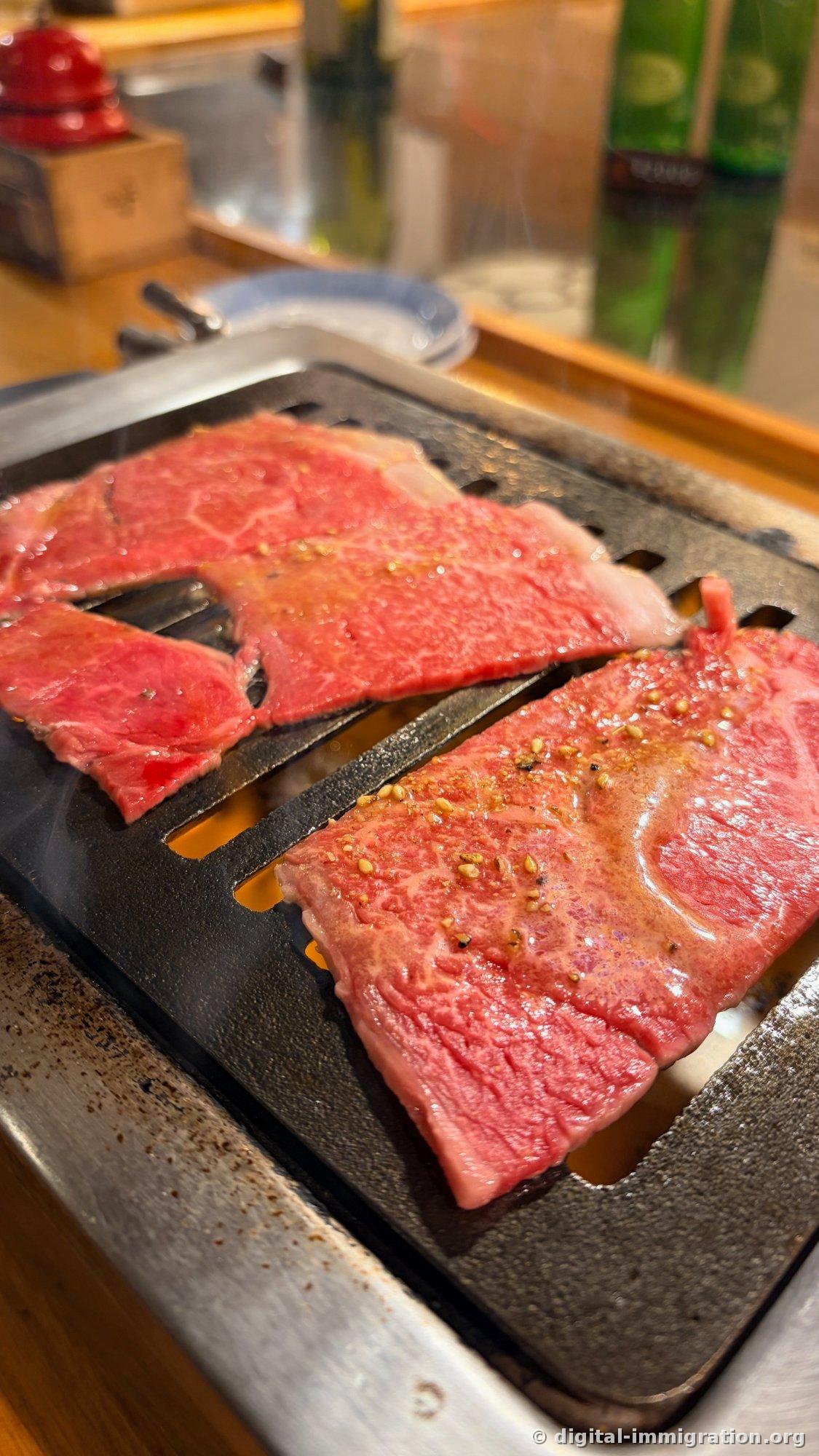
Grilling thin cuts too long is a waste. As soon as the edges browned, I flipped it, then immediately plated it. I ate the beef tongue with just lemon juice and salt. Since it's a cut meant to be enjoyed for its chew rather than juiciness, dipping it in sauce would only kill the texture.
A Plate of Liver (レバ)
The most memorable dish that day was the liver served on an ornate Imari-style plate. It was nearly purple rather than just dark red, with coarse pepper ground over the surface. Since Japan has banned the serving of raw beef liver since 2012, this is meant to be grilled. In fact, when the plate arrived, the staff made a gesture meaning 'grill it well'.
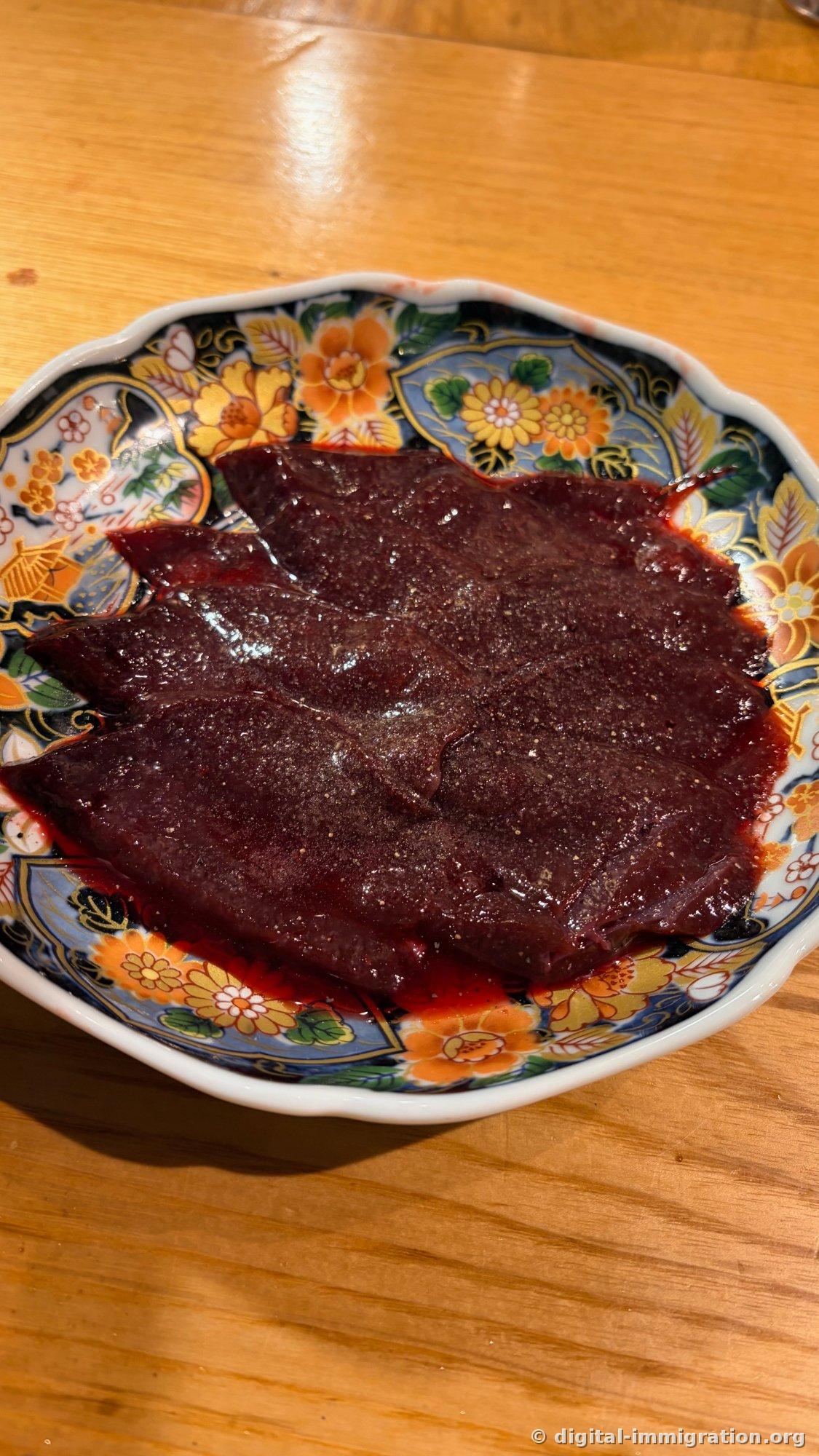
If liver is only cooked on the outside, it stays gamey. I placed it on the cooler edge of the grill and cooked it slowly until the color changed all the way through. Dipped in sesame oil and salt, the distinctive iron flavor was subdued and the nutty notes came through. Though after a couple of slices, I was full. Liver is best enjoyed first.
Finishing with Cold Noodles — Clear and Delicate Broth
After finishing the grilled meats, I ordered cold noodles. Fine noodles sat in a white bowl, topped with chopped green onion, a slice of cucumber, and a piece of kimchi. The broth was nearly transparent and clear. It wasn't the deep, concentrated flavor of Korean naengmyeon broth—the seasoning was quite subtle.
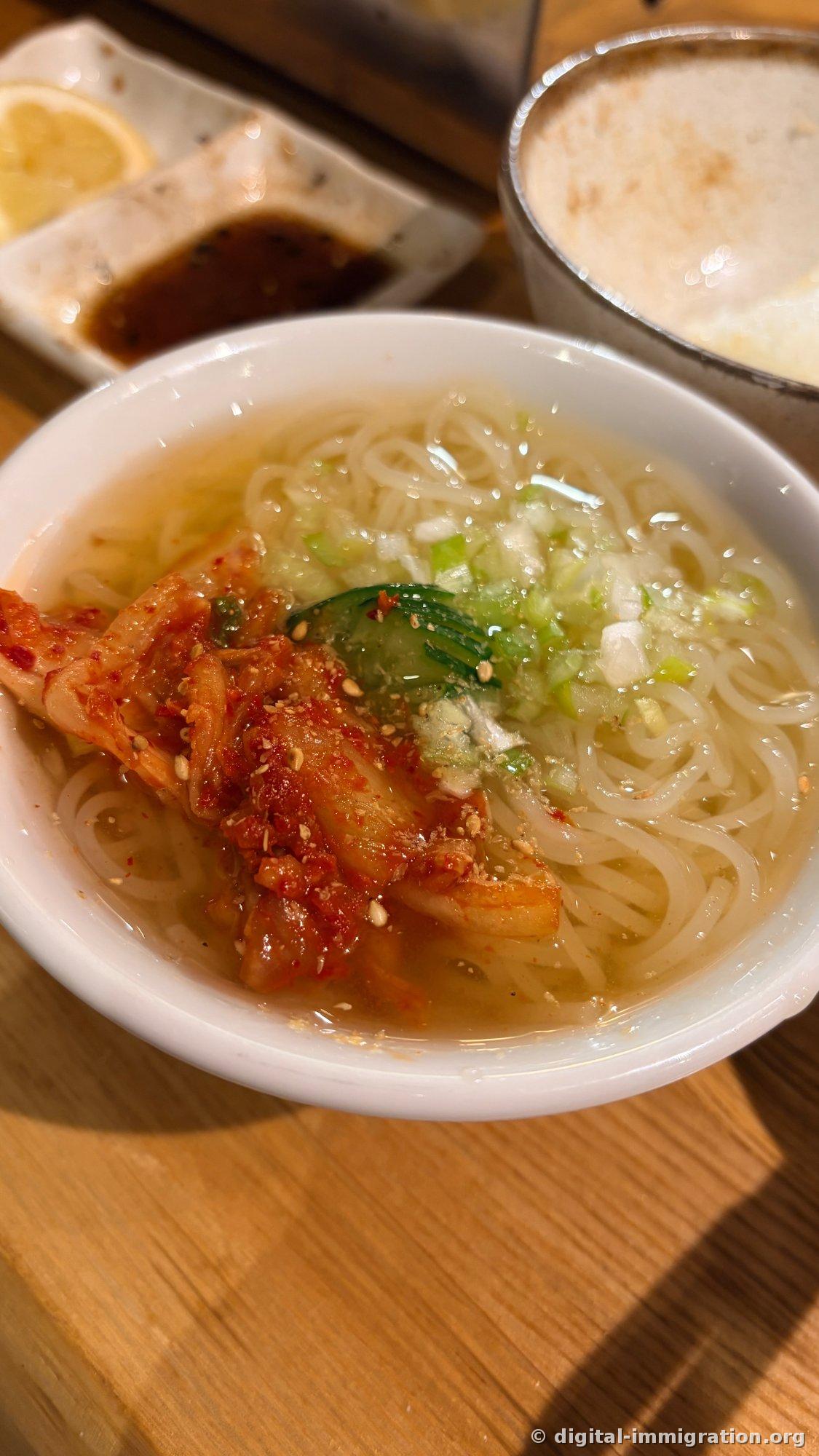
My first bite seemed bland, but once I mixed the kimchi from the top into the broth, the color and flavor finally came together. If you expect Korean-style naengmyeon, you'll likely be disappointed. But for rinsing away the richness of the meat, this style is actually better.
Location and How to Get There
It's within walking distance from Ningyocho Station (人形町駅) on the Tokyo Metro Hibiya Line and Toei Asakusa Line. After exiting the station, you turn down a few alleys, but since it's tucked between office buildings on a narrow street rather than a major road, it's faster to navigate with a map. At night, the yellow sign and red lantern stand out from a distance.
The sign at the entrance showed weekday hours of 16:00~23:30, with different opening times listed for holidays. Last orders are 30 minutes to an hour before closing, so if you're planning a late visit, it's best to check ahead.
Good to Know Before You Go
- Counter seating dominates, so solo dining feels natural. However, groups of four or more should reserve ahead.
- While the smokeless roaster keeps heavy smoke down, the smell does cling to clothes. Prepare for this if you're wearing a coat.
- The menu board has photos, and the standing sign at the entrance shows pictures of different cuts. Even without Japanese, you can point to what you want.
- Prices vary by season and market rates, so checking the menu on-site is recommended. I didn't record the bill amount that day.
- Liver must be cooked through completely. Undercooked liver is not only risky but also doesn't taste good.
Ningyocho isn't a neighborhood that swarms with tourists. So when you walk these alleys in the evening, all you see are salarymen pulling aside the noren after work. Squeezing in among them to grill a few slices of beef tongue and have a beer felt like the most Tokyo evening you could have in this neighborhood.
ဆက်လက်ဖတ်ရှုရန်
- From Akihabara's Chuo-dori to the Kanda River: A Record of Tokyo's Electronics District Revisited Multiple Times
Tokyo's Akihabara is a neighborhood where it's hard to say you've seen everything in a single visit. I've come multiple times across different seasons, and each time the signs chan…
Tokyo · Akihabara - Buying a Single ¥300 Year-End Jumbo Lottery Ticket at Nishi-Ginza Chance Center in Tokyo
Exit from the Hibiya exit of Tokyo's Shimbashi Station, walk toward the elevated highway for about three minutes, and suddenly you'll see a line of people stretching along the side…
Tokyo · Nishi-Ginza Chance Center - Ueno Ameyoko, the real magic starts after sunset — an evening walk from the Okachimachi Gate to Ueno Station
Every time I come to Tokyo, my feet find their way to Ueno Ameyoko (アメ横) without fail. This time I entered from the Okachimachi side and worked my way toward Ueno Station. I've met…
Tokyo · Ameya Yokocho Market