Tonkatsu Suzuki (とんかつ 寿々木) at Tokyo Station Kitchen Street — A Tonkatsu Meal Worth Remembering
With an hour and a half to spare before my shinkansen departure, I wandered through the Yaesu side of Tokyo Station's Kitchen Street and stopped in front of a white noren curtain.…
Tokyo · Tonkatsu Suzuki
With an hour and a half to spare before my shinkansen departure, I wandered through the Yaesu side of Tokyo Station's Kitchen Street and stopped in front of a white noren curtain. In black brushstrokes: とんかつ 寿々木. Through the gaps in the noren, I could see customers sitting at the counter, and right below it, someone else's black suitcase—just like mine—standing on the floor. I've eaten tonkatsu countless times in Tokyo, but the pork loin cutlet I had here that day still ranks in my top five Japanese tonkatsu meals. That's what I'm writing this post about.
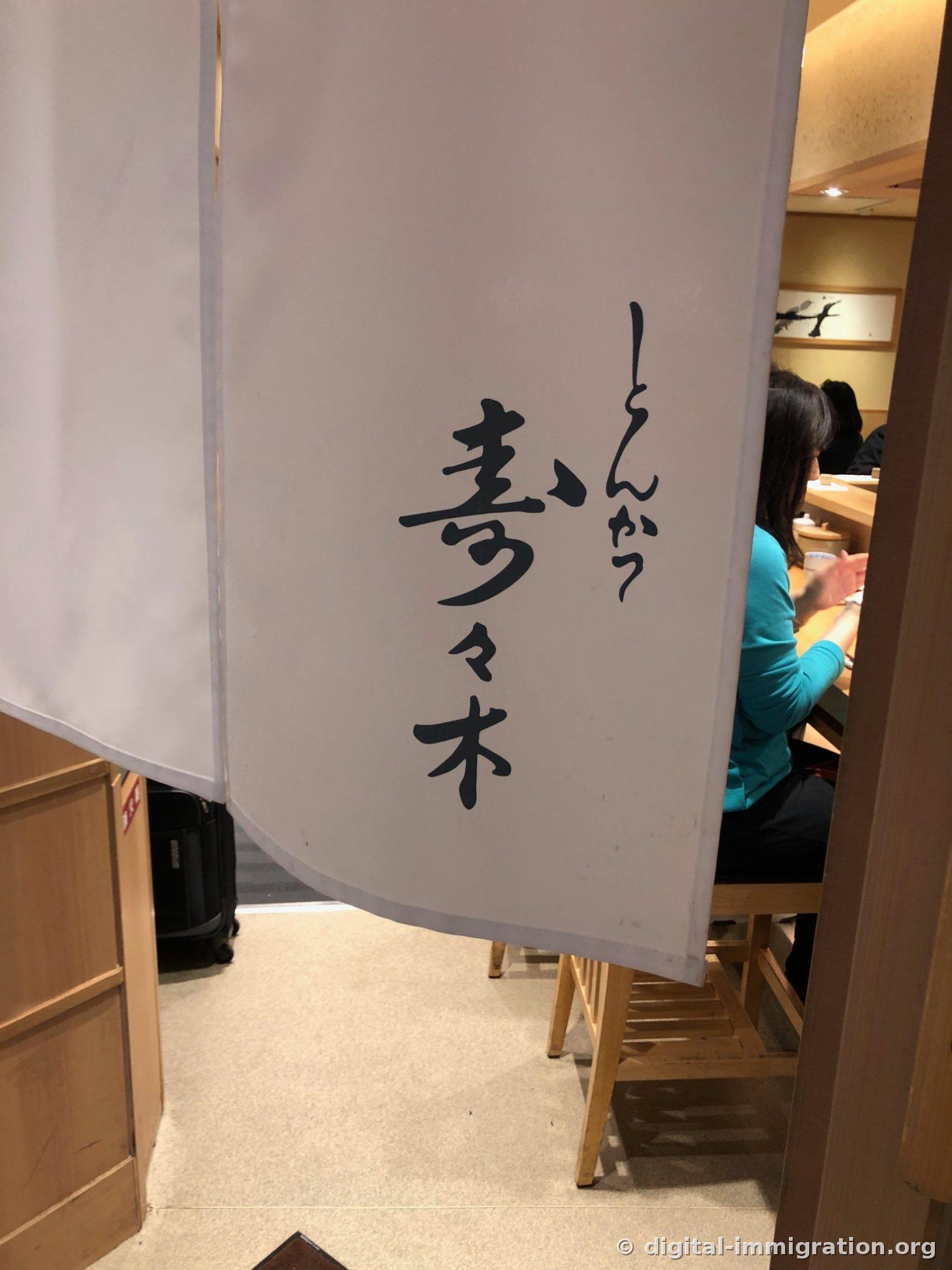
Finding Your Way: Out of the Ticket Gate and Into the Shop
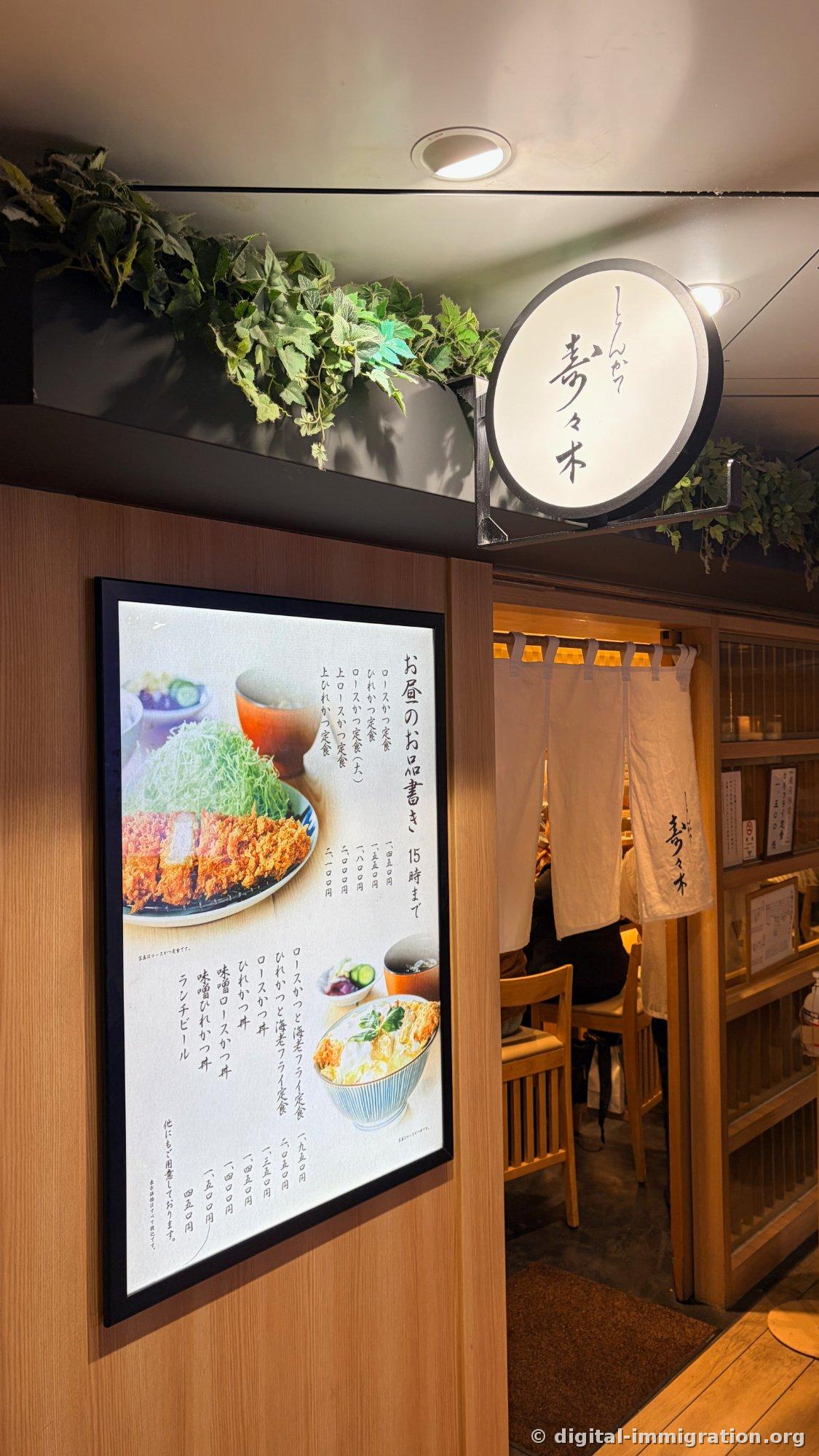
On the wall by the entrance hangs a round lantern sign, and below it, a light box frame displaying 'お昼のお品書き (lunch menu)'. Inside, a white noren curtain and wooden chairs come into view. The warm lighting makes it feel less like a station establishment and more like a cozy alley restaurant.
On the floor directory, a panel with the Kitchen Street logo reads とんかつ 寿々木 / TONKATSU SUZUKI. The hours posted are OPEN 11:00 / CLOSE 23:00, with lunch menu available until 3 p.m. The sign shows 31 seats. The real weapon of this place is that it stays open until 11 p.m. If you're catching a late shinkansen from Tokyo Station or arriving at night and unsure what to eat, this place will be there for you.
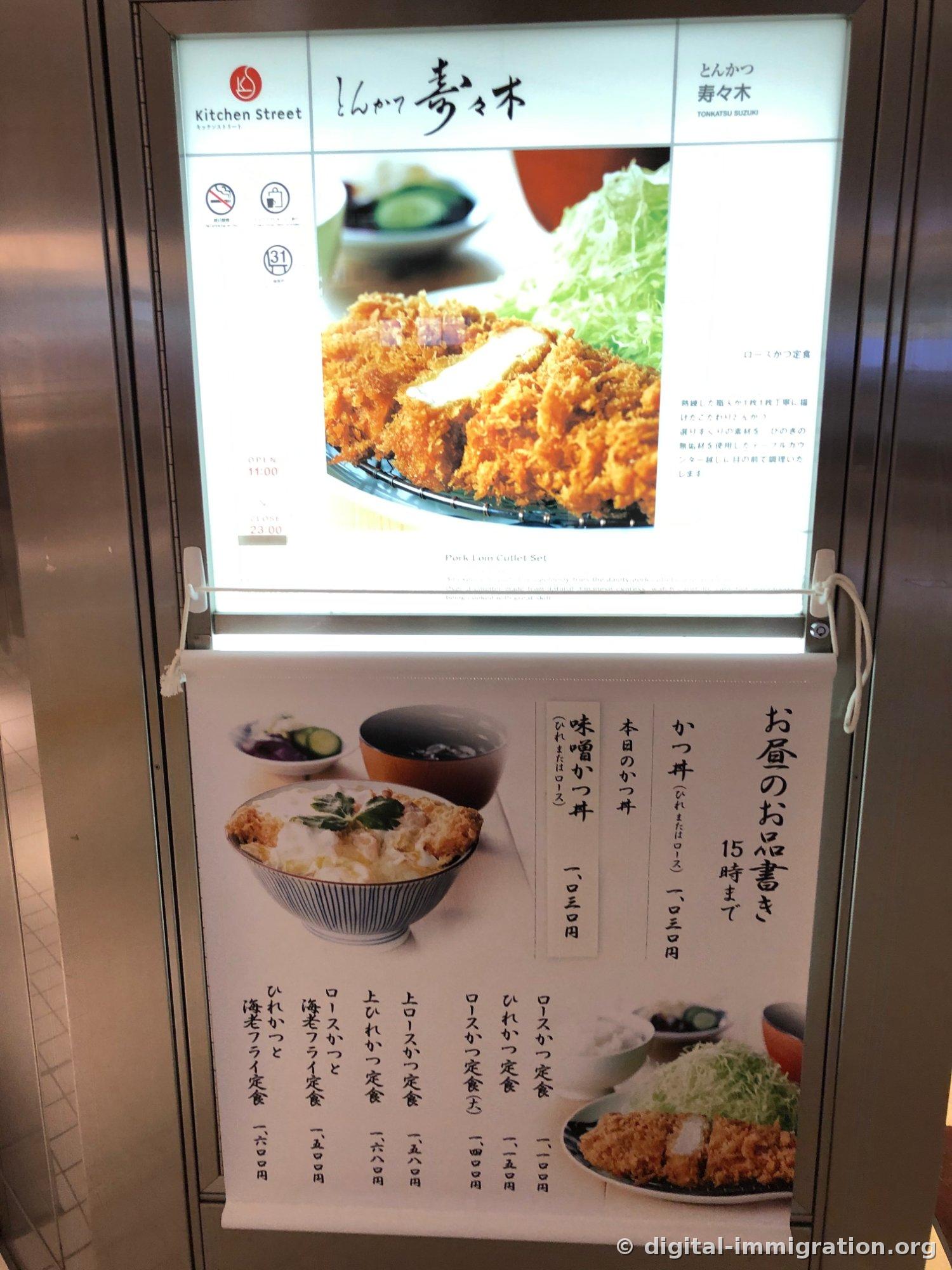
The prices differ between this directory photo and the entrance sign photo. On the directory panel, the pork loin set was listed at 1,100 yen, the tenderloin set at 1,150 yen, and the katsu-don at 1,030 yen, but on the entrance frame, the pork loin set was 1,450 yen. These were taken on different visits. Prices will likely have changed since then, so it's best to confirm them in person when you go.
Why You Should Aim for a Counter Seat
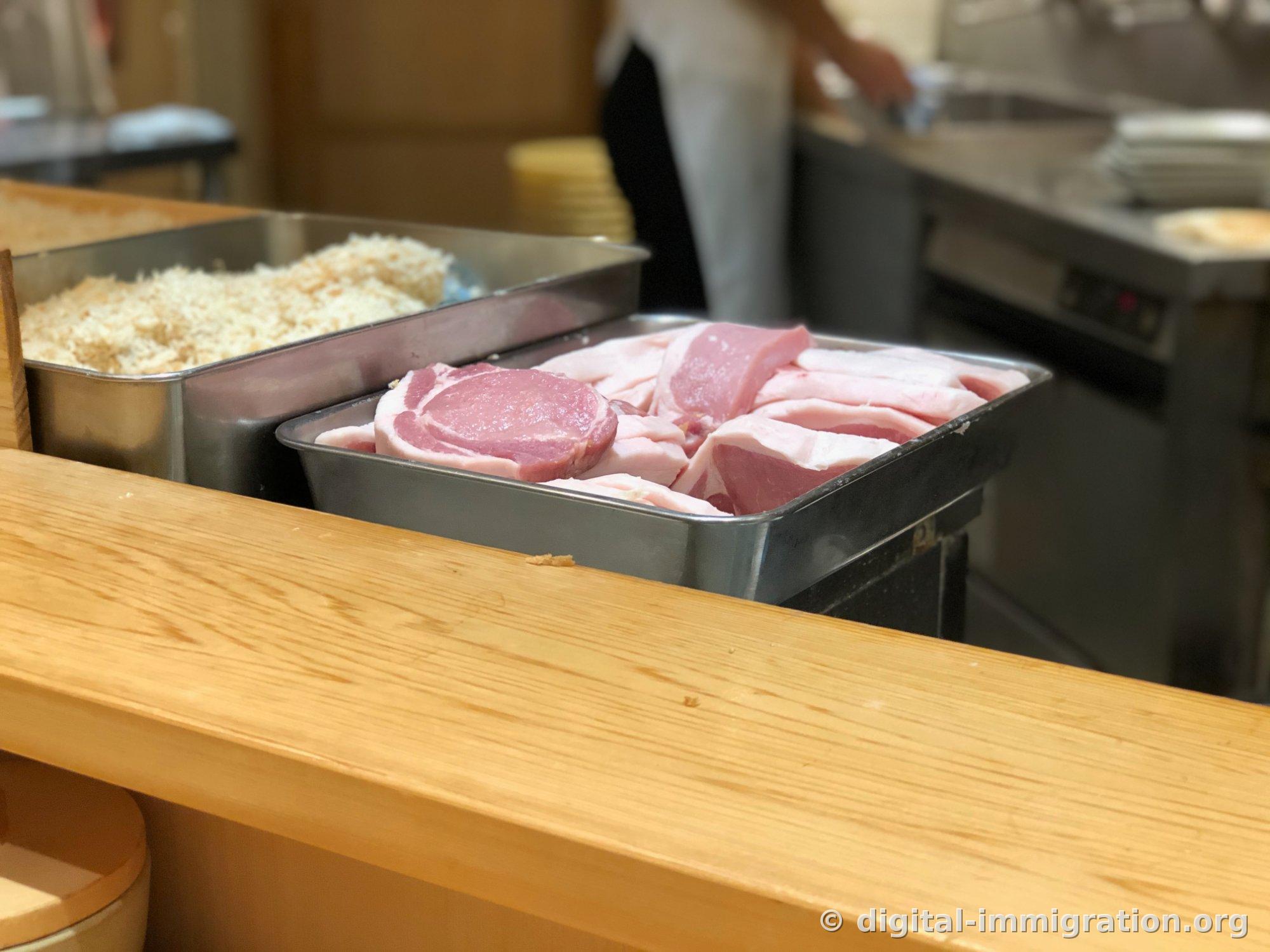
While there are tables, sitting at the counter gives you a full view of the cooking station. Beyond the hinoki counter are two stainless steel baths. One is heaped with thick, coarse panko breadcrumbs; the other has pork loin chunks stacked up, white fat clinging to them. Nothing is pre-fried. When an order comes in, that meat gets its coating right then.
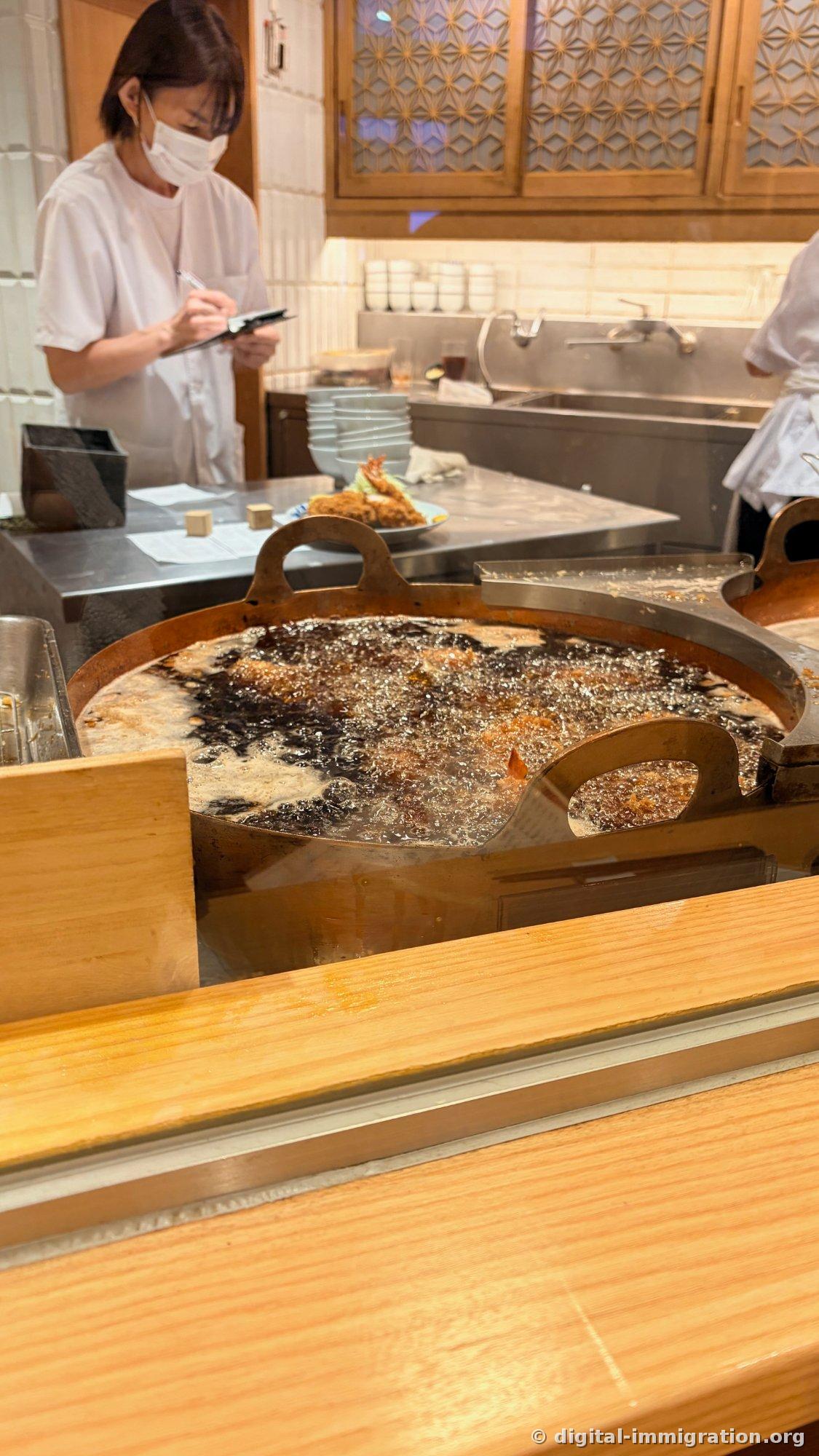
Beyond a glass partition sits a copper fryer pot. The oil is quite dark in color. At first glance, you might wonder if it's okay, but tonkatsu specialist shops that cook at low temperature tend to have oil that looks like this. The shadow of the cutlet flickers across the oil surface, and bubbles rise in tight clusters. The sound isn't loud. It's a gentle, low sizzle.
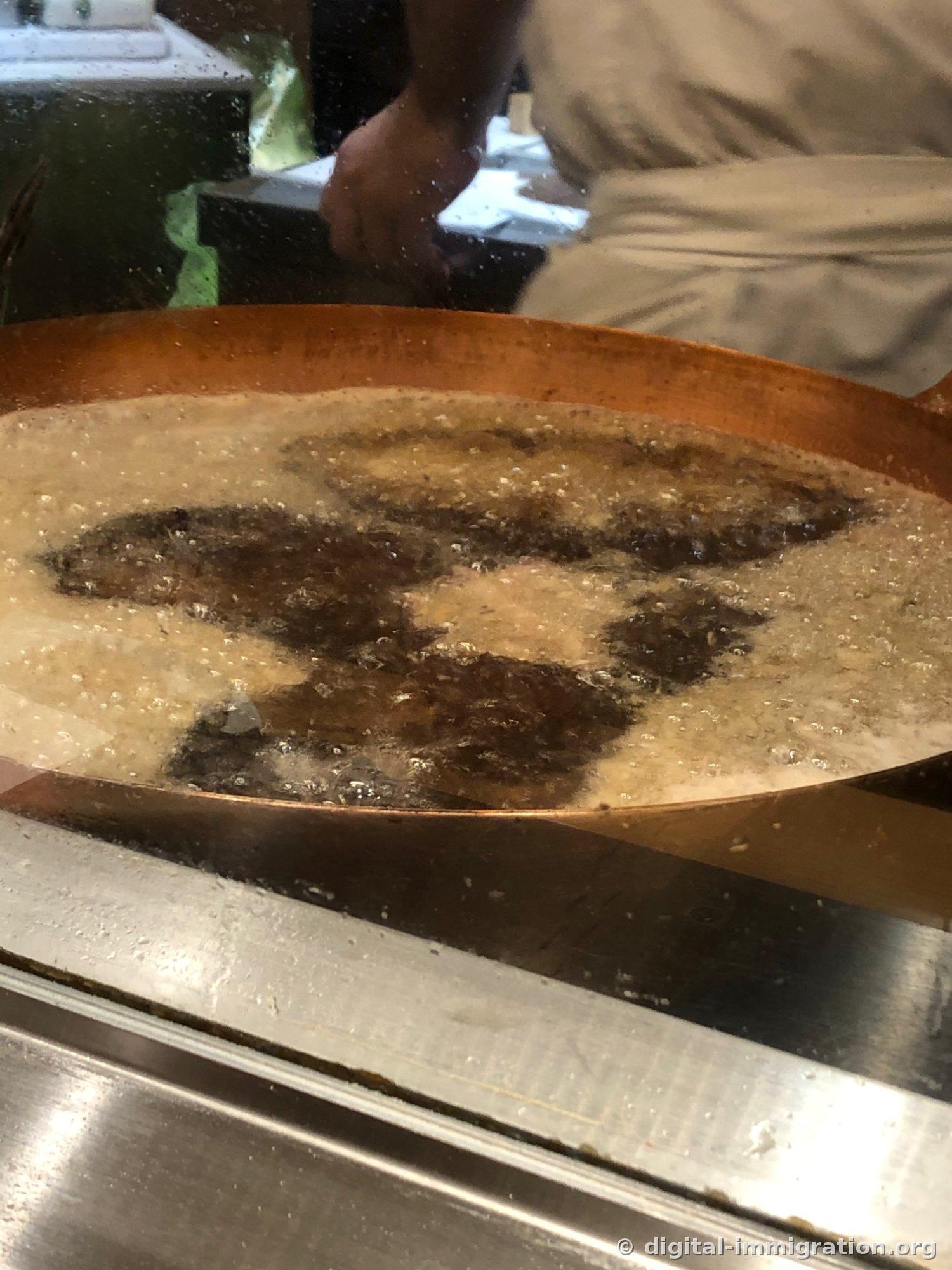
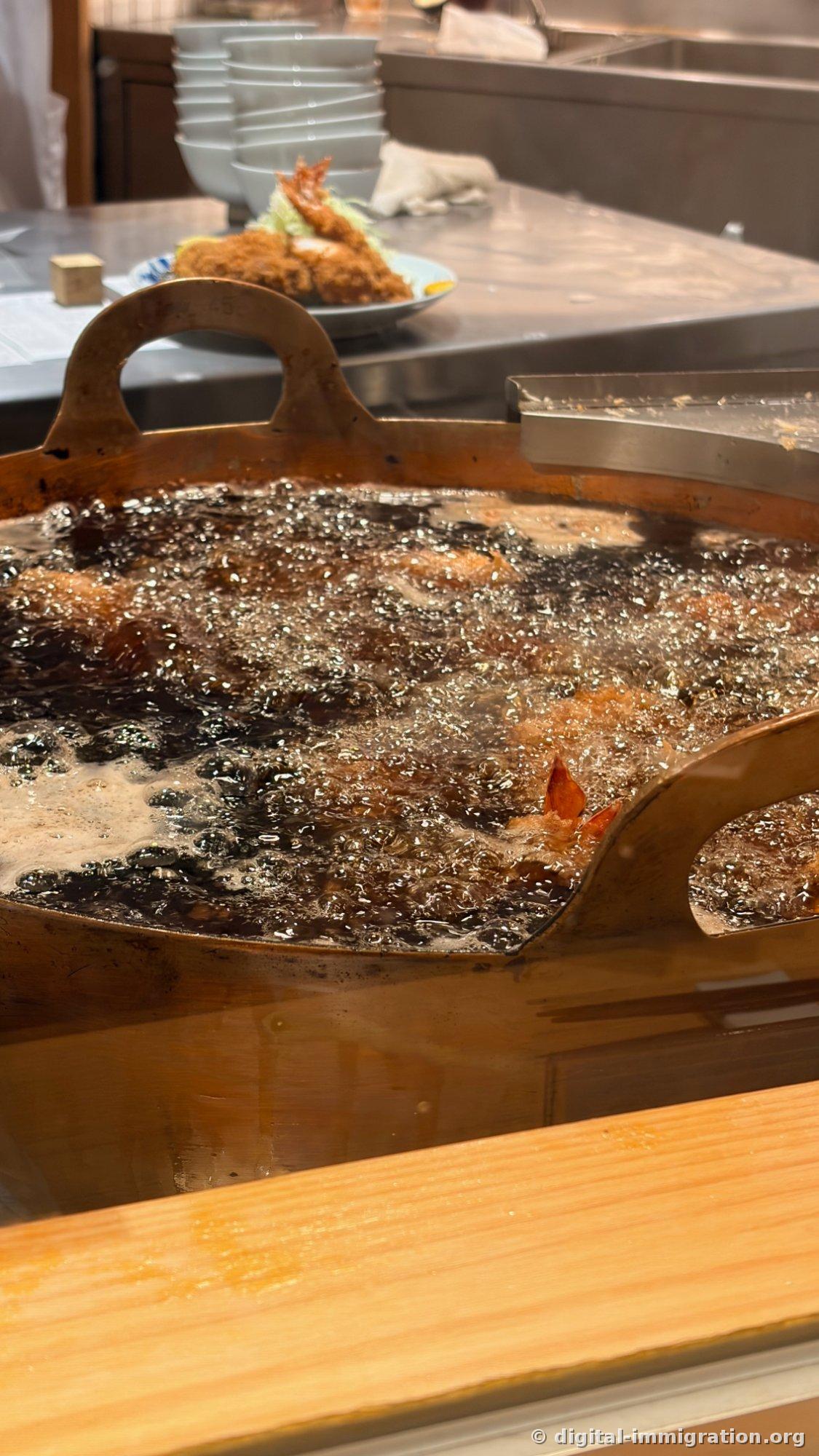
On the other side of the pot, a staff member in white chef's whites and a mask jots notes on a clipboard, while finished plates wait on a stainless steel counter nearby. Shelves of white bowls, a sink with two faucets, a wooden salt container on the prep counter. A kitchen with only exactly what's needed.
The Pork Loin Set — The Plate That Matters
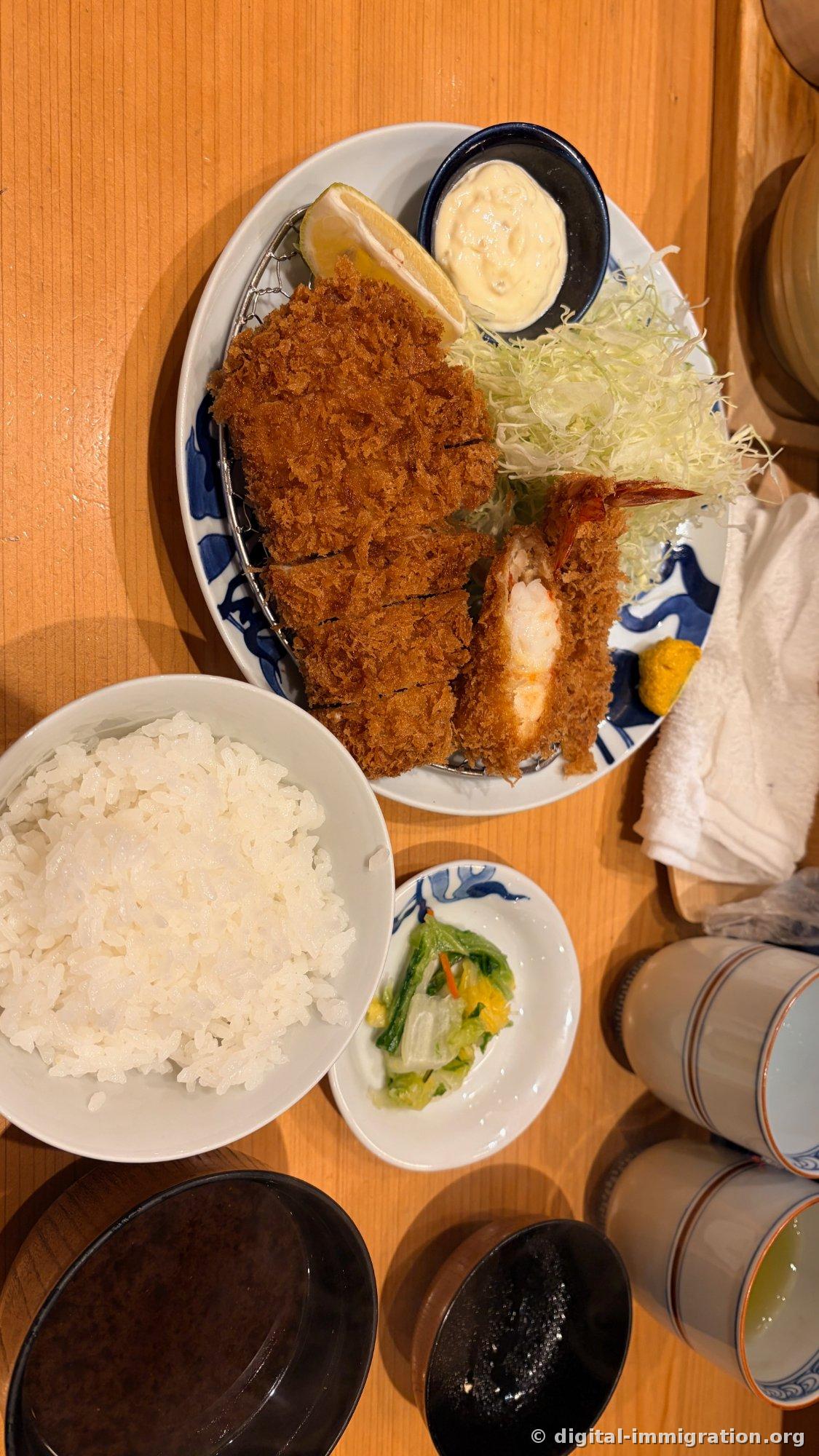
The meal arrived neatly arranged. On a white plate with a navy pattern, a mesh screen held the cutlet, with a pile of thinly shredded cabbage alongside. Rice, soup in a lidded red lacquered bowl, a small dish of pickled radish strips, a hand towel, and green tea. On a wooden tray just above the counter sat sauce bottles, shichimi (seven-spice blend), and a covered container—all within arm's reach.
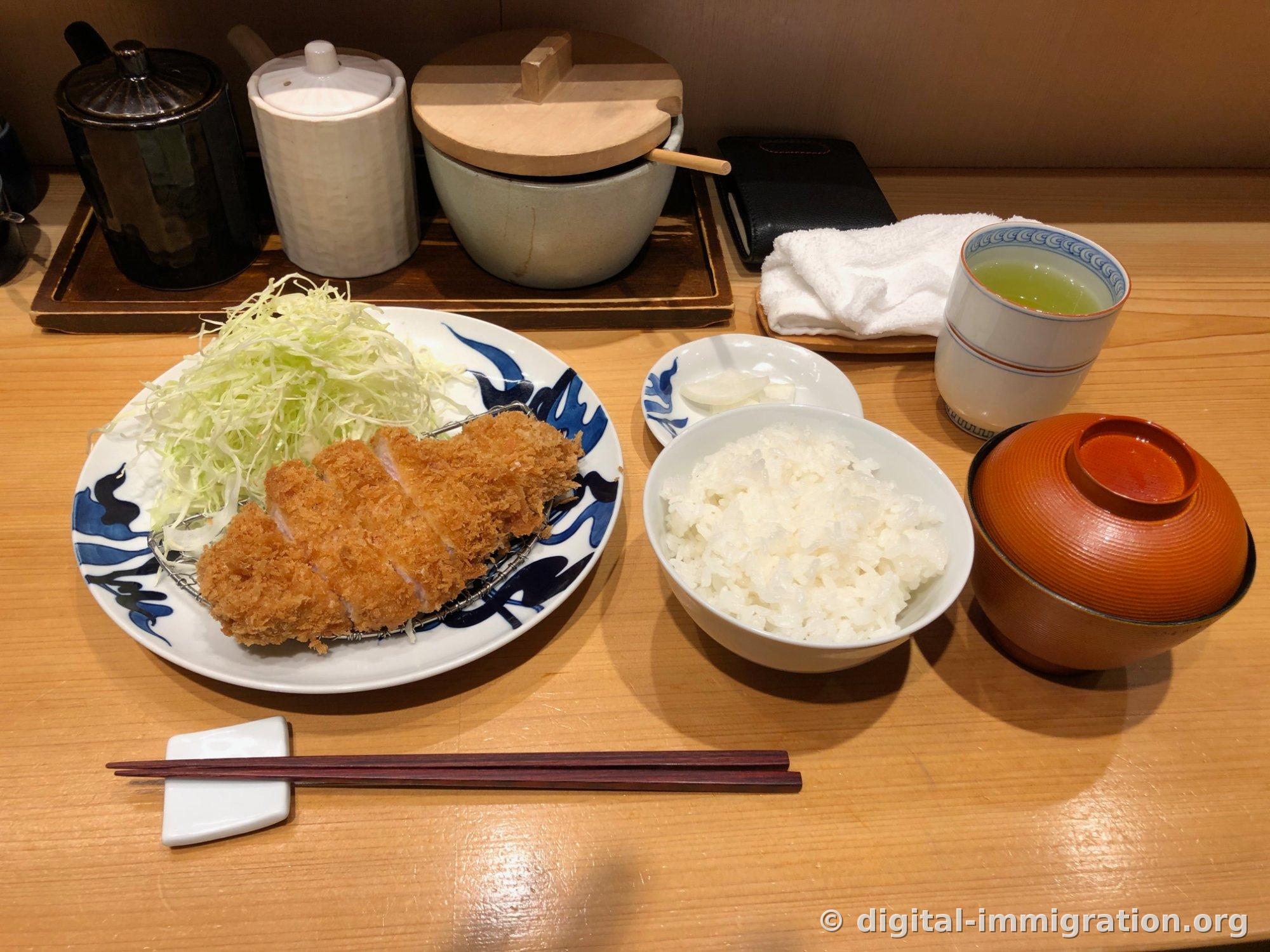
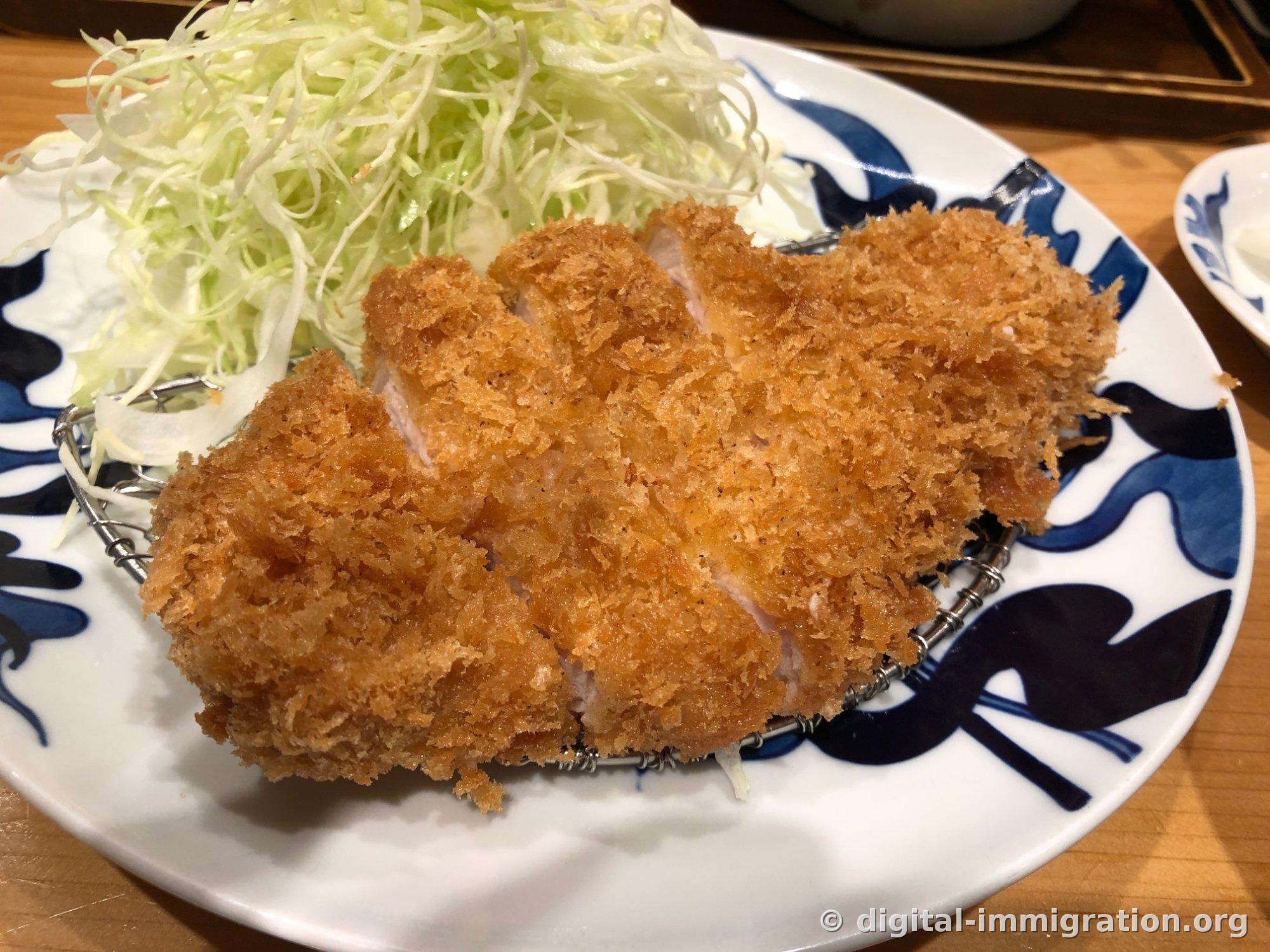
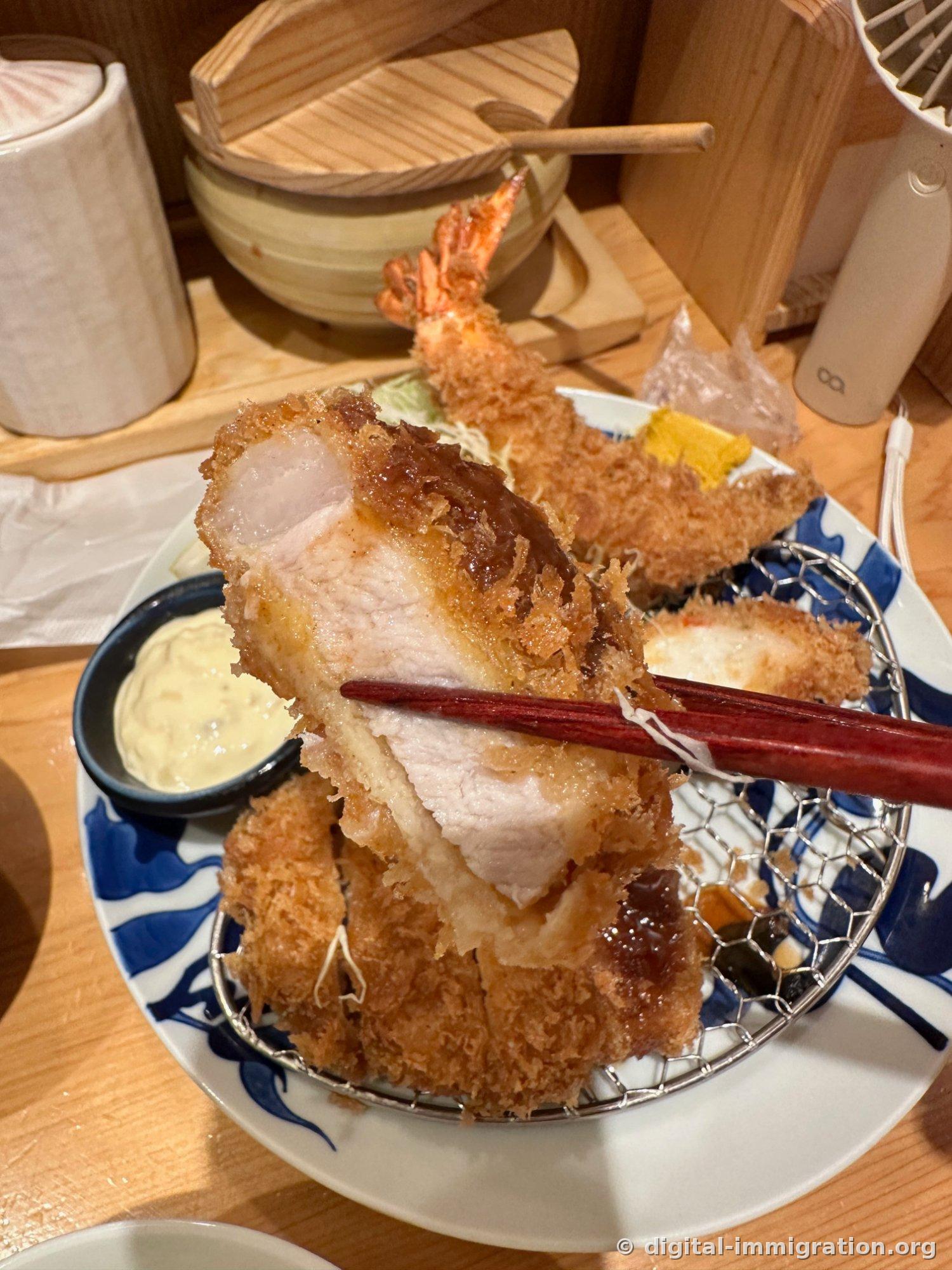
Up close, you can see why the breading is different. The crumbs don't lie flat and smooth—they stand up jaggedly. The color isn't deep brown but a pale golden hue. When you pick it up with chopsticks, you feel that satisfying "crunch" from the tips of your fingers.
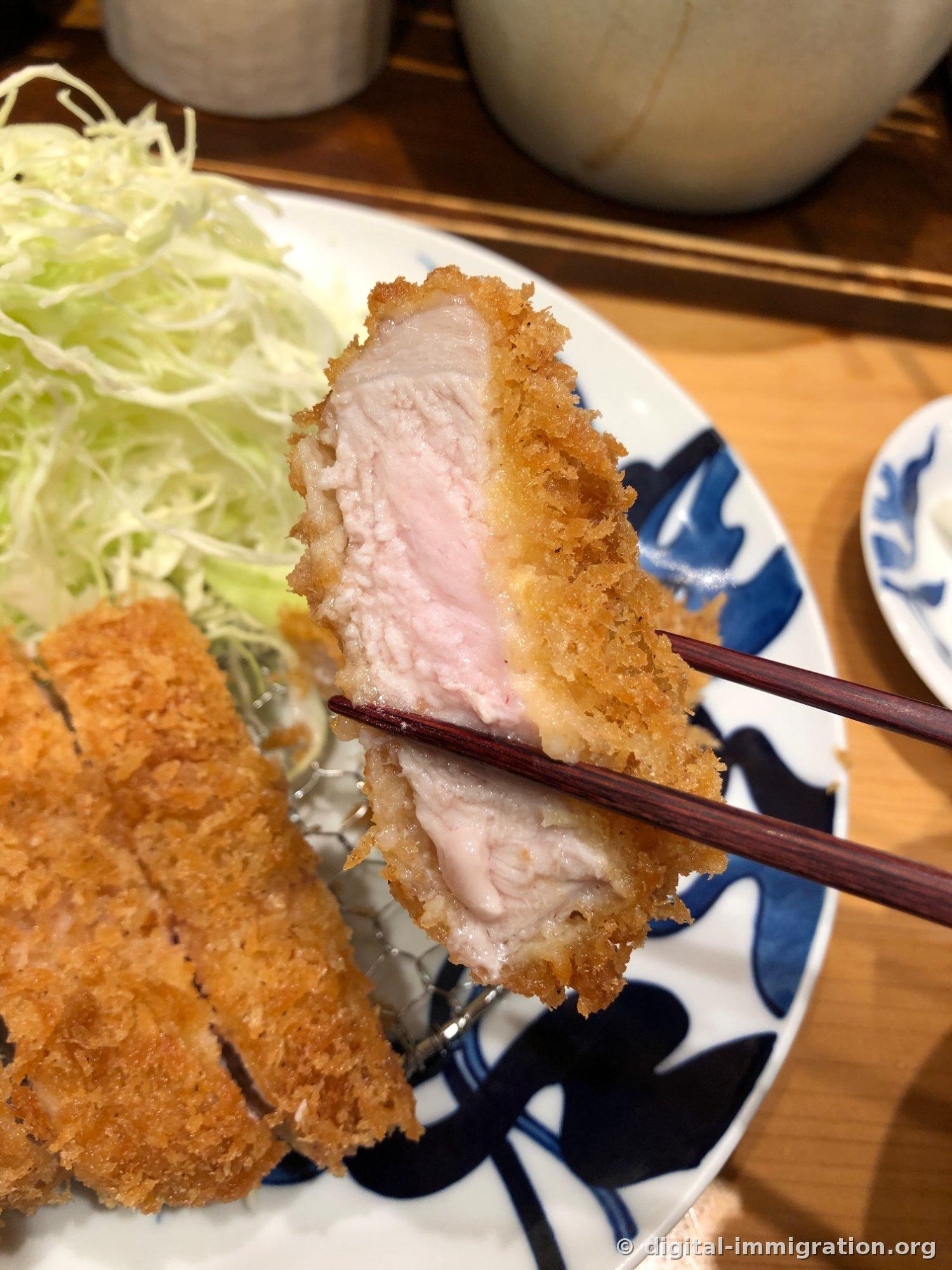
When I picked up a piece, the inside was a pale pink. First-timers often get startled, thinking it's undercooked. I used to feel the same way. Cook pork loin slowly at low temperature and it stops at that color. It means the meat juices haven't seeped out onto the cutting board—they're locked inside the meat. When you bite down, the hot juices burst first, then the fat melts and sweetness rises. The first piece, eaten with just a little salt and nothing else, was the best.
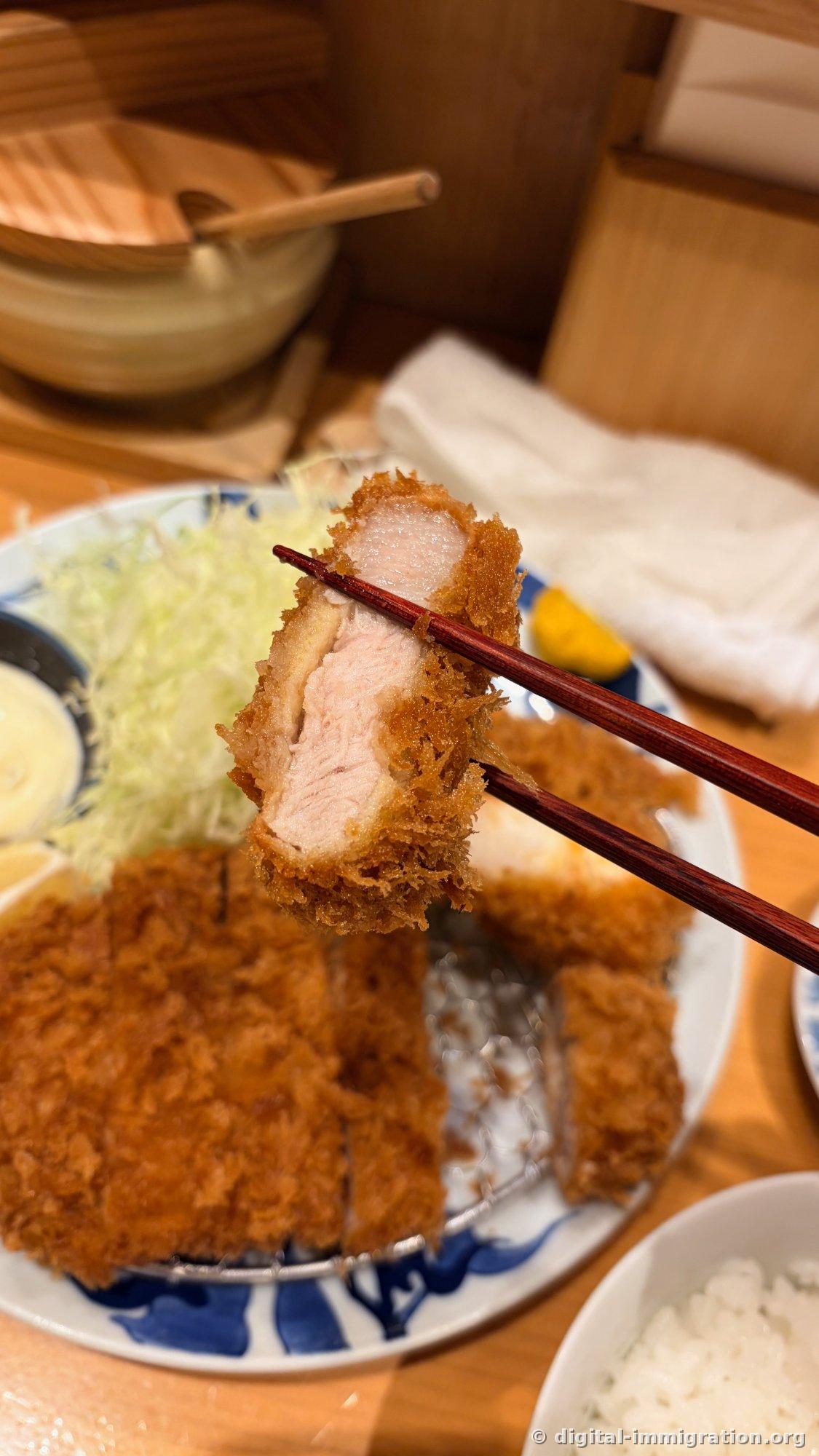
I'm usually sparing with the phrase "a tonkatsu worth remembering," but I think this plate earns it. Based on my visits to famous shops in Tokyo and old establishments down alleys in Osaka, this ranks in my top five tonkatsu meals in Japan. The reason isn't special ingredients but temperature control. The outside is definitely crispy, yet the meat stops at a pale pink—they nailed that narrow window between the two. The breading adheres perfectly to the meat without any gap, and this restaurant does that well too.
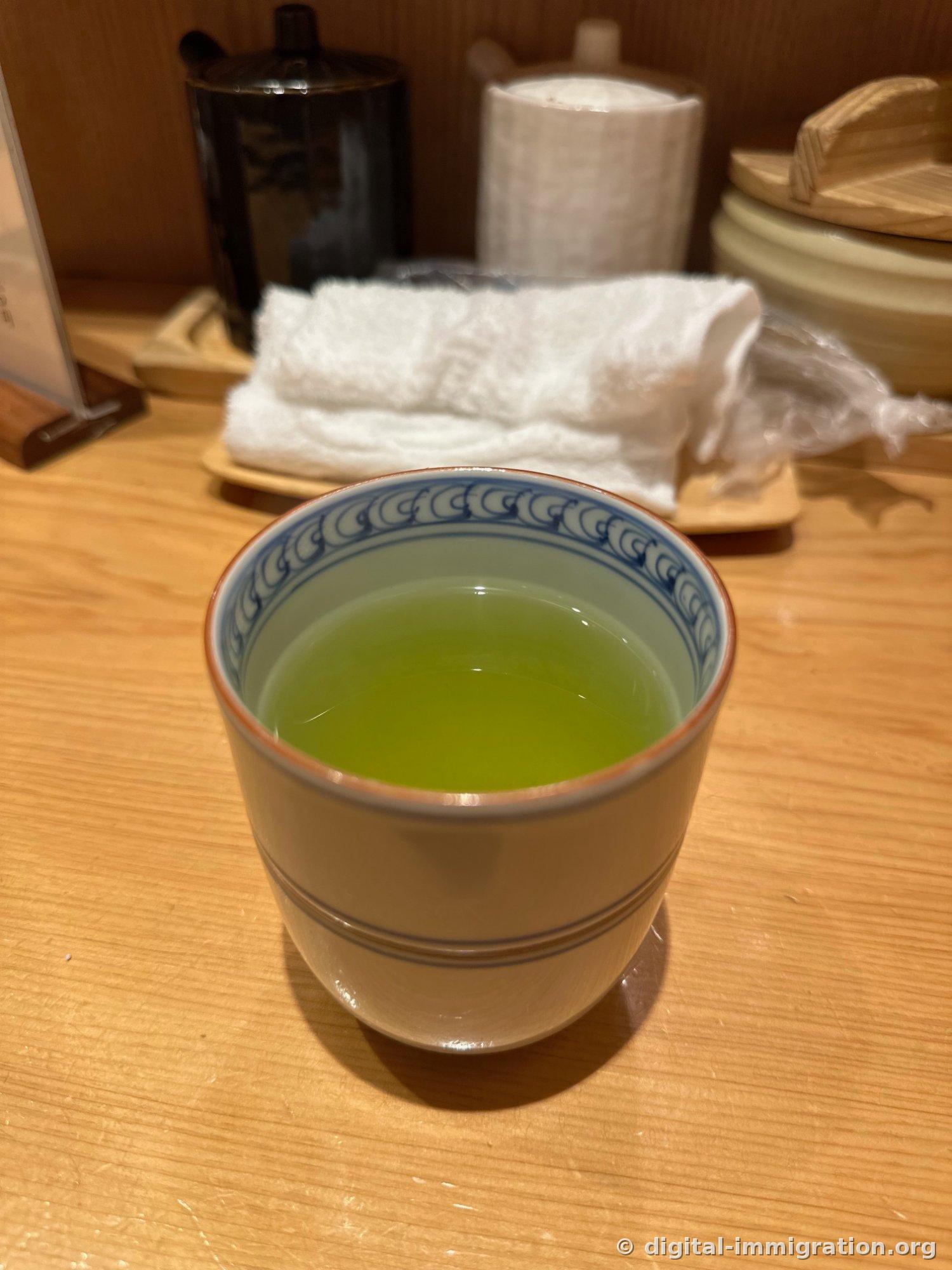
The green tea arrives in a thick ceramic cup. The color is a pale green, nearly fluorescent. After eating something rich, one sip clears your palate. They refill it without hesitation, so no need to feel guilty asking.
Save the Sauce for Later, Go Easy on the Mustard
When you pour tonkatsu sauce on the cutlet, the picture changes completely. The brown sauce seeps into the grooves of the breading, deepening in color, and sweetness and tartness come to the fore. I like to eat half with salt and half with sauce. If you pour sauce on from the start, the sweetness of that pink meat gets buried.
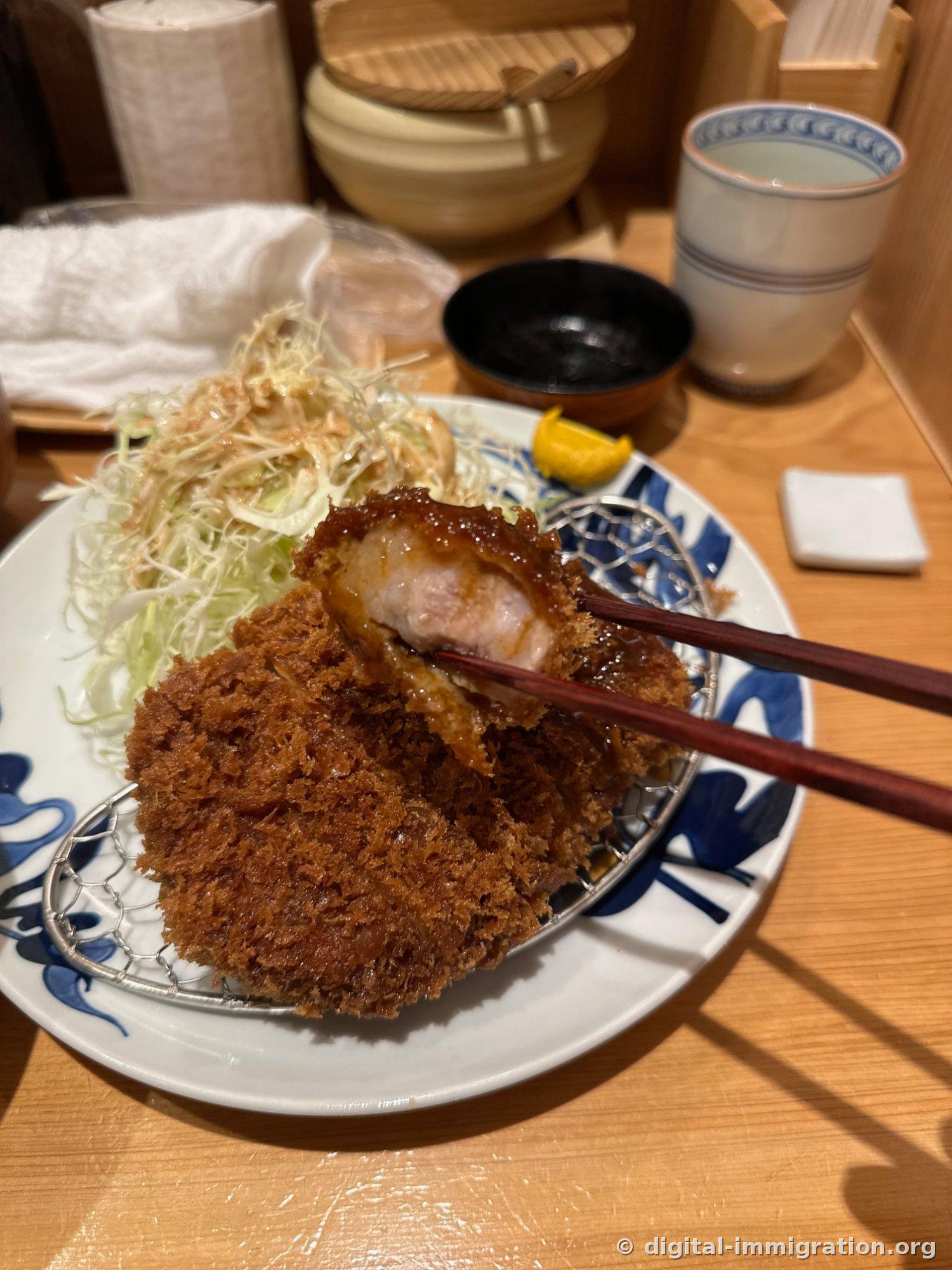
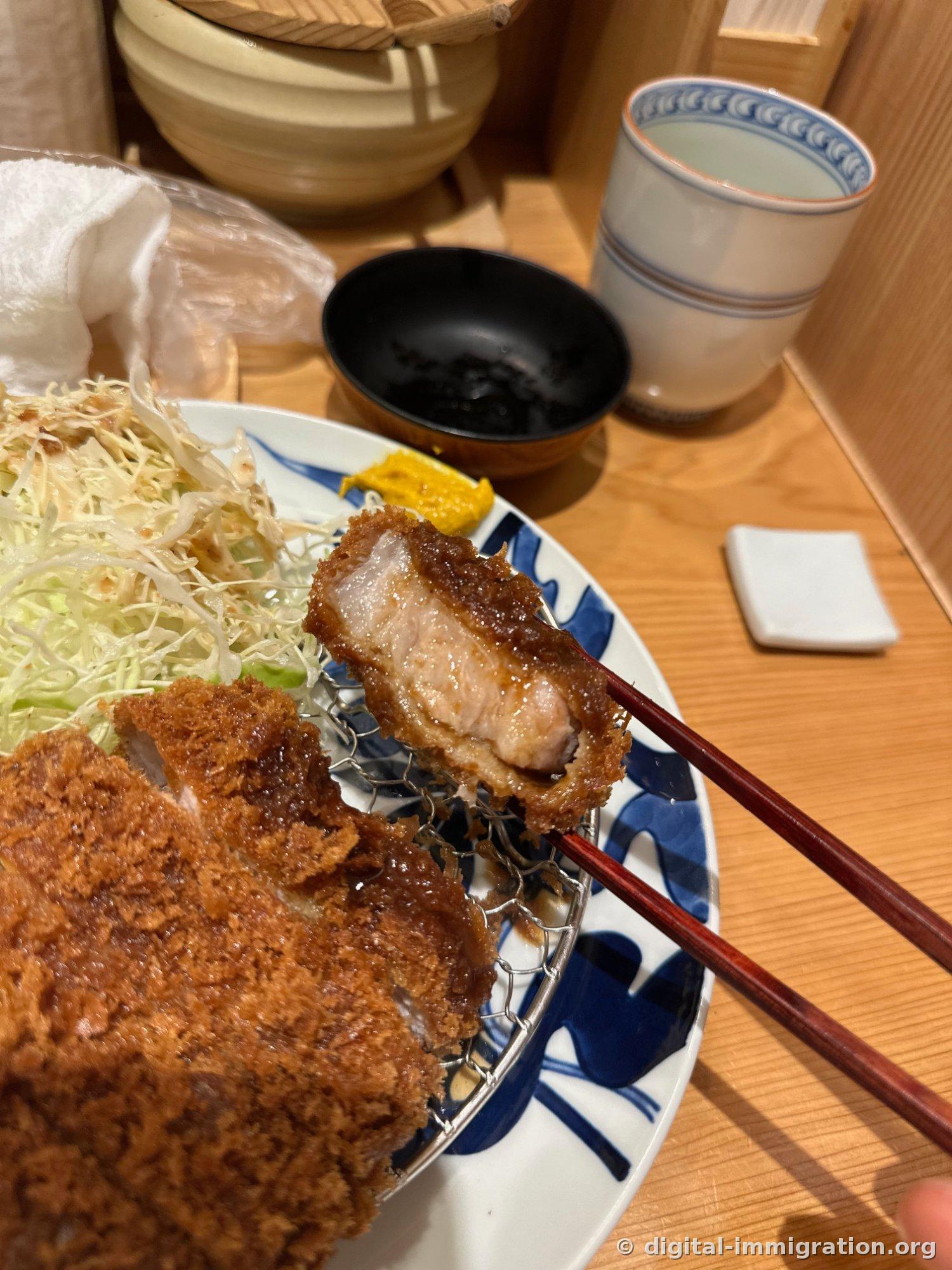
On the wall below the counter hung a small white portable fan. In summer, sitting at a fried food counter means sweat builds up on your back, but few restaurants think to put one of these at each seat. That fan happened to be in the frame when I was holding a piece of cutlet.
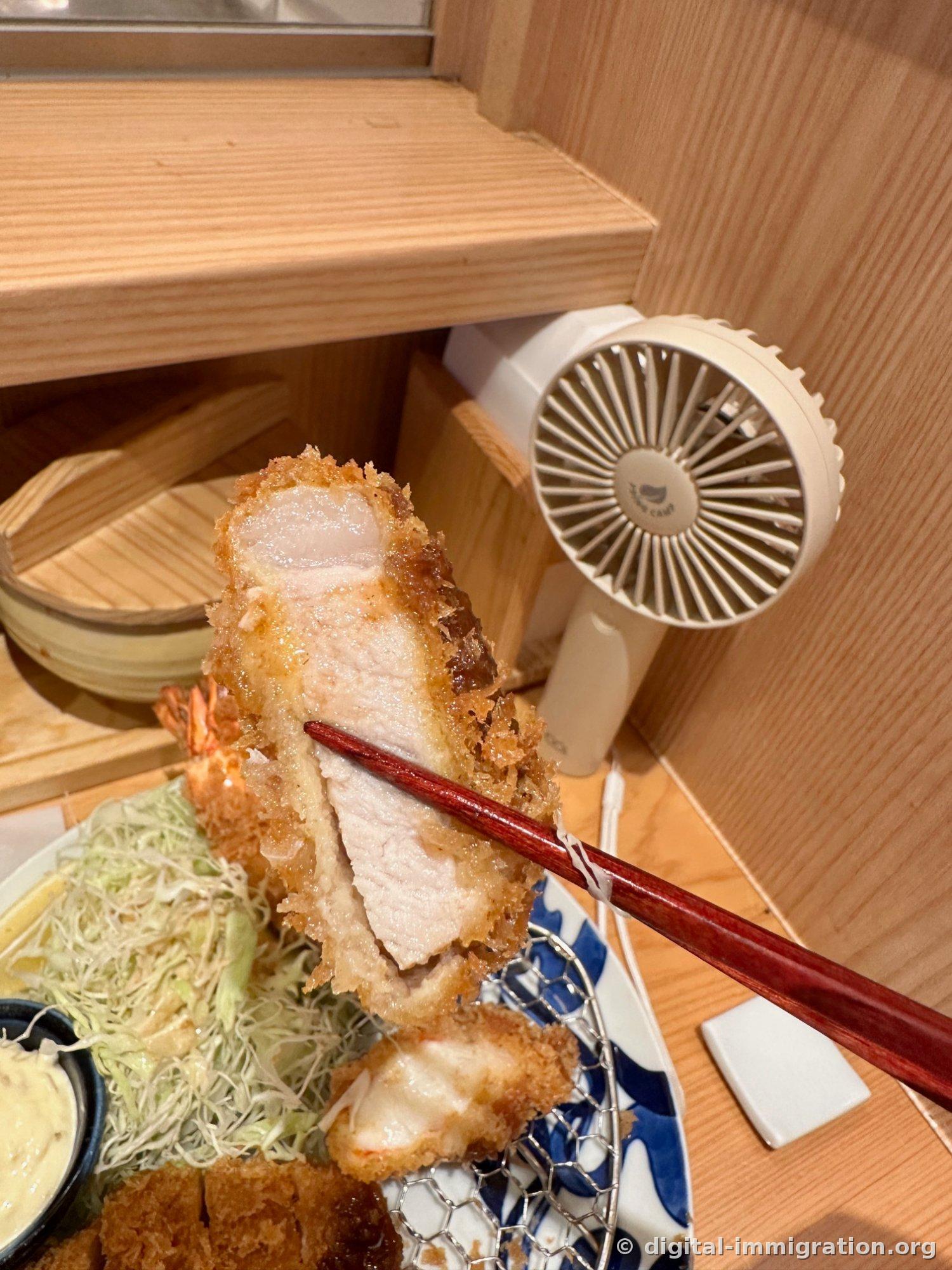
Another Time: Pork Loin and Fried Shrimp
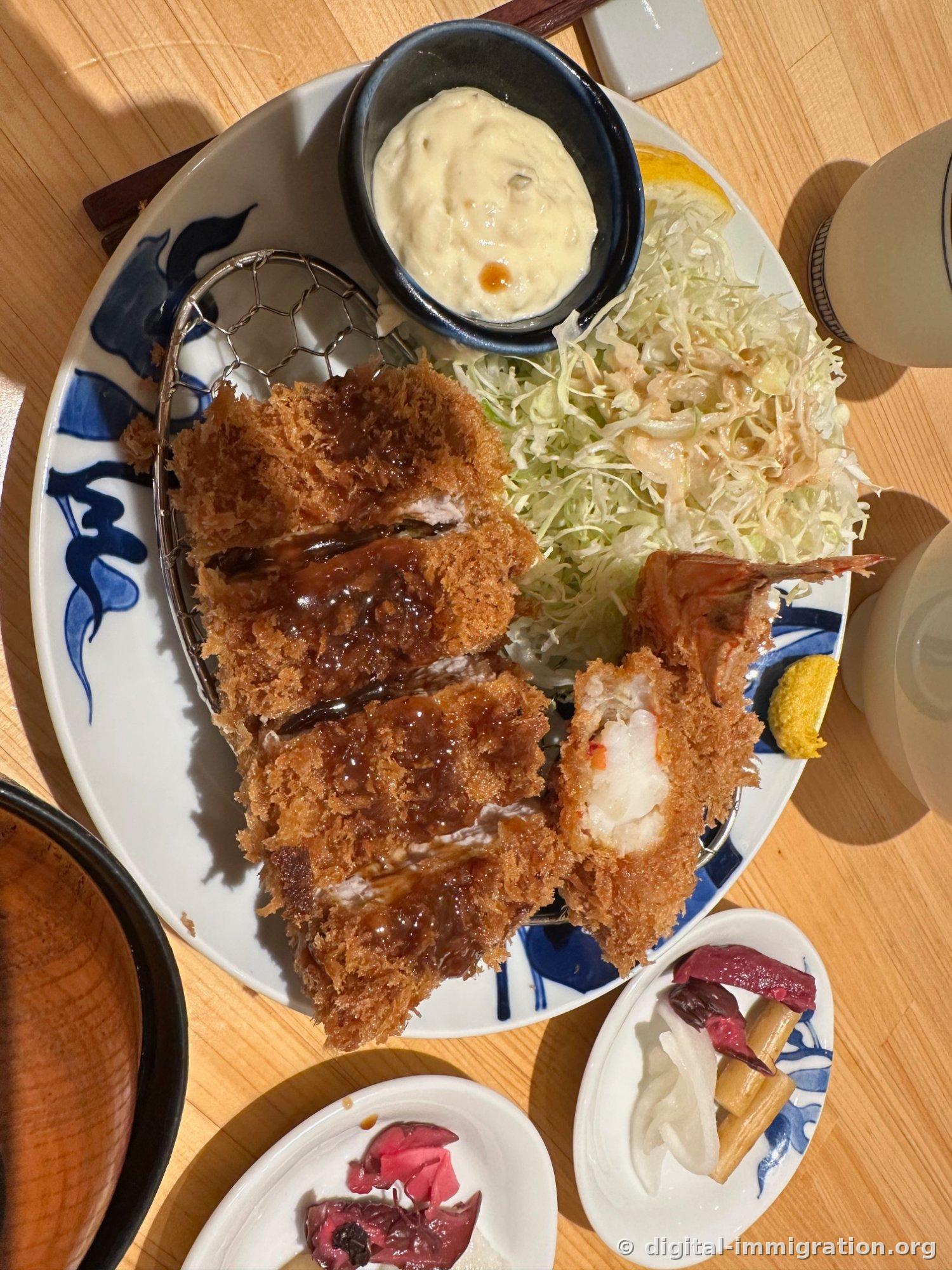
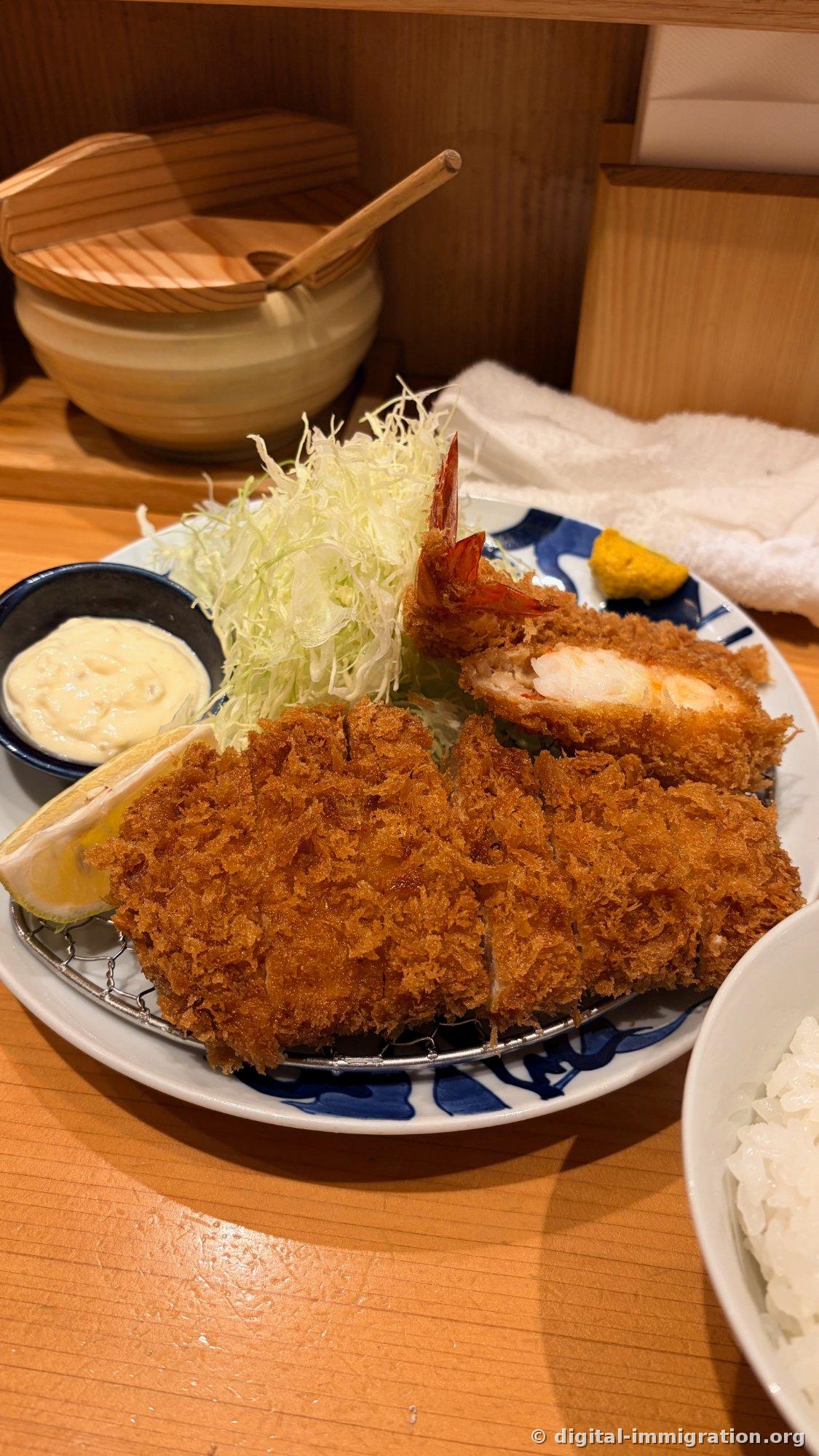
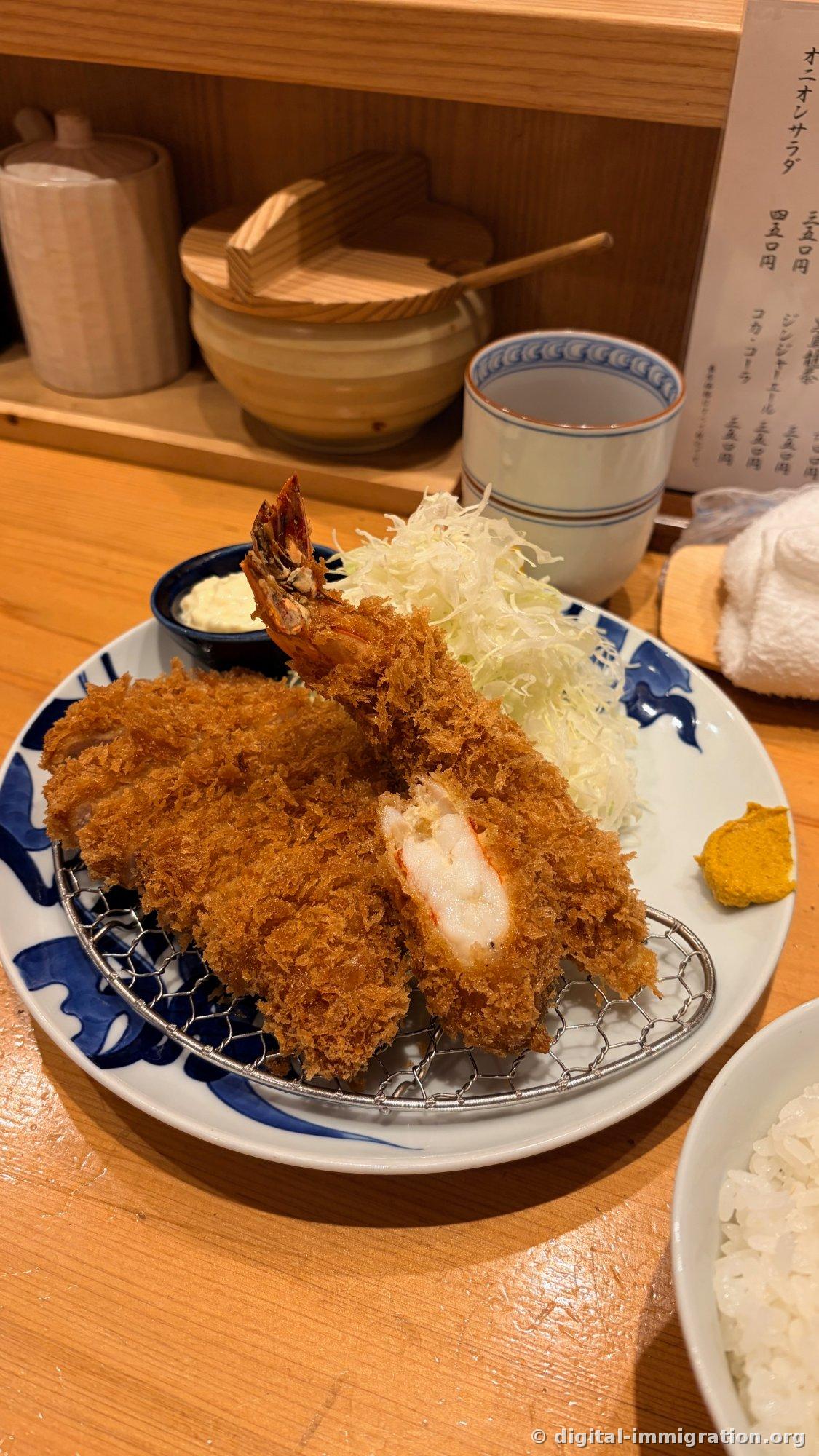
Another visit, I ordered a set with pork loin and fried shrimp. On the plate: cutlet and one large shrimp, a small dish of tartar sauce, half a lemon, yellow mustard, and cabbage. The shrimp is fried with its tail up, and when you cut through it, white meat is fully exposed. It's not mushy—it has a firm bite to it.
The Price List and Order Slip
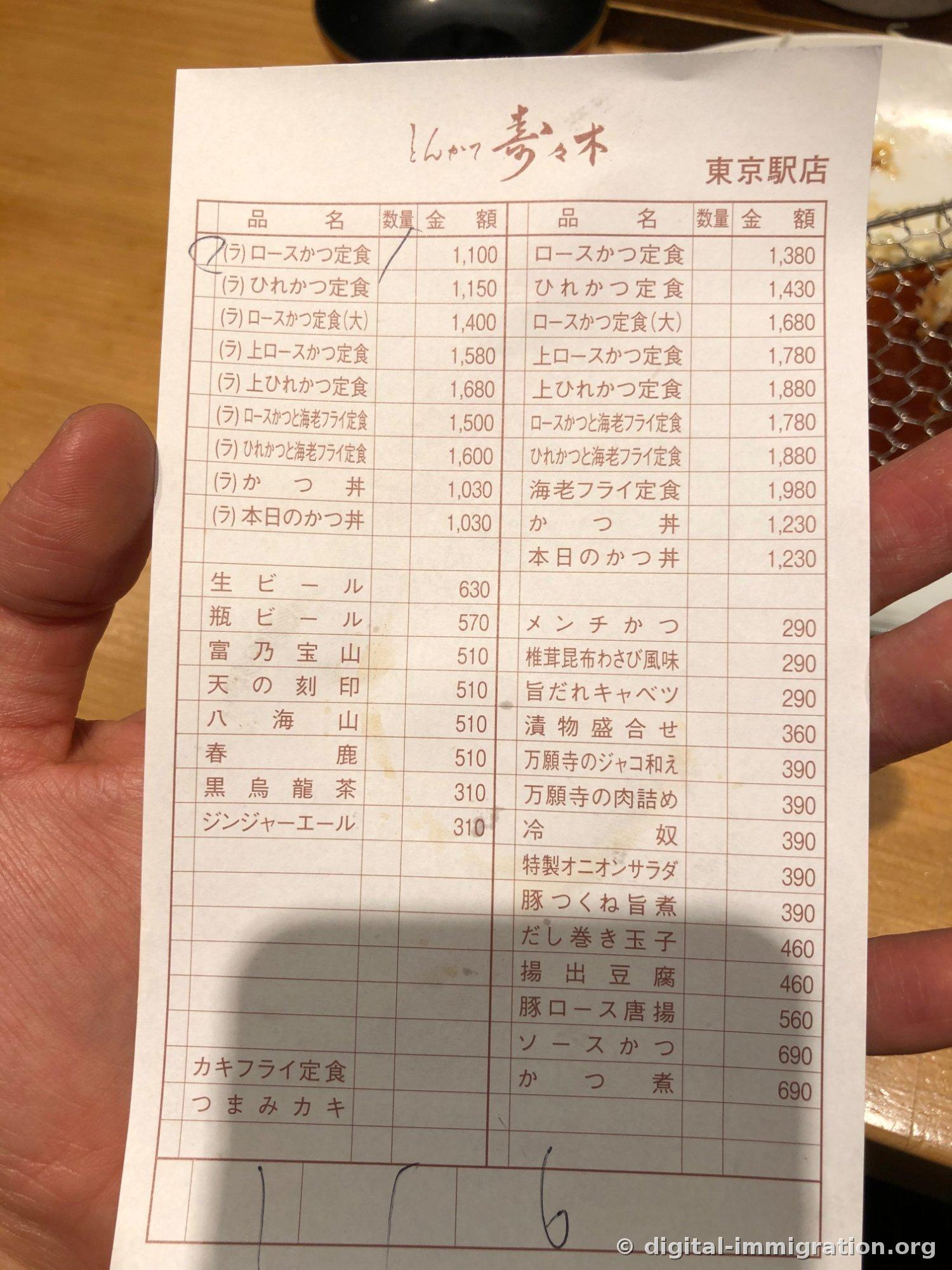
Orders are taken on paper slips that the staff fills out. At the top of the slip: 'とんかつ 寿々木 東京駅店'. The left column shows lunch (ラ) prices, the right shows regular prices. Based on the slip I received: pork loin set lunch 1,100 yen / regular 1,380 yen, tenderloin set 1,150 / 1,430 yen, large pork loin set 1,400 / 1,680 yen, premium pork loin set 1,580 / 1,780 yen. Katsu-don at lunch 1,030 yen. The shrimp set runs 1,980 yen regular.
Alcoholic drinks and snacks are listed on the same paper. Draft beer 630 yen, bottled beer 570 yen, sake varieties like Tomino Hozan and Hakkaisan at 510 yen, black oolong tea and ginger ale at 310 yen. Snacks include ground pork cutlet at 290 yen, seasoned cabbage at 290 yen, pickles assortment at 360 yen, house salad at 390 yen, egg roll at 460 yen, agedashi tofu at 460 yen, pork loin karaage at 560 yen, pork stew at 690 yen. It's the kind of place where ordering a beer and a ground pork cutlet solo at the counter on a late night makes perfect sense.
Good to Know Before You Go
- Aim for a counter seat. You get to watch the whole frying process, and food comes out faster from the counter.
- Lunch menu runs until 3 p.m. The same pork loin set costs 250–300 yen less at lunch than regular price.
- Open until 11 p.m., making it a solid choice for catching a late shinkansen or arriving at night.
- Eat the first piece with salt alone. That sweetness of the pink inside is only captured right then.
- The meat comes out pink here—that's their method. If you want it cooked more, mention it when ordering.
- It's inside Tokyo Station, so walking in with a suitcase feels natural. The only catch is that with only 31 seats, the aisles get tight during peak meal times.
- Prices vary by visit. The numbers I listed come from the slip and sign I saw, but they may have gone up since then. Check the frame by the entrance first before going in.
There were a couple of downsides. Because of the glass partition, the fried-food smell doesn't really waft to the seating area. If you love that distinctive deep-fryer oil smell, you might find it a bit disappointing. Also, they don't automatically refill the cabbage—you have to ask for more.
Next time I have an odd chunk of time at Tokyo Station, I think I'll lift that noren curtain again. Once you see that pink cross-section, you can't help comparing every other tonkatsu you eat afterward to this one.
ဆက်လက်ဖတ်ရှုရန်
- From Akihabara's Chuo-dori to the Kanda River: A Record of Tokyo's Electronics District Revisited Multiple Times
Tokyo's Akihabara is a neighborhood where it's hard to say you've seen everything in a single visit. I've come multiple times across different seasons, and each time the signs chan…
Tokyo · Akihabara - Buying a Single ¥300 Year-End Jumbo Lottery Ticket at Nishi-Ginza Chance Center in Tokyo
Exit from the Hibiya exit of Tokyo's Shimbashi Station, walk toward the elevated highway for about three minutes, and suddenly you'll see a line of people stretching along the side…
Tokyo · Nishi-Ginza Chance Center - Ueno Ameyoko, the real magic starts after sunset — an evening walk from the Okachimachi Gate to Ueno Station
Every time I come to Tokyo, my feet find their way to Ueno Ameyoko (アメ横) without fail. This time I entered from the Okachimachi side and worked my way toward Ueno Station. I've met…
Tokyo · Ameya Yokocho Market