Tokyo Station Marunouchi Red Brick Building and Gyokodo Ginkgo Trees: A Record of Late Afternoon in Late November
It took nearly ten minutes just to exit through the ticket gate after getting off the Shinkansen. Tokyo Station has layers of underground and above-ground passages, so if you follo…
Tokyo · တိုကျီယို ဘူတာ
It took nearly ten minutes just to exit through the ticket gate after getting off the Shinkansen. Tokyo Station has layers of underground and above-ground passages, so if you follow the wrong sign, you'll exit toward Yaesu and miss the red brick building entirely. What I wanted to see was the Marunouchi side. The moment I emerged from the Marunouchi North Exit (丸の内北口) marked with the green JR sign, my head tilted back involuntarily. A three-story red brick building topped with a black dome, and beneath the dome, round windows caught the late afternoon sun and gleamed with a bronze-like sheen. Even people dragging luggage paused here.
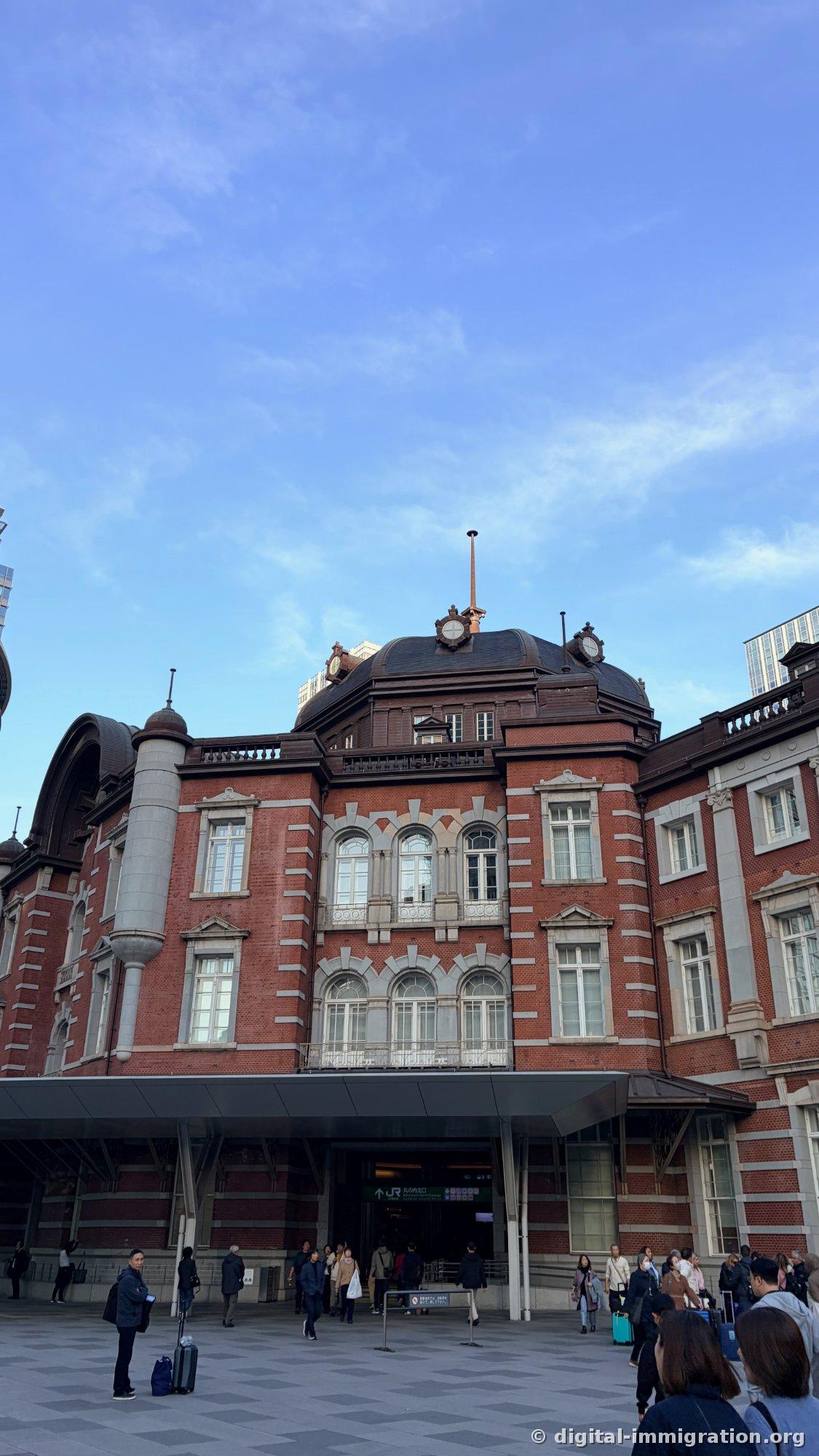
What You Notice Only Up Close: The Brickwork
Many people just take a front-facing photo and leave, but if you walk along the side of the building, your impression changes. Horizontal bands of white granite are interspersed between the red bricks, and each window has a small triangular ornament at the top. The first-floor archway had its shutter down, but the white stone wedges framing the arch were each carved differently. A couple standing nearby also craned their necks like me, looking up at the weather vane on the roof's peak.
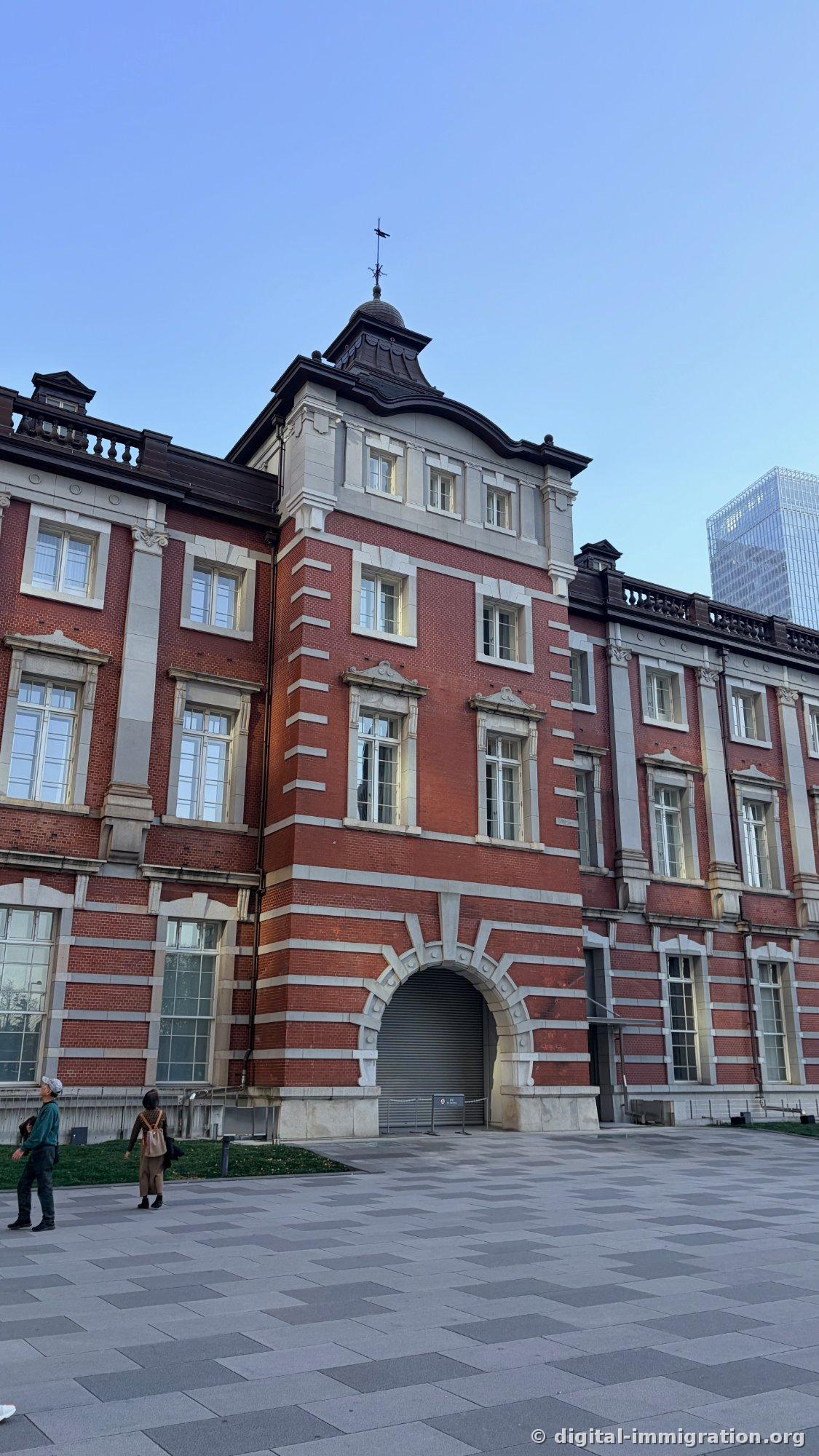
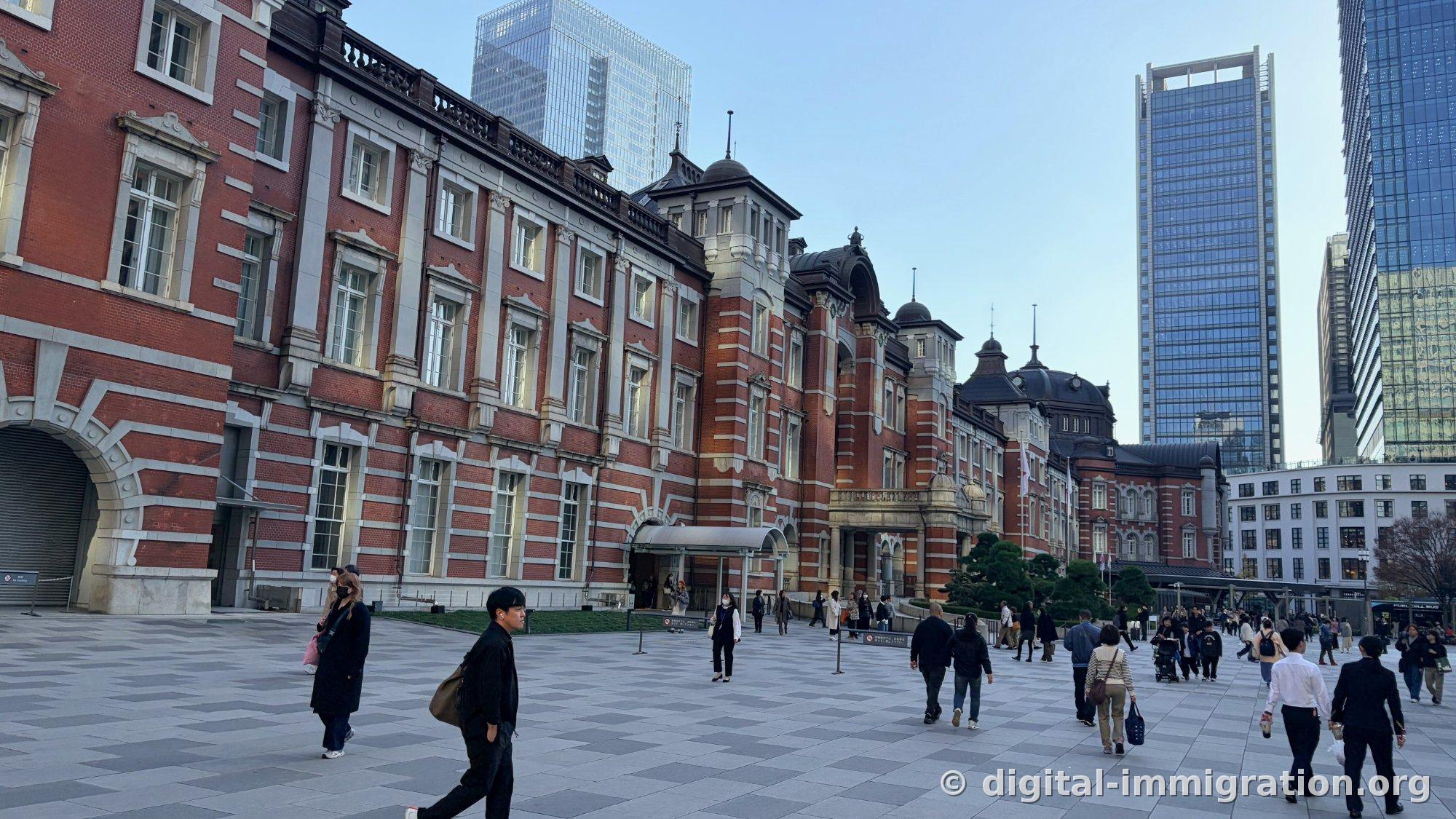
Once you step into the plaza, you realize just how long the building stretches. From the far left to the far right, it doesn't fit in a single frame. Behind the brick building stands a glass high-rise, so a hundred-year-old structure and a modern building end up in the same shot. People aiming for this contrast crouch down in the middle of the plaza and lower their cameras.
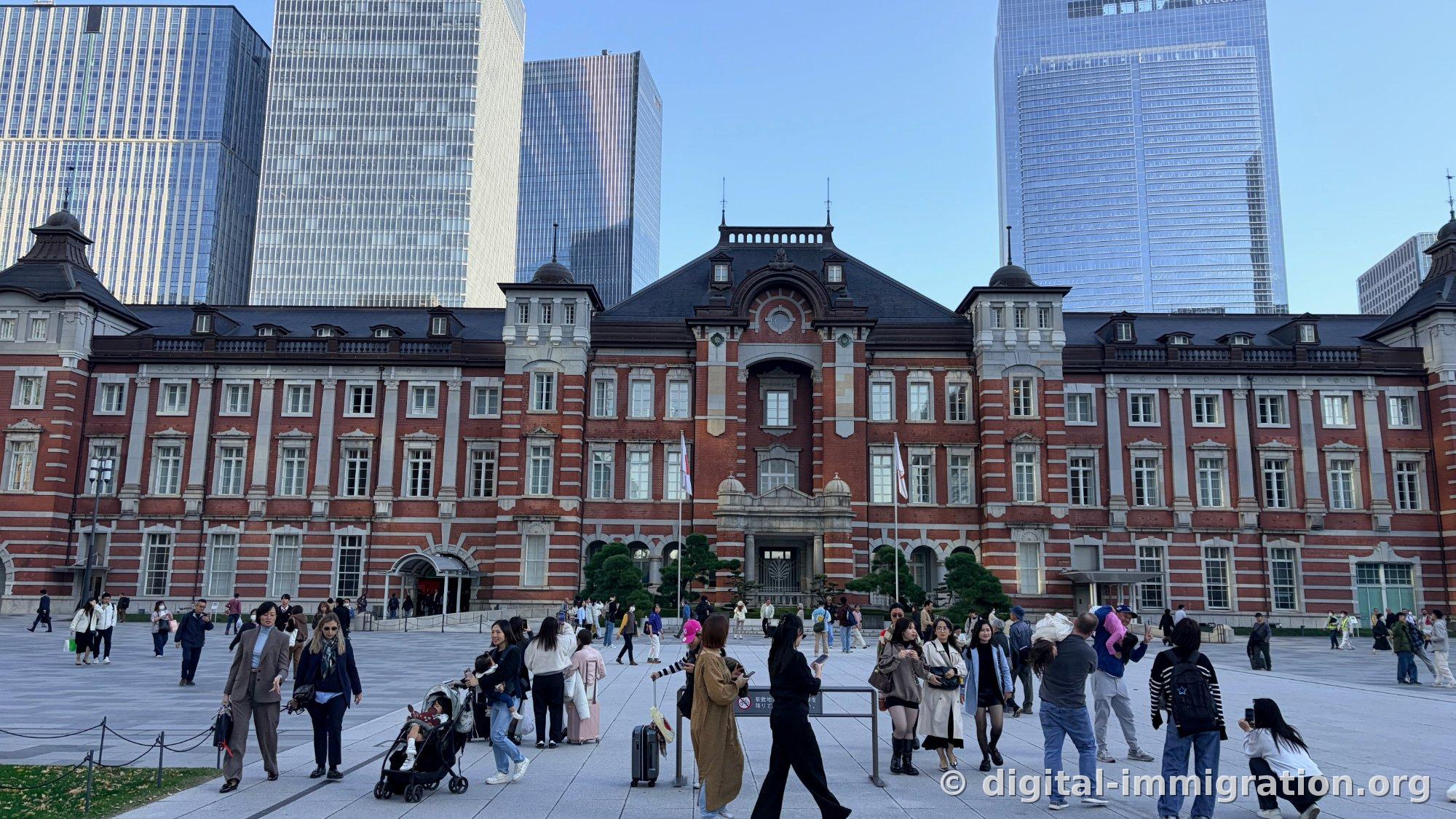
To get a proper full-front view, you need to step back to the far end of the plaza, near the road. Two national flags hang in front of the central entrance, with low-trimmed pine trees in front of them. As the sun sinks lower, the brick color deepens—that's the best time. But it's also the most crowded. With luggage-pullers, baby strollers, and selfie sticks all tangled together, you might as well give up on capturing an empty plaza.
Which Exit to Take—Exits and Surroundings
Getting lost at Tokyo Station is usually about choosing the right exit. The red brick building is on the Marunouchi side; if you exit toward Yaesu on the opposite side, you'll only see glass and concrete buildings. You can travel through the underground passages, but the signs are small and there are many intersections. I went the wrong way my first time and had to double back.
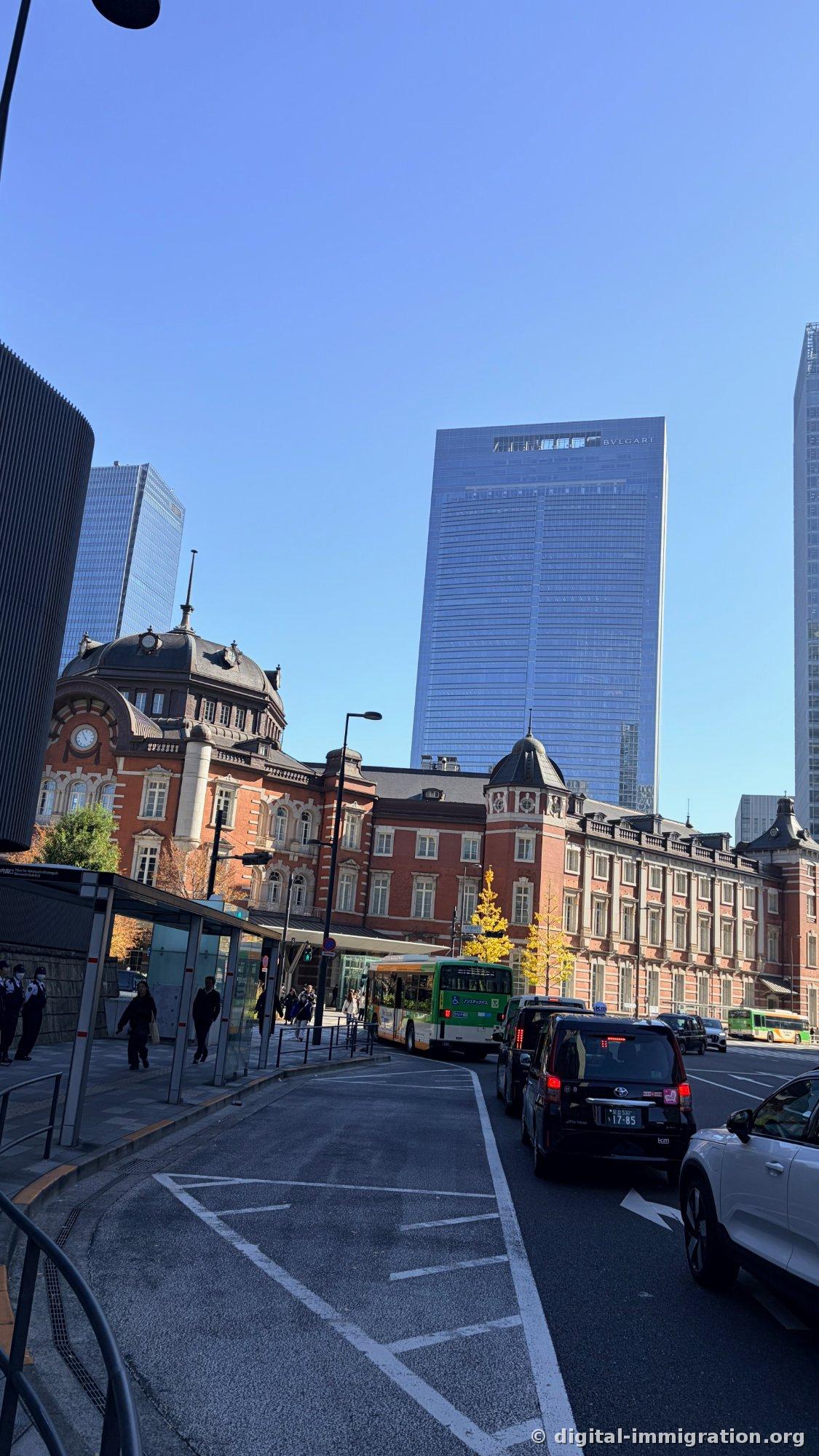
There's a bus stop attached to the road in front of the station building, where green municipal buses stop regularly. From this angle, a glass tower with a BVLGARI logo rises above the brick roof, explaining in a single shot what kind of neighborhood surrounds Tokyo Station. A dome with a clock tower on the left end, a glass tower in the middle, and taxis lined up beneath it.
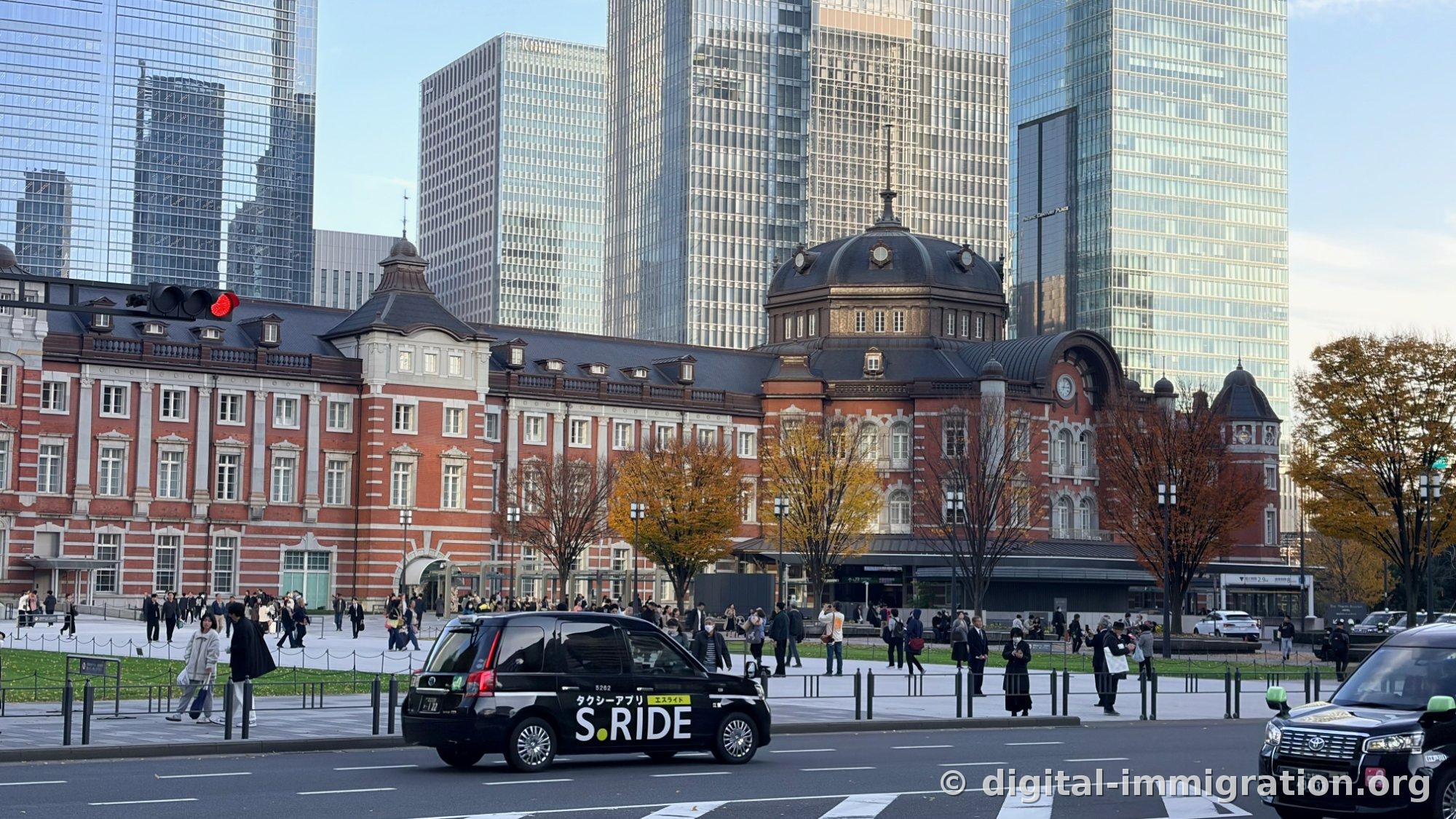
I hailed a taxi from the road along the southern edge of the plaza. App-based taxis with "S.RIDE" written large on their black bodies keep passing by. Japanese taxi fares are definitely more expensive than Korea's from the base rate, so for a distance of two stops, it's better to just walk. From this angle, the southern dome comes into view head-on, though it's slightly obscured by trees in front compared to the northern dome.
Late November: The Christmas Market in Front of the Station
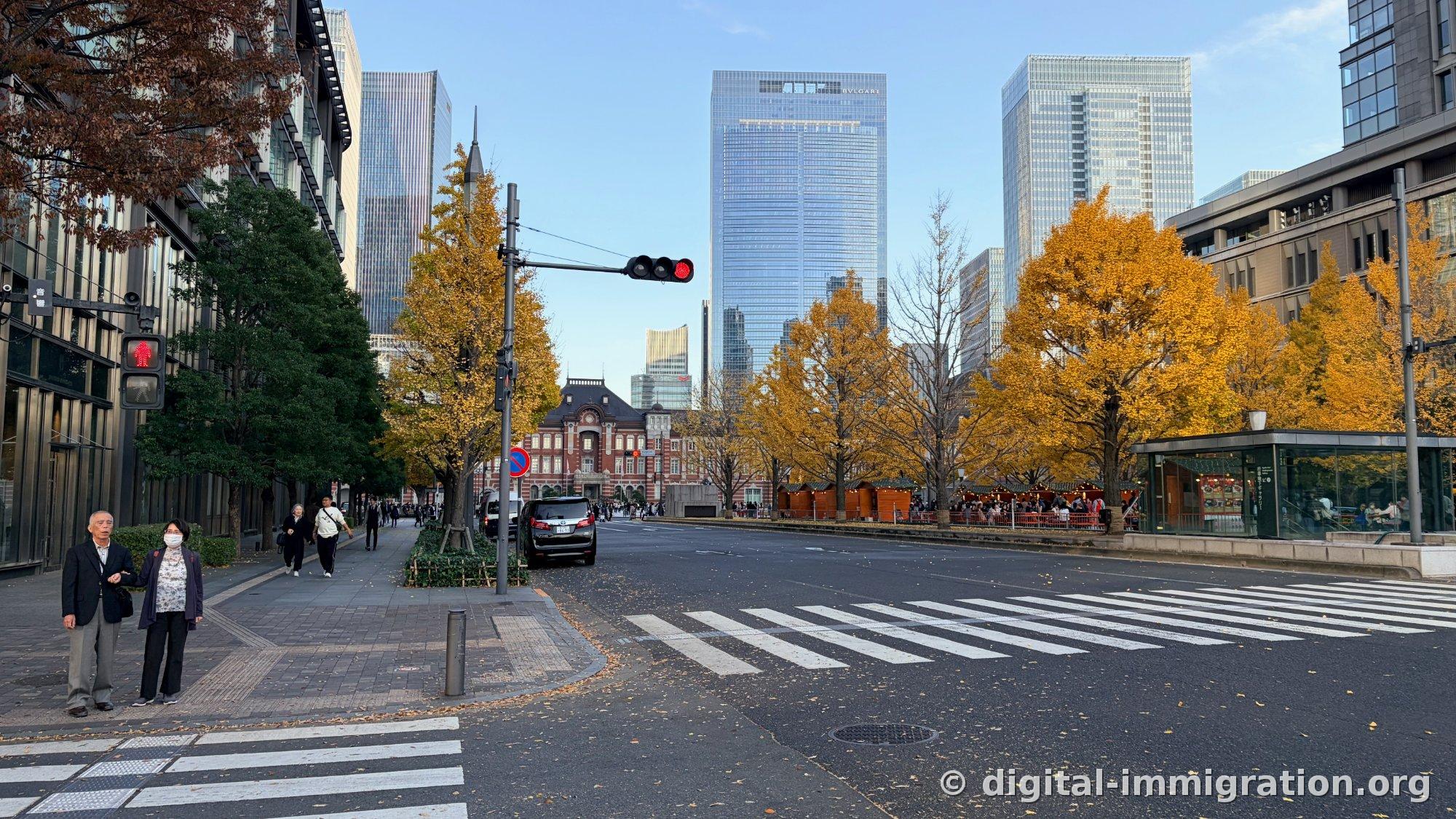
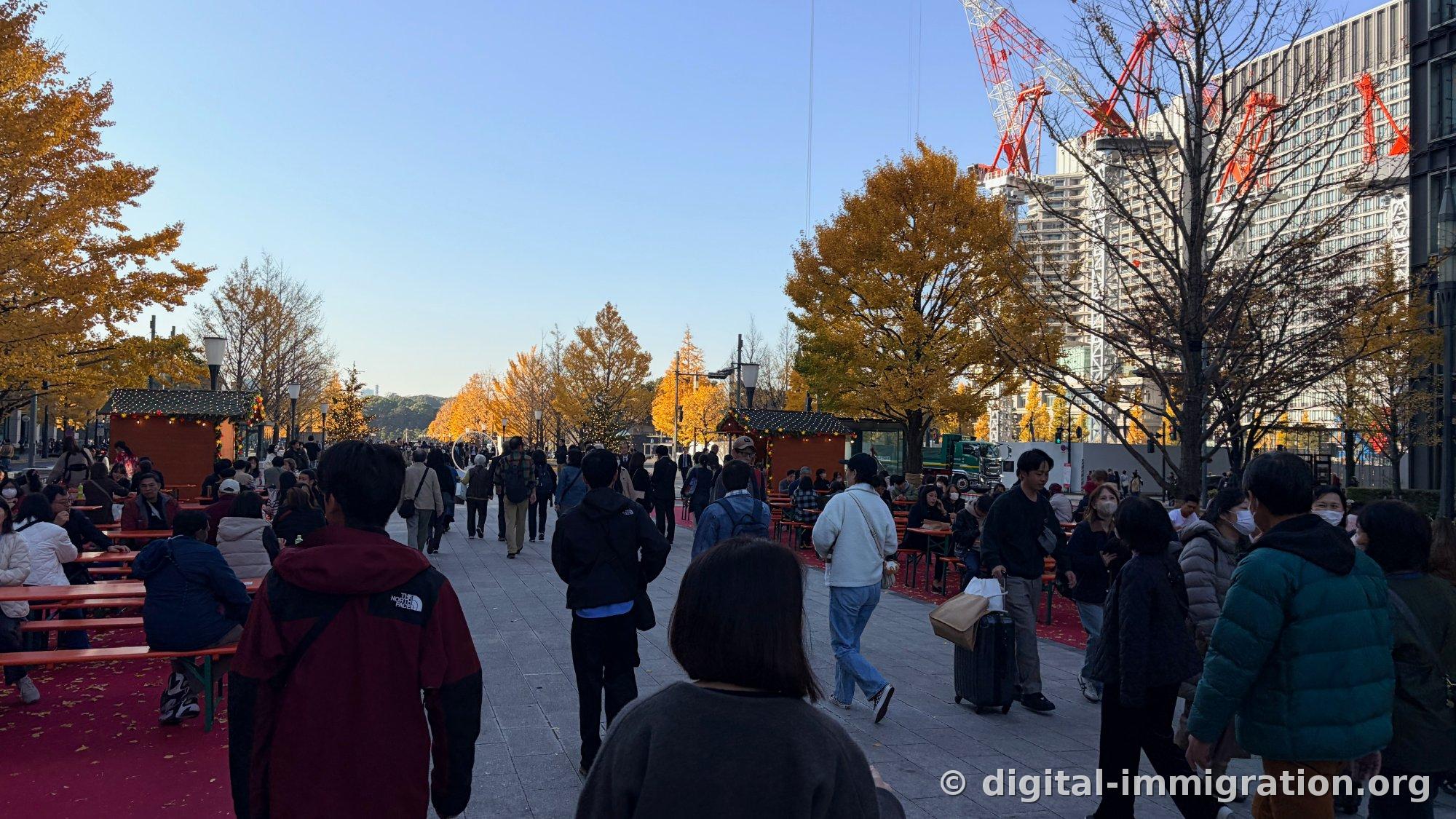
I was lucky. Wooden market stalls lined the middle of Gyokodo Street, which extends from the station's front toward the Imperial Palace. While waiting for the pedestrian signal at the crosswalk, I could see wooden booth roofs and red pavement stretching long beneath the golden ginkgo leaves. Having ginkgo autumn foliage and Christmas decorations in one frame is a combination you don't often see in Seoul.
Approaching one booth, I saw a large stainless steel pot sitting on the counter. It was heating mulled wine. The scent of cinnamon and orange rose with the steam, and only then did I realize my hands were cold. While the person ahead was paying, I read the signboard next to me advertising Stollen. Santas and star-shaped lights hung densely along the booth's edges, and above the roof, ginkgo leaves still clinging to the branches covered everything in yellow. The crowd was too thick; I just looked at the line and eventually backed away.
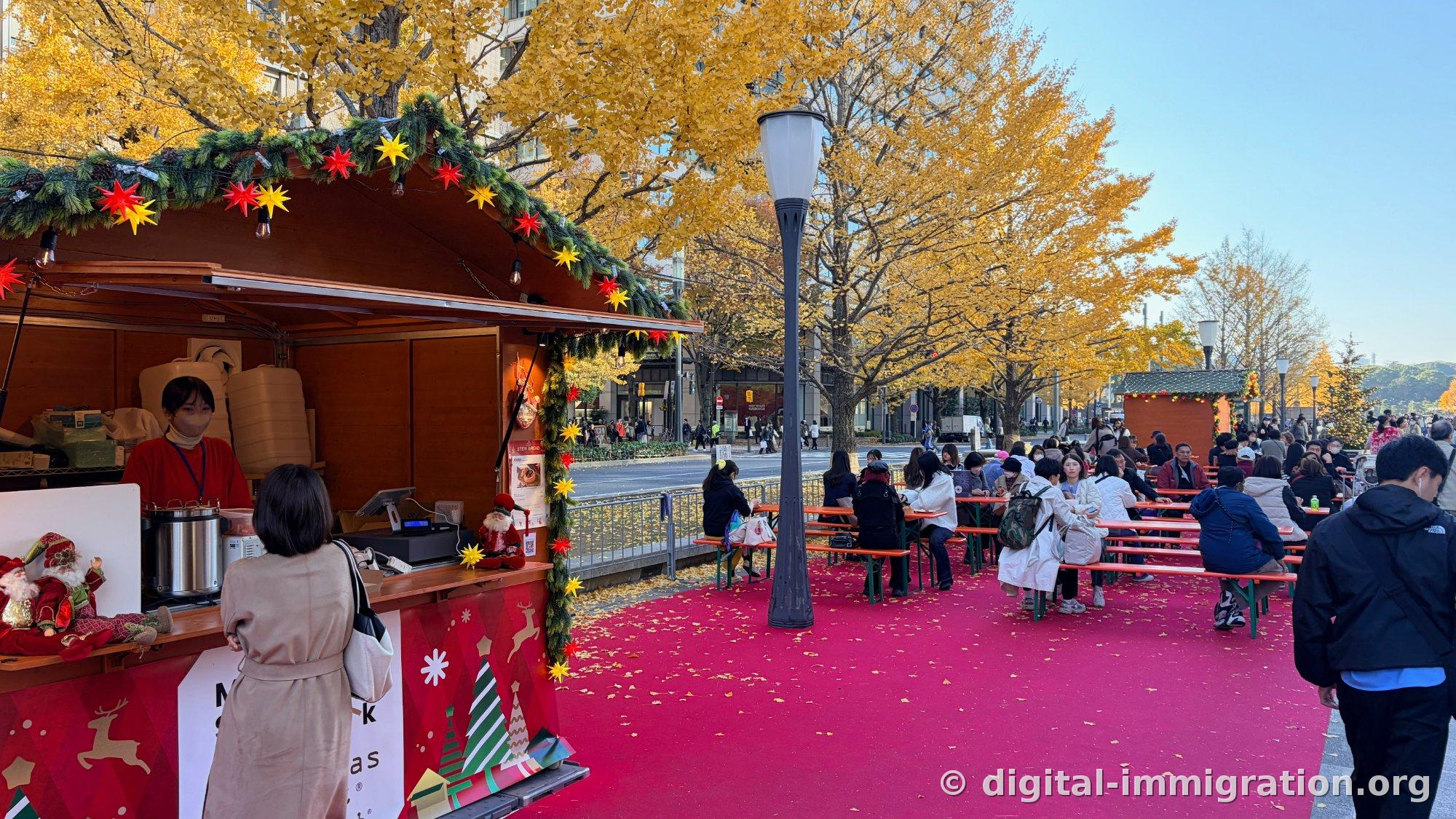
Red paving was laid out with folding picnic tables on top, so people could sit and eat what they bought. It was around 4 p.m., and almost all the seats were taken. There were people in padded jackets, those pulling luggage taking a quick break, and office workers in business attire mixed together. A red construction crane stood behind on the right, making it clear that this is a tourist spot while simultaneously being a business district. If you're keen on photography, I'd recommend coming a bit earlier than just before sunset. After 5 p.m., the crowd density increases sharply.
Good to Know Before You Go
- Exit via the Marunouchi Central/North Exit to see the full view of the building. If you exit toward Yaesu, you'll have to cross back through the underground passages.
- The window when ginkgo foliage and the market overlap is short. When I visited in late November, the leaves were at their peak, but they fall completely within a few days.
- The market's operating period, hours, and booth prices change every year. It's safest to check the on-site signage or official announcements.
- The plaza floor is stone tiles, so luggage wheels are quite loud. If you have luggage, it's much more convenient to store it in a coin locker inside the station.
Walking All the Way Down Gyokodo Street
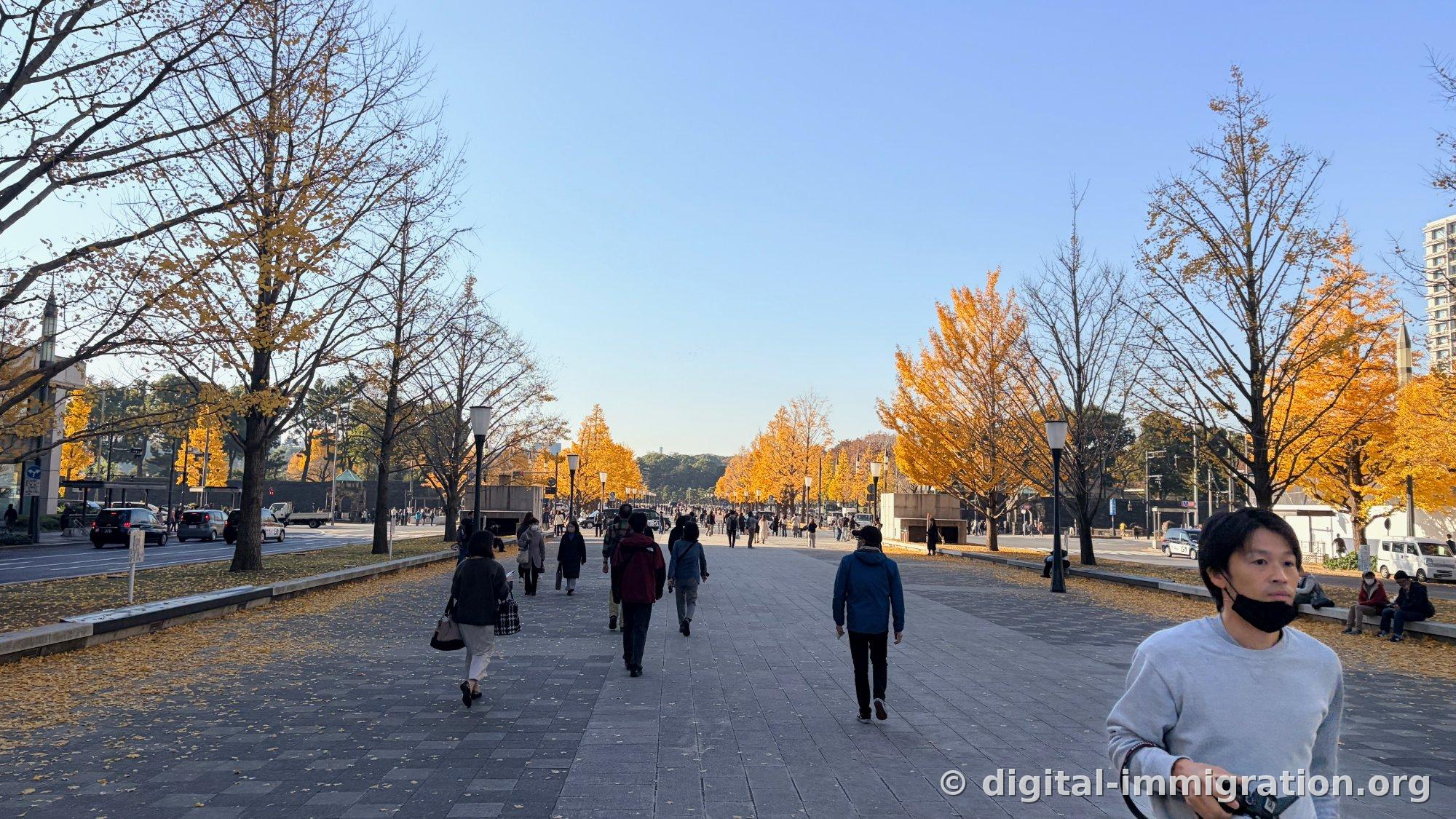
Continuing straight past the market area, you'll find a wide ginkgo tree-lined avenue. The pedestrian path, separated from the road, is spacious enough that even with crowds, it doesn't feel cramped. Fallen ginkgo leaves form a yellow carpet on the pavement, and in the distance, the dark silhouette of the forest toward the Imperial Palace appears low on the horizon. Your walking pace naturally slows. It takes less than ten minutes to walk from Tokyo Station to here.
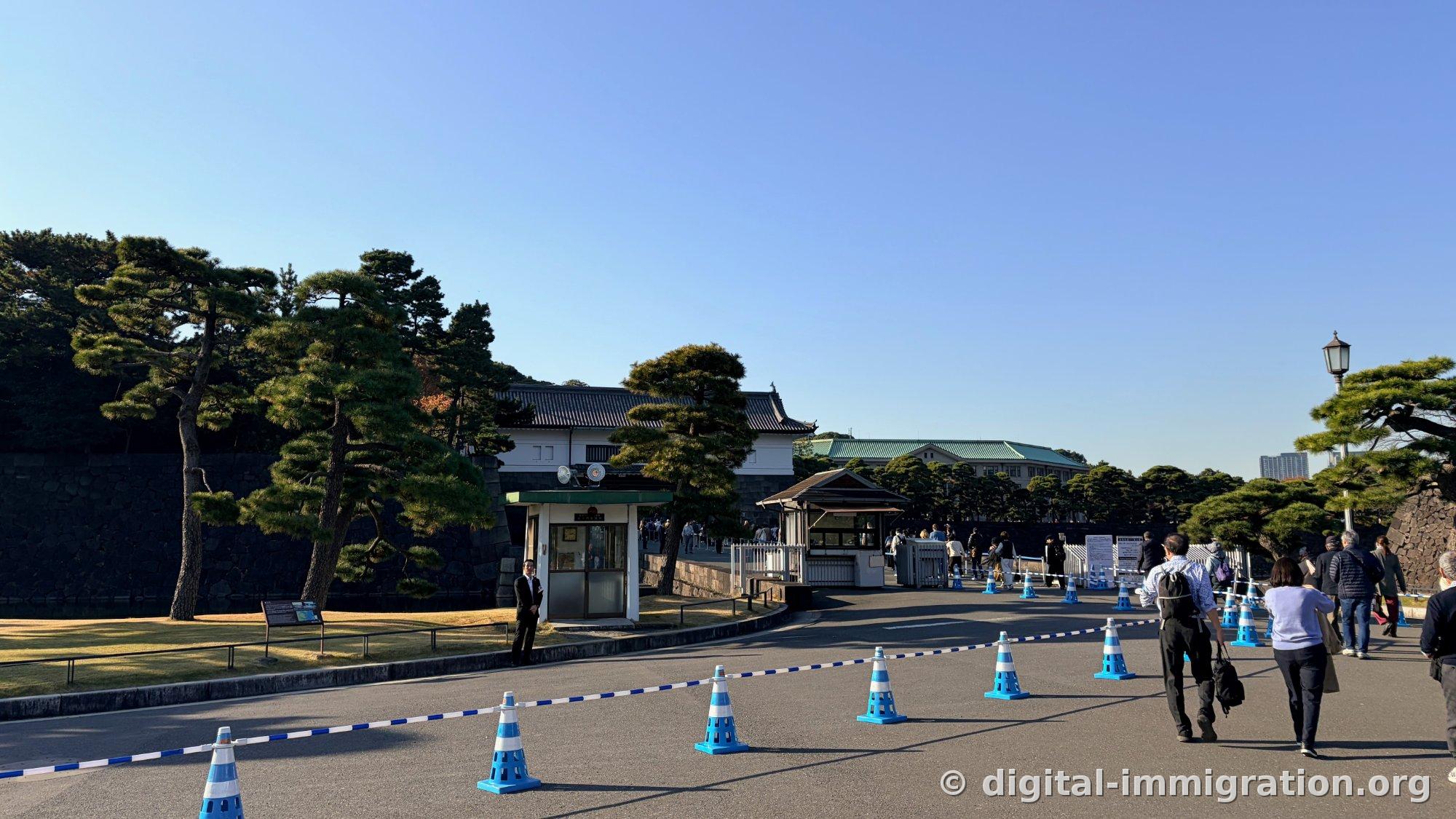
Once you cross the moat at the end of the street, the atmosphere changes completely. Pine trees grow in twisted patterns along stone walls built from rocks, and a gate with white walls and tiled roof along with a small guard booth stand before you. Blue cone barriers and ropes divide the pedestrian flow, so visitors are directed along designated routes. Just five minutes earlier I was hearing Christmas carols and the sound of crowds, but here I can hear footsteps. This contrast was the most striking thing about the scenery in front of Tokyo Station. Open areas and closed days by day of the week change, so it's best to check before you go.
I had thought Tokyo Station was just a place to transfer trains, but that day I spent half of it here. One brick building and the street stretching in front of it, and stalls that appeared briefly with the season. Next time I come, I'm thinking I'll stand in the plaza early in the morning. The red brick building without crowds must have a completely different face.
ဆက်လက်ဖတ်ရှုရန်
- From Akihabara's Chuo-dori to the Kanda River: A Record of Tokyo's Electronics District Revisited Multiple Times
Tokyo's Akihabara is a neighborhood where it's hard to say you've seen everything in a single visit. I've come multiple times across different seasons, and each time the signs chan…
Tokyo · Akihabara - Buying a Single ¥300 Year-End Jumbo Lottery Ticket at Nishi-Ginza Chance Center in Tokyo
Exit from the Hibiya exit of Tokyo's Shimbashi Station, walk toward the elevated highway for about three minutes, and suddenly you'll see a line of people stretching along the side…
Tokyo · Nishi-Ginza Chance Center - Ueno Ameyoko, the real magic starts after sunset — an evening walk from the Okachimachi Gate to Ueno Station
Every time I come to Tokyo, my feet find their way to Ueno Ameyoko (アメ横) without fail. This time I entered from the Okachimachi side and worked my way toward Ueno Station. I've met…
Tokyo · Ameya Yokocho Market