Naha Kokusai-dori Back Alley, the Day I Fell for Dumplings Over Ramen at Danbo Okinawa
Naha's Kokusai-dori in Okinawa is most ambiguous around 2 PM. The sun beats directly overhead, the palm tree shade is narrow, and tour buses line up beneath the Don Quixote sign, s…
အိုကီနာဝါ · Danbo Ramen
Naha's Kokusai-dori in Okinawa is most ambiguous around 2 PM. The sun beats directly overhead, the palm tree shade is narrow, and tour buses line up beneath the Don Quixote sign, spewing exhaust. Anyone who's walked this street a few times knows it: restaurants along the main drag are mostly tourist-priced, and the places offering real value are either tucked a block inland or have small signs. That day, I headed to Danbo, the Okinawa branch of a Hakata tonkotsu ramen shop that originated in Fukuoka.
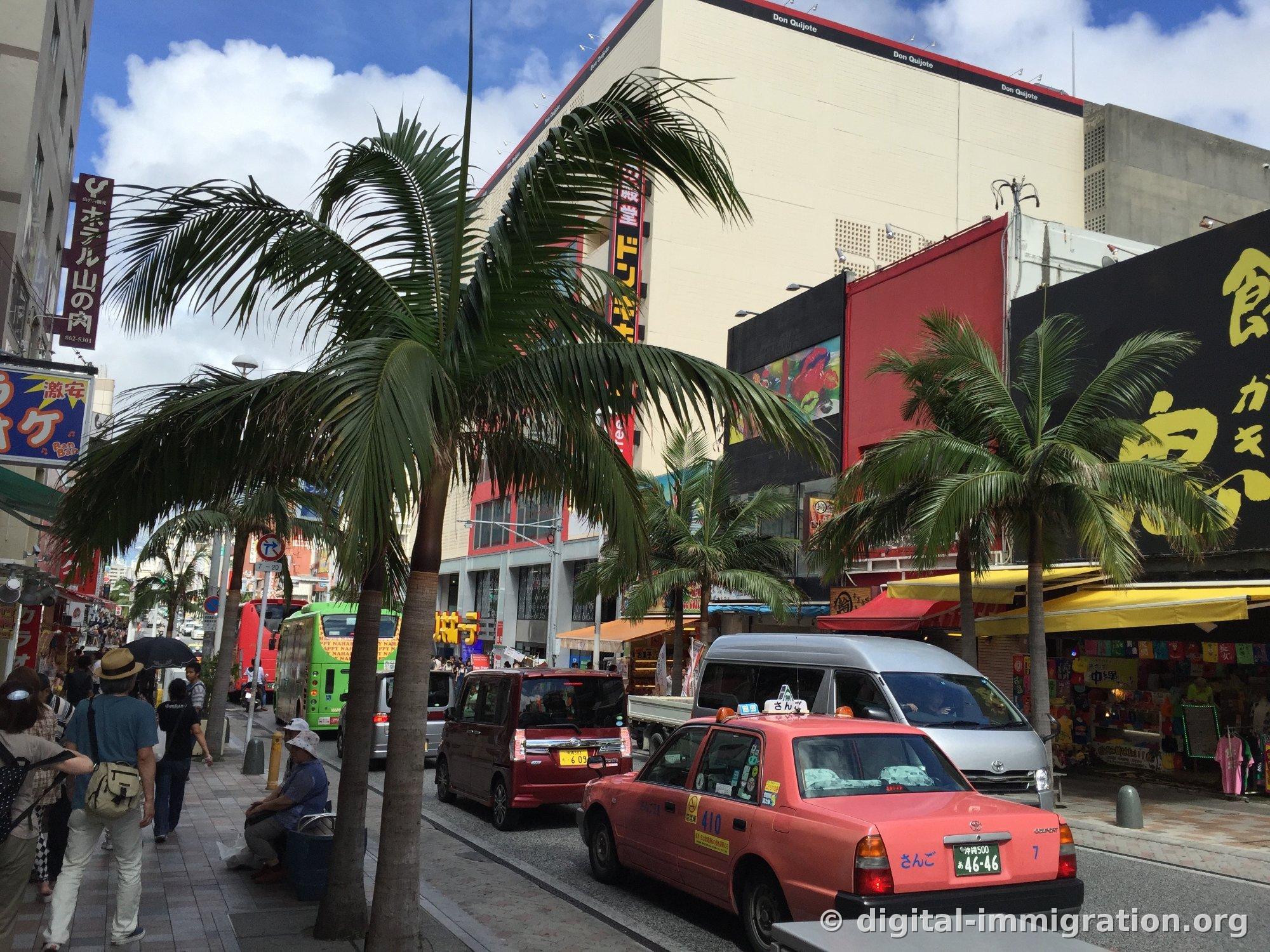
Starting with the temperature of the street
Kokusai-dori stretches just over 1 km in a straight line, but it feels longer when you walk it. The humidity does that. By the time your t-shirt starts sticking to your back, you notice the street-side stalls. Shimazoori sandals in various colors are displayed, stacked next to boxes of umibudo—sea grapes.
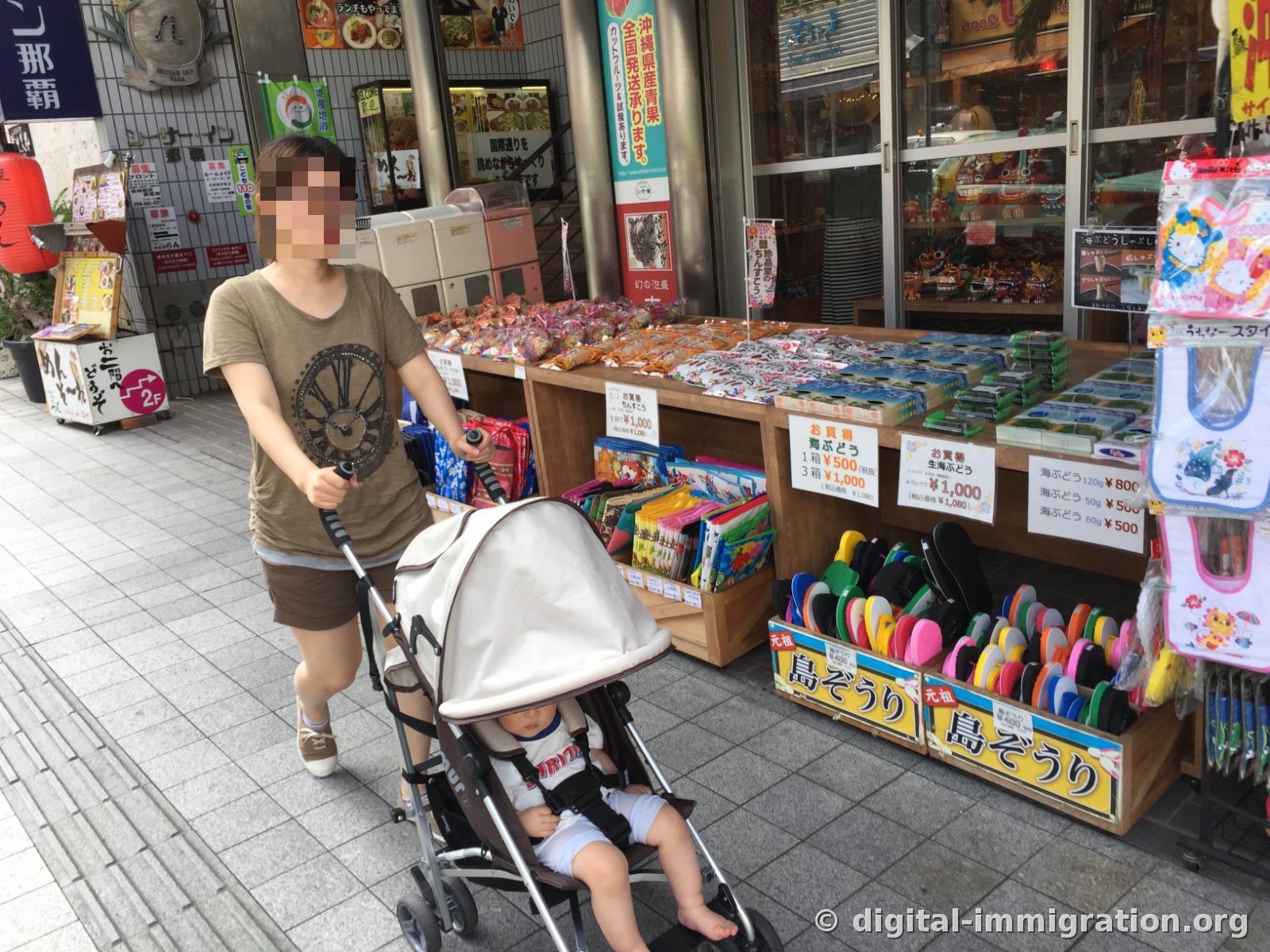
Looking at the price signs in the photo, sea grapes are 500 yen per box (tax not included), or 1,000 yen for three boxes bundled together. There were also fresh sea grape 4-packs for 1,000 yen. You'll see 120g for 800 yen, and 50g or 60g for 500 yen. These stall prices vary by about 200 yen from shop to shop, so I'd recommend passing on the first one and checking a couple more stalls. On my first Okinawa trip, I bought at the first stand and felt sick when I saw something cheaper three blocks later.
Before entering Danbo, there's the menu board on the wall
Danbo puts up a large sign with photos near the entrance—an oshina gaki menu board. Even if you can't read Japanese, you can order just by looking at the photos and numbers.
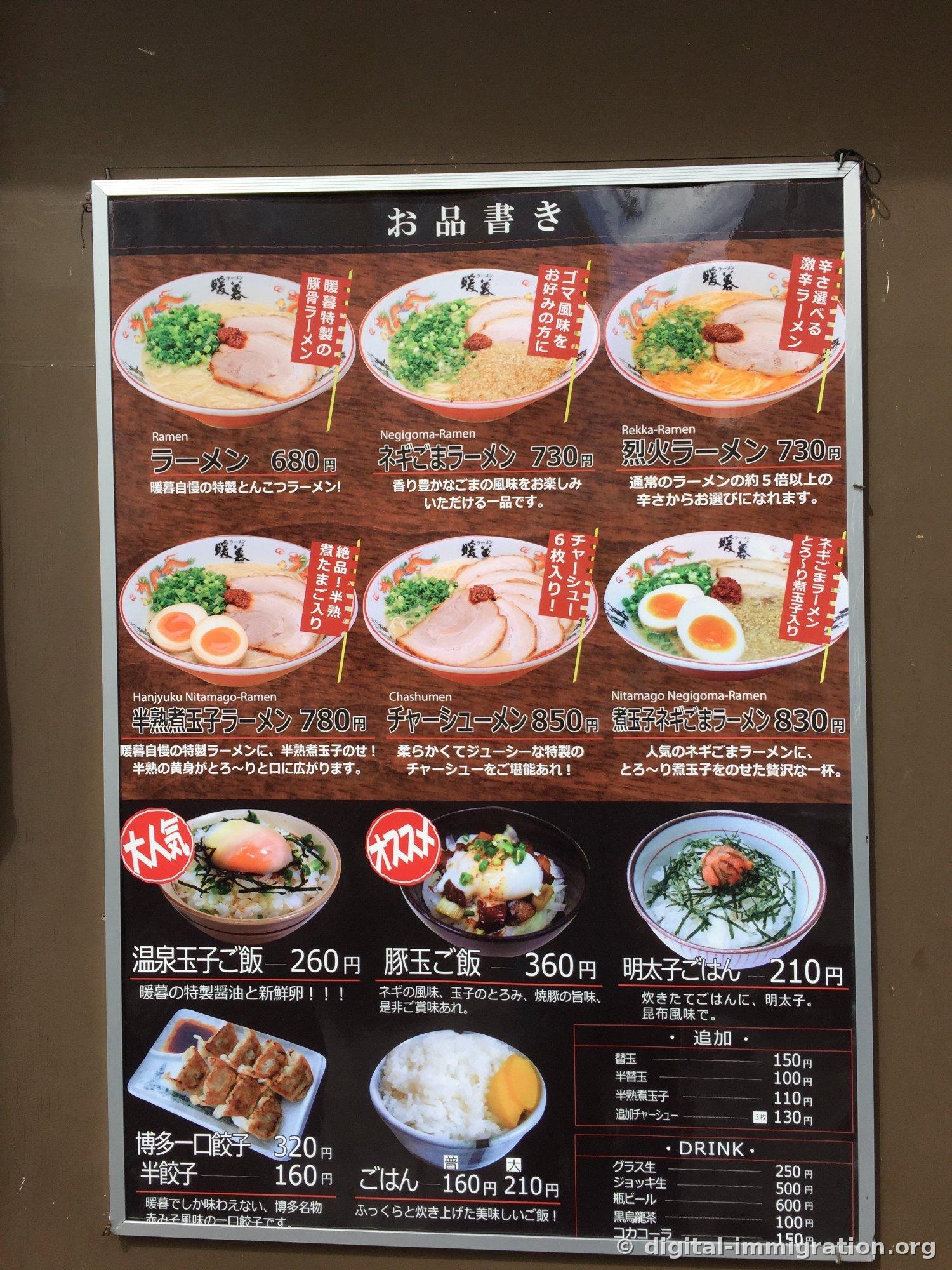
Things worth noting here:
- Basic ramen 680 yen — Danbo's special tonkotsu
- Negi goma ramen 730 yen — loaded with sesame
- Rekka (烈火) ramen 730 yen — choose your heat level, starting at 5 times spicier than the basic
- Hanjuku nitamago ramen 780 yen — soft-boiled egg included
- Chashu men 850 yen — six slices of pork
- Hakata single-bite dumplings 320 yen / half plate 160 yen
- Kaedama (extra noodles) 150 yen, half kaedama 100 yen, soft-boiled egg add-on 110 yen
- Onsen tamago rice 260 yen, buta tama rice 360 yen, mentaiko rice 210 yen
The key is 150 yen for kaedama. Hakata tonkotsu has thin noodles that disappear fast. First-time visitors order one bowl and think "why is the portion so small?"—but the structure is meant for you to add noodles two, three times over. If you order the noodles very firm (barikata) on your first order, they won't get mushy by the time you're ready for kaedama.
Things I saw from the counter in front of the kitchen
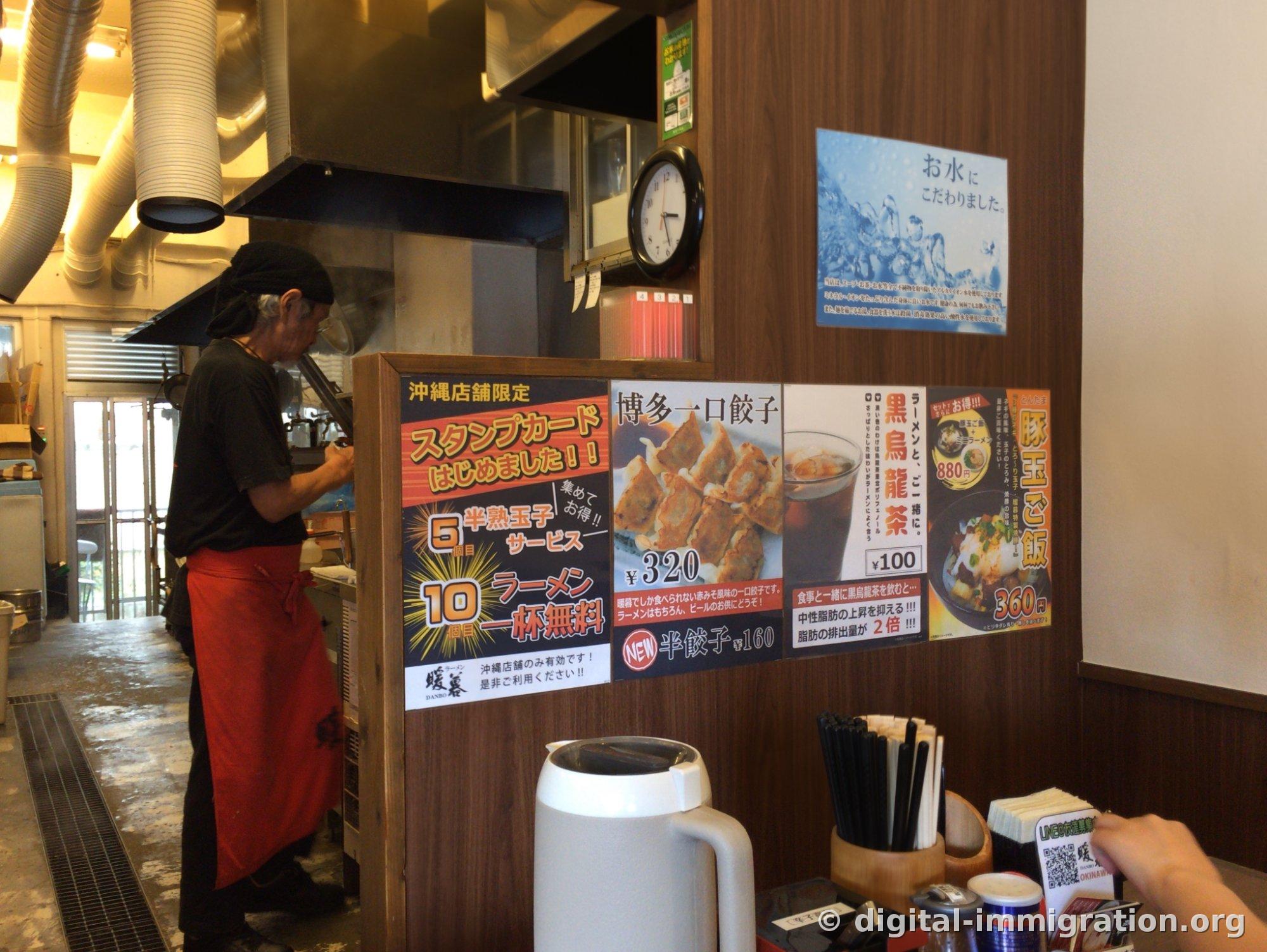
Sitting at the counter, you have a clear view of the kitchen. A staff member in a red apron stands with a ladle in hand, and the wall clock pointed to 2:30 PM. The notice on the wall next to them is fun: a stamp card exclusive to the Okinawa location—five stamps gets you a free soft-boiled egg, ten gets you a free bowl of ramen. Not much use for travelers, but if you're planning to come back here a few times, pick one up on your first visit. The 100 yen black oolong tea is good for cutting through ramen richness.
There was also a poster showing they care about water. It mentioned they use mineral ion water—honestly, you can't really tell by drinking it. But I do remember the water in my cup wasn't lukewarm and was properly cold. In this humidity, that matters more.
The main event—ramen, and dumplings
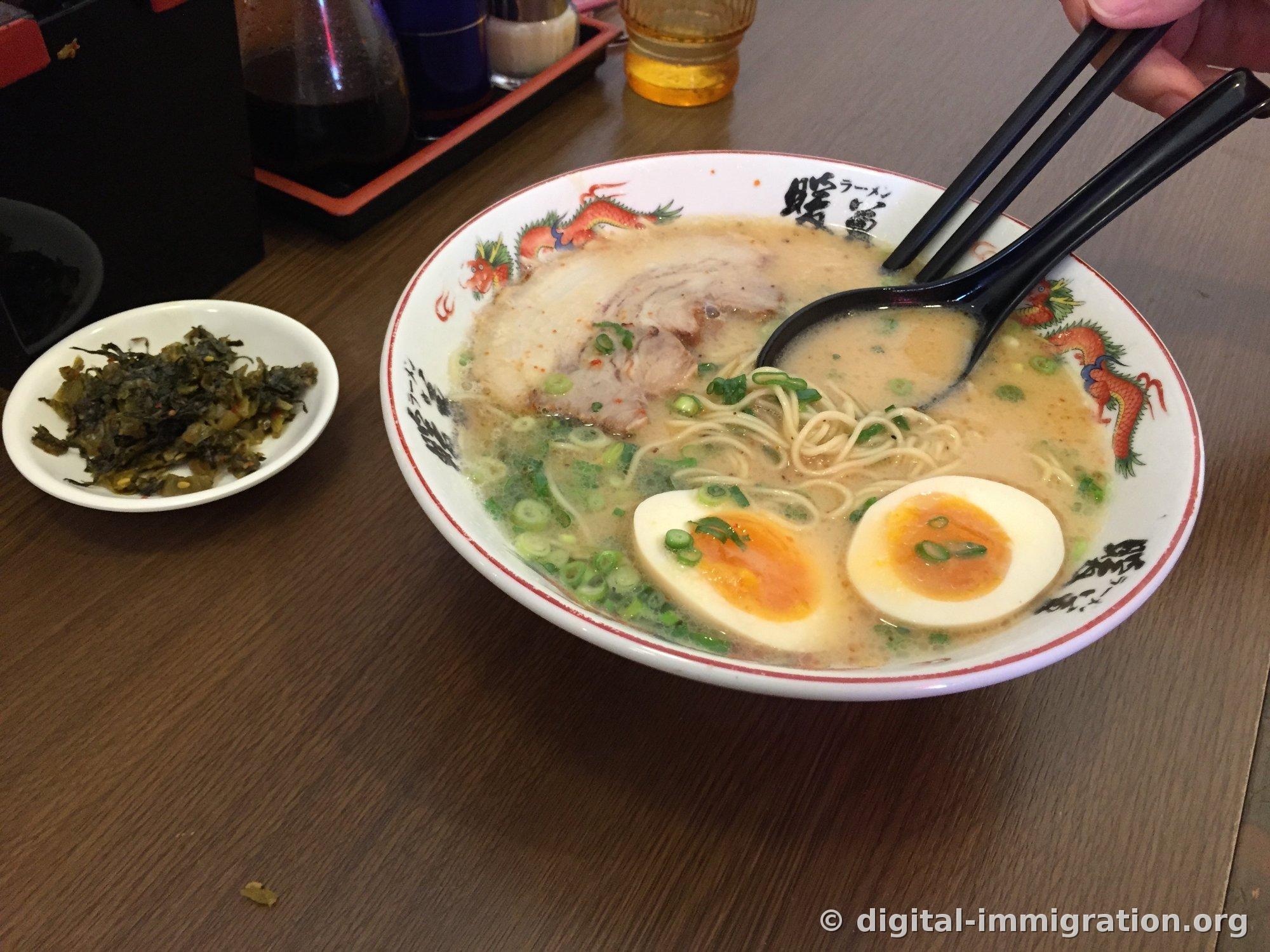
The broth in the dragon-patterned bowl looks whiter in person than in the photo. Bring your nose close and you get a strong pork bone aroma, but it's milder compared to the deep, rich ones you'd get in Hakata proper. If the tonkotsu at Nagahama in Fukuoka clings to your throat, this one lets you breathe after swallowing. Whether that's out of consideration for Okinawa tourists' palates or Danbo's natural style, I couldn't say.
The soft-boiled egg was exactly the right consistency. When you break it with your chopsticks, the yolk doesn't run—it crumbles softly. The pork is two thin, tender slices. If you're expecting a chewy bite, you'll be disappointed; it's more the melting-into-the-broth type.
The small plate of pickled takana mustard greens on the left comes from a container on the table that you help yourself from. A lot of people don't know this and just eat the ramen. Add a pinch halfway through the bowl and the richness clears right up. On my first Okinawa trip, I didn't know about it and just left it.
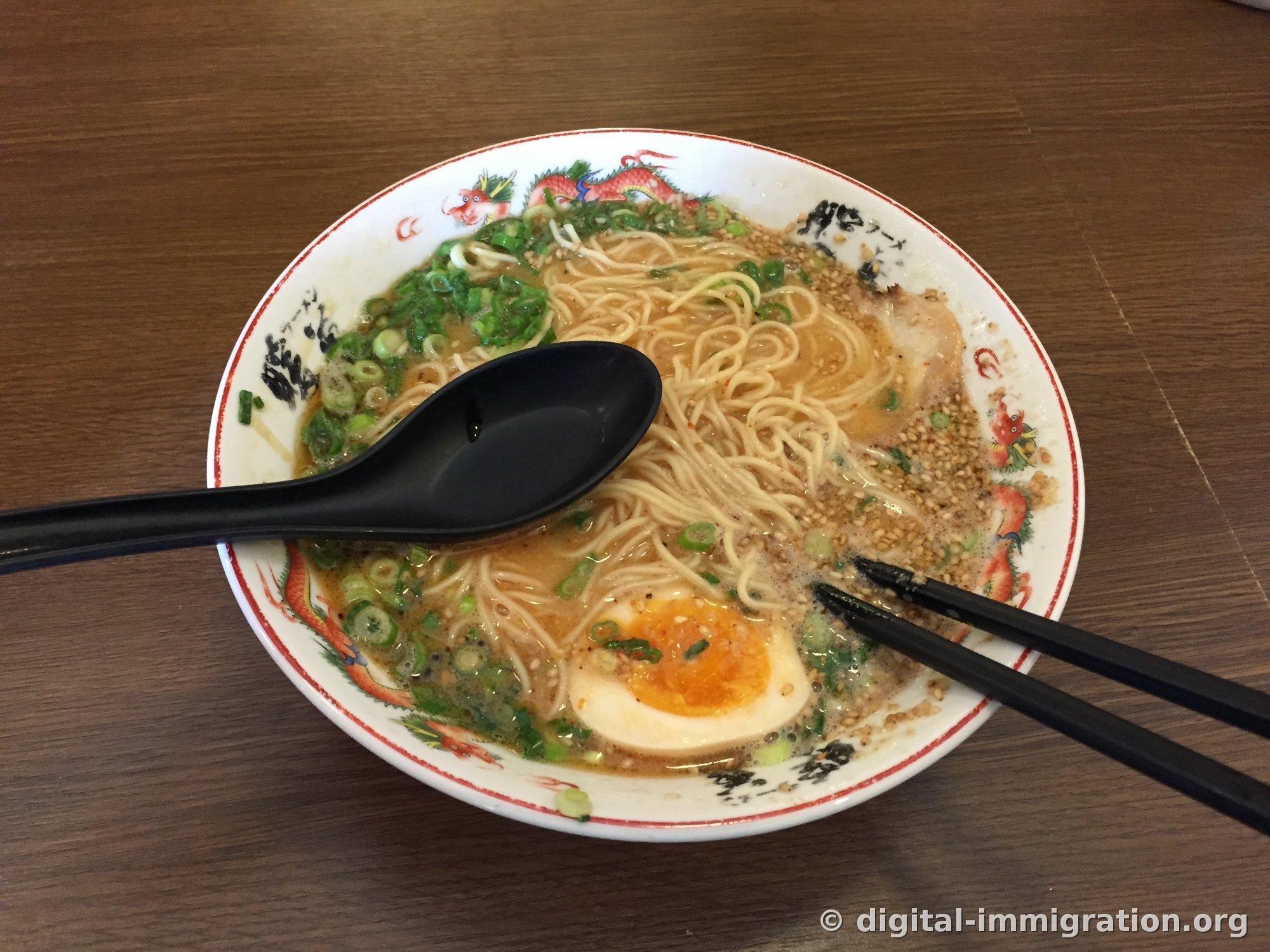
My companion ordered negi goma ramen (730 yen). A heap of roasted sesame comes piled on one side of the bowl. The trick is not to stir it all in at once—wait until you've eaten about half, then mix it. The broth flavor changes partway through. It shifts strongly toward the nutty side and the saltiness fades. If you ask me which of the two is better, I'd vote for the basic. The sesame masks the tonkotsu's distinctive aroma, and for someone who came here specifically for that smell, that feels a bit wasteful.
Honestly, the dumplings beat the ramen
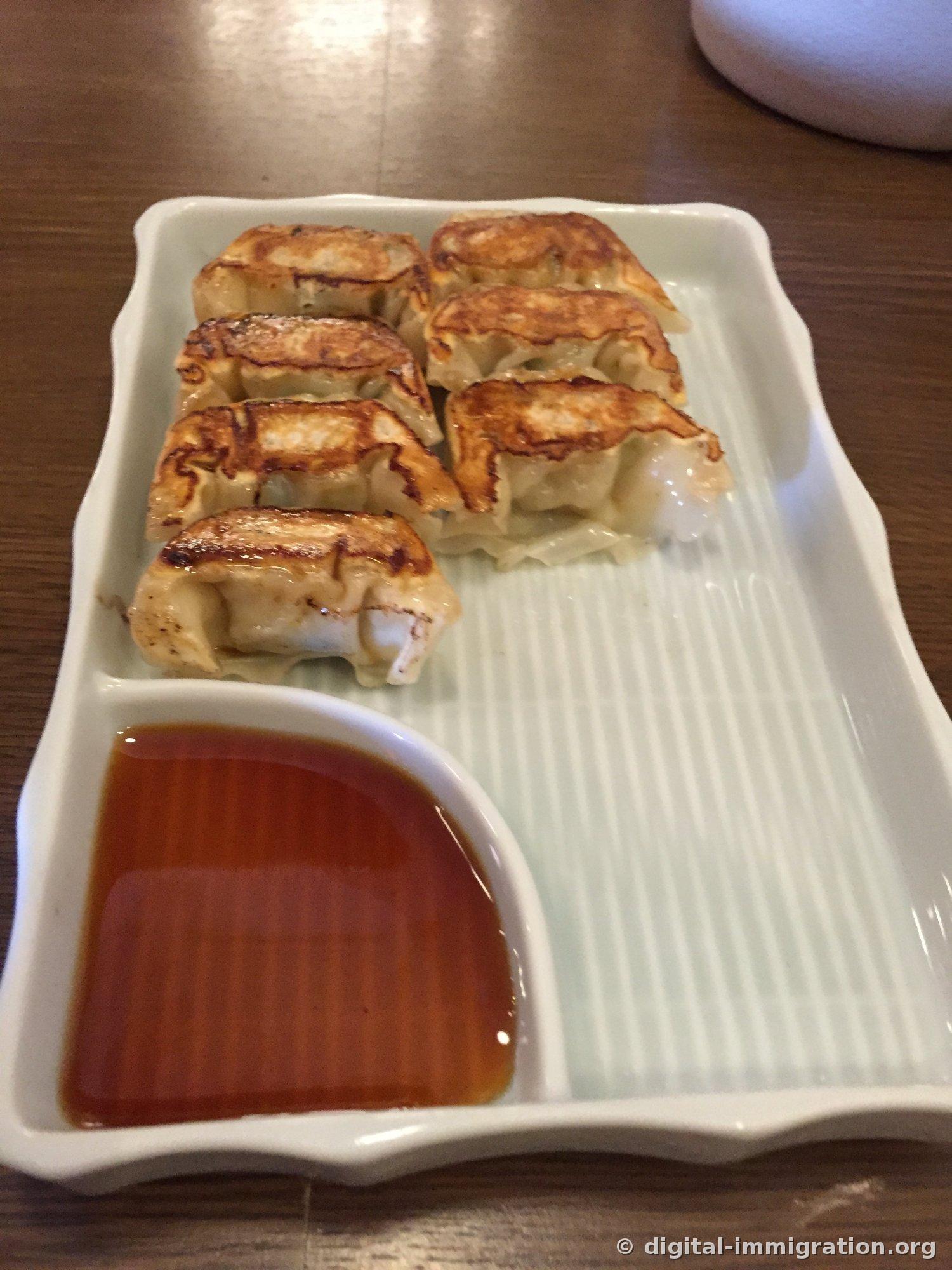
The 320 yen dumplings are the real deal at this place. The ramen was a well-made bowl of tonkotsu, but the dumplings were the reason to come back.
They're perfectly sized for one bite. Grab one with chopsticks, dip it halfway in sauce, then pop it whole in your mouth—the bottom skin cracks with a sound. The outside is fried crispy in oil, the sides of the skin are tender and moist. That temperature contrast is beautiful. The filling has red miso flavor according to the menu, and you can definitely smell the miso notes. It's a different approach from Korean dumplings that lean hard on garlic.
Seven dumplings disappeared in three minutes. There's a 160 yen half-plate option if you want something lighter to go with ramen, but from experience, a half-plate is always a regret. If there are two of you, order a full plate each. If I had to pick one thing to eat again in Okinawa, it's this 320 yen dumpling.
Location and how to get there
From the photo location, it's a short walk from the Don Quixote Naha Kokusai-dori store in the heart of Kokusai-dori. If you take the Yui Rail monorail, get off at Makishi or Kenchomae station and walk along the street. Either way is within a 5-10 minute walk. Don't count on parking. The moment you drive onto this street, stress sets in. If you've rented a car, it's faster to park at a nearby coin parking and walk.
During lunch rush (noon to 1:30 PM) and around 7 PM, the counter fills up. I went in after 2 PM and got a seat right away. With a lot of solo diners, there's no awkwardness about being alone.
Next time I'll order like this
- Basic ramen 680 yen + noodles very firm (barikata) + kaedama 150 yen
- Hakata single-bite dumplings 320 yen full plate (no half plates)
- Black oolong tea 100 yen
- Don't touch the pickled takana greens right away—add them after you've eaten half the broth
That comes to 1,250 yen. For a tourist hotspot in Okinawa, that's a solid meal. Think about the days I spent dropping 2,500 yen at a steak place on the Kokusai-dori main drag and it looks even better.
Prices and hours are based on the visit date, so they may have changed by now. Especially limited-time Okinawa location events like the stamp card—it'd be no surprise if they've ended. Go check in person.
ဆက်လက်ဖတ်ရှုရန်
- From Akihabara's Chuo-dori to the Kanda River: A Record of Tokyo's Electronics District Revisited Multiple Times
Tokyo's Akihabara is a neighborhood where it's hard to say you've seen everything in a single visit. I've come multiple times across different seasons, and each time the signs chan…
Tokyo · Akihabara - Buying a Single ¥300 Year-End Jumbo Lottery Ticket at Nishi-Ginza Chance Center in Tokyo
Exit from the Hibiya exit of Tokyo's Shimbashi Station, walk toward the elevated highway for about three minutes, and suddenly you'll see a line of people stretching along the side…
Tokyo · Nishi-Ginza Chance Center - Ueno Ameyoko, the real magic starts after sunset — an evening walk from the Okachimachi Gate to Ueno Station
Every time I come to Tokyo, my feet find their way to Ueno Ameyoko (アメ横) without fail. This time I entered from the Okachimachi side and worked my way toward Ueno Station. I've met…
Tokyo · Ameya Yokocho Market