Gold Dragon Coffee's Meat Buns Made with Pumpkin Dough in Jakarta's Glodok Chinatown
Glodok is an old Chinese commercial district in West Jakarta. Walking through alleys tangled with jewelry shops, herbal medicine stores, and mobile phone parts shops toward Pasar G…
ဂျကာတ · Glodok Chinatown Market - Gold Dragon Coffee
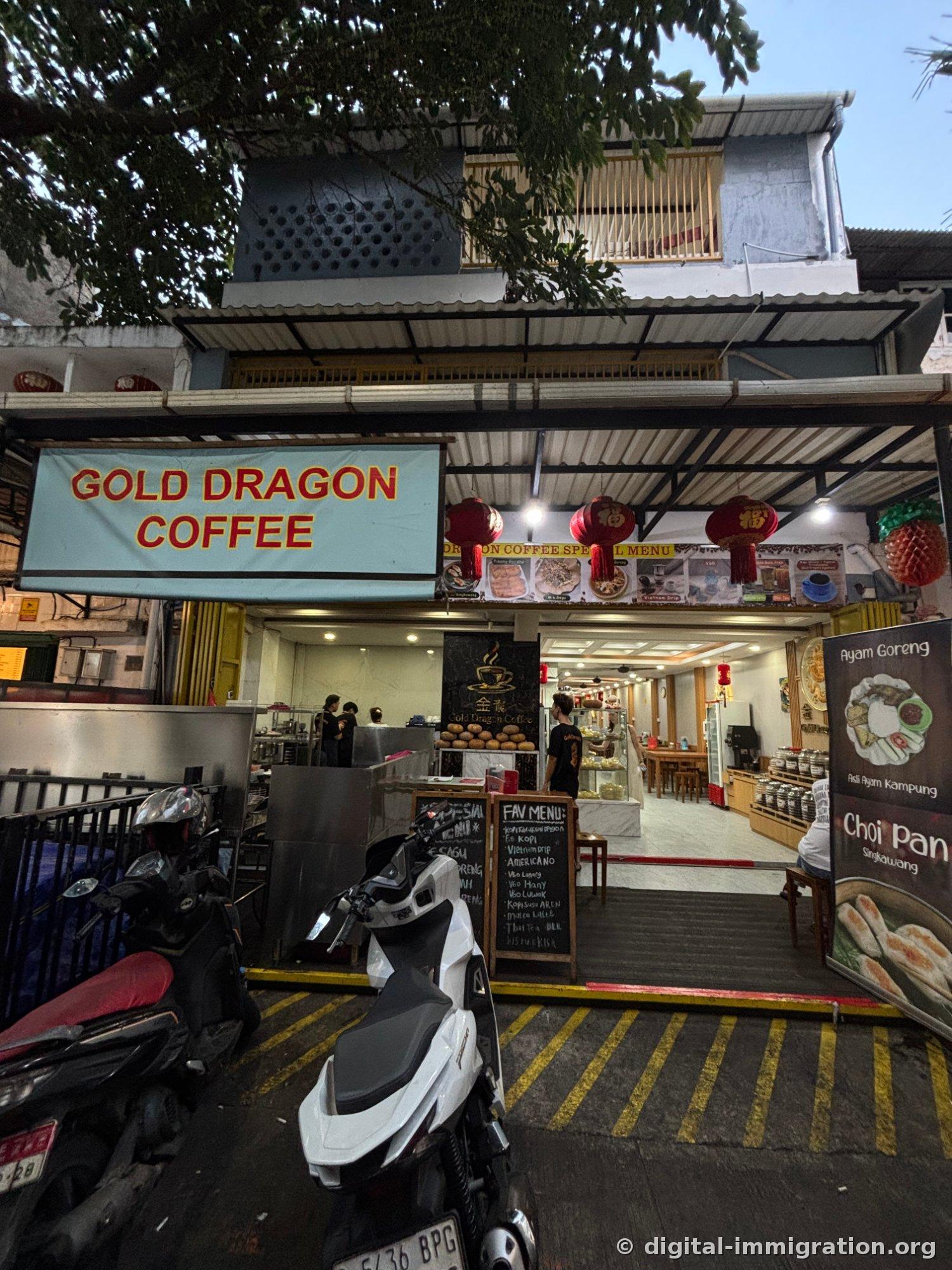
Glodok is an old Chinese commercial district in West Jakarta. Walking through alleys tangled with jewelry shops, herbal medicine stores, and mobile phone parts shops toward Pasar Glodok Barat, you'll find a sign on the roadside with "GOLD DRAGON COFFEE" written in red letters on a sky-blue background. Motorcycles are parked right up on the sidewalk, and a couple of scooters are angled across the yellow striped parking lines in front of the entrance. The first time I visited, I couldn't tell if this was a café or a restaurant. While the sign says coffee shop, the chalkboard out front lists coffee menus like Vietnam Drip, Americano, and Kopi Susu Aren, and on the right banner are drawings of Ayam Goreng and Choi Pan Singkawang.
The Interior Is Deeper Than It Looks
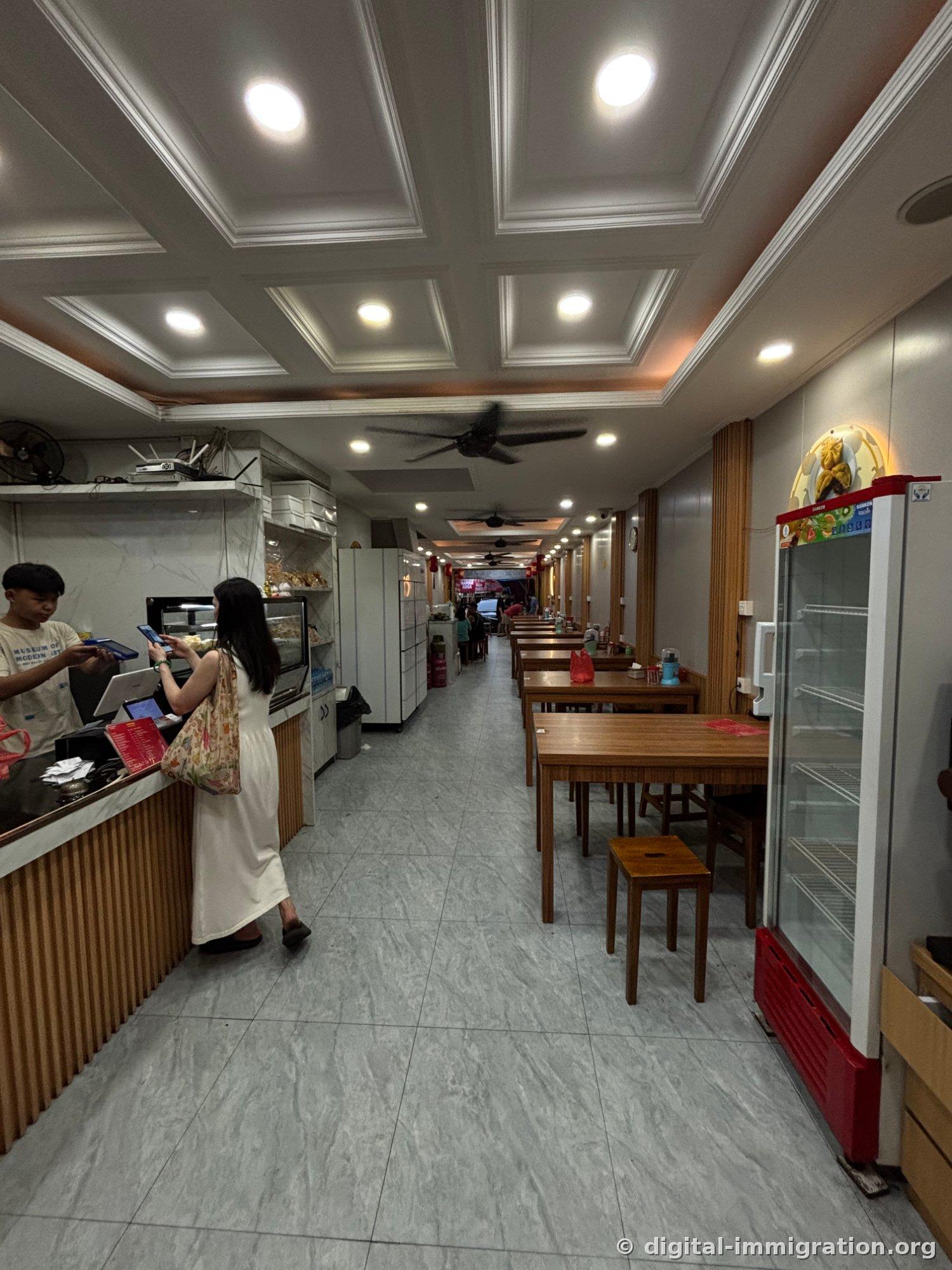
While the entrance looks narrow, the dining hall stretches deep into the back. The left side has the register and display case, the right side has rows of wooden tables, and about three ceiling fans spin overhead. There's no air conditioning. On a late August evening at 5:30, even sitting where the fan's breeze reached, my shirt stuck to my back. The floor is gray marble tile, so it looks clean on the surface, but the refrigerator and water jug sit right out in the hallway. Payment is processed on a tablet POS. I saw the person in front of me pay with QR code, so I handed over my card too.
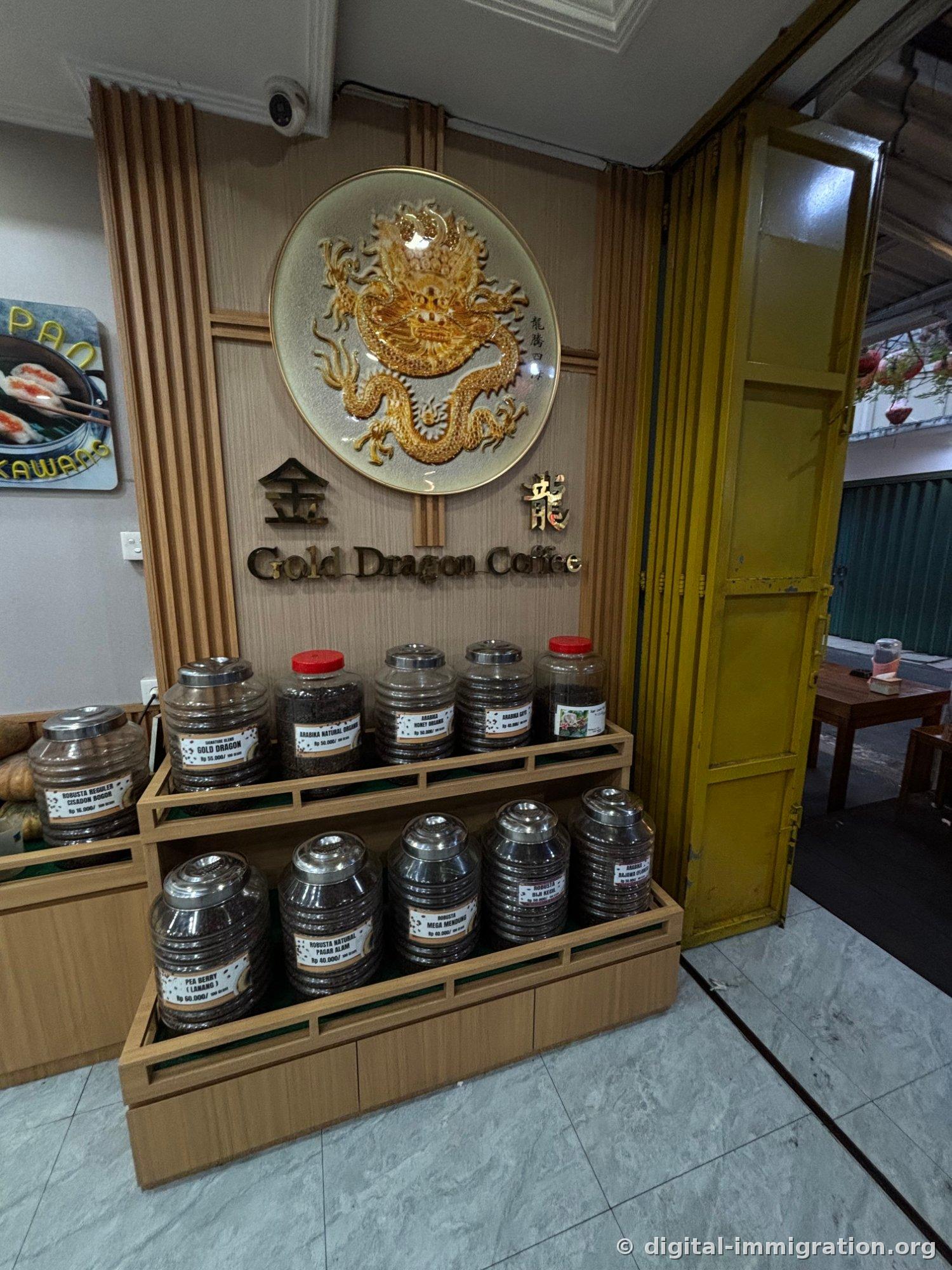
On the back wall hang the characters 金龍 (Gold Dragon) alongside a large plate etched with a golden dragon. Below it, wooden shelves display rows of coffee bean containers. Each container has a label and price, making it fun to browse. Signature Blend Gold Dragon is Rp55,000 for 500g, Arabika Natural Organic and Arabika Honey Organic are each Rp50,000, Arabika Gayo is Rp40,000, Robusta Natural Pagar Alam and Robusta Mega Mendung are Rp40,000, and Pea Berry (Lanang) is Rp60,000. The fact that each bean is labeled with its Indonesian origin region tells you what kind of shop this is. If you want to buy beans, they'll weigh and package them for you here.
Why There Are Pumpkins Stacked Next to the Register
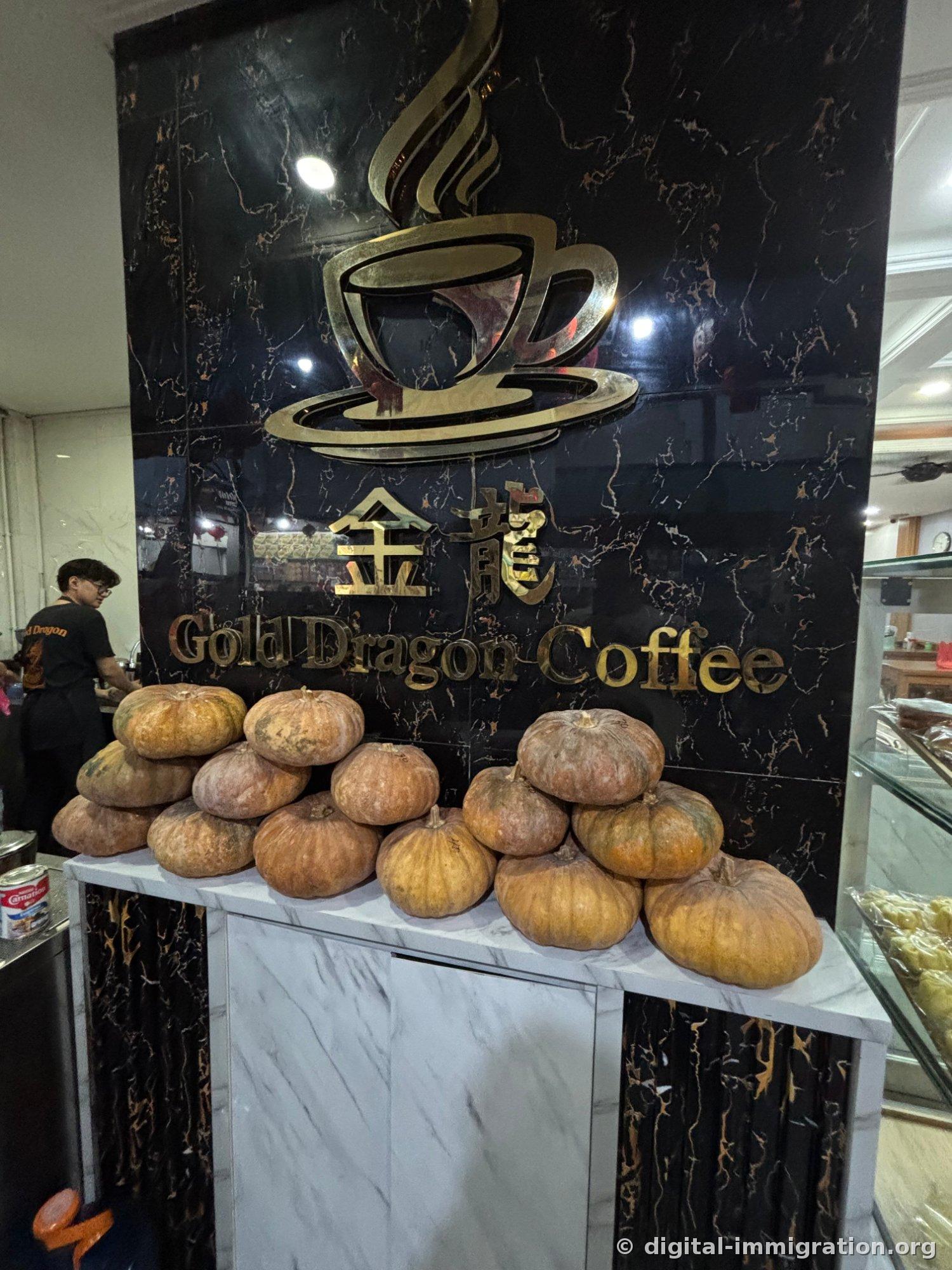
In front of the wall with a golden logo embossed on black marble, several old pumpkins are stacked on the counter. I thought they were decoration, but they're not. These pumpkins go into the dough for this shop's steamed buns. That's why the buns are such a vibrant yellow. They're not decorative props—just ingredients stacked out in the open—and it's the most honest advertising in this café.
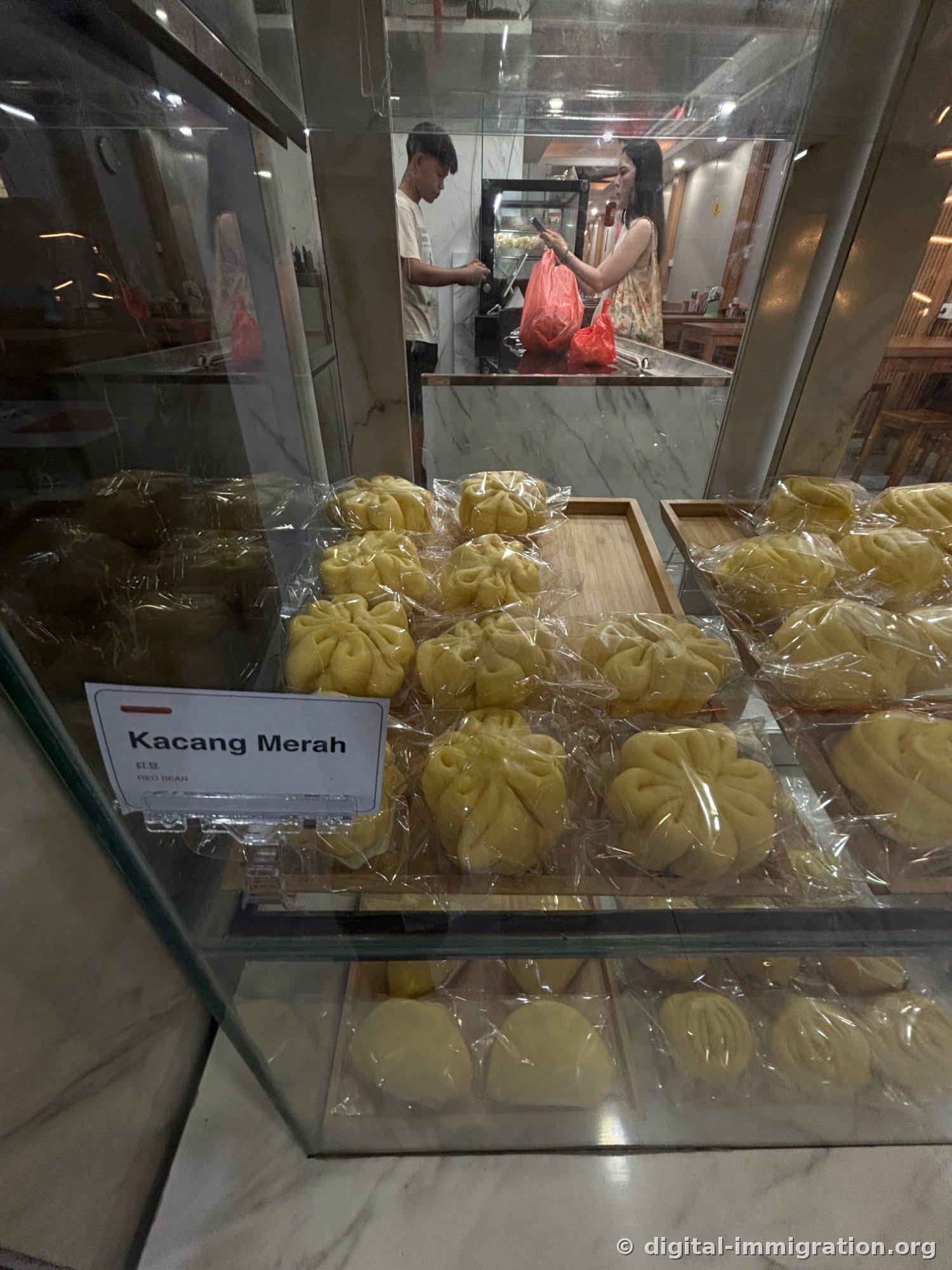
You order by looking at the glass display case next to the register. Plastic-wrapped steamed buns are arranged by type in different sections with labels in front. The section I saw was Kacang Merah (红豆 / RED BEAN), and there were more varieties in different colors next to it. If you don't understand Indonesian, just look at the English text on the labels. Anything with pork is marked as Babi on the menu, so if you need to avoid pork, just remember that word. Glodok is a Chinese commercial district, so pork dishes are common here.
How to Get There
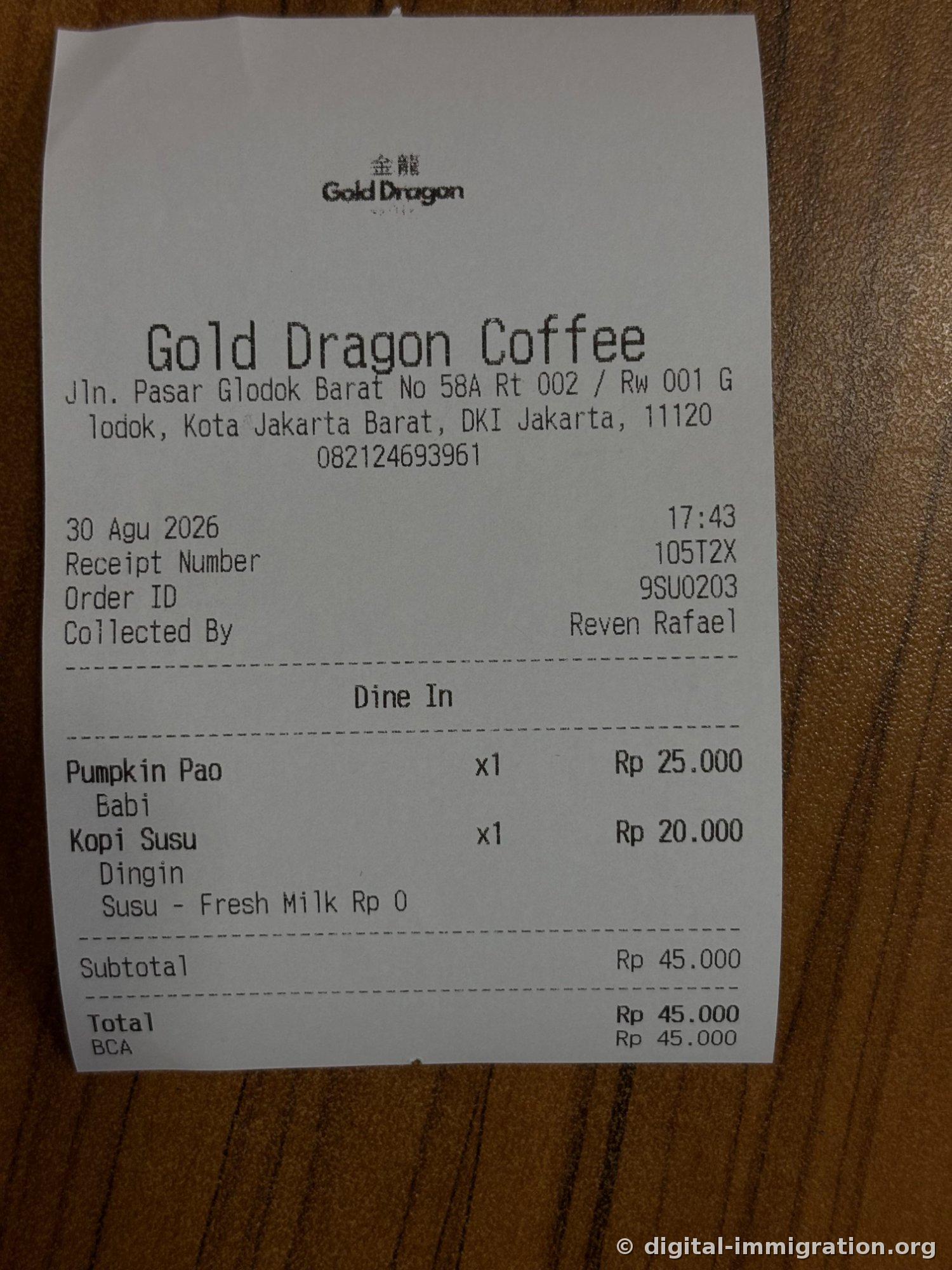
The address printed on the receipt is Jln. Pasar Glodok Barat No 58A, Glodok, Kota Jakarta Barat, DKI Jakarta 11120. You can get there by exiting at Glodok Station (TransJakarta or MRT) and walking into the alley toward Pancoran, but since this area has one-way streets and many street vendors, driving is actually more difficult. It's faster to take a Grab motorbike, get off on the main road, and walk in from there. In the evening, the alleys are dark and the sidewalks are narrow, so it's better to carry your bag in front.
My Recommendation: The Meat Buns
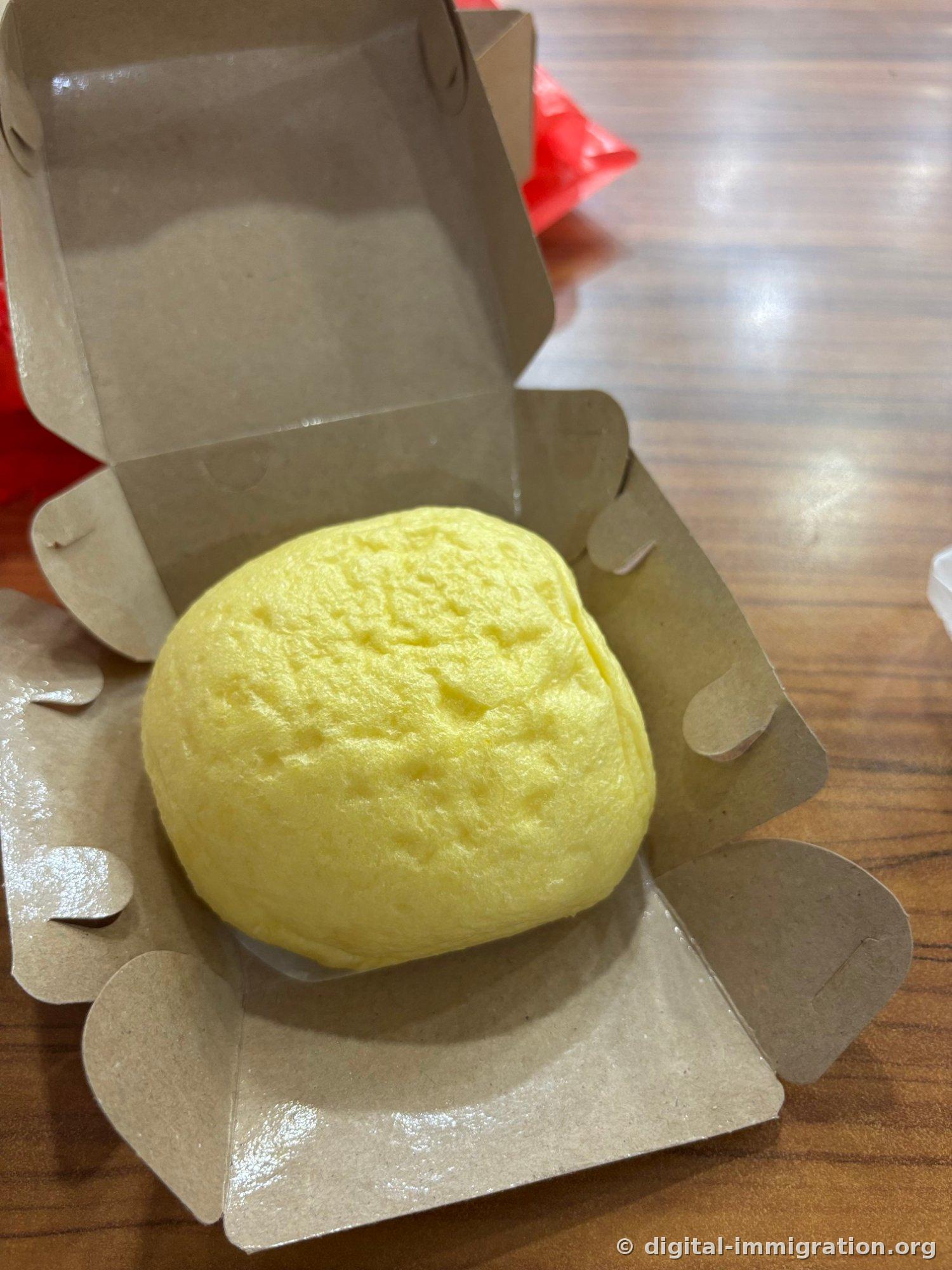
I've tried several items, but if I come back, I'll always order the meat buns first. That's what the receipt lists as Pumpkin Pao Babi. They come in individual paper boxes, and when you open the lid, steam rises up with the aroma of pumpkin hitting first. The surface is smooth, and it's so soft that pressing it leaves fingerprints.
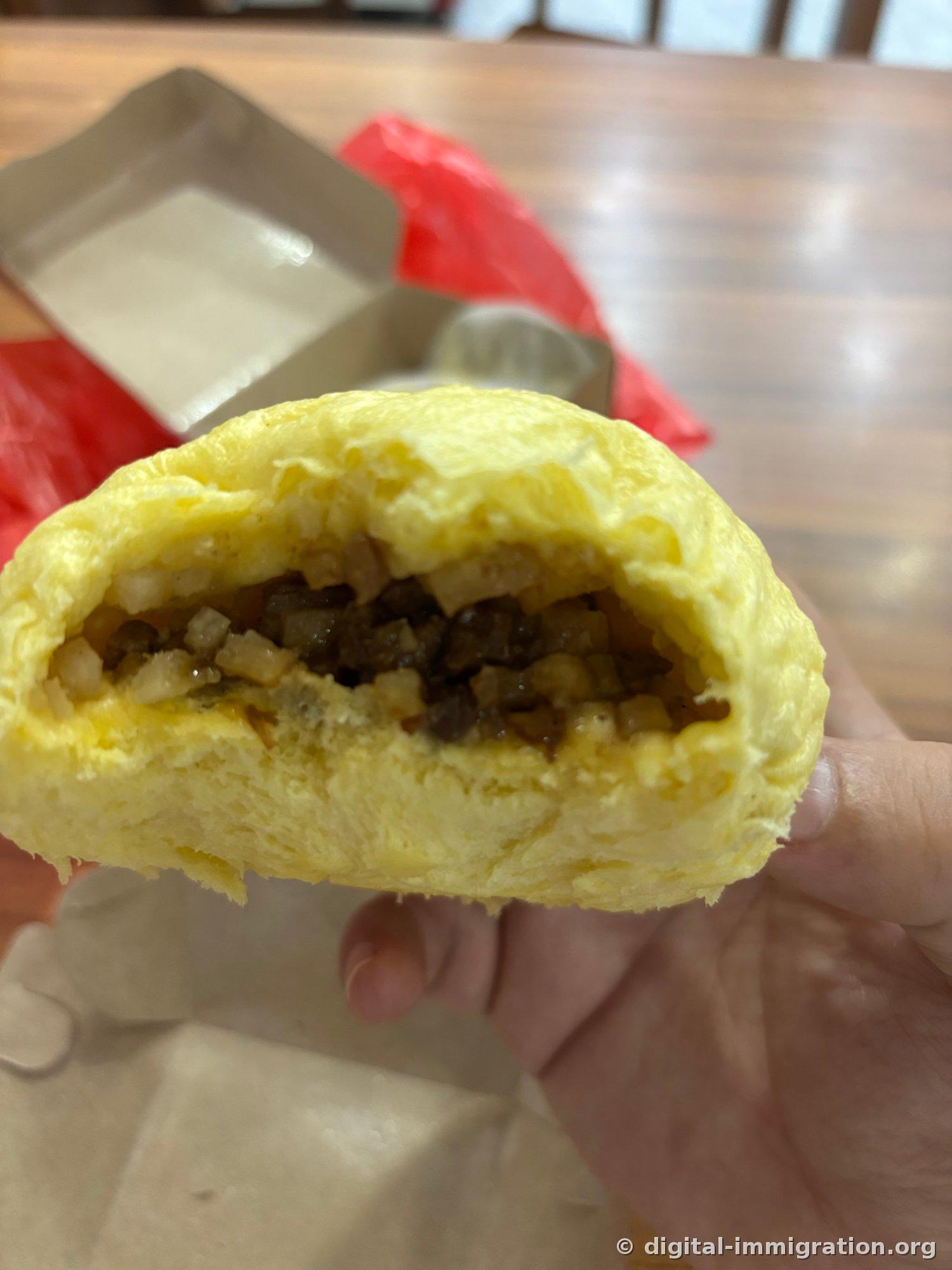
When I cut it in half, the filling was packed thick. Ground pork was mixed with what looked like white angled pieces of radish, and oil was seeping through. The seasoning wasn't heavy, and there was a subtle sweetness that seemed to come from the pumpkin dough rather than any sauce. The meat wasn't dry—there was a hint of juice when you bit into it. After one bite, I immediately thought, "I need to order another one." And I actually did. It was really delicious.
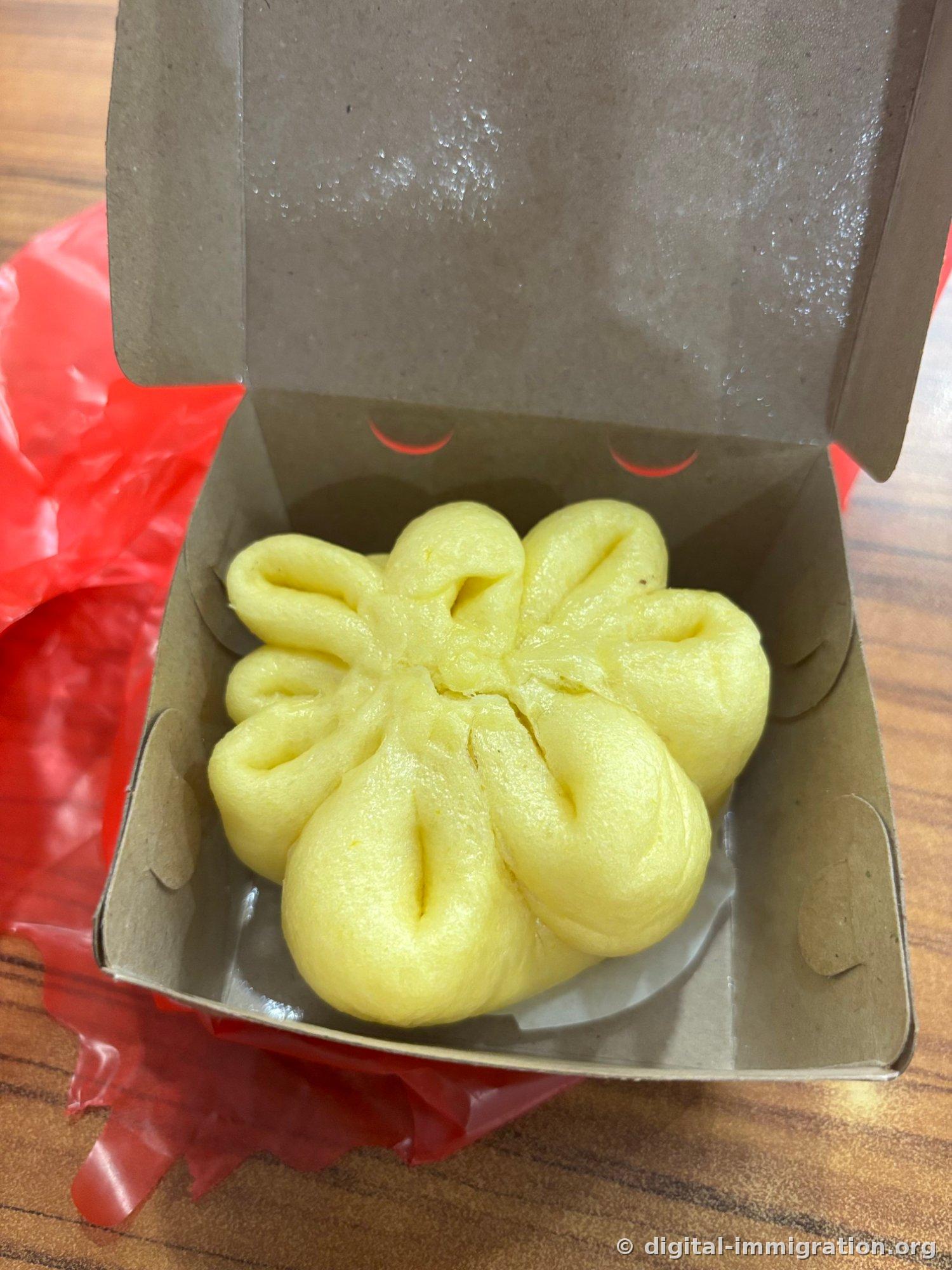
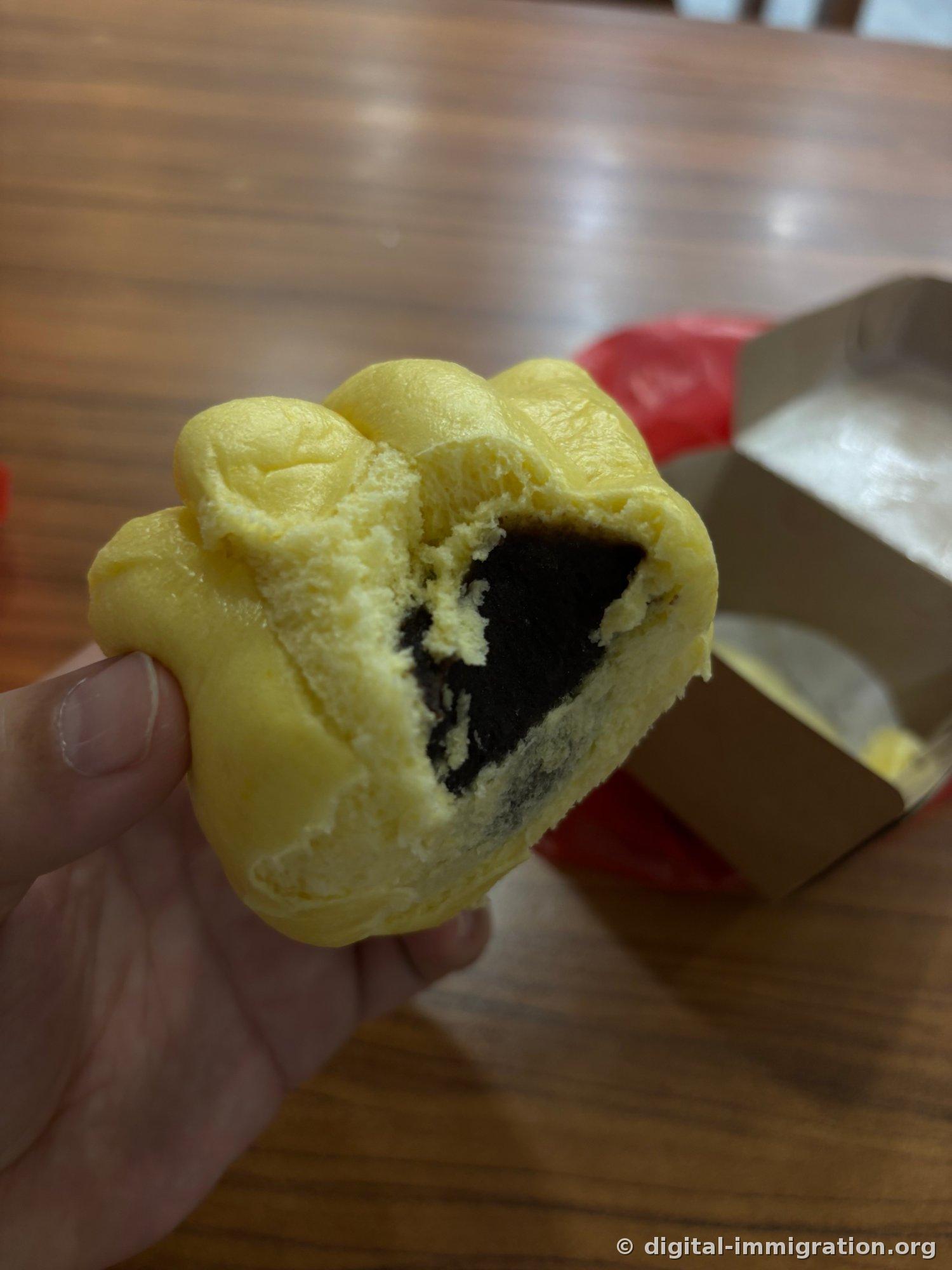
I also grabbed a sweet one. It catches your eye in the display case because of its petal-like pleated shape. When you open the skin, out comes a deep black filling. It's much darker than red bean paste and finely ground, giving it a more nutty quality. It's less sweet than Korean red bean bun filling. Eating this right after the meat bun served as a nice palate cleanser.
Coffee: Kopi Susu Dingin
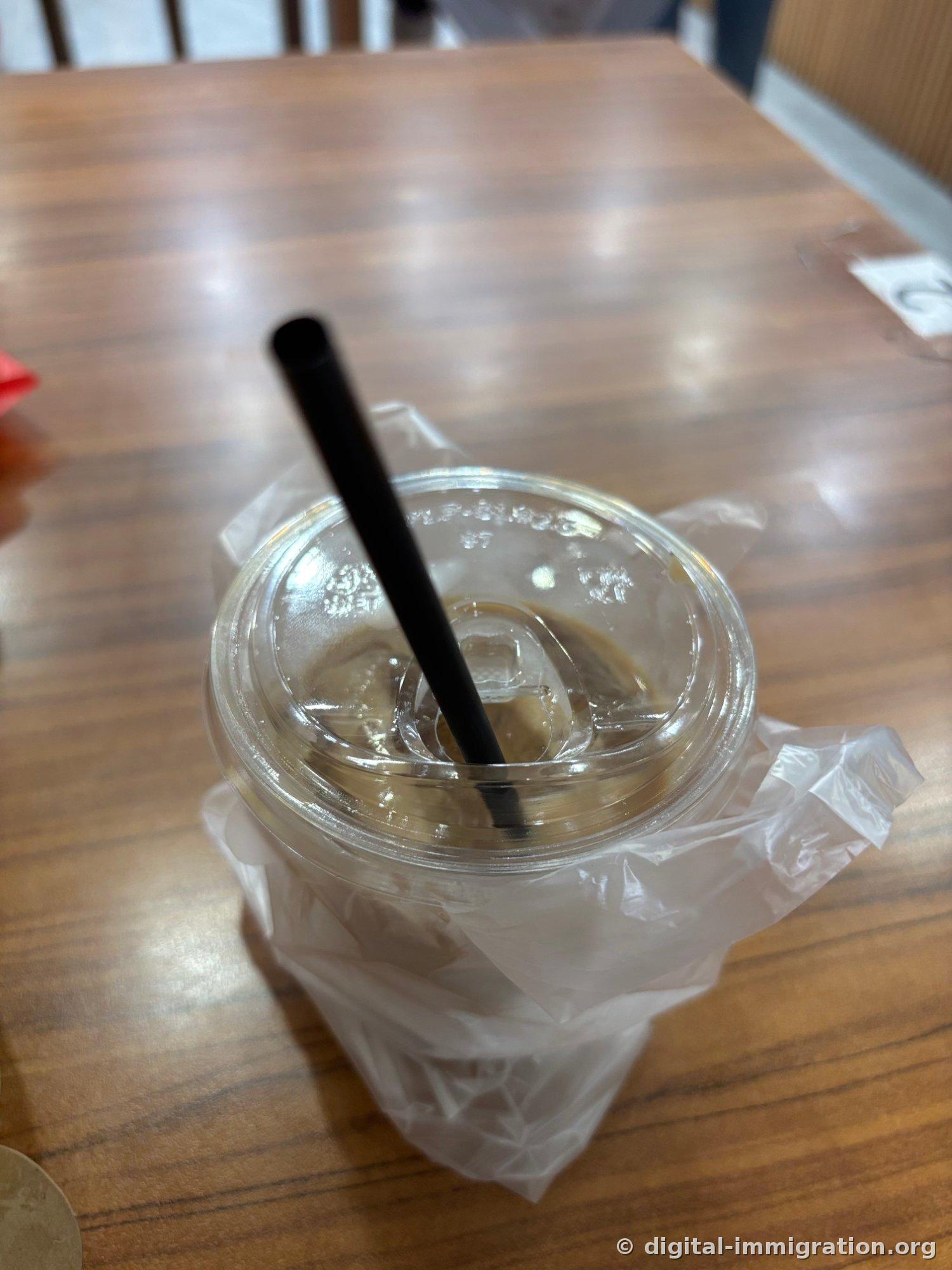
Since the shop's name is coffee shop, I should order coffee too. I chose Kopi Susu Dingin (iced milk coffee), and went with Fresh Milk. There was no upcharge. It came in a plastic cup with a black straw, and even wrapped in a plastic bag. That's the standard packaging at Indonesian local shops—they give you the bag even if you say you're drinking it here at the table. The taste leads with robusta's characteristic heavy bitterness, with milk supporting from behind. If you were expecting the strong sweetness of typical kopi susu, this might taste a bit bland. But paired with the rich meat bun, it was just right.
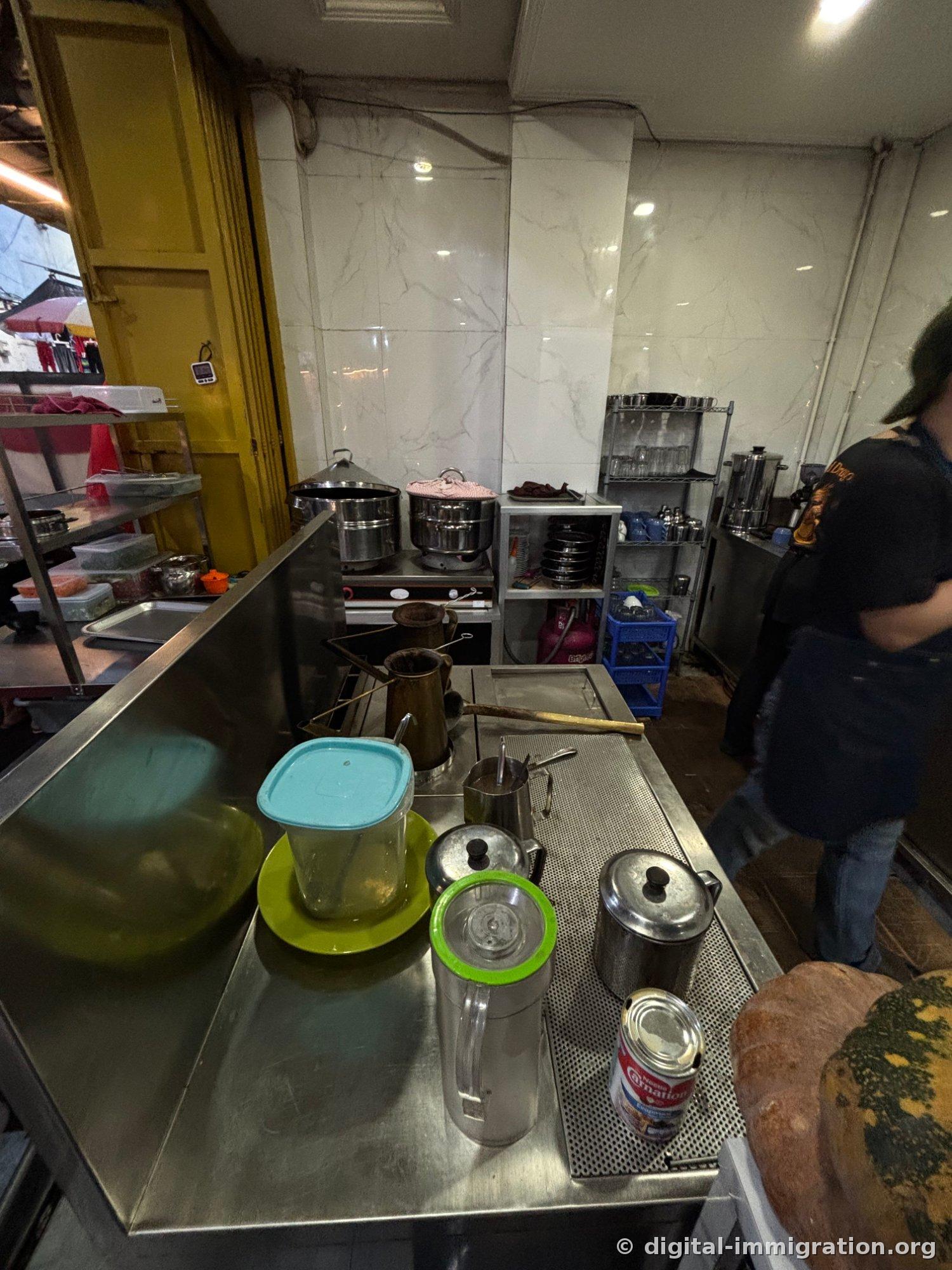
The coffee-making station is the stainless steel counter behind the register. It's not concealed, so you see it all. Two stainless steel steamers sit on the heat, with a long-handled copper kettle and an old coffee pot lined up beside them. A can of Nestlé Carnation sweetened condensed milk sits openly on the work surface, and pumpkins roll around nearby. It feels less like a café and more like a neighborhood kitchen that's been in business for a long time. Some people might not like it, but I prefer seeing the buns come straight out of the steamer with my own eyes.
How Much Did It Cost?
Here's what was printed on the receipt:
- Pumpkin Pao (Babi) 1 — Rp 25,000
- Kopi Susu Dingin (Fresh Milk) 1 — Rp 20,000
- Total — Rp 45,000
That's just over 4,000 won in Korean currency. For the price of an iced latte at a chain café in downtown Jakarta, here you get coffee and a bun. However, by local street vendor standards in the Glodok alleys, it's not exactly cheap. At Rp25,000 per bun, that's similar to the price of a plate of fried rice nearby. But considering it's pumpkin dough with thick filling, the price makes sense.
Prices and hours may change, so I recommend checking in person. When I sat down, it was 5:30 p.m., and there was plenty of seating then. Next time I come, I plan to order the Vietnam Drip listed on the chalkboard and sit with two meat buns. If you're taking it to go, ask for one fresh from the steamer—once it cools, the dough gets compressed, so it's best to eat it within 30 minutes.
ဆက်လက်ဖတ်ရှုရန်
- From under the Glodok Pancoran arch to Petak Enam, three hours of evening in Jakarta's Chinatown
Walking south from Jakarta's Kota Tua, you encounter a gray stone archway that stretches across the middle of the road. "SELAMAT DATANG — KAWASAN GLODOK PANCORAN — CHINATOWN JAKART…
ဂျကာတ · Glodok Chinatown Market - Jakarta National Museum (Museum Nasional Indonesia), Half a Day at the Elephant Museum
On the west side of Merdeka Square, along Jl. Medan Merdeka Barat, sits a low neoclassical white building. It's Indonesia's National Museum, though locals still call it Museum Gaja…
ဂျကာတ · Museum Nasional Indonesia - Four dishes at Ta Wan on the 2nd floor of Harmonie Exchange in Jakarta for 19,000 won
I went to the Harmoni area in central Jakarta on business and grabbed lunch inside the Harmonie Exchange building. Indonesian buildings use different floor numbering than Korea's.…
ဂျကာတ · Harmonie Exchange - Ta Wan