An Evening in Karaköy's Back Alleys — Istanbul's Tea, Cats, Mackerel, and Night Views
Istanbul's Karaköy is a neighborhood that climbs uphill from the southern end of the Galata Bridge. Every time I come to Turkey, I start my first evening here. The reason is simple…
Beyoğlu
Istanbul's Karaköy is a neighborhood that climbs uphill from the southern end of the Galata Bridge. Every time I come to Turkey, I start my first evening here. The reason is simple: just five minutes' walk from the ferry brings you to the smoke of grilled fish, mackerel stands, and tables packed tightly into narrow alleys. This day too, I arrived at sunset and wandered through these few blocks until nearly midnight.
A Street Where One Alley Is Entirely Restaurants
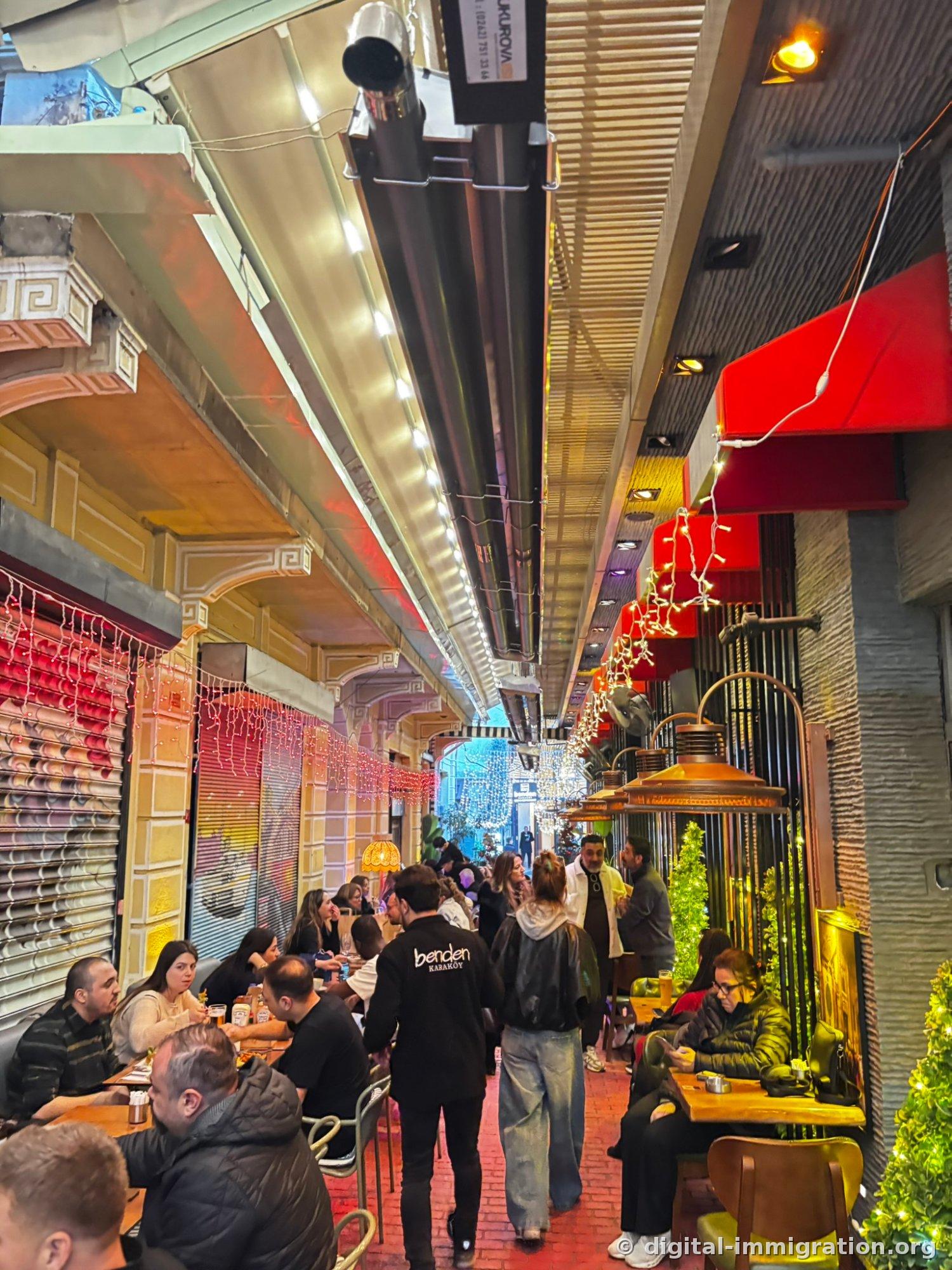
Karaköy's night unfolds not on the main street but in back alleys about 3 meters wide. Awnings hang between buildings on both sides, with gas heaters strung out underneath. For early March evenings, the outside temperature is quite chilly, but thanks to these heaters, servers in short sleeves run back and forth. At my alley, staff in black uniforms with 'benden KARAKÖY' printed on their backs kept passing through, and even closed shops had curtain lights hung up, making the whole alley look like a set with lighting.
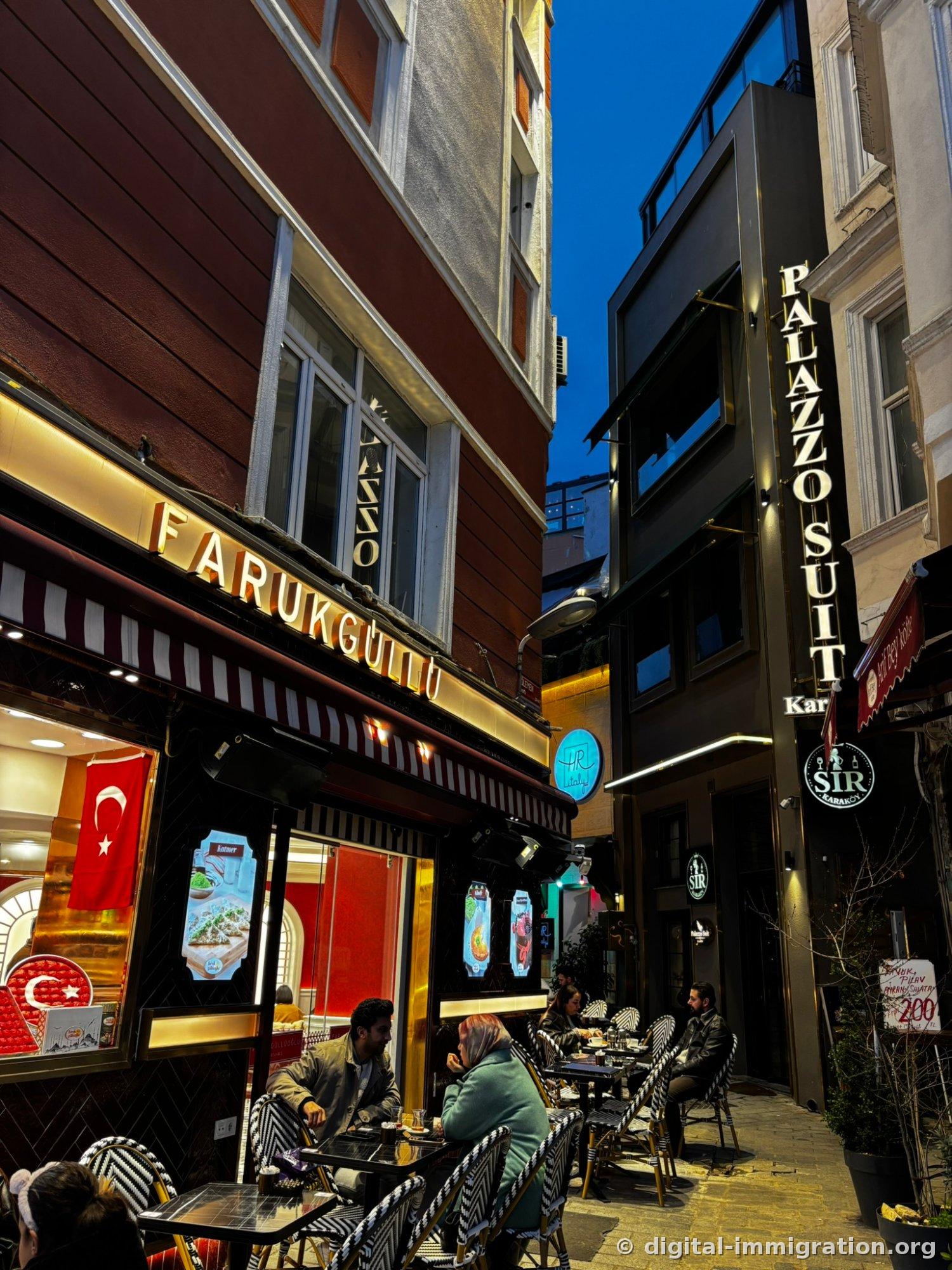
One block higher, the atmosphere changes again. The FARUKGÜLLÜ sign lights up in gold, and across the street, vertical signs like PALAZZO SUIT and SIR KARAKÖY stand against the blue sky. This time of day (20-30 minutes after sunset, the so-called blue hour) is when Karaköy photographs best. On a handwritten sign at the end of the alley was written pilaf, ayran, and salad set for 200TL. Not a bad price for the middle of a tourist area, but menu prices change frequently, so I recommend confirming on site.
Tea (çay) That Comes Everywhere, and a Cup That Doesn't Charge You
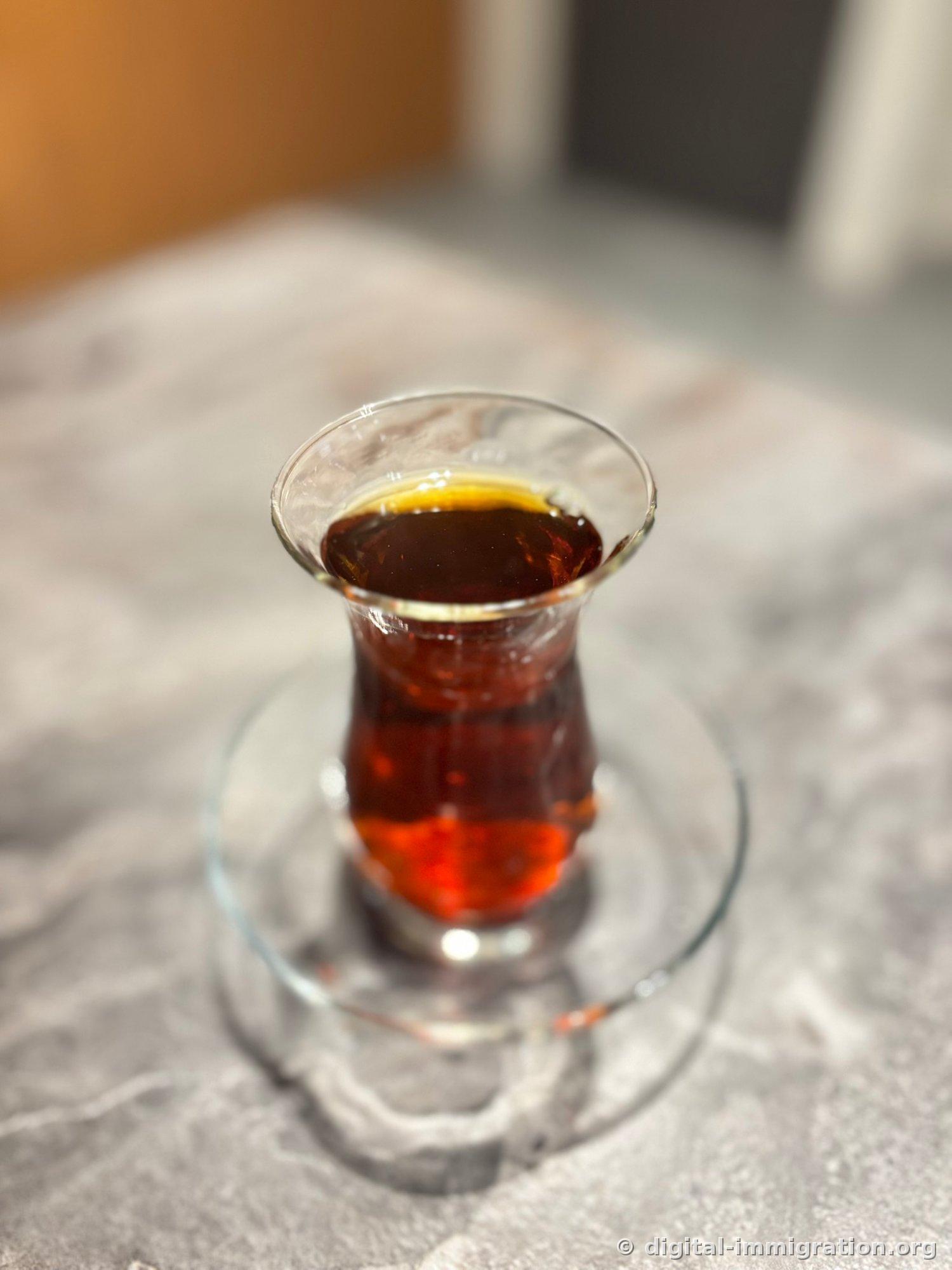
The culture you adapt to fastest in Turkey is tea. Whether it's a carpet shop, money exchange, or even a clothing store, when you sit down, this tulip-shaped glass appears first. When you ask the price, most people wave their hand dismissively. First-time visitors feel uncomfortable thinking "if it's free, must I buy something?", but in reality it's just a greeting. You can leave without buying anything and no one says a word.
However, there's an important distinction not to mistake. Free tea from shops, but tea ordered at cafés and restaurants is of course charged. I've seen multiple people shocked looking at the bill because they couldn't tell the difference. The glass is small so one glass is finished in two or three sips, which is why people easily drink five or six glasses a day. You need to put in about two sugar cubes to get closer to the taste locals drink. On the first day I tried it without sugar but it was so astringent I gave up.
The Real Owner of the Alley, the Cat
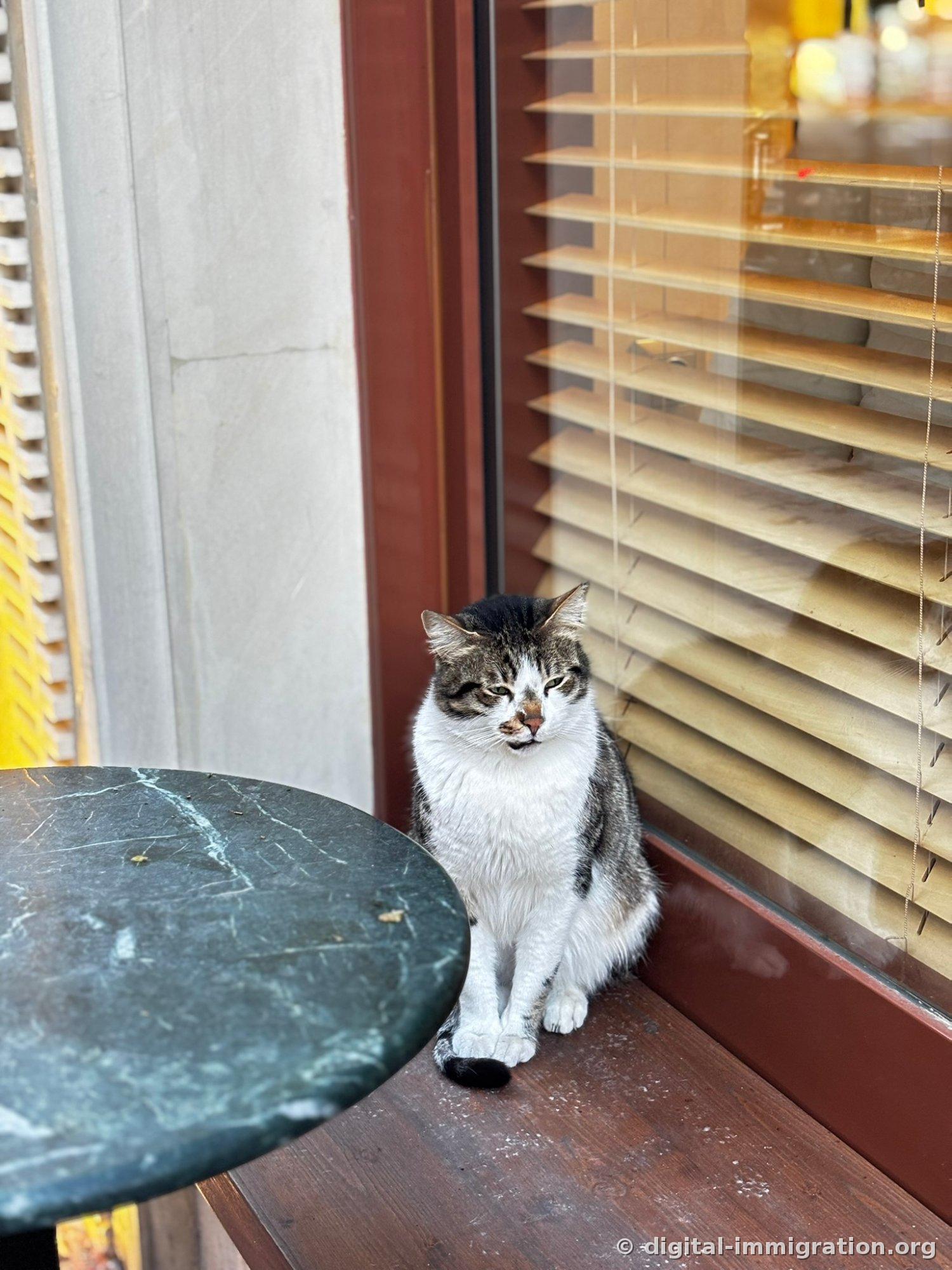
In Istanbul, cats aren't so much stray cats as just residents. Each shop has a water bowl at the door, and no one chases them away. This white and gray spotted cat had claimed the wooden trim of a café window as its own spot. It could tell that the warmth seeping through the blind gaps gathered there. It looked over at me with eyes half-closed, and only slipped away when I reached out to pet it.
Mackerel Wrap Is in the Back Alley, Not on the Bridge
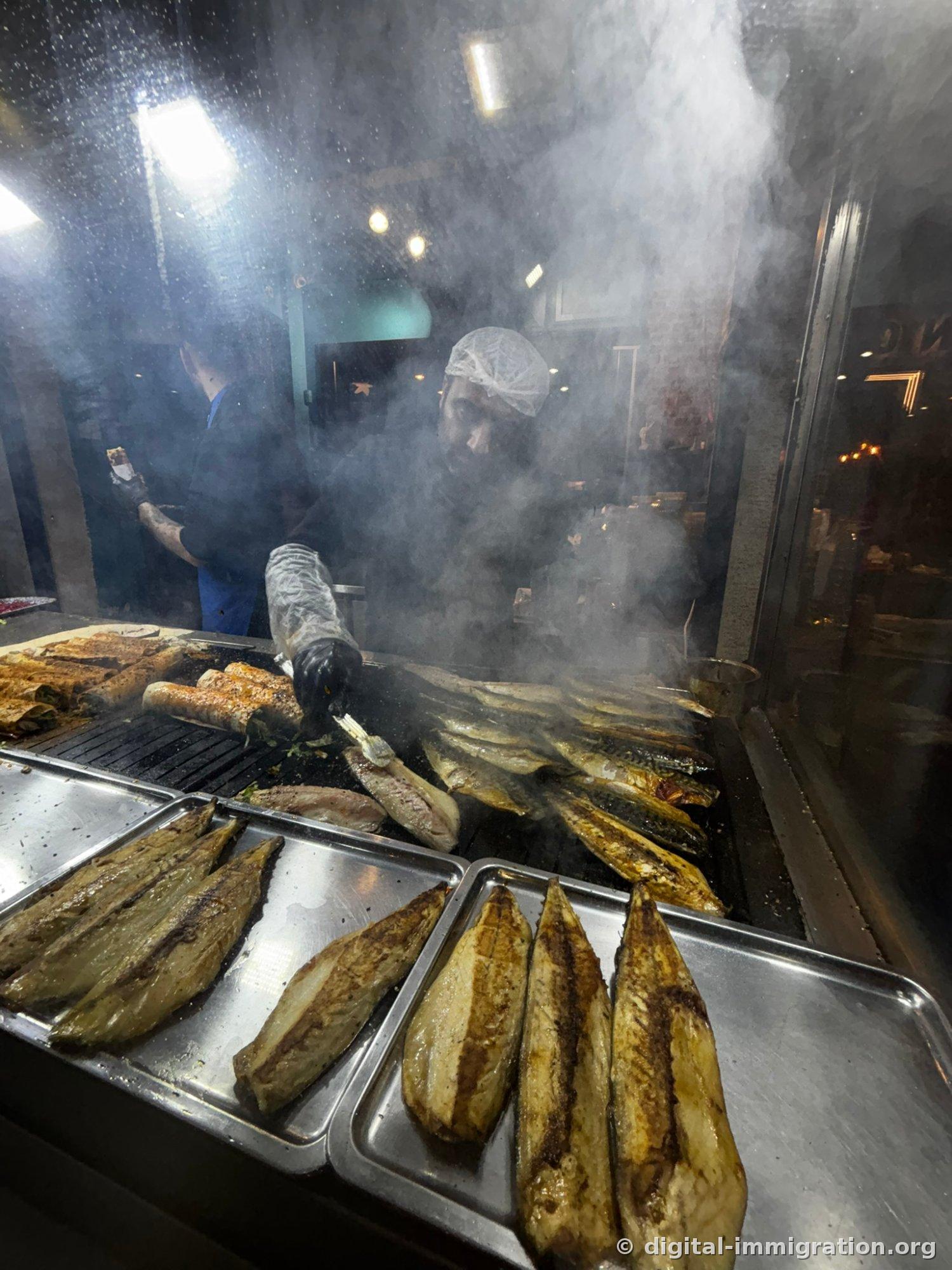
Balık ekmek, commonly called 'mackerel wrap'. The stall on a boat in front of the Eminönü ferry is famous, but I prefer the inside of the Karaköy alley. Through the glass window, mackerel fillets were being grilled whole on an iron plate. A man in a hygiene cap brushed oil on with a brush and smoke burst up, and that smell reached the end of the alley. In the tray next to it, grilled fillets were stacked in layers, and they wrapped them in bread or lavash as orders came in.
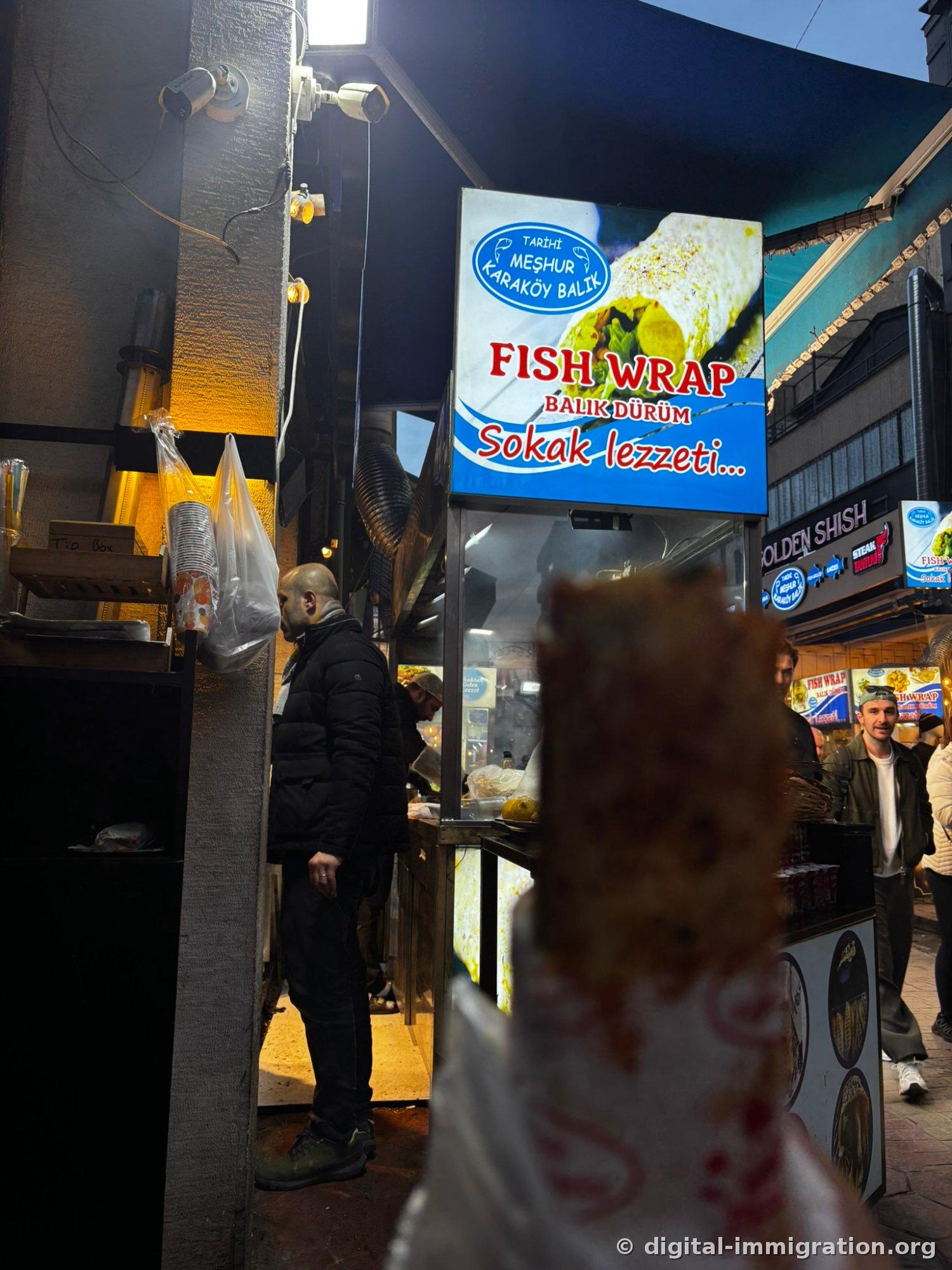
The shop sign read 'TARİHİ MEŞHUR KARAKÖY BALIK / FISH WRAP — BALIK DÜRÜM / Sokak lezzeti(street taste)'. In this alley there are about three or four places with the same concept, and right next door is a kebab restaurant called GOLDEN SHISH. I chose dürüm, a thin wrap, instead of bread. When I picked it up and took a bite, the hot fish oil came first, followed by the cool sensation of lettuce and onion. Be sure to squeeze the lemon — if you don't, a fishy aftertaste lingers. This isn't a matter of taste, it's essential.
Midye Dolma — Be Careful When Counting by Piece
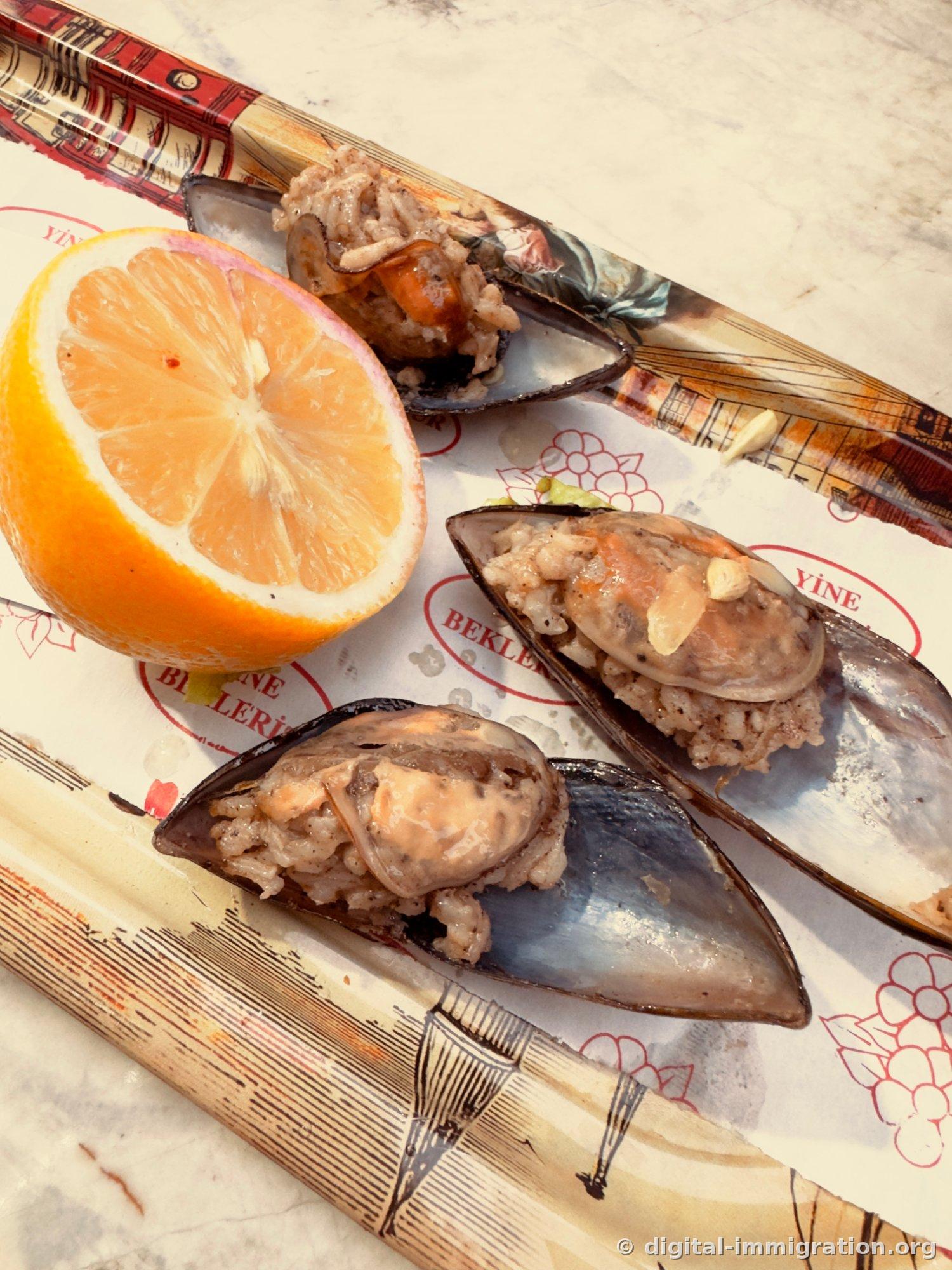
After eating mackerel, the natural next thing is midye dolma, mussel rice. Rice mixed with spices is stuffed into mussel shells and steamed. When the man at the stand spreads the shells like chopsticks and hands them to you, you squeeze lemon on the spot and swallow. The rice is soaked with cinnamon and pepper flavors, and you can feel the pine nuts.
There's one thing beginners often fall for here. This is charged per piece. The man hands them over in rhythm, and before you know it you've eaten more than twenty. On my first trip, I wondered "how many did I eat?" and ended up paying much more than expected. Ask the price per piece before eating, and count as you eat. The price varies by shop and time, so it's best to confirm on site.
In Front of the Baklava Shop Window
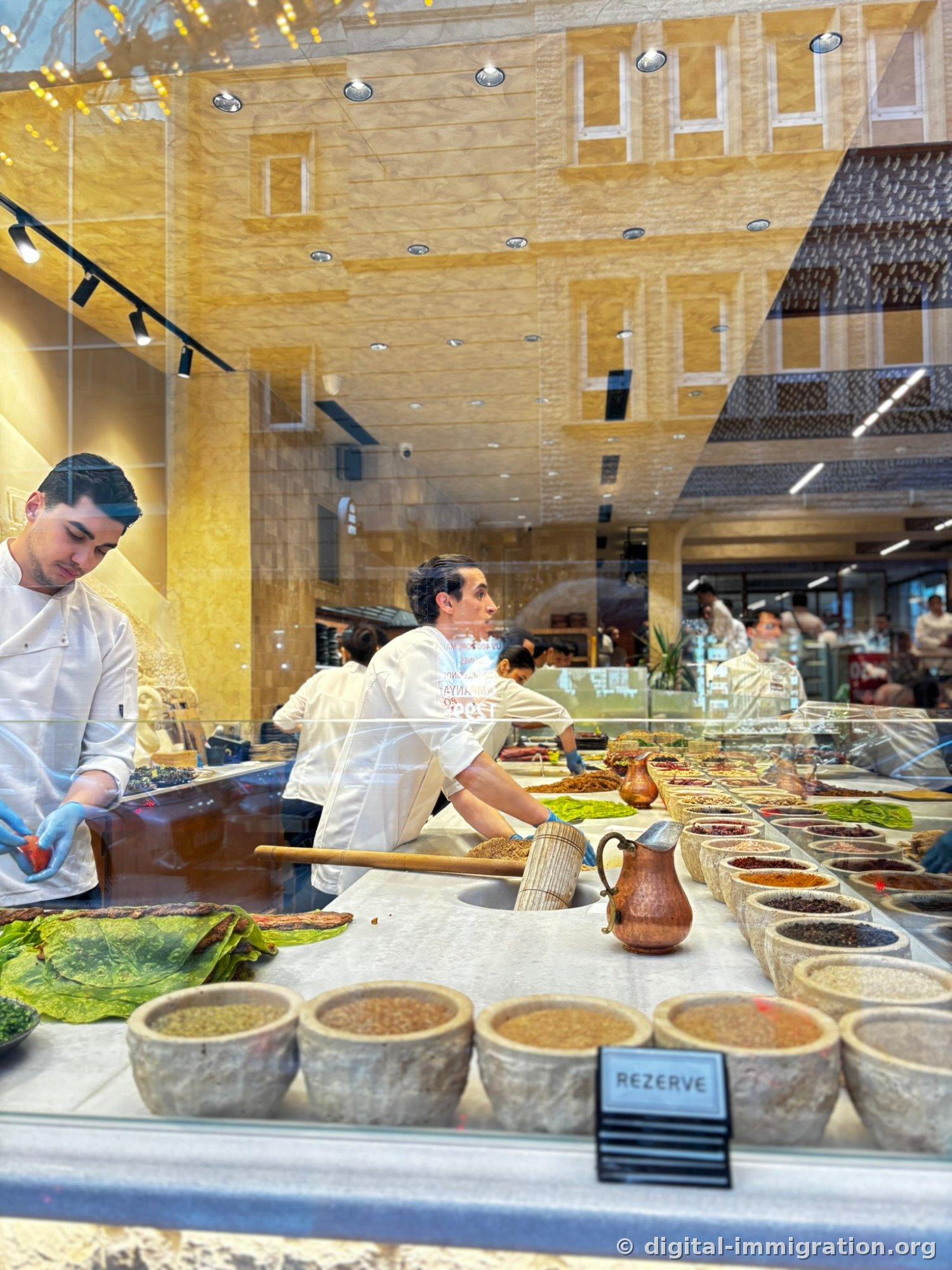
Dessert shops usually show the kitchen right through the glass. Two young staff members in white uniforms and blue gloves stood in front of a work table, and on the marble counter were stone bowls lined up. Inside were ingredients sorted by color like pistachio powder, sesame, pepper, dried chili, and corn kernels, with wooden mortars and copper kettles arranged as props. Between the front bowls was a sign reading 'REZERVE (reserved seating)'. I took the photo through the glass so the yellow building across reflected straight in — you can reduce this kind of reflection by pressing the lens as close to the glass as possible.
Night Market Cheese Stand — Prices Are All Posted
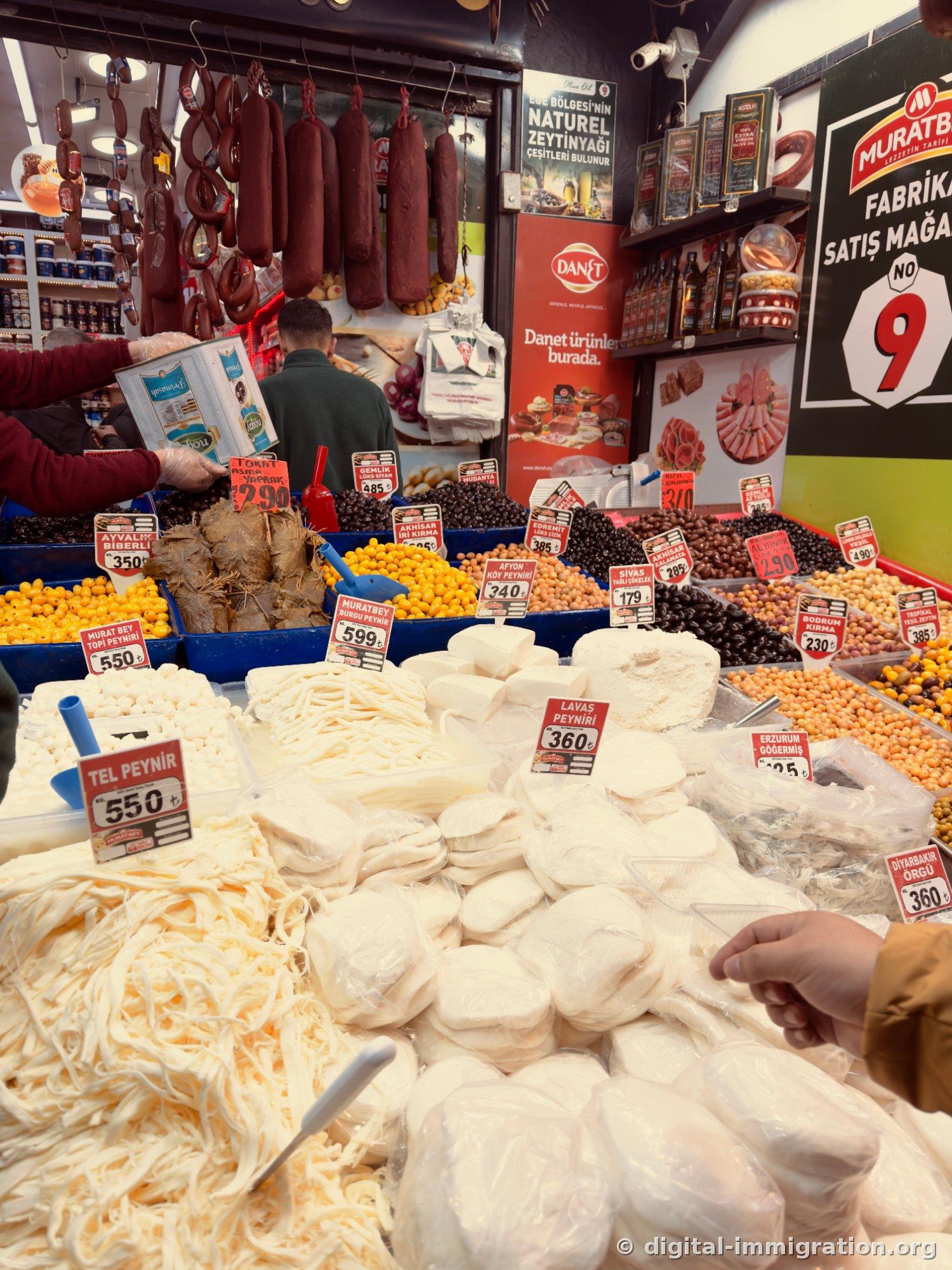
The place I spent the most time in this neighborhood wasn't actually a restaurant but a cheese and olive stand. Soudjouk sausages hang from hooks in the ceiling, and below are price tags in kilogram units stuck in thick with red signs. Thanks to these signs, there's no need to haggle — it's not a structure where different prices are quoted for tourists.
The prices attached that day (per kg) were as follows. Tel peynir (string cheese that tears like thread) 550₺, Muratbey topi peyniri 550₺, Burgu peynir (twisted cheese) 599₺, Lavash peyniri 360₺, Diyarbakır örgü (braided cheese) 360₺, Afyon köy peyniri 340₺, Sivas yaylagütü çökelek 179₺. For olives: Gemlik lüks siyah 485₺, Edremit 385₺, Bodrum krema 230₺, Aybastrak biber 350₺, Tokat grape leaf (asma yaprak) 290₺. Of course this was the price on the day I went and it changes with exchange rates and time.
If you actually try some, tel peynir is salty. If you buy it thinking of it as a 'cheese snack' like in Korea, you'll be disappointed. You should think of it as something to eat in the morning with bread, tomato, and cucumber, and if you ask for 100-200g in small amounts, they'll cut it for you.
Location and Getting Around — Why You Should Take the Ferry
These alleys are a 3-5 minute walk from the Karaköy ferry terminal. The coordinates on the map below are in the middle of the range I wandered all evening.
When crossing over from the Old City (Eminönü), I strongly recommend taking the ferry (şehir hatları) over the subway or tram. The fare is just tens of lira when you tap with an Istanbul Card, and it takes just over 10 minutes, but in those 10 minutes the entire skyline of this city passes by. Get an Istanbul Card at vending machines in front of ferry terminals or stations, pay for the card and load it up, and multiple people can tap the same card multiple times.
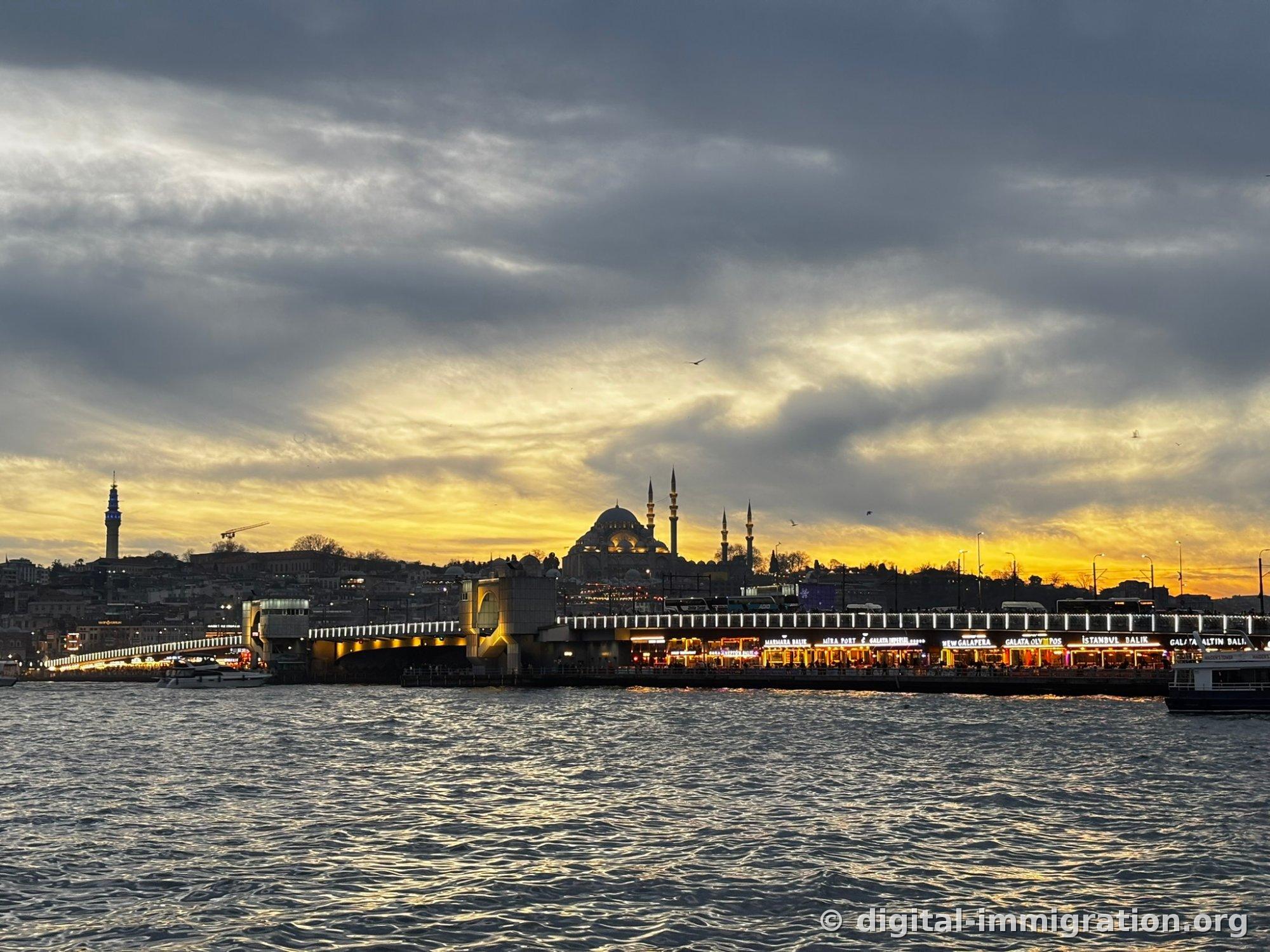
Looking toward the Galata Bridge at sunset, the signs of the fish restaurants on the lower deck of the bridge (names like MARMARA BALIK, GALATA OLYMPOS, İSTANBUL BALIK) light up orange in a line, and behind them the silhouette of the Süleymaniye Mosque sits on the yellow sky. That day thick clouds hung over, and instead the sky only burned yellow on the lower side.
What Remains in the End Is a Mosque Floating on Water
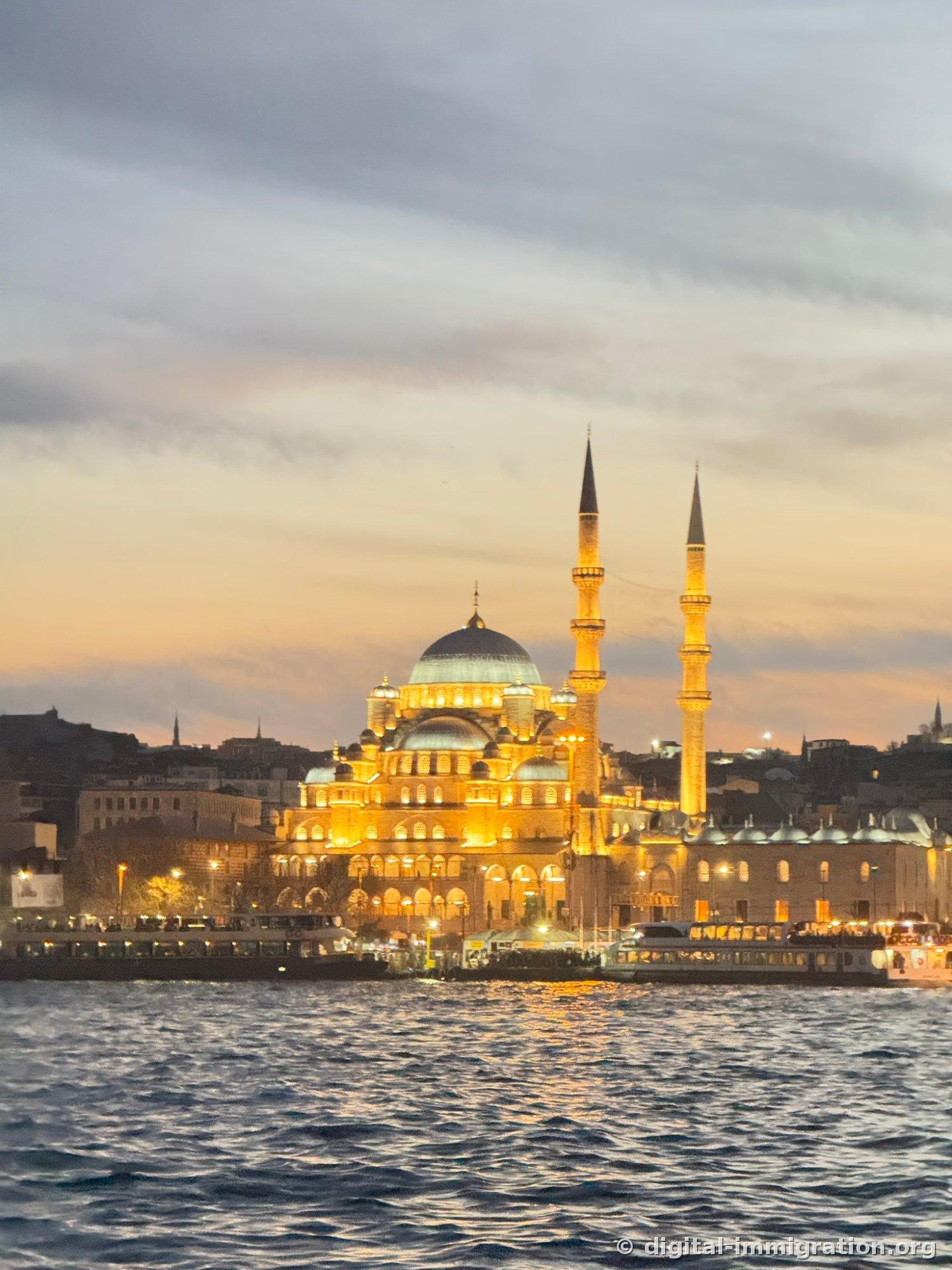
When crossing to the other side by boat, the Yeni Cami (New Mosque) was lit up entirely. Two minarets stood in gold, and the dome looked bluish because of the remaining sky light. Below that, passenger ships were moored with lights on, and the waves broke their light into pieces. The photo was slightly shaky because of the moving boat, but that night I didn't regret it much.
If I have a day left in Istanbul, I'd rather spend 6 pm to 10 pm entirely in Karaköy than check off a sightseeing list. A few cups of free tea, one cat on a windowsill, a hot mackerel wrap in my hand, and a mosque floating on water. These four things are enough for a day, and then some.
Baca seterusnya
- Cerita merebus Shin Ramyun Black di bukit depan Zemi Hotel Cappadocia, Goreme pada bulan Februari
Musim panas adalah musim puncak di Goreme, Cappadocia, Turki. Saya pergi pada bulan Februari. Suhu pagi turun di bawah nol, dan ada lapisan putih halus—entah embun beku atau salju—…
Göreme - Menghabiskan petang di Yuvam Shisha Nargile Kafe di atas tebing Kaleici Antalya, memandang pelabuhan
Kota tua Kaleiçi di Antalya, Turki, memiliki gang-gang berlapis di dalam tembok benteng yang berbelit seperti labirin, sehingga ketika pertama kali datang, sulit mengetahui di mana…
Antalya · Yuvam Shisha Nargile Kafe - Pelabuhan Yacht Kaleiçi Antalya — Sehari Melihat Pelabuhan di Bawah Tembok Benteng dari Tiga Sudut Pandang Berbeda
Kaleiçi, kota tua di Antalya Turki, memiliki tembok benteng yang tetap kokoh di atas tebing, dan di bawah tebing itu sepenuhnya adalah pelabuhan yacht. Di peta terlihat seperti 'sa…
Antalya · Yuvam