A Half-Day on the Tan Kim Seng Bridge Over the Melaka River — I Walked Through the 'Little Venice' of a UNESCO Heritage City
Malaysia's Melaka old town is designated as a UNESCO World Heritage Site. Listed together with Penang's Georgetown as 'Historic Cities of the Strait of Malacca,' walking through it…
Melaka · Jambatan Tan Kim Seng
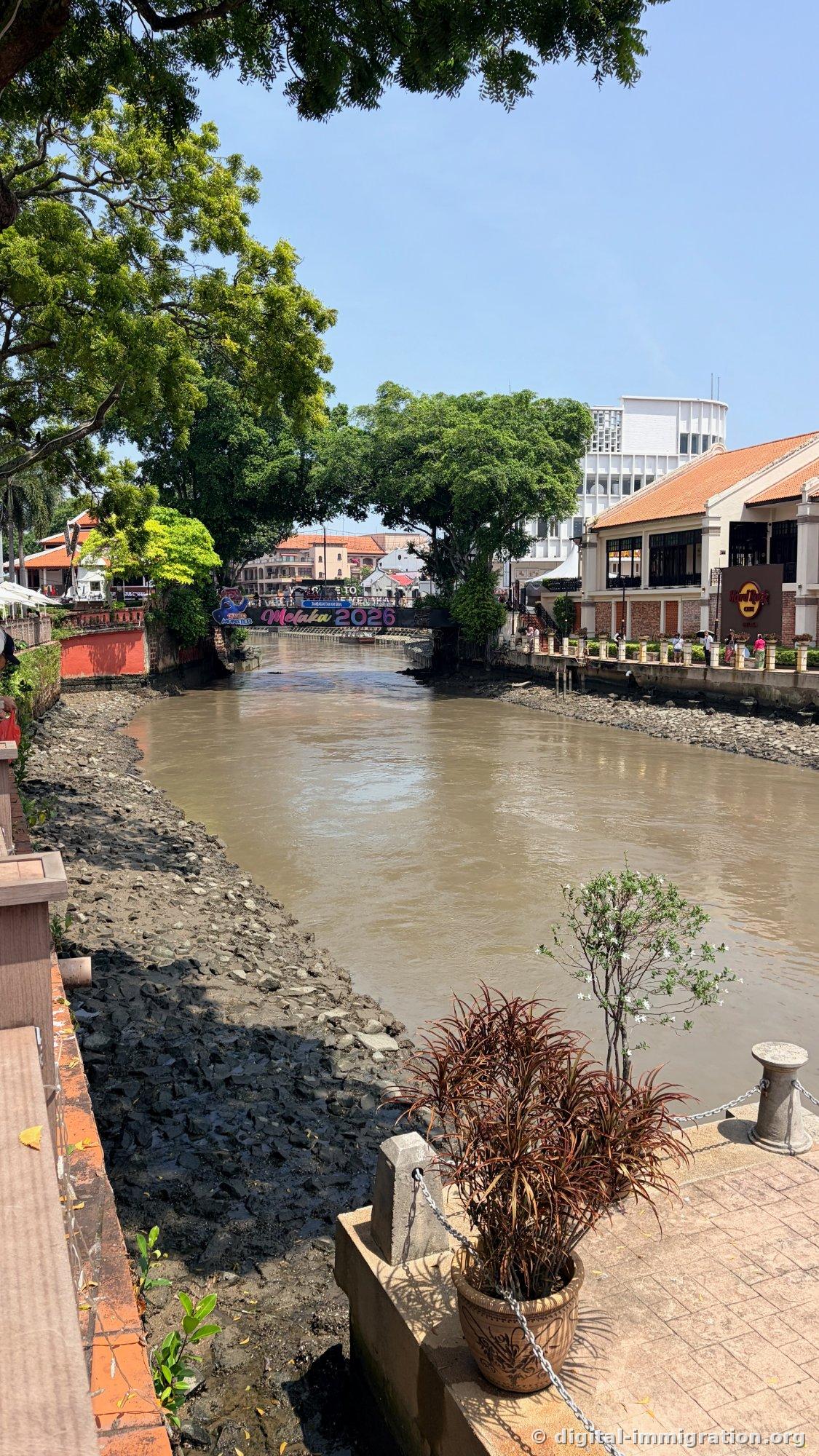
Malaysia's Melaka old town is designated as a UNESCO World Heritage Site. Listed together with Penang's Georgetown as 'Historic Cities of the Strait of Malacca,' walking through it in person makes you understand why. The Melaka River divides the city down the middle, with low shophouses and commercial buildings lining both banks. It's an exaggeration to call it Venice, but the structure of commerce on both sides facing each other across the waterway is certainly similar. The place where I lingered was Jambatan Tan Kim Seng, a bridge spanning the river. Rest your arm on the railing there and both sides of the river come into view at once.
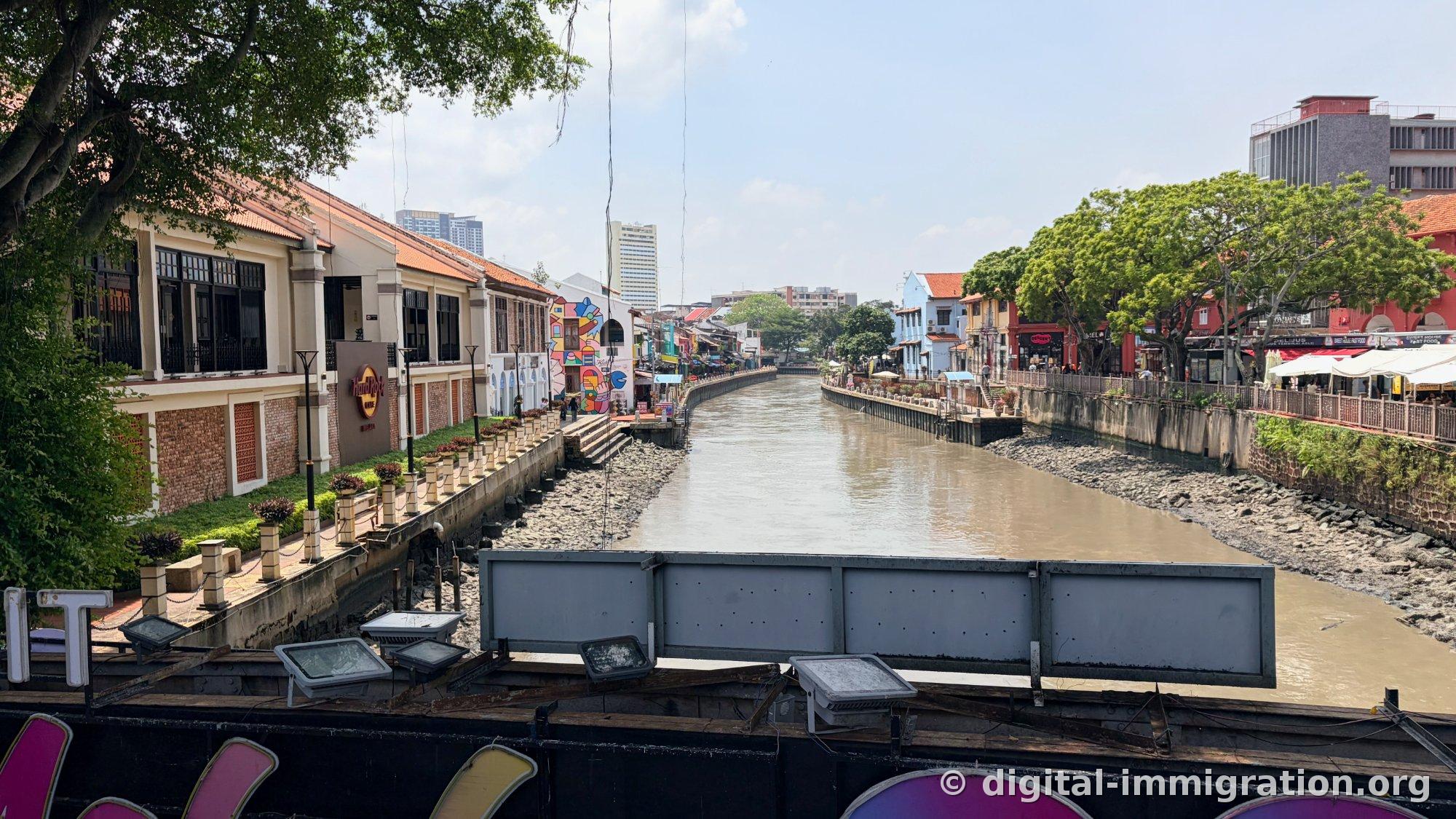
As you can see in the photos, the water is the color of milk in coffee. Visitors arriving for the first time often ask, 'Why is the water so murky?' The river is connected to the sea and is affected by tides. On the day I visited, the water had receded significantly, exposing tidal flats and rocks covered with oyster shells below both embankments. A smell drifts up as well. It's the distinctive briny smell of tidal mud—bearable, but different from the 'romantic waterway' one might imagine from photos. It's good to know this going in.
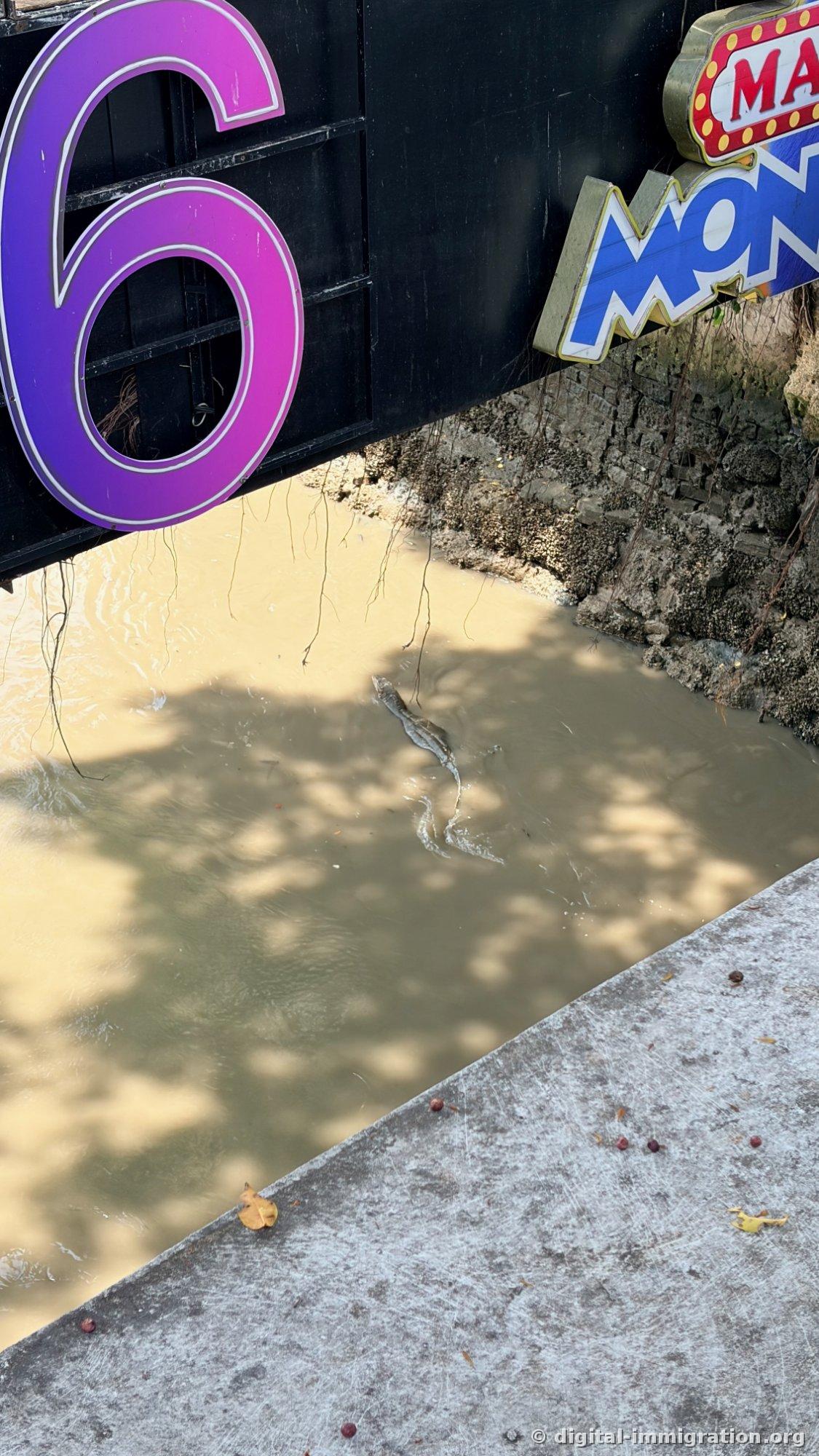
What I Encountered While Gazing at the River — A Lizard
As I stood at the railing gazing down at the river, something long swam through the currents. At first, I thought it was a branch, but it was clearly moving with a side-to-side tail motion. It was a water monitor lizard. It passed casually just below the signs of the riverside shops, mere meters beneath people's feet. Even in the heart of this tourist area lined with cafes and souvenir shops, the river remained a channel where wildlife lives. It's best not to lean over the water's edge when walking along the river.
Can't Survive Without a Parasol — And a Person in a Mascot Costume in This Heat
To be honest, the most essential item in this neighborhood isn't a map or cash—it's a parasol. Crossing a shadeless square in daytime, your scalp burns. With the humidity so high, even a 10-minute walk leaves your shirt damp on your back. Local people of all genders use umbrellas as parasols. The fountain photo below even captures someone with an open black umbrella. Don't try to avoid looking like a tourist—just bring an umbrella. On my first day, I didn't, and I got a headache by afternoon and fled to a cafe.
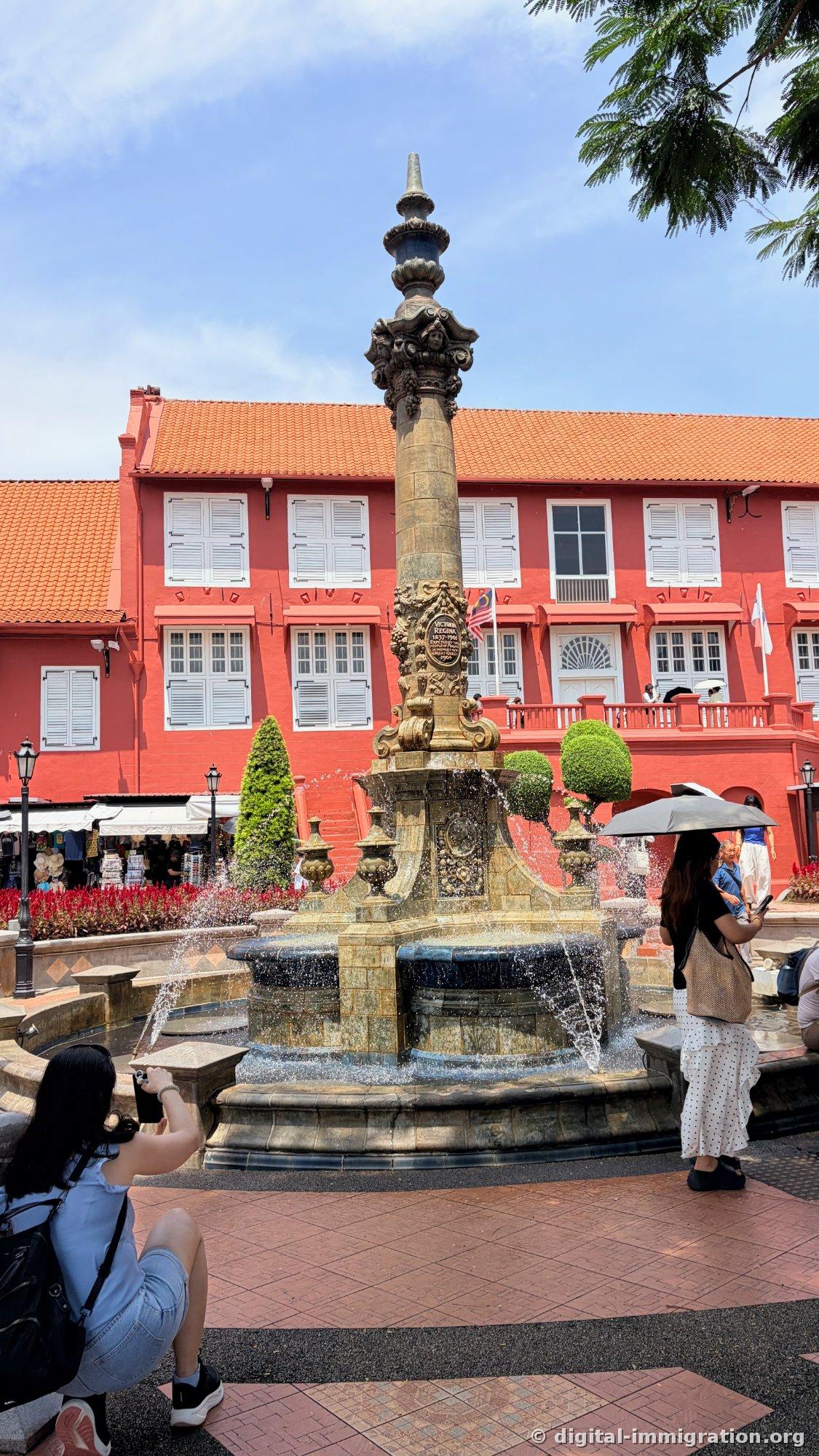
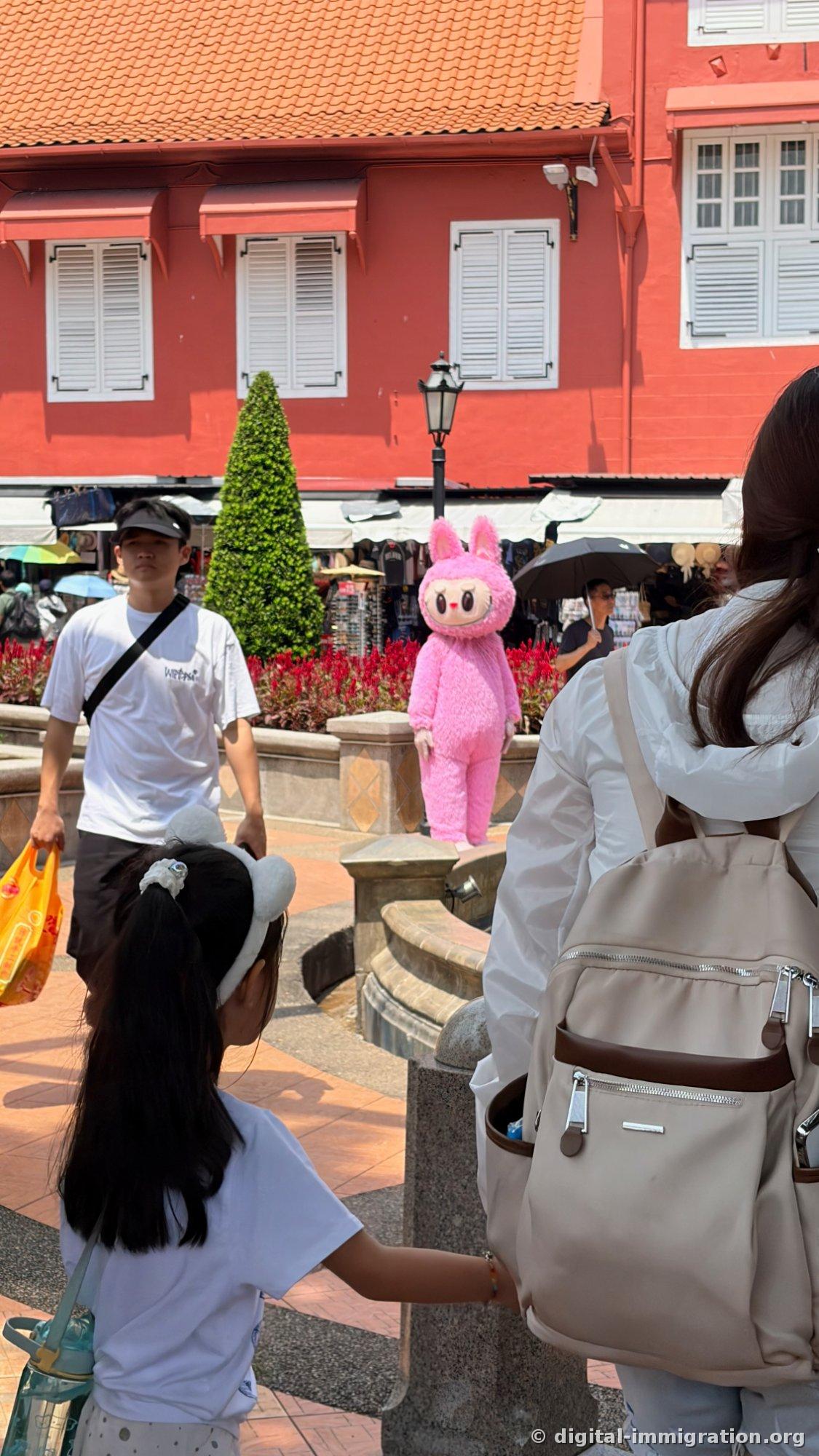
Yet there was someone standing in a full mascot costume in this heat. In front of the flower bed beside the fountain, a pink furry costume. It's a trendy character design that covers everything from head to toe. There they were in the scorching midday heat—well over 35 degrees by feel—standing and taking photos with children. A passing girl tried to pull an adult's hand toward them, and adults watched from in front with parasols open. Watching made me want to buy them a cool coffee. It's customary to tip after a photo, so if you take one, a few ringgit in bills is appropriate.
Mohon Kad Ketibaan Digital (MDAC)
The Red Square Beyond the Bridge — The Dutch Square Area
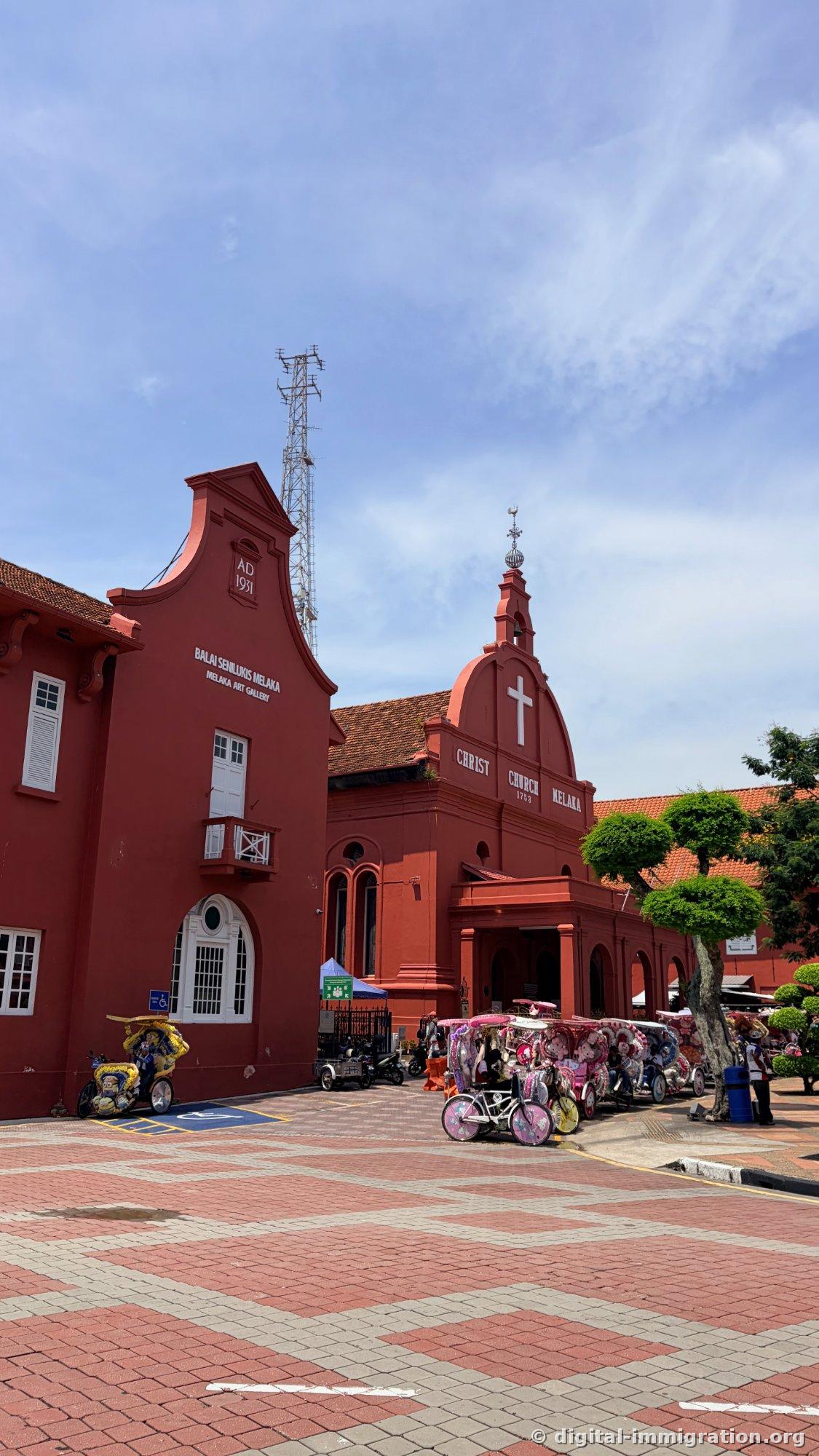
Just beyond the Tan Kim Seng bridge, crossing the river and walking a bit, you encounter a cluster of red buildings. It's Christ Church Melaka, the structure that appears most frequently in Melaka tourism photos. The front gable bears 'CHRIST CHURCH MELAKA 1753,' and attached to its left is the Melaka Art Gallery (Balai Senilukis Melaka) marked 'AD 1931.' The 18th-century Dutch-era church and the 20th-century building are both painted the same red, appearing as one unified structure.
Trishaw (bicycle rickshaws) line up waiting in front of the church. They're covered with character decorations like Hello Kitty and Minions, even lit with LEDs at night. Tastes differ, but I was a bit taken aback the first time I saw them. The combination of a fluorescent pink Kitty rickshaw standing in front of an 18th-century church in a UNESCO heritage city was quite striking. Still, this is Melaka's reality today.
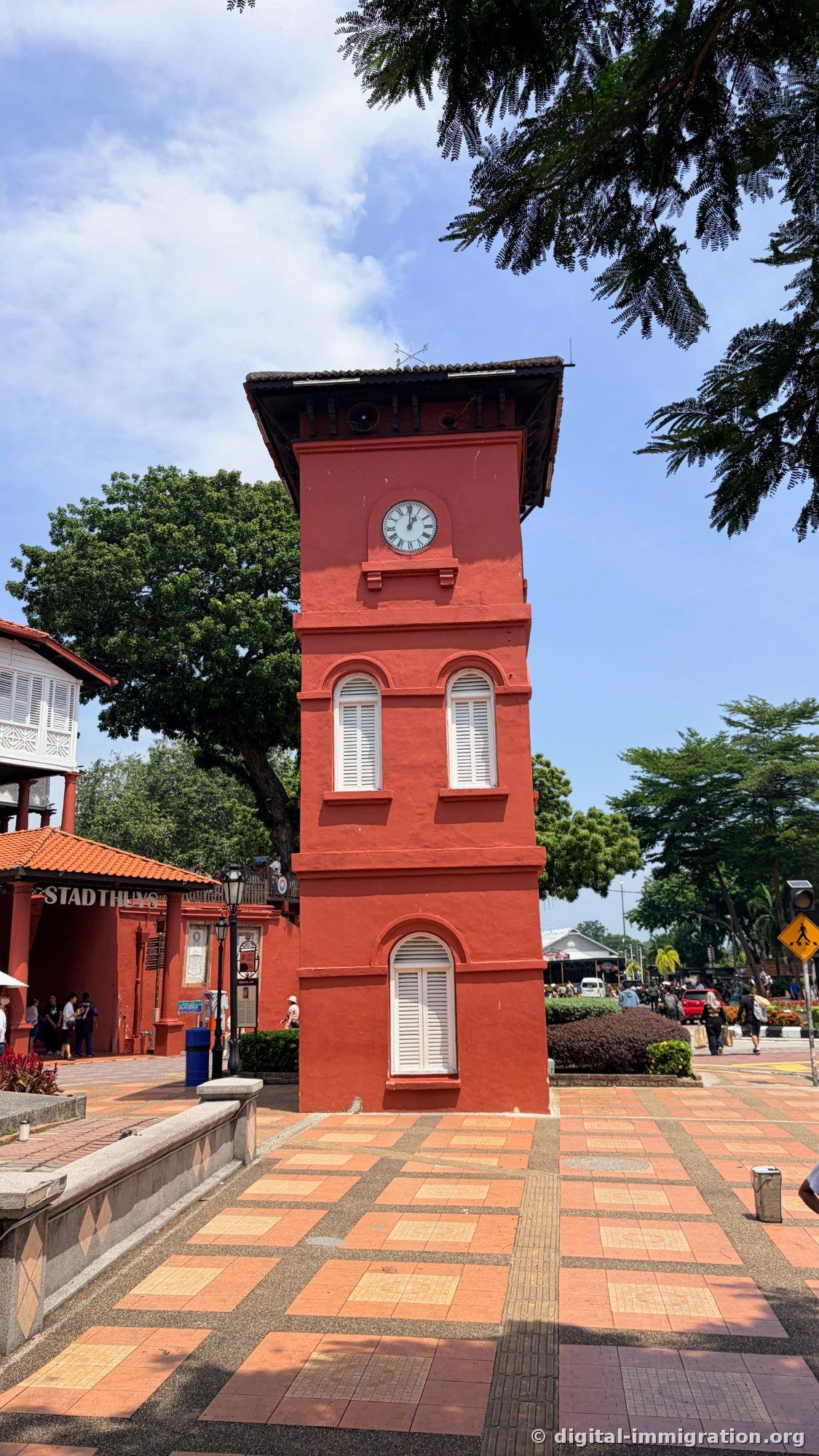
A red clock tower also stands in the same square. 'STADTHUYS' is prominently written on the corridor beside the tower, making it easy to locate. The clock tower itself takes only a few minutes to see, but this spot essentially serves as the reference point for old town walks. Go down toward the river and you'll reach the bridge; go the opposite way up the hill and you'll head toward St. Paul's Church.
Murals in the Riverside Alley, and the Boat Dock
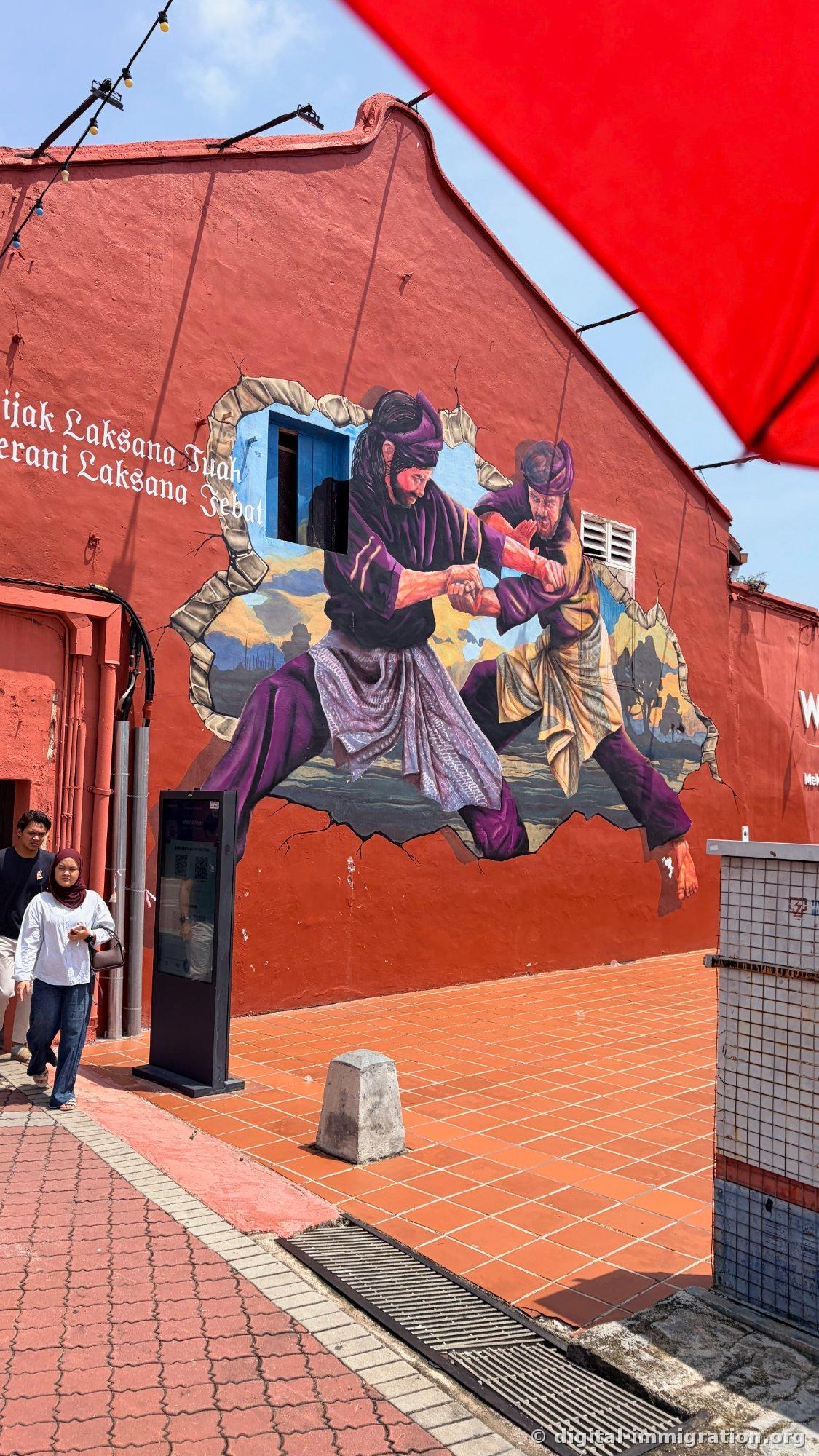
Entering the alley west of the river, you'll find a large mural on the red-painted shophouse wall. It depicts two figures in traditional Malay dress in combat, with text reading "...bijak Laksana Tuah / ...berani Laksana Jebat" beside it. This refers to Hang Tuah and Hang Jebat from Malay classical folklore. It's painted using trompe-l'œil technique, making the wall appear broken with the scene visible inside—quite three-dimensional in person. Strings of lights hang over the alley with a red awning draped across it, so to photograph straight-on, you need to step back a few paces to avoid the awning's shadow.
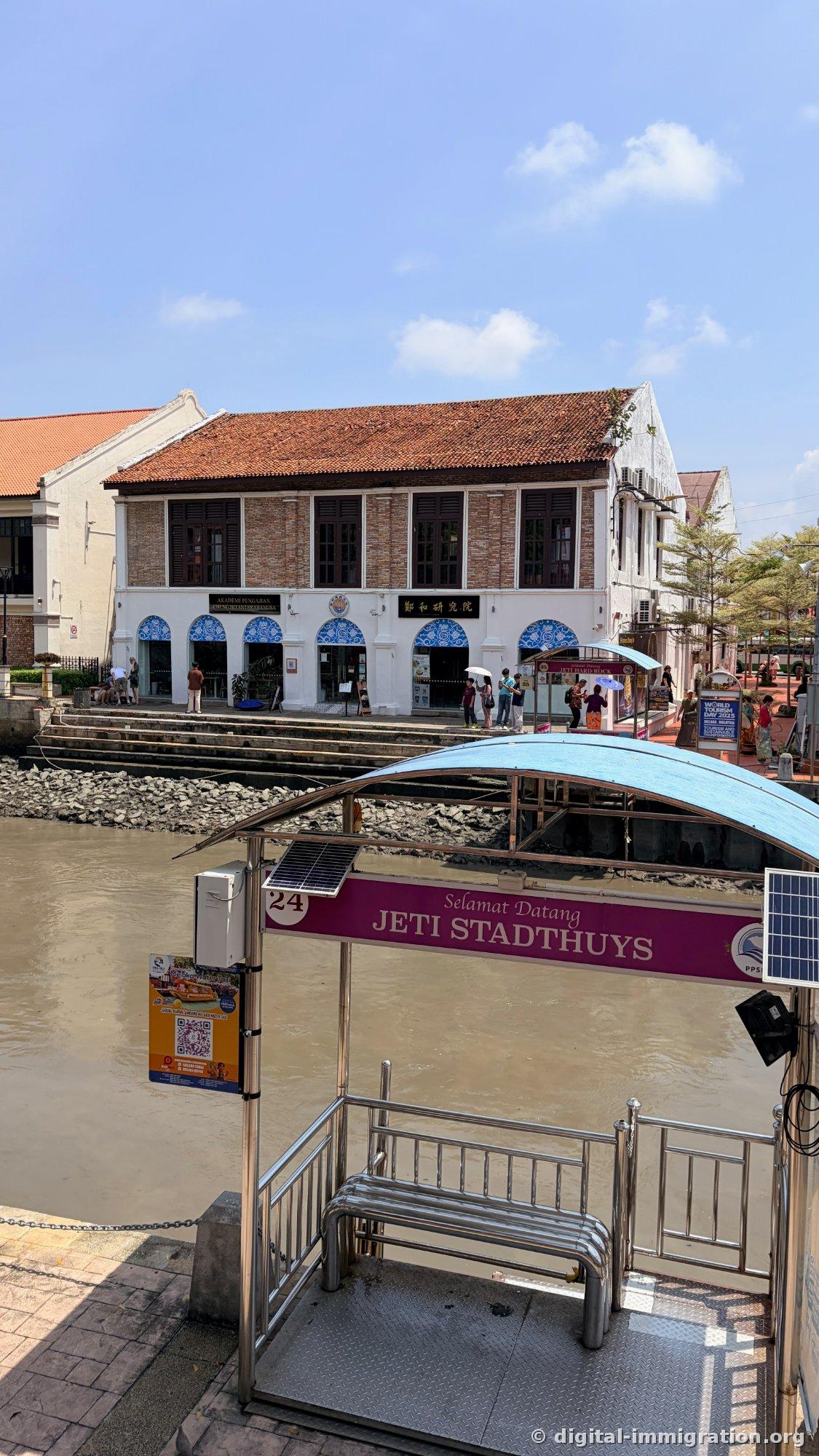
Across the river is 'JETI STADTHUYS,' the river cruise dock. The deep pink sign reads Selamat Datang (Welcome), and stainless steel benches sit beneath a blue roof with solar panels. The shade is shallow, so not much help while waiting. The white and brick two-story building visible behind the dock is the Cheng Ho Research Academy (鄭和研究院, Akademi Pengajian Cheng Ho Antarabangsa). The facade with its navy-patterned arches is eye-catching. Fares and departure times change seasonally, so it's best to confirm at the ticketing counter on-site.
Practical Notes After My Visit
- Parasol or umbrella is essential. A folding one is sufficient. It also covers you in case of afternoon showers.
- Keep routes short and shade-focused. From the bridge → Dutch Square → clock tower → riverside mural alley is all within 5–10 minutes on foot. The problem isn't distance but sun exposure, so it's better to alternate: 30 minutes walking, 30 minutes inside.
- The river changes completely with the tides. The scenery looks entirely different at high and low tide, so if photography is your goal, aim for high tide times.
- Watch for wildlife near the water's edge. Besides lizards, there are many birds and cats along the river. Don't lean on railings with food.
- Verify prices on-site. Cruise, trishaw, and museum entrance fees change frequently, so writing them here would end up giving you wrong information.
On the way back, I stood on the bridge again. The water was still murky, and lights were beginning to come on in the shops on both sides. More than the UNESCO heritage title, what stayed with me was the smell of tidal mud, the sun beating down on my scalp, and the person in the pink furry suit standing beneath it. Next time I come, I plan to stand here again at high tide.
Baca seterusnya
- Morning at the Traditional Market Next to Johor KIP Mall, Mangoes 2kg for RM10
On the outskirts of Johor Bahru, Malaysia, on the way up toward Kulai, there's KIPMall. You walk in expecting an air-conditioned shopping center like a typical mall, but instead yo…
Johor · KIPMall - Kuala Lumpur Monkiara Seng Kee Chicken Rice(成記雞飯) — Makan Siang Akhad Pekan yang Sempurna dengan Nasi Minyak
Setiap kali saya ada urusan di kawasan Solaris Monkiara pada akhad pekan, langkah saya hampir selalu mengarah ke restoran ini. Di Kuala Lumpur, papan tanda kedai chicken rice ada d…
Kuala Lumpur · Seng Kee Chicken Rice - Pagi di Pasar Tradisional Kota Tinggi — Timbunan Mangga Hijau dan Wafel RM3.50
Kota Tinggi, Johor, Malaysia. Sebuah pekan kecil yang anda temui ketika berkendara ke timur dari Johor Bahru — tempat yang dalam panduan perjalanan hanya disebut karena air terjunn…
Kota Tinggi