Meiji Shrine, the day I walked 30 minutes into the forest from the heart of Harajuku — Yoyogi, Shibuya Ward, Tokyo
Tokyo's Harajuku Station was crowded as always. Standing on the overpass and looking down, a black bus marked "Adidas Runners Tokyo" was parked on the side of the street, and in th…
Tokyo · Meiji Shrine
Tokyo's Harajuku Station was crowded as always. Standing on the overpass and looking down, a black bus marked "Adidas Runners Tokyo" was parked on the side of the street, and in the plaza toward Yoyogi Park, people were half sitting and half walking. Right next to this noise is the entrance to Meiji Shrine (明治神宮). It's a 3-minute walk away, but once you pass through one torii gate, the sound cuts off completely. This is where first-time visitors are most shocked.
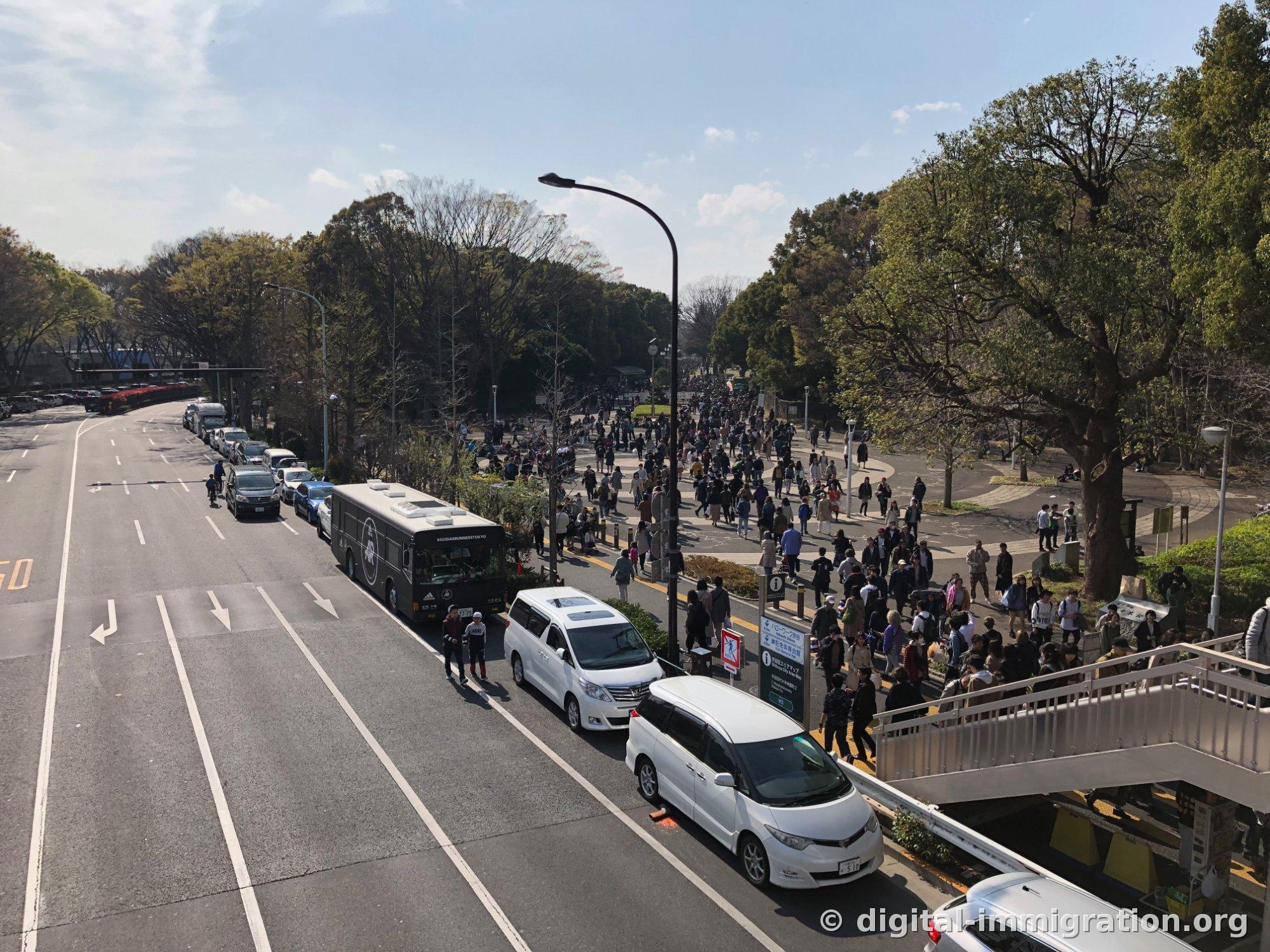
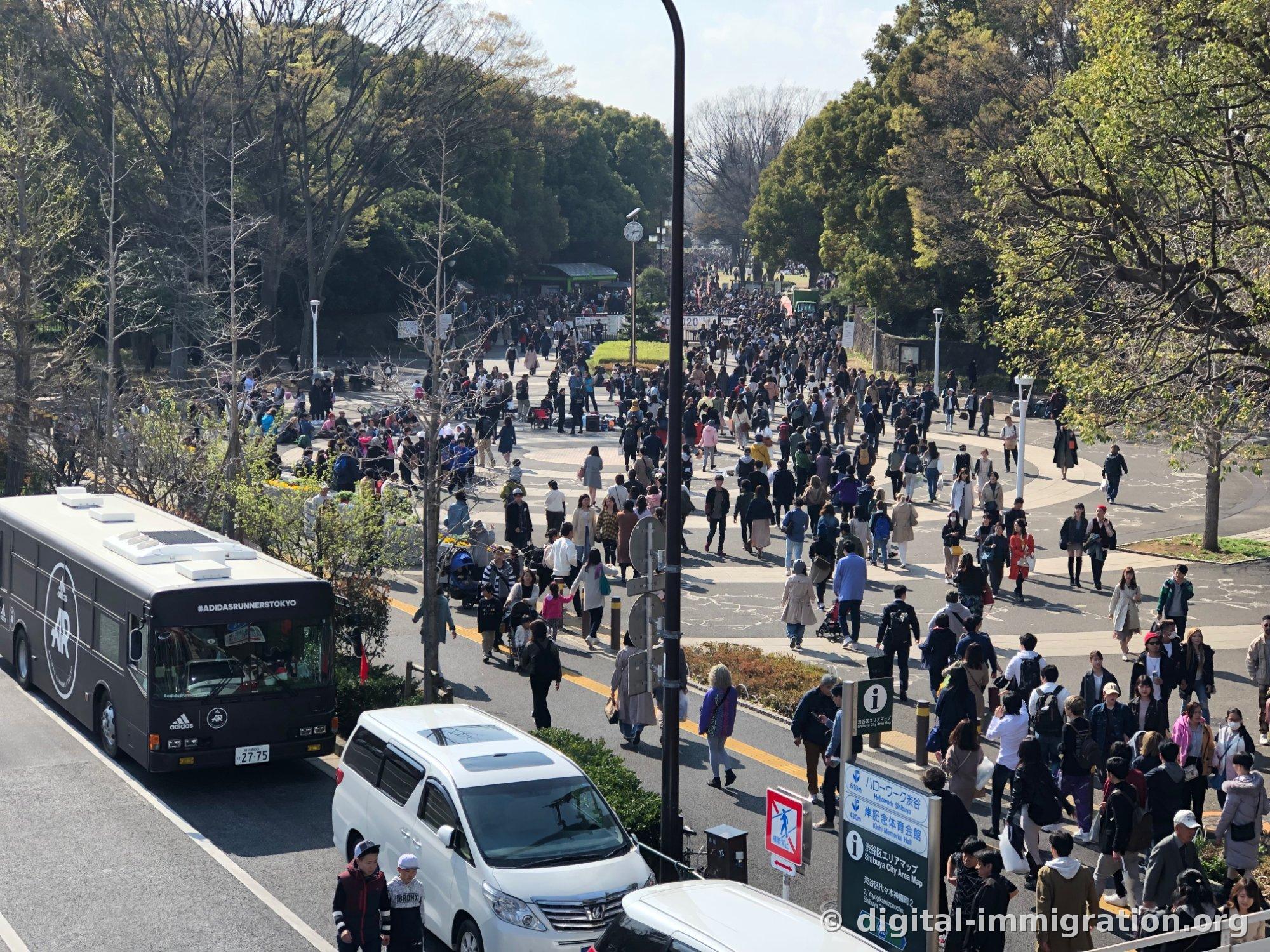
Once You Pass the First Torii Gate, the Sound Changes
The large wooden torii gate at the entrance to the South Approach (南参道) was much thicker than it looked in photographs. When I touched the pillars, the wood grain was split vertically, and three golden chrysanthemum crests were embedded in the center of the crossbeam. On a wooden plaque to the right was handwritten in brush: "四月十二日 昭憲皇太后祭 午前十時". I liked that this guidance wasn't printed material but hand-written on a wooden plaque.
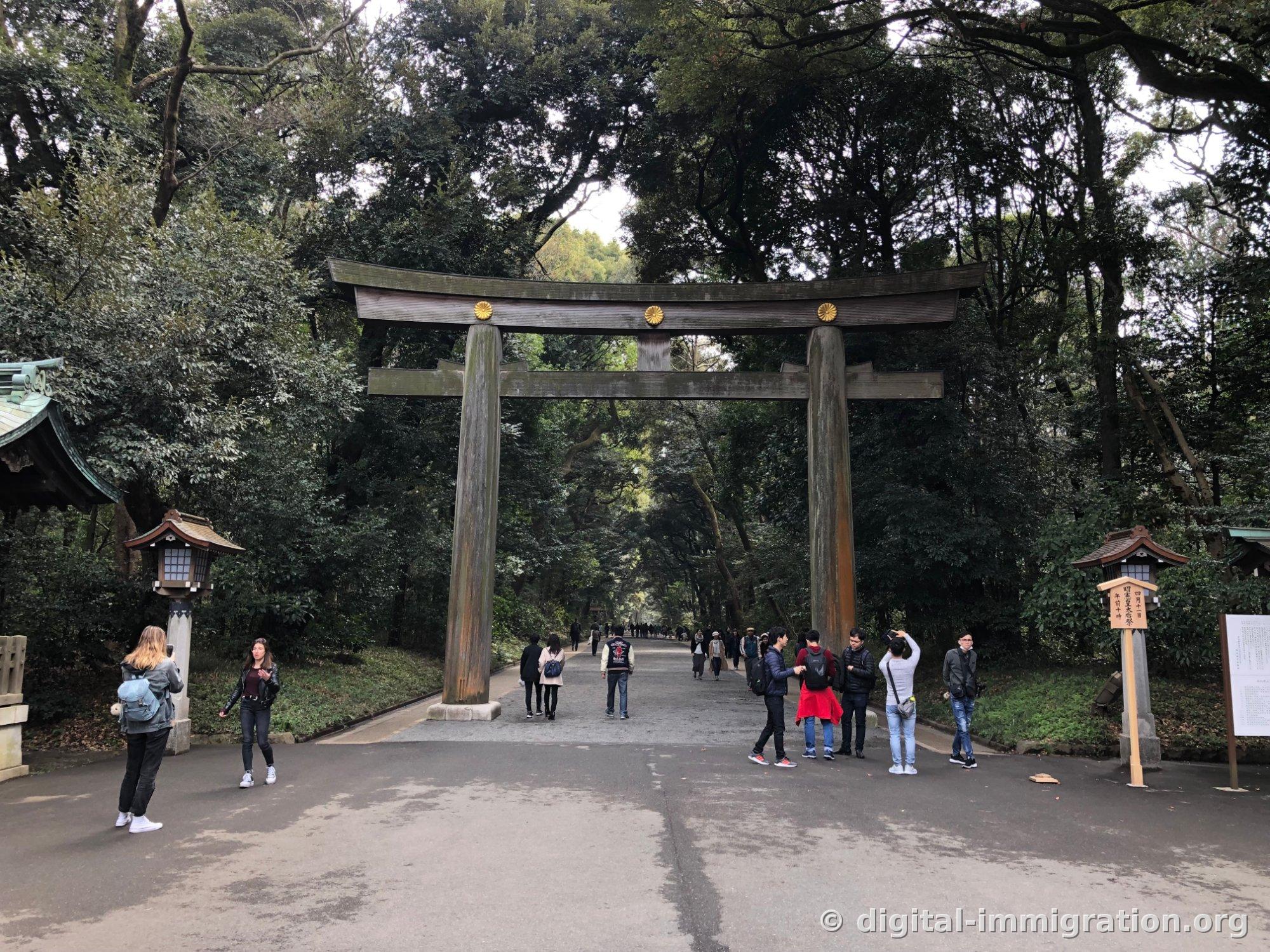
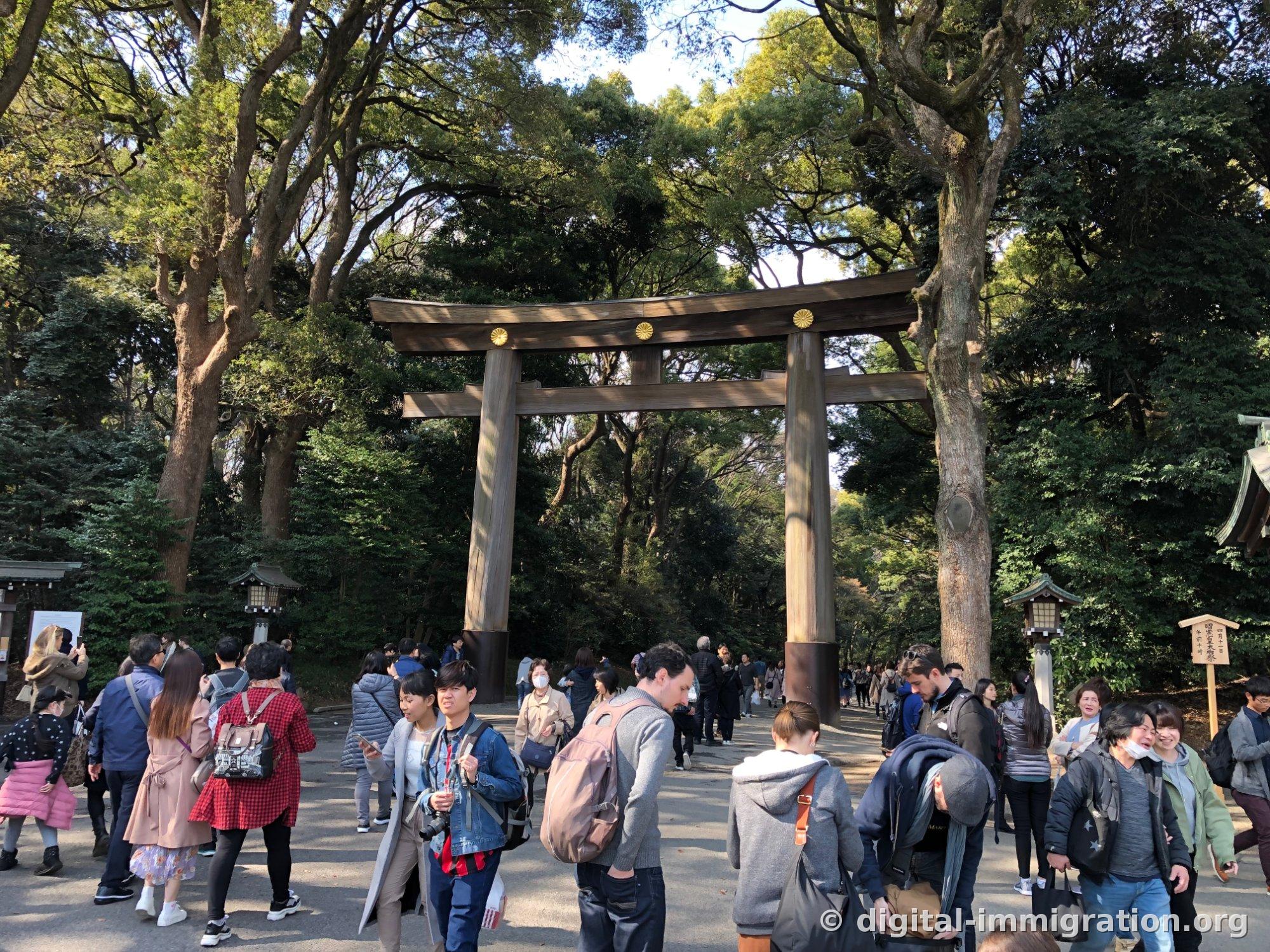
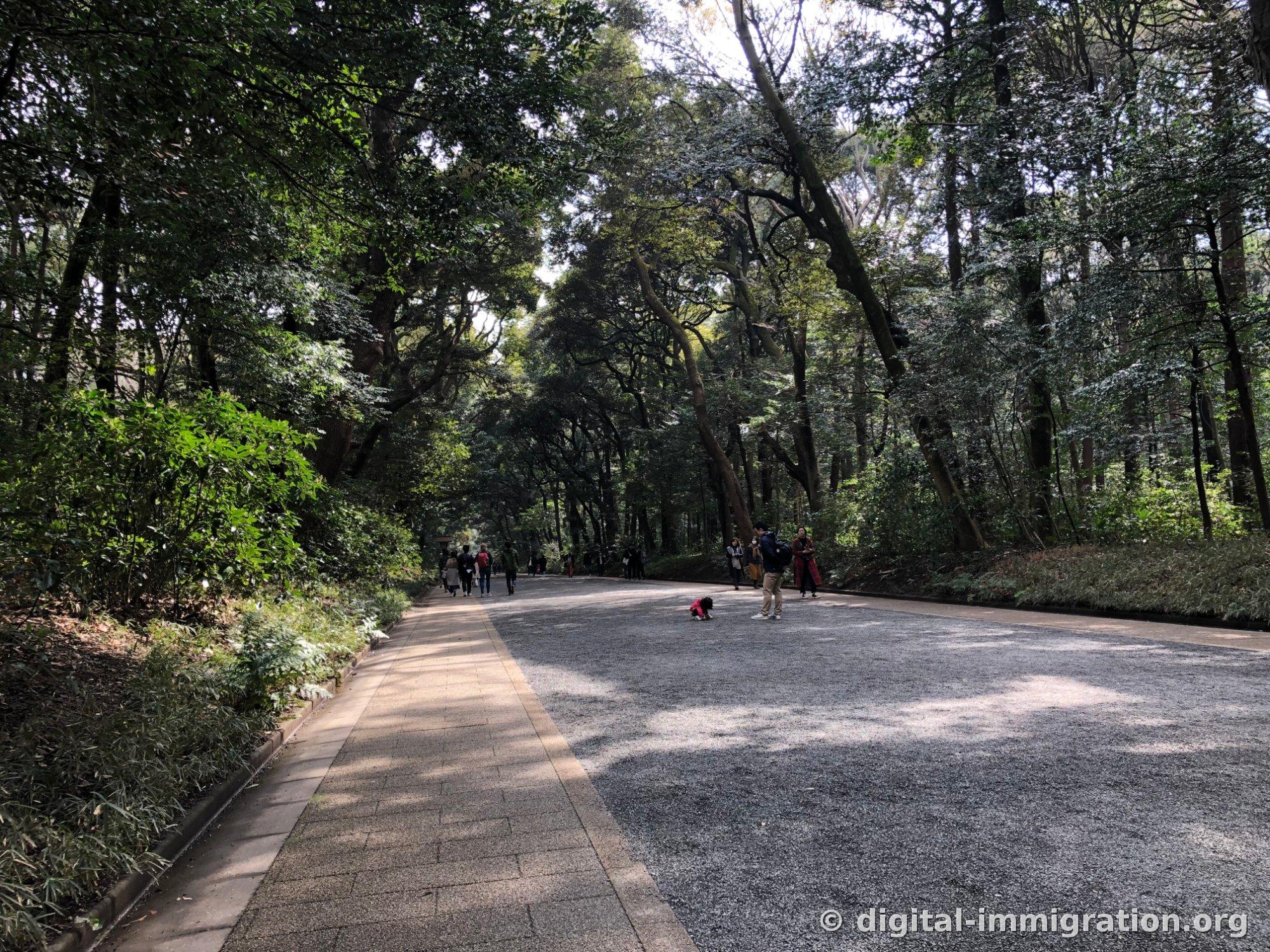
The approach path isn't asphalt but coarse gravel. Walking on it with sneakers makes a crunching sound, and when this sound overlaps from all directions, it actually drowns out city noise. There's a separate brick path along the edge, so people pushing strollers or carrying luggage walk along that. There was a family with a dog dressed in red clothes, and everyone walked slowly. No one hurried here.
Leaving a Forest Like This in the City
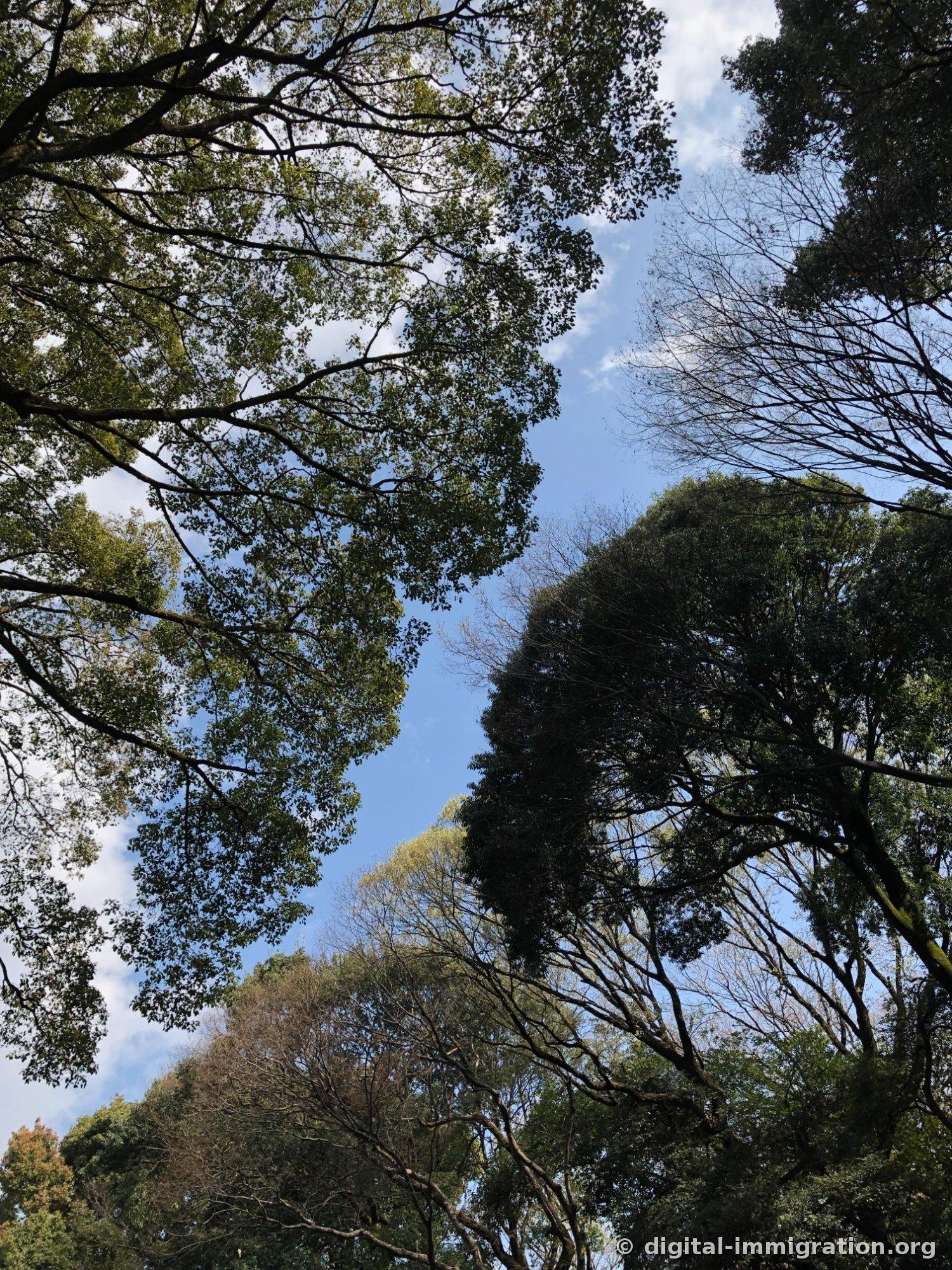
Walking, I looked up until my neck hurt. The sky was visible in fragments between branches, and evergreens and leafless branches mixed in one frame. This is Shibuya Ward. A few subway stops away is Shibuya Scramble Crossing, and beyond the wall is Harajuku's Takeshita Street. But inside here smells like a forest. The scent of soil and wet fallen leaves. I kept thinking how envious I was. Could land like this have remained in the heart of downtown Seoul? According to a signpost, this forest was artificially created in 1920 when the shrine was established, by planting donated trees from across the country. After a hundred years, it's even more amazing how it looks like a natural forest.
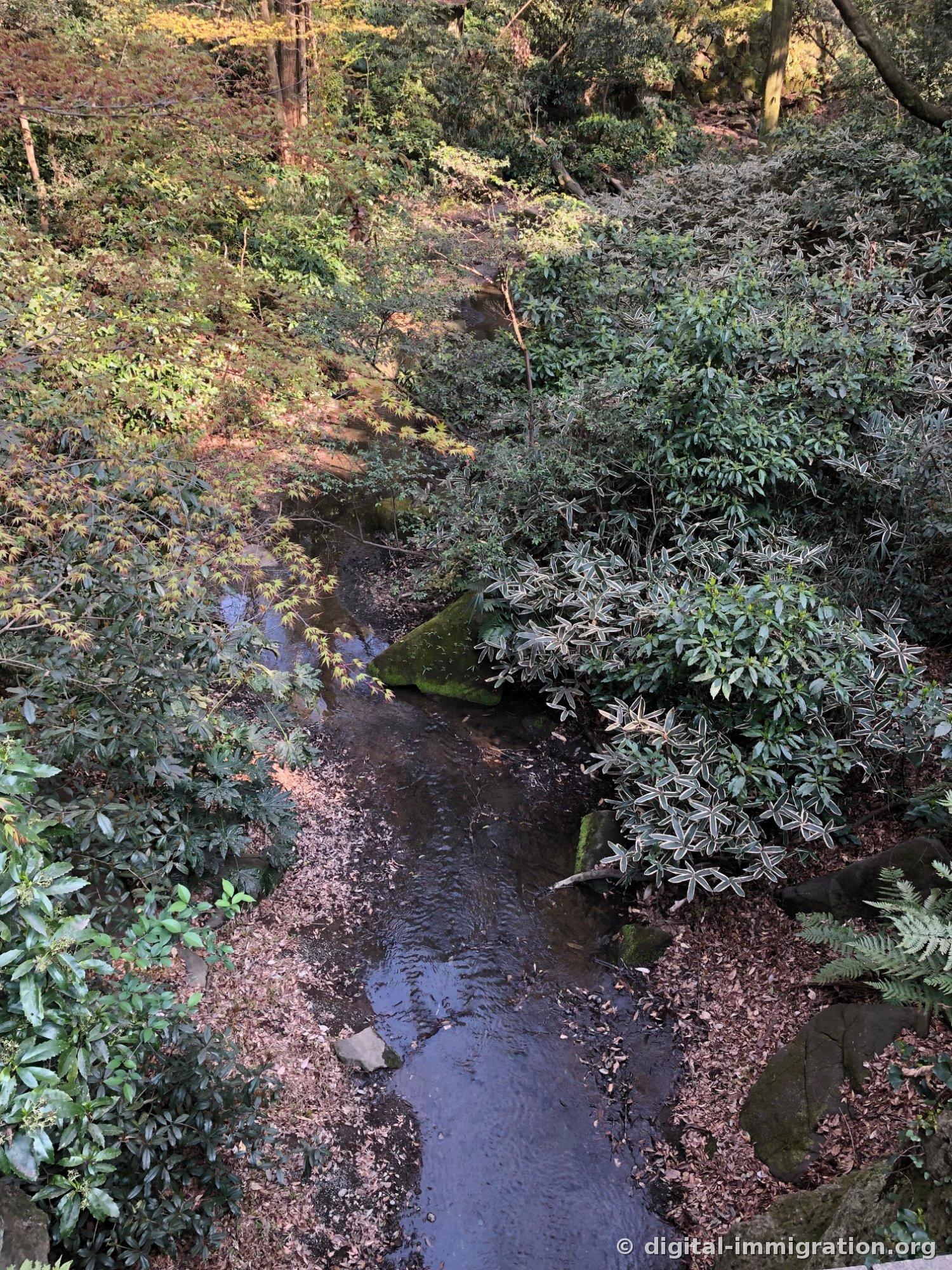
Looking from the railing of the bridge in the middle of the approach path (Namji Bridge), a small stream flows below. It's about 2 meters wide, with moss-covered rocks and young maple branches draped over the water, and fallen leaves covering the bottom. Most people just pass by. If you stand here for just a minute, you hear the sound of water.
The Section Where Sake Barrels and Wine Barrels Face Each Other
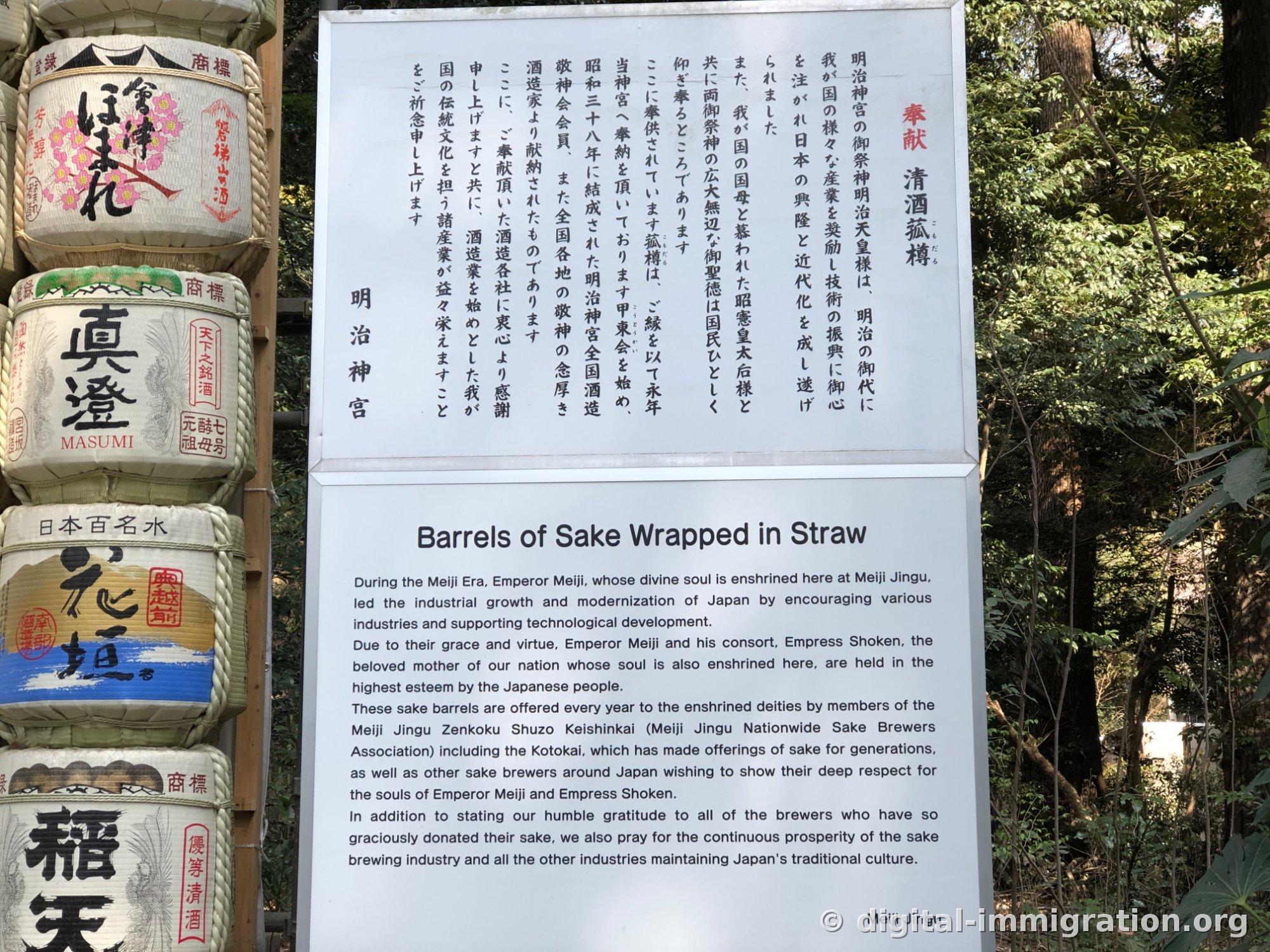
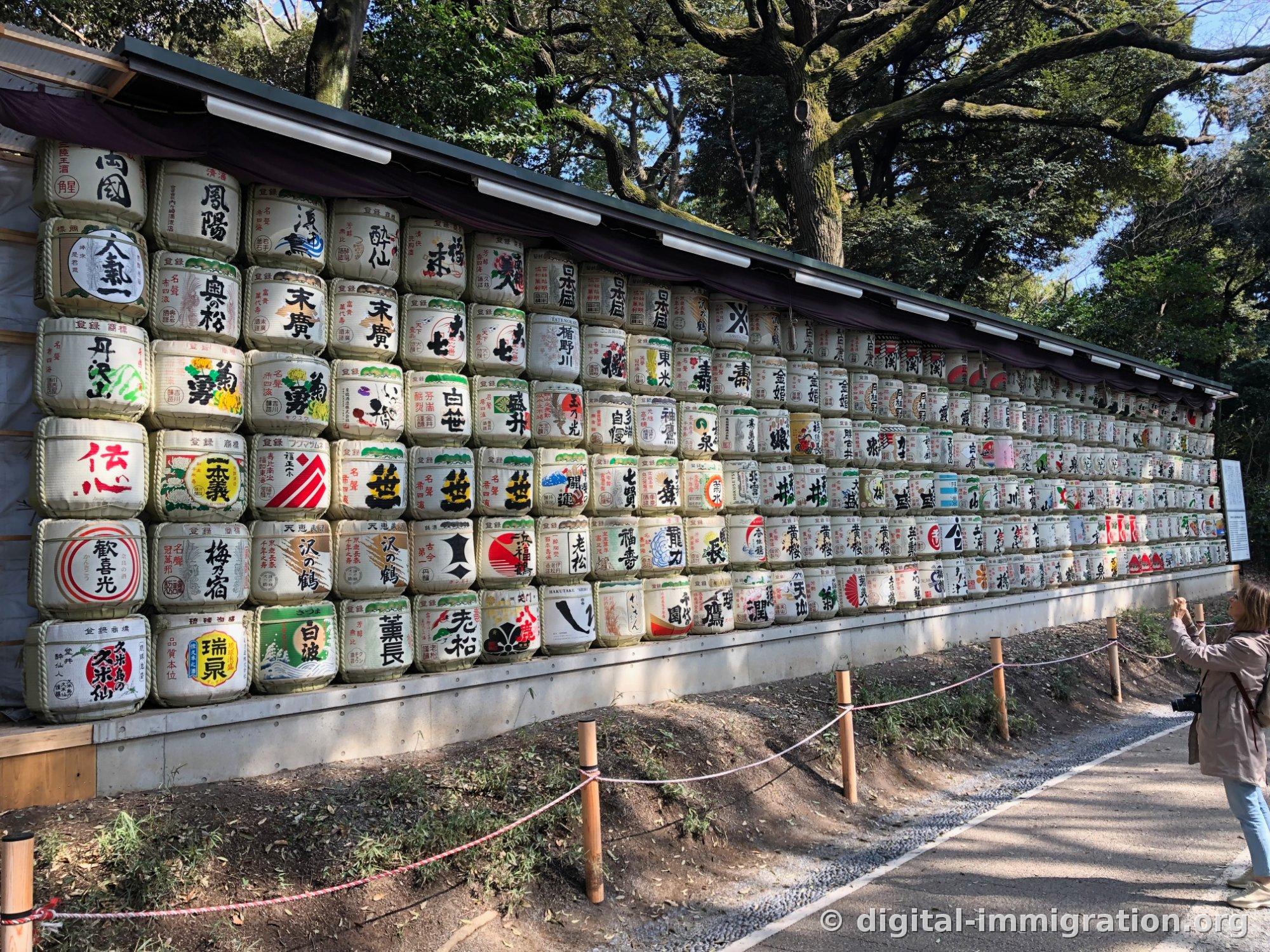
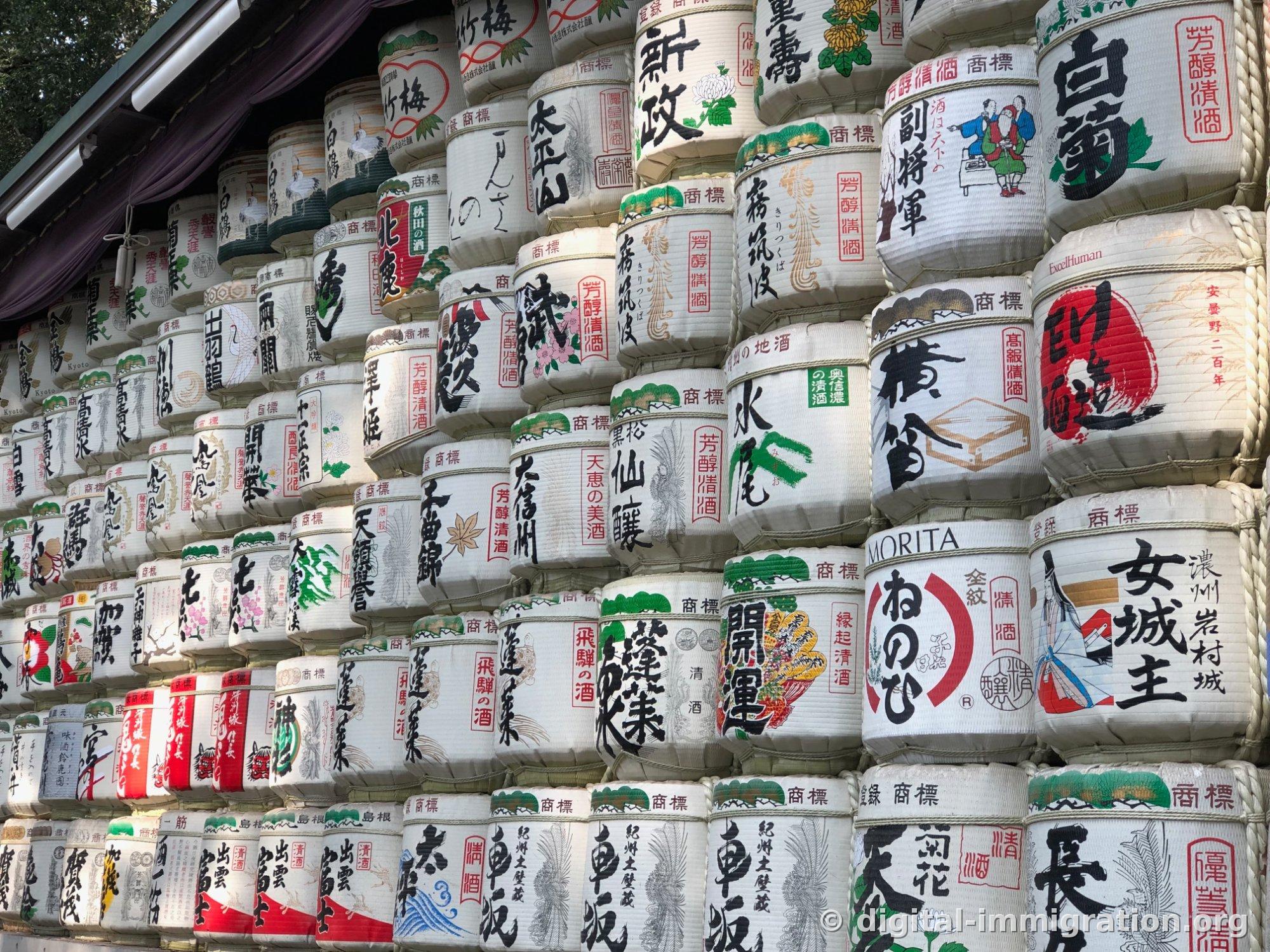
As you walk, you suddenly come upon sections where straw-wrapped barrels are stacked like a wall. These are votive sake barrels called komozaru (菰樽). Brand names are written in large brush strokes on white backgrounds, with names like 白菊, 新政, 横笛, 眞澄, and 開運 in succession. While these aren't actually filled with alcohol, sake breweries throughout the country donate them annually, so the name tags change constantly, they say.
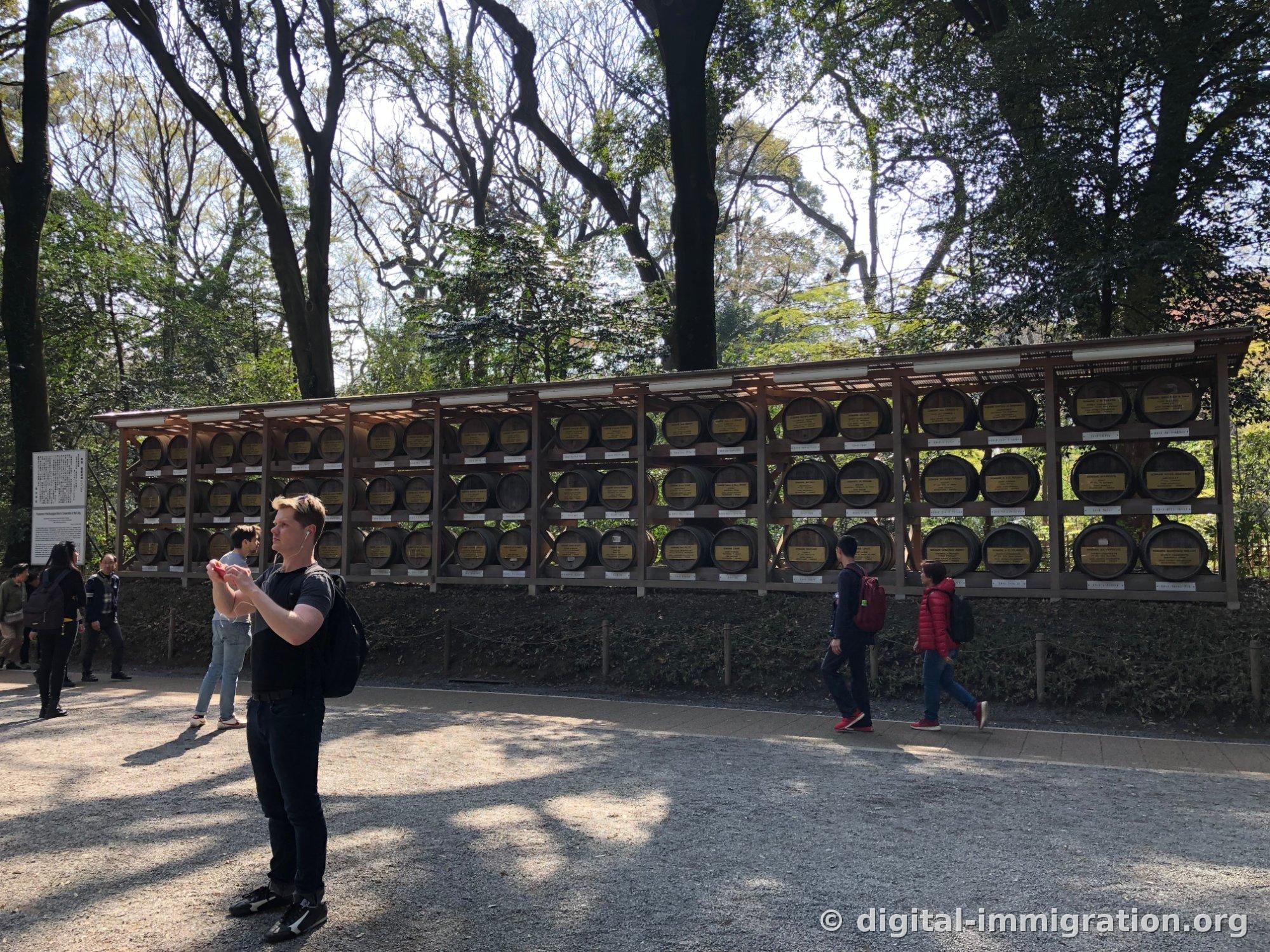
On the opposite side of the path, Burgundy wine barrels are stacked in three tiers. With a single gold nameplate embedded on the front of each wooden barrel, they create a completely different impression from the sake barrels. French wineries donated them in the context of Emperor Meiji actively embracing Western culture. The very composition of positioning sake and wine barrels facing each other explains the character of this shrine.
Location and Access — Choose the Harajuku Station Exit Carefully
If you exit from the west exit of JR Yamanote Line's Harajuku Station, the entrance to the South Approach is right there. If you use Meiji Jingu-mae Station on the Tokyo Metro Chiyoda and Fukutoshin lines, Exit 2 is closest. However, from the torii gate to the main hall is roughly 10-15 minutes on foot, and since it's a gravel path, it feels longer. It's best to avoid shoes with heels. When I walked around, including viewing the forest, I spent about two and a half hours round trip. Opening times are based on sunrise and closing times on sunset, changing monthly, so I recommend checking official information before visiting.
Beyond the Third Torii Gate, to the Front of the Main Hall
The inner torii gate is a different color from the outer one. It's relatively new wood, a light apricot color, so it stands out particularly bright in the forest's shadow. Once you pass through this torii gate, the density of worshippers suddenly increases. There's a white tent beside it and signs stretched in a line.
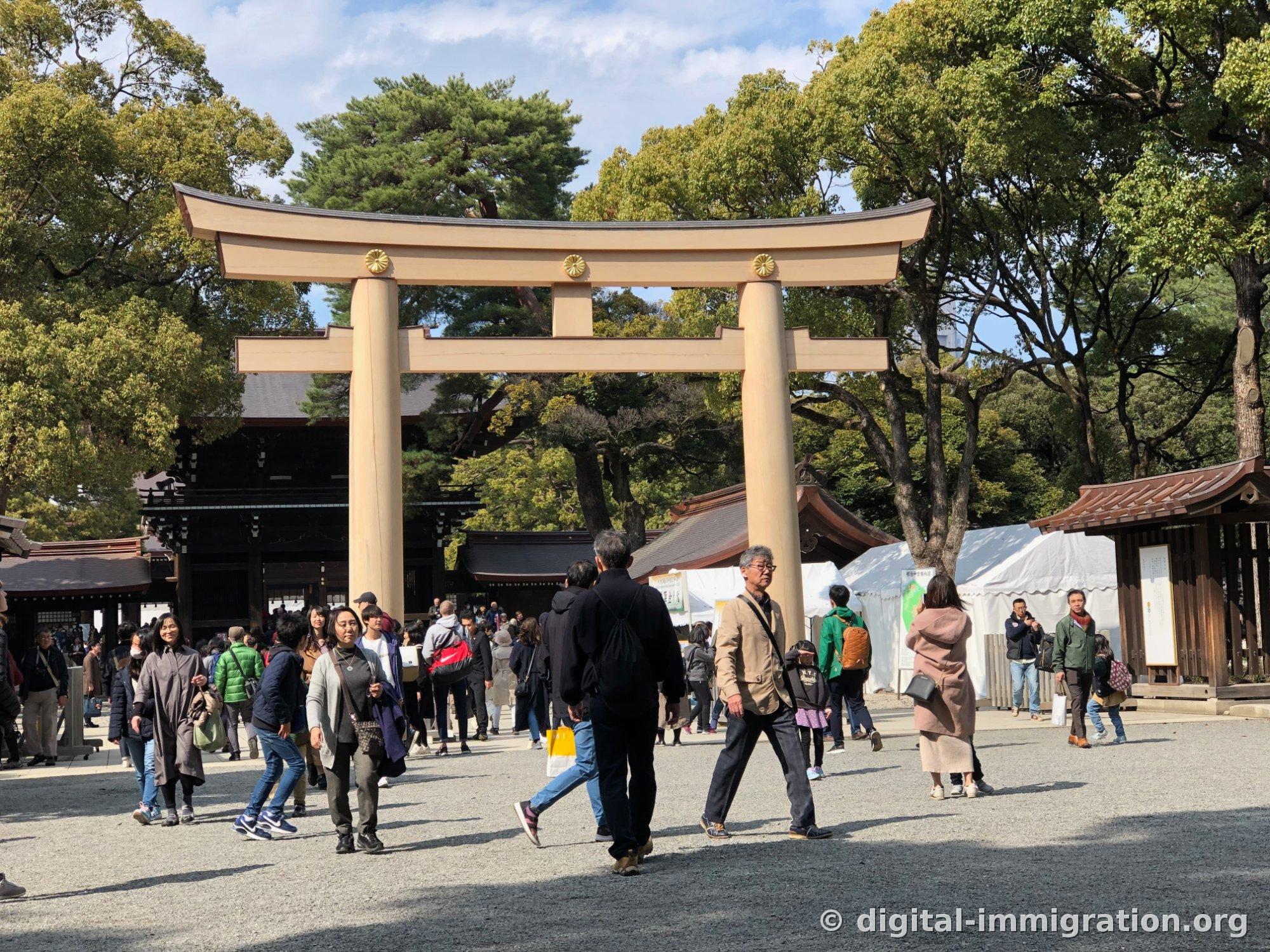
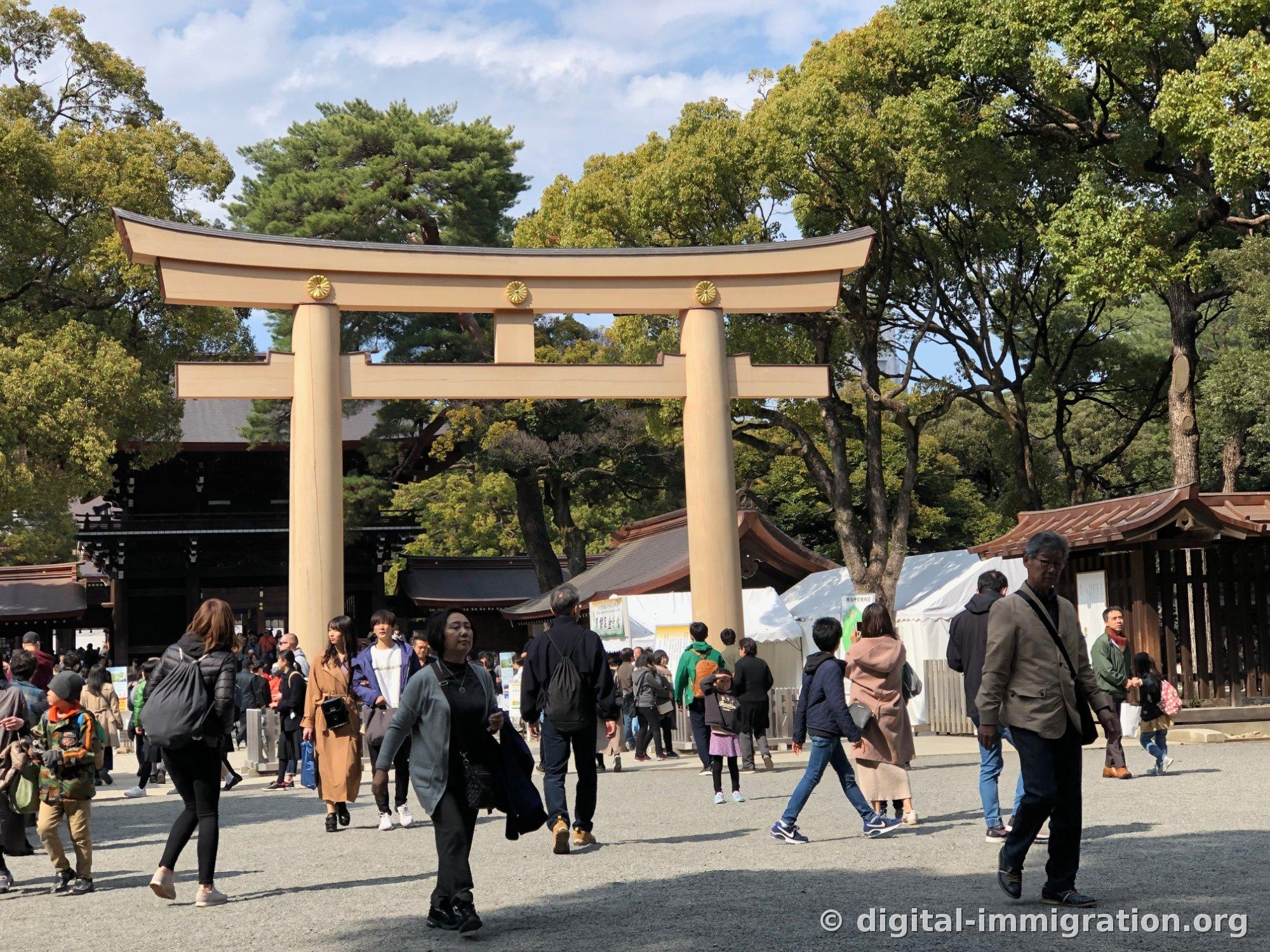
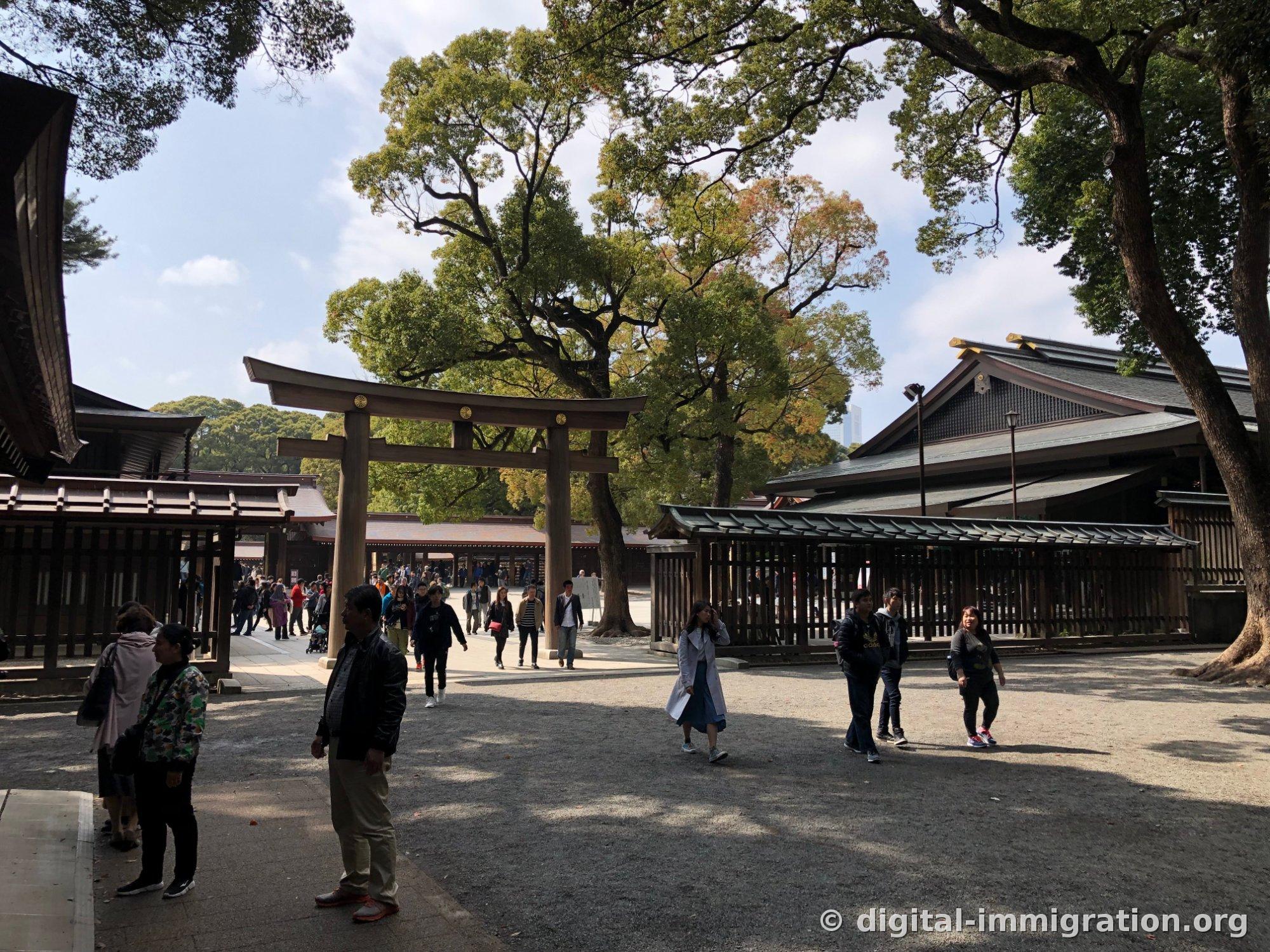
Temizu-ya — You Wash Your Hands Here
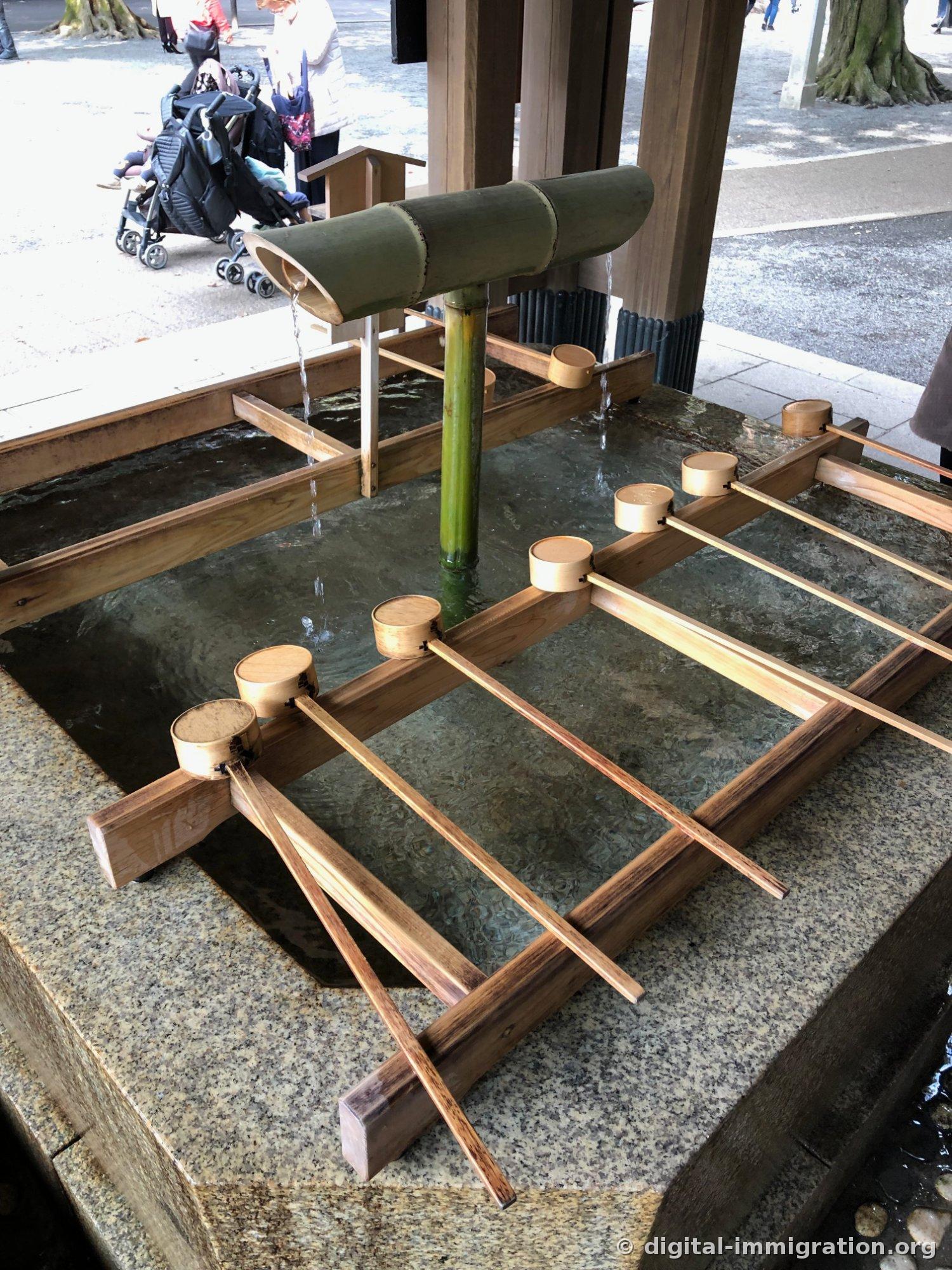
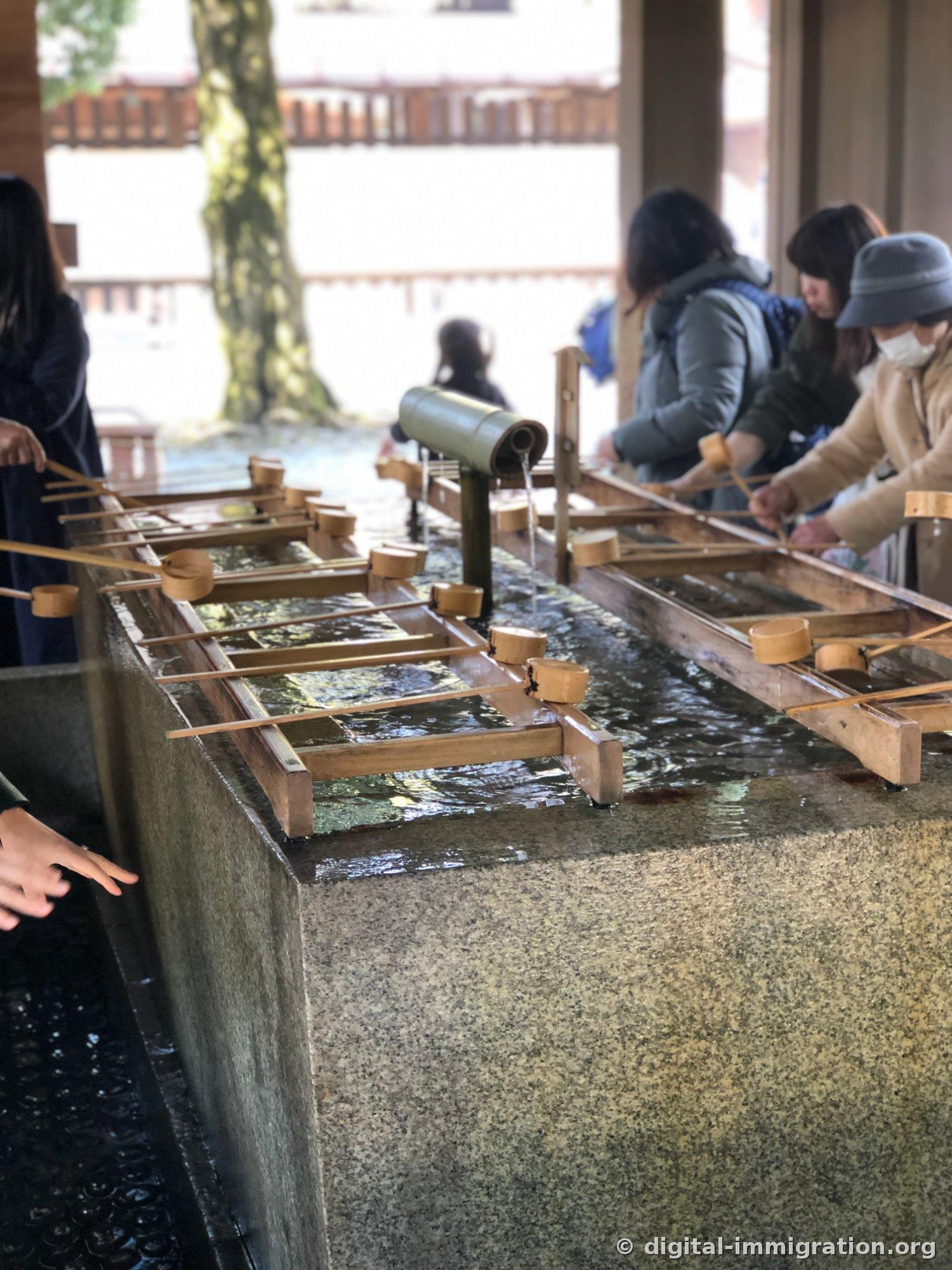
Before entering the gate, there's a temizu-ya (手水舎) on the left. Water drips in two streams from a thick bamboo pipe, and wooden ladles hang neatly on a granite basin. I captured both the early morning scene before crowds gathered and the scene of people lined up washing their hands. The procedure is: scoop with your right hand and wash your left, switch and wash your right, then scoop again with your right hand to rinse your mouth, and finally stand the ladle and wash its handle. The water was so cold that even in early March, your hands tingled.
Minami-shinmon, and the Courtyard in Front of the Main Hall
The gate to the main hall (Minami-shinmon) is a two-story gate tower. Beneath the eaves, the bracket arms are layered on top of each other, and white metal fittings are regularly embedded, creating a pattern-like appearance from a distance. Metal chrysanthemum ornaments hang from the center of the gate doors. The threshold is quite high, so everyone lifts their feet high once.
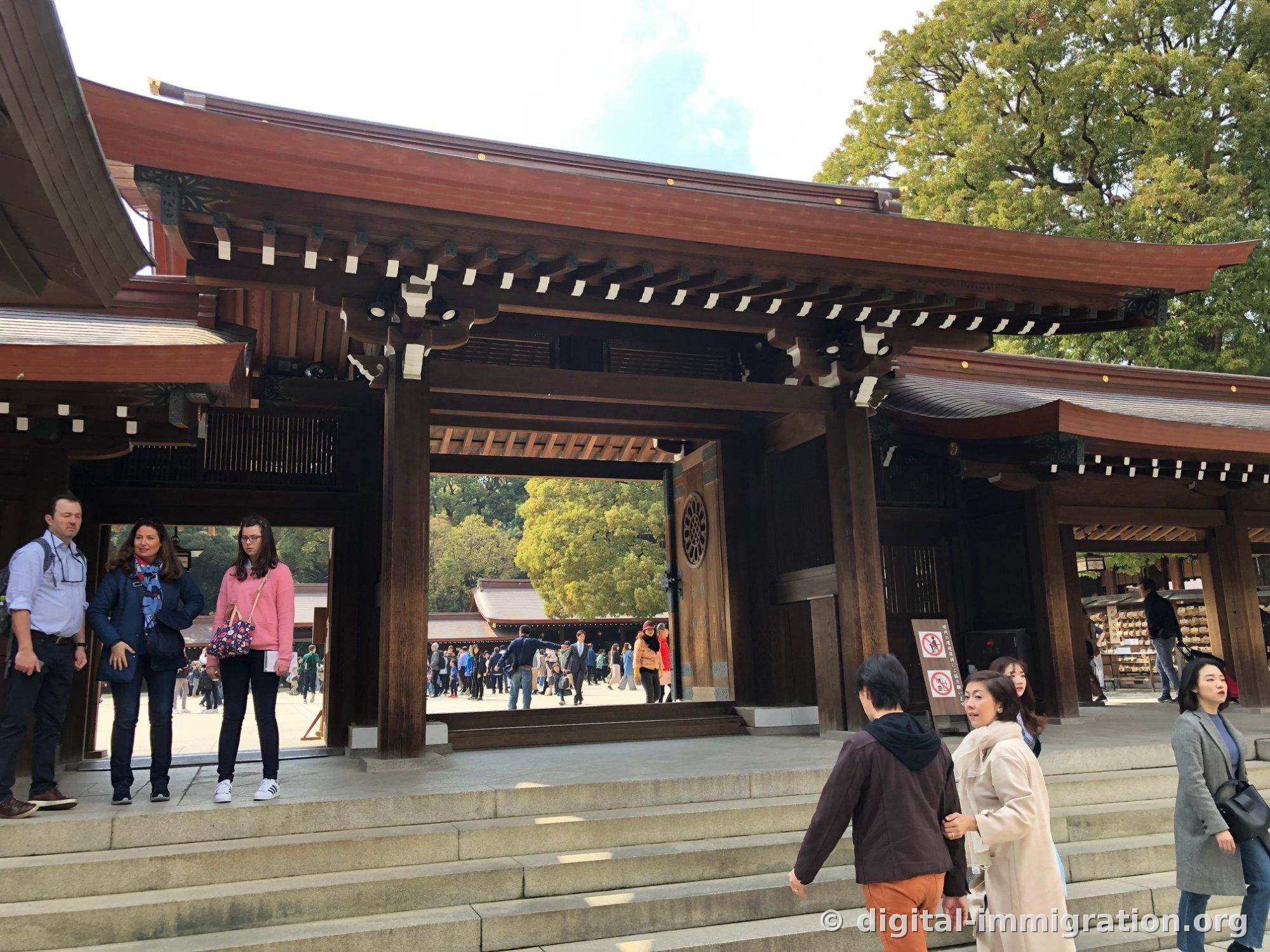
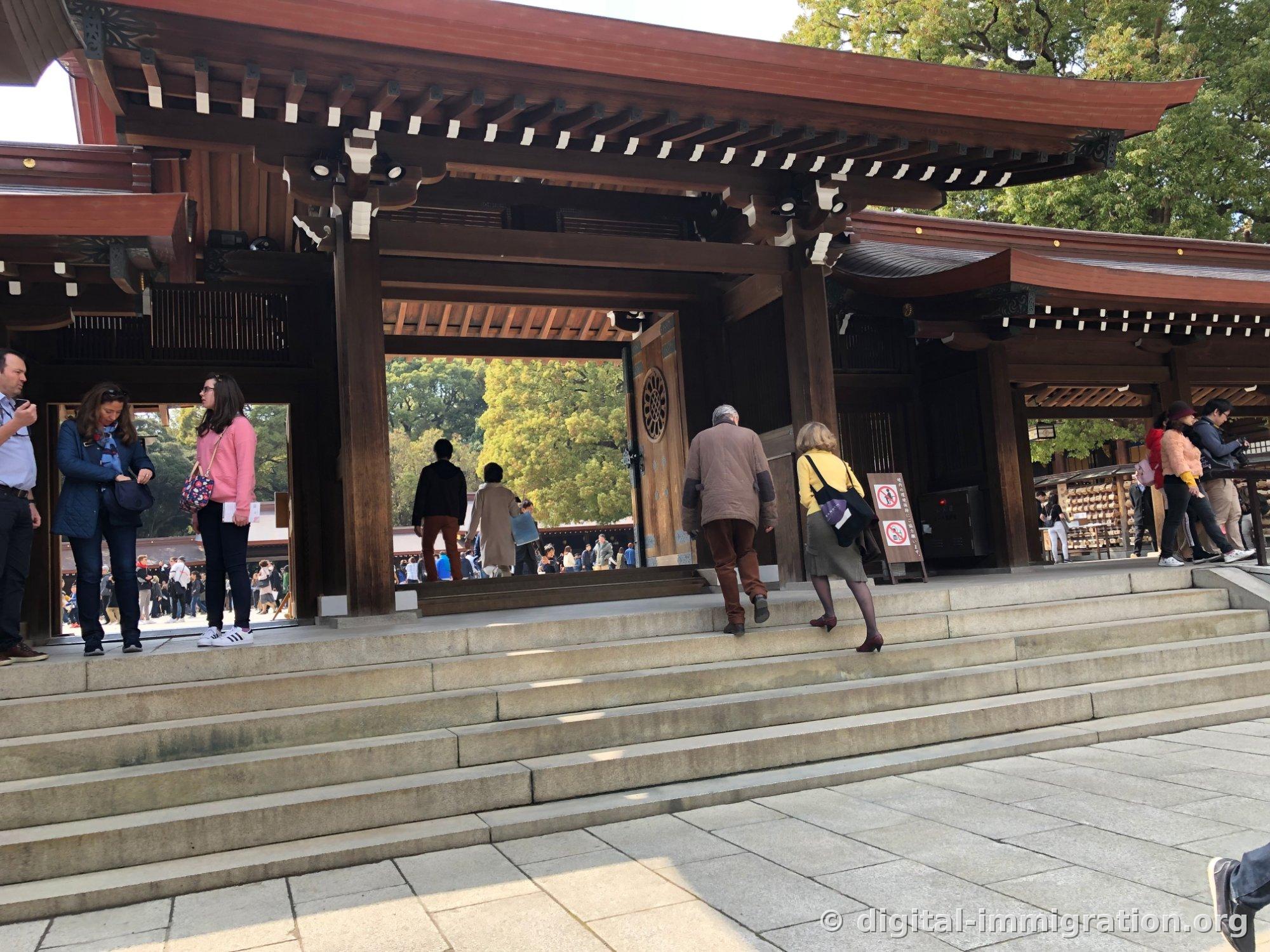
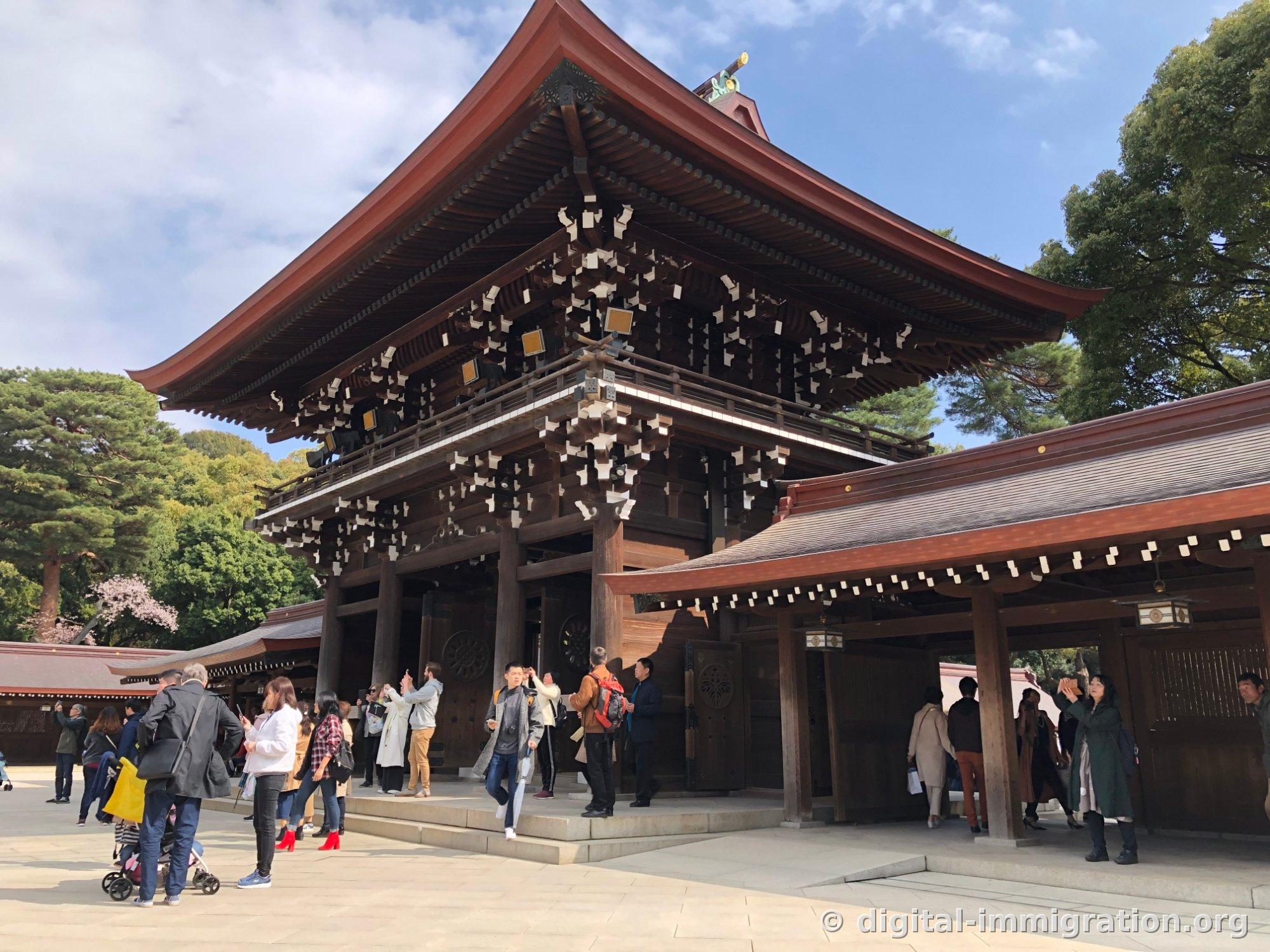
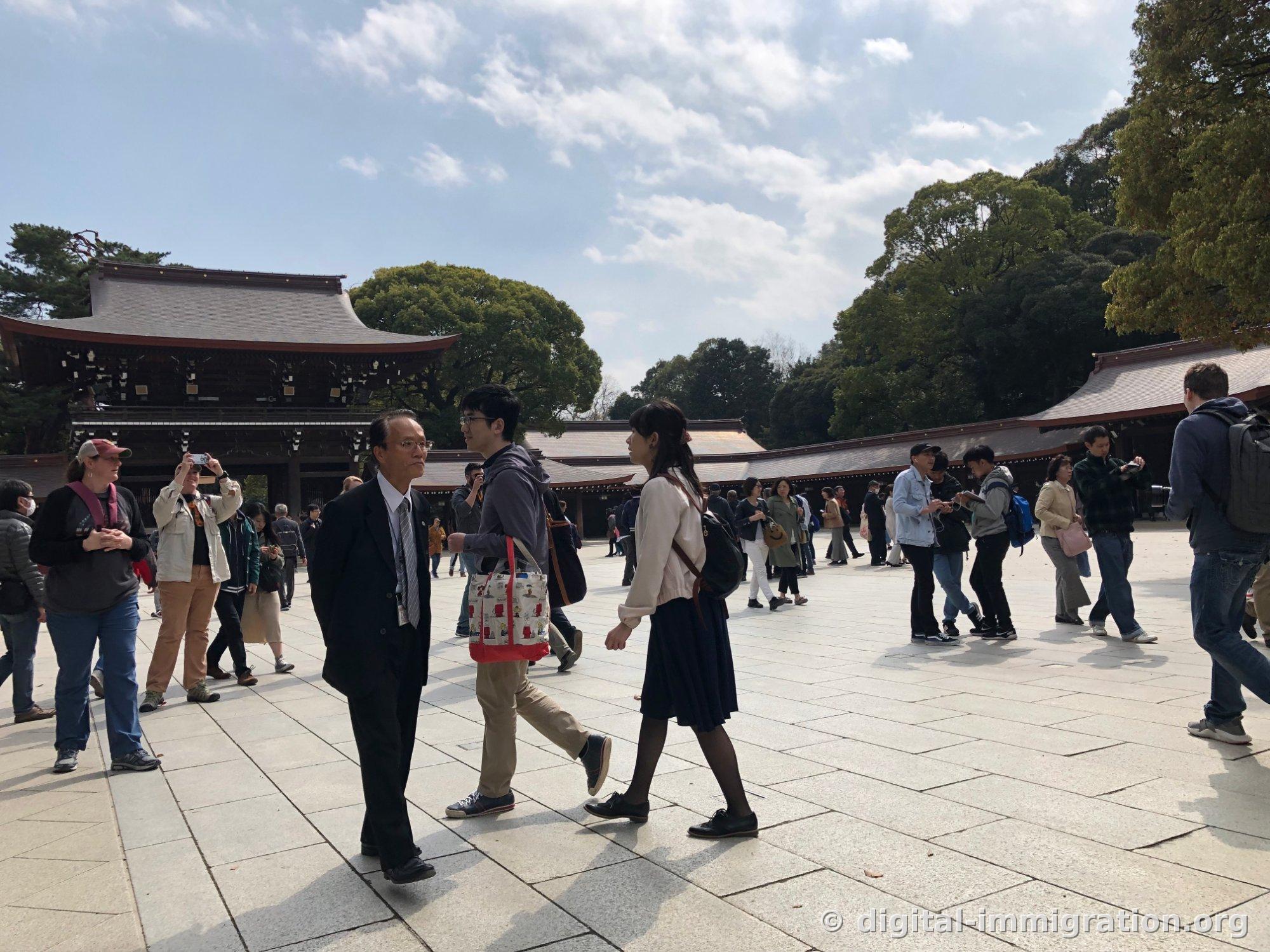
Beyond the gate, a bright granite courtyard spreads out widely. With no shade, it's bright enough to hurt your eyes even in spring sunlight. Above the main hall's roof on the far side of the courtyard, a white communications tower juts out—the NTT DoCoMo Yoyogi Building in Shinjuku. The scene of a hundred-year-old wooden building and a communications tower spire fitting into one frame best summarizes this shrine.
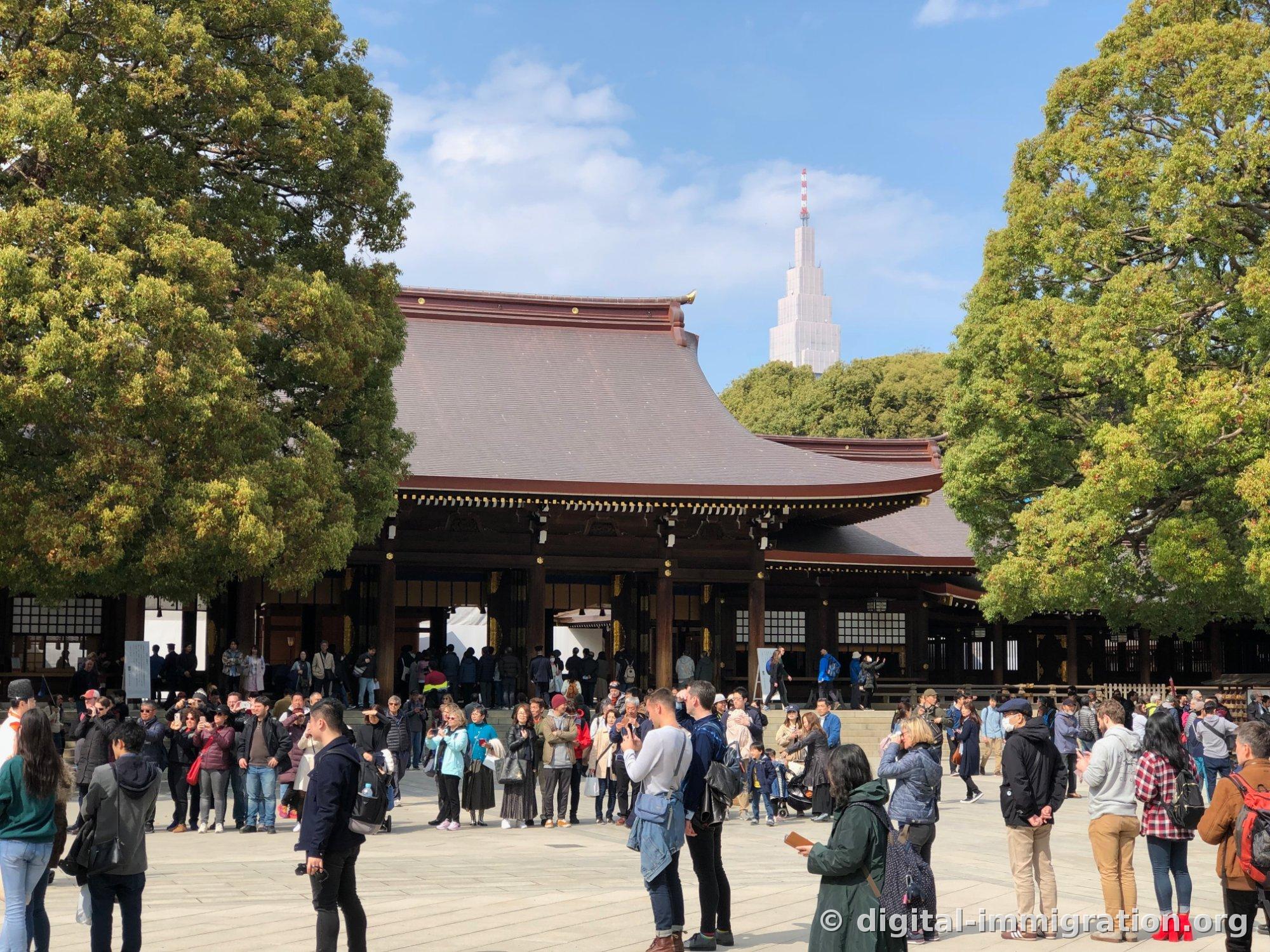
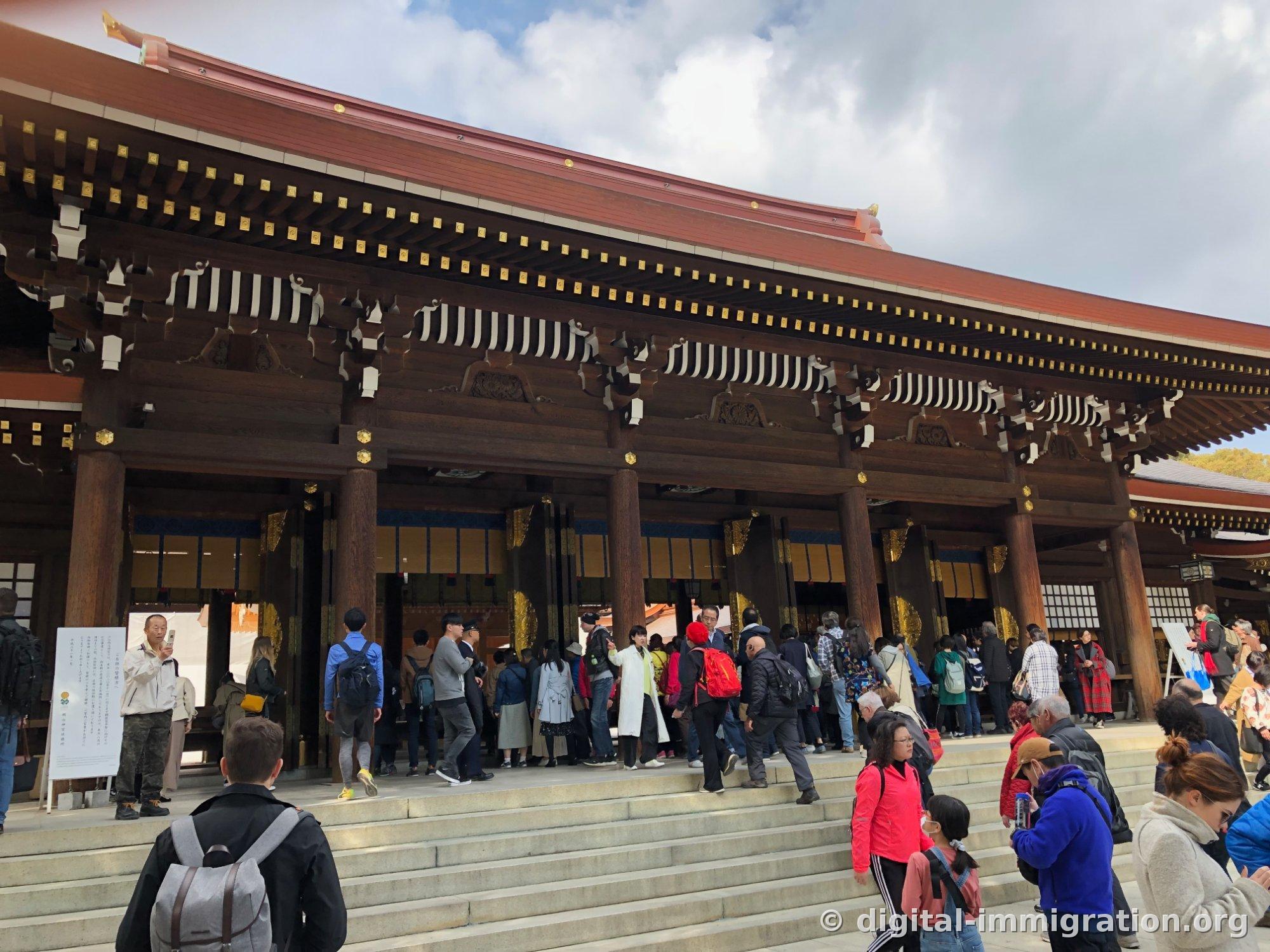
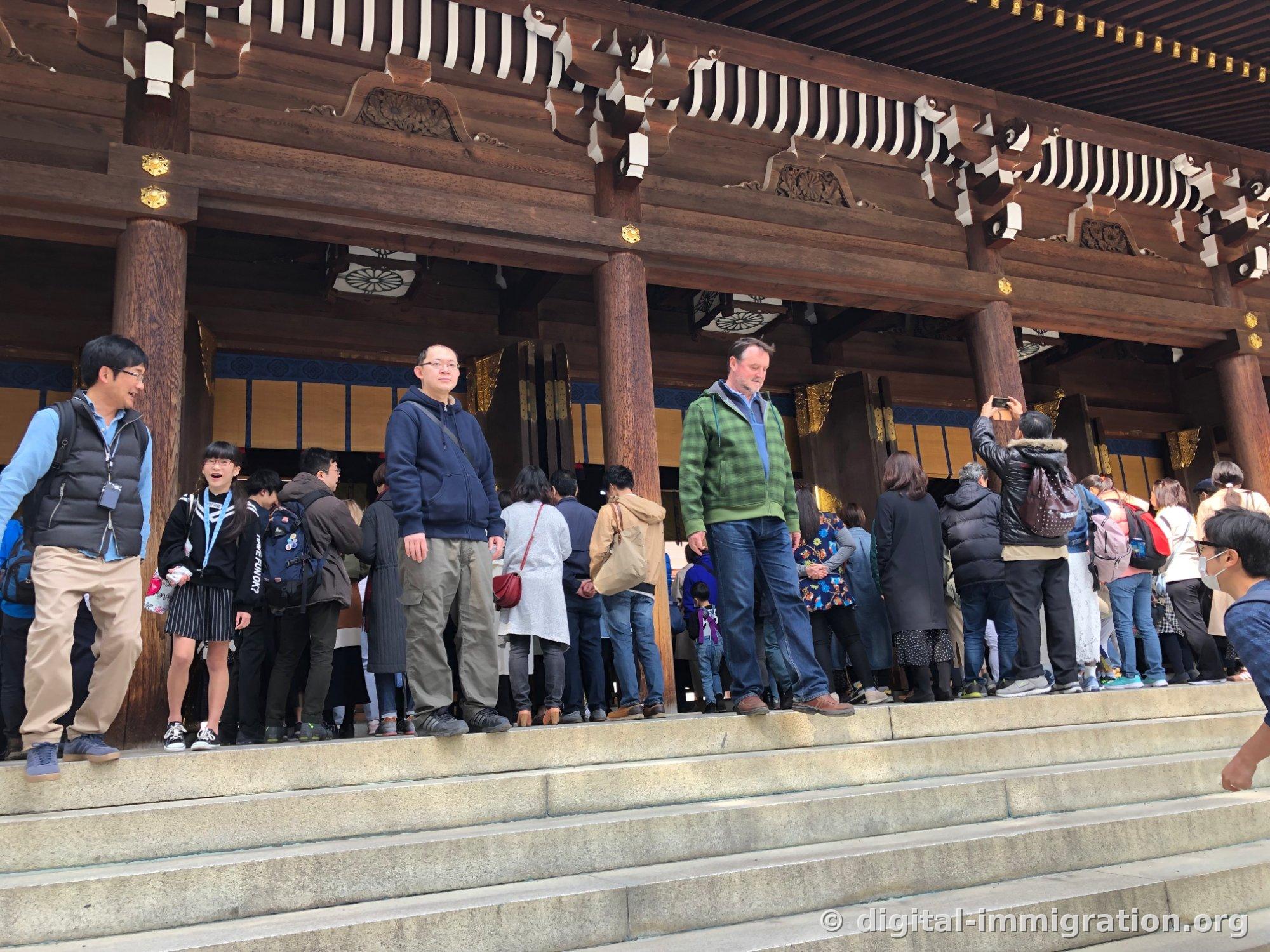
The front of the main hall is densely studded with gold ornaments beneath the eaves, so it glitters when hit by sunlight. In front of the offering box at the top of the steps, people line up sideways to perform nirei-nishakusho-ichrei (two bows, two claps, one bow). Because the line spreads left and right rather than front and back, the rotation is faster than expected. After waiting about 10 minutes, it's your turn.
In Front of the Husband-and-Wife Camphor Trees — Where People Linger
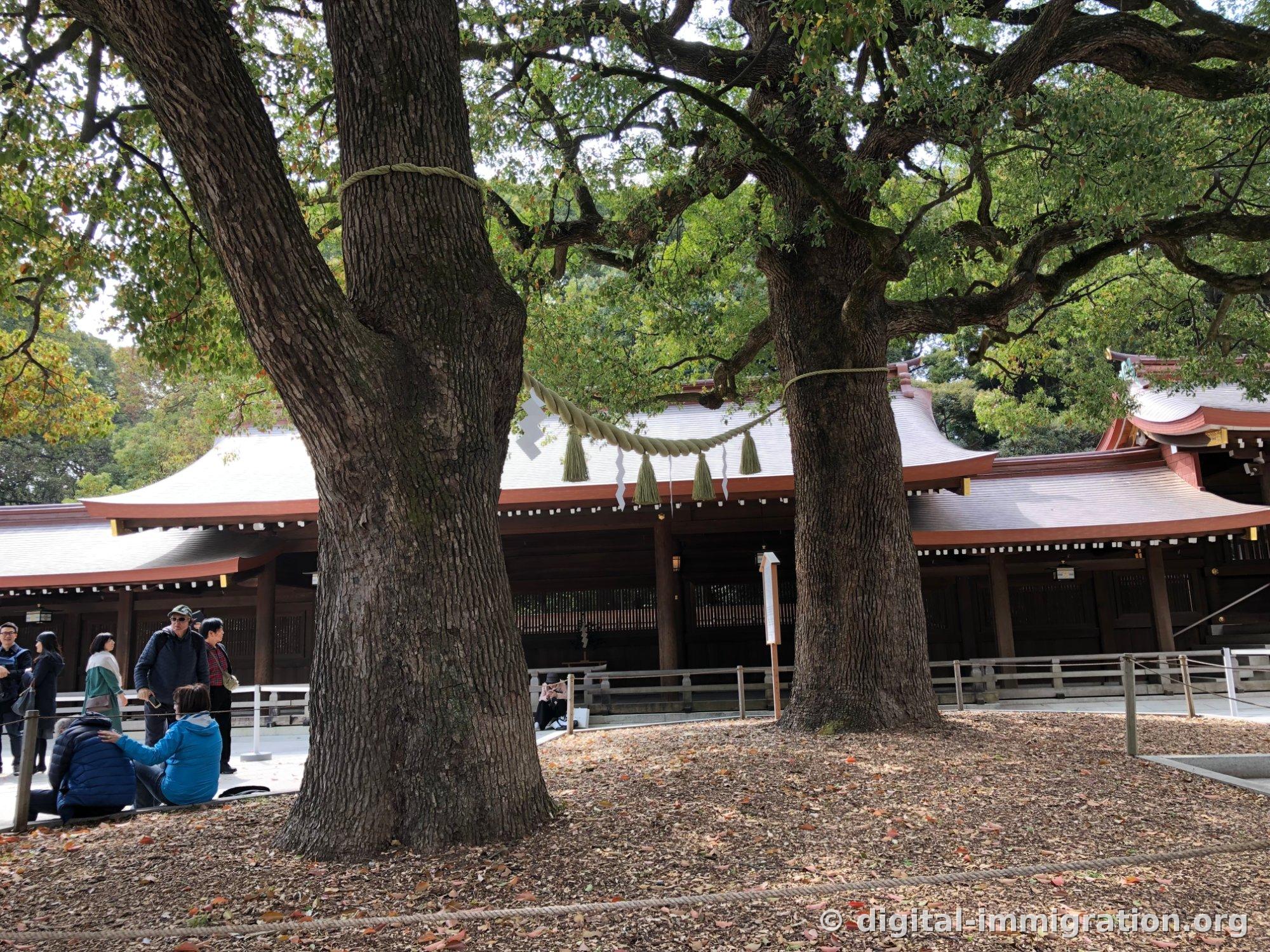
On one side of the courtyard, two large camphor trees stand side by side. The two trees are tied together with a sacred rope (shimenawa) and white paper (shide) and straw ornaments hang from it, swaying in the wind. These are the husband-and-wife camphor trees called Meoto-kusu (夫婦楠). The ground is thickly carpeted with fallen leaves, so each step was soft. Everyone takes photos here for quite a while.
Ema and Omamori — Prices As Shown in the Photo
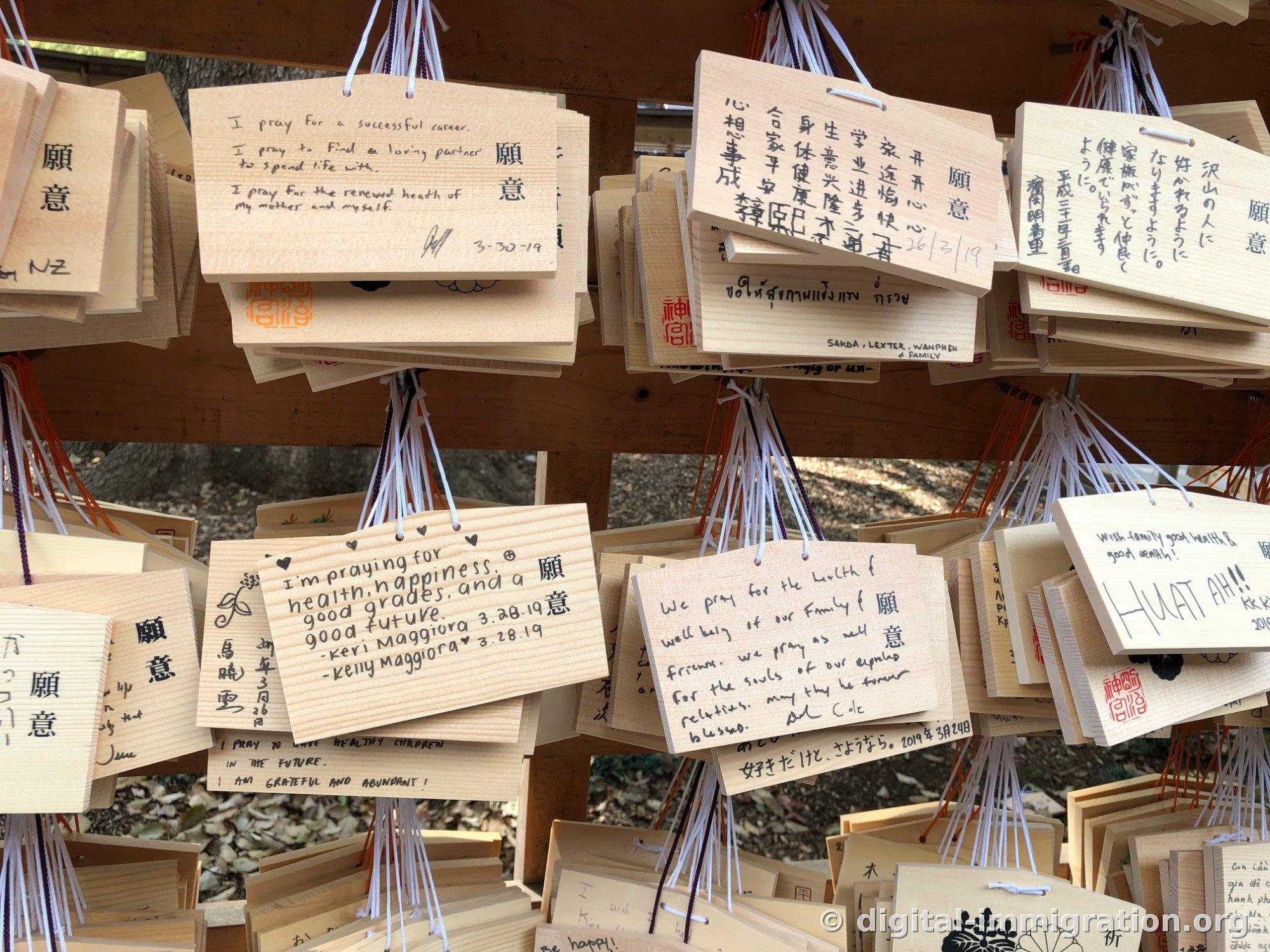
The ema hanging stands beneath the tree were densely covered with writing. Japanese, Chinese, Thai, and English were mixed together. Sentences like "I pray for a successful career", "academic progress", and "May everyone in the family be healthy" were written with dates and signatures, with a red shrine stamp on each plaque. I felt uncertain about openly reading other people's wishes, yet I kept looking.
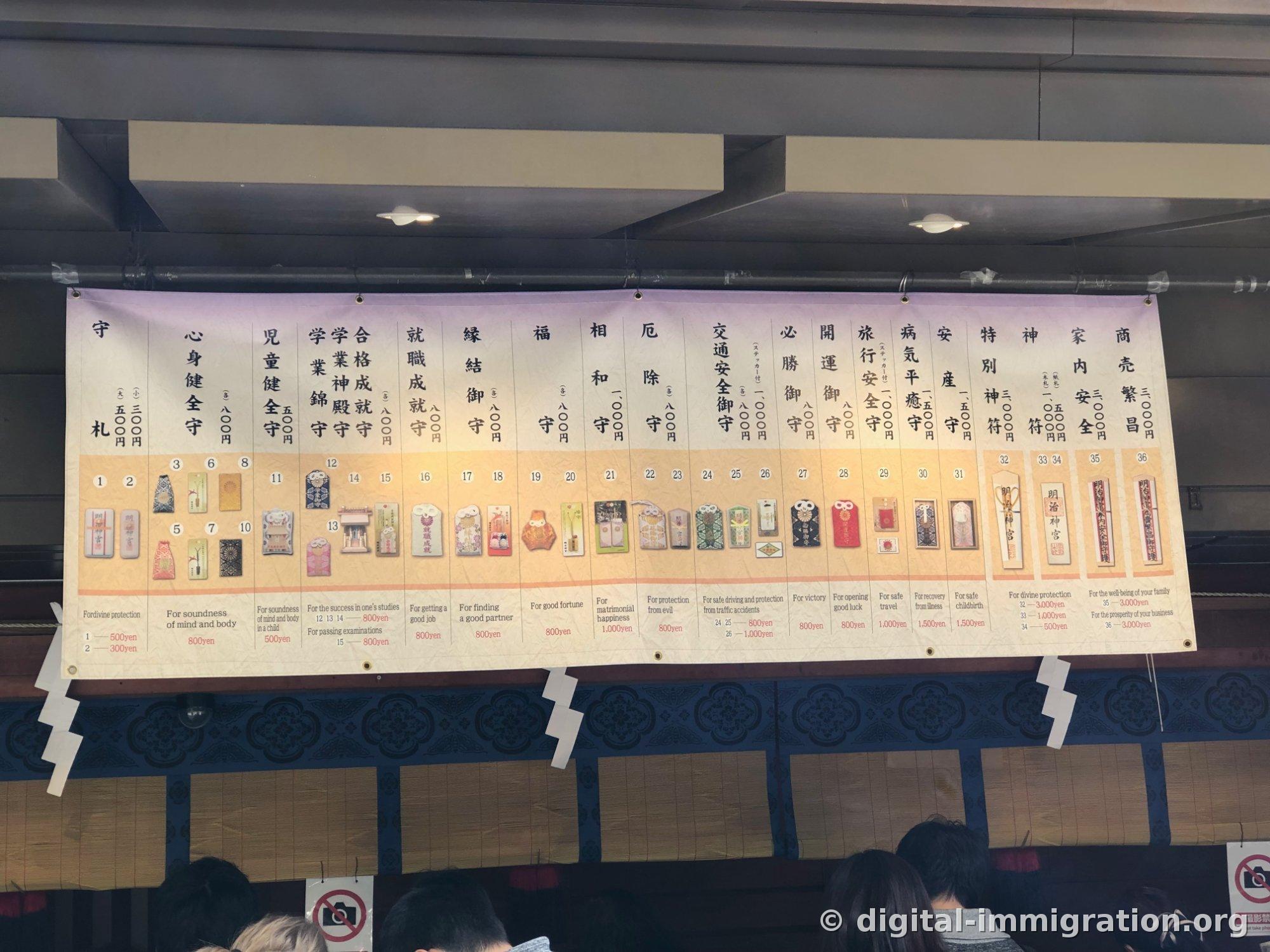
Above the blessing counter hangs a large banner with a list of omamori types and prices on one sheet. Copying from the photo, Heart and Body Harmony Blessing (心身健全守), Academic Achievement (学業成就), Matchmaking Blessing (縁結御守), and Fortune Blessing (福守) are 800 yen, Harmony Blessing (相和守), some Traffic Safety Blessings (交通安全御守), and Travel Safety Blessing (旅行安全御守) are 1,000 yen, Healing Blessing (病気平癒守) and Safe Childbirth Blessing (安産守) are 1,500 yen, and Divine Talismans (神符) and Home Harmony/Business Prosperity series (家内安全·商売繁昌) are in the 1,000-3,000 yen range. There are also 300 yen and 500 yen blessing cards (守札). However, this is based on the banner at the time of my visit, and prices may change, so I recommend checking on-site. As a note, there's a no-photography sign below this banner—it's best to refrain from photographing toward the blessing counter inside.
A Shinto Wedding Ceremony I Happened Upon, and That Black Retro Automobile
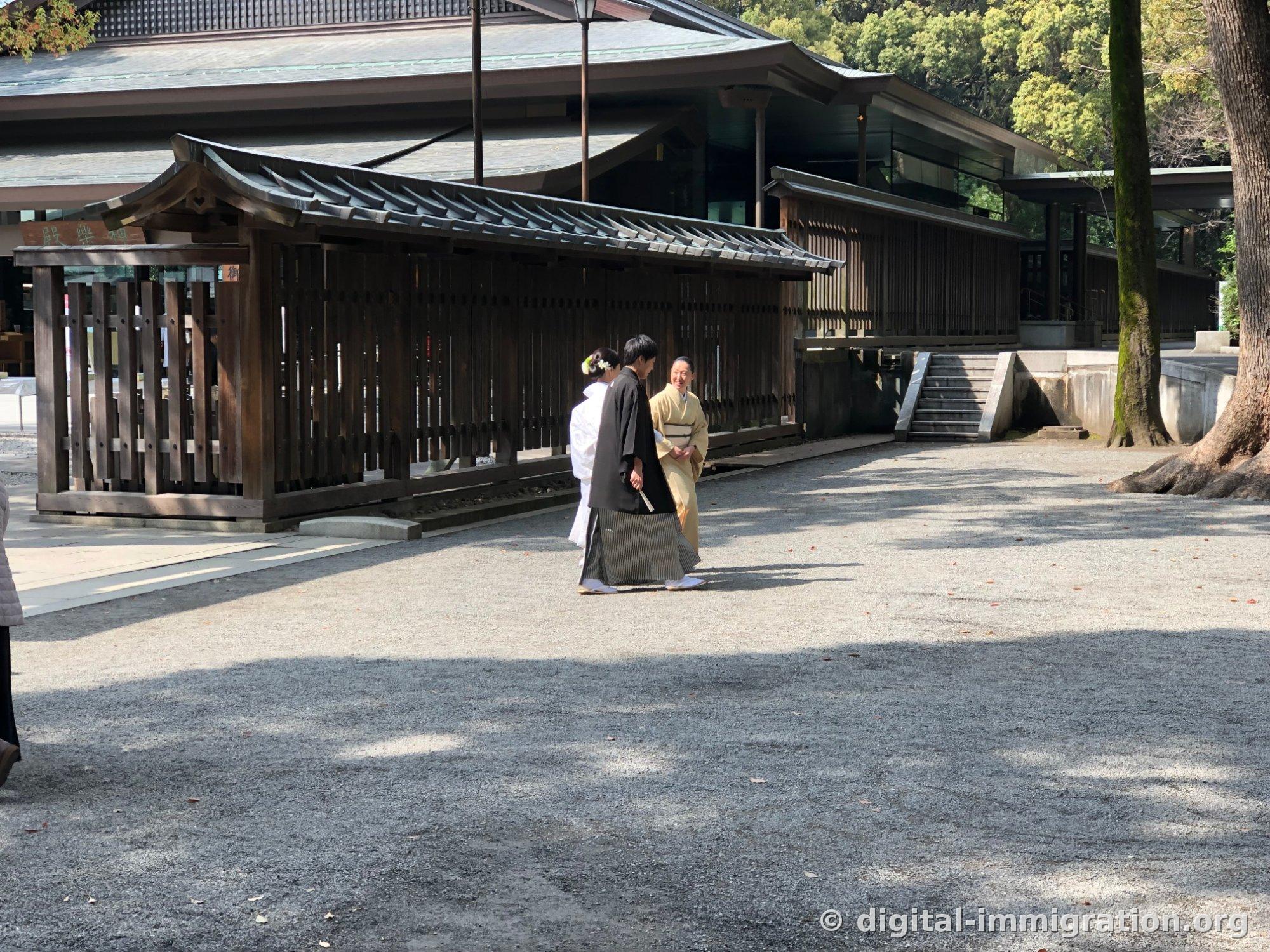
The real treasure of the day wasn't planned. In front of a corridor on one side of the courtyard, a bride in a white shiromuku wearing a wataboshi was talking with a groom in haori-hakama, and an elderly woman in a yellow kimono. Mixed in among the groups of tourists, I initially thought it was a photo shoot. It was an actual wedding ceremony.
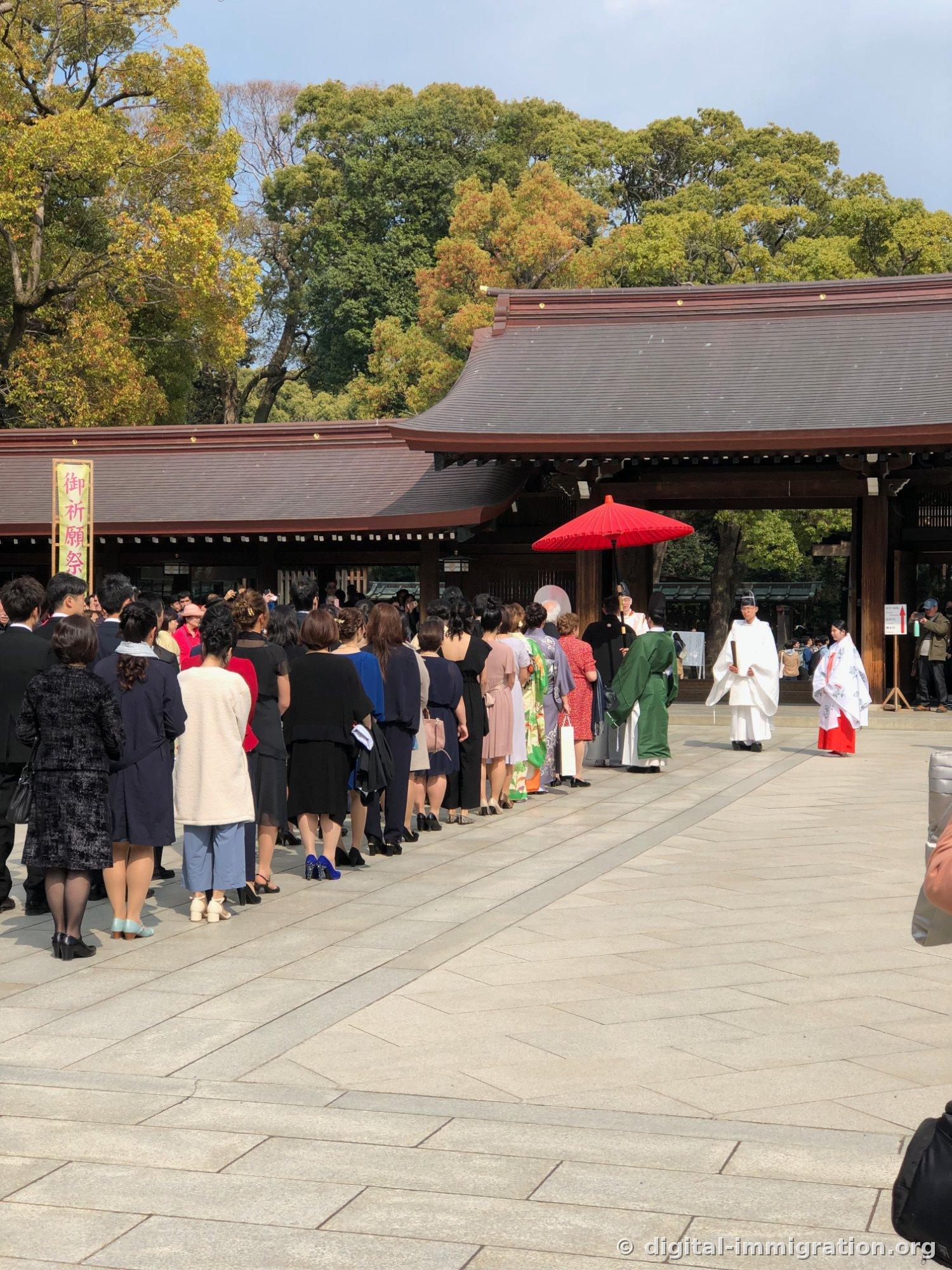
Shortly after, a procession led by a red umbrella (sashikakegasa) emerged from the gate direction. A white-uniformed Shinto priest led the way, followed by a shrine maiden in white top and red hakama. Behind them, guests in formal wear and kimonos lined up, and beside them stood a yellow flag reading '御祈願祭'. Everyone stopped and watched, but no one blocked the way. The sense of distance was good.
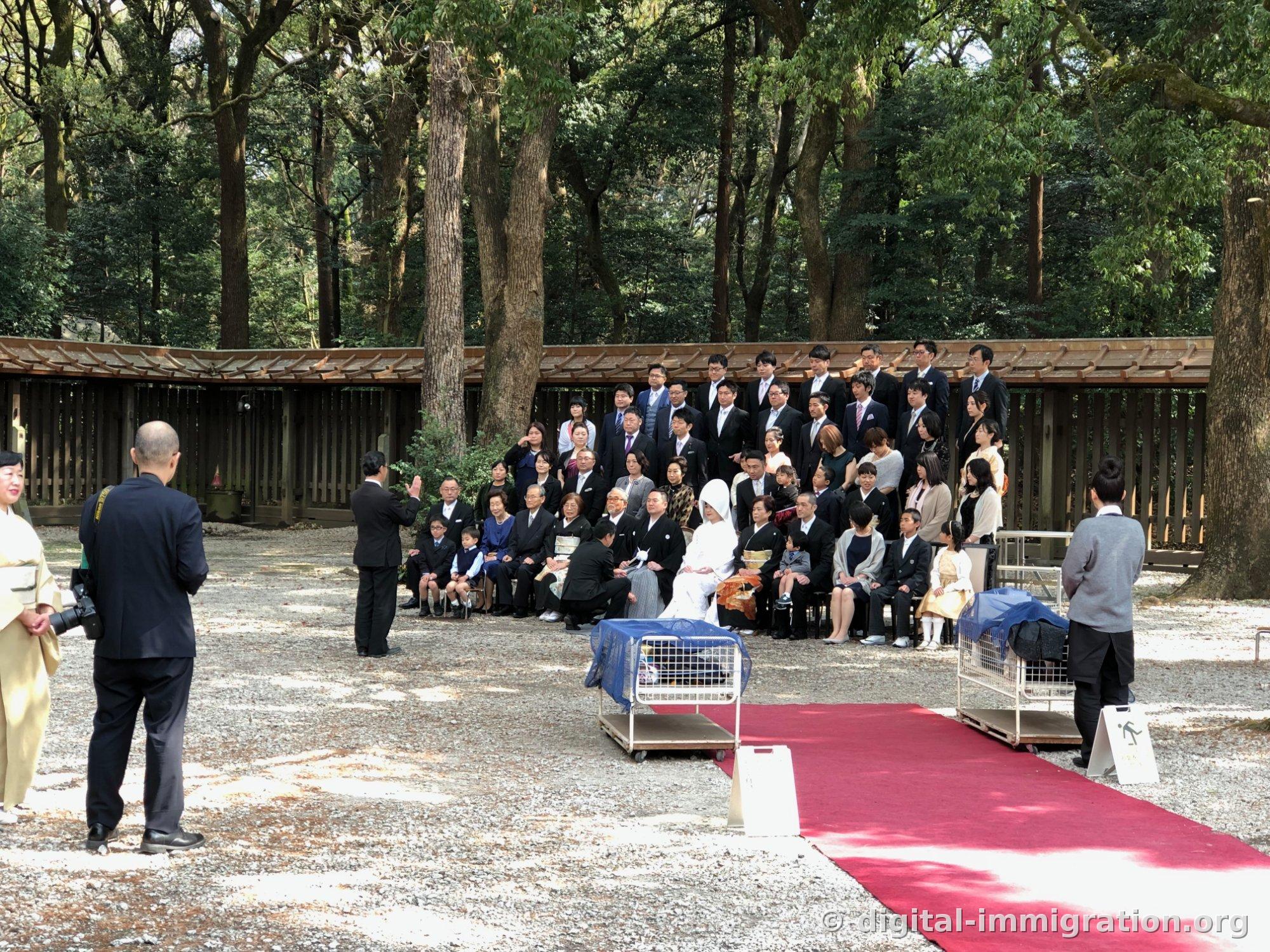
In the gravel courtyard deeper in the forest, group photography was in full swing. A red carpet was spread, and while the photographer raised their hand to direct attention, dozens of guests stood in three or four rows. The bride in white sat in the center of the front row, flanked alternately by men in black formal wear and women in elaborate kimonos. Even lighting cases and mobile carts were visible on the ground, showing the entire preparation process.
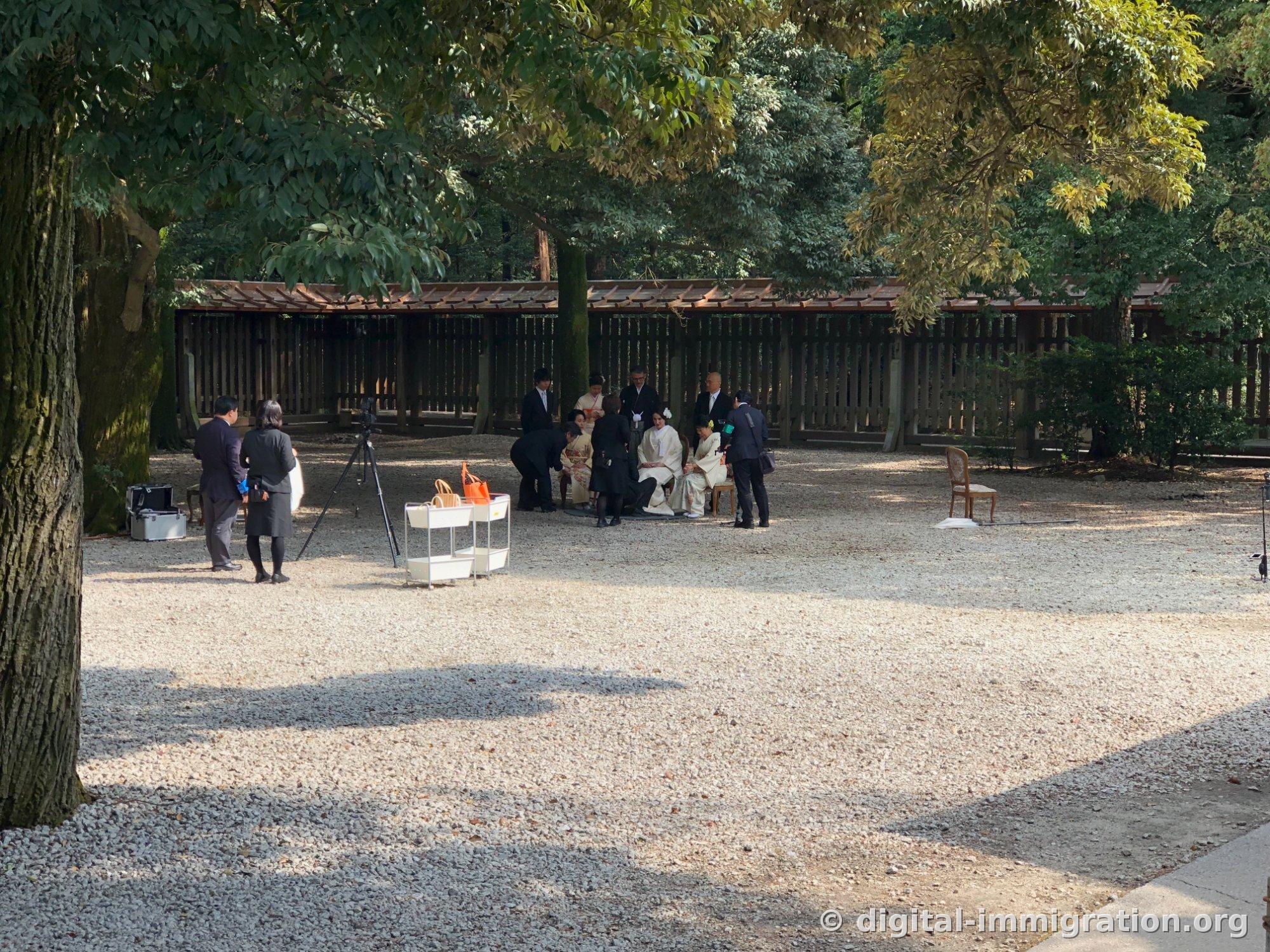
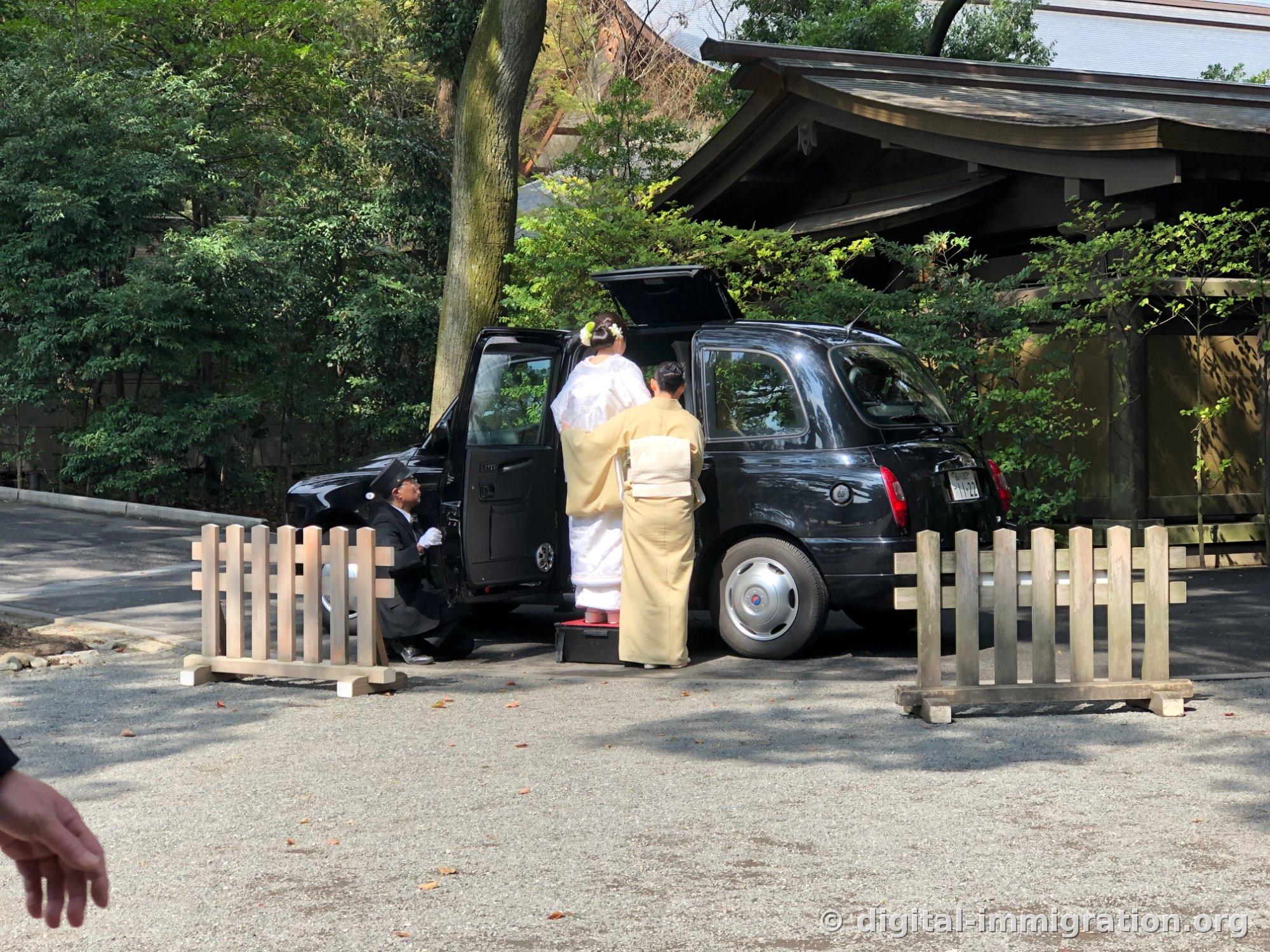
What caught my eye most was the car. After the photo shoot, the car the bride rode in was a black London taxi-style classic sedan. The rear door was tilted open, and a white-gloved driver knelt while holding the step. The bride in shiromuku placed her foot on the black step, and a woman in kimono beside her supported her train. Round headlights, a vertically elongated body, silver wheel caps. I never thought I'd see, so close up, a bride dressed in hundred-year-old clothing boarding a hundred-year-old style car in the shrine forest in the middle of Tokyo. My hands were slightly trembling as I pressed the shutter a few times.
Families in Kimono — Not Just Weddings
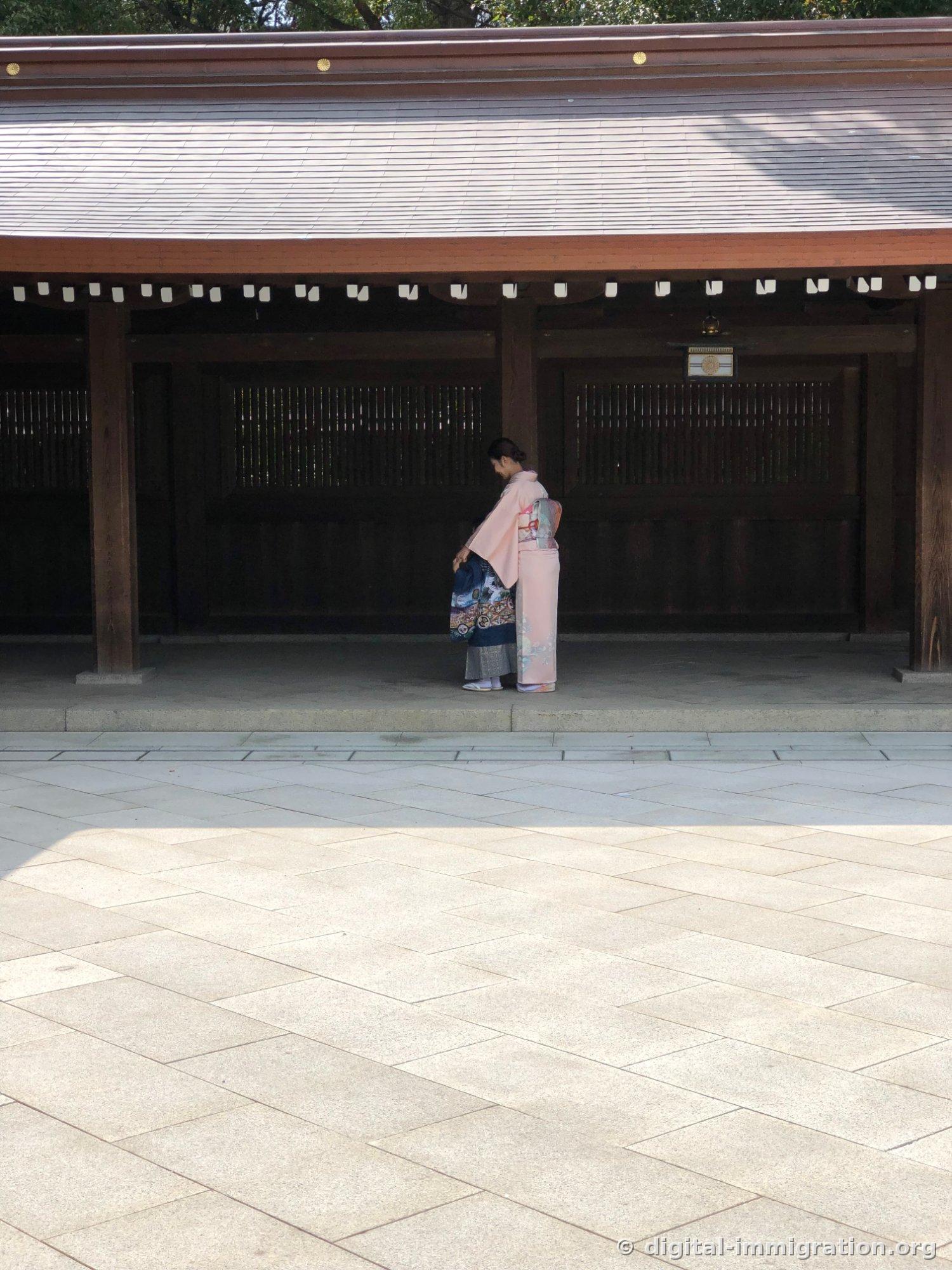
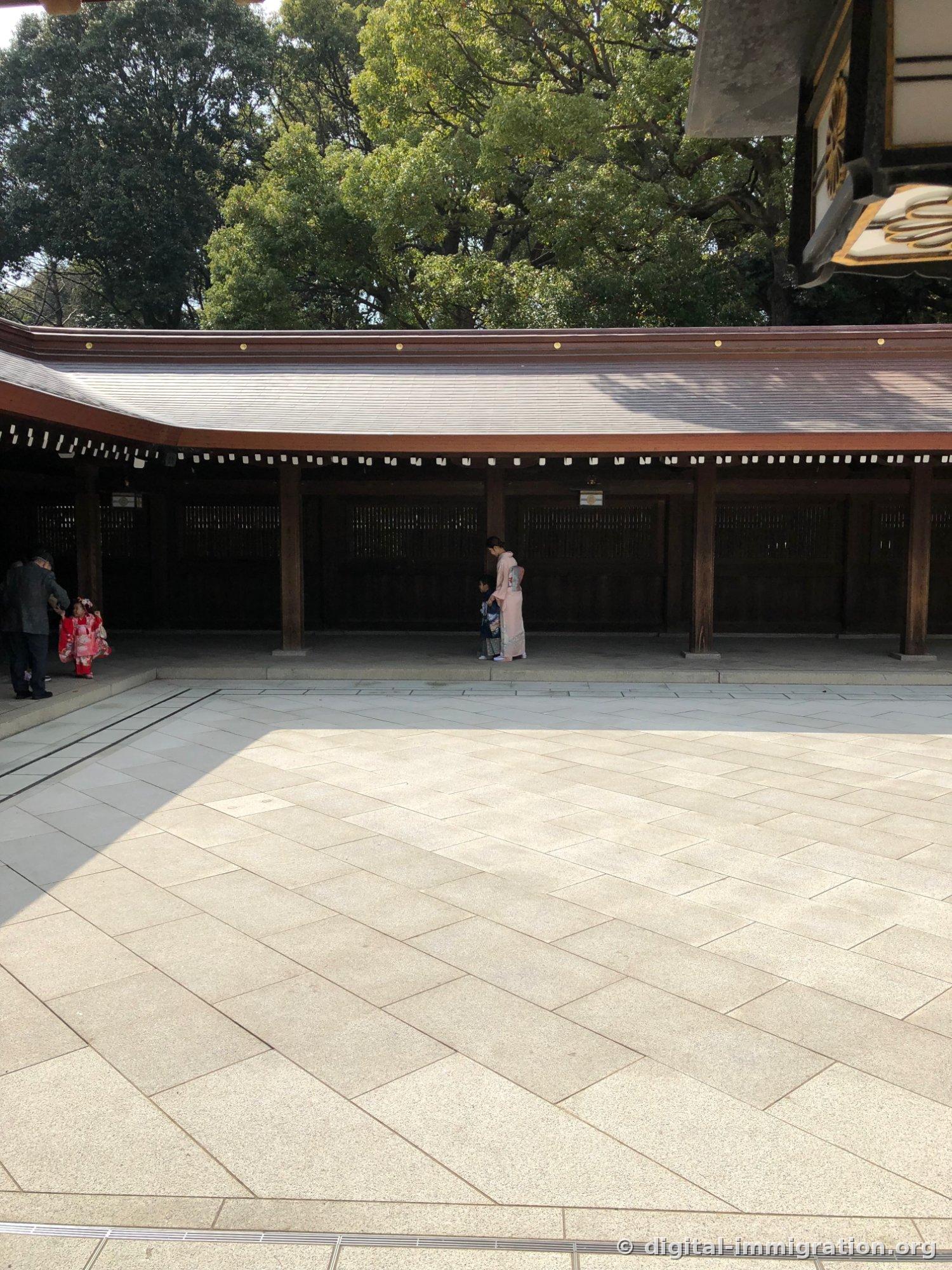
In front of the corridor, a woman in a pink kimono was adjusting a child's haori. The child was dressed formally in navy with a crane pattern. A short distance away, a very small girl in a red kimono stood holding an adult's hand. It appeared to be a Shichi-go-san shrine visit. The scene of just this small group remaining in the empty granite courtyard stayed oddly long in my memory.
Things to Note on the Way Out
- The entire approach path is gravel. Shoes with heels and luggage with small wheels will struggle. It's better to use the brick path along the edge.
- The courtyard in front of the main hall has no shade at all. A hat or parasol is essential if visiting on a summer afternoon.
- If you encounter a wedding or prayer ceremony procession, it's polite to step aside and watch from behind. I didn't see anyone using flash photography directly, and that seemed to be why this space is maintained.
- No photography signs are posted inside the blessing counter and in some areas. Just check the signs as you go.
- The sake and wine barrel section and the Namji Bridge stream are easy to pass without noticing. Since the round-trip distance is the same, if you miss one on the way in, you can see it on the way out.
- Opening and closing times change monthly, and controlled areas appear on days when ceremonies are held. Checking official information before your visit is recommended.
When I left, as soon as I passed the first torii gate again, the sounds of Harajuku returned in full. Traffic light sounds, people laughing, bus engines. I turned around once. Inside the torii gate was still forest. For a hundred years, this city has not reversed the decision to leave nearly one million square meters of land as forest in the heart of the city.
Baca seterusnya
- From Akihabara's Chuo-dori to the Kanda River: A Record of Tokyo's Electronics District Revisited Multiple Times
Tokyo's Akihabara is a neighborhood where it's hard to say you've seen everything in a single visit. I've come multiple times across different seasons, and each time the signs chan…
Tokyo · Akihabara - Buying a Single ¥300 Year-End Jumbo Lottery Ticket at Nishi-Ginza Chance Center in Tokyo
Exit from the Hibiya exit of Tokyo's Shimbashi Station, walk toward the elevated highway for about three minutes, and suddenly you'll see a line of people stretching along the side…
Tokyo · Nishi-Ginza Chance Center - Ueno Ameyoko, the real magic starts after sunset — an evening walk from the Okachimachi Gate to Ueno Station
Every time I come to Tokyo, my feet find their way to Ueno Ameyoko (アメ横) without fail. This time I entered from the Okachimachi side and worked my way toward Ueno Station. I've met…
Tokyo · Ameya Yokocho Market