Pha That Luang in Vientiane: Walking the Golden Stupa on a Cloudy Afternoon at Five O'Clock
Take a tuk-tuk fifteen minutes northeast from downtown Vientiane and the road suddenly widens, with a golden mass rising abruptly beyond a wall. Pha That Luang. The very stupa that…
Вьентян · Тат Луанг
Take a tuk-tuk fifteen minutes northeast from downtown Vientiane and the road suddenly widens, with a golden mass rising abruptly beyond a wall. Pha That Luang. The very stupa that appears on Laotian currency and the national seal. This is my third visit, and each time I've come in the late afternoon. If you arrive around noon, the plaza floor becomes a frying pan and it's hard to stand. On this day, thick monsoon clouds covered the sky, making it possible to walk without seeking shade.
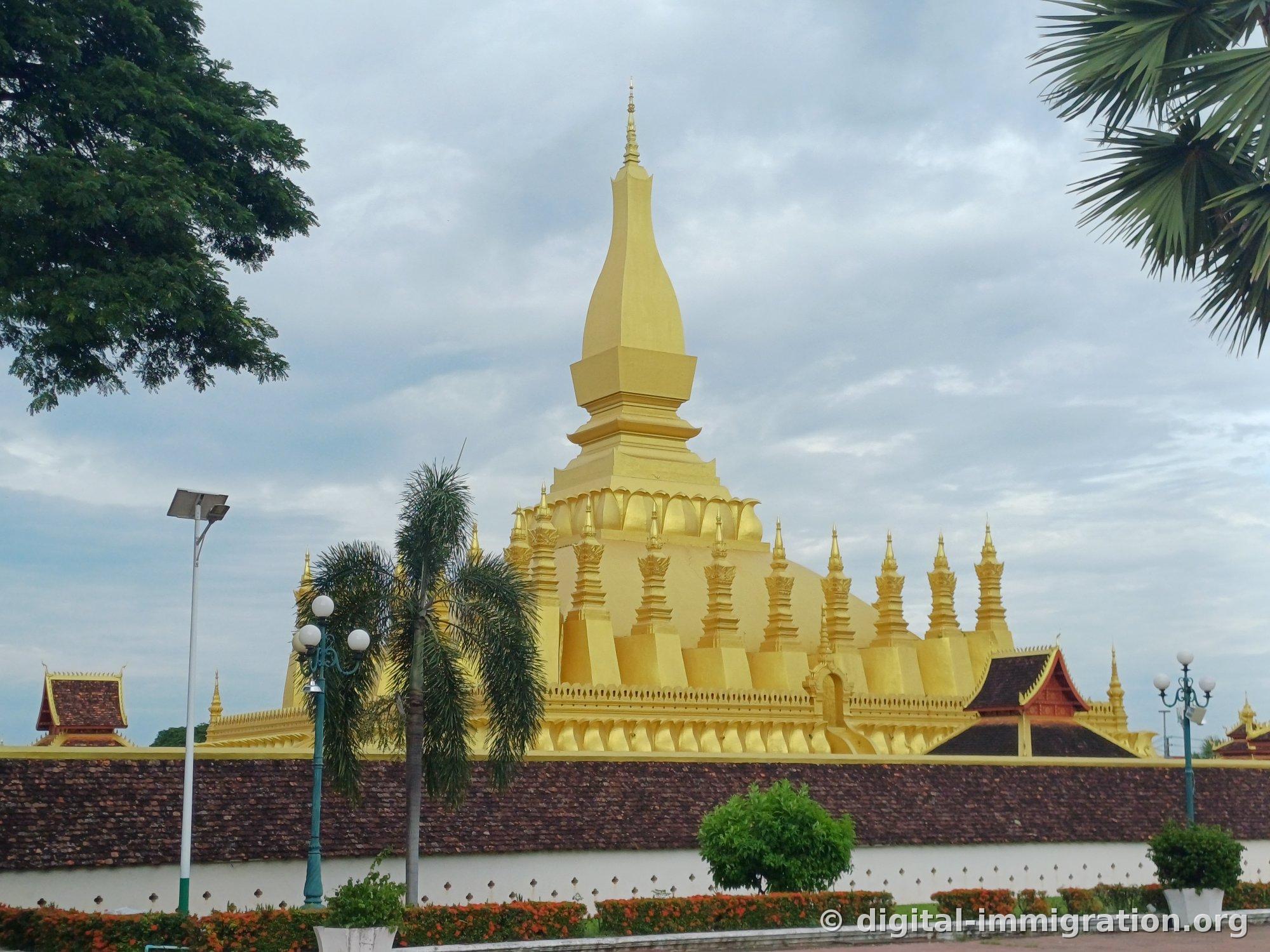
What to Know First — This Isn't Just a Stupa, It's a Complex
The most common mistake first-time visitors make is snapping a few photos of the stupa and leaving after twenty minutes. Pha That Luang is a complex centered on the golden stupa, surrounded by a square of colonnade walls, with a plaza beyond it, two large temple buildings, and a long promenade all included. The stupa area inside the walls requires an entrance fee, while the outer plaza and surrounding temples are free to enter. Since fees are adjusted annually, it's best to check the ticket booth board directly.
I recommend walking around it with the wall on your left. From the front, the stupa looks like a sharp triangle, but when you circle around, you see the lotus-petal-shaped base at the bottom and about thirty small spires layered one upon another. This angle is far more interesting.
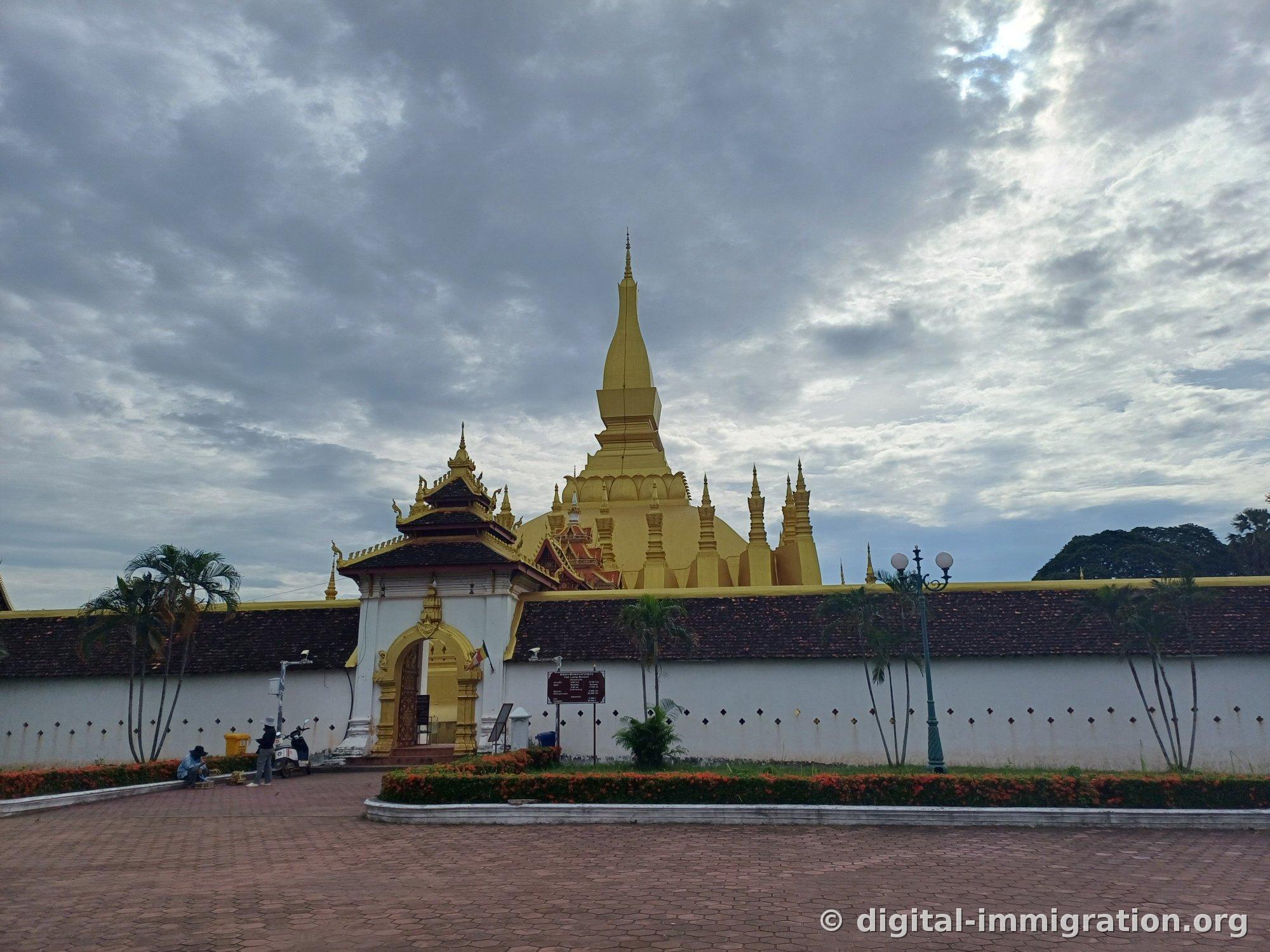
Heading toward the main gate of the wall, you'll find a colonnade with white walls wrapped in gold bands and a small gate pavilion. Information signs in Laotian and English are posted in front. There are a couple of vendors sitting in front of this gate selling water and drinks, but since there's almost no shade inside the plaza, it's better to buy a bottle of water here before entering.
Two Temples Besides the Stupa — Skip These and You've Only Seen Half
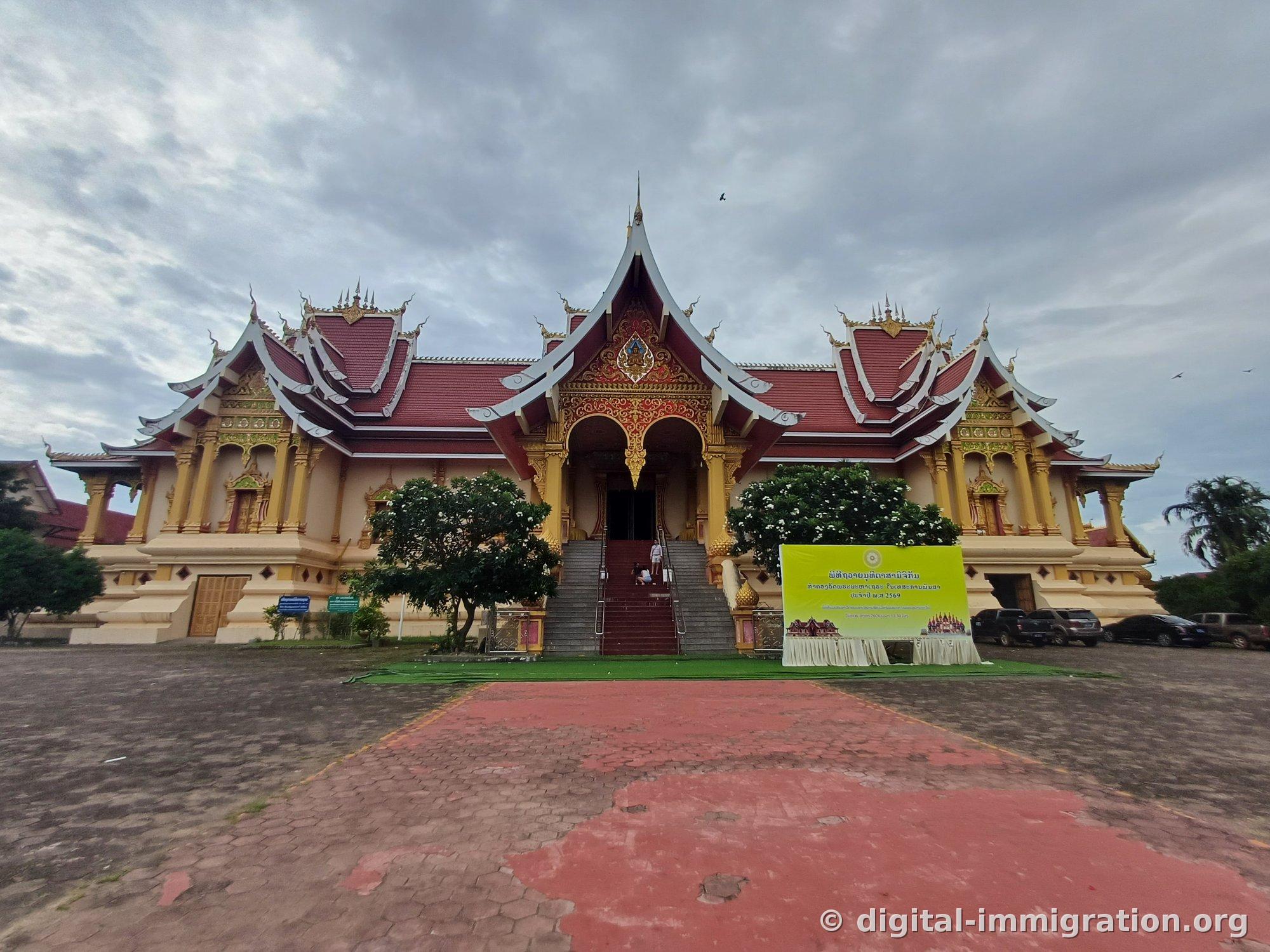
To the west of the stupa stands a large ordination hall with a red roof and gilded gable. Artificial grass covered the front courtyard, and yellow banners were hung, displaying announcements in Laotian for Buddhist Year 2569 events. So this building isn't a tourist exhibition space—it's a living temple still hosting ceremonies. You must remove your shoes before climbing the steps.
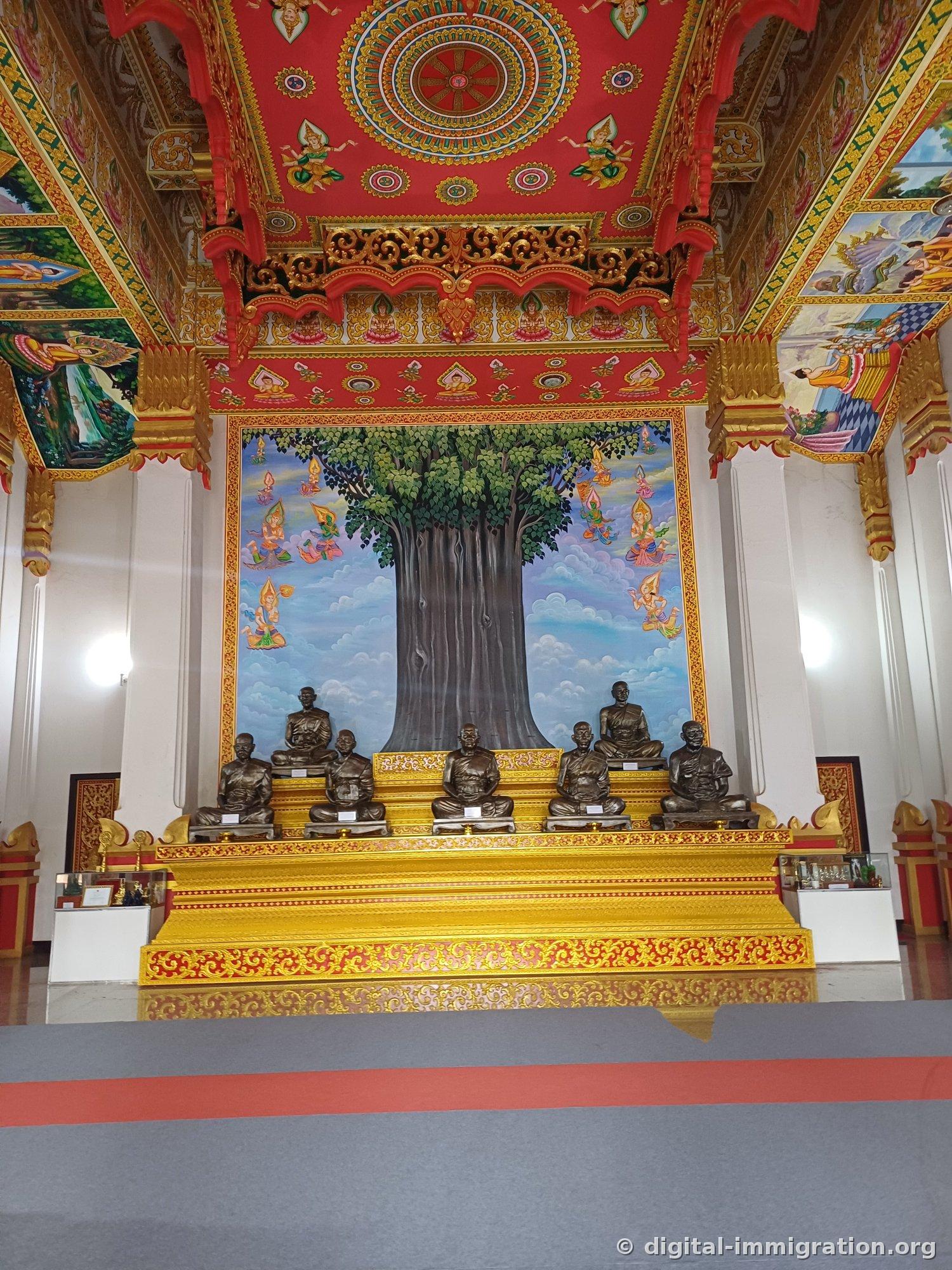
The moment you step inside, the air becomes noticeably cool. The cool touch of the marble floor against bare feet brings relief, so everyone who enters sweating pauses for a moment. Looking up at the ceiling, you see the Dhamma wheel pattern drawn large against a red background, and below it the entire wall is covered in paintings of the Bodhi tree. Beneath the tree on the platform sit six dark-colored stone statues of revered monks in a row. Small plaques in front of each statue bear inscriptions I couldn't read as they're in Laotian. When I asked a temple staff member, they gestured in explanation that these were successive abbots of the temple. I couldn't confirm the exact list.
Цахим цагаачлалын маягт (LDIF) бүрдүүлэх
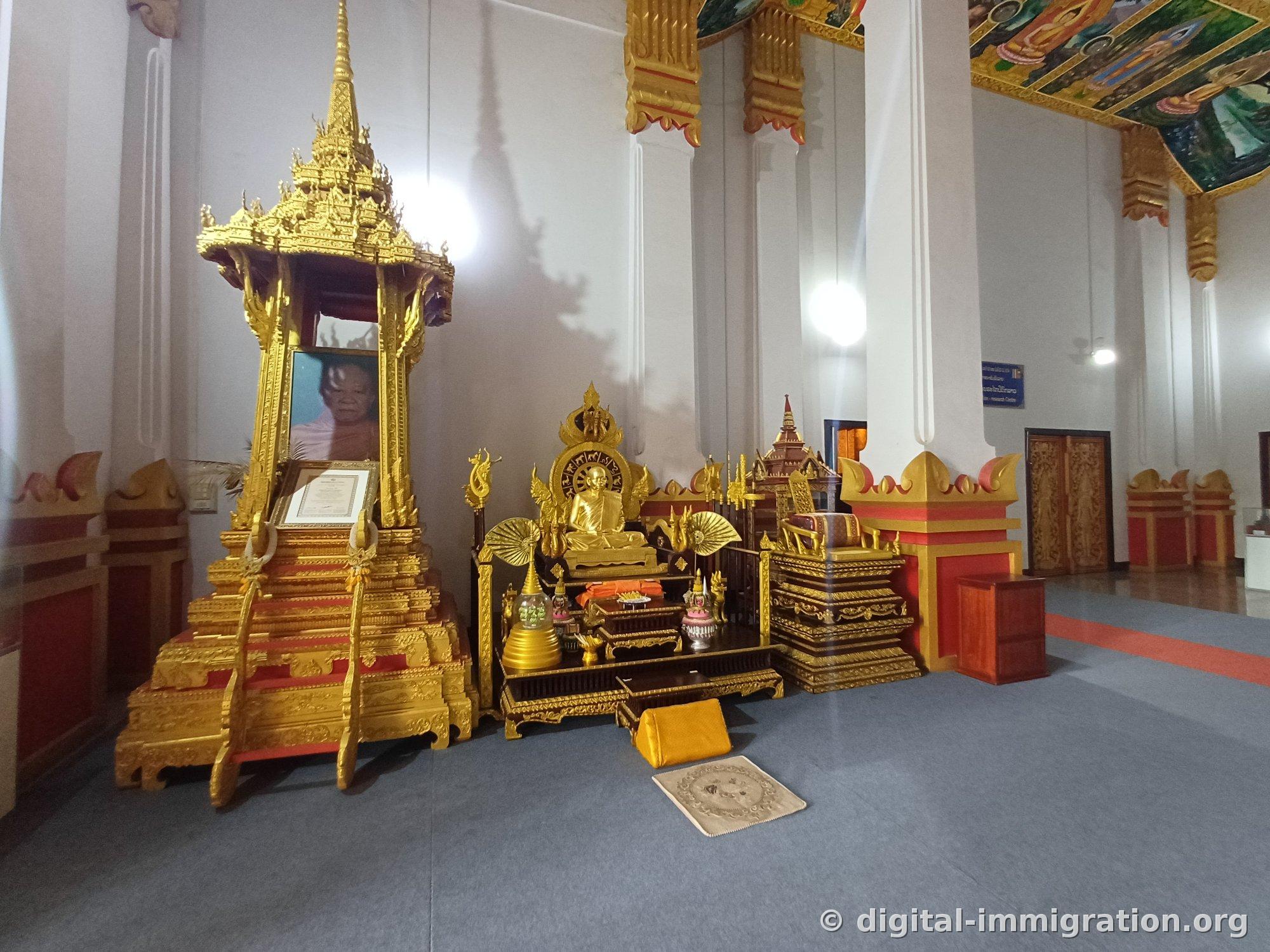
In a corner to the right of the same hall, inside a golden pavilion, a portrait photograph and framed documents of a late abbess were enshrined. Beside it lay a small golden statue, a fan, and layered reliquary-shaped ornaments beneath glass, with yellow meditation cushions and prayer mats on the floor. Most tourists simply pass through, but I think these corners actually reveal what the temple holds dear. Before taking photos, it's courteous to check whether anyone is paying respects nearby.
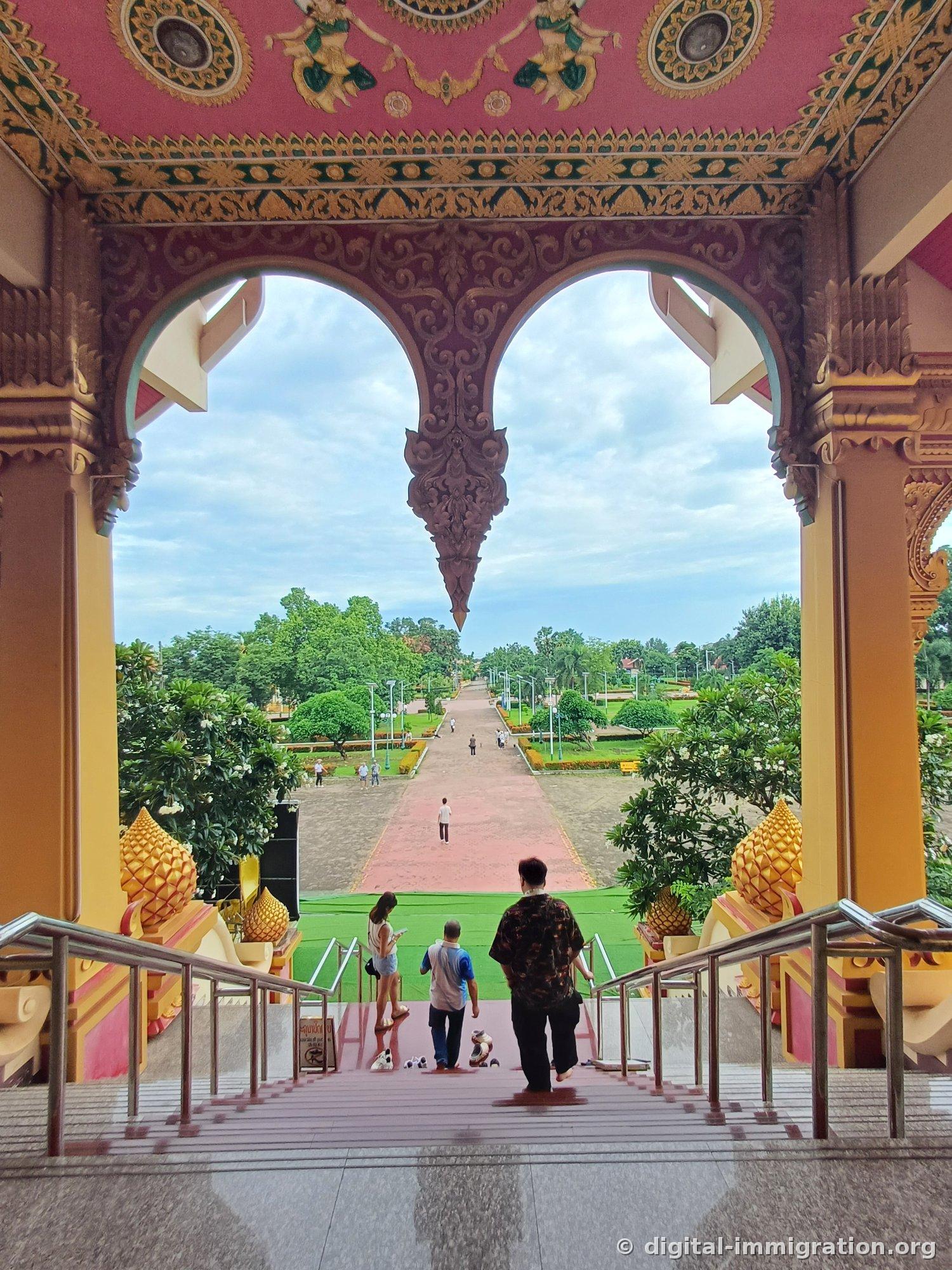
The best moment of the day was standing in the doorway of the ordination hall and looking out. Two carved wooden arches frame the landscape like a picture, and through them a red pilgrimage path stretches in a straight line to the end of the grounds. Shoes sit scattered at the foot of the steps as people descend barefoot. The composition falls naturally into place even when shooting by hand without a tripod.
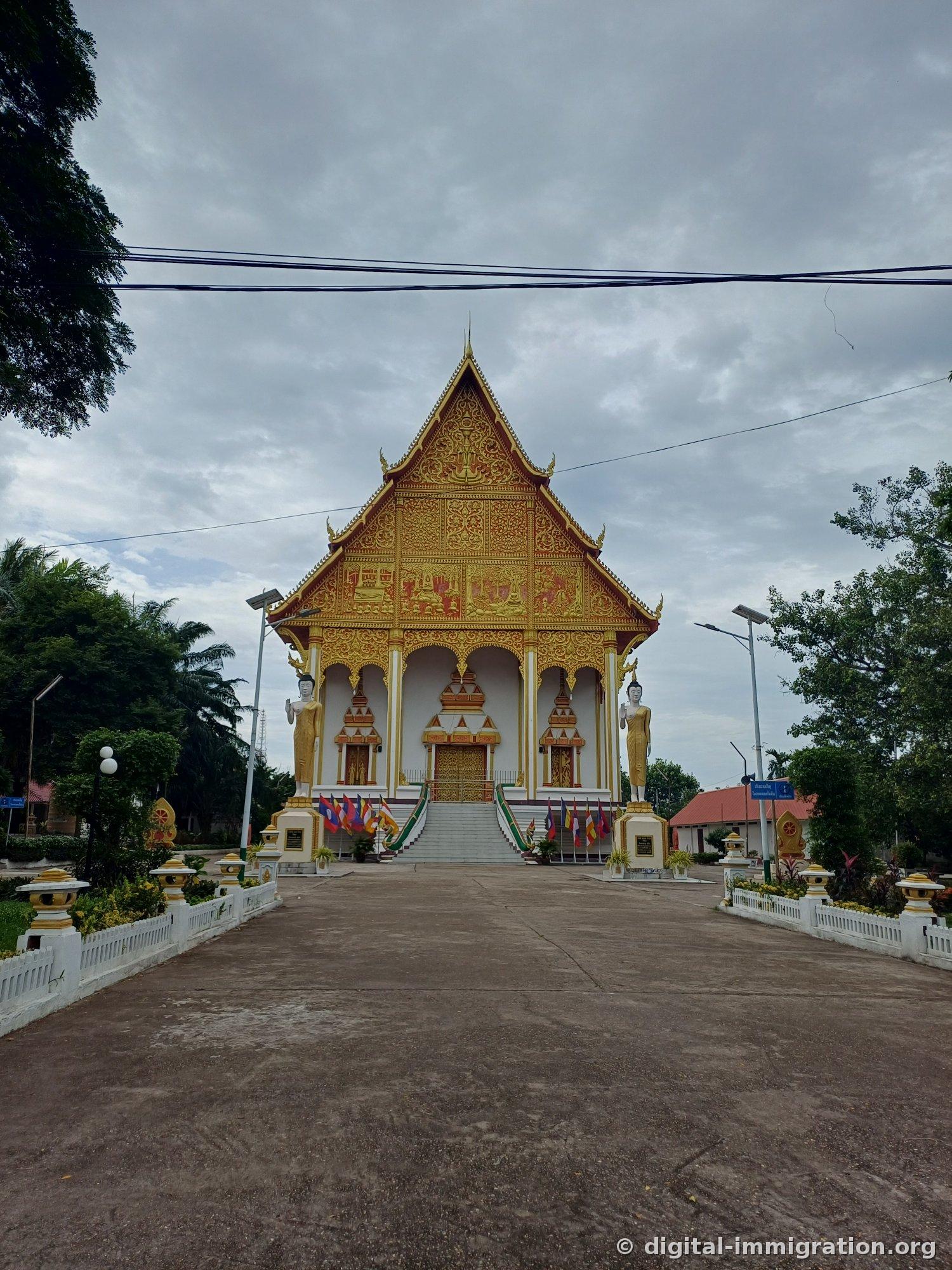
On the opposite side of the complex stands another ordination hall. The entire gilded gable is densely carved with scenes from the life of Buddha, and two Buddha statues standing on either side raise their hands. Flags of various Buddhist nations and the Laotian flag hung in a row along the staircase railing. With its empty front courtyard, this is the best spot for photographing the front facade.
The Plaza and Promenade — The Flavor of Empty Hours
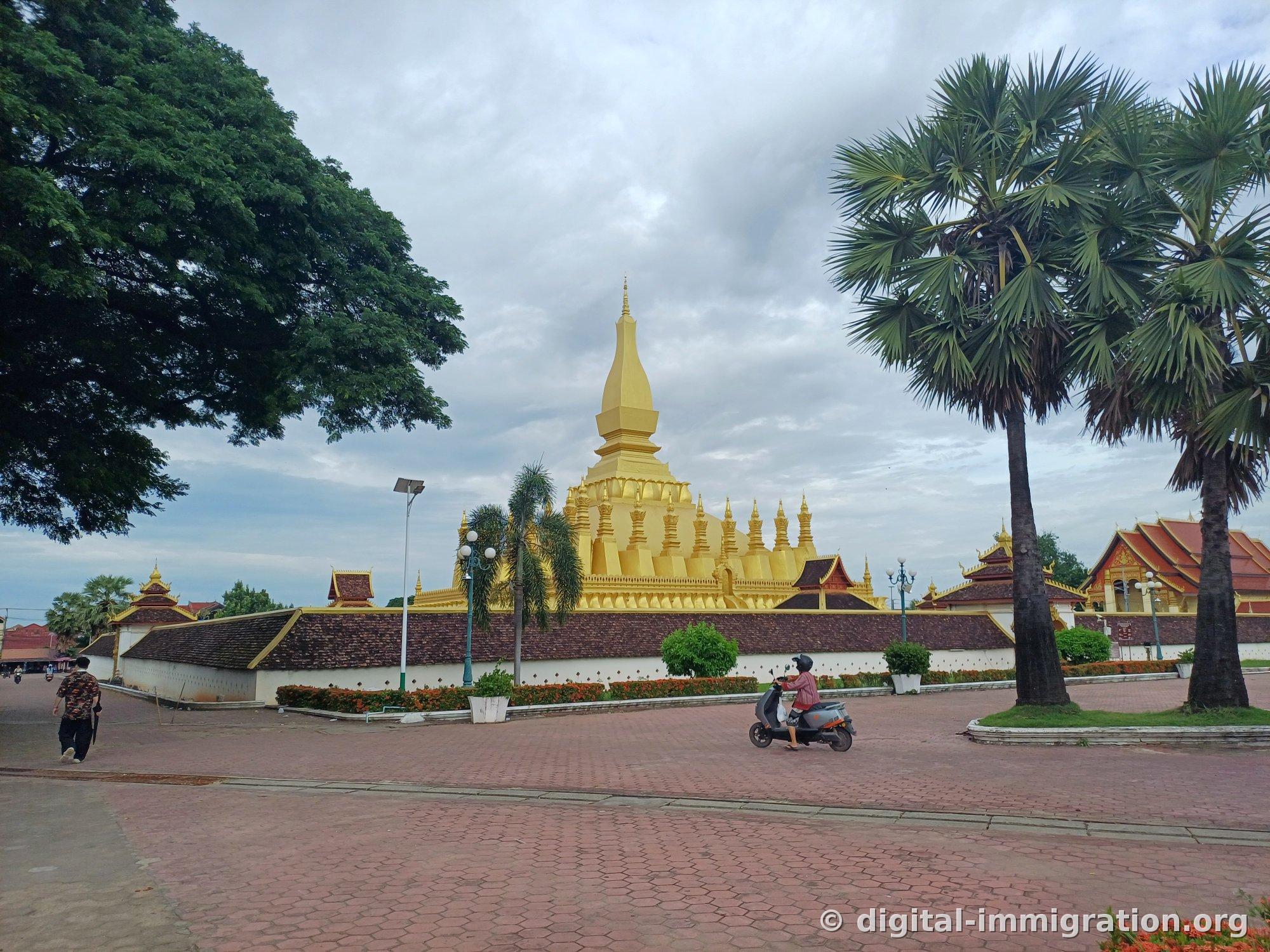
What's surprisingly wonderful about Pha That Luang is not the stupa itself but the red hexagonal-block plaza stretching in front of it. It's wide enough to fit several soccer fields, and in the late afternoon it's completely empty. A single palm tree stands alone on a planter in the middle, with just a few people scattered around walking. There's almost no sound—just the distant hum of a passing motorcycle and birdsong.
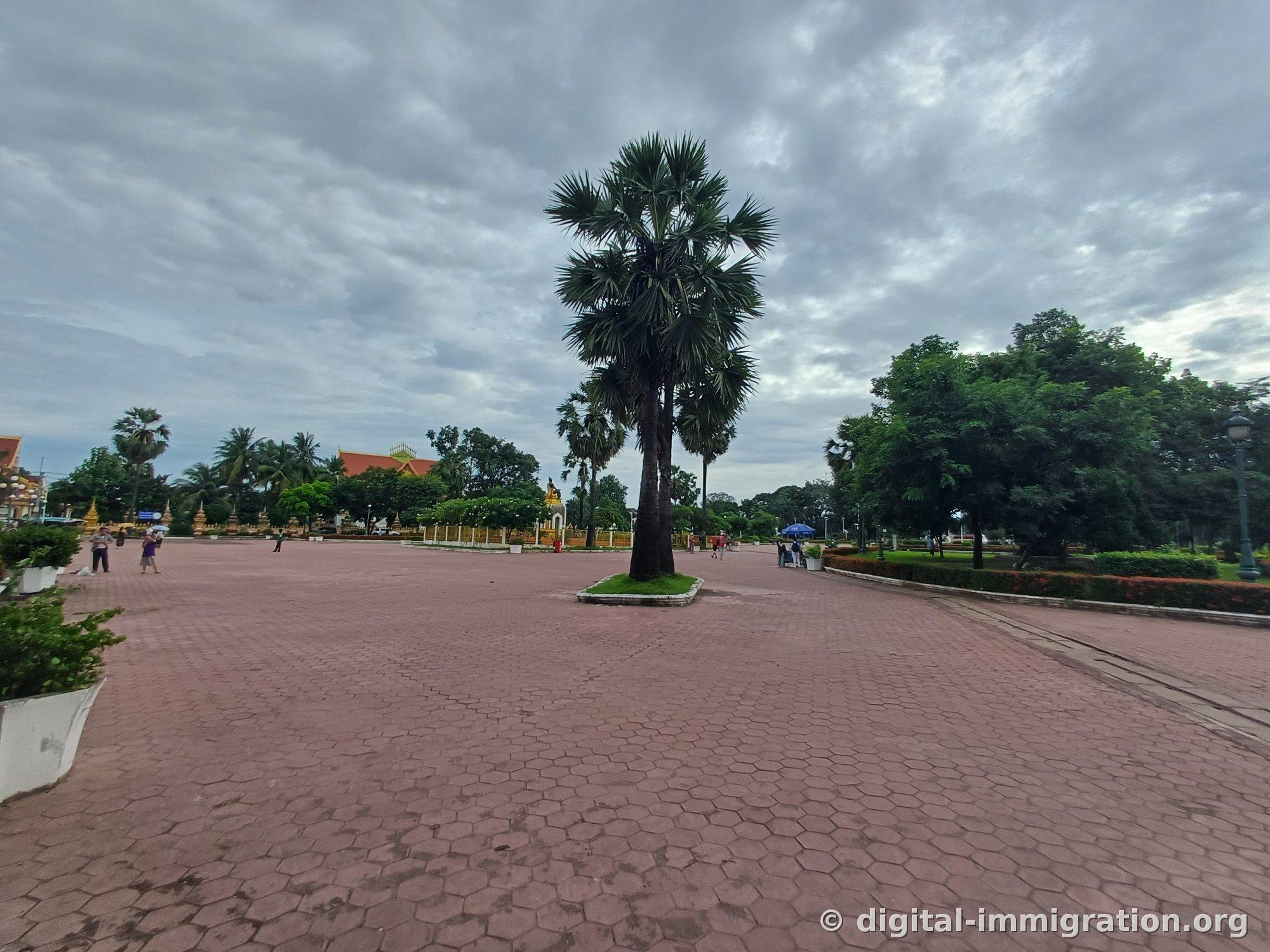
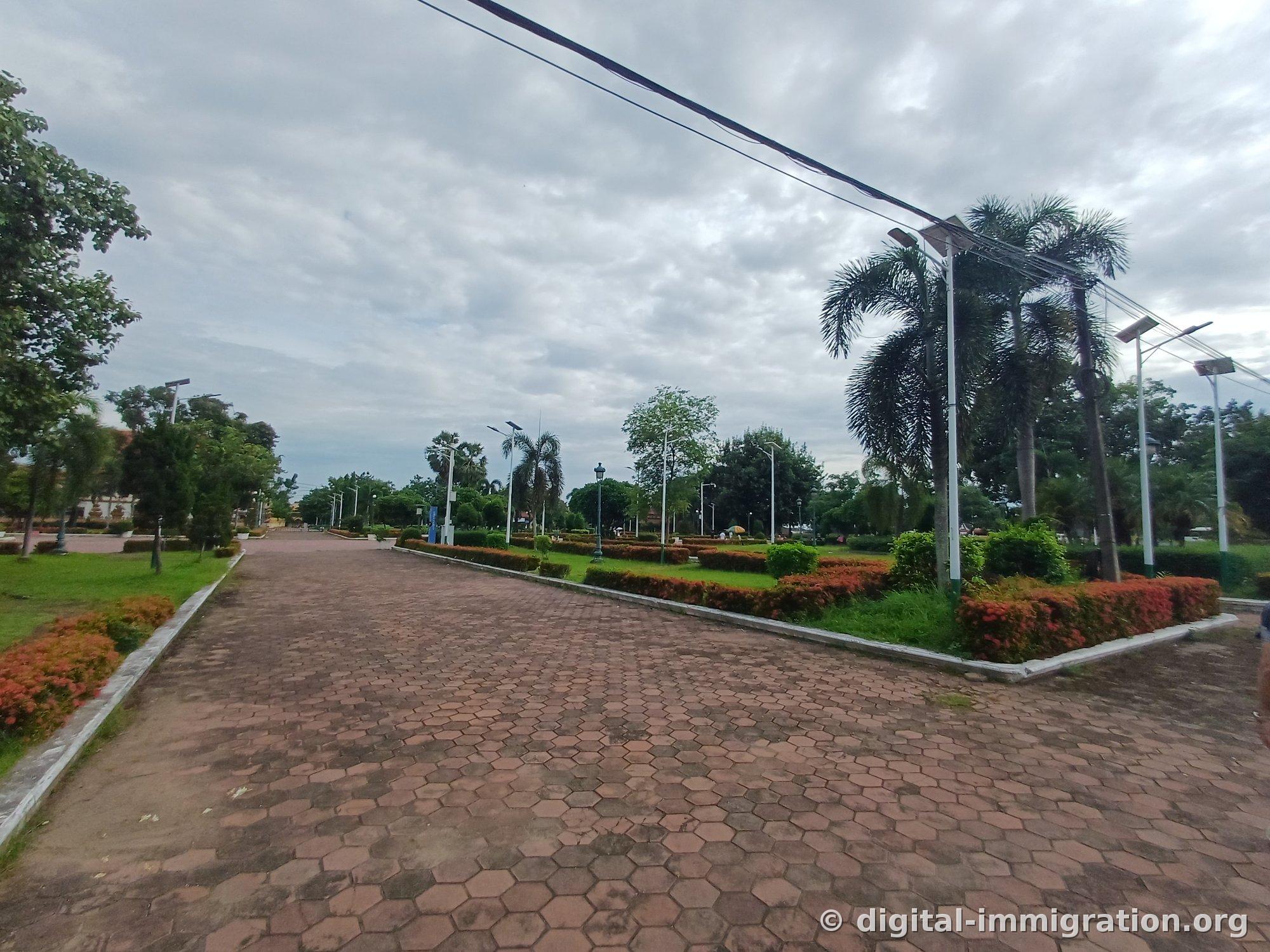
The promenade extending from the plaza has red flower beds and neatly trimmed shrubs lining both sides. If you walk here when the sun is slightly lower, the orange tones of the shrub leaves become particularly vivid. There are scattered benches for resting your legs. On cloudy days, this place actually photographs better—the leaf colors pop against the gray sky.
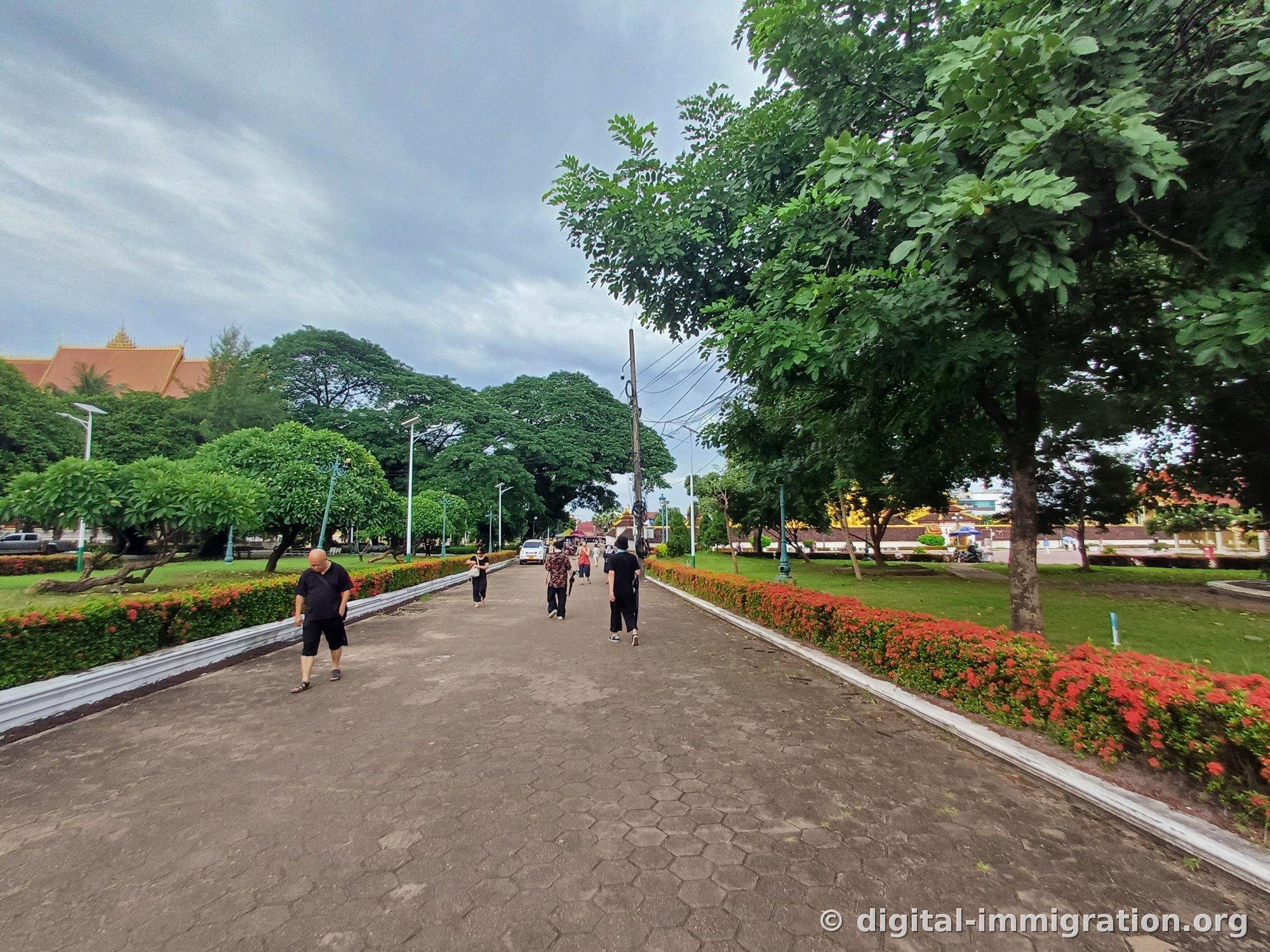
The inner section of the promenade has proper tree shade. Here you see more local people—elders in dark clothes and slippers walking slowly, people shading the sun with their hands instead of umbrellas. It feels more like a neighborhood park than a tourist site. Looking back from the end of this path, the golden stupa peeks through the trees.
Location and How to Get There
It's roughly 4km from downtown Vientiane (the Namphu Fountain area and Mekong Night Market). If you hail a tuk-tuk, expect negotiation, and there's often a big difference between the initial asking price and what you actually agree to pay. Using a ride-hailing app (like Loca, a local rideshare app) lets you avoid haggling and is usually cheaper than negotiated tuk-tuk fares. The challenge is getting back—tuk-tuks waiting in front of Pha That Luang often quote tourist prices. I called an app and waited at the plaza entrance. If you rented a motorcycle, you can park it along the edge of the red plaza outside the walls. We weren't charged a separate parking fee.
Right next door are the Fa That Luang Square and the Monument to War Heroes, all walkable together. If you have extra time, Patuxai (Victory Gate) is just five minutes by tuk-tuk, so many visitors see them as a set.
Notes After the Visit
- Dress code: Both the stupa area within the walls and the temples require covered shoulders and knees. A light scarf solves this. Some entrances loan sarongs, but it's not guaranteed.
- Timing: Early morning or after 4 pm. Around noon, reflected heat from the plaza is intense.
- Time needed: 30 minutes for just the stupa; 1.5 to 2 hours if you visit both temples and walk the promenade.
- During monsoon season (roughly May to October), afternoon downpours are common. Even on this cloudy day, I sheltered from rain inside the ordination hall for about twenty minutes. Standing under the eaves works fine, so it's not a major issue.
- There are no proper shops anywhere inside or outside the walls. It's better to buy water beforehand.
One disappointment: on cloudy days, the stupa's gold loses impact in photos. Gold needs light to gleam, but under clouds it just looks like a dull yellow mass. A return visit on a clear day near sunset would yield completely different images. On the other hand, the cloudy day made walking the plaza much more comfortable, and there were fewer people. What you gain and what you sacrifice is yours to calculate.
Дараа нь унших
- Вьентианы төвд таарсан Киото маягийн усан дуслын бинт — KYO Cafe & Meal тэмдэглэл
Вьентианд өдрийн хоёр цаг бол хамгийн халуун цаг. Сүүдэрт орсон ч нэмэргүй, цамц нуруунд наалдаж байгааг мэдэрдэг цаг. Тэр өдөр ч би хотоор алхаж явтал тэсэж чадахгүй болоод агаарж…
Вьентян · KYO Cafe & Meal - Вьентьян дахь Le Vendôme — Лаост амталсан франц маягийн оройн хоол: пицца, карбонара, салатын гурван тавган түүх
Меконг мөрнөөс салхи гудамж руу нэвтэрч байсан нэгэн орой Ват Инпенгийн (Wat Inpeng) ард байрлах гудамжны гүнд орших Le Vendôme Restaurant-д орсон юм. Вьентьяны франц хоолны яриа г…
Вьентян · Ле Вендом Ресторан - Вьентьян дахь Crowne Plaza рестораны — Томагавк, дарс, Лаост зарцуулсан хамгийн үнэтэй оройн хоолны шөнө
Лаосын Вьентьянд оройн хоолонд ийм их мөнгө зарцуулна гэж би төсөөлөөгүй байсан. Энэ хот бол голын эрэг дэх шөнийн зах дээр шарсан гоймон нэг таваг 30,000 кип орчим, Лао шар айраг…
Вьентян · Краун Плаза Ресторан