From Akihabara's Chuo-dori to the Kanda River: A Record of Tokyo's Electronics District Revisited Multiple Times
Tokyo's Akihabara is a neighborhood where it's hard to say you've seen everything in a single visit. I've come multiple times across different seasons, and each time the signs chan…
Токио · Акихабара
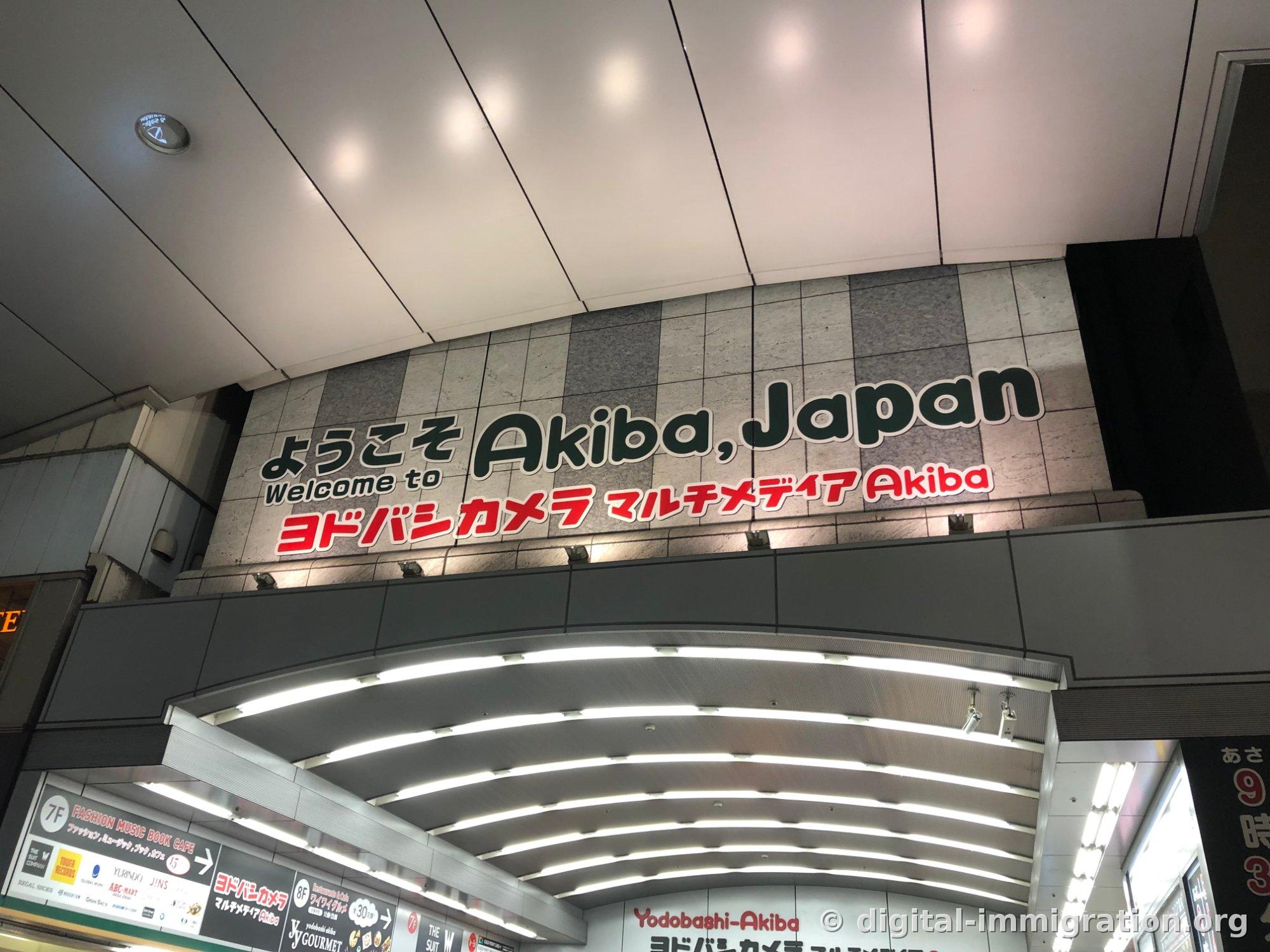
Tokyo's Akihabara is a neighborhood where it's hard to say you've seen everything in a single visit. I've come multiple times across different seasons, and each time the signs change and the prices in the display cases are updated. When you exit through the Denki-gai (Electronics Street) entrance of JR Akihabara Station, the first thing you see is the corridor toward Yodobashi Camera Multimedia Akiba. On my first visit, I got my bearings by looking at this sign.
The first block of Chuo-dori is already overwhelming
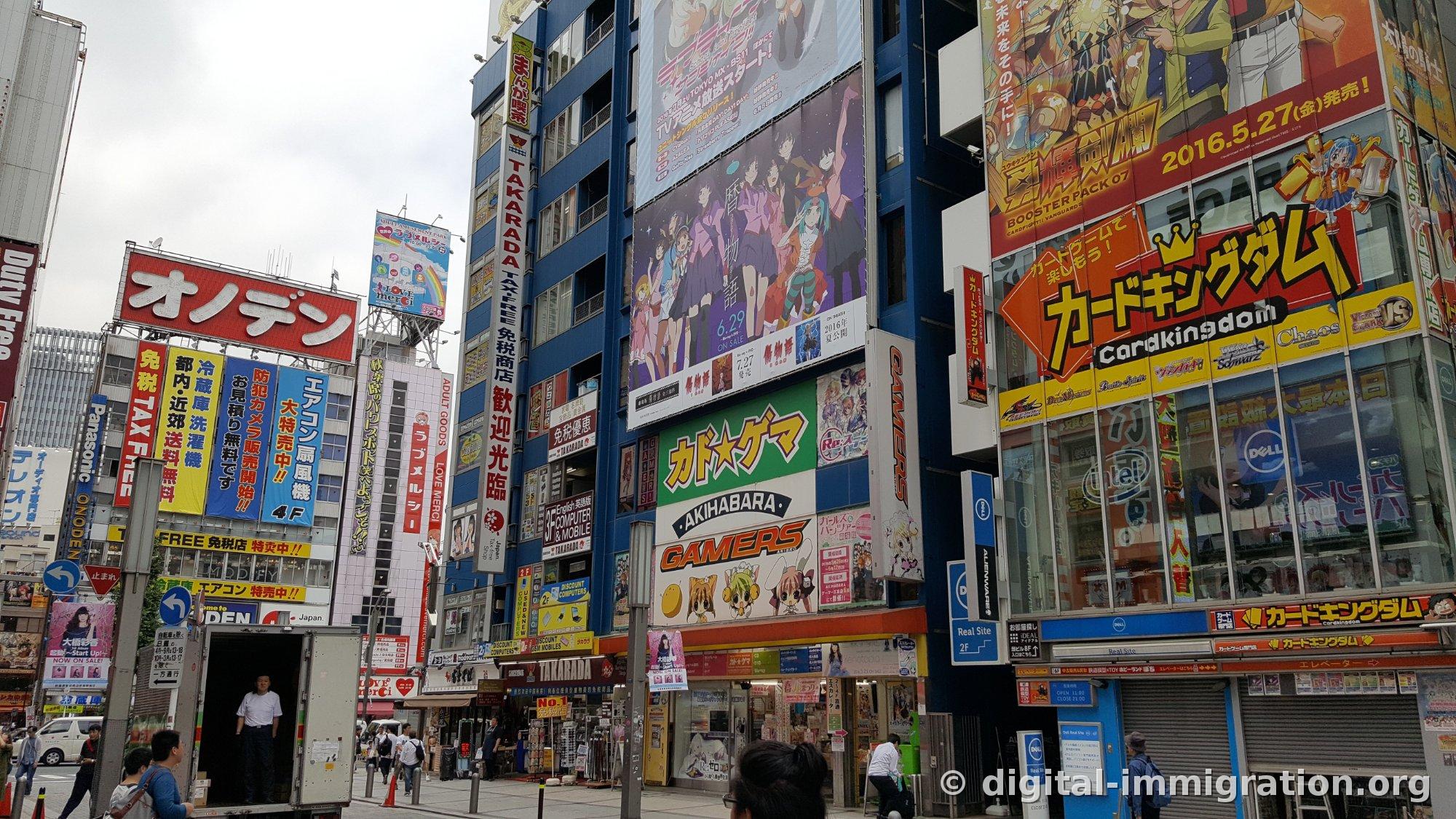
From the Denki-gai exit, it's just one crosswalk to Chuo-dori (Central Street). When you look up, you see the Onoden air conditioner sale banner, Takarada duty-free, Gamers Akihabara, and Card Kingdom signs all overlapping in one frame. Since each building has different businesses on each floor, if you only look at the ground level, you've missed half of it. Gamers is the building with characters drawn on a yellow background; Card Kingdom is on the second floor of the glass building across the street.
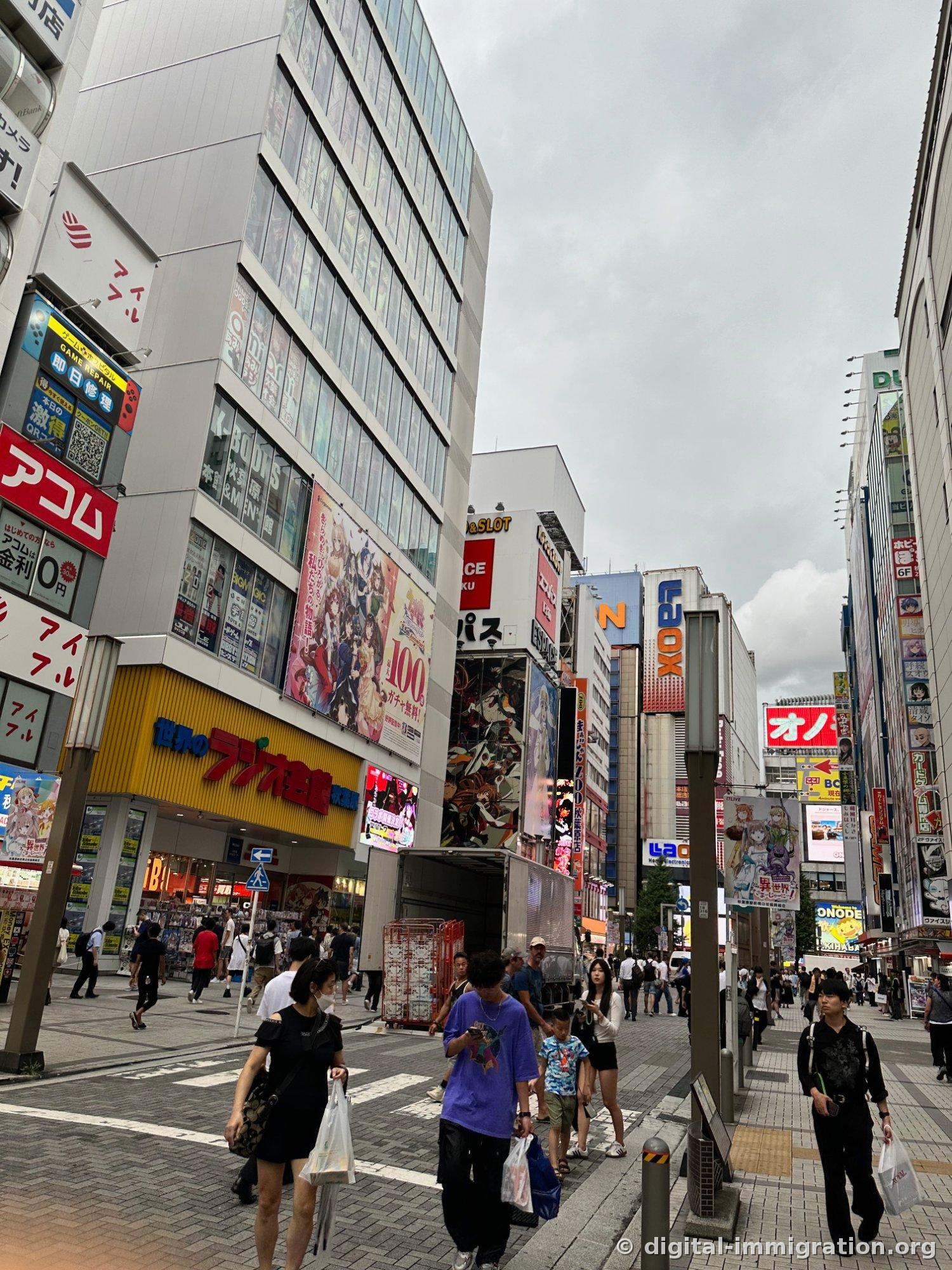
Walking a bit further, you'll see the yellow-signed Radio Hall (Sekai no Radio Kaikan). The building now has a glass facade with K-BOOKS on the upper floors. During times when trucks are unloading cargo on the lower level, the sidewalk narrows and people get pushed toward the street. I stood here for about 30 minutes one summer afternoon, and the humidity just hung in the air so my shirt stuck to my back. Akihabara is a neighborhood with almost no shade.
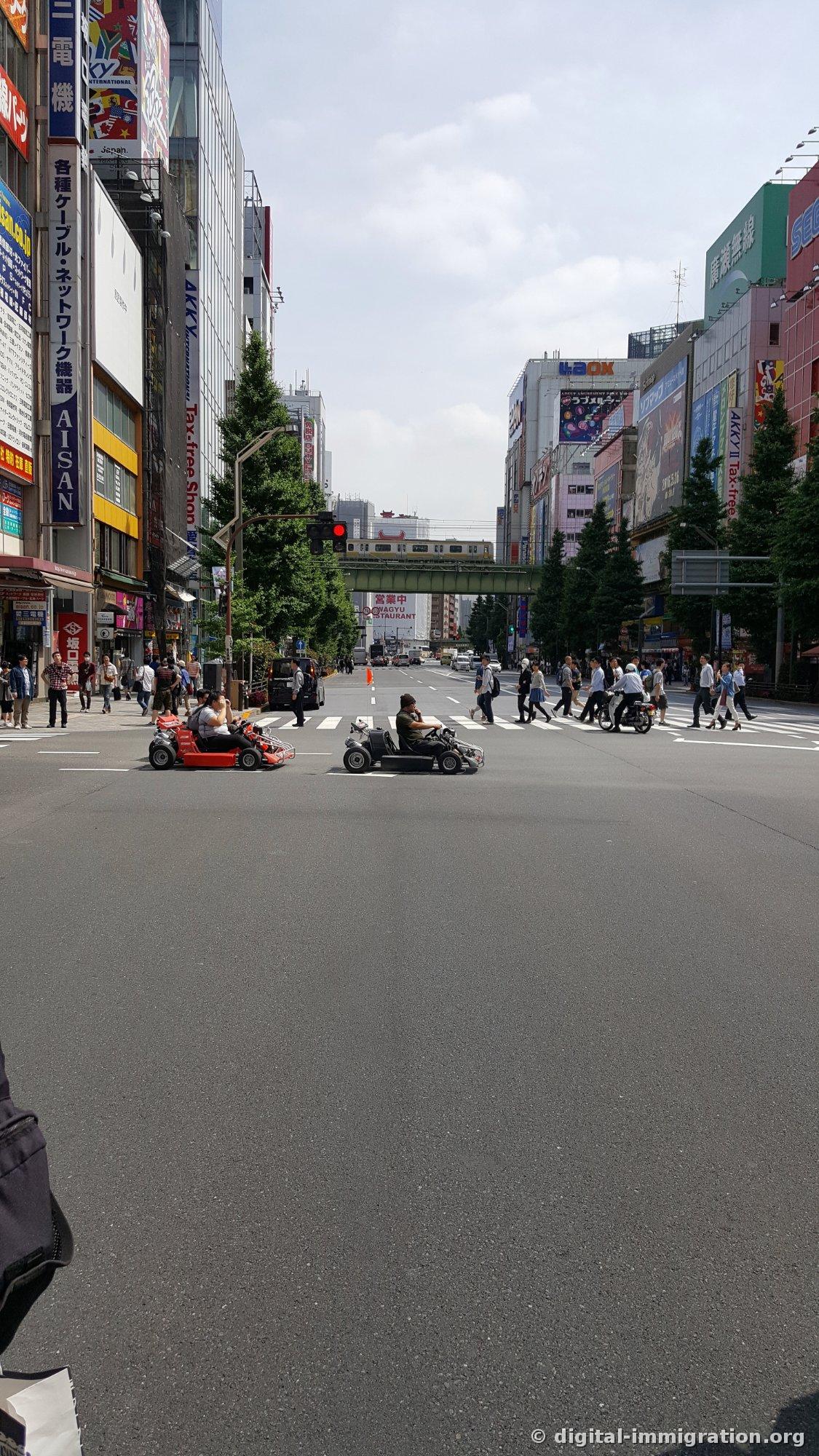
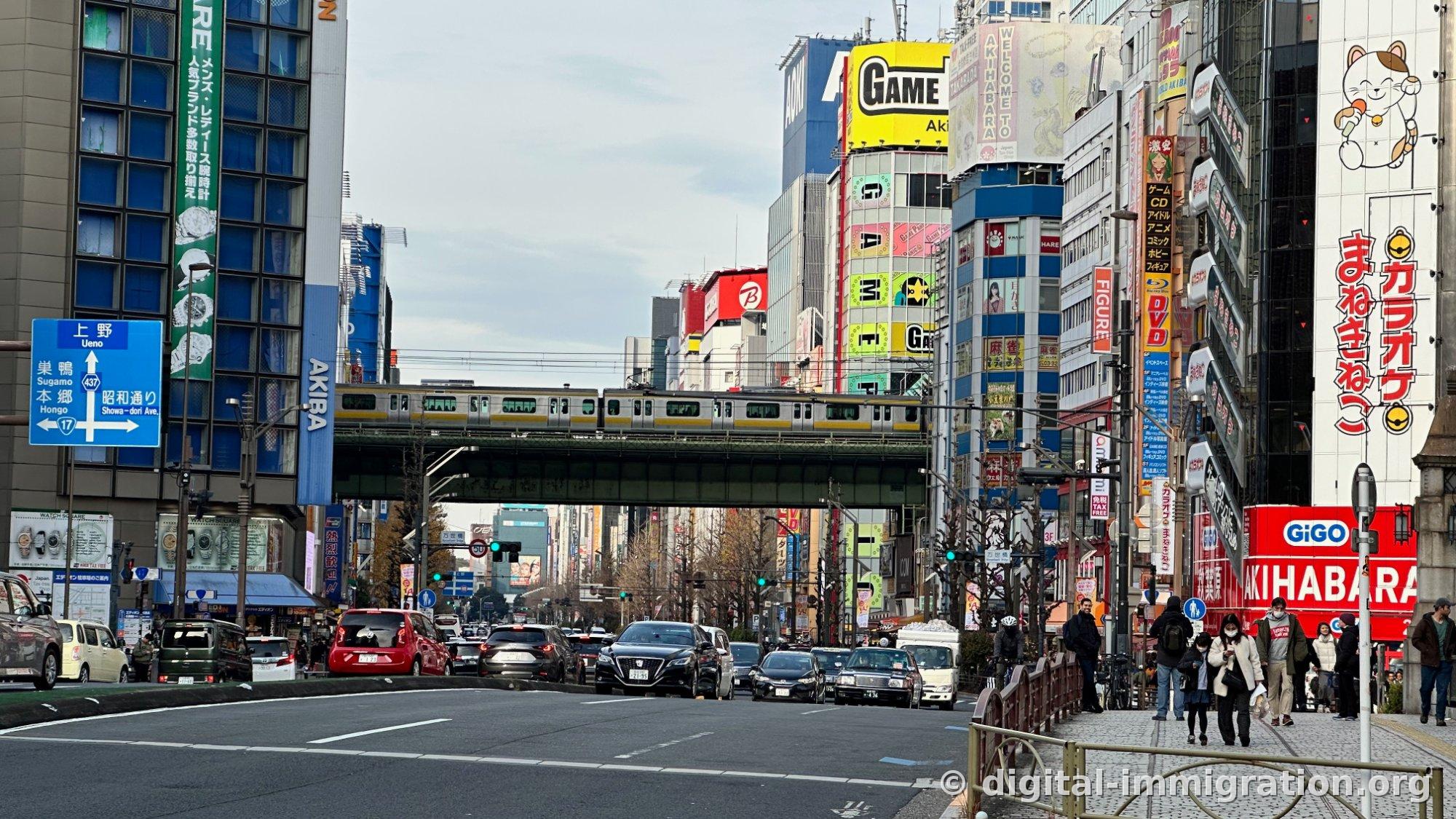
At first, I was startled when carts passed through the middle of the roadway. People in helmets riding public road carts waiting for traffic lights is an everyday scene here. Behind them, the yellow Sobu Line train passes overhead, and below it laox and AKKY II duty-free signs stretch out.
Sense of direction: Use the Manseibashi intersection as a reference point
People who get lost in Akihabara usually don't do so wandering through back alleys, but because the main streets all look similar. I use the Manseibashi intersection as my reference point. The Showa-dori street sign and directions to Ueno are posted there, the Sobu Line elevated track crosses the road, and below it you can see GiGO AKIHABARA and the white cat sign of Karaoke Maneki Neko. North of here is the Chuo-dori shopping street; south is the Kanda River.
The coordinates on the map mark the spot where I took most of my photos. Nearly all the locations in this article fall within a 500-meter radius from the station. If you have luggage, it's best to put it in a coin locker in the station and move around freely. During peak afternoon hours, the larger sizes fill up first, so it's better to handle this right after you arrive.
When the sun sets, it becomes a different neighborhood
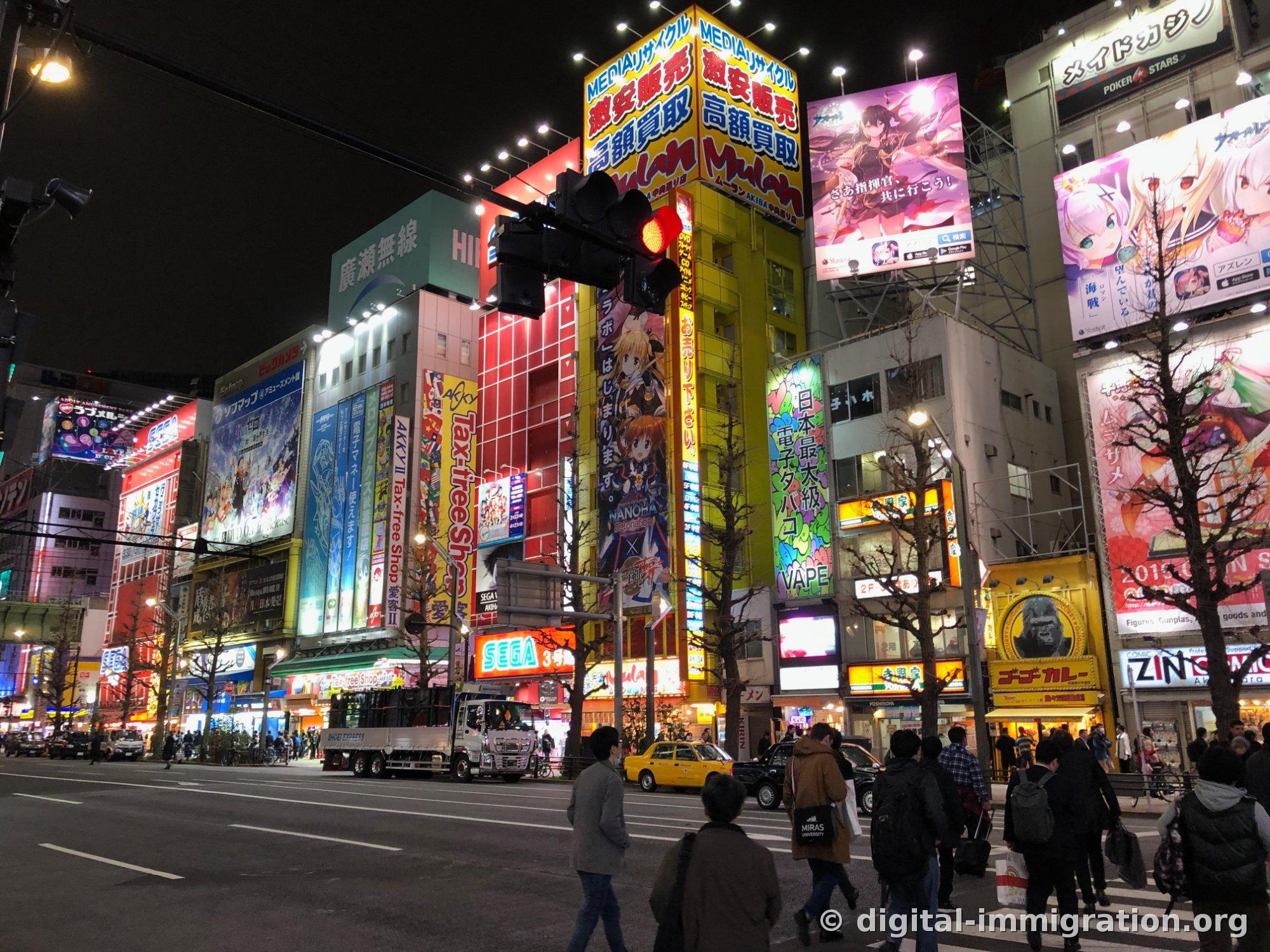
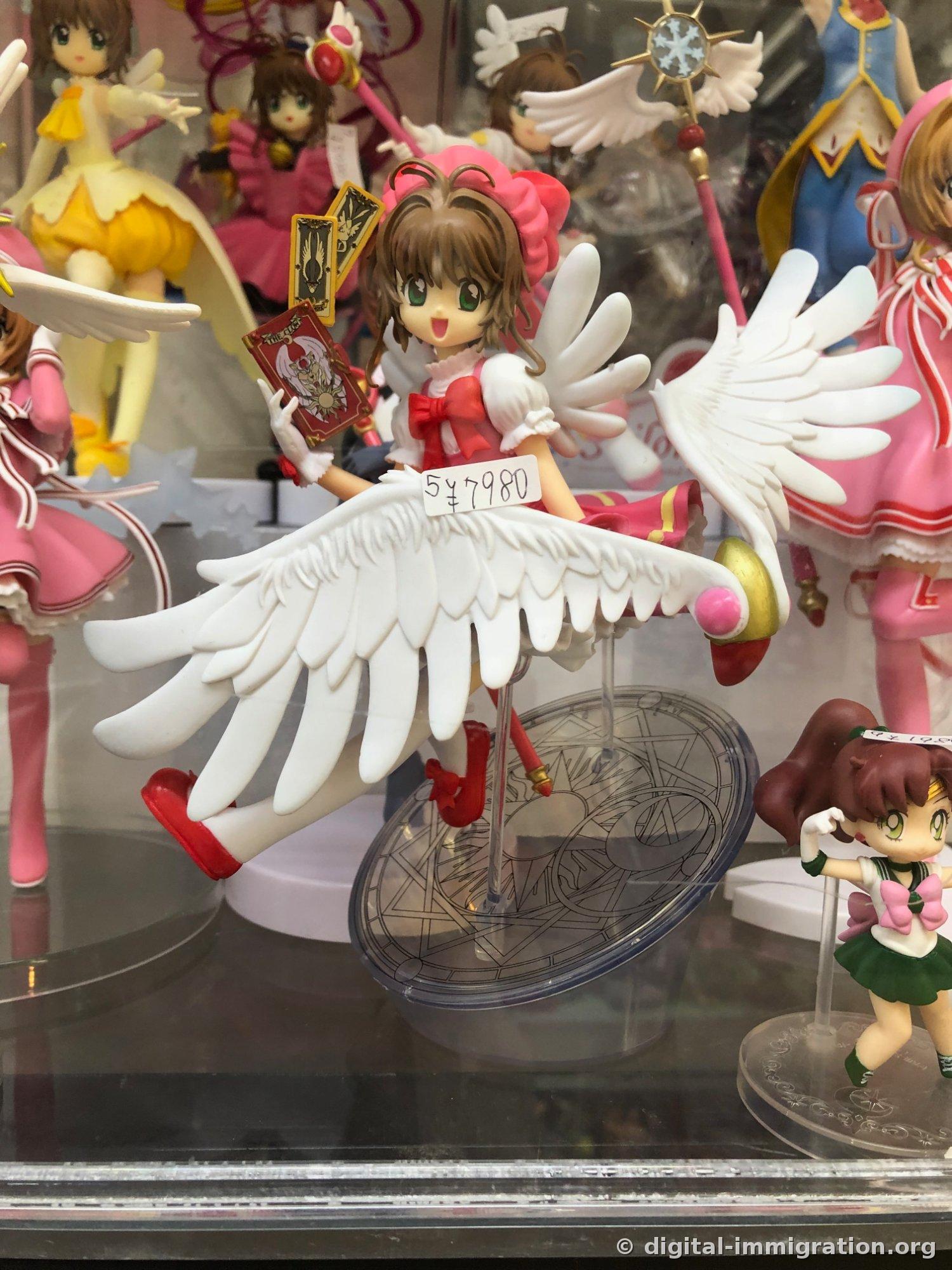
The same intersection reads completely differently at night. The yellow sign of the Mulan building's "破格安販売 高額買取" (unbeatable prices, high buyback) catches your eye first, followed by the neon of SEGA 3rd Branch, the yellow sign of Gogo Curry with a gorilla face drawn on it, ZIN, and the lighting of Maid Casino turning on in sequence. If you stand here on a winter night, your hands get cold, but people often don't move until the light changes because they're taking photos.
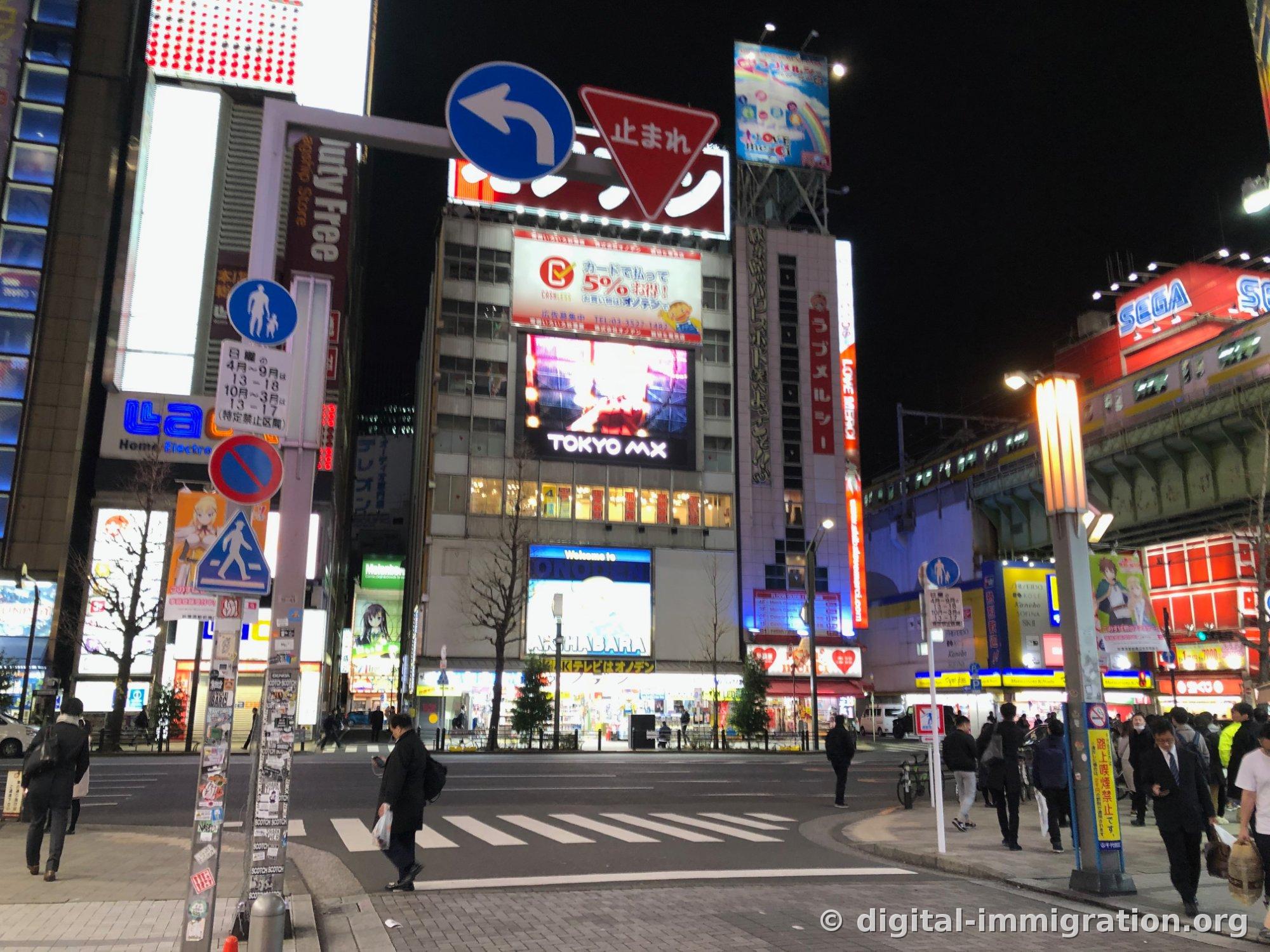
At the next block's intersection, a TOKYO MX large screen continuously plays videos. Below it is the Onoden entrance; to the left is laox; to the right, the red SEGA sign and elevated track overlap. The screen sound, the sound leaking from the pachinko parlor, and the sound of the train passing all blend together, making phone calls nearly impossible.
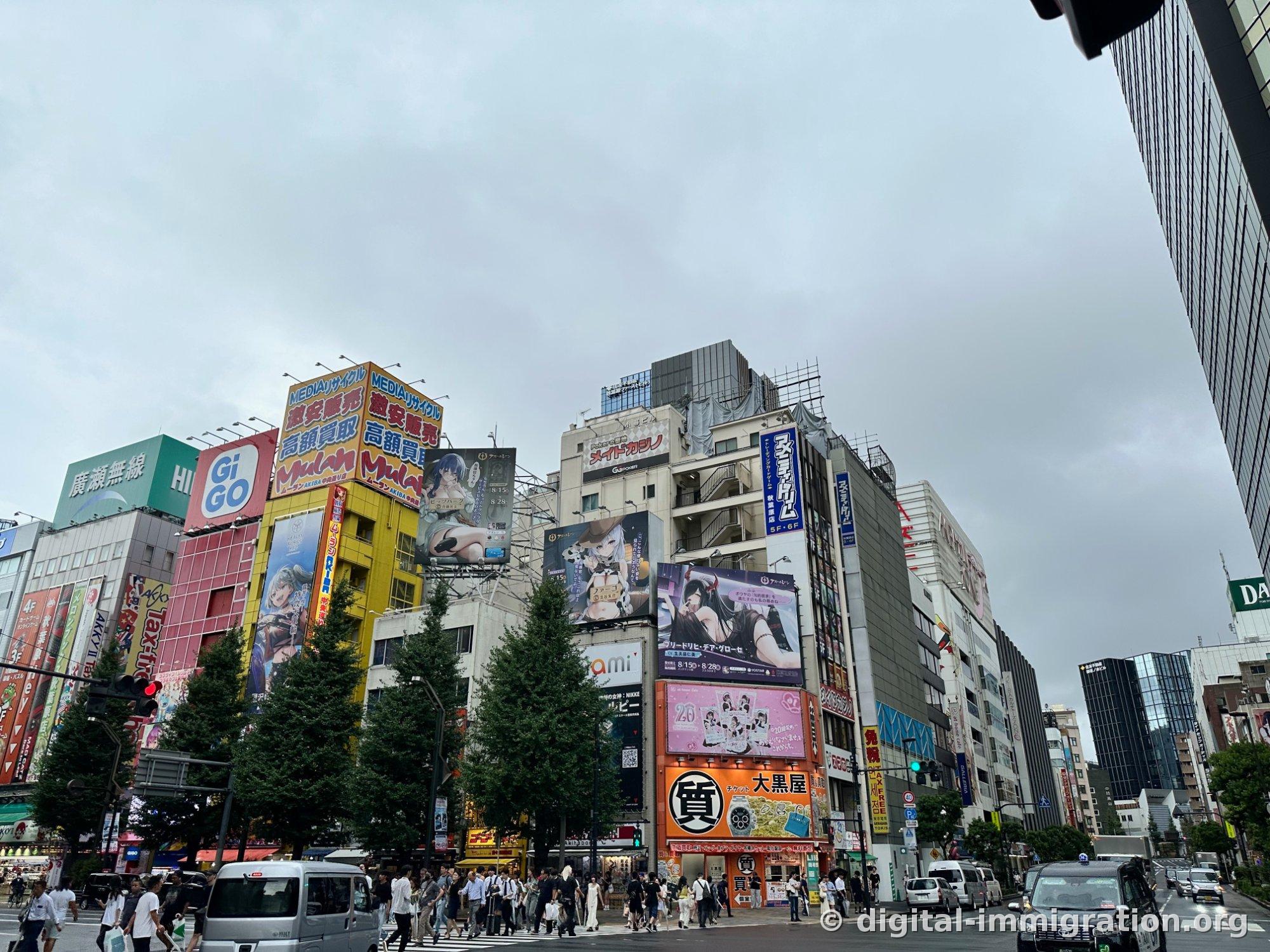
When you photograph the same spot again on a summer daytime, the sign arrangement stays the same, but the impression changes dramatically because of the sky. In broad daylight, the neons die, so instead you notice the building shapes and floor markings like the Daikokuya pawnshop (大黒屋) and Amenity Dream 5F·6F.
On winter weekend afternoons, this crosswalk gets the most crowded. There were times when people couldn't cross in a single light cycle. With all the tree leaves fallen, the signs are actually even more visible.
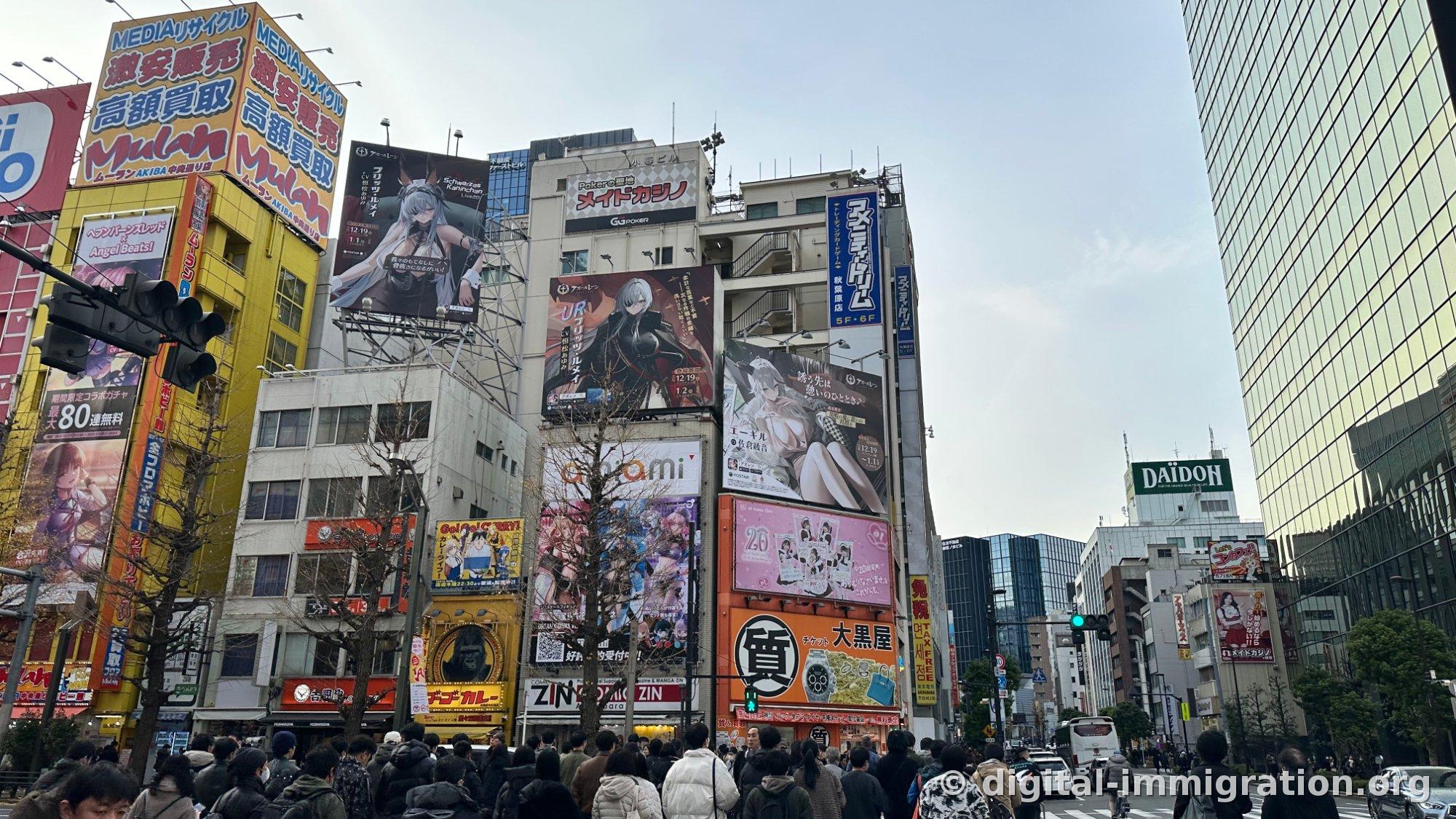
In photo albums from a few years ago, I still have shots of the SEGA Akihabara New Wing entrance. There was a large collaboration cafe advertisement above the blue SEGA logo, with an arrow saying "2 minutes on foot from here." These days, many of these buildings have changed operators and brands, with GiGO signs replacing them in many places, so going with old information means wasted trips. It's best to check the signs on-site to confirm.
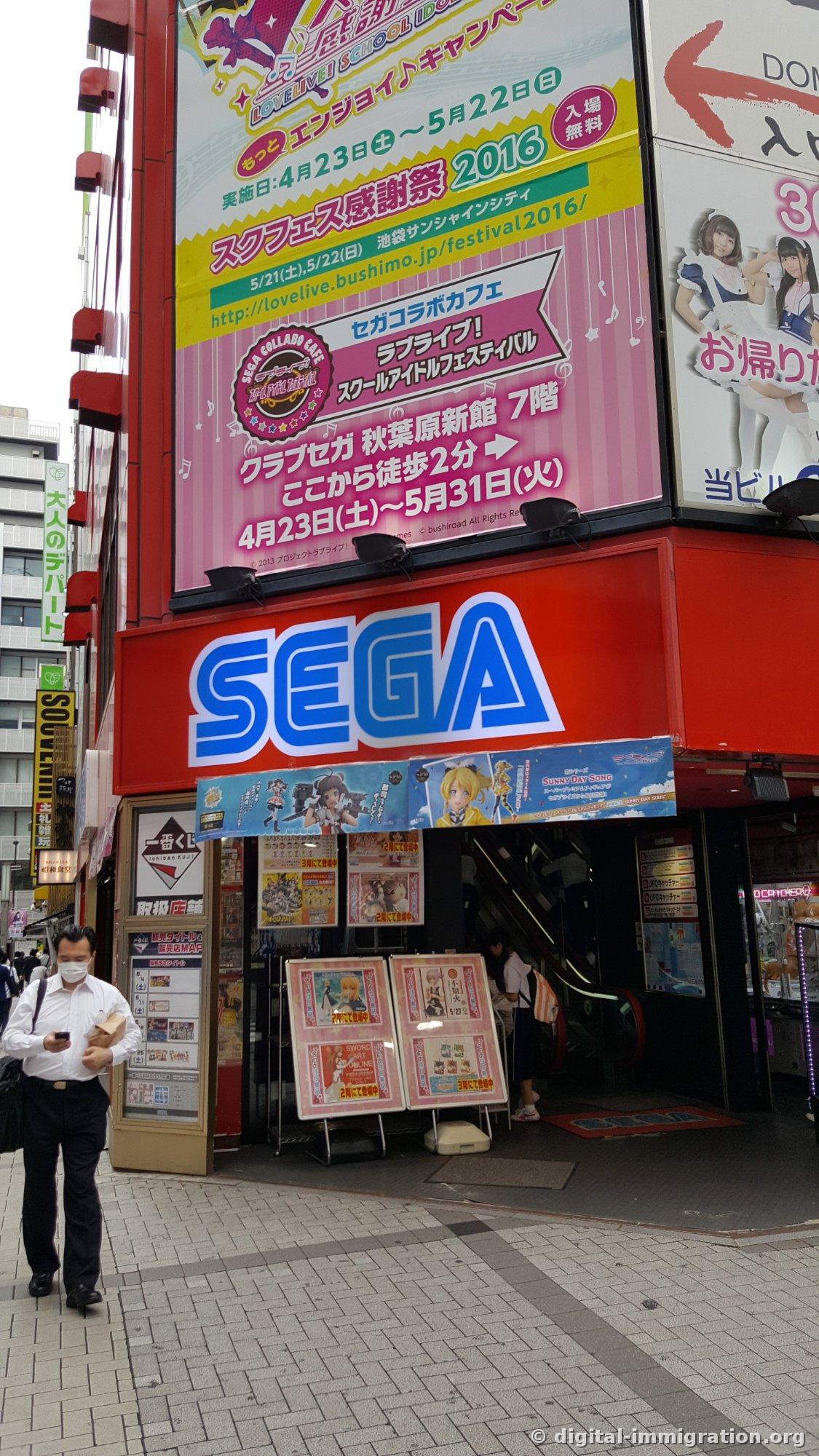
The used figure showcase has an entire floor with glass walls
The store that eats up the most time in Akihabara is the used figure shop. Each case has a number like R-198, R-199, R-200, and items consigned by individuals go in by compartment. A compartment each for One Piece's Luffy and Zoro, Dragon Ball's Goku, My Hero Academia, and Pikachu, all mixed together without any organization. The aisles are narrow, so it's better to wear your backpack in front.
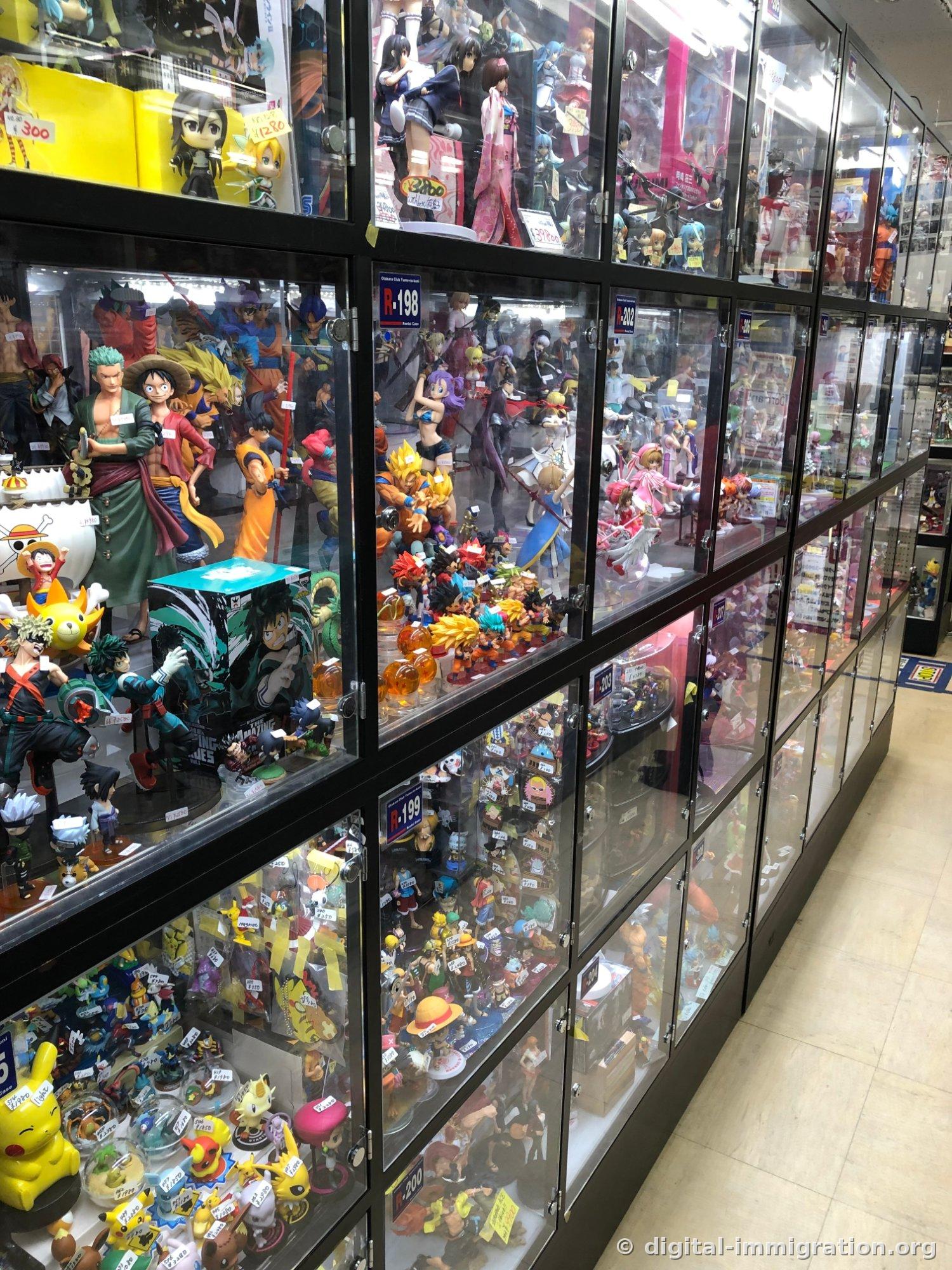
Price tags are sometimes handwritten and sometimes barcode labels. A Card Captor Sakura wing figure had a handwritten ¥7,980 attached. From photos it's hard to get a sense of the scale, but in reality it's about slightly larger than an adult's palm.
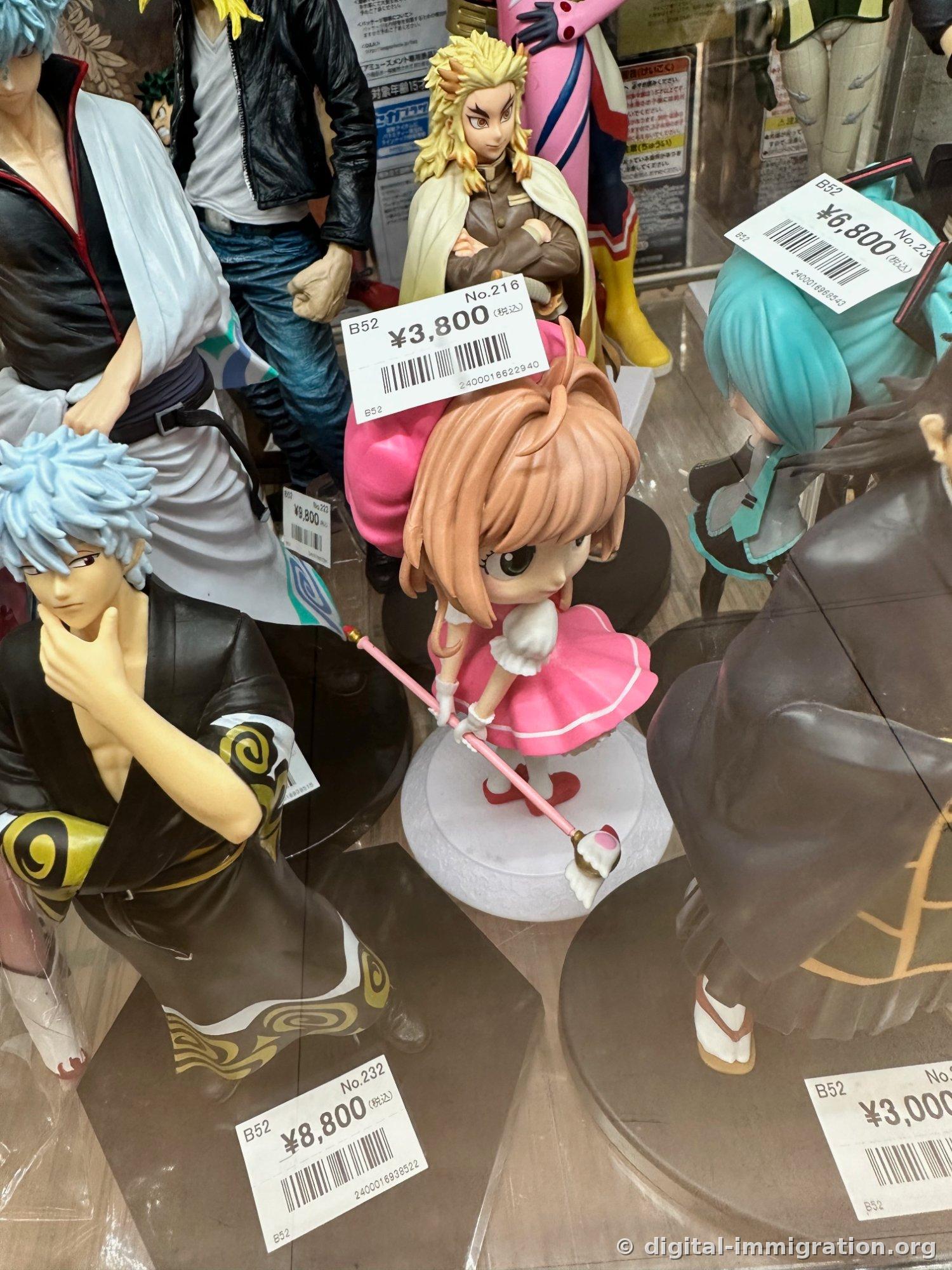
Other stores manage everything with uniform barcode labels. The prices I saw in the B52 corner were like this:
- Q Posket-style Sakura (No.216) ¥3,800
- Large Gintoki figure (No.232) ¥8,800
- Light blue-haired character (No.23x) ¥6,800
- Lower right display item ¥3,000
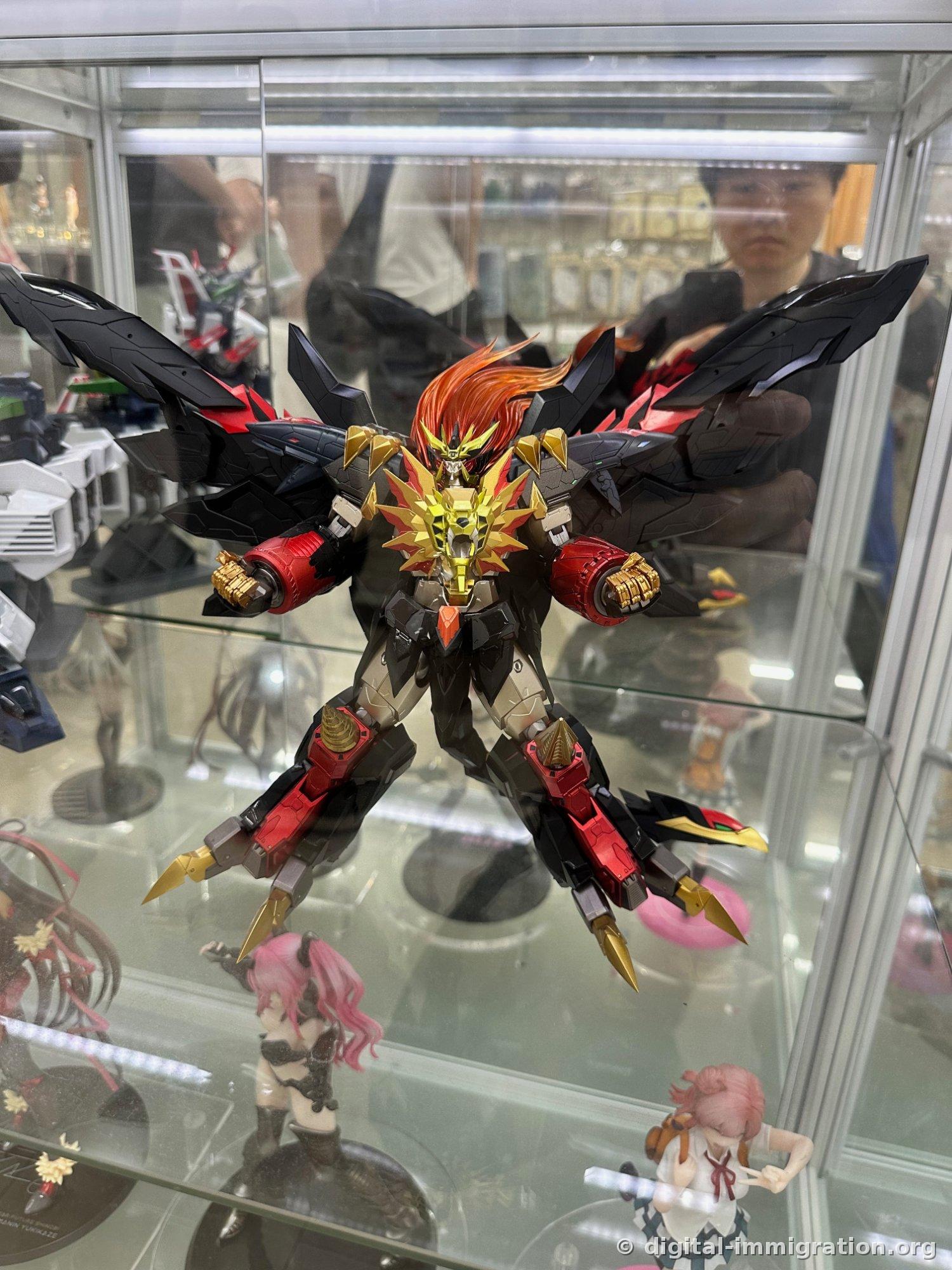
There are also shops that sell assembled plastic models in glass cabinets. Gaogaigar-series mecha are displayed with their wings fully extended, so there's always at least one person peering at the glass to examine the joint paintwork. I was one of them.
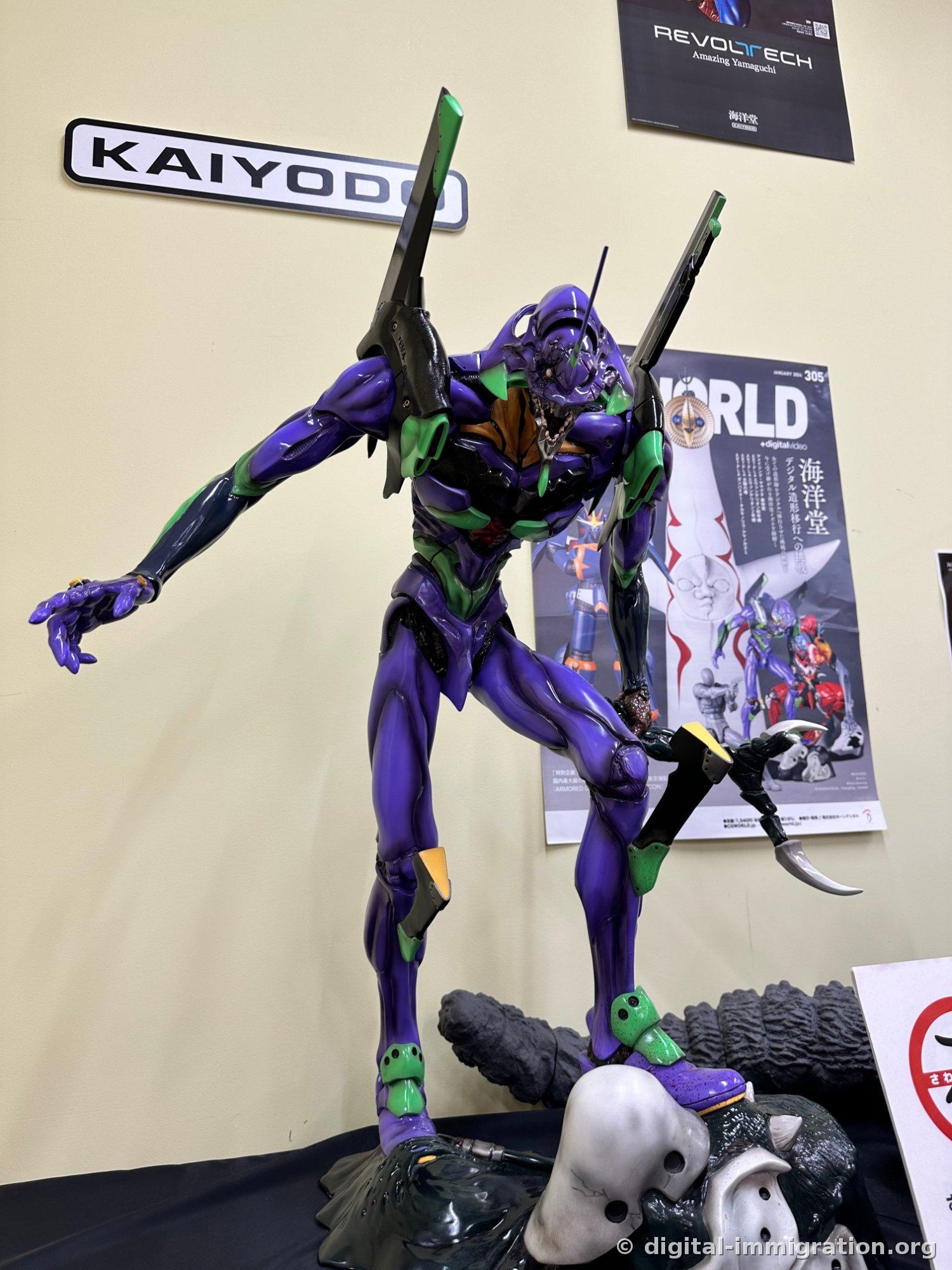
The large Evangelion Unit-01 sculpture I found in the Kaiyodo corner was taller than a person's waist. Behind it were Revoltech and figure magazine posters, and at its base was a "Do not touch" sign. These large display pieces aren't for sale—they serve as the store's signage.
I got stuck at the Star Wars corner
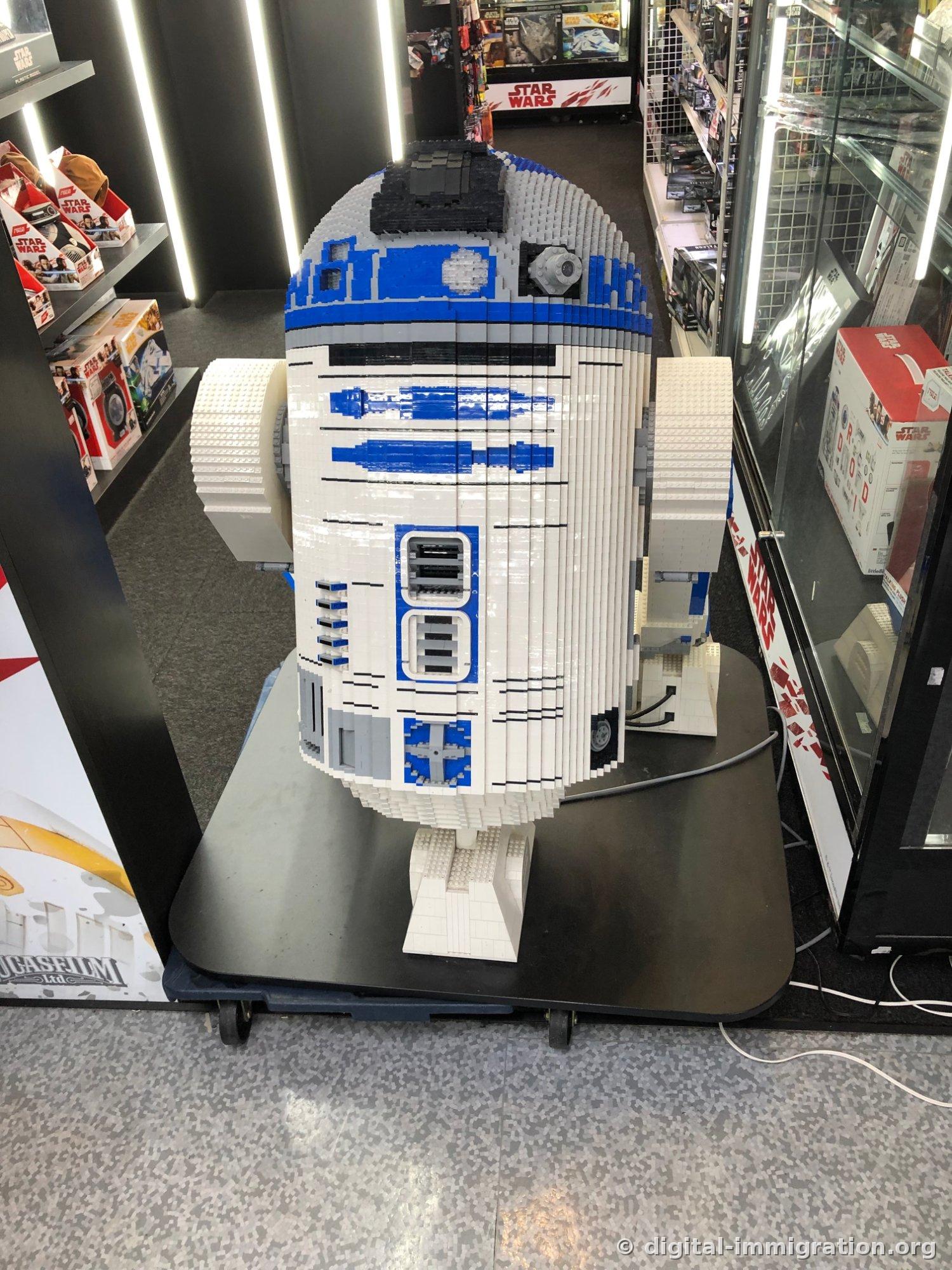
Large electronics retailers' toy sections have a dedicated Star Wars corner. A life-sized R2-D2 made from Lego bricks was placed on a wheeled stand, and I stared for a while at how they handled the dome's curved surface with bricks. Stacked Star Wars box products filled the adjacent display shelves.
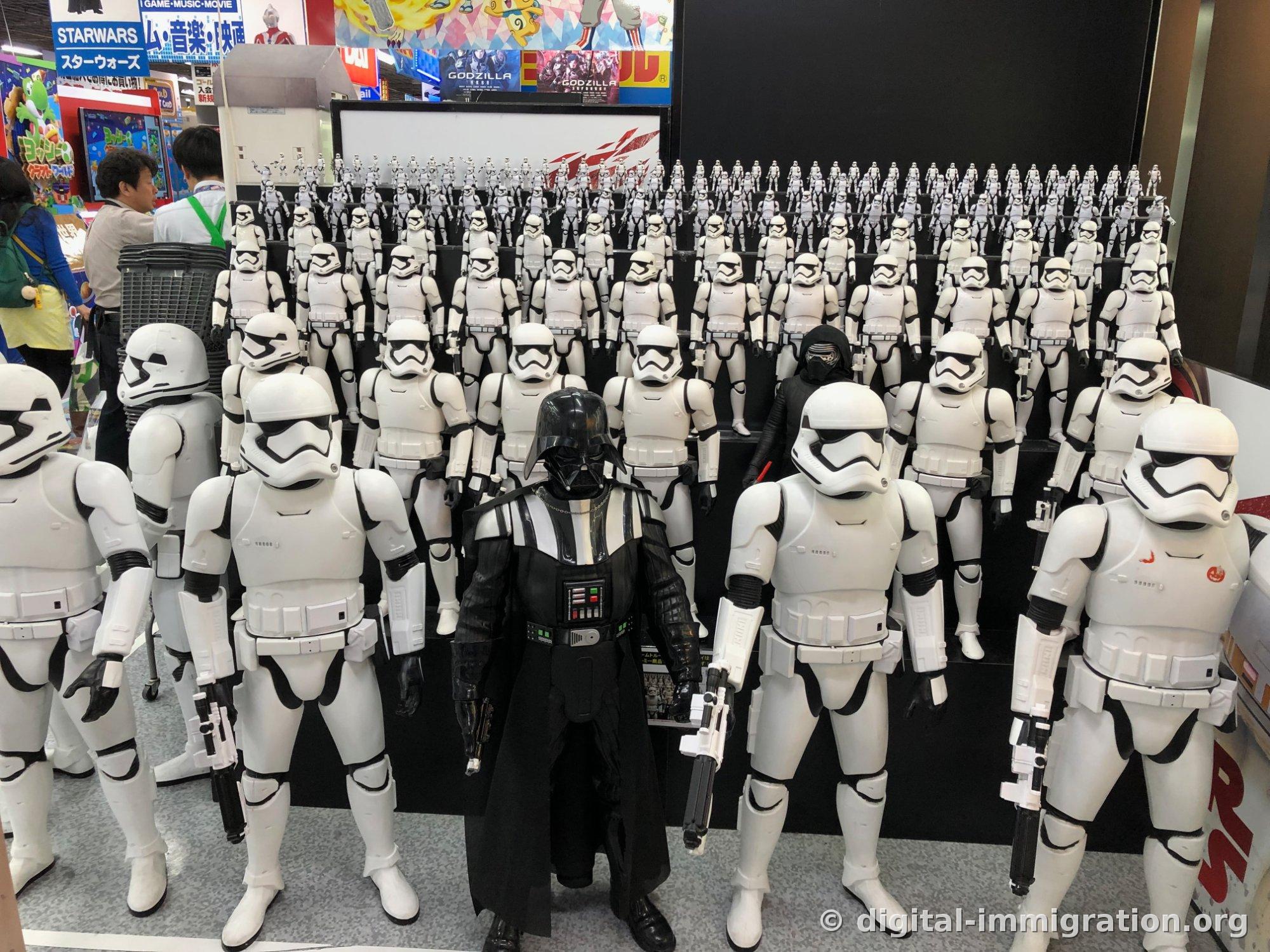
On one side of the same floor, they'd stacked life-sized Stormtrooper figures in tiers to form a battalion. Darth Vader stands at the very front, with Kylo Ren in the back. It looked like well over a hundred. This kind of display isn't really made to sell—it's made to stop people in their tracks. And indeed, everyone, including me, stopped and stared.
Mandarake's display prices should be faced with determination
The retro game software section requires mental preparation. Neo Geo CD and PC-FX titles sit side by side in glass, and if I transcribe the attached prices as they are:
- Metal Slug (Neo Geo CD) ¥71,500
- Metal Slug 2 (Neo Geo CD) ¥49,500
- Breakers (Neo Geo CD) ¥88,000
- Twinkle Star Sprites (Neo Geo CD) ¥40,700
- PC-FX titles ¥46,200 / ¥22,000
- Neo Geo Pocket software ¥39,600 / ¥29,700 / ¥38,600
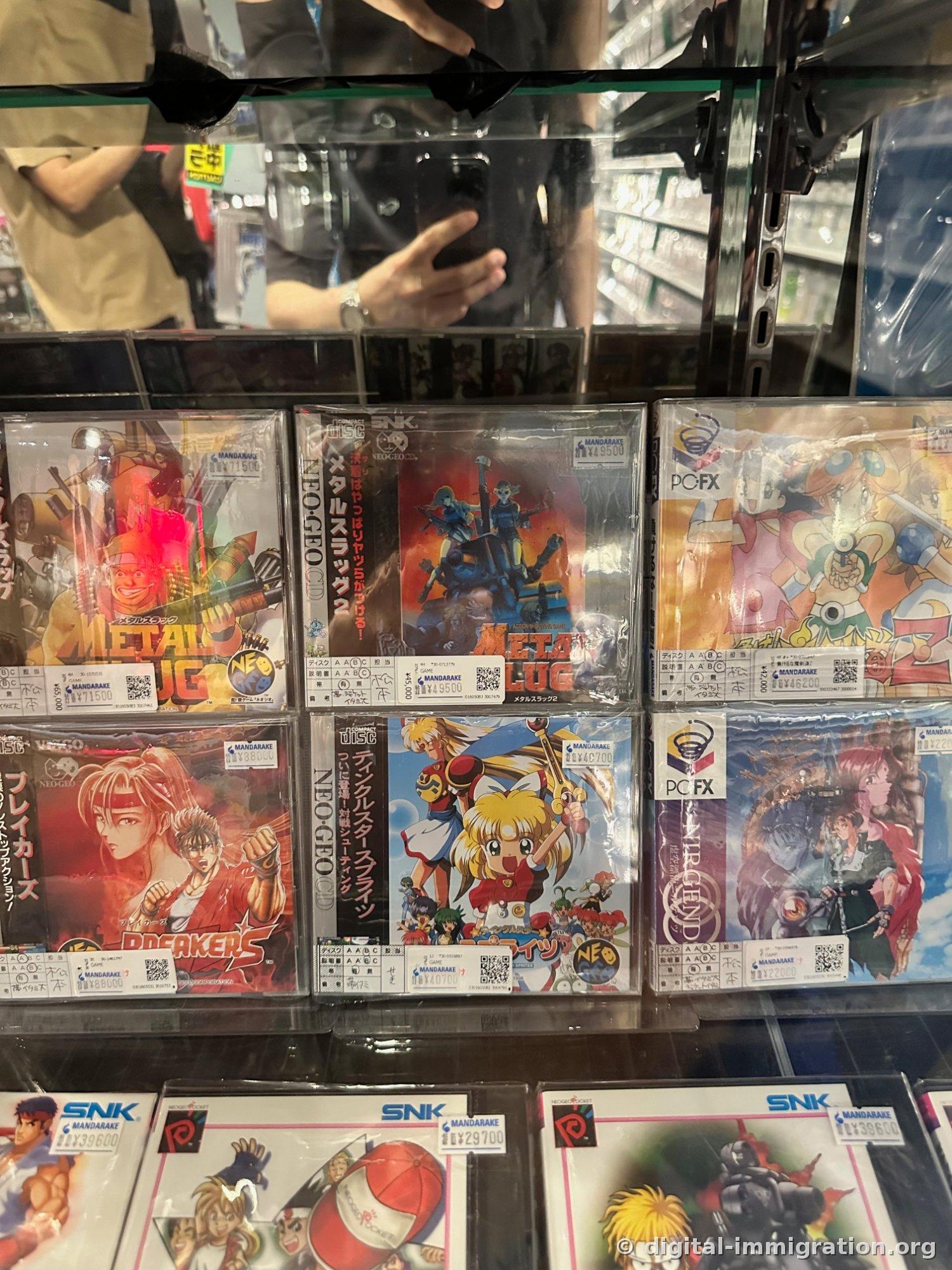
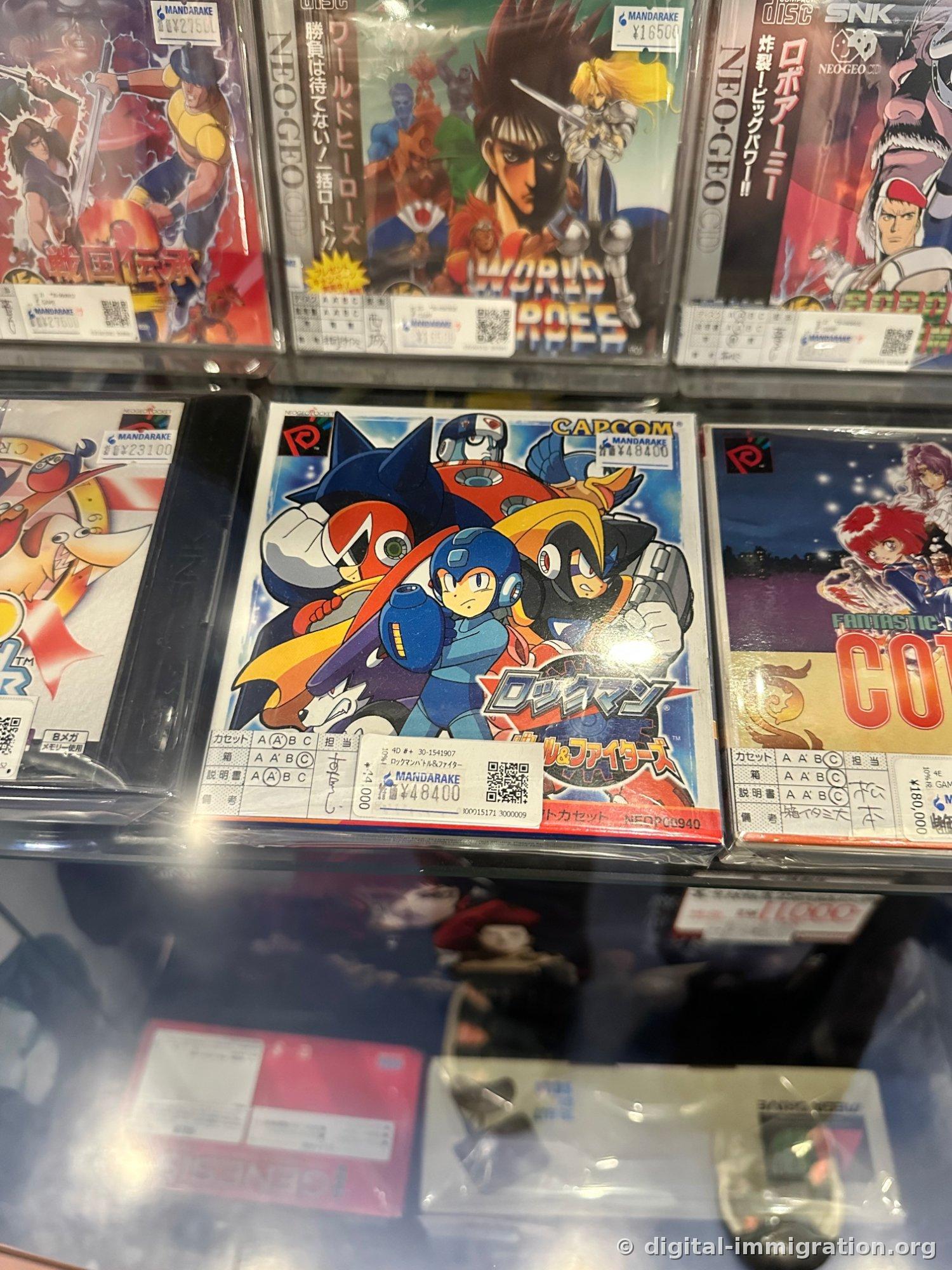
The items in the left column of the price tag marked "ディスク·説明書·帯" (Disc·Manual·Obi) are checked as A/A'/B/C—that's the neighborhood standard. The same title's price changes based on whether it has the obi. Rockman Battle & Fighters for Neo Geo Pocket was ¥48,400, while World Heroes next to it was ¥15,500. Even if you're not buying anything, learning how to read the condition markings makes browsing the displays much more fun.
Events if you're lucky
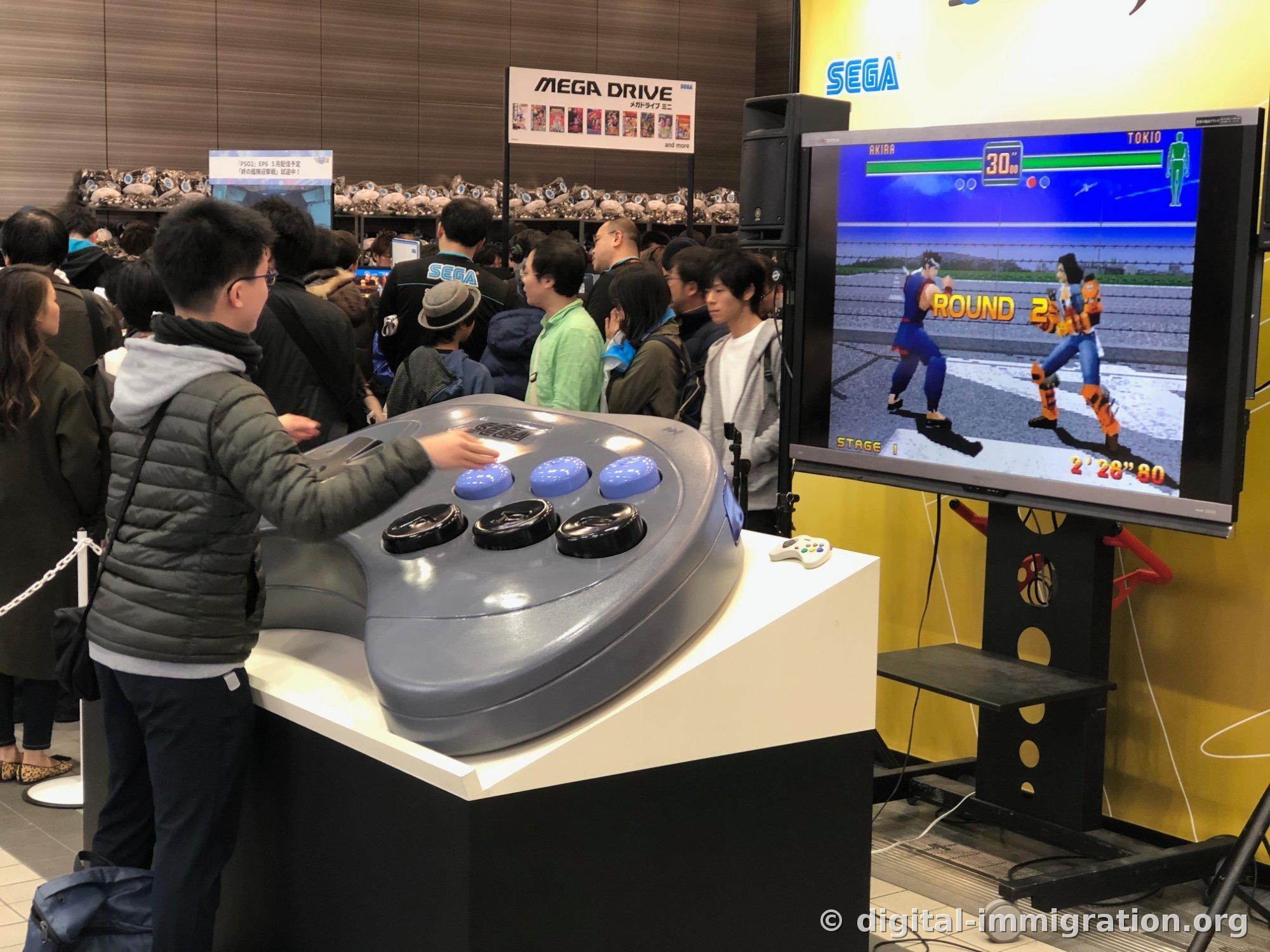
One spring, Sega was holding an event related to Mega Drive Mini. People gathered in layers in front of the Sega Saturn-branded booth watching a Virtual Fighter tournament, with the names AKIRA and TOKIO displayed on the screen. You didn't need to line up to watch from the back.
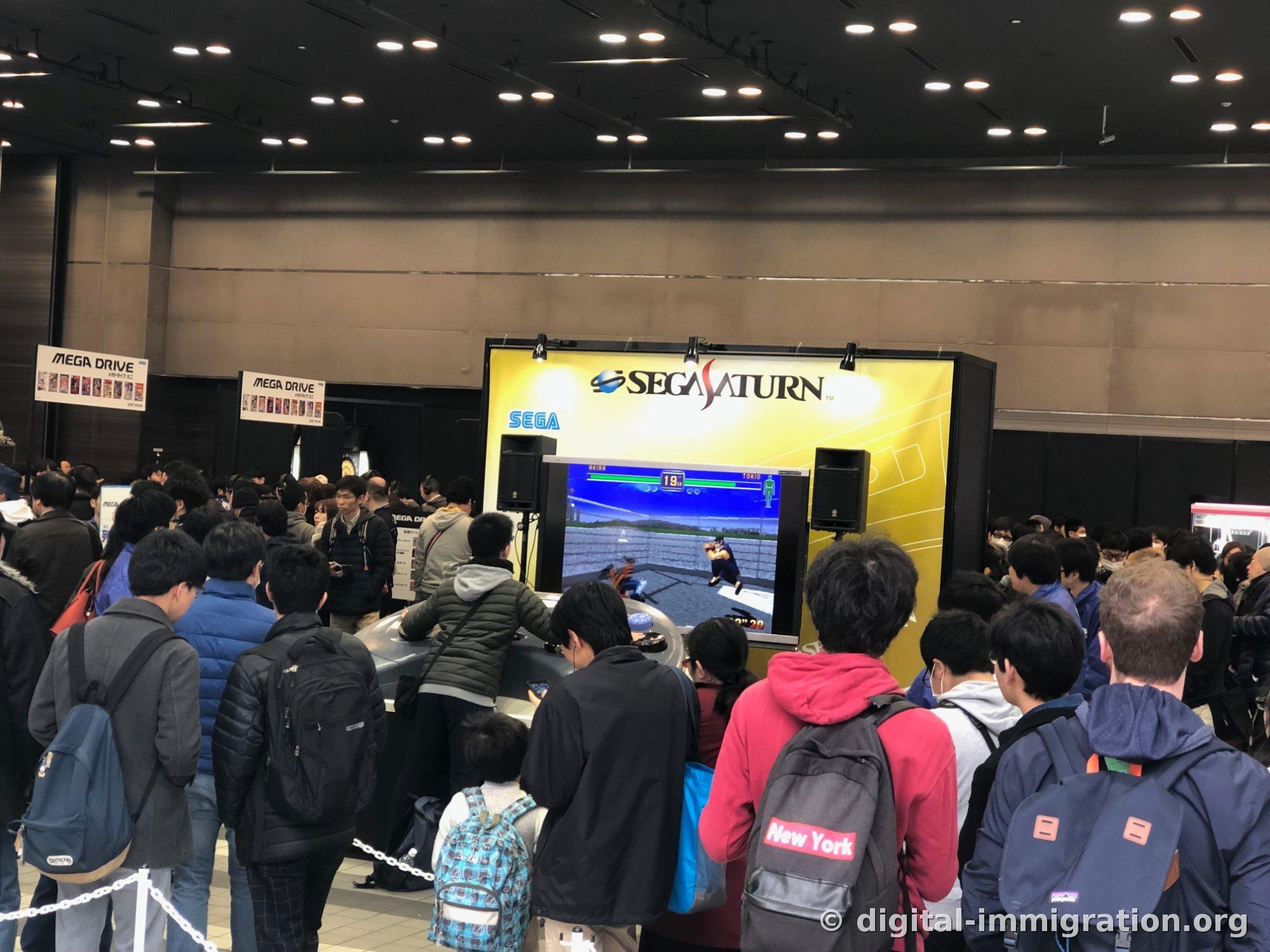
What really caught my eye was a Mega Drive controller sculpture the size of a human torso. They'd actually made it so you could press the buttons and control a game, and a child was throwing his body at the buttons. ROUND 2 was displayed on the screen. These kinds of events usually only have announcements in Japanese, so it's good to check the store's social media before visiting.
Street t-shirt stand: check the size before buying
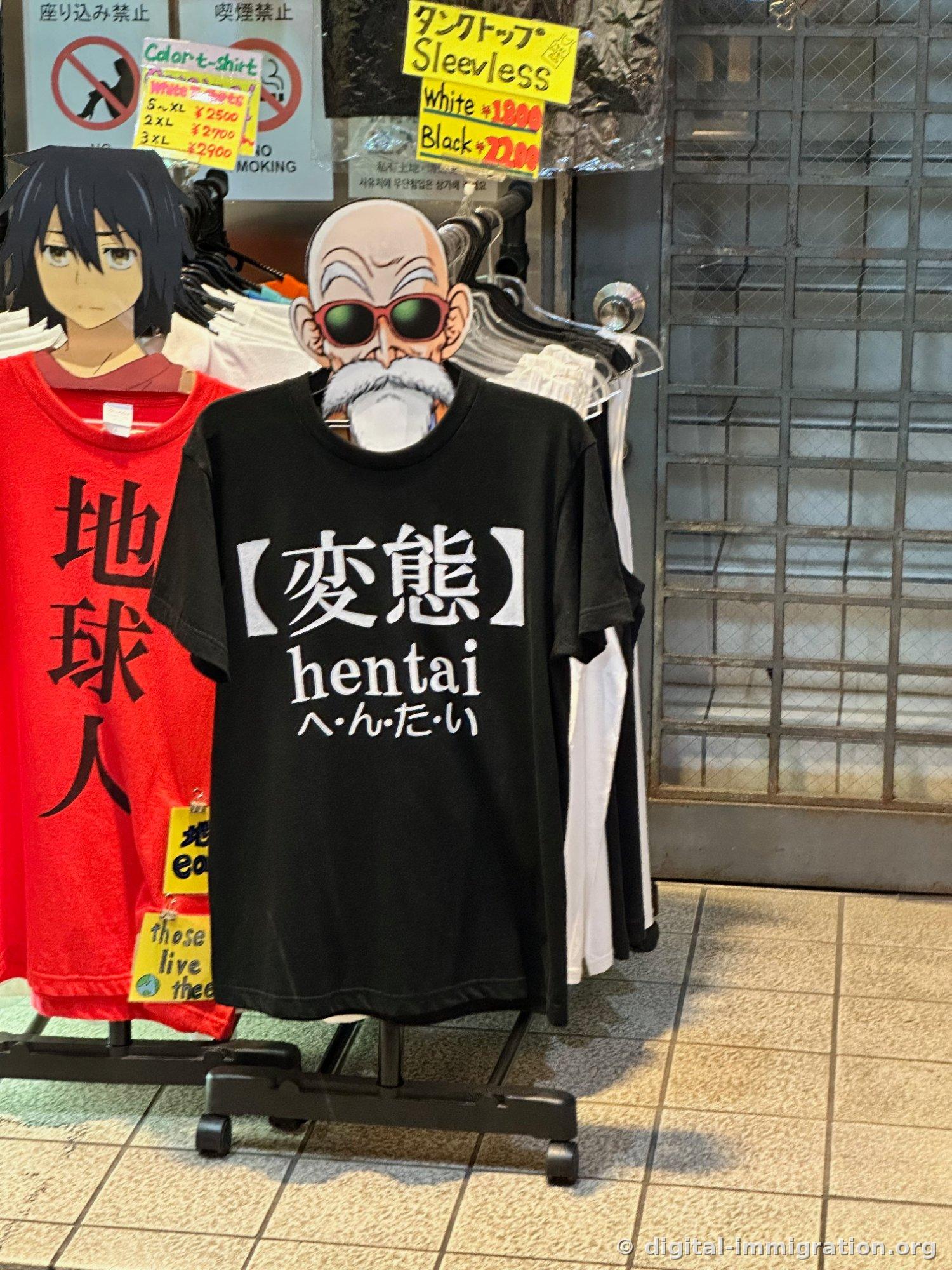
At alley entrances, there are shops with t-shirt racks outside. A black t-shirt with 【変態】hentai printed large on the front hung at the very front, and quite a few tourists buy it as a joke. The prices attached were: color t-shirts S~XL ¥2,500, 2XL ¥2,700, 3XL ¥2,900, sleeveless white ¥1,800. Japanese sizes often run about one size smaller than Korean, so it's safer to go up one size from what you'd normally wear. Signs telling people not to sit and no-smoking notices are posted together at the shop front.
When you step past the signs, the waterway emerges
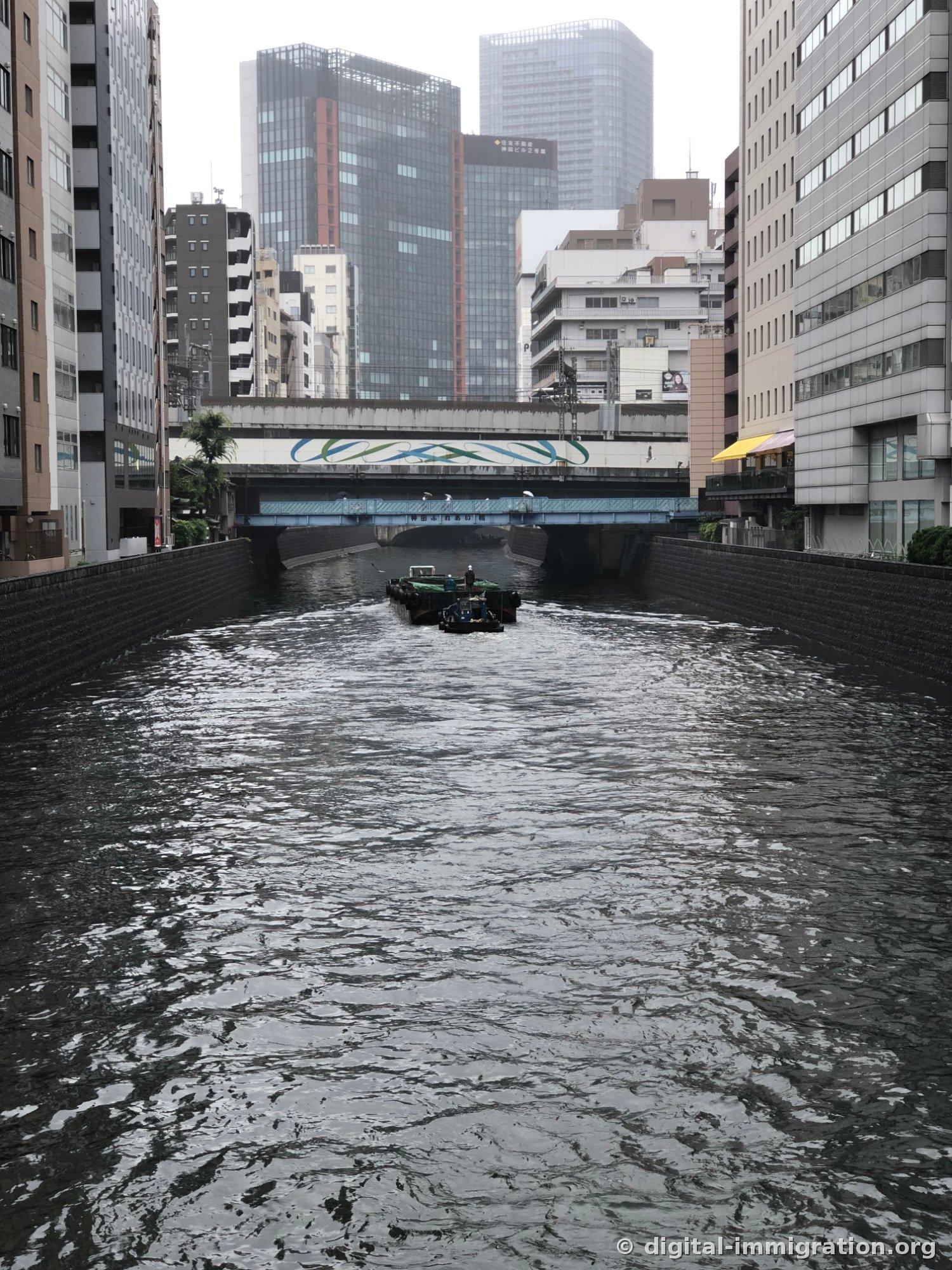
When you're tired of the signs, just walk south for a few minutes. The Kanda River's waterway runs between the buildings, and on cloudy days the water turns a dull gray. I watched for a long time from a bridge as a tugboat pushed a barge loaded with materials under the bridge. Just a few steps makes a dramatic difference in noise level.
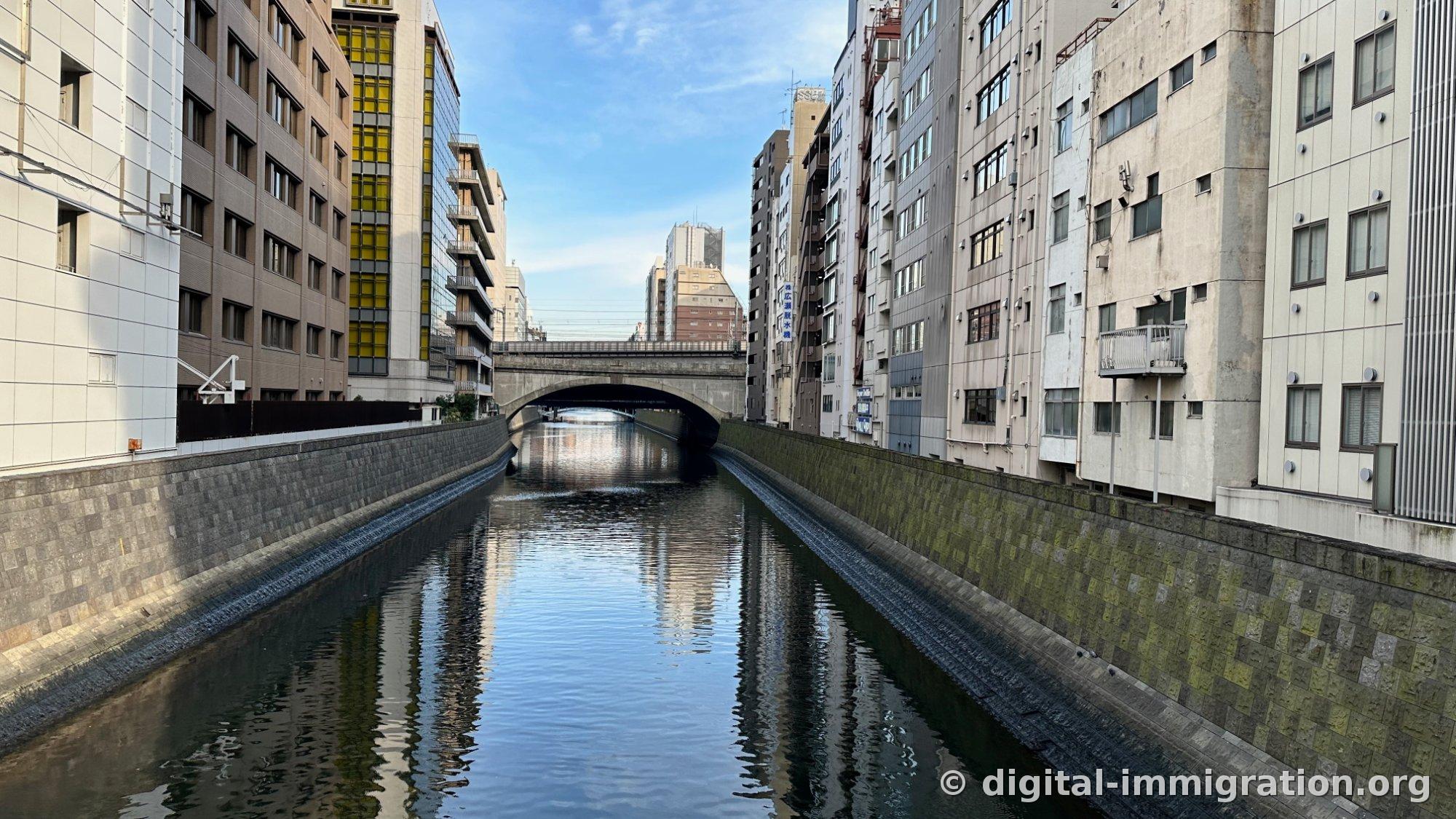
When you look at the same waterway on a clear morning, the impression completely flips. The water is so calm that the buildings and sky reflect directly, and the reflection continues all the way under the arch bridge. Many people who come to Akihabara don't venture down here, but it's only a 5-minute walk.
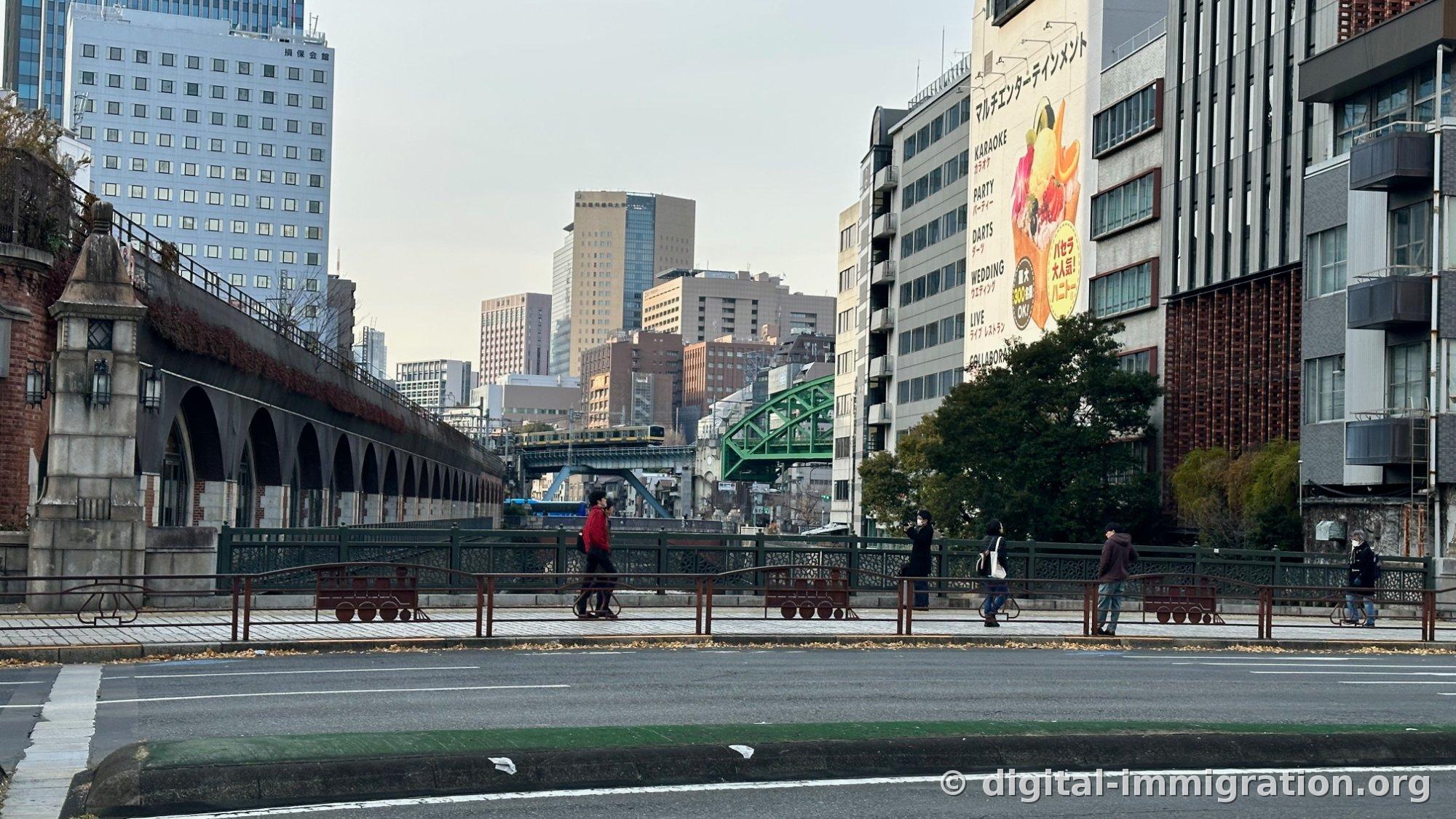
Walking a bit further west toward Ochanomizu, you'll find a red brick arch viaduct. Ivy covers the arch, and beyond it a green iron bridge and the yellow Sobu Line train pass. There's a locomotive-shaped decoration on the bridge railing, making it perfect for photos. On a winter morning, fallen leaves cover the sidewalk, creating a pleasant sound underfoot.
How to manage luggage and time
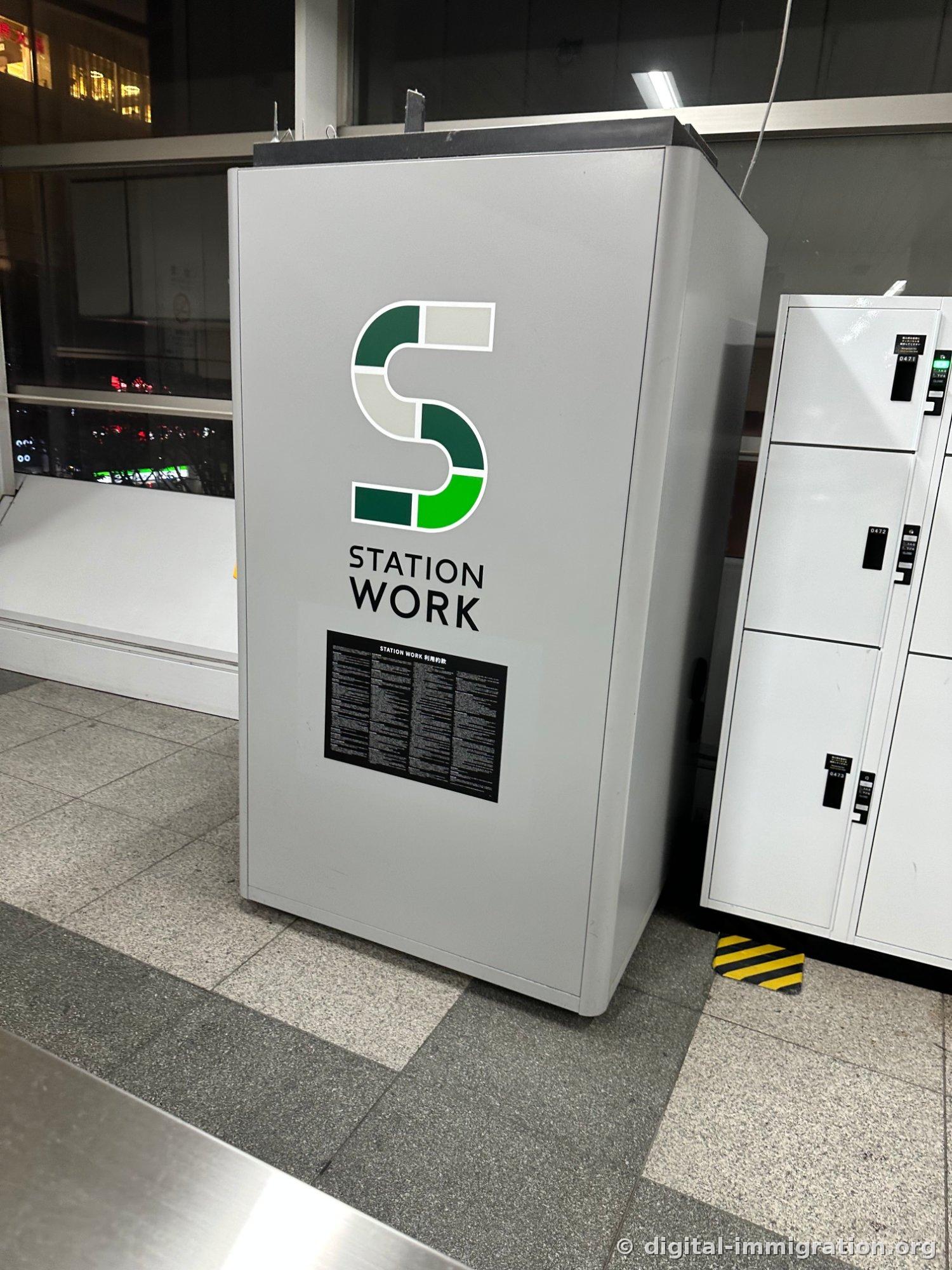
Akihabara is a neighborhood where standing time exceeds walking time. Because you keep stopping in front of displays, your shoulders get tired before your legs do. I was delighted to discover the gray single-person booth labeled "STATION WORK" inside the station. With a coin locker attached, it's convenient for storing luggage and taking a moment to organize your itinerary. Check the posted terms to confirm usage fees and reservation methods.
Based on my experience, here's what I'd recommend: explore the displays comfortably in the morning when there are few people, then head to the main streets in the late afternoon to catch the signs lighting up. That order is the least exhausting. For tax-free purchases, you'll need a passport, and minimum spending amounts differ by store, so ask before checkout. And since this neighborhood completely replaces signs every few years, it's best not to trust old reviews with store names. I spent a while standing in front of what used to be a shop, only to find it had already changed.
Дараа нь унших
- Buying a Single ¥300 Year-End Jumbo Lottery Ticket at Nishi-Ginza Chance Center in Tokyo
Exit from the Hibiya exit of Tokyo's Shimbashi Station, walk toward the elevated highway for about three minutes, and suddenly you'll see a line of people stretching along the side…
Токио · Нишигинза Чансын сентер - Ueno Ameyoko, the real magic starts after sunset — an evening walk from the Okachimachi Gate to Ueno Station
Every time I come to Tokyo, my feet find their way to Ueno Ameyoko (アメ横) without fail. This time I entered from the Okachimachi side and worked my way toward Ueno Station. I've met…
Токио · Амэёко зах - A Day at Kura Sushi in Asakusa, Tokyo: Three Tuna Plates and Ending with Castella Cake
Once you exit Nakamise-dori at Senso-ji in Asakusa, there's a stretch where tourist density drops noticeably. That's where I wandered into Kura Sushi Asakusa—purely because the wai…
Токио · Кура суши Асакуса