Pamukkale Travertines, Barefoot Descent in the Afternoon — Only the Water's Gleam Remained in the Overcast Sky
After arriving by minibus from Denizli, Turkey, I immediately removed my shoes upon passing through the southern entrance of the Pamukkale Travertines (Pamukkale Travertenleri). Wa…
ផាមូកកាលេ · Вид на памукале
After arriving by minibus from Denizli, Turkey, I immediately removed my shoes upon passing through the southern entrance of the Pamukkale Travertines (Pamukkale Travertenleri). Walking on the travertines with shoes is prohibited here, so removing them is not a choice but a rule. That day, as visible in the photos, the sky was completely overcast. There was no postcard-perfect azure sky or pristine white terraced hot springs—instead, gray clouds hung low, and only the village of Pamukkale below was dimly visible. To be honest, right after arriving I thought I'd picked the wrong time, but after stepping into the water, my thoughts changed.
Walking Barefoot on the Travertines — Far Rougher Than Imagined
The first thing that surprised me was the texture of the ground. In photographs it looks smooth like marble, but when you actually step on it, it feels more like walking on hardened salt crystals. Rough bumps prick your soles, and in some sections it's as rough as sandpaper. White limestone particles get lodged between your toes, and even after leaving you have to shake them out for a while.
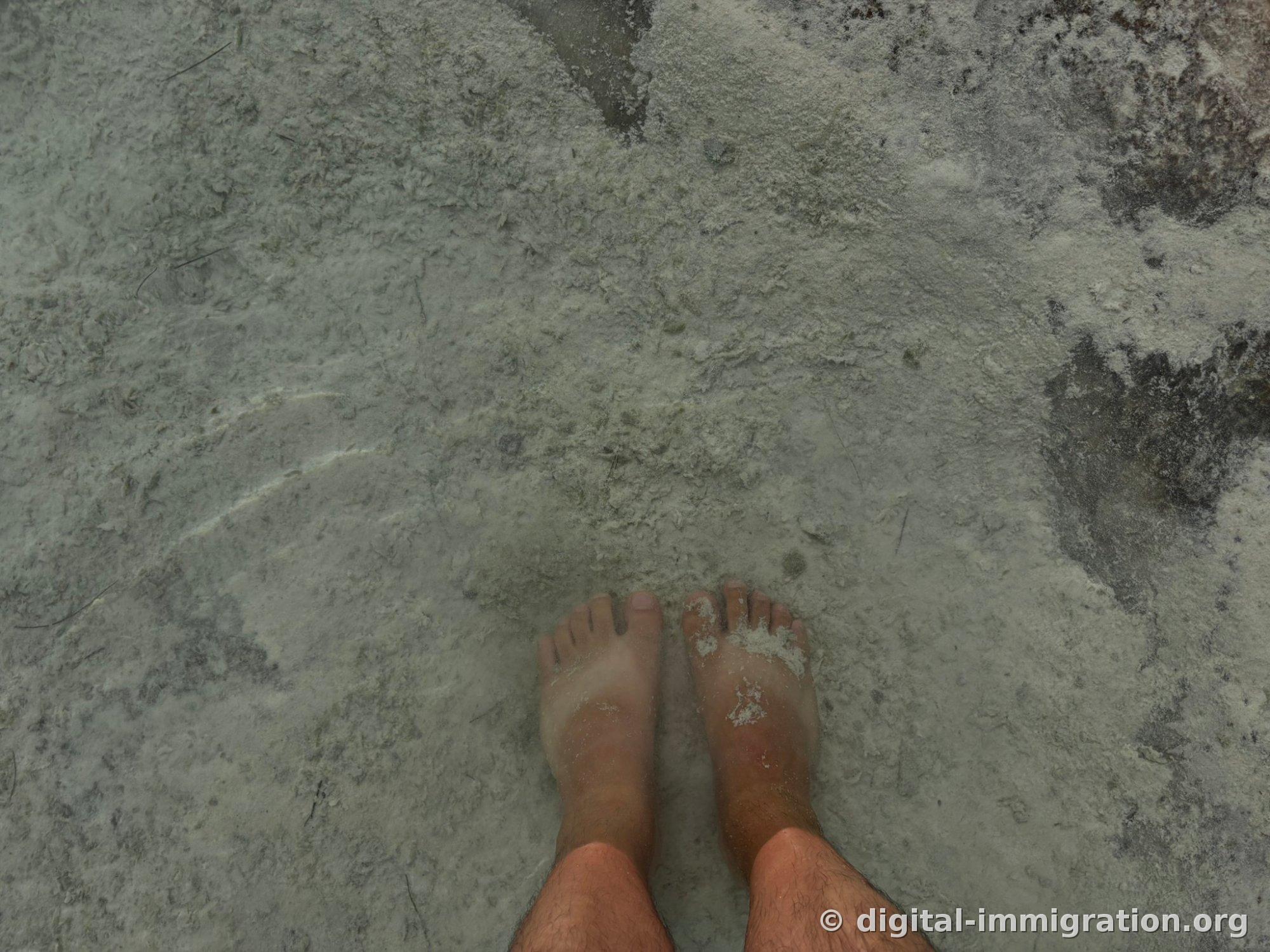
Water temperature varied by location. Where fresh hot spring water flowed down from above felt lukewarm, but stagnant water in lower areas had cooled in early March winds, making my feet ache. If you're expecting a warm soak because it's called a hot spring, you'll be disappointed. The trick is to find warm spots and walk upstream toward the water flow. And it's slippery. Wet limestone surfaces are like soaped tiles, and I nearly slipped once. On slopes, it's safer to keep the entire sole in contact with the ground and shuffle along.
On Overcast Days, the Water's Color Seems to Deepen
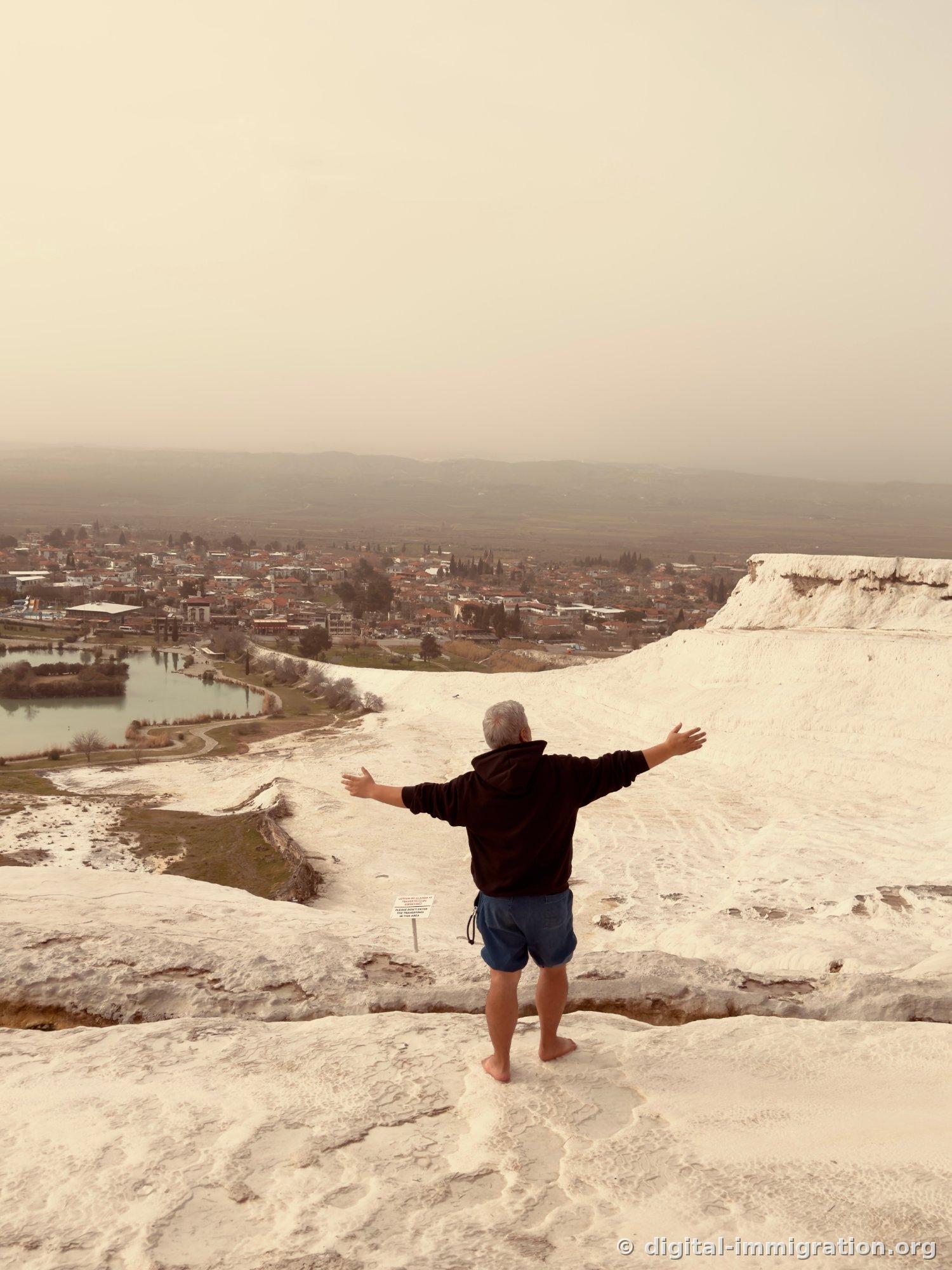
There was no sky-blue reflection I'd seen in photos from clear days, but instead the water's own color came alive. With the sky gray, reflected light died out, revealing the opaque mint color created by the limestone floor as is. Below, you can see at a glance the orange-tiled roofs of the village and the green surface of the artificial lake.
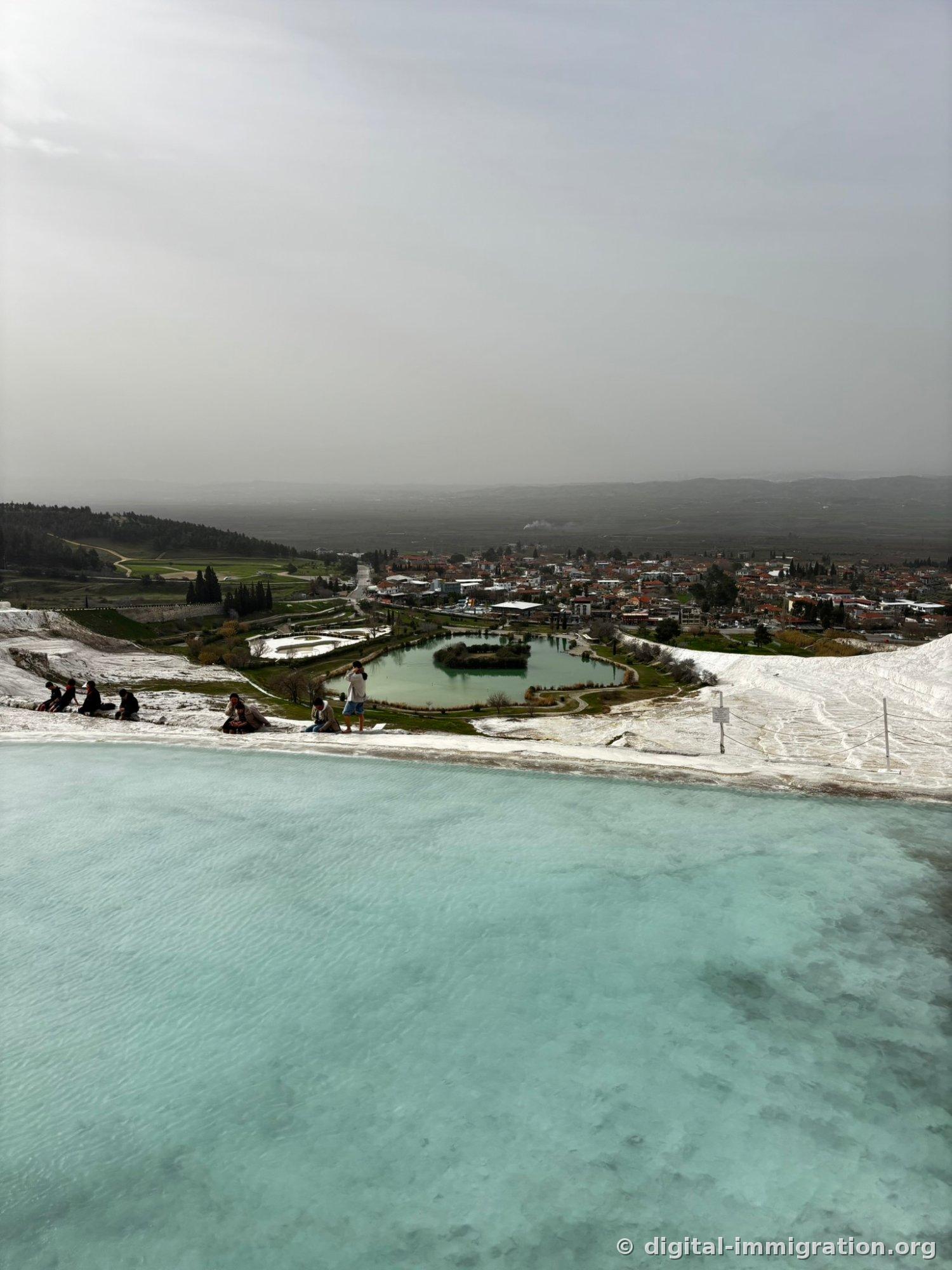
Late in the afternoon, the clouds sank heavier and the sky turned almost pewter gray. Photos taken then look completely different in color. Puddles become still as glass, with only human silhouettes remaining dark. It felt like I'd visited two different places in a single day.
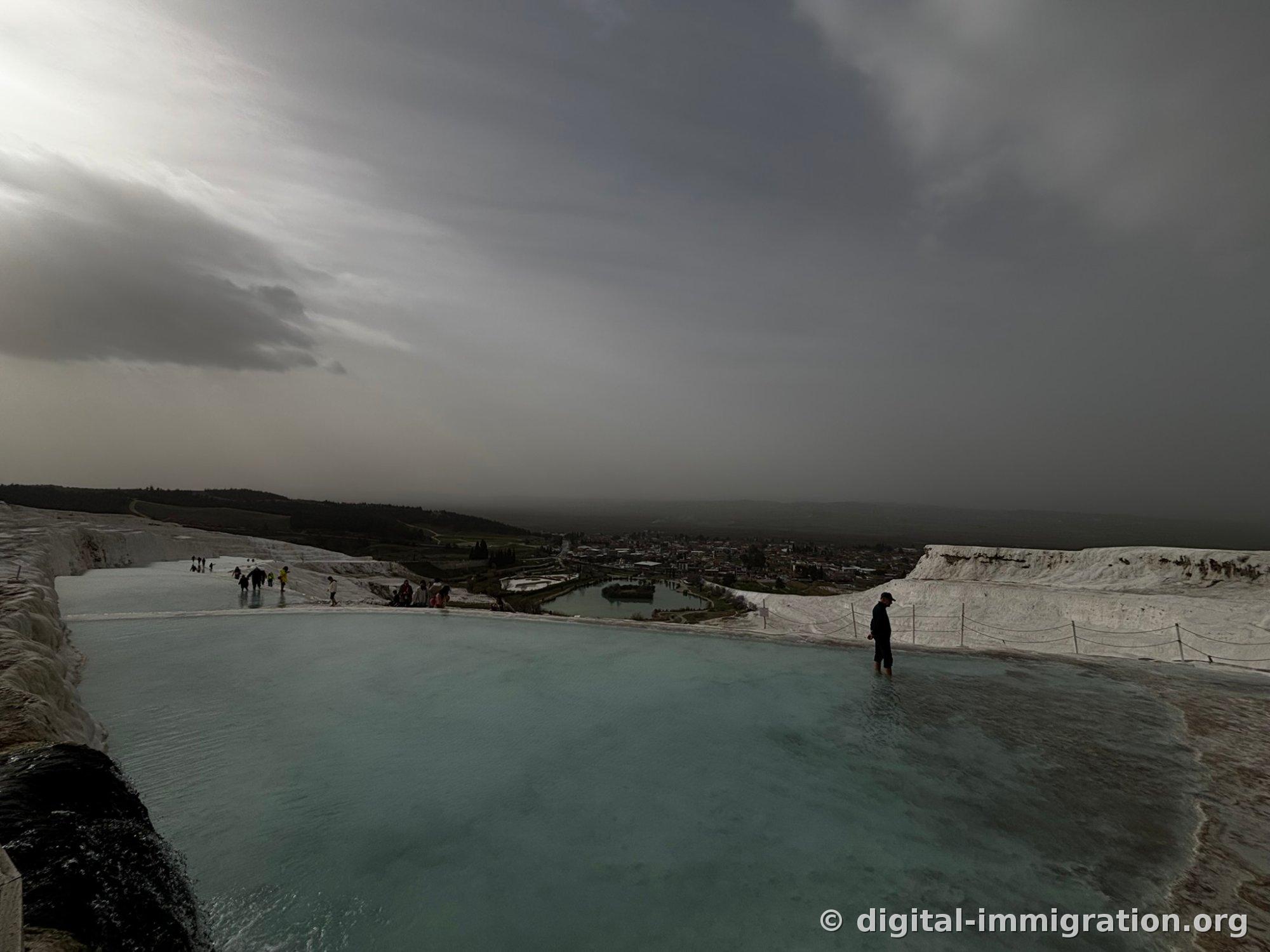
Location & Accessibility — Which Gate You Enter Makes All the Difference
The Pamukkale travertines are inseparable from the ancient city of Hierapolis on the hill above. There are multiple entrances, and which one you choose completely changes your itinerary for the day. Entering through the southern village gate means you must walk barefoot up the travertines, while driving up to the northern and southern gate parking lots means you see Hierapolis first and then walk down the travertines. I took the latter route, and it's much better on the knees. The village is at walking distance below the hillside, so if you stay in the village you can access it on foot.
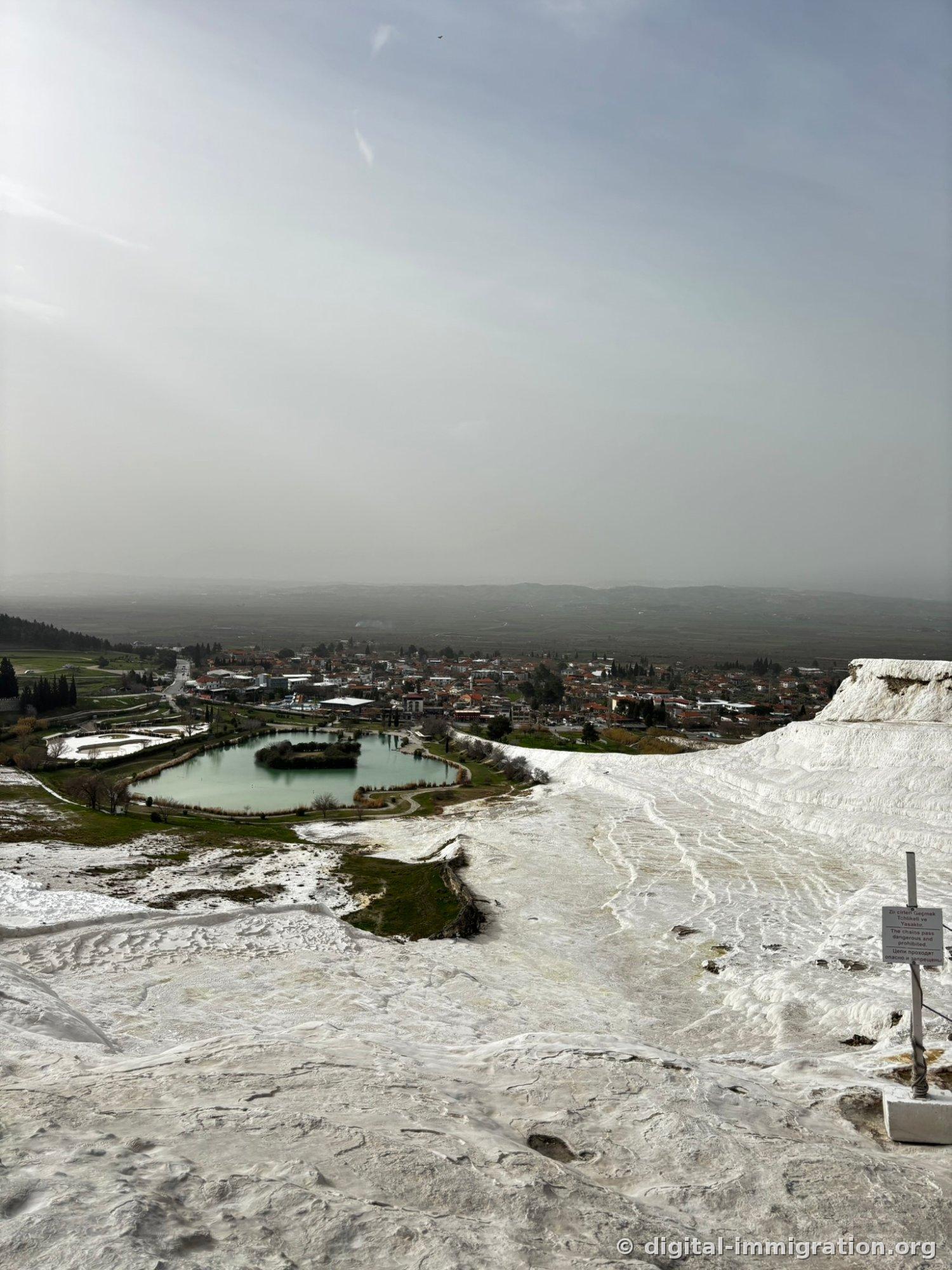
Throughout the travertines, warning signs stand in Turkish, English, and Russian together. Signs like "The chains pass dangerous and prohibited." Beyond the chains, the water has dried out and the surface is broken; stepping on it causes the limestone layers to crack. You can see that sign on the right in the photo below.
Many Sections Have No Water Flow
This is the point where first-time visitors most often feel disappointed. Not all the travertines are filled with water. Water circulates only through designated areas, while the rest lies dry and white. The wide white cliff face in the photo is also a dried section without flowing water. It looks like a snow field, but to the touch it's completely dry stone, and stepping on it causes debris to fall.
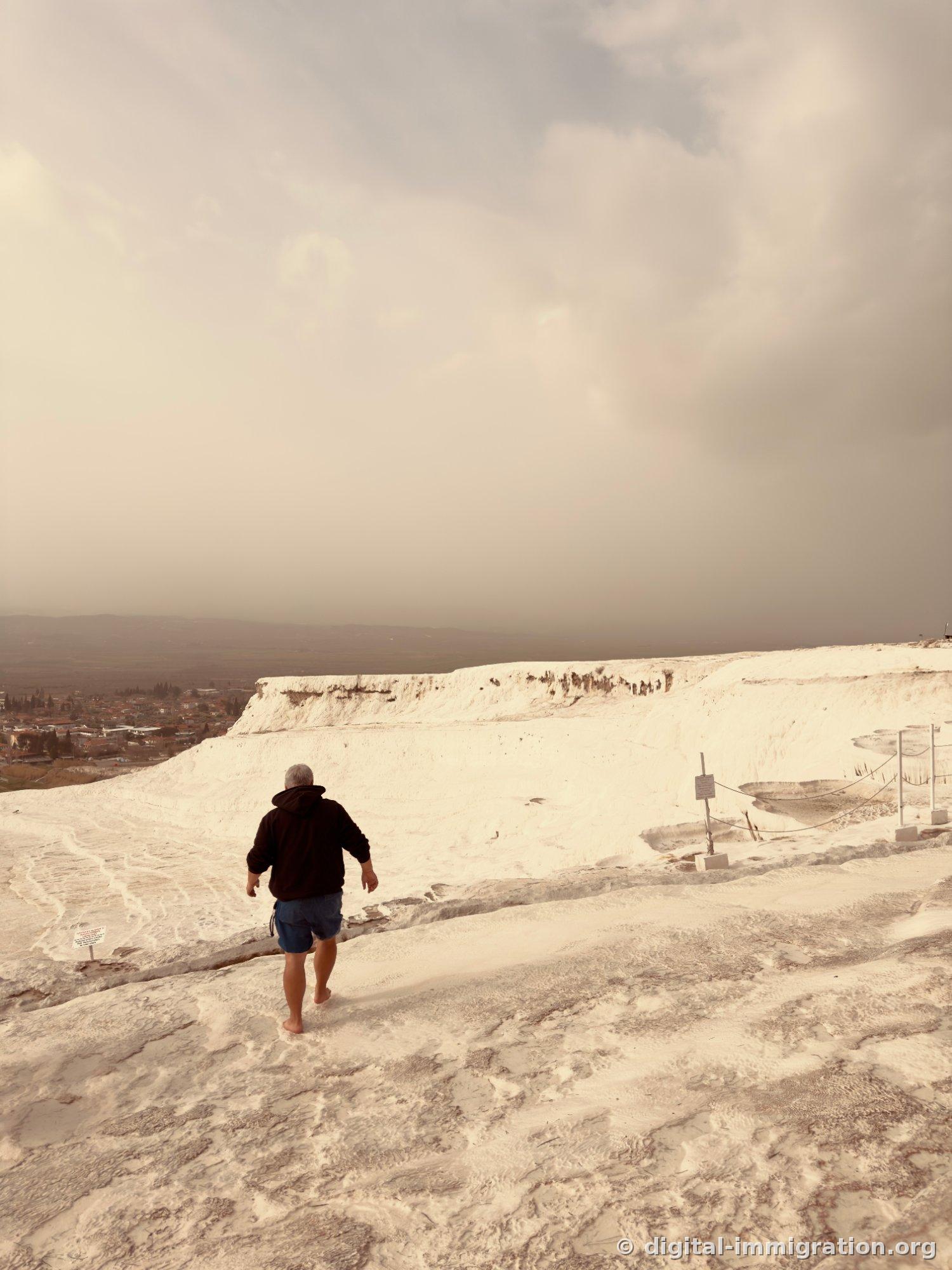
Still, these dry sections actually photograph better. There are fewer people, and the wide white surface brings out silhouettes. The photo below was taken from the upper ridge facing toward the village, and in one frame you capture everything from your feet down to the lake on the lower left. In early March, barefoot in shorts, your feet will be cold. The upper ridge has strong winds, so wearing at least a hoodie over your shirt is a good idea.
Things I Wish I'd Known Before Going
- A towel is essential; slippers are useless. Since you're carrying your shoes in your hand, a backpack with straps is convenient. Without a towel to dry your feet, limestone hardens on wet feet and goes straight into your shoes.
- If you're planning to go in the water, wear shorts. Even if you roll up long pants, water splashes. However, there's nowhere deep enough to submerge your body. The deepest it gets is ankle to calf.
- If you have sensitive soles, be prepared. After about 30 minutes of walking, the bottoms of your feet feel tingly.
- There's no need to reschedule to avoid overcast days. But if you've seen those bright blue water photos on social media, you should know that's the result of a clear sky reflecting in the water—go in with those expectations adjusted.
- Admission fees and operating hours change each season. I don't remember exactly what I paid that day, so I'm not listing it. I recommend checking at the ticket office.
The best moment wasn't the scenery, but the sensations. Lukewarm water freshly flowing from above passing over the top of my feet, limestone crystals crunching beneath my soles, and the complete silence—no sound reaching me from the village below—for just a few minutes. The overcast sky meant fewer people, and because of that, the quietness was entirely mine. Next time, I'm thinking I'll go back early in the morning.
អានបន្តទៀត
- ខែកុម្ភៈនៅ Göreme៖ រឿងរ៉ាវនៃការចម្អិន Shin Ramyun Black លើភ្នំមុខ Zemi Hotel Cappadocia
តំបន់ Göreme នៅ Cappadocia ប្រទេសទួរគី រដូវក្តៅគឺជារដូវទេសចរណ៍ខ្ពស់។ ខ្ញុំបានទៅទីនោះនៅខែកុម្ភៈ។ ជាពេលដែលសីតុណ្ហភាពពេលព្រឹកធ្លាក់ចុះក្រោមសូន្យអង្សា ហើយតាមខ្នងជ្រលងភ្នំមានម្សៅពណ៌ស មិ…
គោរេម - លើមាត់ច្រាំងថ្មខ្ពស់នៃ Kaleiçi ក្រុងអង់តាល់យ៉ា អង្គុយម៉ោងមួយបន្ទាប់ទីរសៀលមើលកំពង់ផែពីភោជនីយដ្ឋាន Yuvam Shisha Nargile Kafe
ទីក្រុងចាស់ Kaleiçi នៅអង់តាល់យ៉ា ប្រទេសទួរគី គឺជាតំបន់ដែលមានផ្លូវតូចៗច្របល់គ្នាដូចមីរខូ ក្នុងកំពែងបុរាណ ដូច្នេះពេលមកដល់លើកដំបូង គេពិបាកនឹងដឹងថាសមុទ្រនៅទីណា។ ប៉ុន្តែពេលឡើងដល់ផ្លូវដើ…
អន្តាលីយ៉ា · Yuvam Shisha Nargile Kafe - កំពង់យ៉ាតកាឡេអ៊ីស៊ី អង់តាលីយ៉ា — មួយថ្ងៃមើលចុះក្រោមកំពង់ផែពីក្រោមកំផែងបីមុំផ្សេងគ្នា
ភូមិចាស់កាឡេអ៊ីស៊ី (Kaleiçi) នៅអង់តាលីយ៉ា ប្រទេសទួរគី គឺជាកន្លែងដែលកំផែងបុរាណនៅតែឈរជើងលើមាត់ច្រាំង ហើយពីក្រោមច្រាំងនោះទាំងមូលគឺជាកំពង់យ៉ាត។ មើលលើផែនទីហាក់ដូចជា "កំពង់ផែតែមួយ" ប៉ុន្…
អន្តាលីយ៉ា · Yuvam