A Morning at Kota Tinggi's Traditional Market — Mountains of Green Mango and RM3.50 Waffles
Kota Tinggi, Johor State, Malaysia. A town you reach driving east from Johor Bahru—one that appears in travel guides only for its waterfall. But this time, instead of the waterfall…
កូតាទីងហ៊ី
Kota Tinggi, Johor State, Malaysia. A town you reach driving east from Johor Bahru—one that appears in travel guides only for its waterfall. But this time, instead of the waterfall, I was drawn to the town market (pasar). Just past nine in the morning, stepping into the steel-frame building with only a roof, I was immediately hit by a wave of smells: the distinctive sweet-and-sour fermentation tang of tropical fruits, human sweat, and the constant breeze of ceiling fans. There's no air conditioning. This piece is adapted from notes I scribbled down at my accommodation that evening.
Market Stall Piled High with Green Mangoes
The first thing that stopped me in my tracks was the mango stall. These weren't the yellow apple mangoes you see in Korean supermarkets, but bright green mangoes with thick skins covering an entire display platform. Photos don't capture the scale—the real ones, some larger than an adult's fist, were piled up to waist height. The vendor had cut and arranged a few to show customers, and their cross-sections were a striking bright orange. I had nearly dismissed them as unripe based on the skin alone, but that single exposed flesh completely reversed my judgment.
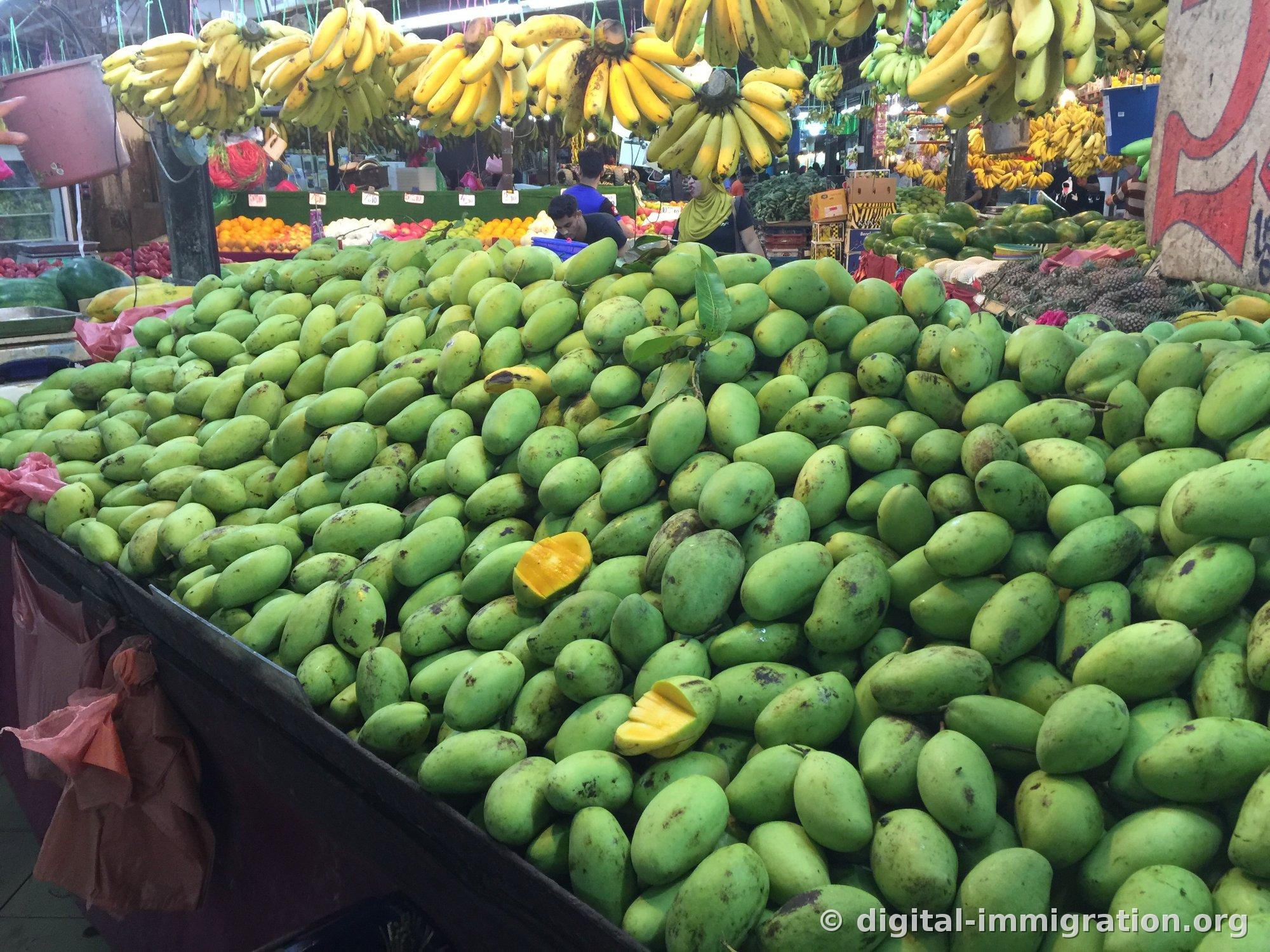
First-time visitors to this market tend to miss one crucial thing. Green mangoes are sold in two versions: for eating crispy and raw, sliced and dipped in salt and chili powder (a common way to eat them in Malaysia), or for ripening over several days until they turn yellow. Even though they look identical, the vendor knows which is which and picks accordingly. I just asked for "mango," got the crispy version, and was bewildered when I peeled it at my accommodation, wondering why it was so sour. If you want the ripened version, it's worth signaling with hand gestures that you'll eat it in a few days.
Do Bananas Really Come in This Many Varieties?
The true star of this market is actually the banana. Bunches strung from the ceiling with rope cover the entire walkway, so tall people have to duck as they pass. Green, yellow, and half-ripe speckled ones intermingle, each a different variety. Short, plump pisang mas (literally "gold banana"), elongated large varieties, and firm green bananas sold specifically for frying.
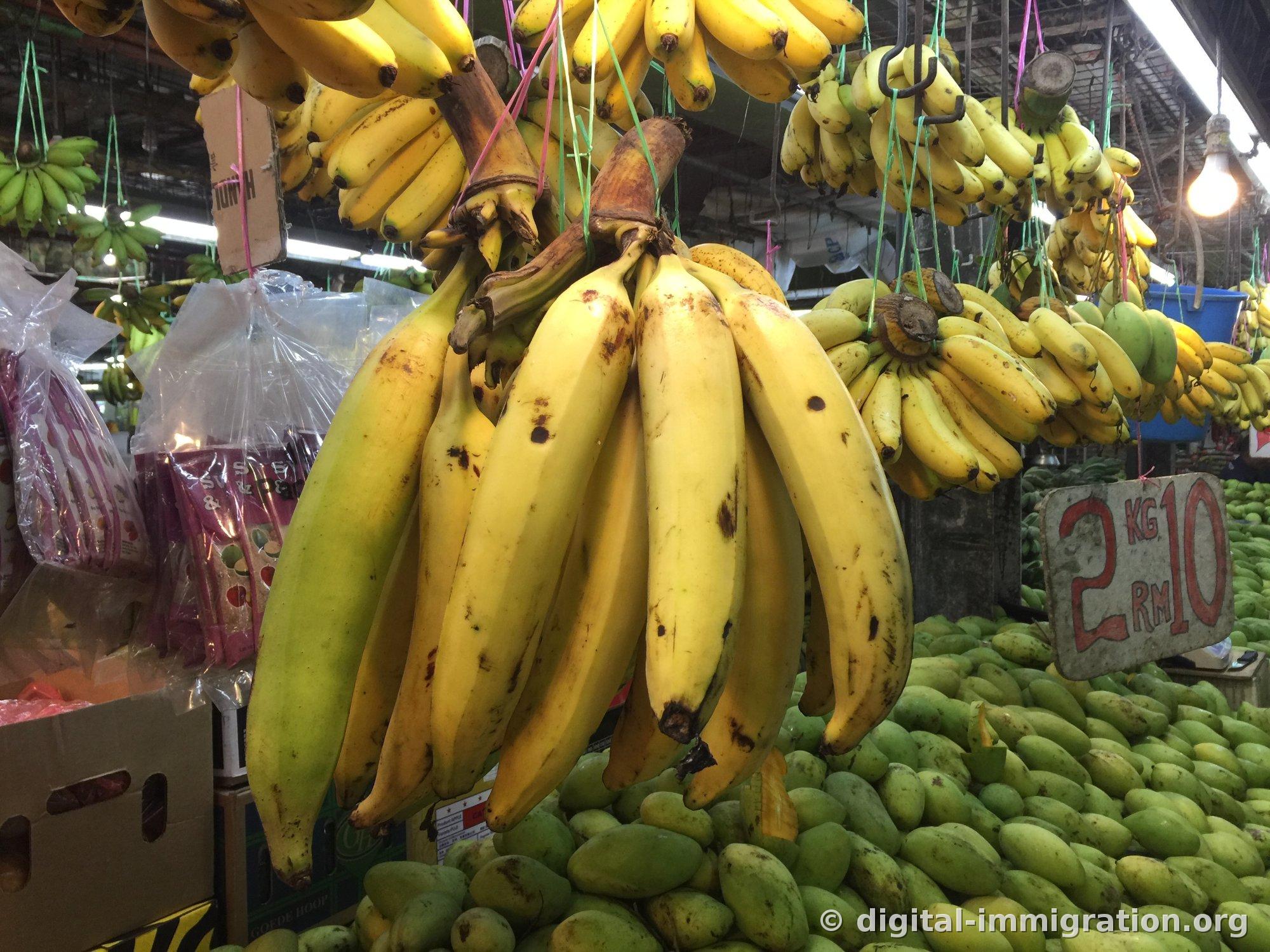
In the right side of the photo, you can see a hand-written sign in red that says "2 KG RM10." That's the mango price at that stall that day—roughly three thousand won in Korean currency. In this market, prices are marked only on handwritten wooden boards like these, and stalls without them require you to ask. Later, when I compared prices, I found the same-sized mangoes more expensive elsewhere. The smart move is to do a lap before buying, but I impulsively bought from the first stall.
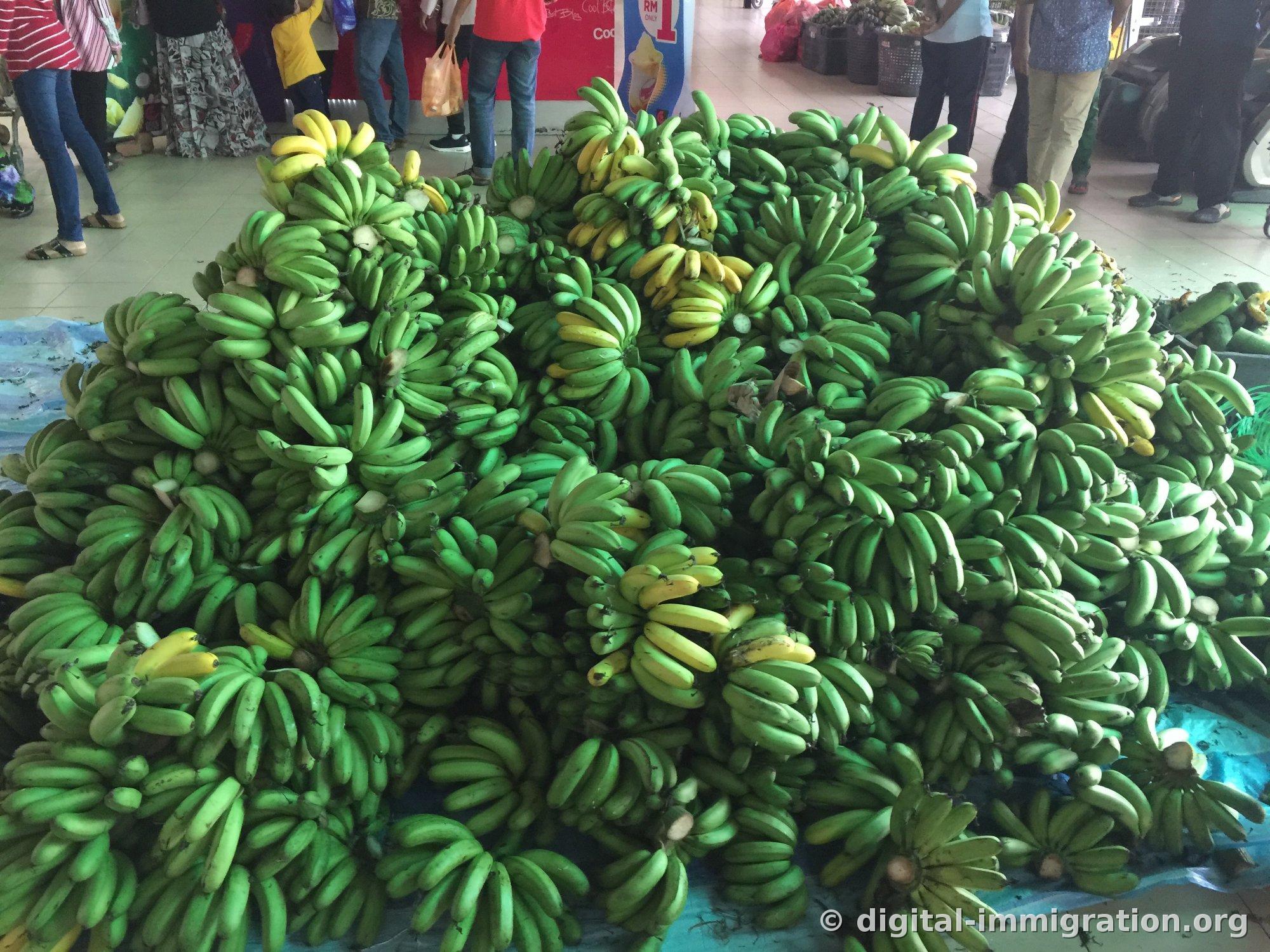
There was also a massive pile of green bananas spread across waterproof sheeting on the floor. These aren't sold individually but in bunches at near-wholesale quantities. The people standing around actually carried large plastic bags rather than tourist baskets. I remember an ice cream advertisement poster on a pillar in the back that read "RM ONLY 1."
ដាក់ស្នើប័ណ្ណចូលប្រទេសឌីជីថល (MDAC)
The Imported Fruit Stall—Your Baseline for Understanding Prices
Deeper into the market, the atmosphere changes. Under fluorescent lights, there's an organized stall of imported fruits—oranges, apples, pears wrapped in mesh. The price tags here are interesting: "5 BIJI RM10," "6 BIJI RM10," "7 BIJI RM10" hang in a row. Biji is Malay for "piece" or "individual." In other words, whether you get 5, 6, or 7 pieces for ten ringgit determines the quality and size grade. Once you understand this labeling system, prices across the entire market suddenly become legible.
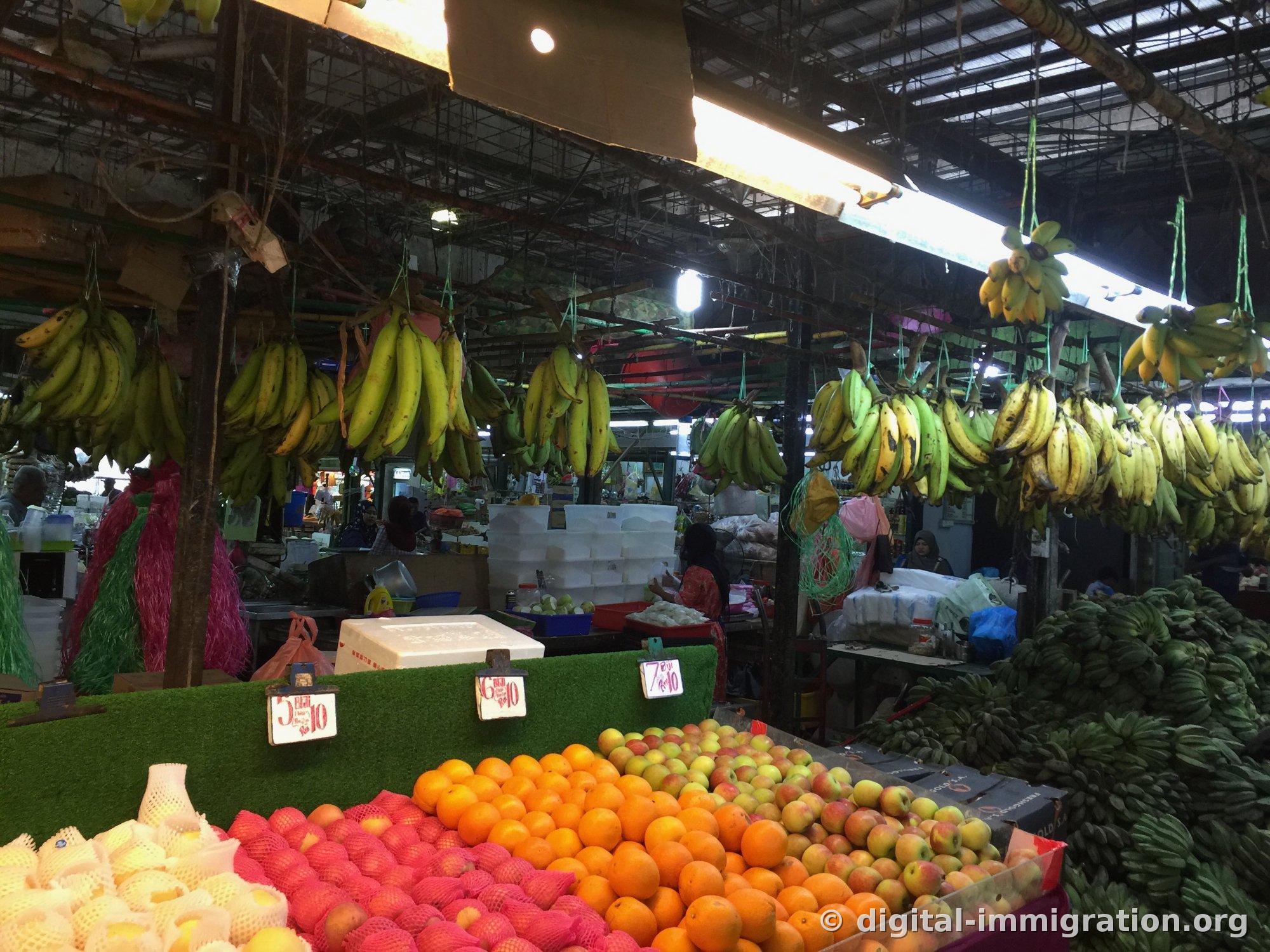
For the record, most of the apples and oranges here are imports, so there's no real reason to buy them. The reason I recommend comparing prices with the local fruit stalls is that this contrast helps you truly grasp just how cheap mangoes and bananas are.
Location and Access
The market is in the heart of Kota Tinggi's town center, and I've marked the coordinates of where I took photos on the map below. Coming from Johor Bahru, it's around an hour by drive. You can reach it by public transport, but services aren't frequent, so I called a Grab ride. The market building itself is semi-open with only a roof, so it gets quite hot and humid as noon approaches. Early morning is far more pleasant, and the goods are also at their best then. When I went late afternoon, half the stalls were already empty.
Some sections of the floor are wet, so shoes with soles are better than sandals. And bring cash—having small bills (RM1, RM5) in advance makes things much easier. If you hand over large notes, vendors will have to run to the next shop for change.
More Than Just Fruit — Bahulu & Snack Corner
In one corner of the market, wedged between a slipper rack and a batik clothing shop, there's a stall K-05 with a yellow sign reading "Bahulu & Snack Corner." Bahulu is a traditional Malay pastry baked with eggs, sugar, and flour. They're piled high behind glass, but I ordered a waffle here.
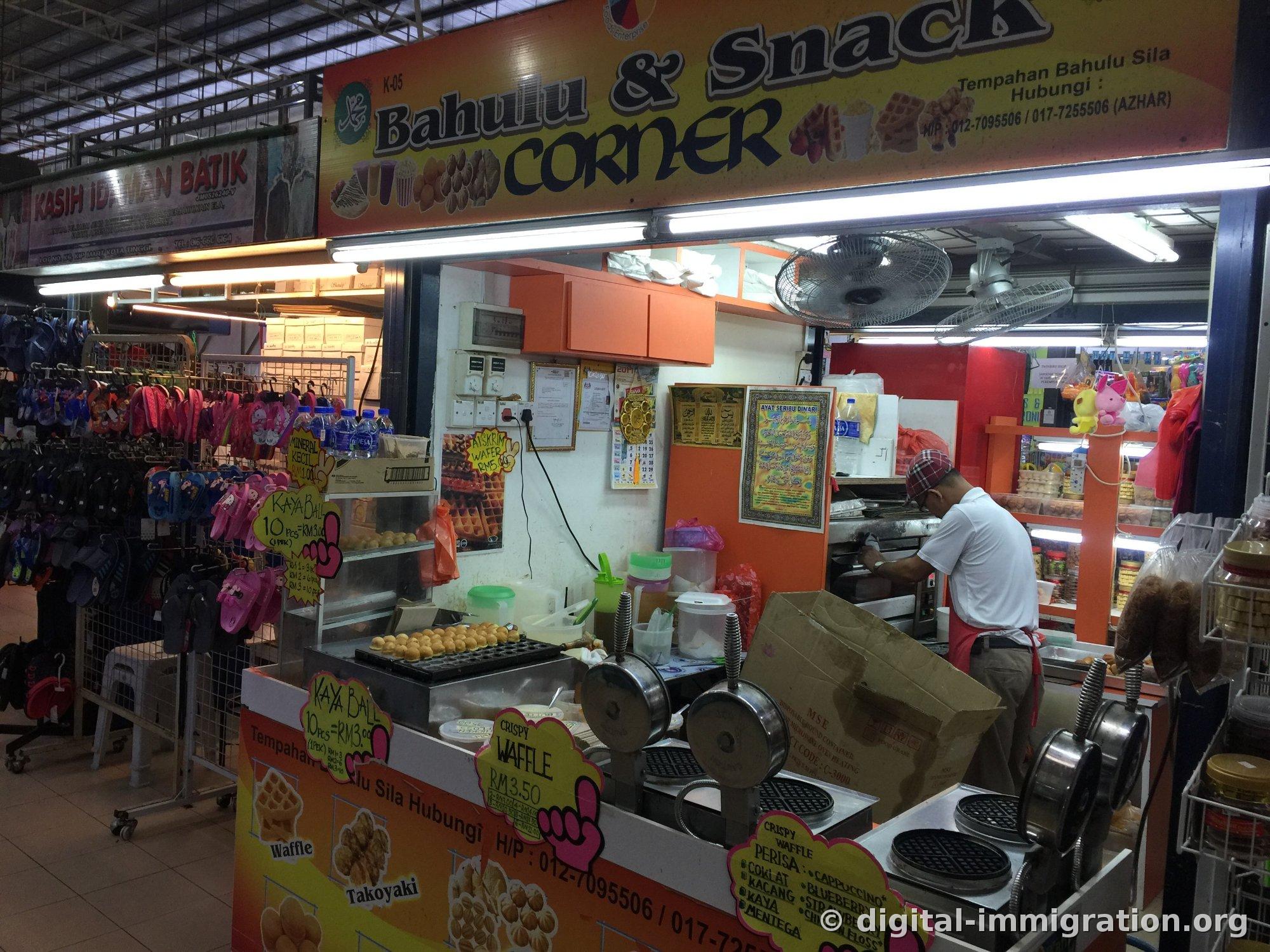
I appreciated that the prices were clearly posted. Crispy waffle RM3.50, 10 kaya balls RM3.00, ice cream wafer RM5, bottled water RM1. The waffle flavors available—chocolate, blueberry, peanut (kacang), kaya, butter (mentega), cappuccino—were all listed. I chose kaya, and the coconut jam's characteristic rich sweetness seeped into the fresh-baked dough. But to be honest, the crispness doesn't last long. Whether from the market humidity or not, after just five minutes of carrying it around, it gets soggy. You should eat it on the spot. Meanwhile, round kaya balls were constantly being baked on the griddle in front, and those held up better as they cooled.
The Roti Canai Station — That Was the Highlight
Past the fruit section, as you move into the dry goods and preserved foods area, you come to a spot where two people are working at a griddle. This is where they make roti canai. The two work in tandem—one stretches the dough thin with their palms, the other flips what's been folded into squares on an oiled griddle. Their hands move so fast it's hard for your eyes to follow the moment the dough thins to paper-like delicacy.
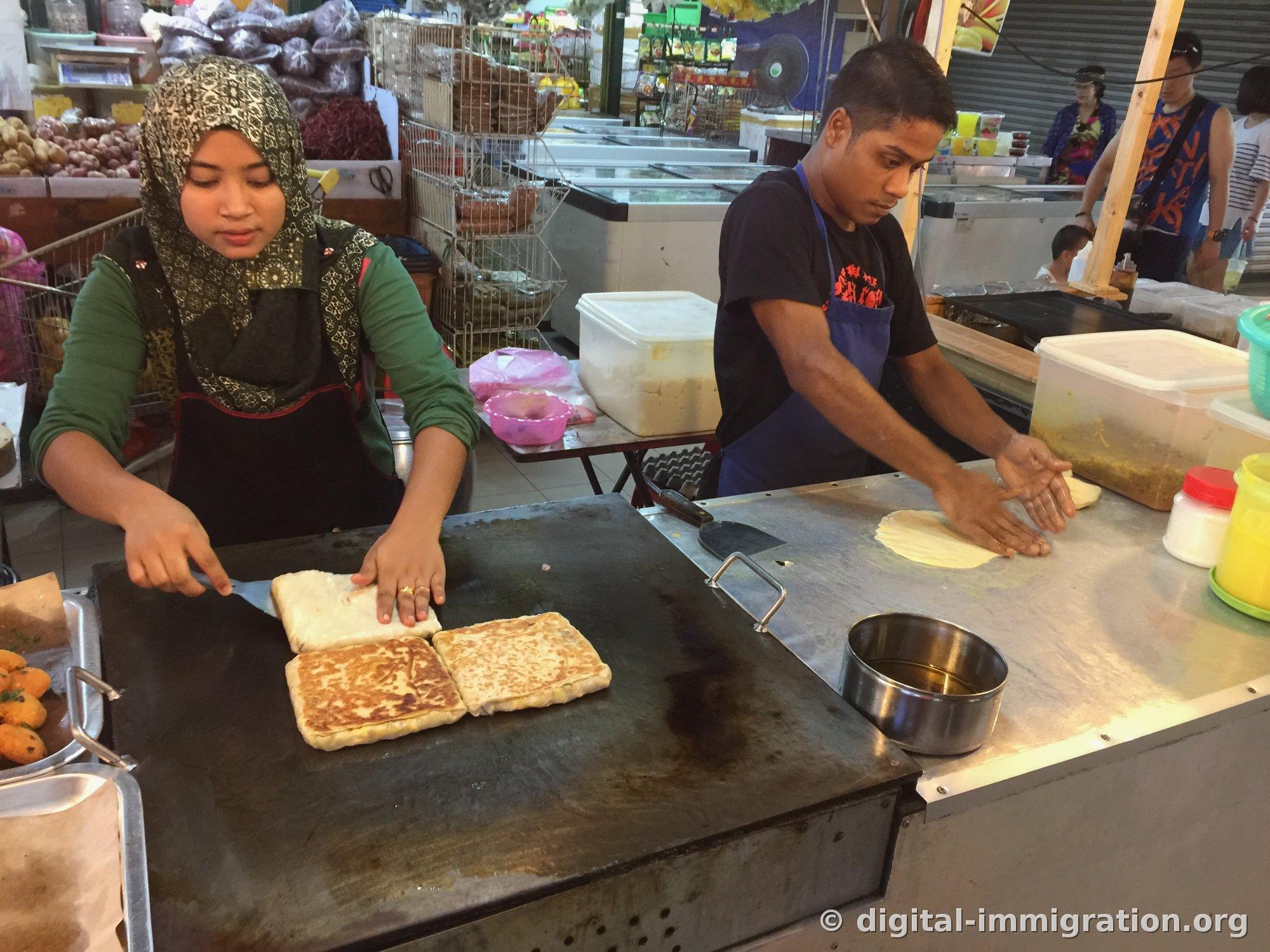
The square shapes in the photo are filled versions—murtabak style. You can see a yellow curry filling in a container on the right. I asked for a freshly cooked piece and dipped it in the curry sauce. The oil had soaked in just slightly—the outside was crispy while the inner layers were moist. It's quite heavy for a breakfast item. Deep-fried items (kuih style) were also stacked nearby.
I didn't ask the price that day—just pointed at one—and when I got my change, it was extremely cheap. I don't remember the exact amount, so I won't write it here. Since many stalls operate without menu boards, I recommend confirming prices on the spot.
If I Go Back, Here's How I'd Do It
Kota Tinggi isn't a city to spend your whole day in, but this one market is easily entertaining for two hours. If I went back, I'd arrive around 8 a.m., eat roti first → do a lap around the fruit stalls comparing prices → then buy mangoes last before heading back to my accommodation. The order matters for a simple reason: if you buy 2kg of mangoes first, you'll spend the rest of the time carrying heavy bags. That's exactly what happened to me that day.
One more thing. This market is great for photos, but people's faces often end up in the frame. The vendors seemed generally unbothered, but pointing a camera right at someone's cooking station is different. I made eye contact with the roti makers, showed them the camera briefly, and then took the shot. It's worth observing that basic courtesy.
អានបន្តទៀត
- Morning at the Traditional Market Next to Johor KIP Mall, Mangoes 2kg for RM10
On the outskirts of Johor Bahru, Malaysia, on the way up toward Kulai, there's KIPMall. You walk in expecting an air-conditioned shopping center like a typical mall, but instead yo…
Johor · KIPMall - ក្រុងគូឡាឡាំពួរ ម៉ុនគីអារ៉ា Seng Kee Chicken Rice(成記雞飯) — អាហារថ្ងៃត្រង់ចុងសប្តាហ៍ដ៏ពេញលេញ ដែលត្រូវតែកម្មង់បាយប្រេងមកជាមួយ
មានហាងមួយដែលជើងខ្ញុំតែងតែនាំខ្លួនទៅដោយស្វ័យប្រវត្តិ រាល់ពេលដែលមានកិច្ចការនៅជិតតំបន់ Solaris ម៉ុនគីអារ៉ា ក្នុងចុងសប្តាហ៍។ នៅគូឡាឡាំពួរ ស្លាកហាងបាយមាន់ព្យួរដាក់តាមគ្រប់ត្រកូនផ្លូវ ប៉…
ក្វាលាលំពួរ · Seng Kee Chicken Rice - Petronas Twin Towers ក្រុងគូឡាឡាំពួរ ពីដើមឈើបាញ់យ៉ង់ពេលថ្ងៃ រហូតដល់ទឹកបាញ់ KLCC ពេលយប់ — កំណត់ត្រានៃមួយថ្ងៃពេញ
ក្នុងដំណើរស្នាក់នៅក្រុងគូឡាឡាំពួរលើកនេះ ខ្ញុំបានចំណាយពេលមួយថ្ងៃពេញនៅតំបន់ KLCC (Kuala Lumpur City Centre) តែមួយប្លុកប៉ុណ្ណោះ។ Petronas Twin Towers គឺជាអគាររបស់ម៉ាឡេស៊ីដែលល្បីល្បាញជ…
ក្វាលាលំពួរ · Petronas Twin Towers