Tsurutontan on the 4th Floor of Haneda Airport International Terminal: Captivated by a Single Bowl of Cream Udon
I had about two hours before immigration screening at Tokyo Haneda Airport's international terminal. Walking through the 4th floor's Edo-koji—a street recreating the old town in wo…
Tokyo · Tsuru Tontan Haneda Airport Branch
I had about two hours before immigration screening at Tokyo Haneda Airport's international terminal. Walking through the 4th floor's Edo-koji—a street recreating the old town in wood—I stopped in front of Tsurutontan (つるとんたん) with its white noren curtain. It's an udon restaurant that started in Osaka and has a branch at Haneda. I had a prejudice that airport restaurants are just quick fixes, but that didn't apply here.
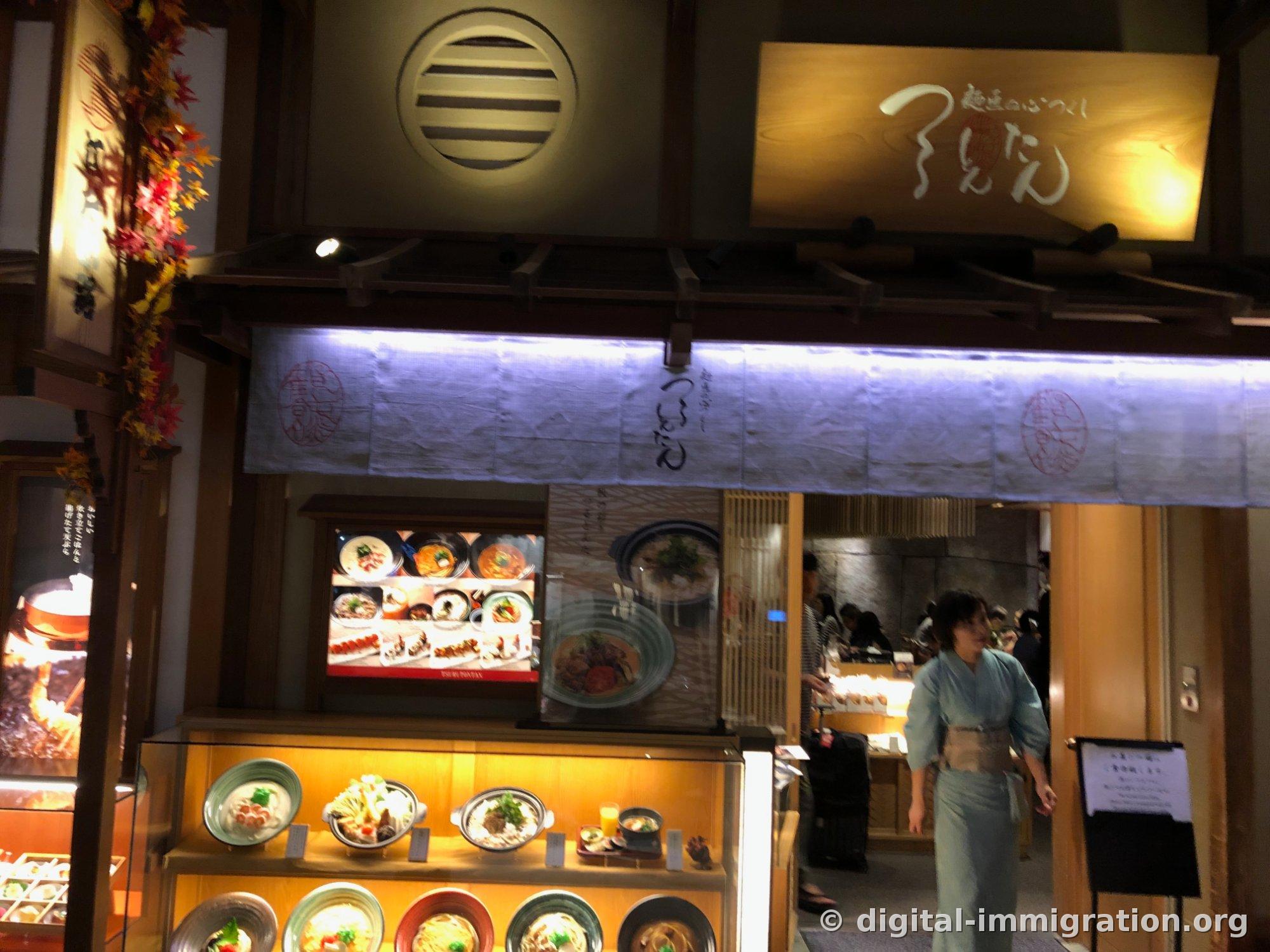
First, Looking at the Display Window
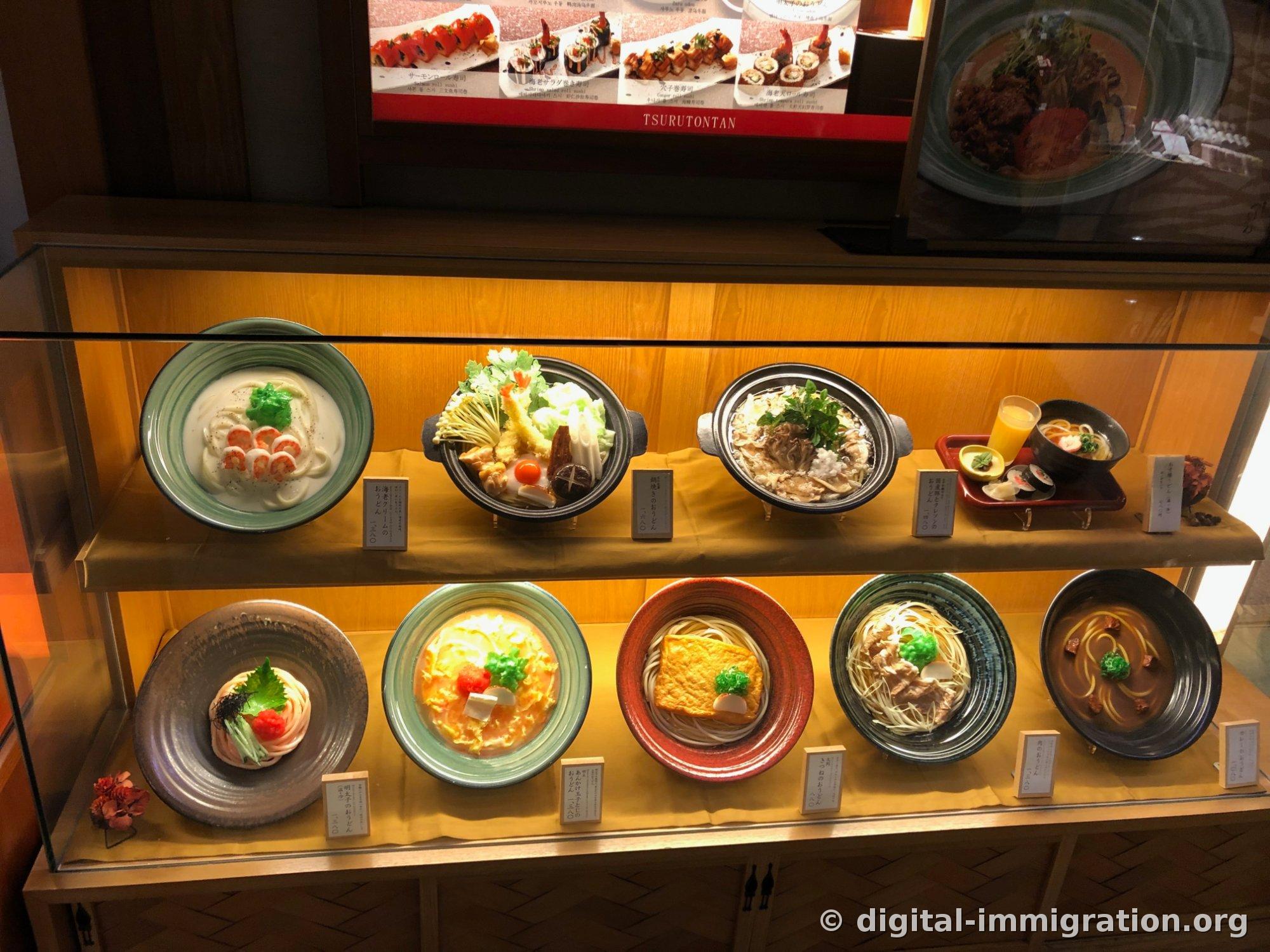
In the glass display case next to the entrance, food models are arranged in two tiers. This sample display culture at Japanese restaurants is faster for travelers than reading a menu. On the top tier: shrimp cream udon, nabeyaki udon served in a pot, and a large ceramic pot with meat and grated radish. On the bottom tier: cod roe udon, ankake egg udon, and kitsune udon with a whole sheet of fried tofu covering a red bowl. The price tags are in Japanese kanji numerals so they're hard to read, but you can just point at a model without needing a QR code and your order is done.
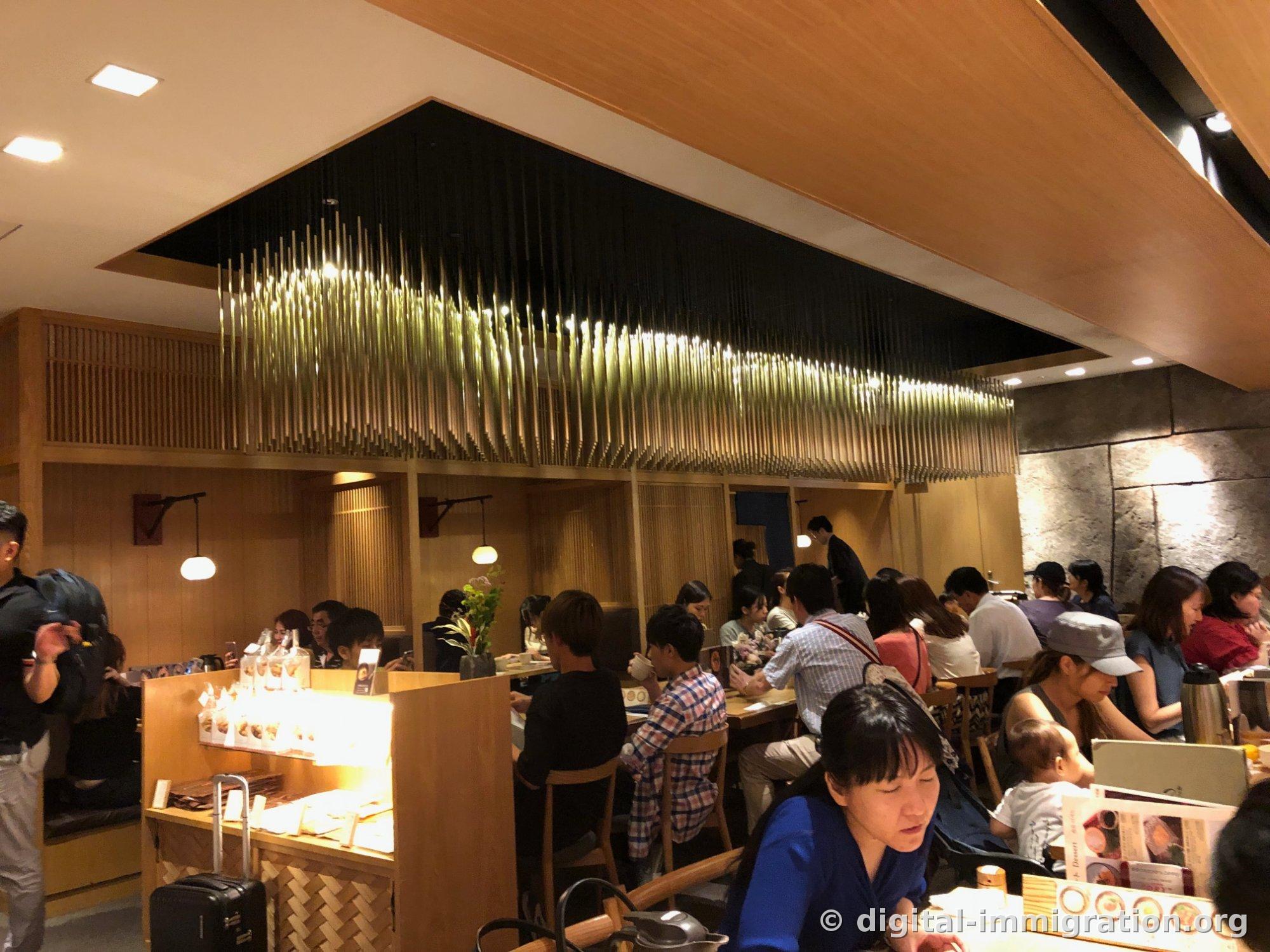
The interior is wider than expected, and in the evening it was nearly full. Bamboo suspended densely from the ceiling creates lighting that stretches across the middle of the hall. People pulling luggage, families holding babies, and salarymen in suits eating alone are mixed together table by table. It's not an atmosphere that makes you forget you're at an airport—rather, it's because it's an airport that such a diverse mix of people gathers in one hall.
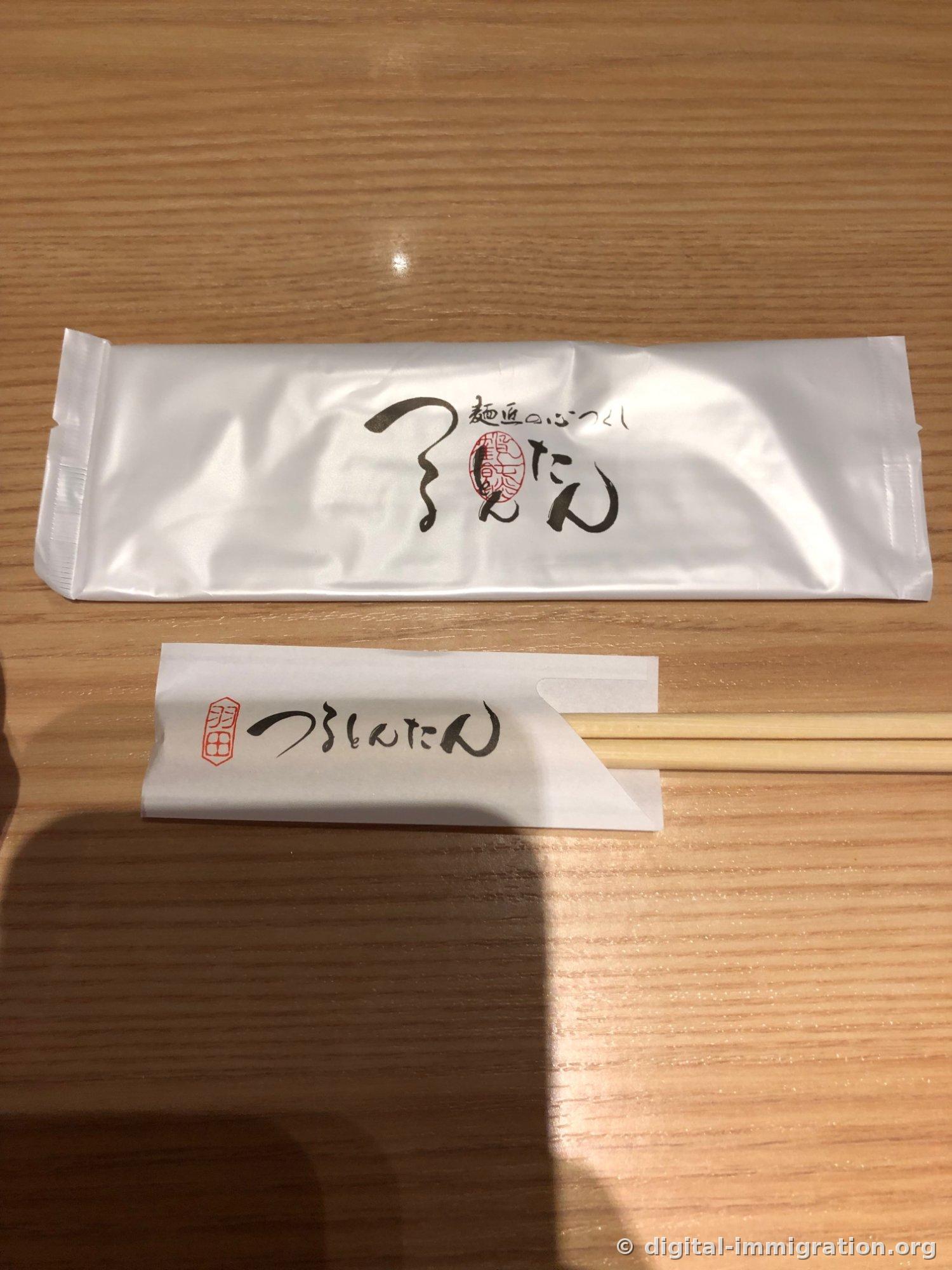
When you sit down, a wet towel and chopsticks are placed on the wooden table. The envelopes have the shop logo printed on them, but the chopstick envelope has a special red stamp with the character '羽' (Haneda). It's exclusive to the Haneda location. I'm not usually one to keep such things, but I folded this one and put it in my passport.
Why the Menu is So Thick
I was a bit taken aback when I opened the menu. Over 30 varieties of udon are listed with numbers. Japanese, English, Chinese, and Korean are arranged side by side, making it easy to read but hard to choose. Basic kombu udon 880 yen, fried tofu (kitsune) 880 yen, egg udon 980 yen, seaweed 980 yen. Tempura udon 1,480 yen, sukiyaki udon 1,680 yen, Tsuruton zanmai with multiple toppings 1,980 yen.
First-time visitors often miss two things written in small text at the top of the page. One is you can increase the noodle portion up to 1.5x, 2x, or 3x at no additional charge. When ordering, you just say things like "ittamahan (1.5)" or "futatama (2)". It says 3x is free. The other is that you can switch to thinner noodles. There's also an option to switch to low-carb lokabo udon, which is +180 yen.
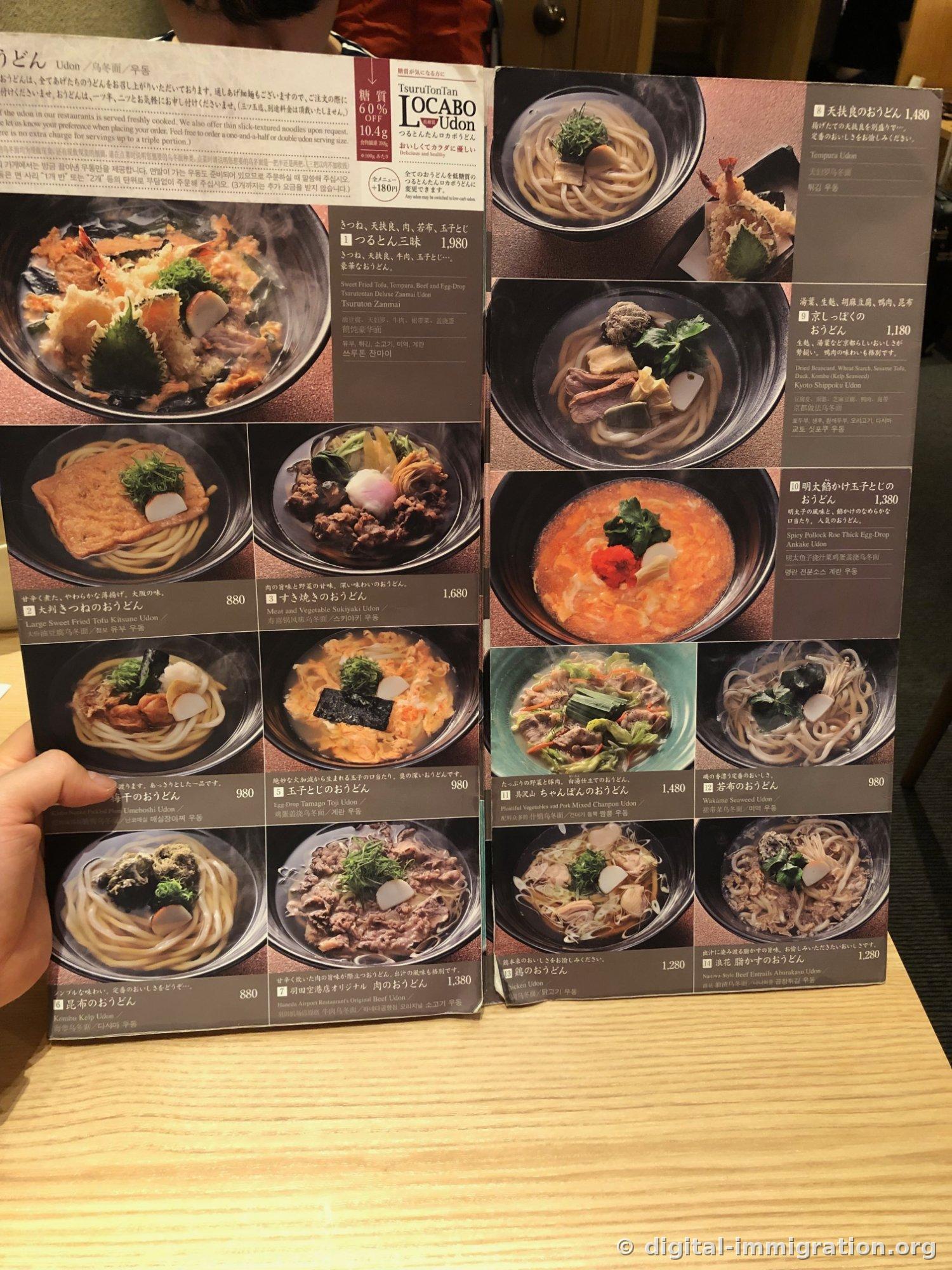
At number 7 is '羽田空港店オリジナル 肉のおうどん' 1,380 yen. Haneda location exclusive. I took a photo so I'd try it next time.
In the End, Cream Udon
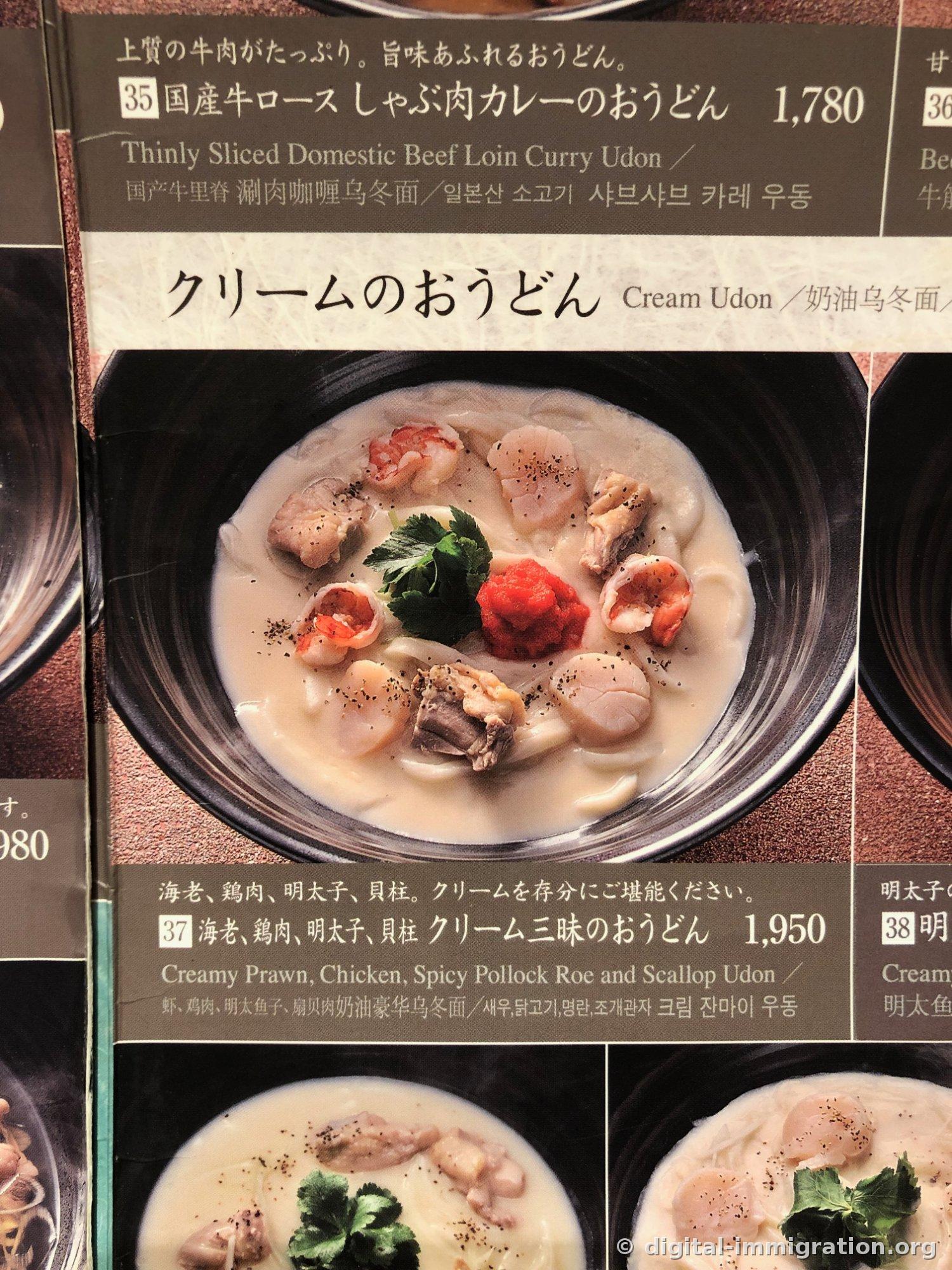
Turning the page, my hand stopped at the 'クリームのおうどん (Cream Udon)' section. Cream with udon? I was skeptical at first. Item 37: 'Shrimp, Chicken, Cod Roe, and Scallop Cream Zanmai Udon' 1,950 yen. Above it, item 35 is domestic beef shabu curry udon at 1,780 yen, so this is among the pricier options by this restaurant's standards.
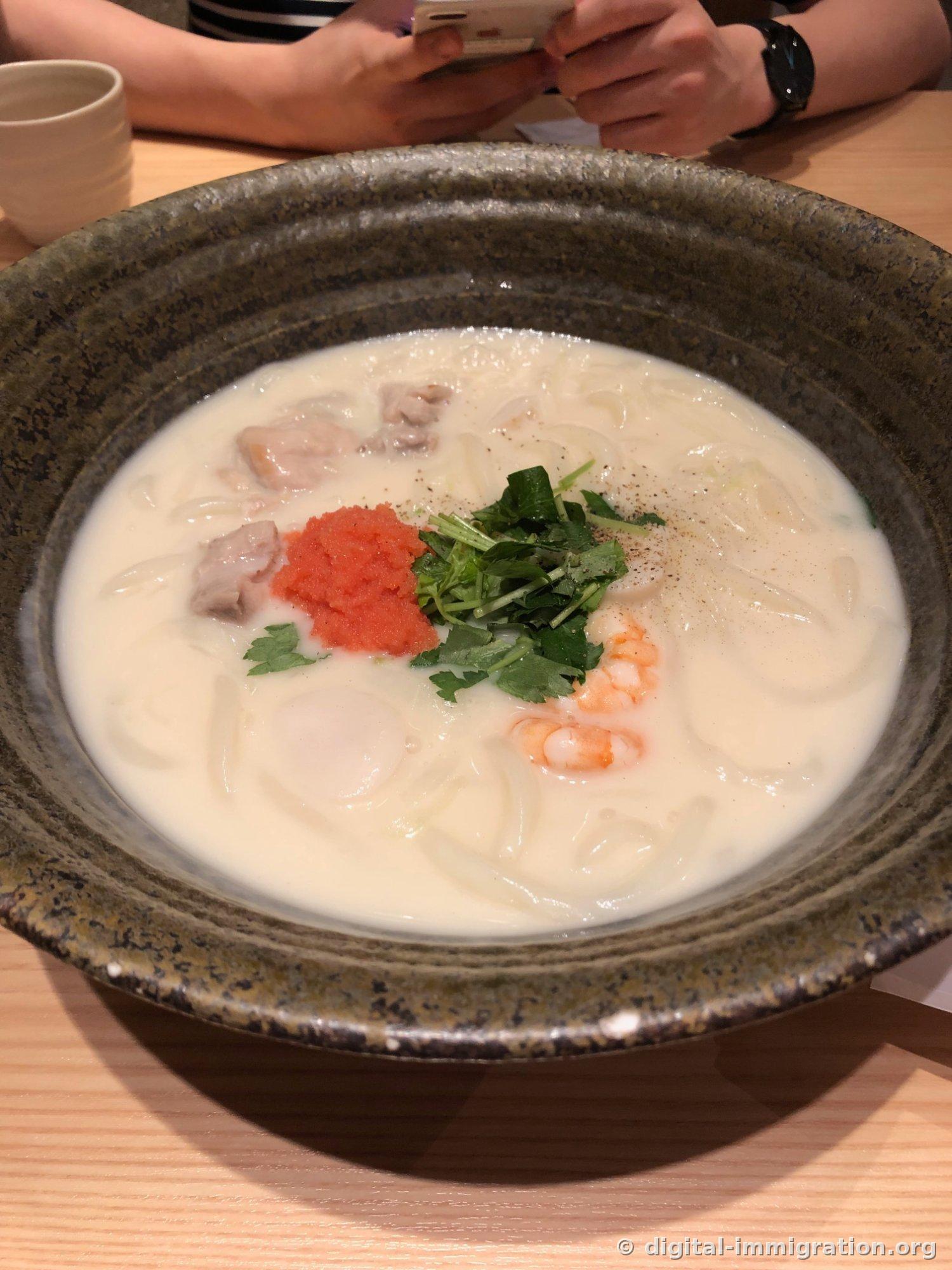
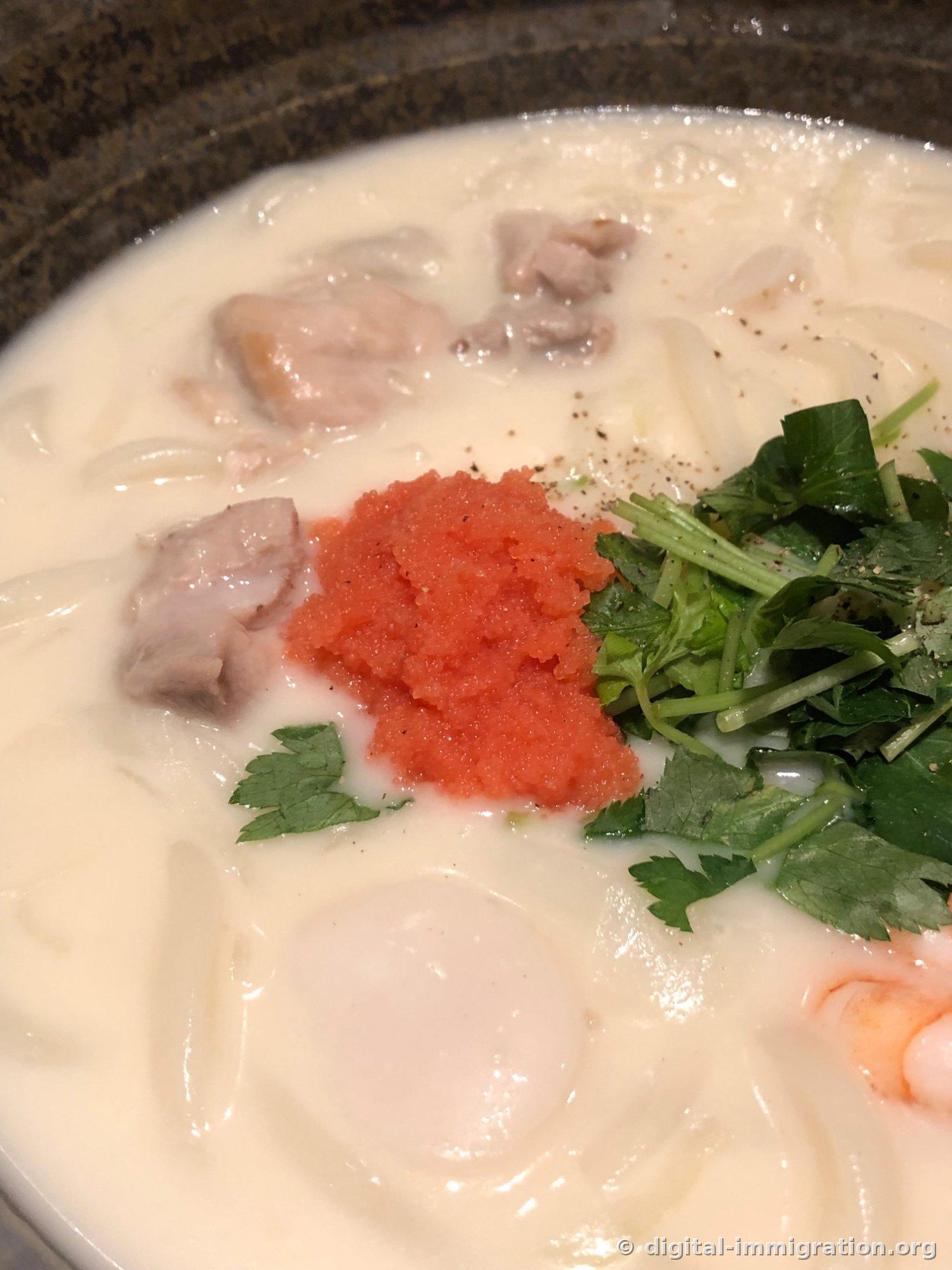
When the bowl arrived, I laughed. A deep sage-colored ceramic bowl takes up half the table. On the creamy white broth sits a cluster of cod roe, a handful of mitsuba (trefoil), and coarsely ground pepper. Between them, chunks of chicken, scallops, and shrimp are submerged. As steam rises, the smell of cream and the aroma of pepper hit your face together.
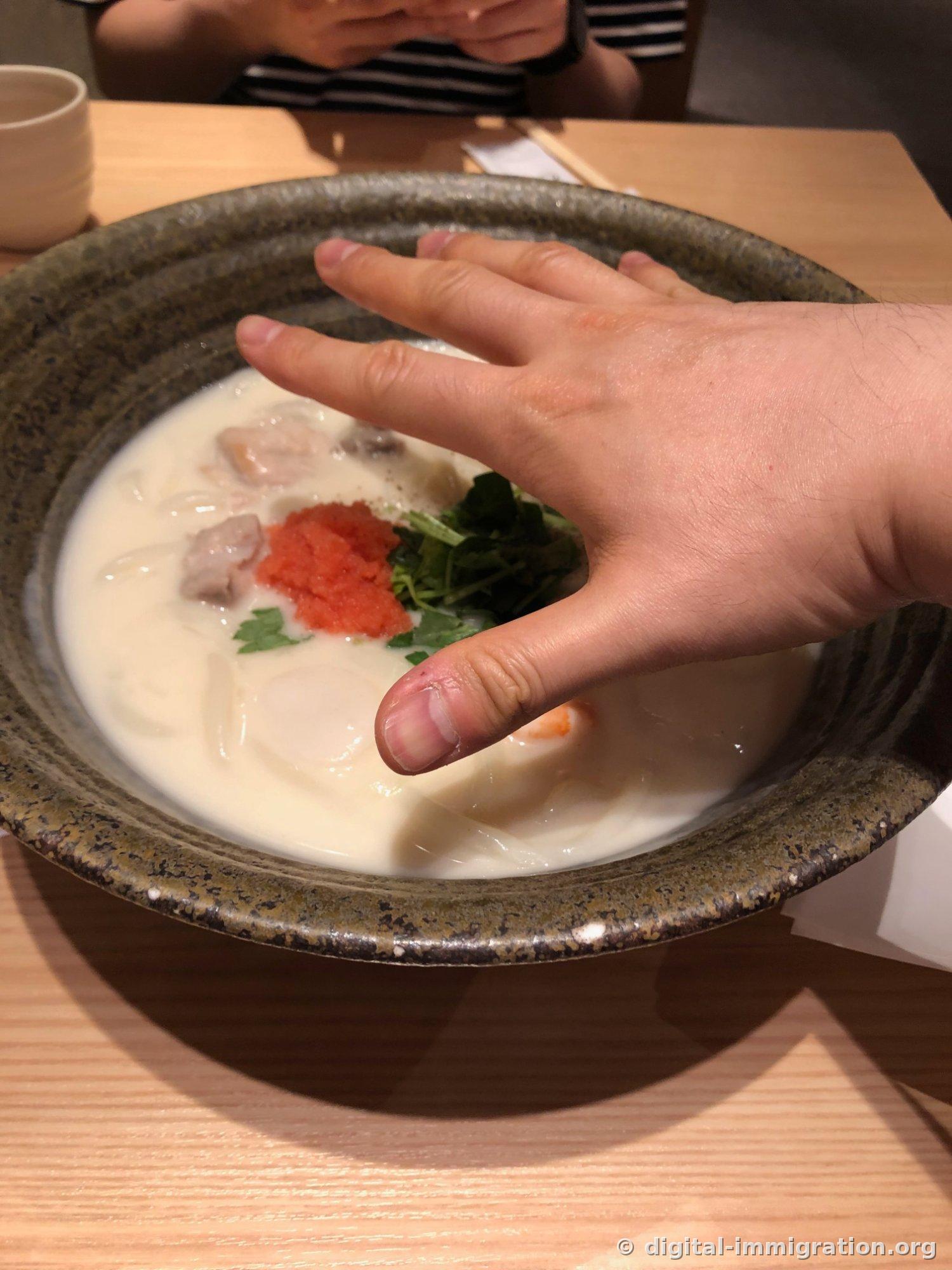
I couldn't gauge the size of the bowl, so I held my hand up to measure it. Even spreading my palm wide, I couldn't cover the entire broth area. The diameter is about one and a half hand spans. My companion asked "Are you going to eat all that?" but the noodle portion itself is reasonable compared to the bowl. The bowl is just unusually large.
Closer up, you can see the ingredients better. The cod roe isn't ground and clumped but has grains that are intact, and pepper floats in dots on the cream broth. The chicken comes in large chunks with skin attached and is half-submerged in the broth.
In the Order I Ate Them
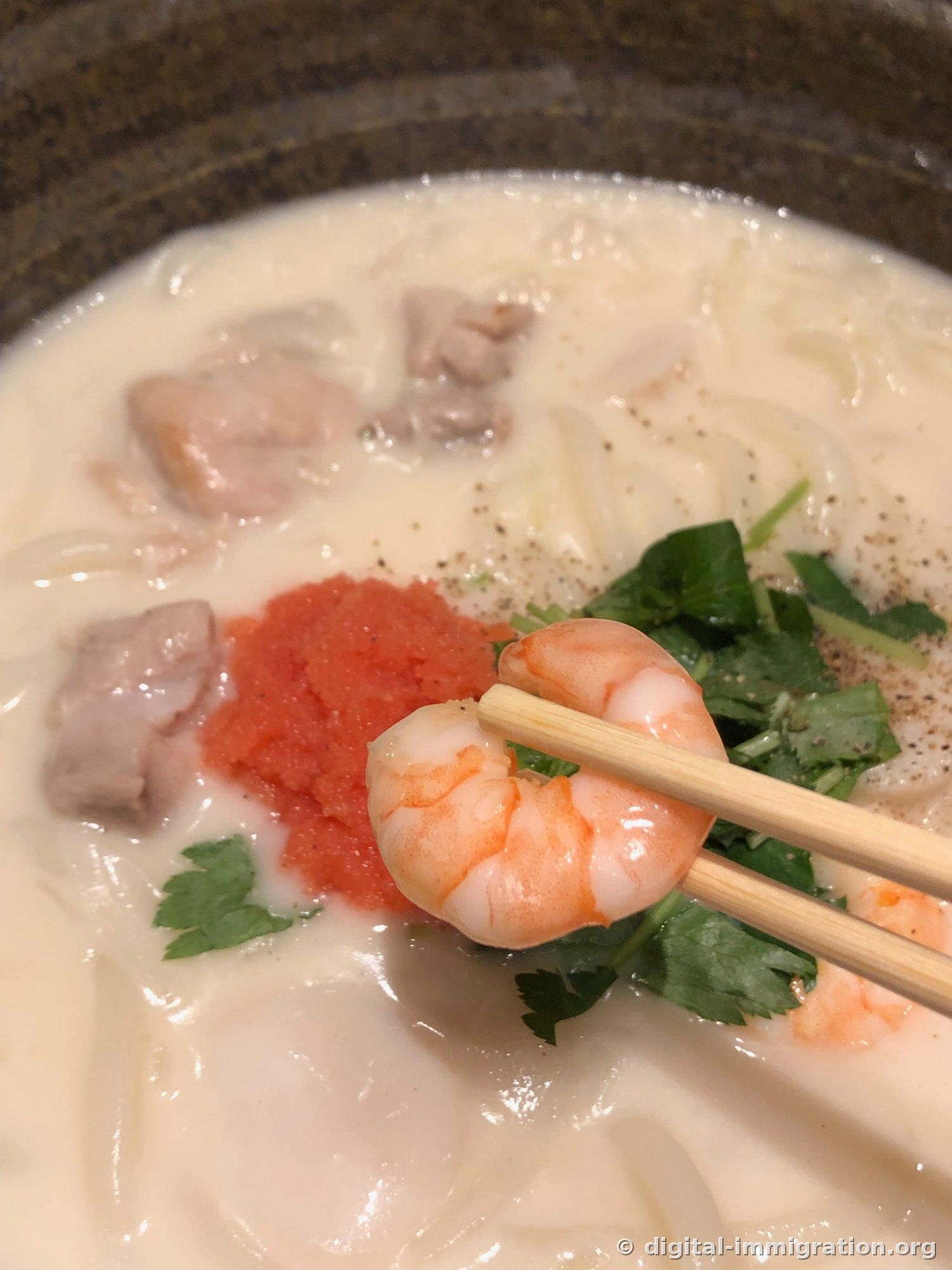
I started with the shrimp. It was whole with the shell removed, and when you bite it, there's still a snap to it. It didn't get soft even after soaking in the cream broth.
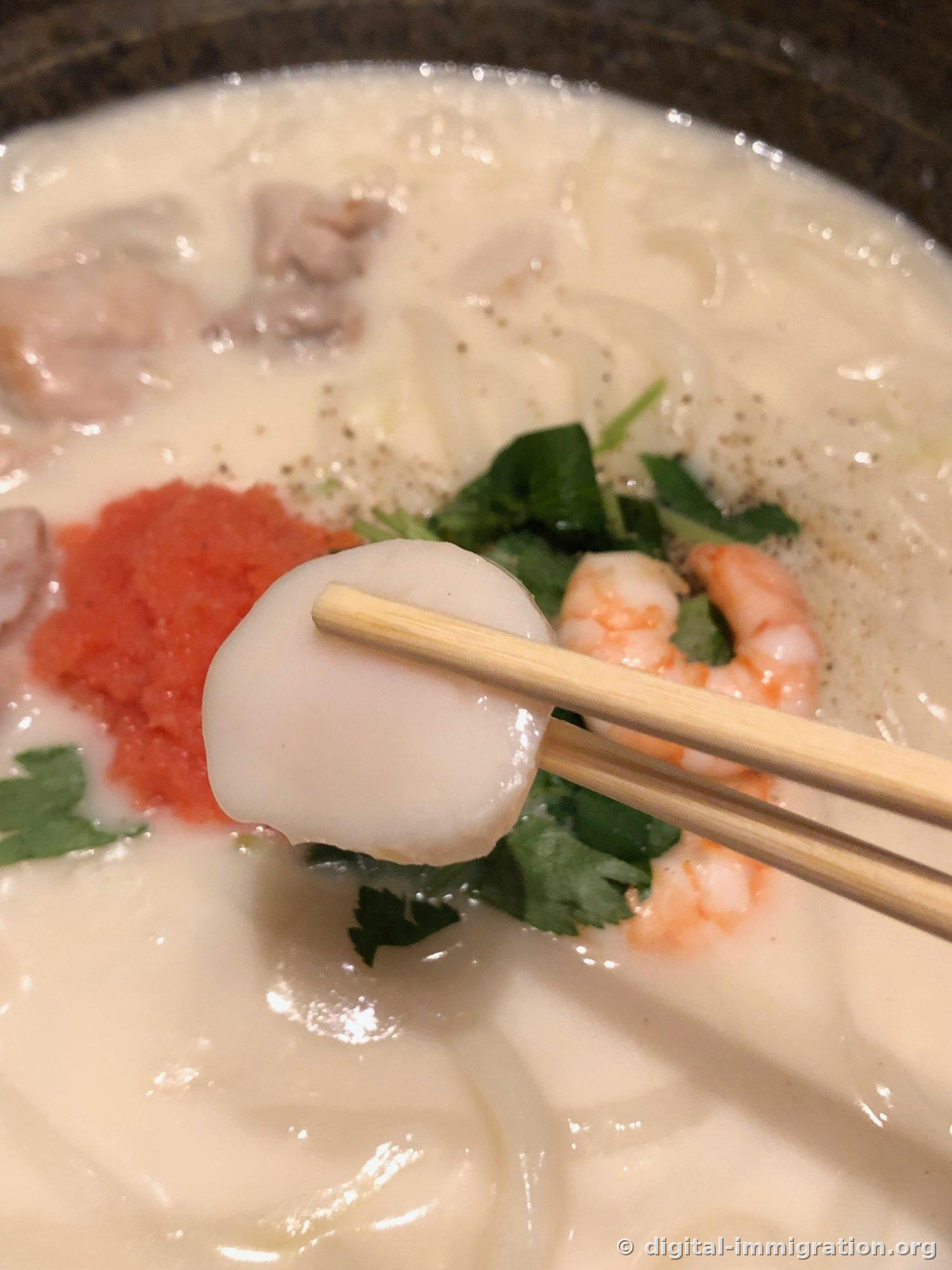
The scallop was thick. You can feel the weight when you pick it up with chopsticks. It goes in whole without being cut in half, and when you put one in your mouth, its sweetness layers with the cream. This was my favorite part of the dish.
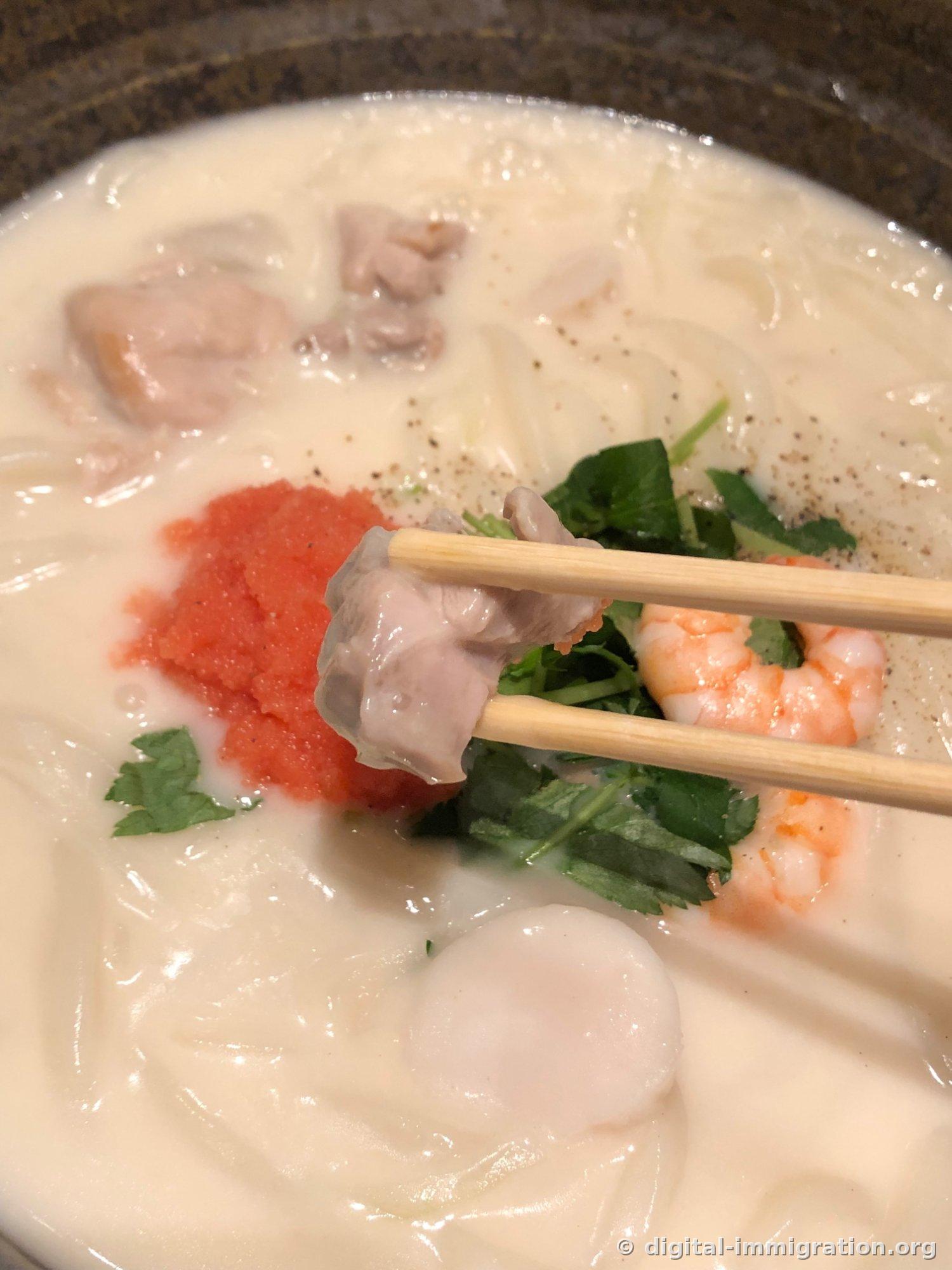
The chicken has skin on it, which is a matter of taste. I thought the cream broth needed this level of richness for balance, but my companion peeled off the skin and ate it.
The noodles are wide and thick. When you lift them with chopsticks, they don't droop but hold their shape as they come up. When you bite them, the outside is smooth with a slight firmness inside. The cream broth clings to the noodles and drips heavily every time you lift them. The person sitting across from me was holding shrimp tempura they'd ordered separately.
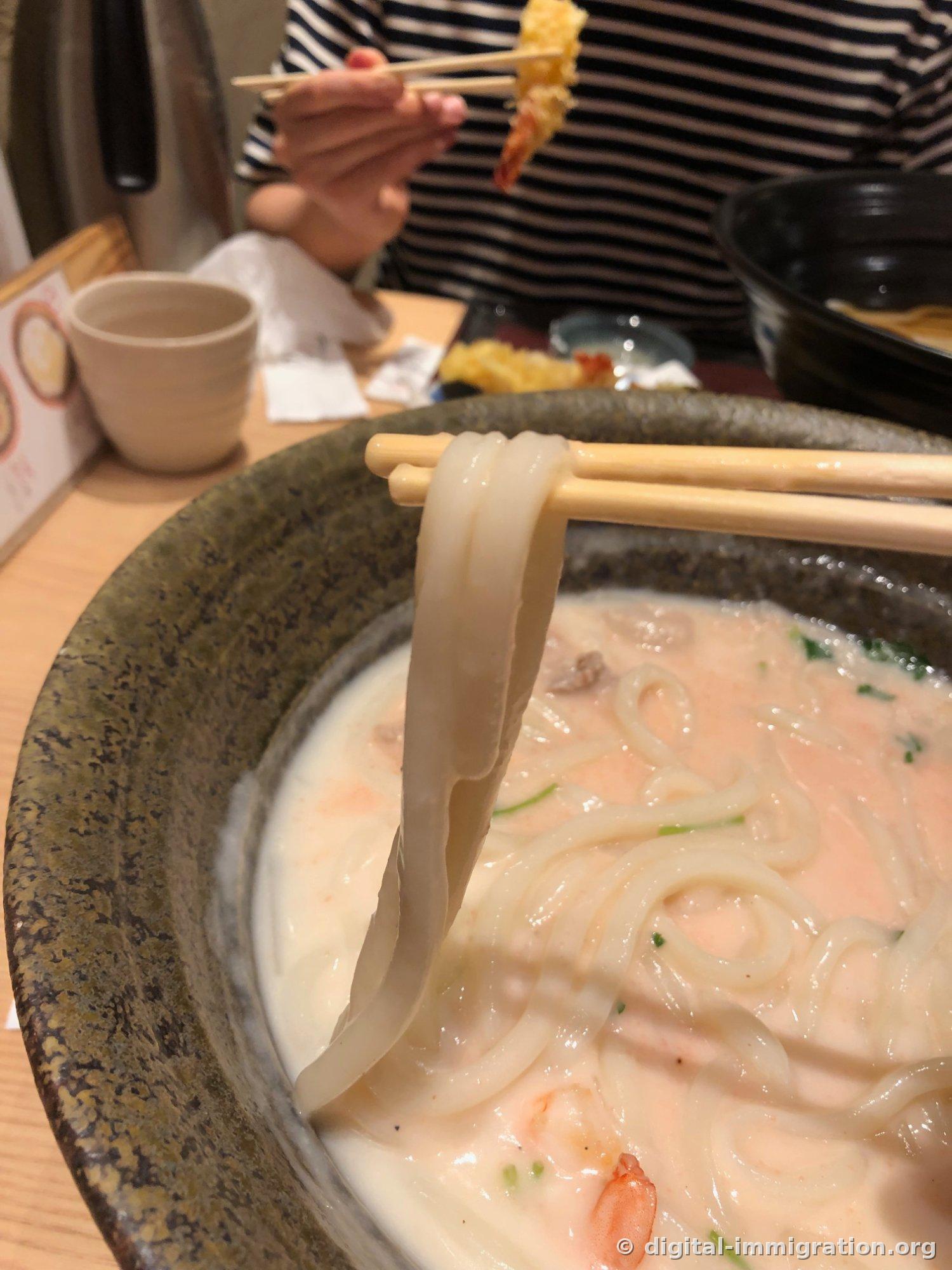
There were some regrets, though. The cream broth gets cloying about halfway through. The cod roe is salty and provides some balance, but in the latter half you find yourself adding more pepper or drinking water frequently. After finishing, I thought it would have been better to go with two people, order one cream and one soy sauce-based version, and share. Also, the broth is hot. The ceramic bowl holds the heat for a long time—steam still rises even after 20 minutes. If you have a tight flight connection, you'll regret it.
Location and Timing
It's located on the 4th floor's Edo-koji in Haneda Airport's international terminal. It's in the area before immigration screening, so you can't go there after security check. You need to check in, go up to the 4th floor and eat, then come back down for screening. It's good to give yourself plenty of time. It took me about 50 minutes to wait for a seat, have the bowl arrive, and eat while cooling down the hot broth.
For business hours and exact location, I recommend checking with airport signs or official information. Airport stores sometimes change their hours based on flight schedules.
- Basic udon 880-980 yen range, cream and meat varieties 1,380-1,980 yen range (menu board prices as of 2019 visit).
- Noodle portions 1.5x, 2x, 3x at no additional charge. Must mention when ordering.
- Korean is listed alongside the menu. Ordering by number is most reliable.
- Item 7 Haneda location original meat udon is not available at other locations.
I've been to Tokyo many times, but this was the first time I left early on purpose to eat at the airport. Next time I depart from Haneda, I plan to head to the 4th floor first. I definitely need to order item 7 next time.
អានបន្តទៀត
- From Akihabara's Chuo-dori to the Kanda River: A Record of Tokyo's Electronics District Revisited Multiple Times
Tokyo's Akihabara is a neighborhood where it's hard to say you've seen everything in a single visit. I've come multiple times across different seasons, and each time the signs chan…
Tokyo · Akihabara - Buying a Single ¥300 Year-End Jumbo Lottery Ticket at Nishi-Ginza Chance Center in Tokyo
Exit from the Hibiya exit of Tokyo's Shimbashi Station, walk toward the elevated highway for about three minutes, and suddenly you'll see a line of people stretching along the side…
Tokyo · Nishi-Ginza Chance Center - Ueno Ameyoko, the real magic starts after sunset — an evening walk from the Okachimachi Gate to Ueno Station
Every time I come to Tokyo, my feet find their way to Ueno Ameyoko (アメ横) without fail. This time I entered from the Okachimachi side and worked my way toward Ueno Station. I've met…
Tokyo · Ameya Yokocho Market