Tsukishima Nishinakadori, An Evening Under Blue Lights Gripping a Monjayaki Hotplate
Tsukishima, Chuo Ward, Tokyo. The moment I climbed out of the subway, a cool breeze rushed in, and standing at the entrance to the shopping street, I saw blue lights hung on each t…
Tokyo · Tsukishima Monja Street
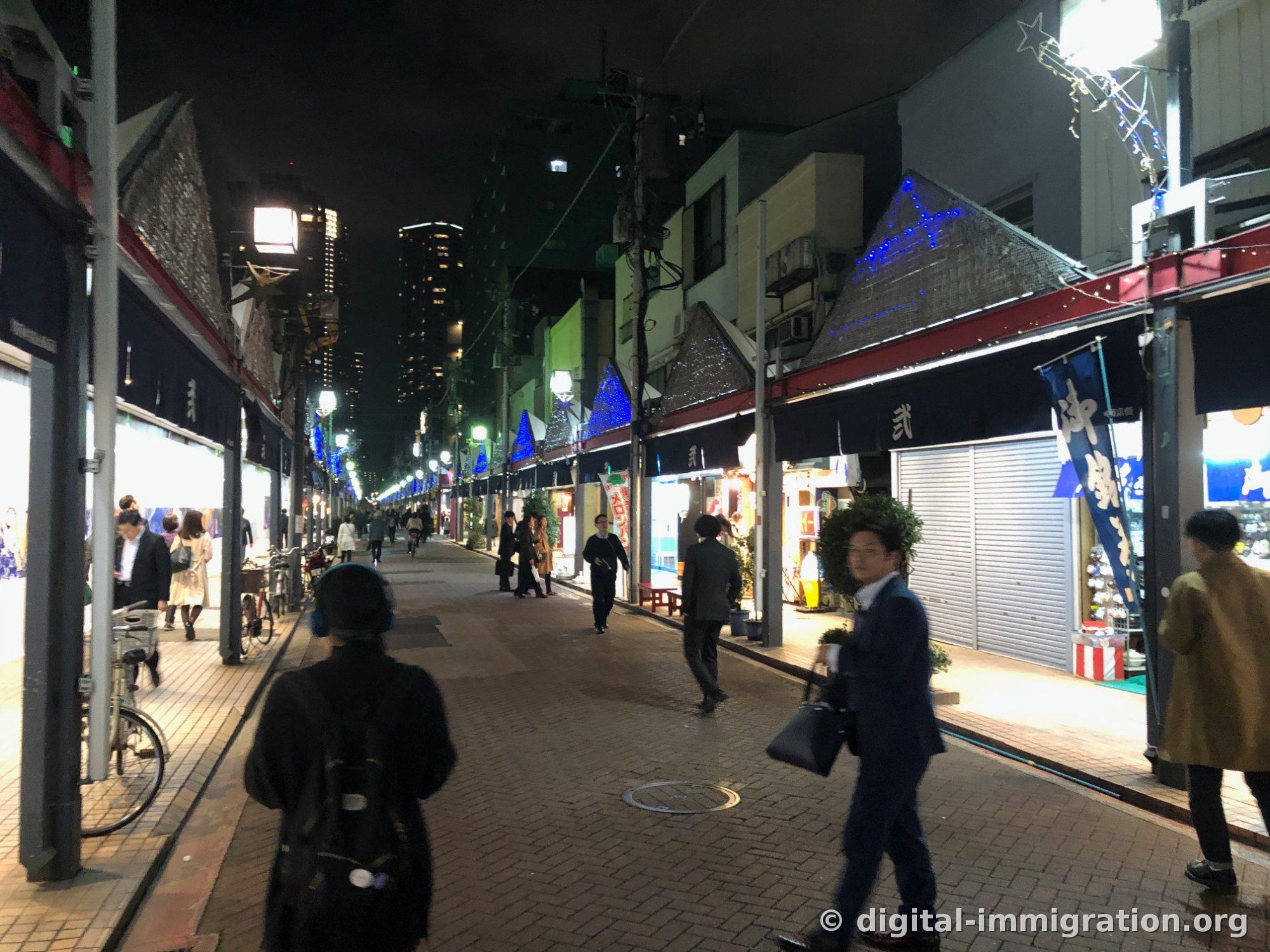
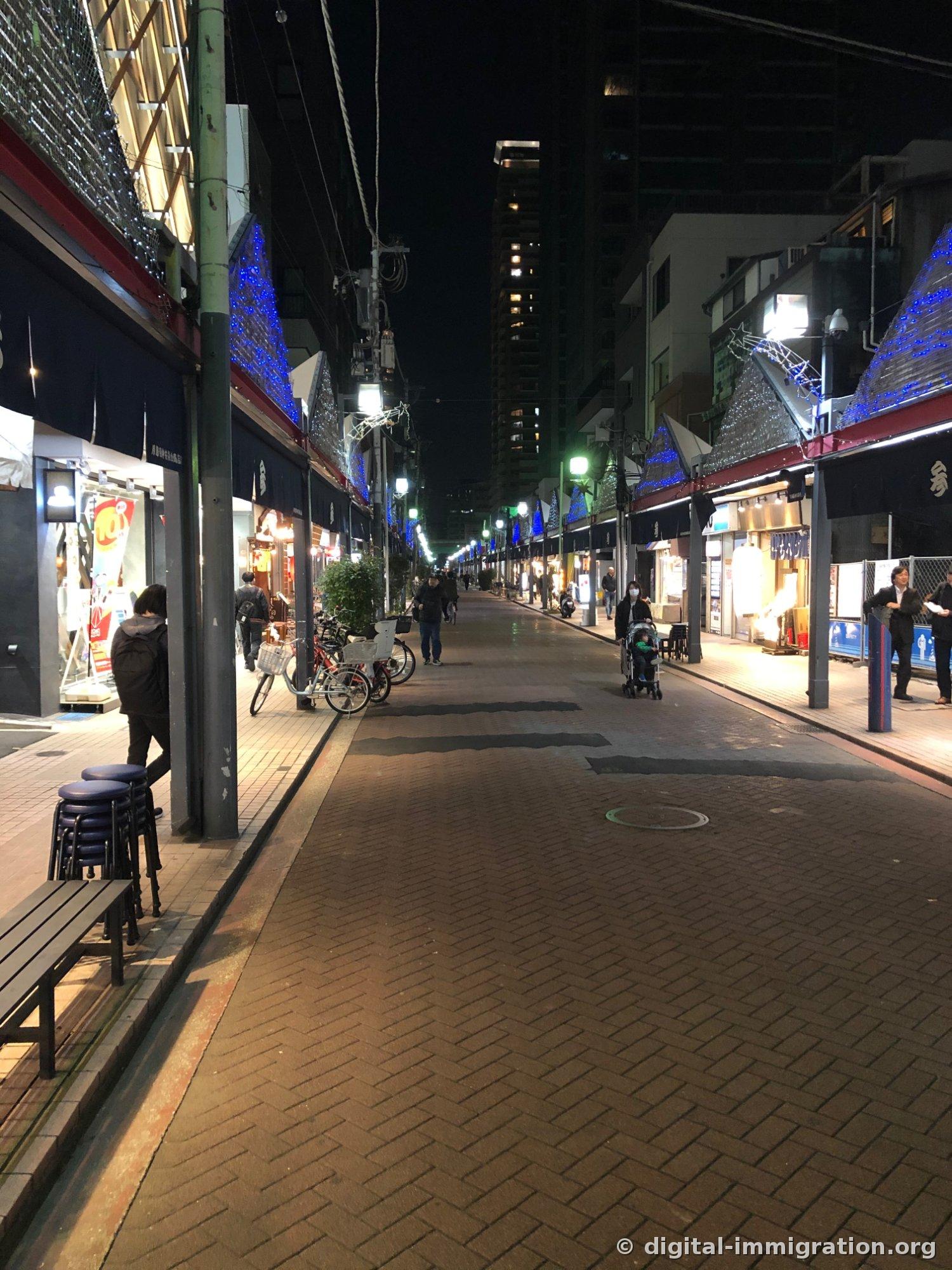
Tsukishima, Chuo Ward, Tokyo. The moment I climbed out of the subway, a cool breeze rushed in, and standing at the entrance to the shopping street, I saw blue lights hung on each triangular roof along both sides of the narrow, long street. Tsukishima Monja Street—officially named Tsukishima Nishinakadori Shopping Street. Not the exaggerated neon typical of tourist destinations, but blue lights that the shopping association hangs up every year, stringing all the way to the end of the street. Glass tower mansions loom dark in the background, and two-story weathered monja shops line the front—this contrast felt far stranger and more beautiful in person than in photographs.
You Have to Walk First, Because You Have to Choose
The most common mistake first-time visitors make is stepping into the very first shop at the entrance. The shopping street is longer than it looks. Walking it all the way to the end, you realize that monja shops have completely different atmospheres. Some have narrow entryways with only a hotplate counter behind the glass door, while others are fully-fledged establishments with wooden lattice and decorative lanterns. Where there's a crowd sitting on benches outside waiting for their turn, there's usually a reason.
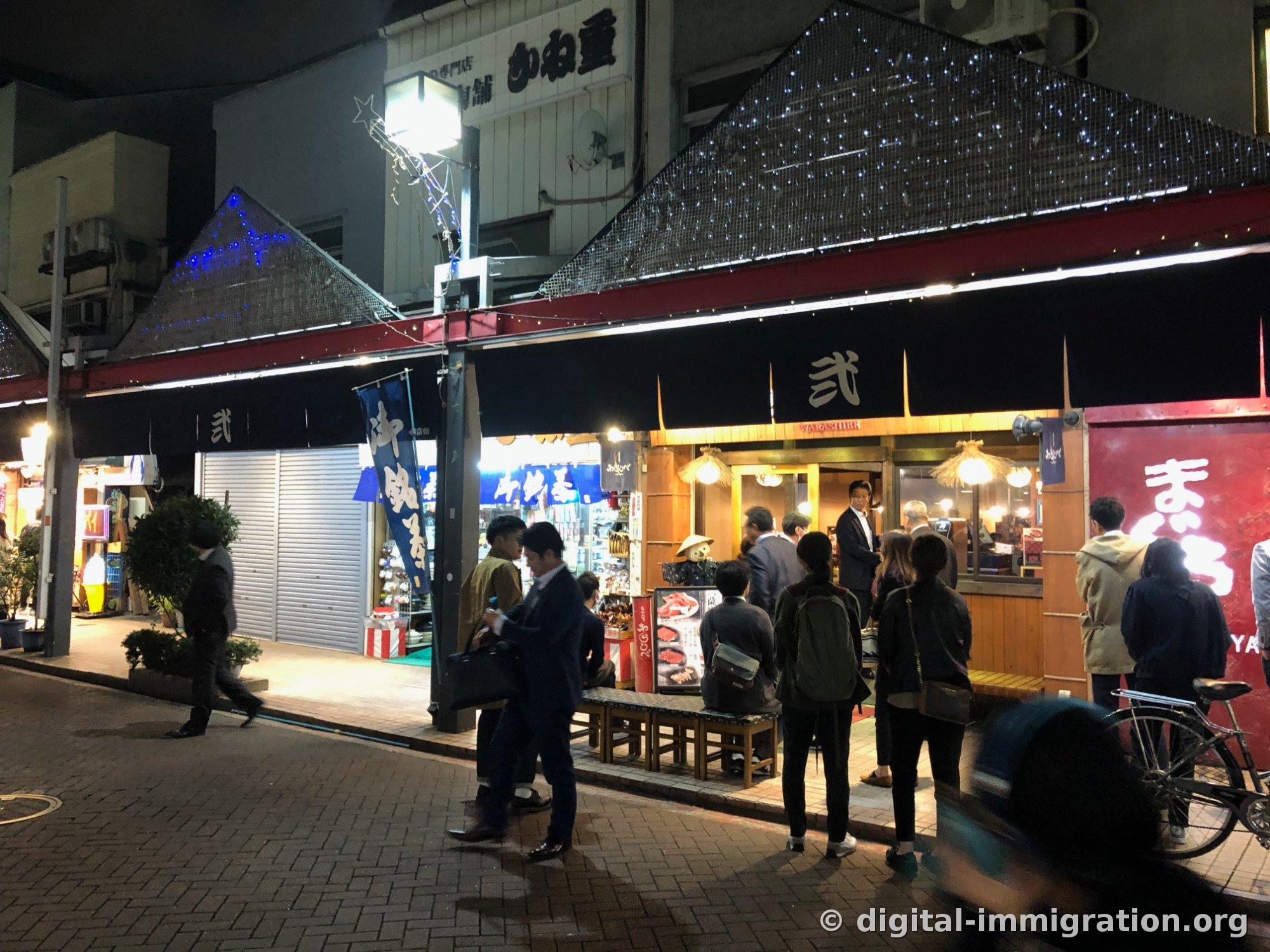
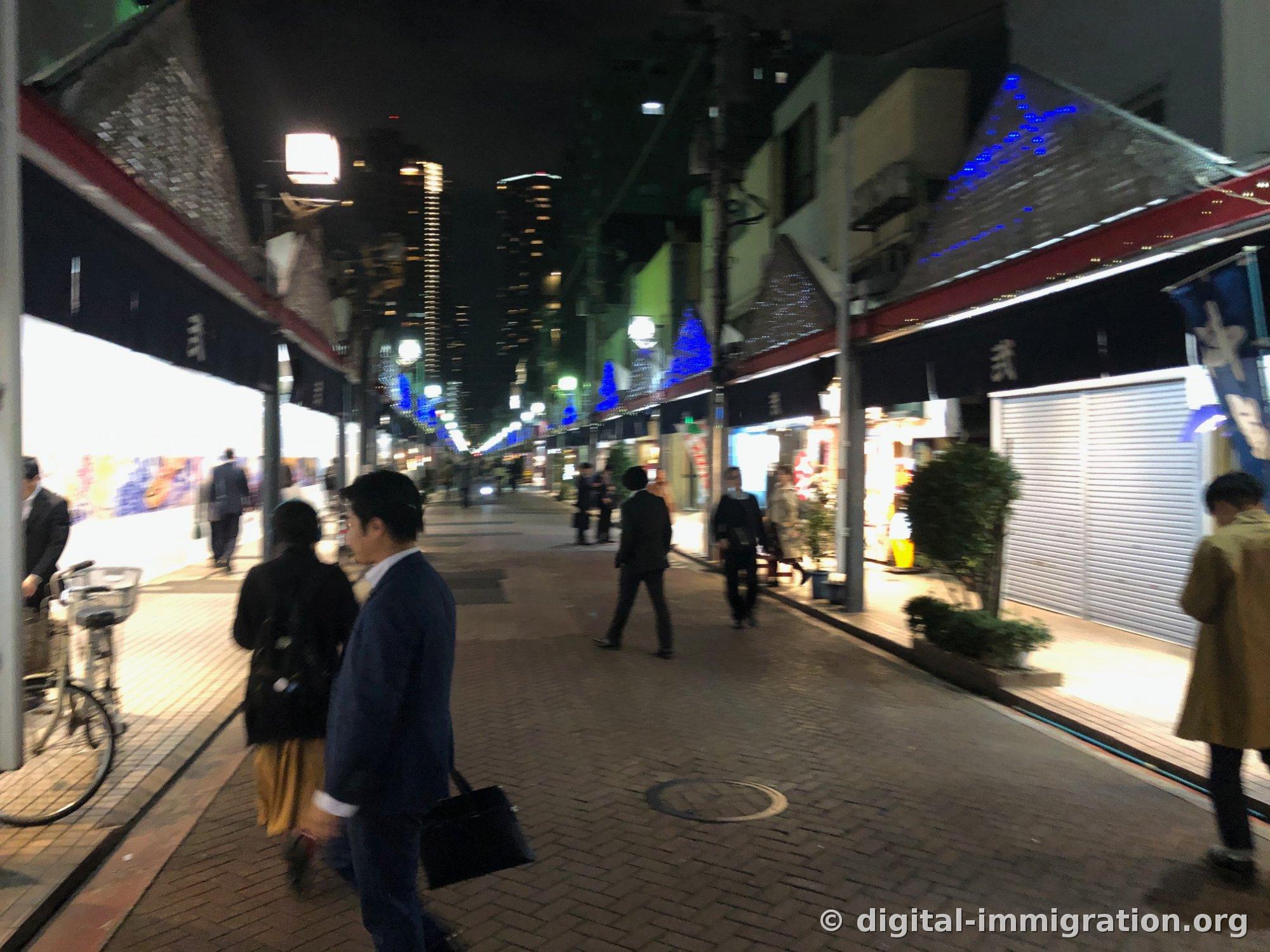
Partway down the street, on the right side, you'll see a large sign for Sugiyama Rice Shop (杉山米店). That's roughly the center of the shopping street. Bicycles keep coming out of the alleys around here. The monja street looks pedestrian-only, but cyclists actually ride through, and locals don't slow down. If you're taking photos in the middle of the street, you'll hear a bell ring from behind. I experienced it twice.
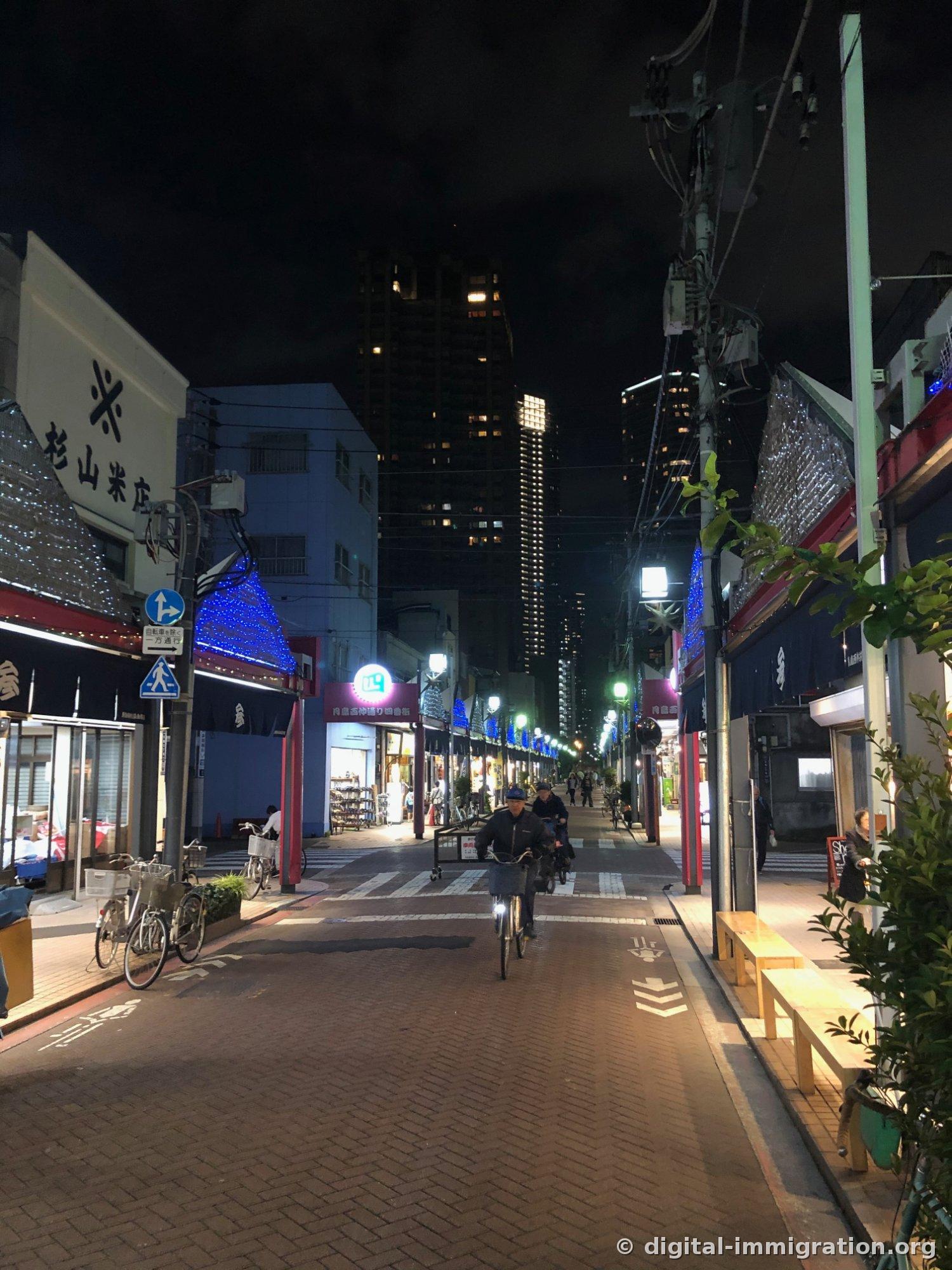
As for directions, the exact coordinates are shown on the map below. If you take the subway, Tsukishima Station on the Toei Oedo Line and Tokyo Metro Fukutoshin Line is right next to the shopping street, so you'll be under the blue lights within minutes of exiting the ticket gate. Since the shopping street runs north to south, just keep in mind that which entrance you use determines where you start.
Moheji, and the 'Hanare no Hanare'
The place I went to that evening was Moheji (もへじ). The noren reads '月島もんじゃ もへじ 本店', and a white lantern as tall as a person hangs beside it. The lantern has a vinyl cover on it, which I found amusing—apparently they put it on like that when rain is forecast.
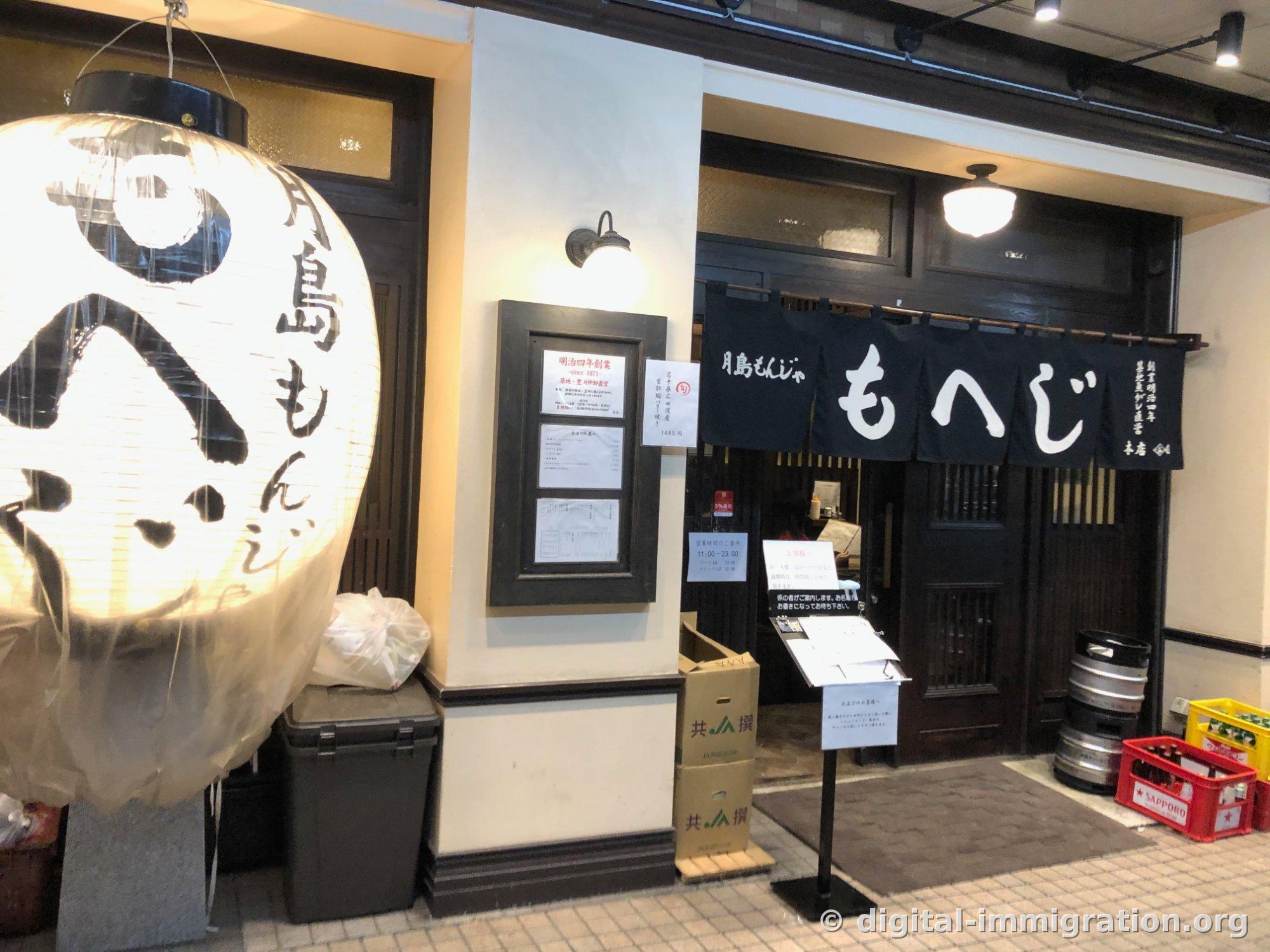
The main location was already fully booked. On the waiting list at the entrance, a handwritten note said: "Later times are fully booked with reservations. Please use Moheji Hanare or Hanare no Hanare." This means the same brand has three locations on this street: the main store, Hanare (annex), and Hanare no Hanare (annex of the annex). The name sounds like a joke, but it's real.
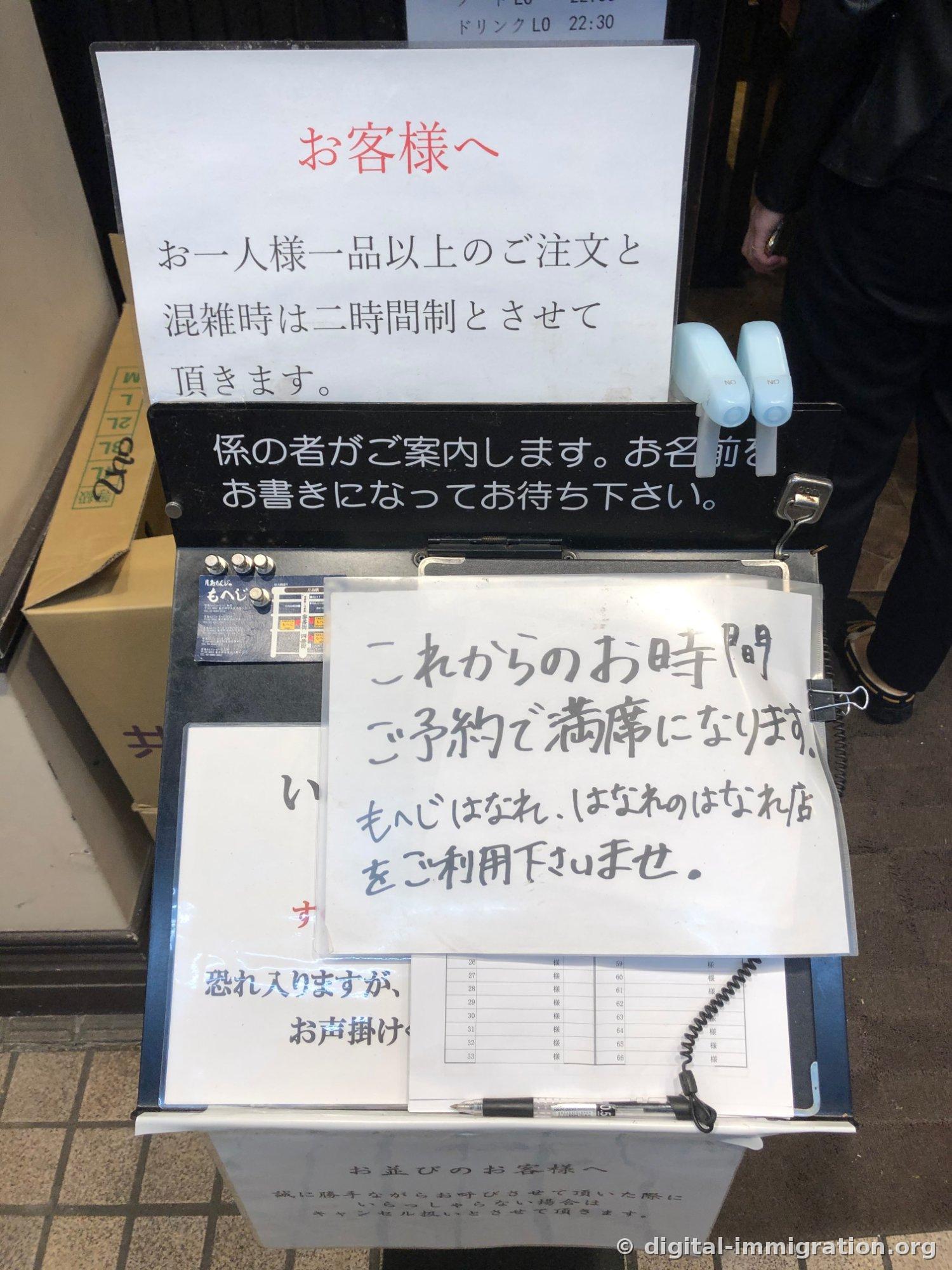
You really need to read this notice. One item minimum per person is the rule, so two people can't come and order just one monja. During busy times there's a 2-hour limit. There's also a notice saying that if you're called and not present, your reservation will be cancelled. It means you can't go far away once you've put your name on the list.
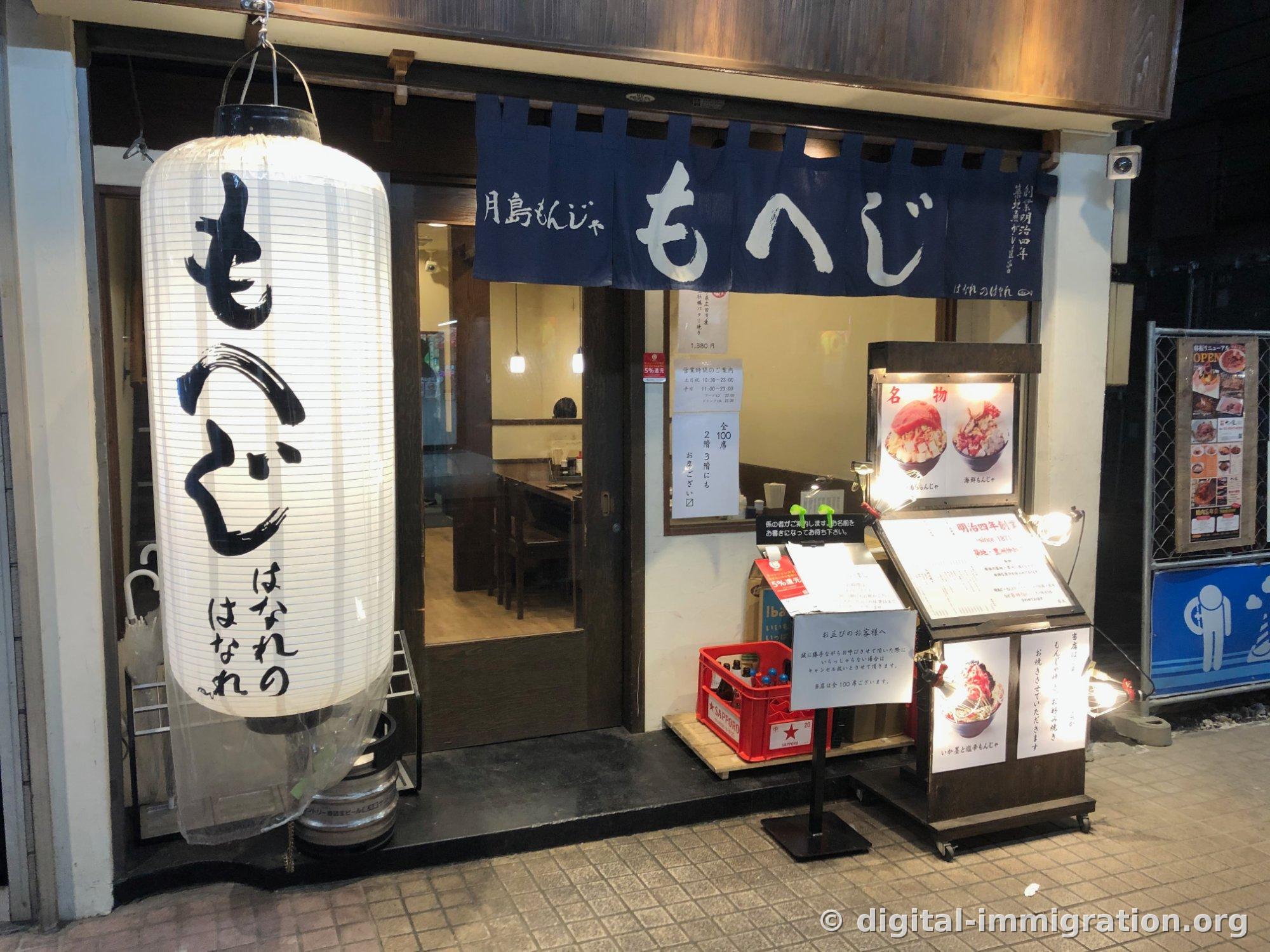
In the end, I headed to the annex. The paper posted here says 100 seats total, with seating on the 2nd and 3rd floors, and even when the main location is full, tables keep turning over here. The operating hours posted were Saturday/Sunday/holidays 10:30-23:00, weekdays 11:00-23:00, food last order 22:00, drink last order 22:30. That said, these things change, so it's better to check the posted information on-site.
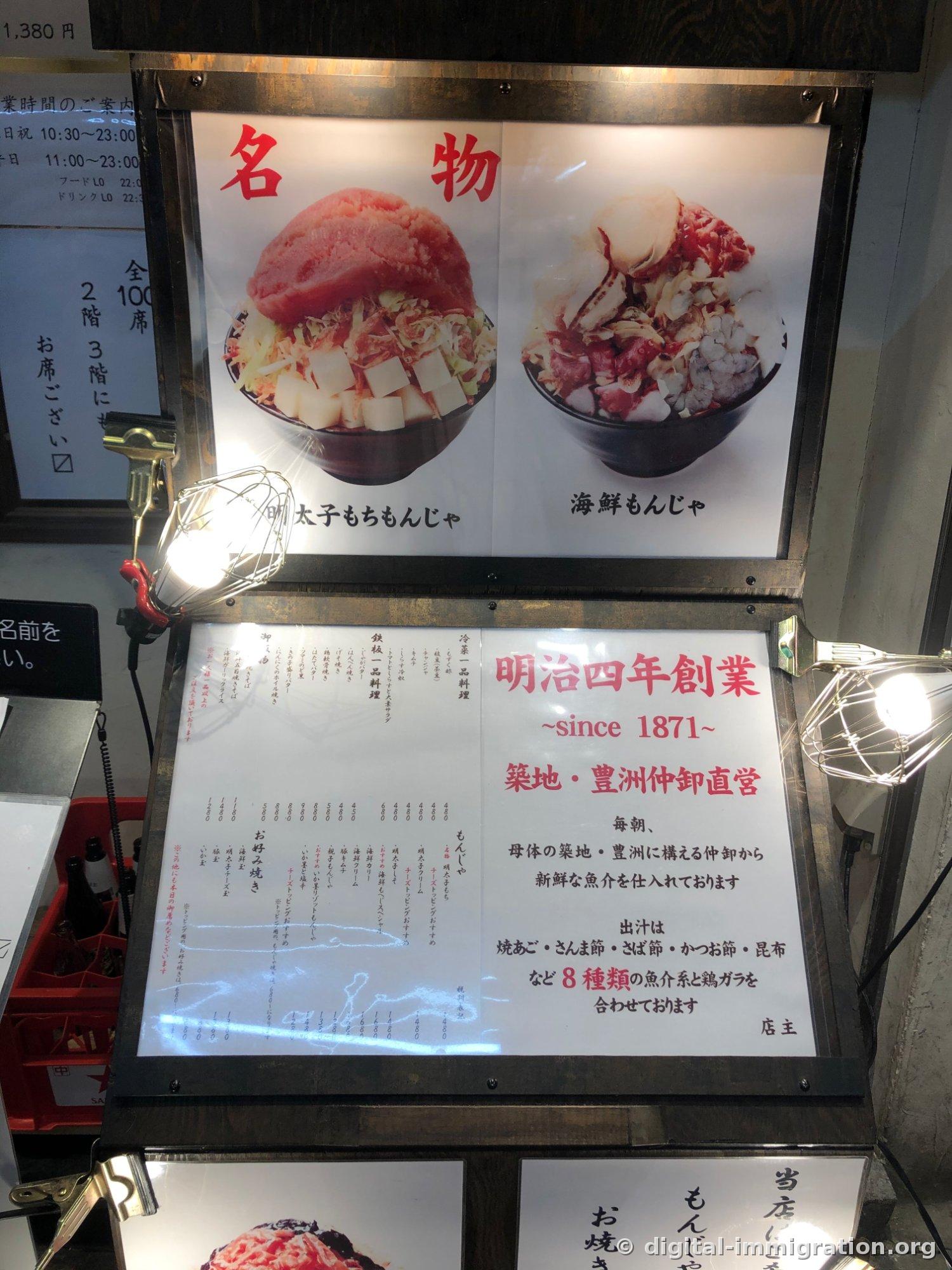
This shop's credentials are all there on that right panel. Founded in Meiji 4 (1871), with a wholesale business backing it in Tsukiji and Toyosu, bringing in fresh fish every morning. The broth is a combination of grilled anchovies, Japanese smelt, mackerel, bonito, kelp, and other seafood varieties—eight types of fish stock combined with chicken bone. Few shops on this street explain their monja broth this thoroughly. The monja prices on the menu ranged from around 480 yen for basic versions to mid-1000s yen, with the house specials at the higher end.
Seafood Monja—Ingredients Come First, Cooking is Your Job
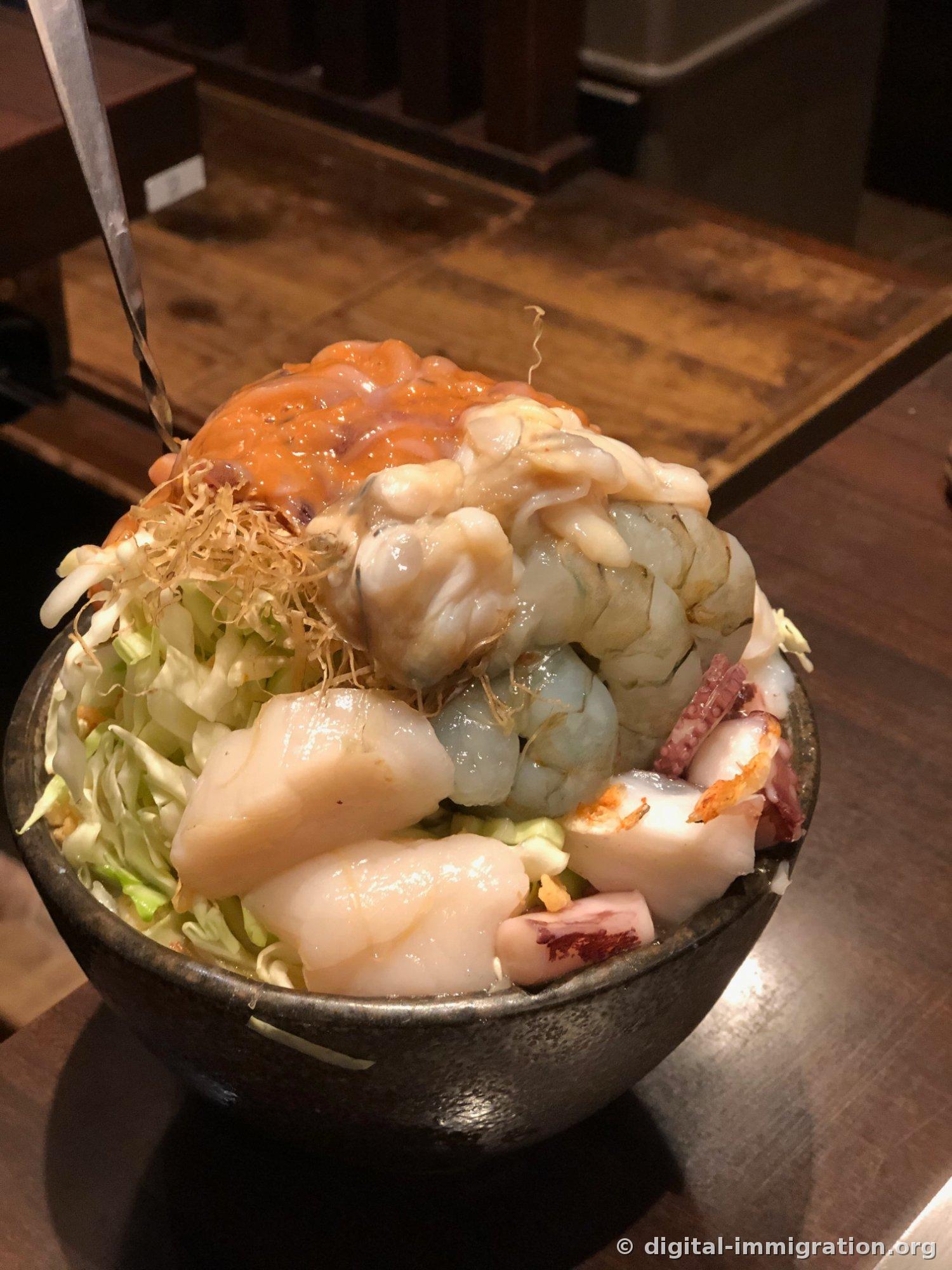
When I ordered, the ingredients came piled high in a metal bowl. Shredded cabbage topped with shrimp, scallop muscle, clam muscle, octopus leg, and an orange-colored roe-like ingredient on top. Since it hasn't been cooked yet, the shrimp are still gray. Looking at this, I could understand why the shop emphasizes its Tsukiji direct connection.
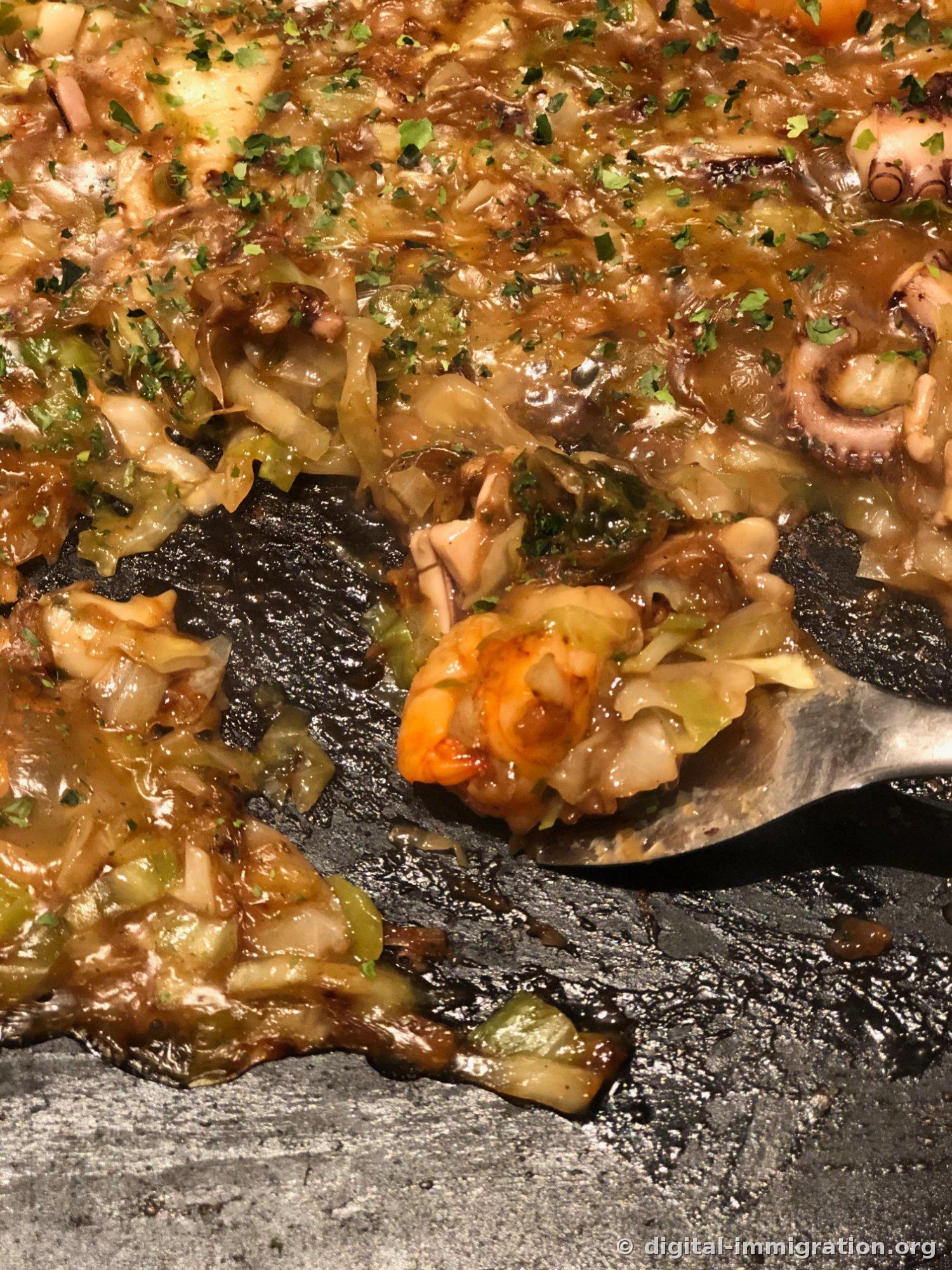
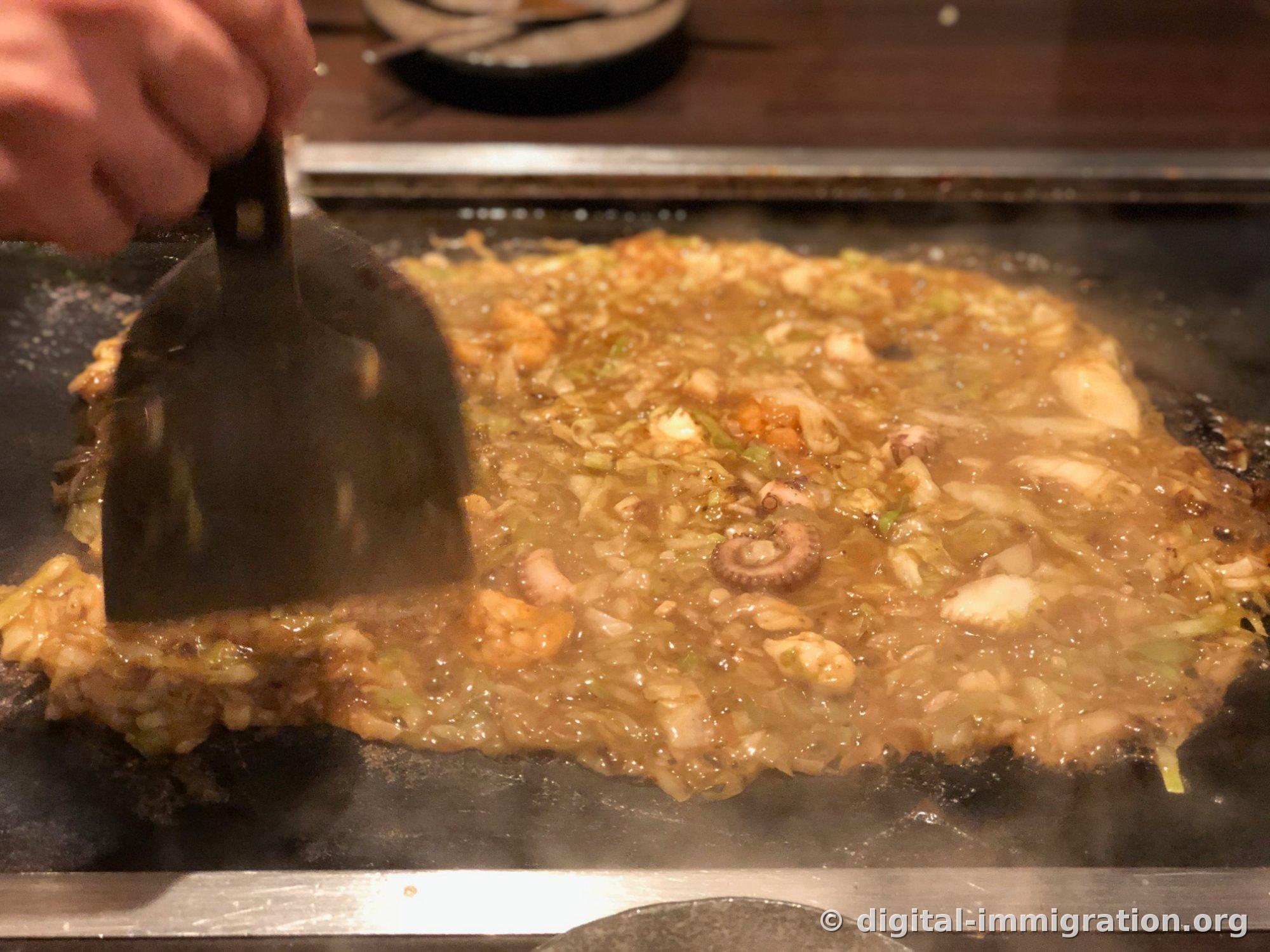
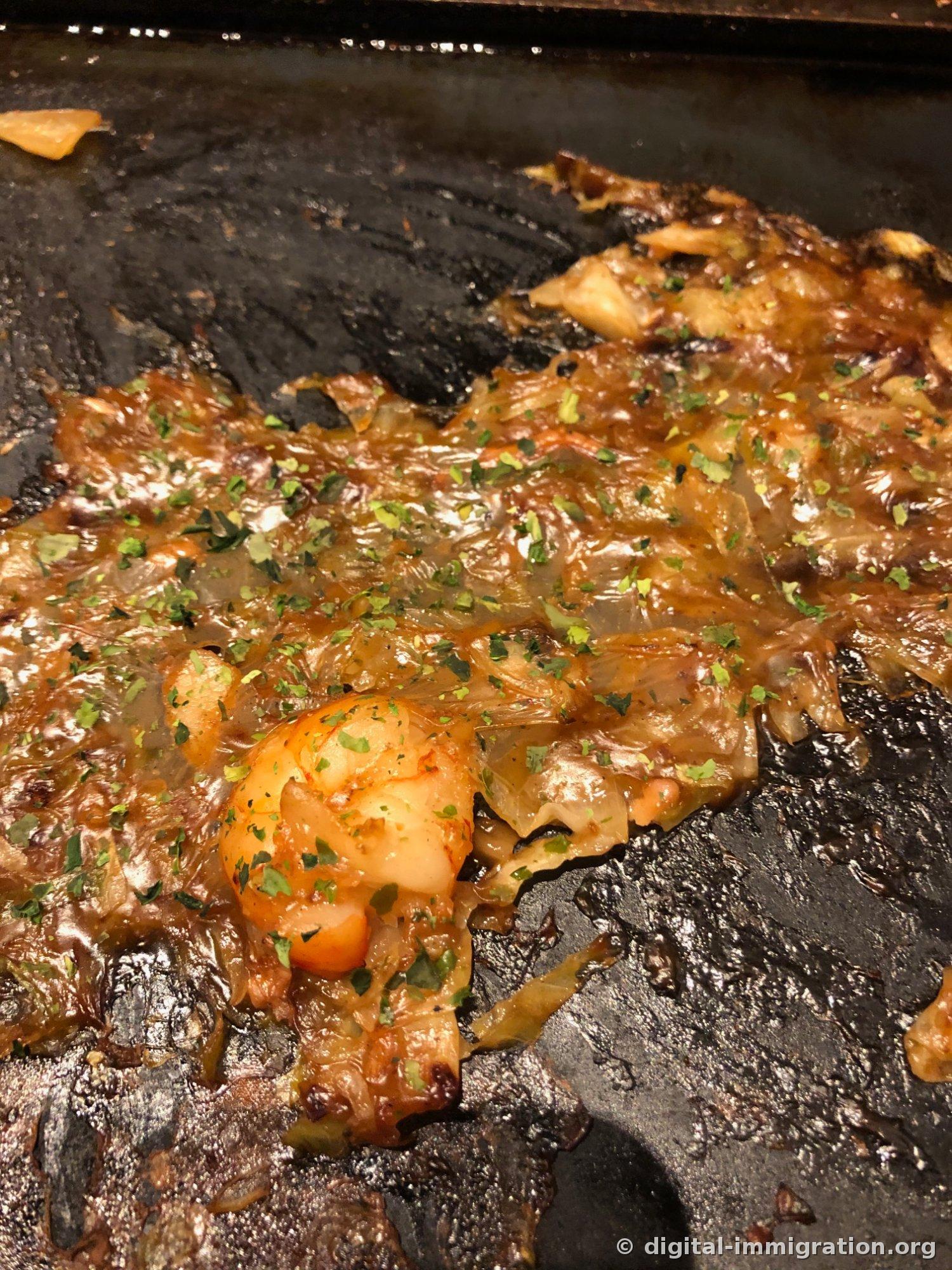
A staff member can cook it for you, or you can do it yourself. The process is simple. Leave the broth and transfer just the solids onto the hotplate, then finely mince them using two spatulas. Once the cabbage wilts and the seafood cooks, create a donut shape by leaving the center empty, and pour the reserved broth into that center. When the broth starts to boil, collapse the ridge and mix everything together.
The moment the broth hits the hotplate, the sound gets much louder. Then the aroma rises—first the smoky scent of bonito, then the smell of caramelized soy sauce follows. It clings to your clothes. The next day, the smell was still on my coat. This isn't a place to wear nice clothes.
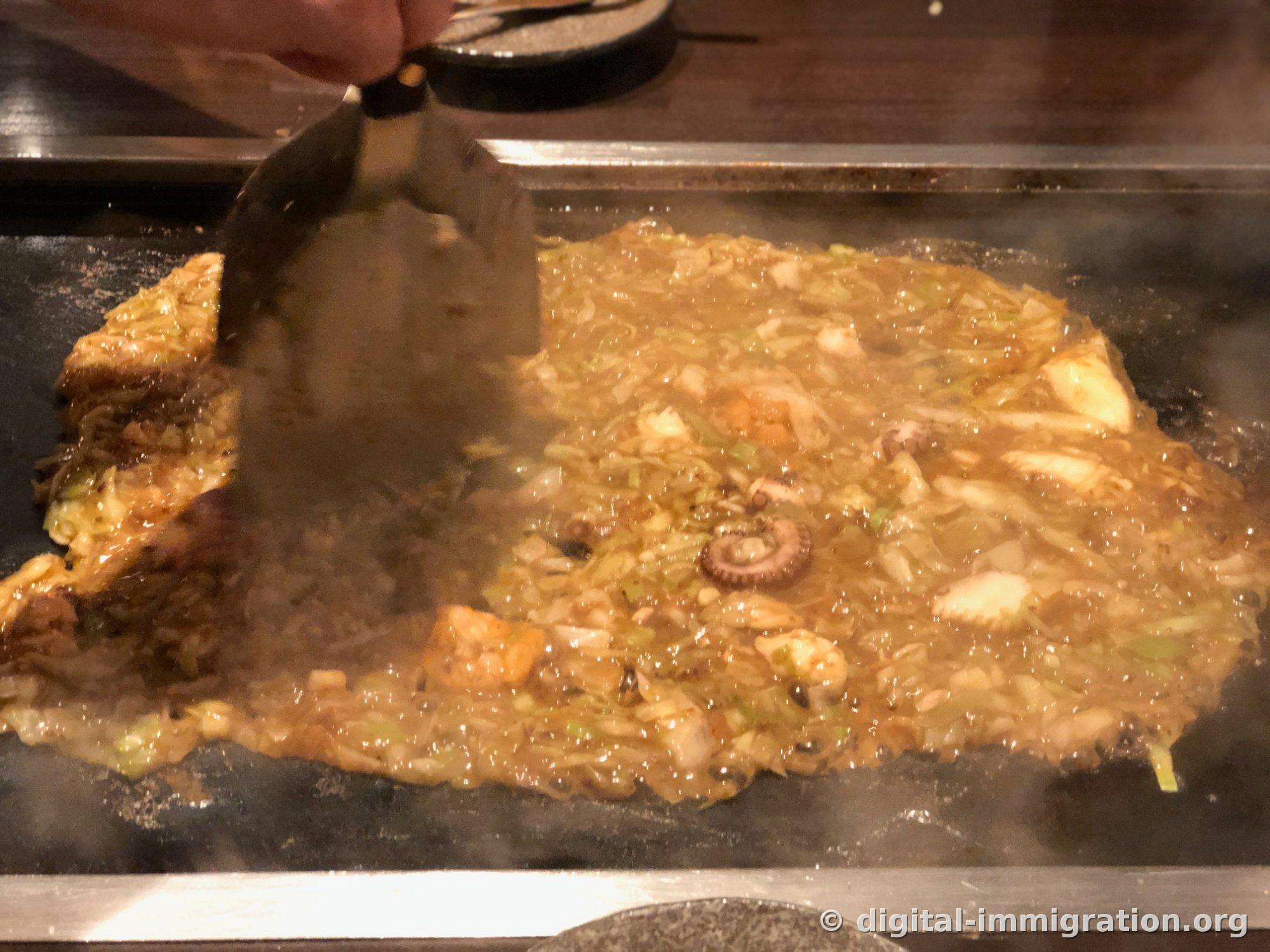
Monja doesn't go on a plate. You eat it directly off the hotplate with a small spatula about the size of your palm (hagashi). First-timers often put the spatula in their mouth and burn themselves because of the heat—a person in my group actually burned their lower lip on the first bite. If you press with the spatula and hold for about five seconds, the bottom starts to stick and develops a crispy shell. That burnt part (okoge) is the essence of this dish. If you only eat the mushy parts, you'll finish without understanding why you came.
Order Okonomiyaki Too, at Least One
If you eat just two servings of monja, you'll get tired of it. The salty, sticky texture goes on and on, so you need something else in between. This is where ordering okonomiyaki makes sense. This shop's okonomiyaki is thick and they serve it with cheese on the hotplate underneath.
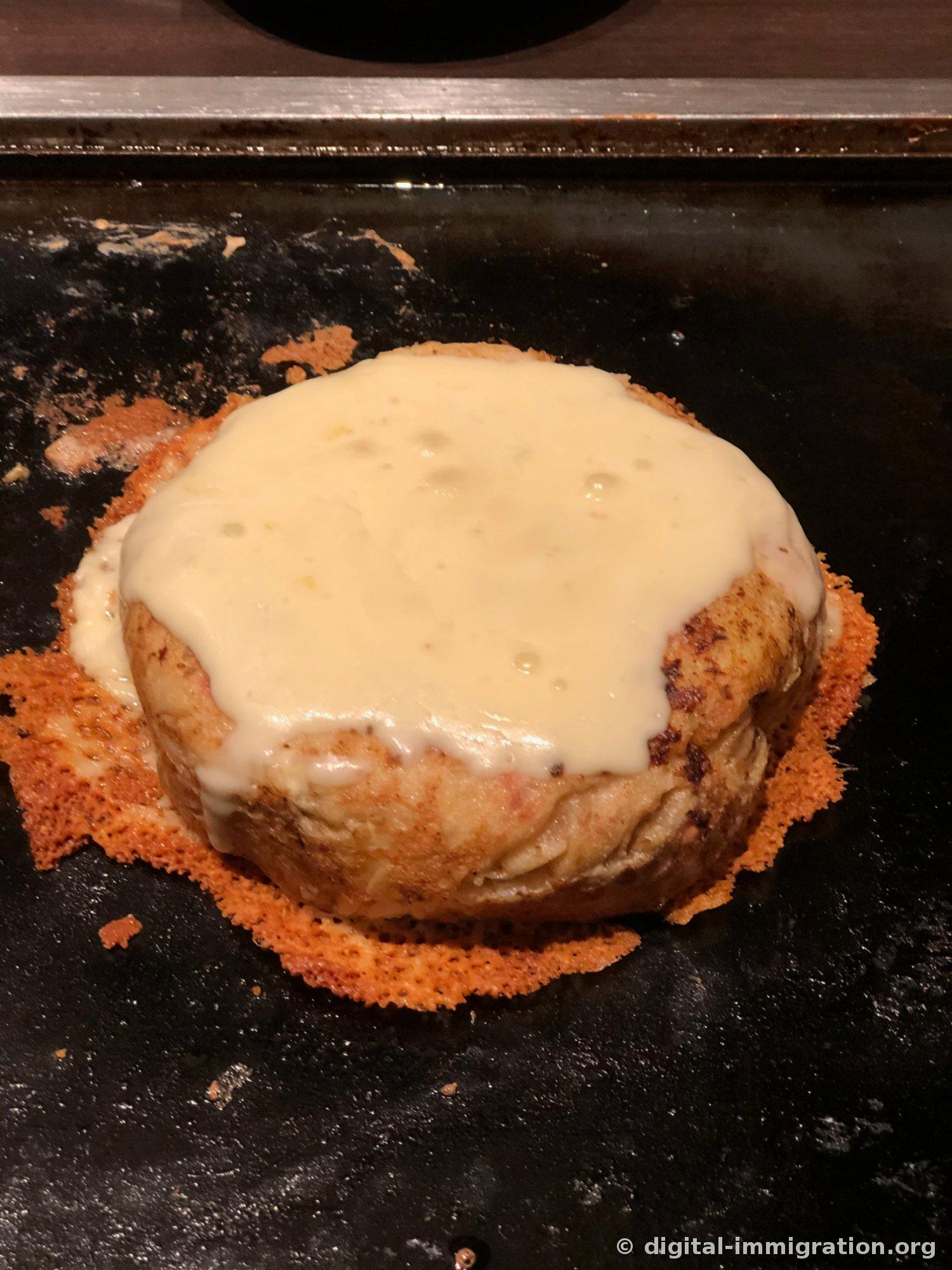
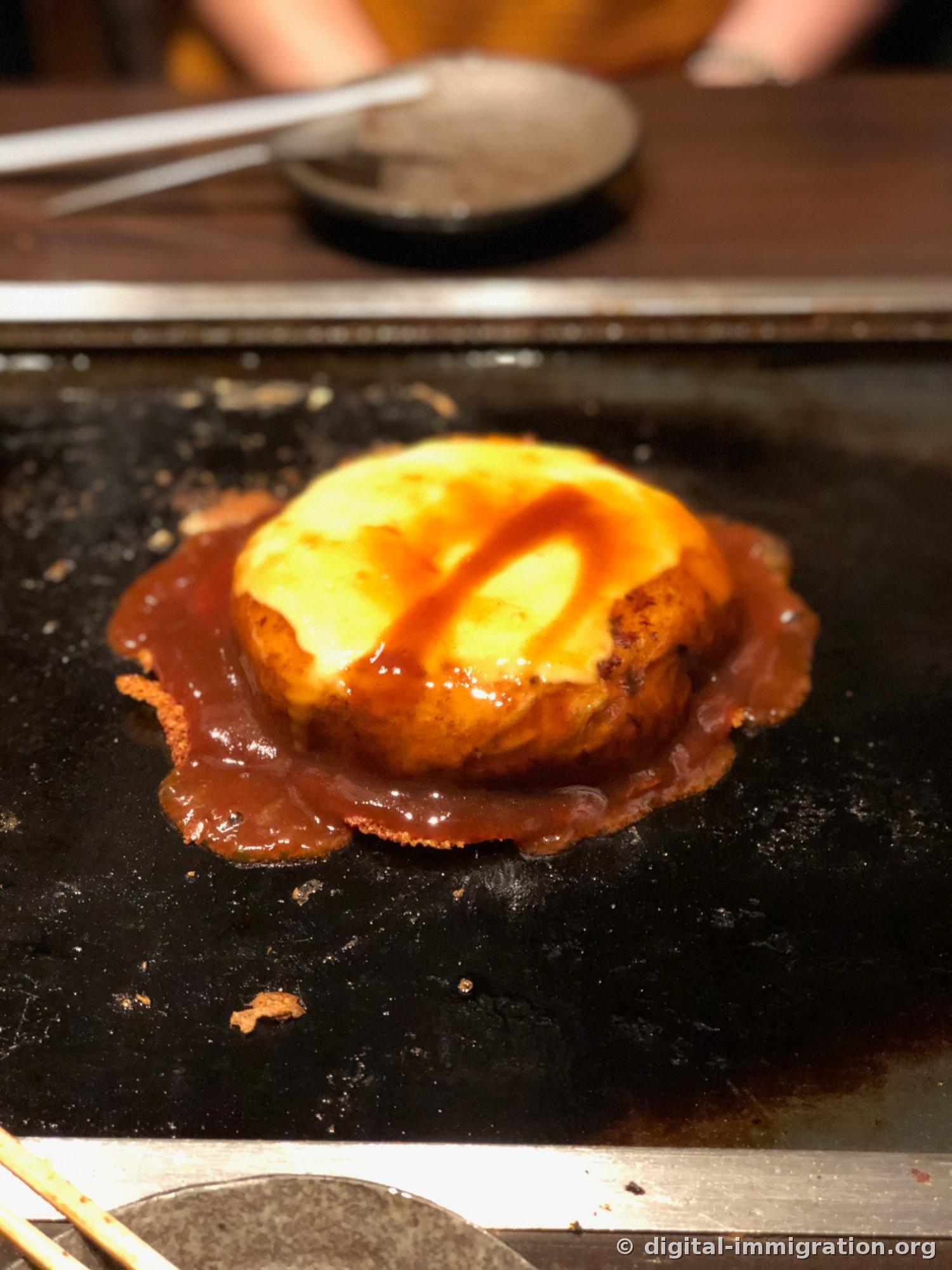
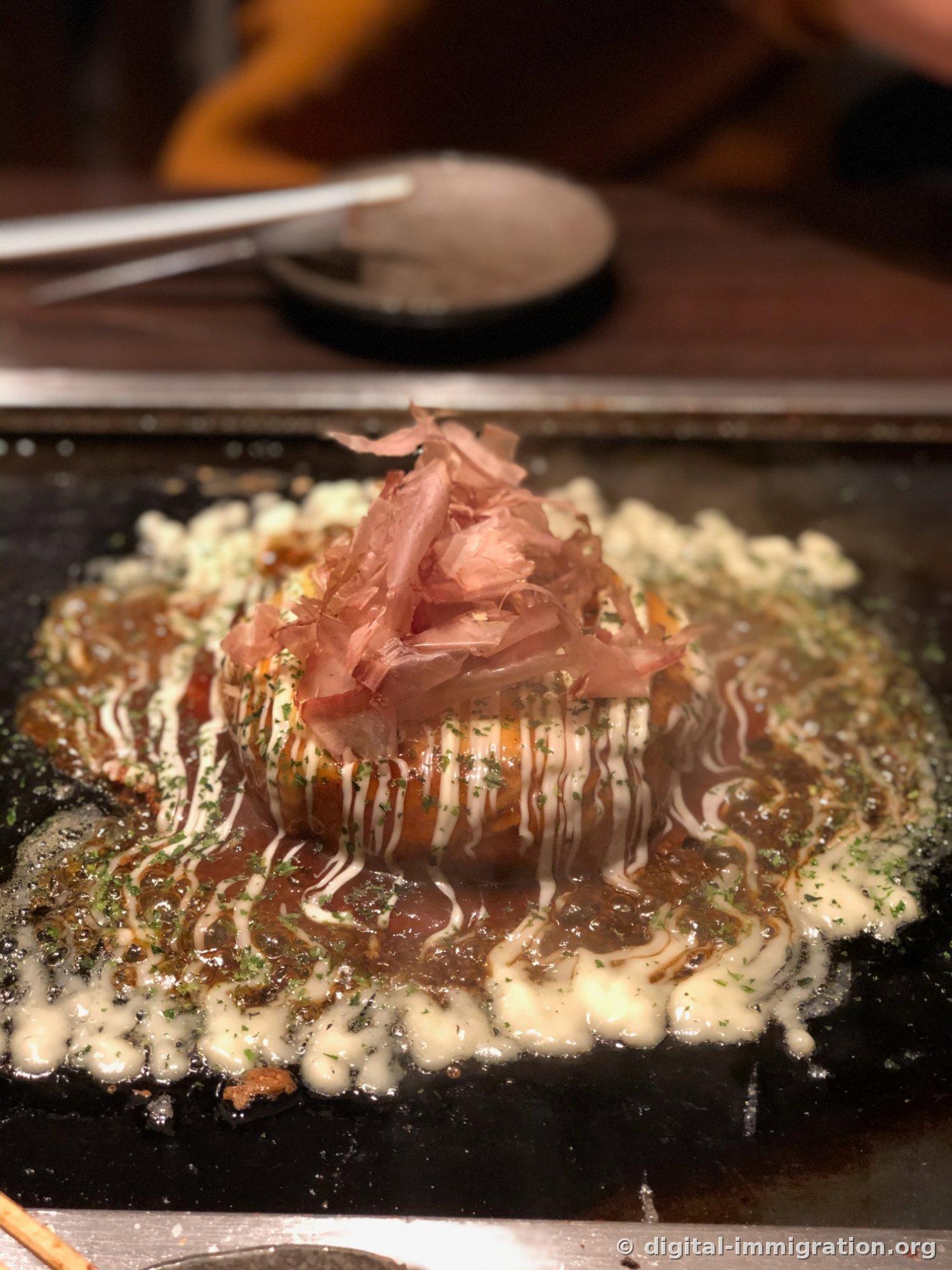
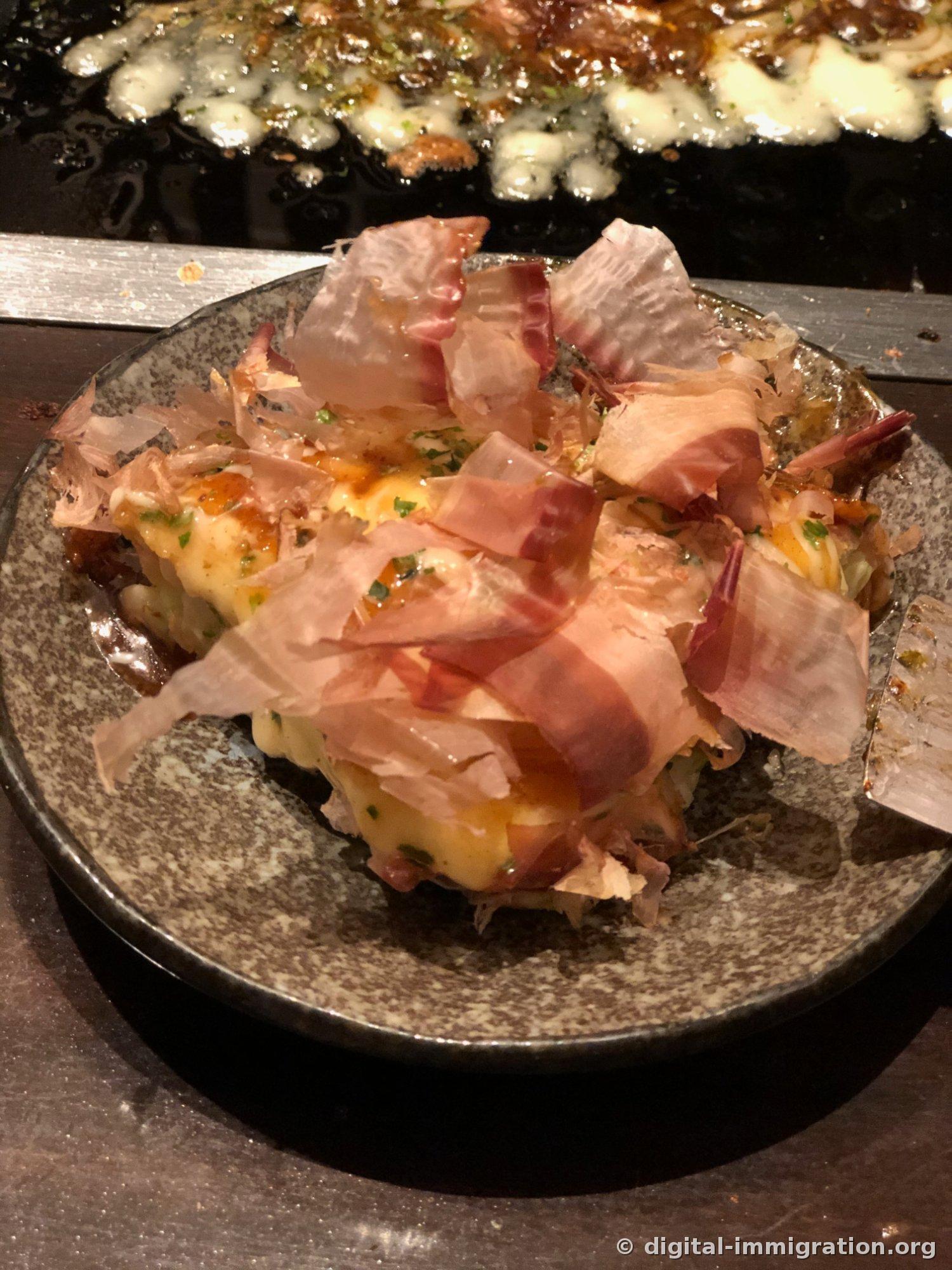
To be honest, there were a few disappointments. The okonomiyaki's center is thick, so when the sauce and mayo mix, it gets a bit bland. The bonito flakes are cut into large pieces—they smell good, but combined with the monja I'd just eaten, the saltiness overlaps. I think it would have been better to reverse the order, eating okonomiyaki first then moving to monja. I'll do that next time I go.
Things Worth Knowing Before You Go
- Peak hours are 6 p.m. to 8 p.m. During these hours, wait lists outside popular shops already stretch into the 30s-60s.
- Don't go far once you've put your name on the waiting list. Some shops cancel your reservation if you're not present when called.
- Many shops operate on a one-item-minimum-per-person rule. You need to order for each person.
- Even when the main location is full, a sister location from the same brand often exists nearby. Check the handwritten notice at the entrance.
- It's hot in front of the hotplate. There's limited space to hang your outer clothes, and the smell definitely clings.
- Bicycles ride through the street. Don't stand in the middle of the street for long periods.
- Prices and operating hours vary from shop to shop and change. It's recommended to check posted information on-site.
By the time I left, the waiting stools were already stacked away, and the street had turned back into a neighborhood where only a stroller-pushing resident and a few bicycles passed by. The blue lights were still on, but without the people—that brief window of time was what I loved most about the street. Tsukishima is too cramped to function as a full tourist destination, but it's perfect for coming to eat a dinner and walk back out.
អានបន្តទៀត
- From Akihabara's Chuo-dori to the Kanda River: A Record of Tokyo's Electronics District Revisited Multiple Times
Tokyo's Akihabara is a neighborhood where it's hard to say you've seen everything in a single visit. I've come multiple times across different seasons, and each time the signs chan…
Tokyo · Akihabara - Buying a Single ¥300 Year-End Jumbo Lottery Ticket at Nishi-Ginza Chance Center in Tokyo
Exit from the Hibiya exit of Tokyo's Shimbashi Station, walk toward the elevated highway for about three minutes, and suddenly you'll see a line of people stretching along the side…
Tokyo · Nishi-Ginza Chance Center - Ueno Ameyoko, the real magic starts after sunset — an evening walk from the Okachimachi Gate to Ueno Station
Every time I come to Tokyo, my feet find their way to Ueno Ameyoko (アメ横) without fail. This time I entered from the Okachimachi side and worked my way toward Ueno Station. I've met…
Tokyo · Ameya Yokocho Market