Rayong's Yomjinda Road Half-Day — What We Actually Saw in the Wooden Shophouse Alley
Heading east from Bangkok and entering Rayong proper, most travelers head straight for the beach. I did too at first. But Yomjinda Road—that old shophouse alley running through dow…
Rayong · Yaowarat Road
Heading east from Bangkok and entering Rayong proper, most travelers head straight for the beach. I did too at first. But Yomjinda Road—that old shophouse alley running through downtown Rayong toward the Rayong River—is lined with nearly century-old wooden two-story shops instead of the sea. Just under an hour's drive from Pattaya, it's right in downtown, so I stopped by with no particular expectations, but ended up spending over three hours walking around.
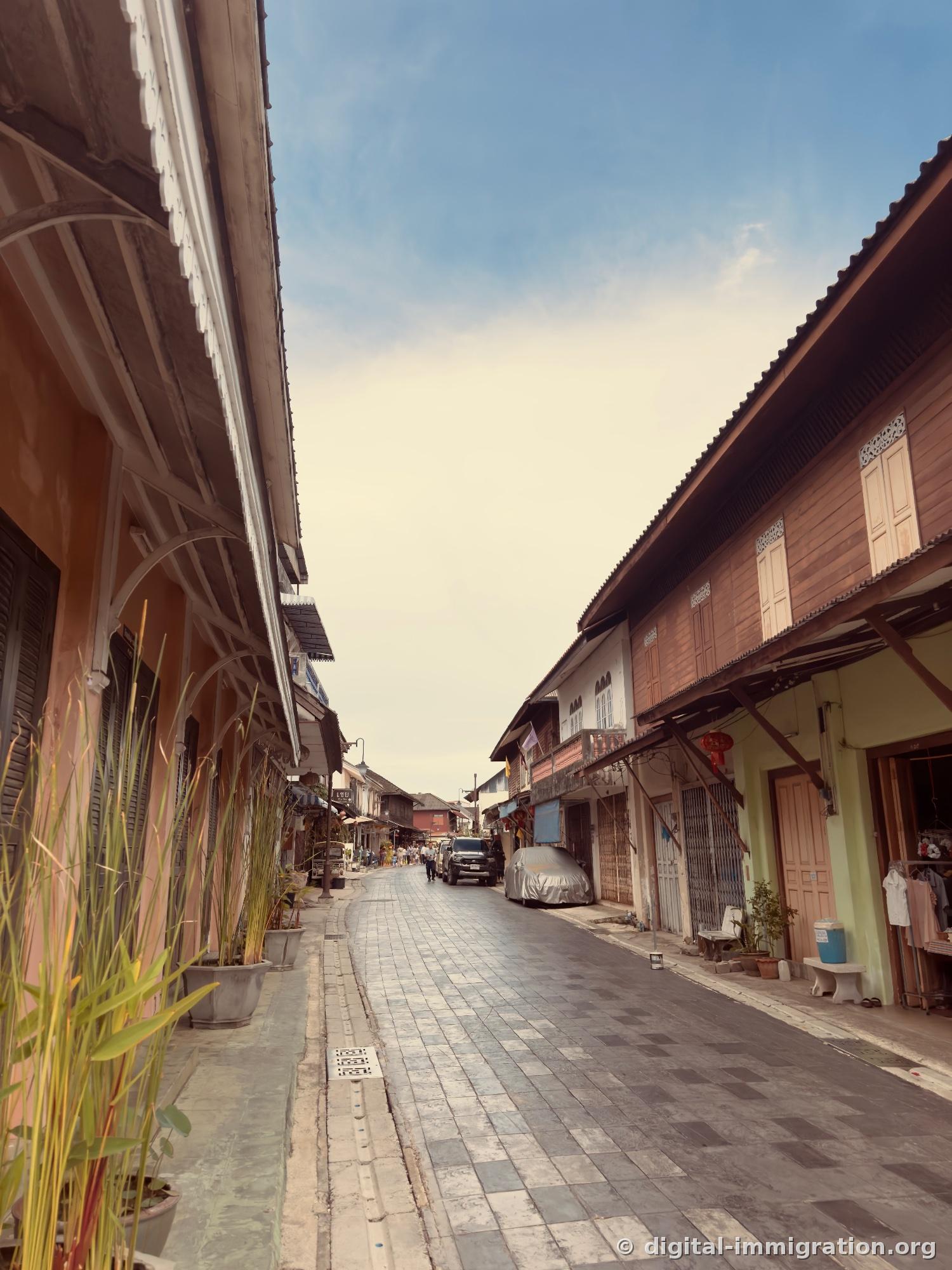
As the photo shows, the road is really narrow. But it's not a pedestrian-only zone with vehicle traffic completely blocked, so pickup trucks occasionally come creeping up from behind. While taking photos, I had to step aside twice from the middle of the street. The dark brown wooden two-story building on the right with its decorative shutters, the pale green concrete shophouse next to it, the pink wall on the left—buildings from different eras mixed together in one line is the first impression of this street.
Two P.M. on a Weekday—Almost No People Reveals What This Street Really Is
To be honest, I came expecting this to be a "hot spot," only to have my bubble burst. On a weekday afternoon, about half the shops are closed. You have to walk past quite a few shuttered storefronts before you find the next open shop. But the ones that are open are all distinctly unique, so it ended up being even better this way.
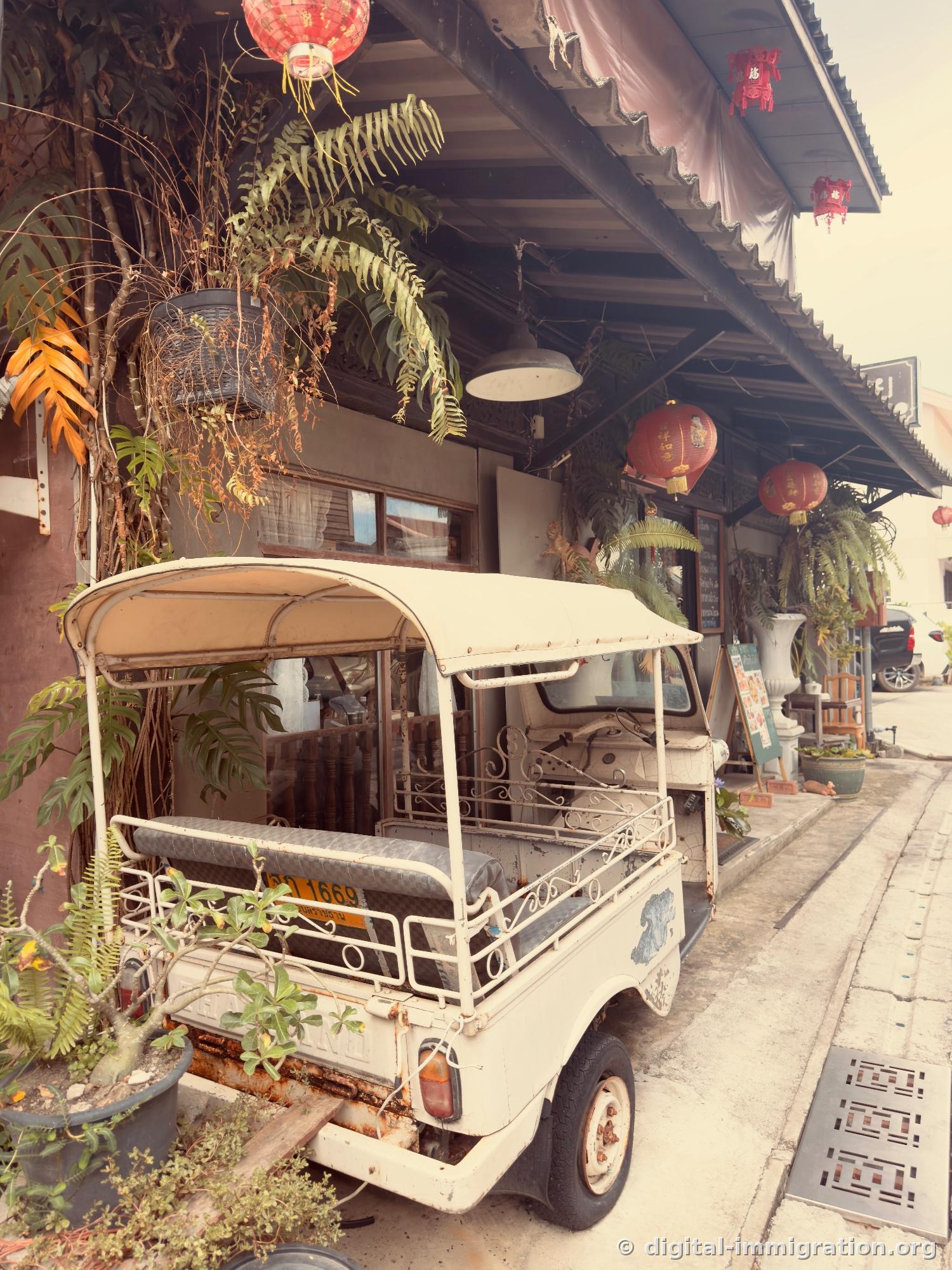
This white tuk-tuk is one of the most photographed spots on the street. But up close, the area under the rear bumper is quite corroded and the seats are worn. It's not a "carefully styled photo zone"—just something left sitting there as time passes. The red Chinese lantern hanging above, the fern planter under the eaves, the temperature difference in the shade—when you step into the shade on a March afternoon, you definitely feel a breath of relief.
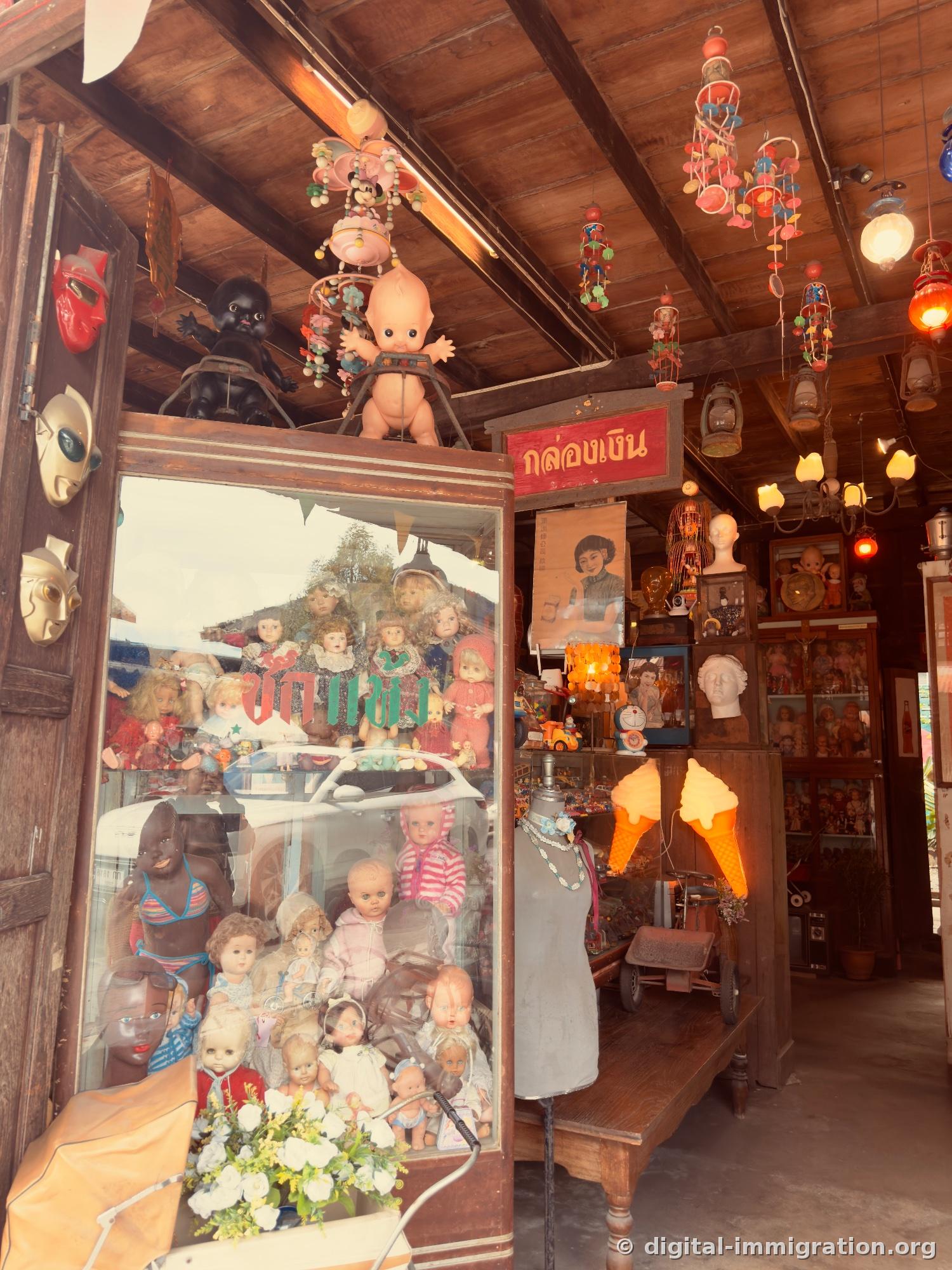
This shop seems like it would be hit or miss with people. I found it amusing, but with dozens of doll eyes staring directly at you from inside the glass cases, I watched a family with a child just turn around at the doorway. The wooden beams on the ceiling, hanging kerosene lanterns, even ice-cream-cone-shaped lights—the density of objects is considerable. The inside is narrow and dark, so it's best to wear your bag in front and move carefully.
The Murals Aren't "Finished"—They're Still Being Painted
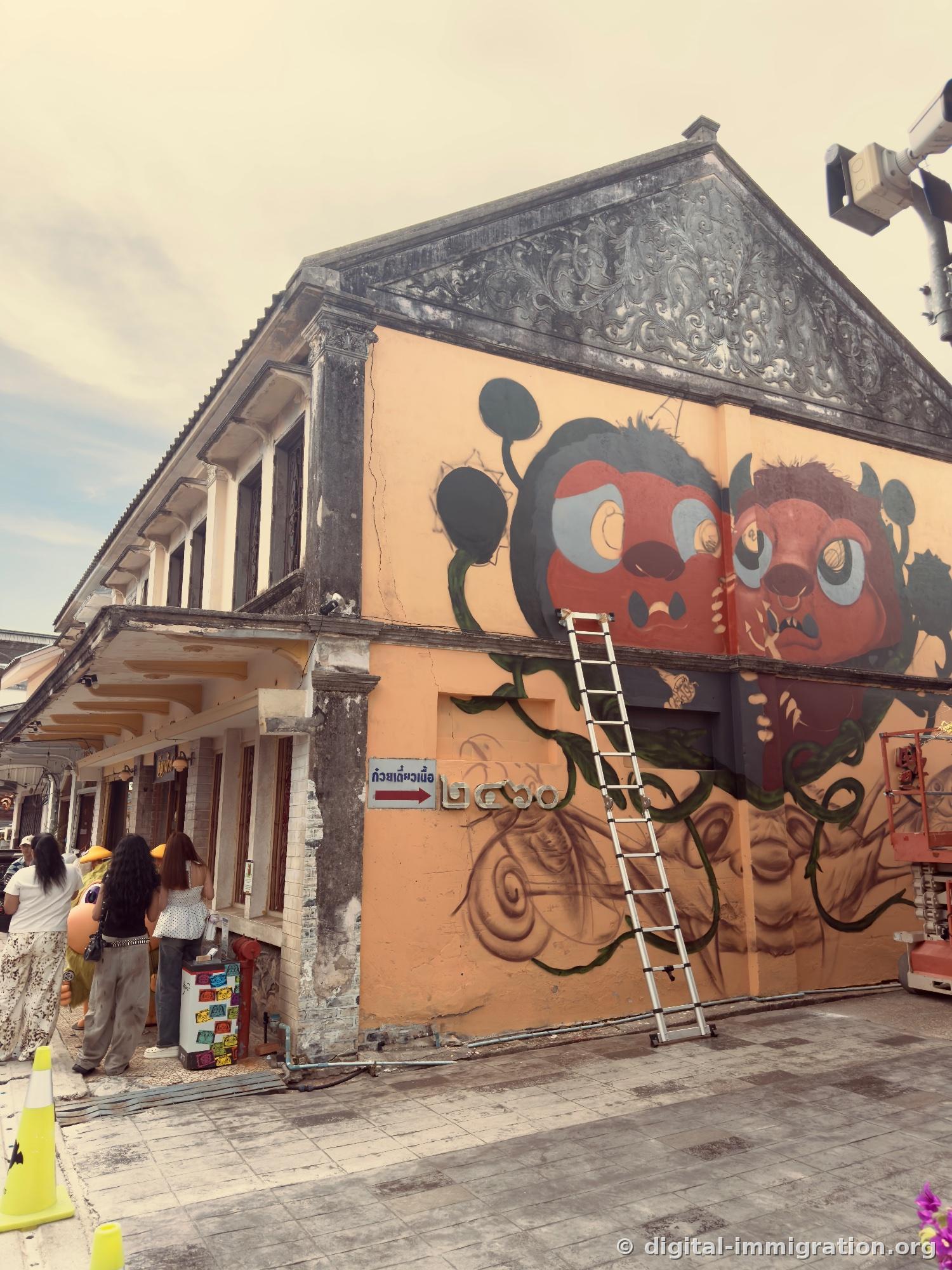
When I went to see the mural at this corner, there was a ladder set up and an orange elevated work platform on the right. In other words, the day I visited, it was still under construction. It was different from the finished photos I'd seen online, but actually, this is closer to what the street really looks like. The murals are repainted and removed periodically. The metal numbers '๒๔๗๐' on the building wall represent Buddhist year 2470, or 1927 in the Western calendar. It's like they've stamped the building's age right on the wall. The gray relief decoration on the triangular gable next to it is the original that's survived nearly a century, while the character mural is recent—this contrast in time captured in one frame is what makes this corner special.
For reference, the coordinates on Google Maps for this corner are 12.6802, 101.2771. The easiest way to get there is by tuk-tuk or motorcycle taxi from the Rayong bus terminal or the market. If you drove, parking inside the alley is virtually impossible, so it's better to park along the main road (Sukhumvit) and walk in. The street itself is short enough to cover in a round-trip walk of 20-30 minutes.
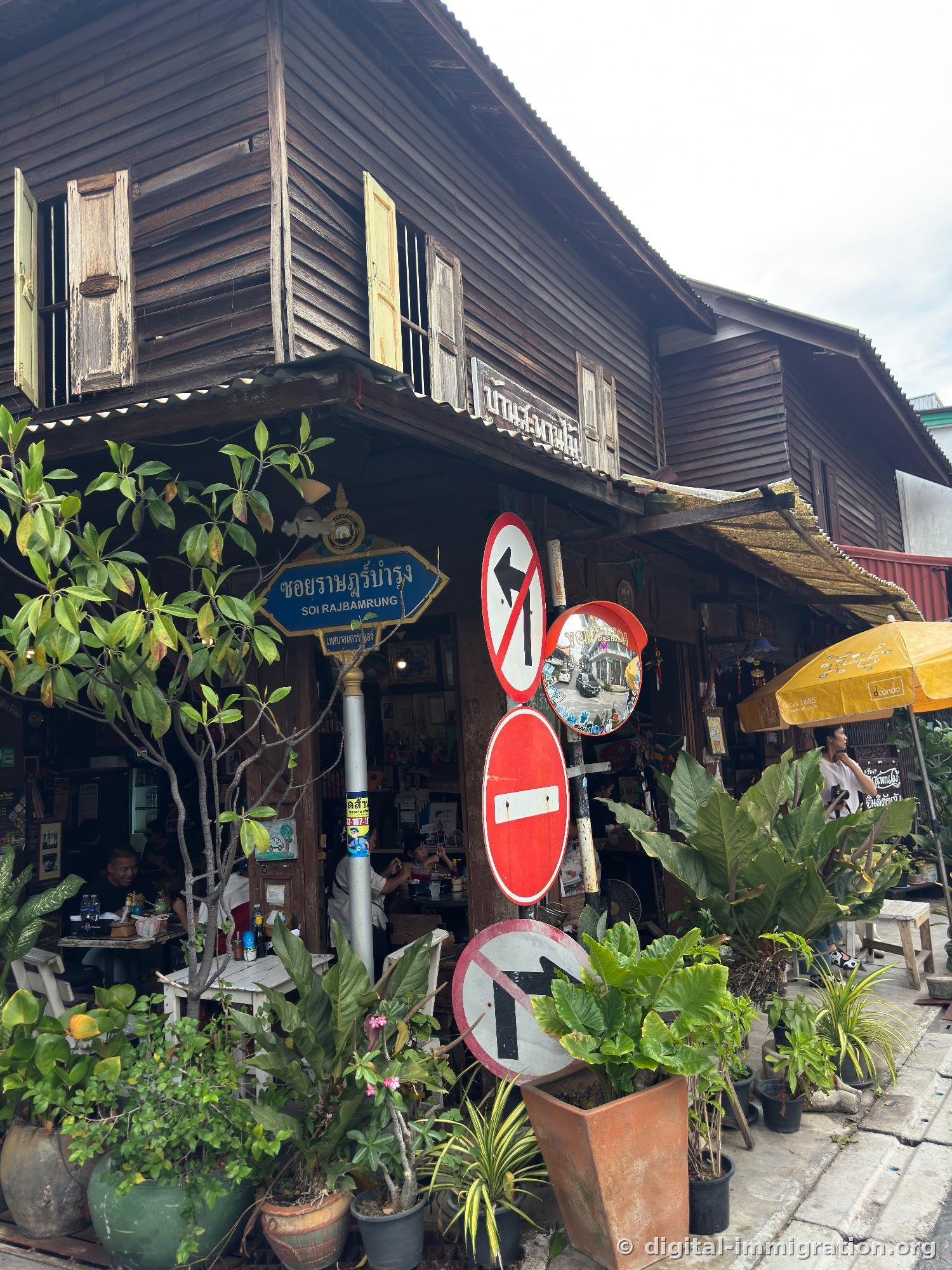
It's actually this blue sign that helps you navigate. Yomjinda Road is a straight line, but these sois (alleys) branch off along the way, and the interesting shops are actually concentrated near the alley entrances. The ground floor of this corner wooden building was being used as a restaurant, and locals were eating noodles at wooden tables inside. Since tourist café prices and local restaurant prices can differ by more than double even within one alley, if you're hungry, it's good to check out these local places first.
Three Cafés, Completely Different Characters
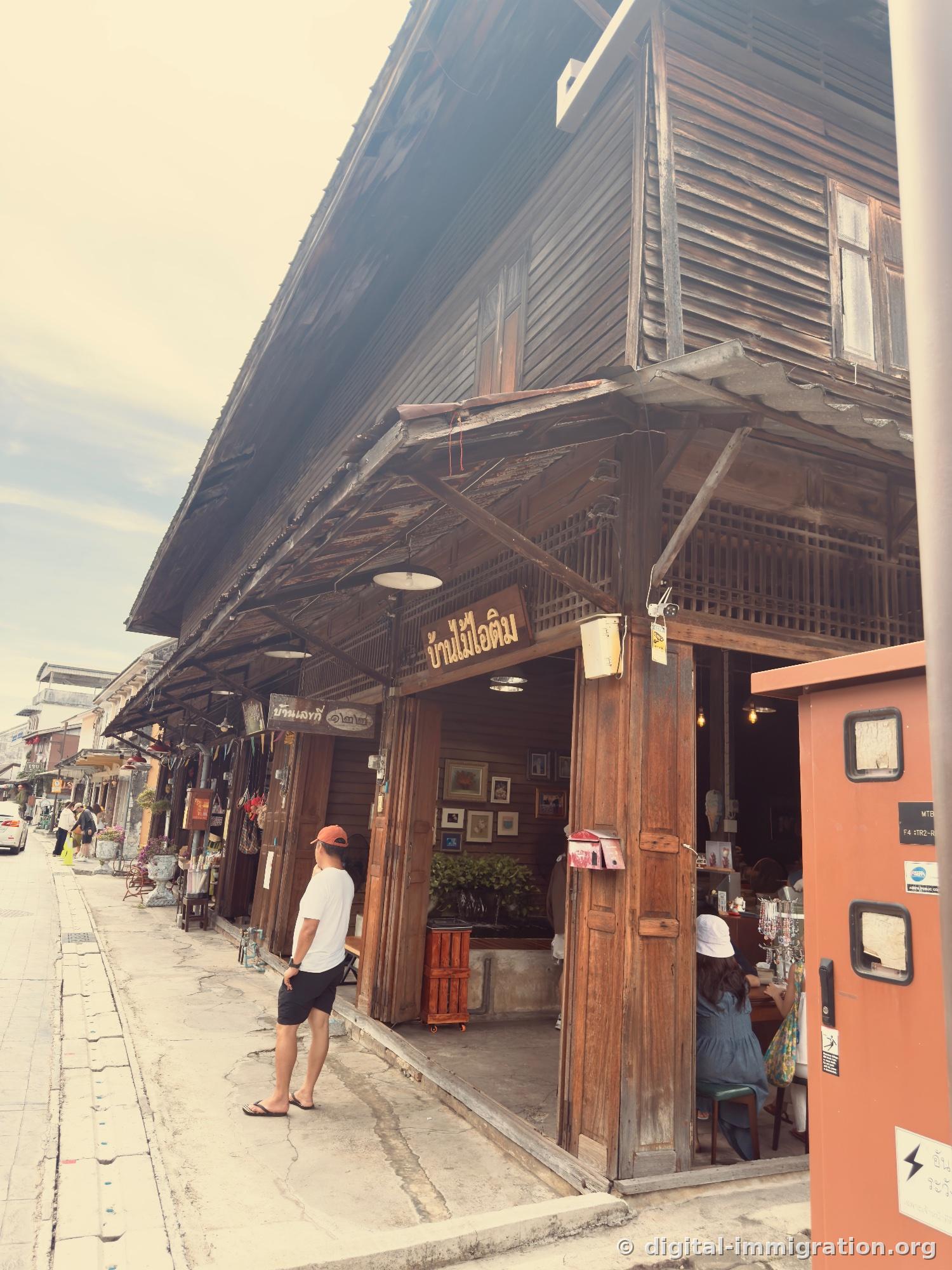
This one stood out the most. The entire two-story wooden wall is a dark brown, and the ground floor has all its folding wooden doors wide open, so you can see straight inside. Framed pictures are densely hung on the interior wall, and customers were sitting at wooden tables. However, it relies mainly on fans rather than strong air conditioning, so don't expect coolness if you step in during midday.
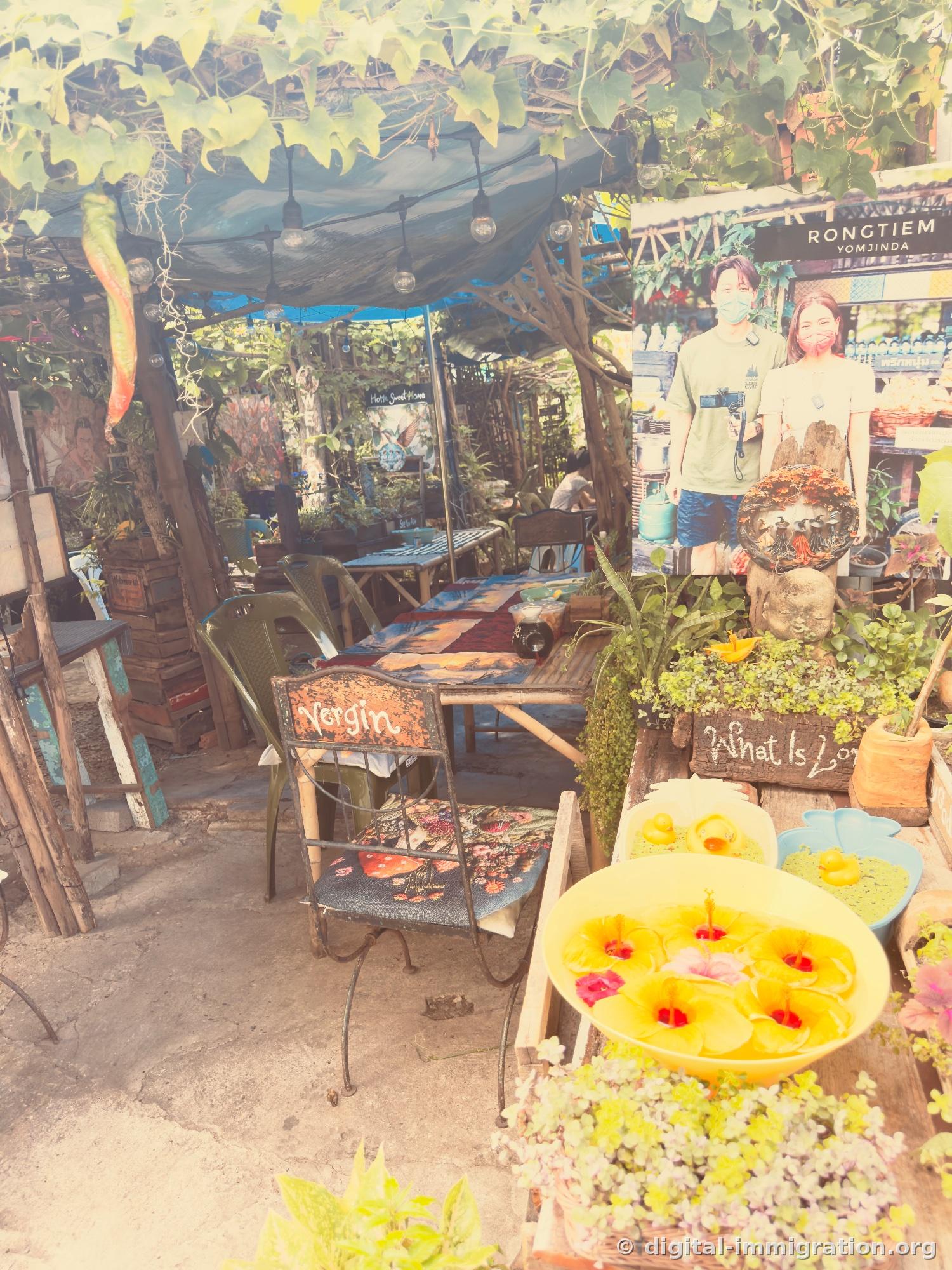
This one is the opposite—outdoors. A blue canopy and vines create the shade, with worn metal chairs and bamboo tables scattered about. Wooden plaques like 'What Is Love' and 'Home Sweet Home' hang on the wall, plus hanging green caterpillar figurines—it's less like a coordinated interior and more like a space where the owner just keeps adding things they like. With the floor half dirt and half concrete, your shoes get a bit dirty after it rains.
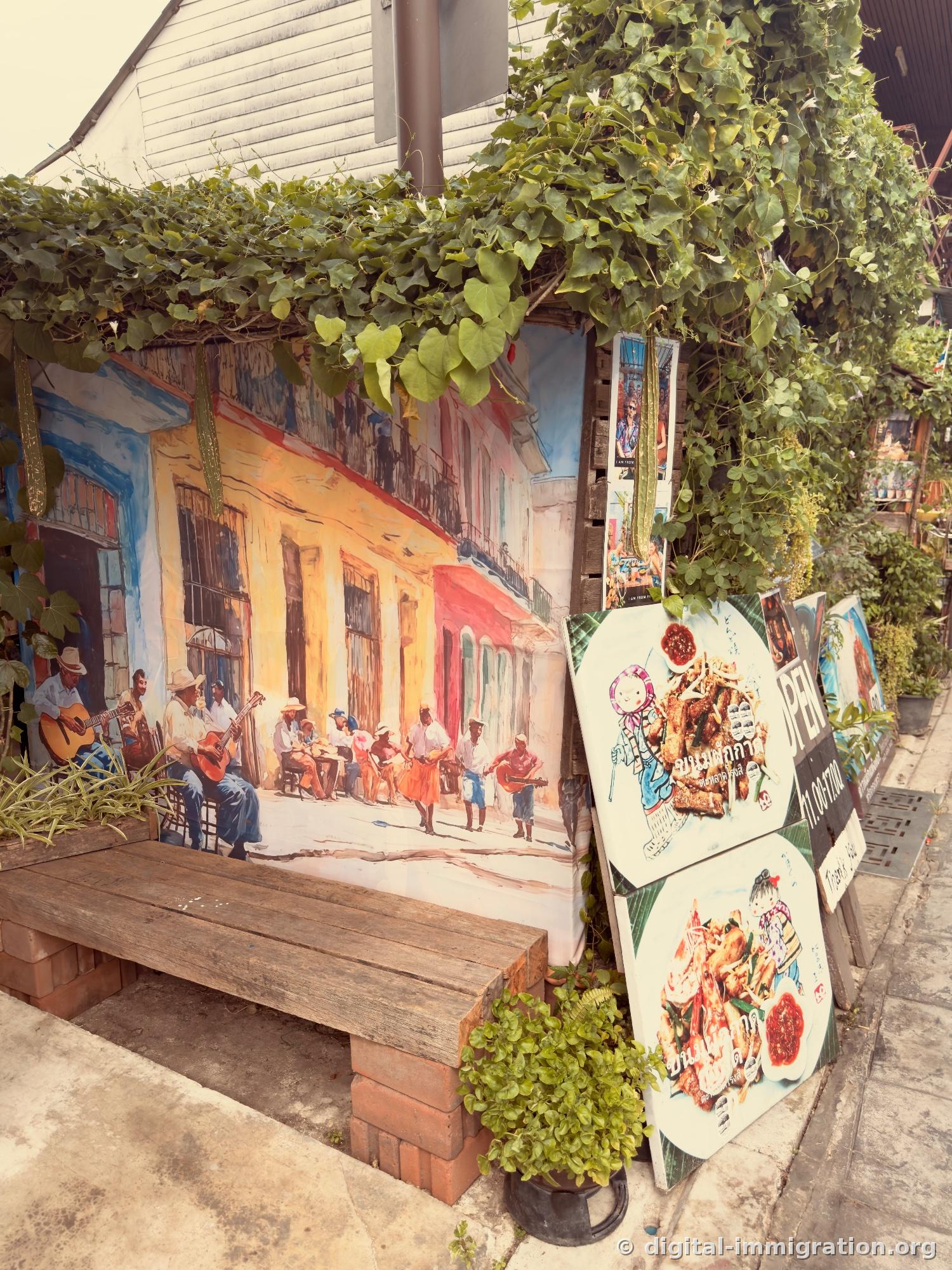
One thing worth noting: this big painting isn't a depiction of Yomjinda Road. It's clearly a Latin American street scene with people in wide-brimmed hats playing guitars. The café owner has it set up for atmosphere, and I initially mistook it for "old Rayong." The menu board next to it is more practical—it indicates they sell mustard greens stir-fry. Since the price wasn't posted on the sign and I didn't order that day, I'd recommend checking the price in person.
Rayong Gallery and Handmade Things
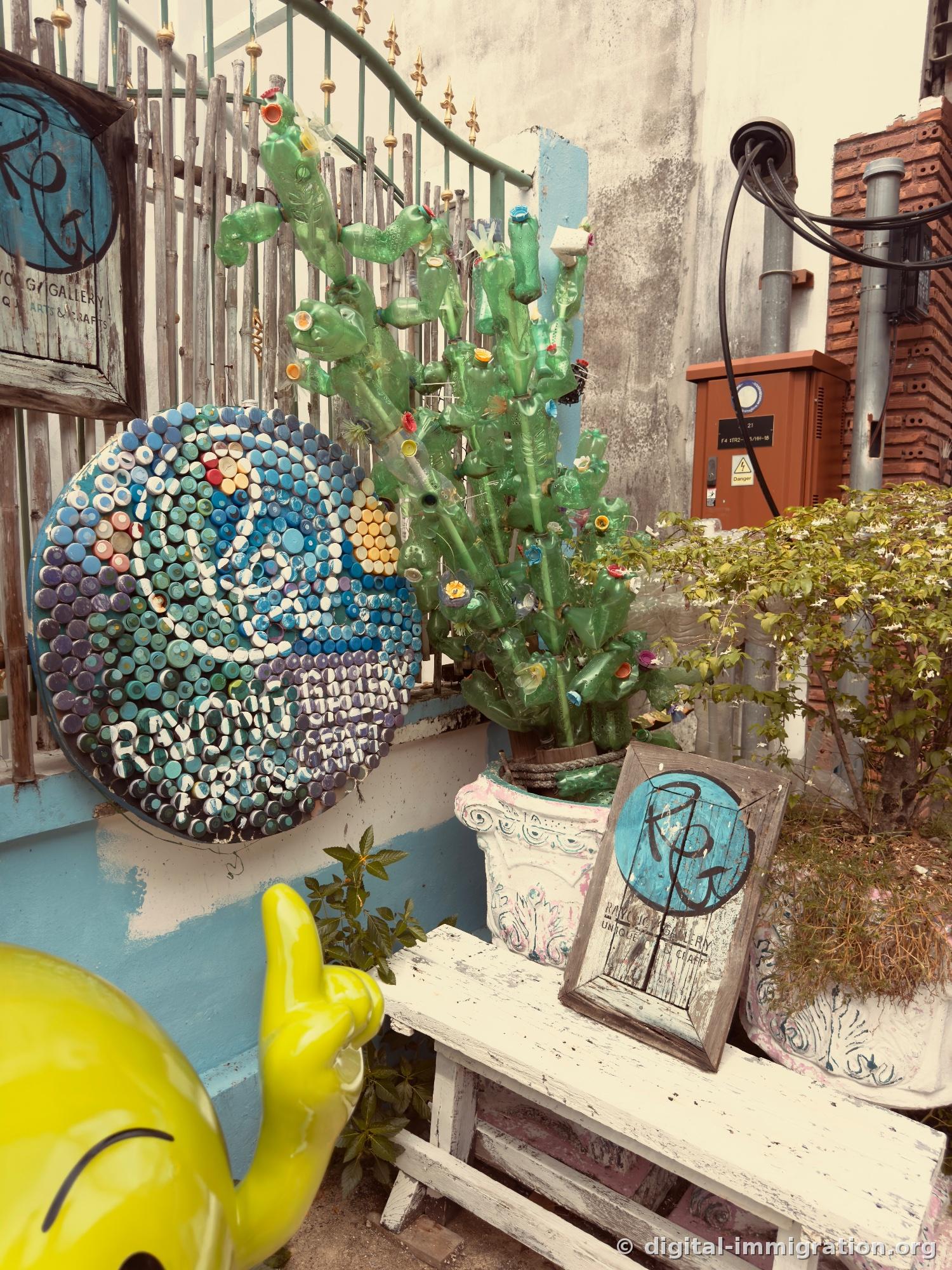
Before looking closely, I thought it was just tile mosaic. Hundreds of blue, purple, and white bottle caps are sorted by color and attached to form waves, with yellow caps forming the sun on the right. The cactus next to it is made from cut plastic bottles stacked on top of each other, with colorful bottle caps fitted like flowers at each end. Right next to it is an exposed electrical distribution box, creating that uniquely Thai alley view where art and infrastructure sit side by side just 60 centimeters apart.
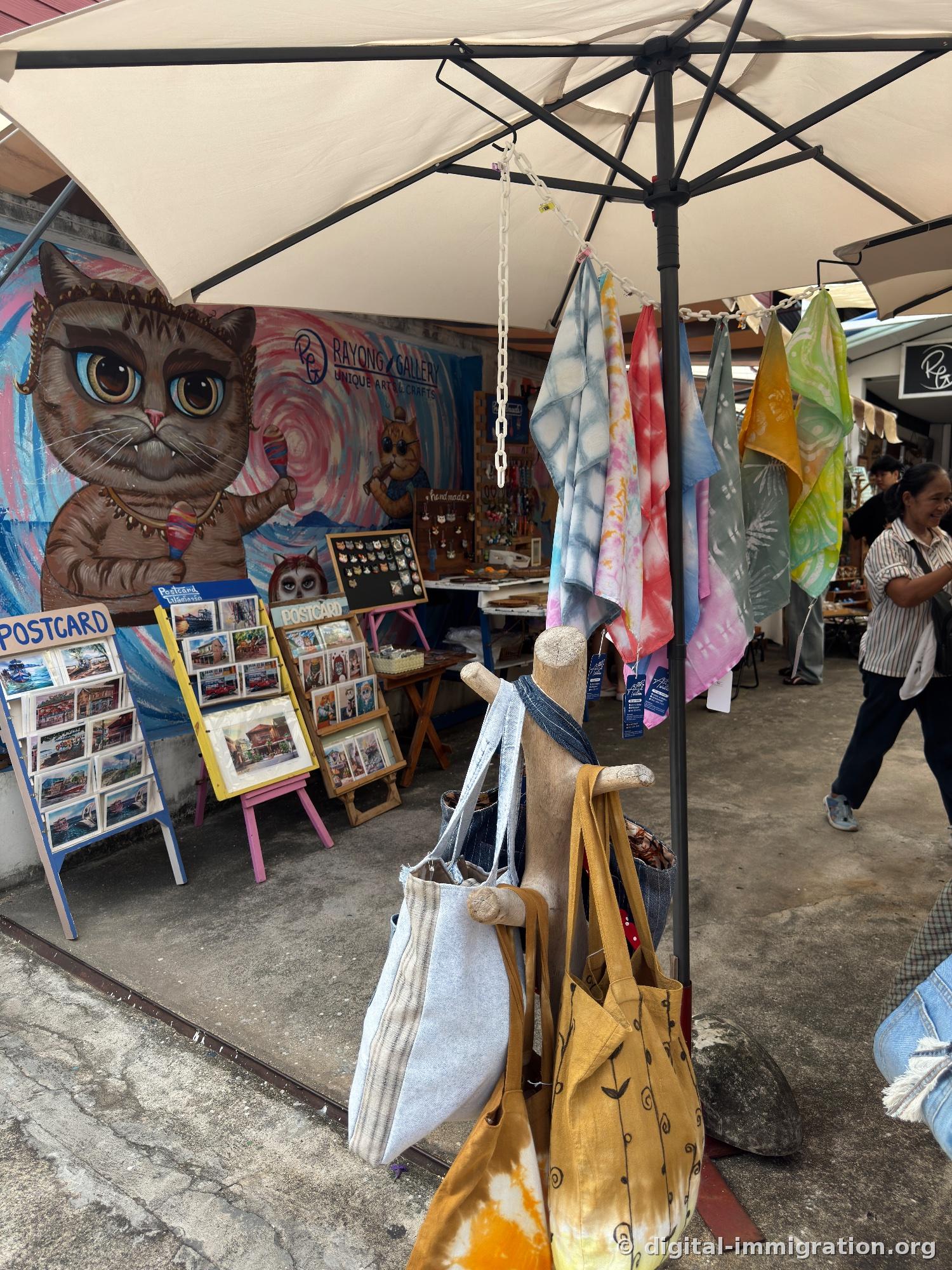
The postcards here are surprisingly nice. They're illustrated postcards depicting downtown Rayong scenery, wooden shophouses, and fishing boats, making them perfect souvenirs if you buy them on this street. The big-eyed cat in the mural behind seems to be the gallery's signature character, as it appears repeatedly on badges and postcards. The hanging scarves are tie-dyed, each one a different color with no two the same. On the day I visited, prices had to be checked individually on each item.
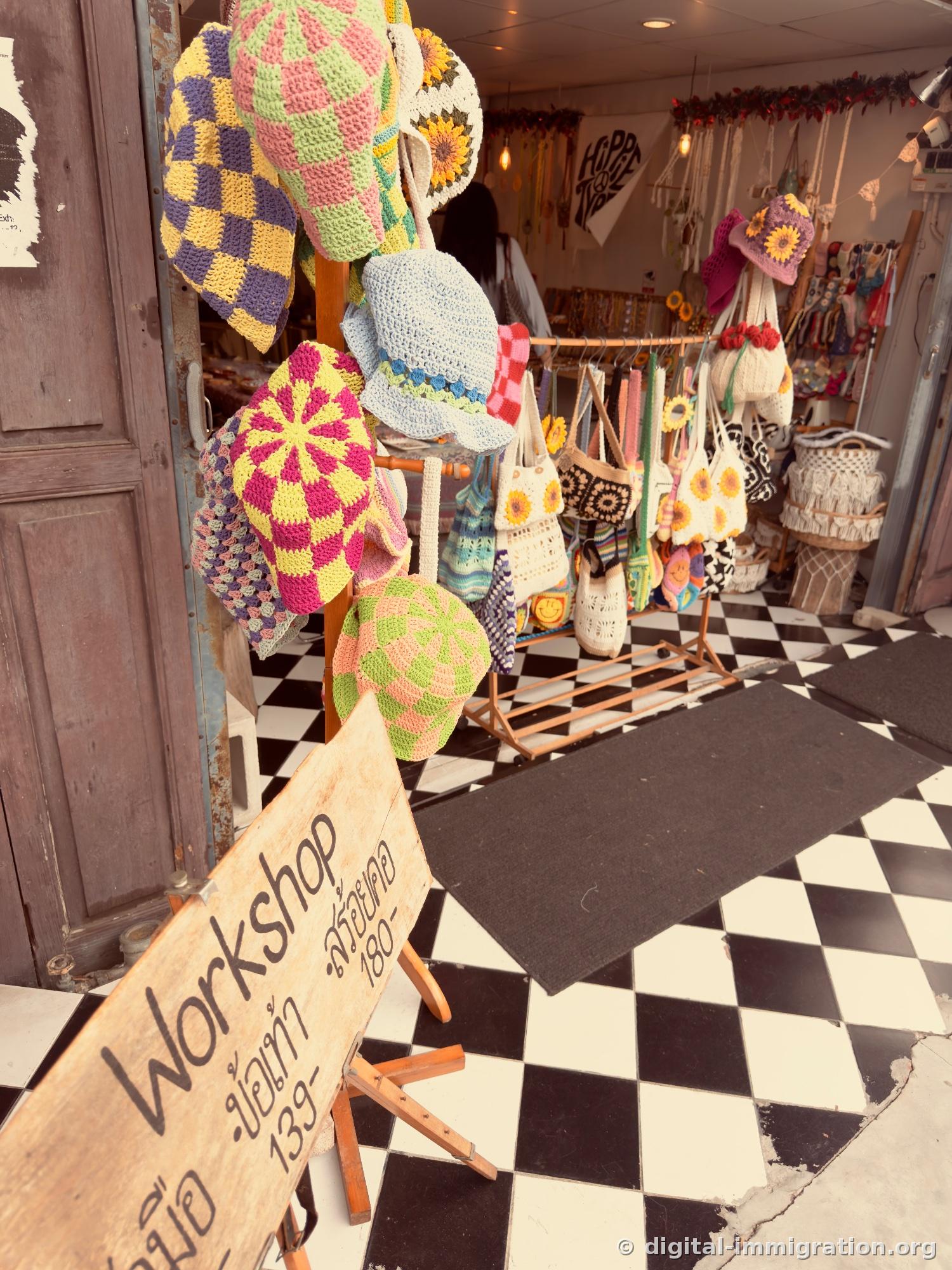
This shop's workshop sign is the only clearly marked price I actually found on this street. 139 baht, 180 baht—that's 5,000-7,000 won in Korean currency. For that amount, you're making something by hand for about the price of a coffee, which isn't bad. However, the time required and whether a reservation is needed weren't on the sign, and since I passed by late in the afternoon, I couldn't ask. If you want to do it, you'll need to go in and check directly. The checkered and sunflower-patterned crocheted hats and bags hanging there were exactly the style currently trendy among young Thais, and they match the black and white checkered floor perfectly—the shop entrance itself photographs well.
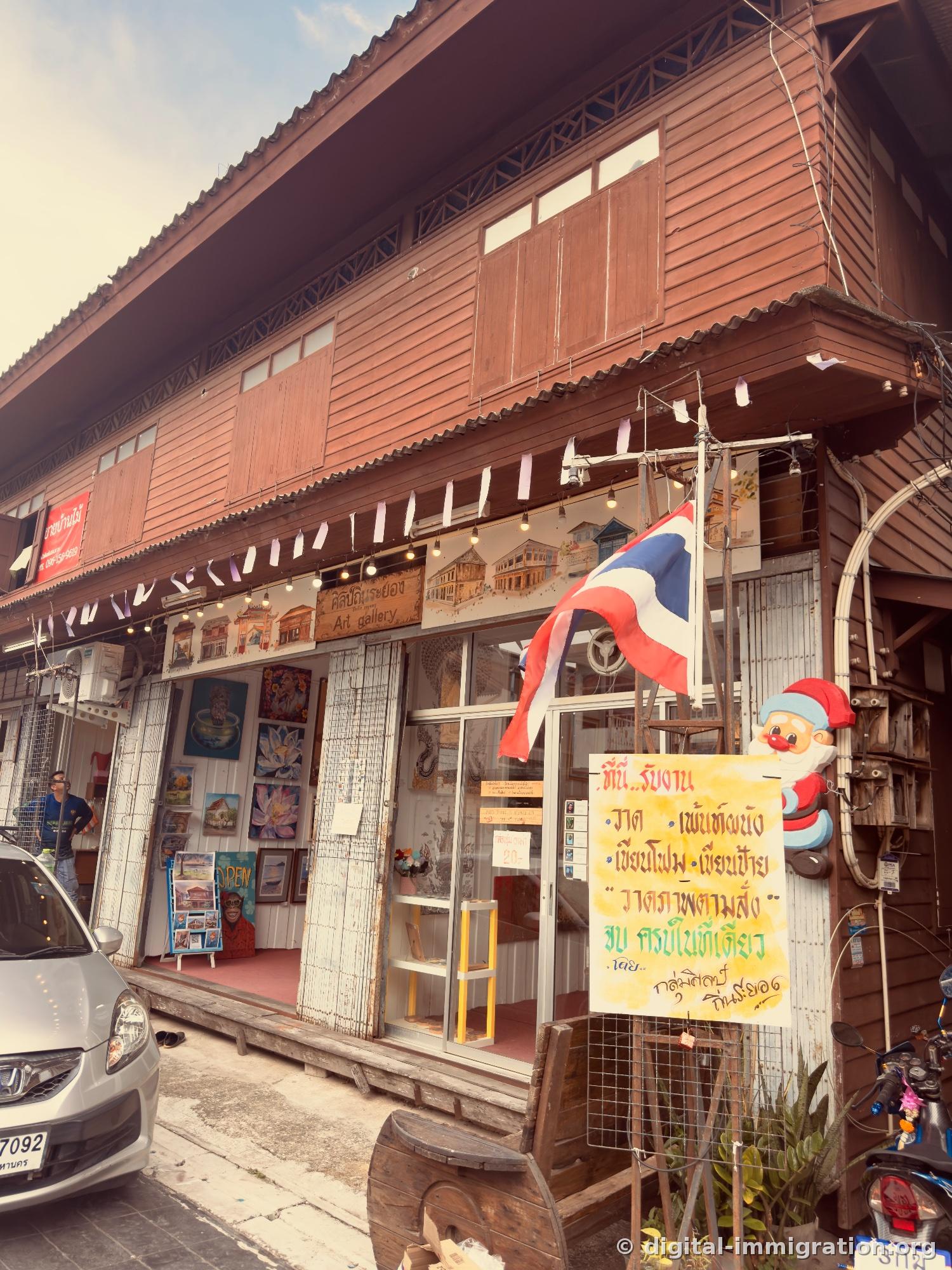
This was the most studio-like place on the street. Lotus paintings, landscapes, and portraits were displayed, and the yellow handwritten sign stated they take orders for paintings, mural paintings, and signage lettering. All the paintings under the eaves above also depict the wooden shophouses of Yomjinda Road. What's interesting is that even though it was August, there were Santa Claus decorations on the wall—that typical Thai small-town attitude where once you put something up, you don't tend to take it down. There were also items with a '20-' price tag on the display, but I couldn't confirm what they were for.
When the Sun Sets Is When It's Real
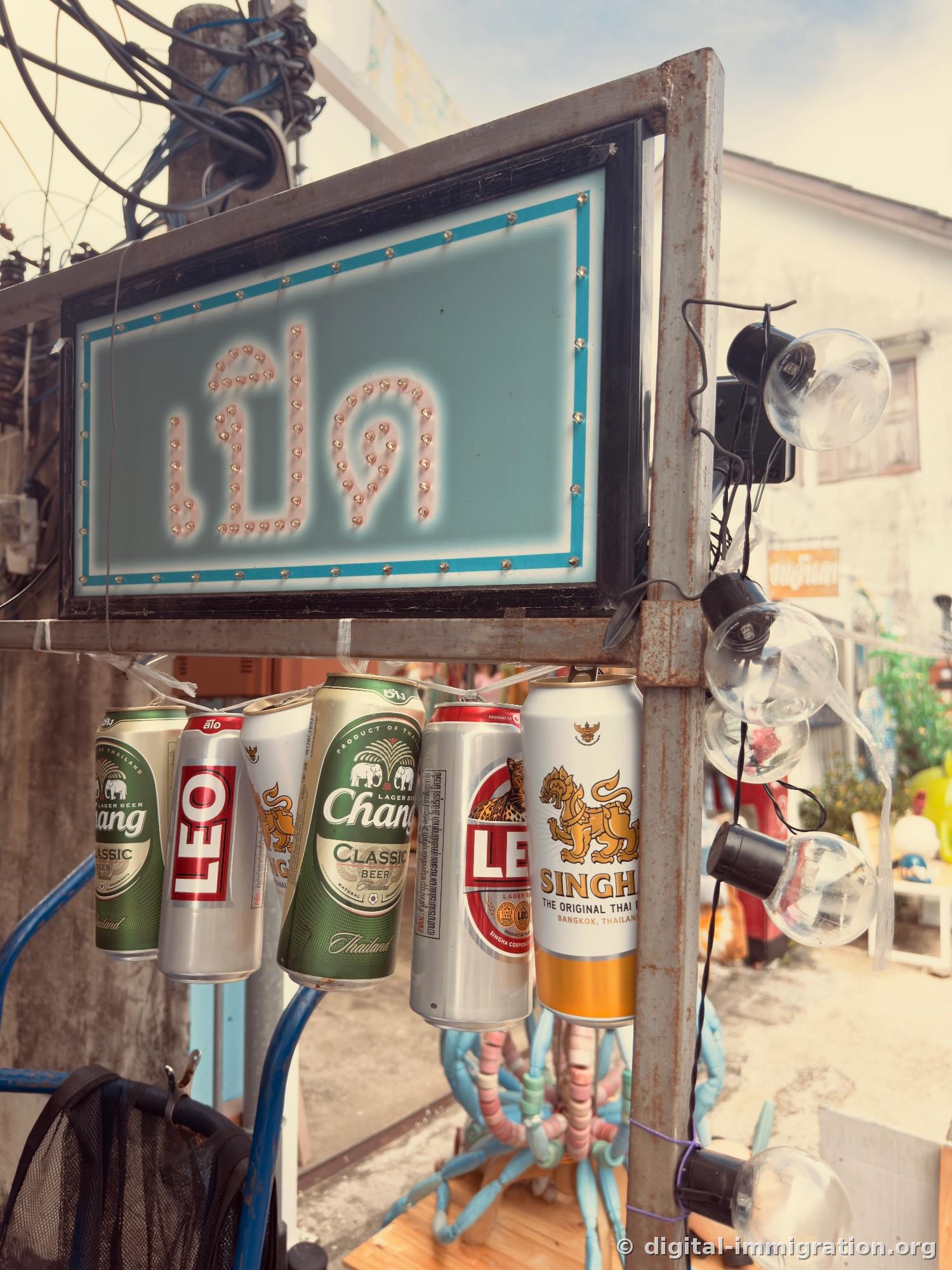
This sign is just a mint-colored sheet during the day, but light bulbs are densely set along the strokes of the letters, so it completely transforms when it gets dark. The cans hanging below are the three major Thai lagers—Chang, Leo, and Singha. Those beers that cost roughly 40 baht per can at Thai convenience stores. Even the tangle of electrical wires on the utility pole in the background fits in one frame, and without this disorder, it wouldn't really be this street.
To write honestly about what I found disappointing: First, since many shops are closed during weekday afternoons, it's better to go after 3 P.M. Second, there's less shade than you'd expect, so around noon the heat rising from the gray tile floor is quite intense. Third, many shops don't have prices marked, so if you plan to buy something, it's easier to ask first. On the flip side, what was good about it is that this place hasn't been completely packaged as a "tourist product" yet. The murals are still being painted, the tuk-tuk is rusted, and there's a power distribution box next to a café. If your schedule only allows you to see Rayong's beach before checking out, I'd recommend setting aside about two hours to spend here instead.
Baca juga
- A Day at Karahill Anona (Karahill Anona) on the 1st Floor of Phuket Karon Anona Beachfront Resort Until Midnight
It's my fourth day in Phuket's Karon area. My lower back was sore from riding a long-tail boat in the afternoon and hitting some rough waves. Thai massage shops are everywhere in t…
Phuket · Karahill Anona - Karahill Nail & Beauty in Phuket — A nail salon on the 2nd floor above an Indian restaurant, declaring itself from the staircase
Getting nails done in Phuket is usually spontaneous. You notice a sign on the way back from the beach, pop in, spend about 200 baht having your nails trimmed, and leave. But this p…
Phuket · Karahill Nail - Phuket Patong Karahill Massage — Thai Massage 400 Baht, Saw a Shiba Inu During a Foot Massage
As you walk through the alleys of Patong, you see a massage shop sign every ten steps. I stopped in front of Karahill Massage because the interior was clearly visible through the g…
Phuket · Karahill Massage