Tokyo Yoyogi Tonchinjkan (豚珍館), a Tonkatsu Place Where Even the Rice Bowl Commands Respect
Walking south from Shinjuku toward Yoyogi, you'll find an alley set back one block from the main road. Tonchinjkan (豚珍館) in Yoyogi, Shibuya Ward, Tokyo, sits on the first floor of…
Tokyo · Tonchikan
Walking south from Shinjuku toward Yoyogi, you'll find an alley set back one block from the main road. Tonchinjkan (豚珍館) in Yoyogi, Shibuya Ward, Tokyo, sits on the first floor of an old building at the entrance to this alley. The sign isn't large, and there's no signage in foreign languages. On my first visit, I walked past it twice even while checking a map. What finally stopped me was the white LED sign on the wall and the white noren curtain hanging beneath it, decorated with a pig illustration.
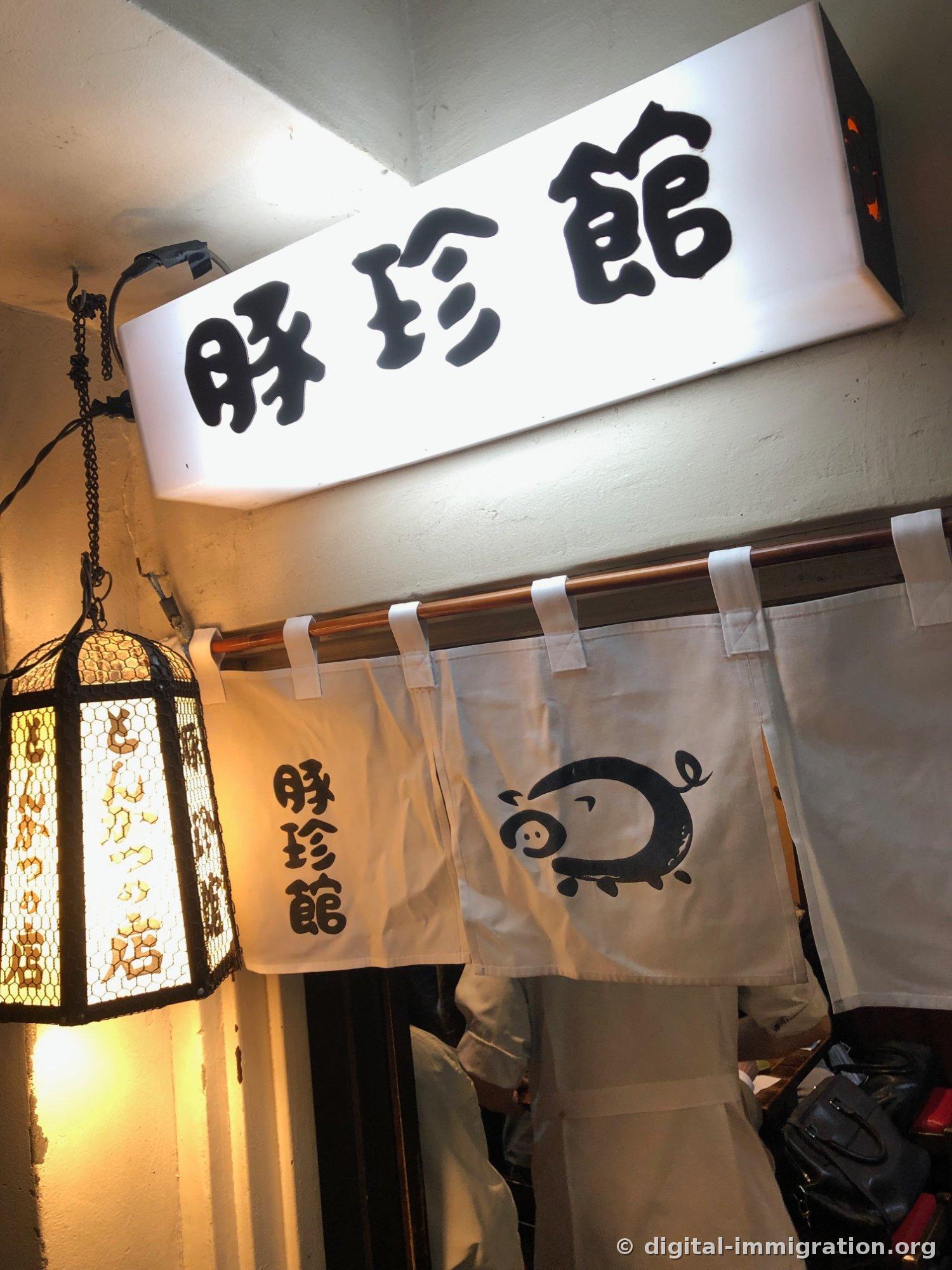
Through the noren, you can see people in white chef's coats moving around, and customers' bags are piled up in the narrow space in front of the shop. That's the sign there's no seating. You wait in a stairwell, and in summer, the heat from the frying oil wafts right up, leaving your shirt damp within minutes.
The Menu Board on the Door Is This Shop's Instruction Manual
While waiting, there's really only one thing to do: read the menu photo board attached to the front door. More than twenty laminated photographs are posted there, with prices listed vertically in kanji on the side. Even if you can't read Japanese, you can just point your finger at a photo and you've placed an order.
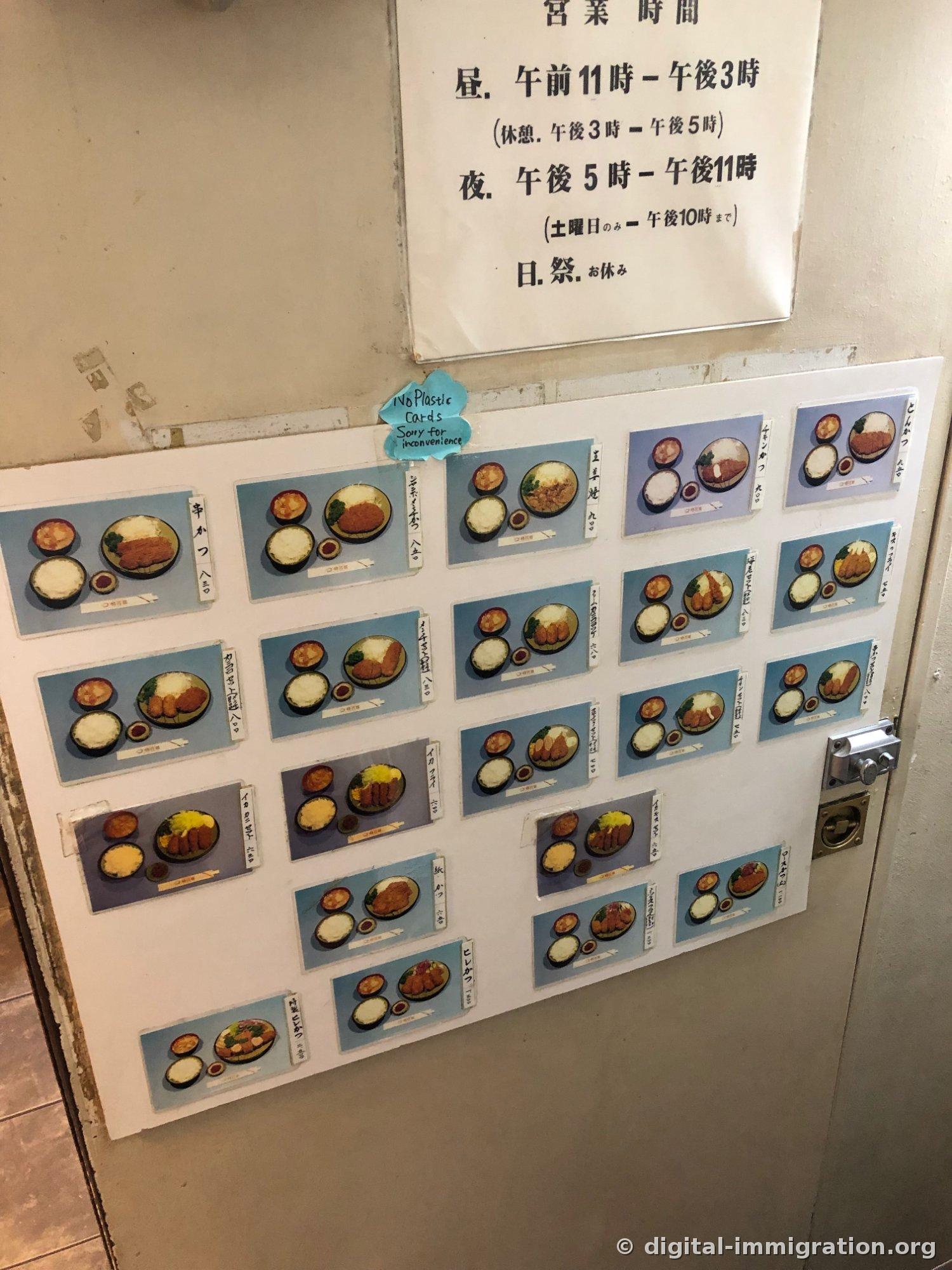
There are two things you absolutely must check in this photo. The business hours on the white paper at the top, and the blue flower-shaped handwritten note affixed in the center of the menu board. At the time I took this photo, the notice read as follows:
- Lunch: 11:00 AM – 3:00 PM
- Break: 3:00 PM – 5:00 PM
- Dinner: 5:00 PM – 11:00 PM (Saturdays until 10:00 PM)
- Closed Sundays and public holidays
The key point is that there's a break time from 3 to 5 PM. If you've wandered around Tokyo missing a late lunch, you'll understand the importance. Come during these two hours and you'll just see a closed door. Also note the blue note: they don't accept cards. Cash only. It's reassuring to withdraw money from a convenience store ATM beforehand. That said, this was the notice when I visited, and business hours and payment options may change, so I recommend checking in person.
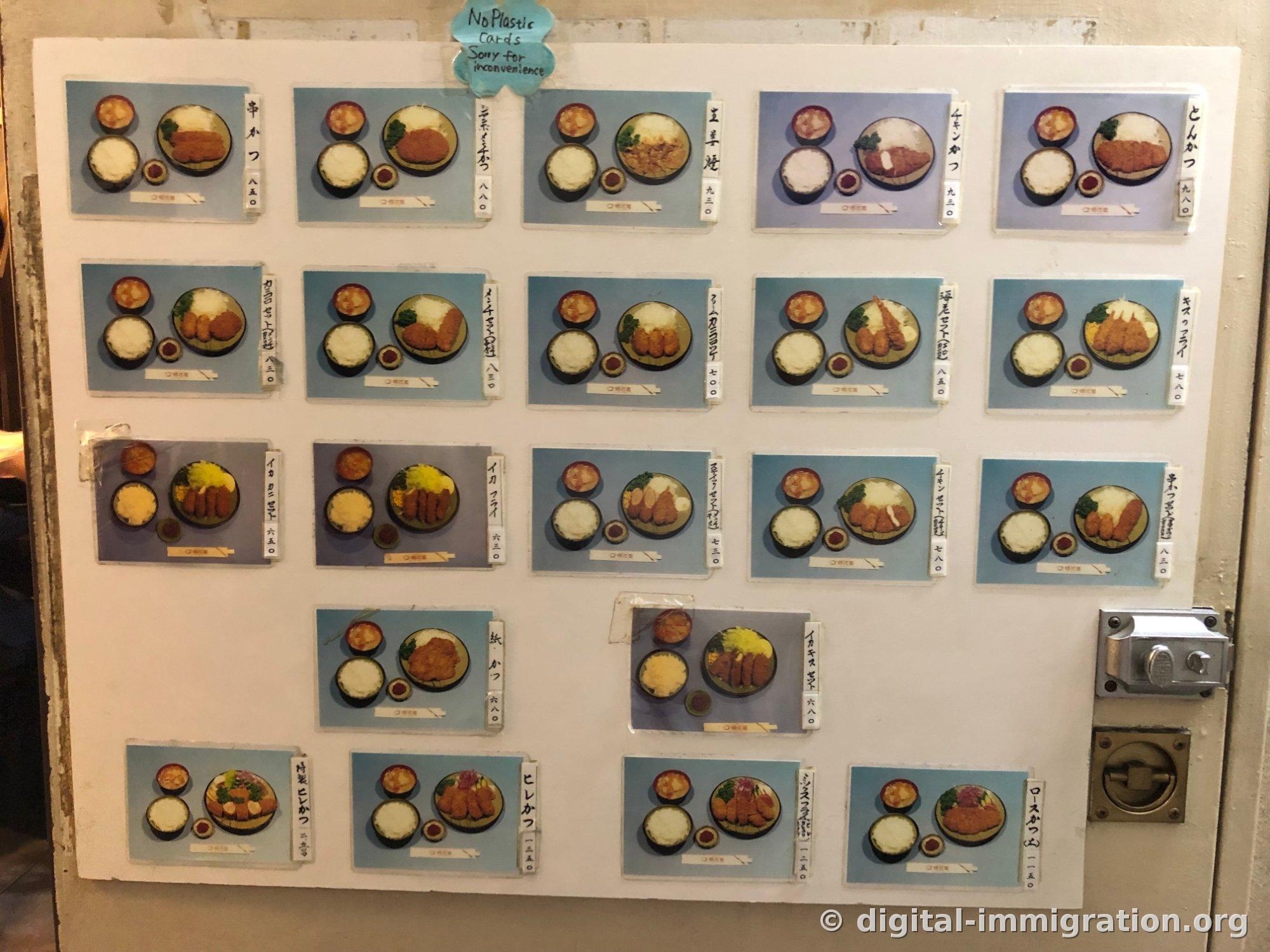
Reading the prices in the photo, you'll see Kushikatsu at 850 yen, Shogayaki (ginger pork) at 930 yen, Chicken Katsu at 930 yen, Tonkatsu at 980 yen, Ham Katsu at 700 yen, and Ika Fry at 630 yen. Going down the lower rows, prices climb to Hire Katsu at 1,350 yen, Mix Fry at 1,250 yen, and Loin Katsu at 1,150 yen. Considering Tokyo's prices in the heart of the city, this composition at this price point is affordable. However, these are the prices from when I took the photo, so they've likely gone up since then. It's better to check the prices directly on the wall menu board before sitting down.
I First Laughed When I Saw the Rice Bowl
Once seated, you understand immediately: this place is known for generous portions. When the set arrives, the rice bowl is the size of a soup bowl, and the rice is piled high above the rim. When two of us sat down, two of these massive bowls were placed before us.
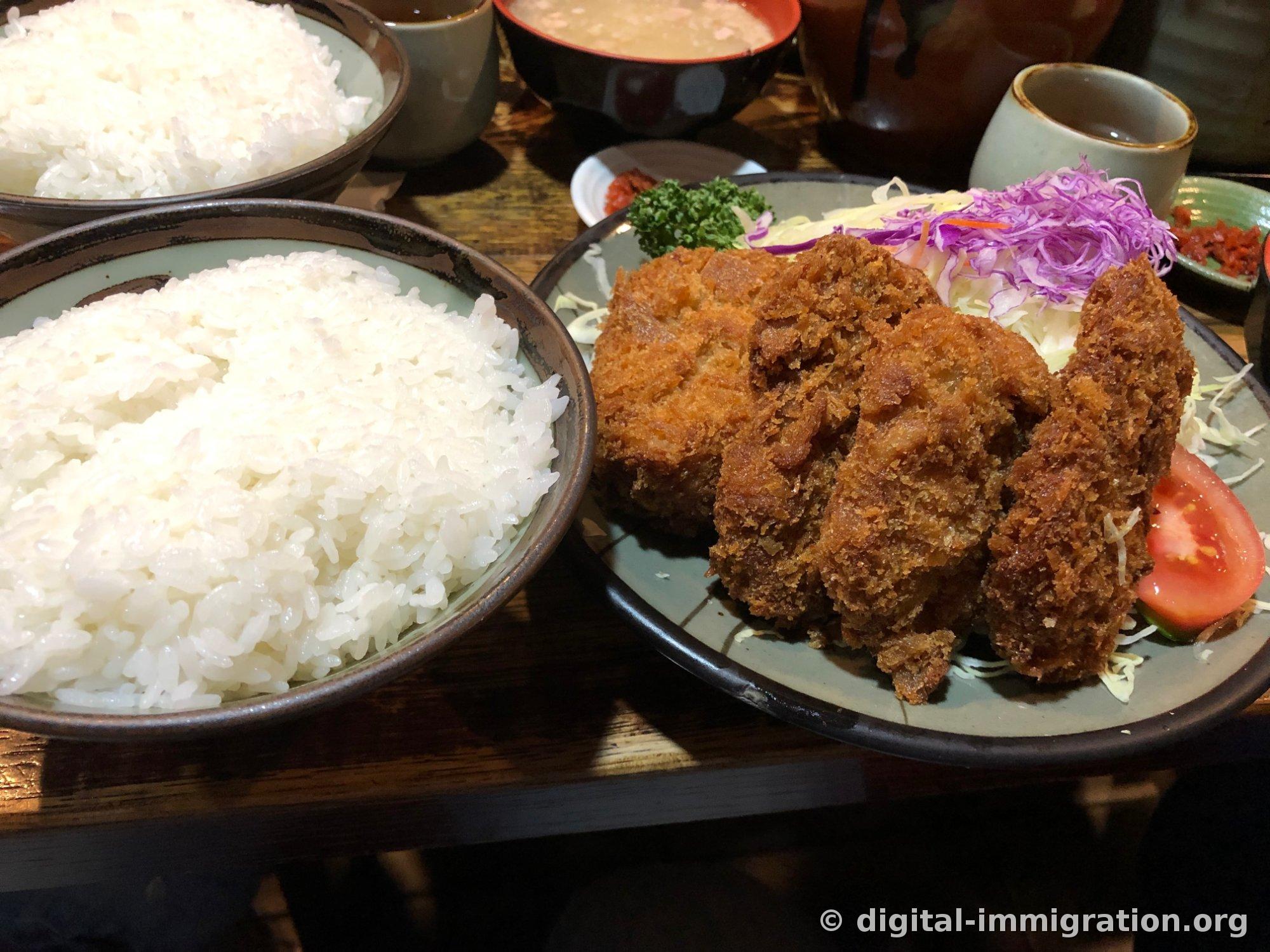
The batter color is deep. It's not the light golden, low-temperature frying trendy nowadays, but clearly dark brown, old-school style. On the plate, shredded cabbage piles up like a mountain, with red cabbage adding color. A single sprig of parsley, a slice of tomato, two cucumber wedges. The composition looks like it was transported straight from a photograph from forty years ago.
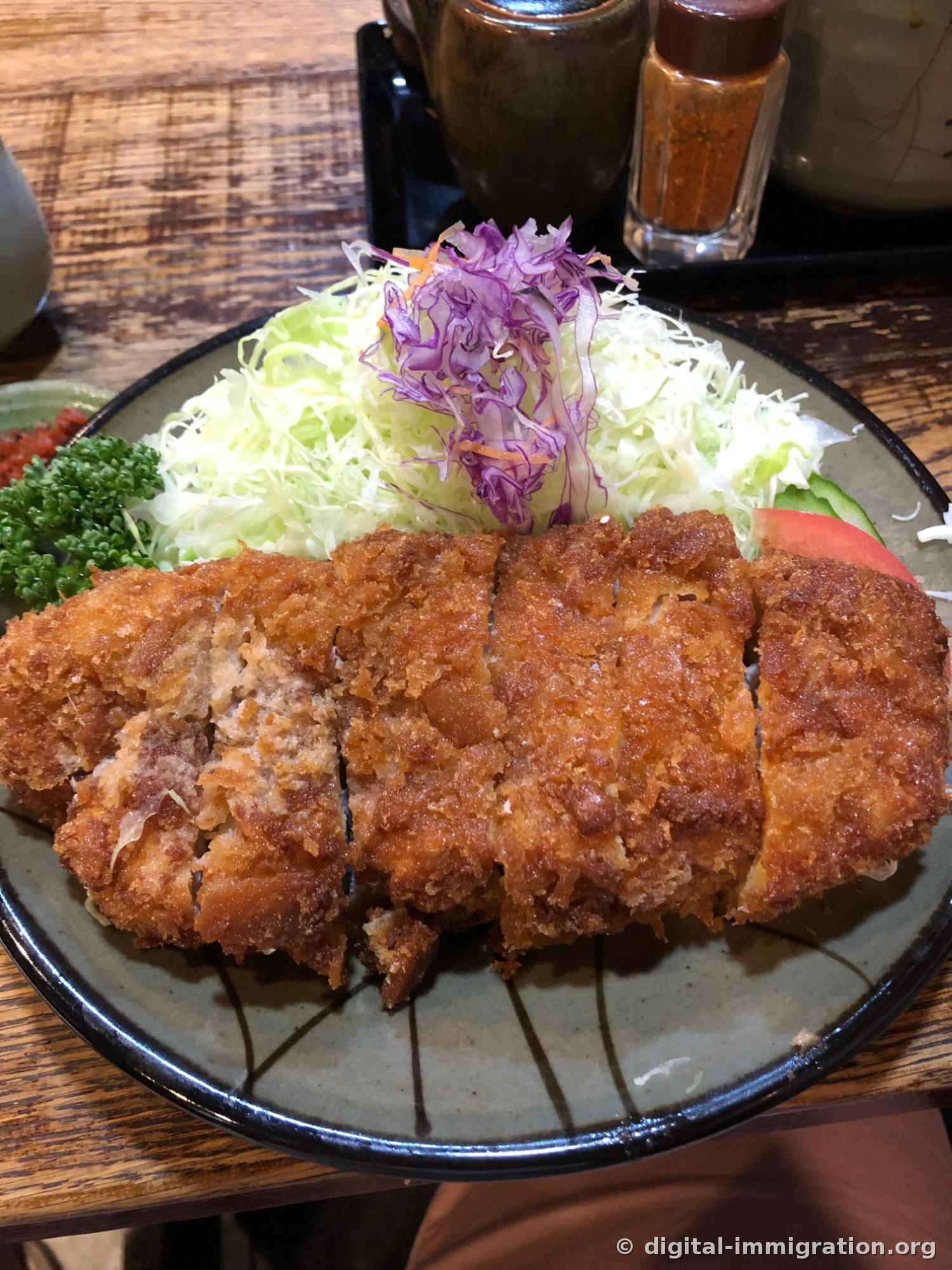
When you pick up a piece with chopsticks, you feel its weight. The breading clings tightly to the meat, and when you bite down, it makes a crisp crunch rather than a light crackle. The breading, soaked in oil, isn't light. This is where tastes diverge. If you come expecting thin, crispy batter, you might think, "This is a bit heavy."
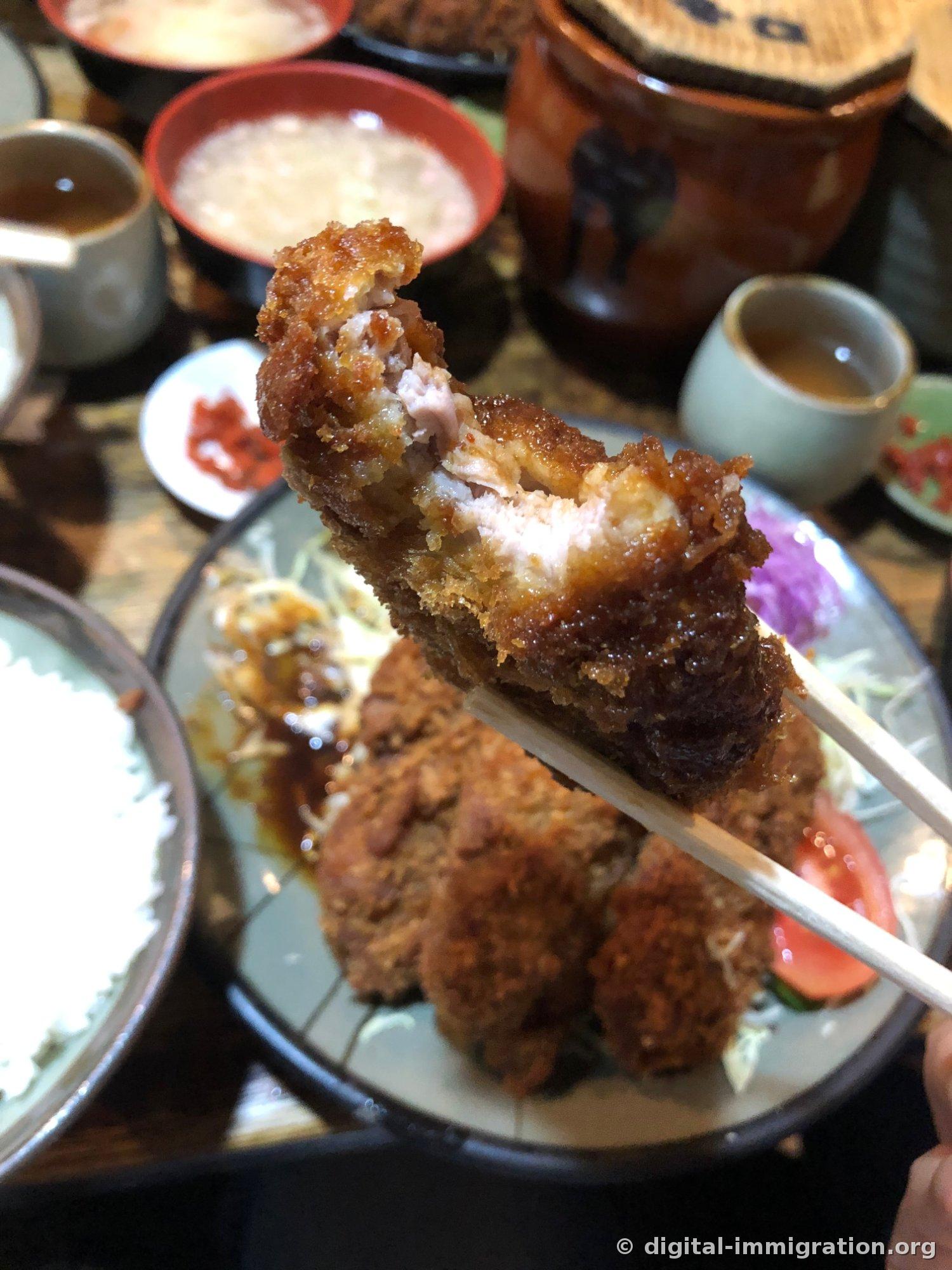
The miso soup was excellent. Served in a red lacquered bowl, it contains pork chunks, making the broth rich and satisfying. After eating a few pieces of the cutlet and feeling your mouth dry, sipping this soup keeps you going back for more with your chopsticks. The tsukemono (pickled side) comes in a very small amount—just one chopstick's worth of red pickles.
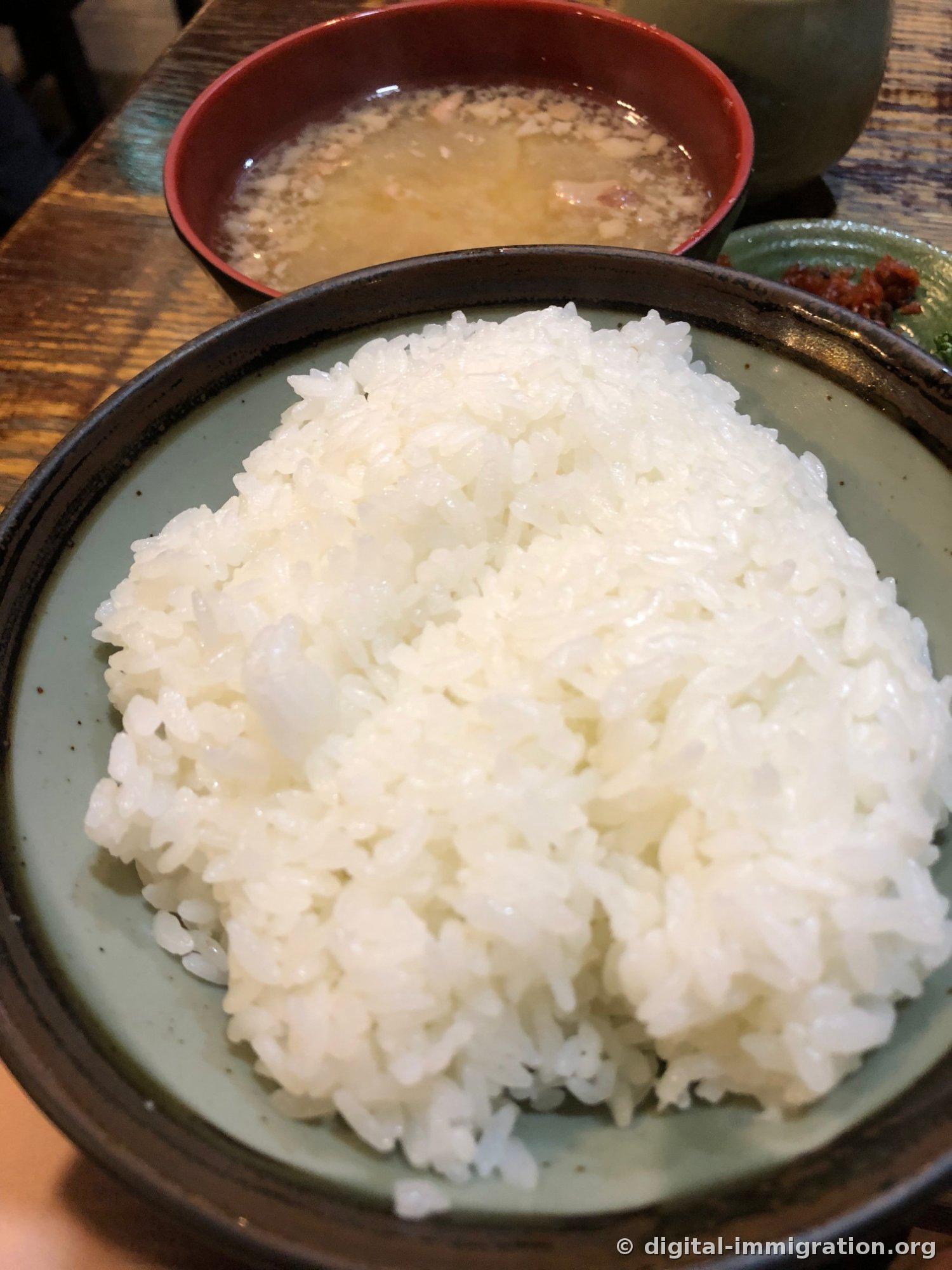
To be honest, I couldn't finish all my rice. After finishing the cutlet, about a third of my rice remained. The salaryman sitting next to me finished his. I didn't confirm whether the rice portion can be adjusted, so if you're uncertain, ask when you sit down.
How to Find It and Get a Seat
The closest station is JR Yoyogi Station. It's just a short walk from the station, so you can either transfer just one station from Shinjuku or walk down from Shinjuku's south exit. The challenge is the last 100 meters. The shop is tucked inside an alley, and the sign doesn't jut out prominently toward the road, so you need to keep your map coordinates open and scan the first-floor entrance of the building. When you spot the pig illustration on the noren, you've found it.
During lunch hours, the place is packed with nearby office workers. It's better to go before 11:30 AM or after 1:30 PM. On my second visit, I timed it to arrive right at 5 PM when the dinner shift opens, and I immediately grabbed a counter seat. The counter has bright lighting, which makes the plating look much more appealing.
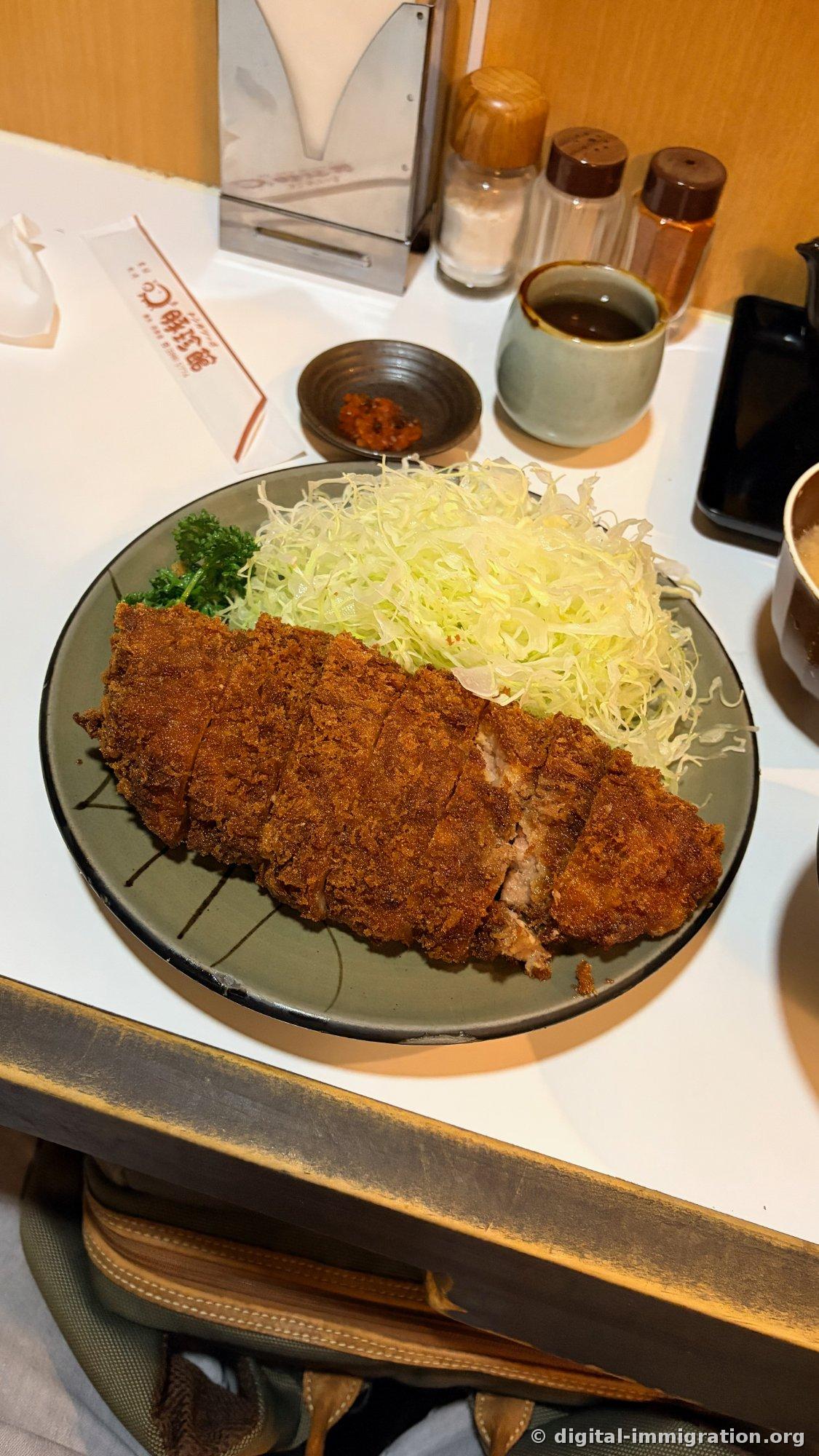
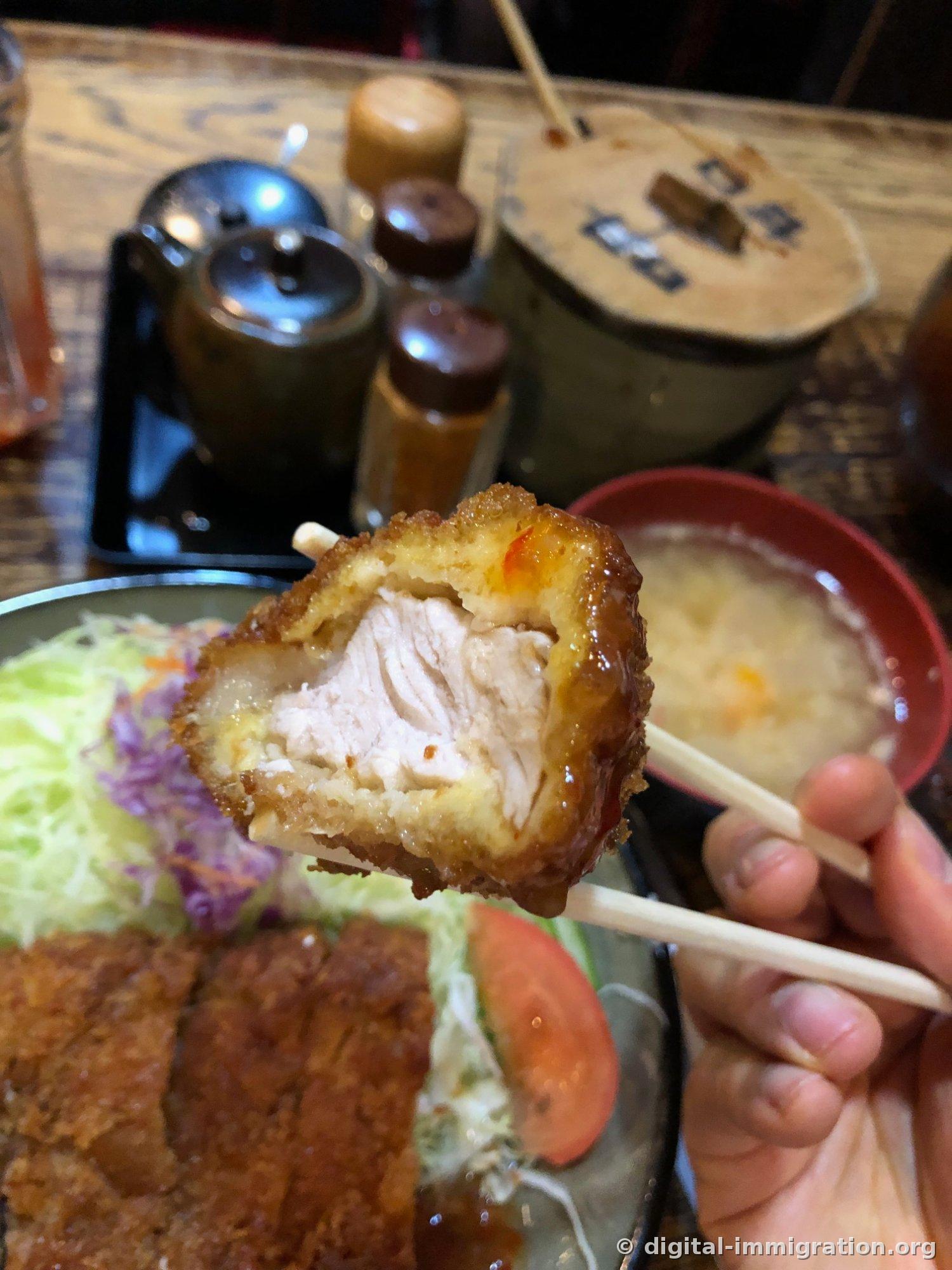
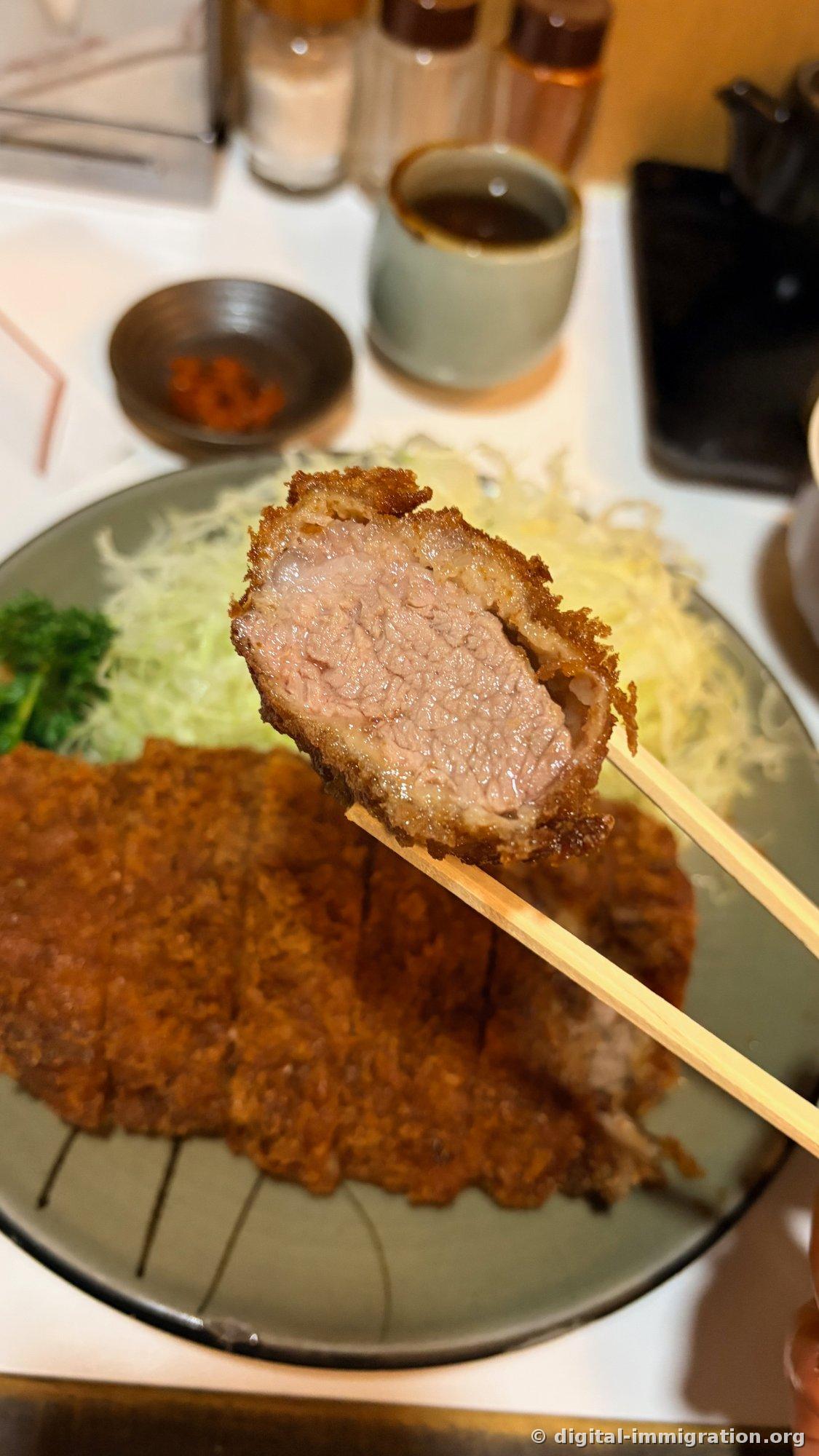
On this visit, I ordered the loin cut. The slice nearly fills the entire plate, so at first I thought it was meant for two people. Looking at the cross-section, it had a light pink color. That means it wasn't over-fried, and when you chew, you definitely taste the meat juices. The meat flavor takes precedence over the rough taste of the breading.
Things First-Time Visitors Should Know
- Bring cash. The sign on the door states they don't accept cards.
- 3–5 PM is break time. Closed Sundays and public holidays.
- The rice portion is substantial. Ordering two fried items and sharing is more realistic.
- Sauce, salt, and shichimi are on the table. Trying half with sauce and half with salt really shows the difference in the batter's flavor.
- It's a tight, fast-turnover shop, so if you have large luggage, you'll attract attention. This isn't a place to bring a rolling suitcase.
There are far more refined tonkatsu restaurants in Tokyo. Places that showcase a black pork brand, lightly fried at low temperatures, boasting pink cross-sections. Tonchinjkan isn't one of them. The batter is thick, the color is dark, and the rice portion is outrageously large. But walking down the stairs after finishing, I felt oddly satisfied. It had been a long time since the simple sensation of being full felt this deeply satisfying.
Baca juga
- From Akihabara's Chuo-dori to the Kanda River: A Record of Tokyo's Electronics District Revisited Multiple Times
Tokyo's Akihabara is a neighborhood where it's hard to say you've seen everything in a single visit. I've come multiple times across different seasons, and each time the signs chan…
Tokyo · Akihabara - Buying a Single ¥300 Year-End Jumbo Lottery Ticket at Nishi-Ginza Chance Center in Tokyo
Exit from the Hibiya exit of Tokyo's Shimbashi Station, walk toward the elevated highway for about three minutes, and suddenly you'll see a line of people stretching along the side…
Tokyo · Nishi-Ginza Chance Center - Ueno Ameyoko, the real magic starts after sunset — an evening walk from the Okachimachi Gate to Ueno Station
Every time I come to Tokyo, my feet find their way to Ueno Ameyoko (アメ横) without fail. This time I entered from the Okachimachi side and worked my way toward Ueno Station. I've met…
Tokyo · Ameya Yokocho Market