30 Minutes from Antalya's Cumhuriyet Square Down to Kaleiçi — Atatürk Equestrian Statue, Yivli Minaret, and the Sea
The morning after arriving in Antalya, Turkey, I walked from my accommodation to Cumhuriyet Meydanı Square. It's the entrance to the old city of Kaleiçi and the transportation hub…
Antalya · Jumhuri Square
The morning after arriving in Antalya, Turkey, I walked from my accommodation to Cumhuriyet Meydanı Square. It's the entrance to the old city of Kaleiçi and the transportation hub where city buses and trams converge. I'd imagined the "square" as some orderly European plaza, but in reality it was more like a broad terrace jutting out toward the sea atop a cliff. Beyond the railings lay the Mediterranean. Around 10 a.m. on a mid-February morning, the sun was bright but the wind sharp enough to make me peel off and put back on my thin jacket.
In Front of the Equestrian Statue — Where People Stand the Longest
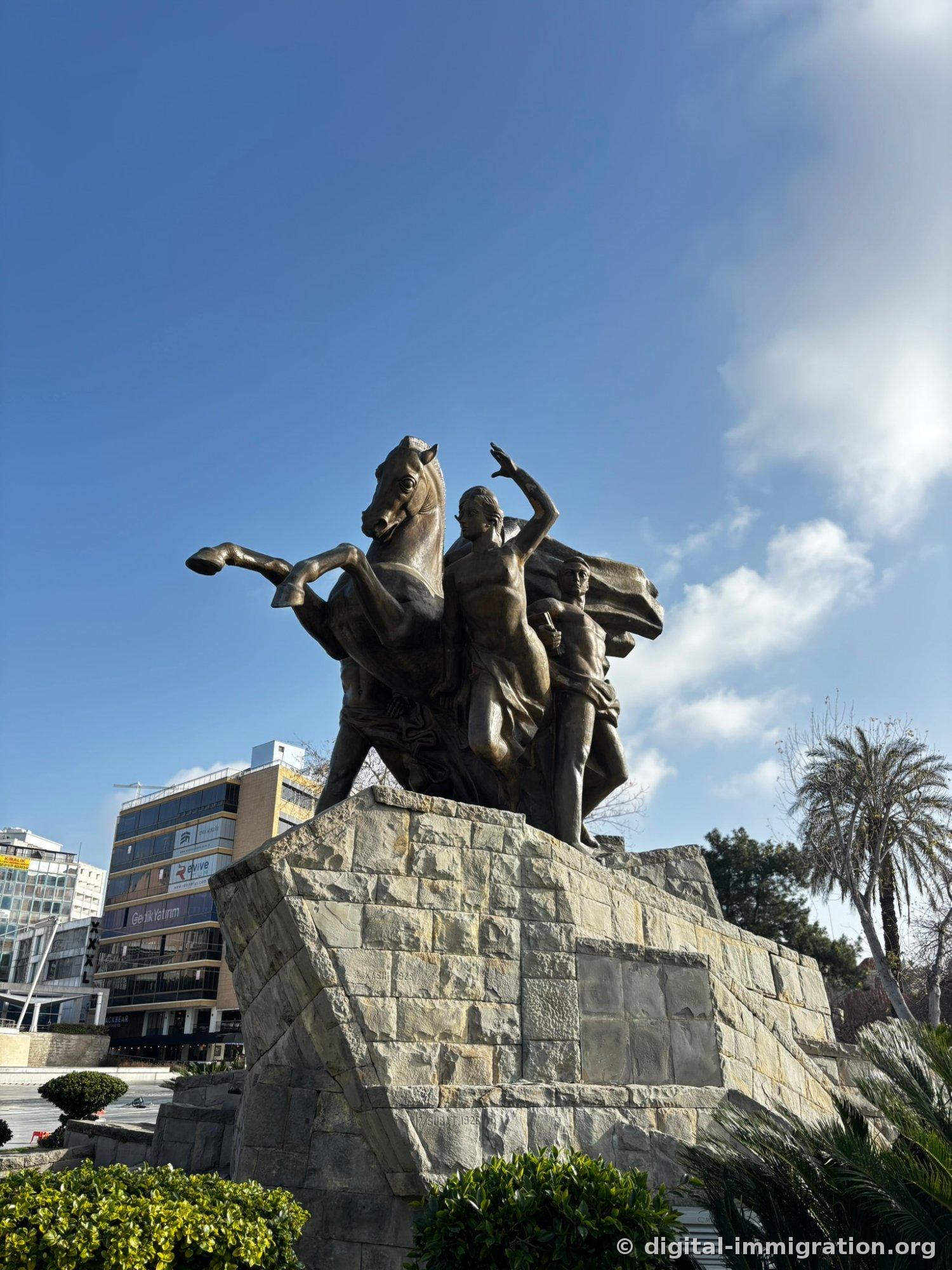
The center of the square is a bronze equestrian statue. A horse rears up on its front legs, with figures stretching their arms forward in a dynamic composition. On the stone base I could only read the inscriptions up close: KASIM 1922 and below it 28 ŞUBAT 1926. It's a monument related to Antalya's liberation, but there were no informational plaques in Korean or even English visible on site. If you're curious about the details, it's better to research beforehand.
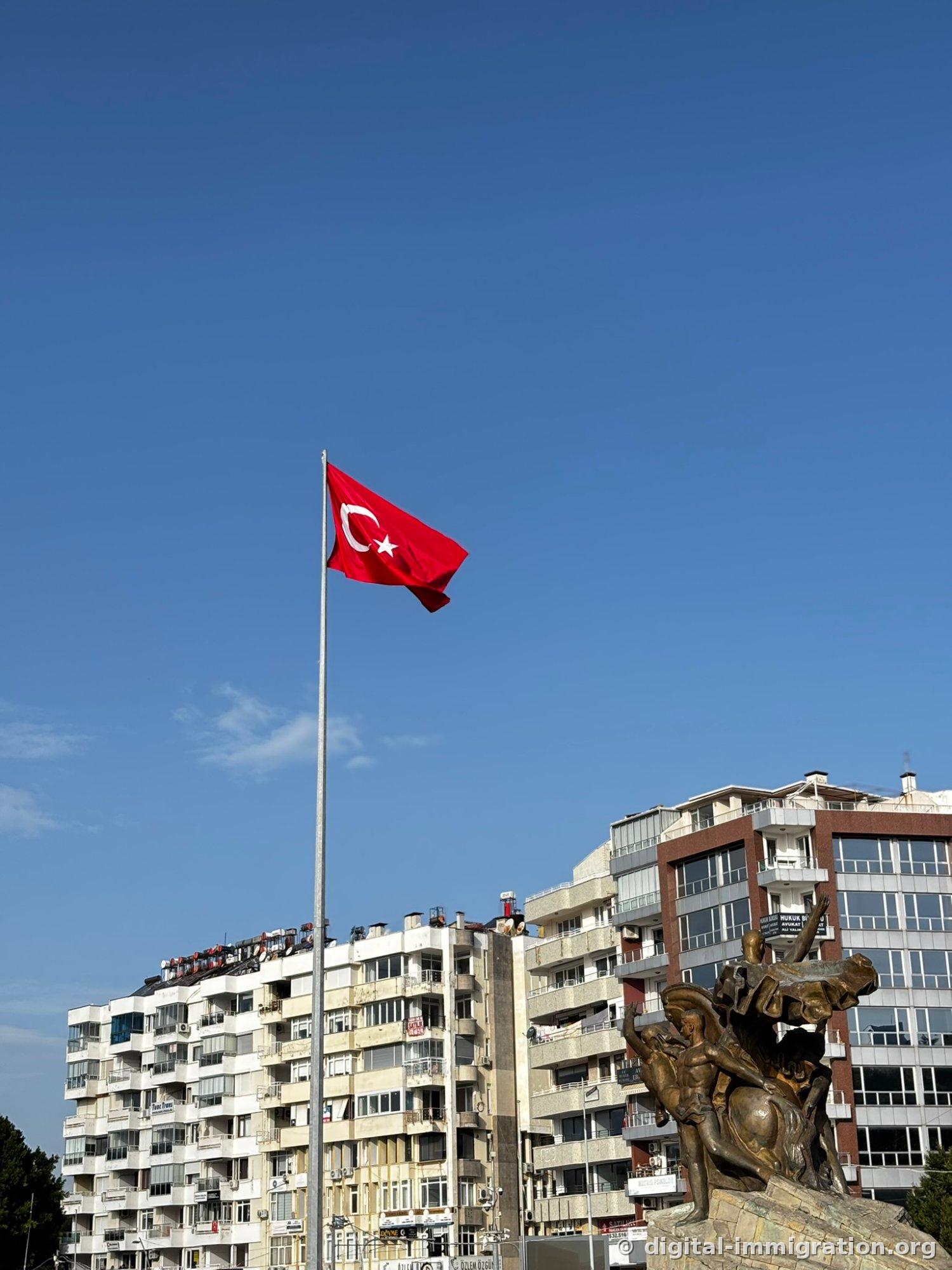
What's interesting is the angle from behind this statue. Most people take photos from the front and move on, but if you walk around to the back, a massive Turkish flag flagpole comes into frame. Behind it are typical urban buildings — an 8–9-story apartment block with dense air conditioning units, ordinary shops with signs like HUKUK BÜROSU (law office). It's a combination you'd never see on a tourist postcard, but I felt it better captured the city's actual face. Go in the afternoon on a windy day and the flag will be properly unfurled.
The Angle Where the Minaret Shows from the Square Floor
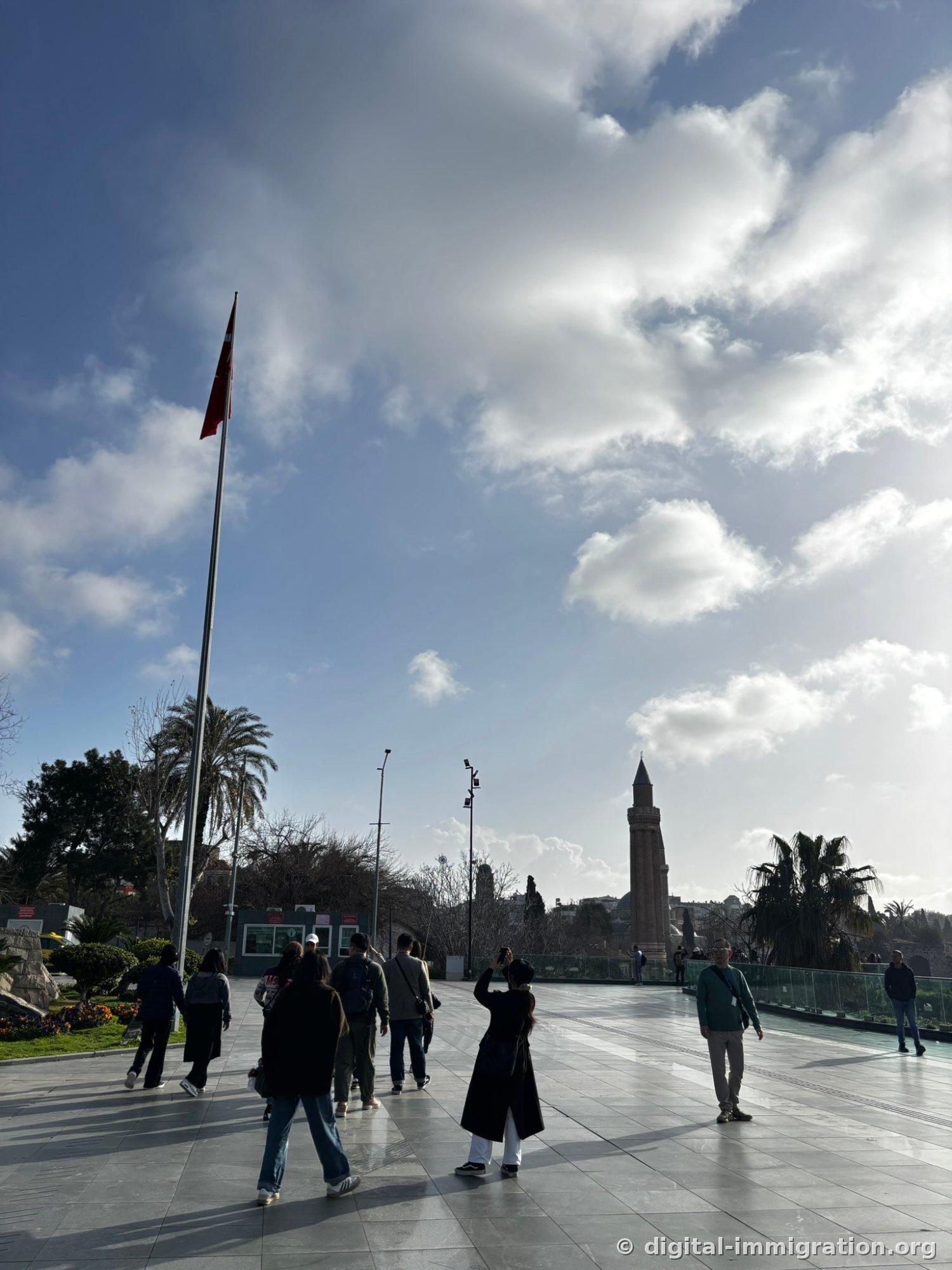
The square floor is covered in broad gray marble tiles with intense reflections in the morning sun. The glare was bright enough that I kept my sunglasses on the whole time, but it made for good photos. People scattered about, and to the right beyond them rose a single red brick tower — the Yivli Minaret, Antalya's symbol. I didn't realize until standing there that you can see it directly from the square. The glass railing side opens onto the cliff below, so the square itself functions as a viewing platform.
The square borders the tram line (Antray) and nostalgic tram route, and from the far end of the square it's less than a 5-minute walk to the entrance of the Kaleiçi alleyways. The square's access points split into several directions though, so it's easy to lose your way on a first visit. I walked to the left with the sea at my back from the equestrian statue and found myself right in the old city's winding streets. The pin on the map below marks where I took these photos.
Red Roofs and the Mediterranean Visible Beyond the Railing
The longest I stood in the square wasn't in front of the statue or the flag, but at the cliff railing. Below, the red tile roofs of Kaleiçi cascaded down in layers, and at their end stood Ottoman wooden houses with white plaster and black-framed windows. Beyond that was simply the Mediterranean. The horizon and sky were nearly the same color, so the boundary blurred.
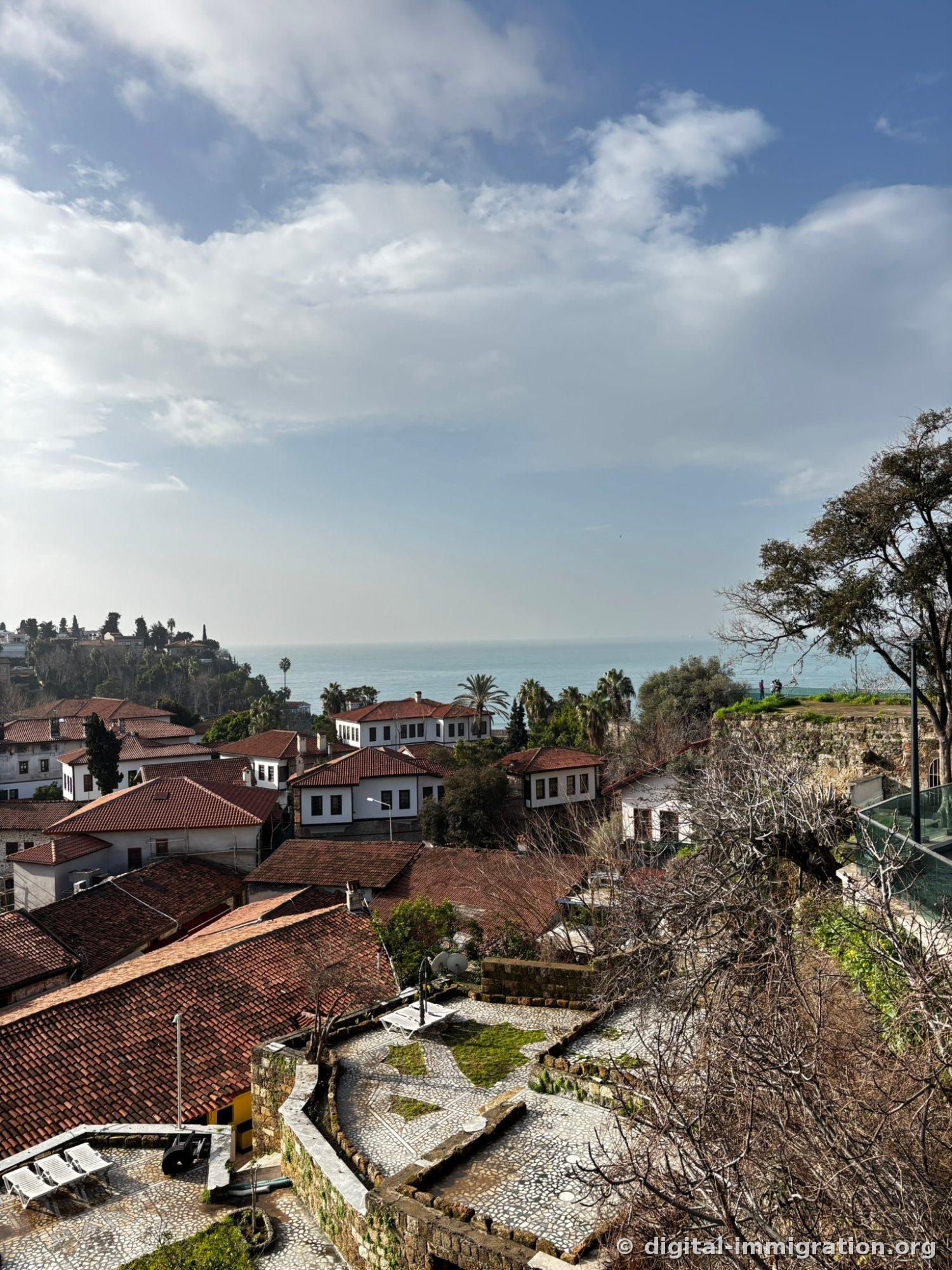
In the lower part of the photo you can see courtyards paved with decorative pebbles and sunbeds — the terraces of boutique hotels scattered throughout Kaleiçi. In February no one was sitting there, the moss was thick. I could imagine what it would look like in the height of summer, but I preferred this empty winter version. That said, winter in Antalya sees frequent rain. On the night before my visit it had rained, leaving the alley's stone floor slippery.
Descending into the Alleyways — Around the Yivli Minaret
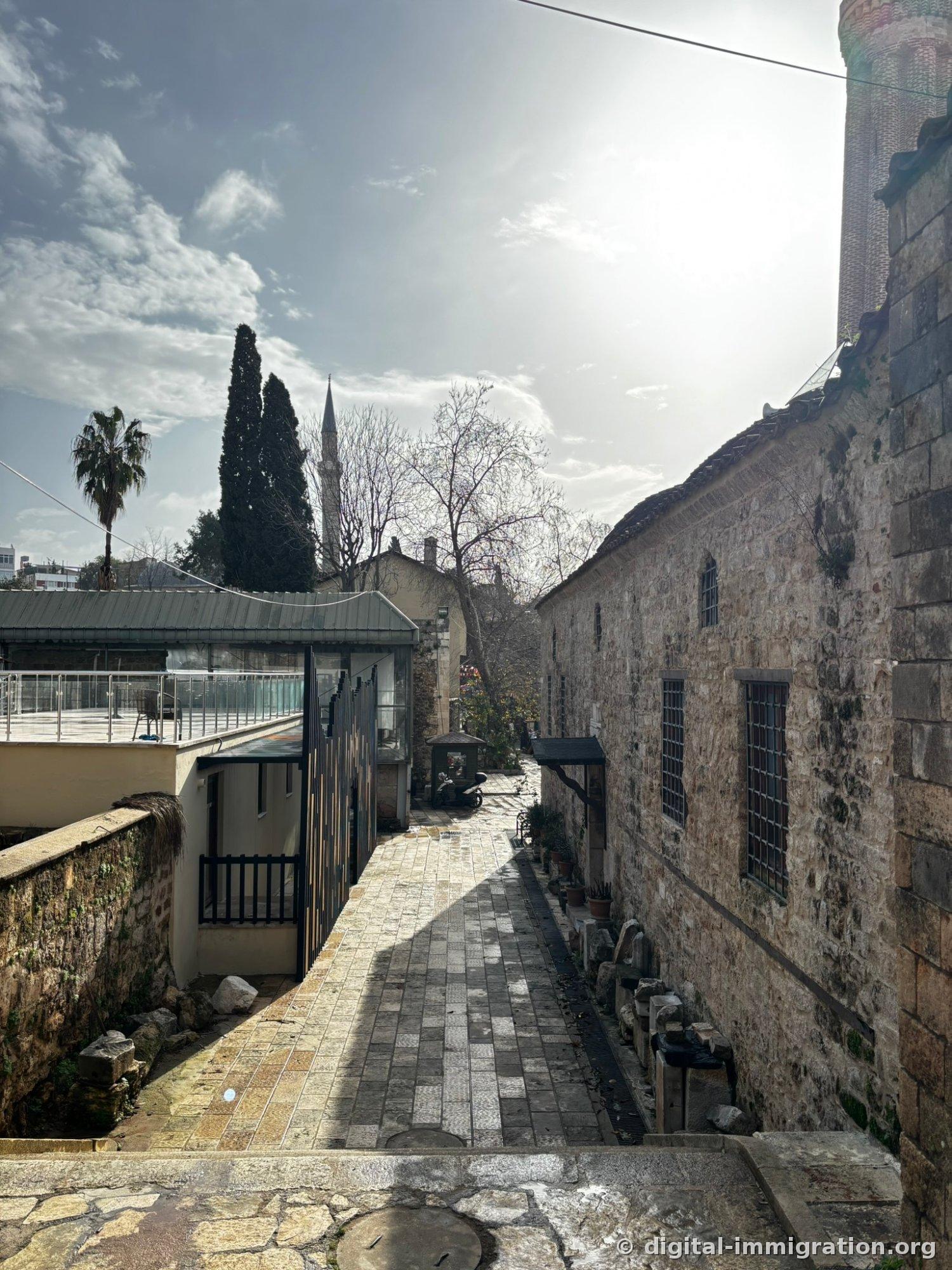
A few steps down from the square toward the old city and the atmosphere changes dramatically. The marble square ends and a narrow path of stone begins, with ancient limestone buildings sporting iron-barred windows on the right, and freshly built glass-fronted cafe terraces on the left. Centuries-old walls face newly installed glass railings across 1.5 meters of space. A scooter parked between them, flower pots and cut stone fragments scattered casually below. This is the real texture of Antalya's old city — not a maintained tourist attraction but a neighborhood being continuously tended to.
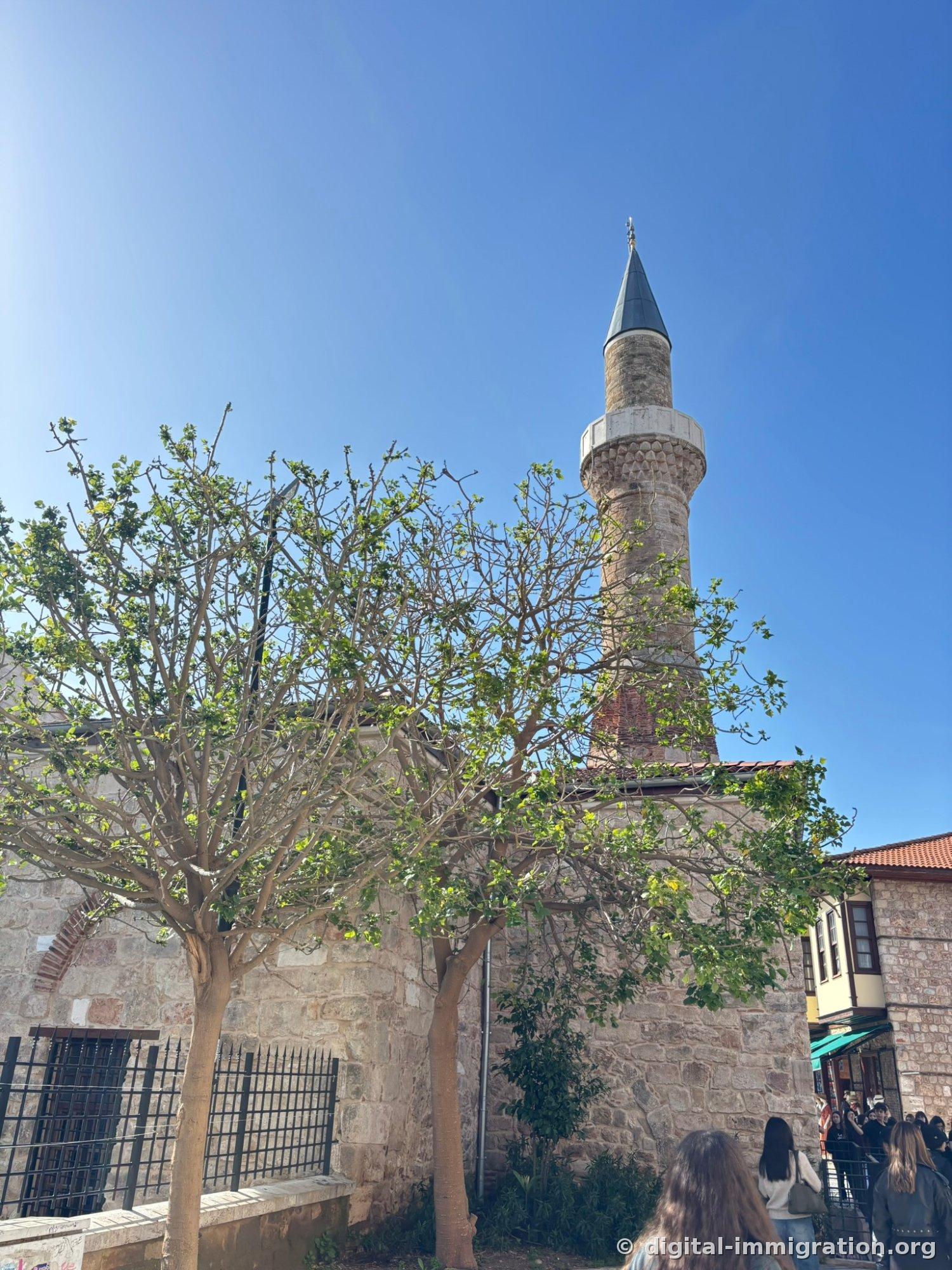
Further in, the minaret of another mosque appears. Unlike the red brick of the Yivli Minaret, this one has a limestone cylinder crowned with a gray conical roof, and honeycomb-like muqarnas ornament carved beneath the balcony, casting shadows in the sunlight. Two trees in front — looking like fig trees — were just putting out leaves. A cluster of people who looked like students gathered below, but they were locals going about their day, not tourists.
The Point Where the Yivli Minaret, Clock Tower, and Dome All Frame Together
If you turn back while descending from the square toward Kaleiçi, there's exactly one spot where three landmarks overlap in view. On the right, the red brick Yivli Minaret (named for its vertical fluting), in the center a gray dome with a slender white minaret, and far left a clock tower crowned with a domed roof (Saat Kulesi). You could even make out the clock face with the naked eye. The eaves of a wooden cafe and a single cypress tree in front frame the composition.
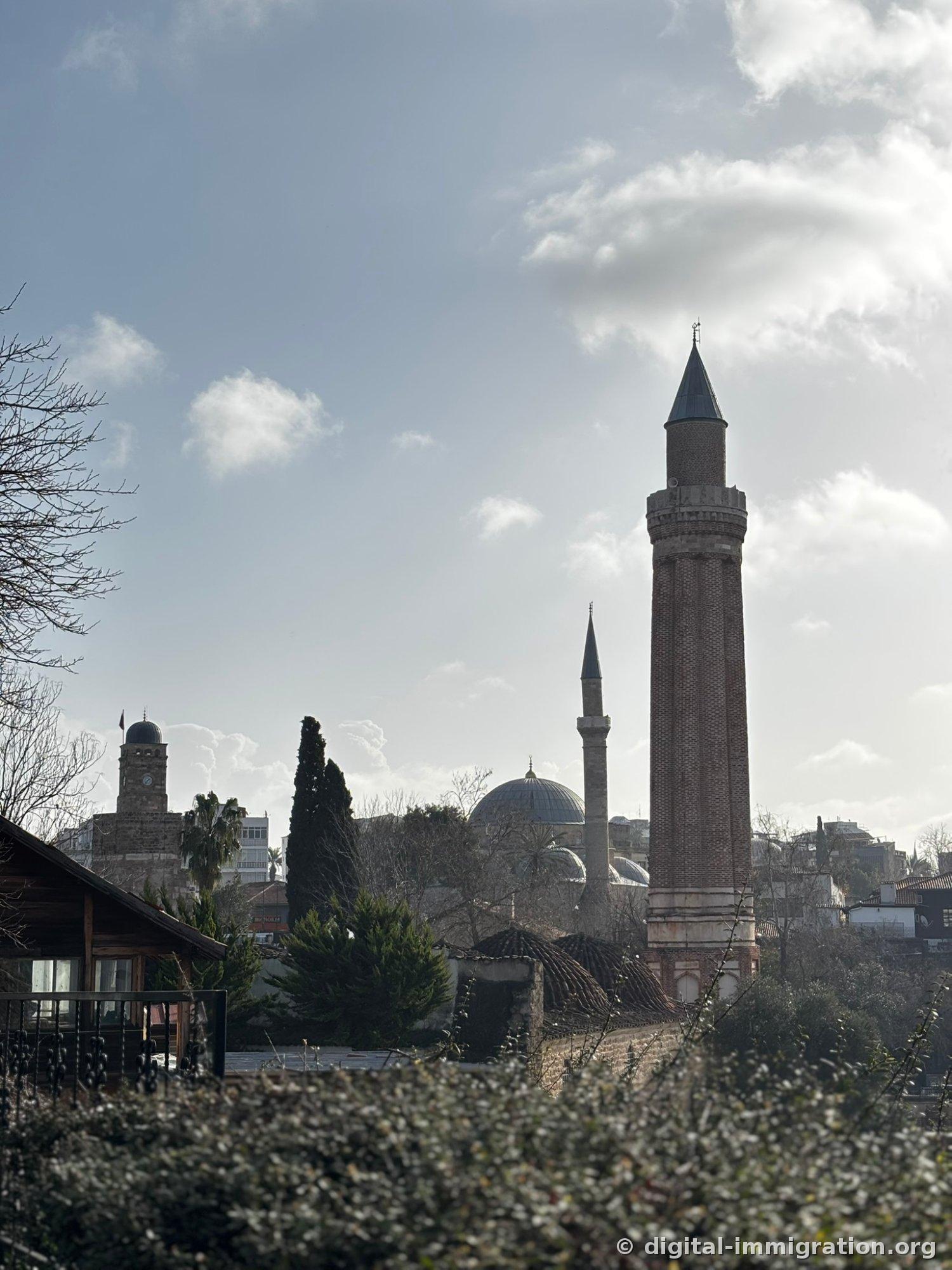
This angle doesn't appear from the center of the square. As you walk along the railing toward the old city and keep looking back, there's a moment when the three landmarks align. If you go late in the afternoon, the minarets become silhouettes in backlighting, so come in the morning if you want to capture the brick color.
What I Felt Having Actually Visited
- This is a gateway, not a destination. The square itself has nothing to detain you for more than 30 minutes. You see the statue, look out at the sea from the railing, and naturally flow down into Kaleiçi.
- The floor glare is intense. The marble square reflects so brightly that on clear midday your eyes hurt. Bring sunglasses.
- It's worth visiting even in winter (January–February). Fewer people means no crowds in your photos. The downside: frequent rain and bare trees. But I found this advantageous — clearer sightlines, actually.
- There are almost no information plaques. Neither the statue nor the surrounding mosques offer contextual information on-site. Research ahead if you're curious.
- I won't list prices and hours. Cafe prices around the square fluctuate with season and exchange rates, and what I saw then can't be guaranteed now. Check locally.
One regret: there's almost no shade in the square. In winter it wasn't an issue, but in the heat of a summer midday I don't think I'd have the stamina to stand there taking photos. If you visit Antalya in summer, use this square the way it was meant to be used — stand by the sea-facing railing an hour before sunset and wait for the light to change.
Basahin din
- Pebrero sa Göreme: Pagluluto ng Shin Ramyeon Black sa Burol sa Harap ng Zemi Hotel Cappadocia
Ang tag-init ang peak season sa Göreme, Cappadocia, Turkey. Ako naman ay pumunta sa Pebrero. Ang mga umaga ay bumababa ang temperatura sa ibaba ng zero, at may tipak na puting halu…
Göreme - Isang hapon sa Yuvam Shisha Nargile Kafe sa clifftop ng Kaleiçi, Antalya - nakatingin sa yawakan
Ang lumang baryo ng Kaleiçi sa Antalya, Turkey ay may mga katarungang lansangan sa loob ng mga baluarte na parang labyrinto. Kapag baguhan, hindi mo alam kung nasaan ang dagat. Per…
Antalya · Yuvam Shisha Nargile Kafe - Ang Kaleiçi Yacht Harbor ng Antalya — Isang Araw na Tinitingnan ang Kaligan mula sa Tatlong Magkakaibang Anggulo
Ang Kaleiçi, ang lumang lungsod sa Antalya, Turkey, ay may mga putol na tumatagal sa itaas ng hayag na cliff, at sa ilalim ng hayag na iyon ay isang buong yacht harbor. Sa mapa, pa…
Antalya · Yuvam